Urad Dal
Eine kleine schwarze Bohne, die in der indischen Küche unverzichtbar ist und ganz oder gespalten für reichhaltige, cremige Dal-Gerichte sowie fermentierte Teige für Dosa und Idli verwendet wird.





Auf dieser SeiteÜberblick
Urad Dal im Überblick
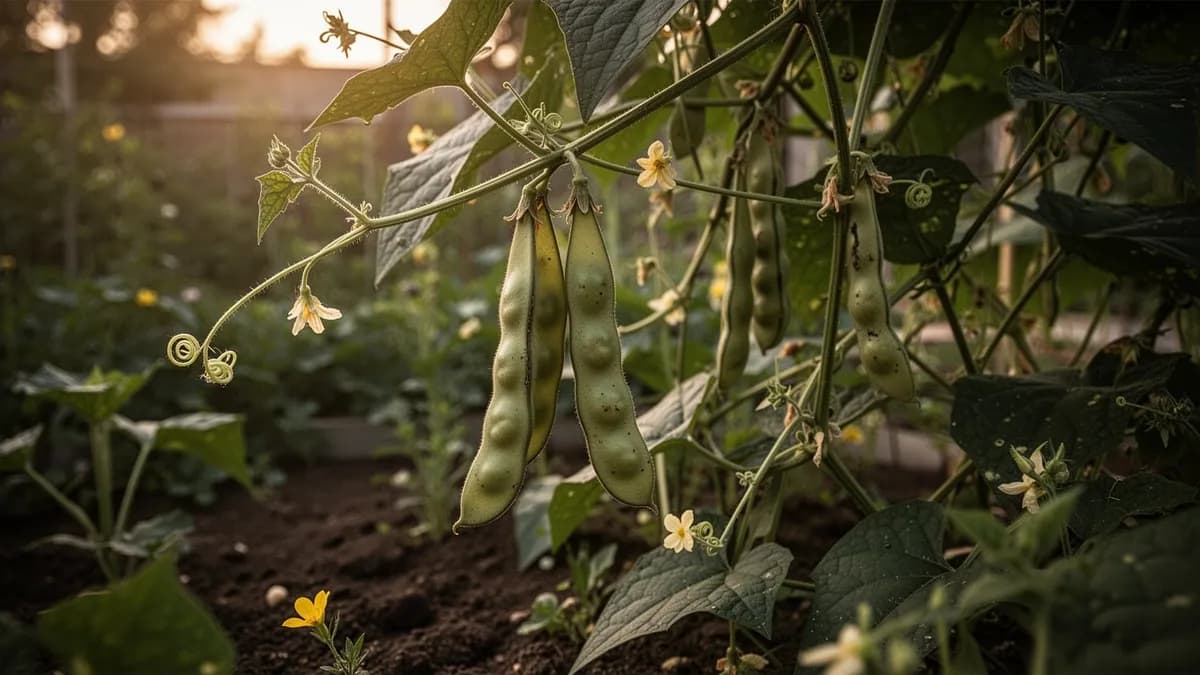
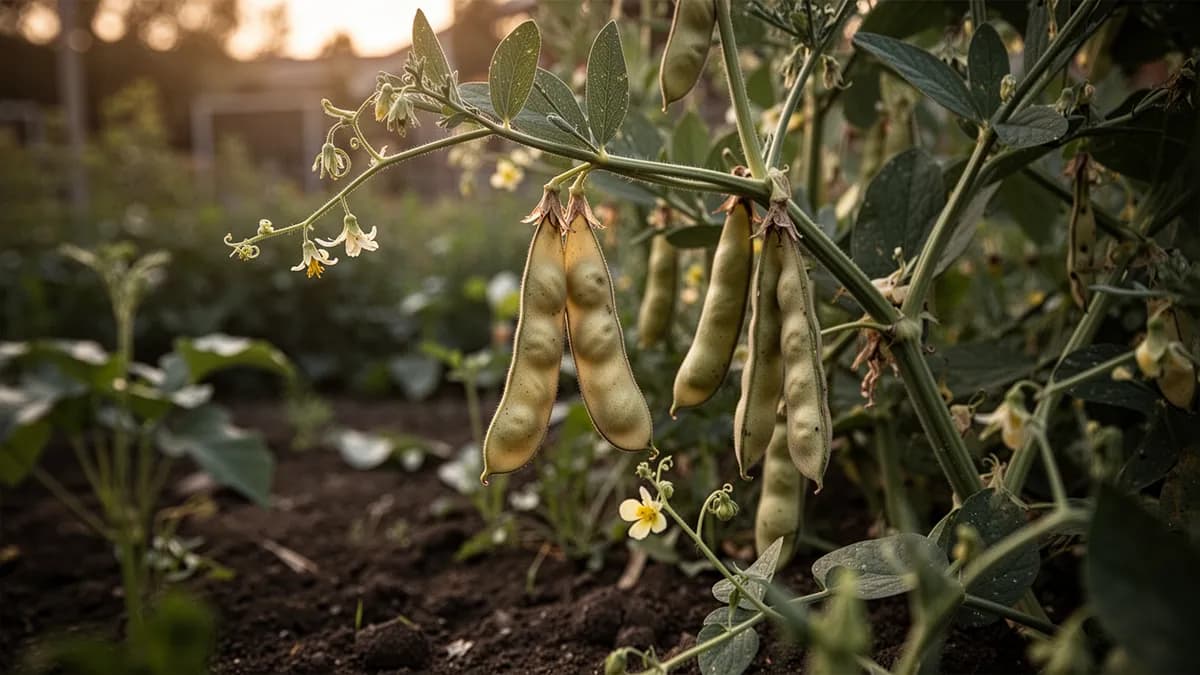
Eine kleine schwarze Bohne, die in der indischen Küche unverzichtbar ist und ganz oder gespalten für reichhaltige, cremige Dal-Gerichte sowie fermentierte Teige für Dosa und Idli verwendet wird. Die Pflanzen wachsen kompakt und aufrecht und bilden kleine, behaarte Hülsen mit winzigen schwarzen Samen. Gut an warme, feuchte Bedingungen angepasst, fixiert sie Stickstoff effizient und verbessert die Bodenfruchtbarkeit. Ernten Sie, wenn die Hülsen trocken und papierartig sind, und dreschen Sie sie, um die kleinen, proteinreichen Bohnen zu gewinnen.
Wann Urad Dal pflanzen
Urad Dal wird immer direkt gesät, da sie sich aufgrund ihrer empfindlichen Pfahlwurzel nicht gut umpflanzen lässt. Säen Sie die Samen 2,5–5 cm tief in warmen Boden nach dem letzten Frosttermin. Weichen Sie die Samen 8–12 Stunden vor der Pflanzung ein, um die Keimung zu beschleunigen. Impfen Sie mit Rhizobium-Kultur, die speziell für Vigna mungo geeignet ist, für eine optimale Stickstofffixierung. Die Samen keimen in 5–7 Tagen bei Bodentemperaturen von 20–25 °C. Vereinzeln Sie die Sämlinge auf 10–15 cm Abstand, sobald sie etabliert sind. Für eine gestaffelte Pflanzung säen Sie alle 2–3 Wochen während der warmen Jahreszeit.
Dein Urad Dal-Jahr
Abgestimmt auf Zone 7 · typische Saison · Frost geht um den 2. Apr. und kehrt um den 1. Nov. zurück
Urad Dal Mai – Jul pflanzen, Sep – Okt ernten. Beachte die Pflanzmethoden unten und wähle dein Klima für passende Zeiträume.
So baust du Urad Dal an
Urad Dal gedeiht unter warmen, feuchten Bedingungen und benötigt eine frostfreie Vegetationsperiode von mindestens 90 Tagen. Säen Sie die Samen direkt im Freiland aus, nachdem alle Frostgefahr vorüber ist und die Bodentemperaturen 18–21 °C erreichen. Pflanzen Sie die Samen 2,5–5 cm tief und 10–15 cm auseinander in Reihen mit 45–60 cm Abstand. Die kompakten, aufrechten Pflanzen werden typischerweise 30–60 cm hoch und benötigen nur minimale Stützung.
Sorgen Sie während der Blüte und Hülsenentwicklung für gleichmäßige Feuchtigkeit, vermeiden Sie jedoch Staunässe, da Urad Dal anfällig für Wurzelfäule in gesättigten Böden ist. Die Pflanzen fixieren atmosphärischen Stickstoff über Wurzelknöllchen und reduzieren so den Düngerbedarf. Geben Sie zur Blütezeit eine leichte Seitendüngung mit Kompost, um die Hülsenfüllung zu unterstützen. Mulchen Sie rund um die Pflanzen, um die Feuchtigkeit zu bewahren und Unkraut zu unterdrücken.
Urad Dal reift in 90–120 Tagen und ist erntereif, wenn die Hülsen braun werden und an der Pflanze trocknen. In feuchten Klimazonen sollten Sie zügig ernten, um Schimmelbildung an den trocknenden Hülsen zu vermeiden. Die Pflanzen gedeihen am besten in Gebieten mit ausgeprägten Regen- und Trockenzeiten, ähnlich ihren natürlichen südasiatischen Wachstumsbedingungen.
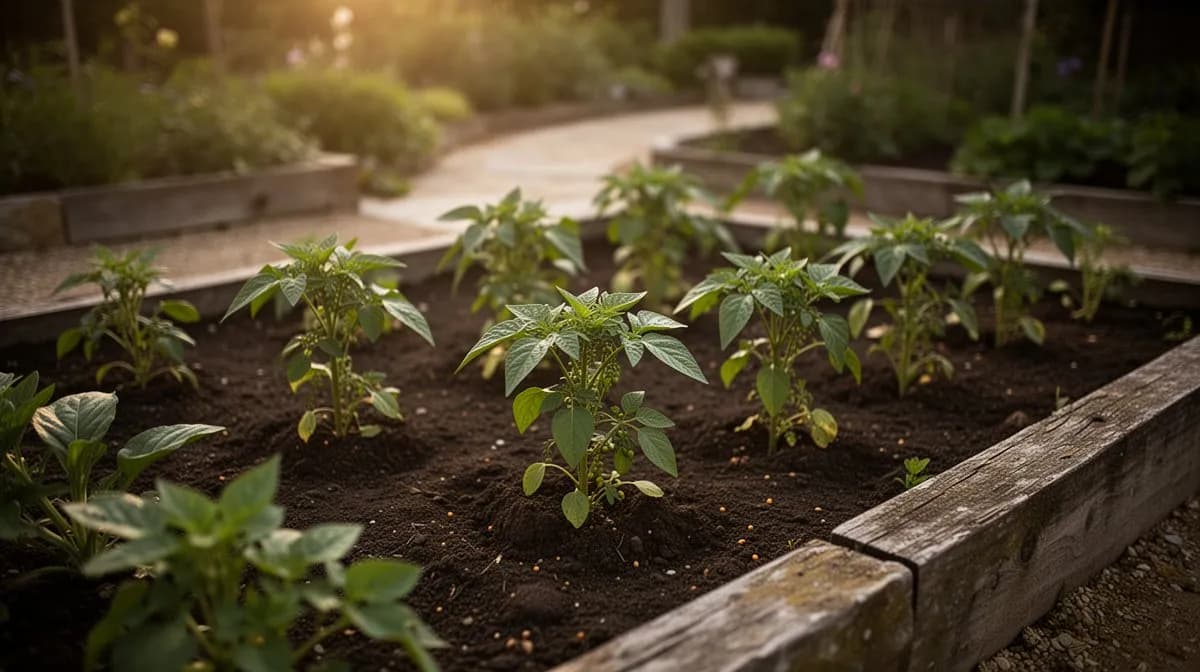
128 Pflanzen passen in ein Beet von 120 × 240 cm
Urad Dal braucht 15 cm Platz pro Pflanze. Der Planer hält diesen Abstand für dich ein — jede Pflanze, jedes Beet.
Die besten Nachbarn für Urad Dal
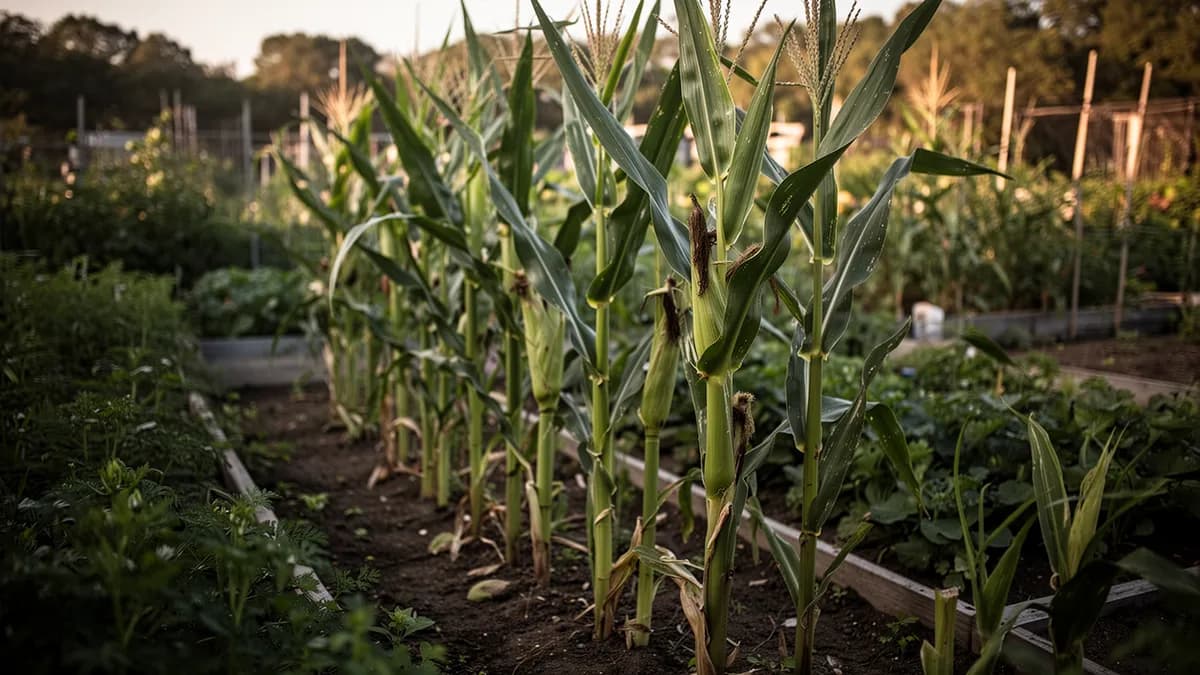
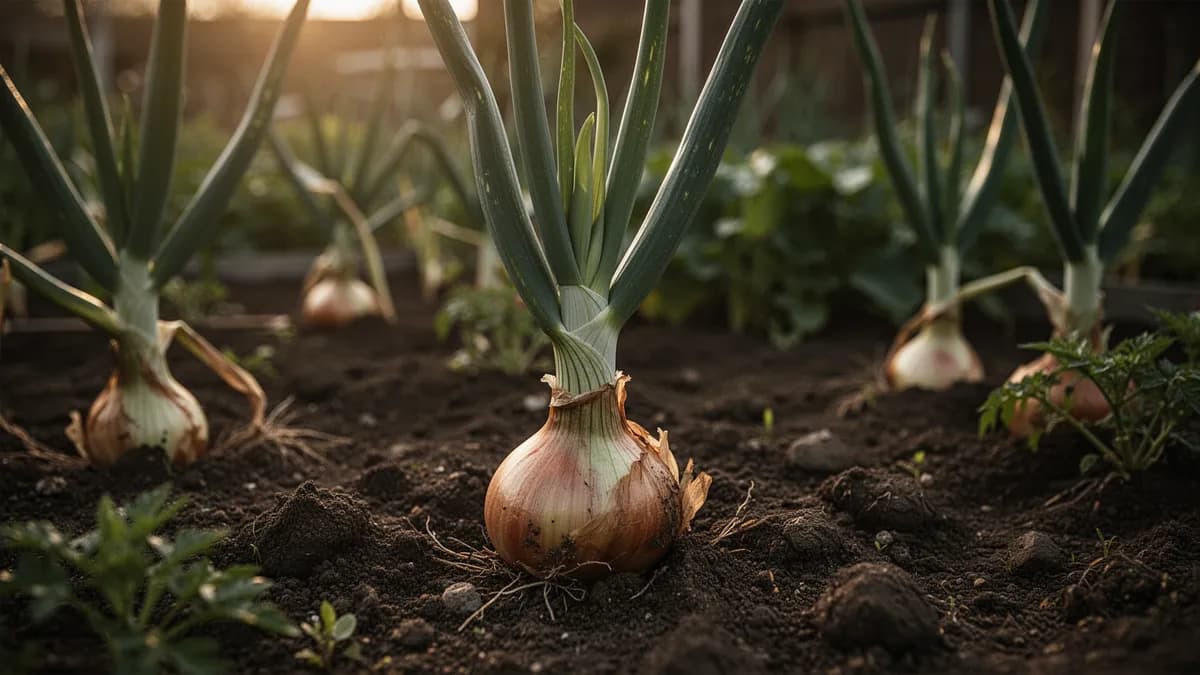
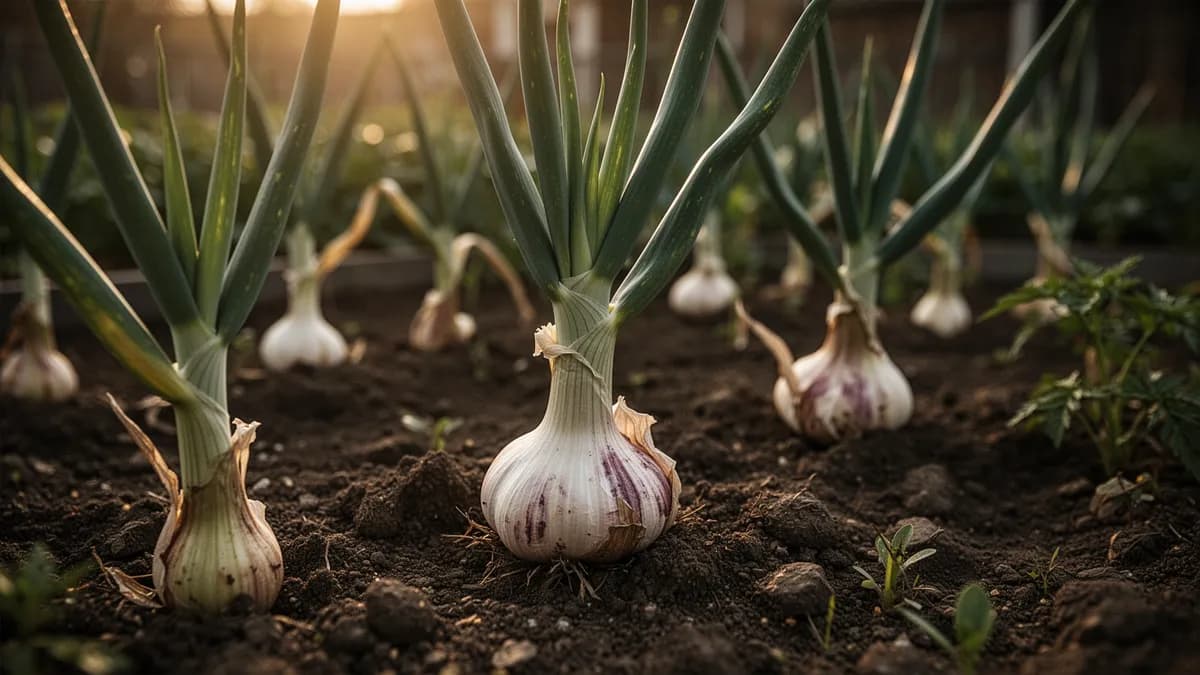
Urad Dal profitiert von der Mischkultur mit höheren Pflanzen wie Mais, Sorghum oder Hirse, die während der intensiven Mittagshitze teilweisen Schatten spenden. Als stickstofffixierende Hülsenfrucht reichert sie den Boden für nachfolgende Getreidekulturen in Fruchtfolgesystemen an. Vermeiden Sie das Pflanzen in der Nähe anderer Hülsenfrüchte, um den gemeinsamen Schädlings- und Krankheitsdruck zu reduzieren. Als Randbepflanzung gepflanzte Tagetes helfen, Weiße Fliegen abzuschrecken, die das Gelbmosaikvirus übertragen. Halten Sie Abstand zu Lauchgewächsen wie Zwiebeln und Knoblauch, da diese die Rhizobium-Aktivität hemmen können.
Mais gehört daneben. Zwiebel nicht.
Altes Gärtnerwissen, geprüft an der echten Nachbartabelle von Urad Dal — teste jede Pflanze, die du anbaust.
Probiere Urad Dal direkt hier im Beet
Ein echtes Planer-Beet, Urad Dal steht schon drin. Tippe einen Begleiter an, platziere ihn und sieh, wie die Nachbarschaftsprüfung antwortet — grün für gute Nachbarn, rot bei Streit.


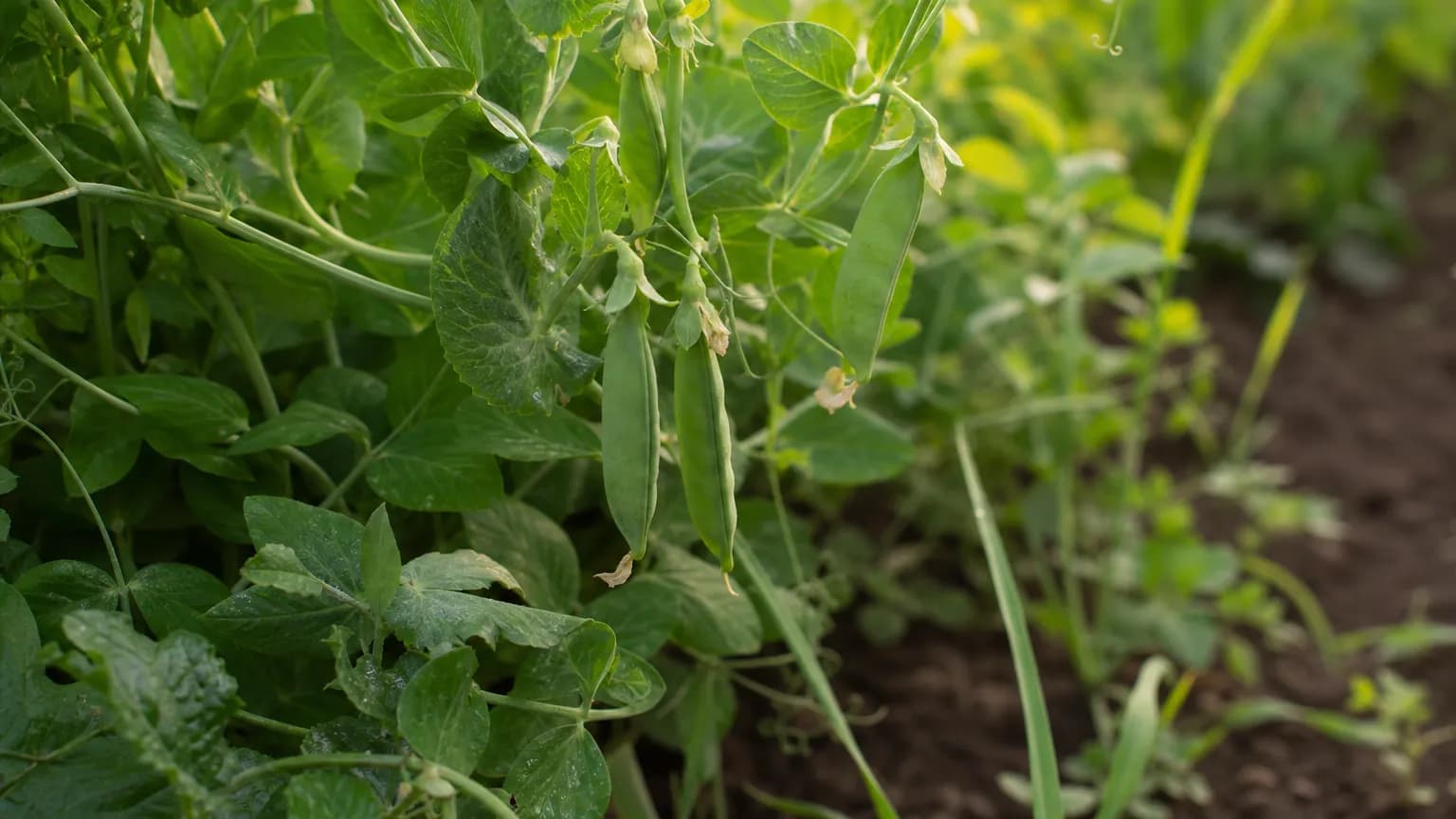
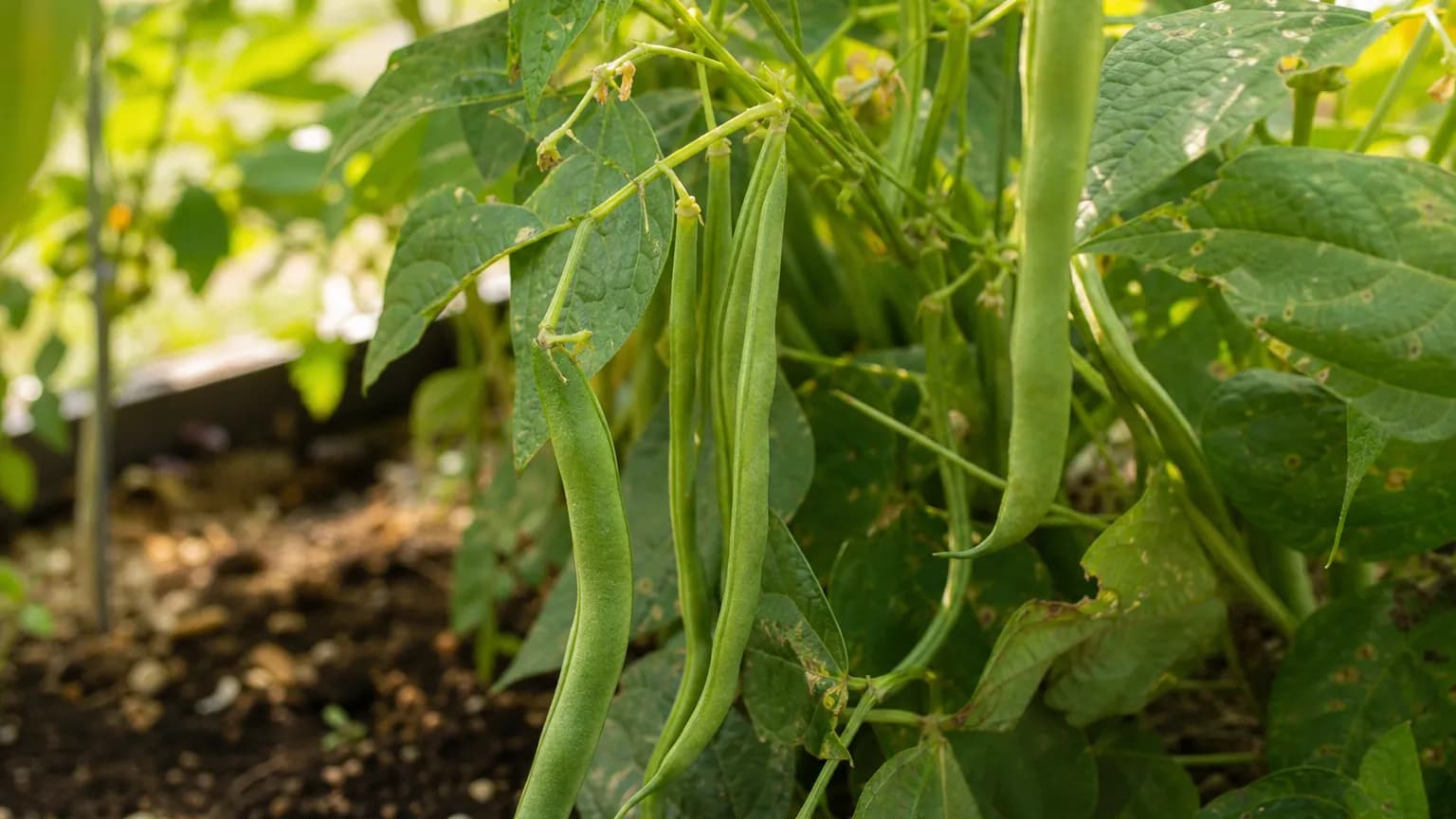
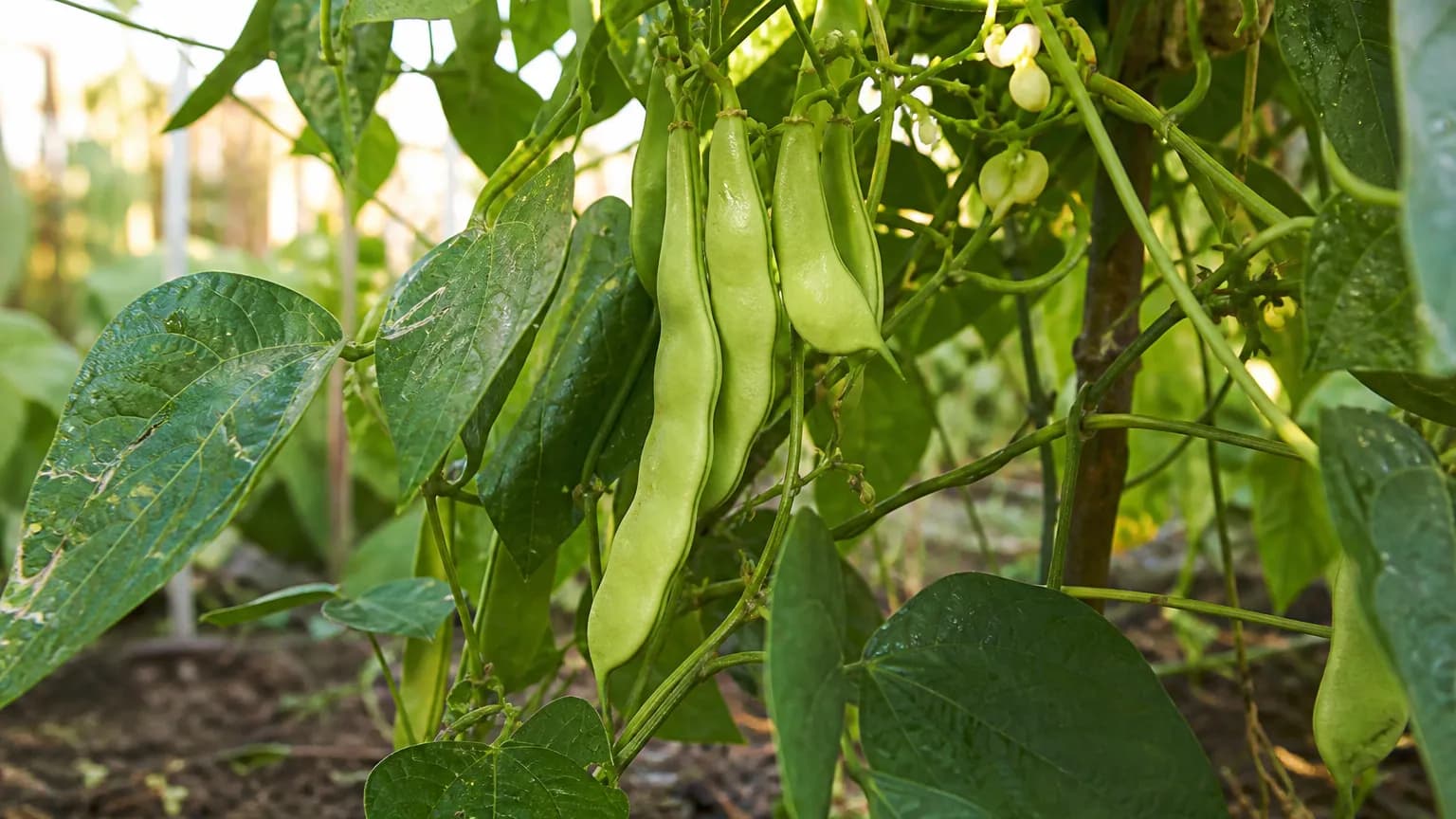
Passende Anbau-Ratgeber
Richtig düngen
Urad Dal bevorzugt gut durchlässige lehmige bis sandige Lehmböden mit einem pH-Wert von 6,0–7,5. Als stickstofffixierende Hülsenfrucht benötigt sie nur minimale Stickstoffdüngung, profitiert aber von einer Phosphorgabe bei der Pflanzung. Geben Sie 20–25 kg Phosphor pro Hektar und impfen Sie die Samen mit geeigneter Rhizobium-Kultur für eine optimale Stickstofffixierung. Fügen Sie Kalium hinzu, wenn Bodenanalysen einen Mangel anzeigen. Vermeiden Sie schwere Tonböden, die überschüssige Feuchtigkeit speichern. Eine leichte Schwefelgabe verbessert den Proteingehalt der Bohnen.
Ideale Temperatur
Winterhärtezone-Kompatibilität
Von der Saat zur Ernte, Schritt für Schritt
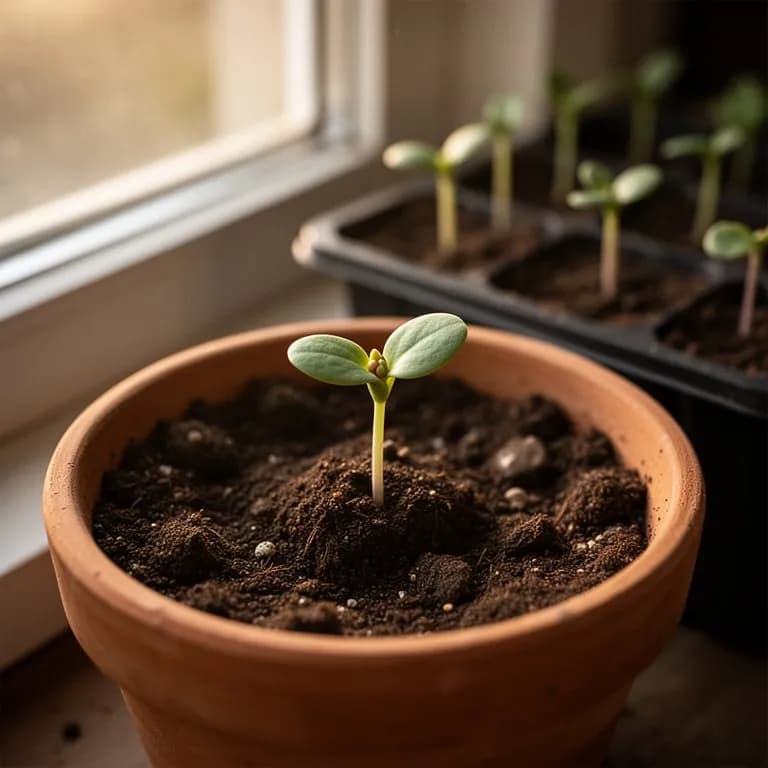
Samenkeimung
Die Samen keimen schnell in warmem, feuchtem Boden. Der Hypokotylbogen durchbricht die Oberfläche und zieht die Keimblätter nach oben. Die Keimung ist epigäisch — die Keimblätter erscheinen über der Erde und beginnen sofort mit der Photosynthese. Die optimale Bodentemperatur beträgt 25–30 °C und das Auflaufen erfolgt typischerweise innerhalb von 5–10 Tagen.
Sämlingsetablierung
Die ersten echten dreiteiligen Blätter entfalten sich und das Wurzelsystem beginnt, stickstofffixierende Knöllchen mit Rhizobium-Bakterien zu entwickeln. Die Pflanze etabliert einen kompakten, buschigen Wuchs mit einem kurzen Hauptstängel und mehreren Verzweigungen. Wurzelknöllchen erscheinen als kleine rosa oder rötliche Beulen — die rosa Farbe zeigt aktive Stickstofffixierung an.
Vegetatives Wachstum
Schnelle Kronenentwicklung mit üppigen dreiteiligen Blättern an kurzen Blattstielen. Die buschige Pflanze füllt sich auf 30–60 cm Höhe und beginnt, den darunter liegenden Boden zu beschatten. Die Verzweigung intensiviert sich und die Pflanze entwickelt eine dichte, abgerundete Form. Aktive Stickstofffixierung reichert den umgebenden Boden an.
Blüte
Kleine blassgelbe Blüten erscheinen in Büscheln an aufrechten Trauben aus den Blattachseln. Die Blüten sind überwiegend selbstbestäubend und öffnen sich in den frühen Morgenstunden. Jede Traube bildet 5–10 Blüten, und die Pflanze kann gleichzeitig mehrere blühende Trauben an ihren Verzweigungen haben.
Hülsenentwicklung
Schlanke, zylindrische Hülsen entwickeln sich aus bestäubten Blüten und werden 4–7 cm lang mit jeweils 6–10 Samen. Die Hülsen sind anfangs grün und behaart und reifen zu dunkelbraun oder schwarz. Die Samen im Inneren entwickeln sich schnell, füllen die Hülse und wechseln von grün zu ihrer charakteristischen tiefschwarzen Farbe.
Reifung und Ernte
Die Hülsen trocknen an der Pflanze und werden papierartig und brüchig. Die Blätter vergilben und beginnen abzufallen, während die Pflanze alle verbleibende Energie in die Samenreifung umleitet. Die Samen im Inneren erreichen ihren endgültigen harten, glänzend schwarzen Zustand mit etwa 12 % Feuchtigkeitsgehalt. Die gesamte Ernte reift relativ gleichmäßig und ermöglicht eine einmalige Ernte.
Säen Sie die Samen 3–5 cm tief in gut durchlässigen Boden, nachdem alle Frostgefahr vorüber ist. Impfen Sie vor der Pflanzung mit Bradyrhizobium-Rhizobien, die speziell für Vigna-Arten geeignet sind, um von Anfang an eine effektive Stickstofffixierung sicherzustellen.
Urad Dal Monat für Monat pflegen
Was du jeden Monat für deine Urad Dal tun solltest
Oktober
Aktueller MonatSchließen Sie die Ernte der verbleibenden Kulturen ab. Reinigen und sortieren Sie getrocknete Bohnen und entsorgen Sie geschrumpfte, verfärbte oder insektenbeschädigte. Lagern Sie in luftdichten Behältern an einem kühlen, trockenen Ort — richtig getrocknete Urad Dal hält sich 1–2 Jahre.
Immer wissen, was jetzt im Garten zu tun ist
Eine E-Mail zum Monatsanfang: was du jetzt säen, pflanzen und anpacken solltest — für deine Urad Dal und alles, was drumherum wächst. Dazu ein kurzer Startkurs, der dich vor den klassischen Fehlern bewahrt.
- Was jetzt zu tun ist
- Passend zu deiner Saison
- Startkurs inklusive
Urad Dal ernten
Ernten Sie Urad Dal, wenn die Hülsen braun-schwarz werden und sich trocken und papierartig anfühlen, typischerweise 90–120 Tage nach der Pflanzung. Für Trockenbohnen lassen Sie die Hülsen vollständig an der Pflanze ausreifen. Schneiden Sie ganze Pflanzen ab und hängen Sie sie kopfüber an einem trockenen, gut belüfteten Ort zum weiteren Trocknen auf. Dreschen Sie die getrockneten Hülsen, indem Sie sie in einem Sack schlagen oder darauf treten. Worfeln Sie, um die Bohnen von der Spreu zu trennen. Für grüne Hülsen ernten Sie, wenn die Hülsen prall, aber noch zart sind. Lagern Sie getrocknete Bohnen in luftdichten Behältern, nachdem Sie sichergestellt haben, dass der Feuchtigkeitsgehalt unter 12 % liegt.
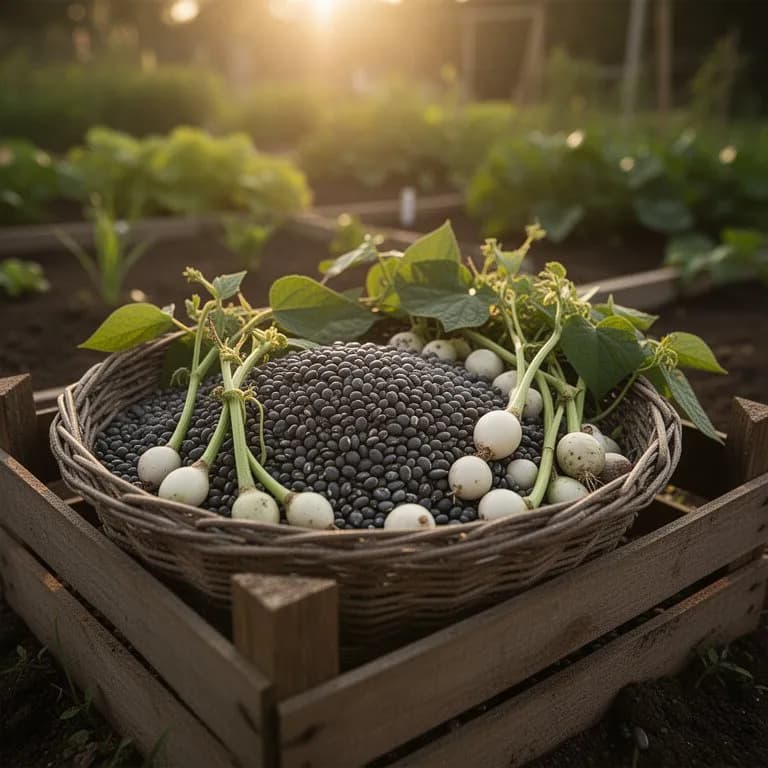
angenommen, du pflanzt zu Beginn des Zeitraums — trage dein tatsächliches Datum ein
Ernte Urad Dal zügig, dann trägt die Pflanze weiter.
Lagerung & Konservierung
Getrocknete Urad Dal lässt sich unter kühlen, trockenen Bedingungen außergewöhnlich gut 1–2 Jahre lagern. Bewahren Sie sie in luftdichten Behältern mit Lorbeerblättern oder getrockneten Neemblättern auf, um Kornkäfer abzuschrecken. Gespaltene Dal (Dhuli Urad) sollte innerhalb von 6 Monaten verbraucht werden, da sie schneller an Frische verliert. Für die Langzeitlagerung frieren Sie die Bohnen 48 Stunden lang ein, um eventuell vorhandene Insekteneier abzutöten, bevor Sie sie in der Speisekammer aufbewahren. Ganze Urad Dal kann das ganze Jahr über für den Frischverbrauch gekeimt werden. Fermentierter Urad-Dal-Teig für Dosa und Idli kann bis zu einer Woche gekühlt oder monatelang eingefroren werden.
Was schiefgeht — und die Lösung
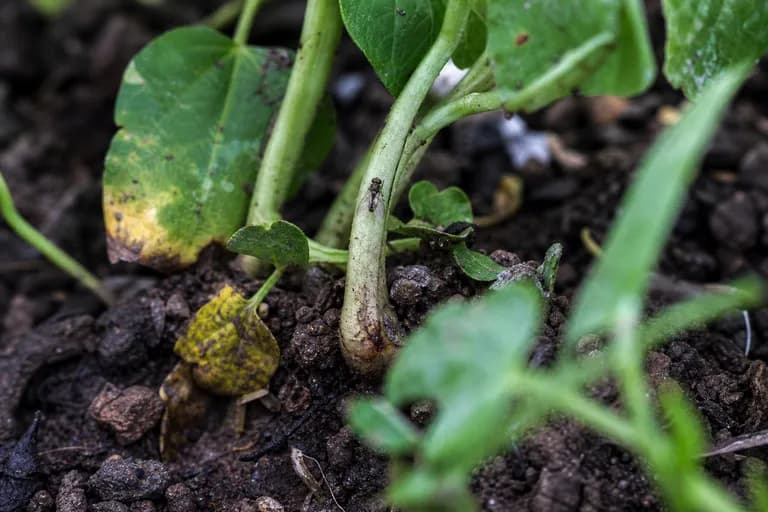
Bohnenfliege
SchädlingWelkende Sämlinge, geschwollene Stängel in Bodennähe, vergilbende Blätter, Wachstumshemmung bei Jungpflanzen.
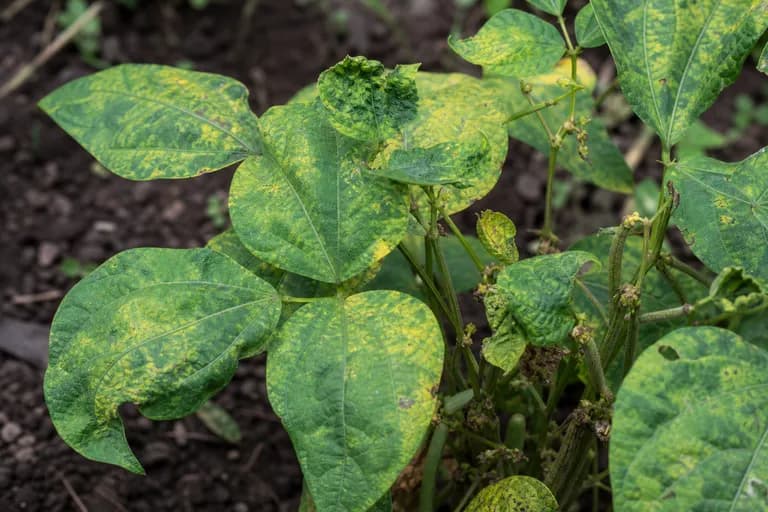
Gelbmosaikvirus
KrankheitLeuchtend gelbe Scheckung auf Blättern, Wachstumshemmung, verringerter Hülsenansatz, deformierte Blätter und Hülsen.
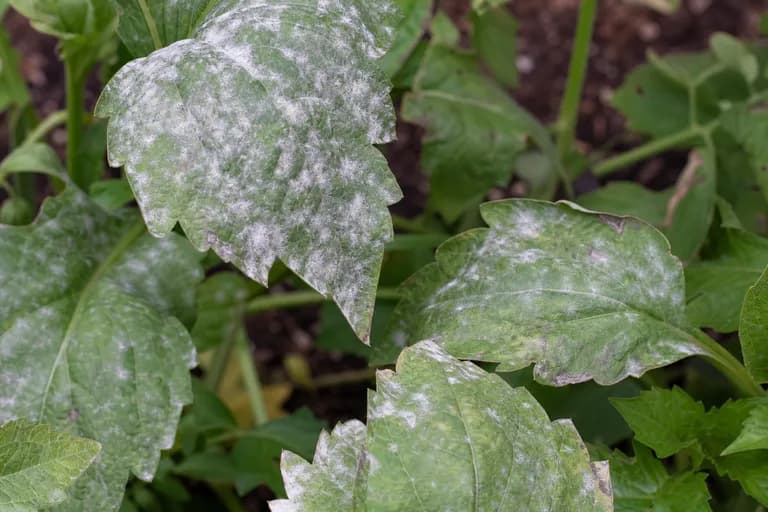
Echter Mehltau
KrankheitWeißer, pudriger Belag auf Blättern und Stängeln, vorzeitiger Blattfall, verminderte Hülsenqualität.
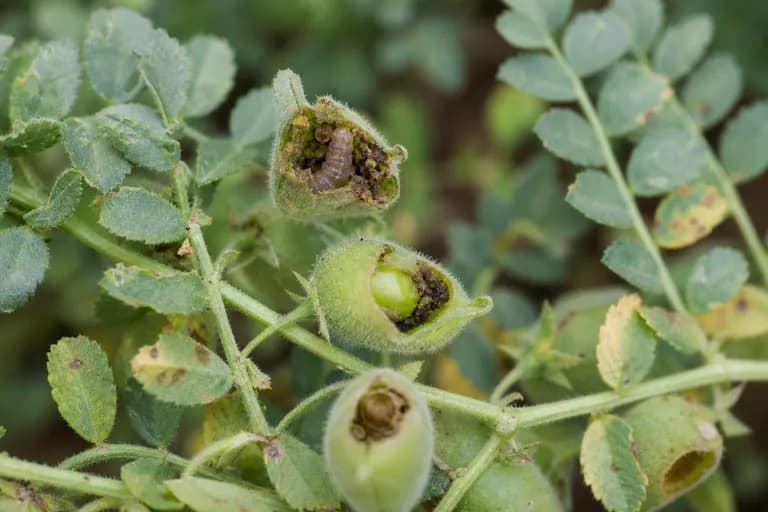
Hülsenbohrer
SchädlingLöcher in Hülsen, Fraßspuren auf der Hülsenoberfläche, Larven fressen im Inneren der Hülsen, beschädigte Samen.
Fehlerbehebung bei häufigen Problemen
Staunässe ist die häufigste Ursache für Ernteausfälle bei Urad Dal und führt zu Wurzelfäule und mangelhafter Knöllchenbildung. Das Gelbmosaikvirus, das von Weißen Fliegen übertragen wird, kann Ernten in feuchten Gebieten ohne resistente Sorten verwüsten. Hülsenaufplatzen bei der Reife verursacht Ernteverluste, wenn der Zeitpunkt nicht richtig gewählt wird. Eisenchlorose kann in alkalischen Böden über pH 8,0 auftreten. Blütenabwurf bei extremer Hitze über 35 °C reduziert die Erträge erheblich. Schlechte Knöllchenbildung resultiert aus sauren Böden oder dem Fehlen geeigneter Rhizobium-Bakterien.
Anbautipps
- Impfen Sie die Samen vor der Pflanzung mit Bradyrhizobium-Rhizobien speziell für Vigna-Arten — dies ist der wichtigste einzelne Schritt für gesunde Urad Dal. Ohne die richtigen Bakterien können die Pflanzen keinen Stickstoff fixieren und werden in weniger fruchtbaren Böden Schwierigkeiten haben.
- Wählen Sie einen Pflanzstandort mit voller Sonne und ausgezeichneter Drainage. Urad Dal ist sehr empfindlich gegenüber Staunässe — selbst wenige Tage stehendes Wasser können Pflanzen abtöten oder schwere Wurzelfäule verursachen. Hochbeete sind ideal in Gebieten mit schweren Tonböden.
- Vermeiden Sie die Anwendung von Stickstoffdünger bei Urad Dal. Die Pflanzen produzieren ihren eigenen Stickstoff über Wurzelknöllchenbakterien, und externer Stickstoff unterdrückt tatsächlich die Knöllchenbildung. Geben Sie stattdessen Phosphor und Kalium, um Wurzelentwicklung und Hülsenfüllung zu unterstützen.
- Säen Sie zu Beginn der warmen Regenzeit in tropischen Gebieten oder nach dem letzten Frost in gemäßigten Zonen. Die Kultur benötigt 70–90 Tage warmes Wetter und profitiert von mäßigem Regen während des vegetativen Wachstums, gefolgt von trockeneren Bedingungen während der Hülsenreifung.
- Beobachten Sie wachsam auf Gelbmosaikvirus, die verheerendste Krankheit der Urad Dal. Symptome umfassen leuchtend gelbe Scheckung und Verformung der Blätter. Es wird durch Weiße Fliegen übertragen — bekämpfen Sie Weiße-Fliegen-Populationen mit gelben Klebefallen und Neemöl-Sprays und entfernen Sie infizierte Pflanzen sofort.
- Bauen Sie Urad Dal als Fruchtfolgekultur mit Getreide, Tomaten oder Kohlgewächsen an. Der in den Wurzelknöllchen fixierte Stickstoff verbleibt nach der Ernte im Boden und liefert 30–50 kg kostenlosen Stickstoff pro Hektar für die Folgekultur. Dies ist die traditionelle indische Anbaupraxis, die die Bodenfruchtbarkeit seit Jahrtausenden erhalten hat.
- Der Erntezeitpunkt ist entscheidend — zu früh und die Bohnen sind unreif mit schlechter Kochqualität; zu spät und die Hülsen platzen auf und lassen Samen auf den Boden fallen. Ziehen Sie Pflanzen, wenn 80–90 % der Hülsen braun und trocken sind, vorzugsweise morgens, wenn die Hülsen weniger brüchig sind.
- Lassen Sie nach der Ernte die Wurzeln im Boden, anstatt sie herauszuziehen. Die stickstoffreichen Wurzelknöllchen zersetzen sich und geben ihren gespeicherten Stickstoff direkt in die Wurzelzone ab, was der nächsten Kultur in diesem Beet zugutekommt.
Bau deine beste Urad Dal an — und alles drumherum.
Starte heute kostenlos. Lege deine Beete an, setze deine Urad Dal ein und lass PlotMyGarden Timing, Abstände, Begleiter und Erinnerungen von der Saat bis zum Erntekorb übernehmen.
Finde deine Urad Dal
T9
Ertragreiche Sorte mit kräftigen schwarzen Samen, reift in 70–75 Tagen, weit verbreitet in Indien angebaut.
Pant U-19
Krankheitsresistente Sorte mit gutem Ertragspotenzial, geeignet für Frühlings- und Kharif-Saisons.
IPU 94-1
Gelbmosaikresistente Sorte mit synchroner Reife, ideal für die mechanisierte Ernte.
Mash 338
Früh reifende Sorte mit großen Samen, gut geeignet für Gebiete mit kurzer Saison und Mischkultur.
Getrocknete Urad Dal kostet 3–6 € pro Pfund in südasiatischen Lebensmittelgeschäften und 6–12 € pro Pfund in Spezialgeschäften. Eine einzelne 3-Meter-Gartenreihe, die 1 kg getrocknete Bohnen produziert, spart 7–25 € allein bei den Bohnen. Die echten Einsparungen entstehen durch die eigene Herstellung von Dosa- und Idli-Teig (im Handel 5–8 € pro Charge), Papadum (Spezialitäten zu 4–8 € pro Packung) und Dal Makhani von Grund auf. Eine bescheidene Pflanzung von 40–60 Pflanzen kann genug Urad Dal für 6–12 Monate regelmäßiges Kochen liefern und gleichzeitig Ihren Boden kostenlos mit fixiertem Stickstoff anreichern.
Schnelle Rezepte
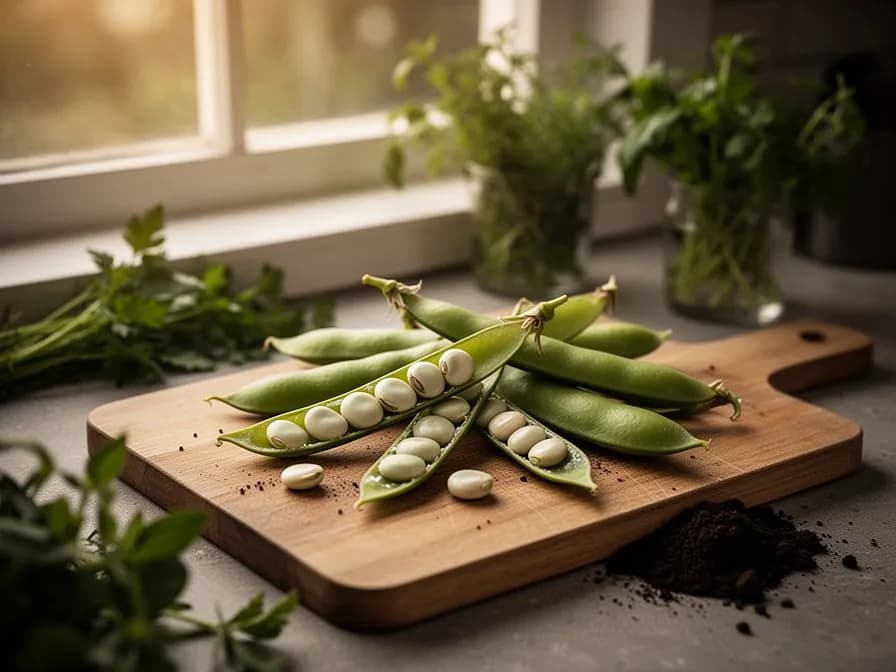
Dal Makhani
90 Min. (plus Einweichen über Nacht)Das Kronjuwel der nordindischen Küche — ganze Urad Dal langsam geköchelt, bis die Bohnen zu einer samtigen, tiefgründig aromatischen Soße verschmelzen, die mit Butter, Sahne und aromatischen Gewürzen angereichert wird. Traditionell über Nacht auf niedriger Flamme gekocht, liefert diese Version die gleiche reichhaltige, rauchige Tiefe in einem Bruchteil der Zeit.
13 ZutatenKnuspriges Dosa
30 Min. (plus Fermentation über Nacht)Hauchdünne, goldene, knusprige Crêpes aus einem natürlich fermentierten Teig aus gemahlener Urad Dal und Reis. Die Fermentation verleiht dem Dosa seinen unverwechselbaren säuerlichen Geschmack und erzeugt einen Teig, der sich auf einer heißen Grillplatte zu unglaublich dünnen, spitzenartigen Runden verteilen lässt.
7 ZutatenUrad Dal Tadka
40 Min. (plus Einweichen)Gespaltene Urad Dal cremig gekocht und mit einem zischenden Tadka (Tarka) aus Ghee, Kreuzkümmel, Senfkörnern und getrockneten Chilis verfeinert. Ein wohltuendes Alltagsgericht, das perfekt zu gedämpftem Reis oder warmem Roti passt.
12 ZutatenKulinarische Verwendung
Urad Dal ist ein Grundpfeiler der indischen Küche und wird ganz (Sabut) für reichhaltige Soßen wie Maa Ki Dal oder gespalten (Dhuli) für seidig-cremige Dals verwendet. Zu einer Paste gemahlen, bildet sie die Basis für Dosa- und Idli-Teige, deren natürliche Fermentation den charakteristischen säuerlichen Geschmack erzeugt. Geröstete ganze Bohnen werden als Tarka in südindischen Gerichten verwendet. Urad-Mehl verdickt Papadums und ergibt knusprige Vada-Krapfen. Die gekeimten Bohnen sind nahrhafte Ergänzungen für Salate und Pfannengerichte.
Was drinsteckt
Gesundheitsvorteile
- Eine der reichsten pflanzlichen Proteinquellen mit 25 g pro 100 g, die alle essentiellen Aminosäuren liefert, wenn sie mit Getreide kombiniert wird — die traditionelle Kombination von Dal mit Reis oder Roti ergibt ein vollständiges Protein, das tierischen Quellen gleichwertig ist.
- Außergewöhnlich reich an Folsäure (625 mcg pro 100 g, 156 % TW), was sie zu einer der besten natürlichen Quellen dieses wichtigen B-Vitamins macht, das für die DNA-Synthese, die Produktion roter Blutkörperchen und eine gesunde fetale Entwicklung während der Schwangerschaft benötigt wird.
- Hervorragender Eisengehalt mit 7,6 mg pro 100 g (42 % TW) — ein lebenswichtiges Mineral für den Sauerstofftransport und die Energieproduktion. Die Kombination von Urad Dal mit Vitamin-C-reichen Lebensmitteln wie Tomaten oder Zitronensaft verbessert die Eisenaufnahme erheblich.
- Reich an Ballaststoffen (18,3 g pro 100 g), einschließlich sowohl löslicher als auch unlöslicher Typen, die die Verdauungsregelmäßigkeit fördern, nützliche Darmbakterien ernähren und helfen, den Blutzuckerspiegel nach Mahlzeiten zu regulieren.
- Der Fermentationsprozess, der zur Herstellung von Dosa- und Idli-Teig aus Urad Dal verwendet wird, erhöht die Bioverfügbarkeit von Nährstoffen, erzeugt nützliche Probiotika und reduziert antinutritive Faktoren wie Phytinsäure, die die Mineralstoffaufnahme hemmen können.
- Enthält bedeutende Mengen an Magnesium (267 mg pro 100 g, 67 % TW), das über 300 enzymatische Reaktionen im Körper unterstützt, einschließlich Muskel- und Nervenfunktion, Blutzuckerkontrolle und Blutdruckregulierung.
Woher Urad Dal stammt
Urad Dal (Vigna mungo), auch als Schwarze Linse oder Schwarze Mungbohne bekannt, stammt vom indischen Subkontinent, wo sie seit mindestens 4.000 Jahren kultiviert wird. Archäologische Funde verkohlter Urad-Dal-Samen wurden an neolithischen Fundstätten in Zentral- und Südindien entdeckt, die auf etwa 2000 v. Chr. datiert werden, und die Bohne wird in alten Sanskrit-Texten einschließlich des Arthashastra und verschiedener ayurvedischer medizinischer Abhandlungen erwähnt. Sie war eine der frühesten domestizierten Hülsenfrucht-Kulturen in der indischen Agrartradition, geschätzt für ihren hohen Proteingehalt, ihre kulinarische Vielseitigkeit und ihre bemerkenswerte Fähigkeit, die Bodenfruchtbarkeit durch Stickstofffixierung wiederherzustellen.
Seit Jahrtausenden nimmt Urad Dal einen zentralen Platz in den Küchen und Esskulturen Südasiens ein. Sie ist die wesentliche Zutat in den fermentierten Teigen, aus denen Dosa, Idli und Medu Vada hergestellt werden — Zubereitungen, die die Grundlage der südindischen Alltagsküche bilden. In Nordindien wurde ganze Urad Dal, zu dem reichhaltigen, buttrigen Dal Makhani gekocht, zum Signaturegericht der punjabischen Küche und wird heute in indischen Restaurants weltweit serviert. Die Bohne wird auch zu Mehl gemahlen für Papadum und verschiedene Süßspeisen, und die gespaltene, geschälte Version (weiße Urad Dal) ist eine Schlüsselzutat in unzähligen Alltags-Dals und Tarkas auf dem gesamten Subkontinent.
Urad Dal verbreitete sich von Indien über antike Handelsrouten nach Südostasien und wird heute in Myanmar, Thailand, Pakistan, Bangladesch und Teilen Ostafrikas angebaut. Indien bleibt mit Abstand der größte Produzent und Verbraucher und baut jährlich über 3 Millionen Tonnen in den Bundesstaaten Madhya Pradesh, Uttar Pradesh, Rajasthan und Maharashtra an. Trotz dieser enormen Produktion importiert Indien regelmäßig zusätzliche Urad Dal aus Myanmar und anderen Ländern, um seinen gewaltigen heimischen Bedarf zu decken. Die Kultur wird typischerweise als kurzfristige Kharif-Kultur (Monsunkultur) angebaut, die sich nahtlos zwischen die Hauptgetreideanbauzeiten einfügt, und ihre stickstofffixierende Fähigkeit macht sie zu einem unschätzbaren Bestandteil traditioneller Fruchtfolgesysteme, die die indische Landwirtschaft seit Jahrtausenden erhalten haben.
Urad Dal: Schon gewusst?
Faszinierende Fakten über Urad Dal
Urad Dal (Vigna mungo) ist das Rückgrat der südindischen Frühstücksküche — ohne sie gäbe es kein Dosa, Idli, Medu Vada oder Papadum. Die einzigartige Kombination aus hohem Proteingehalt, klebriger Stärke und fermentationsfreundlicher Chemie macht sie in diesen ikonischen Zubereitungen unersetzlich.
Urad Dal: Fragen & Antworten
Wann sollte ich Urad Dal pflanzen?
Was sind gute Begleitpflanzen für Urad Dal?
In welchen Winterhärtezonen kann Urad Dal wachsen?
Wie viel Sonne braucht Urad Dal?
Welchen Abstand sollte ich zwischen Urad Dal lassen?
Welche Schädlinge und Krankheiten befallen Urad Dal?
Wie lagere ich Urad Dal nach der Ernte?
Was sind die besten Urad Dal-Sorten zum Anbauen?
Welchen Boden braucht Urad Dal?
Was ist der Unterschied zwischen ganzer Urad Dal und gespaltener Urad Dal?
Kann ich Urad Dal in einem gemäßigten Klima anbauen?
Wie stelle ich Dosa-Teig aus selbst angebauter Urad Dal her?
Warum werden meine Urad-Dal-Pflanzen gelb?
Wie sollte ich selbst angebaute Urad Dal lagern?
Ist Urad Dal gut für die Bodengesundheit?
Du hast die Theorie gelesen. Jetzt baue sie auf Autopilot an.
Alles, was Urad Dal knifflig macht — das Timing, die Abstände, die Begleiter, das Erntefenster — genau das übernimmt PlotMyGarden für dich, für jede Pflanze im Garten.
Ein Plan, der dein Wetter kennt
Standort einmal festlegen. Aussaat-, Dünge- und Erntedaten rund um deinen echten letzten Frosttermin und die Live-Vorhersage — kein Raten mehr nach Saattüte.
Aus dem Abschnitt „Pflanzzeit“Beetplaner per Drag & Drop
Beete auf einem Raster gestalten. Jede Pflanze rastet im richtigen Abstand ein, und du siehst die ganze Saison, bevor du einen Cent für Saatgut ausgibst.
Aus dem Abschnitt „Anbau“Begleiter-Konflikte früh erkannt
Über 200 gute und schlechte Kombinationen werden beim Pflanzen live geprüft — so landet ein saisonruinierender Fehler nie in der Erde.
Aus dem Abschnitt „Begleiter“Erinnerungen, nach denen du wirklich handelst
„Gieß die Bohnen.“ „Heute ernten, bevor's umschlägt.“ Pünktlich, konkret und auf deine echten Pflanzen bezogen.
Aus dem Abschnitt „Ernte“Staffel-Aussaat, geplant
Sechs Wochen ernten statt sechs Tage? Die App verteilt deine Aussaaten automatisch und erinnert dich, wenn der nächste Satz fällig ist.
Aus dem Abschnitt „Pflanzzeit“Ein Verlauf, der schlauer wird
Jede protokollierte Ernte bringt der App deinen Garten bei. Der Plan fürs nächste Jahr startet bei dem, was in deinem Boden wirklich funktioniert hat.
Aus dem Abschnitt „Überblick“Pflanze diese neben Urad Dal
Weitere Hülsenfrüchte
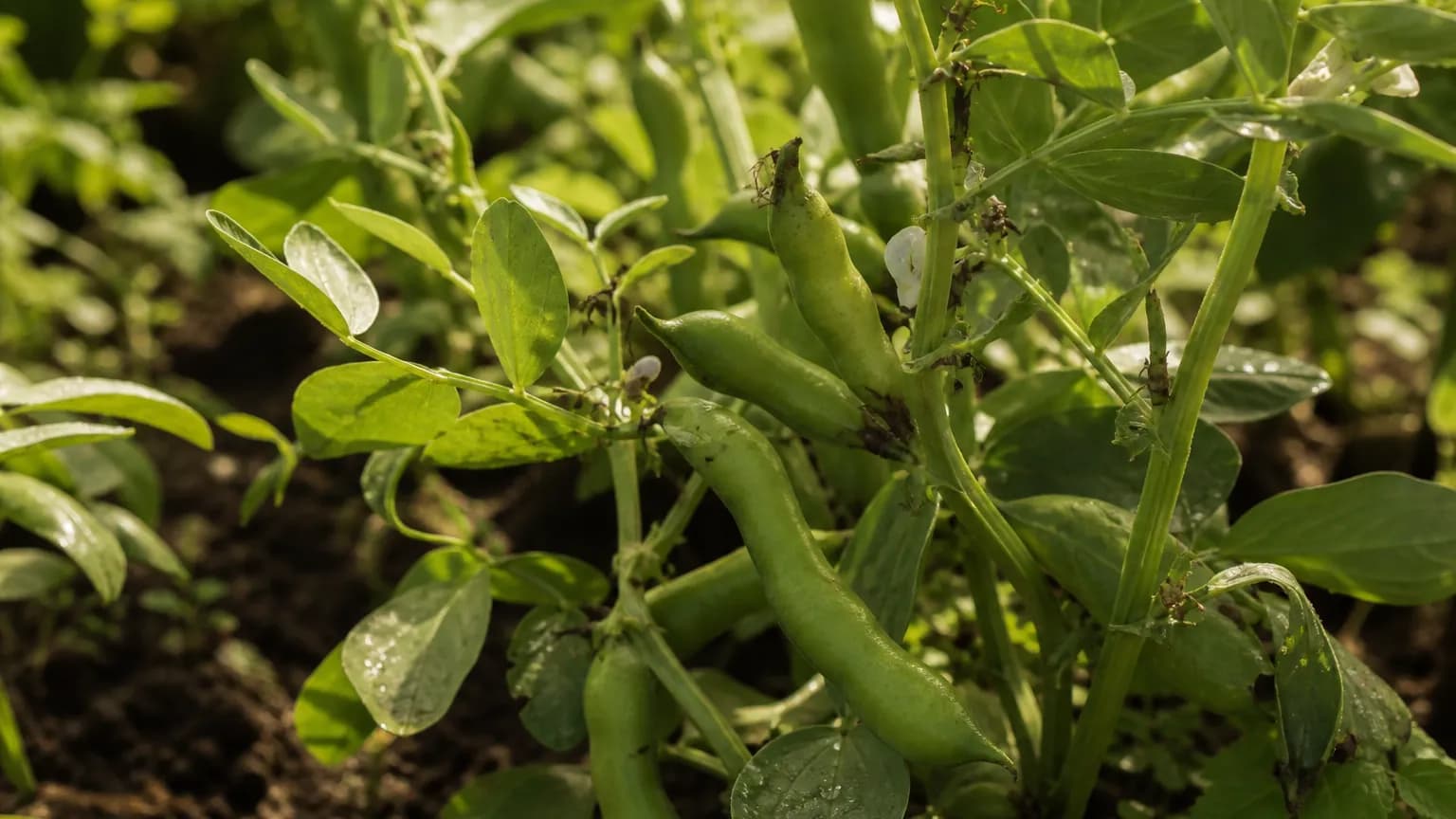
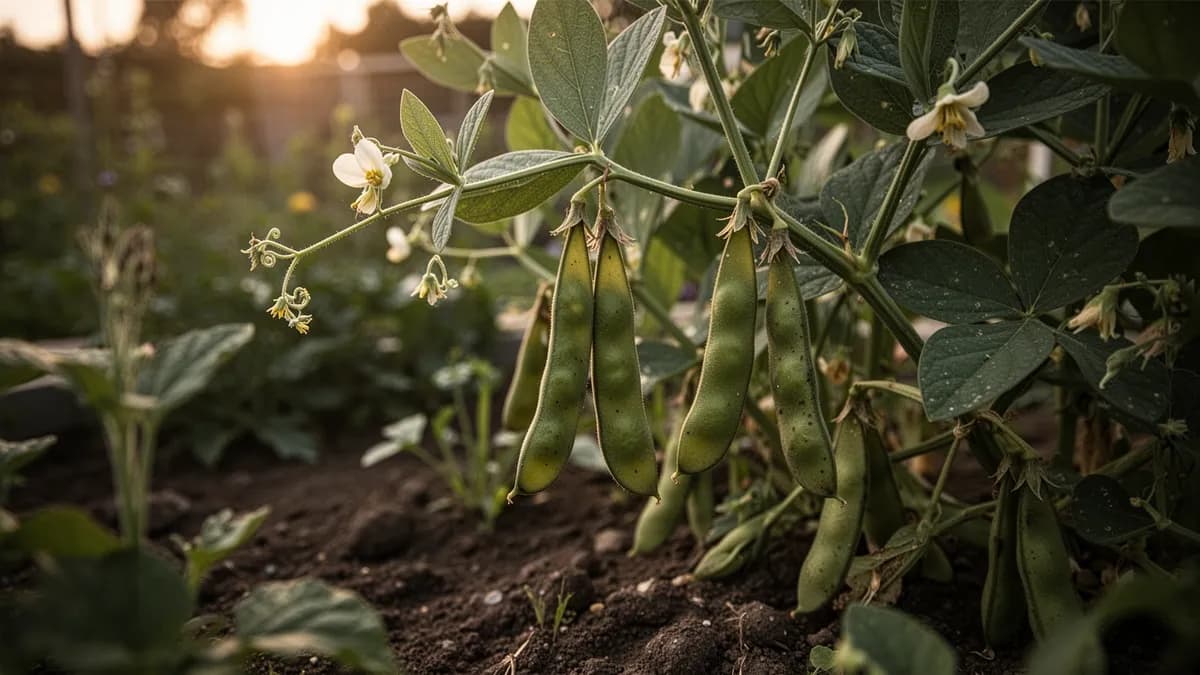
Halte Urad Dal von diesen fern
Bau deine beste Urad Dal an — und alles drumherum.
Starte heute kostenlos. Lege deine Beete an, setze deine Urad Dal ein und lass PlotMyGarden Timing, Abstände, Begleiter und Erinnerungen von der Saat bis zum Erntekorb übernehmen.