San Marzano Tomato
The gold standard Italian paste tomato, producing elongated fruits with thick walls, low seed count, and intense sweet flavor.





On this pageOverview
Meet San Marzano Tomato
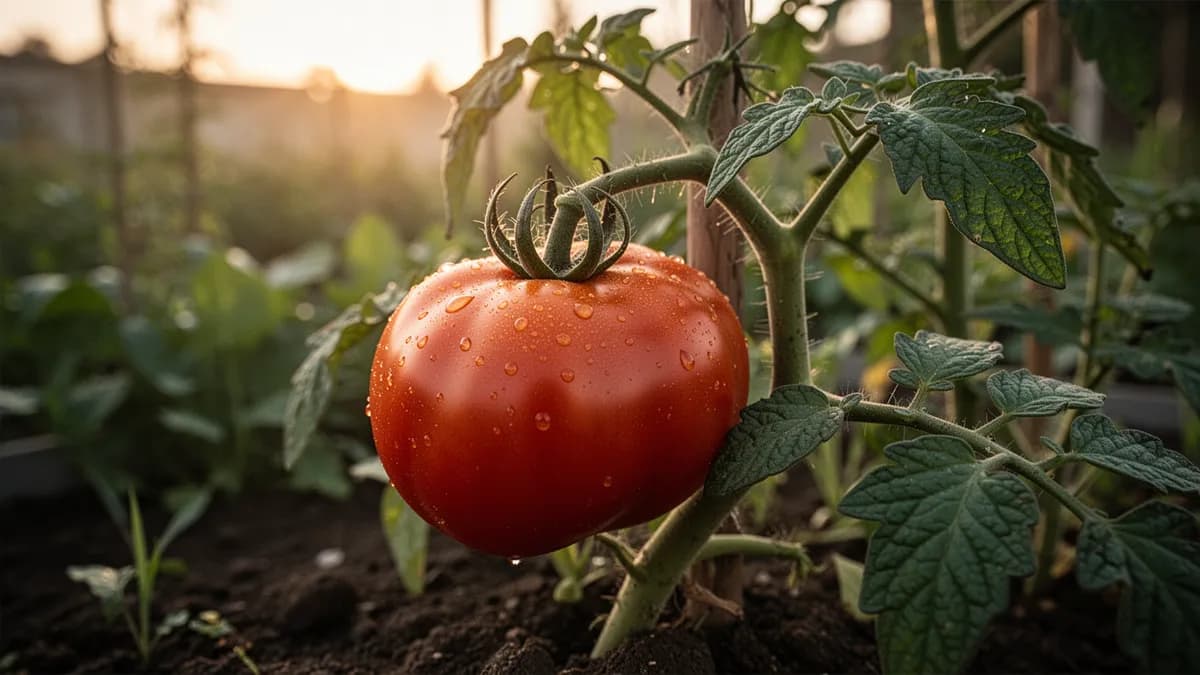
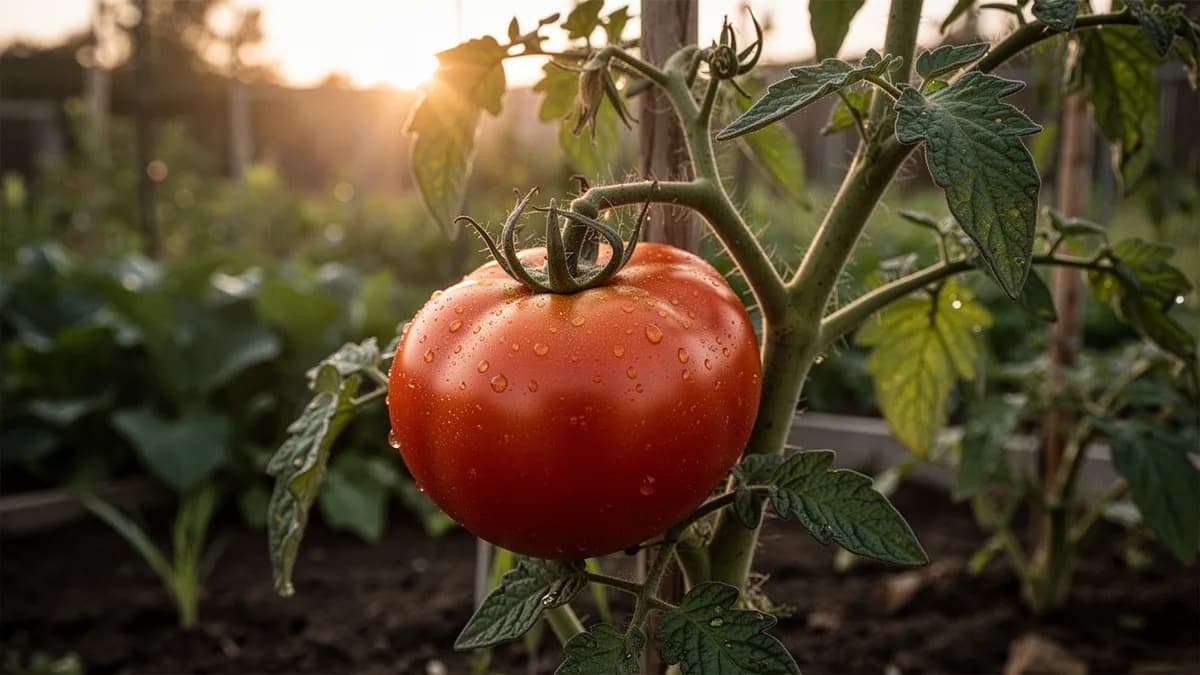
The gold standard Italian paste tomato, producing elongated fruits with thick walls, low seed count, and intense sweet flavor. San Marzano types are indeterminate and need tall stakes or cages to support their vigorous growth through the season. The flesh breaks down into a velvety, rich sauce that is the foundation of authentic Italian cooking. Allow fruits to fully ripen on the vine and process in large batches for canning and freezing.
When to plant San Marzano Tomato
Start San Marzano seeds indoors 8 weeks before the last frost for the longest possible growing season. Sow 6mm deep in warm seed-starting mix at 24-29°C (75-85°F). Germination takes 7-14 days — authentic San Marzano seed sometimes germinates more slowly than modern hybrids. Provide 14-16 hours of strong light. Pot up when first true leaves appear. San Marzanos benefit from a longer indoor growing period than other tomatoes to build strong transplants. Harden off for 10-14 days and transplant deeply after all frost danger. Source seed carefully — purchase only from reputable Italian seed companies or verified suppliers to ensure you receive the authentic variety.
Your San Marzano Tomato Year
Composed for Zone 7 · typical seasons · frost passes Apr 2, returns Nov 1
Plant San Marzano Tomato Feb – May, pick Jul – Sep. Check the planting methods below and set your climate to personalize these windows.
How to grow San Marzano Tomato
San Marzano tomatoes are the aristocrat of paste tomatoes, originating from the volcanic soils near Mount Vesuvius in the Campania region of Italy. Unlike standard Roma types, true San Marzanos are indeterminate — they grow continuously all season and produce their elongated, pointed fruits over a longer period rather than in a concentrated burst. This extended harvest gives you fresh sauce tomatoes for weeks rather than requiring a single massive canning session.
Start seeds indoors 8 weeks before the last frost at 24-29°C (75-85°F). San Marzanos need tall stakes or cages (at least 1.5m) since the indeterminate vines grow vigorously. Space plants 60-75 cm apart. Prune to 2-3 main stems for best fruit quality — more stems means more but smaller fruits. Water consistently at the base, providing 2.5-5 cm per week through drip irrigation.
The key to superior San Marzano flavor is allowing fruits to ripen completely on the vine until deep red — the elongated shape and thick walls means less chance of cracking compared to round tomatoes. The flesh is notably drier and sweeter than standard Romas, with a lower seed count and thicker walls that make it break down into an incredibly velvety sauce with minimal cooking time. San Marzanos are somewhat more disease-sensitive than modern hybrid Romas, so preventive copper fungicide sprays and excellent air circulation are important in humid climates.
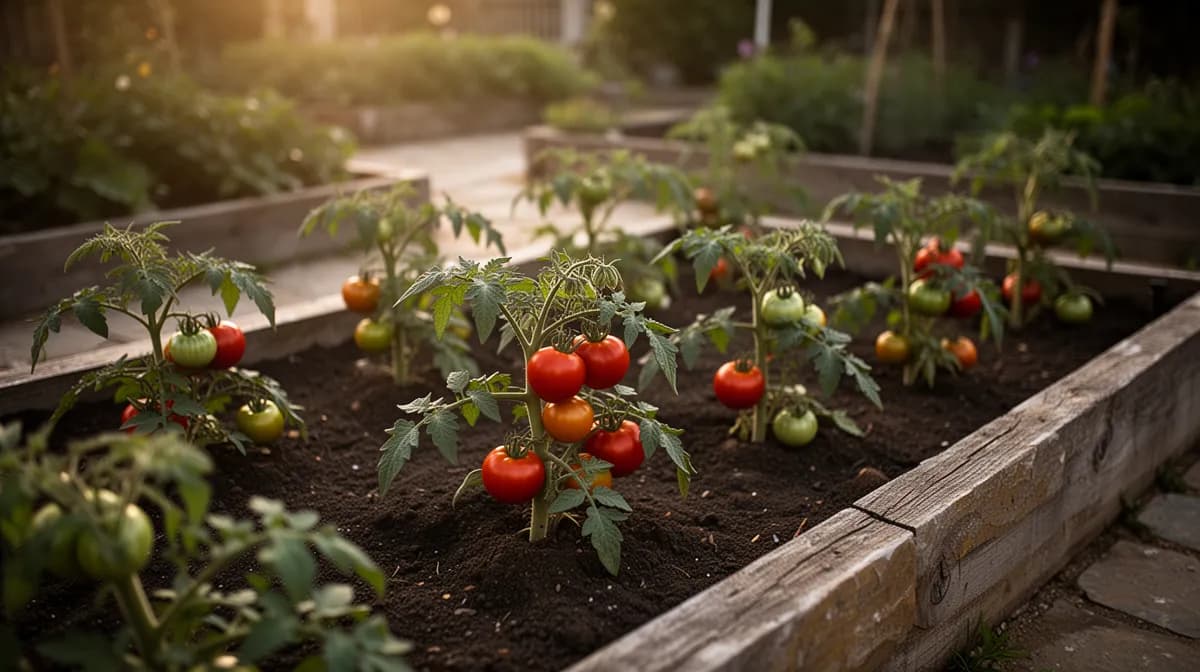
8 plants fit a 4 × 8 ft bed
Each San Marzano Tomato wants 60 cm of elbow room. The planner keeps that spacing for you — every plant, every bed.
San Marzano Tomato's best neighbours
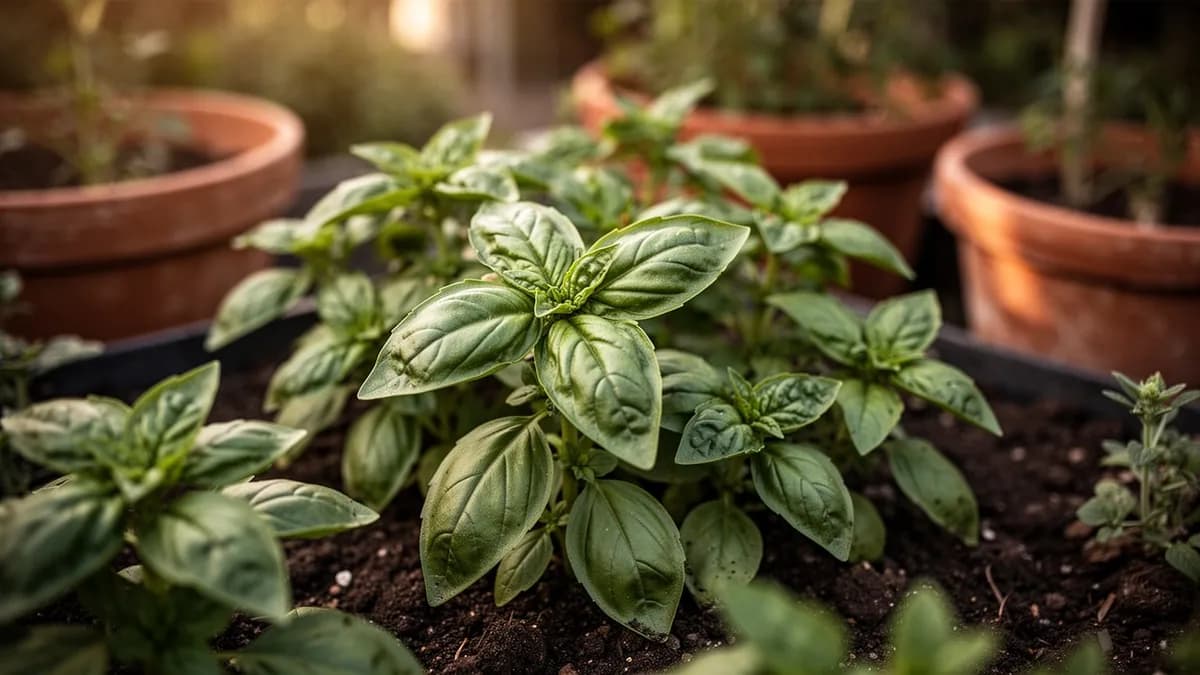
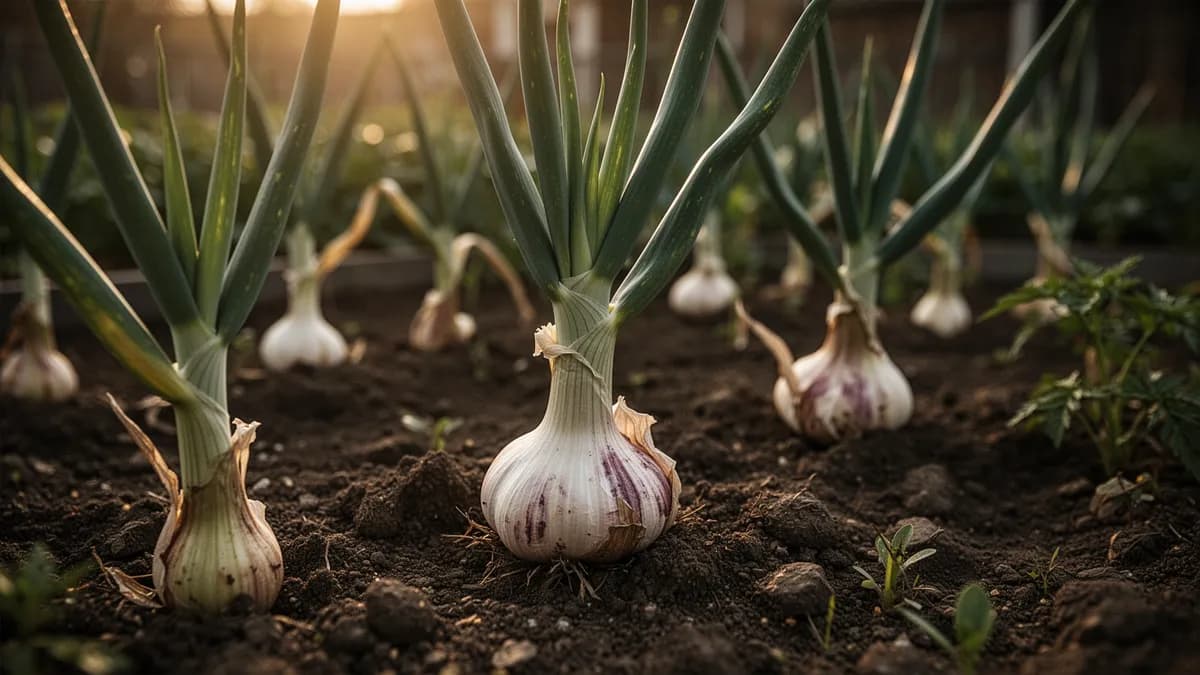
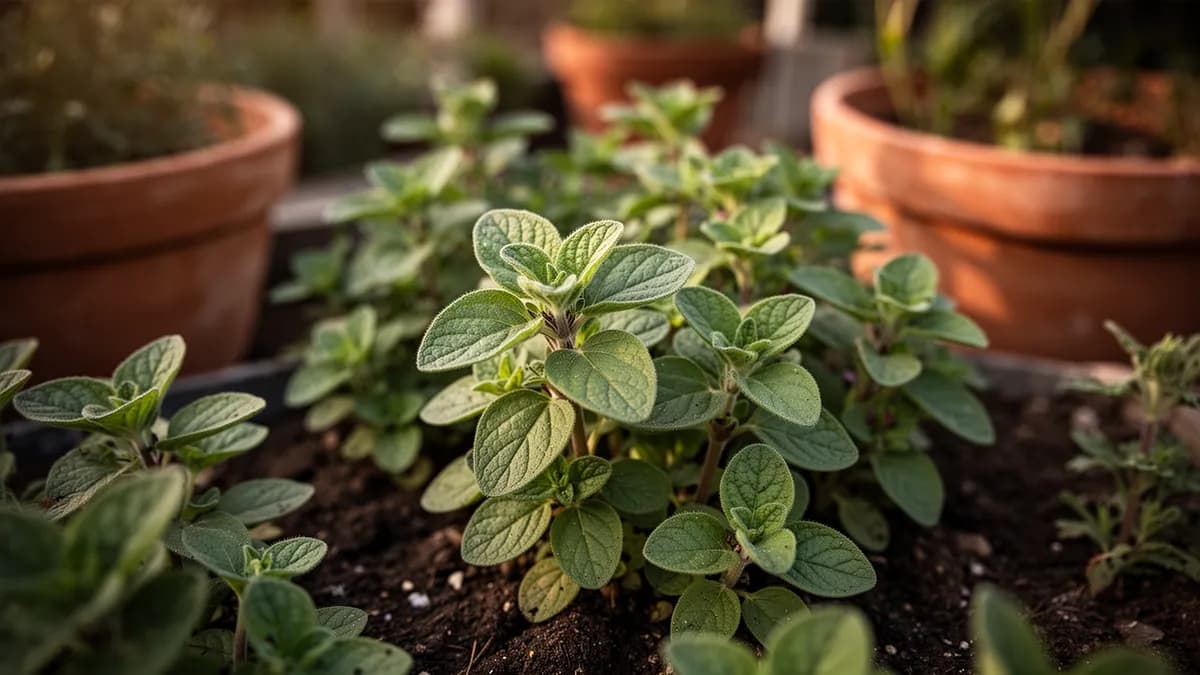
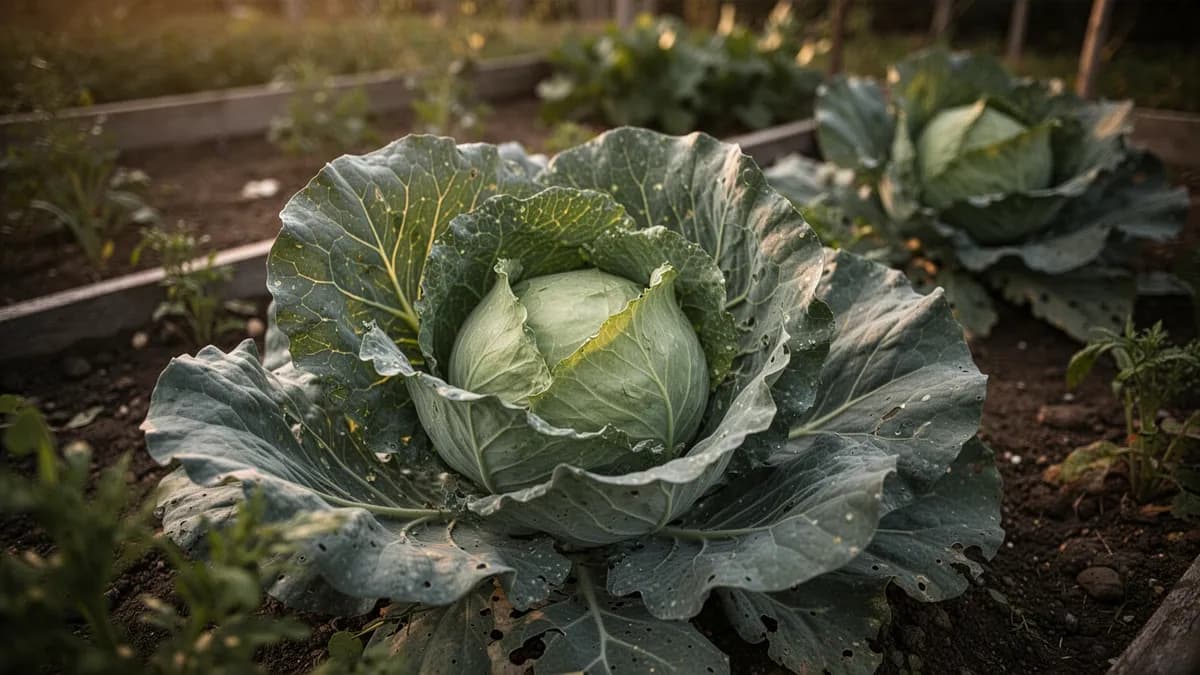
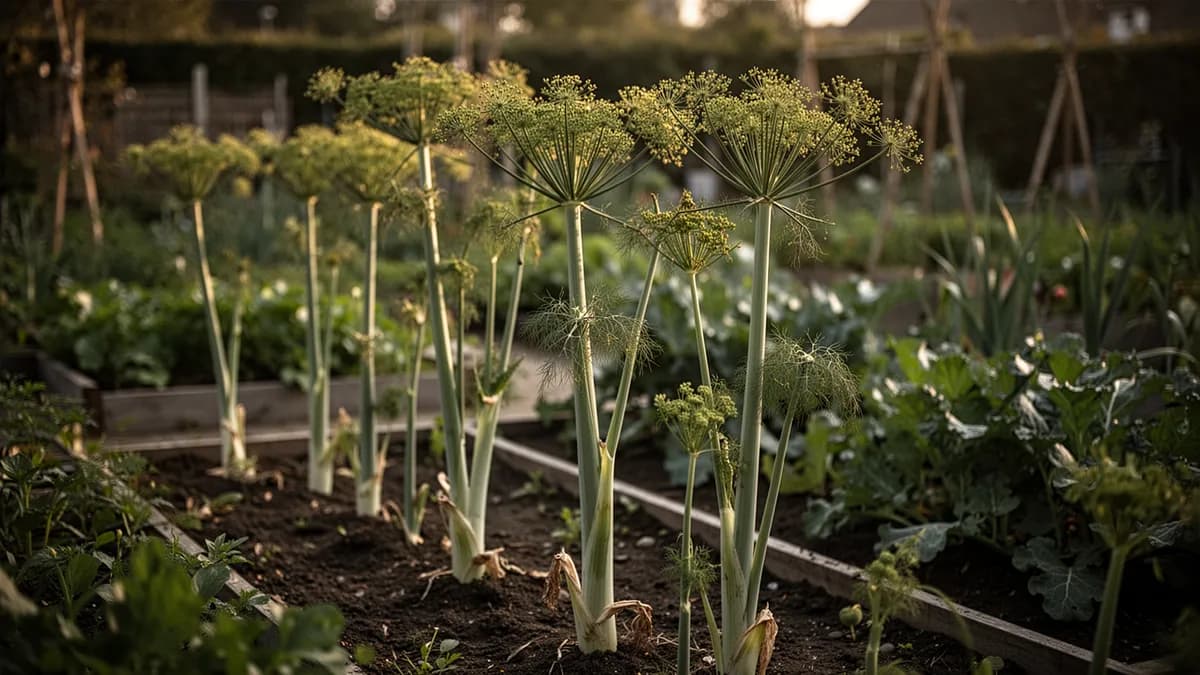
Basil is the essential Italian garden companion — planted alongside San Marzanos, it may enhance flavor and deters aphids and whiteflies. Garlic repels red spider mites and adds to the Mediterranean garden theme. Oregano planted nearby provides another culinary companion while its aromatic oils help deter pests. Avoid planting near cabbage family crops, which are allelopathically incompatible. Keep away from fennel, which inhibits tomato growth. Parsley attracts beneficial hoverflies for natural pest control.
Basil belongs beside it. Cabbage doesn't.
Old growers' knowledge, checked against San Marzano Tomato's real companion table below — test any plant you're growing.
Try San Marzano Tomato in a bed — right here
A real planner bed with San Marzano Tomato already in it. Tap a companion to place it and watch the pairing checks answer — green for good neighbours, red for a clash.


Related growing guides
Feed it well
San Marzano tomatoes thrive in rich, well-drained soil with a pH of 6.2-6.8, ideally mimicking the volcanic soils of their Italian homeland. Amend generously with compost and apply a balanced organic fertilizer at planting. Phosphorus and potassium are especially important for thick-walled fruit development — use a low-nitrogen formula like 5-10-10 when fruiting begins. Side-dress with compost tea every 2 weeks during the fruiting season. Calcium is critical for preventing blossom end rot on the elongated fruits — incorporate gypsum before planting. Avoid excessive nitrogen, which promotes watery flesh that makes poor sauce.
Ideal Temperature
Hardiness Zone Compatibility
From seed to harvest, stage by stage
Seed Starting
Seeds germinate in warm, moist seed-starting mix. The radicle root emerges first, followed by the hypocotyl arch pushing through the surface and unfolding two smooth, oval cotyledon leaves. San Marzano seeds can be slower to germinate than modern hybrids, often requiring 10-14 days even at optimal temperatures of 24-29°C (75-85°F).
Seedling Development
True leaves develop with the characteristic serrated, compound tomato leaf shape and distinctive tomato scent when touched. The stem thickens and fine hairs (trichomes) appear. Seedlings are potted up to larger containers as roots fill their cells. This is a critical period for building a robust root system before transplanting.
Vegetative Growth
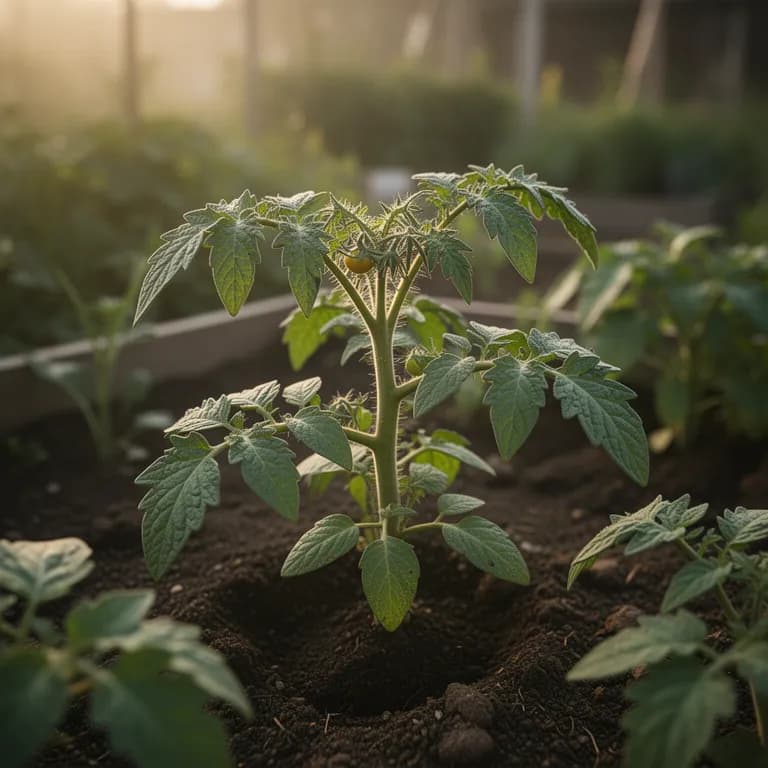
After hardening off and transplanting outdoors, plants grow vigorously as an indeterminate vine, producing new leaves, side shoots (suckers), and extending rapidly. The main stem thickens considerably and the plant begins climbing its support structure. Roots expand deep into the soil.
Flowering and Fruit Set
Small yellow flowers appear in clusters (trusses) along the stem. Each flower is self-pollinating but benefits from wind or gentle vibration to release pollen. Successful pollination leads to tiny green elongated fruits forming at the base of spent flowers. Multiple trusses develop simultaneously along the vine.
Fruit Development
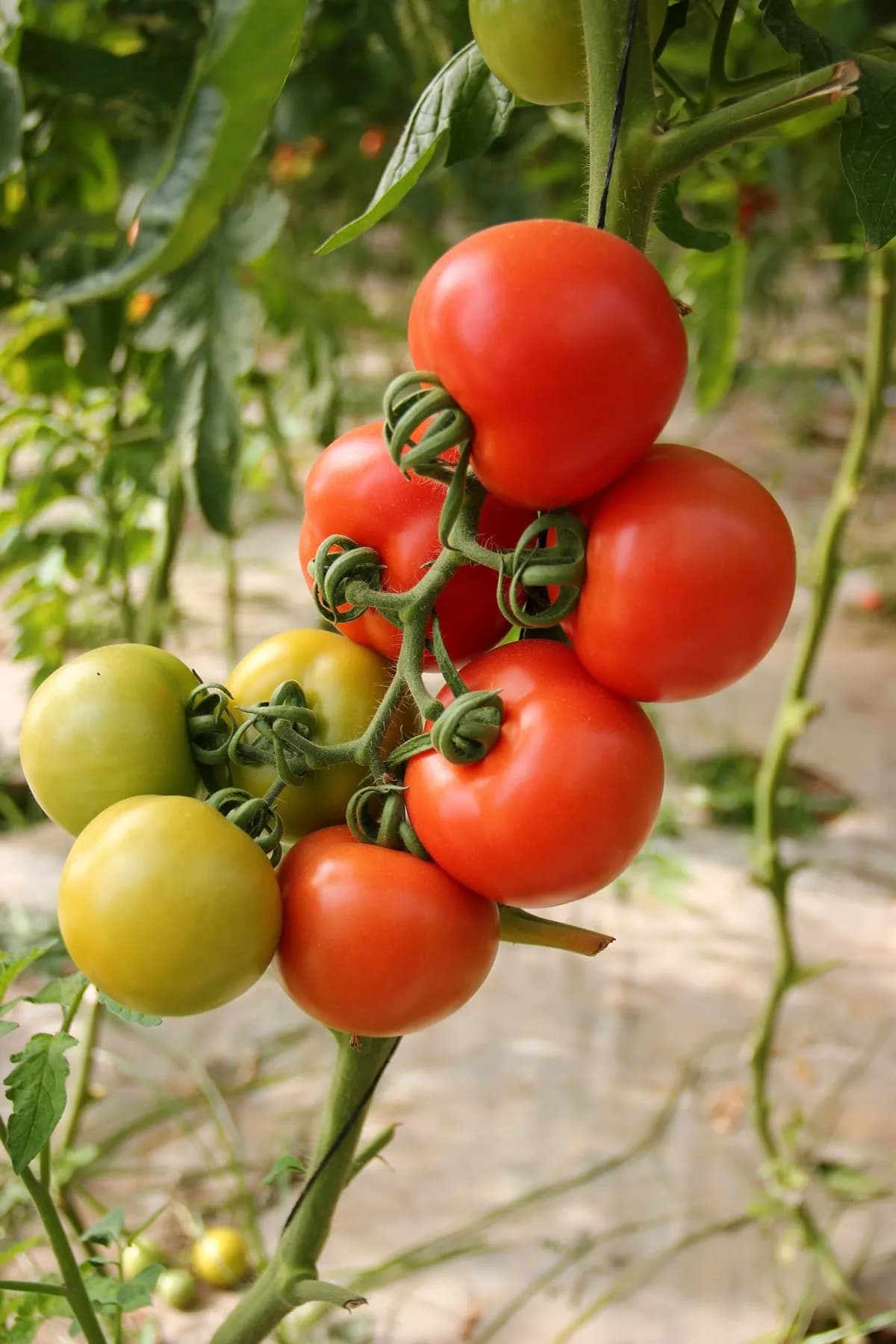
Green fruits elongate into the classic plum shape, growing to 8-12 cm long with thick walls and small seed cavities. Fruits are firm and heavy for their size. As they approach maturity, a faint blush of color appears at the blossom end and gradually spreads upward over several days.
Harvest Season
Fruits ripen to a deep, uniform red with firm, meaty flesh. As an indeterminate variety, San Marzano continues producing new flowers and fruits while earlier trusses ripen, providing a continuous harvest over 6-8 weeks until frost. Ripe fruits separate easily from the vine with a gentle twist.
Maintain consistent soil warmth at 24-29°C using a heat mat. Do not overwater — keep mix moist but not soggy. Provide strong light immediately upon emergence to prevent leggy, weak seedlings.
Caring for San Marzano Tomato month by month
What to do each month for your San Marzano Tomato
October
You are hereFinal harvests in most zones as frost threatens. Pick all remaining fruit, including green tomatoes, before the first hard frost. Green San Marzanos ripen well indoors in a paper bag at room temperature. Pull spent plants and compost disease-free material.
Know exactly what to do in your garden — every month
One email at the start of each month: what to sow, plant, and tackle right now — for your San Marzano Tomato and everything growing around it. Plus a short starter course that helps you dodge the classic mistakes.
- What to do, right now
- Matched to your season
- Starter course included
Harvesting San Marzano Tomato
San Marzano tomatoes should be allowed to ripen completely on the vine until deep, uniform red for maximum flavor and sauce quality. The elongated fruits are ready when they detach easily with a gentle tug and feel slightly soft. Unlike determinate Romas that ripen all at once, indeterminate San Marzanos produce over several weeks, allowing you to process in manageable batches. The thick walls and low juice content mean these tomatoes hold well on the vine for 3-4 days after peak ripeness without splitting. Harvest with pruners, leaving a short stem attached. Process as soon as possible after picking for the best-quality sauce.
assuming you plant when the window opens — set your real date
Pick San Marzano Tomato promptly and the plant keeps producing.
Storage & Preservation
San Marzanos are the premier canning tomato. For whole canned tomatoes, blanch 30-60 seconds, peel, and pack in their own juice with citric acid. Their thick walls and low moisture yield a naturally thicker sauce that requires less cooking time to reduce. For sauce, simply crush peeled tomatoes, simmer for 30-45 minutes, and can or freeze. The concentrated flesh makes outstanding tomato paste — cook down further and freeze in ice cube trays. San Marzanos dehydrate beautifully into intensely flavored dried tomatoes. Fresh fruits store at room temperature for 5-7 days. They freeze well whole for later processing.
What goes wrong — and the fix
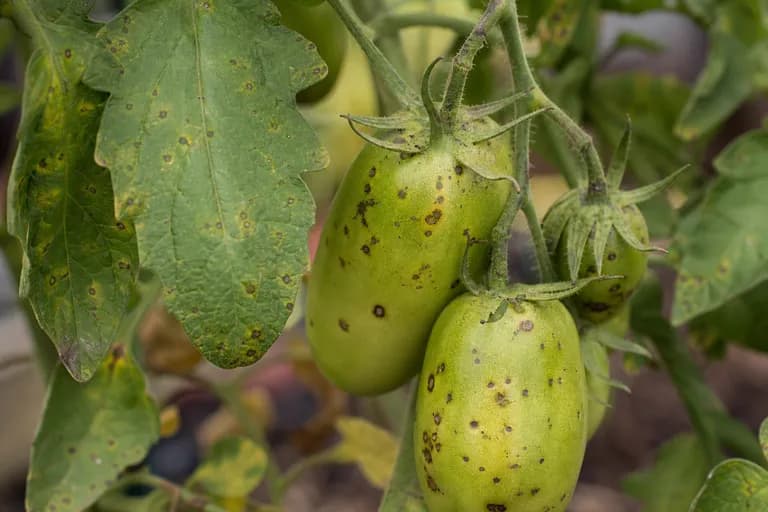
Bacterial Speck
DiseaseTiny dark brown to black spots surrounded by yellow halos appear on leaves and fruits. Fruit spots are raised and superficial but ruin appearance. Disease spreads rapidly in cool, wet, windy conditions.
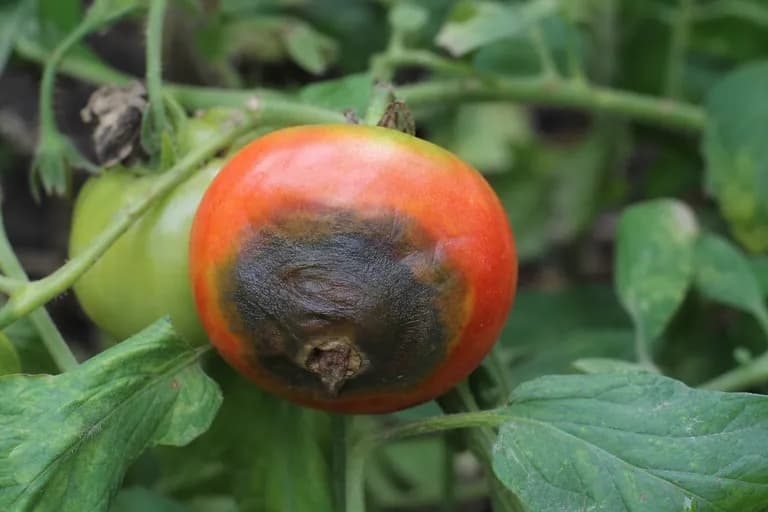
Blossom End Rot
DiseaseDark, sunken, leathery patches on the blossom end of elongated fruits. Particularly noticeable on the pointed tips of San Marzano fruits. Caused by calcium uptake disruption from inconsistent watering.
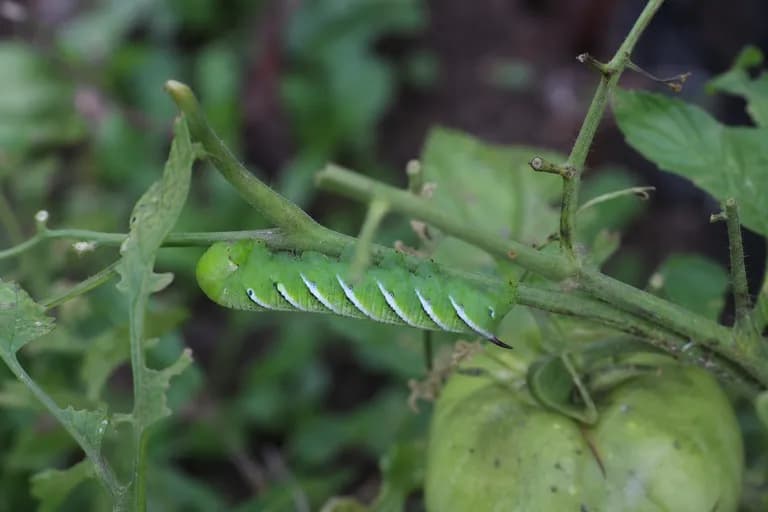
Tomato Hornworm
PestLarge green caterpillars with white stripes consume foliage rapidly, potentially defoliating branches overnight. Dark green frass pellets visible on leaves and ground below.
Troubleshooting Common Problems
Authenticity confusion is common — many seeds sold as San Marzano are actually different varieties with inferior sauce quality. Source seeds from reputable Italian seed companies or certified strains. Blossom end rot affects the pointed tip of the elongated fruits and is caused by inconsistent watering. Lower yields per plant than determinate Roma types can disappoint gardeners expecting massive harvests — San Marzanos trade quantity for quality. The indeterminate habit requires strong support throughout the season. In humid climates, bacterial speck and other foliar diseases require proactive copper fungicide treatment.
Growing Tips
- Plant San Marzano seedlings deeply — bury at least two-thirds of the stem at transplanting. Tomatoes produce adventitious roots along any buried stem, creating a massive root system that improves drought resistance, nutrient uptake, and overall plant vigor.
- San Marzano is an indeterminate (vining) variety that requires strong, tall support. Use sturdy 180-210 cm stakes, heavy-duty cages, or a string trellis system. Flimsy supports will collapse under the weight of a fully loaded plant by mid-season.
- Remove all suckers (side shoots) below the first flower cluster to create a clean lower stem with good air circulation. Above the first cluster, you can choose to let 1-2 additional leaders develop for more fruit, or maintain a single leader for earlier, larger tomatoes.
- Consistent watering is critical — San Marzanos are particularly susceptible to blossom end rot (a calcium uptake disorder caused by irregular watering). Water deeply 2-3 times per week rather than shallowly every day. Drip irrigation is ideal.
- Mulch heavily with straw or shredded leaves once the soil has warmed to at least 18°C. Mulch conserves moisture, suppresses weeds, and prevents soil-borne disease spores from splashing onto lower leaves during rain.
- Remove lower leaves progressively as the plant grows — by midsummer, strip all foliage below the lowest ripening fruit cluster. This dramatically reduces early blight infection, improves air circulation, and redirects energy to fruit production.
- For the best sauce tomatoes, reduce watering slightly (by about 25%) once fruits begin to color. Mild water stress concentrates sugars and flavor compounds in the flesh, producing a more intensely flavored tomato for cooking.
- If your growing season is short (under 120 frost-free days), choose a San Marzano hybrid like 'San Marzano Redorta' or 'Granadero' that matures 10-15 days earlier than the traditional open-pollinated variety while retaining most of the classic flavor and shape.
Grow your best San Marzano Tomato yet — and everything around it.
Start a free plan today. Lay out your beds, drop in your San Marzano Tomato, and let PlotMyGarden handle the timing, spacing, companions and reminders from seed to harvest basket.
Pick your San Marzano Tomato
San Marzano 2 (Redorta)
The authentic Italian strain with elongated, pointed fruits and incomparably sweet, rich flesh. 80 days. Indeterminate. The benchmark for paste tomatoes. DOP-certified variety from the Campania region.
San Marzano Lungo
An extra-long fruited selection producing fruits up to 12 cm with thick, dry flesh ideal for sun-drying. 85 days. Indeterminate. Outstanding concentrated flavor. Heavy yields on vigorous vines.
Granadero F1
A modern San Marzano hybrid with improved disease resistance while maintaining the classic shape and flavor. 75 days. Indeterminate. Resistant to Fusarium and Verticillium. More reliable than open-pollinated strains.
San Marzano Nano
A compact, determinate San Marzano type reaching only 90 cm tall while producing classic elongated fruits. 70 days. Excellent for containers and small gardens. Concentrated harvest over 2-3 weeks.
A single San Marzano plant costing $3-5 (or pennies from seed) can produce 4-6 kg of tomatoes per season. Authentic DOP San Marzano canned tomatoes retail for $5-8 per 800g can, and premium domestic San Marzano-type cans cost $3-5 each. Growing just 6-8 plants produces enough to can 20-30 jars of sauce, representing $80-150 in equivalent store-bought product. The savings are even greater when you consider that homemade sauce from vine-ripened San Marzanos is superior in flavor to any canned product available at retail.
Quick recipes
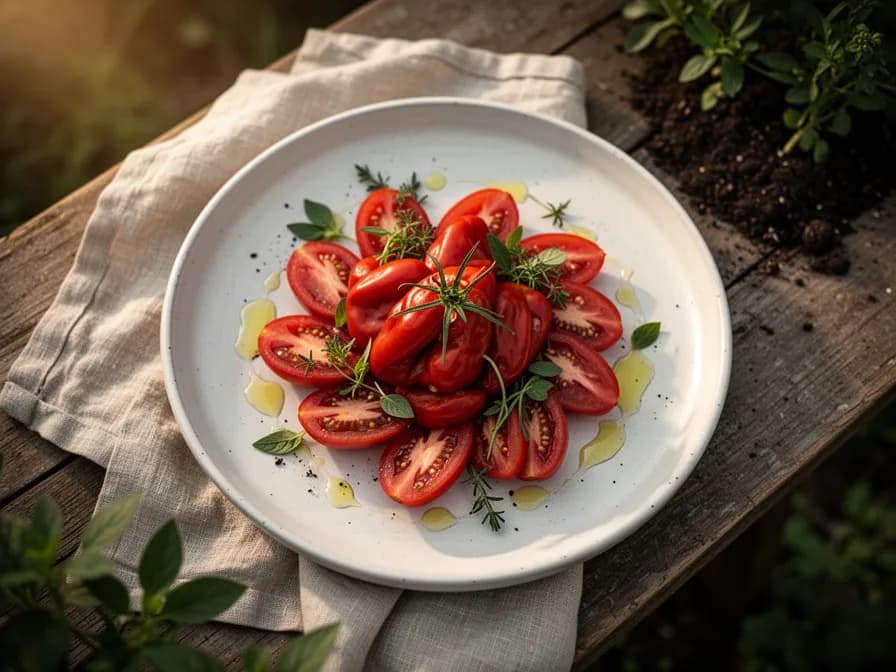
Classic San Marzano Marinara
30 minThe quintessential Italian tomato sauce — crushed San Marzano tomatoes simmered gently with garlic, olive oil, and fresh basil. The naturally thick, sweet flesh of San Marzanos means this sauce needs no added sugar, minimal cooking time, and produces a velvety consistency that clings to pasta perfectly.
7 ingredientsOven-Roasted San Marzano Bruschetta
25 minSan Marzano tomatoes halved and slow-roasted until concentrated and caramelized, then piled onto garlic-rubbed grilled bread with fresh mozzarella and torn basil. The roasting intensifies the tomato's natural sweetness and creates an unforgettable appetizer.
8 ingredientsSan Marzano Pizza Sauce (Neapolitan Style)
5 minAuthentic Neapolitan pizza sauce is uncooked — ripe San Marzano tomatoes are simply crushed by hand with salt, a drizzle of olive oil, and nothing else. The sauce cooks directly on the pizza in the hot oven, preserving the bright, fresh tomato flavor that defines true Neapolitan pizza.
5 ingredientsCulinary Uses
San Marzano tomatoes are the foundation of authentic Italian tomato sauce — their thick, dry flesh, low acidity, and intense sweetness create a velvety sauce with minimal cooking. They are the only tomato variety permitted for true Neapolitan pizza sauce (DOP certification). Use for marinara, pomodoro, arrabbiata, and puttanesca sauces. Outstanding for bruschetta, caprese-style preparations, and oven-roasted whole. The concentrated flavor means you need fewer tomatoes per batch of sauce. Crushed San Marzanos make the finest base for tomato soup.
What's inside
Health Benefits
- San Marzano tomatoes are exceptionally rich in lycopene, a carotenoid antioxidant strongly linked to reduced risk of prostate cancer, cardiovascular disease, and age-related macular degeneration. Cooking tomatoes with olive oil — as in traditional Italian sauce — increases lycopene bioavailability by up to five-fold.
- Rich in vitamin C (14% DV per 100g), supporting collagen synthesis, immune function, and enhancing absorption of non-heme iron from plant foods when eaten together.
- Contains significant beta-carotene (provitamin A), which the body converts to vitamin A for healthy vision, immune function, and skin cell turnover.
- Provides potassium (237mg per 100g), an essential electrolyte that helps regulate blood pressure by counteracting the effects of dietary sodium — particularly important given typical Western diets high in sodium.
- Tomatoes contain naringenin and chlorogenic acid, phenolic compounds with anti-inflammatory properties that may help reduce chronic inflammation associated with heart disease, diabetes, and arthritis.
- Very low in calories (18 kcal per 100g) and virtually fat-free, making tomato-based sauces an excellent foundation for calorie-conscious meals that are still deeply satisfying and nutrient-dense.
Where San Marzano Tomato comes from
The San Marzano tomato (Solanum lycopersicum 'San Marzano') traces its origins to the small town of San Marzano sul Sarno in the Campania region of southern Italy, nestled between Naples and Salerno in the shadow of Mount Vesuvius. According to tradition, the first seeds arrived in Italy around 1770 as a gift from the Viceroyalty of Peru to the Kingdom of Naples, though the exact historical record is uncertain. What is certain is that the volcanic soil of the Agro Sarnese-Nocerino plain — enriched over millennia by periodic eruptions of Vesuvius — proved to be the perfect terroir for this particular cultivar.
The unique growing conditions of the San Marzano region — mineral-rich volcanic soil, warm Mediterranean climate, reliable rainfall patterns, and proximity to the sea — produced a tomato of exceptional quality that could not be replicated elsewhere. By the late 19th century, the San Marzano tomato had become the foundation of Neapolitan cuisine and the Italian canning industry. The first commercial canning of San Marzano tomatoes began in the early 1900s, and the variety became synonymous with Italian tomato sauce worldwide. The distinctive elongated plum shape, thick flesh, low seed count, and balanced sweet-acid flavor made it the gold standard for cooking tomatoes.
In 1996, San Marzano tomatoes from the Agro Sarnese-Nocerino region received DOP (Protected Designation of Origin) status from the European Union, legally protecting the name and establishing strict production standards. Only tomatoes of the San Marzano type grown in designated municipalities, hand-harvested, and processed according to traditional methods can carry the DOP seal. Today, San Marzano seeds have been distributed worldwide and the variety is grown by home gardeners and small farms on every continent, though purists maintain that only the Vesuvian-grown product achieves the authentic flavor profile. The variety remains the most sought-after paste tomato in the world and continues to command premium prices in international markets.
San Marzano Tomato: did you know?
Fascinating facts about San Marzano Tomato
San Marzano tomatoes hold DOP (Denominazione di Origine Protetta) status from the European Union — only tomatoes grown in the volcanic soil of the Agro Sarnese-Nocerino region near Mount Vesuvius in Italy can legally bear the 'San Marzano dell'Agro Sarnese-Nocerino' DOP label on canned products.
San Marzano Tomato questions, answered
When should I plant San Marzano Tomato?
What are good companion plants for San Marzano Tomato?
What hardiness zones can San Marzano Tomato grow in?
How much sun does San Marzano Tomato need?
How far apart should I space San Marzano Tomato?
What pests and diseases affect San Marzano Tomato?
How do I store San Marzano Tomato after harvest?
What are the best San Marzano Tomato varieties to grow?
What soil does San Marzano Tomato need?
What is the difference between authentic DOP San Marzano and regular San Marzano tomatoes?
Why are my San Marzano tomatoes getting blossom end rot?
How do I know when San Marzano tomatoes are ripe enough to pick?
Can I save seeds from my San Marzano tomatoes for next year?
Why are my San Marzano plants so tall but producing very little fruit?
How many San Marzano plants do I need to make enough sauce for the year?
You just read the theory. Now grow it on autopilot.
Everything that makes San Marzano Tomato fiddly — the timing, the spacing, the companions, the harvest window — is exactly what PlotMyGarden handles for you, for every plant in your garden.
A plan that knows your weather
Set your location once. Get sow, feed and harvest dates built around your real last-frost date and live forecast — no more guessing from a generic seed packet.
From the “When to plant” sectionDrag-and-drop bed planner
Design beds on a grid. Every plant snaps to its proper spacing, and you can see your whole season laid out before you spend a cent on seed.
From the “Growing guide” sectionCompanion conflicts, caught early
200+ good-and-bad pairings checked live as you plant — so a season-wrecking mistake never makes it into the ground.
From the “Companions” sectionReminders you'll actually act on
“Water the beans.” “Pick today before it turns.” Timely, specific, and tied to the plants you're really growing.
From the “Harvest” sectionSuccession, scheduled
Want a harvest for six weeks, not six days? It spaces your sowings automatically and reminds you when each new block is due.
From the “When to plant” sectionA record that gets smarter
Every harvest you log teaches it your garden. Next year's plan starts from what actually worked in your soil, not a textbook's.
From the “Overview” sectionPlant these alongside San Marzano Tomato
More Nightshades
Keep San Marzano Tomato away from these
Garden plans featuring San Marzano Tomato
Grow your best San Marzano Tomato yet — and everything around it.
Start a free plan today. Lay out your beds, drop in your San Marzano Tomato, and let PlotMyGarden handle the timing, spacing, companions and reminders from seed to harvest basket.