Ranunculus
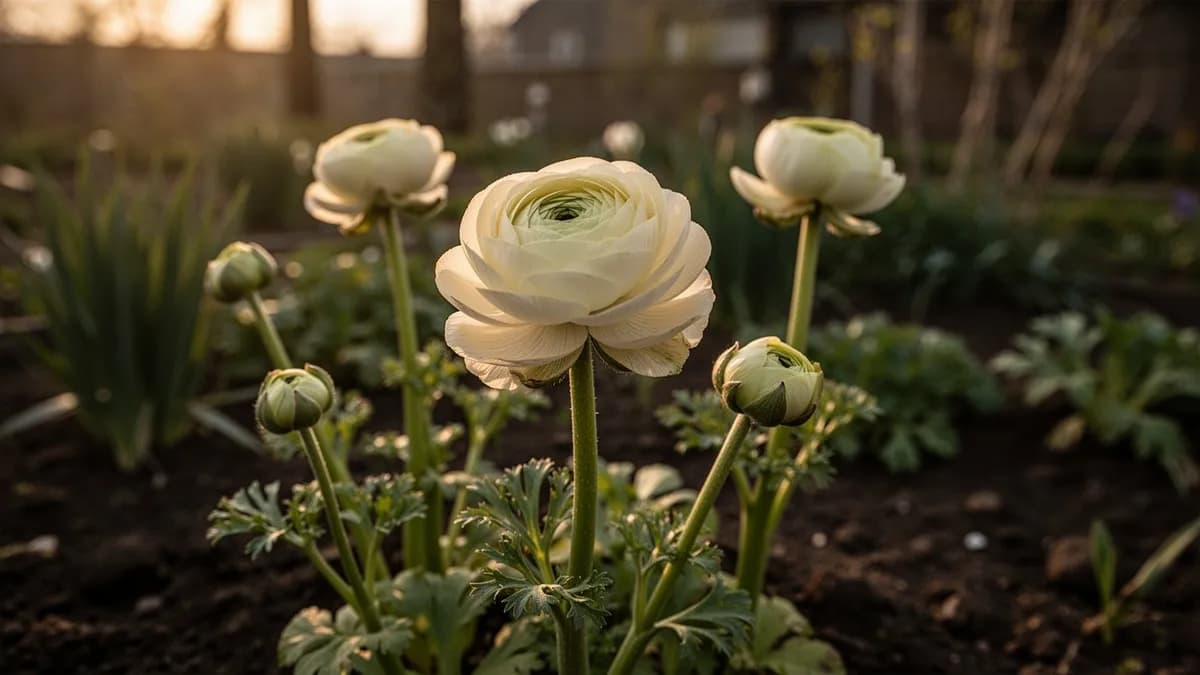
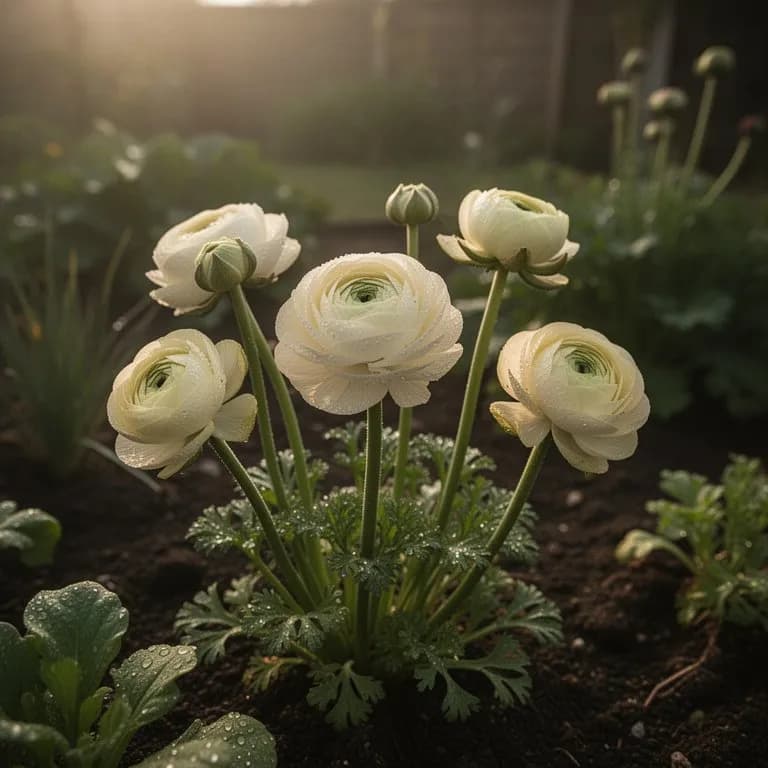
A Persian buttercup with tissue-paper thin petals layered into rose-like blooms in every color of the rainbow.





On this pageOverview
Meet Ranunculus
A Persian buttercup with tissue-paper thin petals layered into rose-like blooms in every color of the rainbow. Ranunculus is a favorite of florists for its incredible vase life lasting up to two weeks when cut. Soak the claw-like tubers overnight before planting and provide cool growing conditions for the best blooms.
When to plant Ranunculus
Ranunculus are almost exclusively grown from tubers rather than seed, as seed germination is slow and erratic. If attempting from seed, sow on the surface of moist seed-starting mix in late winter and keep at 50-55°F (10-13°C)—they require cool temperatures and light to germinate. Germination takes 2-4 weeks. Seedlings grow slowly and typically take a full year to produce flowering-size tubers.
Your Ranunculus Year
Composed for Zone 7 · typical seasons · frost passes Apr 2, returns Nov 1
Plant Ranunculus Feb – Mar, pick Apr – Jun. Check the planting methods below and set your climate to personalize these windows.
How to grow Ranunculus
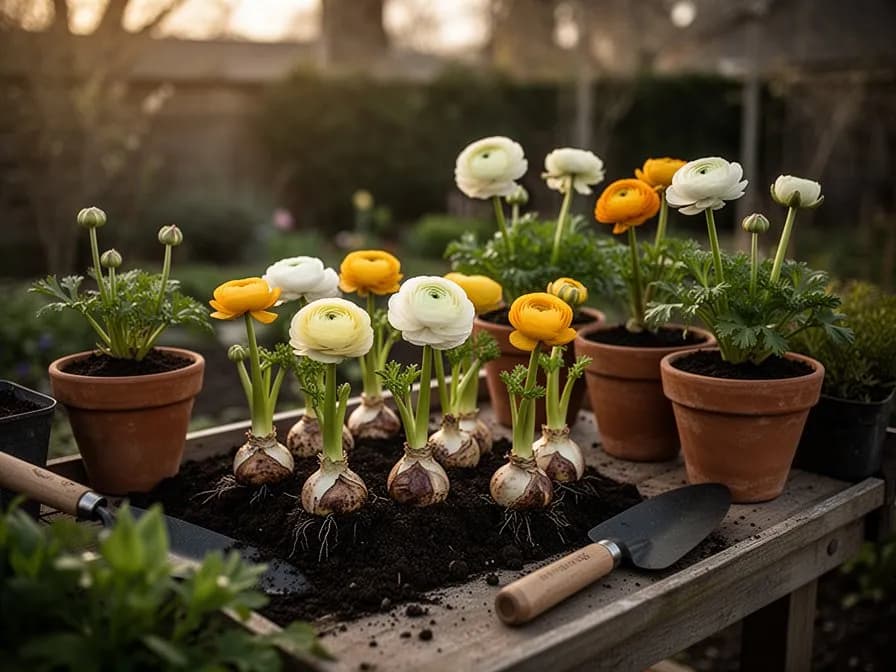
Ranunculus tubers resemble tiny dried octopus claws and need pre-soaking before planting. Soak in room-temperature water for 3-4 hours (no longer, or they may rot) until they swell to roughly double their size. Plant with the claws pointing downward, 2 inches deep and 6 inches apart.
In mild-winter areas (zones 8-11), plant tubers in autumn for late-winter and spring blooms. In colder climates, start tubers indoors in late winter or plant out after the last frost for early summer flowers. Ranunculus prefer cool growing conditions—they produce the best blooms when daytime temperatures are 55-65°F (13-18°C) and struggle in summer heat above 80°F (27°C).
Provide consistent moisture during active growth but avoid waterlogging, which causes tuber rot. Once flowering finishes and foliage yellows, reduce watering and allow tubers to go dormant. In cold climates, dig tubers after foliage dies back, dry, and store in a cool place for replanting the following season.
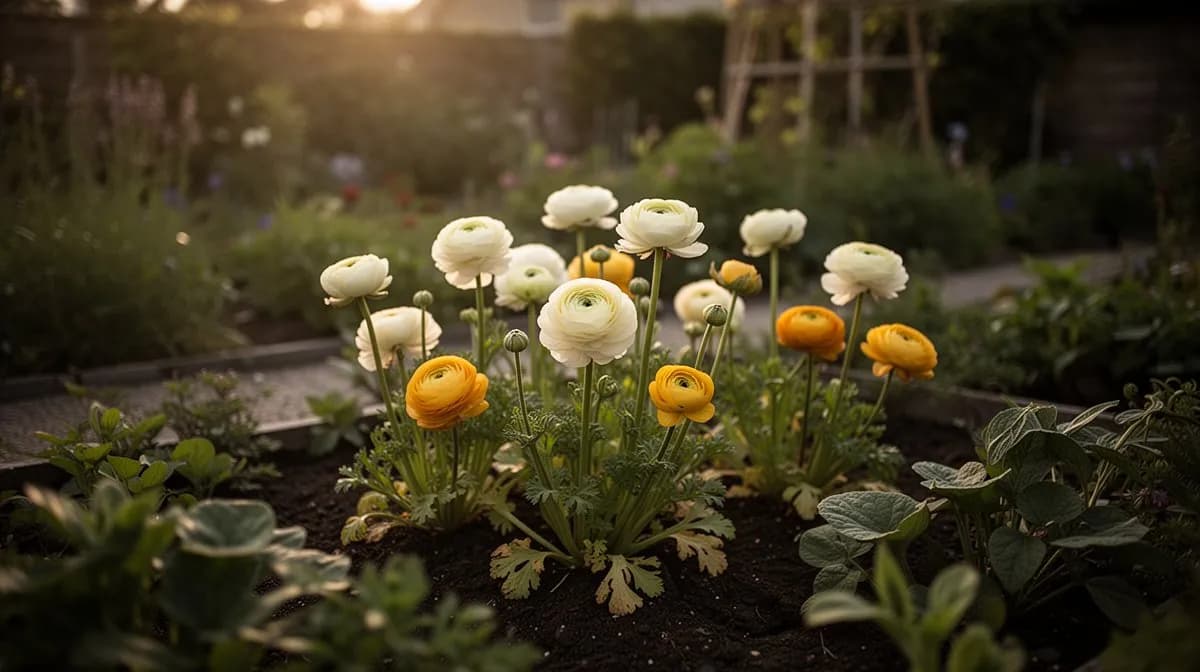
128 plants fit a 4 × 8 ft bed
Each Ranunculus wants 15 cm of elbow room. The planner keeps that spacing for you — every plant, every bed.
Ranunculus's best neighbours
Ranunculus are classic cut-flower garden companions alongside anemones, sweet peas, and snapdragons, all sharing similar cool-season growing preferences. In ornamental beds, pair with forget-me-nots, violas, and stock for a romantic cottage-garden effect. The low, bushy foliage of ranunculus fills gaps nicely between taller spring flowers like tulips and foxgloves.
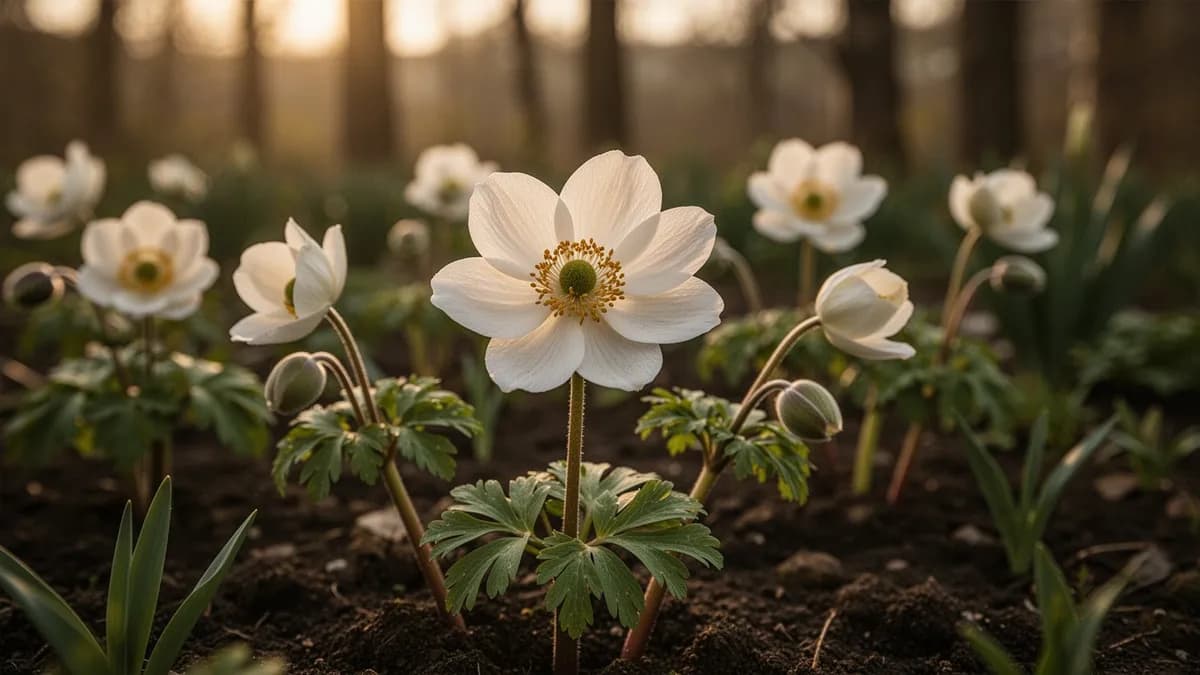
Anemone (De Caen) belongs beside it.
Old growers' knowledge, checked against Ranunculus's real companion table below — test any plant you're growing.
Try Ranunculus in a bed — right here
A real planner bed with Ranunculus already in it. Tap a companion to place it and watch the pairing checks answer — green for good neighbours, red for a clash.


Related growing guides
Feed it well
Ranunculus need rich, well-drained soil with a pH of 6.0-6.5. Amend planting beds with compost and a slow-release balanced fertilizer before planting. In heavy clay, grow in raised beds or containers with a mix of compost, perlite, and garden soil. Feed every two weeks with a liquid fertilizer high in potassium once buds begin forming to boost flower production and quality.
Ideal Temperature
Hardiness Zone Compatibility
From seed to harvest, stage by stage
Corm Pre-Soaking & Planting
Dried ranunculus corms are hard, lightweight, and claw-shaped. Before planting, they must be rehydrated by soaking in room-temperature water for 3-4 hours — they will roughly double in size. Oversoaking beyond 6 hours can cause rot. Plant corms 5 cm deep with the claw-like projections pointing downward, spaced 10-15 cm apart in well-drained soil. In mild-winter climates (zones 8-10), plant in autumn for spring blooms. In colder zones, start indoors in late winter or plant out after the last hard frost.
Root Development & Foliage Emergence
Within 1-2 weeks of planting, roots emerge from the claw-like projections and anchor into the soil. Fine, deeply divided foliage resembling flat-leaf parsley or celery tops appears at the soil surface shortly after. The rosette stays compact and low during this stage, building the energy reserves needed for flower stem production. Cool temperatures between 7-15°C (45-60°F) during this phase produce the sturdiest plants.
Vegetative Growth & Stem Elongation
The foliage rosette expands and thickens as the plant channels energy from the corm. Multiple branching stems begin to elongate, each tipped with a small, round, green flower bud enclosed in sepals. Stems are hollow and somewhat brittle. The plant may produce 5-15 stems depending on corm size and growing conditions. Larger grade corms (size 5-7 cm circumference) produce significantly more stems.
Blooming Period
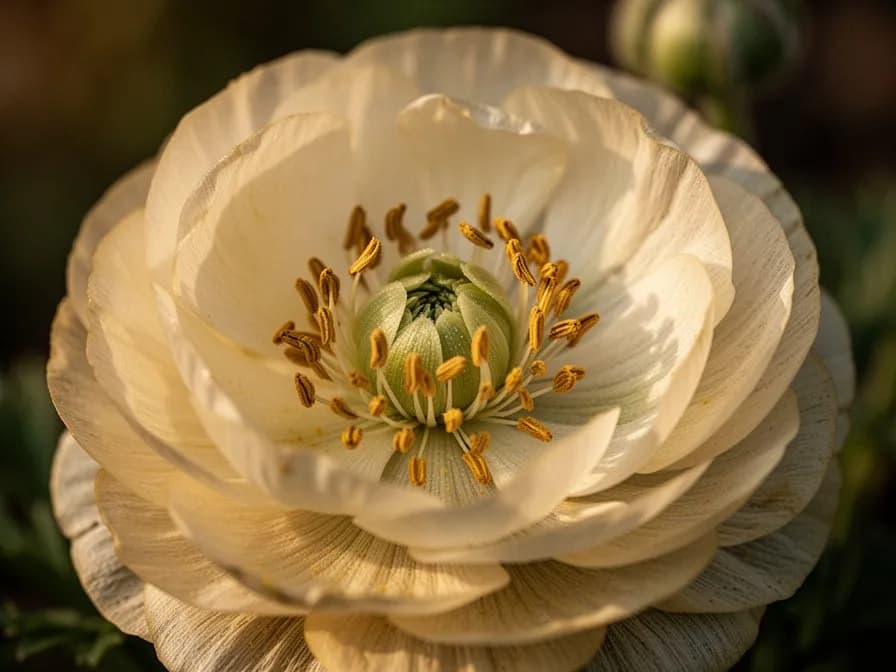
Flowers open over a 4-6 week window, with each individual bloom lasting 5-7 days on the plant. Fully double varieties can have 40-80 paper-thin petals spiraling from the center, creating a rose-like or peony-like appearance. Colors span white, cream, yellow, gold, orange, salmon, pink, rose, red, burgundy, and bicolor picotee types. Each plant produces blooms in succession, with secondary and tertiary stems flowering after the primary stems are cut or fade.
Senescence & Corm Ripening
As temperatures rise above 25°C (77°F), flowering slows and foliage begins to yellow. The plant redirects energy back into the corm and forms small offset cormels around the mother corm. This dieback is natural and essential — the corm is storing reserves for the next growing season. Do not remove foliage prematurely; allow it to yellow completely.
Dormancy & Storage
Cured corms enter full dormancy and can be stored for several months. During this period, the corm is alive but metabolically inactive. Properly stored corms should feel firm and heavy for their size. In mild-winter climates (USDA zones 8-10), corms can be left in the ground year-round if the soil drains exceptionally well; however, digging and storing generally produces stronger plants.
Add a splash of hydrogen peroxide to the soaking water to discourage fungal issues. If corms float, they may be hollow or dead — discard them. Plant immediately after soaking; do not let rehydrated corms dry out again.
Caring for Ranunculus month by month
What to do each month for your Ranunculus
October
You are hereAutumn planting continues in mild climates through mid-October. Space corms 10-15 cm apart in beds or containers. Apply a light mulch layer. In cold zones, ensure stored corms are in a cool (10-15°C), dark, dry location.
Know exactly what to do in your garden — every month
One email at the start of each month: what to sow, plant, and tackle right now — for your Ranunculus and everything growing around it. Plus a short starter course that helps you dodge the classic mistakes.
- What to do, right now
- Matched to your season
- Starter course included
Harvesting Ranunculus
Ranunculus are prized cut flowers with an extraordinary vase life of 7-12 days. Cut when buds feel like a soft marshmallow when gently squeezed—firm enough to hold shape but showing color. Cut in early morning with stems as long as possible. Strip lower foliage and place immediately in cool water. The flowers will continue to open fully in the vase, revealing layer upon layer of delicate petals.
assuming you plant when the window opens — set your real date
From bulbs, tubers or cloves
Pick Ranunculus promptly and the plant keeps producing.
Storage & Preservation
In zones 7-11, tubers can remain in the ground year-round if soil drainage is excellent. In colder zones, dig tubers after foliage yellows completely, brush off soil, and cure in a dry, shaded area for a week. Store in paper bags with dry peat moss or vermiculite at 50-55°F (10-13°C). Check monthly for rot and discard any soft tubers. Re-soak before replanting the following season.
What goes wrong — and the fix
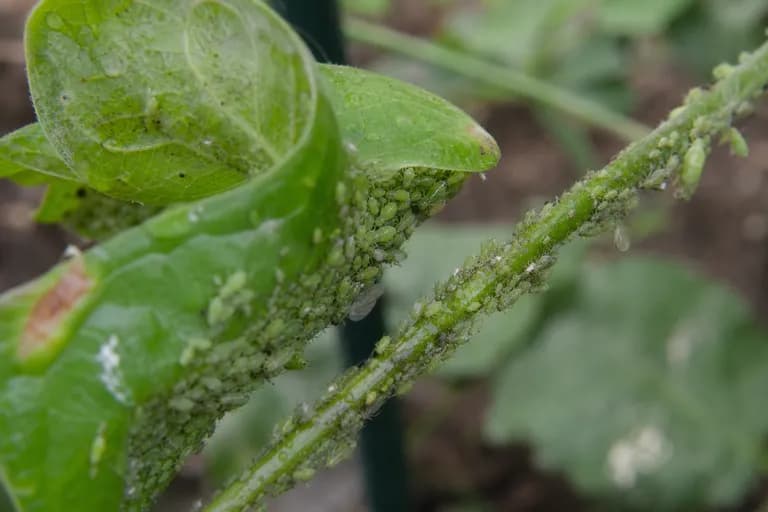
Aphids
PestClusters of green or black insects on stems and flower buds. Distorted growth and sticky honeydew on leaves.
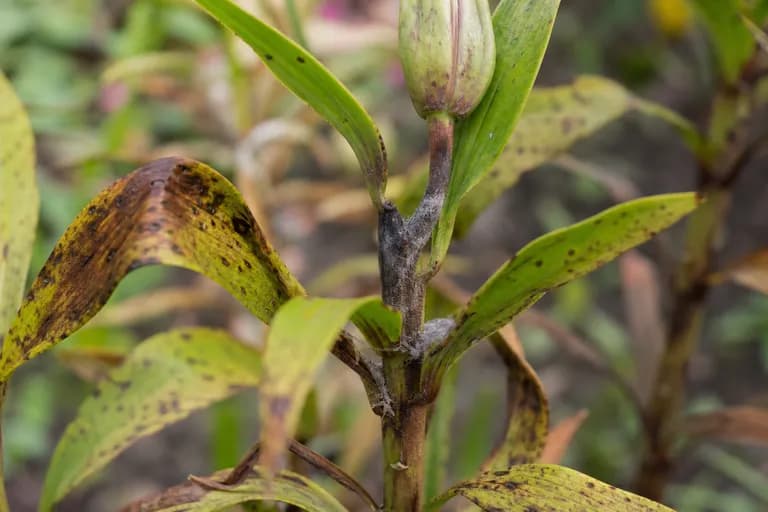
Botrytis Blight
DiseaseGray fuzzy mold on petals and stems, especially in cool, damp conditions. Flowers rot before fully opening.
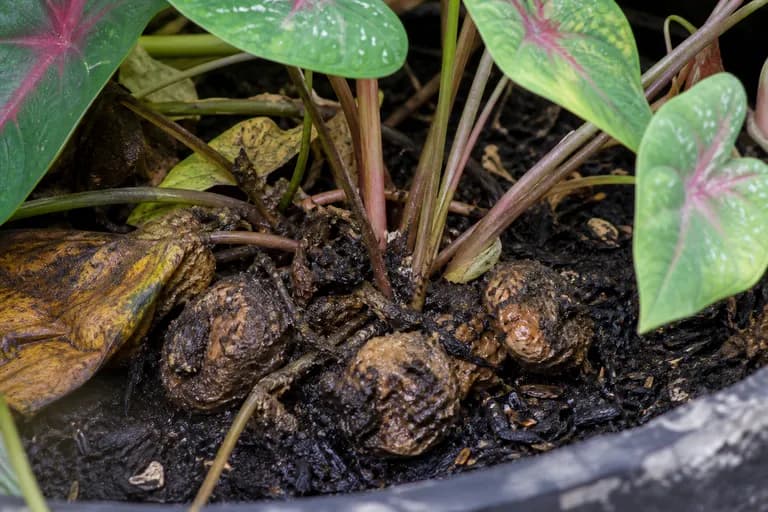
Tuber Rot
DiseaseTubers become soft and mushy. Plants fail to emerge or produce weak, yellowed growth that collapses.
Troubleshooting Common Problems
Tubers rotting before sprouting is the most common issue, usually from over-soaking or poor drainage. In hot climates, ranunculus finish flowering quickly and go dormant—timing planting for cool-season bloom is essential. Leggy, floppy stems result from too little light or overcrowding. Birds sometimes pull at newly emerged shoots; protect with netting until plants are established.
Growing Tips
- Always plant ranunculus corms with the claw-like projections pointing downward — planting them upside down is the most common beginner mistake and results in delayed or failed emergence.
- Pre-soak corms for exactly 3-4 hours in room-temperature water before planting. Oversoaking beyond 6 hours dramatically increases the risk of fungal rot and can kill the corm before it ever sprouts.
- Excellent drainage is the single most critical factor for ranunculus success. If your native soil is heavy clay, grow ranunculus in raised beds or containers filled with a mix of 60% potting soil, 20% perlite, and 20% coarse sand.
- Pre-sprout corms indoors in cell trays at 10-13°C (50-55°F) for 2-3 weeks before transplanting outdoors. This gives a significant head start in cold climates and lets you identify and discard any corms that fail to root.
- Ranunculus strongly prefer cool growing conditions. In zones 7 and warmer, plant in autumn for a late-winter to early-spring bloom season rather than fighting summer heat with a spring planting.
- Apply a balanced liquid fertilizer (10-10-10 or similar) every two weeks once foliage is actively growing. Switch to a high-potassium formula (such as 5-10-10) once buds are visible to promote larger, longer-lasting blooms.
- Install a single layer of horizontal flower netting (such as Hortonova) at 25-30 cm height when stems are young. This prevents the hollow, brittle stems from bending or snapping in wind or rain, which is the second most common cause of crop loss.
- Wear gloves when cutting or handling fresh ranunculus stems and foliage. The sap contains protoanemonin, which can cause contact dermatitis, redness, and blistering on bare skin, especially with repeated exposure.
- Cut stems for bouquets when the bud is showing color and feels slightly soft when gently squeezed, but before the flower is fully open. Flowers cut at this stage last 7-10 days in a clean vase with fresh water and floral preservative.
- After the blooming season ends and foliage yellows completely, dig corms carefully with a garden fork, brush off soil, and cure in a warm (20-25°C), dry, airy location for two weeks. Store in paper bags with dry peat moss at 10-15°C — never in sealed plastic, which traps moisture and causes rot.
Grow your best Ranunculus yet — and everything around it.
Start a free plan today. Lay out your beds, drop in your Ranunculus, and let PlotMyGarden handle the timing, spacing, companions and reminders from seed to harvest basket.
Pick your Ranunculus
Ranunculus 'Picotee'
White flowers edged in delicate pink or rose, giving each bloom a hand-painted appearance. A florist favorite.
Ranunculus 'Champagne'
Soft blush-pink flowers with a vintage, romantic quality. The petals have a subtle shimmer in sunlight.
Ranunculus 'Café au Lait'
Creamy caramel flowers with peach undertones. Pairs beautifully with dahlias in warm-toned arrangements.
Ranunculus 'Amandine' series
Tightly petaled, rose-like blooms in a wide color range. More heat-tolerant than standard varieties with longer stems.
Ranunculus 'Cloni Success' series
Italian-bred for uniformity and productivity, producing high yields of large, fully double flowers on strong stems.
Ranunculus are among the most expensive cut flowers at retail, typically selling for $4-8 per stem at florists and $12-25 per bunch at farmers markets. A single $0.50-1.00 corm can produce 10-35 stems over a 4-6 week season, representing a potential savings of $40-200 per corm compared to buying equivalent stems at retail. For a wedding requiring 200 stems, growing your own ranunculus from 15-20 corms ($15-20 total) could save $600-1,400 versus purchasing from a florist. Corms also multiply through offsets each year, so your investment grows — a starting stock of 50 corms can become 150-200 within two to three seasons at no additional cost.
Quick recipes
Classic Ranunculus Bridal Bouquet
25 minutesA lush, romantic hand-tied bouquet featuring ranunculus as the star bloom, complemented by eucalyptus and dusty miller for texture. This design showcases the layered petal structure of ranunculus at its best and stays fresh through a full wedding day when properly conditioned.
6 ingredientsSpring Garden Ranunculus Container Display
30 minutesA vibrant mixed container planting combining ranunculus with cool-season companions for a long-lasting spring display on a patio or doorstep. The combination provides color from early spring through late spring as each plant reaches its peak at slightly different times.
6 ingredientsDried Ranunculus Petal Confetti
5 minutes active + 3-5 days dryingDelicate, naturally colorful petal confetti made from spent ranunculus blooms. The tissue-thin petals dry beautifully and retain much of their color, making them ideal for eco-friendly wedding confetti, craft projects, or decorative potpourri. Note: protoanemonin degrades during drying, making dried petals low-risk, but they are still not edible.
6 ingredientsWhat's inside
Health Benefits
- TOXIC PLANT — NOT FOR CONSUMPTION: Ranunculus asiaticus contains protoanemonin in all plant parts, which causes severe irritation and blistering of the mouth, throat, and gastrointestinal tract if ingested.
- Growing ranunculus provides meaningful mental health benefits through the meditative practice of gardening — studies show that tending ornamental flowers reduces cortisol levels and improves mood more effectively than many other gardening tasks.
- The vibrant, saturated colors of ranunculus blooms have been shown in environmental psychology research to positively influence emotional well-being when displayed indoors, reducing feelings of anxiety and increasing perceived room comfort.
- The repetitive, precise process of arranging ranunculus bouquets engages fine motor skills and focused attention in ways that overlap with mindfulness-based stress reduction techniques.
- Having fresh-cut ranunculus in living and work spaces has been associated with improved creative thinking and productivity in workplace studies examining the effects of natural elements on cognitive performance.
- The seasonal anticipation and reward cycle of planting corms in autumn and enjoying blooms in spring supports positive psychological well-being by providing a sense of accomplishment and connection to natural rhythms.
Where Ranunculus comes from
Ranunculus asiaticus, the Persian buttercup, originates from a broad arc spanning the eastern Mediterranean basin, Turkey, Iran, and into Central Asia, with scattered native populations in North Africa. Archaeological evidence suggests the species was cultivated in Ottoman palace gardens as early as the 15th century, where double-flowered forms were prized alongside tulips and hyacinths during a period of intense horticultural development. French and Dutch traders introduced ranunculus to Western Europe in the late 1500s, and by the 1700s, the flower had become a sensation among European collectors. During the 18th century, hundreds of named varieties existed in France, England, and the Netherlands, with devoted growers forming societies and publishing detailed classification systems rivaling those of tulip fanciers. Interest in ranunculus waned during the 19th century as other ornamentals rose to fashion, but the flower was revitalized in the early 20th century when Luther Gage and Frank Frazee began large-scale breeding in Southern California, eventually developing the iconic Tecolote strain at what became the Carlsbad Flower Fields. Italian breeders later transformed the market by creating the elegant, densely petaled Elegance, Cloni, and Butterfly series, which now dominate the global cut flower trade. Today, major production centers include Israel, Italy, Japan, and the western United States, with ranunculus ranking among the top ten most popular wedding flowers worldwide. The species continues to be actively bred, with recent focus on expanding the color range into soft pastels, bicolors, and novel picotee patterns.
Ranunculus: did you know?
Fascinating facts about Ranunculus
Ranunculus asiaticus is native to the eastern Mediterranean, southwestern Asia, and northeastern Africa — it was first brought to Western Europe by Crusaders returning from the Holy Land in the 13th century.
Ranunculus questions, answered
When should I plant Ranunculus?
What are good companion plants for Ranunculus?
What hardiness zones can Ranunculus grow in?
How much sun does Ranunculus need?
How far apart should I space Ranunculus?
What pests and diseases affect Ranunculus?
How do I store Ranunculus after harvest?
What are the best Ranunculus varieties to grow?
What soil does Ranunculus need?
Are ranunculus poisonous to people and pets?
Can I leave ranunculus corms in the ground year-round?
Why are my ranunculus corms rotting before they sprout?
How do I get the most stems from each ranunculus corm?
When is the best time to plant ranunculus corms?
Can I grow ranunculus from seed instead of corms?
You just read the theory. Now grow it on autopilot.
Everything that makes Ranunculus fiddly — the timing, the spacing, the companions, the harvest window — is exactly what PlotMyGarden handles for you, for every plant in your garden.
A plan that knows your weather
Set your location once. Get sow, feed and harvest dates built around your real last-frost date and live forecast — no more guessing from a generic seed packet.
From the “When to plant” sectionDrag-and-drop bed planner
Design beds on a grid. Every plant snaps to its proper spacing, and you can see your whole season laid out before you spend a cent on seed.
From the “Growing guide” sectionCompanion conflicts, caught early
200+ good-and-bad pairings checked live as you plant — so a season-wrecking mistake never makes it into the ground.
From the “Companions” sectionReminders you'll actually act on
“Water the beans.” “Pick today before it turns.” Timely, specific, and tied to the plants you're really growing.
From the “Harvest” sectionSuccession, scheduled
Want a harvest for six weeks, not six days? It spaces your sowings automatically and reminds you when each new block is due.
From the “When to plant” sectionA record that gets smarter
Every harvest you log teaches it your garden. Next year's plan starts from what actually worked in your soil, not a textbook's.
From the “Overview” sectionPlant these alongside Ranunculus
More Bulbs
Grow your best Ranunculus yet — and everything around it.
Start a free plan today. Lay out your beds, drop in your Ranunculus, and let PlotMyGarden handle the timing, spacing, companions and reminders from seed to harvest basket.