Nectarine Tree
A smooth-skinned relative of the peach with identical growing requirements but slightly more susceptible to brown rot due to its lack of fuzz.





On this pageOverview
Meet Nectarine Tree
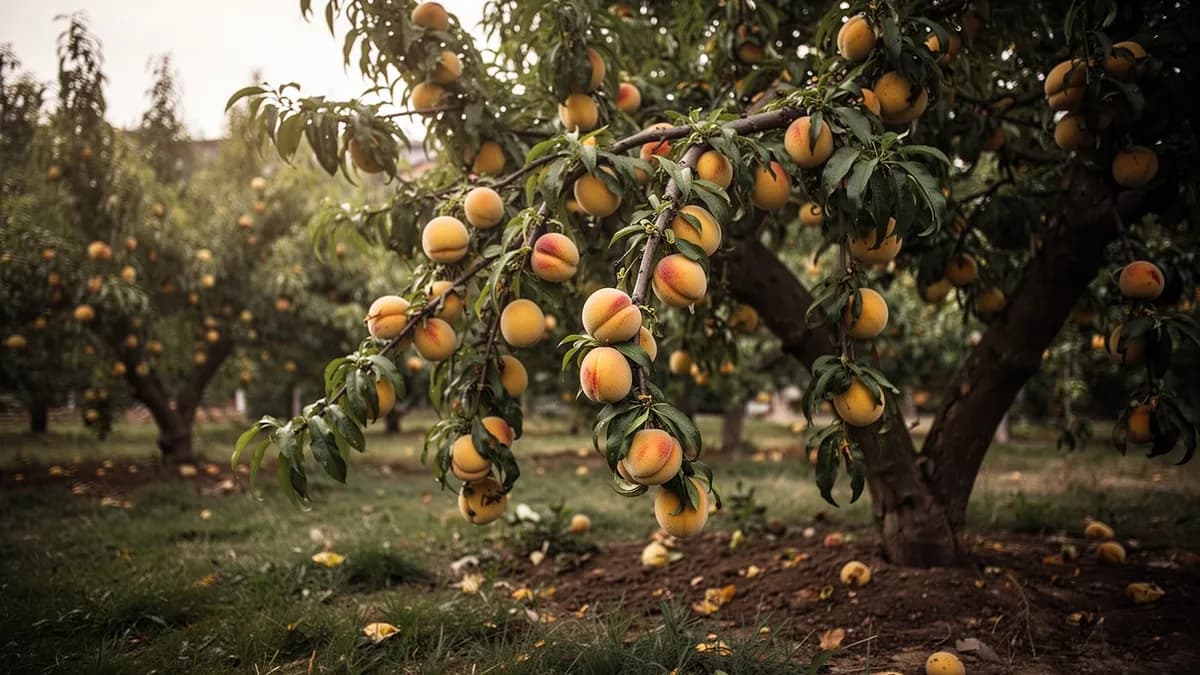
A smooth-skinned relative of the peach with identical growing requirements but slightly more susceptible to brown rot due to its lack of fuzz. Prune annually to an open center to maximize air flow and reduce fungal disease pressure. Nectarines benefit from fruit thinning when fruitlets are marble-sized, leaving one fruit every six inches along each branch for optimal size and sweetness.
When to plant Nectarine Tree
Nectarine trees are propagated identically to peach trees by budding onto seedling rootstock. Lovell and Halford rootstocks produce standard-sized trees, while Citation provides semi-dwarfing. Purchase grafted bare-root trees from reputable nurseries and plant in late winter. Growing from pits is possible after 90 to 120 days of cold stratification, but seedling nectarines rarely produce fruit equal to the parent. Grafted trees begin fruiting in 2 to 3 years.
Your Nectarine Tree Year
Composed for Zone 7 · typical seasons · frost passes Apr 2, returns Nov 1
Plant Nectarine Tree Feb – Apr, pick Jul – Aug. Check the planting methods below and set your climate to personalize these windows.
How to grow Nectarine Tree
Nectarine trees share the same site requirements as peaches: full sun, well-drained soil with a pH of 6.0 to 6.5, and protection from late spring frosts. Because their smooth skin lacks the protective fuzz of peaches, nectarines are more vulnerable to fungal infections and insect damage, making site selection and air circulation especially important. Space trees 15 to 20 feet apart in an area with good cold air drainage.
Plant bare-root nectarine trees in late winter while fully dormant. Set the graft union above soil level and spread roots in the planting hole. Water deeply at planting and apply a thick mulch layer. During the first year, water weekly, providing 1 to 2 inches per week. Apply dormant copper spray before bud swell to prevent peach leaf curl, to which nectarines are equally susceptible.
Prune aggressively each winter to an open vase shape with 3 to 4 main scaffolds, removing about 40 percent of the previous year's growth. Nectarines fruit on one-year-old wood, so vigorous annual renewal pruning is essential. Thin fruitlets to 6-inch spacing when marble-sized to improve fruit size, prevent branch breakage, and reduce brown rot pressure on crowded fruit.
Nectarine Tree needs more room than a 4 × 8 ft bed gives
Each Nectarine Tree wants 500 cm of elbow room. The planner keeps that spacing for you — every plant, every bed.
Nectarine Tree's best neighbours
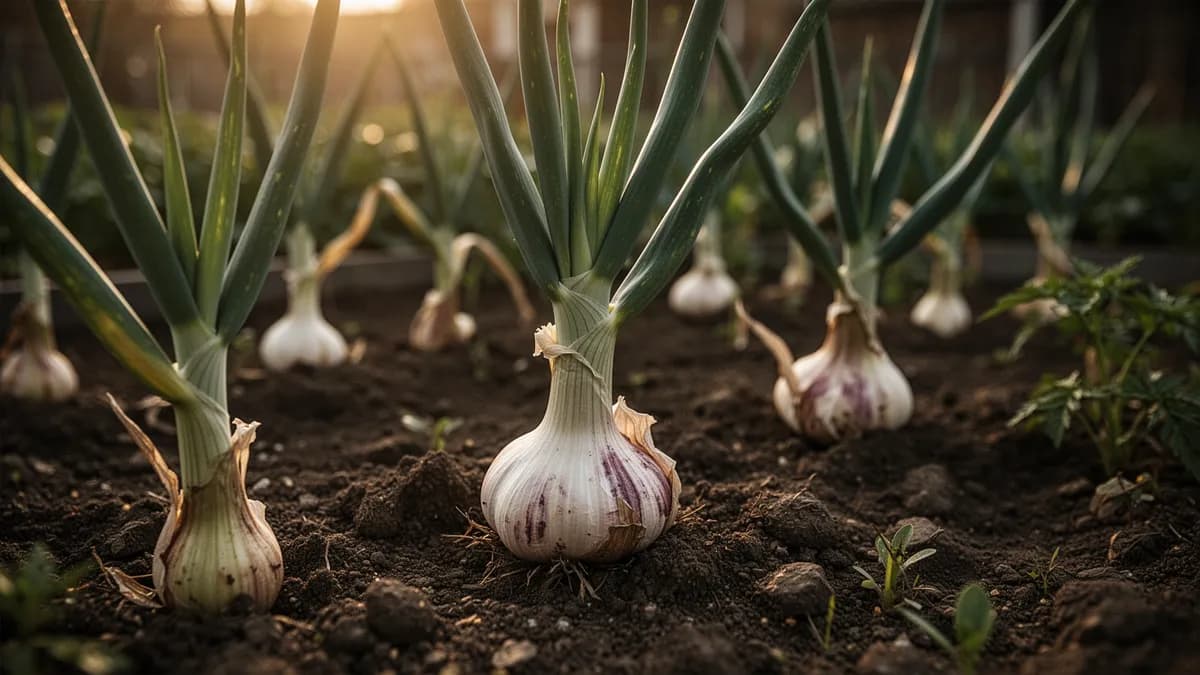
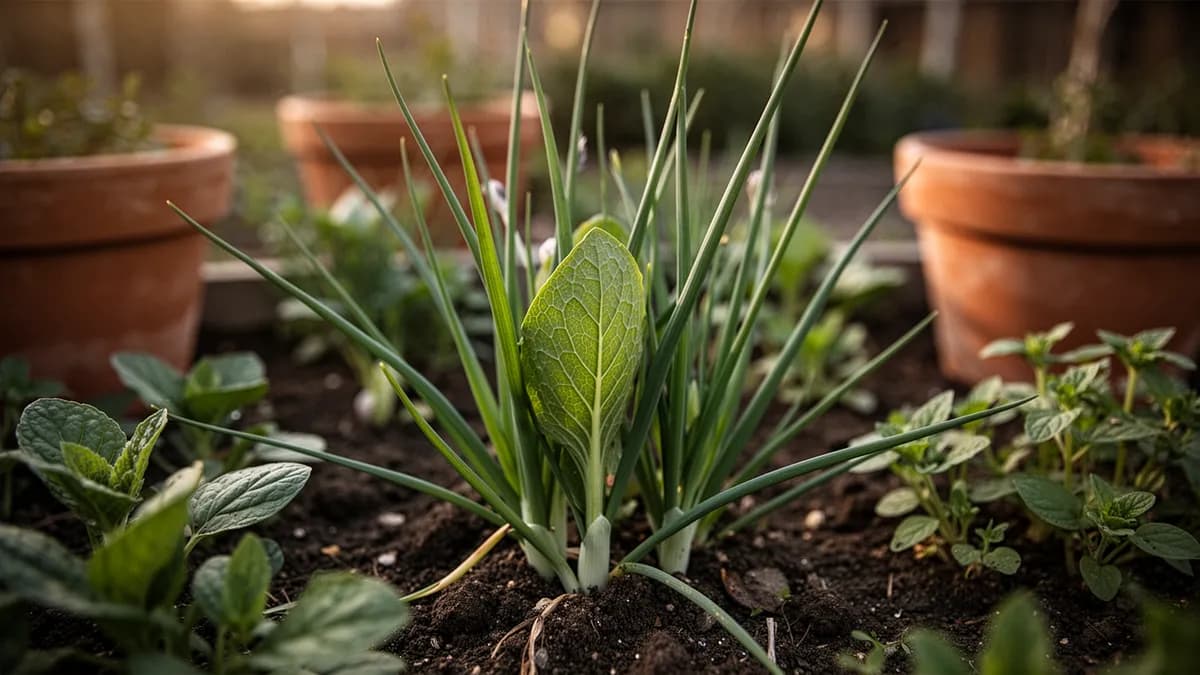
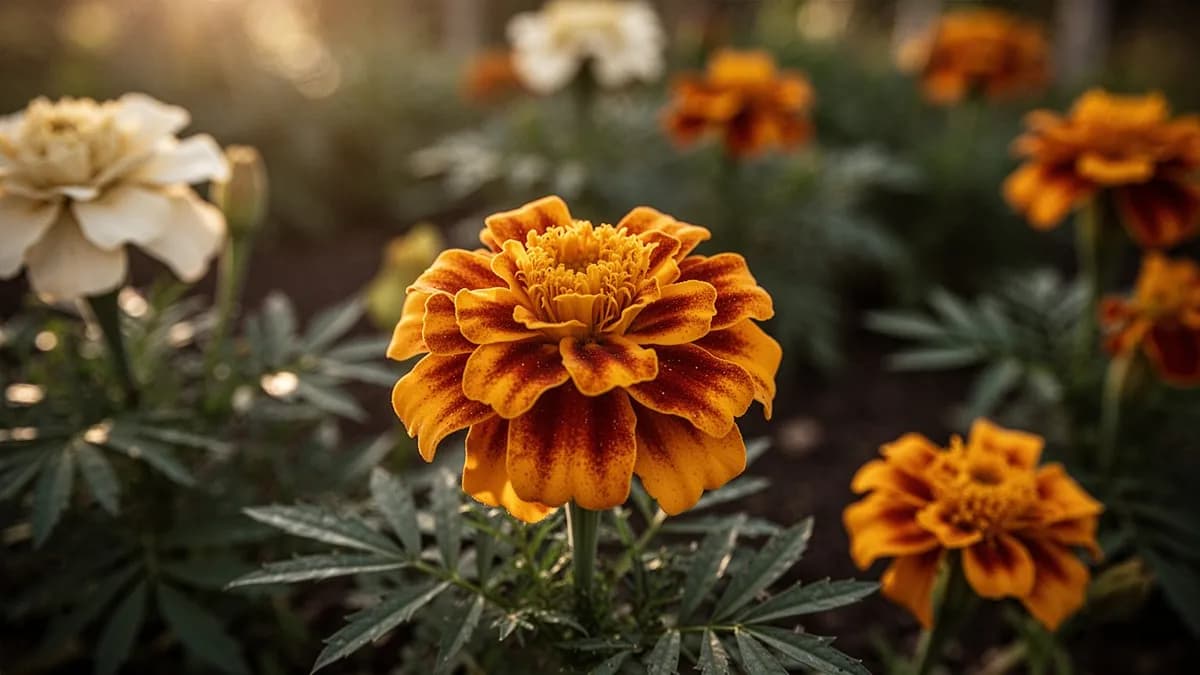
The same companions that benefit peach trees work for nectarines. Plant garlic, chives, and tansy to deter borers and aphids. Basil and marigolds attract pollinators and beneficial predatory insects. Use crimson clover or white clover as a nitrogen-fixing ground cover between trees. Avoid nightshade family plants near stone fruit trees due to shared disease susceptibility.
Garlic belongs beside it. Walnut Tree doesn't.
Old growers' knowledge, checked against Nectarine Tree's real companion table below — test any plant you're growing.
Try Nectarine Tree in a bed — right here
A real planner bed with Nectarine Tree already in it. Tap a companion to place it and watch the pairing checks answer — green for good neighbours, red for a clash.


Related growing guides
Feed it well
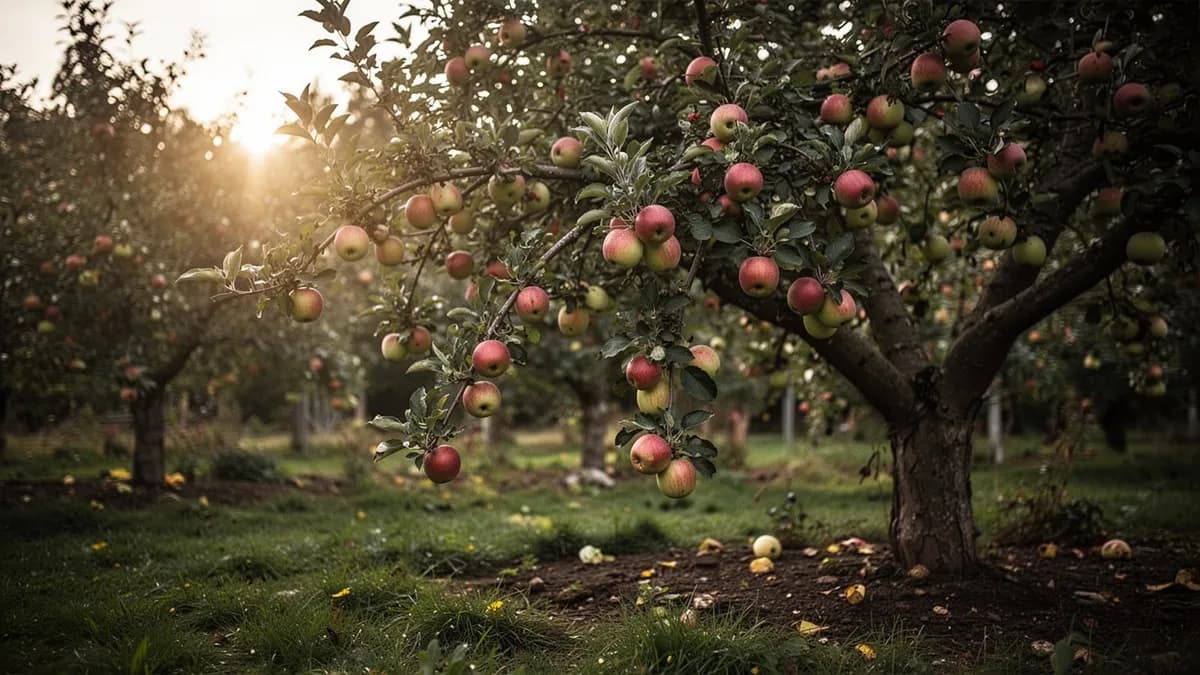
Nectarine trees prefer well-drained sandy loam with a pH of 6.0 to 6.5, identical to peach requirements. Heavy clay must be avoided or heavily amended. Apply a balanced 10-10-10 fertilizer in early spring at the same rates as peach trees. Excessive nitrogen promotes soft, disease-prone growth and delays fruit ripening. Ensure adequate calcium and boron for proper fruit development. A soil test every 2 to 3 years helps guide fertilizer adjustments.
Ideal Temperature
Hardiness Zone Compatibility
From seed to harvest, stage by stage
Dormancy and Winter Planting
The nectarine tree spends late autumn through mid-winter in full dormancy, its bare branches displaying smooth reddish-brown bark and tightly closed flower buds along last season's wood. During this apparently quiet period the tree is accumulating critical chilling hours — typically 600 to 900 hours below 7 °C for standard cultivars — without which spring bud break will be erratic, delayed, or incomplete. This dormant window is also the ideal time for planting bare-root trees, as the absence of leaf transpiration allows roots to establish in cool, moist soil with minimal stress. Gardeners in mild-winter climates should select low-chill cultivars bred to perform with as few as 200-400 chilling hours.
Bud Swell and Bloom
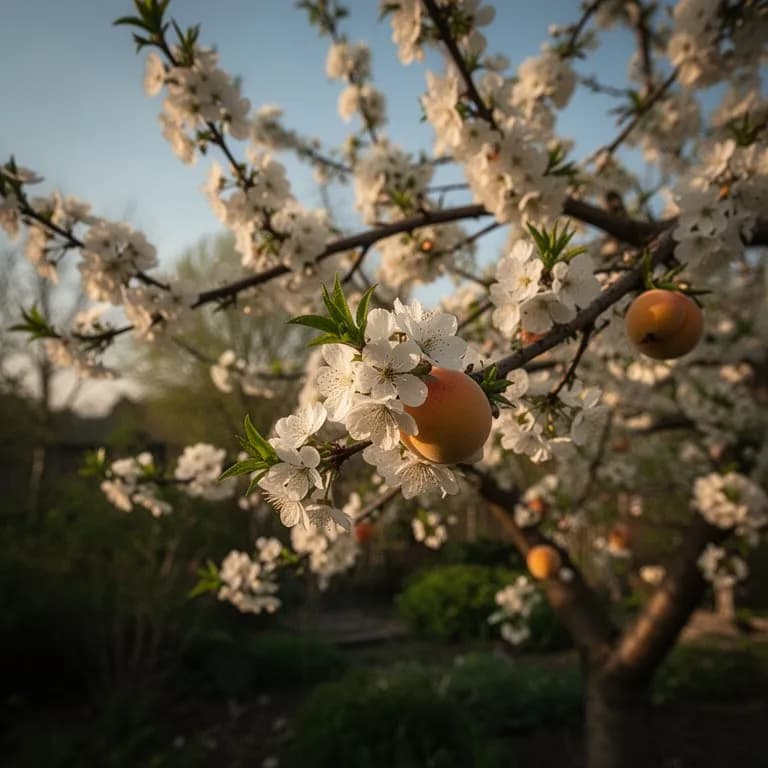
As winter wanes and temperatures begin to climb, flower buds swell visibly over a period of days before erupting into vivid deep-pink blossoms. Nectarine bloom typically precedes leaf emergence by several weeks, creating a spectacular display of color on otherwise bare branches. Unlike many tree fruits, nectarines are self-fertile, so a single tree can set a full crop without a pollination partner — though the presence of bees significantly improves fruit set and uniformity. The bloom window lasts roughly 10 to 14 days and represents the most frost-vulnerable phase of the entire growing season. Open flowers are damaged at temperatures below minus 2 °C, and a single hard frost can destroy the entire year's crop.
Fruit Set and Thinning
After petal fall, pollinated flowers develop into small green fruitlets that swell rapidly through cell division. The tree almost always sets far more fruit than it can bring to maturity, and a natural self-thinning event known as the June drop removes the weakest fruitlets. Even after this natural adjustment, the remaining fruit load usually exceeds what the tree can size up properly. Midway through this stage the pit hardens and calcifies, temporarily slowing visible fruit growth while creating peak demand for calcium and boron in the soil solution. Proper thinning during this window determines whether the harvest consists of small, bland fruit or large, intensely flavored nectarines.
Rapid Fruit Expansion
With the pit fully hardened, the fruitlets enter a phase of dramatic cell enlargement. Flesh volume can double or triple in a matter of weeks as the tree channels water and photosynthates into the developing fruit. The smooth nectarine skin begins to show its characteristic ground color — golden-yellow beneath a spreading crimson blush — and the first traces of fragrance become apparent near the stem end. This is the most water-demanding phase of the entire growing cycle; even brief drought stress at this point reduces final fruit size and sugar accumulation irreversibly. Regular, deep irrigation is essential.
Ripening and Harvest
The ground color shifts from green to golden yellow, the red blush deepens, and the fragrance intensifies to the point where ripe fruit can be detected from several paces away. Flesh texture transitions from firm and crunchy to yielding and juicy over a window of just a few days for each individual fruit. A ripe nectarine yields slightly to gentle thumb pressure near the stem end and detaches from the branch with a simple upward twist — no pulling or cutting required. Because nectarines lack the protective fuzz of peaches, their smooth skin is more susceptible to bruising, bird damage, and brown rot infection during the final ripening phase.
Post-Harvest Recovery
After the final fruit is picked the tree redirects its energy toward replenishing carbohydrate reserves in the roots and trunk, forming next season's flower buds along the current year's new growth, and hardening off wood for winter. Leaves remain photosynthetically active well into autumn and should be protected from defoliation by pests and disease for as long as possible. The length and quality of this post-harvest recovery window directly determines the vigor and productivity of the following season's crop. Trees that lose their leaves prematurely to bacterial spot, rust, or severe drought enter dormancy with depleted reserves and typically bloom weakly the next spring.
Plant bare-root trees in a full-sun position sheltered from cold winds, in well-drained soil amended with aged compost. Dig a hole wide and shallow enough to spread roots without bending. Set the graft union 5-7 cm above finished soil level to prevent scion rooting. Water in deeply and apply a 10 cm ring of organic mulch from the drip line inward, keeping it 15 cm clear of the trunk. Apply a dormant horticultural oil spray to control overwintering scale insects and mite eggs before bud swell begins.
Caring for Nectarine Tree month by month
What to do each month for your Nectarine Tree
October
You are hereAllow natural leaf senescence to proceed without intervention — the tree is translocating nutrients from leaves to roots. Rake and dispose of fallen leaves to reduce overwintering fungal inoculum. Begin planning any structural pruning changes needed during the coming dormant season.
Know exactly what to do in your garden — every month
One email at the start of each month: what to sow, plant, and tackle right now — for your Nectarine Tree and everything growing around it. Plus a short starter course that helps you dodge the classic mistakes.
- What to do, right now
- Matched to your season
- Starter course included
Harvesting Nectarine Tree
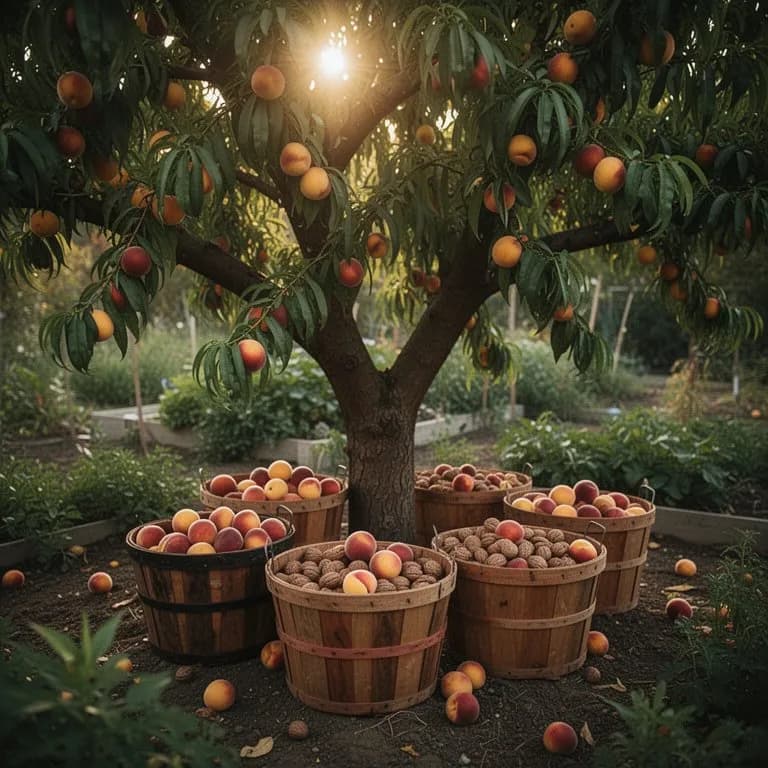
Nectarines ripen when the ground color turns from green to golden-yellow and the fruit gives slightly to gentle pressure. The smooth skin shows color changes more clearly than fuzzy peaches. Pick by gently twisting and lifting the fruit from the branch. Nectarines bruise more easily than peaches due to their thin, smooth skin, so handle with extra care. Harvest every 2 to 3 days as fruit ripens unevenly across the tree. Allow slightly underripe fruit to finish softening at room temperature.
assuming you plant when the window opens — set your real date
Pick Nectarine Tree promptly and the plant keeps producing.
Storage & Preservation
Fresh nectarines keep for 3 to 5 days refrigerated. Like peaches, they freeze well when sliced and treated with lemon juice. Can nectarines in light syrup for year-round enjoyment. They make excellent jam with a more concentrated flavor than peaches. Dried nectarine slices are a delicious snack with intensified sweetness. For freezing, blanch briefly, peel if desired, slice, and freeze flat on baking sheets before transferring to bags.
What goes wrong — and the fix
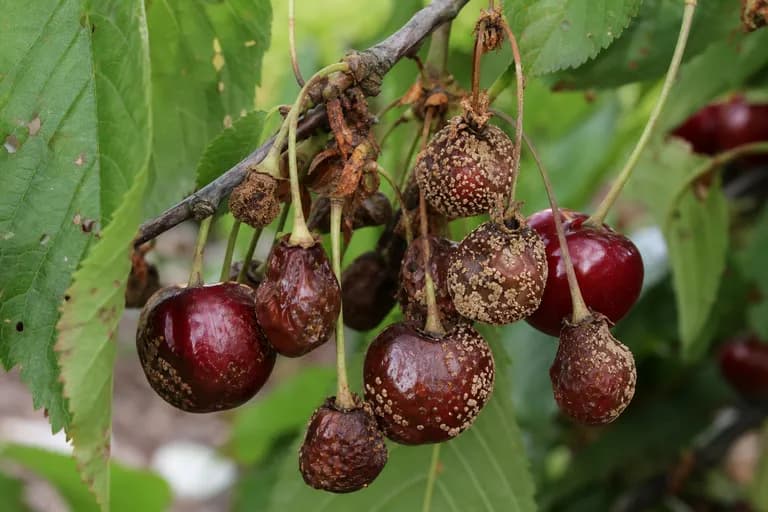
Brown Rot
DiseaseTan-brown fuzzy mold on ripening fruit spreading rapidly in humid conditions. Blossoms may wilt and cling to twigs.
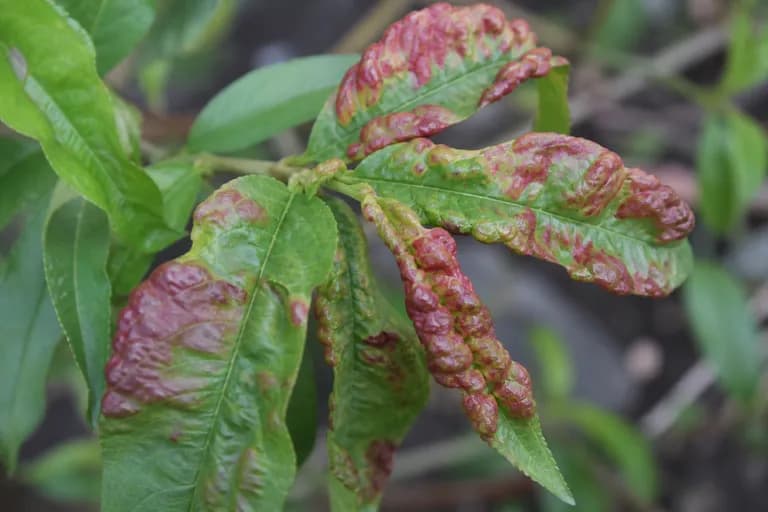
Peach Leaf Curl
DiseaseLeaves emerge distorted, thickened, and reddish. Severe infections cause complete defoliation, weakening the tree and reducing the crop.
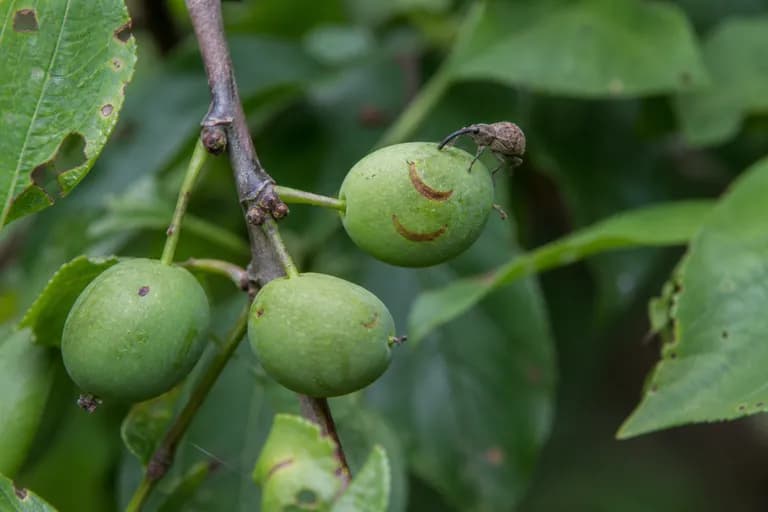
Plum Curculio
PestCrescent-shaped scars on developing fruit where females lay eggs. Larvae feed inside fruit, causing premature drop and wormy fruit.
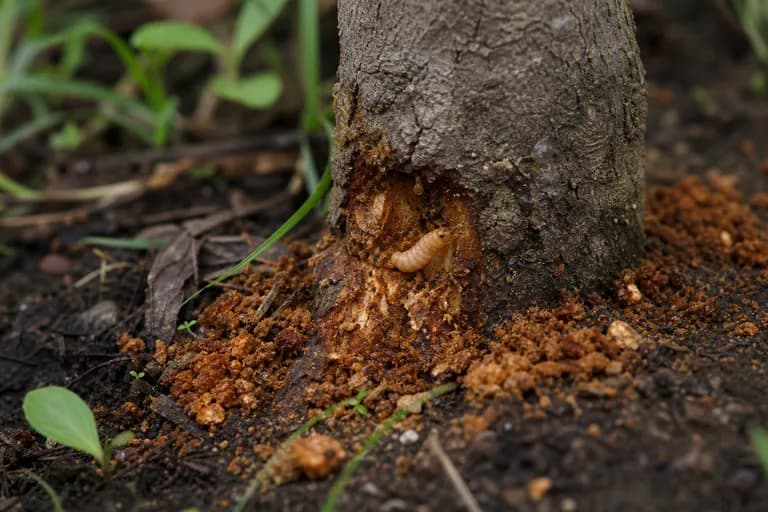
Peachtree Borer
PestGummy frass mixed with sawdust at the base of the trunk near soil level. Severe infestations can girdle and kill the tree.
Troubleshooting Common Problems
Brown rot is the most significant problem for nectarines, as their smooth skin provides no physical barrier against fungal spores. Consistent fungicide applications during bloom and pre-harvest are essential. Fruit cracking from inconsistent watering is also common. Maintain even soil moisture throughout the growing season, especially during fruit enlargement. Like peaches, nectarines are relatively short-lived trees with peak production between years 4 and 15.
Growing Tips
- Choose a planting site with full sun — at least 6 to 8 hours of direct sunlight daily — and protection from cold north or northeast winds that can damage blossoms in early spring.
- Ensure excellent soil drainage; nectarine trees are highly susceptible to root rot in waterlogged soil. Raise the planting area 20-30 cm if drainage is poor or the water table is high.
- Select a cultivar matched to your local chilling hours — standard varieties need 600-900 hours below 7 °C, while low-chill types bred for mild climates thrive with as few as 200 hours.
- Prune annually to maintain an open-center vase shape with three to five main scaffold branches and no central leader. This form maximizes sunlight penetration, air circulation, and fruit color throughout the canopy.
- Thin fruitlets to one every 15-20 cm along each branch when they reach marble size. This step is non-negotiable for producing large, sweet fruit and preventing biennial bearing patterns.
- Apply a preventative fungicide spray at pink-bud stage every year without exception to prevent peach leaf curl — once symptoms appear on expanded leaves, it is too late to treat for that season.
- Water deeply and consistently during the fruit expansion phase from late spring through summer. Irregular watering causes fruit cracking, pit splitting, and reduced sugar development.
- Monitor closely for brown rot, the most damaging disease of nectarines. Remove and destroy any fruit showing soft brown spots or white-gray fungal tufts immediately to prevent rapid spread through the crop.
- Protect the smooth-skinned fruit from bird damage by netting the tree as fruit begins to color. Unlike fuzzy peaches, the glossy skin of nectarines is especially attractive to birds.
- After harvest, apply a balanced fertilizer and continue irrigation through autumn to support flower bud formation for the following season — the post-harvest recovery period is critical to next year's crop.
Grow your best Nectarine Tree yet — and everything around it.
Start a free plan today. Lay out your beds, drop in your Nectarine Tree, and let PlotMyGarden handle the timing, spacing, companions and reminders from seed to harvest basket.
Pick your Nectarine Tree
Fantasia
Large, beautiful freestone nectarine with bright red over yellow skin. Firm, sweet flesh ideal for fresh eating and canning. Mid-season ripening.
Hardired
Very cold-hardy nectarine producing medium-sized, deep red freestone fruit. Good disease resistance makes it suitable for colder regions.
Mericrest
One of the hardiest nectarines available, surviving to minus 20 degrees. Medium-sized fruit with sweet, flavorful dark red flesh.
Nectar Babe
Genetic dwarf nectarine reaching only 5 to 6 feet tall, excellent for container growing. Full-sized, flavorful fruit on a compact tree.
Arctic Rose
White-fleshed nectarine with exceptional sweetness and low acidity. Highly aromatic with rich, complex flavor. Mid to late season.
A single mature nectarine tree can produce 25-55 kg of fruit per season for 15-20 productive years. With fresh nectarines retailing at $4-8 per kilogram seasonally, one tree can yield $100-$440 worth of fruit annually — returning its purchase price many times over within the first few bearing years. Home-grown nectarines also eliminate the significant quality gap between tree-ripened and commercially harvested fruit, delivering a level of flavor and fragrance that has no retail equivalent at any price.
Quick recipes
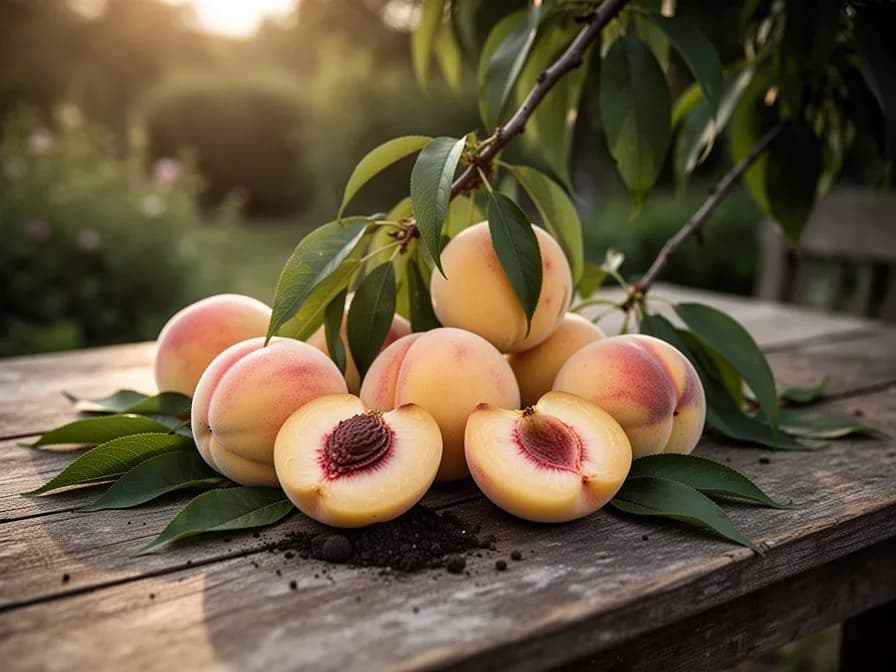
Grilled Nectarines with Honey and Ricotta
15 minutesHalved nectarines are grilled cut-side down until caramelized, then topped with fresh ricotta, a drizzle of wildflower honey, and a scattering of chopped pistachios. The heat intensifies the fruit's natural sugars and creates a smoky sweetness that pairs beautifully with the creamy cheese.
6 ingredients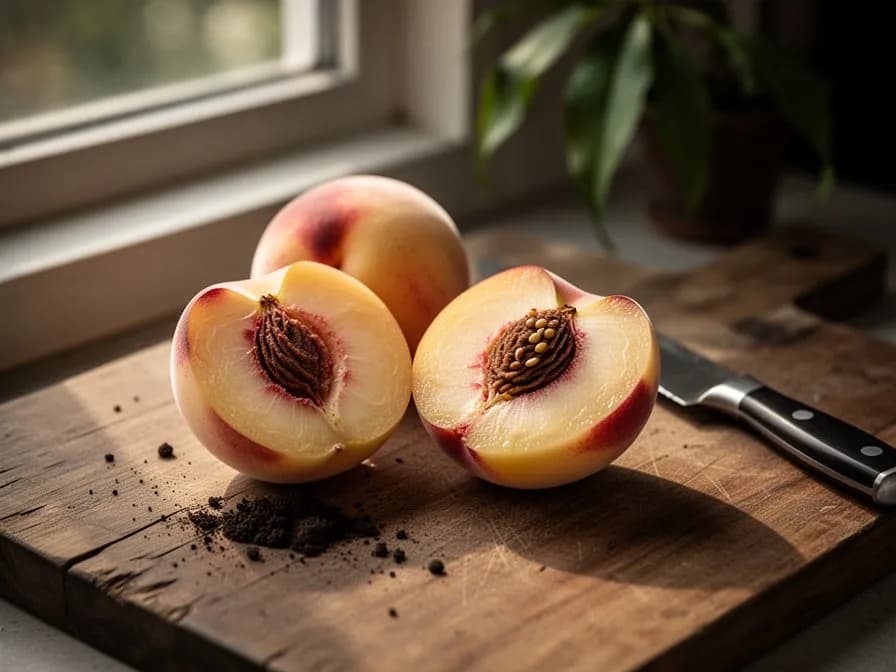
Nectarine and Arugula Summer Salad
10 minutesSliced ripe nectarines are tossed with peppery arugula, crumbled goat cheese, toasted walnuts, and a simple balsamic vinaigrette. The sweet-tart fruit balances the bitter greens and tangy cheese for a refreshing side that showcases the nectarine's versatility in savory dishes.
7 ingredientsNectarine Freezer Jam
25 minutesFinely chopped nectarines are combined with sugar and pectin to create a vibrant, jewel-toned jam that preserves peak-season flavor for months in the freezer without the need for traditional canning equipment. The smooth skin of nectarines means no peeling is required, making this one of the simplest preserves a home grower can make.
5 ingredientsCulinary Uses
Nectarines have a slightly more intense, aromatic flavor than peaches and their smooth skin makes them convenient for eating fresh without peeling. They are excellent grilled with a brushing of honey, in summer salads with burrata and basil, or baked into galettes and tarts. White-fleshed varieties have a sweeter, more floral flavor ideal for eating out of hand. Nectarines are rich in vitamins A and C, potassium, and antioxidants.
What's inside
Health Benefits
- Rich in vitamin C and beta-carotene, both powerful antioxidants that help neutralize free radicals and support the immune system against infections and cellular damage.
- Contains chlorogenic acid, a polyphenol compound studied for its potential to reduce chronic inflammation and support healthy blood sugar regulation after meals.
- Provides dietary fiber that promotes healthy digestion, supports beneficial gut bacteria, and contributes to feelings of fullness that aid in weight management.
- Supplies potassium, an essential mineral that helps regulate blood pressure by counteracting the effects of dietary sodium on the cardiovascular system.
- Contains lutein and zeaxanthin, carotenoid pigments concentrated in the retina that are associated with reduced risk of age-related macular degeneration and cataracts.
- Low in calories and naturally fat-free, making nectarines an excellent whole-food snack that delivers vitamins, minerals, and hydration without contributing to excess caloric intake.
Where Nectarine Tree comes from
The nectarine is a smooth-skinned variant of the peach (Prunus persica var. nucipersica) that arose naturally through a recessive gene mutation affecting the production of fruit-surface trichomes. Despite its species name suggesting Persian origins, the peach — and by extension the nectarine — originated in the Yangtze River valley of China, where archaeological evidence confirms cultivation dating back at least 4,000 years. Ancient Chinese texts from the Han Dynasty period describe both fuzzy and smooth-skinned peach types, indicating that nectarines have been recognized as a distinct form for millennia. From China the fruit traveled westward along the Silk Road to Persia, where it gained the botanical epithet 'persica' from European naturalists who encountered it there. Greek and Roman writers mentioned smooth peaches, and the fruit was cultivated in walled gardens across medieval Europe, though it was considered more difficult to grow and more prone to disease than its fuzzy counterpart. Spanish and Portuguese colonists introduced peach and nectarine stones to the Americas in the sixteenth century, where the trees naturalized rapidly in warm climates from Florida to Chile. Modern nectarine breeding began in earnest in California during the early twentieth century, with breeders at the USDA and the University of California developing the large, firm, highly colored freestone varieties that now dominate commercial production worldwide. Today the nectarine is grown commercially on every inhabited continent, with major production centers in China, the Mediterranean basin, California, Chile, and Australia.
Nectarine Tree: did you know?
Fascinating facts about Nectarine Tree
Nectarines are not a separate species from peaches — they are a natural genetic variant of Prunus persica in which a single recessive gene produces smooth skin instead of fuzzy skin.
Nectarine Tree questions, answered
When should I plant Nectarine Tree?
What are good companion plants for Nectarine Tree?
What hardiness zones can Nectarine Tree grow in?
How much sun does Nectarine Tree need?
How far apart should I space Nectarine Tree?
What pests and diseases affect Nectarine Tree?
How do I store Nectarine Tree after harvest?
What are the best Nectarine Tree varieties to grow?
What soil does Nectarine Tree need?
What is the difference between a nectarine tree and a peach tree?
How long does it take for a nectarine tree to produce fruit?
Do I need two nectarine trees for pollination?
Why are the leaves on my nectarine tree curling and turning red?
Can I grow a nectarine tree in a container?
When is the best time to prune a nectarine tree?
You just read the theory. Now grow it on autopilot.
Everything that makes Nectarine Tree fiddly — the timing, the spacing, the companions, the harvest window — is exactly what PlotMyGarden handles for you, for every plant in your garden.
A plan that knows your weather
Set your location once. Get sow, feed and harvest dates built around your real last-frost date and live forecast — no more guessing from a generic seed packet.
From the “When to plant” sectionDrag-and-drop bed planner
Design beds on a grid. Every plant snaps to its proper spacing, and you can see your whole season laid out before you spend a cent on seed.
From the “Growing guide” sectionCompanion conflicts, caught early
200+ good-and-bad pairings checked live as you plant — so a season-wrecking mistake never makes it into the ground.
From the “Companions” sectionReminders you'll actually act on
“Water the beans.” “Pick today before it turns.” Timely, specific, and tied to the plants you're really growing.
From the “Harvest” sectionSuccession, scheduled
Want a harvest for six weeks, not six days? It spaces your sowings automatically and reminds you when each new block is due.
From the “When to plant” sectionA record that gets smarter
Every harvest you log teaches it your garden. Next year's plan starts from what actually worked in your soil, not a textbook's.
From the “Overview” sectionPlant these alongside Nectarine Tree
More Fruit Trees
Keep Nectarine Tree away from these
Grow your best Nectarine Tree yet — and everything around it.
Start a free plan today. Lay out your beds, drop in your Nectarine Tree, and let PlotMyGarden handle the timing, spacing, companions and reminders from seed to harvest basket.