Horseradish
A vigorous perennial grown for its pungent, sinus-clearing root used to make the classic condiment.





On this pageOverview
Meet Horseradish
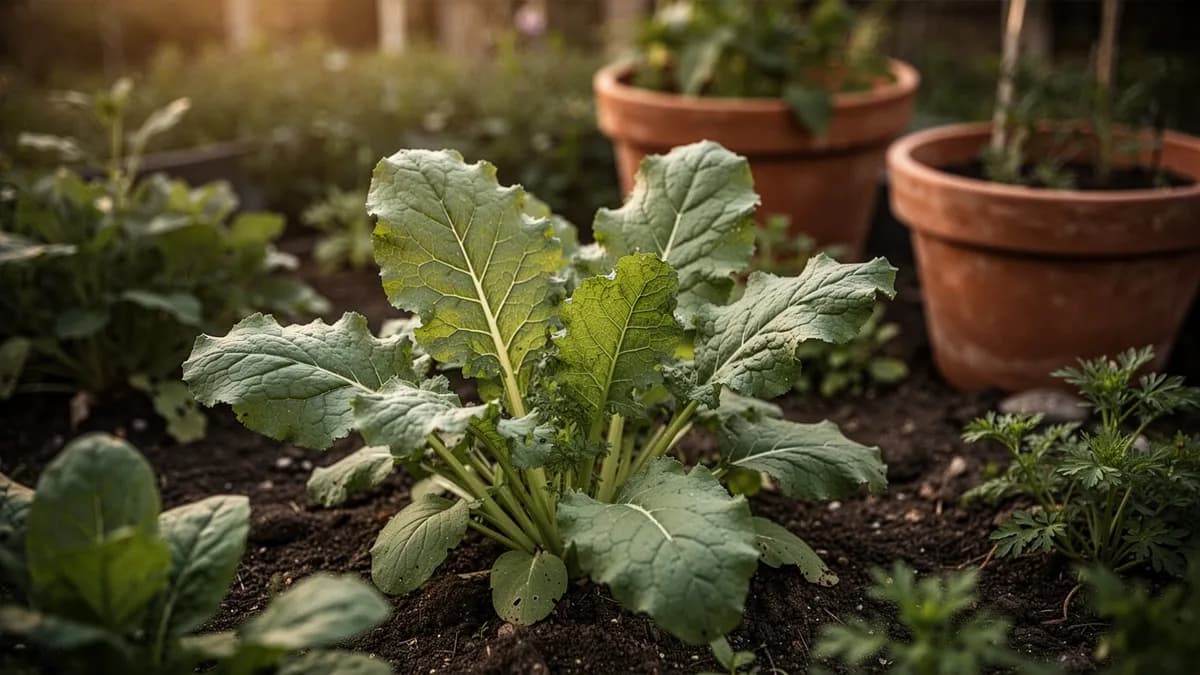
A vigorous perennial grown for its pungent, sinus-clearing root used to make the classic condiment. Plant horseradish in a contained area or bottomless bucket sunk into the ground, as any root fragment left behind will regrow. Harvest roots in late autumn after frost intensifies their heat, then grate and mix with vinegar immediately.
When to plant Horseradish
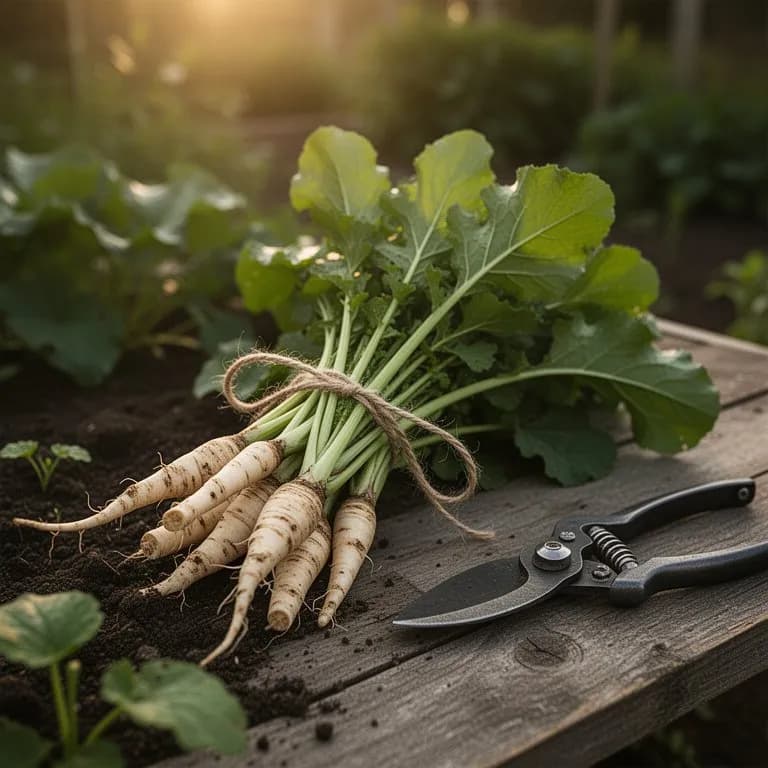
Horseradish is almost always propagated from root cuttings rather than seed. Purchase root sets from nurseries or save pencil-thick side roots from your harvest. Cut roots into 6 to 8 inch pieces, making a flat cut at the top and an angled cut at the bottom to distinguish orientation. Plant in early spring with the flat (top) end up, 2 to 3 inches below the soil surface. New leaves emerge within a few weeks. Space roots 12 to 18 inches apart in contained beds.
Your Horseradish Year
Composed for Zone 7 · typical seasons · frost passes Apr 2, returns Nov 1
Plant Horseradish Mar – Apr, pick Oct – Nov. Check the planting methods below and set your climate to personalize these windows.
How to grow Horseradish
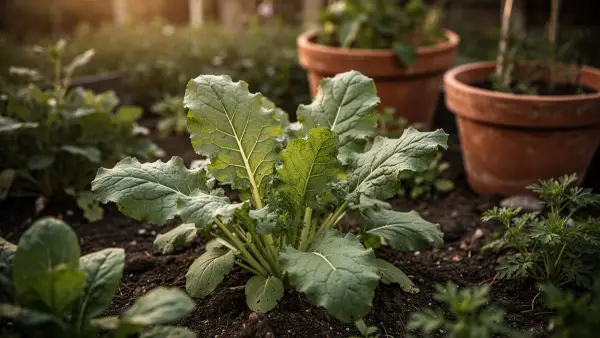
Horseradish is a vigorous, persistent perennial grown for its pungent, sinus-clearing root that makes the classic condiment. It is one of the easiest herbs to grow, sometimes too easy, as any root fragment left in the soil will regenerate a new plant. Plant in a contained area, bottomless bucket sunk in the ground, or raised bed to control spread. Choose a site with full sun to partial shade and deep, fertile, well-drained soil with a pH of 6.0 to 7.0.
Plant root cuttings in early spring, 2 to 3 inches deep and 12 inches apart, with the narrow end pointing down and the wide end up. The large, coarse leaves emerge quickly and can reach 2 to 3 feet long. Water regularly for the first season to encourage thick root development.
For the best-quality roots, strip side roots from the main root in midsummer by carefully removing soil to expose the top few inches of root. Remove all side shoots and small roots, then rebury. This directs energy into the main root for a larger, smoother harvest. Horseradish is extremely cold-hardy and virtually indestructible once established. Dig roots in late fall after frost has intensified their pungency.
8 plants fit a 4 × 8 ft bed
Each Horseradish wants 60 cm of elbow room. The planner keeps that spacing for you — every plant, every bed.
Horseradish's best neighbours
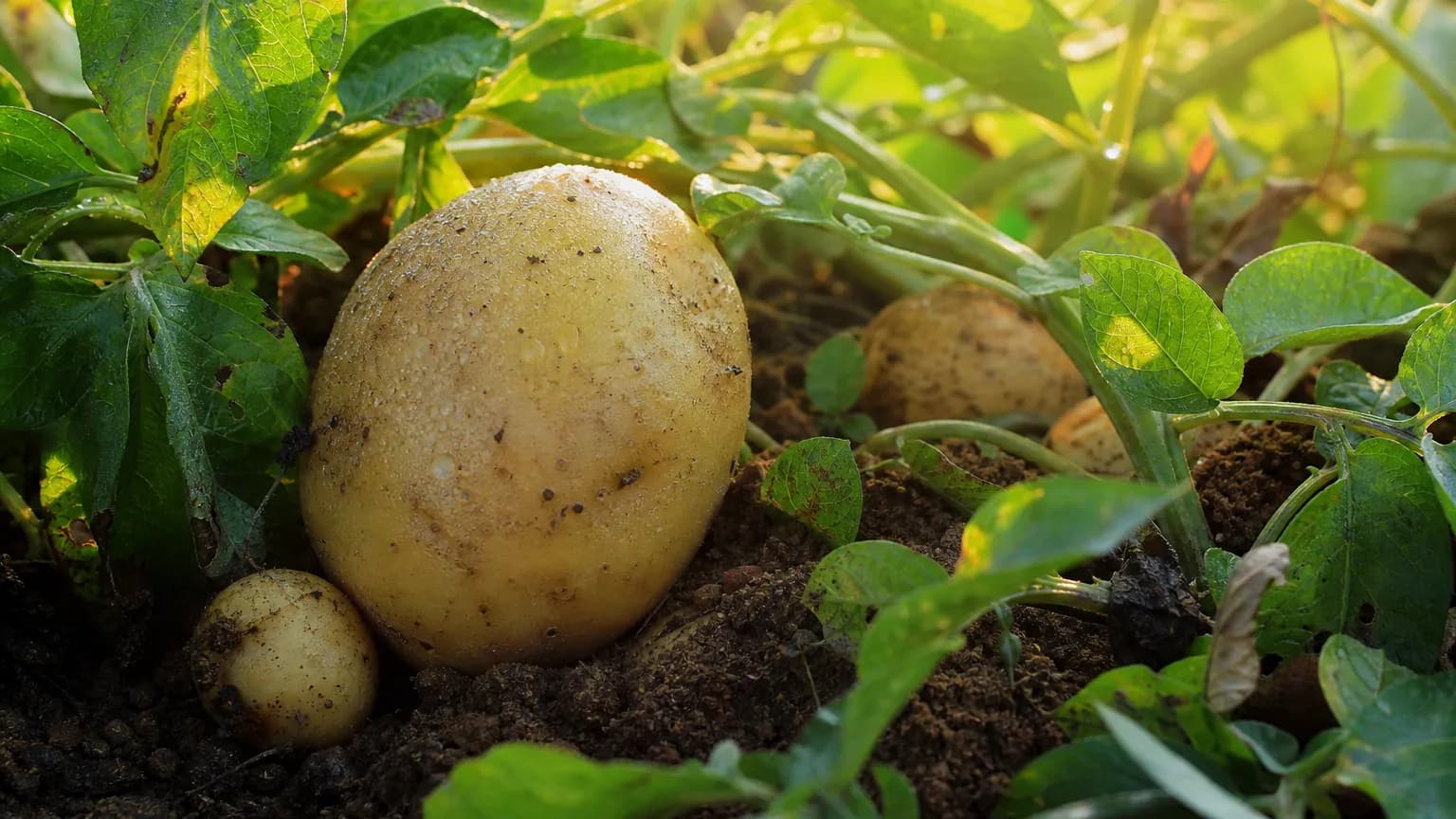
Horseradish is traditionally planted at the corners of potato beds, where its strong scent is reputed to repel potato beetles and other pests. It is also said to benefit fruit trees when planted nearby. However, its aggressive spreading habit means it should always be contained. Keep away from all other herbs and delicate plants that it will overwhelm. The deep roots can help break up compacted subsoil.
Potato belongs beside it.
Old growers' knowledge, checked against Horseradish's real companion table below — test any plant you're growing.
Try Horseradish in a bed — right here
A real planner bed with Horseradish already in it. Tap a companion to place it and watch the pairing checks answer — green for good neighbours, red for a clash.


Related growing guides
Feed it well
Horseradish grows best in deep, rich, loose, well-drained soil with a pH of 6.0 to 7.0. Amend heavy soil with compost and sand to improve drainage and root penetration. Side-dress with nitrogen fertilizer in midsummer to fuel root development. Avoid fresh manure, which can cause forked and hairy roots. Deep soil is important for developing smooth, straight roots. Container-grown horseradish needs a pot at least 18 inches deep.
Ideal Temperature
Hardiness Zone Compatibility
From seed to harvest, stage by stage
Root Cutting Establishment
Planted root cuttings (15-20 cm long, pencil-thick lateral roots) begin sending out fine feeder roots and a pointed green shoot emerges from the top end. The cutting draws on stored energy to fuel initial growth. Crown divisions from established plants establish even faster, with shoots appearing within a week of planting.
Leaf Rosette Development
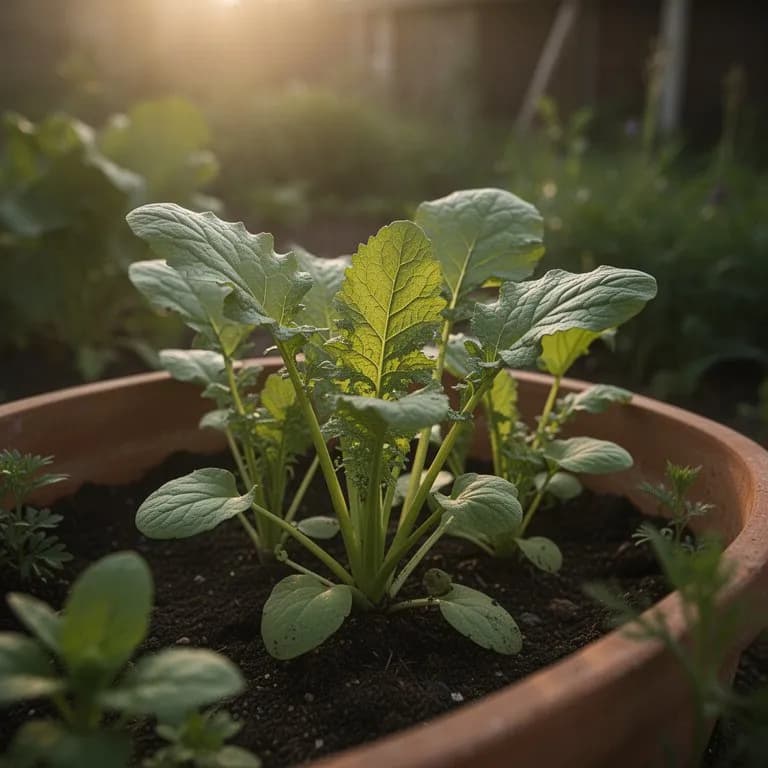
A rosette of large, glossy, deeply crinkled leaves expands rapidly from the crown. Each leaf can grow 30-60 cm long with prominent veins and wavy margins. The taproot begins thickening as the plant channels photosynthetic energy underground. Side roots radiate outward, which is why horseradish can become invasive if not contained.
Vigorous Vegetative Growth
The plant reaches its full height of 60-90 cm with a dense canopy of large leaves. The taproot thickens substantially during this phase, storing the pungent glucosinolate compounds that give horseradish its characteristic heat. Lateral roots also grow aggressively, spreading outward from the main root.
Flowering
In summer, tall flower stalks rise above the foliage bearing clusters of small, fragrant white flowers with four petals — a hallmark of the Brassicaceae family. While the flowers are attractive to pollinators, horseradish rarely sets viable seed in most climates and reproduces almost entirely through root fragments.
Root Maturation and Harvest
As autumn arrives and foliage begins to yellow after the first frosts, the root reaches peak pungency and size. Cold temperatures trigger the plant to convert starches into sugars and intensify the concentration of sinigrin, the precursor compound that creates horseradish's fiery heat when cells are ruptured by grating or grinding.
Plant root cuttings at a 45-degree angle with the flat-cut top end 5 cm below the soil surface and the angled-cut bottom end deeper. Mark the top and bottom ends before planting — the top (crown end) was cut flat and the bottom at an angle to distinguish them.
Caring for Horseradish month by month
What to do each month for your Horseradish
October
You are hereHarvest season begins after the first hard frost, which intensifies root flavor. Use a garden fork to loosen soil deeply before lifting roots. Save pencil-thick lateral roots (15-20 cm long) for replanting immediately or storing in damp sand for spring.
Know exactly what to do in your garden — every month
One email at the start of each month: what to sow, plant, and tackle right now — for your Horseradish and everything growing around it. Plus a short starter course that helps you dodge the classic mistakes.
- What to do, right now
- Matched to your season
- Starter course included
Harvesting Horseradish
Harvest horseradish roots in late fall after the first hard frost, which intensifies pungency. Use a garden fork to carefully dig the entire root system. Select the largest main roots for processing and replant pencil-sized side roots for next year's crop. Freshly dug roots have mild flavor until grated, which releases the volatile compounds that create the characteristic heat. Process roots immediately after digging for maximum pungency.
assuming you plant when the window opens — set your real date
Pick Horseradish promptly and the plant keeps producing.
Storage & Preservation
Unprocessed horseradish roots store in the refrigerator for several months wrapped in damp paper towels in a sealed bag. For the classic condiment, peel and grate roots immediately after digging, then immediately add white vinegar to stop the enzymatic reaction that creates heat. Adding vinegar early produces milder horseradish; waiting 3 to 5 minutes before adding vinegar produces maximum heat. Store prepared horseradish in sealed jars in the refrigerator for up to 3 months. Roots can also be frozen whole and grated as needed.
What goes wrong — and the fix
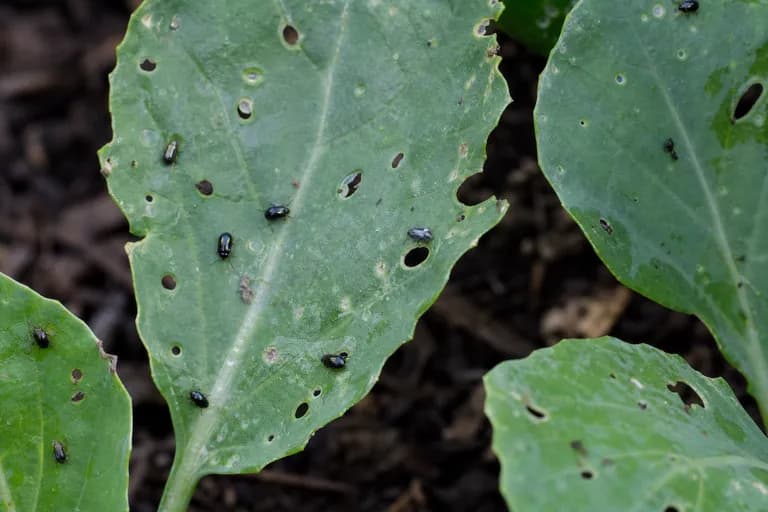
Flea Beetles
PestTiny round holes peppered through leaves, giving them a shot-hole appearance. Small jumping beetles visible on close inspection. Rarely affects root quality.
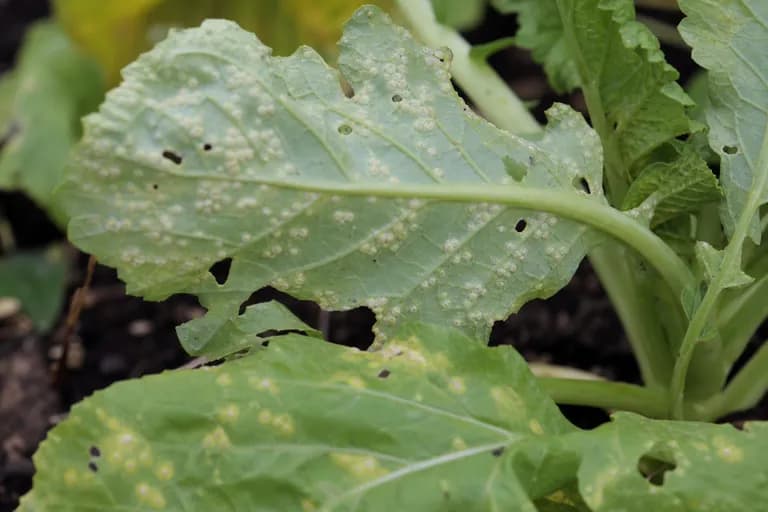
White Rust
DiseaseWhite, blister-like pustules on leaf undersides. Leaves may yellow and distort. Most common in cool, humid conditions.
Troubleshooting Common Problems
Invasiveness is the primary challenge. Horseradish is nearly impossible to eradicate once established, as even small root fragments regenerate. Always grow in contained areas. The large leaves can shade out nearby lower-growing plants. Flea beetles are the most common pest but rarely affect root quality. The grating process releases extremely volatile oils that cause severe eye and nose irritation; grate outdoors or in a well-ventilated area, or use a food processor with the lid on.
Growing Tips
- Always contain horseradish. Plant it in a large container, a raised bed with solid sides, or install a root barrier at least 45 cm deep around the planting area. Any root fragment left in the soil regenerates into a new plant, and an uncontained patch will colonize your entire garden within a few years.
- Start with root cuttings, not seeds. Horseradish rarely sets viable seed and is propagated almost exclusively from lateral root pieces. Purchase certified disease-free roots from a reputable nursery, or obtain cuttings from a fellow gardener's established patch.
- Plant as early in spring as the ground can be worked — horseradish is extremely cold-tolerant and benefits from the full growing season. Root cuttings planted 4-6 weeks before last frost establish faster and produce larger roots than late-spring plantings.
- Provide deep, loose, stone-free soil for the straightest, easiest-to-harvest roots. Work the bed to at least 30 cm deep and amend heavy clay with generous compost and coarse sand. Compacted or rocky soil produces forked, knobby roots that are difficult to peel and grate.
- Practice lifting and stripping for premium roots. In early summer, carefully expose the upper portion of the root, rub off all lateral side roots with a gloved hand, and re-cover with soil. This produces a single thick, smooth taproot rather than a tangled mass of thin branches.
- Water consistently through the growing season — about 2.5 cm per week. While established horseradish is drought-tolerant, consistent moisture produces larger, smoother roots with better texture. Mulch heavily to retain soil moisture and suppress weeds.
- Harvest after the first hard frost for maximum pungency. Cold temperatures trigger the plant to concentrate flavor compounds in the root. You can dig roots any time from first frost until the ground freezes solid, or mulch heavily and dig throughout winter in mild climates.
- Process freshly dug roots outdoors or with excellent ventilation. The volatile allyl isothiocyanate released during grating is far more potent than onion fumes and can cause genuine pain if inhaled in a closed kitchen. A food processor in a well-ventilated area makes the job faster and less tearful.
- Control the heat level by timing your vinegar addition. When preparing horseradish, adding vinegar immediately after grating produces a milder condiment. Waiting 3-5 minutes before adding vinegar allows more sinigrin to convert to the fiery isothiocyanate, resulting in a much hotter product.
- Leave a few root pieces in the ground when harvesting to ensure next year's crop. Horseradish is a true perennial — replanting is only necessary if you want to establish a new patch. The remaining roots will regrow vigorously each spring without any intervention.
Grow your best Horseradish yet — and everything around it.
Start a free plan today. Lay out your beds, drop in your Horseradish, and let PlotMyGarden handle the timing, spacing, companions and reminders from seed to harvest basket.
Pick your Horseradish
Common Horseradish
The standard variety with thick, white roots and large crinkled leaves. Extremely vigorous and reliable. The classic choice for homemade prepared horseradish.
Bohemian (Maliner Kren)
A smoother-skinned variety with slightly higher essential oil content for more intense pungency. Popular in Eastern European cuisine. Equally vigorous and easy to grow.
Fresh horseradish root sells for $6-12 per pound at farmers markets and specialty stores, and small jars of prepared horseradish cost $4-7 each. A single planting of 3-5 root cuttings ($8-15 total investment) produces a permanent, self-renewing patch that yields 2-8 kg of root annually — equivalent to $30-100 worth of fresh root or $50-150 worth of prepared horseradish per year, every year, with virtually zero ongoing cost. Since horseradish is perennial and nearly indestructible, the lifetime return on a one-time planting is extraordinary.
Quick recipes
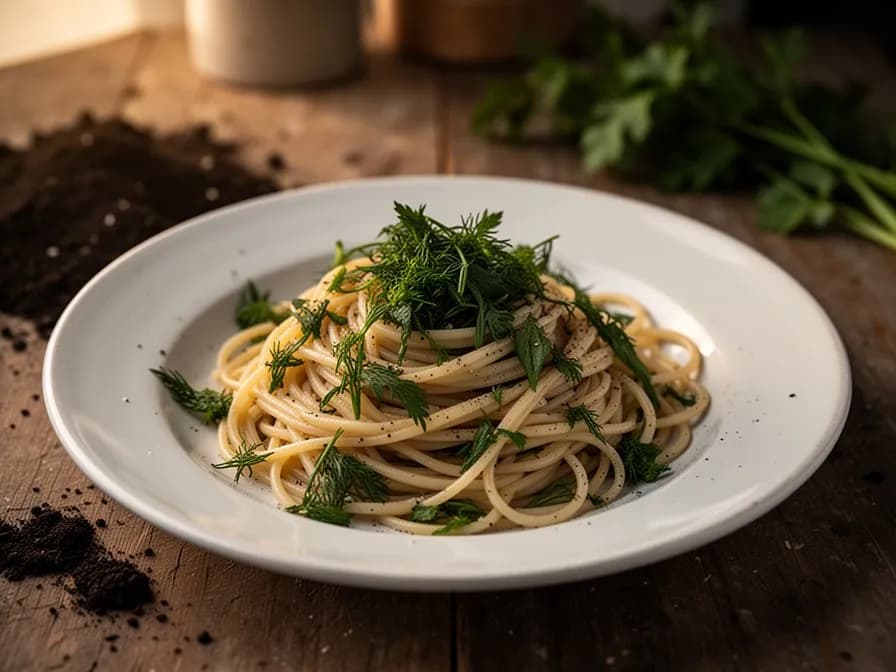
Classic Prepared Horseradish
15 minThe essential preparation that transforms a raw root into a fiery, versatile condiment. Freshly grated horseradish preserved in vinegar delivers an incomparably sharper, cleaner heat than anything from a store jar. The timing of vinegar addition controls the heat level — add it immediately for milder results, wait 3 minutes for maximum fire.
5 ingredientsHorseradish Cream Sauce
10 minA classic accompaniment to roast beef, smoked fish, and grilled steaks. The sour cream tames the raw heat into a smooth, tangy richness that complements rather than overwhelms. This sauce is also excellent dolloped onto baked potatoes or stirred into mashed potatoes.
7 ingredientsHorseradish and Beetroot Relish
20 minA vibrant Eastern European condiment known as chrain, traditionally served alongside gefilte fish and boiled meats. The earthy sweetness of roasted beetroot balances the sharp heat of fresh horseradish, creating a striking magenta relish that is as beautiful as it is pungent.
6 ingredientsCulinary Uses
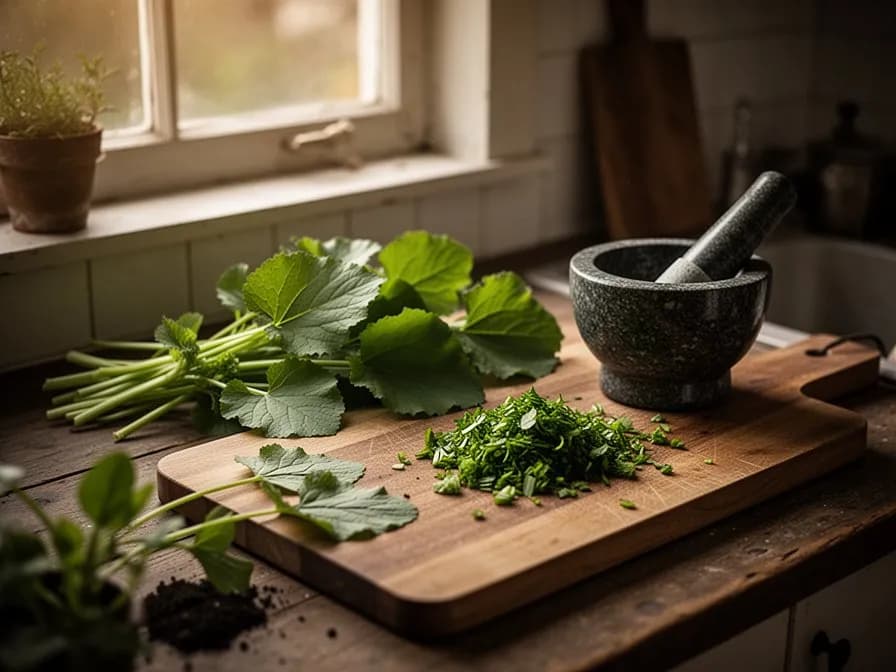
Freshly grated horseradish is far superior to commercial preparations. Mix grated root with white vinegar, salt, and optionally a touch of sugar for classic prepared horseradish. Combine with sour cream or mayonnaise for horseradish cream sauce, the traditional accompaniment to roast beef and prime rib. Stir into cocktail sauce for shrimp. Add to Bloody Marys for an extra kick. Horseradish pairs with smoked fish, beets, and potatoes in Eastern European cuisines. The fresh young leaves are also edible and peppery in salads.
What's inside
Health Benefits
- Rich in glucosinolates, particularly sinigrin, which are converted to isothiocyanates when the root is grated — compounds studied for their potent antibacterial, antifungal, and potential anti-cancer properties in laboratory and preliminary clinical research.
- Excellent source of vitamin C at 28% of the daily value per 100g of raw root, supporting immune function, collagen synthesis, and iron absorption while acting as a powerful antioxidant against oxidative stress.
- Contains natural antimicrobial volatile oils that have been traditionally used to support respiratory health — the sinus-clearing effect of eating horseradish can provide temporary relief from nasal congestion and sinus pressure.
- Provides dietary fiber (3.3g per 100g) that supports healthy digestion and feeds beneficial gut microbiota, contributing to a balanced intestinal ecosystem even when consumed in condiment-sized portions regularly.
- Very low calorie (48 per 100g) with negligible fat content, making horseradish an ideal flavor enhancer for those seeking to reduce calories, sodium, or fat in their diet without sacrificing bold taste.
- Contains peroxidase enzymes that have been studied for their antioxidant activity, and traditional herbalism across Germanic and Slavic cultures has long used horseradish preparations to stimulate digestion and appetite.
Where Horseradish comes from
Horseradish (Armoracia rusticana) is native to southeastern Europe and western Asia, with its center of origin in the region spanning modern-day Ukraine, Russia, and the area around the Caspian Sea. Archaeological and historical evidence indicates that the plant was known and used for both culinary and medicinal purposes for at least 3,500 years. Ancient Egyptians were familiar with horseradish by 1500 BCE, and both the ancient Greeks and Romans prized it — Pliny the Elder documented its medicinal uses in his Natural History, recommending it for a variety of ailments from persistent coughs to digestive complaints.
During the Middle Ages, horseradish cultivation spread across central and northern Europe, where it became firmly established in German, Scandinavian, Polish, and Russian cuisines. By the 13th century, it was widely grown in Germanic regions as a condiment for meat and fish, and it became a fixture at the traditional Passover Seder table as one of the bitter herbs (maror). English cultivation began in earnest during the late 1500s, and by the 1600s horseradish sauce had become the quintessential British accompaniment to roast beef — a pairing that endures to this day.
European settlers brought horseradish to North America in the colonial era, and it naturalized readily across the continent's temperate regions. German immigrants in particular established large-scale horseradish farming in the Mississippi River bottomlands near Collinsville, Illinois, in the mid-1800s, creating what remains the world's largest horseradish-producing region today. The rich alluvial soil and humid continental climate proved ideal for growing massive, pungent roots. Today horseradish is cultivated commercially on every continent except Antarctica, but it also persists as a wild or feral plant along roadsides, stream banks, and disturbed ground throughout much of the temperate world, testament to its extraordinary hardiness and tenacity.
Horseradish: did you know?
Fascinating facts about Horseradish
Horseradish contains no heat at all until you damage the root cells — grating, cutting, or crushing ruptures cell walls and allows the enzyme myrosinase to convert sinigrin into allyl isothiocyanate, the volatile compound responsible for its sinus-clearing fire. An intact root has virtually no smell.
Horseradish questions, answered
When should I plant Horseradish?
What are good companion plants for Horseradish?
What hardiness zones can Horseradish grow in?
How much sun does Horseradish need?
How far apart should I space Horseradish?
What pests and diseases affect Horseradish?
How do I store Horseradish after harvest?
What are the best Horseradish varieties to grow?
What soil does Horseradish need?
How do I prevent horseradish from taking over my garden?
When is the best time to harvest horseradish?
Can I grow horseradish from seed?
Why does my prepared horseradish lose its heat quickly?
Is horseradish safe for everyone to eat?
Can I eat horseradish leaves as well as the root?
You just read the theory. Now grow it on autopilot.
Everything that makes Horseradish fiddly — the timing, the spacing, the companions, the harvest window — is exactly what PlotMyGarden handles for you, for every plant in your garden.
A plan that knows your weather
Set your location once. Get sow, feed and harvest dates built around your real last-frost date and live forecast — no more guessing from a generic seed packet.
From the “When to plant” sectionDrag-and-drop bed planner
Design beds on a grid. Every plant snaps to its proper spacing, and you can see your whole season laid out before you spend a cent on seed.
From the “Growing guide” sectionCompanion conflicts, caught early
200+ good-and-bad pairings checked live as you plant — so a season-wrecking mistake never makes it into the ground.
From the “Companions” sectionReminders you'll actually act on
“Water the beans.” “Pick today before it turns.” Timely, specific, and tied to the plants you're really growing.
From the “Harvest” sectionSuccession, scheduled
Want a harvest for six weeks, not six days? It spaces your sowings automatically and reminds you when each new block is due.
From the “When to plant” sectionA record that gets smarter
Every harvest you log teaches it your garden. Next year's plan starts from what actually worked in your soil, not a textbook's.
From the “Overview” sectionPlant these alongside Horseradish
More Culinary Herbs
Grow your best Horseradish yet — and everything around it.
Start a free plan today. Lay out your beds, drop in your Horseradish, and let PlotMyGarden handle the timing, spacing, companions and reminders from seed to harvest basket.