Eucalyptus Tree
typical season: not winter-hardy in zone 7 (needs 8–11) · grow it in a pot and bring it in for winter · plant Mar – May · set your climate
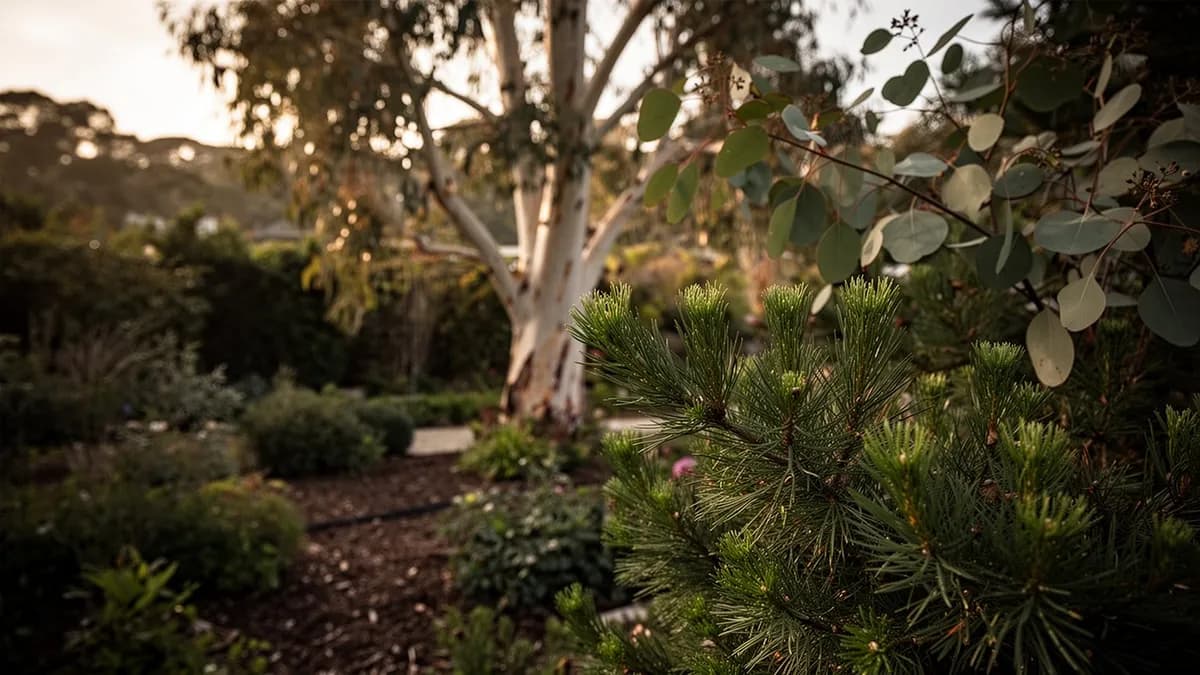
A fast-growing Australian evergreen with aromatic, silvery-blue foliage and distinctive peeling bark that reveals smooth, colorful trunk beneath.
On this pageOverview
Meet Eucalyptus Tree
A fast-growing Australian evergreen with aromatic, silvery-blue foliage and distinctive peeling bark that reveals smooth, colorful trunk beneath. Eucalyptus trees grow remarkably fast, sometimes adding six to ten feet per year, but develop brittle wood prone to dropping branches. They are highly flammable and should not be planted near structures in fire-prone areas. Many species produce allelopathic oils that suppress growth of nearby plants, so underplanting is generally unsuccessful.
When to plant Eucalyptus Tree
Eucalyptus seed is very fine, with some species producing up to a million seeds per pound. Collect woody seed capsules from trees and dry them indoors until seeds release naturally. Most species require no stratification and germinate readily at 65 to 75 degrees Fahrenheit. Scatter seeds thinly on the surface of moist seed-starting mix and press gently without covering, as seeds need light to germinate. Mist regularly to maintain surface moisture. Germination occurs in 10 to 21 days for most species. Seedlings grow rapidly and can be transplanted to individual pots within 6 to 8 weeks. Harden off and plant outdoors after all danger of frost has passed.
Your Eucalyptus Tree Year
Composed for Zone 7 · typical seasons · frost passes Apr 2, returns Nov 1
Plant Eucalyptus Tree Mar – May, in bloom —. Check the planting methods below and set your climate to personalize these windows.
Remind me when it's time to sow Eucalyptus Tree
The window opens Mar 1 where you garden. One email a few days before and one two weeks before it closes.
One email per milestone, never more than one a week. Unsubscribe with one tap. No account needed.
How to grow Eucalyptus Tree
Eucalyptus trees are among the fastest-growing trees available, with some species adding 6 to 10 feet per year under ideal conditions. Choose a site with full sun, good drainage, and ample space, as eucalyptus develops an extensive root system and can reach substantial size within just a few years. Most species prefer well-drained soil with a pH of 5.5 to 7.5 and are remarkably drought-tolerant once established.
Plant container-grown specimens in spring when soil temperatures warm. Avoid root-bound plants, as circling eucalyptus roots rarely correct after planting and lead to instability later. Plant at the same depth as the container and water deeply at planting. Apply 3 to 4 inches of mulch but keep it well away from the trunk. Water weekly for the first growing season, then taper off as roots establish.
Eucalyptus requires minimal pruning for the species that grow as single-trunked trees. Coppicing, or cutting back to near ground level, rejuvenates multi-stemmed species and is practiced commercially for flower-arranging foliage and firewood production. Be aware that eucalyptus wood is notoriously brittle, and mature trees can drop heavy limbs without warning, so avoid placing seating areas, pathways, or structures within the drop zone.
Related growing guides
Feed it well
Eucalyptus thrives in well-drained soil and tolerates poor, sandy, and gravelly conditions that would challenge most trees. Ideal pH ranges from 5.5 to 7.5. Heavy clay must be amended or mounded for drainage, as eucalyptus is highly susceptible to root rot in waterlogged conditions. Most species require minimal fertilization once established. For young trees, apply a low-phosphorus fertilizer in spring, as eucalyptus is adapted to phosphorus-poor Australian soils and can develop toxicity in phosphorus-rich conditions. Mulch lightly to conserve moisture but avoid deep mulch against the trunk.
Ideal Temperature
Hardiness Zone Compatibility
From seed to harvest, stage by stage
Seed Germination
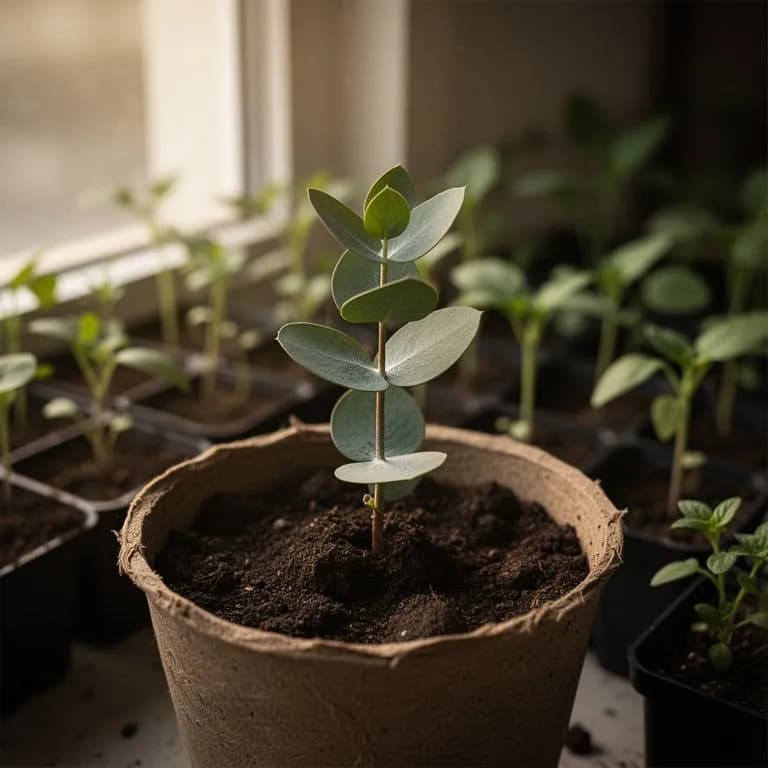
Eucalyptus seeds are extremely small, almost dust-like, and are surface-sown on moist seed-starting mix. They require light to germinate and consistent warmth of 20-25°C (68-77°F). Germination is often erratic and can take 7 to 21 days depending on the species and freshness of the seed.
Juvenile Seedling
Seedlings develop their characteristic round, blue-green juvenile leaves during this stage. Growth is initially slow as the root system establishes. The juvenile foliage is often more aromatic than adult leaves and is the type most commonly used in floral arrangements and crafts.
Rapid Vegetative Growth
Eucalyptus enters a vigorous growth phase and can add 1-2 meters (3-6 feet) of height per year under favorable conditions. The leaves begin transitioning from round juvenile form to the elongated, sickle-shaped adult foliage. The bark starts developing its characteristic texture and may begin shedding in strips.
Young Tree Establishment
By the end of the first year, the eucalyptus develops a strong central leader and an expanding root system. The tree continues rapid upward growth and begins forming a canopy. Bark shedding becomes more pronounced, revealing the smooth inner layers that give many eucalyptus species their ornamental appeal.
Mature Flowering Tree
Most eucalyptus species begin flowering between 3 and 7 years of age. The distinctive flowers emerge from bud caps (opercula) that pop off to reveal dense clusters of stamens in white, cream, pink, or red. Mature trees can reach 10-30 meters (30-100 feet) depending on the species, and provide significant shade, windbreak, and habitat value.
Full Maturity and Coppicing
Fully established eucalyptus trees are remarkably resilient and many species respond well to coppicing, which involves cutting the tree back to a stump to encourage vigorous regrowth of juvenile foliage. This technique is commonly used in cooler climates to maintain manageable size and to produce continuous harvests of the ornamental juvenile leaves.
Press seeds gently onto the surface of the soil without covering them. Keep the medium consistently moist by misting, and cover the tray with a clear plastic dome to maintain humidity. Provide bright indirect light or a grow light for 12-14 hours daily.
Caring for Eucalyptus Tree month by month
What to do each month for your Eucalyptus Tree
October
You are hereMove container-grown eucalyptus to a sheltered position or indoors before the first frost. Clean up fallen bark and leaf litter from around the base of the tree. Apply a thick layer of mulch around the root zone for winter insulation.
Harvesting Eucalyptus Tree
Eucalyptus is harvested primarily for its aromatic foliage, which is popular in fresh and dried floral arrangements. Cut branches in the morning when essential oil content is highest. For flower arranging, harvest juvenile round-leaved foliage from coppiced trees, which is more ornamental than the elongated adult leaves. Eucalyptus oil can be extracted by steam distillation of fresh leaves. The wood is valued for firewood, as it burns hot and long, though it should be seasoned for 12 to 18 months before burning.
Storage & Preservation
Fresh eucalyptus branches last 2 to 3 weeks in water and several weeks when preserved with glycerin. To glycerin-preserve, mix one part vegetable glycerin with two parts hot water, stand cut branches in the solution, and leave for 2 to 3 weeks until leaves become supple and slightly darkened. Preserved eucalyptus retains its form and fragrance for months. Air-dried eucalyptus maintains its shape but becomes brittle. Eucalyptus essential oil should be stored in dark glass bottles in a cool location and lasts indefinitely.
What goes wrong — and the fix
Eucalyptus Longhorned Borer
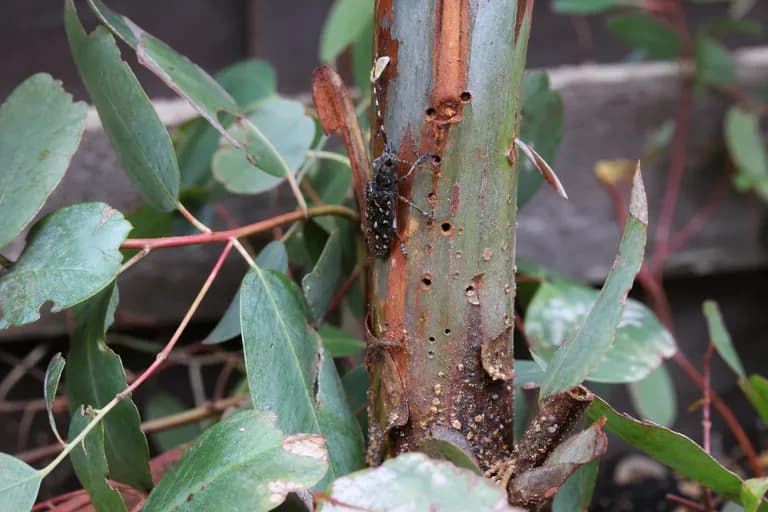
PestSmall round exit holes in bark, sawdust frass at the base, and crown dieback. Larvae tunnel under bark and into wood, weakening branches and trunks. Stressed or newly planted trees are most vulnerable.
Eucalyptus Psyllid
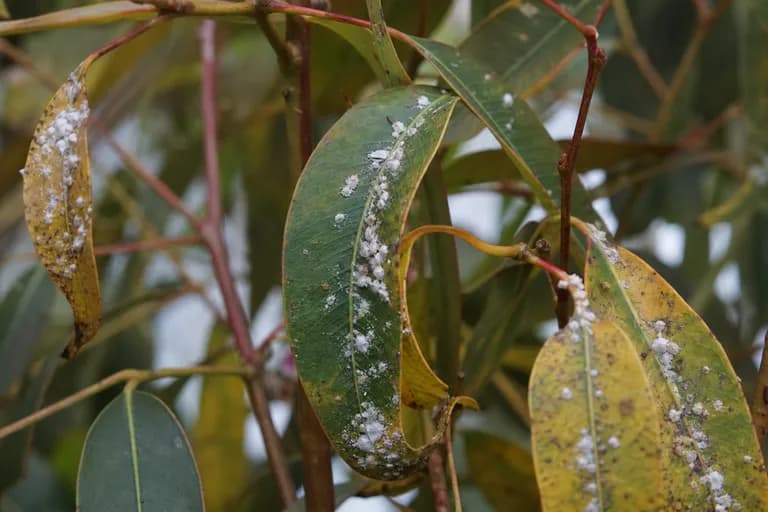
PestLerp-like white crystalline coverings on leaves produced by nymphs feeding on sap. Leaves yellow, curl, and drop. Heavy infestations defoliate entire canopies.
Phytophthora Root Rot
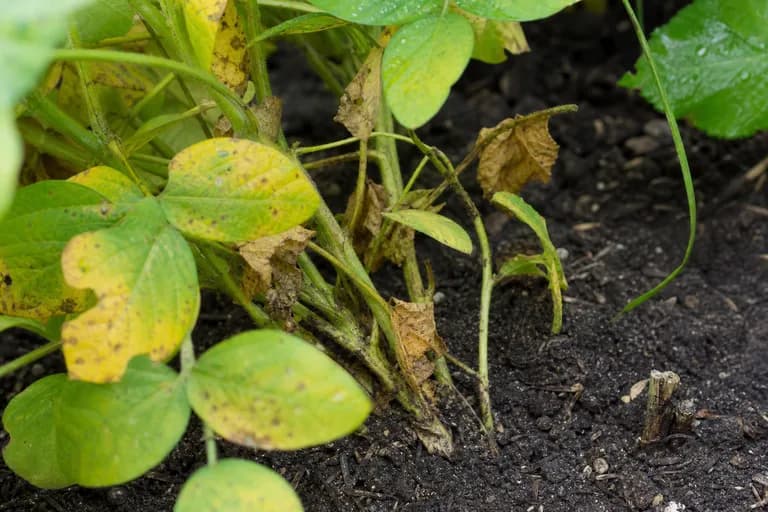
DiseaseSudden wilting and browning of foliage on entire branches or the whole tree. Dark, water-soaked tissue at the soil line. Roots are dark and mushy when excavated.
Troubleshooting Common Problems
Branch drop is the most dangerous issue with eucalyptus, as healthy-looking limbs can fall without warning, especially during calm hot weather. This liability limits their use near buildings, paths, and gathering areas. The extensive root system can invade water lines, sewer pipes, and foundations. Eucalyptus is extremely flammable due to volatile oils in the foliage and bark, making it inappropriate for fire-prone regions near structures. Allelopathic compounds in fallen leaves suppress germination and growth of many nearby plants. Frost damage on marginally hardy species can cause severe dieback or death.
Growing Tips
- Start eucalyptus seeds on the surface of moist seed-starting mix and press gently without covering, as the tiny seeds require light to germinate successfully.
- Use a heat mat set to 20-25°C (68-77°F) under seed trays to dramatically improve germination rates and speed, which typically takes 7-21 days.
- Choose cold-hardy species like Eucalyptus gunnii or Eucalyptus pauciflora if growing in climates where winter temperatures regularly drop below -5°C (23°F).
- Plant eucalyptus in well-draining soil with a slightly acidic pH of 5.5-6.5 for optimal growth; they do not tolerate waterlogged or heavy clay soils well.
- Position trees in full sun with at least 6-8 hours of direct sunlight daily, as eucalyptus will become leggy and weak in partial shade.
- Water young trees deeply but infrequently to encourage deep root development; established trees are highly drought-tolerant and rarely need supplemental irrigation.
- Coppice eucalyptus annually in late spring by cutting to 30-60 cm (12-24 inches) to maintain a manageable shrub size and produce abundant juvenile foliage prized by florists.
- Apply a slow-release balanced fertilizer in early spring and again in midsummer for container-grown specimens; in-ground trees rarely need feeding once established.
- Protect young trees from strong winds by staking loosely for the first year, but allow some trunk movement to promote natural strengthening of the wood fibers.
- Monitor for eucalyptus gall wasp, psyllids, and longhorn borers, which are the most common pest threats; treat early infestations with horticultural oil or neem-based sprays.
Pick your Eucalyptus Tree
Silver Dollar (E. polyanthemos)
Round, silvery-blue leaves make this one of the most popular species for floral work. Moderate growth to 30 to 60 feet. Hardy to zone 8 with good drought tolerance.
Rainbow Eucalyptus (E. deglupta)
Spectacular multi-colored bark peels in strips revealing green, blue, orange, and maroon layers. Tropical species hardy only to zone 10. Fast-growing to 100 feet or more.
Cider Gum (E. gunnii)
One of the hardiest eucalyptus species, tolerating temperatures to 0 degrees Fahrenheit once established. Round blue-gray juvenile leaves on a fast-growing tree to 40 to 60 feet.
Snow Gum (E. pauciflora subsp. niphophila)
Extremely hardy small eucalyptus with beautiful mottled bark in gray, cream, and olive. Grows 15 to 25 feet tall. Hardy to zone 7 with protection.
Growing your own eucalyptus provides a continuous supply of fresh aromatic foliage worth $5-15 per bunch at florists. A single tree can yield enough branches for dozens of wreaths, bouquets, and dried arrangements each year. Home-distilled or simply infused eucalyptus oil eliminates the need to purchase commercial essential oils at $8-20 per small bottle, and the ornamental value of a mature eucalyptus adds significant curb appeal to a property.
Quick recipes
Eucalyptus Steam Inhalation Blend
5 minutesA soothing steam inhalation using fresh eucalyptus leaves to help relieve nasal congestion and sinus discomfort. The aromatic steam releases eucalyptol and other volatile compounds that naturally open airways and provide respiratory relief.
5 ingredientsEucalyptus and Lavender Room Spray
10 minutesA natural room freshener and linen spray combining the clean, invigorating scent of eucalyptus with calming lavender. This spray helps purify the air and create a refreshing atmosphere without synthetic chemicals.
5 ingredients
Dried Eucalyptus Wreath
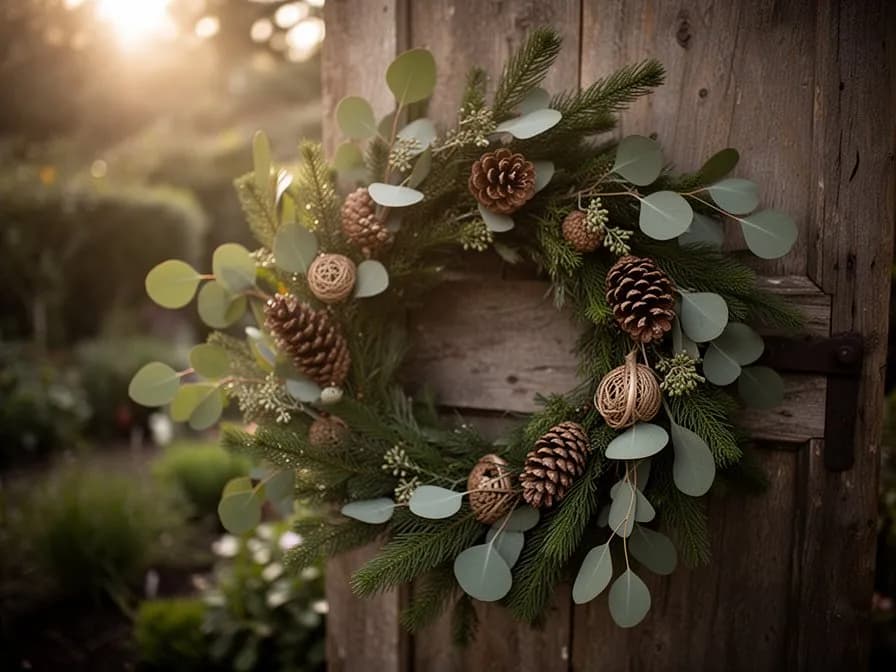
30 minutesCreate a beautiful and aromatic dried eucalyptus wreath for your front door or interior wall. The natural oils in the leaves continue to release their fresh scent for months, making this a long-lasting decorative and aromatic piece.
5 ingredientsWhat's inside
Health Benefits
- Eucalyptus essential oil acts as a natural decongestant, helping to loosen mucus and ease breathing when used in steam inhalation or diffused in the air.
- The compound eucalyptol (1,8-cineole) has demonstrated anti-inflammatory properties in clinical studies and is used in pharmaceutical preparations for respiratory conditions.
- Eucalyptus oil has broad-spectrum antimicrobial activity and is effective against many common bacteria and fungi, making it useful in natural cleaning products and wound care preparations.
- Inhaling eucalyptus aroma has been shown to reduce stress and mental fatigue, promoting alertness and improved cognitive function in aromatherapy studies.
- Topical application of diluted eucalyptus oil can provide temporary relief from muscle and joint pain due to its cooling sensation and anti-inflammatory compounds.
- Eucalyptus-based insect repellents, particularly those containing oil of lemon eucalyptus (OLE), are recommended by the CDC as effective alternatives to DEET for repelling mosquitoes.
Where Eucalyptus Tree comes from
Eucalyptus is a vast genus of flowering trees and shrubs belonging to the myrtle family Myrtaceae, with over 700 recognized species. The genus is overwhelmingly native to Australia, where eucalyptus forests cover approximately 92 million hectares and represent the dominant tree type across most of the continent. A small number of species occur naturally in parts of Indonesia, Papua New Guinea, and the Philippines. Aboriginal Australians have utilized eucalyptus for thousands of years, using the wood for tools, canoes, and shelter construction, and the leaves for traditional medicine to treat wounds, infections, and respiratory ailments. European botanists first formally described eucalyptus in 1788 when the French botanist Charles Louis L'Heritier de Brutelle named Eucalyptus obliqua based on specimens collected during Captain Cook's third voyage. Throughout the 19th century, eucalyptus was introduced to regions around the world including California, southern Europe, South America, and parts of Africa, often for timber production, swamp drainage, and windbreak purposes. In California, massive planting campaigns in the 1850s through early 1900s established eucalyptus groves that persist today, though the trees became controversial due to their fire risk and impact on native ecosystems. Brazil emerged as the world's largest commercial eucalyptus grower in the 20th century, cultivating vast plantations primarily for pulp and paper production. Today eucalyptus is one of the most widely planted hardwood genera globally, valued for its rapid growth, aromatic essential oils, honey production, and ornamental appeal in gardens and landscapes.
Eucalyptus Tree: did you know?
Fascinating facts about Eucalyptus Tree
There are over 700 species of eucalyptus, almost all of which are native to Australia, where they dominate roughly three-quarters of the continent's forest cover.
Eucalyptus Tree questions, answered
When should I plant Eucalyptus Tree?
What hardiness zones can Eucalyptus Tree grow in?
How much sun does Eucalyptus Tree need?
How far apart should I space Eucalyptus Tree?
What pests and diseases affect Eucalyptus Tree?
How do I store Eucalyptus Tree after harvest?
What are the best Eucalyptus Tree varieties to grow?
What soil does Eucalyptus Tree need?
Can I grow eucalyptus in a cold climate?
How fast does eucalyptus grow?
Is eucalyptus safe to grow around pets and children?
What is coppicing and should I coppice my eucalyptus?
Can I harvest eucalyptus leaves for tea or medicinal use?
Why are my eucalyptus leaves turning brown or dropping?
More Evergreens
Grow your best Eucalyptus Tree yet — and everything around it.
Start a free plan today. Lay out your beds, drop in your Eucalyptus Tree, and let PlotMyGarden handle the timing, spacing, companions and reminders from seed to harvest basket.
