Hoja de Curry
Árbol tropical que produce hojas compuestas muy aromáticas, imprescindibles en la cocina del sur de India y Sri Lanka.





En esta páginaResumen
Conoce Hoja de Curry
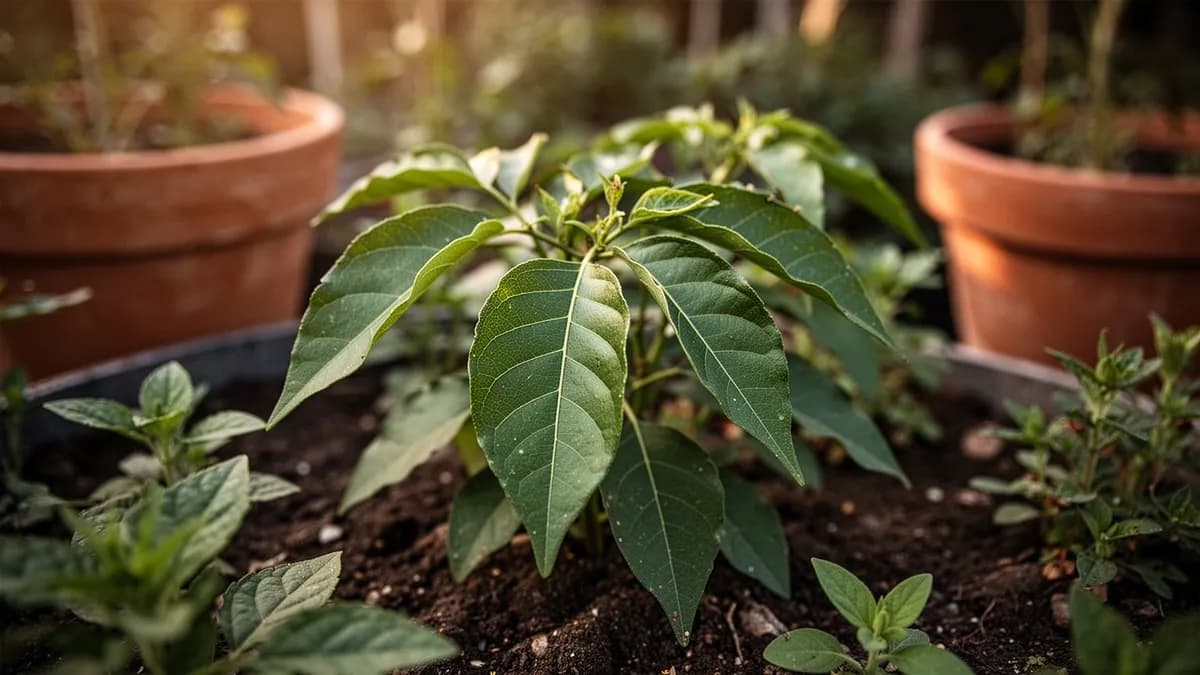
Árbol tropical que produce hojas compuestas muy aromáticas, imprescindibles en la cocina del sur de India y Sri Lanka. Las hojas de curry tienen un sabor único, a la vez avellanado y cítrico, completamente distinto del curry en polvo y sin sustituto posible. En climas templados se cultiva en maceta y debe trasladarse al interior antes de que las temperaturas bajen de 4 °C (40 °F).
Cuándo plantar Hoja de Curry
Las semillas de hoja de curry deben ser absolutamente frescas para germinar; pierden viabilidad en 1-2 semanas después de la cosecha. Retire la pulpa del fruto negro-morado y siembre inmediatamente a 1 cm de profundidad en una mezcla de siembra húmeda y cálida. Mantenga la temperatura del suelo entre 21-27 °C (70-80 °F) usando una esterilla calefactora. Las semillas germinan de forma irregular entre 1 y 6 semanas. Mantenga el sustrato húmedo pero no encharcado. Las plántulas crecen lentamente durante el primer año. Una alternativa es propagar a partir de retoños de raíz, que las plantas adultas producen con abundancia. Los esquejes de tallo son difíciles de enraizar sin equipo especializado.
Tu año de Hoja de Curry
Ajustado a Zona 7 · temporada típica · la helada se va hacia el 2 abr y vuelve hacia el 1 nov
Planta Hoja de Curry Abr – Jun y cosecha May – Oct. Consulta los métodos de plantación y elige tu clima para adaptar los periodos.
Cómo cultivar Hoja de Curry
El árbol de hoja de curry (Murraya koenigii) es un árbol tropical a subtropical que puede alcanzar 4-6 metros en el suelo en climas cálidos, aunque en la mayoría de las zonas templadas lo más práctico es cultivarlo en maceta. Se puede iniciar desde semillas o plantas de vivero. Las semillas frescas germinan en 1-3 semanas, pero las semillas secas suelen fallar por completo. Retire la pulpa exterior del fruto antes de sembrar las semillas a 1 cm de profundidad en suelo cálido y húmedo.
Cultívelo a pleno sol con suelo rico, bien drenado y ligeramente ácido. En macetas, use una mezcla de sustrato de calidad enmendada con perlita para mejorar el drenaje. Los árboles de hoja de curry son grandes consumidores de nutrientes durante la estación de crecimiento y se benefician de una fertilización regular. Riegue con regularidad durante el crecimiento activo pero reduzca en invierno cuando el desarrollo se ralentiza.
En las zonas 9-12, los árboles de hoja de curry pueden cultivarse al aire libre durante todo el año. En zonas más frías, cultívelos en macetas y llévelos al interior antes de que las temperaturas desciendan por debajo de 4 °C (40 °F). El árbol puede perder las hojas en invierno cuando se cultiva en interiores, pero rebrotará en primavera. Proporcione la ubicación más luminosa posible en interior y complemente con lámparas de crecimiento. Los árboles de hoja de curry tardan en establecerse, pero se vuelven cada vez más productivos con los años.
2 plantas caben en un bancal de 120 × 240 cm
Cada Hoja de Curry pide 90 cm de margen. El planificador guarda ese marco por ti — cada planta, cada bancal.
Los mejores vecinos de Hoja de Curry
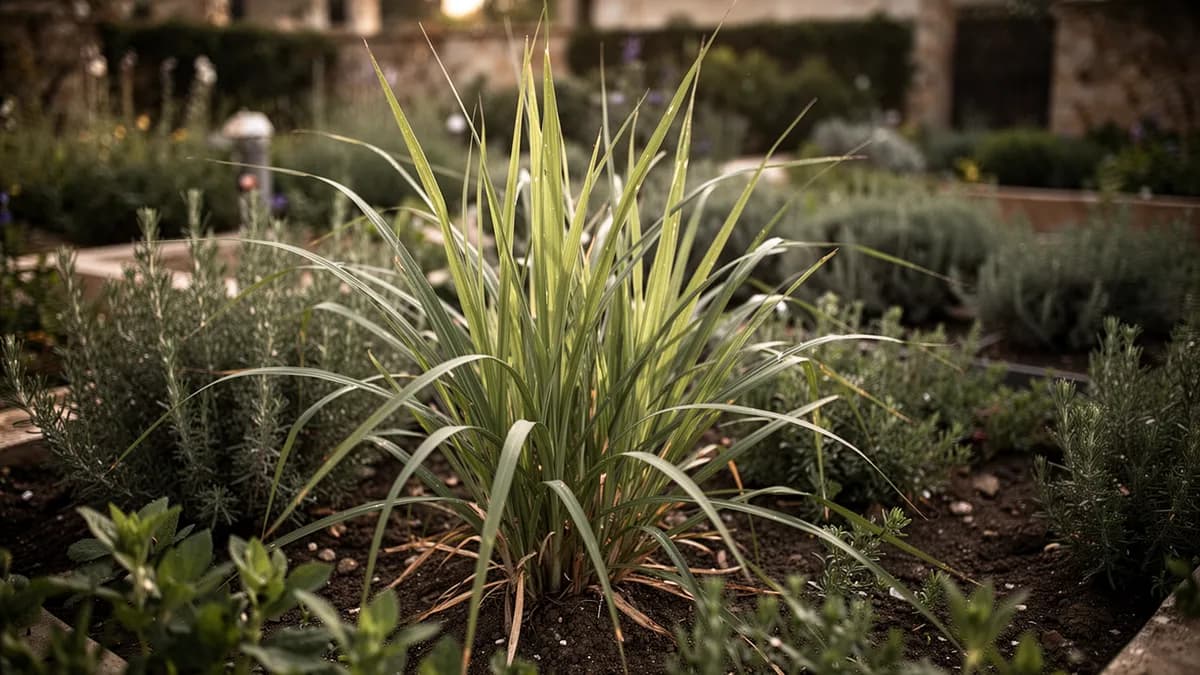
En jardines tropicales, los árboles de hoja de curry crecen bien junto a otras plantas culinarias del sur de Asia, como la hierba limón, la albahaca tailandesa y la cúrcuma. Como planta en maceta, puede agruparse con otras hierbas tropicales en un patio soleado. Las hojas aromáticas pueden ayudar a ahuyentar algunos insectos de las plantas cercanas. Los árboles de hoja de curry no tienen compañeros incompatibles significativos. Cuando se cultivan en interior, agrúpelos con otras plantas tropicales para crear un microclima húmedo que beneficie a todas las plantas.
Hierba limón va a su lado.
Saber de huerto de siempre, cotejado con la tabla real de Hoja de Curry — prueba cualquier planta que cultives.
Prueba Hoja de Curry en un bancal, aquí mismo
Un bancal real del planificador con Hoja de Curry ya plantado. Toca una planta compañera para colocarla y mira cómo responde la comprobación de vecinos: verde para buenos vecinos, rojo si hay conflicto.


Guías de cultivo relacionadas
Abónalo bien
Los árboles de hoja de curry prefieren un suelo rico, ligeramente ácido, con pH de 5.5-6.5 y excelente drenaje. En macetas, use una mezcla de sustrato de calidad enmendada con perlita y turba. Durante la estación de crecimiento (primavera hasta otoño) abónelos intensamente con un fertilizante acidificante formulado para cítricos o azaleas. Aplique quelato de hierro si las hojas presentan amarillamiento entre las nervaduras, que indica clorosis férrica común en condiciones alcalinas. Reduzca la fertilización en invierno cuando el crecimiento se ralentiza. Añada compost como cobertura anualmente en primavera.
Temperatura ideal
Compatibilidad de zonas de rusticidad
De la semilla a la cosecha, etapa por etapa
Germinación de la semilla
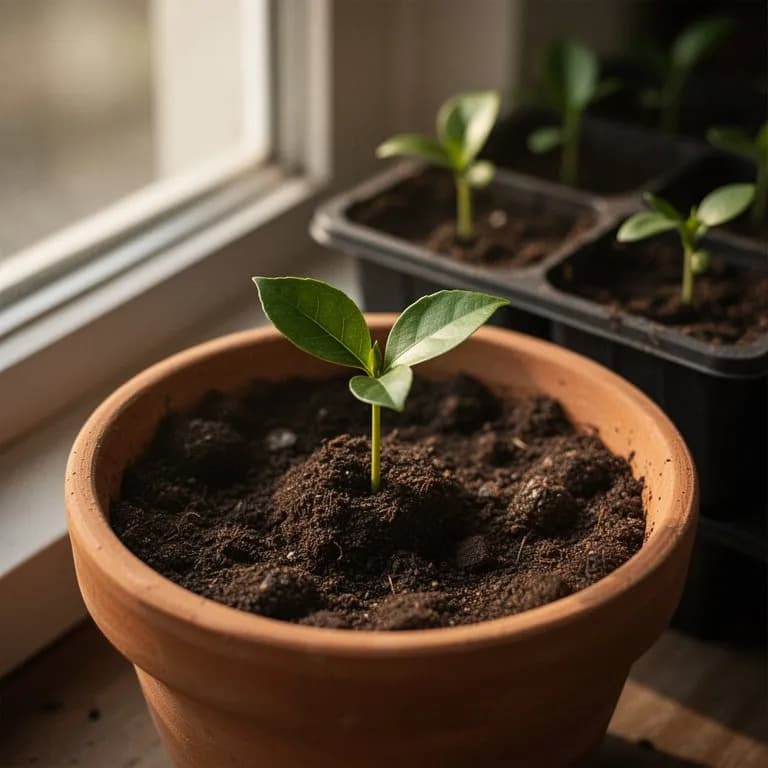
Las semillas de hoja de curry son notoriamente lentas e irregulares en su germinación. Es imprescindible usar semillas frescas (obtenidas de bayas negras maduras con la pulpa exterior retirada), ya que la viabilidad disminuye drásticamente en pocas semanas. La semilla emite una delgada radícula blanca, seguida de un tallo pálido que porta dos pequeñas hojas cotiledonares. La germinación requiere calor constante de al menos 20 °C (68 °F) y tarda entre 2 y 4 semanas.
Desarrollo de plántula
La plántula joven produce sus primeras hojas compuestas verdaderas, cada una con 3-5 pequeños folíolos brillantes dispuestos a lo largo de un raquis central. El crecimiento es lento en esta etapa mientras la planta establece su sistema radicular. Los tallos son delgados y verdes, volviéndose gradualmente leñosos en la base. El característico aroma a curry se hace perceptible al frotar las hojas entre los dedos.
Crecimiento juvenil
La planta desarrolla un tallo central leñoso y comienza a ramificarse, adoptando la forma de un pequeño arbusto de 30-60 cm al final del primer año. Las hojas compuestas crecen más grandes con 11-21 folíolos por hoja. El sistema radicular se refuerza considerablemente y la planta se vuelve más resistente al estrés moderado. La producción de hojas aumenta de forma constante y pueden comenzar cosechas ligeras una vez que la planta esté bien ramificada.
Crecimiento maduro y floración
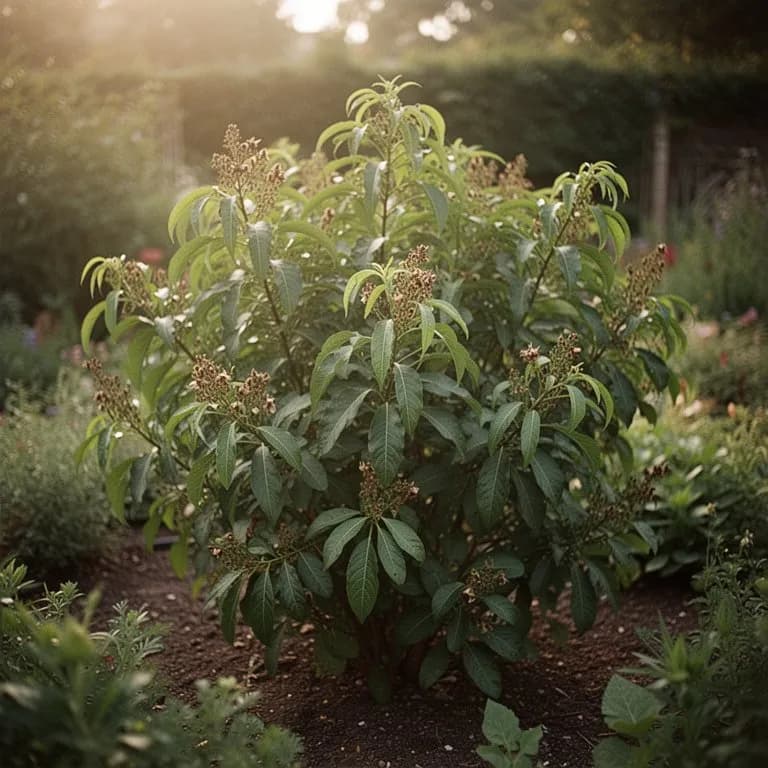
A partir del segundo año, la planta de hoja de curry comienza a florecer en primavera, produciendo racimos de pequeñas flores blancas y fragantes en las puntas de las ramas. Estas se convierten en pequeñas bayas verdes que maduran a negro brillante en el transcurso de varias semanas. La planta crece vigorosamente durante los meses cálidos y puede alcanzar 1-2 metros de altura. La producción de hojas es abundante y la cosecha regular promueve un crecimiento denso y compacto con follaje intensamente aromático.
Árbol establecido
Tras 2-5 años, el árbol de hoja de curry alcanza su tamaño maduro de 2-4 metros (o menor si se mantiene podado o en maceta). El tronco se vuelve claramente leñoso con corteza gris-marrón. El árbol produce abundante follaje durante toda la estación cálida con hojas muy aromáticas y sabrosas. La producción de frutos se vuelve copiosa y el árbol puede resembrarse si se permite que las bayas caigan. Un árbol establecido proporciona un suministro prácticamente ilimitado de hojas de curry frescas para la cocina.
Use únicamente semillas frescas de bayas negras completamente maduras. Retire la pulpa del fruto por completo antes de plantar, ya que contiene inhibidores de la germinación. Siembre las semillas a 1 cm de profundidad en una mezcla de siembra húmeda, cubra la maceta con una tapa transparente o film plástico para mantener la humedad y colóquela sobre una esterilla calefactora a 25 °C (77 °F). Sea paciente — la germinación puede tardar hasta 30 días.
Cuidar Hoja de Curry mes a mes
Qué hacer cada mes para tu Hoja de Curry
Octubre
Mes actualTraslade las plantas en maceta al interior a un lugar luminoso antes de las primeras heladas. Reduzca gradualmente el riego a medida que el crecimiento se ralentiza. Una poda ligera final puede dar forma a la planta para su estancia en interior. En las zonas 10-12, el árbol continúa creciendo y puede producir un segundo ciclo de flores y frutos.
Ten claro qué hacer en tu huerto, cada mes
Un correo al empezar cada mes: qué sembrar, plantar y hacer ahora mismo — para tu Hoja de Curry y todo lo que crece alrededor. Más un breve curso inicial para esquivar los errores clásicos.
- Qué hacer ahora mismo
- Ajustado a tu temporada
- Curso inicial incluido
Cosechar Hoja de Curry
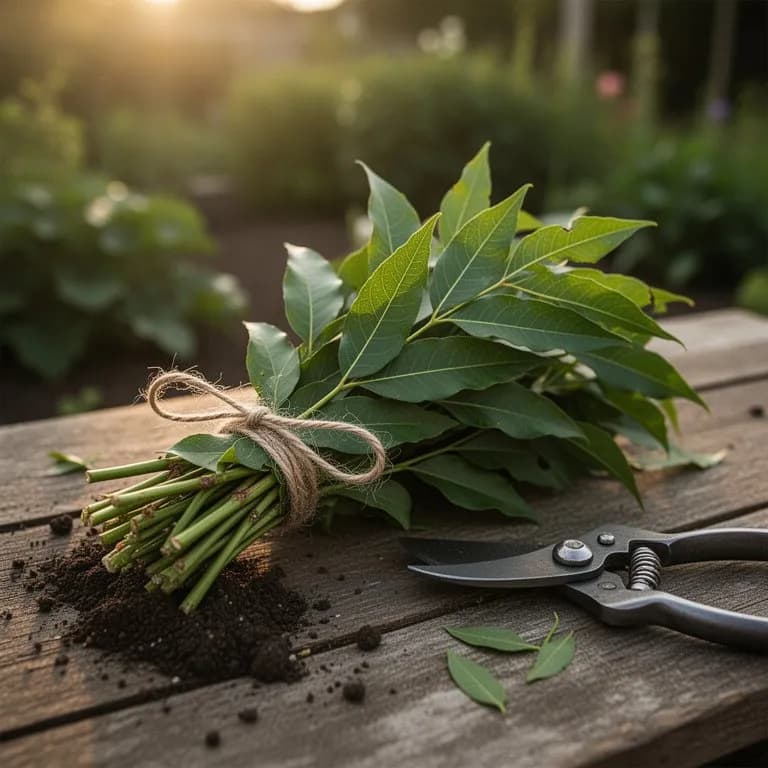
Coseche las hojas de curry arrancando folíolos individuales de las hojas compuestas o cortando ramitas enteras. Las hojas jóvenes y tiernas en las puntas de las ramas tienen el aroma más intenso. Los árboles necesitan tener al menos 1-2 años antes de que comience una cosecha significativa. Recoja las hojas justo antes de usarlas para obtener la máxima fragancia. Las hojas viejas de color verde oscuro tienen menos aroma que las jóvenes de color verde brillante. La cosecha fomenta el ramificado y un crecimiento más compacto. Un árbol en maceta bien establecido puede proporcionar suficientes hojas para la cocina doméstica habitual.
se supone que plantas al comenzar el periodo — indica tu fecha real
Cosecha Hoja de Curry a tiempo y la planta sigue produciendo.
Almacenamiento y conservación
Las hojas de curry frescas tienen el mejor sabor y aroma. Guárdelas en un recipiente hermético o bolsa con cierre zip en el refrigerador hasta dos semanas. Para un almacenamiento más prolongado, congele ramitas enteras en bolsas herméticas; las hojas congeladas conservan gran parte de su aroma hasta 6 meses. Las hojas de curry secas pierden mucho sabor, pero aún pueden añadir notas de fondo a los platos. Para secarlas, extienda las hojas en una sola capa en un lugar oscuro y bien ventilado. Algunos cocineros fríen hojas frescas en aceite y conservan el aceite infusionado para uso posterior.
Qué falla — y cómo solucionarlo
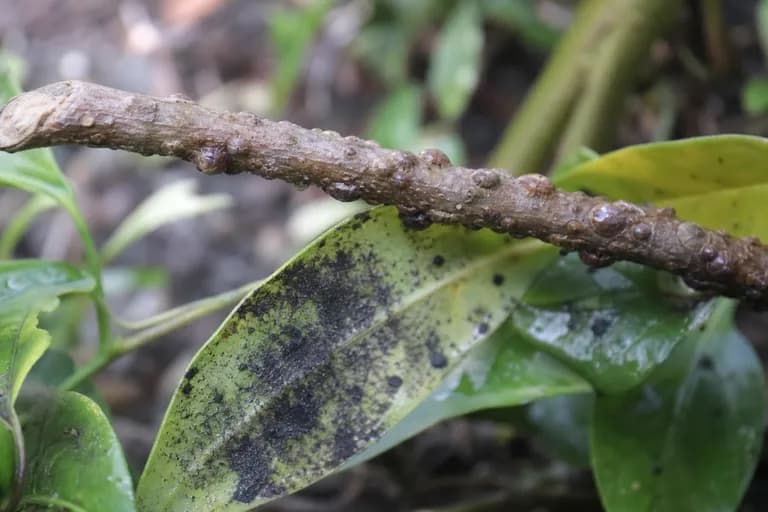
Cochinillas de escudo
PlagaProtuberancias marrones o blancas en tallos y nervios centrales de las hojas, residuos pegajosos de melaza, moho negro sobre las hojas.
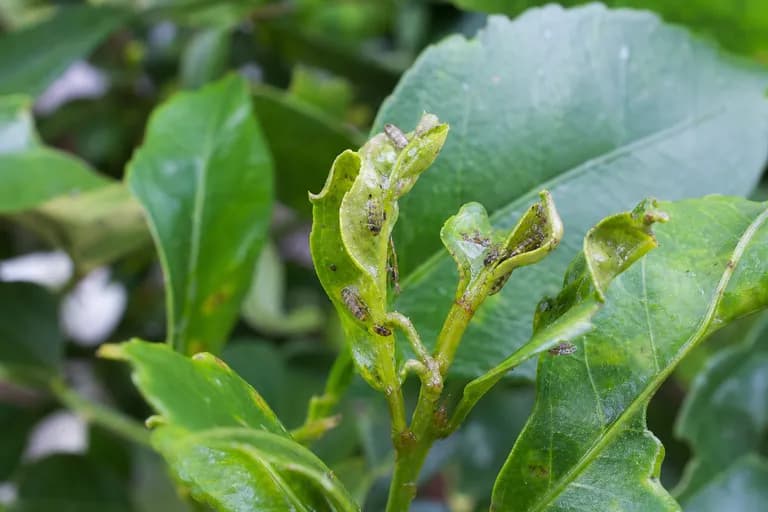
Psílido de los cítricos
PlagaBrotes nuevos rizados y deformados, secreciones cerosas, pequeños insectos alados en los retoños jóvenes.
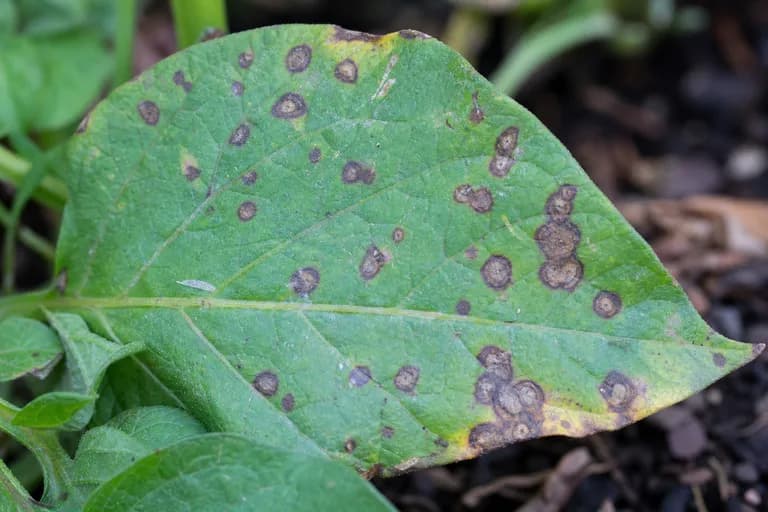
Mancha foliar
EnfermedadManchas marrones u oscuras en las hojas, follaje amarillento, caída prematura de hojas.
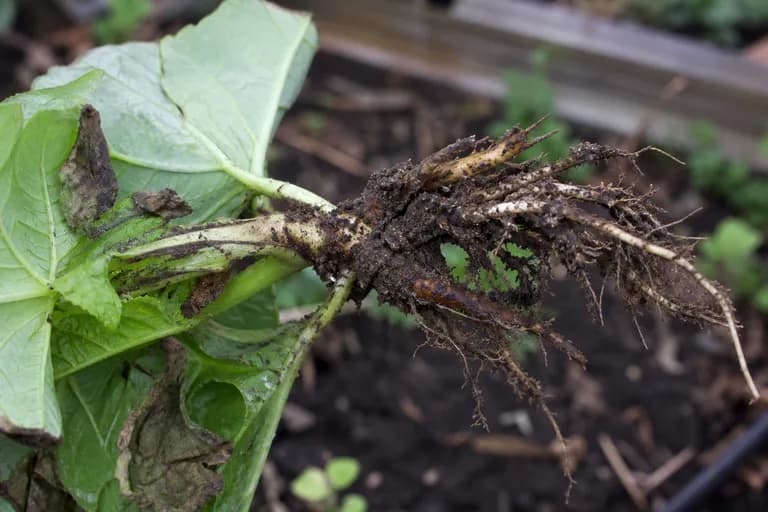
Podredumbre de raíces
EnfermedadHojas amarillas a pesar de riego adecuado, marchitamiento, raíces blandas al inspeccionarlas, olor desagradable en el sustrato.
Solución de problemas comunes
El problema más frecuente es la caída de hojas en invierno cuando las plantas en maceta se trasladan al interior, causada por la poca luz y el aire seco. Es algo natural; reduzca el riego y espere el rebrote en primavera. Las hojas amarillas con nervaduras verdes indican deficiencia de hierro, habitual en suelos o aguas alcalinas. Use fertilizante acidificante y suplementos de hierro. El crecimiento lento es normal en plantas jóvenes; los árboles de hoja de curry tardan 2-3 años en convertirse en productores vigorosos. Las semillas deben ser frescas para germinar; las semillas secas de las tiendas de especias raramente brotan.
Consejos de cultivo
- Cultive siempre las plantas de hoja de curry a partir de semillas frescas o adquiera plantas vivas en viveros de confianza. Las semillas secas que se venden en línea tienen tasas de germinación muy bajas porque la viabilidad de las semillas de hoja de curry disminuye rápidamente tras retirar el fruto del árbol — solo las semillas de bayas negras maduras plantadas en el plazo de una semana desde la cosecha germinan con fiabilidad.
- El cultivo en maceta es imprescindible en cualquier clima donde las temperaturas invernales desciendan por debajo de 10 °C (50 °F). Use una maceta de al menos 30-40 cm de diámetro con excelentes orificios de drenaje. Una mezcla de sustrato bien drenante enmendada con perlita y una pequeña cantidad de arena evita el encharcamiento que los árboles de hoja de curry no pueden tolerar.
- Proporcione la máxima luz solar posible — al menos 6-8 horas de sol directo al día durante la estación de crecimiento. La luz insuficiente es la razón más común por la que las plantas de hoja de curry se alargan en exceso y producen hojas pálidas y débilmente aromáticas. Al cultivar en interior en invierno, complemente con una lámpara de crecimiento de espectro completo.
- Pellizque o pode las puntas de crecimiento con regularidad para promover el ramificado y un crecimiento compacto. Una planta de hoja de curry sin podar tiende a crecer como un único tallo alto con escaso follaje. Retirar los 2-3 cm superiores de cada punta de crecimiento obliga a la planta a producir múltiples ramas laterales, dando como resultado una planta más densa con muchas más hojas cosechables.
- Riegue profusamente pero con poca frecuencia, dejando que los primeros centímetros superiores del sustrato se sequen entre riegos. Los árboles de hoja de curry son algo tolerantes a la sequía una vez establecidos, pero no pueden sobrevivir en suelo constantemente encharcado. El exceso de riego provoca podredumbre de raíces, la principal causa de muerte de las plantas de hoja de curry cultivadas en maceta.
- Abone con regularidad durante la estación de crecimiento con un fertilizante equilibrado complementado con hierro. Los árboles de hoja de curry son propensos a la clorosis férrica (amarillamiento entre las nervaduras mientras las nervaduras permanecen verdes), especialmente en suelos o mezclas de sustrato alcalinos. Aplique hierro quelado como pulverización foliar o drench en el suelo si aparece clorosis.
- Espere cierta caída de hojas al llevar las plantas en maceta al interior para el invierno. Es una respuesta normal a la reducción de la luz y no es una señal de que la planta esté muriendo. Reduzca el riego significativamente y deje de fertilizar hasta que el nuevo crecimiento se reanude en primavera. La mayoría de las plantas se recuperan completamente una vez devueltas a las condiciones exteriores.
- Propague a partir de retoños de raíz para obtener resultados más rápidos. Las plantas de hoja de curry maduras a menudo emiten brotes desde las raíces alrededor de la base del tronco. Estos pueden separarse cuidadosamente con una sección de raíz adherida y plantarse en macetas individuales — se establecen mucho más rápido que las plántulas o los esquejes.
- Proteja las plantas jóvenes del viento, que puede desecar rápidamente las hojas delgadas. Una pared o valla orientada al sur y resguardada proporciona el microclima ideal en jardines templados — el calor reflejado y la protección contra el viento crean condiciones más cercanas a los orígenes tropicales del árbol.
- Sea paciente con la tasa de crecimiento durante los dos primeros años. Las plántulas de hoja de curry son notoriamente de crecimiento lento, a menudo añadiendo solo 15-30 cm de altura en su primer año. El crecimiento se acelera drásticamente a partir del tercer año, una vez que el sistema radicular está bien establecido, y un árbol maduro puede añadir 30-60 cm de nuevo crecimiento por temporada.
Cultiva tu mejor Hoja de Curry — y todo lo que la rodea.
Empieza un plan gratis hoy. Diseña tus bancales, coloca tu Hoja de Curry y deja que PlotMyGarden gestione el momento, el espaciado, las asociaciones y los recordatorios de la semilla a la cesta.
Elige tu Hoja de Curry
Hoja de curry común
La variedad estándar, con hojas compuestas de tamaño medio y aroma intenso. Crece hasta convertirse en un árbol mediano si no se poda.
Hoja de curry enana (Gamthi)
Una variedad compacta con hojas más pequeñas, gruesas y aromáticas. Ideal para el cultivo en maceta por su menor tamaño en la madurez.
Senkaambu (Hoja de curry roja)
Variedad con brotes nuevos rojizos que maduran a verde oscuro. Se considera que tiene un perfil de sabor ligeramente diferente, apreciado en ciertas cocinas regionales.
Las hojas de curry frescas son sorprendentemente caras en los países occidentales, con precios típicos de 2-4 € por un pequeño paquete (unas 30-40 hojas) en tiendas de alimentación india, y a menudo no están disponibles en los supermercados convencionales. Las hojas de curry secas, que carecen de la mayor parte del sabor y el aroma, aún cuestan 4-8 € por una bolsa pequeña. Una sola planta de hoja de curry que cuesta entre 10 y 20 € produce cientos de hojas al año durante muchos años — un árbol maduro aporta fácilmente el equivalente a 100-200 € en hojas frescas anuales a precios de venta al público. Dado que el árbol es perenne y productivo durante décadas, el ahorro total a lo largo de su vida útil puede alcanzar los miles de euros para los hogares que cocinan regularmente comida del sur de Asia.
Recetas rápidas
Tadka del sur de India (temperado)
5 minEl uso por antonomasia de las hojas de curry frescas: un temperado aromático y chisporroteante que transforma cualquier dal, sambar o plato de arroz. El aceite caliente activa los aceites esenciales de las hojas de curry, creando una base intensamente fragante que se vierte sobre los platos terminados como toque final de sabor.
6 ingredientesChutney de hoja de curry
15 minUn chutney verde y vibrante que muestra el sabor distintivo de las hojas de curry frescas. Batido con coco, tamarindo y chiles verdes, este versátil condimento combina perfectamente con dosa, idli, arroz, o como untable en sándwiches y wraps.
7 ingredientesArroz con hoja de curry (Karuveppilai Sadam)
25 minUn aromático plato de arroz al estilo tamil en el que las hojas de curry son las protagonistas en lugar de desempeñar un papel secundario. Las hojas de curry tostadas se muelen con especias hasta obtener un polvo grueso, que se mezcla con arroz caliente y aceite temperado para conseguir una comida de un solo plato, rápida y con un sabor profundo.
10 ingredientesUsos culinarios
Las hojas de curry son imprescindibles en la cocina del sur de India: se usan en el temperado (tadka) junto con semillas de mostaza, comino y chiles secos en aceite caliente. Añada ramitas enteras al dal, el sambar, el rasam y los currys con base de coco. Las hojas también se usan en currys de Sri Lanka y platos del sudeste asiático. Tuéstelas brevemente en aceite hasta que chisporroteen para liberar su aroma avellanado y cítrico. A diferencia de las hojas de laurel, las hojas de curry pueden comerse en el plato sin necesidad de retirarlas antes de servir.
Qué contiene
Beneficios para la salud
- Rica en alcaloides carbazólicos — compuestos únicos que se encuentran casi exclusivamente en las hojas de curry — que estudios de laboratorio han demostrado que poseen una actividad antioxidante significativa, protegiendo las células del daño oxidativo que contribuye al envejecimiento y a las enfermedades crónicas.
- La medicina ayurvédica tradicional ha utilizado las hojas de curry durante siglos para apoyar la salud digestiva, y la investigación moderna confirma que los extractos de hoja de curry estimulan la secreción de enzimas digestivas y pueden ayudar a aliviar la indigestión, las náuseas y la diarrea.
- Investigaciones preliminares sugieren que los compuestos de la hoja de curry pueden ayudar a regular los niveles de azúcar en sangre al mejorar la sensibilidad a la insulina y reducir la absorción de glucosa en los intestinos, apoyando su uso tradicional en el manejo de la diabetes incipiente en la medicina popular india.
- Extremadamente rica en vitamina A y betacaroteno, con 100 g de hojas frescas que aportan más del 250% del valor diario — estos antioxidantes son esenciales para mantener una visión sana, la función inmune y la integridad cutánea.
- Contiene compuestos antiinflamatorios que pueden ayudar a reducir los marcadores de inflamación en el organismo, favoreciendo la salud articular y potencialmente reduciendo el riesgo de enfermedades inflamatorias crónicas cuando se consumen regularmente como parte de una dieta variada.
- Los extractos de hoja de curry han mostrado propiedades antimicrobianas frente a varios patógenos transmitidos por alimentos en estudios de laboratorio, lo que puede contribuir a los beneficios de seguridad alimentaria de los métodos de cocción tradicionales que incluyen hojas de curry en preparaciones a base de aceite.
De dónde viene Hoja de Curry
El árbol de hoja de curry (Murraya koenigii) es originario del subcontinente indio y Sri Lanka, donde se ha utilizado como hierba culinaria y planta medicinal durante al menos 2.000 años. Los árboles de hoja de curry silvestres todavía crecen en los bosques caducifolios de India, desde las estribaciones del Himalaya hacia el sur a través de los Ghats Occidentales y Orientales, así como en Sri Lanka, Bangladesh y Myanmar. Las referencias escritas más antiguas a las hojas de curry aparecen en la literatura tamil primitiva y en los textos ayurvédicos antiguos, donde la planta se llama 'kari patta' (literalmente 'hoja utilizada en kari', una palabra que significa salsa o guiso y que eventualmente se convirtió en la palabra inglesa 'curry').
Las hojas de curry se convirtieron en un ingrediente indispensable en las cocinas del sur y el oeste de India, Sri Lanka y partes del sudeste asiático. En Tamil Nadu, Kerala, Karnataka y Andhra Pradesh, prácticamente ningún plato salado se prepara sin el aromático temperado de hojas de curry chisporroteando en aceite caliente con semillas de mostaza. Las hojas aparecen de forma destacada en el sambar, el rasam, el kootu, el avial y en innumerables chutneys. Más allá de la cocina, los practicantes de la medicina ayurvédica tradicional prescribían preparados de hoja de curry para dolencias digestivas, el manejo de la diabetes y la salud del cabello y la piel — usos que la investigación farmacológica moderna ha comenzado a validar.
El árbol de hoja de curry viajó con las comunidades de la diáspora india por todo el sudeste asiático, el este de África y las islas del Pacífico durante siglos de comercio y migración. Se estableció en Malasia, Singapur, Tailandia, Fiyi, Mauricio y Sudáfrica, donde se naturalizó e integró en las cocinas locales. Los botánicos europeos describieron la planta científicamente por primera vez en el siglo XVIII, aunque permaneció prácticamente desconocida en la cocina occidental hasta finales del siglo XX.
Hoy en día, las hojas de curry están ganando popularidad mundial a medida que crece el interés por la cocina auténtica del sur de Asia en todo el mundo. Las hojas frescas siguen siendo difíciles de encontrar en muchos países occidentales, lo que impulsa un creciente interés por cultivar plantas de hoja de curry en casa. El cultivo en maceta ha hecho accesible el árbol a jardineros mucho más allá de sus orígenes tropicales, y una próspera comunidad en línea de cultivadores de hoja de curry abarca ahora desde Canadá hasta Escandinavia, unidos por su aprecio por esta hierba aromática insustituible.
Hoja de Curry: ¿sabías que?
Datos fascinantes sobre Hoja de Curry
A pesar del nombre, las hojas de curry no tienen ninguna relación botánica con el curry en polvo. La mezcla de especias llamada 'curry en polvo' fue un invento colonial británico, mientras que las hojas de curry (Murraya koenigii) son una hierba aromática distinta de la familia de los cítricos (Rutaceae), utilizada en la cocina india durante miles de años antes de la llegada de los británicos.
Hoja de Curry: preguntas frecuentes
¿Cuándo debo plantar Hoja de Curry?
¿Cuáles son buenas plantas acompañantes para Hoja de Curry?
¿En qué zonas de rusticidad puede crecer Hoja de Curry?
¿Cuánto sol necesita Hoja de Curry?
¿A qué distancia debo espaciar Hoja de Curry?
¿Qué plagas y enfermedades afectan a Hoja de Curry?
¿Cómo almaceno Hoja de Curry después de la cosecha?
¿Cuáles son las mejores variedades de Hoja de Curry para cultivar?
¿Qué suelo necesita Hoja de Curry?
¿Puedo hacer crecer una planta de hoja de curry a partir de una ramita del supermercado?
¿Por qué mi planta de hoja de curry está perdiendo todas las hojas?
¿Son las hojas de curry lo mismo que el curry en polvo?
¿Cómo almaceno las hojas de curry frescas si coseche más de las que puedo usar?
¿Es invasiva la planta de hoja de curry?
¿Cuánto tiempo tarda una planta de hoja de curry en producir hojas que pueda cosechar?
Acabas de leer la teoría. Ahora cultívala en piloto automático.
Todo lo que hace que Hoja de Curry sea delicado — el momento, el espaciado, las asociaciones, la ventana de cosecha — es justo lo que PlotMyGarden resuelve por ti, para cada planta de tu huerto.
Un plan que conoce tu clima
Indica tu ubicación una vez. Recibe fechas de siembra, abonado y cosecha basadas en tu última helada real y el pronóstico en vivo — sin adivinar con un sobre genérico.
De la sección “Cuándo plantar”Planificador de bancales de arrastrar y soltar
Diseña bancales sobre una cuadrícula. Cada planta encaja con su espaciado correcto y ves toda la temporada antes de gastar un céntimo en semillas.
De la sección “Cultivo”Conflictos de asociación, detectados a tiempo
Más de 200 buenas y malas combinaciones comprobadas en vivo mientras plantas — para que un error que arruine la temporada nunca llegue a la tierra.
De la sección “Asociaciones”Recordatorios que sí vas a seguir
“Riega las judías.” “Recoge hoy antes de que se pase.” Oportunos, concretos y ligados a las plantas que de verdad cultivas.
De la sección “Cosecha”Escalonado, programado
¿Quieres cosechar seis semanas en vez de seis días? Reparte tus siembras automáticamente y te avisa cuando toca el siguiente lote.
De la sección “Cuándo plantar”Un registro que se vuelve más listo
Cada cosecha que registras le enseña tu huerto. El plan del año que viene parte de lo que de verdad funcionó en tu suelo, no en un manual.
De la sección “Resumen”Planta estos junto a Hoja de Curry
Más Hierbas culinarias
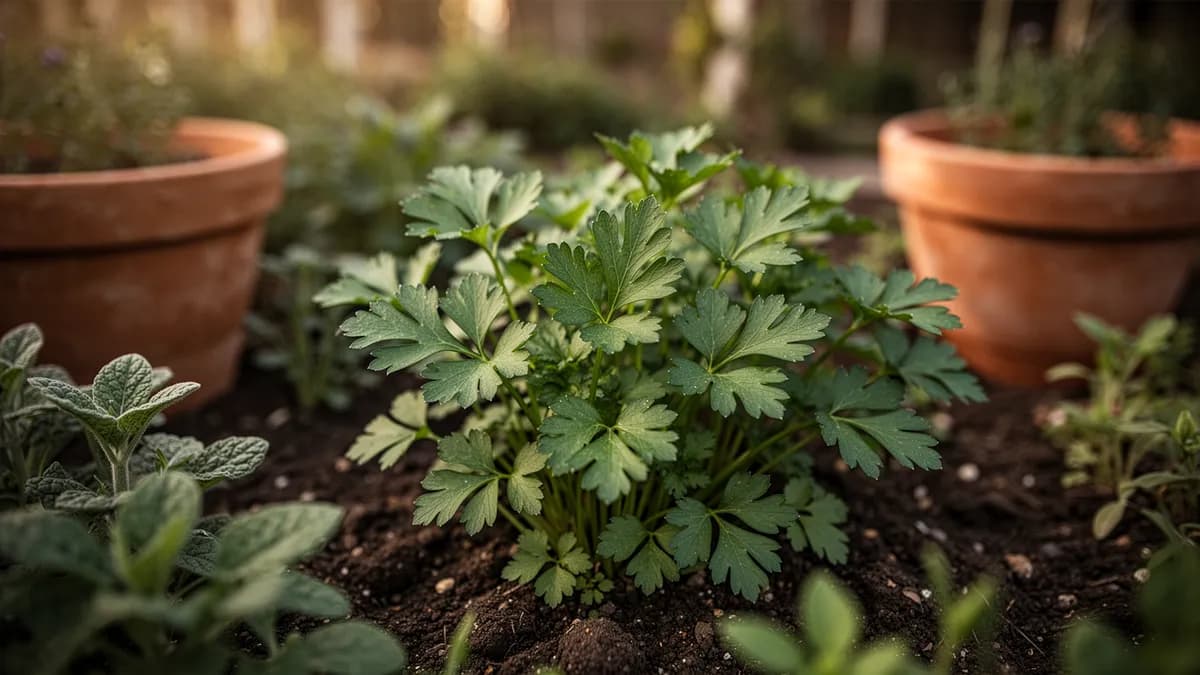
Diseños de jardín con Hoja de Curry
Cultiva tu mejor Hoja de Curry — y todo lo que la rodea.
Empieza un plan gratis hoy. Diseña tus bancales, coloca tu Hoja de Curry y deja que PlotMyGarden gestione el momento, el espaciado, las asociaciones y los recordatorios de la semilla a la cesta.