Lapins-Kirsche
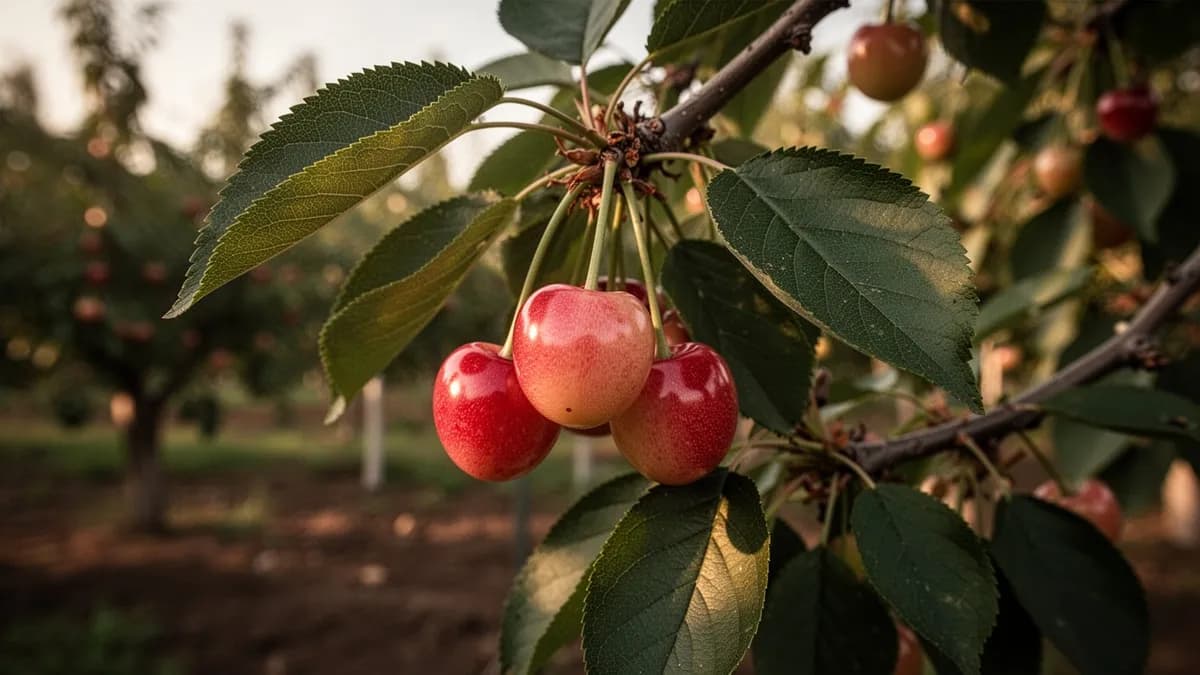
Eine selbstfruchtbare Süßkirsche, die große, dunkelrote Früchte mit hervorragendem Geschmack und guter Platzfestigkeit trägt – ideal für den Hausgarten.





Auf dieser SeiteÜberblick
Lapins-Kirsche im Überblick
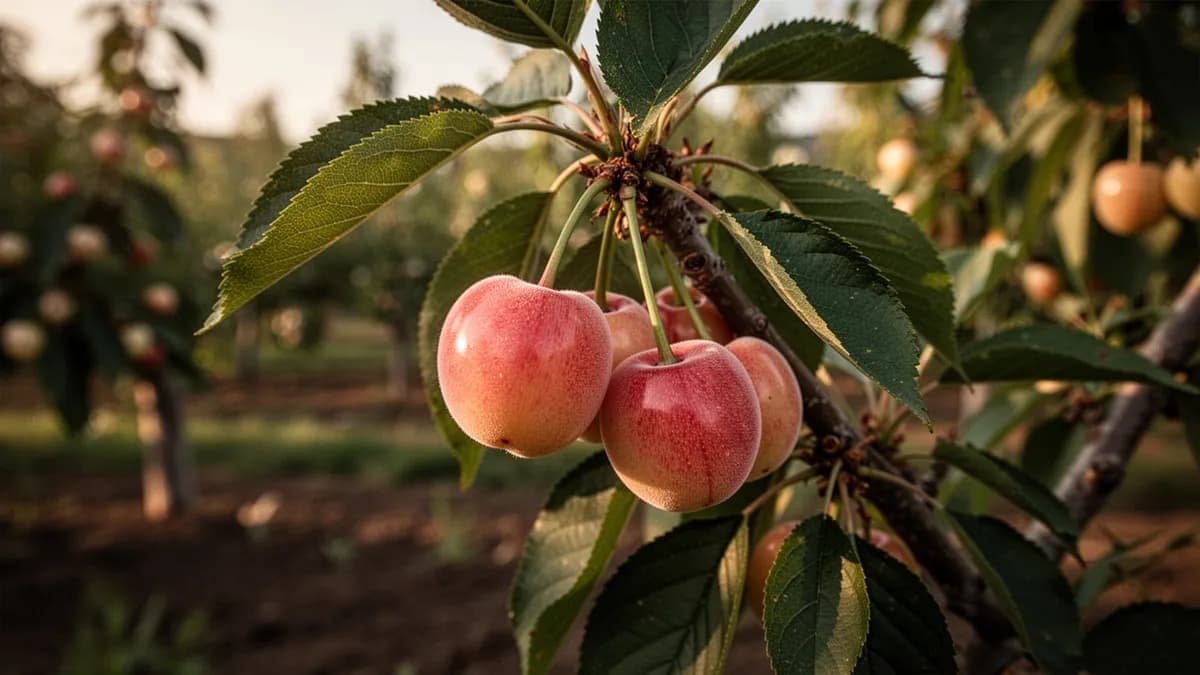
Eine selbstfruchtbare Süßkirsche, die große, dunkelrote Früchte mit hervorragendem Geschmack und guter Platzfestigkeit trägt – ideal für den Hausgarten. Lapins reift etwa zwei Wochen nach Bing und ist eine der zuverlässigsten selbstbefruchtenden Kirschsorten. Der Baum wächst kräftig und ist ertragreich; auf schwachwüchsigen Unterlagen eignet er sich gut für kleinere Flächen.
Wann Lapins-Kirsche pflanzen
Lapins-Kirschen kommen aus Samen nicht sortenecht und müssen durch Veredelung vermehrt werden. Um Unterlagen aus Kernen anzuziehen, Samen aus vollreifen Früchten reinigen und 90–150 Tage bei 1–5 °C in feuchtem Torfmoos stratifizieren. Stratifizierte Samen im Frühjahr 2,5 cm tief in gut durchlässiges Aussaatsubstrat aussäen. Lapins-Edelreiser auf einjährige Sämlingsunterlagen oder auf Gisela 5- oder 6-Klonunterlagen zur Wuchsbegrenzung mit Kopulation im Spätwinter veredeln.
Dein Lapins-Kirsche-Jahr
Abgestimmt auf Zone 7 · typische Saison · Frost geht um den 2. Apr. und kehrt um den 1. Nov. zurück
Lapins-Kirsche Feb – Mär pflanzen, Jul ernten. Beachte die Pflanzmethoden unten und wähle dein Klima für passende Zeiträume.
So baust du Lapins-Kirsche an
Lapins-Kirschbäume gedeihen am besten an einem vollsonnigen Standort in gut durchlässigem, tiefgründigem Lehmboden mit einem pH-Wert von 6,0–7,0. Wurzelnackte Bäume werden im Spätwinter gepflanzt; Halbstämme halten einen Abstand von 6–7,5 m ein, auf schwach- bis halbstarkwüchsigen Unterlagen wie Gisela 6 genügen 3–4,5 m. Als selbstbefruchtende Sorte benötigt Lapins keinen Befruchter, obwohl die Kreuzbestäubung mit einer anderen Süßkirsche den Ertrag steigern kann.
Während der Wachstumszeit regelmäßig tief wässern; die Wassergaben reduzieren, sobald die Früchte Farbe annehmen, um Platzschäden zu verringern. Lapins benötigt 700–800 Kältestunden und ist etwas platzfester als Bing. Erziehung als Spindelbusch oder offene Vase mit 3–4 gut verteilten Leitästen. Winterschnitt zum Entfernen sich kreuzender Äste und zur Aufrechterhaltung eines luftigen Kronendachs.
Einen ausgewogenen Dünger früh im Frühjahr vor dem Knospenaustrieb ausbringen. Netze über die Bäume spannen, bevor die Früchte Farbe annehmen, um Vogelfraß zu verhindern. Lapins profitiert vom Ausdünnen stark behangener Fruchtbüschel, um die Fruchtgröße zu verbessern und das Alternieren zu reduzieren. Bei feuchter Witterung auf Monilia achten und vorbeugend Fungizide zur Blütezeit einsetzen.
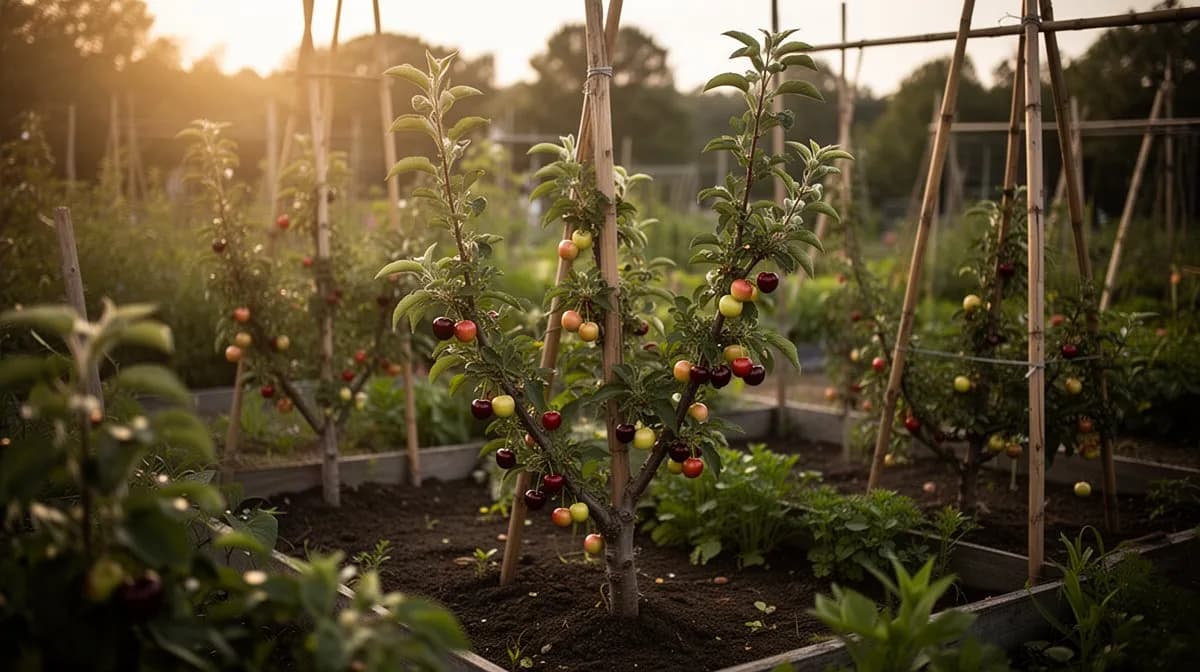
Für Lapins-Kirsche ist ein Beet von 120 × 240 cm zu klein
Lapins-Kirsche braucht 500 cm Platz pro Pflanze. Der Planer hält diesen Abstand für dich ein — jede Pflanze, jedes Beet.
Die besten Nachbarn für Lapins-Kirsche
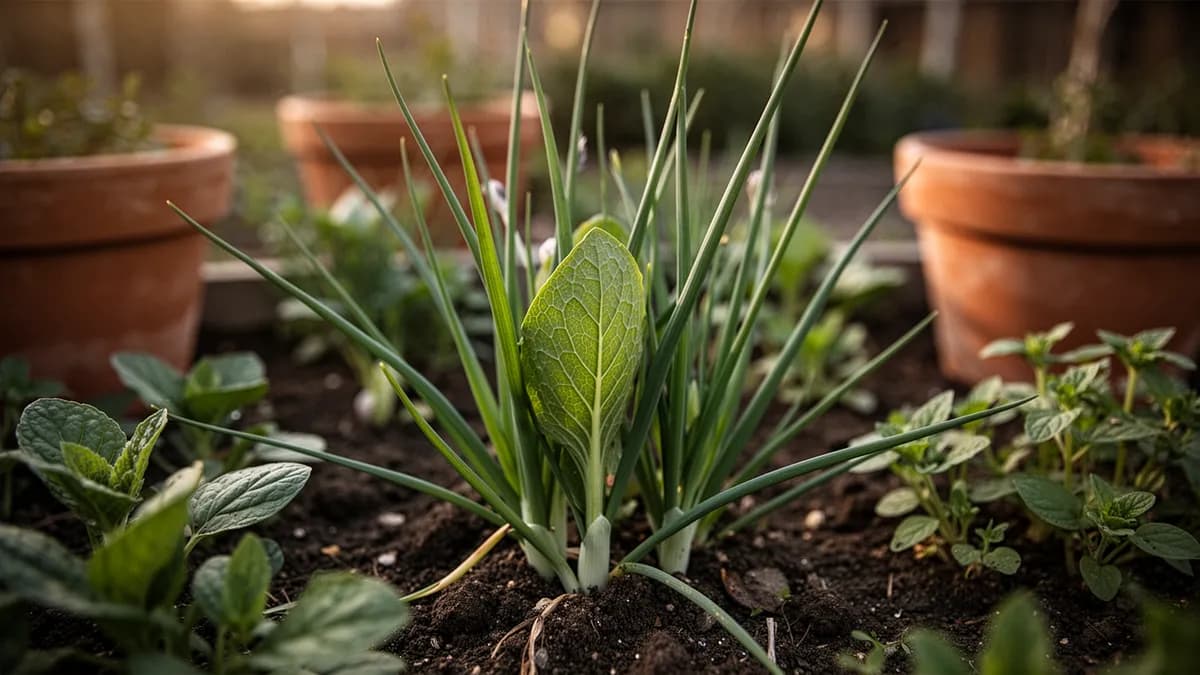
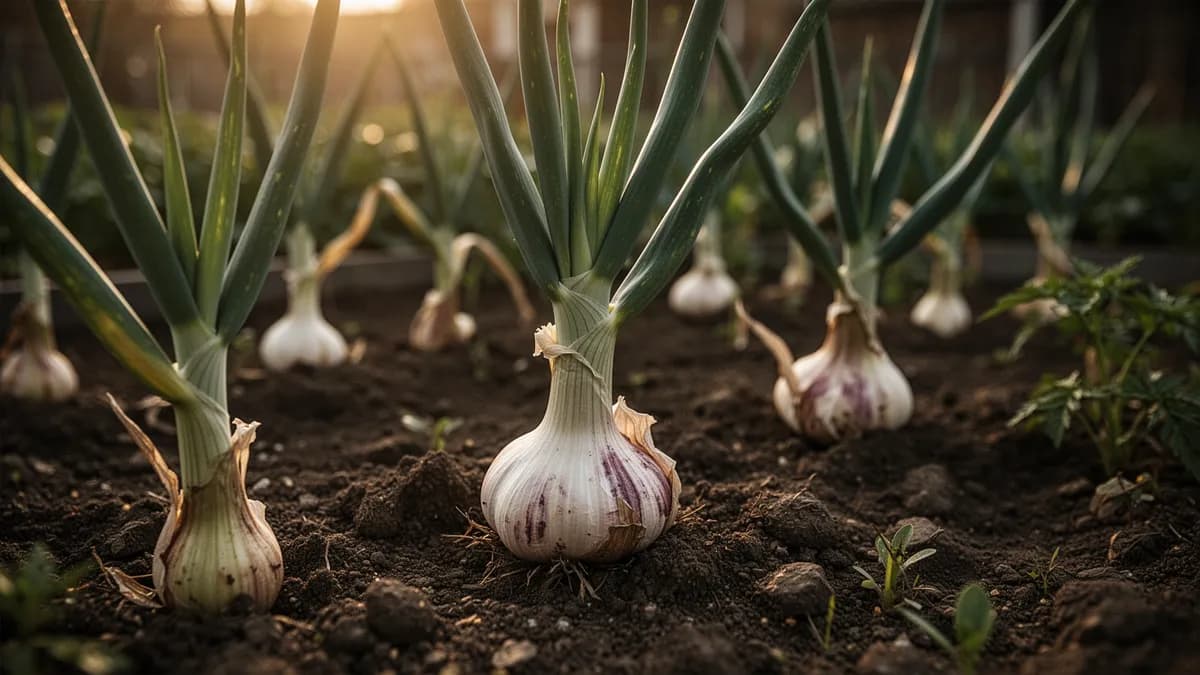
In der Nähe gepflanzter Schnittlauch und Knoblauch helfen durch ihren kräftigen Duft, Blattläuse fernzuhalten. Niedrig wachsende Klee- oder Wickenarten zwischen den Reihen binden Stickstoff und bilden Bodenbedeckung. Rainfarn und Schafgarbe ziehen nützliche Schlupfwespen an, die Kirschenschädlinge befallen. Nähe zu Walnuss- und Butternussbäumen vermeiden, die Juglone ausscheiden. In der Nähe gepflanzte Borretsch-Pflanzen ziehen während der Blütezeit Bestäuber an, obwohl Lapins selbstbefruchtend ist.
Schnittlauch gehört daneben. Walnussbaum nicht.
Altes Gärtnerwissen, geprüft an der echten Nachbartabelle von Lapins-Kirsche — teste jede Pflanze, die du anbaust.
Probiere Lapins-Kirsche direkt hier im Beet
Ein echtes Planer-Beet, Lapins-Kirsche steht schon drin. Tippe einen Begleiter an, platziere ihn und sieh, wie die Nachbarschaftsprüfung antwortet — grün für gute Nachbarn, rot bei Streit.


Passende Anbau-Ratgeber
Richtig düngen
Lapins bevorzugt tiefen, gut durchlässigen Sandlehm mit einem pH-Wert von 6,0–7,0. Schwere Tonböden, die Wasser um die Wurzeln stauen, sind zu vermeiden. Im frühen Frühjahr mit einem ausgewogenen 10-10-10-Dünger düngen, etwa 450 g pro 2,5 cm Stammumfang. Calcium zur Stärkung der Fruchtzellwände und zur Reduzierung von Platzschäden ergänzen. Bei vermuteter Bormangel zum Zeitpunkt der Blüte Bor ausbringen. Eine 8–10 cm dicke Mulchschicht aus Holzhackschnitzeln um den Baum anlegen und den Mulch vom Stamm fernhalten.
Ideale Temperatur
Winterhärtezone-Kompatibilität
Von der Saat zur Ernte, Schritt für Schritt
Winterruhe
Lapins tritt nach dem Laubfall in eine tiefe Ruhe ein; das oberirdische Wachstum ist vollständig eingestellt, während das Wurzelsystem nur leicht aktiv ist. In dieser Zeit sammelt der Baum die Kältestunden – typischerweise 800–1.000 Stunden unter 7 °C –, die physiologisch notwendig sind, bevor er den Schlafzustand beenden und erfolgreich blühen kann. Werden diese Kälteanforderungen nicht erfüllt, ist die Blüte lückenhaft, verzögert und schlecht abgestimmt, was zu schwachem Fruchtansatz führt. Lapins ist in der Winterruhe zuverlässig bis etwa -20 °C frosthart.
Knospenaustrieb und Blüte
Wenn die Temperaturen im mittleren Frühling steigen, schwellen die Knospen von Lapins rasch an und öffnen sich zu dichten Büscheln weißer, fünfblättriger Blüten, bevor die Blätter vollständig entfaltet sind. Da Lapins selbstbefruchtend ist, kann jede Blüte mit Pollen desselben Baums bestäubt werden – Bienenaktivität ist dennoch sehr förderlich für einen gleichmäßigen, vollständigen Fruchtansatz über die gesamte Krone. Die Blütezeit dauert typischerweise 10–14 Tage. Lapins ist eine mittelspäte bis späte Sorte, was einen gewissen natürlichen Schutz vor Frühjahrsfrösten bietet.
Fruchtansatz und Junifruchtentwicklung
Nach dem Blütenfall bilden befruchtete Blüten kleine, harte grüne Früchtchen, während der Baum gleichzeitig sein vollständiges Blätterdach aus frischem Laub entfaltet. Die Blätter sind jetzt entscheidend – sie treiben die Photosynthese an, die das Wachstum der Früchtchen über die gesamte Saison sichert. Nicht befruchtete oder schwach bestäubte Früchtchen werden beim natürlichen Junifruchtfall abgeworfen, typischerweise 3–5 Wochen nach dem Blütenfall. Die verbleibenden Lapins-Früchtchen sind von früh an erkennbar groß, da die Sorte genetisch auf große Früchte ausgelegt ist. Gleichmäßige Bodenfeuchtigkeit ist in dieser Phase besonders wichtig.
Rasches Fruchtwachstum
Lapins tritt in seine anspruchsvollste Wachstumsphase ein, in der die Früchtchen ein rasantes Zellwachstum durchlaufen und von Woche zu Woche sichtbar größer werden. Die Früchte wechseln von klein und hellgrün zu ausgewachsen und beginnen Farbe zu zeigen – erst gelblich-grün, dann rosa, dann immer tiefere Rottöne. Die Zuckereinlagerung beschleunigt sich besonders in den letzten zwei bis drei Wochen vor der Ernte. Der Baum hat in dieser Phase den höchsten Bedarf an Wasser und Kalium; jeder Mangel oder Trockenstress vermindert unmittelbar die endgültige Fruchtgröße und Geschmacksintensität.
Ernte
Lapins ist eine Spätsortie, die in den meisten gemäßigten Klimazonen Ende Juli bis Mitte August reift – typischerweise 2–3 Wochen später als Mittelsaisonsorten wie Stella. Dies ist einer der bedeutenden Vorteile von Lapins: Sie füllt das Spätsaisonfenster, wenn die meisten anderen Süßkirschsorten abgereift sind, verlängert die Frischkirschensaison und erzielt häufig höhere Marktpreise. Reife Lapins-Kirschen sind groß, fest, tiefrot-mahagoni bis fast schwarz, mit dichtem, süßem Fruchtfleisch und einem kleinen Kern im Verhältnis zur Fruchtgröße. Sie halten nach Erreichen der vollen Farbe bis zu 10 Tage am Baum, ohne weich zu werden – eine seltene und wertvolle Eigenschaft.
Erholung nach der Ernte
Nach der letzten Ernte verlagert der Baum seine Energie von der Fruchtproduktion zurück in das vegetative Wachstum und den entscheidenden Prozess der Bildung der Blütenknospen für das nächste Jahr. Das Laub bleibt vollständig aktiv, betreibt Photosynthese und baut Kohlenhydratreserven auf, die im Holz und in den Wurzeln für den Winter gespeichert werden. Dies ist das ideale und richtige Zeitfenster für alle Schnittarbeiten an Lapins und anderen Süßkirschen – Wunden heilen unter warmen, trockenen Spätsommerbedingungen rasch, was das Infektionsrisiko durch Silberkrankheit und Bakteriellen Krebs erheblich mindert.
Laubfärbung und Vorruhephase
Mit kürzer werdenden Tagen und sinkenden Nachttemperaturen im Herbst zieht Lapins Nährstoffe aus den Blättern in das Holz zurück; die Blätter färben sich golden und orange, bevor sie fallen, und die Stoffwechselrate des Baums nimmt stetig bis zur vollständigen Ruhe ab. Die Kältestunden-Akkumulation beginnt, sobald der Laubfall abgeschlossen ist – jede Stunde unter 7 °C zählt zu den 800–1.000 Stunden, die der Baum benötigt, bevor er im nächsten Frühjahr den Schlafzustand beenden kann. Der Herbst ist auch der entscheidende Zeitpunkt, um die Bodenumgebung um den Baum zu pflegen und überwinterndes pilzliches und bakterielles Inokulum zu reduzieren.
An einem trockenen, milden Tag über 4 °C ein Winteröl aufspritzen, um überwinternde Schildlauseier und Rote-Spinne-Eier auf der Rinde abzutöten. Äste genau auf eingesunkene, verfärbte Krebsstellen mit bernsteinfarbenem Gummifluss prüfen – befallenes Holz mindestens 15 cm unterhalb des verfärbten Bereichs bis ins gesunde Gewebe zurückschneiden und das entfernte Material aus dem Garten schaffen. Einen Leimring um den Stamm anbringen, um kletternde Frostspanner abzufangen.
Lapins-Kirsche Monat für Monat pflegen
Was du jeden Monat für deine Lapins-Kirsche tun solltest
Oktober
Aktueller MonatGefallenes Laub und Obstabfall unter dem Baum aufsammeln und aus dem Garten entsorgen – nicht kompostieren. Um den Kronenrand eine Kompostauflage aus gut verrottetem Material auftragen und sanft in die Oberfläche einarbeiten. Befestigungen und Pflöcke an Jungbäumen kontrollieren und solche lösen, die in die Rinde einschneiden. Eine visuelle Gesundheitskontrolle der gesamten Baumstruktur vornehmen, bevor der Laubfall abgeschlossen ist.
Immer wissen, was jetzt im Garten zu tun ist
Eine E-Mail zum Monatsanfang: was du jetzt säen, pflanzen und anpacken solltest — für deine Lapins-Kirsche und alles, was drumherum wächst. Dazu ein kurzer Startkurs, der dich vor den klassischen Fehlern bewahrt.
- Was jetzt zu tun ist
- Passend zu deiner Saison
- Startkurs inklusive
Lapins-Kirsche ernten
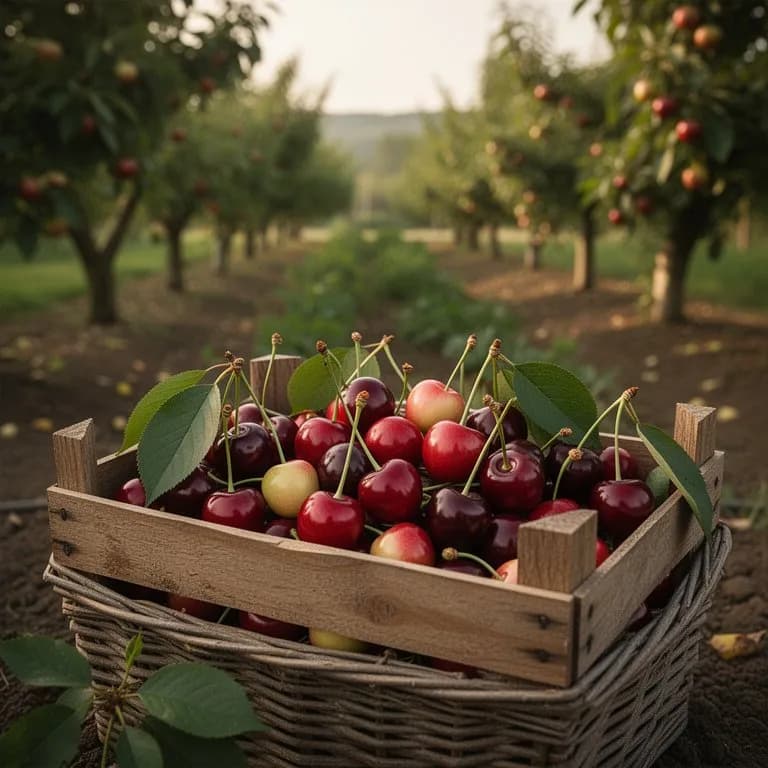
Lapins-Kirschen reifen Mitte Juli, etwa zwei Wochen nach Bing. Die Früchte werden bei voller Reife tiefrot bis fast schwarz und sollten fest mit süßem Geschmack sein. Früchte mit Stiel ernten, indem man sie behutsam anhebt und dreht. Die Ernte morgens bei kühlen Temperaturen durchführen, um die Haltbarkeit zu verbessern. Ein ausgewachsener Zwergbaum liefert 15–25 kg, Halbstämme 35–55 kg. Unmittelbar nach der Ernte kühlen.
angenommen, du pflanzt zu Beginn des Zeitraums — trage dein tatsächliches Datum ein
Ernte Lapins-Kirsche zügig, dann trägt die Pflanze weiter.
Lagerung & Konservierung
Lapins-Kirschen halten sich durch ihr platzfestes, festes Fleisch bei 0–1 °C 10–14 Tage im Kühlschrank. Ihre ausgezeichnete Festigkeit macht sie ideal zum Einfrieren im Ganzen oder entsteint. Sie können getrocknet, in leichtem Sirup eingemacht oder zu Konfitüre und Kirschaufstrich verarbeitet werden. Lapins eignet sich aufgrund des hohen Zuckergehalts und der intensiven Farbe hervorragend für die Herstellung von Kirschlikör, Kirschwasser und Kirschsaftkonzentrat.
Was schiefgeht — und die Lösung
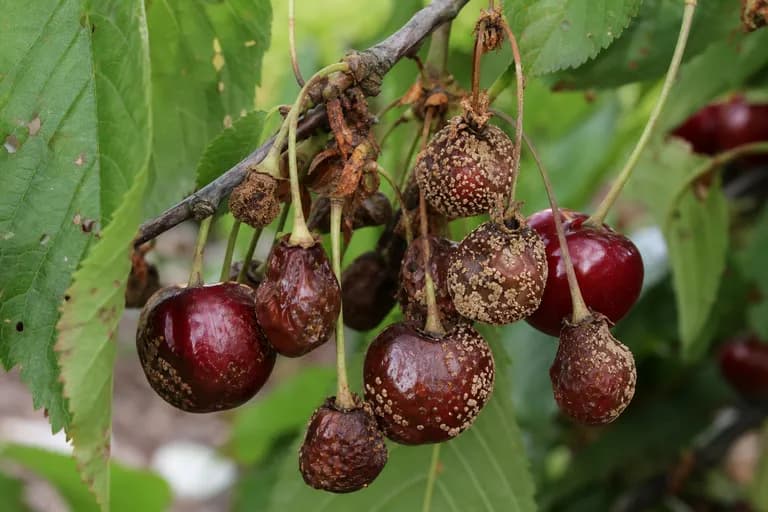
Monilia (Braunfäule)
KrankheitGraubrauner Schimmelbelag auf reifenden Früchten und vertrocknete Blüten, die an den Fruchtsporen hängen bleiben.
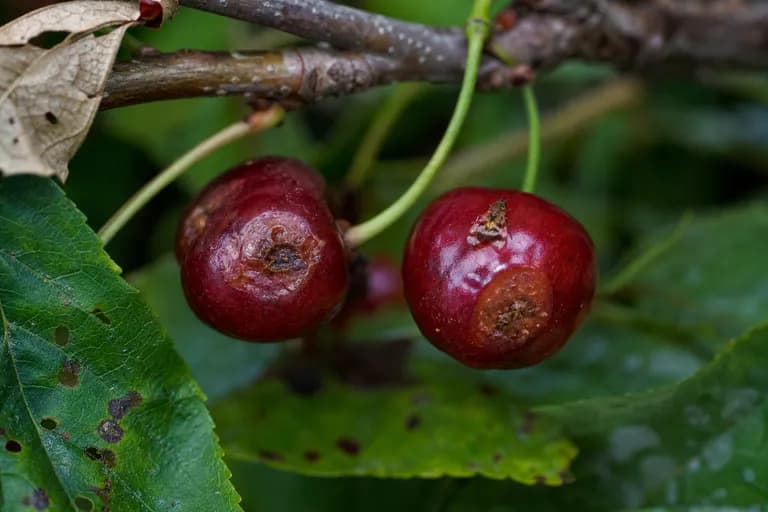
Kirschfruchtfliege
SchädlingKleine weiße Maden in geernteten Früchten, meist in der Nähe des Kerns, mit weichen eingesunkenen Stellen auf der Schale.
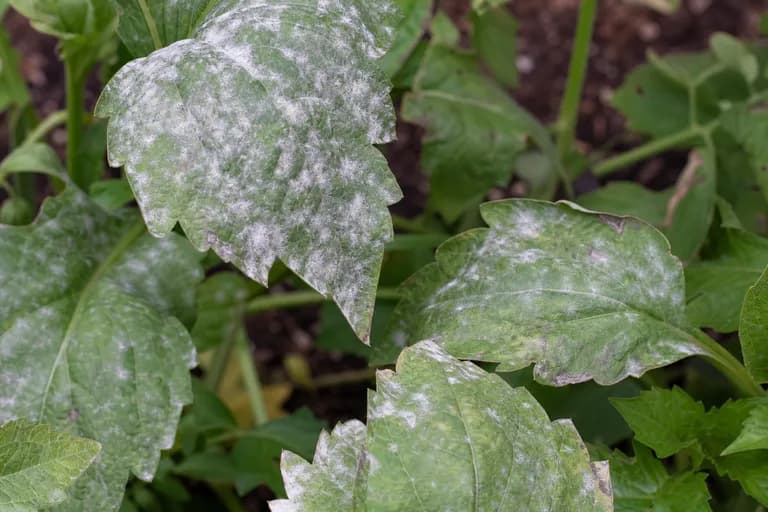
Echter Mehltau
KrankheitWeißlicher Mehltaubelag auf jungen Blättern, Blattkräuselung und verkümmerte Triebe im Spätsommer.
Fehlerbehebung bei häufigen Problemen
Obwohl platzfester als Bing, kann Lapins bei anhaltenden Regenfällen zur Reifezeit noch aufplatzen. Die kräftige Wuchsfreudigkeit erfordert regelmäßigen Schnitt, um Überfüllung in der Krone zu verhindern. Vogelfraß bleibt ohne Netz eine erhebliche Bedrohung. Junge Bäume können bei übermäßiger Stickstoffdüngung starkes Vegetationswachstum auf Kosten der Frucht zeigen. Gummose am Stamm weist häufig auf Stress durch mechanische Beschädigung oder Krankheit hin.
Anbautipps
- Den Pflanzstandort mit großer Sorgfalt wählen – Lapins verlangt gut durchlässigen Boden in voller Sonne. Sie ist unter allen Obstbäumen am wenigsten tolerant gegenüber Staunässe, die rasch zu Wurzel- und Stammfäule sowie zum Absterben führt. Eine leicht geneigte, südseitige Lage ist ideal und bietet sowohl maximale Sonneneinstrahlung als auch natürlichen Kaltluftabfluss von der Blüte im Frühjahr. Niemals in einer Frostsenke oder auf schwerem, schlecht drainendem Ton pflanzen, ohne zuvor Drainagen einzubauen.
- Lapins ist wirklich selbstbefruchtend; ein einzelner Baum trägt eine volle Ernte ohne jeden Bestäubungspartner – er kann aber auch als universeller Befruchter für die meisten anderen mittelspäten bis späten Süßkirschsorten dienen, was ihn zur ausgezeichneten Ankerwahl macht, wenn zwei oder mehr Kirschbäume gepflanzt werden sollen und die Bestäubungsanforderungen weniger selbstständiger Sorten gedeckt werden müssen.
- Die Unterlage dem verfügbaren Platz und der beabsichtigten Bewirtschaftung anpassen. Gisela 5 hält Lapins auf einem gut handelbaren 3–4 Meter, ideal für Hausgärten, Einnetzen und sichere Ernte ohne oder mit niedrigen Leitern. Colt erzeugt einen 4,5–6 Meter hohen Baum – geeignet für größere Flächen und etwas höhere Erträge. Lapins auf eigenen Wurzeln oder auf kräftigen Standardunterlagen nur bei ausreichend Platz und Ausrüstung pflanzen, da die entstehenden Bäume 8–15 Meter erreichen können.
- Lapins nur im Spätsommer schneiden – im Juli oder August unmittelbar nach der Ernte –, solange das Wetter warm und trocken ist und Wunden rasch heilen können. Süßkirschen sind einzigartig anfällig für Silberkrankheit (Chondrostereum purpureum) und Bakteriellen Krebs (Pseudomonas syringae), die beide durch Schnittflächen eindringen und unter den kühlen, feuchten Bedingungen des Herbstes und Winters weitaus infektiöser sind. Dies ist eine der wichtigsten Pflegevorschriften für den erfolgreichen Anbau von Süßkirschen.
- Vogelschutznetze mindestens zwei Wochen vor dem ersten Farbumschlag der Kirschen über die gesamte Krone spannen – in der Praxis bedeutet das, die Netze in den meisten britischen und nordeuropäischen Lagen ab Mitte Juni bereitzuhalten. Lapins reift spät, was bedeutet, dass hartnäckige Vögel, die bereits durch die Beobachtung früherer reifender Sorten wissen, wo die Früchte sind, auftreten können. Feinmaschiges Netz (15–20 mm), das am Boden fixiert ist, ist der einzig zuverlässig wirksame Schutz.
- Die Fächererziehung von Lapins an einer süd- oder südwestseitigen Wand oder einem massiven Zaun ist einer der besten Ansätze für kleinere Gärten. Die reflektierte Wärme der Mauer beschleunigt die Reifung um 1–2 Wochen und kann in leicht grenzwertigen Lagen gute Ernten begünstigen. Die beschränkte Form erleichtert den präzisen Jahresschnitt, macht das Einnetzen der flachen Krone unkompliziert und schafft einen der eindrucksvollsten Blickfänge im Küchengarten zur Frühlingsblüte. Wandegeleitete Bäume benötigen horizontale Drähte im Abstand von 30–40 cm von 30 cm über dem Boden bis zu 2 Metern.
- Während der gesamten Fruchtentwicklungs- und Reifungsphase – von der Jungfruchtenentwicklung bis zur Ernte – eine absolut gleichmäßige, konstante Bodenfeuchtigkeit aufrechterhalten. Lapins ist empfindlich gegenüber Fruchtplatzen, wenn die Schale nach einer Trockenperiode plötzlich Wasser aufnimmt, sei es durch Starkregen oder inkonsistente Bewässerung. Tropfbewässerung oder Sickerrohre in der Wurzelzone installieren, um Wasser gleichmäßig und kontrolliert abzugeben. Jede Beregnung von oben unterlassen, sobald die Früchte Farbe annehmen. Bei anstehendem Starkregen nach einem trockenen Abschnitt nicht vorher bewässern.
- Lapins mit einem kaliumreichen Dünger – wie schwefelsaurem Kali – düngen, der im Spätsommer nach der Ernte um den Kronenrand ausgebracht wird, um die Blütenknospenbildung für die Folgesaison zu fördern und das Holz vor dem Winter abzuhärten. Im frühen Frühling beim Knospenaustrieb einen ausgewogenen Granulatdünger zur Unterstützung von Blüte und Frühwachstum ausbringen. Stickstoffreiche Düngemittel in der zweiten Jahreshälfte vermeiden, da sie weiches, saftiges Spätsommerwachstum fördern, das anfälliger für Winterschäden und Pilzkrankheiten ist.
- Rinde und Astgabelungen regelmäßig auf amber- oder rotbraunen Gummifluss aus eingesunkenen, verfärbten Bereichen prüfen – das klassische Zeichen des Bakteriellen Krebses. Sofort handeln und befallenes Holz sauber bis ins gesunde Gewebe mindestens 15 cm unterhalb jeder sichtbaren Holzverfärbung zurückschneiden; entferntes Material aus dem Garten schaffen. Schneidwerkzeuge zwischen den Schnitten mit verdünnter Bleichlösung oder Methylalkohol desinfizieren. Alle großen Schnittstellen mit Baumwachs oder einem handelsüblichen Wundverschlussmittel versiegeln. Bäume mit ausgedehntem Krebs können bei frühzeitigem Erkennen erfolgreich behandelt werden; solche mit den Stamm umfassenden Läsionen erholen sich jedoch kaum.
- Für den Kübelbau den größtmöglichen Topf verwenden – mindestens 60 Liter –, gefüllt mit einem lehmhaltigen Substrat wie John Innes Nr. 3, gemischt mit 20–25 % Perlite oder grobem Kies für die Drainage. Kübelkultivierung von Lapins auf Gisela-5- oder Pixie-Unterlage auf einer sonnigen Terrasse kann gedeihen und beachtliche Erträge bringen, erfordert aber an heißen Sommertagen ein- bis zweimal tägliches Wässern und eine Flüssigdüngung alle 2 Wochen in der Wachstumsphase. Alle 2–3 Jahre umtopfen und dabei Wurzeln beschneiden, um die Wüchsigkeit zu erhalten.
Bau deine beste Lapins-Kirsche an — und alles drumherum.
Starte heute kostenlos. Lege deine Beete an, setze deine Lapins-Kirsche ein und lass PlotMyGarden Timing, Abstände, Begleiter und Erinnerungen von der Saat bis zum Erntekorb übernehmen.
Finde deine Lapins-Kirsche
Lapins (Standard)
Die ursprüngliche, in Kanada gezüchtete selbstfruchtbare Süßkirsche mit großen, dunkelroten, platzfesten Früchten.
Staccato
Eine neuere selbstbefruchtende Kirsche aus demselben Summerland-Züchtungsprogramm, die später reift und besonders fest ist.
Sweetheart
Eine weitere selbstbefruchtende Summerland-Selektion, die sehr spät mit hellen, großen roten Früchten reift.
Skeena
Eine Lapins-artige selbstbefruchtende Kirsche mit sehr großen Früchten, ähnlicher dunkler Farbe und spätem Erntezeitpunkt.
Frische Lapins-Kirschen erzielen als Premium-Spätsortie mit großer Frucht konstant höhere Einzelhandelspreise als frühere oder generischere Sorten – typischerweise 6–10 £ pro Kilogramm in Großbritannien zur Hauptsaison und 5–8 $ pro Pfund bei qualitätsbewussten Gemüsehändlern oder Wochenmärkten in Nordamerika. Ein einzelner Halbstamm auf Gisela 5, der in einer Fachbaumschule 30–65 £ kostet, liefert bei voller Ertragsreife 15–25 kg pro Saison. Bei konservativen Einzelhandelspreisen von 7 £ pro Kilogramm entspricht dies einem Erntewert von 105–175 £ jährlich. Über die 20–30 produktiven Jahre eines gut gepflegten Baums kann der kumulierte Wert selbst angebauter Lapins-Kirschen 2.500–5.000 £ übersteigen – und selbst geerntete Früchte, die bei echtem Reifeoptimum gepflückt werden, liefern eine Geschmacks- und Süßequalität, die kommerziell geerntete Lapins, die für die Transportfähigkeit stets leicht unreif gepflückt wird, selten erreicht.
Schnelle Rezepte
Lapins-Kirsch- und Zartbitter-Brownies
20 Min. Vorbereitung + 25 Min. BackenDichte, schokoladige Zartbitter-Brownies mit ganzen entsteinten Lapins-Kirschen, die vor dem Backen in den Teig gedrückt werden. Die Süße und Festigkeit von Lapins bei hohem Brix-Wert hält der Backhitze wunderbar stand und erzeugt in jedem Stück Taschen mit intensivem Fruchterlebnis – eine Kombination, die an die klassische Schwarzwälder Geschmackskombination erinnert. 70%ige Zartbitterschokolade für den stärksten Kontrast mit den Kirschen verwenden. Warm mit Crème fraîche oder bei Zimmertemperatur als mitnehmbare Leckerei servieren.
10 Zutaten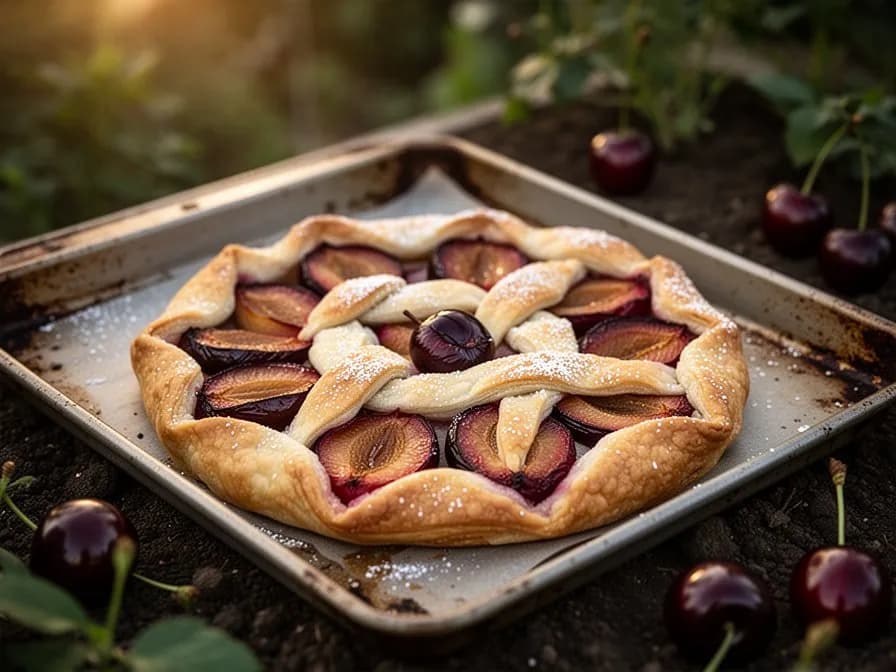
Lapins-Kirsch-Kühlschrankmarmelade
30 Min. + 1 Std. AbkühlenEin schneller Kühlschrankaufstrich ohne Pektin, hergestellt aus der intensiven natürlichen Süße von Lapins-Kirschen, die bei hohem Brix-Wert weniger zugesetzten Zucker benötigen als andere Sorten. Anders als bei der klassischen Einmachküche wird diese Konfitüre nicht zur Haltbarmachung eingekocht – sie gehört in den Kühlschrank und wird innerhalb von vier Wochen verbraucht, wobei ein viel frischerer, lebendigerer Geschmack und eine hellere Farbe als bei lang gekochten Aufstrichen erhalten bleiben. Hervorragend auf Sauerteigbrot, eingerührt in griechischen Joghurt oder als Glasur für gebratene Entenbrust.
6 Zutaten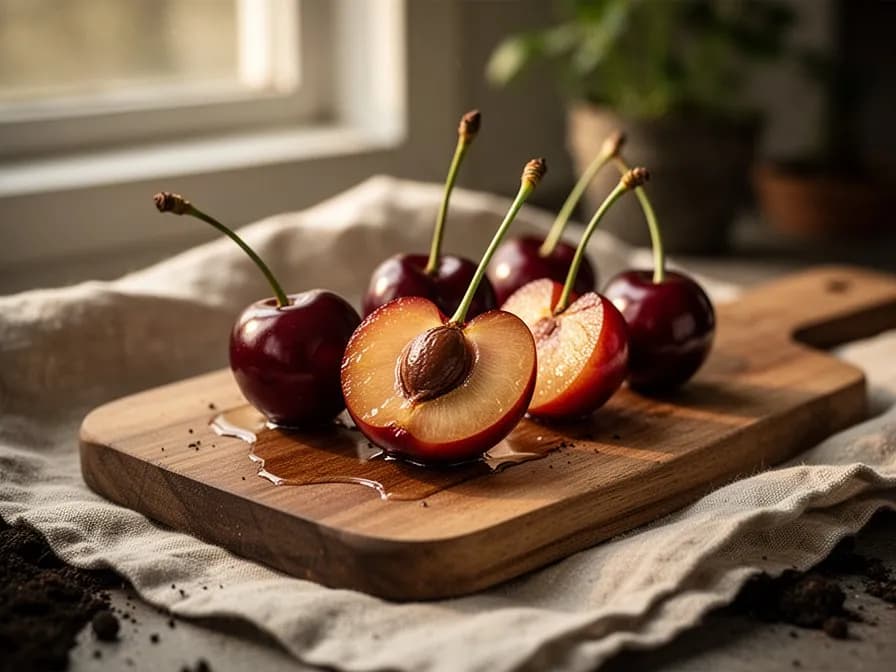
Frische Lapins-Kirsch-Salsa
15 Min.Eine schnelle, ungekochte frische Salsa, die die feste Textur und das hohe Zucker-Säure-Gleichgewicht reifer Lapins-Kirschen in Szene setzt. Süße Früchte, spritzige Limette, frische Chili und Kräuter ergeben ein lebendiges Würzkondiment, das hervorragend zu gegrilltem Lachs, gebratenem Entenbrustfilet, Pork Tacos oder einfach mit guten Tortilla-Chips passt. Am besten 30 Minuten im Voraus zubereiten und kurz ziehen lassen, damit sich die Aromen verbinden. Die Festigkeit von Lapins sorgt dafür, dass die Früchte ihre Form und Textur behalten, statt matschig zu werden – entscheidend für eine gute Salsa.
8 ZutatenKulinarische Verwendung
Lapins-Kirschen sind zum Frischverzehr hervorragend geeignet, mit ihrer großen Frucht und dem festen, süßen Fleisch. Sie eignen sich wunderbar für Kirschtorten, Cobblers und Kuchen und behalten beim Backen gut ihre Form. Ihre feste Textur macht sie ideal für in Schokolade getauchte Kirschen und Fruchtsalate. Sie liefern außerdem tief gefärbten Kirschsaft und ergeben eine ausgezeichnete Kirschkonfitüre.
Was drinsteckt
Gesundheitsvorteile
- Lapins-Kirschen zeigen bei optimaler Reife Brix-Werte von 18–22°, was auf eine außergewöhnlich hohe Konzentration gelöster Feststoffe – einschließlich Zucker, organischer Säuren und polyphenolischer Verbindungen, insbesondere Anthocyane – hinweist, die in klinischer Forschung mit verringerter systemischer Entzündung, geringerem oxidativen Stress und Schutz vor chronischen Erkrankungen assoziiert werden.
- Die Anthocyane in Süßkirschen – vor allem Cyanidin-3-Glucosid – haben in randomisierten kontrollierten Studien nachweislich den Harnsäurespiegel im Serum gesenkt und die Häufigkeit von Gichtanfällen vermindert, was regelmäßigen Kirschenverzehr zu einer der am besten belegten diätetischen Maßnahmen bei der Gichtbehandlung neben der medikamentösen Therapie macht.
- Süßkirschen sind eine der wenigen natürlichen Nahrungsquellen für Melatonin; Studien, in denen Teilnehmende sauren Kirschsaft (aus der eng verwandten Prunus cerasus) erhielten, berichteten von einer Verlängerung der Gesamtschlafdauer um bis zu 84 Minuten pro Nacht und verbesserten Schlafqualitätswerten – ein bedeutender Nutzen für Menschen mit leichten Schlafstörungen.
- Die Polyphenole in Kirschen – darunter Quercetin, Kaempferol und Chlorogensäure – haben eine gut dokumentierte entzündungshemmende Wirkung; sporternährungswissenschaftliche Forschungen haben ergeben, dass der Verzehr von Kirschprodukten vor und nach intensivem Training Marker für Muskelschäden signifikant reduziert und die Krafterholung beschleunigt, was Kirschen zu einem evidenzbasierten Erholungsnahrungsmittel unter Sportlern macht.
- Mit einem glykämischen Index von etwa 22 verursachen Lapins und andere Süßkirschen im Vergleich zu den meisten anderen gängigen Früchten einen moderaten, gleichmäßigen Anstieg des Blutzuckers. In Verbindung mit ihrem Ballaststoffgehalt macht sie dies zu einer geeigneten Obstartwahl für Personen mit Typ-2-Diabetes, Insulinresistenz oder metabolischem Syndrom.
- Neuere Forschungen legen nahe, dass der Polyphenolkomplex in Kirschen – einschließlich der Anthocyane, Flavonole und Hydroxyzimtsäuren – neuroprotektive Eigenschaften haben könnte; Tiermodellstudien zeigen potenzielle Vorteile für Gedächtnis, kognitive Funktion und Schutz vor oxidativem Schaden im Zusammenhang mit neurodegenerativen Erkrankungen wie Alzheimer, obwohl klinische Humandaten noch in der Entwicklung sind.
Woher Lapins-Kirsche stammt
Die Lapins-Kirsche wurde an der Forschungsstation Agriculture Canada in Summerland, British Columbia, entwickelt und 1983 nach jahrelanger sorgfältiger Selektion innerhalb des Obstbauzüchtungsprogramms der Öffentlichkeit vorgestellt. Sie ist eine gezielte Kreuzung zweier wegweisender Sorten: Van, eine feste, aromatische, mittelfrühe Süßkirsche aus dem Bundesstaat Washington, die zu einer der meistgepflanzten kommerziellen Sorten des 20. Jahrhunderts wurde, und Stella, die Sorte, die als erste bestätigte selbstbefruchtende Süßkirsche überhaupt Geschichte schrieb – ebenfalls in Summerland gezüchtet und 1968 herausgegeben.
Die Bedeutung dieser Abstammung kann nicht überschätzt werden. Süßkirschen (Prunus avium) sind in ihren wild gewachsenen und traditionell kultivierten Formen nahezu ausnahmslos selbstunfruchtbar und benötigen Fremdbestäubung durch eine kompatible zweite Sorte, um Früchte anzusetzen. Diese Einschränkung hatte den Kirschenanbau jahrhundertelang bestimmt und Anbauer dazu gezwungen, mehrere Bäume zu pflanzen und kompatible Sortenkombinationen zu verwalten. Stella durchbrach diese Barriere zum ersten Mal, und Lapins erbte und festigte diese Selbstbefruchtung, verbindet sie mit der größeren Fruchtgröße und festen Fleischqualität von Van – und erzeugt damit eine Sorte, die Anbauern und Hobbygärtnern alles in einem einzigen Baum bot.
Die weiter zurückreichende Geschichte des Kirschenanbaus, aus der Lapins hervorging, erstreckt sich über Jahrtausende. Die Wildkirsche, Prunus avium, ist in den gemäßigten Wäldern zwischen dem Schwarzen Meer und dem Kaspischen Meer heimisch – in der Region des heutigen Türkei, Georgiens und Armeniens – und wilde Exemplare wachsen noch heute in ganz Europa und Westasien. Archäologische Belege verorten den menschlichen Verzehr wilder Kirschen auf mindestens 8.000 Jahre zurück. Die Römer formalisierten den Kirschenanbau in Europa, und im Mittelalter unterhielten Klöster in Nord- und Mitteleuropa ausgedehnte Kirschgärten, in denen sie überlegene Fruchttypen auswählten und erhielten.
Europäische Siedler trugen den Kirschenanbau im 17. Jahrhundert nach Nordamerika, und im 19. Jahrhundert hatte sich der pazifische Nordwesten – der Staat Washington, Oregon und British Columbia – als klimatisch ideal für die Süßkirschenproduktion erwiesen. Die trockenen Sommer, fruchtbaren Böden und kalten Winter dieser Region boten genau das, was Kirschen benötigen, und eine bedeutende kommerzielle Branche entwickelte sich dort. In dieser Tradition des pazifischen Nordwestens wurde die Forschungsstation Summerland gegründet und die Reihe von Züchtungsarbeiten, die zu Stella und dann zu Lapins führten, durchgeführt.
Nach ihrer Herausgabe verbreitete sich Lapins rasch in der ganzen Kirschanbau-Welt. Sie wird jetzt kommerziell und in Hausgärten in ganz Großbritannien, Kontinentaleuropa, Neuseeland, Australien, Chile und in ganz Nordamerika angebaut und überall für dieselben drei Qualitäten geschätzt: bestätigte Selbstbefruchtung, große und sehr feste Früchte und ein später Erntezeitpunkt, der die Frischkirschensaison länger verlängert als fast jede andere weitverbreitete Sorte.
Lapins-Kirsche: Schon gewusst?
Faszinierende Fakten über Lapins-Kirsche
Lapins wurde an der Forschungsstation Agriculture Canada in Summerland, British Columbia, gezüchtet und 1983 herausgegeben – sie ist eine Kreuzung aus Van, einer der bedeutendsten kommerziellen Süßkirschen des 20. Jahrhunderts, und Stella, der ersten bestätigten selbstbefruchtenden Süßkirschsorte überhaupt.
Lapins-Kirsche: Fragen & Antworten
Wann sollte ich Lapins-Kirsche pflanzen?
Was sind gute Begleitpflanzen für Lapins-Kirsche?
In welchen Winterhärtezonen kann Lapins-Kirsche wachsen?
Wie viel Sonne braucht Lapins-Kirsche?
Welchen Abstand sollte ich zwischen Lapins-Kirsche lassen?
Welche Schädlinge und Krankheiten befallen Lapins-Kirsche?
Wie lagere ich Lapins-Kirsche nach der Ernte?
Was sind die besten Lapins-Kirsche-Sorten zum Anbauen?
Welchen Boden braucht Lapins-Kirsche?
Ist Lapins wirklich selbstbefruchtend, oder brauche ich für eine gute Ernte dennoch einen zweiten Kirschbaum?
Warum platzen Lapins-Kirschen kurz vor der vollen Reife auf?
Wann genau reift Lapins, und woran erkenne ich den richtigen Erntezeitpunkt?
Wie schütze ich Lapins-Kirschen wirksam vor Vögeln?
Welche Unterlage soll ich beim Kauf eines Lapins-Kirschbaums wählen?
Wie lange dauert es, bis mein neu gepflanzter Lapins-Baum eine nennenswerte Ernte trägt?
Du hast die Theorie gelesen. Jetzt baue sie auf Autopilot an.
Alles, was Lapins-Kirsche knifflig macht — das Timing, die Abstände, die Begleiter, das Erntefenster — genau das übernimmt PlotMyGarden für dich, für jede Pflanze im Garten.
Ein Plan, der dein Wetter kennt
Standort einmal festlegen. Aussaat-, Dünge- und Erntedaten rund um deinen echten letzten Frosttermin und die Live-Vorhersage — kein Raten mehr nach Saattüte.
Aus dem Abschnitt „Pflanzzeit“Beetplaner per Drag & Drop
Beete auf einem Raster gestalten. Jede Pflanze rastet im richtigen Abstand ein, und du siehst die ganze Saison, bevor du einen Cent für Saatgut ausgibst.
Aus dem Abschnitt „Anbau“Begleiter-Konflikte früh erkannt
Über 200 gute und schlechte Kombinationen werden beim Pflanzen live geprüft — so landet ein saisonruinierender Fehler nie in der Erde.
Aus dem Abschnitt „Begleiter“Erinnerungen, nach denen du wirklich handelst
„Gieß die Bohnen.“ „Heute ernten, bevor's umschlägt.“ Pünktlich, konkret und auf deine echten Pflanzen bezogen.
Aus dem Abschnitt „Ernte“Staffel-Aussaat, geplant
Sechs Wochen ernten statt sechs Tage? Die App verteilt deine Aussaaten automatisch und erinnert dich, wenn der nächste Satz fällig ist.
Aus dem Abschnitt „Pflanzzeit“Ein Verlauf, der schlauer wird
Jede protokollierte Ernte bringt der App deinen Garten bei. Der Plan fürs nächste Jahr startet bei dem, was in deinem Boden wirklich funktioniert hat.
Aus dem Abschnitt „Überblick“Pflanze diese neben Lapins-Kirsche
Weitere Steinobst
Halte Lapins-Kirsche von diesen fern
Bau deine beste Lapins-Kirsche an — und alles drumherum.
Starte heute kostenlos. Lege deine Beete an, setze deine Lapins-Kirsche ein und lass PlotMyGarden Timing, Abstände, Begleiter und Erinnerungen von der Saat bis zum Erntekorb übernehmen.