Daikon
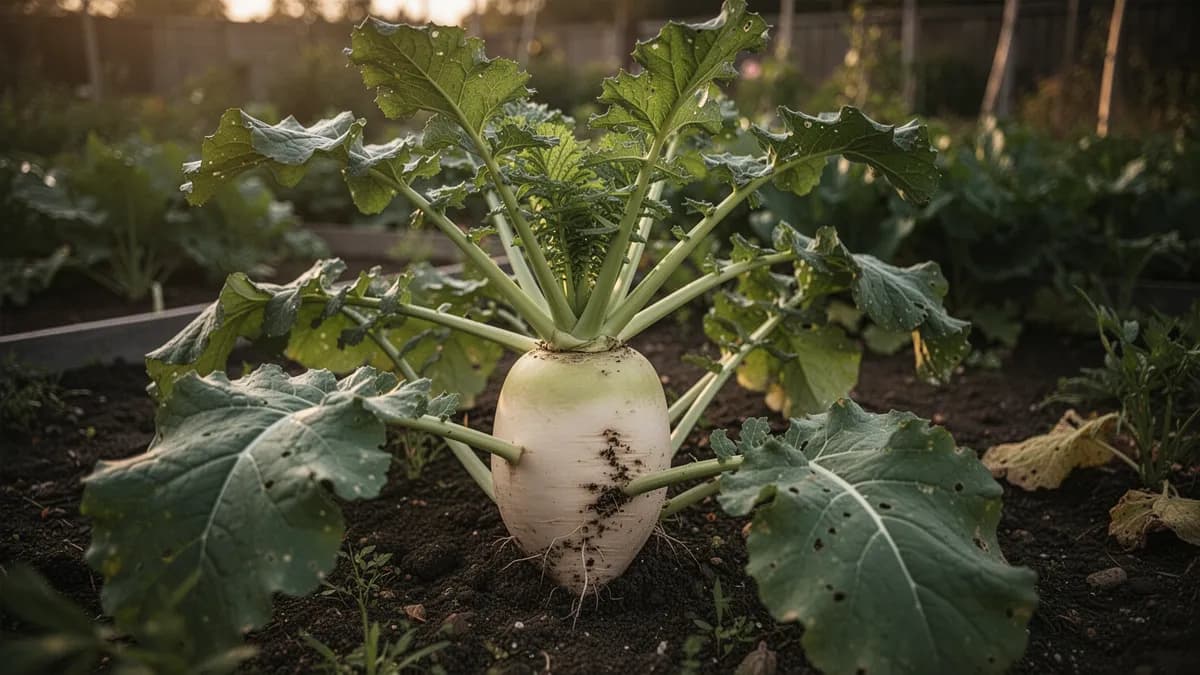
Un rábano asiático grande con raíz blanca.





En esta páginaResumen
Conoce Daikon
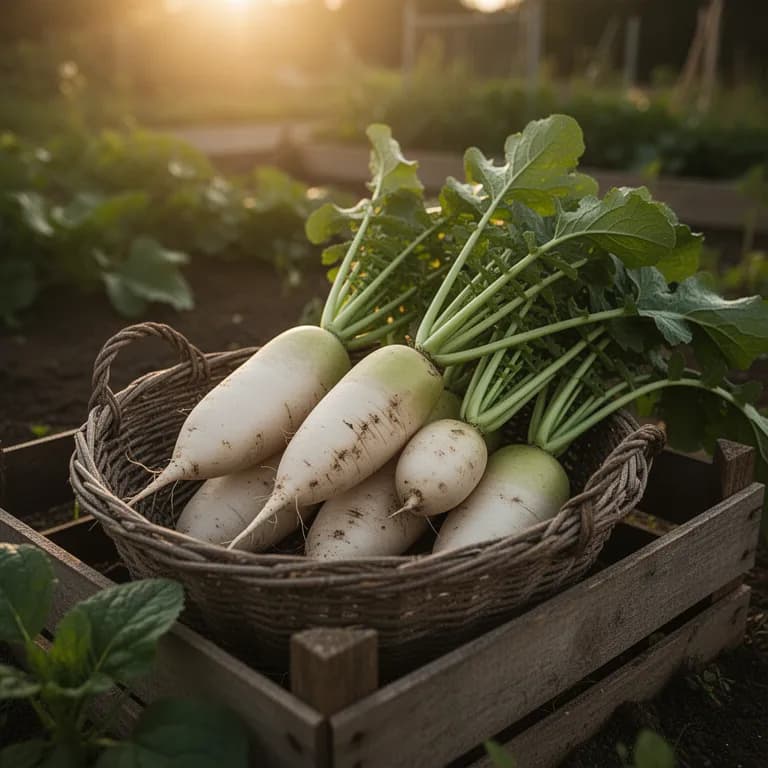
Un rábano asiático grande con raíz blanca. Suave y jugoso, ideal para cocina asiática.
Cuándo plantar Daikon
Siembre a finales de verano.
Tu año de Daikon
Ajustado a Zona 7 · temporada típica · la helada se va hacia el 2 abr y vuelve hacia el 1 nov
Planta Daikon Jul – Sep y cosecha Oct – Dic. Consulta los métodos de plantación y elige tu clima para adaptar los periodos.
Cómo cultivar Daikon
El daikon prefiere clima fresco. Siembre a finales de verano para cosecha de otoño.
Las raíces pueden crecer 30-45 cm de largo.
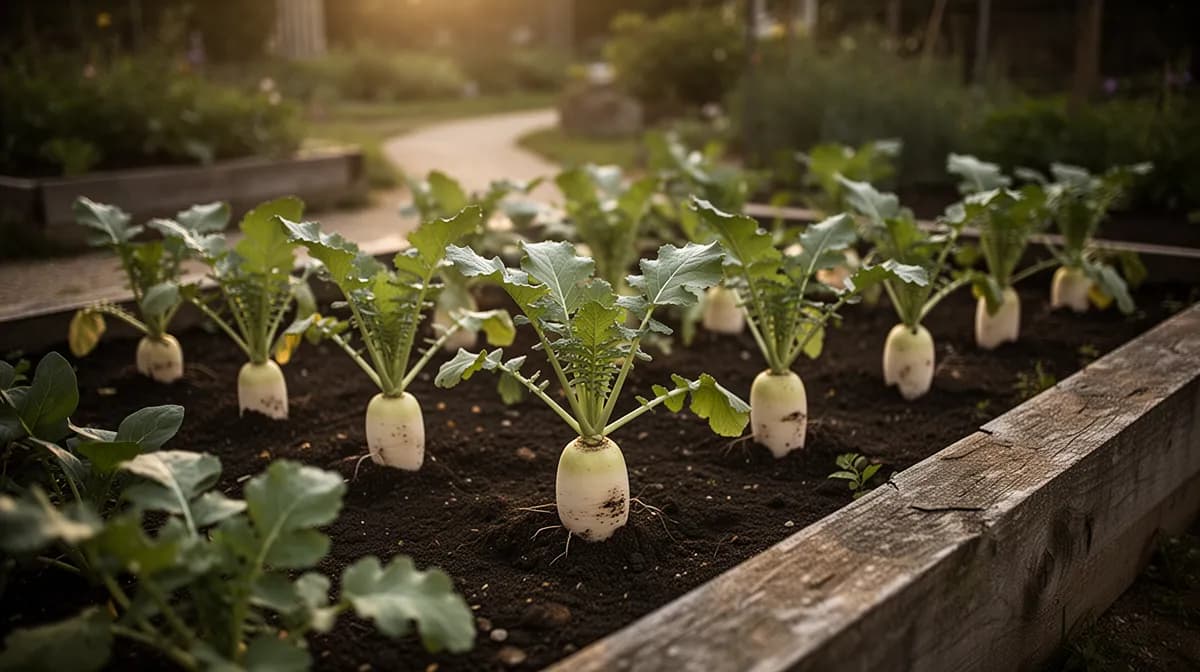
128 plantas caben en un bancal de 120 × 240 cm
Cada Daikon pide 15 cm de margen. El planificador guarda ese marco por ti — cada planta, cada bancal.
Los mejores vecinos de Daikon
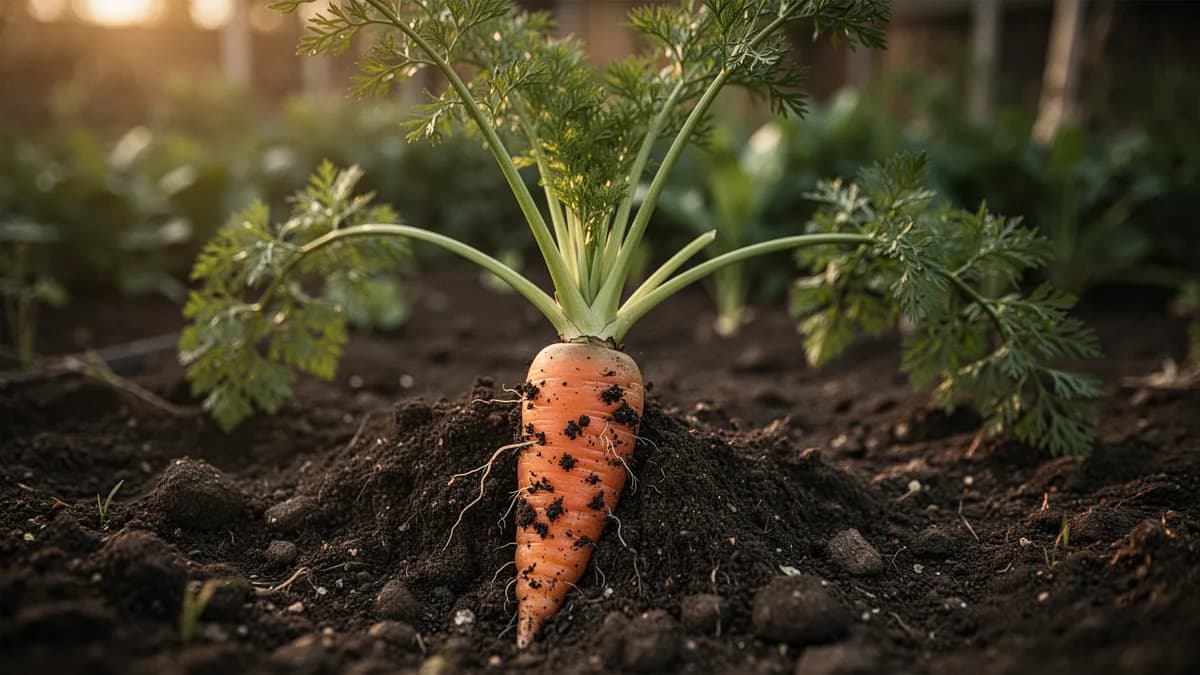
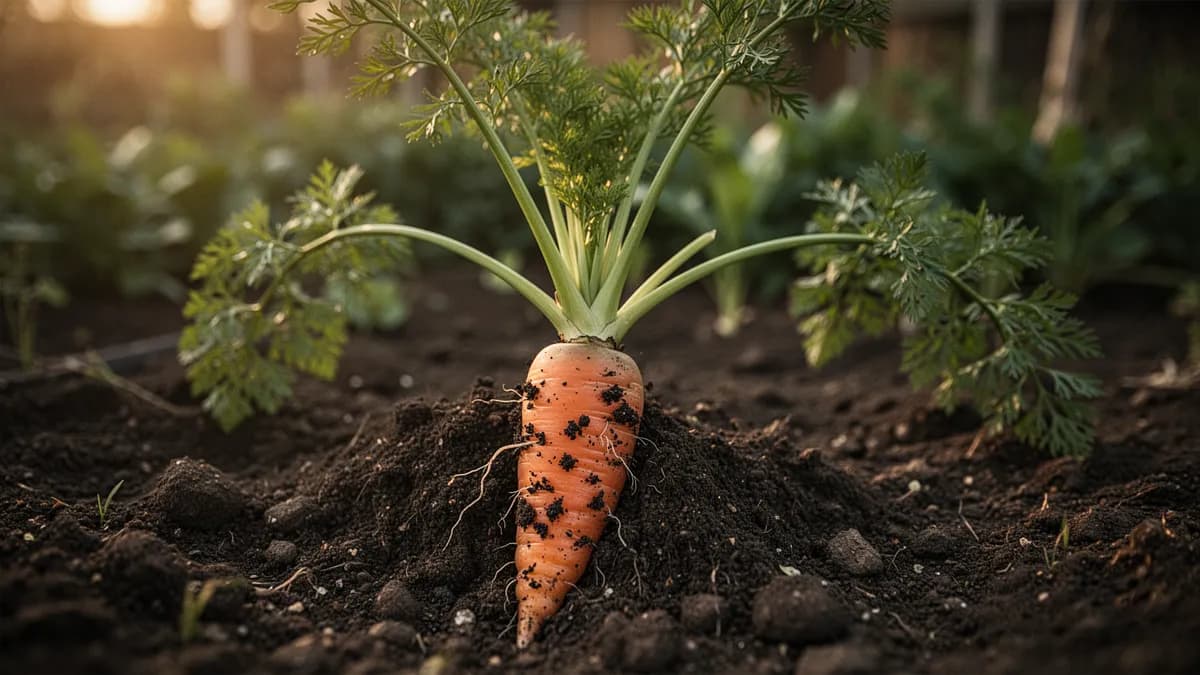
Zanahorias y rábanos.
Zanahoria va a su lado.
Saber de huerto de siempre, cotejado con la tabla real de Daikon — prueba cualquier planta que cultives.
Prueba Daikon en un bancal, aquí mismo
Un bancal real del planificador con Daikon ya plantado. Toca una planta compañera para colocarla y mira cómo responde la comprobación de vecinos: verde para buenos vecinos, rojo si hay conflicto.


Guías de cultivo relacionadas
Abónalo bien
Suelo profundo y suelto, pH 6,0-7,0.
Temperatura ideal
Compatibilidad de zonas de rusticidad
De la semilla a la cosecha, etapa por etapa
Germinación
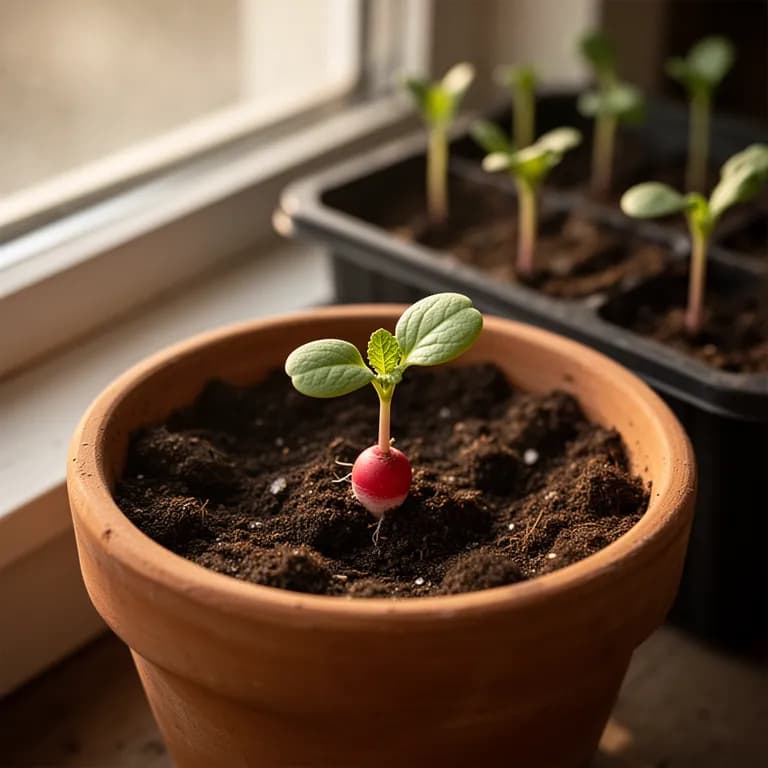
Las semillas de daikon germinan rápidamente en suelo cálido y húmedo. El hipocótilo empuja un par de grandes cotiledones en forma de corazón por encima de la superficie en 4-7 días. La raíz principal embrionaria empieza de inmediato a penetrar hacia abajo.
Establecimiento de plántulas
Las hojas verdaderas desarrollan una textura áspera y lobulada característica de las brassicas. La raíz principal ya ha empezado a engrosar y puede alcanzar 10-15 cm de profundidad en esta etapa. El aclareo es ahora fundamental para evitar raíces apiñadas y deformadas.
Desarrollo del follaje
La planta produce una roseta de hojas grandes y profundamente lobuladas que puede extenderse 30-45 cm de ancho. El follaje sombrea el suelo, suprime las malas hierbas y conserva la humedad. Bajo tierra, la raíz principal se engrosa y se alarga rápidamente.
Expansión de la raíz
La raíz principal entra en su fase de crecimiento más rápido, engrosándose hasta 5-8 cm de diámetro y alargándose hasta 20-35 cm. Las coronas de la raíz pueden sobresalir por encima de la superficie del suelo. Las temperaturas frescas del otoño desencadenan la acumulación de azúcares y endulzan la raíz.
Maduración y cosecha
La raíz alcanza su tamaño completo, con 20-40 cm de largo y 5-8 cm de diámetro según la variedad. La piel exterior es lisa y blanca (o morada en variedades coloreadas). La pulpa es crujiente, jugosa y suave. Las hojas pueden empezar a amarillear ligeramente mientras la planta redirige energía hacia la raíz.
Mantén el suelo uniformemente húmedo, pero no encharcado. Las semillas germinan mejor a 15-30 °C. Evita la costra en la superficie del suelo, ya que puede dificultar la emergencia: una capa ligera de vermiculita o compost fino ayuda.
Cuidar Daikon mes a mes
Qué hacer cada mes para tu Daikon
Octubre
Mes actualBegin harvesting roots that have reached 20-35 cm long. Test-pull one root to check for maturity. Use a garden fork to loosen soil before pulling. In cold climates, apply heavy mulch to extend the harvest window before the ground freezes.
Ten claro qué hacer en tu huerto, cada mes
Un correo al empezar cada mes: qué sembrar, plantar y hacer ahora mismo — para tu Daikon y todo lo que crece alrededor. Más un breve curso inicial para esquivar los errores clásicos.
- Qué hacer ahora mismo
- Ajustado a tu temporada
- Curso inicial incluido
Cosechar Daikon
Coseche antes de las heladas al tamaño deseado.
se supone que plantas al comenzar el periodo — indica tu fecha real
Cuando las raíces alcanzan 20-35 cm de largo y 5-8 cm de diámetro; normalmente 50-70 días después de la siembra.
Almacenamiento y conservación
En sótano fresco por meses.
Qué falla — y cómo solucionarlo
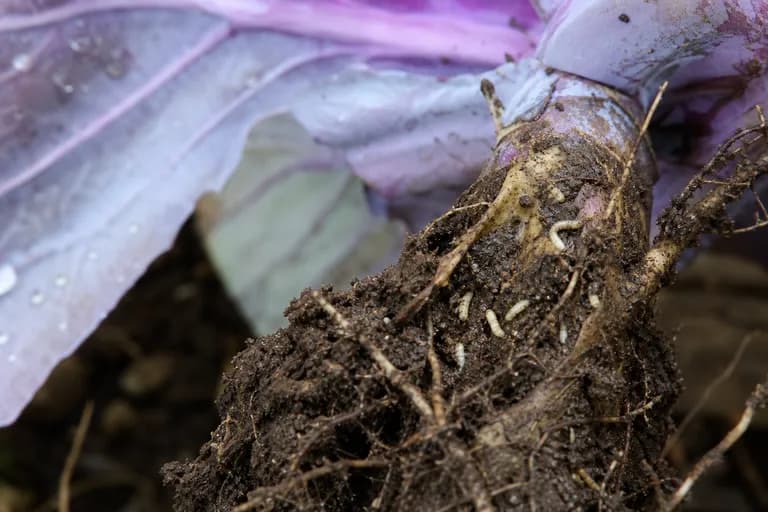
Mosca de la col
PlagaLarvas en raíces.
Solución de problemas comunes
Raíces bifurcadas en suelo pedregoso.
Consejos de cultivo
- Soil depth is everything for daikon. Work your soil to at least 45 cm (18 inches) deep and remove every rock, root fragment, and hard clod. Any obstruction causes the taproot to fork, split, or grow sideways. Double-digging or broadforking is strongly recommended.
- Always direct sow — never transplant. Daikon develops a single deep taproot from the very beginning, and any disturbance to this root causes permanent deformity. Transplanted daikon almost always produces forked or stunted roots.
- Time your sowing for fall harvest. Daikon bolts quickly in lengthening spring days and warm temperatures. Late summer sowing (July-September depending on zone) ensures the root matures during cool, shortening days, producing sweeter, milder roots.
- Avoid fresh manure or heavy nitrogen fertilization. Excess nitrogen produces lush leafy tops at the expense of root development and can cause forked roots. Use low-nitrogen fertilizers like bone meal or wood ash that promote root growth.
- Thin early and decisively. Crowded daikon plants produce small, misshapen roots. Thin to 10-15 cm (4-6 inches) apart when seedlings have 2-3 true leaves. Eat the thinnings as peppery microgreens in salads.
- Water deeply and consistently — 2.5 cm (1 inch) per week. Irregular watering causes roots to crack or develop a hot, pungent flavor. Drip irrigation is ideal. Mulch around plants to maintain even soil moisture.
- Hill soil around root shoulders that push above the surface. Exposed root tops turn green from chlorophyll production and develop a bitter taste. A 5 cm mound of soil or mulch prevents this.
- Use floating row covers immediately after sowing to protect against flea beetles and root maggots — the two most damaging pests for daikon. Row covers also moderate temperature and retain moisture for faster germination.
Cultiva tu mejor Daikon — y todo lo que la rodea.
Empieza un plan gratis hoy. Diseña tus bancales, coloca tu Daikon y deja que PlotMyGarden gestione el momento, el espaciado, las asociaciones y los recordatorios de la semilla a la cesta.
Elige tu Daikon
Miyashige
Buena para almacenar. 60 días.
Minowase
Muy largo. 50 días.
A packet of daikon seeds costs $2-4 and contains 200-500 seeds — enough to plant a 10-meter row yielding 50-80 kg of roots. Organic daikon sells for $3-6 per kg at farmers' markets and specialty grocery stores. A single $3 seed packet can produce $150-400 worth of organic daikon. The roots also serve double duty as a cover crop, improving soil structure and reducing the need for mechanical tillage in subsequent seasons.
Recetas rápidas
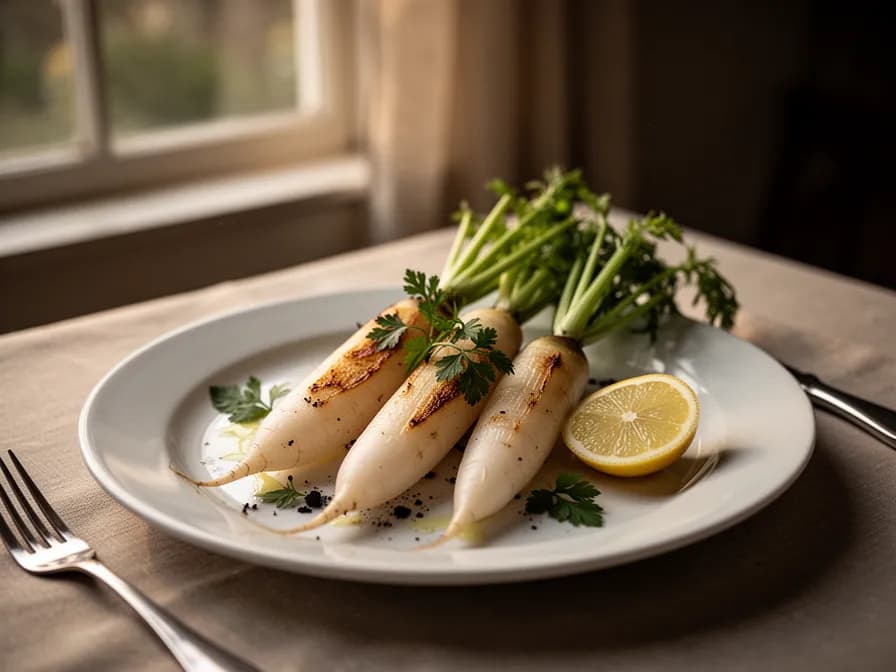
Quick Pickled Daikon
15 min + 1 hourA bright, tangy condiment that pairs beautifully with rice bowls, banh mi, and grilled meats. Thinly sliced daikon absorbs the sweet-sour brine rapidly, and is ready to eat in as little as an hour. Keeps refrigerated for weeks.
6 ingredientesJapanese Daikon Miso Soup
25 minA warming, deeply savory soup where daikon simmers until tender and translucent, absorbing the umami-rich miso broth. A staple of Japanese home cooking, this soup is simple yet profoundly satisfying on a cold day.
6 ingredientesDaikon Radish Cake (Lo Bak Go)
20 min prep + 50 min steamA classic Cantonese dim sum dish. Shredded daikon is mixed with rice flour batter and steamed into a savory cake, then pan-fried until golden and crispy on the outside. Served with chili sauce for dipping.
8 ingredientesUsos culinarios
En sopas, ensaladas, kimchi o asado.
Qué contiene
Beneficios para la salud
- Contains natural digestive enzymes (diastase, amylase, esterase) that help break down fats, proteins, and starches — this is why grated daikon is traditionally served alongside fried and grilled foods in Japanese cuisine.
- Rich in glucosinolates, sulfur-containing compounds that the body converts to isothiocyanates, which have been studied extensively for their potential to inhibit cancer cell growth.
- Excellent source of Vitamin C at 22mg per 100g, supporting immune function, collagen production, and acting as a powerful antioxidant against free radical damage.
- Very low in calories (18 per 100g) with moderate fiber content, making it an ideal food for weight management that provides volume and satiety without excess energy.
- Contains folate, important for DNA synthesis and cell division, making daikon a valuable food during pregnancy and for overall cardiovascular health.
- Provides anti-inflammatory compounds including phenolic acids and flavonoids that may help reduce chronic inflammation associated with heart disease and metabolic disorders.
De dónde viene Daikon
Daikon radish has been cultivated in East Asia for well over 2,000 years, with its origins traced to the eastern Mediterranean region. Wild ancestors of Raphanus sativus migrated eastward along ancient trade routes, and by the time of the Chinese Han Dynasty (206 BCE-220 CE), large-rooted radish varieties were well-established crops in China. From China, daikon cultivation spread to Korea and Japan, where it became one of the most important vegetables in the culinary tradition.
In Japan, daikon has been a dietary staple since at least the Edo period (1603-1868), where it was valued not only as food but also as medicine. Japanese farmers developed hundreds of regional varieties adapted to local climates and soils — from the massive Sakurajima daikon of southern Kyushu to the slender Nerima daikon prized in Tokyo. The vegetable became so culturally significant that it appears in Japanese proverbs, art, and festivals.
Daikon reached Europe in the 16th century but never gained the same culinary prominence it holds in Asia. In the 20th century, American farmers discovered daikon's remarkable ability to break up compacted soil, leading to its widespread adoption as a cover crop under names like 'tillage radish' and 'groundhog radish'. Today, daikon is grown worldwide, with China, Japan, and Korea remaining the largest producers. Its versatility — eaten raw, pickled, fermented, dried, and cooked — ensures its continued importance in global cuisine.
Daikon: ¿sabías que?
Datos fascinantes sobre Daikon
Daikon is the most consumed vegetable in Japan, accounting for the largest share of vegetable production in the country. The average Japanese person eats roughly 12 kg of daikon per year.
Daikon: preguntas frecuentes
¿Cuándo debo plantar Daikon?
¿Cuáles son buenas plantas acompañantes para Daikon?
¿En qué zonas de rusticidad puede crecer Daikon?
¿Cuánto sol necesita Daikon?
¿A qué distancia debo espaciar Daikon?
¿Qué plagas y enfermedades afectan a Daikon?
¿Cómo almaceno Daikon después de la cosecha?
¿Cuáles son las mejores variedades de Daikon para cultivar?
¿Qué suelo necesita Daikon?
Why is my daikon radish forked or misshapen?
Can I grow daikon in spring instead of fall?
How do I know when daikon is ready to harvest?
Why is my daikon radish extremely spicy and pungent?
Can I eat daikon leaves, or should I discard them?
How should I store daikon for long-term use?
Acabas de leer la teoría. Ahora cultívala en piloto automático.
Todo lo que hace que Daikon sea delicado — el momento, el espaciado, las asociaciones, la ventana de cosecha — es justo lo que PlotMyGarden resuelve por ti, para cada planta de tu huerto.
Un plan que conoce tu clima
Indica tu ubicación una vez. Recibe fechas de siembra, abonado y cosecha basadas en tu última helada real y el pronóstico en vivo — sin adivinar con un sobre genérico.
De la sección “Cuándo plantar”Planificador de bancales de arrastrar y soltar
Diseña bancales sobre una cuadrícula. Cada planta encaja con su espaciado correcto y ves toda la temporada antes de gastar un céntimo en semillas.
De la sección “Cultivo”Conflictos de asociación, detectados a tiempo
Más de 200 buenas y malas combinaciones comprobadas en vivo mientras plantas — para que un error que arruine la temporada nunca llegue a la tierra.
De la sección “Asociaciones”Recordatorios que sí vas a seguir
“Riega las judías.” “Recoge hoy antes de que se pase.” Oportunos, concretos y ligados a las plantas que de verdad cultivas.
De la sección “Cosecha”Escalonado, programado
¿Quieres cosechar seis semanas en vez de seis días? Reparte tus siembras automáticamente y te avisa cuando toca el siguiente lote.
De la sección “Cuándo plantar”Un registro que se vuelve más listo
Cada cosecha que registras le enseña tu huerto. El plan del año que viene parte de lo que de verdad funcionó en tu suelo, no en un manual.
De la sección “Resumen”Planta estos junto a Daikon
Más Crucíferas
Cultiva tu mejor Daikon — y todo lo que la rodea.
Empieza un plan gratis hoy. Diseña tus bancales, coloca tu Daikon y deja que PlotMyGarden gestione el momento, el espaciado, las asociaciones y los recordatorios de la semilla a la cesta.