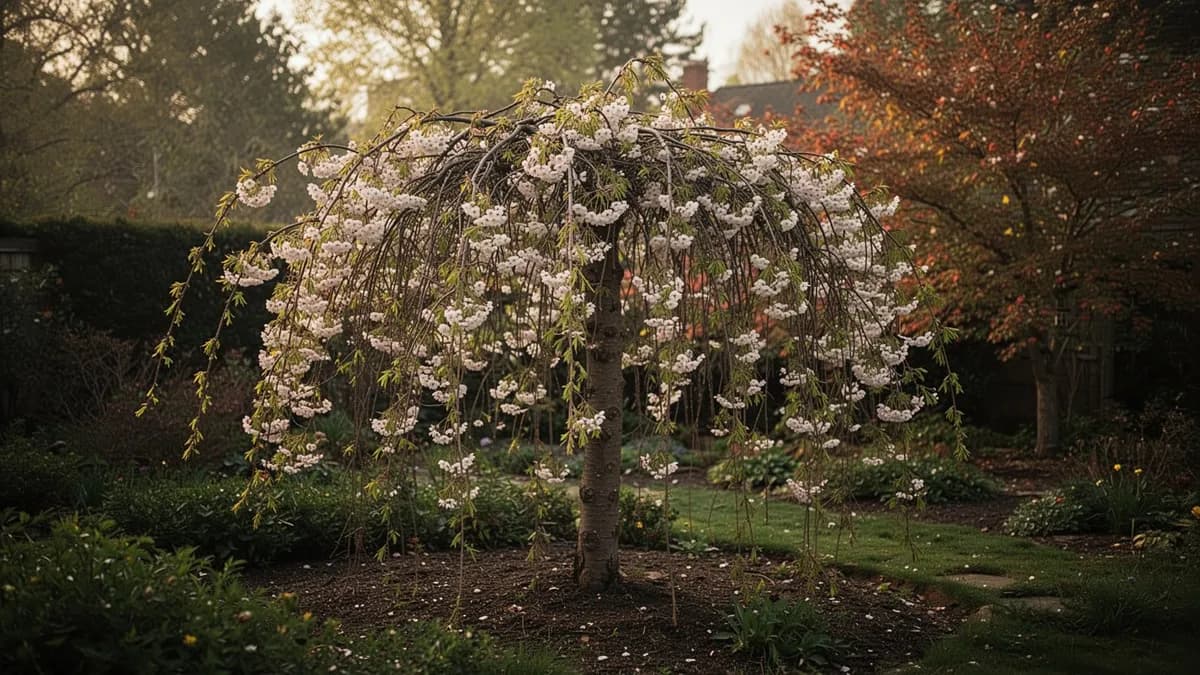
Weeping Cherry
Prunus pendula
At a Glance
A breathtaking specimen tree with cascading branches that form a curtain of pink or white blossoms each spring, creating a romantic, waterfall-like effect. Weeping cherries are typically grafted, so remove any upright shoots that emerge from below the graft union to maintain the weeping habit. They make stunning focal points near ponds, patios, or at the end of garden paths where their arching form can be fully appreciated. Provide full sun and well-drained soil, and prune minimally to preserve the natural cascade of branches.
Planting & Harvest Calendar
Growth Stages
From Seed to Harvest
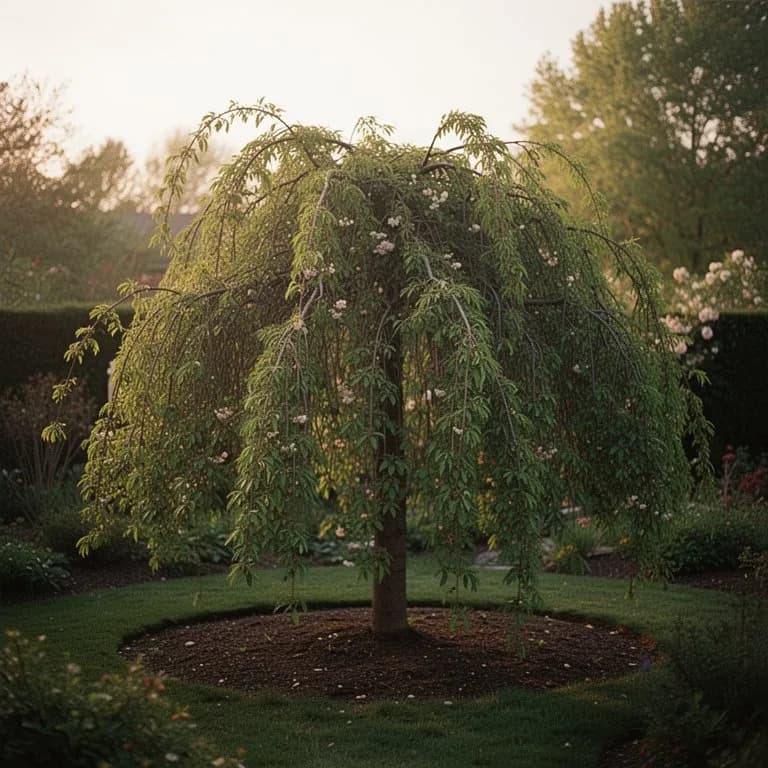
Dormant / Bare Root
Days 0–60
The tree is leafless and dormant during late winter. This is the ideal window for planting bare-root or balled-and-burlapped specimens. Root establishment begins underground even while the canopy remains inactive.
💡 Care Tip
Plant in well-drained soil amended with compost. Water deeply at planting and mulch the root zone with 3-4 inches of organic mulch, keeping it away from the trunk.
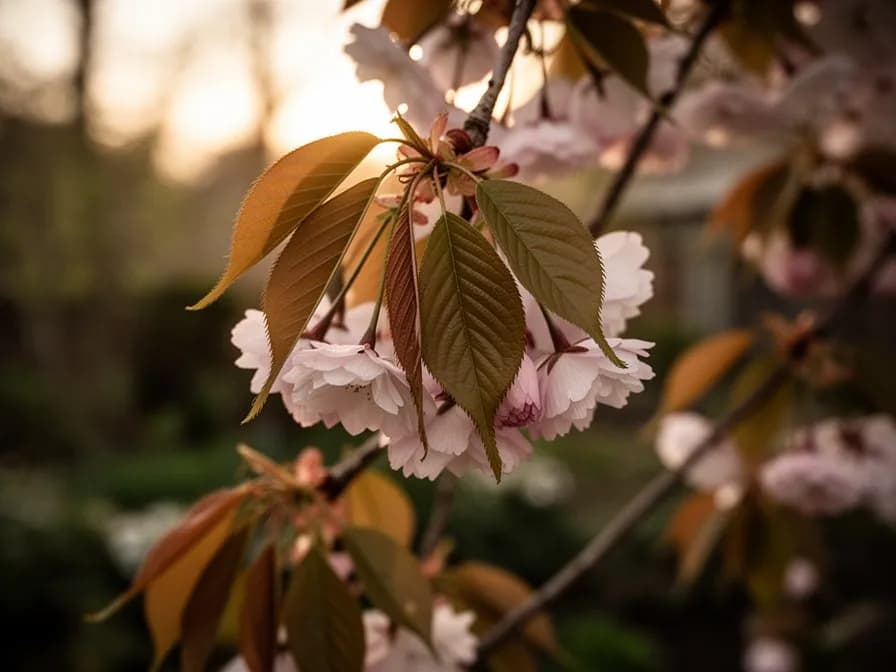
The gracefully arching branches drape downward, creating a curtain of blooms that can reach nearly to the ground.
Monthly Care Calendar
What to do each month for your Weeping Cherry
May
You are herePrune immediately after bloom to shape the canopy and remove spent flower clusters if desired.. Monitor for cherry leaf spot (Blumeriella jaapii) and apply fungicide if spotted early.. Water deeply once per week if rainfall is insufficient, especially for newly planted trees.
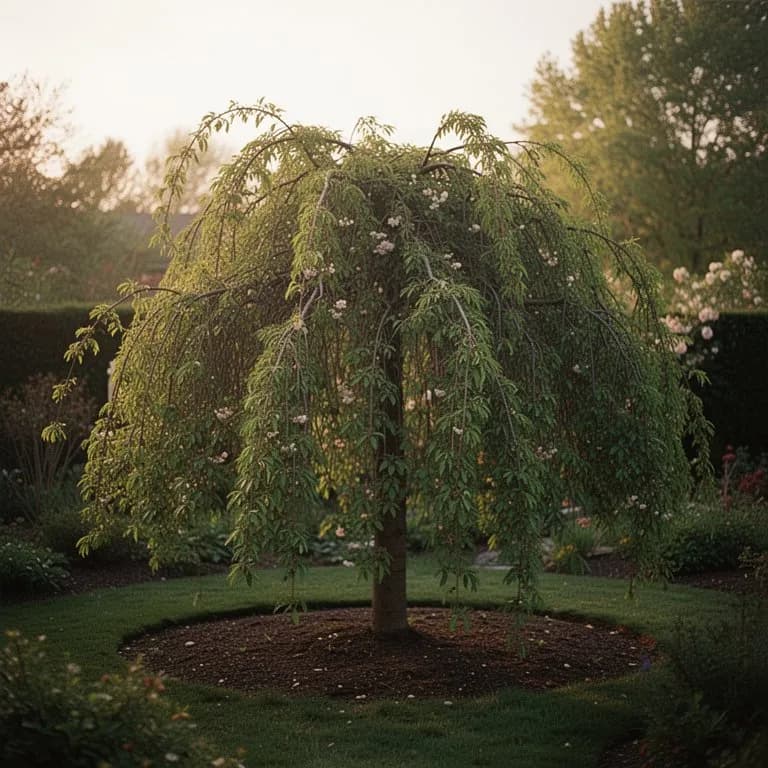
In autumn the leaves turn warm shades of gold and amber before dropping for winter dormancy.
Did You Know?
Fascinating facts about Weeping Cherry
The weeping cherry is one of the most celebrated trees in Japanese culture and features prominently in hanami, the centuries-old tradition of gathering under blooming cherry trees each spring.
The attractive bark features horizontal lenticels characteristic of ornamental cherry species.
Weeping cherry is among the most dramatic and romantic ornamental trees, with pendulous branches cascading to the ground in a curtain of spring blossoms. Most garden specimens are grafted, with the weeping cultivar grafted onto an upright rootstock at a height of 5 to 6 feet. Choose a site with full sun and well-drained soil with a pH of 6.0 to 7.0. Position the tree as a specimen where the full weeping form can be appreciated from multiple angles.
Plant in spring or fall. Stake newly planted grafted trees for the first year or two until the graft union is well established. Water deeply at planting and weekly during the first two growing seasons. Apply 2 to 3 inches of organic mulch, keeping it away from the trunk.
The most critical maintenance task is removing any shoots that emerge from below the graft union, which will be upright-growing and will eventually dominate and kill the weeping top if left unchecked. Remove these suckers as soon as they appear by tearing or cutting flush to the trunk. Prune the weeping canopy lightly after flowering, removing any branches that drag on the ground or cross other branches. The interior of the canopy should be thinned periodically to allow air circulation and prevent disease.
The weeping cherry (Prunus subhirtella 'Pendula') traces its origins to Japan, where it has been cultivated as an ornamental tree for well over a millennium. The species Prunus subhirtella is native to the temperate forests of Honshu, Shikoku, and Kyushu, where it grows naturally in mountain woodlands alongside maples and oaks. The pendulous weeping form arose as a natural genetic mutation that was noticed and selectively propagated by Japanese gardeners during the Heian period (794-1185 CE). Buddhist monks planted early specimens in temple courtyards, where they became symbols of the transient beauty of life, a concept known as mono no aware. By the Edo period (1603-1868), weeping cherries had become essential elements of Japanese garden design, and dozens of named cultivars were being traded among feudal lords. The tree was introduced to Western horticulture in the mid-nineteenth century when plant explorers brought specimens to Europe and North America. Notable introductions were made through the Arnold Arboretum in Boston during the 1890s. Today the weeping cherry thrives in USDA hardiness zones 5 through 8 and is widely planted as a specimen tree in parks, residential landscapes, and botanical gardens around the world. Popular cultivars include 'Pendula Plena Rosea' with its double pink flowers, 'Snow Fountains' with white blossoms and compact size, and 'Pink Snow Showers' which offers disease resistance. The tree typically reaches 20 to 30 feet in height and spread at maturity, creating a graceful dome-shaped canopy that sweeps toward the ground. Its enduring appeal lies in the dramatic spring flowering display and elegant year-round architectural form.
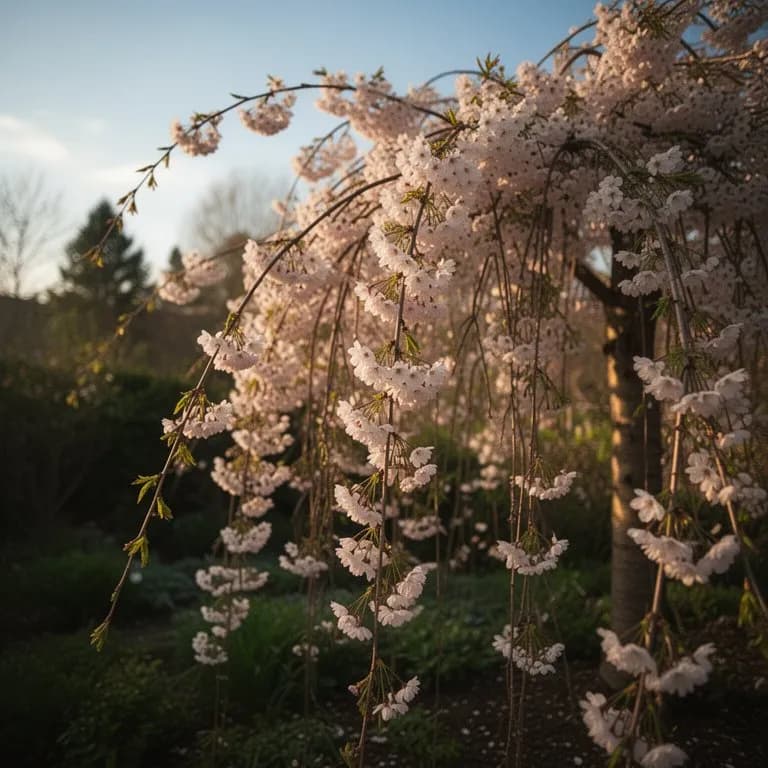
A mature weeping cherry displays its iconic cascading canopy of soft pink blossoms in early spring.
Weeping cherry seeds require the same treatment as other ornamental Prunus. Collect any small fruits that form, remove pulp, and cold-stratify in moist peat at 35 to 40 degrees for 90 to 120 days. However, seedlings will not inherit the weeping habit, growing instead as upright trees. The weeping form is maintained only through grafting scion wood from a weeping cultivar onto upright rootstock, a technique best performed by skilled nursery propagators in late winter or early spring using whip-and-tongue or chip-bud grafting methods.
Weeping cherry requires well-drained soil with a pH of 6.0 to 7.0. It performs best in loamy, fertile soil but tolerates clay if drainage is improved. Avoid wet sites where root rot and crown rot are risks. Fertilize lightly in early spring with a balanced slow-release fertilizer. Excessive nitrogen promotes rank vegetative growth that detracts from the graceful weeping form. Mulch with 2 to 3 inches of organic matter to maintain soil moisture and reduce weed competition around the base.
Check Your Zone
See if Weeping Cherry is suitable for your location.
-23°C – 32°C
-9°F – 90°F
Weeping cherries are cold-hardy to USDA zone 5 (approximately -23°C / -10°F) and perform best with cool to moderate summers. They require 700-1000 chill hours below 7°C (45°F) during winter dormancy to flower reliably. Prolonged heat above 32°C (90°F) can cause leaf scorch and stress, particularly if soil moisture is insufficient. Ideal growing temperatures during the active season range from 15°C to 27°C (60°F to 80°F).
Common issues affecting Weeping Cherry and how to prevent and treat them organically.
Rootstock suckers are the most persistent problem with grafted weeping cherries. Vigorous upright shoots from below the graft will overwhelm and kill the weeping top if not removed promptly. The graft union is a weak point susceptible to canker infections, mechanical damage, and frost cracking. Short lifespan of 20 to 30 years is typical. Borers attack stressed trees, especially through wounds near the graft. Japanese beetles can severely defoliate trees in mid-summer in affected regions. Branches dragging on the ground are prone to fungal infections and should be trimmed to maintain clearance.
The weeping cherry's dramatic form is best showcased against a simple backdrop. Low groundcovers like creeping phlox, sweet woodruff, or moss provide a clean base that doesn't compete visually with the cascading branches. Spring bulbs including daffodils, scilla, and grape hyacinths create a colorful carpet beneath the blooming tree. Avoid tall shrubs or perennials near the canopy that interfere with the flowing branch habit. Position near water features where the weeping form and its reflection create a double display.
- 1Select a planting site with full sun exposure (at least 6 hours of direct sunlight daily) and well-drained soil to promote vigorous flowering and reduce fungal disease risk.
- 2Dig the planting hole two to three times wider than the root ball but no deeper, ensuring the graft union remains 2-4 inches above the soil line to prevent scion rooting.
- 3Water newly planted trees deeply twice per week for the first two growing seasons to establish a robust root system before reducing to supplemental watering during dry periods.
- 4Apply a 3-4 inch layer of organic mulch such as composted bark or wood chips in a wide ring around the tree, keeping the mulch at least 4 inches away from the trunk to prevent rot.
- 5Prune immediately after flowering ends in late spring to shape the canopy and remove any upright-growing suckers that emerge below the graft union, as these will be from the non-weeping rootstock.
- 6Fertilize once annually in early spring with a balanced slow-release granular fertilizer (10-10-10 or similar) spread evenly beneath the drip line of the canopy.
- 7Monitor regularly for common pests including aphids, Japanese beetles, spider mites, and tent caterpillars, treating with targeted controls such as insecticidal soap or Bt as needed.
- 8Inspect the trunk and major branches annually for signs of bacterial canker (dark sunken lesions with amber gum) and prune affected wood at least 6 inches below the infected area with sterilized tools.
- 9Protect the trunk of young trees from sunscald in winter by wrapping with a commercial tree guard or painting with white latex diluted 50-50 with water.
- 10Avoid planting in low-lying areas where cold air collects, as late spring frosts can damage flower buds and significantly reduce the bloom display.
Weeping cherry is grown purely for ornamental value and does not produce edible fruit. The cascading flower-laden branches can be cut for spectacular indoor arrangements in spring. Cut branches when buds show color but before fully opening for the longest vase life. The dramatic weeping form is particularly stunning when illuminated from below for evening garden lighting. In Japanese tradition, weeping cherries are considered among the most elegant and emotionally evocative of all flowering trees.
Cut flowering branches of weeping cherry last 5 to 8 days in water. Recut stems at an angle and use floral preservative to extend life. Dormant branches cut in late winter can be forced into bloom indoors by placing in warm water in a bright room; expect blooms in 1 to 3 weeks. Individual flowers can be preserved following the Japanese sakura-zuke method, pickling partially opened blossoms in salt and plum vinegar for use in traditional teas and confections.
Plan your garden with ease
Love growing Weeping Cherry? Use our free garden planner to design your beds, track planting dates, and get personalized care reminders.
Nutritional Info
Per 100g serving
0
Calories
Health Benefits
- Weeping cherry is grown exclusively as an ornamental tree and is not cultivated for food production.
- The tiny fruits (drupes) produced are not palatable to humans due to their bitter taste and minimal flesh.
- Cherry blossoms are occasionally salt-pickled in Japan for use in ceremonial teas, but they are not a significant nutritional source.
- The primary value of the weeping cherry is aesthetic, ecological, and cultural rather than nutritional.
💰 Why Grow Your Own?
While weeping cherries do not produce edible harvests, a well-placed specimen tree can increase residential property values by 7-15% according to arboriculture studies. A mature weeping cherry in peak bloom is considered a premium landscape feature by real estate appraisers. Additionally, the shade provided by the canopy can reduce summer cooling costs for nearby structures, and the tree eliminates the need for seasonal flower plantings in the area it covers, saving on annual bedding plant expenses.
Quick Recipes
Simple recipes using fresh Weeping Cherry
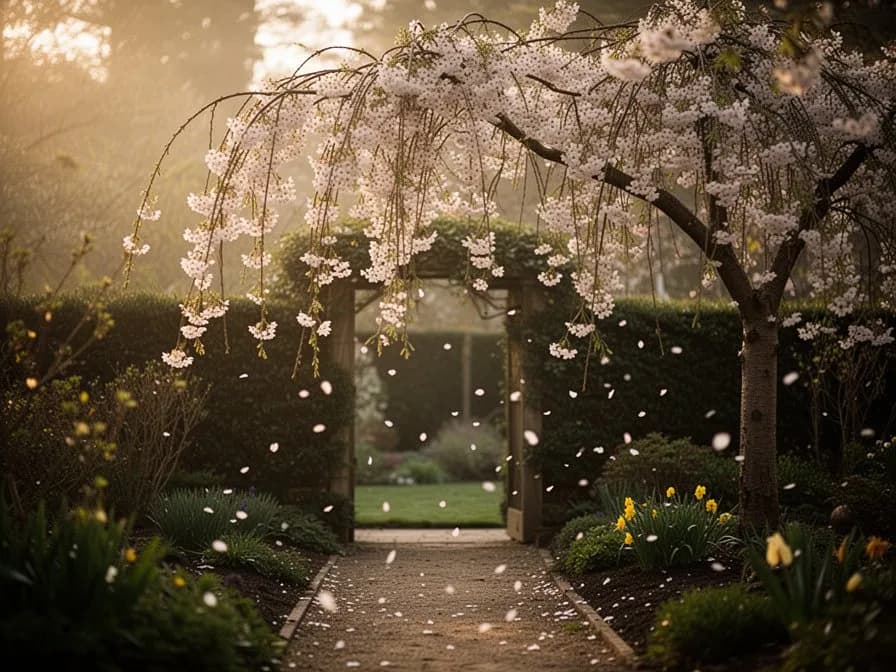
Sakura Blossom Tea (Sakura-yu)
10 minutes plus 2 days curingA traditional Japanese infusion made with salt-preserved cherry blossoms. The blossoms open beautifully in hot water, releasing a subtle floral aroma. Served at weddings and celebrations as a symbol of new beginnings.
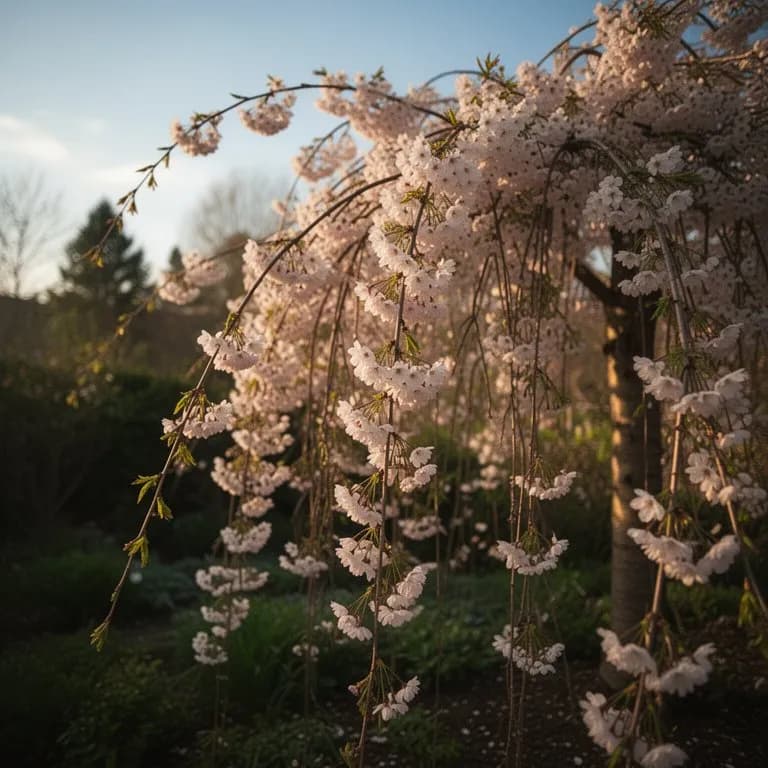
Cherry Blossom Syrup
30 minutes plus overnight steepingA fragrant floral syrup infused with cherry blossoms, perfect for drizzling over desserts, adding to sparkling water, or mixing into cocktails. The delicate pink hue and subtle almond-like flavor make it a unique spring ingredient.
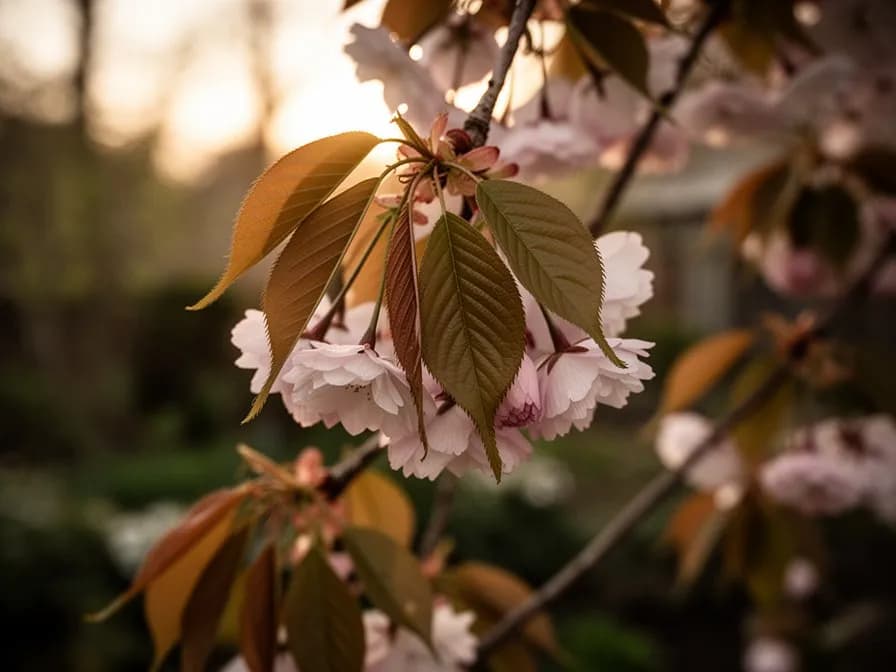
Sakura Mochi-Inspired Blossom Garnish
15 minutesSalt-pickled cherry blossoms and leaves used as an elegant garnish for rice cakes, ice cream, or spring desserts. The salt-cured blossoms add a floral and slightly briny contrast to sweet dishes.
Yield & Spacing Calculator
See how many Weeping Cherry plants fit in your garden bed based on the recommended 500cm spacing.
0
Weeping Cherry plants in a 4×4 ft bed
0 columns × 0 rows at 500cm spacing
Popular Varieties
Some of the most popular weeping cherry varieties for home gardeners, each with unique characteristics.
Snow Fountains (Snofozam)
Cascading pure white single flowers on gracefully weeping branches. Compact form reaching 8 to 15 feet tall. Excellent disease resistance and reliable bloom. Good orange-bronze fall color.
Pink Snow Showers
Profuse single pink flowers on strongly pendulous branches. Grows 15 to 20 feet tall with an equal spread. More vigorous than many weeping selections with good heat tolerance.
Pendula Rosea
Deep pink single flowers on strongly weeping branches that reach the ground. The classic weeping cherry of Japanese gardens. Grows 20 to 25 feet tall when mature.
Double Weeping Cherry (Yae-shidare-higan)
Double pink flowers are larger and showier than single types, with a longer bloom period. Strongly weeping habit to 20 feet tall. One of the most popular selections in Japan.
When should I plant Weeping Cherry?
Plant Weeping Cherry in March, April, October, November. It takes approximately 1460 days to reach maturity, with harvest typically in .
What are good companion plants for Weeping Cherry?
Weeping Cherry grows well alongside Daffodil, Tulip, Pansy. Companion planting can improve growth, flavor, and natural pest control.
What hardiness zones can Weeping Cherry grow in?
Weeping Cherry thrives in USDA hardiness zones 5 through 8. With greenhouse protection, it may be grown in zones 3 through 9.
How much sun does Weeping Cherry need?
Weeping Cherry requires Full Sun (6-8h+). This means at least 6-8 hours of direct sunlight daily.
How far apart should I space Weeping Cherry?
Space Weeping Cherry plants 500cm (197 inches) apart for optimal growth and air circulation.
What pests and diseases affect Weeping Cherry?
Common issues include Bacterial Canker, Cherry Slug Sawfly, Shot Hole Disease. Prevention through good garden practices like crop rotation, proper spacing, and companion planting is the best approach. See the detailed pests and diseases section above for symptoms, prevention, and treatment for each.
How do I store Weeping Cherry after harvest?
Cut flowering branches of weeping cherry last 5 to 8 days in water. Recut stems at an angle and use floral preservative to extend life. Dormant branches cut in late winter can be forced into bloom indoors by placing in warm water in a bright room; expect blooms in 1 to 3 weeks. Individual flowers ca...
What are the best Weeping Cherry varieties to grow?
Popular varieties include Snow Fountains (Snofozam), Pink Snow Showers, Pendula Rosea, Double Weeping Cherry (Yae-shidare-higan). Each has unique characteristics suited to different growing conditions and culinary preferences. See the varieties section above for detailed descriptions.
What soil does Weeping Cherry need?
Weeping cherry requires well-drained soil with a pH of 6.0 to 7.0. It performs best in loamy, fertile soil but tolerates clay if drainage is improved. Avoid wet sites where root rot and crown rot are risks. Fertilize lightly in early spring with a balanced slow-release fertilizer. Excessive nitrogen...
How long does it take for a weeping cherry tree to reach its full mature size?
A weeping cherry typically reaches its mature height of 20-30 feet within 15 to 20 years, though growth rate varies with climate and care. Young trees often grow 1-2 feet per year in favorable conditions. The cascading branch spread continues to develop and widen throughout the tree's life, eventually matching or exceeding the height in overall canopy width.
Why is my weeping cherry tree not flowering or producing very few blossoms?
The most common causes of poor flowering are insufficient winter chill hours (the tree needs 700-1000 hours below 7°C), pruning at the wrong time (pruning in fall or winter removes next spring's flower buds), too much shade (the tree needs full sun), excessive nitrogen fertilization (which promotes leaf growth at the expense of flowers), and youth (newly planted trees may take 2-3 years to establish before flowering heavily).
What is the difference between a grafted and a seed-grown weeping cherry?
Nearly all weeping cherries sold commercially are grafted, meaning pendulous scion wood is attached to an upright rootstock (usually Prunus avium or P. serrulata). This creates a tree with a straight trunk and weeping crown. Seed-grown trees rarely reproduce the weeping trait reliably and may grow into upright or semi-weeping forms. The visible graft union bulge on the trunk is normal and should always remain above the soil line.
How do I deal with suckers growing from the base or trunk below the graft union?
Suckers emerging below the graft union are from the non-weeping rootstock and must be removed promptly, as they will grow vigorously upright and can eventually overtake the weeping canopy. Cut them flush with the trunk or ground using sharp, sterilized pruners. Do not apply wound sealant. Check for suckers monthly during the growing season, as rootstock growth can be aggressive.
Are weeping cherry trees susceptible to any serious diseases?
The most significant diseases affecting weeping cherries are cherry leaf spot (Blumeriella jaapii), which causes premature leaf drop; bacterial canker (Pseudomonas syringae), which creates sunken dark lesions on branches and trunks; and brown rot (Monilinia spp.), which affects flowers and can spread to branches. Good sanitation practices such as removing fallen leaves, pruning out infected wood, ensuring adequate air circulation, and avoiding overhead irrigation help minimize disease pressure.
Can I grow a weeping cherry tree in a container or small urban garden?
Compact cultivars like 'Snow Fountains' (Snofozam) reach only 8-15 feet tall and can be grown in large containers (minimum 24 inches in diameter) on patios or in small urban gardens for several years. Use a well-draining potting mix, water regularly since containers dry out faster than ground soil, and provide winter protection for the root zone in cold climates by insulating the container or moving it to a sheltered location. Eventually, container-grown trees benefit from being transplanted into the ground.
Ready to Grow Weeping Cherry?
Add Weeping Cherry to your garden plan and start designing your perfect layout.

Vladimir Kusnezow
Gardener and Software Developer
Zone 6b gardener. Growing vegetables and fruits in soil and hydroponics for 6 years. I built PlotMyGarden to plan my own gardens.
Jump to Section