Blumenhartriegel
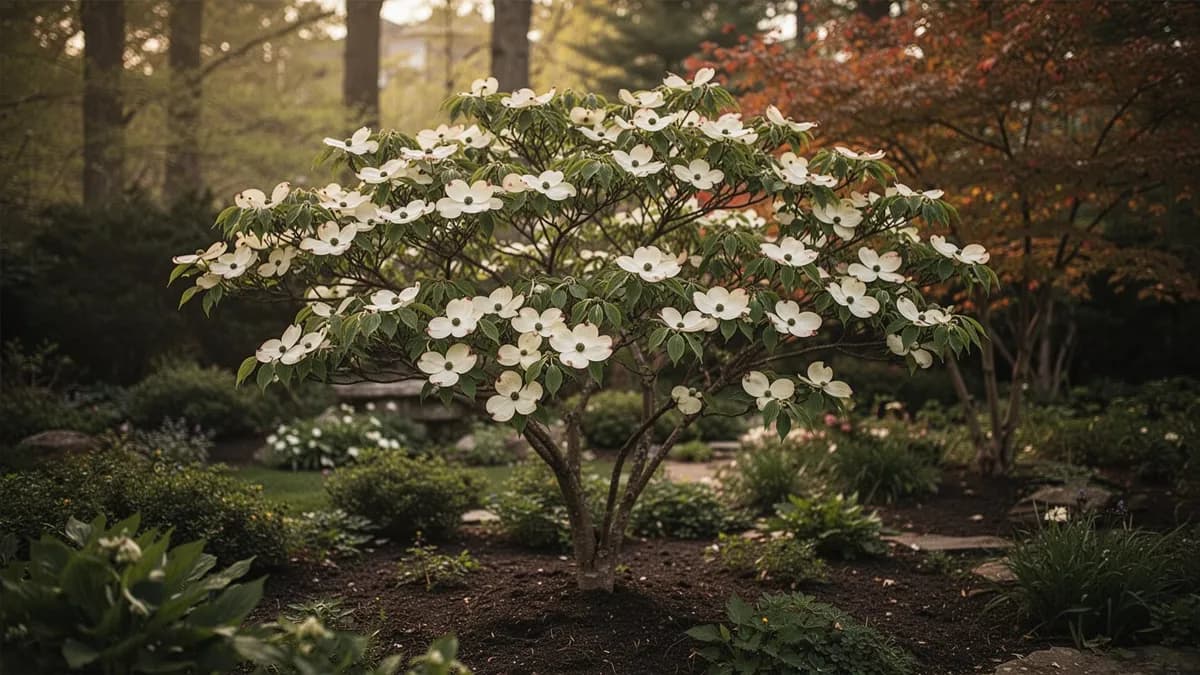
Ein beliebter einheimischer Unterwuchsbaum mit auffälligen weißen oder rosa Hochblättern, die im Frühling winzige Blüten umgeben, gefolgt von leuchtend roten Beeren und burgunderrotem Herbstlaub.





Auf dieser SeiteÜberblick
Blumenhartriegel im Überblick
Ein beliebter einheimischer Unterwuchsbaum mit auffälligen weißen oder rosa Hochblättern, die im Frühling winzige Blüten umgeben, gefolgt von leuchtend roten Beeren und burgunderrotem Herbstlaub. Blumenhartriegel bevorzugen lichten Schatten mit etwas Morgensonne und gleichmäßig feuchten, sauren, gut durchlässigen Boden, der reich an organischer Substanz ist. Sie sind anfällig für Hartriegel-Anthraknose, besonders an schattigen, feuchten Standorten, daher sollte für gute Luftzirkulation gesorgt und Überkopfbewässerung vermieden werden. Das geschichtete, horizontale Verzweigungsmuster erzeugt eine anmutige Silhouette, die auch im Winter sichtbar ist.
Wann Blumenhartriegel pflanzen
Hartriegel-Samen sind in leuchtend roten Beeren enthalten, die im Herbst reifen. Sammeln Sie die Beeren, wenn sie vollständig rot sind, und entfernen Sie das Fruchtfleisch, indem Sie sie mehrere Tage in Wasser einweichen und sauber reiben. Die Samen benötigen 90 bis 120 Tage Kältestratifikation in feuchtem Torf bei 2 bis 4 Grad Celsius. Alternativ können Sie die Samen im Herbst im Freien aussäen und die natürliche Winterkälte die Stratifikation übernehmen lassen. Säen Sie die Samen einen halben Zentimeter tief in feuchte, saure Aussaaterde. Die Keimung erfolgt im Frühling und kann unregelmäßig sein. Sämlinge wachsen im ersten Jahr 15 bis 30 cm und sollten im Halbschatten bei gleichmäßiger Feuchtigkeit gehalten werden. Sämlinge brauchen 5 bis 7 Jahre bis zur ersten Blüte.
Dein Blumenhartriegel-Jahr
Abgestimmt auf Zone 7 · typische Saison · Frost geht um den 2. Apr. und kehrt um den 1. Nov. zurück
Blumenhartriegel Mär – Apr, Okt – Nov pflanzen, — ernten. Beachte die Pflanzmethoden unten und wähle dein Klima für passende Zeiträume.
So baust du Blumenhartriegel an
Der Blumenhartriegel ist ein einheimischer Unterwuchsbaum, der im lichten Schatten größerer Bäume gedeiht und so seinen natürlichen Waldlebensraum nachahmt. Wählen Sie einen Standort mit Morgensonne und Nachmittagsschatten oder gleichmäßig gefiltertem Licht. Volle Sonne wird in kühleren Klimazonen bei ausreichender Feuchtigkeit toleriert, aber heiße Nachmittagssonne in südlichen Regionen verursacht Blattverbrennungen und Stress. Pflanzen Sie in feuchten, gut durchlässigen, sauren Boden mit einem pH-Wert von 5,5 bis 6,5, angereichert mit Kompost oder Lauberde.
Pflanzen Sie ballierte oder containergewachsene Bäume im Frühling oder Herbst. Setzen Sie den Wurzelballen auf Bodenniveau oder bei schweren Böden leicht erhöht ein. Graben Sie das Pflanzloch 2- bis 3-mal breiter als den Wurzelballen. Füllen Sie mit dem ursprünglichen Boden auf und wässern Sie gründlich. Bringen Sie 7 bis 10 cm organischen Mulch wie geschredderte Rinde oder Lauberde auf, wobei 10 cm Abstand zum Stamm einzuhalten sind.
Hartriegel haben flache Wurzelsysteme, die von gleichmäßiger Feuchtigkeit und Mulchen profitieren. Wässern Sie in Trockenperioden gründlich, besonders in den ersten 3 Jahren. Schneiden Sie nur tote, sich kreuzende oder beschädigte Äste, idealerweise im Spätwinter während der Ruhephase. Vermeiden Sie starken Rückschnitt, der das natürliche geschichtete Verzweigungsmuster zerstört, das den Hartriegel so attraktiv macht. Die ikonischen weißen oder rosa Hochblätter erscheinen im mittleren bis späten Frühling, gefolgt von Büscheln leuchtend roter Beeren, die im Herbst von Vögeln bevorzugt werden.
Für Blumenhartriegel ist ein Beet von 120 × 240 cm zu klein
Blumenhartriegel braucht 500 cm Platz pro Pflanze. Der Planer hält diesen Abstand für dich ein — jede Pflanze, jedes Beet.
Die besten Nachbarn für Blumenhartriegel
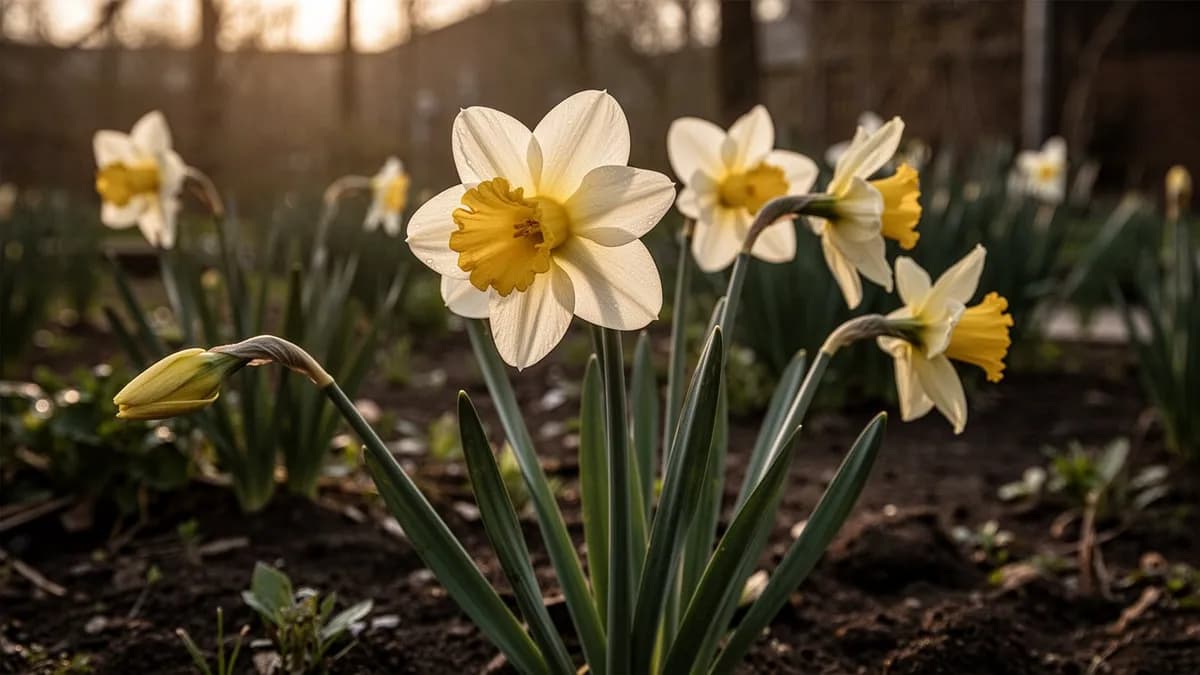
Die Unterwuchsnatur des Hartriegels macht ihn ideal für die Pflanzung unter hohen Kronenbäumen wie Eichen und Hickory-Bäumen. Unterpflanzen Sie mit schattenliebenden Stauden wie Funkien, Farnen, Prachtspieren und Tränendem Herz. Frühlingsblüher wie Narzissen, Waldlilien und Virginia-Hasenglöckchen blühen zusammen mit Hartriegelblüten für eine atemberaubende Frühlingsdarstellung. Azaleen und Rhododendren teilen die Vorliebe des Hartriegels für sauren Boden und lichten Schatten. Bodendecker wie Immergrün, Dickmännchen und Haselwurz füllen den Bereich unter dem Kronendach.
Narzisse gehört daneben. Walnussbaum nicht.
Altes Gärtnerwissen, geprüft an der echten Nachbartabelle von Blumenhartriegel — teste jede Pflanze, die du anbaust.
Probiere Blumenhartriegel direkt hier im Beet
Ein echtes Planer-Beet, Blumenhartriegel steht schon drin. Tippe einen Begleiter an, platziere ihn und sieh, wie die Nachbarschaftsprüfung antwortet — grün für gute Nachbarn, rot bei Streit.


Passende Anbau-Ratgeber


Richtig düngen
Hartriegel gedeiht in feuchtem, saurem, gut durchlässigem Boden mit einem pH-Wert von 5,5 bis 6,5 und hohem Gehalt an organischer Substanz. Schwerer Lehm muss mit Kompost, Kiefernrinde und Perlit verbessert werden, um die Drainage und den organischen Anteil zu erhöhen. Mulchen Sie großzügig mit organischem Material, um die natürliche Laubstreu des Waldbodens nachzuahmen. Düngen Sie im zeitigen Frühling leicht mit einem säurebildenden Dünger oder einer Schicht gut gereiftem Kompost. Vermeiden Sie stickstoffreiche Dünger, die weiches, krankheitsanfälliges Wachstum fördern. Eisenchlorose in alkalischen Böden verursacht Zwischenadern-Vergilbung und wird mit Eisenchelat und Bodenversauerung korrigiert.
Ideale Temperatur
Winterhärtezone-Kompatibilität
Von der Saat zur Ernte, Schritt für Schritt
Winterruhe
Der Blumenhartriegel ruht in voller Winterruhe während der kältesten Monate. Charakteristische knopfförmige Blütenknospen, die im vorherigen Sommer gebildet wurden, sitzen sichtbar an den Astspitzen wie kleine Turbane und warten auf die Frühlingswärme. Die typische blockartige Rinde und das anmutige horizontale Verzweigungsmuster des Baumes bieten auch ohne Laub architektonisches Interesse. Die Wurzeln bleiben in nicht gefrorenem Boden minimal aktiv und nehmen langsam Feuchtigkeit auf.
Knospenaufbruch und Blüte
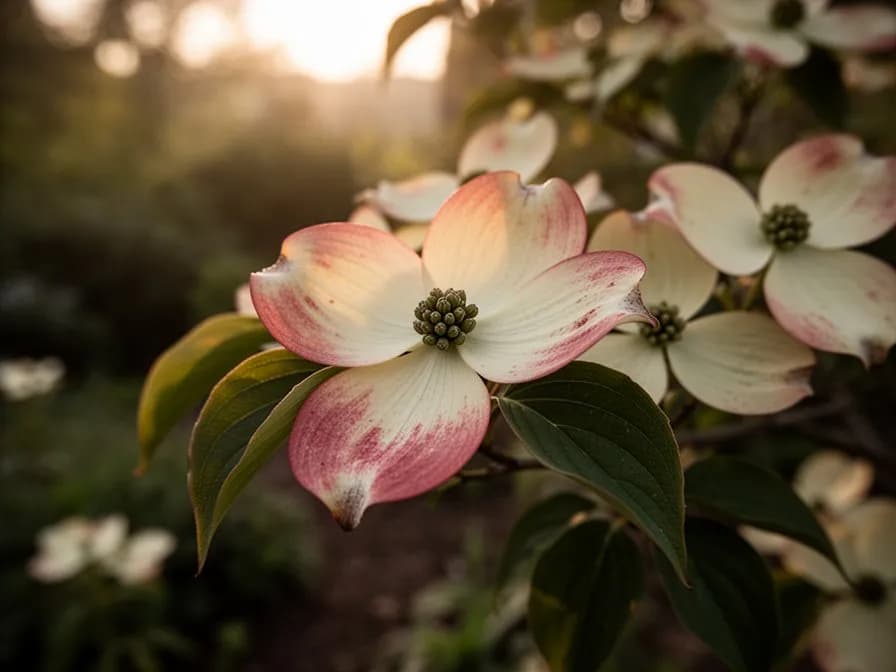
Wenn die Bodentemperaturen im frühen bis mittleren Frühling über 10°C steigen, schwellen die turbanförmigen Blütenknospen an und öffnen sich, um vier auffällige weiße oder rosa Hochblätter freizulegen, die einen dichten Büschel winziger echter Blüten im Zentrum umgeben. Die Blüte findet typischerweise von April bis Mai statt, bevor oder während neue Blätter austreiben, und schafft eine atemberaubende Darstellung, die 2-4 Wochen anhält. Die Hochblätter sind eigentlich modifizierte Blätter, keine echten Blütenblätter, und jede eingekerbte Hochblattspitze trägt eine charakteristische braune Markierung.
Blattentfaltung und Fruchtansatz
Nach der Blüte entfalten sich die gegenständigen, einfachen Blätter vollständig auf 8-15 cm Länge und bilden ein geschichtetes Kronendach aus mittelgrünem Laub mit charakteristischer bogenförmiger Nervatur, bei der die Blattadern dem Blattrand folgen. Kleine grüne Fruchtbüschel beginnen sich an den Stellen der bestäubten Blüten zu entwickeln. Der Baum bildet den Großteil seines neuen Triebwachstums in dieser Phase und erweitert sein charakteristisches horizontales Verzweigungsmuster.
Sommerwachstum und Blütenknospenbildung
Während der Sommerhitze erhält der Hartriegel sein geschichtetes Kronendach, während er still die Blütenknospen für das nächste Jahr an den Spitzen der diesjährigen Triebe bildet. Diese Knospen werden bis Mittsommer als kleine, abgeflachte, knopfartige Strukturen sichtbar, die überwintern und im folgenden Frühling aufbrechen. Die sich entwickelnden Fruchtbüschel vergrößern sich allmählich und beginnen den Übergang von Grün zu Gelbgrün. Das Wurzelwachstum ist bei warmen Bodenverhältnissen aktiv.
Fruchtreife und Herbstfärbung
Die Fruchtbüschel reifen zu glänzendem Leuchtrot, wobei jeder Büschel 3-5 einzelne Steinfrüchte von etwa 1 cm Länge enthält. Diese beerenartigen Früchte werden eifrig von über 35 Vogelarten verzehrt, darunter Drosseln, Seidenschwänze und Singdrosseln. Gleichzeitig durchläuft das Laub eine spektakuläre Verwandlung in tiefes Scharlachrot, Burgunder und sattes Violett, was den Hartriegel zu einem der zuverlässigsten Bäume für Herbstfärbung in der nordamerikanischen Landschaft macht.
Laubfall und Vor-Ruhephase
Die Blätter fallen nach der Herbstfärbung ab und enthüllen die elegante geschichtete Verzweigungsstruktur und die markanten Blütenknospen an den Astspitzen für den nächsten Frühling. Verbliebene rote Früchte halten sich kurz und ziehen spät ziehende Zugvögel an. Der Baum beginnt mit der Winterhärtung, wobei er Nährstoffe aus den Blättern in Wurzeln und Holzgewebe zur Speicherung umverteilt. Das charakteristische Alligatorhaut-Rindenmuster wird vollständig sichtbar.
Vermeiden Sie den Schnitt während der Ruhephase, da Hartriegel sehr anfällig für Krebsinfektionen durch Schnittwunden bei kaltem, nassem Wetter sind. Nutzen Sie stattdessen diese Zeit, um die Baumstruktur zu beurteilen und die Frühlingspflege zu planen. Bringen Sie eine frische 7-10 cm dicke Schicht organischen Mulch in einem breiten Ring auf, wobei 15 cm Abstand zum Stamm einzuhalten sind, um Kronenfäule zu verhindern.
Blumenhartriegel Monat für Monat pflegen
Was du jeden Monat für deine Blumenhartriegel tun solltest
Oktober
Aktueller MonatGenießen Sie die Herbstfärbung auf ihrem Höhepunkt und beobachten Sie Zugvögel, die sich an den reifen roten Beeren laben. Geben Sie eine letzte gründliche Bewässerung, bevor der Boden gefriert. Räumen Sie Falllaub unter Bäumen auf, die während der Wachstumssaison Anthraknose zeigten. Erwägen Sie das Pflanzen frühlingsblühender Zwiebeln um die Stammbasis, um die Blütenpracht des nächsten Jahres zu ergänzen.
Immer wissen, was jetzt im Garten zu tun ist
Eine E-Mail zum Monatsanfang: was du jetzt säen, pflanzen und anpacken solltest — für deine Blumenhartriegel und alles, was drumherum wächst. Dazu ein kurzer Startkurs, der dich vor den klassischen Fehlern bewahrt.
- Was jetzt zu tun ist
- Passend zu deiner Saison
- Startkurs inklusive
Blumenhartriegel ernten
Hartriegel wird normalerweise nicht als Nahrungsmittel geerntet, obwohl die leuchtend roten Beeren technisch essbar, aber bitter und für Menschen ungenießbar sind. Die Beeren sind eine wichtige Wildtier-Nahrungsquelle und ziehen über 35 Vogelarten an, darunter Drosseln, Hüttensänger und Seidenschwänze. Hartriegel-Blütenzweige können für Innenarrangements geschnitten werden, sobald die Knospen im zeitigen Frühling zu schwellen beginnen. Das harte, dichte Holz wurde historisch für Webschiffchen, Golfschlägerköpfe und Werkzeuggriffe verwendet, da es stoßfest ist.
angenommen, du pflanzt zu Beginn des Zeitraums — trage dein tatsächliches Datum ein
Ernte Blumenhartriegel zügig, dann trägt die Pflanze weiter.
Lagerung & Konservierung
Geschnittene Hartriegelzweige mit Blütenknospen halten 5 bis 7 Tage in Wasser in Innenräumen. Schneiden Sie die Stiele schräg nach und wechseln Sie das Wasser täglich für die längste Vasenhaltbarkeit. Hartriegelbeeren können zu Dekorationszwecken getrocknet werden, indem man sie 1 bis 2 Wochen auf Gittern an einem warmen, trockenen Ort ausbreitet. Die Beeren behalten ihre rote Farbe gut beim Trocknen. Gepresste Hartriegel-Hochblätter (die auffälligen blütenblattähnlichen Strukturen) lassen sich wunderschön für botanische Handarbeiten konservieren, wenn sie 2 bis 3 Wochen zwischen Lagen von saugfähigem Papier in schweren Büchern getrocknet werden.
Was schiefgeht — und die Lösung
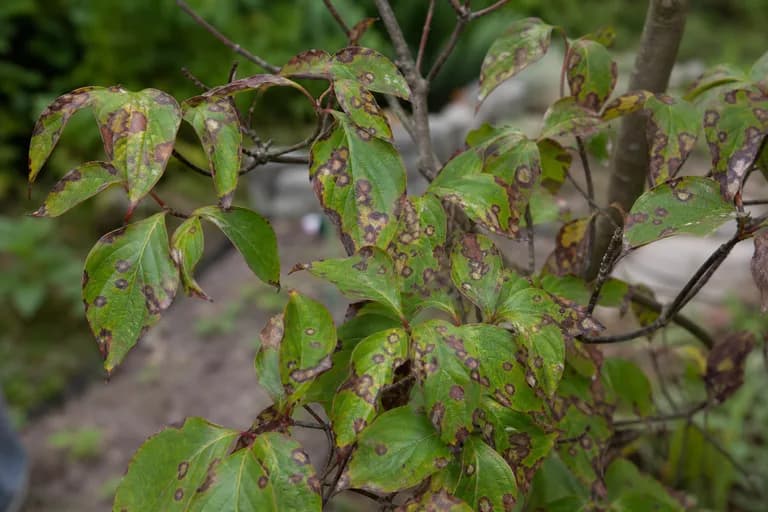
Hartriegel-Anthraknose
KrankheitHellbraune Blattflecken mit violetten Rändern, die an den unteren Ästen beginnen und sich nach oben ausbreiten. Schwere Infektionen verursachen Triebsterben, Krebsgeschwüre am Stamm und schließlich das Absterben des Baumes über mehrere Jahre.
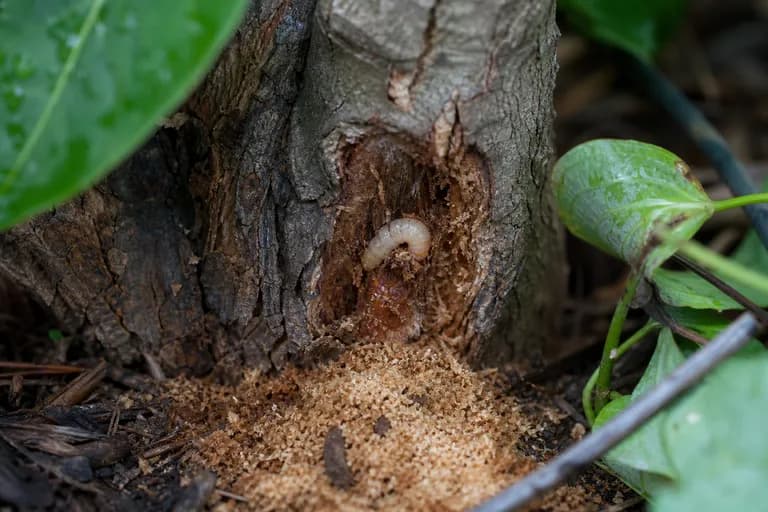
Hartriegelbohrer
SchädlingSägemehlartiger Fraß an der Stammbasis oder an Wundstellen. Die Rinde kann über den Bohrgängen geschwollen oder rissig erscheinen. Bäume verfallen mit verminderter Blüte und Absterben der oberen Äste.
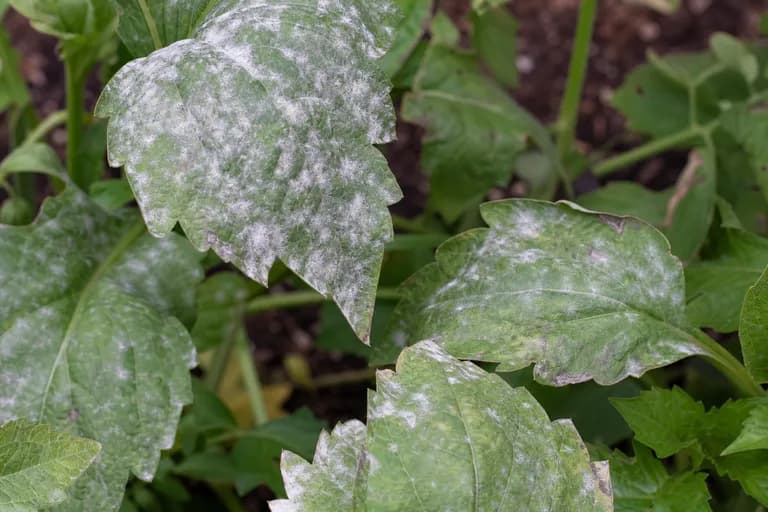
Echter Mehltau
KrankheitWeißer, mehliger Belag auf Blättern, besonders auf jungem Wachstum. Blätter können sich einrollen, an den Rändern braun werden und vorzeitig abfallen. Am stärksten bei heißem, feuchtem Wetter mit schlechter Luftzirkulation.
Fehlerbehebung bei häufigen Problemen
Hartriegel-Anthraknose ist die schwerwiegendste Bedrohung und hat seit den 1970er Jahren viele einheimische Hartriegel im östlichen Nordamerika getötet. Trockenstress ist für Hartriegel äußerst schädlich und erhöht die Anfälligkeit für Bohrer und Krankheiten. Volle Sonne in heißen Klimazonen verursacht Blattverbrennungen mit braunen, knusprigen Blatträndern. Stammschäden durch Rasengeräte sind eine Hauptursache für Bohrerbefall und Verfall. Schlechte Drainage führt zu Wurzelfäule und schnellem Absterben. Zu tief gepflanzte Hartriegel entwickeln Kronenfäule und allmählichen Verfall. Die Beeren können, obwohl attraktiv, auf Einfahrten und Terrassen eine Verschmutzung verursachen, wenn sie herabfallen.
Anbautipps
- Wählen Sie einen Pflanzstandort mit Morgensonne und Nachmittagsschatten, der die Unterwuchsbedingungen nachahmt, unter denen Hartriegel natürlich gedeihen. Volle Sonne ist in nördlichen Regionen bei ausreichender Feuchtigkeit tolerierbar, aber in USDA-Zonen 7-9 ist Nachmittagsschatten unerlässlich, um Blattverbrennungen und Hitzestress zu verhindern.
- Pflanzen Sie in gut durchlässigen, sauren Boden mit einem pH-Wert von 5,5-6,5, angereichert mit großzügigen Mengen organischer Substanz wie kompostiertem Laub oder gereifter Kiefernrinde. Hartriegel vertragen keine schweren Lehmböden mit schlechter Drainage, die Wurzelfäule und Verfall fördern.
- Halten Sie einen breiten Mulchring von 7-10 cm aus geschredderter Hartholzrinde oder kompostiertem Laub bis zur Kronentraufe aufrecht und halten Sie 15 cm Abstand vom Stamm. Dies ahmt die natürliche Waldbodenstreuschicht nach, reguliert die Bodentemperatur und hält die gleichmäßige Feuchtigkeit, die die flachen Hartriegelwurzeln benötigen.
- Wässern Sie in den ersten drei Wachstumsjahren gründlich und regelmäßig, um ein robustes Wurzelsystem aufzubauen, und geben Sie in Trockenperioden 25-40 mm Wasser pro Woche. Auch ausgewachsene Bäume profitieren von zusätzlicher Bewässerung bei anhaltender Sommertrockenheit, da sie nicht tiefwurzelnd sind und bei trockenem Boden schnell welken.
- Schneiden Sie nur bei Bedarf und nur im Spätfrühling oder Frühsommer unmittelbar nach der Blüte, da dieser Zeitpunkt eine schnelle Wundheilung während des aktiven Wachstums ermöglicht und das Risiko von Hartriegel-Anthraknose und Krebsinfektionen minimiert, die bei kühlem, nassem Wetter leicht in Wunden eindringen.
- Bringen Sie im zeitigen Frühling, wenn die Knospen zu schwellen beginnen, einen langsam freisetzenden, säurebildenden Dünger für Azaleen und Rhododendren auf. Vermeiden Sie übermäßigen Stickstoff, der üppiges Laubwachstum auf Kosten der Blütenknospenbildung fördert und die Anfälligkeit für Mehltau erhöhen kann.
- Schützen Sie vor Hartriegel-Anthraknose, indem Sie für ausgezeichnete Luftzirkulation um den Baum sorgen, Überkopfbewässerung vermeiden, tote oder infizierte Äste umgehend entfernen und resistente Sorten wie Appalachian Spring wählen, die speziell für Anthraknose-Resistenz entwickelt wurde.
- Überwachen Sie den Hartriegelbohrer (Synanthedon scitula), den schädlichsten Insektenschädling, der gestresste Bäume durch Rindenwunden angreift. Verhindern Sie Befall, indem Sie Rasenmäher- und Fadentrimmerschäden am Stamm vermeiden, die Baumvitalität durch richtiges Gießen und Düngen erhalten und vorbeugende Stammspritzungen anwenden, wenn Bohrer ein Problem waren.
- Vermeiden Sie Störungen der Wurzelzone durch tiefes Kultivieren oder Geländeveränderungen, da Hartriegel flache, faserige Wurzelsysteme haben, die leicht beschädigt werden. Schon wenige Zentimeter Boden, die über der Wurzelzone aufgetragen oder entfernt werden, können bei etablierten Bäumen zu ernsthaftem Verfall oder Absterben führen.
- Erwägen Sie die Pflanzung krankheitsresistenter Hybridsorten wie der Stellar-Serie (Kreuzungen zwischen Cornus florida und Cornus kousa) oder Auslesen wie Appalachian Spring und Appalachian Joy, wenn Hartriegel-Anthraknose in Ihrer Region verbreitet ist, da diese die Schönheit des einheimischen Hartriegels mit deutlich verbesserter Krankheitstoleranz bieten.
Bau deine beste Blumenhartriegel an — und alles drumherum.
Starte heute kostenlos. Lege deine Beete an, setze deine Blumenhartriegel ein und lass PlotMyGarden Timing, Abstände, Begleiter und Erinnerungen von der Saat bis zum Erntekorb übernehmen.
Finde deine Blumenhartriegel
Cherokee Brave
Tiefrosa bis rote Hochblätter mit weißen Zentren erzeugen einen zweifarbigen Effekt. Kräftiger Wuchs mit ausgezeichneter Krankheitsresistenz. Eine der besten rotblättrigen Sorten auf dem Markt.
Cloud Nine
Reichblühende, reinweiße Hochblätter an einem kompakten, breitwüchsigen Baum. Blüht bereits in jungen Jahren reichlich. Gute Hitzetoleranz und mäßige Krankheitsresistenz.
Appalachian Spring
Weißblühende Auslese, die auf herausragende Resistenz gegen Hartriegel-Anthraknose gezüchtet wurde. Kräftiger Wuchs mit ausgezeichneter Form. Die erste Wahl für anthraknose-gefährdete Regionen.
Cherokee Princess
Große weiße Hochblätter an einem kräftig aufrecht wachsenden Baum. Einer der zuverlässigsten Blüher. Gute Herbstfärbung mit gleichmäßig burgunderrotem Laub.
Ein als 1,5-2 Meter großer Baumschulbaum gekaufter Blumenhartriegel kostet je nach Sorte und Größe typischerweise 40-120 $, was eine einmalige Investition darstellt, die über Jahrzehnte an Wert gewinnt. Ausgewachsene Blumenhartriegel erhöhen nachweislich den Immobilienwert um 1.000-3.000 $ oder mehr gemäß baumgutachterlichen Bewertungsmethoden, da sie zu den begehrtesten Zierbäumen bei Hauskäufern gehören. Über den direkten Immobilienwert hinaus bietet ein gut platzierter Hartriegel natürlichen kühlenden Schatten, der die Klimatisierungskosten im Sommer um 10-15% senken kann, wenn er auf der Süd- oder Westseite eines Hauses positioniert ist. Der Baum erbringt auch unersetzliche ökologische Leistungen, indem er Dutzende von Vogelarten ernährt, einheimische Bestäuber unterstützt und durch seine nährstoffreiche Laubstreu die Bodengesundheit aufbaut – Vorteile, deren Nachbildung durch Vogelfutterstationen und Bodenverbesserungsmittel allein jährlich Hunderte von Euro kosten würde.
Schnelle Rezepte
Hartriegel-Beeren-Vogelfutter-Kranz
40 Min.Ein dekorativer Kranz aus geernteten Hartriegel-Beerenbüscheln, kombiniert mit anderen heimischen Samen und Rindertalg, um eine Wildtier-Futterstation für Herbst- und Wintervögel zu schaffen. Dieses Bastelprojekt würdigt die ökologische Rolle des Hartriegels und lockt farbenfrohe Singvögel zur Beobachtung und Freude in Ihren Garten.
6 Zutaten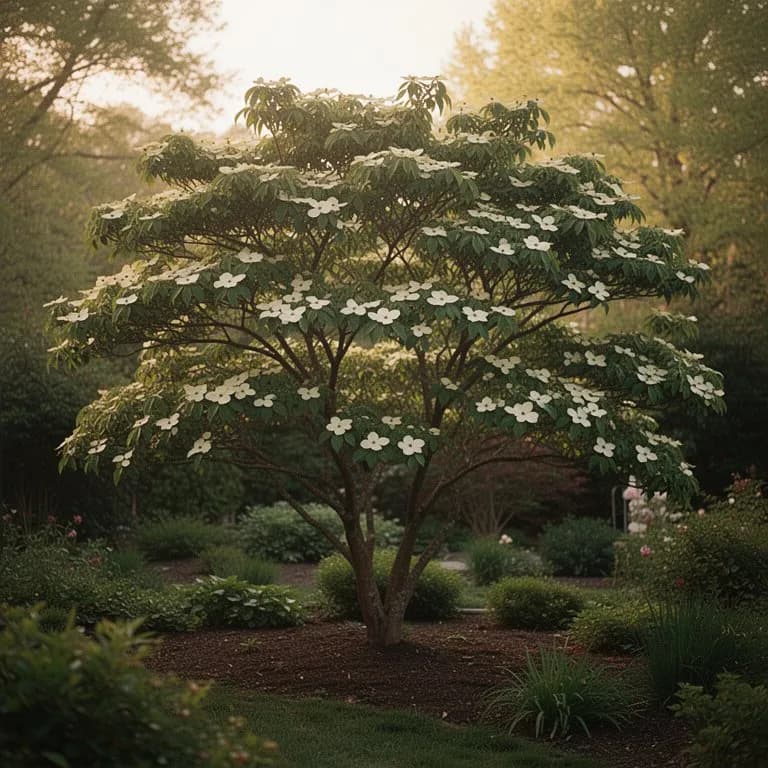
Hartriegel-Rinden-Kräutertee (Historisch)
20 Min.Ein historisch inspirierter Kräuteraufguss nach traditionellen Zubereitungen der Ureinwohner Nordamerikas und der Kräuterkundigen der Bürgerkriegszeit. Die innere Rinde von Cornus florida wurde aufgegossen, um einen bitteren Trank zu erzeugen, der Fieber senken sollte. Dieses Rezept dient nur zu Bildungs- und historischen Zwecken und sollte keine moderne medizinische Behandlung ersetzen.
6 ZutatenJapanischer Hartriegel-Beeren-Marmelade (Cornus kousa Alternative)
45 Min.Während die Beeren von Cornus florida nicht für den menschlichen Verzehr geeignet sind, produziert sein naher Verwandter Cornus kousa süße, essbare Früchte. Dieses Marmeladenrezept verwendet Japanische Hartriegel-Beeren als köstliche Alternative und bietet Gärtnern, die beide Arten anbauen, eine Möglichkeit, die einzigartigen tropisch aromatisierten Früchte des essbaren Verwandten zu genießen.
6 ZutatenWas drinsteckt
Gesundheitsvorteile
- Die innere Rinde von Cornus florida enthält Cornin, ein bitteres Iridoid-Glykosid mit nachgewiesenen entzündungshemmenden und fiebersenkenden Eigenschaften, das historisch als Chininersatz zur Behandlung von Fieber und Malariasymptomen in der frühen amerikanischen Medizin verwendet wurde
- Zubereitungen aus Hartriegelrinde enthalten Tannine mit natürlichen adstringierenden Eigenschaften, die traditionell in Umschlägen und Waschungen zur Wundheilung verwendet wurden und helfen, Gewebe zu straffen und leichte Blutungen zu reduzieren
- Die in den roten Beeren und im Herbstlaub vorhandenen Anthocyan-Pigmente gehören zur selben Klasse starker antioxidativer Verbindungen, die auf ihre potenzielle Rolle bei der Reduzierung von oxidativem Stress und der Unterstützung der Herz-Kreislauf-Gesundheit in der menschlichen Ernährung untersucht werden
- Das Pflanzen von Hartriegel in Wohnlandschaften wurde mit messbaren Verbesserungen der Luftqualität in Verbindung gebracht, da das dichte Laub Feinstaub effektiv filtert, Schadstoffe einschließlich Ozon und Schwefeldioxid absorbiert und Sauerstoff produziert
- Der Aufenthalt in der Nähe blühender Hartriegel während ihrer spektakulären Frühlingsblüte und Herbstfärbung unterstützt das psychische Wohlbefinden und steht im Einklang mit dokumentierter Forschung über die psychologischen Vorteile des Kontakts mit blühenden Bäumen und natürlicher Schönheit bei der Reduzierung von Stress und Angst
- Die tiefe, kalziumreiche Laubstreu, die von Hartriegel produziert wird, verbessert die Bodenbiologie und den Nährstoffkreislauf in Hausgärten und fördert Populationen nützlicher Bodenorganismen einschließlich Mykorrhiza-Pilzen, die die Gesundheit und Krankheitsresistenz umliegender Pflanzen verbessern
Woher Blumenhartriegel stammt
Der Blumenhartriegel (Cornus florida) ist im östlichen Nordamerika und in Teilen des nordöstlichen Mexikos beheimatet, wo er seit Millionen von Jahren als Unterwuchsbaum in Laubwäldern wächst. Fossile Belege der Gattung Cornus reichen bis in die späte Kreidezeit zurück, vor etwa 55-65 Millionen Jahren, womit Hartriegel eine der ältesten blühenden Baumlinien Nordamerikas darstellen. Die Art gedeiht natürlich von Südmaine und Ontario südlich bis Florida und Osttexas und besetzt eine Nische im Waldunterwuchs, wo sie sich entwickelt hat, vor dem Laubaustrieb des darüber liegenden Kronendachs zu blühen und so kostbares frühes Frühlingssonnenlicht für Photosynthese und Bestäuberanlockung einzufangen. Die Ureinwohner Nordamerikas hielten den Baum in hohem Ansehen und verwendeten das harte Holz zur Herstellung von Werkzeugen, Pfeilen und Webschiffchen, während die innere Rinde als fiebersenkendes Heilmittel zubereitet wurde, das Verbindungen enthält, die nachweislich entzündungshemmende Eigenschaften besitzen. Europäische Kolonisten übernahmen den Baum schnell als Zierpflanze, und Ende des 18. Jahrhunderts hatte Thomas Jefferson zahlreiche Hartriegel in Monticello gepflanzt und ihre Frühlingsschönheit und Herbstfärbung in seinen Gartentagebüchern gelobt. Der Baum wurde im frühen 19. Jahrhundert im amerikanischen Baumschulhandel kommerziell verfügbar, und die gezielte Züchtung begann, benannte Sorten hervorzubringen, darunter rosabrakt-tragende Formen wie Cherokee Chief und die Hängeform Pendula. Das 20. Jahrhundert brachte sowohl Triumphe als auch Herausforderungen für Cornus florida, als der verheerende Hartriegel-Anthraknose-Pilz Discula destructiva Ende der 1970er Jahre auftrat und sich schnell in Wildpopulationen der Appalachen ausbreitete, wobei er bis in die 1990er Jahre Millionen von Bäumen tötete. Dies veranlasste intensive Zuchtprogramme an der University of Tennessee und der Rutgers University, die krankheitsresistente Hybridsorten durch Kreuzung von Cornus florida mit der resistenten asiatischen Art Cornus kousa hervorbrachten. Heute bleibt der Blumenhartriegel einer der beliebtesten Zierbäume in nordamerikanischen Landschaften, wobei moderne Sorten verbesserte Krankheitsresistenz, verschiedene Hochblattfarben von Weiß bis Tieffrosa und kompakte Formen bieten, die für kleinere Vorstadtgärten geeignet sind.
Blumenhartriegel: Schon gewusst?
Faszinierende Fakten über Blumenhartriegel
Die auffälligen 'Blütenblätter' des Blumenhartriegels sind gar keine echten Blütenblätter, sondern modifizierte Blätter, sogenannte Hochblätter. Die eigentlichen Blüten sind die winzigen, unscheinbaren gelbgrünen Büschel im Zentrum der vier Hochblätter, wobei jeder Büschel 20-30 einzelne echte Blüten enthält.
Blumenhartriegel: Fragen & Antworten
Wann sollte ich Blumenhartriegel pflanzen?
Was sind gute Begleitpflanzen für Blumenhartriegel?
In welchen Winterhärtezonen kann Blumenhartriegel wachsen?
Wie viel Sonne braucht Blumenhartriegel?
Welchen Abstand sollte ich zwischen Blumenhartriegel lassen?
Welche Schädlinge und Krankheiten befallen Blumenhartriegel?
Wie lagere ich Blumenhartriegel nach der Ernte?
Was sind die besten Blumenhartriegel-Sorten zum Anbauen?
Welchen Boden braucht Blumenhartriegel?
Warum werden die Blätter meines Hartriegels im Sommer an den Rändern braun?
Was ist Hartriegel-Anthraknose und wie kann ich sie verhindern?
Wann ist die beste Pflanzzeit für einen Blumenhartriegel?
Kann ich einen Blumenhartriegel in voller Sonne anbauen?
Sind Hartriegelbeeren giftig für Menschen oder Haustiere?
Wie groß wird ein Blumenhartriegel und wie schnell wächst er?
Du hast die Theorie gelesen. Jetzt baue sie auf Autopilot an.
Alles, was Blumenhartriegel knifflig macht — das Timing, die Abstände, die Begleiter, das Erntefenster — genau das übernimmt PlotMyGarden für dich, für jede Pflanze im Garten.
Ein Plan, der dein Wetter kennt
Standort einmal festlegen. Aussaat-, Dünge- und Erntedaten rund um deinen echten letzten Frosttermin und die Live-Vorhersage — kein Raten mehr nach Saattüte.
Aus dem Abschnitt „Pflanzzeit“Beetplaner per Drag & Drop
Beete auf einem Raster gestalten. Jede Pflanze rastet im richtigen Abstand ein, und du siehst die ganze Saison, bevor du einen Cent für Saatgut ausgibst.
Aus dem Abschnitt „Anbau“Begleiter-Konflikte früh erkannt
Über 200 gute und schlechte Kombinationen werden beim Pflanzen live geprüft — so landet ein saisonruinierender Fehler nie in der Erde.
Aus dem Abschnitt „Begleiter“Erinnerungen, nach denen du wirklich handelst
„Gieß die Bohnen.“ „Heute ernten, bevor's umschlägt.“ Pünktlich, konkret und auf deine echten Pflanzen bezogen.
Aus dem Abschnitt „Ernte“Staffel-Aussaat, geplant
Sechs Wochen ernten statt sechs Tage? Die App verteilt deine Aussaaten automatisch und erinnert dich, wenn der nächste Satz fällig ist.
Aus dem Abschnitt „Pflanzzeit“Ein Verlauf, der schlauer wird
Jede protokollierte Ernte bringt der App deinen Garten bei. Der Plan fürs nächste Jahr startet bei dem, was in deinem Boden wirklich funktioniert hat.
Aus dem Abschnitt „Überblick“Pflanze diese neben Blumenhartriegel
Weitere Zierbäume
Halte Blumenhartriegel von diesen fern
Bau deine beste Blumenhartriegel an — und alles drumherum.
Starte heute kostenlos. Lege deine Beete an, setze deine Blumenhartriegel ein und lass PlotMyGarden Timing, Abstände, Begleiter und Erinnerungen von der Saat bis zum Erntekorb übernehmen.