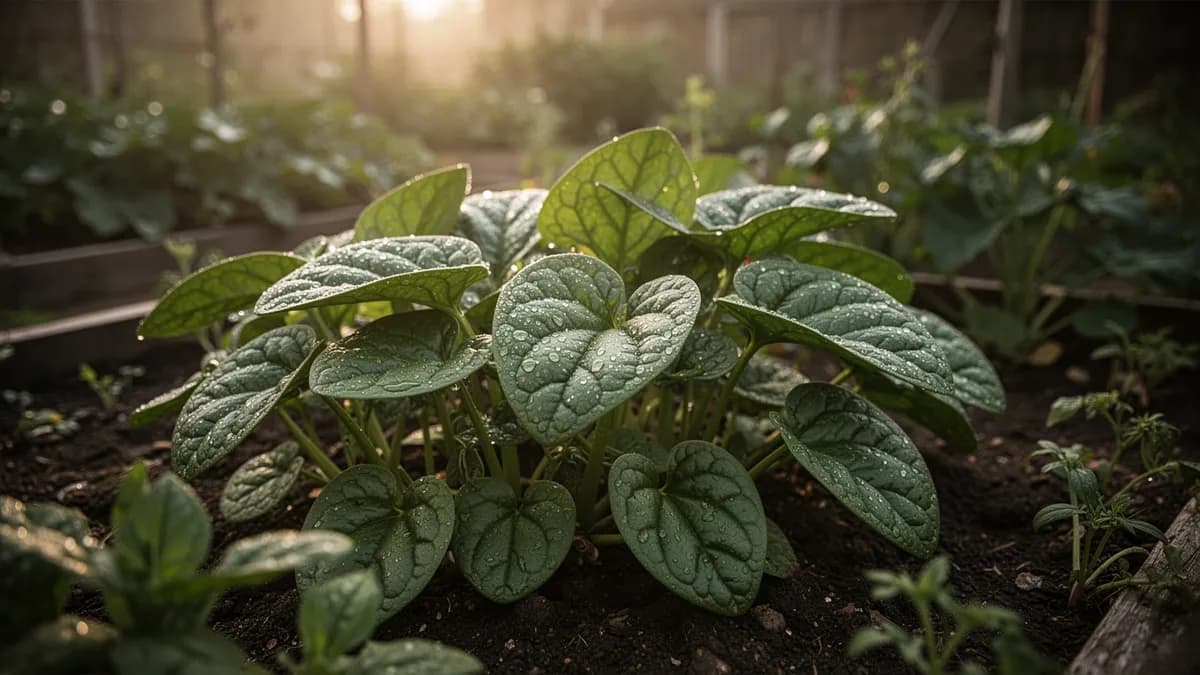
Malabar Spinach
Basella alba
At a Glance
It's planting season for Malabar Spinach! Start planning your garden now.
A tropical vining green that thrives in hot weather when true spinach has long bolted, producing thick, succulent leaves. Malabar spinach is a vigorous climber that needs a trellis and can quickly cover a fence with attractive glossy foliage. The mucilaginous texture thickens when cooked, making it excellent in soups, stews, and curries. Plant after all danger of frost has passed and provide full sun and warm soil for best growth.
Planting & Harvest Calendar
Growth Stages
From Seed to Harvest
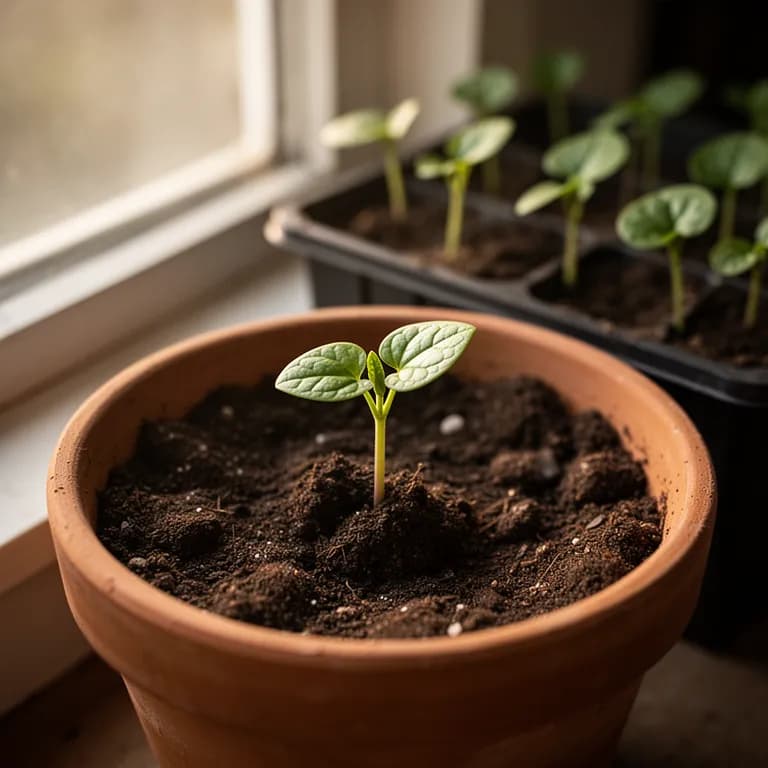
Seed Germination
Days 0–21
Seeds germinate slowly due to their hard, dark seed coat. After soaking for 24 hours, a white radicle emerges followed by thick, rounded cotyledon leaves. Germination requires consistent warmth of 24-29°C (75-85°F) and takes 10-21 days even with pre-treatment.
💡 Care Tip
Soak seeds in warm water for 24 hours or scarify with sandpaper before planting. Use a heat mat set to 27°C (80°F) for the most reliable germination. Do not let the growing medium dry out during this slow germination period.
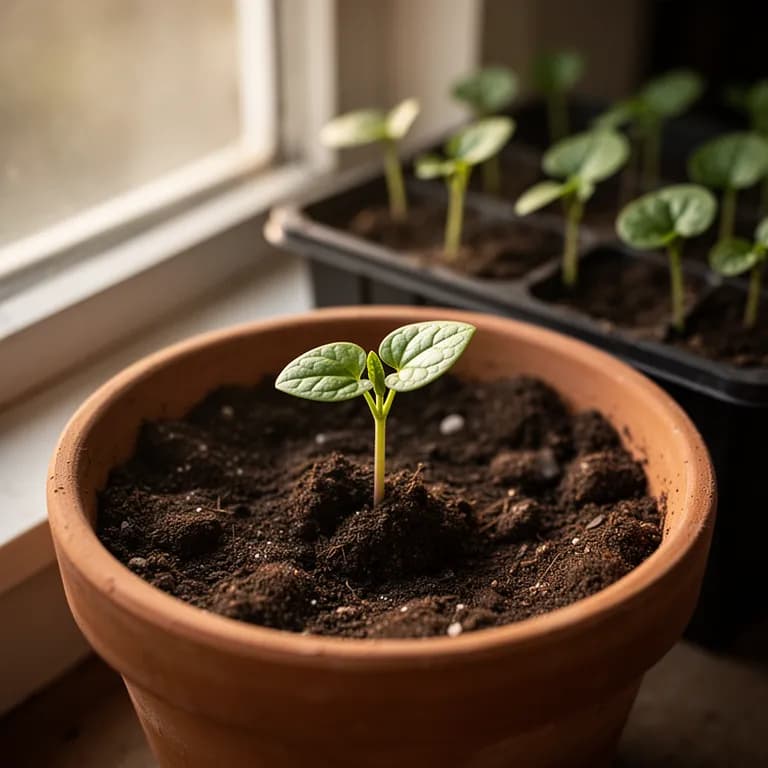
Malabar spinach seedling emerging after slow germination — patience is key with this tropical vine
Monthly Care Calendar
What to do each month for your Malabar Spinach
May
You are herePrimary transplanting month for zones 7-9. Move seedlings outdoors only after all frost danger has passed and soil is warm. Space plants 30 cm apart along a sturdy trellis. Water well at transplanting and mulch around the base.
Did You Know?
Fascinating facts about Malabar Spinach
Malabar spinach is not actually related to true spinach (Spinacia oleracea) at all — it belongs to the family Basellaceae and is more closely related to the ornamental Madeira vine. The common name is simply a nod to its spinach-like use in the kitchen.
Start Malabar spinach seeds indoors 6-8 weeks before the last frost date, as germination is slow. Soak seeds in warm water for 24 hours before sowing 1/2 inch deep. Seeds germinate in 10-21 days at 75-85°F. Transplant outdoors only after all frost danger has passed and soil temperature exceeds 65°F. Space plants 12-18 inches apart along a sturdy trellis or fence.
Malabar spinach is a true tropical plant that thrives in heat and humidity. It grows slowly in temperatures below 80°F and stops growing entirely below 60°F. Provide full sun and consistent moisture for the lushest growth. This vigorous vine can reach 10-15 feet in a single season and needs a strong support structure. Water regularly and feed every 2-3 weeks with a balanced fertilizer.
Begin harvesting individual leaves and young shoot tips once vines reach 2-3 feet long. Regular harvesting encourages branching and bushier growth. The plant produces throughout summer and into fall, providing spinach-like greens during the hottest months when true spinach is impossible to grow. In tropical climates, Malabar spinach is a perennial; in temperate zones, it is grown as an annual.
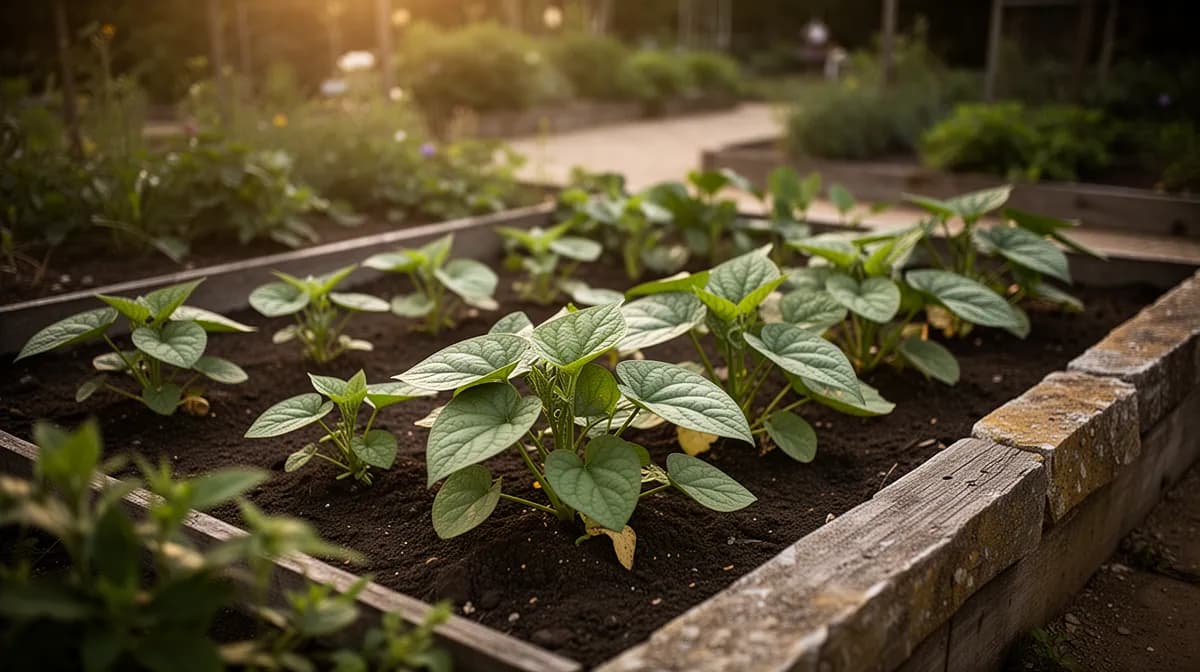
Trained along a fence, Malabar spinach creates a productive edible privacy screen
Malabar spinach (Basella alba and Basella rubra) is native to tropical South and Southeast Asia, with its center of origin believed to be the Indian subcontinent, particularly the Malabar Coast of southwestern India — the region that gives the plant its common English name. Archaeological and historical evidence suggests that Malabar spinach has been cultivated in India for at least 2,000 years, where it remains one of the most important leafy greens in tropical and subtropical regions. The plant spread eastward along ancient trade routes to China, where it has been cultivated since at least the 4th century and is recorded in early Chinese agricultural texts as a valued summer green.
From South Asia, Malabar spinach traveled throughout Southeast Asia — to the Philippines, Indonesia, Malaysia, Vietnam, and Thailand — where it became deeply integrated into local cuisines and traditional medicine systems. Portuguese and Spanish colonial traders introduced the plant to tropical Africa and the Americas during the 16th and 17th centuries. In Africa, it found a welcoming climate and was quickly adopted into local food systems, particularly in West and East Africa where it is now a commercially important leafy vegetable.
Today, Malabar spinach is cultivated throughout the tropics and warm subtropics worldwide, from India and China (the largest producers) to the Caribbean, Central America, and the southeastern United States. It has gained renewed interest among temperate-zone gardeners as a heat-tolerant summer green that fills the gap when true spinach, lettuce, and other cool-season greens have bolted. The red-stemmed variety (Basella rubra) has also found a niche as an ornamental edible vine, valued for its attractive purple stems, glossy leaves, and colorful berries that add visual interest to trellises and arbors while providing a continuous supply of nutritious greens.
Soak seeds in warm water for 24 hours before sowing to soften the hard seed coat and improve germination. Start indoors 6-8 weeks before last frost, sowing 1/2 inch deep in warm conditions (75-85°F). Germination is slow, taking 10-21 days. A heat mat significantly improves germination rates. Transplant after all frost danger when soil is warm (65°F+). Direct sowing is only practical in long-season, warm climates. Scarifying seeds with sandpaper can also improve germination speed.
Malabar spinach thrives in rich, moist, well-drained soil with a pH of 6.0-6.8. Amend with generous compost and aged manure before planting. Apply a balanced fertilizer every 2-3 weeks during the growing season to support vigorous vine growth. As a tropical plant, it benefits from warm, fertile soil. Mulch around the base to maintain moisture. In containers, use a large pot (at least 5 gallons) with rich potting mix and provide regular feeding.
Check Your Zone
See if Malabar Spinach is suitable for your location.
27°C – 35°C
81°F – 95°F
Malabar spinach is a true tropical plant that demands heat. Below 15°C (60°F), growth stops entirely and prolonged exposure to cold causes leaf drop and stem damage. The plant cannot survive any frost. Growth is sluggish below 21°C (70°F) and only reaches full potential above 27°C (80°F). The ideal range for maximum leaf production is 27-35°C (80-95°F) with high humidity. Unlike most greens, Malabar spinach actually thrives in the most oppressive summer heat and humidity that would destroy true spinach.
Common issues affecting Malabar Spinach and how to prevent and treat them organically.
Slow growth in cool weather is the main frustration; do not plant until temperatures are consistently warm. The mucilaginous (slimy) texture when cooked is off-putting to some; use in soups and curries where it acts as a thickener. Without adequate support, vines sprawl and become tangled. The plant cannot survive any frost. In short-season climates, starting indoors is essential to get a meaningful harvest. Seeds have hard coats and germinate slowly without pre-soaking.
Malabar spinach grows well with heat-loving crops like tomatoes, corn, basil, and peppers. Train vines to climb corn stalks or trellised tomato cages for double use of vertical space. The lush vines can provide shade for lettuce or other cool-season crops planted at the base. Avoid planting near cool-season crops that would be harvested before the Malabar spinach begins producing. The attractive purple-stemmed variety doubles as an ornamental screen.
- 1Patience with germination is essential. Malabar spinach seeds are notoriously slow — expect 10-21 days even with pre-soaking. Do not assume seeds have failed and replant too early. The combination of 24-hour warm water soak plus a heat mat at 27°C (80°F) gives the best results.
- 2Never rush outdoor transplanting. Malabar spinach planted in cool soil will sulk for weeks and may never recover. Wait until nighttime temperatures are reliably above 15°C (60°F) and soil has warmed to at least 18°C (65°F).
- 3Invest in a strong trellis from the start. Malabar spinach vines are heavy and vigorous, reaching 3-5 meters in a single season. A flimsy support will collapse under the weight of mature vines. Sturdy fencing, heavy-gauge cattle panels, or thick bamboo poles are ideal.
- 4Harvest frequently and from the top. Picking the growing tips and young leaves every few days forces the vine to produce more side branches, resulting in a bushier, more productive plant with more tender growth overall.
- 5Provide consistent moisture and high humidity. While Malabar spinach tolerates brief dry spells, leaf production drops noticeably without regular watering. Mulch heavily and water at the base during dry periods. The plant loves humid conditions.
- 6Grow the red-stemmed variety (Basella rubra) if you want ornamental value alongside food production. The striking purple stems, dark green leaves, and colorful berries make this one of the most attractive edible vines for trellises, arbors, and fences.
- 7Pinch off flower buds to extend leaf production. Once the plant starts flowering and producing berries, leaf growth slows significantly as energy shifts to reproduction. Delay flowering as long as possible for maximum green harvest.
- 8In short-season climates, start seeds as early as possible indoors — 8 weeks before last frost is not too early. Every week of indoor head start translates to additional weeks of productive harvest before autumn frost ends the season.
Begin harvesting Malabar spinach leaves and tender shoot tips when vines reach 2-3 feet, typically 55-70 days after planting. Pick individual large leaves or cut 6-inch shoot tips. Regular harvesting every few days encourages branching and increased production. The thick, fleshy leaves are best when young and tender. Avoid harvesting more than one-third of the vine at once. Harvest continues until the first frost kills the tropical vine. The small purple berries are also edible but mildly laxative.
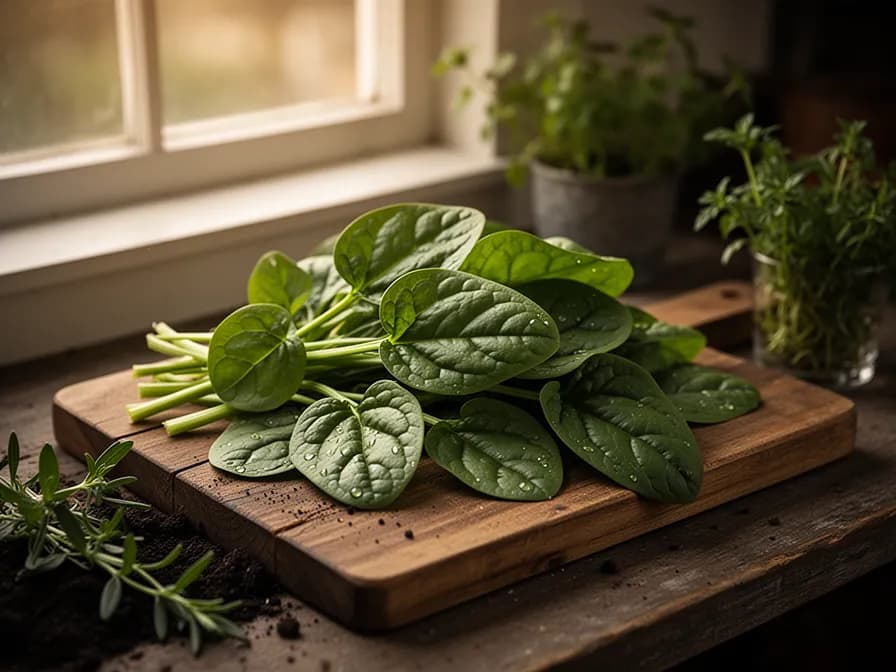
Purple berries develop in late summer and have been used as natural dye for centuries
Store fresh Malabar spinach leaves in a plastic bag in the refrigerator for 4-5 days. The thick leaves hold up better than true spinach but should be used relatively quickly. Blanch leaves briefly and freeze for up to 6 months for use in cooked dishes. Malabar spinach can be dehydrated and powdered for adding to smoothies and soups. The mucilaginous quality increases with cooking, making frozen leaves ideal for thickening soups and stews.
Plan your garden with ease
Love growing Malabar Spinach? Use our free garden planner to design your beds, track planting dates, and get personalized care reminders.
Nutritional Info
Per 100g serving
19
Calories
Health Benefits
- Exceptionally rich in vitamin A, providing 160% of the daily value per 100g — one of the highest levels among leafy greens, supporting eye health and immune function
- Outstanding vitamin C content at 113% of the daily value per 100g, surpassing true spinach by a wide margin and supporting collagen production and iron absorption
- Good source of calcium (109mg per 100g) without the high oxalate content found in true spinach, making the calcium more bioavailable for bone health
- Contains significant iron (1.2mg per 100g) in a form that is well-absorbed thanks to the accompanying high vitamin C content
- Rich in mucilaginous soluble fiber that soothes the digestive tract and may help regulate cholesterol absorption
- Very low in calories at only 19 per 100g, making it an excellent nutrient-dense food for weight management
💰 Why Grow Your Own?
Malabar spinach seeds cost $2-4 per packet (enough for 10-20 plants), and each vine produces 1.5-3 kg of greens over a season. With specialty Asian greens selling for $4-8 per bunch at farmers markets and Asian grocery stores, just 2-3 plants can easily save $30-60 over a summer. The real value is in providing fresh, heat-tolerant greens during the summer months when store-bought spinach is expensive, wilts quickly, and often comes from distant farms with high food miles.
Quick Recipes
Simple recipes using fresh Malabar Spinach
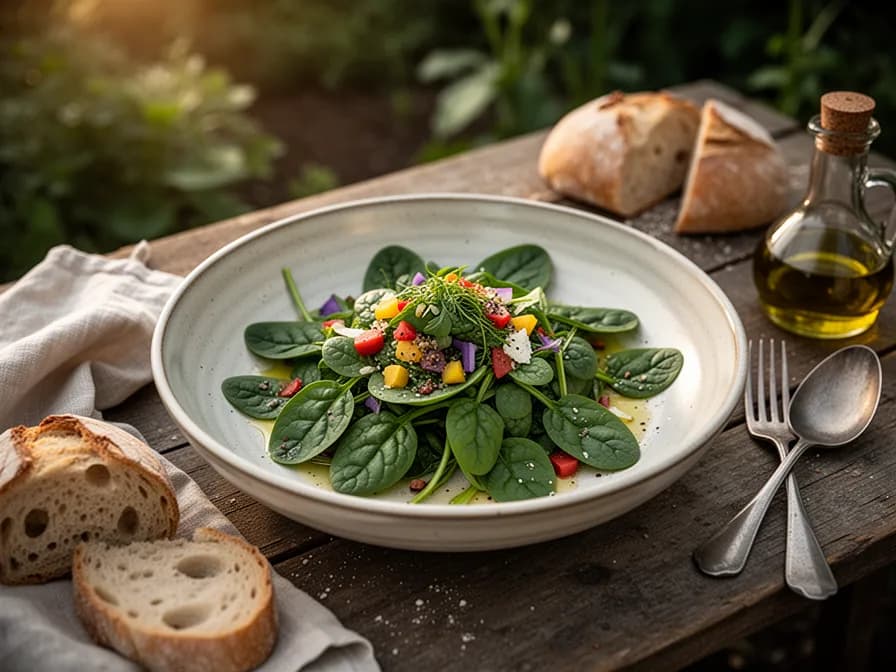
Malabar Spinach and Lentil Dal
35 minA comforting Indian-inspired dal where Malabar spinach's mucilaginous texture melts into a creamy, protein-rich lentil stew. The thick leaves hold up beautifully in the simmering broth and add a silky body to the dish.
Garlic Stir-Fried Malabar Spinach
10 minThe quickest and most popular way to prepare Malabar spinach across Southeast Asia — high-heat stir-frying with garlic keeps the leaves tender while minimizing the mucilaginous texture. Ready in minutes for a vibrant, nutritious side dish.
Malabar Spinach and Coconut Soup
25 minA silky, vibrant green soup inspired by Filipino and Sri Lankan traditions. The natural mucilage of Malabar spinach creates a luxuriously smooth texture without any added thickener, and the coconut milk adds richness.
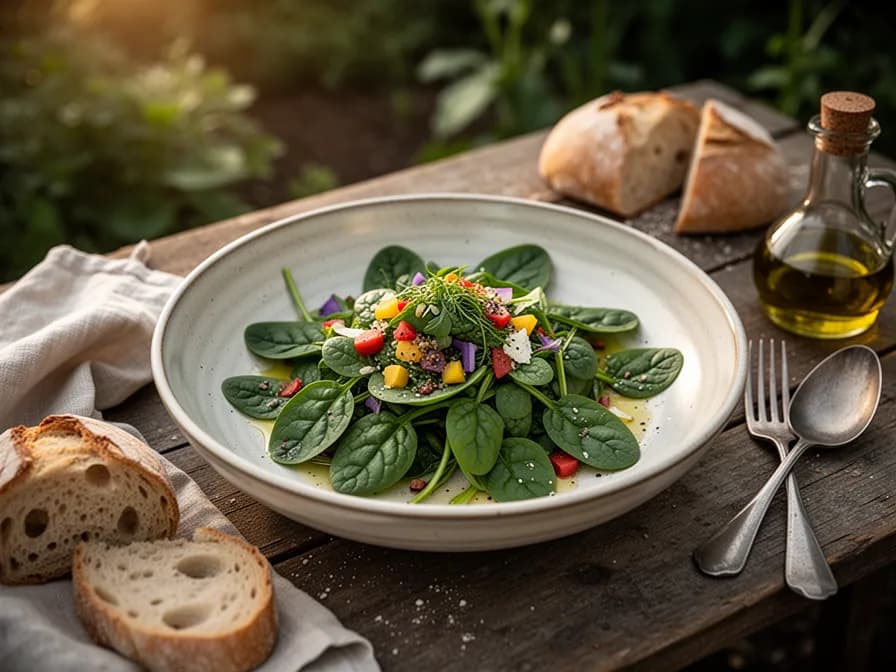
Stir-fried Malabar spinach with garlic — a classic Southeast Asian preparation
Yield & Spacing Calculator
See how many Malabar Spinach plants fit in your garden bed based on the recommended 30cm spacing.
16
Malabar Spinach plants in a 4×4 ft bed
4 columns × 4 rows at 30cm spacing
Popular Varieties
Some of the most popular malabar spinach varieties for home gardeners, each with unique characteristics.
Basella alba
Green-stemmed variety with thick, glossy dark green leaves. Slightly milder flavor than the red type.
Basella rubra
Purple-red stemmed variety with attractive ornamental value. Produces deep purple berries used as natural dye.
Broad Leaf
Selected for extra-large leaves up to 6 inches across. Very productive and vigorous climbing habit.
Malabar spinach is excellent in soups, stews, and curries where its mucilaginous texture acts as a natural thickener. Stir-fry young leaves with garlic and chili. Use raw in salads when young and tender (before mucilage develops). Popular in Indian, Filipino, and Southeast Asian cuisines. Substitute for spinach in cooked dishes. The thick leaves hold up well in long-cooked preparations. The purple berries can be used as natural food coloring.
When should I plant Malabar Spinach?
Plant Malabar Spinach in May, June. It takes approximately 55 days to reach maturity, with harvest typically in July, August, September, October.
What are good companion plants for Malabar Spinach?
Malabar Spinach grows well alongside Tomato, Corn, Basil. Companion planting can improve growth, flavor, and natural pest control.
What hardiness zones can Malabar Spinach grow in?
Malabar Spinach thrives in USDA hardiness zones 7 through 12. With greenhouse protection, it may be grown in zones 5 through 13.
How much sun does Malabar Spinach need?
Malabar Spinach requires Full Sun (6-8h+). This means at least 6-8 hours of direct sunlight daily.
How far apart should I space Malabar Spinach?
Space Malabar Spinach plants 30cm (12 inches) apart for optimal growth and air circulation.
What pests and diseases affect Malabar Spinach?
Common issues include Japanese Beetles, Leaf Spot, Spider Mites. Prevention through good garden practices like crop rotation, proper spacing, and companion planting is the best approach. See the detailed pests and diseases section above for symptoms, prevention, and treatment for each.
How do I store Malabar Spinach after harvest?
Store fresh Malabar spinach leaves in a plastic bag in the refrigerator for 4-5 days. The thick leaves hold up better than true spinach but should be used relatively quickly. Blanch leaves briefly and freeze for up to 6 months for use in cooked dishes. Malabar spinach can be dehydrated and powdered ...
What are the best Malabar Spinach varieties to grow?
Popular varieties include Basella alba, Basella rubra, Broad Leaf. Each has unique characteristics suited to different growing conditions and culinary preferences. See the varieties section above for detailed descriptions.
What soil does Malabar Spinach need?
Malabar spinach thrives in rich, moist, well-drained soil with a pH of 6.0-6.8. Amend with generous compost and aged manure before planting. Apply a balanced fertilizer every 2-3 weeks during the growing season to support vigorous vine growth. As a tropical plant, it benefits from warm, fertile soil...
Why is my Malabar spinach growing so slowly?
The most common reason is insufficient heat. Malabar spinach barely grows at temperatures below 21°C (70°F) and needs sustained warmth above 27°C (80°F) to reach its full vigorous potential. If you planted too early in the season or your climate has cool nights, growth will be painfully slow. Other causes include insufficient sunlight (needs 6-8 hours of direct sun), poor soil fertility, or inadequate watering. Be patient — once genuine summer heat arrives, growth often accelerates dramatically.
Is Malabar spinach slimy, and how do I deal with the texture?
Yes, Malabar spinach leaves contain mucilage (similar to okra) that becomes more noticeable when leaves are cooked in liquid at moderate temperatures. To minimize sliminess, stir-fry at high heat for a short time, or use young, small leaves which are less mucilaginous. Alternatively, embrace the texture in soups, stews, and curries where it acts as a natural thickener — this is exactly how it is traditionally used in Indian, Filipino, and West African cuisines. Raw young leaves in salads have minimal mucilage.
Can I grow Malabar spinach in a container?
Yes, Malabar spinach grows well in containers of at least 20 liters (5 gallons). Place in the warmest, sunniest spot available and provide a trellis or support for the vine to climb — a large tomato cage, bamboo tripod, or strings attached to a balcony railing all work well. Container-grown plants need more frequent watering and feeding than those in the ground. Expect somewhat less production than garden-grown plants, but a single container vine can still provide regular harvests of tender greens throughout summer.
Is Malabar spinach a good substitute for regular spinach?
In cooked dishes, Malabar spinach is an excellent substitute — especially in soups, curries, stir-fries, and stews where its slightly thicker texture and mild flavor blend well. It is nutritionally superior to true spinach in vitamin A and C content, and its calcium is more bioavailable due to lower oxalate levels. Raw, the texture is different — thicker and more succulent — but young leaves work in salads. The biggest advantage is timing: Malabar spinach thrives in summer heat when true spinach is impossible to grow.
Will Malabar spinach come back next year?
In USDA zones 10-12 with no frost, Malabar spinach is a true perennial that regrows from its rootstock each year and can live for several years. In zones 7-9, it is killed by frost and must be replanted annually. However, seed saving is easy — allow purple-black berries to ripen fully, collect and dry them, and store for planting next spring. Seeds remain viable for 3-5 years. In some warm climates, Malabar spinach may self-sow from dropped berries.
Are the purple berries of Malabar spinach edible?
Yes, the berries are edible but have a mild, bland flavor and a slightly laxative effect when eaten in quantity. They are more valued for their intensely purple dye than as a food — the juice stains everything it touches and has been used historically as ink, food coloring, and cosmetic pigment. The berries are an excellent indicator of seed ripeness for saving: harvest when they turn dark purple-black and feel soft. Each berry contains one seed.
Ready to Grow Malabar Spinach?
Add Malabar Spinach to your garden plan and start designing your perfect layout.

Vladimir Kusnezow
Gardener and Software Developer
Zone 6b gardener. Growing vegetables and fruits in soil and hydroponics for 6 years. I built PlotMyGarden to plan my own gardens.
Jump to Section