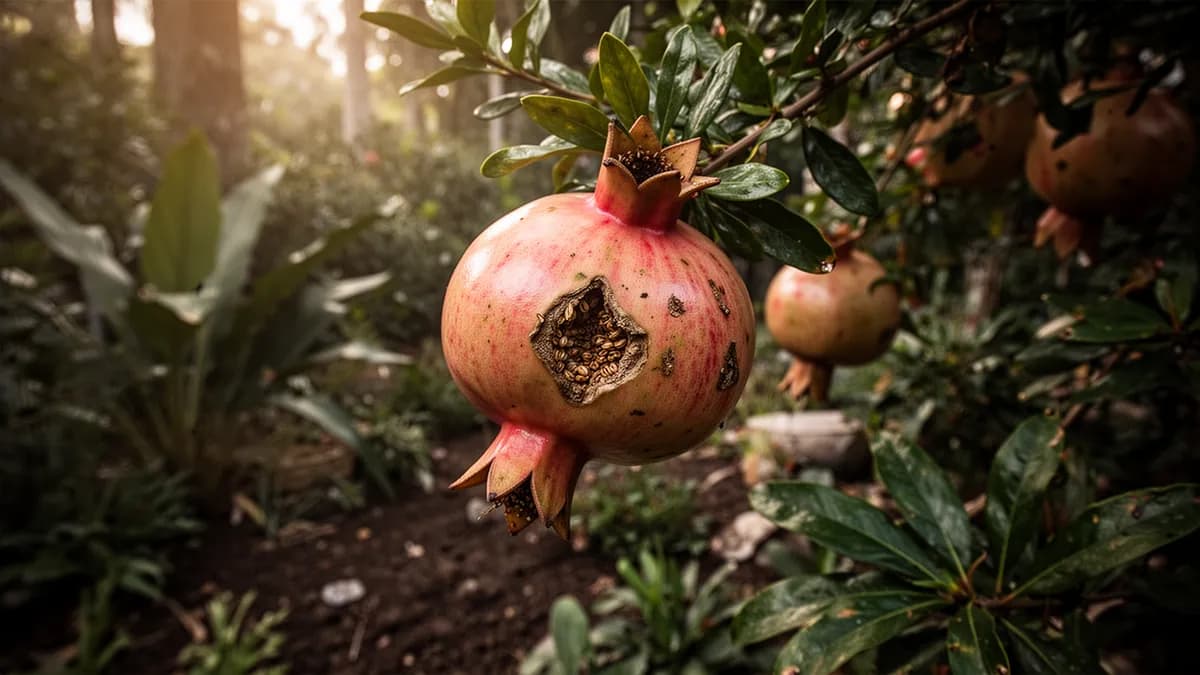
Pomegranate
Punica granatum
At a Glance
It's planting season for Pomegranate! Start planning your garden now.
A drought-tolerant deciduous shrub or small tree producing ruby-red arils inside a tough, leathery rind. Pomegranates thrive in hot, dry summers and tolerate poor soil, making them excellent choices for xeriscaped gardens and Mediterranean-style landscapes. Provide full sun and good drainage, and prune to a multi-trunk form for best fruit production and ornamental appeal. Harvest when fruits develop deep color and make a metallic sound when tapped, and score the rind to separate the jewel-like arils for fresh eating or juicing.
Planting & Harvest Calendar
Growth Stages
From Seed to Harvest
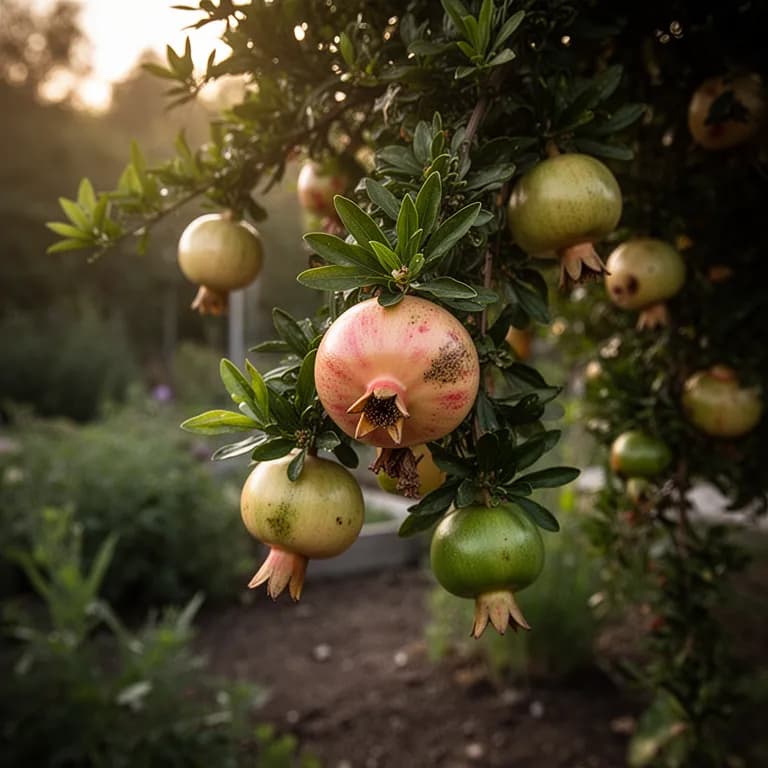
Dormancy & Bud Swell
Days 0–30
In late winter the tree breaks dormancy as temperatures warm. Buds swell and the first tiny leaves emerge along the reddish-brown stems. This is the ideal window for any structural pruning before energy is invested in new growth.
💡 Care Tip
Apply a balanced slow-release fertiliser (10-10-10) around the drip line just as buds begin to swell. Avoid fertilising during full dormancy.
Monthly Care Calendar
What to do each month for your Pomegranate
April
You are hereNo specific care tasks for this month.
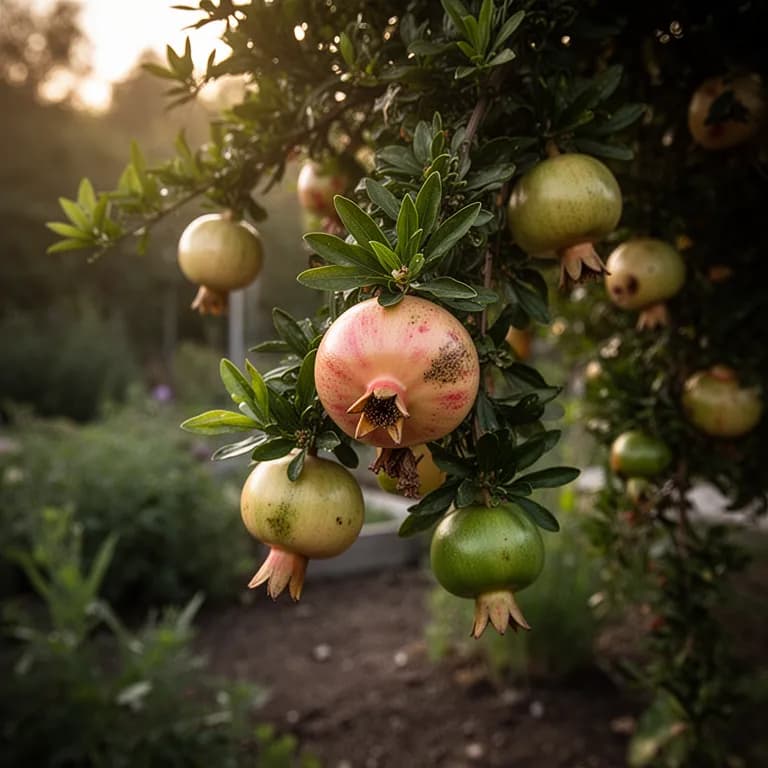
Even in winter dormancy the gnarled branches of a mature pomegranate are ornamental
Did You Know?
Fascinating facts about Pomegranate
The word "pomegranate" comes from the Latin "pomum granatum" meaning "seeded apple" — a name given by Roman traders who marvelled at its hundreds of seeds.
Pomegranates are among the most drought-tolerant fruit plants and thrive in hot, arid climates with long, warm summers. Select a planting site with maximum sun exposure and excellent drainage, as pomegranates will not tolerate standing water around their roots. Plant container-grown trees in spring, setting the root ball at the same depth as in the nursery pot. Space trees fifteen to twenty feet apart for full-sized varieties, or six to eight feet for dwarf cultivars.
Pomegranates naturally grow as multi-stemmed shrubs and can be trained to a single-trunk tree form or maintained as a bush. For fruit production, allow three to five main trunks and remove all suckers from the base regularly. Prune lightly in late winter to remove dead, crossing, and inward-growing branches while maintaining an open interior for light and air circulation. Heavy pruning reduces fruit production, as pomegranates bear on short spurs growing from mature wood.
Water newly planted trees weekly for the first year, then reduce to deep watering every two to three weeks once established. Consistent watering during fruit development prevents fruit splitting, which is the most common cause of crop loss. In marginal hardiness zones, plant against a south-facing wall for radiated heat and mulch the root zone heavily before winter. Container-grown pomegranates perform well in cold climates when brought indoors to a cool, bright location during winter.
The pomegranate (Punica granatum) is one of the oldest cultivated fruits in the world, with a history that stretches back at least 5,000 years. Its origins lie in the region spanning modern-day Iran, northern India, and the Caucasus, where wild ancestral populations (Punica protopunica) still grow on the island of Socotra off the coast of Yemen. From this ancient heartland, the pomegranate was carried along early trade routes into Mesopotamia, Egypt, and the Mediterranean basin, becoming one of the foundational fruits of Bronze Age agriculture.
Archaeological evidence of pomegranate cultivation appears in Egyptian tomb paintings dating to around 1500 BCE, and carbonised pomegranate remains have been found at Bronze Age sites across the Middle East. The fruit appears prominently in the Hebrew Bible, where it is listed among the seven species of the Promised Land. King Solomon's temple was said to be decorated with hundreds of carved pomegranates. In ancient Greece it was associated with Aphrodite, fertility, and the underworld, while in Roman culture it became a symbol of marriage and was fashioned into the bridal crown.
Arab traders carried the pomegranate westward into Spain — the city of Granada derives its name directly from the fruit — and eastward into China, where it arrived around 100 BCE via the Silk Road. Spanish colonisers then introduced it to the Americas in the 16th century, planting it in mission gardens along the California coast, which remains one of the world's premier pomegranate-producing regions today.
Modern commercial production is concentrated in Iran (still the world's largest producer), India, Turkey, Spain, and the United States (primarily California's San Joaquin Valley). The 'Wonderful' cultivar dominates global markets, though dozens of heritage varieties with varying flavour profiles, skin colours ranging from pale yellow to near-black, and differing ripening times are cultivated by specialist growers and home gardeners worldwide. The surge in consumer interest in superfoods during the early 2000s triggered a massive expansion in commercial pomegranate acreage globally, with the juice industry transforming what was once a regional fruit into a worldwide commodity.
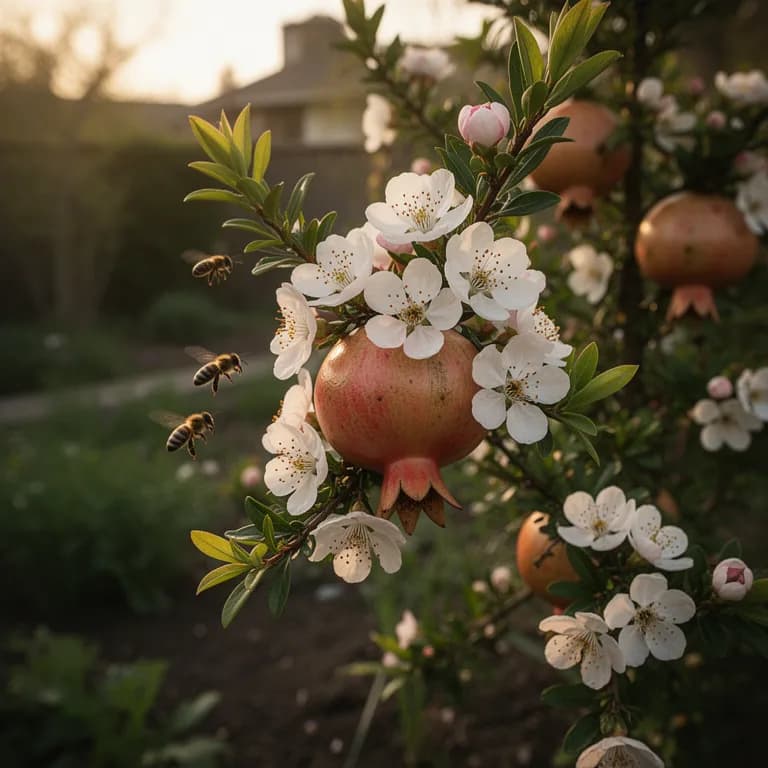
Pomegranate flowers are among the most vivid of any fruiting tree
Pomegranates can be propagated from fresh seed, but seedlings are variable and may not resemble the parent fruit in quality or flavor. For named varieties, take hardwood cuttings in late winter, selecting pencil-thick stems eight to ten inches long from the previous season's growth. Dip the base in rooting hormone, insert into moist sand or perlite, and maintain warmth and humidity. Cuttings root in four to eight weeks. Air layering of established branches is another reliable method. Grafting onto seedling rootstock is practiced commercially for vigorous, disease-resistant trees.
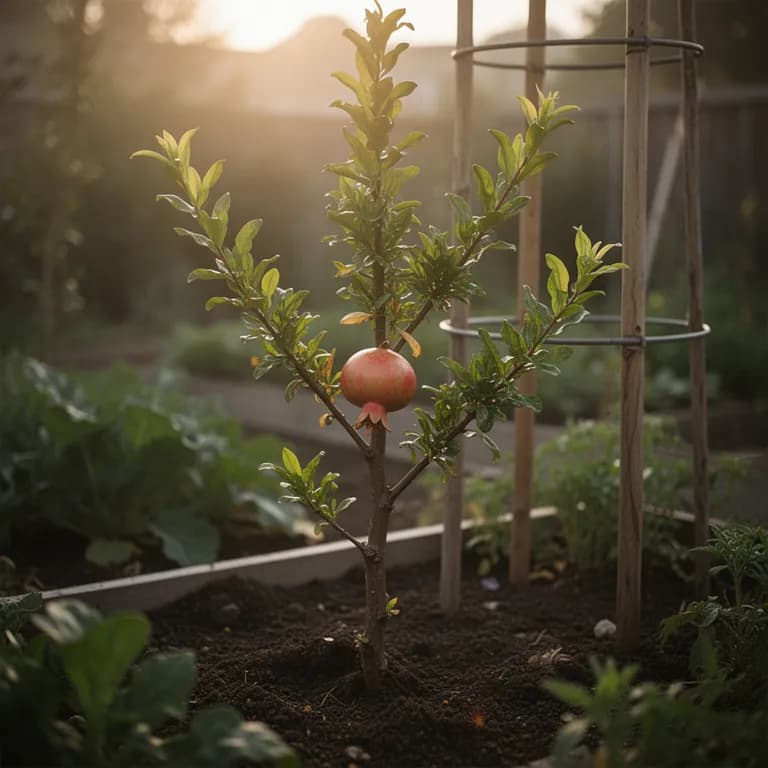
Pomegranate trees establish quickly and begin fruiting within 2–3 years
Pomegranates are remarkably adaptable to soil types, growing in everything from heavy clay to sandy loam, provided drainage is adequate. They prefer a pH of 5.5 to 7.0 but tolerate mildly alkaline conditions. Fertilize lightly with balanced fertilizer in late winter and again in midsummer. Pomegranates are not heavy feeders and excessive fertilization produces vegetative growth at the expense of fruit. In poor soils, an annual topdressing of compost and a handful of balanced organic fertilizer is sufficient. Potassium supplementation improves fruit color and quality.
Check Your Zone
See if Pomegranate is suitable for your location.
-10°C – 38°C
14°F – 100°F
Pomegranates are adapted to a hot, dry Mediterranean-type climate and perform best where summers are long and warm (above 35°C promotes maximum sugar development) and winters are cool but not severely cold. Established trees can tolerate brief frosts down to -10°C, but young trees are damaged below -3°C. High summer humidity encourages fungal disease and is the primary reason pomegranates struggle in subtropical regions. The tree requires a period of winter chilling (100–200 hours below 7°C) to break dormancy properly and flower reliably, making it unsuitable for true tropical climates. USDA zones 7–12 are appropriate, though with microclimatic protection zone 6b is feasible.
Common issues affecting Pomegranate and how to prevent and treat them organically.
Fruit splitting is the most frequent complaint and results from irregular watering, particularly heavy rain or irrigation following a dry period during fruit development. Maintain consistent soil moisture from fruit set through harvest to prevent this. Excessive suckering from the base is normal and requires regular removal to maintain the desired tree or bush form. Leaf yellowing can indicate iron chlorosis in alkaline soils. Poor fruit set may result from excessive heat during bloom or inadequate pollinator activity.
Lavender and rosemary planted around pomegranate trees thrive in the same hot, dry conditions and attract pollinators needed for fruit set. Basil and marigolds help deter aphids and whiteflies. Pomegranates make excellent specimen trees in xeriscaped Mediterranean-style gardens alongside olive trees, figs, and grape vines. Avoid planting in areas where walnut trees cast shade or leach juglone, which may affect sensitive companions planted under the pomegranate canopy.
- 1Train young pomegranate trees to an open-vase shape with 4–6 main scaffold branches — this maximises light penetration, air circulation, and makes harvesting easier than allowing the tree to grow as a dense multi-stemmed shrub.
- 2Pomegranates sucker prolifically from the base. Remove suckers completely at soil level throughout the growing season or they will compete with the main trunk for resources and create a thicket that is difficult to manage.
- 3Fruit cracking is the most common problem in home gardens and is almost always caused by irregular irrigation — a period of water stress followed by heavy rain or watering causes the arils to expand faster than the skin can accommodate. A drip irrigation system set to deliver water slowly and consistently is the most effective solution.
- 4If you live at the cool edge of the growing range (USDA zone 7), plant your pomegranate against a south-facing masonry wall. The thermal mass absorbs heat during the day and radiates it at night, extending the growing season and providing frost protection that can make the difference between success and failure.
- 5The 'Wonderful' cultivar is widely available but is bred for commercial juice production and can be overly tart for fresh eating. For home gardens, seek out heritage cultivars like 'Eversweet' (low-acid, clear juice), 'Ambrosia' (honey-sweet), or 'Parfianka' (complex berry flavour with soft seeds) for a far superior fresh-eating experience.
- 6Pomegranates are drought-tolerant once established (after 2–3 years), but drought stress during fruit development leads directly to smaller, less flavoursome fruit and cracking at harvest. The critical irrigation window is from fruit set in early summer through to two weeks before your expected harvest date, after which you can reduce water to concentrate sugars.
- 7Scale insects and mealybugs are the most common pest issues on pomegranate. Monitor the stems and undersides of leaves regularly. A single application of horticultural oil in late winter when the tree is dormant will dramatically reduce overwintering pest populations and is far more effective than attempting to manage an active infestation mid-season.
- 8Pomegranate flowers over an extended period and fruits from different flushes ripen at different times. Do not try to harvest all the fruits at once — instead check the tree every few days during harvest season (typically September–November), tapping each fruit to listen for the hollow sound of full ripeness and harvesting only those that are ready.
- 9If growing in a container, choose a pot of at least 60 litres capacity and use a free-draining growing mix (60% loam-based compost, 40% coarse grit or perlite). Pomegranates in containers need more frequent feeding during the growing season — a weekly liquid tomato feed from flowering through to harvest gives excellent results.
- 10Hand-thinning to 4–6 fruits per scaffold branch on young trees is crucial for the first 3–4 years. It feels counterproductive, but concentrating the tree's energy into fewer fruits builds a stronger root system, scaffold structure, and long-term productivity rather than exhausting the young tree with an early heavy crop.
Pomegranates are ready to harvest when the skin develops a deep, rich color and the fruit feels heavy for its size. The skin should have a slightly angular, faceted appearance as the internal arils press against the rind. Tap the fruit: a metallic ringing sound indicates ripeness, while a dull thud suggests the fruit needs more time. Cut the fruit from the tree with pruning shears rather than pulling, which can damage the branch. Ripe pomegranates left on the tree too long may split, especially after rain.
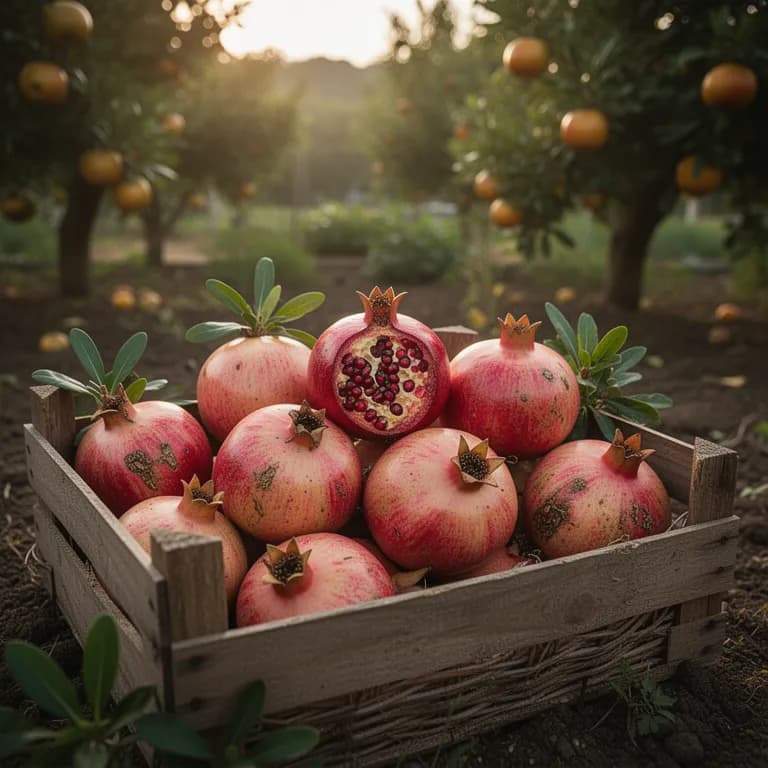
A fully ripened pomegranate splits slightly at the crown when ready to harvest
Whole pomegranates store remarkably well, lasting one to two months at room temperature or up to three months in the refrigerator. Extracted arils keep refrigerated for up to five days or can be frozen in a single layer on a tray and then transferred to freezer bags for up to twelve months. Pomegranate juice freezes well for long-term storage. The fruit also makes excellent molasses, a tangy syrup used extensively in Middle Eastern cooking, as well as jelly and wine.
Plan your garden with ease
Love growing Pomegranate? Use our free garden planner to design your beds, track planting dates, and get personalized care reminders.
Nutritional Info
Per 100g serving
83
Calories
Health Benefits
- Exceptionally rich in punicalagins — ellagitannins unique to pomegranate with potent antioxidant activity
- Contains punicic acid, a conjugated linolenic acid found in the seed oil with anti-inflammatory properties
- Good source of folate (38 mcg, 10% DV) important for cell division and DNA synthesis
- Provides vitamin K1 (16.4 mcg, 14% DV) essential for blood clotting and bone metabolism
- Low glycaemic index (~35) despite natural sweetness, making it suitable for controlled blood sugar diets
- Rich in polyphenols including anthocyanins responsible for the deep red colour and cardiovascular benefits
💰 Why Grow Your Own?
Fresh pomegranates retail for $4–$8 each in most Western supermarkets, and 100% pomegranate juice commands $8–$15 per litre. A single mature pomegranate tree in a home garden can yield 50–100 fruits per season — a harvest worth $200–$800 at retail prices. Over a 20-year productive lifespan, one tree represents thousands of dollars in savings. Pomegranate molasses, a staple of Middle Eastern cooking priced at $10–$18 per small jar, can be made at home with excess juice for almost nothing beyond a few minutes of simmering time.
Quick Recipes
Simple recipes using fresh Pomegranate
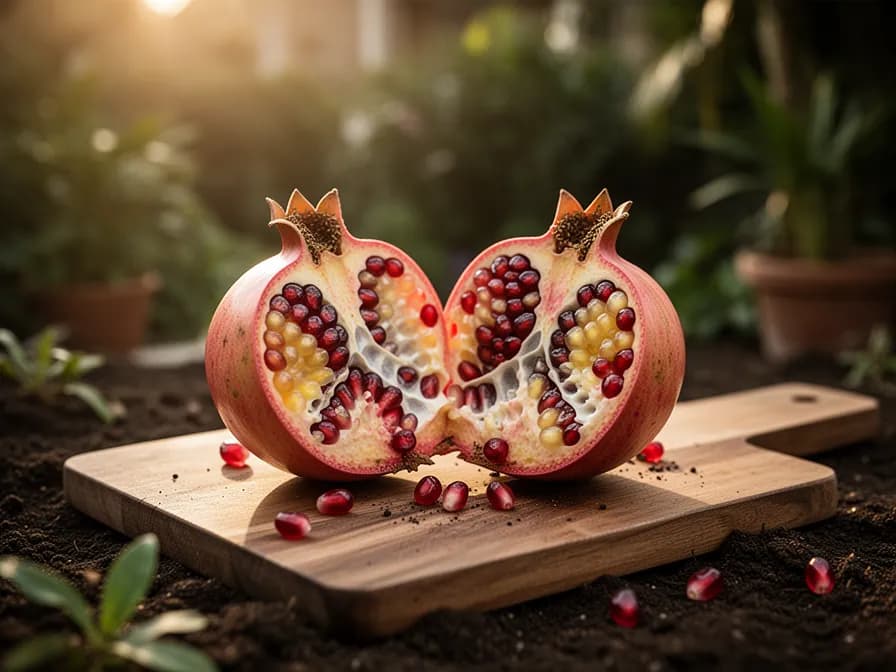
Pomegranate Molasses Glaze
15 minutesA deeply flavoured, tangy-sweet reduction perfect as a glaze for roasted duck, lamb chops, or grilled aubergine. The molasses concentrates the fruit's complex flavour into an intensely aromatic condiment that keeps for months in the fridge.
Fattoush with Pomegranate & Sumac
20 minutesA vibrant Levantine bread salad elevated with a handful of fresh pomegranate arils that burst with juice against the crispy toasted flatbread. The combination of sumac, lemon, and pomegranate creates a layered tartness that balances the richness of the olive oil dressing.
Pomegranate & Rose Water Panna Cotta
20 minutes plus 4 hours chillingA silky Italian set cream perfumed with rose water and topped with a jewelled pomegranate jelly that captures the deep colour and tartness of the fresh fruit. Elegant enough for a dinner party, simple enough to make on a weeknight.
Yield & Spacing Calculator
See how many Pomegranate plants fit in your garden bed based on the recommended 300cm spacing.
0
Pomegranate plants in a 4×4 ft bed
0 columns × 0 rows at 300cm spacing
Popular Varieties
Some of the most popular pomegranate varieties for home gardeners, each with unique characteristics.
Wonderful
The most widely grown commercial variety with large, deep-red fruit and abundantly juicy, wine-red arils with excellent sweet-tart flavor.
Angel Red
An early-ripening variety producing soft-seeded, bright red arils that are easy to juice and eat fresh.
Eversweet
A nearly seedless variety with clear, non-staining juice and very sweet flavor, ideal for areas with shorter growing seasons.
Russian 26
An extremely cold-hardy cultivar surviving temperatures to minus ten degrees Fahrenheit, with medium-sized sweet fruit.
Pomegranate arils are enjoyed fresh as a garnish for salads, grain bowls, and desserts, adding jewel-like color and bursting juice. The juice is used in cocktails, vinaigrettes, and Middle Eastern dishes. Pomegranate molasses is a concentrated syrup essential in cuisines from Iran to Lebanon. Arils pair beautifully with walnuts, feta cheese, mint, and dark chocolate. The fruit is rich in antioxidants, vitamin C, and potassium.
When should I plant Pomegranate?
Plant Pomegranate in March, April. It takes approximately 730 days to reach maturity, with harvest typically in September, October, November.
What are good companion plants for Pomegranate?
Pomegranate grows well alongside Lavender, Basil, Marigold. Companion planting can improve growth, flavor, and natural pest control.
What hardiness zones can Pomegranate grow in?
Pomegranate thrives in USDA hardiness zones 5 through 11. With greenhouse protection, it may be grown in zones 3 through 12.
How much sun does Pomegranate need?
Pomegranate requires Full Sun (6-8h+). This means at least 6-8 hours of direct sunlight daily.
How far apart should I space Pomegranate?
Space Pomegranate plants 300cm (118 inches) apart for optimal growth and air circulation.
What pests and diseases affect Pomegranate?
Common issues include Pomegranate Butterfly (Virachola isocrates), Heart Rot (Alternaria), Aphids. Prevention through good garden practices like crop rotation, proper spacing, and companion planting is the best approach. See the detailed pests and diseases section above for symptoms, prevention, and treatment for each.
How do I store Pomegranate after harvest?
Whole pomegranates store remarkably well, lasting one to two months at room temperature or up to three months in the refrigerator. Extracted arils keep refrigerated for up to five days or can be frozen in a single layer on a tray and then transferred to freezer bags for up to twelve months. Pomegran...
What are the best Pomegranate varieties to grow?
Popular varieties include Wonderful, Angel Red, Eversweet, Russian 26. Each has unique characteristics suited to different growing conditions and culinary preferences. See the varieties section above for detailed descriptions.
What soil does Pomegranate need?
Pomegranates are remarkably adaptable to soil types, growing in everything from heavy clay to sandy loam, provided drainage is adequate. They prefer a pH of 5.5 to 7.0 but tolerate mildly alkaline conditions. Fertilize lightly with balanced fertilizer in late winter and again in midsummer. Pomegrana...
My pomegranate tree flowers abundantly but drops most of its flowers without setting fruit — what is going wrong?
This is completely normal and is often a shock to first-time growers. Pomegranate flowers are of two types: male flowers (which are sterile and always drop) and hermaphroditic flowers (which can set fruit). On a healthy tree, 80–90% of all flowers are male, so the vast majority dropping without fruiting is expected. Poor fruit set is only a concern if the hermaphroditic flowers (identifiable by a swelling ovary at the base of the flower, shaped like a tiny pomegranate) are also dropping. If that is the case, the most likely causes are insufficient pollinator activity, water stress or very high temperatures (above 38°C) during flowering, or a tree that is too young and still directing energy into establishment rather than reproduction.
When is the right time to harvest a pomegranate, and how can I tell if it is ripe?
Unlike many fruits, pomegranates do not continue to ripen significantly after harvest, so it is important to pick them at the right moment. The best indicators of ripeness are: the skin develops a deep, saturated colour with a slight metallic sheen; the fruit sounds hollow when tapped with a finger (like a drum); the crown (calyx) at the top dries out and spreads open; and the fruit becomes slightly squared or faceted as the internal arils press against each other. Taste is the ultimate test — cut one open and try an aril. Ripe fruit should be sweet-tart with a rich, complex flavour. Unripe fruit tastes sour and astringent.
Can I grow a pomegranate tree from the seeds of a fruit I bought at the supermarket?
Yes, pomegranate seeds germinate readily and growing from seed is easy — clean the arils, allow them to dry for 24 hours, then sow 1 cm deep in a free-draining seed compost kept at 25–30°C. Germination typically occurs within 2–6 weeks. However, there are two important caveats. First, most commercial pomegranates are the 'Wonderful' cultivar, so your seedling is likely to be genetically similar but not identical to the parent (pomegranates are not completely true to type from seed). Second, seed-grown trees take 5–7 years to fruit reliably, compared to 2–3 years for a grafted or cutting-grown tree. For faster results, purchase a named cultivar on its own roots from a specialist nursery.
Is it possible to grow a pomegranate tree in the UK or northern Europe?
Yes, but it requires careful site selection and cultivar choice. The key challenge is providing sufficient summer heat for fruit to ripen fully (most cultivars need 150–180 frost-free days and warm summers), while protecting the tree from hard winter frosts. In the UK, the best approach is to grow the tree as a fan against a south-facing wall in the warmest, most sheltered part of the garden. Mature trees can tolerate frosts to around -10°C once well-established. Choose early-ripening cultivars such as 'Sirenevyi' (a Russian cultivar bred for cool climates) or the ornamental-fruiting 'Nana' as a patio container plant. Southern England, the Channel Islands, and similar mild-winter Atlantic climates are the most viable locations for fruiting crops.
What is the white pith inside a pomegranate, and is it edible?
The white, spongy material inside a pomegranate is called the mesocarp or pith, and it separates the internal chambers (locules) containing the arils. It is technically edible — it is not toxic — but it is intensely bitter and astringent due to its high tannin content, and most people find it unpleasant to eat raw. In some traditional culinary cultures it is used in small quantities as a digestive herb or dried and powdered as a tannin source. The easiest way to avoid the pith when preparing a pomegranate is the water method: score the skin, submerge the fruit in a bowl of cold water, and break it apart with your fingers. The arils sink to the bottom while the pith and skin float to the top.
How long does a pomegranate tree live, and when does it reach peak production?
Pomegranate trees are extraordinarily long-lived. Well-maintained specimens regularly produce for 50–75 years, and there are documented examples of trees exceeding 200 years of age still bearing fruit in Iran and the Caucasus. A grafted tree typically begins producing its first meaningful crop at 3–4 years of age. Yields increase progressively through the first decade, with most trees reaching peak production between years 8 and 15, after which yields stabilise at a sustainable level for decades with good pruning and nutrition. This remarkable longevity makes the pomegranate one of the best long-term investments in a home orchard.
Ready to Grow Pomegranate?
Add Pomegranate to your garden plan and start designing your perfect layout.

Vladimir Kusnezow
Gardener and Software Developer
Zone 6b gardener. Growing vegetables and fruits in soil and hydroponics for 6 years. I built PlotMyGarden to plan my own gardens.
Jump to Section