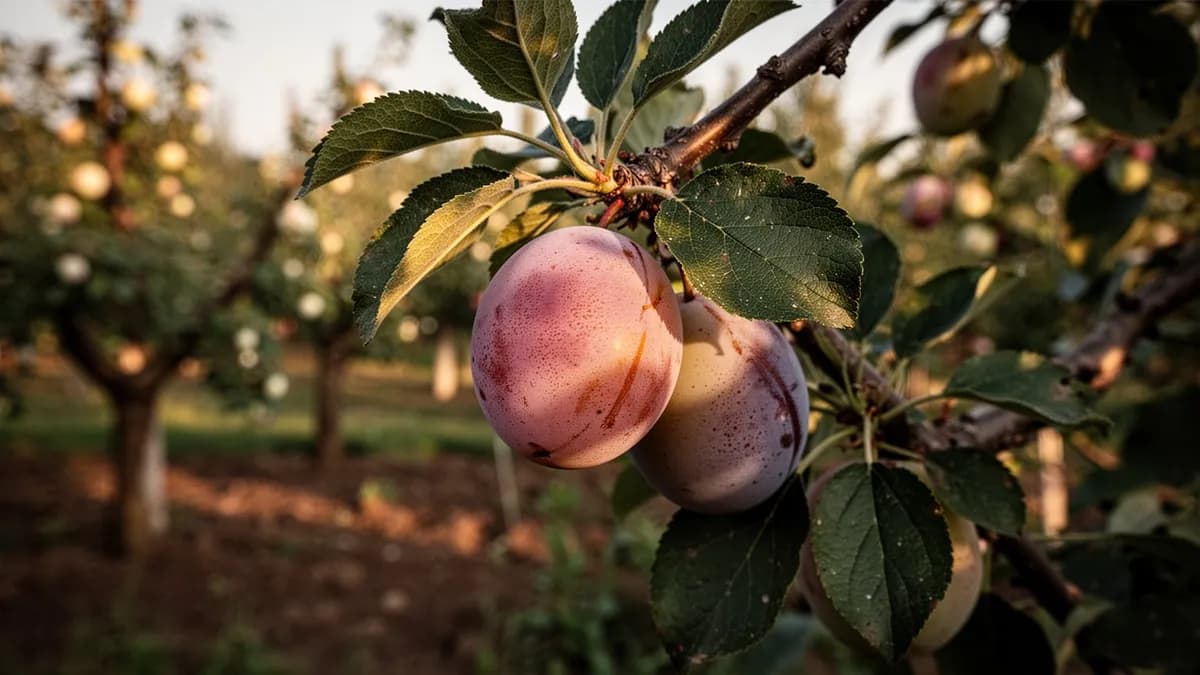
Plum
Prunus domestica
At a Glance
A productive stone fruit tree that often requires thinning of fruitlets to prevent branch breakage from heavy crops. European plums are generally self-fertile, while Japanese varieties typically need a compatible pollinator nearby for reliable fruit set. Prune in summer rather than winter to reduce the risk of silver leaf disease, a common fungal problem in plum trees. Harvest when fruits develop a slight softness and a powdery bloom on the skin, and enjoy them fresh, dried as prunes, or made into jams.
Planting & Harvest Calendar
Growth Stages
From Seed to Harvest
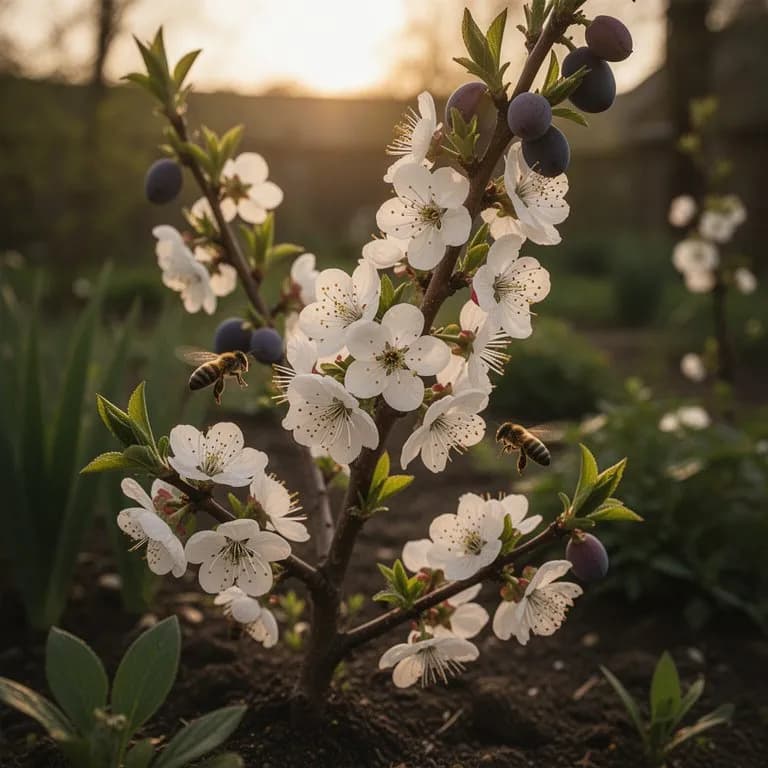
Dormancy and Bud Swell
Days 0–60
During winter the plum tree is fully dormant with bare branches. As late winter temperatures begin to rise, buds swell visibly and transition from tight, dark scales to plump, silvery forms ready to burst. This chilling period is essential for proper flowering and fruit set in the coming season.
💡 Care Tip
Apply a dormant oil spray in late winter to smother overwintering pest eggs such as aphids and scale insects. This is the ideal time for structural pruning on young trees, though established plum trees should only be pruned in summer to avoid silver leaf disease.
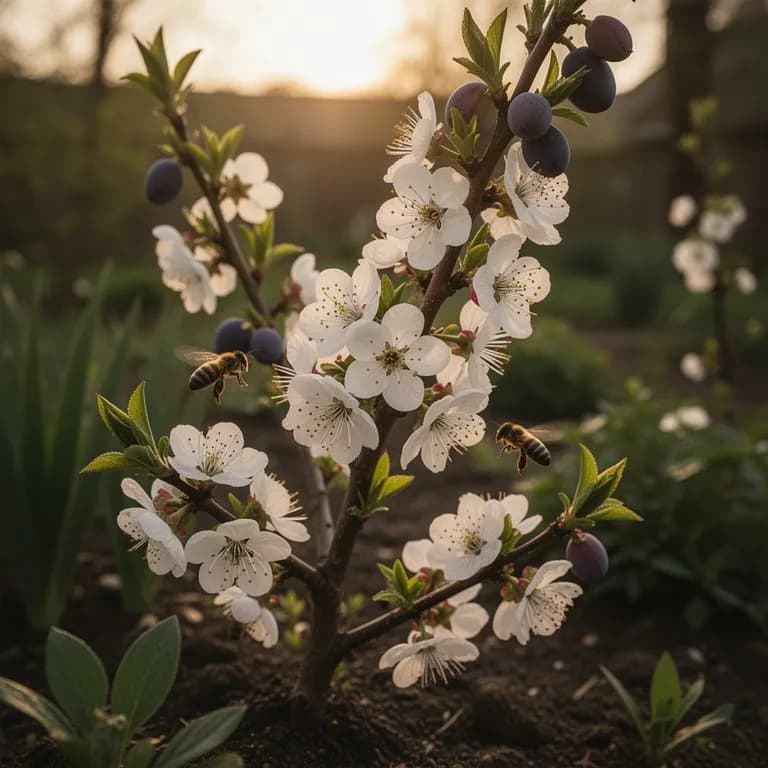
Plum trees produce abundant white to pale pink blossoms in early spring before leaves emerge
Monthly Care Calendar
What to do each month for your Plum
May
You are hereMonitor developing fruitlets and water newly planted trees regularly. Watch for plum sawfly damage, which creates crescent-shaped scars on young fruit. Begin thinning fruit after petal fall if the set appears very heavy.
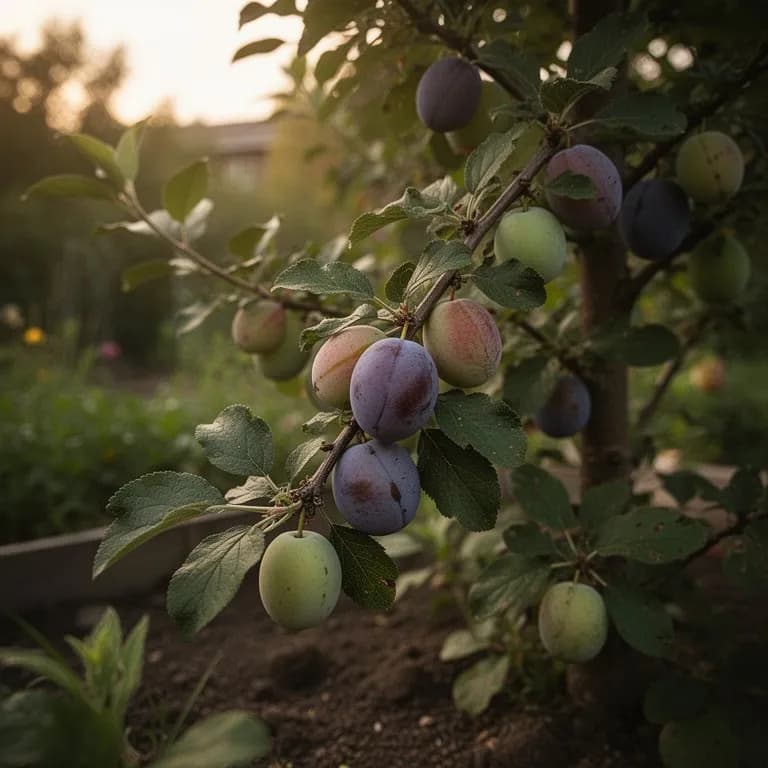
Summer pruning keeps plum trees in shape and reduces the risk of silver leaf disease infection
Did You Know?
Fascinating facts about Plum
Plums are one of the first fruits ever domesticated by humans, with archaeological evidence of plum cultivation dating back to the Neolithic era around 6000 BCE in the region surrounding the Caspian Sea.
Plant plum trees in full sun with well-drained soil, choosing a site with good air circulation and protection from late spring frosts that can damage blossoms. European plums and damsons are generally self-fertile, but Japanese plums require a compatible pollination partner blooming at the same time. Dig a generous planting hole and set the tree with the graft union above the soil line. Stake for the first two years.
Water newly planted trees weekly during their first growing season. Established plum trees are moderately drought-tolerant but produce the best fruit with consistent moisture during the fruit development period from late spring through summer. Apply a three-inch mulch ring to conserve moisture and suppress grass competition around the root zone.
Prune plum trees in summer, ideally in June or July, to minimize the risk of silver leaf disease, which enters through pruning wounds during the dormant season. Maintain an open center or vase shape for European plums and a modified central leader for Japanese types. Thin fruitlets aggressively in late spring to two to three inches apart to prevent branch breakage and improve fruit size. Plum trees are prolific, and failure to thin results in small, flavorless fruit and biennial bearing patterns.
The European plum (Prunus domestica) is believed to have originated as a natural hybrid between the cherry plum (Prunus cerasifera) and the blackthorn or sloe (Prunus spinosa) in the Caucasus region near the Caspian Sea, where the ranges of these two wild species overlap. Archaeological evidence suggests that plums were among the earliest fruits cultivated by humans, with dried plum stones found at Neolithic sites dating to around 6000 BCE. The ancient Romans were instrumental in spreading plum cultivation throughout Europe. The Roman writer Pliny the Elder documented numerous plum varieties in his first-century Natural History, noting that Romans imported plum trees from Syria, Persia, and Armenia and grafted them to produce superior fruit. Following the fall of Rome, monasteries became the custodians of fruit-tree knowledge, and monks meticulously maintained and improved plum orchards throughout the medieval period. The Crusades brought additional plum varieties from the Middle East back to Western Europe, enriching the existing genetic stock. During the Renaissance, the greengage plum was introduced to France from Armenia and quickly became a favourite of the French court, where it was named after Sir William Gage, who later brought it to England in the 18th century. European colonists carried plum trees to the Americas beginning in the 17th century, where they encountered native American plum species already cultivated by Indigenous peoples. Meanwhile, Japanese plums (Prunus salicina) were developed independently in China over two millennia ago and later refined in Japan before being introduced to California by the legendary horticulturist Luther Burbank in the 1880s. Today, plums are grown commercially on every inhabited continent, with China, Romania, Serbia, and the United States leading global production. The fruit remains a cornerstone of home orchards worldwide, prized for its adaptability to diverse climates and its remarkable versatility in the kitchen.
Plum trees are propagated by chip budding or T-budding in late summer, grafting scion wood of the desired variety onto compatible rootstocks. Pixy rootstock produces a compact semi-dwarf tree ideal for smaller gardens, while St. Julien A creates a slightly larger tree with wider adaptability. Myrobalan rootstock is used for vigorous standard trees. Whip-and-tongue grafting in late winter is also effective. Plum stones can be cold-stratified for 90 to 120 days and germinated, but seedlings are highly variable and primarily used as rootstock material rather than for fruiting purposes.
Plums perform well in most well-drained soils with a pH of 5.5 to 6.5. They are more tolerant of clay soils than other stone fruits but still require adequate drainage. Apply a moderate amount of balanced fertilizer in early spring. Avoid excessive nitrogen, which promotes soft growth susceptible to silver leaf and brown rot. Potassium-rich fertilizers improve fruit quality and winter hardiness. Mature bearing trees generally need less fertilizer than young establishing trees.
Check Your Zone
See if Plum is suitable for your location.
-25°C – 32°C
-13°F – 90°F
European plums are remarkably cold-hardy once established, tolerating winter temperatures as low as -25°C (-13°F) during dormancy. However, open blossoms are highly vulnerable to frost and can be damaged at temperatures below -2°C (28°F). Optimal growing-season temperatures range from 18-28°C (65-82°F). Plum trees require 700-1000 chill hours below 7°C (45°F) during winter to break dormancy and flower reliably in spring.
Common issues affecting Plum and how to prevent and treat them organically.
Heavy crop loads are the most common issue, leading to branch breakage, small fruit, and biennial bearing if not thinned aggressively. Gummosis, or amber sap bleeding from bark wounds, can indicate bacterial canker, borer damage, or physical injury. Premature fruit drop is often caused by plum curculio damage or poor pollination. Suckers emerging from the rootstock below the graft union must be removed promptly, as they will produce inferior fruit and can overtake the grafted variety.
Garlic and chives planted around plum trees help deter aphids and may reduce fungal disease incidence with their natural sulfur compounds. Marigolds attract beneficial predatory insects and their root exudates discourage soil-dwelling pests. Comfrey grown beneath plum trees as a living mulch provides potassium-rich material when chopped and dropped. Avoid planting near walnut trees due to juglone toxicity and maintain distance from other stone fruits to reduce cross-contamination of brown rot and bacterial canker.
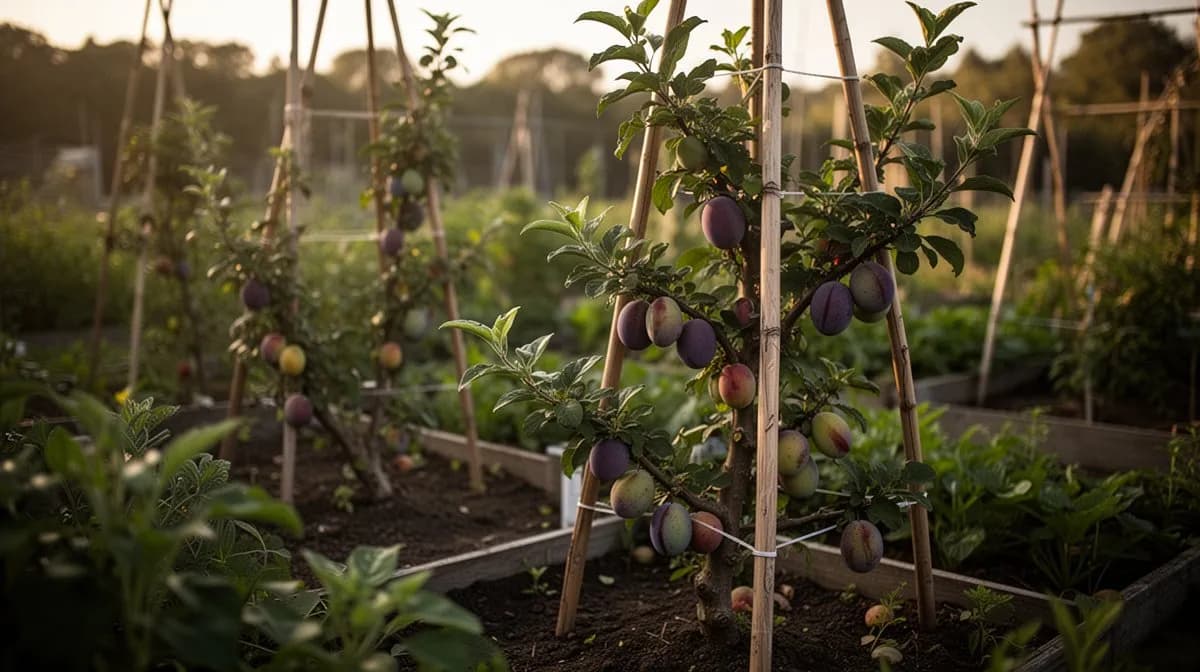
Companion planting beneath plum trees with comfrey and pollinator-friendly flowers improves fruit set and soil health
- 1Choose a sheltered, sunny site with well-drained soil for your plum tree. Avoid frost pockets where cold air settles, as plum blossoms are extremely vulnerable to late spring frosts that can destroy an entire year's crop.
- 2Select the right rootstock for your space. Pixy dwarfing rootstock keeps trees compact at 2-3 metres and is ideal for small gardens and containers, while St. Julien A produces a medium-sized tree suitable for most garden settings.
- 3Check pollination requirements before purchasing. While some varieties like Victoria and Czar are self-fertile, many excellent plum cultivars need a compatible pollination partner flowering at the same time to set fruit reliably.
- 4Prune established plum trees only in summer, ideally between June and August, to minimise the risk of silver leaf disease, a serious fungal infection that enters through pruning wounds and is most active in the cool, damp conditions of autumn and winter.
- 5Thin fruit after the natural June drop by removing excess fruitlets so remaining plums are spaced 5-8 cm apart along each branch. This prevents branch breakage under heavy crops and dramatically improves the size and sweetness of the fruit you harvest.
- 6Water young trees regularly during their first two growing seasons to help establish a strong root system. Mature trees are fairly drought-tolerant but benefit from deep watering during prolonged dry spells while fruit is developing to prevent cracking and premature drop.
- 7Apply a balanced fertiliser in early spring and a potassium-rich feed in midsummer to support fruit quality. Excessive nitrogen encourages leafy growth at the expense of fruit production and can increase susceptibility to bacterial canker.
- 8Protect ripening fruit from birds and wasps by netting the tree or using individual fruit bags. Wasps are particularly attracted to damaged fruit, so remove any split or fallen plums promptly to avoid drawing them to the crop.
- 9Train plum trees as fans against a south- or west-facing wall or fence to maximise warmth, improve fruit ripening, and make netting and harvesting easier. Fan training is especially effective for less hardy varieties and in cooler climates.
- 10Monitor regularly for common plum pests and diseases including plum moth, aphids, brown rot, and bacterial canker. Early detection and prompt action, such as removing affected fruit or applying biological controls, prevents small problems from becoming serious.
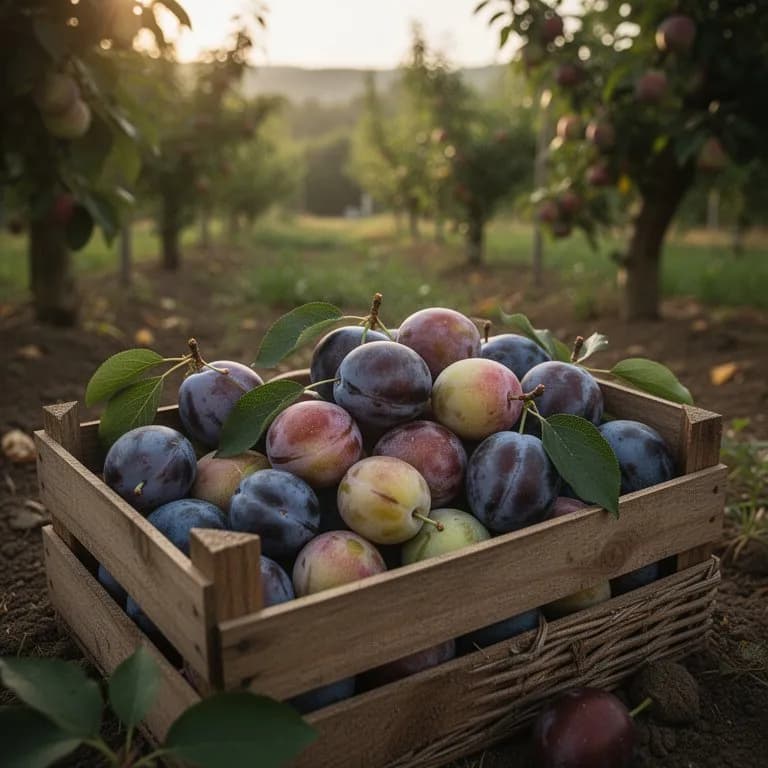
Plums are ripe when they develop the characteristic powdery bloom on the skin, feel slightly soft at the tip end when gently pressed, and the stem separates easily from the branch. European plums can be left to ripen fully on the tree, but Japanese plums are best picked slightly firm and ripened at room temperature. Color is not always a reliable indicator, as many varieties change color well before reaching full sweetness. Taste is the most reliable test. Harvest with a gentle twist to avoid tearing the bark.
Ripe plums store in the refrigerator for up to two weeks. European plum varieties dry exceptionally well as prunes: halve, pit, and dry at 140 degrees Fahrenheit until leathery. Plum jam and preserves are classic preparations, and the high pectin content in many varieties aids natural gelling. Plums can be frozen pitted and sliced for later use in pies and crumbles. Plum sauce, chutney, and plum wine are traditional preservation methods across many cultures.
Plan your garden with ease
Love growing Plum? Use our free garden planner to design your beds, track planting dates, and get personalized care reminders.
Nutritional Info
Per 100g serving
46
Calories
Health Benefits
- Low-calorie fruit at just 46 calories per 100g, making it an excellent choice for a healthy snack straight from the garden
- Good source of vitamin C at 9.5 mg per 100g, supporting immune function and collagen production for healthy skin
- Contains anthocyanins and phenolic compounds concentrated in the skin that provide potent antioxidant protection
- Provides dietary sorbitol, a natural sugar alcohol with mild laxative properties that supports digestive regularity
- Rich in vitamin K (6.4 mcg per 100g), contributing to proper blood clotting and long-term bone health
- Contains copper (0.057 mg per 100g) and manganese, trace minerals essential for connective tissue formation and energy metabolism
💰 Why Grow Your Own?
A single dwarf plum tree costs between $25-50 and begins producing fruit within 3-5 years of planting. Once established, a mature tree yields 25-50 kg of fruit annually for decades, equivalent to approximately $75-200 worth of organic plums at retail prices each season. Over a 30-year productive lifespan, a single tree can produce fruit worth $2,000-6,000 in total, making it one of the highest-return investments in a home garden. Home-grown plums also eliminate packaging waste and food miles, and surplus fruit preserves easily as jam, chutney, or dried prunes for year-round enjoyment.
Quick Recipes
Simple recipes using fresh Plum
Classic Plum Jam
45 minutesA traditional stovetop jam that captures the intense flavour of homegrown plums in every jar. The natural pectin in plum skins and stones means this recipe sets beautifully without added pectin. Perfect for spreading on toast, filling pastries, or giving as a handmade gift from the garden.
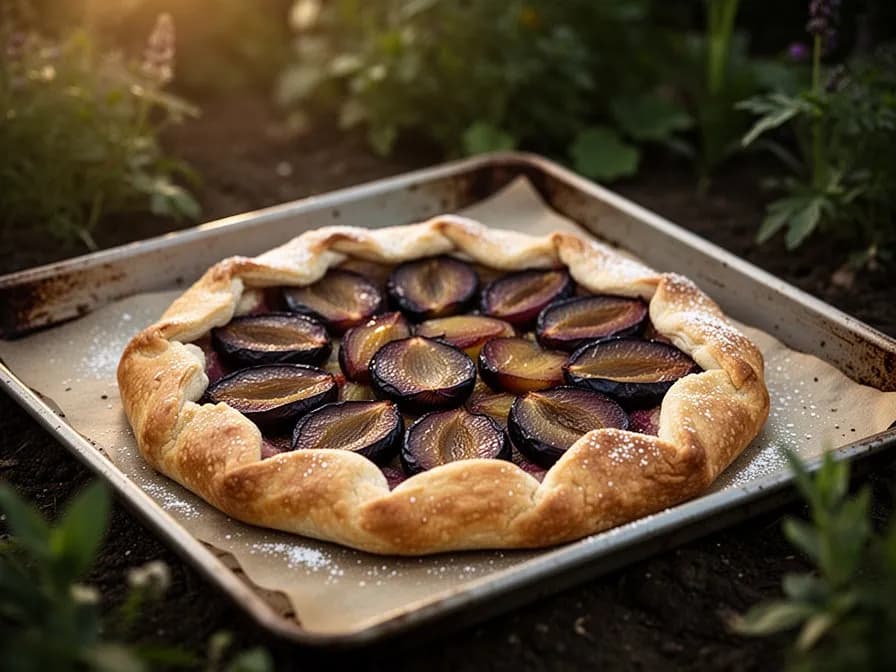
Rustic Plum Galette
30 minutes plus 35 minutes bakingA free-form tart that celebrates imperfection, with a buttery pastry crust folded loosely around sliced plums. The edges caramelise beautifully in the oven while the plums soften into a jammy filling. Serve warm with a scoop of vanilla ice cream or a drizzle of cream.
Spiced Plum Chutney
20 minutes plus 1 hour simmeringA rich, warmly spiced chutney that pairs wonderfully with cheese, cold meats, and curries. This preserve improves with age and makes an excellent way to use a glut of plums from the garden. It keeps for up to a year in sterilised jars stored in a cool, dark place.
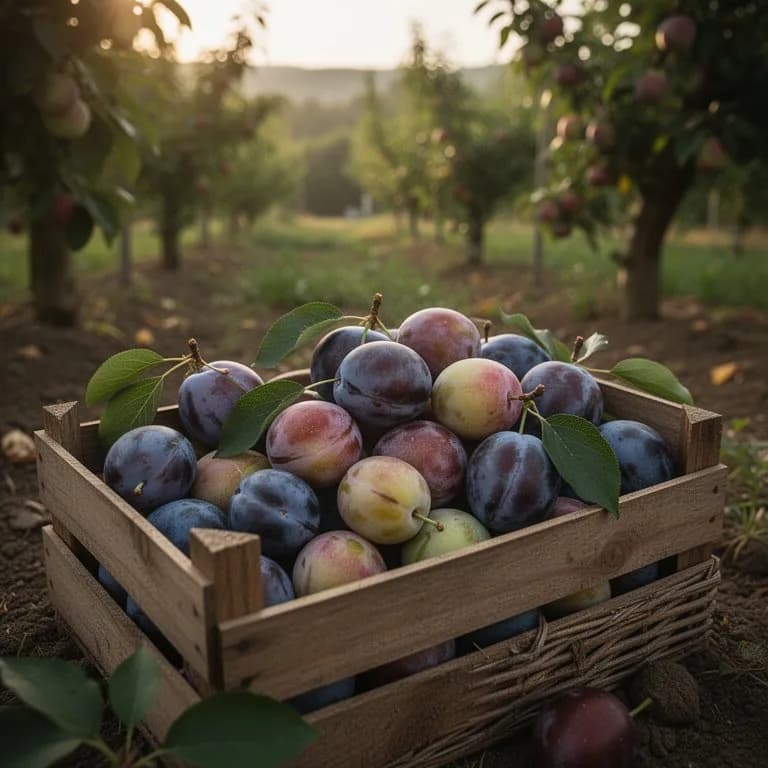
Harvesting plums at peak ripeness when the fruit yields slightly to gentle thumb pressure
Yield & Spacing Calculator
See how many Plum plants fit in your garden bed based on the recommended 300cm spacing.
0
Plum plants in a 4×4 ft bed
0 columns × 0 rows at 300cm spacing
Popular Varieties
Some of the most popular plum varieties for home gardeners, each with unique characteristics.
Stanley
The classic European prune plum, self-fertile and reliable, producing dark blue freestone fruit perfect for drying, canning, and fresh eating.
Santa Rosa
A leading Japanese plum with red-over-yellow skin and juicy, tangy-sweet amber flesh, partially self-fertile but better with a pollinator.
Damson
A small, intensely flavored European plum traditionally used for jam, gin, and preserves, extremely hardy and self-fertile.
Greengage
A premium European dessert plum with translucent green-gold flesh and honeyed sweetness, considered the finest-flavored plum variety.
Methley
An early-ripening, self-fertile Japanese plum with deep red skin and blood-red flesh, an excellent pollinator for other Japanese varieties.
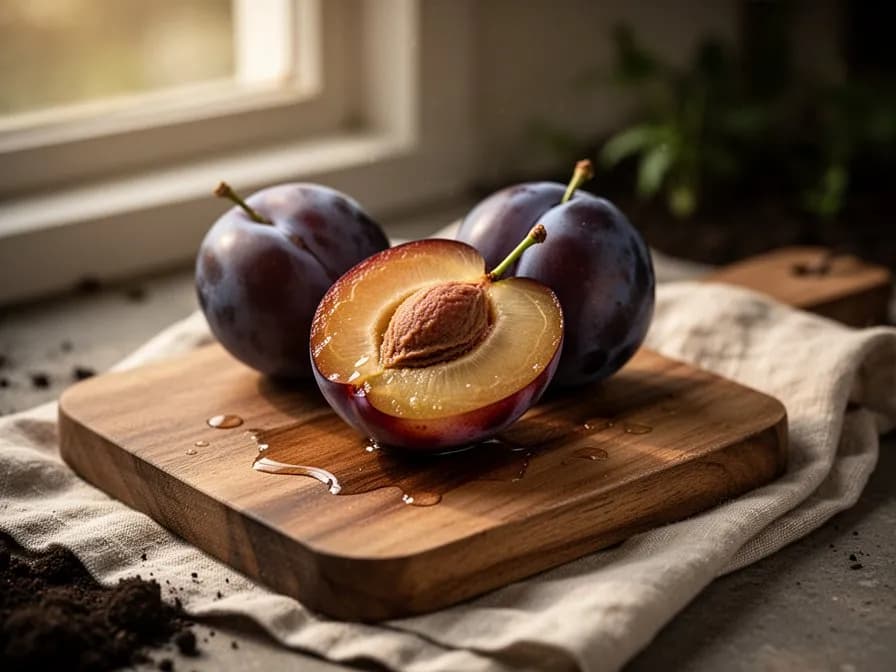
Popular plum varieties range from sweet dessert types like Victoria to tart culinary damsons and aromatic greengages
Plums are versatile in both sweet and savory cooking. They make outstanding pies, tarts, crumbles, and galettes. Plum sauce is a staple condiment in Chinese cuisine, and damson gin is a British tradition. Prunes are nutritional powerhouses rich in fiber, vitamin K, and potassium. Fresh plums pair with cinnamon, star anise, ginger, and duck. Plum compote and plum butter are elegant breakfast condiments.
When should I plant Plum?
Plant Plum in March, April. It takes approximately 730 days to reach maturity, with harvest typically in July, August, September.
What are good companion plants for Plum?
Plum grows well alongside Garlic, Marigold, Chives. Companion planting can improve growth, flavor, and natural pest control.
What hardiness zones can Plum grow in?
Plum thrives in USDA hardiness zones 4 through 9. With greenhouse protection, it may be grown in zones 2 through 10.
How much sun does Plum need?
Plum requires Full Sun (6-8h+). This means at least 6-8 hours of direct sunlight daily.
How far apart should I space Plum?
Space Plum plants 300cm (118 inches) apart for optimal growth and air circulation.
What pests and diseases affect Plum?
Common issues include Plum Curculio, Silver Leaf Disease, Brown Rot, Plum Aphid. Prevention through good garden practices like crop rotation, proper spacing, and companion planting is the best approach. See the detailed pests and diseases section above for symptoms, prevention, and treatment for each.
How do I store Plum after harvest?
Ripe plums store in the refrigerator for up to two weeks. European plum varieties dry exceptionally well as prunes: halve, pit, and dry at 140 degrees Fahrenheit until leathery. Plum jam and preserves are classic preparations, and the high pectin content in many varieties aids natural gelling. Plums...
What are the best Plum varieties to grow?
Popular varieties include Stanley, Santa Rosa, Damson, Greengage, Methley. Each has unique characteristics suited to different growing conditions and culinary preferences. See the varieties section above for detailed descriptions.
What soil does Plum need?
Plums perform well in most well-drained soils with a pH of 5.5 to 6.5. They are more tolerant of clay soils than other stone fruits but still require adequate drainage. Apply a moderate amount of balanced fertilizer in early spring. Avoid excessive nitrogen, which promotes soft growth susceptible to...
Do I need two plum trees for cross-pollination?
It depends on the variety. Self-fertile cultivars such as Victoria, Czar, and Opal will set fruit with their own pollen and can be planted alone. However, even self-fertile trees tend to produce heavier crops when a compatible pollinator is nearby. Many excellent varieties like Marjorie's Seedling and Cambridge Gage require a different plum variety flowering at the same time for successful pollination. Check the pollination group of your chosen variety before buying, and plant a compatible partner within 15-20 metres if needed.
When is the best time to prune a plum tree?
Always prune established plum trees in summer, ideally between mid-June and the end of August. This timing is critical because silver leaf disease, a serious and potentially fatal fungal infection, enters through pruning wounds and is most active during the damp autumn and winter months. Summer pruning also allows wounds to heal quickly in warm weather. The only exception is formative pruning of newly planted young trees, which can be done at planting time in winter. Remove dead, diseased, or crossing branches and shorten new lateral growth to maintain shape and encourage fruiting spurs.
Why is my plum tree not producing any fruit?
The most common reasons are frost damage to blossoms, lack of a compatible pollination partner, or the tree being too young. Plum blossoms are very susceptible to late spring frosts, so a single cold night during bloom can destroy the entire potential crop. If your variety is not self-fertile, you need a second plum tree from a compatible pollination group nearby. Young trees may take 3-6 years to begin fruiting depending on rootstock. Other causes include over-vigorous growth from excessive nitrogen fertilisation, heavy shade, or biennial bearing where the tree crops heavily one year and rests the next.
How do I prevent brown rot on my plums?
Brown rot is the most common fungal disease of plums, causing fruit to turn brown and develop concentric rings of grey-white fungal spores. Prevention starts with good hygiene: remove and destroy all affected fruit immediately, including mummified fruit left on the tree over winter, as these are the primary source of reinfection. Ensure good air circulation by pruning to maintain an open canopy. Avoid damaging fruit during harvest, as the fungus enters through wounds. Pick up fallen fruit regularly and do not compost infected material. In severe cases, a fungicide spray at blossom time may be warranted.
Can I grow a plum tree in a container?
Yes, plum trees on dwarfing rootstock such as Pixy grow well in large containers of at least 45-50 litres capacity. Use a loam-based compost such as John Innes No. 3 mixed with perlite for drainage. Container-grown plums need regular watering, especially when fruit is developing, and should be fed with a balanced fertiliser in spring followed by a high-potash liquid feed fortnightly from fruit set until harvest. Repot every 2-3 years in fresh compost, root-pruning if necessary to keep the tree within its container. Move pots to a sheltered position if severe frost threatens during the blossom period.
What are the best plum varieties for a home garden?
Victoria is the most popular all-round choice: self-fertile, reliable, and excellent for both eating fresh and cooking. For a compact garden, Czar on Pixy rootstock produces heavy crops of tart cooking plums on a small tree and is also self-fertile. Opal is an early-ripening Swedish variety with outstanding sweet flavour and good disease resistance. For something special, try Old Green Gage for its intensely aromatic, honey-sweet fruit, though it benefits from a warm wall and a pollination partner. Marjorie's Seedling is a late-season variety that extends the harvest into October and stores exceptionally well.
Ready to Grow Plum?
Add Plum to your garden plan and start designing your perfect layout.

Vladimir Kusnezow
Gardener and Software Developer
Zone 6b gardener. Growing vegetables and fruits in soil and hydroponics for 6 years. I built PlotMyGarden to plan my own gardens.
Jump to Section