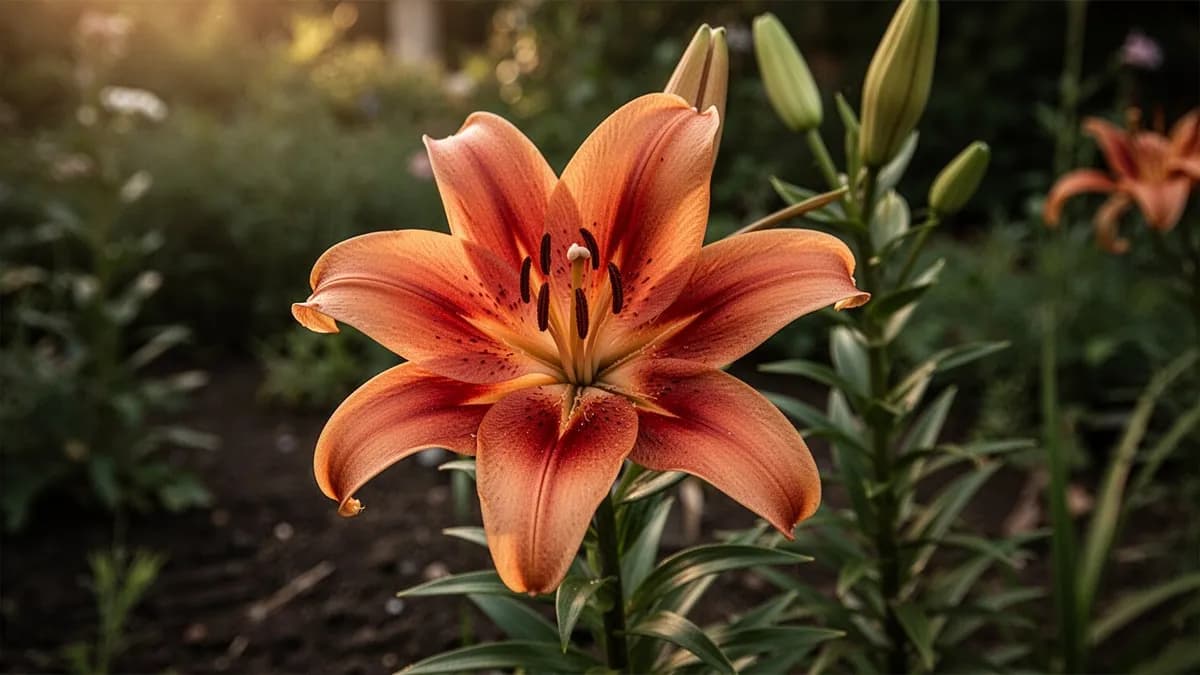
Oriental Lily
Lilium orientalis
At a Glance
A premium cut flower with enormous, intensely fragrant blooms in white, pink, and crimson, often spotted or edged in contrasting colors. Oriental lilies produce fewer but much larger flowers per stem than Asiatic types and bloom later in summer. Remove anthers immediately when cutting to prevent pollen stains on clothing and furniture.
Planting & Harvest Calendar
Growth Stages
From Seed to Harvest
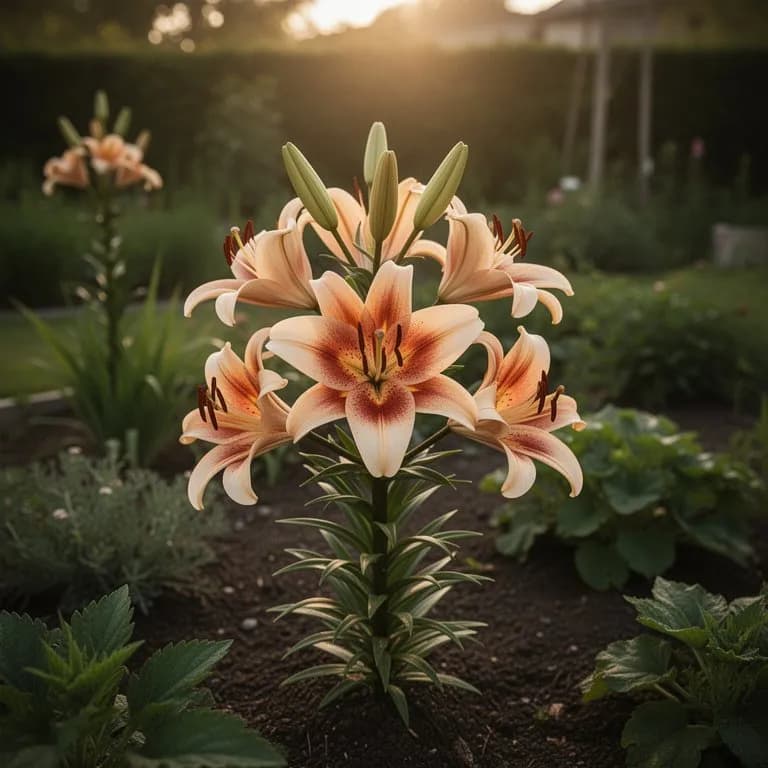
Bulb Dormancy and Root Establishment
Days 0–30
After planting in autumn or early spring, the bulb begins developing a strong root system beneath the soil surface. During this phase the bulb draws on its stored energy reserves to push out basal roots that anchor the plant and prepare it for vigorous spring growth. No above-ground growth is visible, but healthy root development during this period is critical for future stem strength and flower quality.
💡 Care Tip
Keep the soil consistently moist but never waterlogged. Ensure the planting site has excellent drainage to prevent bulb rot. A light application of bone meal at planting provides phosphorus for root development.
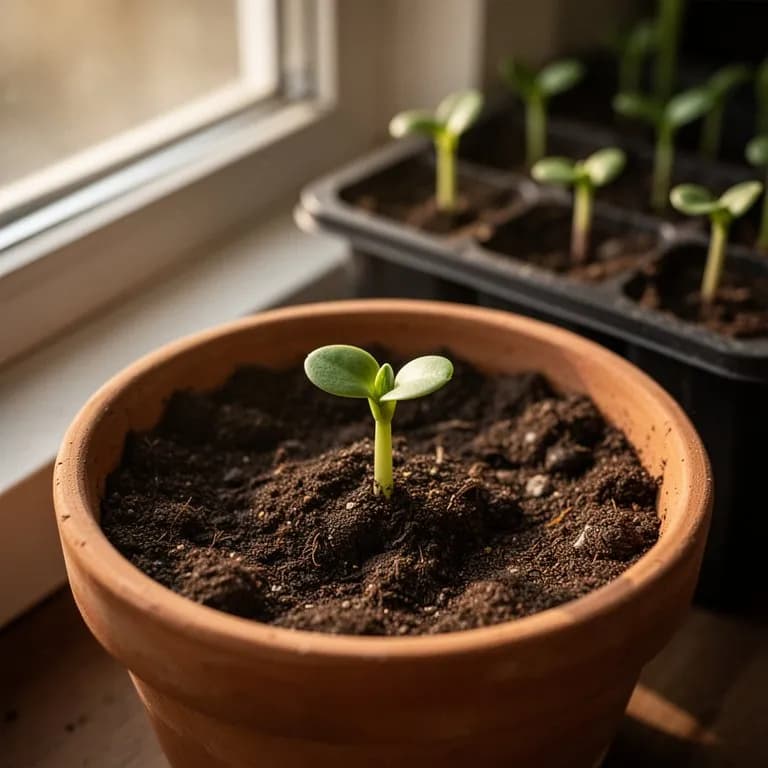
Sturdy green shoots appear in mid-spring and grow rapidly once temperatures warm
Monthly Care Calendar
What to do each month for your Oriental Lily
May
You are hereWatch for lily beetle adults and larvae, removing them by hand daily if present. Continue regular fertilizing and watering as stems elongate rapidly. Thin any overcrowded clumps by carefully removing smaller offset bulbs and replanting them elsewhere.
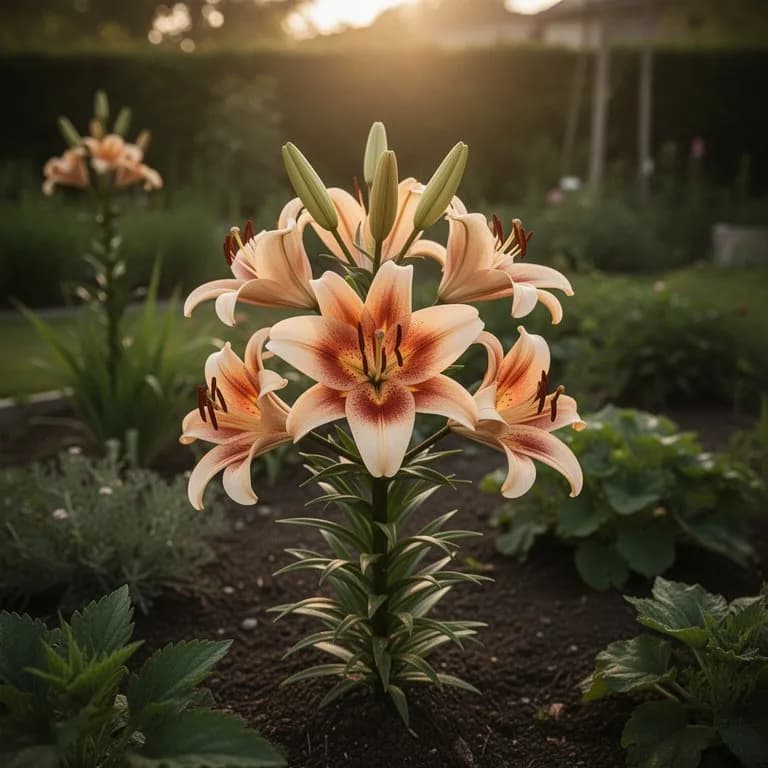
A thick layer of mulch protects bulbs through winter in zones 4 through 8
Did You Know?
Fascinating facts about Oriental Lily
Oriental lilies are the result of complex hybridization primarily involving Lilium auratum and Lilium speciosum, both native to Japan, where they have been cultivated for over a thousand years.
Plant oriental lily bulbs in autumn or early spring, six to eight inches deep with the pointed end up, spacing twelve inches apart in rich, well-drained, slightly acidic soil. Choose a location with morning sun and afternoon shade in hot climates, or full sun in cooler regions. Excellent drainage is critical, as the large bulbs rot quickly in waterlogged conditions. Add coarse sand or grit to the planting hole in heavy soils.
Water regularly during the growing season, keeping soil consistently moist but never soggy. Feed with a balanced liquid fertilizer every two to three weeks from emergence through flowering. As the heavy flower buds develop, stake tall varieties to prevent the stems from toppling under the weight of the enormous, fragrant blooms.
After flowering, remove spent blooms but leave the stem and foliage intact until they yellow naturally in autumn. The leaves and stem photosynthesize to rebuild the bulb for next year's display. Apply a four-inch mulch of leaf mold or shredded bark over the planting area in late autumn. Oriental lilies are extremely toxic to cats and even small exposures can cause fatal kidney failure, so never use as cut flowers in homes with cats.
Oriental lilies trace their ancestry to the mountainous woodlands of Japan and eastern Asia, where their parent species Lilium auratum and Lilium speciosum have grown wild for millennia. Lilium auratum, known as the golden-rayed lily, was first discovered by Western botanists in the 1860s when Japan opened its borders to international trade. The striking beauty and intoxicating fragrance of these species immediately captivated European horticulturists, who began importing bulbs in enormous quantities. Early cultivation efforts were hampered by viral diseases and the exacting growing requirements of the pure species, but plant breeders persisted in their efforts to create hardier, more floriferous hybrids. The mid-twentieth century saw major breakthroughs in lily hybridization, particularly through the work of Jan de Graaff at Oregon Bulb Farms in the United States and breeders in the Netherlands. By crossing various Asian lily species with careful selection for disease resistance, flower size, and stem strength, they produced the first true oriental hybrid lilies. The introduction of the Stargazer cultivar by American breeder Leslie Woodriff in 1978 marked a watershed moment in the cut flower industry. Unlike its predecessors, Stargazer produced upward-facing blooms on strong stems, making it ideal for arrangements and bouquets. This single cultivar transformed the commercial lily market and remains one of the best-selling cut flowers in the world decades later. Today, the Netherlands serves as the epicenter of oriental lily bulb production, with Dutch growers producing billions of bulbs each year for the global floriculture trade. Modern breeding programs continue to expand the color range, extend vase life, and develop pollen-free varieties that eliminate the staining problem that has long been the one drawback of these otherwise perfect cut flowers.
Oriental lilies can be grown from seed but the process is extremely slow, requiring six or more years to reach flowering size. The preferred propagation method is bulb scale propagation. Remove outer scales from a healthy bulb in autumn, dust with fungicide, and place in a bag of moist vermiculite at 70 degrees Fahrenheit for twelve weeks. Small bulblets form at the base of each scale. Pot up and grow on for two to three years before planting in the garden.
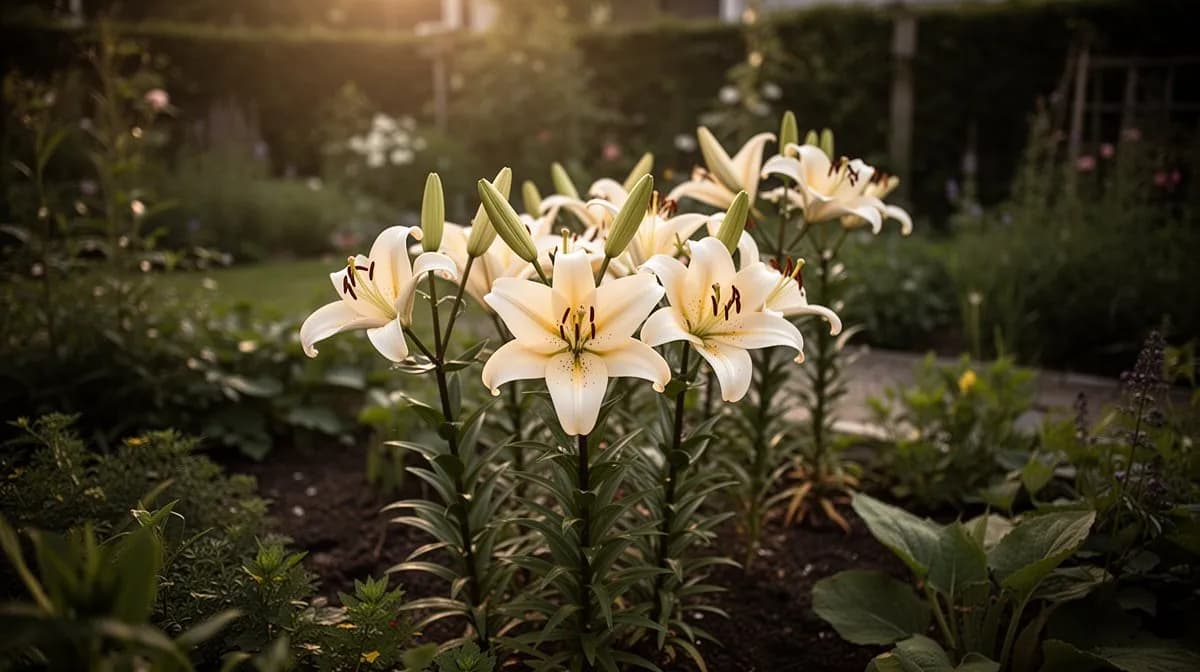
Plant bulbs 15-20 cm deep with the pointed end facing upward in autumn or early spring
Oriental lilies require rich, well-drained, acidic to neutral soil with a pH of 5.5 to 6.5. They are intolerant of alkaline conditions, which cause yellowing and poor growth. Amend the planting area with generous compost, leaf mold, and perlite for drainage. Apply a balanced slow-release fertilizer in spring and supplement with liquid feeds during active growth. Ericaceous (acid-loving) fertilizer is beneficial. Heavy mulching with organic material maintains the acidic conditions lilies prefer.
Check Your Zone
See if Oriental Lily is suitable for your location.
15°C – 25°C
59°F – 77°F
Oriental lilies perform best in moderate temperatures between 15 and 25 degrees Celsius during the active growing season. Daytime temperatures around 20 to 22 degrees Celsius and nighttime temperatures around 15 to 17 degrees Celsius promote the strongest stems and largest flowers. Temperatures consistently above 30 degrees Celsius can cause bud blast, shortened vase life, and reduced flower size. During the winter dormancy period, bulbs require a chilling period of eight to ten weeks with soil temperatures between 1 and 7 degrees Celsius to properly vernalize and initiate flower bud development for the following season.
Common issues affecting Oriental Lily and how to prevent and treat them organically.
The most critical concern is the extreme toxicity to cats. Even small amounts of pollen, leaves, or water from a lily vase can cause fatal kidney failure in cats within days. Never grow oriental lilies or use them as cut flowers in homes with cats. Lily beetle is a devastating pest that requires vigilant hand-picking. Poor drainage leads to bulb rot, and alkaline soil causes iron chlorosis and decline.
Oriental lilies are magnificent in mixed borders with roses, delphiniums, and phlox, creating a classic cottage garden feel. Plant among low perennials and groundcovers that shade the base of the lily stems, keeping the roots cool while the flowers reach for the sun. Companion plants like hostas, heucheras, and low-growing geraniums also disguise the bare lower stems. Oriental lilies bloom later than Asiatic types, extending the lily season through midsummer.
- 1Plant bulbs at a depth of three times the bulb height, typically 15 to 20 centimeters deep, to insulate them from temperature extremes and provide stem stability as the plant grows tall.
- 2Choose a planting site that receives morning sun and light afternoon shade, as oriental lilies prefer bright conditions but can suffer petal scorch and shortened bloom life in intense midday heat.
- 3Amend heavy clay or compacted soils with generous amounts of coarse perlite, pine bark fines, or sharp sand to ensure the rapid drainage that oriental lily bulbs require to avoid basal rot.
- 4Remove the pollen-bearing anthers from each flower as soon as it opens to prevent pollen stains on petals and furniture and to extend the life of each individual bloom by several days.
- 5Cut stems for indoor arrangements when the first bud on the stem shows color but has not yet fully opened, and immediately place them in lukewarm water with commercial floral preservative.
- 6Leave at least one third of the stem and all lower leaves on the plant when harvesting cut flowers so the remaining foliage can continue to photosynthesize and replenish the bulb for next year.
- 7Apply a thick organic mulch of pine needles, shredded bark, or straw around the base of plants to keep roots cool, retain soil moisture, and suppress competing weeds throughout the growing season.
- 8Inspect plants daily during summer for the bright red lily beetle and its orange larvae on the undersides of leaves, removing them by hand immediately as they can defoliate a plant within days.
- 9Avoid overhead watering and water at the base of plants instead to keep foliage dry, as wet leaves create conditions favorable for botrytis blight, the most common fungal disease of oriental lilies.
- 10Rotate planting locations every three to four years or refresh the soil with compost and balanced fertilizer to prevent the buildup of soilborne pathogens and nutrient depletion that reduce bloom quality over time.
Cut oriental lilies when the first bud on the stem is just beginning to show color and feel slightly soft when gently squeezed. Remaining buds will open in sequence over the following week. Immediately remove the orange anthers from opening flowers to prevent pollen stains on petals, clothing, and furniture. Place in cool water and display in a cool room for the longest life of seven to fourteen days. CRITICAL: All lily species are extremely toxic to cats.
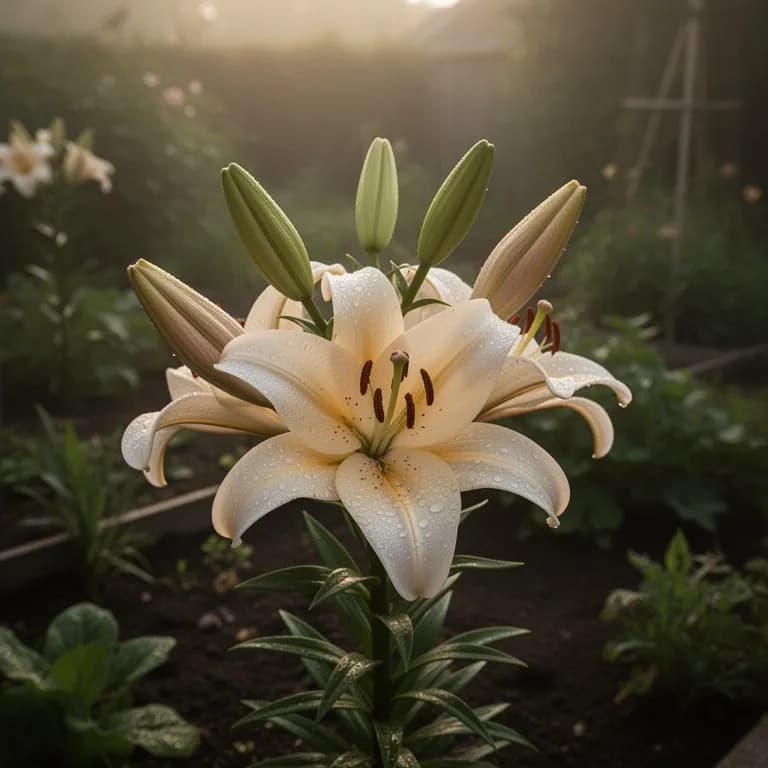
Cut stems when the first bud shows color but before it fully opens for the longest vase life
Oriental lily bulbs should remain in the ground year-round where they are hardy. Mulch heavily in autumn in colder zones. If lifting is necessary, store bulbs in barely damp peat moss at 35 to 40 degrees Fahrenheit. The bulbs lack a protective outer skin and dry out quickly, so keep them barely moist. Cut flowers do not dry well. For propagation, remove bulb scales in autumn, treat with fungicide, and place in a bag of moist vermiculite for several months to form bulblets.
Plan your garden with ease
Love growing Oriental Lily? Use our free garden planner to design your beds, track planting dates, and get personalized care reminders.
Nutritional Info
Per 100g serving
0
Calories
Health Benefits
- Oriental lilies are grown exclusively as ornamental plants and cut flowers and are not used for culinary purposes
- All parts of the oriental lily plant are highly toxic to cats and can cause acute kidney failure even from minor exposure to pollen or leaf material
- While some lily species such as daylilies (Hemerocallis) have edible flowers and buds, oriental lilies (Lilium) should never be consumed
- The strong fragrance compounds in oriental lily petals include linalool, methyl benzoate, and ocimene, which are used in the perfume and aromatherapy industries
- Lily bulbs of certain species are eaten in East Asian cuisine, but oriental hybrid lily bulbs are not among the edible varieties and should not be consumed
💰 Why Grow Your Own?
Growing your own oriental lilies for cut flowers can yield significant savings compared to purchasing them from florists. A single premium oriental lily bulb costs between two and five dollars and produces three to five cut stems per year once established. A florist-quality oriental lily stem typically retails for eight to fifteen dollars. A planting of just ten bulbs can produce forty or more stems per season after the second year, representing a potential value of three hundred to six hundred dollars in cut flowers annually from an initial investment of under fifty dollars in bulbs.
Quick Recipes
Simple recipes using fresh Oriental Lily
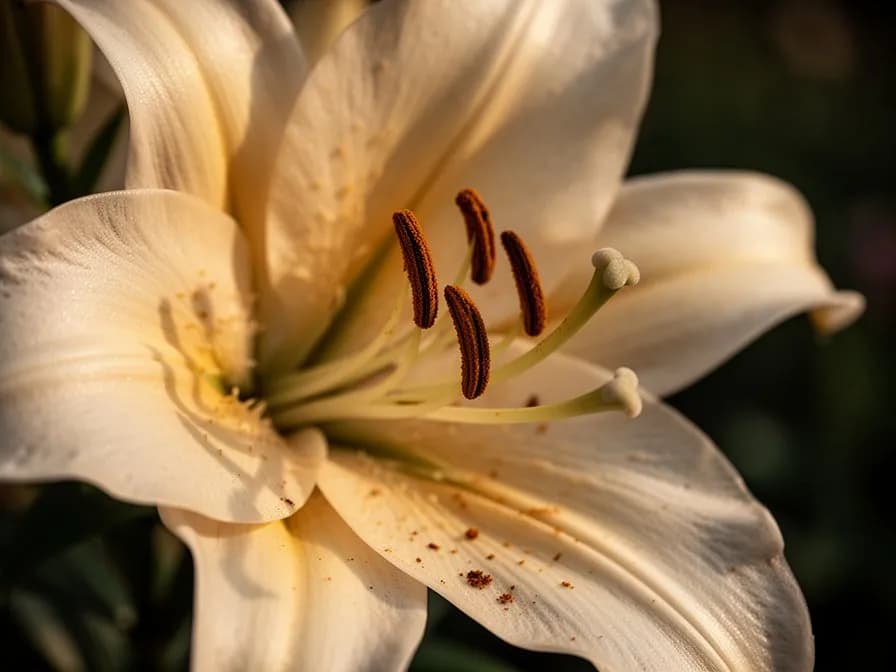
Classic Oriental Lily Centerpiece Arrangement
15 minutesCreate a show-stopping centerpiece arrangement that highlights the dramatic blooms and intoxicating fragrance of oriental lilies. This arrangement uses a combination of partially open and budded stems to ensure the display evolves over seven to ten days, with new blooms opening as earlier ones fade.
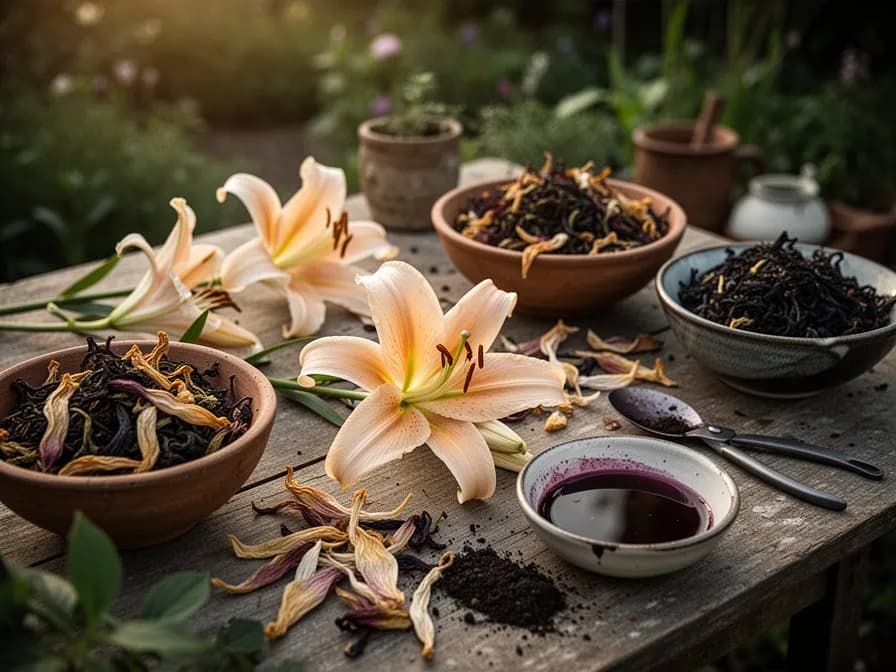
Romantic Lily and Rose Bridal Bouquet
25 minutesCombine the lush, fragrant blooms of oriental lilies with classic roses and soft textural greenery to create a timeless bridal bouquet. Remove all lily anthers before assembly to prevent pollen stains on the bridal gown. This bouquet style works equally well as a hand-tied design or arranged in a bouquet holder.
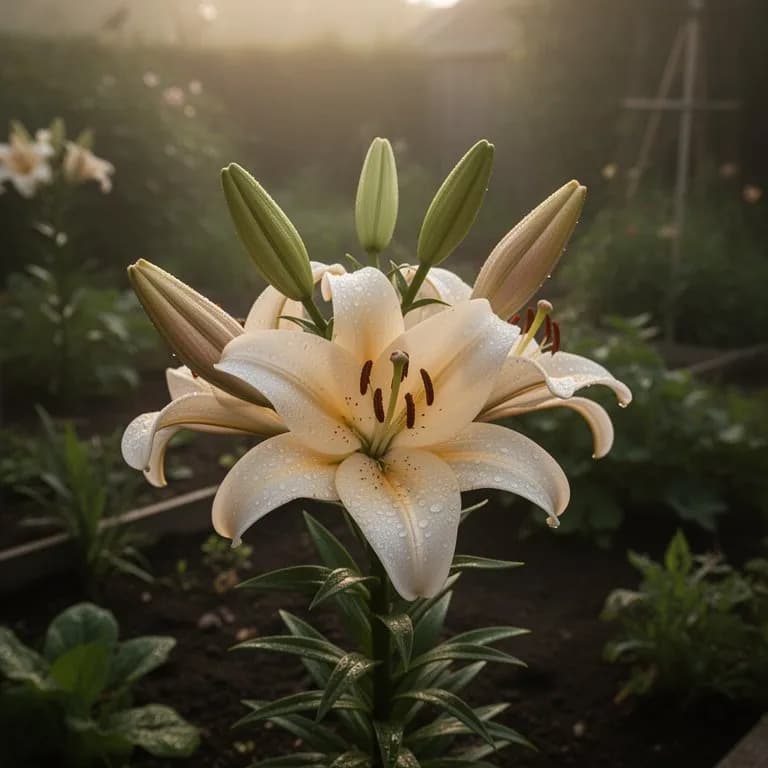
Long-Lasting Single Stem Bud Vase Display
5 minutesShowcase a single magnificent oriental lily stem in a slender bud vase for an elegant minimalist display. By selecting a stem where only the lowest bud has begun to open, you can enjoy up to two weeks of evolving beauty as each subsequent bud unfurls. This simple presentation is perfect for a nightstand, bathroom counter, or office desk.
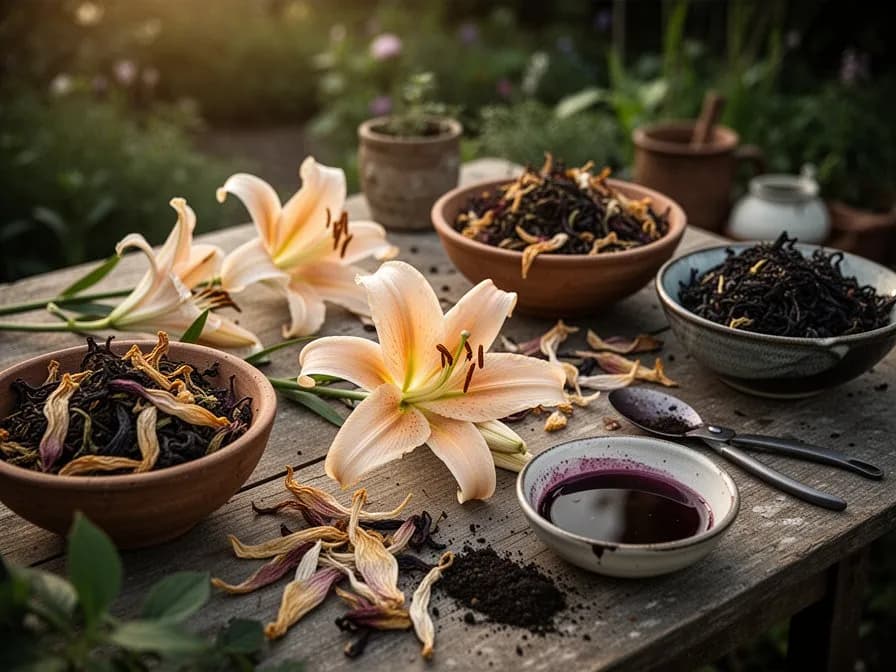
Oriental lilies serve as stunning focal flowers in arrangements, lasting seven to fourteen days in a vase
Yield & Spacing Calculator
See how many Oriental Lily plants fit in your garden bed based on the recommended 30cm spacing.
16
Oriental Lily plants in a 4×4 ft bed
4 columns × 4 rows at 30cm spacing
Popular Varieties
Some of the most popular oriental lily varieties for home gardeners, each with unique characteristics.
Stargazer
The iconic oriental lily with upward-facing deep pink flowers spotted in crimson and edged in white, intensely fragrant.
Casa Blanca
Pure white, large, outward-facing flowers with an intoxicating fragrance, the standard for wedding and event work.
Sorbonne
Soft pink blooms with white margins and light spotting, a refined fragrance, excellent vase life for commercial production.
Muscadet
White petals with light pink spotting and a delicate fragrance, a fresh and elegant addition to summer bouquets.
The Stargazer cultivar is one of the most popular oriental lilies for cut flower arrangements
When should I plant Oriental Lily?
Plant Oriental Lily in March, April, October. It takes approximately 120 days to reach maturity, with harvest typically in July, August.
What are good companion plants for Oriental Lily?
Oriental Lily grows well alongside Oriental Lily, Asiatic Lily, Dahlia. Companion planting can improve growth, flavor, and natural pest control.
What hardiness zones can Oriental Lily grow in?
Oriental Lily thrives in USDA hardiness zones 4 through 9. With greenhouse protection, it may be grown in zones 2 through 10.
How much sun does Oriental Lily need?
Oriental Lily requires Full Sun (6-8h+). This means at least 6-8 hours of direct sunlight daily.
How far apart should I space Oriental Lily?
Space Oriental Lily plants 30cm (12 inches) apart for optimal growth and air circulation.
What pests and diseases affect Oriental Lily?
Common issues include Lily Beetle, Botrytis (Gray Mold), Vine Weevil. Prevention through good garden practices like crop rotation, proper spacing, and companion planting is the best approach. See the detailed pests and diseases section above for symptoms, prevention, and treatment for each.
How do I store Oriental Lily after harvest?
Oriental lily bulbs should remain in the ground year-round where they are hardy. Mulch heavily in autumn in colder zones. If lifting is necessary, store bulbs in barely damp peat moss at 35 to 40 degrees Fahrenheit. The bulbs lack a protective outer skin and dry out quickly, so keep them barely mois...
What are the best Oriental Lily varieties to grow?
Popular varieties include Stargazer, Casa Blanca, Sorbonne, Muscadet. Each has unique characteristics suited to different growing conditions and culinary preferences. See the varieties section above for detailed descriptions.
What soil does Oriental Lily need?
Oriental lilies require rich, well-drained, acidic to neutral soil with a pH of 5.5 to 6.5. They are intolerant of alkaline conditions, which cause yellowing and poor growth. Amend the planting area with generous compost, leaf mold, and perlite for drainage. Apply a balanced slow-release fertilizer ...
How long do oriental lily cut flowers last in a vase?
With proper care, oriental lily stems last seven to fourteen days in a vase. For the longest life, cut stems early in the morning, remove all foliage below the waterline, use commercial floral preservative in clean water, and change the water every two to three days. Keeping the arrangement away from direct sunlight, heating vents, and ripening fruit also extends longevity significantly.
Are oriental lilies toxic to cats?
Yes, all parts of oriental lilies are extremely toxic to cats and can cause acute kidney failure within 24 to 72 hours of exposure. Even minor contact with pollen, a nibbled leaf, or water from a lily vase can be fatal. If you have cats, do not bring oriental lilies into your home and consider growing alternative cut flowers such as roses, snapdragons, or zinnias instead.
Why do my oriental lily buds turn brown and fail to open?
This condition is called bud blast and is typically caused by inconsistent watering, excessive heat above 30 degrees Celsius, insufficient light, or root damage. Maintaining even soil moisture, providing afternoon shade in hot climates, and ensuring good drainage to prevent root rot are the most effective prevention strategies. Nutrient deficiency, particularly potassium, can also contribute to bud blast.
Can I grow oriental lilies in containers for cut flower production?
Oriental lilies grow well in containers at least 30 centimeters deep and wide, using a well-draining potting mix enriched with slow-release fertilizer. Plant three bulbs per 30-centimeter pot for a full display. Container-grown lilies need more frequent watering and feeding than in-ground plants, and the containers should be insulated or moved to a sheltered location in winter to protect the bulbs from freeze-thaw cycles.
How do I prevent the strong lily fragrance from being overwhelming indoors?
If you find the fragrance too intense, remove the anthers from each flower as they open, which reduces scent production somewhat. You can also place arrangements in larger, well-ventilated rooms or near an open window. Some newer cultivars such as the Roselily series have been bred with reduced fragrance and double petals, making them a good choice for smaller indoor spaces or fragrance-sensitive individuals.
When is the best time to plant oriental lily bulbs for cut flower production?
The ideal planting time is autumn, approximately four to six weeks before the ground freezes, which allows the bulbs to establish roots before winter dormancy. In regions with mild winters, bulbs can also be planted in late winter or very early spring as soon as the soil is workable. Autumn-planted bulbs generally produce stronger stems and larger flowers in their first season compared to spring-planted ones because they benefit from the full natural chilling period.
Ready to Grow Oriental Lily?
Add Oriental Lily to your garden plan and start designing your perfect layout.

Vladimir Kusnezow
Gardener and Software Developer
Zone 6b gardener. Growing vegetables and fruits in soil and hydroponics for 6 years. I built PlotMyGarden to plan my own gardens.
Jump to Section