Asiatische Lilie
Die am frühesten blühende Liliengruppe mit nach oben gerichteten Blüten in kräftigen Farben wie Rot, Orange, Gelb, Rosa und Weiß.





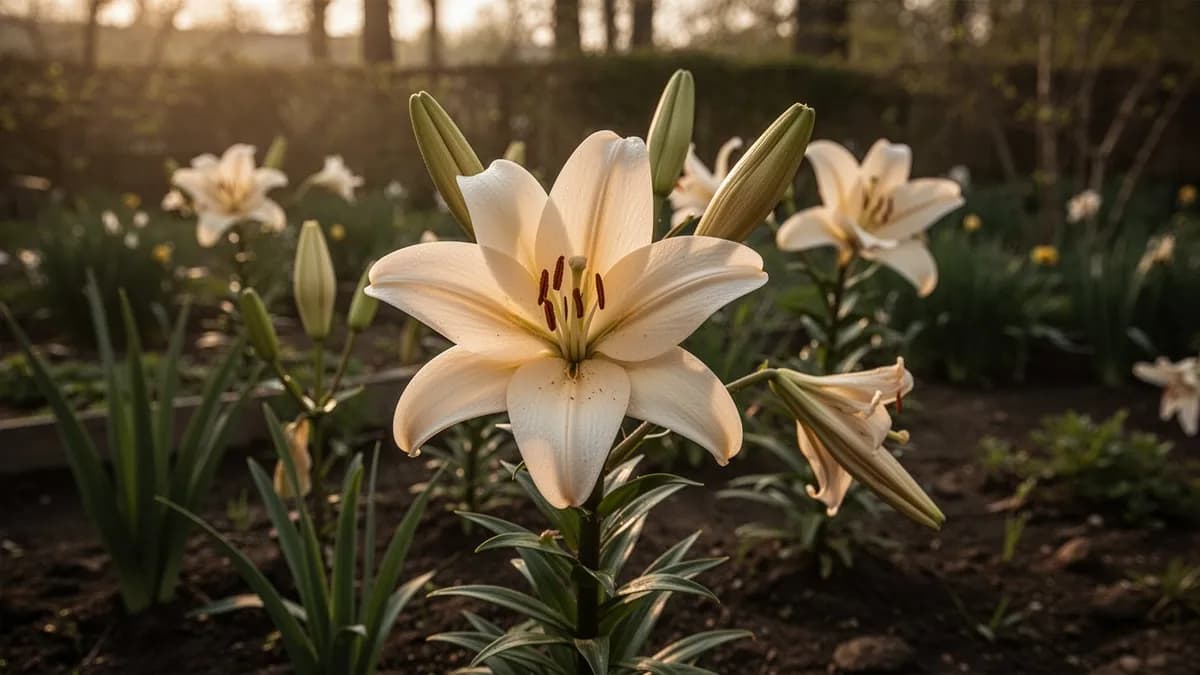
Auf dieser SeiteÜberblick
Asiatische Lilie im Überblick
Die am frühesten blühende Liliengruppe mit nach oben gerichteten Blüten in kräftigen Farben wie Rot, Orange, Gelb, Rosa und Weiß. Asiatische Lilien sind duftlos, vermehren sich jedoch schnell durch Brutzwiebeln und gehören zu den winterhärtesten und pflegeleichtesten Lilien. Pflanzen Sie sie in gut durchlässigen, mit organischem Material angereicherten Boden und mulchen Sie, um die Wurzeln kühl zu halten.
Wann Asiatische Lilie pflanzen
Asiatische Lilien vermehren sich leicht durch Zwiebeltochterzwiebeln und Stängel-Brutzwiebeln, was eine Samenvermehrung unnötig macht. Zum Teilen heben Sie Horste im Herbst aus, trennen die Zwiebeln und pflanzen sie sofort in 15 cm Tiefe wieder ein. Stängel-Brutzwiebeln (kleine Zwiebeln an den Blattachseln) können im Herbst geerntet, 3 cm tief gepflanzt und 2–3 Jahre bis zur Blühgröße kultiviert werden. Für die Aussaat säen Sie frischen Samen im Herbst; die Keimung variiert je nach Hybride.
Dein Asiatische Lilie-Jahr
Abgestimmt auf Zone 7 · typische Saison · Frost geht um den 2. Apr. und kehrt um den 1. Nov. zurück
Asiatische Lilie Mär – Apr, Okt – Nov pflanzen, Jun – Jul ernten. Beachte die Pflanzmethoden unten und wähle dein Klima für passende Zeiträume.
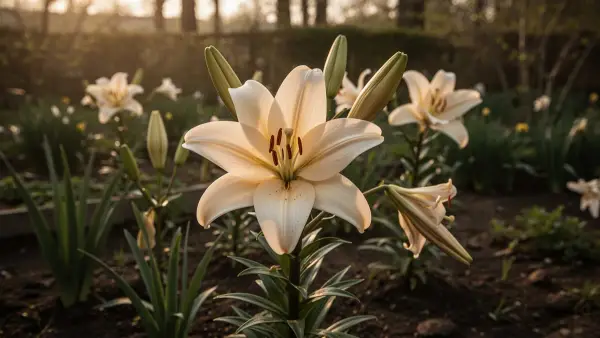
So baust du Asiatische Lilie an
Asiatische Lilien sind die einfachsten und zuverlässigsten Gartenlilien und produzieren nach oben gerichtete Blüten in kräftigen, gesättigten Farben an stabilen 60–120 cm hohen Stängeln. Sie sind die ersten Lilien, die jedes Jahr blühen (Juni–Juli), vollständig winterhart, vermehren sich schnell und vertragen ein breiteres Spektrum an Bedingungen als andere Liliengruppen. Obwohl ihnen der Duft orientalischer Lilien fehlt, gleichen sie dies durch ihre lebhafte Farbpalette und ihre absolute Zuverlässigkeit mehr als aus.
Pflanzen Sie die Zwiebeln im Frühjahr oder Herbst 15 cm tief in gut durchlässigen, mit organischem Material angereicherten Boden. Volle Sonne ist ideal, aber die wichtigste Voraussetzung sind kühle Wurzeln – mulchen Sie großzügig mit organischem Material oder pflanzen Sie niedrig wachsende Stauden dazwischen, die den Boden beschatten. Gute Drainage ist unerlässlich, da Lilienzwiebeln nie vollständig in die Ruhephase gehen und in staunassem Boden faulen.
Asiatische Lilien vermehren sich durch Brutzwiebeln (kleine Zwiebeln), die sich entlang des unterirdischen Stängels und bei einigen Sorten an den Blattachseln bilden. Mit der Zeit entwickeln sich einzelne Zwiebeln zu beeindruckenden mehrstieligen Horsten. Stützen Sie hohe Sorten, bevor sie blühen. Entfernen Sie nach der Blüte die sich entwickelnde Samenkapsel, lassen Sie aber Stängel und Laub intakt, bis es vergilbt – dies nährt die Zwiebel für die Blüte im nächsten Jahr.
32 Pflanzen passen in ein Beet von 120 × 240 cm
Asiatische Lilie braucht 30 cm Platz pro Pflanze. Der Planer hält diesen Abstand für dich ein — jede Pflanze, jedes Beet.
Die besten Nachbarn für Asiatische Lilie
Asiatische Lilien harmonieren wunderbar mit Taglilien, Phlox, Rittersporn und Ziergräsern in gemischten Rabatten. Pflanzen Sie niedrig wachsende Stauden wie Storchschnabel und Katzenminze dazwischen, die die Lilienwurzeln beschatten. Die kühnen, nach oben gerichteten Blüten wirken gut hinter niedrigeren Pflanzen. Kombinieren Sie verschiedene Lilientypen (Asiatische, dann Orientalische, dann Trompeten) für Blüten von Juni bis September.
Lilie gehört daneben.
Altes Gärtnerwissen, geprüft an der echten Nachbartabelle von Asiatische Lilie — teste jede Pflanze, die du anbaust.
Probiere Asiatische Lilie direkt hier im Beet
Ein echtes Planer-Beet, Asiatische Lilie steht schon drin. Tippe einen Begleiter an, platziere ihn und sieh, wie die Nachbarschaftsprüfung antwortet — grün für gute Nachbarn, rot bei Streit.


Passende Anbau-Ratgeber
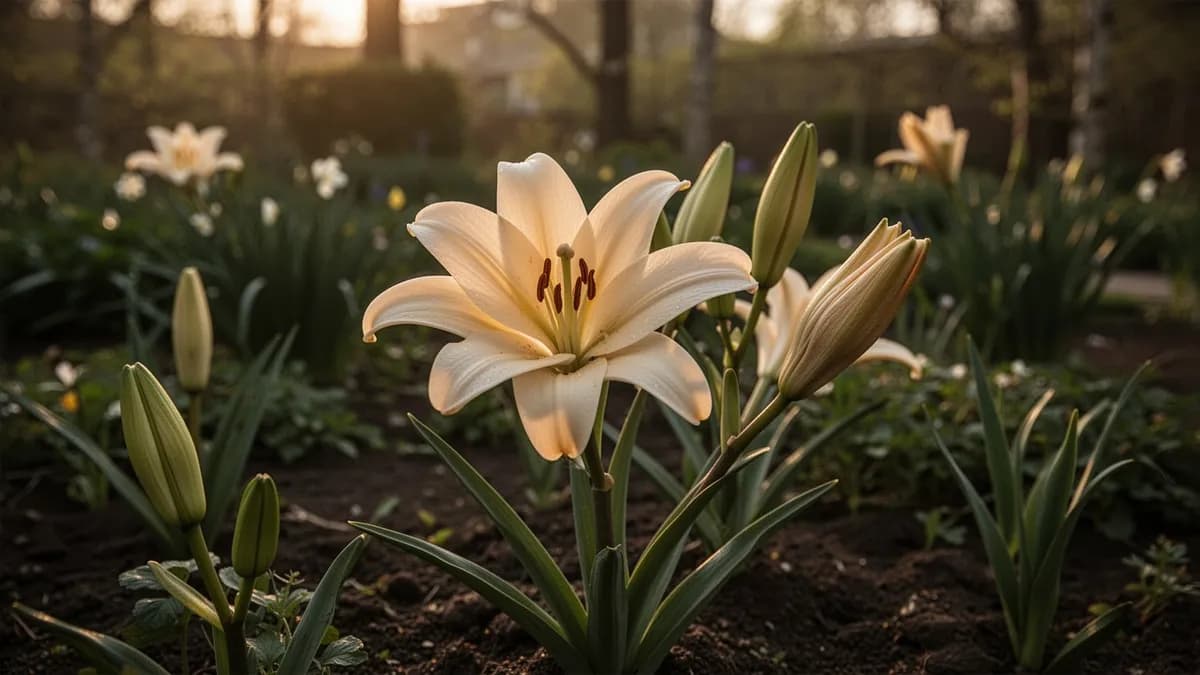
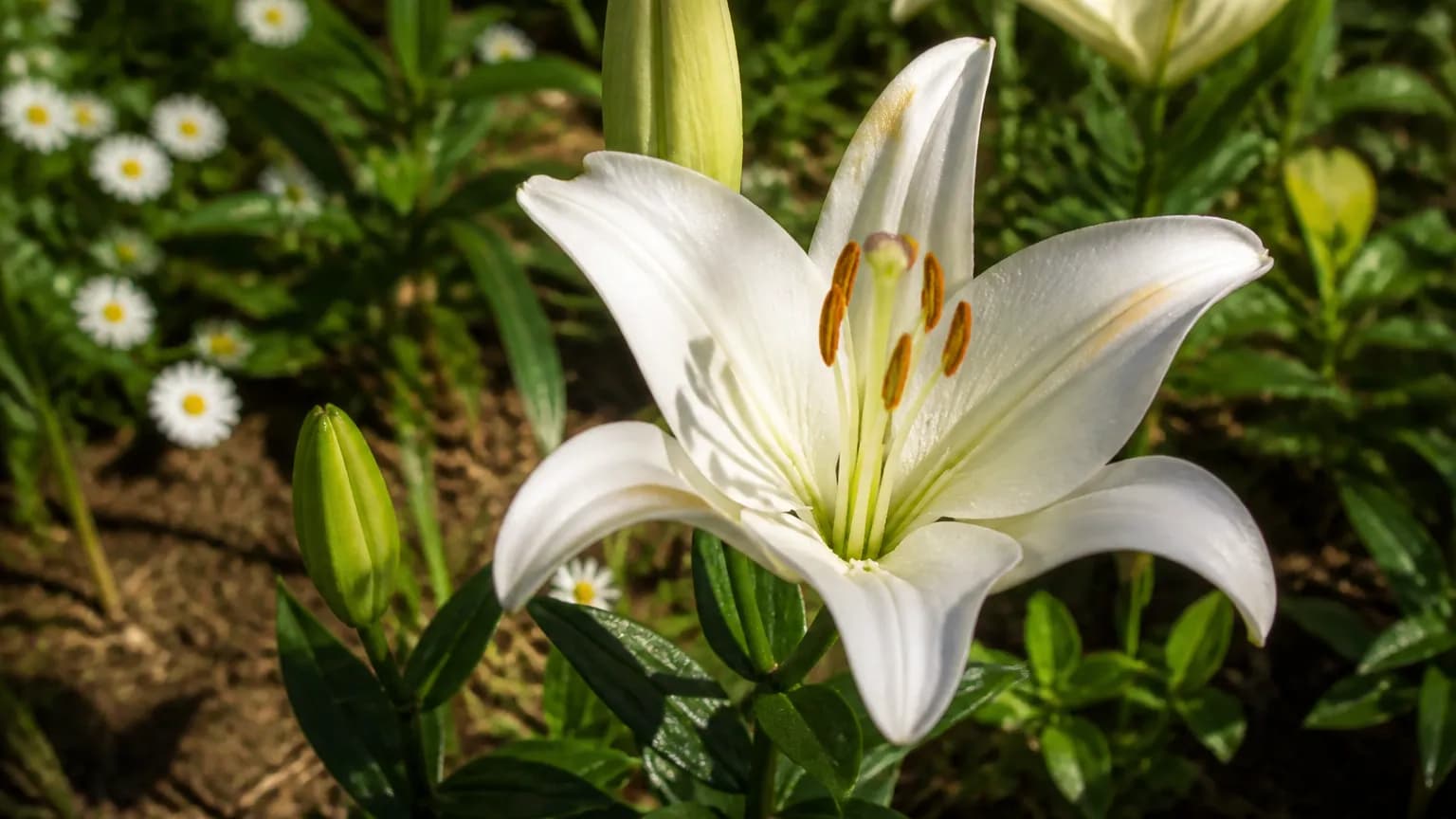
Richtig düngen
Asiatische Lilien benötigen gut durchlässigen, humusreichen Boden mit einem pH-Wert von 6,0–7,0 (leicht sauer). Arbeiten Sie vor dem Pflanzen Kompost, Lauberde oder abgelagerte Rinde ein. Mulchen Sie großzügig, um die Wurzeln kühl und feucht zu halten. Düngen Sie im Frühjahr mit ausgewogenem Zwiebeldünger und erneut mit kaliumreichem Dünger, wenn sich die Knospen entwickeln. Vermeiden Sie, dass Zwiebeln im Wasser stehen – Drainage ist der wichtigste Einzelfaktor für den Lilienerfolg.
Ideale Temperatur
Winterhärtezone-Kompatibilität
Von der Saat zur Ernte, Schritt für Schritt
Zwiebelruhe & Pflanzung
Asiatische Lilienzwiebeln werden im Herbst oder Frühjahr etwa 10–15 cm tief und 20–30 cm auseinander gepflanzt. Die Zwiebel ist eine echte Zwiebel aus fleischigen, überlappenden Schuppen, die Energie für die Wachstumsperiode speichern. Während der Ruhephase bilden sich langsam Wurzeln im umgebenden Boden, während die Zwiebel unterirdisch bleibt.
Frühjahrsaustrieb
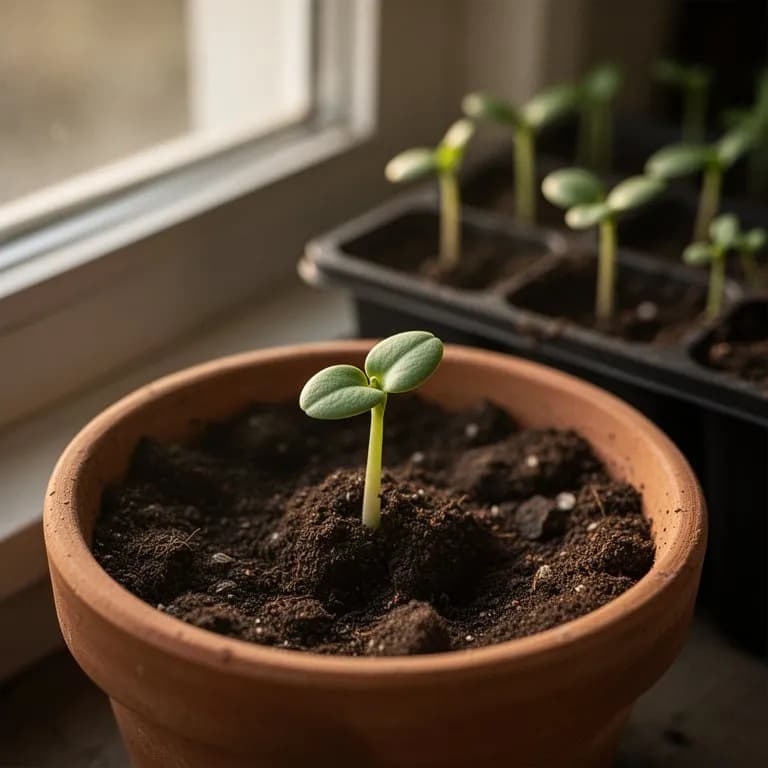
Wenn die Bodentemperaturen im Frühjahr über 10 °C steigen, treibt die Zwiebel einen einzelnen kräftigen Trieb aus. Die rötlich-grüne Spitze durchbricht den Mulch und beginnt, schmale, lanzettförmige Blätter in einem Spiralmuster entlang des Stängels zu entfalten. Das Wachstum kann bemerkenswert schnell sein, manchmal mehrere Zentimeter pro Tag.
Vegetatives Wachstum & Stängelstreckung
Der Stängel streckt sich schnell und erreicht je nach Sorte seine volle Höhe von 60–120 cm. Blätter entwickeln sich weiterhin über die gesamte Stängellänge und erzeugen durch Fotosynthese Energie für die bevorstehende Blüte. Der Stängel verdickt sich und wird steif genug, um das Gewicht mehrerer Blütenknospen zu tragen.
Knospenbildung
Feste grüne Knospen bilden sich in einem Büschel an der Spitze jedes Stängels. Wenn die Knospen reifen, schwellen sie merklich an, und an den Blütenblattspitzen zeigt sich Farbe. Je nach Sorte kann jeder Stängel drei bis zwölf Knospen tragen. Die Pflanze lenkt den Großteil ihrer gespeicherten Energie in die Entwicklung dieser Blütenknospen.
Vollblüte
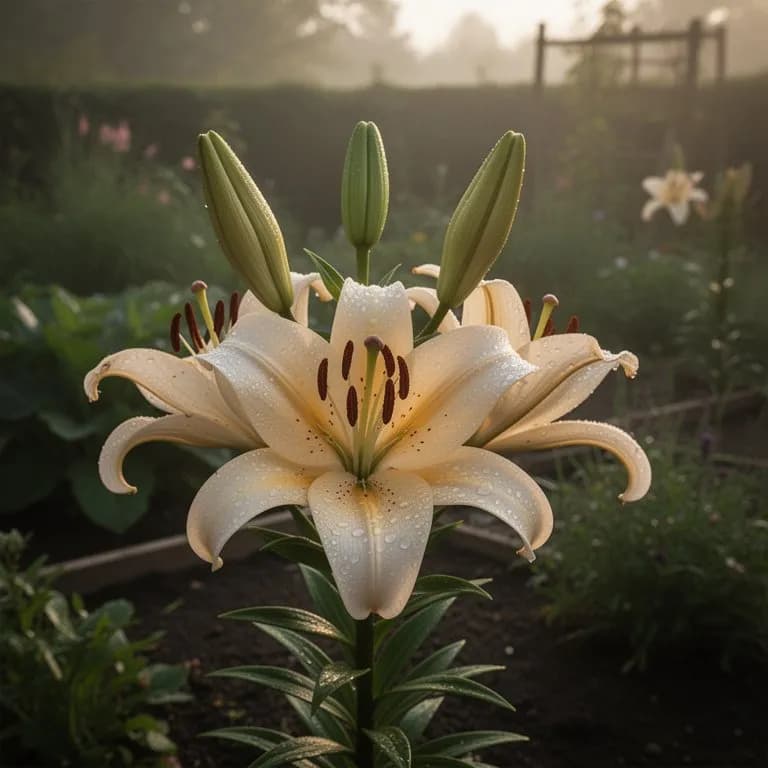
Die Blüten öffnen sich nacheinander von der untersten zur obersten Knospe, wodurch sich die Blütezeit auf zwei bis drei Wochen pro Stängel verlängert. Jede einzelne Blüte hält fünf bis sieben Tage. Asiatische Lilien sind duftlos, was sie ideal für Innenarrangements und für Gärtner macht, die empfindlich auf Düfte reagieren. Bestäuber wie Bienen und Schmetterlinge besuchen die offenen Blüten regelmäßig.
Nach der Blüte & Zwiebelaufbau
Nach der Blüte leitet die Pflanze Energie aus Blättern und Stängel zurück in die unterirdische Zwiebel. Das Laub bleibt grün und fotosyntheseaktiv für sechs bis acht Wochen nach dem Verblühen der letzten Blüte. Die Zwiebel vergrößert sich allmählich und kann kleine Tochterzwiebeln an ihrer Basis bilden, die zur Vermehrung abgetrennt werden können.
Winterruhe
Sobald das Laub vollständig abgestorben ist, geht die Zwiebel für die Wintermonate in die Ruhephase. Die vergrößerte Zwiebel ruht unterirdisch, geschützt durch Erde und Mulch, und bewahrt ihre Energiereserven für das kommende Frühjahr. In kälteren Klimazonen (USDA-Zonen 3–4) hilft eine dicke Mulchschicht, die Zwiebel vor extremen Frost-Tau-Wechseln zu schützen.
Pflanzen Sie Zwiebeln mit der Spitze nach oben in gut durchlässigen, mit Kompost angereicherten Boden. Mulchen Sie mit 5–8 cm Stroh oder gehäckselter Rinde, um die Zwiebeln zu isolieren und die Feuchtigkeit über den Winter zu bewahren.
Asiatische Lilie Monat für Monat pflegen
Was du jeden Monat für deine Asiatische Lilie tun solltest
Oktober
Aktueller MonatPflanzen Sie neue Zwiebeln und Teilstücke 10–15 cm tief in gut durchlässigen Boden. Bringen Sie eine großzügige Mulchschicht (5–8 cm) nach dem Pflanzen auf. Räumen Sie verbleibendes totes Laub von bestehenden Pflanzungen auf, um überwinternde Krankheitserreger zu reduzieren.
Immer wissen, was jetzt im Garten zu tun ist
Eine E-Mail zum Monatsanfang: was du jetzt säen, pflanzen und anpacken solltest — für deine Asiatische Lilie und alles, was drumherum wächst. Dazu ein kurzer Startkurs, der dich vor den klassischen Fehlern bewahrt.
- Was jetzt zu tun ist
- Passend zu deiner Saison
- Startkurs inklusive
Asiatische Lilie ernten
Asiatische Lilien sind hervorragende Schnittblumen, die 7–10 Tage halten. Schneiden Sie, wenn die erste Knospe im Büschel voll gefärbt ist und sich zu öffnen beginnt – die restlichen Knospen öffnen sich nacheinander. Lassen Sie mindestens ein Drittel des Stängels an der Pflanze, um die Zwiebel zu nähren. Entfernen Sie die orangefarbenen pollentragenden Staubbeutel, um Flecken auf Kleidung und Möbeln zu vermeiden.
angenommen, du pflanzt zu Beginn des Zeitraums — trage dein tatsächliches Datum ein
Aus Zwiebeln, Knollen oder Zehen
Ernte Asiatische Lilie zügig, dann trägt die Pflanze weiter.
Lagerung & Konservierung
Lilienzwiebeln bleiben am besten ganzjährig in der Erde, wo sie sich allmählich vermehren. Wenn Sie umsetzen oder teilen möchten, heben Sie die Zwiebeln im Herbst aus, nachdem das Laub vergilbt ist, trennen Sie Zwiebeln und Brutzwiebeln und pflanzen Sie sie sofort in 15 cm Tiefe wieder ein. Lilienzwiebeln haben keine schützende papierartige Haut und dürfen niemals austrocknen – lagern Sie sie bei Bedarf kurzzeitig in leicht feuchtem Torf oder Vermiculit, wenn sofortiges Einpflanzen nicht möglich ist.
Was schiefgeht — und die Lösung
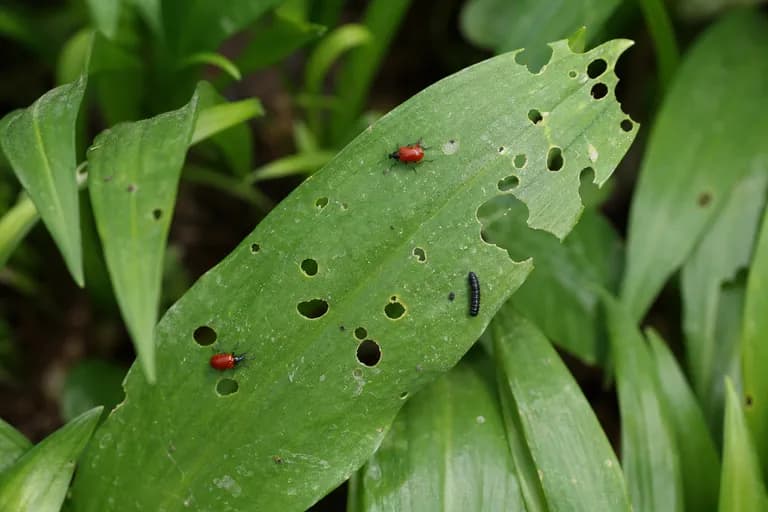
Lilienhähnchen
SchädlingLeuchtend rote Käfer und ihre schwarzen, schleimigen Larven entlauben Pflanzen schnell. Der schwerwiegendste Lilienschädling.
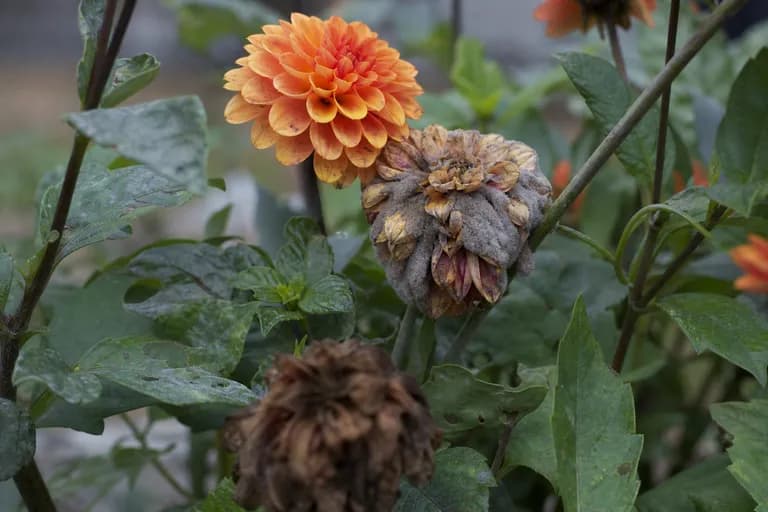
Botrytis (Grauschimmel)
KrankheitBraune, wässrige Flecken auf Blättern und Knospen. Bei kühlen, feuchten Bedingungen entwickelt sich grauer Flaum.
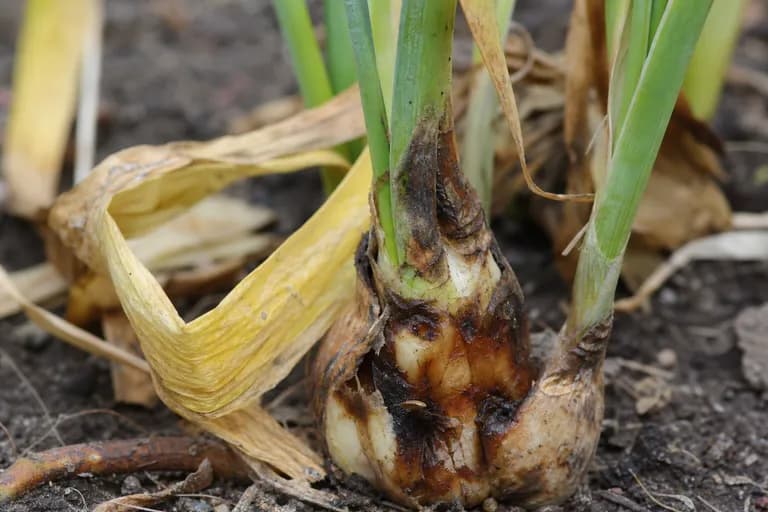
Basalfäule (Fusarium)
KrankheitDie Zwiebel fault von der Basis nach oben, was Vergilbung und Zusammenbruch verursacht. Braunes, weiches Gewebe ist an der Basalplatte sichtbar.
Fehlerbehebung bei häufigen Problemen
Lilienhähnchen sind der schwerwiegendste Schädling – untersuchen Sie die Pflanzen regelmäßig ab April und entfernen Sie Käfer sofort, bevor sie sich vermehren. Viruskrankheiten verursachen geflecktes, deformiertes Laub und fortschreitenden Verfall; entfernen und vernichten Sie befallene Pflanzen, um eine Ausbreitung durch Blattläuse zu verhindern. Zwiebelfäule in nassem Boden ist häufig; verbessern Sie die Drainage. Das Abstützen ist bei hohen Sorten an exponierten Standorten unerlässlich.
Anbautipps
- Pflanzen Sie Zwiebeln in einer Tiefe des Dreifachen der Zwiebelhöhe, typischerweise 10–15 cm tief, um sie vor Temperaturschwankungen zu isolieren und Stängelstütze zu bieten.
- Wählen Sie in heißen Klimazonen einen Standort mit Morgensonne und leichtem Nachmittagsschatten, um das Verblassen der Blütenfarben zu verhindern und die Blühdauer zu verlängern.
- Verbessern Sie schweren Lehmboden vor dem Pflanzen mit grobem Sand und Kompost, um die hervorragende Drainage sicherzustellen, die Lilienzwiebeln benötigen, um Fäulnis zu vermeiden.
- Pflanzen Sie niedrig wachsende Stauden wie Storchschnabel, Katzenminze oder Purpurglöckchen um die Lilienstängel, um die Wurzelzone zu beschatten und den Boden bei Sommerhitze kühl zu halten.
- Entfernen Sie verblühte Blüten sofort nach dem Abfallen der Blütenblätter, schneiden Sie aber niemals Stängel oder Blätter zurück, bis sie im Spätsommer oder Frühherbst vollständig vergilbt sind.
- Bringen Sie eine fünf Zentimeter dicke Schicht organischen Mulch wie gehäckselte Rinde oder Stroh auf, um eine gleichmäßige Bodenfeuchtigkeit zu erhalten und Unkraut im Pflanzbereich zu unterdrücken.
- Gießen Sie tief an der Pflanzenbasis statt von oben, um das Laub trocken zu halten und das Risiko von Botrytis-Fäule, der häufigsten Lilienkrankheit, zu verringern.
- Untersuchen Sie die Pflanzen während der Wachstumsperiode wöchentlich auf das rote Lilienhähnchen und seine Larven und entfernen Sie sie von Hand, bevor sie die Pflanze entlauben können.
- Teilen Sie dichte Horste alle drei bis vier Jahre im Frühherbst, indem Sie den Zwiebelhaufen vorsichtig ausheben und einzelne Zwiebeln mit intakten Wurzelplatten abtrennen.
- Nehmen Sie beim Schneiden von Stängeln für Innenarrangements nicht mehr als ein Drittel der Stängellänge, um genügend Laub zu belassen, das die Zwiebel für das nächste Jahr auflädt.
Bau deine beste Asiatische Lilie an — und alles drumherum.
Starte heute kostenlos. Lege deine Beete an, setze deine Asiatische Lilie ein und lass PlotMyGarden Timing, Abstände, Begleiter und Erinnerungen von der Saat bis zum Erntekorb übernehmen.
Finde deine Asiatische Lilie
Lilium 'Enchantment'
Eine klassische orangefarbene Asiatische Lilie mit gefleckten Blütenblättern, wüchsig und äußerst vermehrungsfreudig. Eine der am häufigsten angebauten Lilien.
Lilium 'Navona'
Reinweiße, nach oben gerichtete Blüten, die im Garten leuchten. Eine der besten weißen Asiatischen Lilien.
Lilium 'Landini'
Die dunkelste Asiatische Lilie, die sich einem nahezu schwarzen Weinrot-Karmesin nähert. Dramatisch und begehrt.
Lilium 'Lollypop'
Weiße Blütenblätter mit tiefrosafarbenen Spitzen, die einen frischen, fröhlichen zweifarbigen Effekt erzeugen. Kompakt bei 60 cm.
Eine einzelne Asiatische Lilienzwiebel kostet zwischen zwei und fünf Euro und kehrt zuverlässig Jahr für Jahr wieder, wobei sie sich alle zwei bis drei Jahre verdreifacht bis verfünffacht. Über einen Zeitraum von fünf Jahren kann eine einzige Zwiebelinvestition ein Dutzend oder mehr blühende Stängel hervorbringen, die reichlich Schnittblumen liefern, die beim Floristen acht bis fünfzehn Euro pro Bund kosten würden. Für Gärtner, die Lilien als Schnittblumen anbauen, sind die Einsparungen erheblich und erreichen leicht einhundert Euro oder mehr pro Saison aus einer bescheidenen Anfangspflanzung.
Schnelle Rezepte
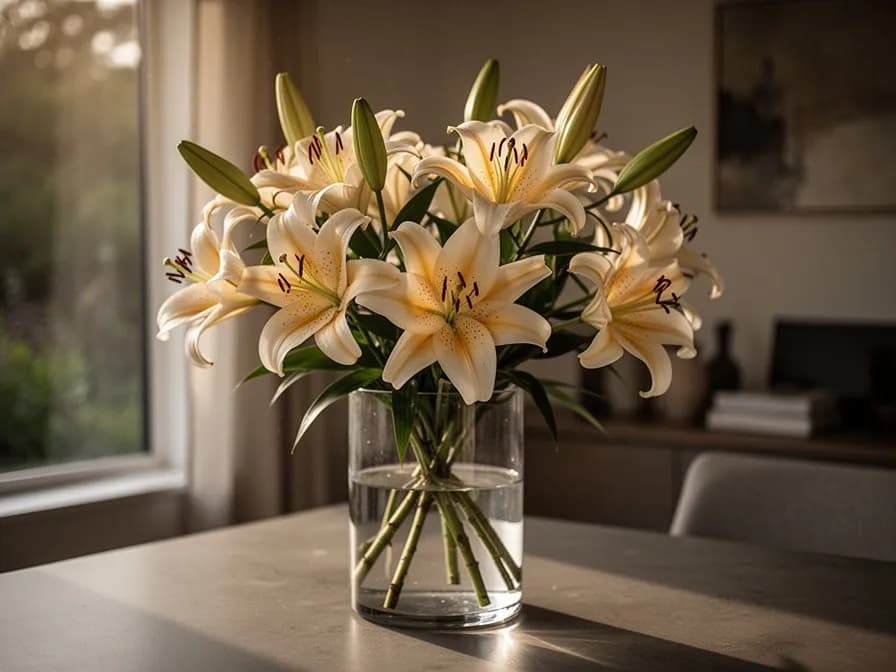
Gebratene Lilienzwiebel mit Sellerie und Gojibeeren
15 Min.Ein klassisches chinesisches Beilagengericht, bei dem frische Lilienzwiebelblätter kurz mit Sellerie, Gojibeeren und einer leichten Würzung aus Salz und Sesamöl im Wok gebraten werden. Die Lilienblätter werden durchscheinend und leicht knusprig und bieten eine zarte Süße, die mit dem knackigen Sellerie kontrastiert.
6 ZutatenLilienzwiebel-Silberohr-Süße-Suppe
45 Min.Eine traditionelle chinesische Dessertsuppe (Tong Sui) mit Lilienzwiebelblättern, die mit eingeweichtem Silberohrpilz, Lotussamen und Kandiszucker geköchelt werden. Diese wohltuende, mild-süße Suppe wird im Winter warm oder im Sommer kalt serviert und soll die Lungen nähren und eine klare Haut fördern.
6 Zutaten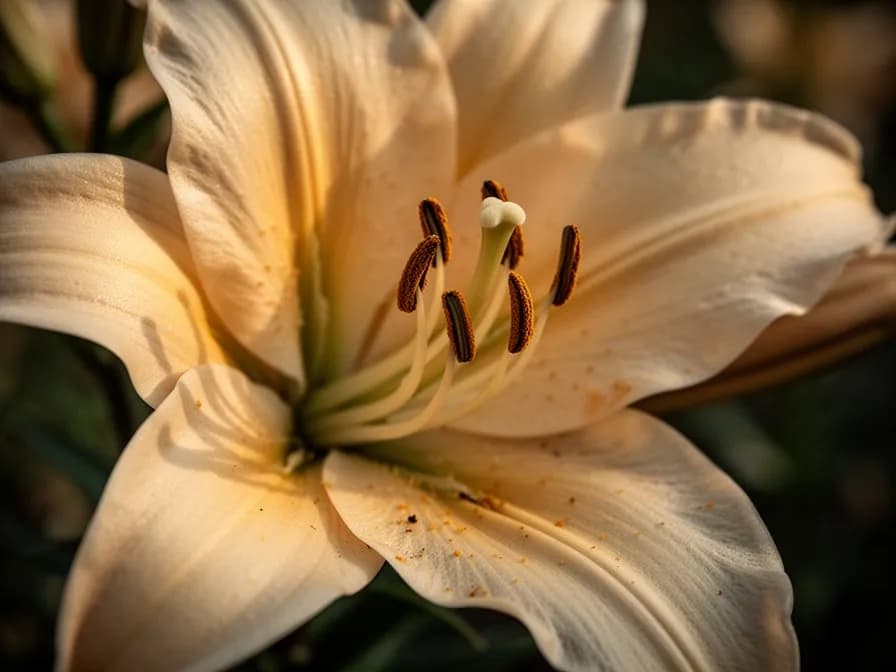
Lilienzwiebel-Schweinerippen-Congee
90 Min.Ein wohltuendes Reisporridge, bei dem Lilienzwiebelblätter sich in die cremige Congee-Basis auflösen, zusammen mit langsam gegarten Schweinerippchen. Die Lilie verleiht dem herzhaften Brei eine dezente Süße und seidige Textur und macht ihn zu einem nahrhaften Frühstück oder leichten Gericht, das in südchinesischen Haushalten beliebt ist.
7 ZutatenWas drinsteckt
Gesundheitsvorteile
- Essbare Lilienzwiebeln enthalten bioaktive Polysaccharide, die in Laborstudien immununterstützende Funktionen und antioxidative Eigenschaften gezeigt haben.
- In der Traditionellen Chinesischen Medizin wird die Lilienzwiebel (Bai He) als Yin-nährendes Kraut klassifiziert, das die Lungen befeuchtet, trockenen Husten lindert und gereizte Kehlen beruhigt.
- Lilienzwiebeln sind eine gute Quelle für Ballaststoffe, die eine gesunde Verdauung unterstützen und helfen können, den Blutzuckerspiegel nach Mahlzeiten zu regulieren.
- Die natürlich in Lilienzwiebeln vorkommenden Saponine haben in präklinischen Forschungsstudien milde entzündungshemmende Wirkungen gezeigt.
- Lilienzwiebel-Präparate werden seit Jahrhunderten in der traditionellen Medizin verwendet, um Ruhe zu fördern, Unruhe zu reduzieren und gesunde Schlafmuster zu unterstützen.
- Als kalorienarmes, fettarmes stärkehaltiges Gemüse liefert die essbare Lilienzwiebel anhaltende Energie ohne übermäßige Kalorienzufuhr und eignet sich damit für ausgewogene Ernährungsweisen.
Woher Asiatische Lilie stammt
Asiatische Lilien gehen auf eine Gruppe wilder Lilienarten zurück, die in Ostasien beheimatet sind, darunter China, Japan, Korea und das östliche Sibirien. Zu den wichtigsten Elternarten gehören Lilium lancifolium (Tigerlilie), Lilium davidii, Lilium leichtlinii, Lilium concolor, Lilium bulbiferum und Lilium maculatum. Diese Arten wurden in ihren Heimatländern jahrhundertelang sowohl als Ziergartenpflanzen als auch, im Falle einiger Arten, als Nahrungsquellen geschätzt, deren stärkehaltige Zwiebeln als Gemüse verzehrt oder in der traditionellen Medizin verwendet wurden.
Moderne Asiatische Lilienhybriden verdanken einen Großteil ihrer Entwicklung der Pionierarbeit Mitte des zwanzigsten Jahrhunderts. Jan de Graaff, ein niederländisch-amerikanischer Zwiebelpflanzenzüchter mit Sitz in Oregon, gilt weithin als Vater der modernen Hybridlilie. In den 1950er und 1960er Jahren kreuzte de Graaff an den Oregon Bulb Farms systematisch wilde asiatische Arten, um wüchsige, krankheitsresistente Hybriden in einer beispiellosen Farbpalette zu erzeugen. Seine Mid-Century-Hybriden, darunter die berühmte Sorte Enchantment, die 1944 eingeführt wurde, verwandelten die Lilie von einer empfindlichen Sammlerpflanze in einen zuverlässigen Gartenklassiker.
Die Royal Horticultural Society und die North American Lily Society klassifizierten diese Hybriden später als Division I im internationalen Lilienklassifikationssystem und unterschieden sie von anderen Hybridgruppen wie Orientalischen (Division VII) und Trompetenlilien (Division VI). Zuchtprogramme in den Niederlanden, den Vereinigten Staaten, Kanada und Japan erweiterten die Palette im späten zwanzigsten Jahrhundert weiter und führten gefüllte Formen, Zwerg-Terrassensorten und ungewöhnliche zweifarbige Muster ein. Heute sind Asiatische Lilien die weltweit am häufigsten angebaute Liliengruppe, geschätzt für ihre nach oben oder nach außen gerichteten Blüten, Pflegeleichtigkeit, Winterhärte und außergewöhnliche Farbvielfalt von Reinweiß über Gelb, Orange, Rosa, Rot bis hin zu fast schwarzem Burgunderrot.
Asiatische Lilie: Schon gewusst?
Faszinierende Fakten über Asiatische Lilie
Asiatische Lilien wurden hauptsächlich aus Arten entwickelt, die in Ostasien beheimatet sind, darunter Lilium lancifolium, Lilium leichtlinii, Lilium davidii und mehrere andere, die über Jahrzehnte gekreuzt wurden, um die heute verfügbare lebhafte Hybridpalette zu erzeugen.
Asiatische Lilie: Fragen & Antworten
Wann sollte ich Asiatische Lilie pflanzen?
Was sind gute Begleitpflanzen für Asiatische Lilie?
In welchen Winterhärtezonen kann Asiatische Lilie wachsen?
Wie viel Sonne braucht Asiatische Lilie?
Welchen Abstand sollte ich zwischen Asiatische Lilie lassen?
Welche Schädlinge und Krankheiten befallen Asiatische Lilie?
Wie lagere ich Asiatische Lilie nach der Ernte?
Was sind die besten Asiatische Lilie-Sorten zum Anbauen?
Welchen Boden braucht Asiatische Lilie?
Sind Asiatische Lilien sicher anzubauen, wenn ich Katzen habe?
Warum blühen meine Asiatischen Lilien nur kurze Zeit?
Müssen Asiatische Lilien im Winter ausgegraben und eingelagert werden?
Wie verhindere ich, dass der orangefarbene Pollen alles verfärbt?
Kann ich Asiatische Lilien in Kübeln anbauen?
Warum werden die Blätter meiner Asiatischen Lilie von unten nach oben braun?
Du hast die Theorie gelesen. Jetzt baue sie auf Autopilot an.
Alles, was Asiatische Lilie knifflig macht — das Timing, die Abstände, die Begleiter, das Erntefenster — genau das übernimmt PlotMyGarden für dich, für jede Pflanze im Garten.
Ein Plan, der dein Wetter kennt
Standort einmal festlegen. Aussaat-, Dünge- und Erntedaten rund um deinen echten letzten Frosttermin und die Live-Vorhersage — kein Raten mehr nach Saattüte.
Aus dem Abschnitt „Pflanzzeit“Beetplaner per Drag & Drop
Beete auf einem Raster gestalten. Jede Pflanze rastet im richtigen Abstand ein, und du siehst die ganze Saison, bevor du einen Cent für Saatgut ausgibst.
Aus dem Abschnitt „Anbau“Begleiter-Konflikte früh erkannt
Über 200 gute und schlechte Kombinationen werden beim Pflanzen live geprüft — so landet ein saisonruinierender Fehler nie in der Erde.
Aus dem Abschnitt „Begleiter“Erinnerungen, nach denen du wirklich handelst
„Gieß die Bohnen.“ „Heute ernten, bevor's umschlägt.“ Pünktlich, konkret und auf deine echten Pflanzen bezogen.
Aus dem Abschnitt „Ernte“Staffel-Aussaat, geplant
Sechs Wochen ernten statt sechs Tage? Die App verteilt deine Aussaaten automatisch und erinnert dich, wenn der nächste Satz fällig ist.
Aus dem Abschnitt „Pflanzzeit“Ein Verlauf, der schlauer wird
Jede protokollierte Ernte bringt der App deinen Garten bei. Der Plan fürs nächste Jahr startet bei dem, was in deinem Boden wirklich funktioniert hat.
Aus dem Abschnitt „Überblick“Pflanze diese neben Asiatische Lilie
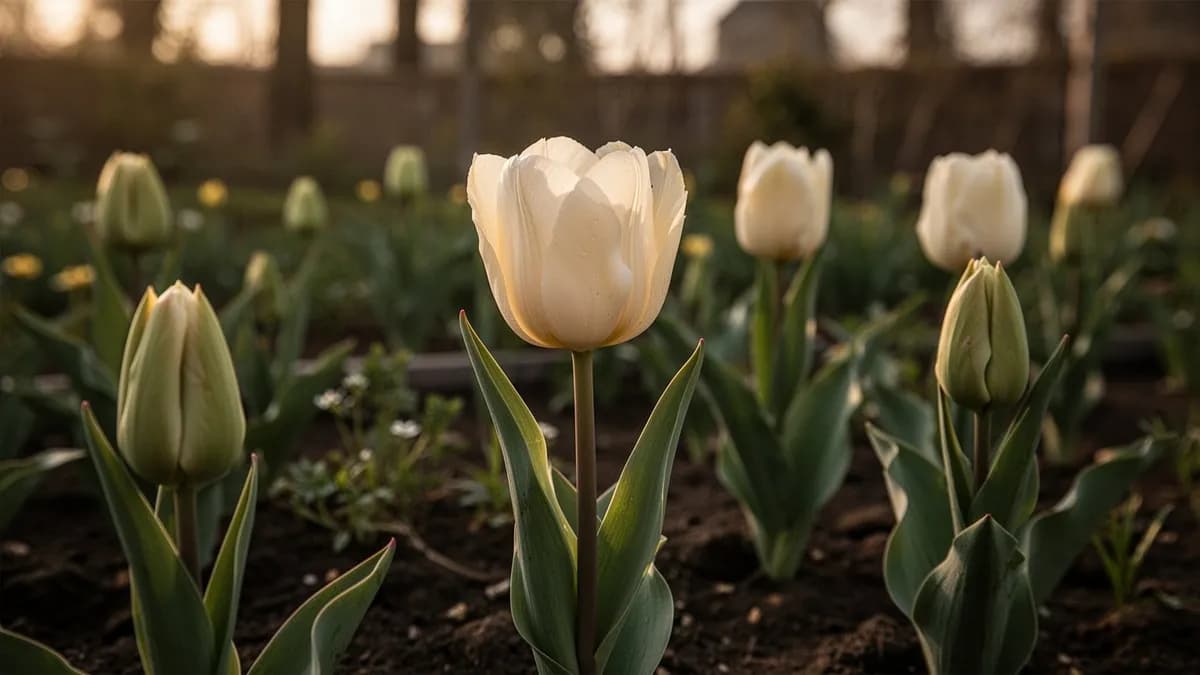
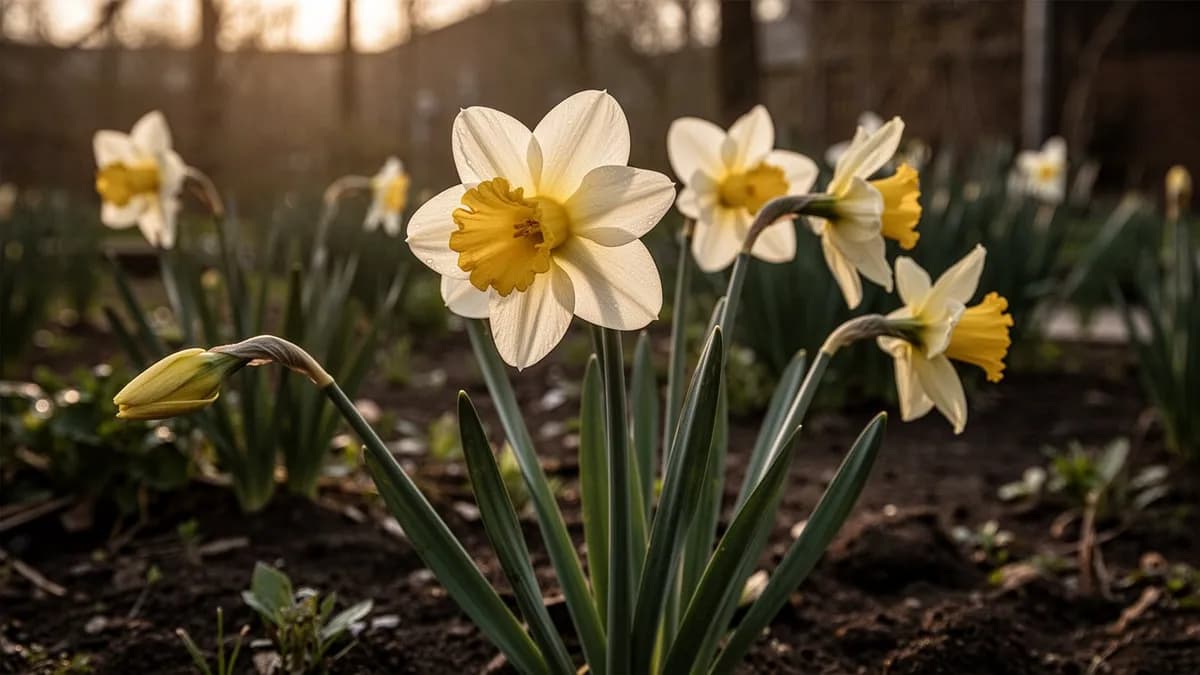
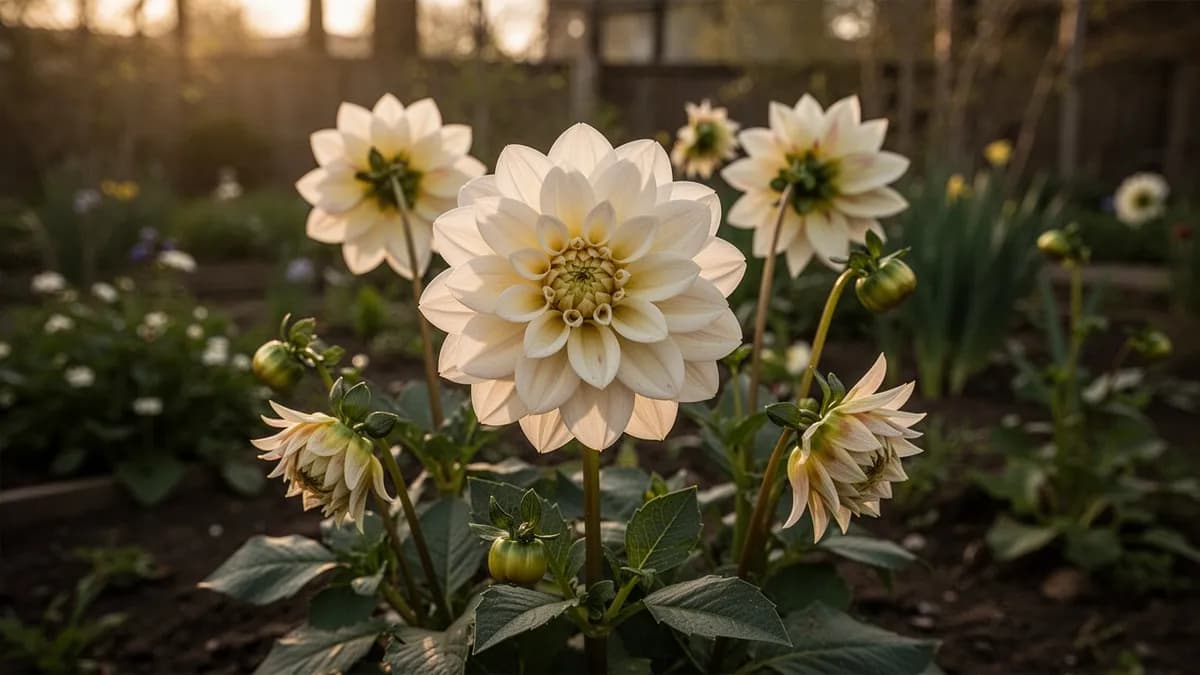
Weitere Zwiebelpflanzen
Bau deine beste Asiatische Lilie an — und alles drumherum.
Starte heute kostenlos. Lege deine Beete an, setze deine Asiatische Lilie ein und lass PlotMyGarden Timing, Abstände, Begleiter und Erinnerungen von der Saat bis zum Erntekorb übernehmen.