Catmint
Nepeta × faassenii
At a Glance
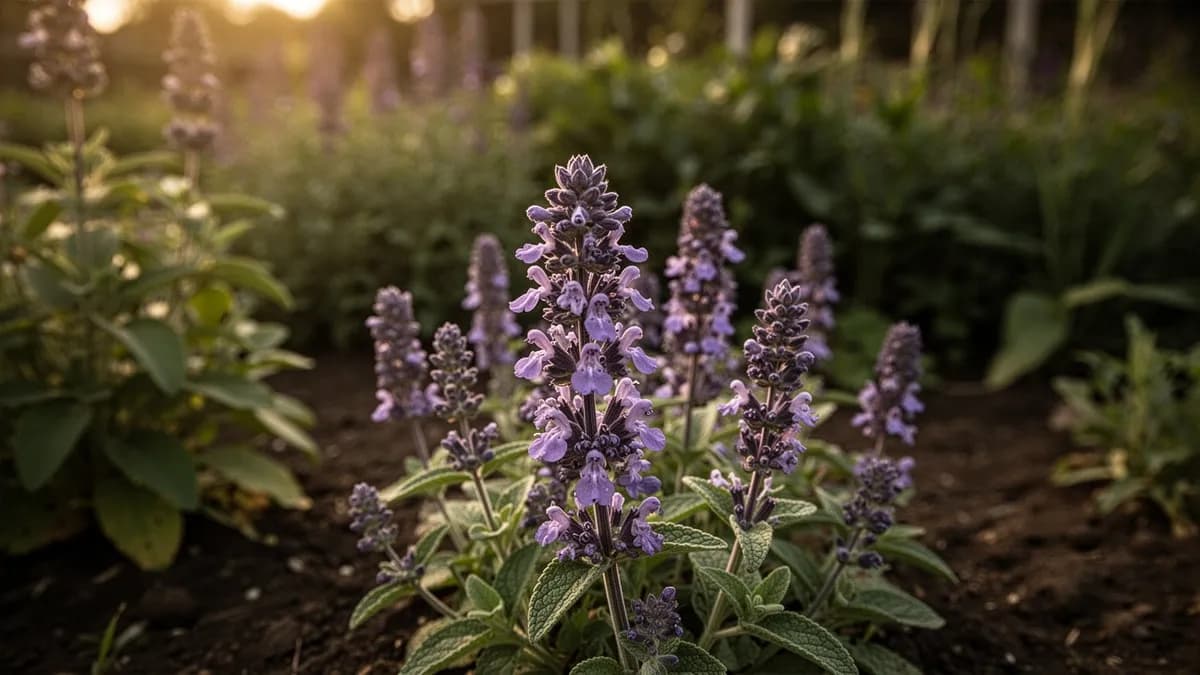
A reliable, long-blooming perennial with billowing mounds of aromatic grey-green foliage smothered in lavender-blue flower spikes. Catmint is drought and deer resistant, making it the perfect low-maintenance partner for roses and along pathways. Shear back by one-third after the first bloom for a strong repeat flowering through fall.
Planting & Harvest Calendar
Growth Stages
From Seed to Harvest
Spring Emergence
Days 0–21
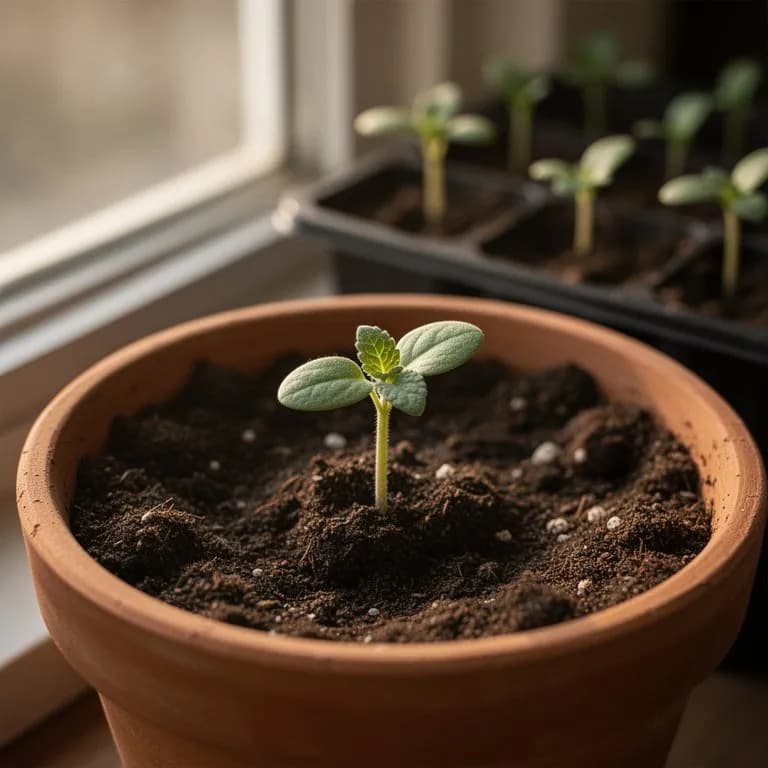
As soil temperatures rise above 7°C in early spring, Walker's Low sends up compact rosettes of soft grey-green foliage from its established crown. New shoots emerge rapidly once night temperatures remain consistently above freezing, and the aromatic scent becomes noticeable as leaves unfurl.
💡 Care Tip
Clear away any dead stems left over winter once new growth is about 5 cm tall. Apply a thin layer of compost around the crown, keeping it away from direct contact with emerging shoots to prevent rot.
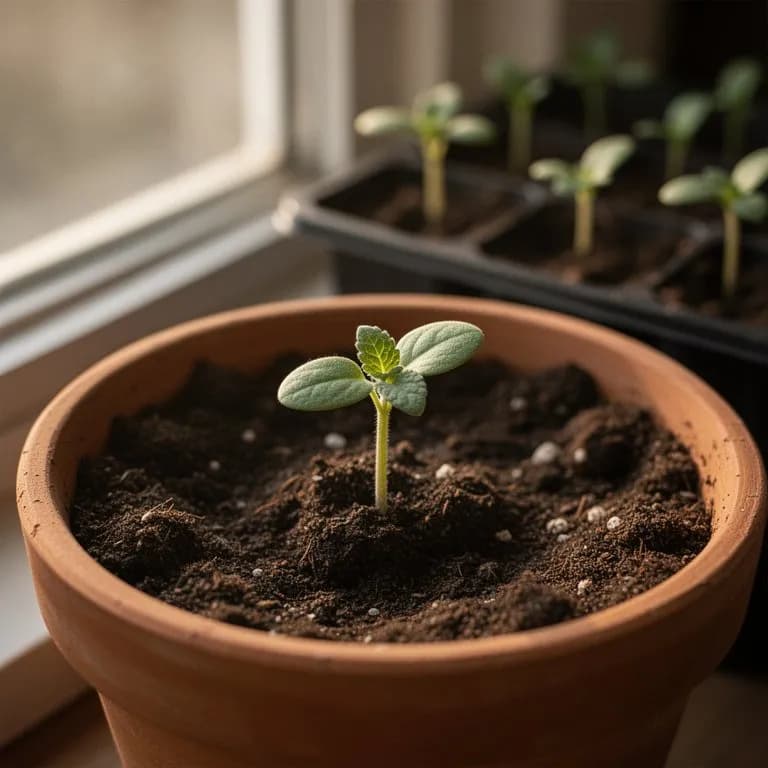
Divisions taken in spring establish quickly and can reach flowering size within the first season
Monthly Care Calendar
What to do each month for your Catmint
June
You are hereNo specific care tasks for this month.
Did You Know?
Fascinating facts about Catmint
Walker's Low catmint was named Perennial Plant of the Year in 2007 by the Perennial Plant Association, beating out dozens of other candidates for its extraordinary reliability, long bloom period, and ease of care.
Catmint is one of the most reliable and longest-blooming perennials available. Plant in spring, spacing 18-24 inches apart in full sun with well-drained soil. The aromatic grey-green foliage forms billowing mounds that become covered in lavender-blue flower spikes from late spring through summer.
After the first flush of flowers fades, shear the entire plant back by one-third. Within two weeks, fresh growth and a new round of flowers will appear, continuing the display through fall. This simple maintenance trick extends the show by months.
Catmint is drought, deer, and rabbit resistant, making it ideal for low-maintenance gardens. The aromatic foliage is pleasant to humans but unappetizing to most garden pests. Bees and butterflies, however, are strongly attracted to the flowers.
Nepeta × faassenii is a naturally occurring hybrid between Nepeta racemosa (native to the Caucasus and northern Iran) and Nepeta nepetella (native to southern Europe and North Africa). The cross was first documented in the 1930s in the Netherlands at the nursery of J.H. Faassen, from whom it takes its species epithet. The genus name Nepeta derives from the ancient Etruscan city of Nepete (modern Nepi in Italy), where catmint was said to grow abundantly. Various Nepeta species have been cultivated in European gardens since at least the medieval period, valued both as ornamental plants and for their herbal properties. Traditional herbalists across Europe used Nepeta preparations as a mild sedative tea, a remedy for colds and fevers, and as a poultice for minor bruises. The specific cultivar 'Walker's Low' was selected in the early 1990s at a private garden called Walker's Low in Surrey, England, by the noted plantsman Simon Walker. He identified the seedling for its exceptionally long bloom season, vigorous yet compact habit, and intense lavender-blue flower color. The cultivar was introduced to the nursery trade in the late 1990s and gained rapid popularity on both sides of the Atlantic. Its selection as Perennial Plant of the Year in 2007 cemented its status as one of the most reliable and widely recommended perennials in modern gardening. Today Walker's Low catmint is grown extensively across USDA hardiness zones 4 through 8, thriving in climates from the Upper Midwest to the Mediterranean regions of California and southern Europe. It has become an essential component of pollinator gardens, drought-tolerant landscapes, and cottage-style plantings worldwide.
Named cultivars must be propagated by division or cuttings, as they are sterile hybrids. The species N. cataria and N. grandiflora can be grown from seed sown in spring. Cover lightly and keep at 65°F (18°C). Germination takes 7-14 days. Plants from seed are variable and may not match named varieties.
Catmint thrives in average, well-drained soil with a pH of 6.0-7.5. Avoid rich, moist soil, which produces floppy growth. Lean conditions create the most compact, floriferous plants. A single application of balanced fertilizer in spring is sufficient. Drought-tolerant once established.
Check Your Zone
See if Catmint is suitable for your location.
-29°C – 35°C
-20°F – 95°F
Walker's Low catmint is exceptionally cold-hardy, surviving winter temperatures down to -29°C (USDA Zone 4) when planted in well-drained soil. It thrives during the growing season in temperatures between 15°C and 30°C, with peak flowering occurring around 20-25°C. The plant tolerates summer heat up to 35°C without issue provided it receives adequate drainage and is not overwatered. High humidity combined with poor air circulation can promote powdery mildew, so spacing plants adequately is important in hot, humid climates.
Common issues affecting Catmint and how to prevent and treat them organically.
Plants that flop open in the center are getting too much shade, water, or fertilizer. Lean, dry, sunny conditions produce the tightest growth. After the first bloom, shearing rejuvenates plants completely. N. faassenii cultivars are sterile and don't self-sow; species types may seed around freely.
Catmint is the quintessential rose companion, creating billowing lavender-blue clouds beneath rose bushes. It also pairs beautifully with alliums, iris, peonies, and salvia. Use as a pathway edging where the aromatic foliage releases scent when brushed. Combine with achillea and Russian sage for a drought-tolerant summer border.
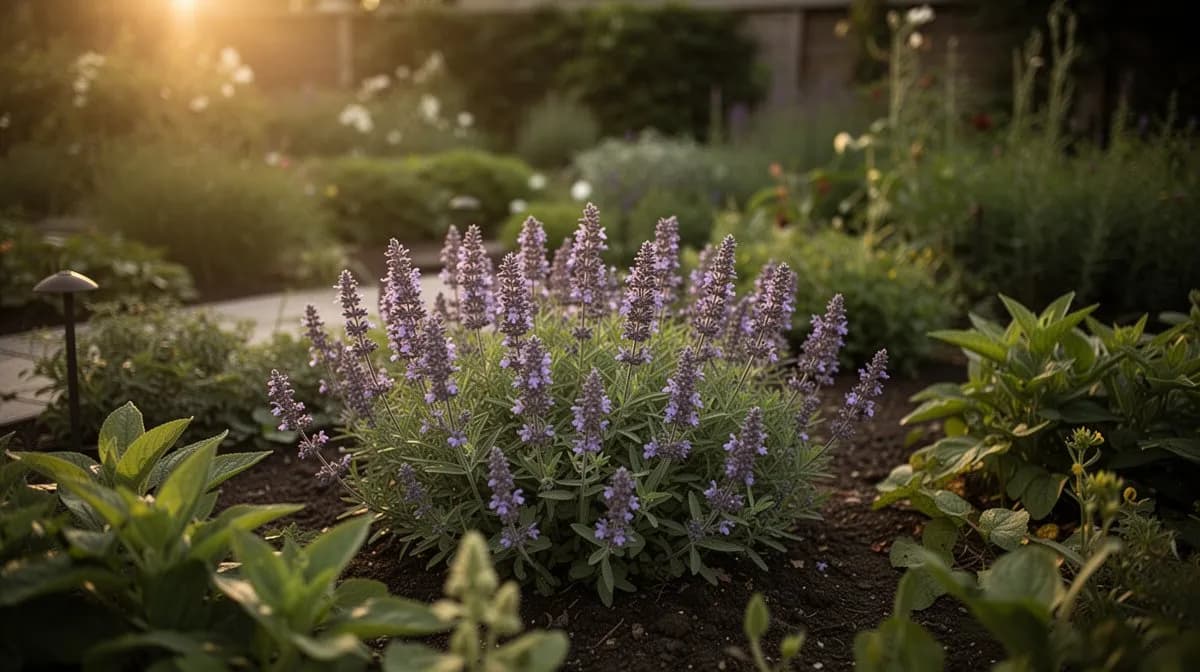
The relaxed mounding habit of Walker's Low makes it the perfect softener for hard-edged paths and borders
- 1Plant Walker's Low in full sun with at least six hours of direct light daily for the most compact growth and heaviest flowering; plants grown in partial shade tend to flop open and produce fewer blooms.
- 2Ensure excellent drainage above all else; Walker's Low tolerates poor, rocky, or sandy soils with ease but will rot quickly in heavy clay or waterlogged conditions, especially during winter dormancy.
- 3Space plants 45-60 cm apart to allow for mature spread and good air circulation, which helps prevent powdery mildew in humid summer climates.
- 4Shear the entire plant back by one-third to one-half immediately after the first bloom flush fades in midsummer; this single maintenance step triggers vigorous regrowth and a strong second wave of flowers within three to four weeks.
- 5Avoid heavy fertilization; Walker's Low thrives in lean to moderately fertile soil, and excess nitrogen causes floppy, overly lush growth with reduced flower production and diminished fragrance.
- 6Water deeply but infrequently once established, allowing the soil to dry out between waterings; mature plants are remarkably drought tolerant and overwatering is a more common problem than underwatering.
- 7Divide clumps every three to four years in early spring just as new growth emerges; this rejuvenates older plants that may have developed a dead center and provides free new plants for expanding your garden.
- 8Combine Walker's Low with roses, alliums, salvias, and ornamental grasses for classic cottage-garden pairings that provide continuous color and textural contrast from spring through autumn.
- 9Leave spent stems standing through winter rather than cutting them back in autumn; the dried structure protects the crown from frost heaving and provides valuable overwintering shelter for beneficial insects.
- 10If cats are a concern in your garden, surround newly planted catmint with small wire cages or thorny prunings for the first few weeks until the plants are well rooted, as some cats will roll in and flatten young transplants.
Cut catmint stems for informal arrangements when about half the flowers on each spike are open. The aromatic foliage adds fragrance and soft color to bouquets. Flowers last 5-7 days in water. The dried flower spikes retain a pleasant lavender scent.
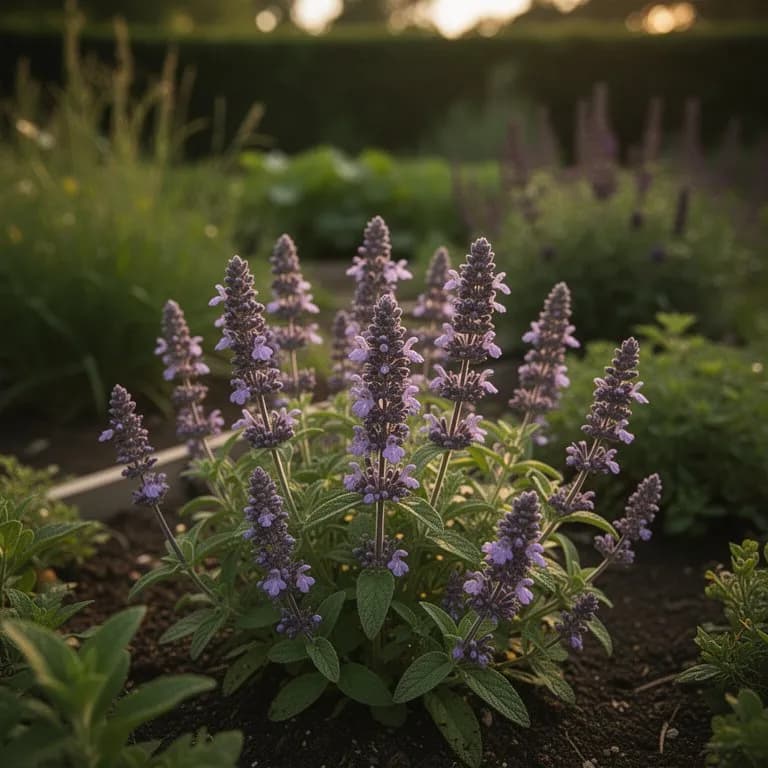
Leaving spent stems through winter provides habitat for beneficial insects and adds structural interest
Catmint is fully hardy. Cut back to the ground in late autumn. Divide every 3-4 years in spring to maintain vigor. Division is the standard propagation method for named cultivars.
Plan your garden with ease
Love growing Catmint? Use our free garden planner to design your beds, track planting dates, and get personalized care reminders.
Nutritional Info
Per 100g serving
5
Calories
Health Benefits
- Contains nepetalactone, a terpenoid compound with documented insect-repellent properties
- Rich in rosmarinic acid, a polyphenol with antioxidant and anti-inflammatory activity
- Provides volatile essential oils including citronellol, geraniol, and thymol
- Traditionally used as a calming herbal tea to aid relaxation and mild digestive discomfort
- Low calorie aromatic herb that adds subtle minty flavor to teas and potpourri blends
- Contains trace amounts of iron, manganese, and calcium common to Lamiaceae family herbs
💰 Why Grow Your Own?
A single Walker's Low catmint plant purchased for around $6-10 can be divided every three to four years into four or more new plants, providing decades of garden coverage at virtually no additional cost. Because it is sterile and propagated only vegetatively, each division is genetically identical to the parent, guaranteeing the same outstanding flower color and habit. Compared to replanting annual bedding each year at $3-5 per plant, a border of Walker's Low eliminates recurring costs entirely after the initial investment while providing superior drought tolerance, pollinator value, and lower water bills in regions where irrigation is metered.
Quick Recipes
Simple recipes using fresh Catmint
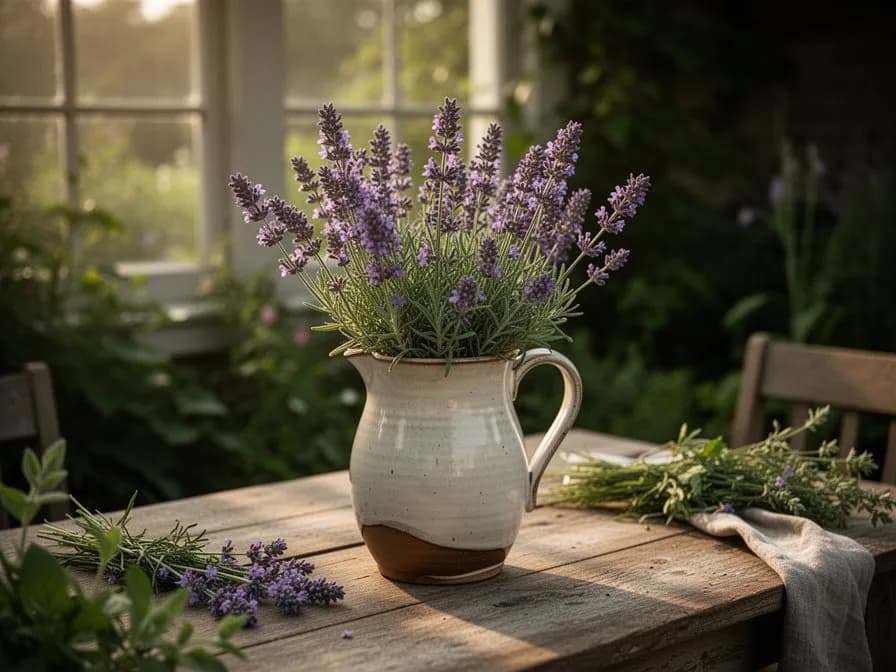
Catmint and Chamomile Relaxation Tea
5 minutesA gentle, soothing herbal infusion combining the mild minty flavor of fresh catmint leaves with dried chamomile flowers. This caffeine-free tea has been a traditional evening drink in European herbalism for centuries and is valued for its calming properties.
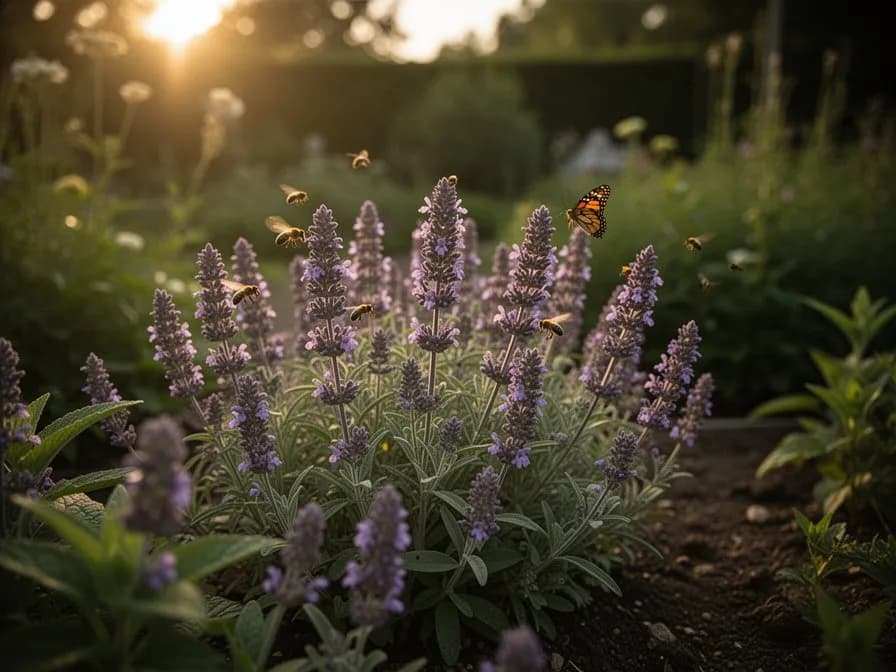
Catmint-Infused Garden Herb Syrup
25 minutesA fragrant simple syrup infused with fresh catmint sprigs, perfect for adding a subtle herbal note to lemonade, sparkling water, cocktails, or drizzled over vanilla ice cream. The syrup captures the plant's distinctive minty-herbaceous aroma beautifully.
Catmint and Lavender Potpourri Sachets
15 minutes plus 1 week drying timeHarvest catmint stems at peak bloom and combine with lavender for richly aromatic sachets that freshen drawers, closets, and linen cupboards while naturally repelling moths and other fabric pests thanks to the nepetalactone content.
Yield & Spacing Calculator
See how many Catmint plants fit in your garden bed based on the recommended 45cm spacing.
4
Catmint plants in a 4×4 ft bed
2 columns × 2 rows at 45cm spacing
Popular Varieties
Some of the most popular catmint varieties for home gardeners, each with unique characteristics.
Nepeta 'Walker's Low'
The most popular catmint at 24-30 inches, smothered in lavender-blue flowers. Perennial Plant of the Year 2007.
Nepeta 'Cat's Meow'
Compact 17-20 inch mounds that maintain a tidy habit without flopping. Excellent for edging.
Nepeta 'Junior Walker'
A compact version of Walker's Low at 16 inches. Same great flowers, better suited to small spaces.
Nepeta grandiflora 'Dawn to Dusk'
Soft pink flowers instead of the typical blue. A refreshing alternative color in the catmint palette.
When should I plant Catmint?
Plant Catmint in March, April, May. It takes approximately 365 days to reach maturity, with harvest typically in May, June, July, August, September.
What are good companion plants for Catmint?
Catmint grows well alongside Rose, Perennial Salvia, Yarrow. Companion planting can improve growth, flavor, and natural pest control.
What hardiness zones can Catmint grow in?
Catmint thrives in USDA hardiness zones 3 through 9. With greenhouse protection, it may be grown in zones 1 through 10.
How much sun does Catmint need?
Catmint requires Full Sun (6-8h+). This means at least 6-8 hours of direct sunlight daily.
How far apart should I space Catmint?
Space Catmint plants 45cm (18 inches) apart for optimal growth and air circulation.
What pests and diseases affect Catmint?
Common issues include Powdery Mildew. Prevention through good garden practices like crop rotation, proper spacing, and companion planting is the best approach. See the detailed pests and diseases section above for symptoms, prevention, and treatment for each.
How do I store Catmint after harvest?
Catmint is fully hardy. Cut back to the ground in late autumn. Divide every 3-4 years in spring to maintain vigor. Division is the standard propagation method for named cultivars.
What are the best Catmint varieties to grow?
Popular varieties include Nepeta 'Walker's Low', Nepeta 'Cat's Meow', Nepeta 'Junior Walker', Nepeta grandiflora 'Dawn to Dusk'. Each has unique characteristics suited to different growing conditions and culinary preferences. See the varieties section above for detailed descriptions.
What soil does Catmint need?
Catmint thrives in average, well-drained soil with a pH of 6.0-7.5. Avoid rich, moist soil, which produces floppy growth. Lean conditions create the most compact, floriferous plants. A single application of balanced fertilizer in spring is sufficient. Drought-tolerant once established.
Is Walker's Low catmint the same as catnip?
No. Walker's Low is Nepeta × faassenii, a sterile ornamental hybrid bred for garden performance, while true catnip is Nepeta cataria, a different species grown primarily for its strong effect on cats. Walker's Low contains lower levels of the cat-attracting compound nepetalactone than true catnip, though some cats may still show interest in the foliage.
How do I propagate Walker's Low catmint since it does not produce viable seed?
Because Walker's Low is a sterile hybrid, it must be propagated vegetatively. The easiest method is division in early spring: lift the entire clump, split it into sections each with healthy roots and shoots, and replant immediately. Alternatively, take 8-10 cm semi-ripe stem cuttings in midsummer from non-flowering shoots, dip in rooting hormone, and root in a free-draining mix under a humidity cover.
Why has my Walker's Low catmint become floppy and open in the center?
This usually happens for one of three reasons: insufficient sunlight (the plant needs at least six hours of direct sun), overly rich or heavily fertilized soil causing lush weak growth, or the clump is several years old and needs dividing. Shearing the plant back hard after the first bloom flush also helps maintain a compact, dense habit for the remainder of the season.
Does Walker's Low catmint attract or repel deer and rabbits?
Walker's Low is considered highly deer resistant and rabbit resistant due to its strongly aromatic foliage containing nepetalactone and other volatile oils that these animals find unpalatable. It is frequently recommended for gardens in areas with heavy deer pressure and is often planted as a fragrant deterrent border around more vulnerable plants.
How long does Walker's Low catmint bloom each season?
With proper care, Walker's Low offers one of the longest bloom seasons of any perennial. The first flush typically begins in late May or early June and lasts six to eight weeks. If sheared back after this initial display, a second flush appears within three to four weeks and continues into September or October. In mild climates with an additional shearing, a third lighter flush is possible, giving a potential total bloom period of four to five months.
Can Walker's Low catmint be grown in containers?
Yes, Walker's Low performs well in large containers of at least 30-40 cm diameter with excellent drainage. Use a gritty, free-draining potting mix and avoid saucers that hold standing water. Container plants will need more frequent watering than those in the ground and should be divided or repotted every two to three years. In zones 4 and 5, provide winter protection by moving containers to an unheated garage or wrapping them with insulating material to prevent root freeze damage.
Ready to Grow Catmint?
Add Catmint to your garden plan and start designing your perfect layout.

Vladimir Kusnezow
Gardener and Software Developer
Zone 6b gardener. Growing vegetables and fruits in soil and hydroponics for 6 years. I built PlotMyGarden to plan my own gardens.
Jump to Section