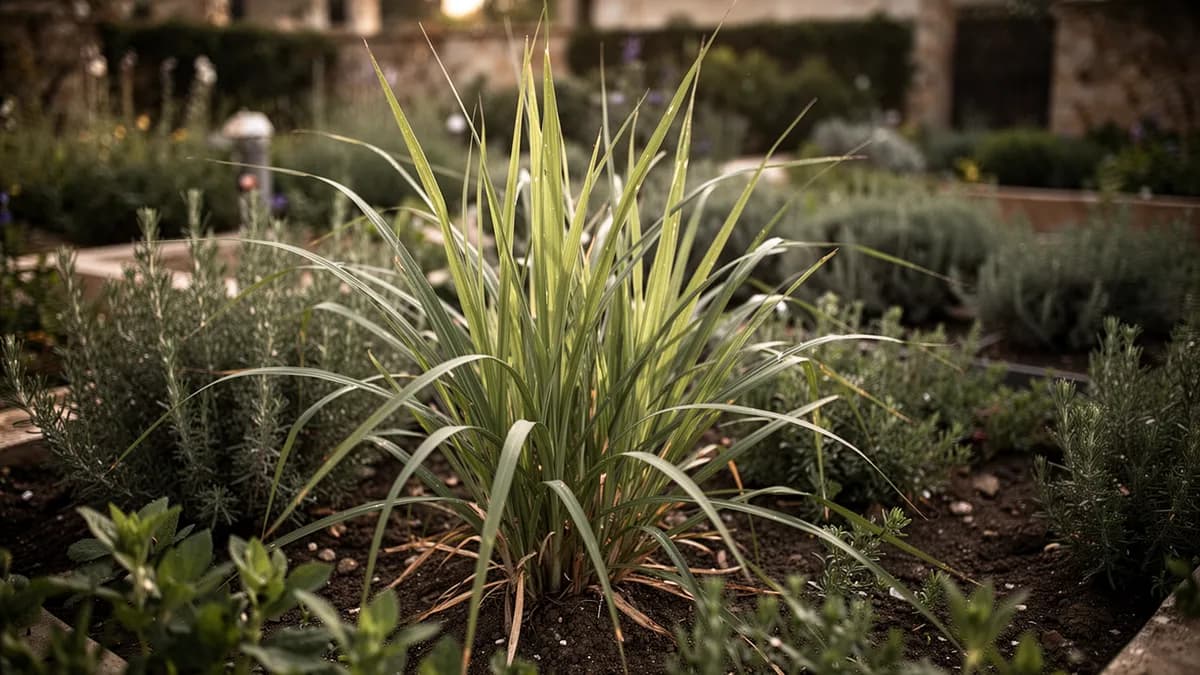
Lemongrass
Cymbopogon citratus
At a Glance
It's planting season for Lemongrass! Start planning your garden now.
A tropical grass forming dense clumps of lemony-scented stalks widely used in Asian cooking and as a natural insect repellent. In cooler climates, grow lemongrass in large containers that can be moved indoors before the first frost for overwintering. Provide rich, moist soil and full sun for the most vigorous growth, and divide clumps regularly to prevent overcrowding. Harvest stalks by cutting or twisting them at the base when they reach about half an inch thick, using the tender white inner core for cooking.
Planting & Harvest Calendar
Growth Stages
From Seed to Harvest
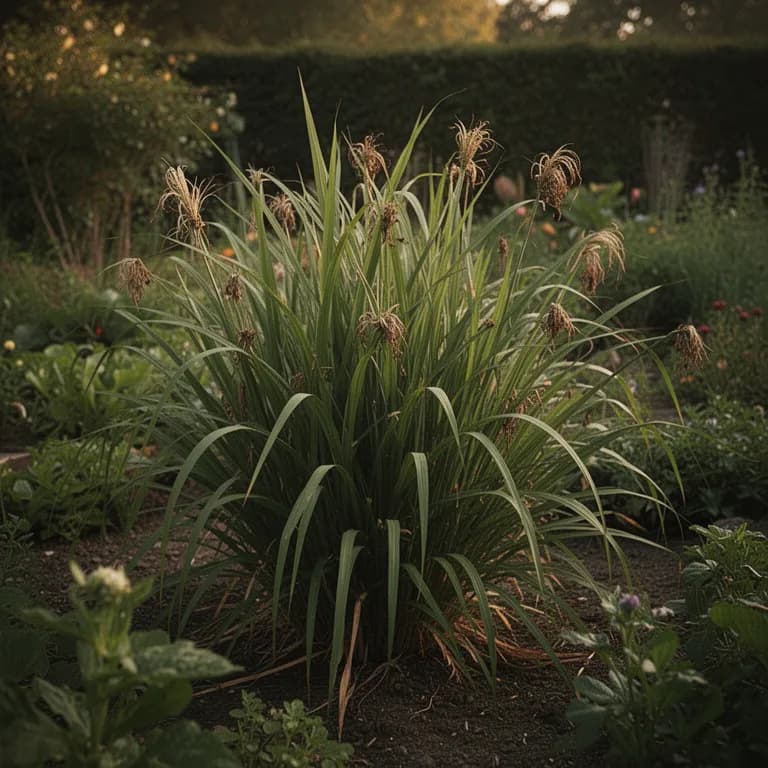
Propagation
Days 0–14
Lemongrass is most commonly started from stalk cuttings or divisions rather than seed. Place fresh stalks in water until roots develop, or divide an existing clump.
💡 Care Tip
Change the water every two days when rooting stalks. Roots typically appear within 7-14 days in a warm, bright location.
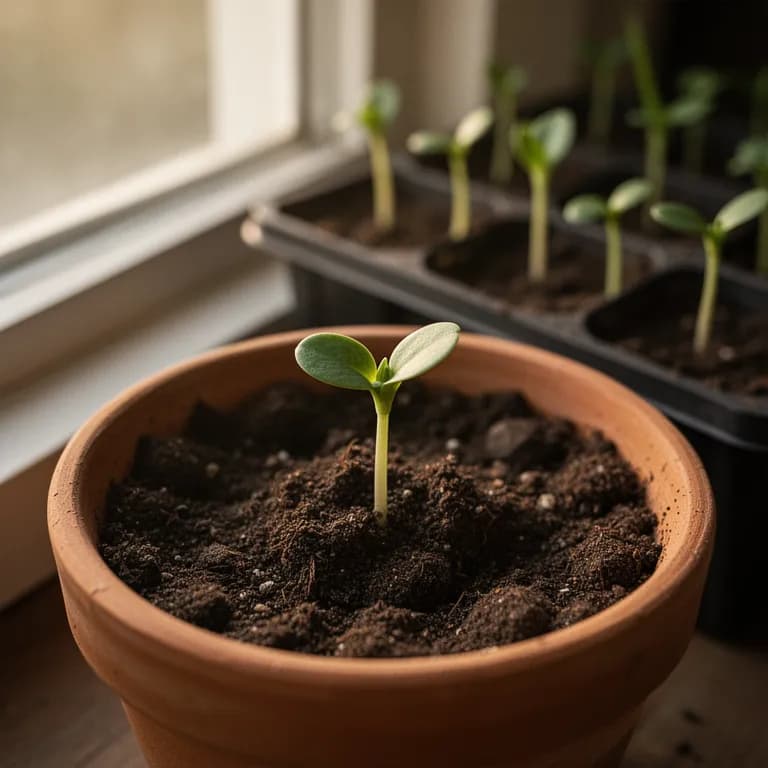
A young lemongrass plant in its early growth stage, establishing its root system.
Monthly Care Calendar
What to do each month for your Lemongrass
April
You are hereNo specific care tasks for this month.
Dividing an established lemongrass clump is the easiest and most reliable propagation method.
Did You Know?
Fascinating facts about Lemongrass
Lemongrass contains citral, the same aromatic compound that gives lemons their signature scent, yet the two plants are completely unrelated.
Start lemongrass from nursery plants or by rooting store-bought stalks. To root grocery store lemongrass, place fresh stalks with intact bases in a glass of water on a sunny windowsill. Roots develop in 2-3 weeks, after which you can pot up the rooted stalks. Plant outdoors after all danger of frost has passed and nighttime temperatures stay above 50°F.
Lemongrass thrives in rich, moist, well-drained soil with a pH of 6.0-7.0 and full sun. Space plants 24-36 inches apart, as each clump can grow 3-5 feet tall and 3 feet wide in a single season. Work in generous amounts of compost before planting and provide consistent moisture throughout the growing season. Lemongrass is a heavy feeder that benefits from monthly applications of balanced fertilizer.
In zones below 9, grow lemongrass in large containers (at least 5 gallons) that can be moved indoors before the first frost. Overwinter in a bright, cool location, reducing watering but never letting the soil dry completely. Cut back to 6 inches before moving indoors. In spring, divide large clumps and repot with fresh soil. Lemongrass grows rapidly in warm conditions and can reach full size in a single growing season.
Lemongrass (Cymbopogon citratus) is a tropical perennial grass native to the maritime regions of South and Southeast Asia, particularly southern India, Sri Lanka, and the Malay Peninsula. Archaeological and ethnobotanical evidence suggests that humans have cultivated and used lemongrass for thousands of years, with references appearing in ancient Indian Ayurvedic texts dating back more than three millennia. In traditional medicine systems across Asia, lemongrass was valued for its digestive, antipyretic, and calming properties, brewed into teas and decoctions to treat a range of ailments from stomach cramps to fever. Portuguese and Dutch traders encountered lemongrass during the spice trade era and helped spread its cultivation to Africa, South America, and the Caribbean, where it quickly naturalized in tropical lowlands. By the 19th century, commercial distillation of lemongrass essential oil had begun in Kerala, India, and the oil became a cornerstone of the perfume and soap industries. In the culinary world, lemongrass rose to global prominence in the 20th century as Southeast Asian cuisines, especially Thai, Vietnamese, and Indonesian, gained international popularity. Its fresh, citrusy flavor became indispensable in dishes like tom yum soup, rendang, and Vietnamese pho variations. Today lemongrass is cultivated commercially in India, Guatemala, China, Brazil, and across Southeast Asia, with India remaining the largest producer of lemongrass essential oil. Home gardeners in temperate climates have embraced lemongrass as an ornamental and culinary plant, growing it in containers that can be brought indoors during winter months.
Lemongrass can be grown from seed but is most easily propagated from divisions or by rooting fresh stalks. To root store-bought stalks, trim the top and place in 2 inches of water in a sunny window. Change water every few days; roots appear in 2-3 weeks. Pot up when roots are 2 inches long. If growing from seed, sow on the surface of moist starting mix at 70-75°F. Seeds germinate in 7-14 days. Seedlings grow slowly at first and need warm conditions consistently above 60°F to thrive.
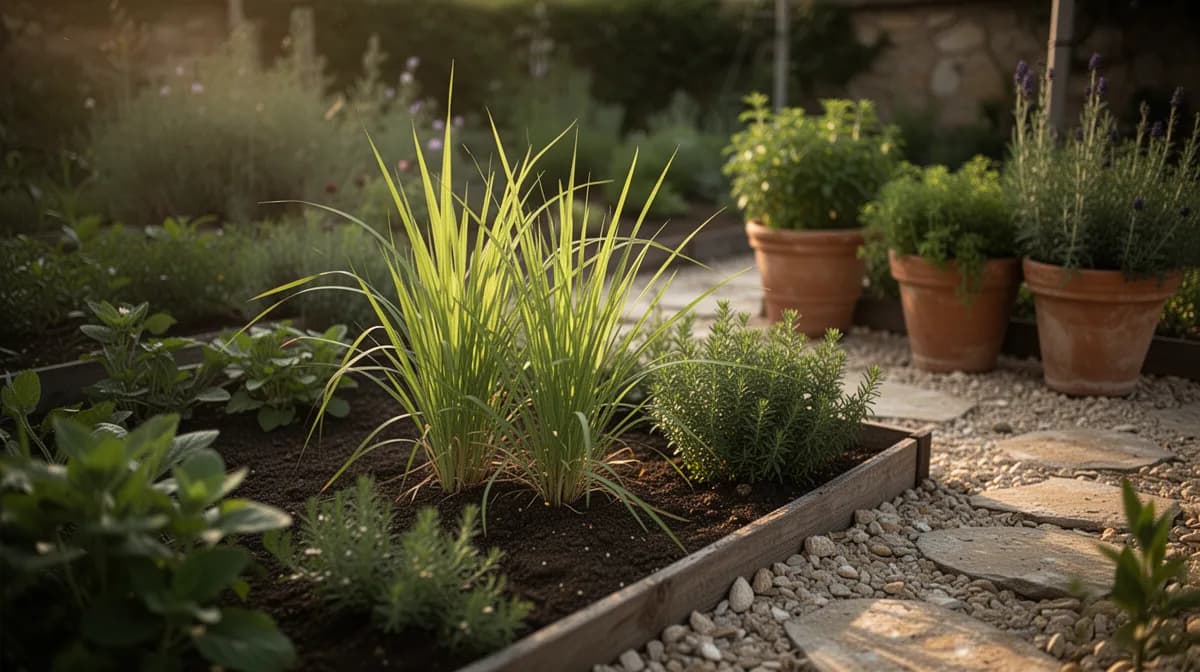
Lemongrass thrives in raised beds with rich, well-draining soil and full sun exposure.
Lemongrass is a heavy feeder that thrives in rich, moist, well-drained soil with a pH of 6.0-7.0. Amend planting beds with 3-4 inches of compost and add a balanced slow-release fertilizer at planting time. Feed monthly during the growing season with a nitrogen-rich fertilizer or compost tea to support its vigorous growth. In containers, use premium potting mix and fertilize every 2-3 weeks during active growth. Ensure consistent moisture, as lemongrass is a tropical plant that dislikes dry conditions.
Check Your Zone
See if Lemongrass is suitable for your location.
10°C – 35°C
50°F – 95°F
Lemongrass thrives in warm, humid conditions with daytime temperatures between 25 and 35 degrees Celsius. Growth slows significantly below 15 degrees Celsius and the plant suffers damage when temperatures drop below 10 degrees Celsius. It cannot tolerate frost and should be protected or brought indoors when temperatures approach freezing.
Common issues affecting Lemongrass and how to prevent and treat them organically.
Brown leaf tips are common and usually result from low humidity, especially indoors during winter. Increase humidity with a pebble tray or regular misting. Failure to thrive outdoors often indicates insufficient heat; lemongrass needs consistently warm temperatures above 50°F. In cold climates, delayed planting until soil is thoroughly warm yields much better results. Leggy, floppy growth indicates insufficient light. Indoor overwintering plants may develop spider mites in dry heated rooms; regular misting and inspection help prevent infestations.
Lemongrass is a natural insect repellent, containing citronella oil that deters mosquitoes, whiteflies, and other flying pests. Plant near outdoor seating areas and around vegetable gardens to reduce pest pressure. It pairs well with other tropical and subtropical herbs like basil, cilantro, and mint. The dense clumps can serve as a windbreak for smaller plants. Lemongrass is allelopathic and may inhibit the germination of some seeds nearby, so give it adequate spacing from direct-seeded crops.
- 1Start lemongrass from grocery store stalks by placing them in a jar of water on a sunny windowsill until roots appear, usually within one to two weeks.
- 2Plant in full sun with at least six to eight hours of direct sunlight daily for the best stalk production and strongest flavor.
- 3Use rich, well-draining soil amended with plenty of compost. Lemongrass is a heavy feeder that benefits from fertile growing conditions.
- 4Water deeply and consistently, keeping the soil evenly moist but never waterlogged. Lemongrass prefers humid conditions similar to its tropical origins.
- 5Feed every two to three weeks during the active growing season with a nitrogen-rich fertilizer to promote lush foliage and thick stalks.
- 6Harvest outer stalks by grasping them near the base and twisting firmly to snap them off. Leave the inner stalks to continue growing.
- 7In cooler climates, grow lemongrass in large containers so it can be moved indoors before the first frost. It needs a bright, warm spot for winter.
- 8Divide established clumps every two to three years in spring to maintain vigor and create new plants for yourself or to share with fellow gardeners.
- 9Cut the foliage back to about six inches in late autumn for overwintered plants. This reduces moisture loss and makes the plant easier to manage indoors.
- 10Watch for rust fungus, which appears as orange-brown spots on leaves. Remove affected foliage promptly and improve air circulation around the plant.
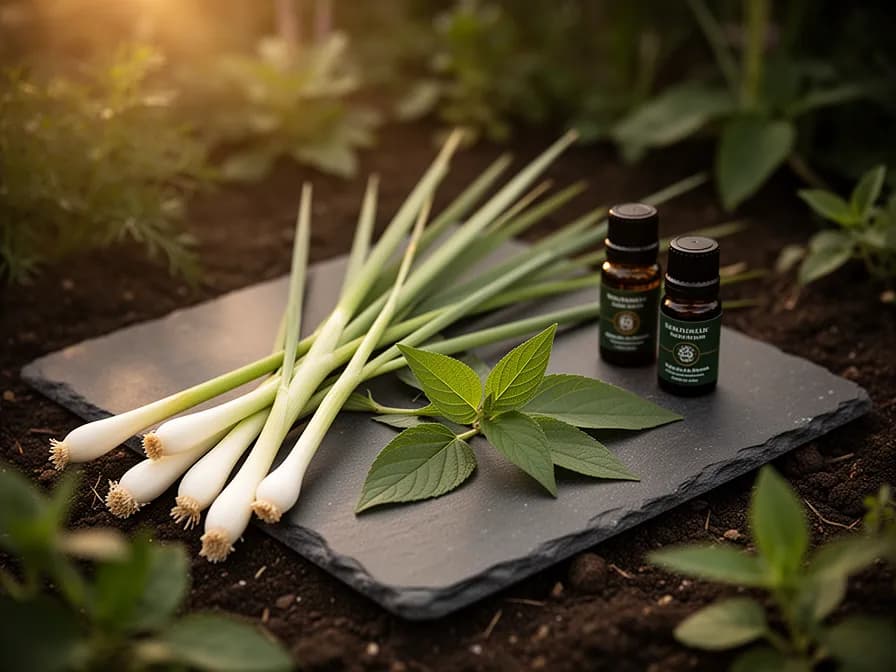
Harvest lemongrass stalks once they reach at least 1/2 inch thick at the base, typically 3-4 months after planting. Cut or twist stalks at ground level, removing them from the outside of the clump. Peel away the tough outer layers to reach the tender, pale inner core used in cooking. Leave at least 5-6 stalks per clump to sustain the plant. The leaves can also be harvested for tea and flavoring soups. Lemongrass produces continuously through the warm season and can be harvested repeatedly.
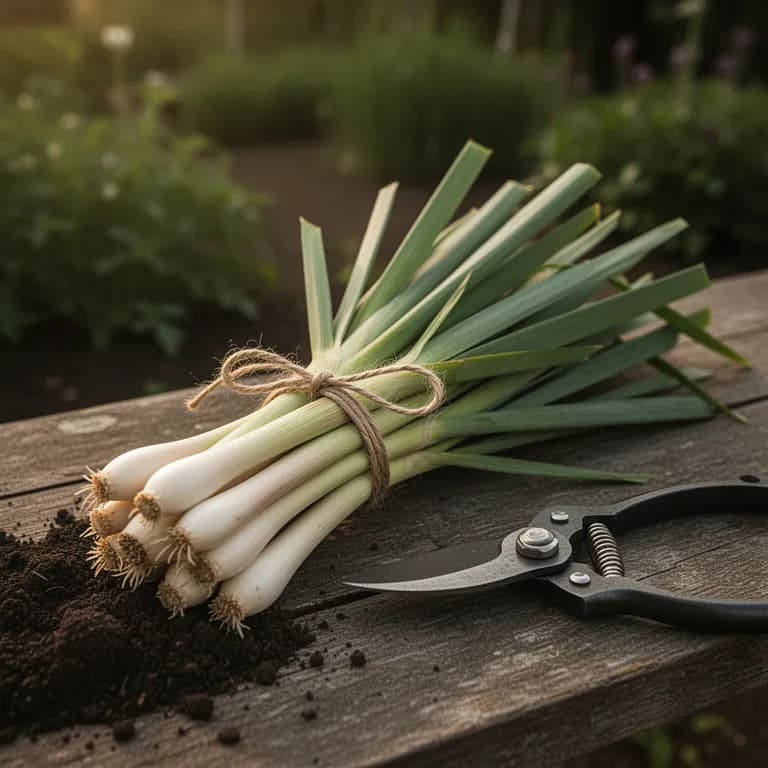
Freshly cut lemongrass stalks ready for culinary use, showing the pale white inner core.
Fresh lemongrass stalks keep for 2-3 weeks in the refrigerator, wrapped in damp paper towels in a sealed bag. For longer storage, freeze whole stalks in freezer bags; they can be sliced while still frozen and retain excellent flavor. Lemongrass can also be thinly sliced and dried in a dehydrator at 100°F for tea and seasoning blends. Dried leaves make an aromatic herbal tea. Lemongrass paste, made by blending fresh stalks with a splash of oil, freezes well in ice cube trays for convenient cooking use.
Plan your garden with ease
Love growing Lemongrass? Use our free garden planner to design your beds, track planting dates, and get personalized care reminders.
Nutritional Info
Per 100g serving
99
Calories
Health Benefits
- Very high in potassium, supporting healthy blood pressure and muscle function
- Contains citral and geraniol, powerful antioxidant compounds with anti-inflammatory properties
- Provides small amounts of iron, zinc, and manganese essential for enzyme function
- Low in calories and fat, making it a flavorful addition without significant caloric impact
- Rich in folate, which supports cell division and is especially important during pregnancy
💰 Why Grow Your Own?
A single lemongrass division costs around two to four dollars and can produce dozens of stalks over a growing season. Fresh lemongrass stalks sell for three to five dollars per small bundle at grocery stores, so a healthy clump can easily save fifty to eighty dollars per year for regular users. The plant also propagates freely through division, giving you unlimited new plants from a single purchase.
Quick Recipes
Simple recipes using fresh Lemongrass
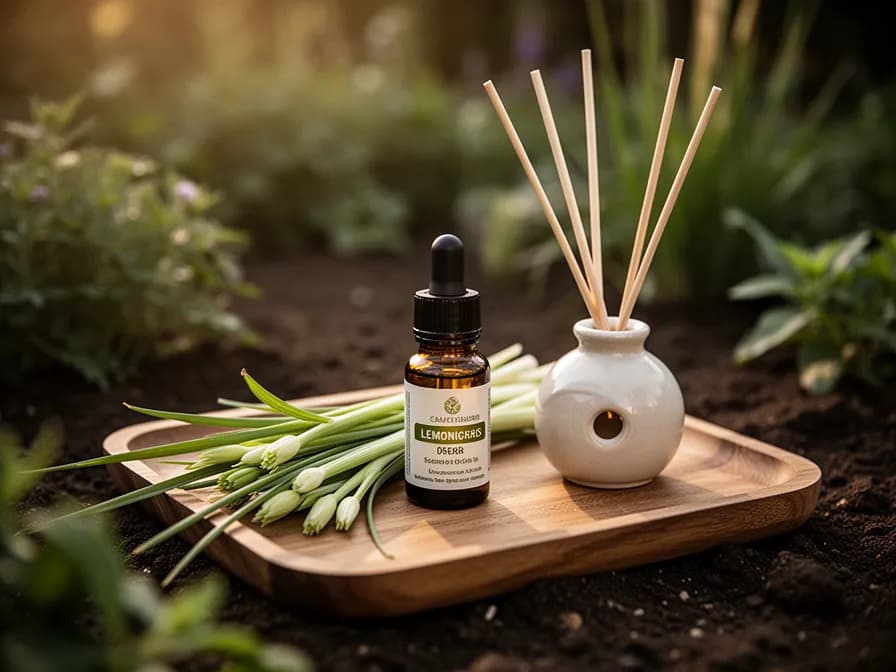
Classic Lemongrass Tea
10 minutesA soothing, aromatic herbal tea made from fresh lemongrass stalks. This caffeine-free beverage is enjoyed hot or iced and is known for its calming, digestive benefits.
Lemongrass Coconut Soup
30 minutesA fragrant, creamy soup inspired by Thai tom kha, featuring lemongrass, coconut milk, mushrooms, and a squeeze of lime for brightness.
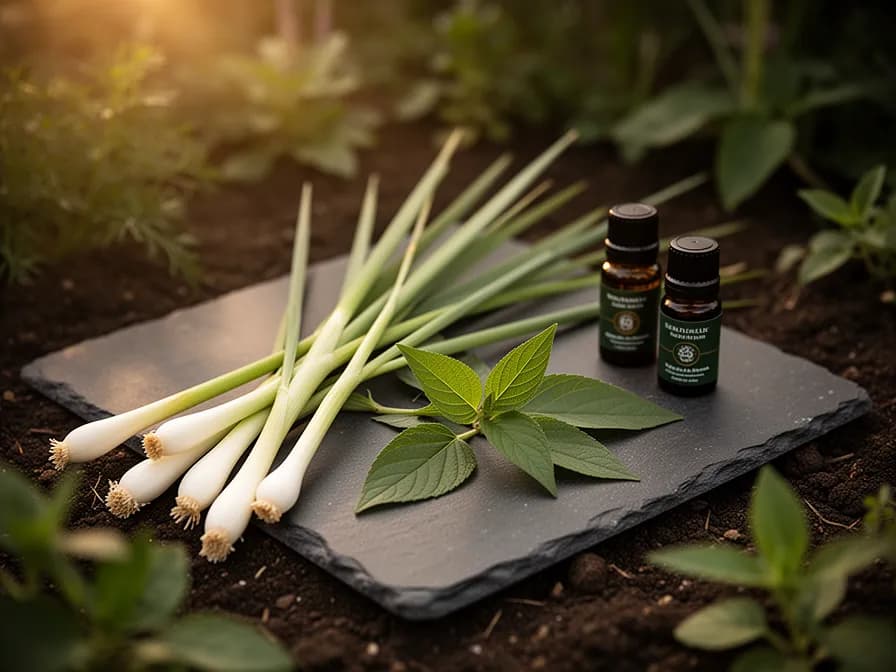
Lemongrass Stir-Fry Paste
15 minutesA versatile aromatic paste that can be used as a base for stir-fries, marinades, or curry dishes. It keeps well in the refrigerator for up to two weeks.
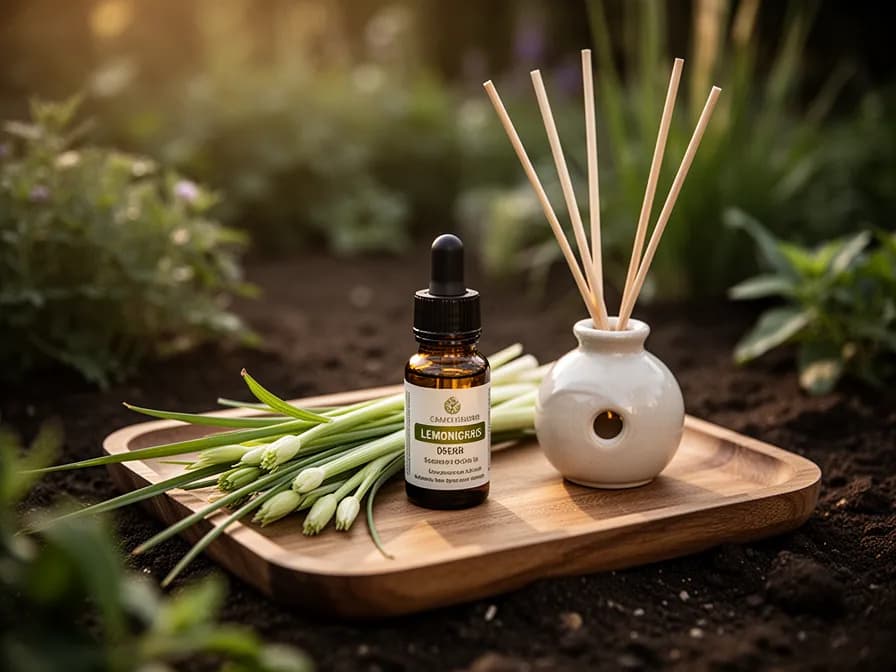
The tender inner portion of the stalk is finely sliced or bruised to release its citrusy essential oils.
Yield & Spacing Calculator
See how many Lemongrass plants fit in your garden bed based on the recommended 60cm spacing.
4
Lemongrass plants in a 4×4 ft bed
2 columns × 2 rows at 60cm spacing
Popular Varieties
Some of the most popular lemongrass varieties for home gardeners, each with unique characteristics.
West Indian Lemongrass (Cymbopogon citratus)
The most common culinary variety with thick, fleshy stalks and intense lemon flavor. The standard lemongrass found in grocery stores and used in Thai and Vietnamese cooking.
East Indian Lemongrass (Cymbopogon flexuosus)
Taller and more slender with higher citral oil content, primarily grown for essential oil production. Red-tinged stalks with a more intense lemony aroma.
Cochin Lemongrass
A compact variety well-suited to container growing with excellent citrus fragrance. Shorter stature than other types, ideal for small gardens and patios.
Lemongrass is a cornerstone of Thai, Vietnamese, and Indonesian cooking, essential in tom yum soup, curries, and satay marinades. The tender inner core of the stalk is sliced or pounded for pastes, while whole bruised stalks infuse soups and broths. Lemongrass pairs beautifully with coconut milk, ginger, garlic, chili, and fish sauce. The dried leaves make a soothing citrus-flavored tea. Beyond cooking, lemongrass oil is used as a natural mosquito repellent and in aromatherapy for its calming, uplifting scent.
When should I plant Lemongrass?
Plant Lemongrass in April, May, June. It takes approximately 75 days to reach maturity, with harvest typically in July, August, September, October.
What are good companion plants for Lemongrass?
Lemongrass grows well alongside Cilantro, Basil, Mint. Companion planting can improve growth, flavor, and natural pest control.
What hardiness zones can Lemongrass grow in?
Lemongrass thrives in USDA hardiness zones 9 through 12. With greenhouse protection, it may be grown in zones 7 through 13.
How much sun does Lemongrass need?
Lemongrass requires Full Sun (6-8h+). This means at least 6-8 hours of direct sunlight daily.
How far apart should I space Lemongrass?
Space Lemongrass plants 60cm (24 inches) apart for optimal growth and air circulation.
What pests and diseases affect Lemongrass?
Common issues include Rust, Leaf Blight, Spider Mites, Mealybugs. Prevention through good garden practices like crop rotation, proper spacing, and companion planting is the best approach. See the detailed pests and diseases section above for symptoms, prevention, and treatment for each.
How do I store Lemongrass after harvest?
Fresh lemongrass stalks keep for 2-3 weeks in the refrigerator, wrapped in damp paper towels in a sealed bag. For longer storage, freeze whole stalks in freezer bags; they can be sliced while still frozen and retain excellent flavor. Lemongrass can also be thinly sliced and dried in a dehydrator at ...
What are the best Lemongrass varieties to grow?
Popular varieties include West Indian Lemongrass (Cymbopogon citratus), East Indian Lemongrass (Cymbopogon flexuosus), Cochin Lemongrass. Each has unique characteristics suited to different growing conditions and culinary preferences. See the varieties section above for detailed descriptions.
What soil does Lemongrass need?
Lemongrass is a heavy feeder that thrives in rich, moist, well-drained soil with a pH of 6.0-7.0. Amend planting beds with 3-4 inches of compost and add a balanced slow-release fertilizer at planting time. Feed monthly during the growing season with a nitrogen-rich fertilizer or compost tea to suppo...
Can I grow lemongrass from stalks bought at the grocery store?
Yes, this is one of the easiest and most reliable ways to start lemongrass. Choose fresh stalks with the base intact, place them in a glass of water in a sunny spot, and change the water every couple of days. Roots should appear within one to two weeks, after which you can transplant them into soil.
Is lemongrass a perennial or an annual?
Lemongrass is a tender perennial that grows year-round in USDA zones 10 and above. In cooler zones it is often grown as an annual or overwintered indoors in containers. With proper protection, it can return each spring even in zone 8b with heavy mulching.
How do I overwinter lemongrass in a cold climate?
Before the first frost, dig up a division or move your container indoors to a bright, cool location such as a sunny windowsill or heated greenhouse. Cut the foliage back to about six inches, water sparingly, and avoid fertilizing until spring growth resumes.
When is the best time to harvest lemongrass?
Harvest stalks once they are at least half an inch thick at the base, typically 90 to 120 days after planting. Twist and pull outer stalks from the clump, leaving the center to continue producing. In warm climates you can harvest year-round.
Does lemongrass really repel mosquitoes?
Lemongrass contains citronella oil, a well-known insect repellent. While growing lemongrass near outdoor seating areas may provide some deterrent effect, it is most effective when the leaves are crushed to release the oils. Commercial citronella products are derived from a closely related species, Cymbopogon nardus.
How much space does a lemongrass plant need?
Each lemongrass clump should be given 24 to 36 inches of space in all directions, as mature plants can spread two to three feet wide and grow four to six feet tall. For containers, use a pot at least 14 inches in diameter to allow adequate root and tiller development.
Ready to Grow Lemongrass?
Add Lemongrass to your garden plan and start designing your perfect layout.

Vladimir Kusnezow
Gardener and Software Developer
Zone 6b gardener. Growing vegetables and fruits in soil and hydroponics for 6 years. I built PlotMyGarden to plan my own gardens.
Jump to Section