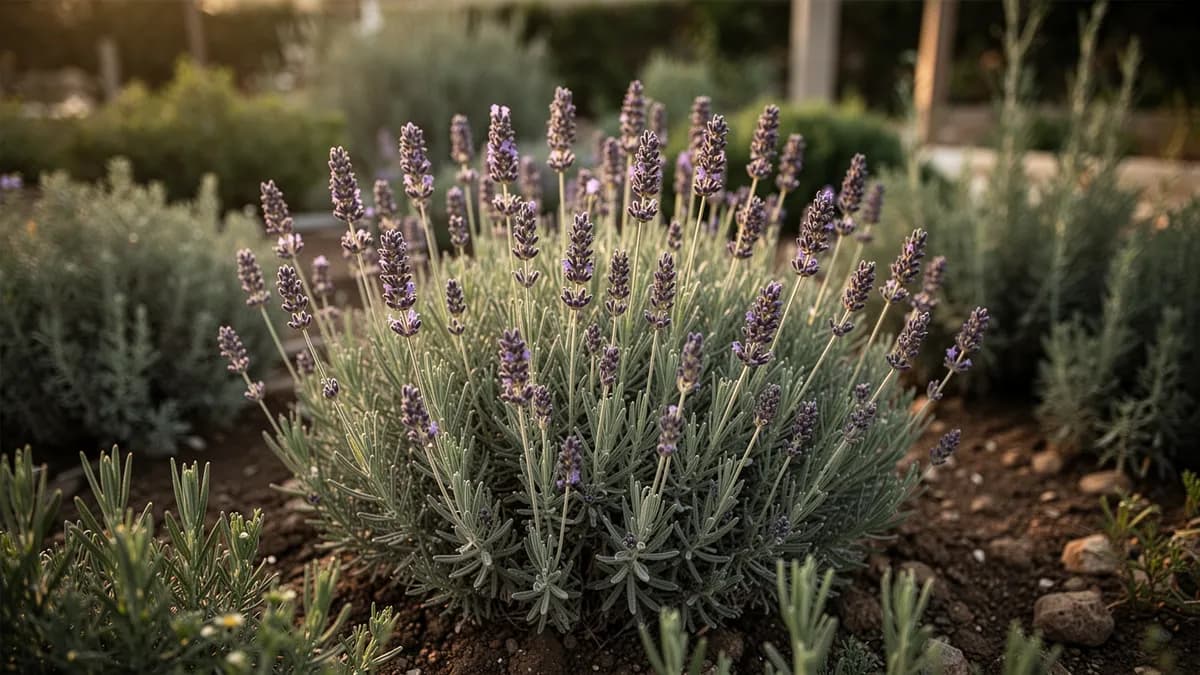
Lavender
Lavandula angustifolia
At a Glance
It's planting season for Lavender! Start planning your garden now.
A fragrant Mediterranean shrub with silvery foliage and purple flower spikes, thriving in poor, alkaline soil with excellent drainage. Avoid heavy clay or waterlogged conditions, which will quickly kill the roots, and provide full sun for the strongest fragrance and most abundant blooms. Harvest flower stems just as the buds begin to open for the most intense essential oil concentration. Dried lavender is widely used in sachets, culinary recipes, herbal teas, and homemade body care products.
Planting & Harvest Calendar
Growth Stages
From Seed to Harvest
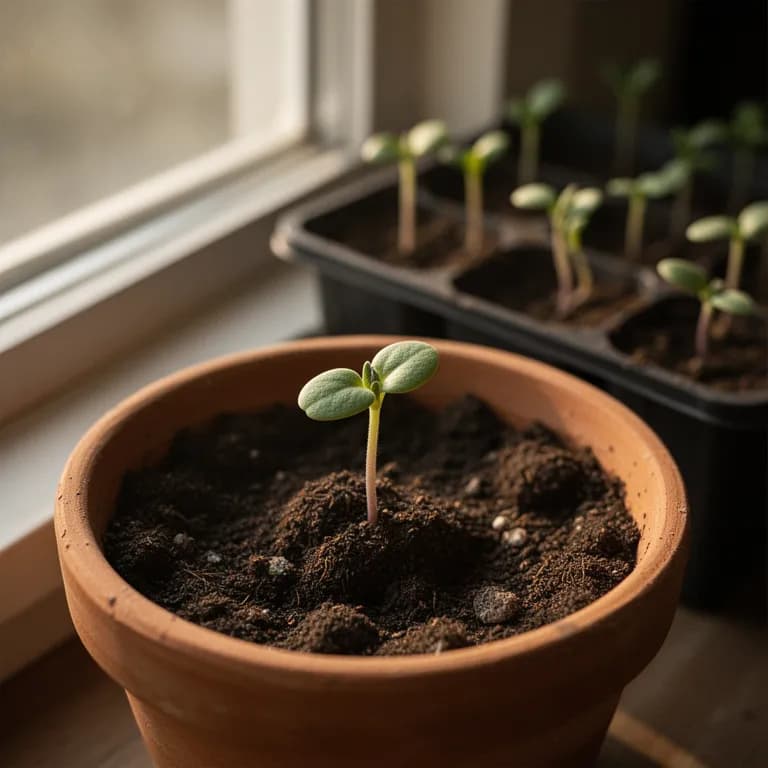
Seed Germination
Days 0–21
Lavender seeds are notoriously slow and erratic germinators. Surface-sow seeds on moist, well-draining seed-starting mix and provide consistent warmth around 18-21°C. Light aids germination, so do not cover seeds deeply. Cold stratification for 2-4 weeks before sowing can significantly improve germination rates.
💡 Care Tip
Mist the surface lightly to keep it evenly moist but never waterlogged. A humidity dome helps maintain moisture while seeds establish.
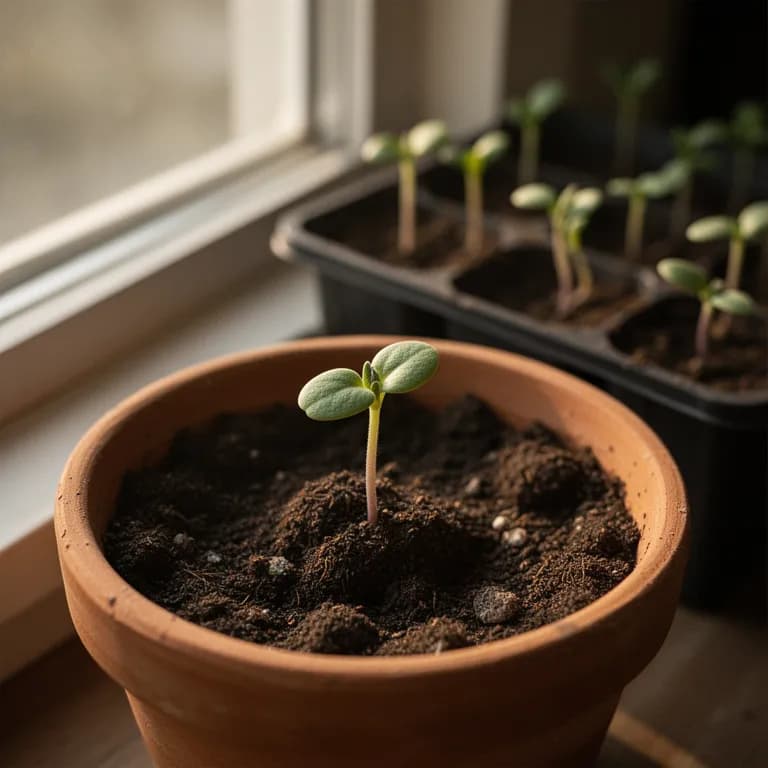
Lavender seedlings are slow to establish but reward patience with years of beauty
Monthly Care Calendar
What to do each month for your Lavender
May
You are hereMonitor new growth and pinch tips of young plants to encourage branching. Water only if conditions are very dry. Lavender prefers lean soil, so avoid fertilizing. Watch for signs of root rot if spring is unusually wet.
Did You Know?
Fascinating facts about Lavender
The name 'lavender' comes from the Latin 'lavare,' meaning 'to wash,' because the Romans used it to scent their bath water and laundry.
Start lavender from nursery transplants or stem cuttings, as seed germination is erratic and extremely slow. If starting from seed, cold-stratify seeds in the refrigerator for 3-4 weeks before sowing, then plant on the surface of moist seed-starting mix under lights at 65-70°F. Germination can take 14-30 days or more. Transplant outdoors after the last frost into full sun.
Site selection is critical for lavender success. Choose the hottest, driest, sunniest spot in your garden with lean, alkaline, sharply drained soil. Raised beds, south-facing slopes, and gravel gardens are ideal. Amend clay soils heavily with coarse sand and gravel. A pH of 6.5-8.0 is optimal; add lime if your soil is acidic. Space plants 18-24 inches apart to allow excellent air circulation.
Water sparingly once established, allowing soil to dry thoroughly between waterings. Lavender is extremely drought-tolerant and far more likely to die from overwatering than underwatering. Prune plants in early spring, cutting back by about one-third into green growth but never into bare wood, which will not regenerate. This annual pruning maintains compact shape and prevents the plant from becoming leggy and woody. Apply gravel mulch rather than organic mulch to keep crowns dry and reflect heat.
Lavender (Lavandula angustifolia) is native to the mountainous regions of the western Mediterranean, particularly the sun-baked hillsides of southern France, northern Spain, and northern Italy. It thrives on the rocky, well-drained limestone slopes at elevations between 500 and 1,700 meters, where it has adapted to poor soils, intense sunshine, and limited rainfall. Archaeological evidence suggests that lavender has been used by humans for at least 2,500 years. The ancient Egyptians incorporated it into perfumes and the embalming process, while the Phoenicians and other Mediterranean trading cultures spread it throughout the ancient world. The Greeks knew it as 'nardus' after the Syrian city of Naarda and used it for treating ailments from insomnia to insect bites. The Romans elevated lavender's status considerably, using it to scent baths, beds, and clothes, and recognizing its antiseptic properties for washing wounds on the battlefield. Roman soldiers are believed to have carried lavender throughout the empire, introducing it to much of Europe and eventually to Britain. During the medieval period, lavender became a staple of monastery herb gardens, cultivated by monks who studied its medicinal applications. Hildegard of Bingen, the 12th-century abbess, wrote extensively about lavender's healing properties. By the Tudor era, English lavender had become enormously popular; Queen Elizabeth I reportedly demanded fresh lavender flowers on her table every day. The herb crossed the Atlantic with early colonists and was among the first European plants cultivated in the New World. Commercial lavender farming expanded dramatically in the 19th and 20th centuries, with Provence becoming the global capital of lavender production. Today, Lavandula angustifolia remains one of the most widely grown ornamental and culinary herbs worldwide, valued for its fragrance, beauty, and remarkable versatility.
Lavender seeds are challenging and require patience. Cold-stratify seeds by placing them in a damp paper towel inside a sealed bag in the refrigerator for 3-4 weeks. Sow stratified seeds on the surface of moist seed-starting mix under lights, pressing gently without covering. Germination is slow and erratic, taking 14-30 days at 65-70°F. Seedlings grow very slowly for the first few months. For faster results, take 3-4 inch softwood cuttings in early summer, dip in rooting hormone, and root in a perlite-sand mix. Cuttings root in 3-6 weeks.
Lavender demands lean, sharply drained, alkaline soil with a pH of 6.5-8.0. Sandy, gravelly, or rocky soils are ideal. Never plant in rich, heavily composted, or clay soils. Add agricultural lime to acidic soils to raise pH. Lavender needs minimal to no fertilization; excessive nutrients produce lush but short-lived plants with reduced fragrance. A light top-dressing of bone meal in spring provides adequate phosphorus for flowering. In containers, use a cactus-type mix with added perlite and a small amount of lime.
Check Your Zone
See if Lavender is suitable for your location.
-15°C – 35°C
5°F – 95°F
English lavender is remarkably cold-hardy for a Mediterranean herb, tolerating winter lows down to -15°C (USDA Zone 5) once established. It thrives in warm, dry summers with temperatures between 20-30°C. High humidity and temperatures consistently above 35°C can stress the plant and encourage fungal diseases. Good air circulation and excellent drainage are more important than temperature alone.
Common issues affecting Lavender and how to prevent and treat them organically.
The number one cause of lavender failure is wet soil, particularly during winter dormancy. Ensure perfect drainage and avoid organic mulches that trap moisture. Woody, split-open plants result from failure to prune annually in spring. Never cut into old bare wood, as lavender cannot regenerate from leafless stems. High humidity promotes fungal diseases; choose resistant varieties like Phenomenal for humid climates. Yellow foliage usually indicates overly acidic soil rather than nutrient deficiency; test soil pH and add lime as needed.
Lavender repels fleas, moths, mosquitoes, and deer through its potent aromatic compounds, making it a natural pest barrier in the garden. Plant alongside roses, where it helps deter aphids and adds complementary beauty. Lavender thrives with other Mediterranean plants like rosemary, thyme, and sage that share lean-soil, dry preferences. Its abundant flowers are a magnet for bees, butterflies, and other pollinators, boosting fruit and vegetable yields throughout the garden. Avoid planting near moisture-loving herbs like mint and basil.
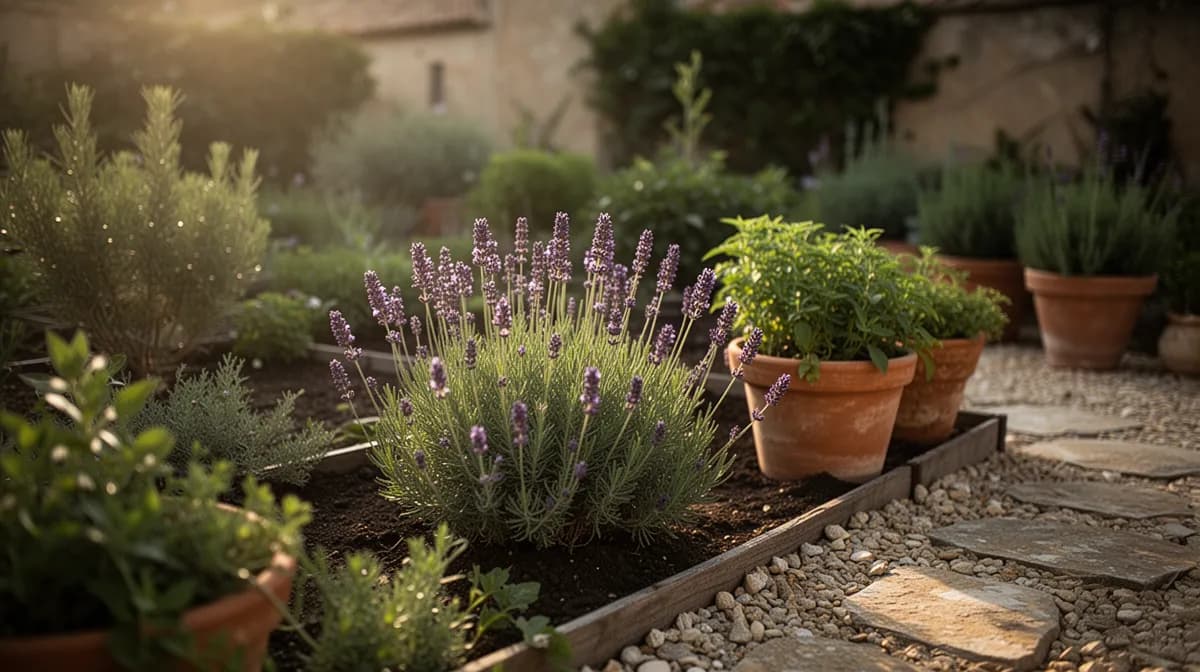
Lavender makes an excellent low hedge or border plant along walkways and paths
- 1Plant lavender in the poorest, most well-drained soil you have. Rich, fertile soil causes leggy growth with fewer flowers and weaker fragrance. Amend heavy clay soil with coarse sand and fine gravel to improve drainage.
- 2Full sun is non-negotiable for lavender. Plants need a minimum of 6-8 hours of direct sunlight daily to produce strong growth, abundant flowers, and potent essential oils.
- 3Water deeply but infrequently, allowing the soil to dry out completely between waterings. Established lavender is extremely drought-tolerant and far more likely to die from overwatering than underwatering.
- 4Use gravel or stone mulch around lavender plants instead of organic mulch like bark or straw. Organic mulches retain moisture against the crown and stems, promoting root rot and fungal diseases.
- 5Prune lavender twice a year: lightly in spring when new growth appears, and more substantially after flowering in late summer. Always cut into green growth and never into old bare wood, which may not regenerate.
- 6Maintain slightly alkaline soil with a pH between 6.5 and 8.0. If your soil is acidic, add garden lime to raise the pH before planting. Lavender evolved on limestone soils and performs best in alkaline conditions.
- 7Space plants 30-45 cm apart for a dense hedge or 60-90 cm apart for individual specimens. Good air circulation between plants is essential to prevent fungal problems, especially in humid climates.
- 8Propagate lavender from semi-ripe cuttings taken in late summer or early autumn. Strip the lower leaves, dip in rooting hormone, and insert into a mix of perlite and peat. Roots develop in 3-6 weeks.
- 9Avoid fertilizing lavender. Excessive nutrients, especially nitrogen, produce abundant foliage at the expense of flowers and essential oil production. If you must fertilize, use a light application of bone meal in early spring.
- 10In cold climates (USDA zones 5-6), improve winter survival by planting lavender on a south-facing slope or near a heat-reflecting wall. Ensure perfect winter drainage, as cold wet soil kills lavender faster than cold air temperatures.
Harvest lavender flower stems when about half the flowers on each spike have opened, which is when essential oil concentration is at its peak. Cut stems long, just above the foliage line, in the morning after dew has dried. Bundle 50-100 stems with rubber bands and hang upside down in a warm, dark, well-ventilated area for 2-3 weeks to dry. For culinary use, harvest English lavender buds just before they open fully. A healthy plant can be harvested 2-3 times per season in its second year and beyond.
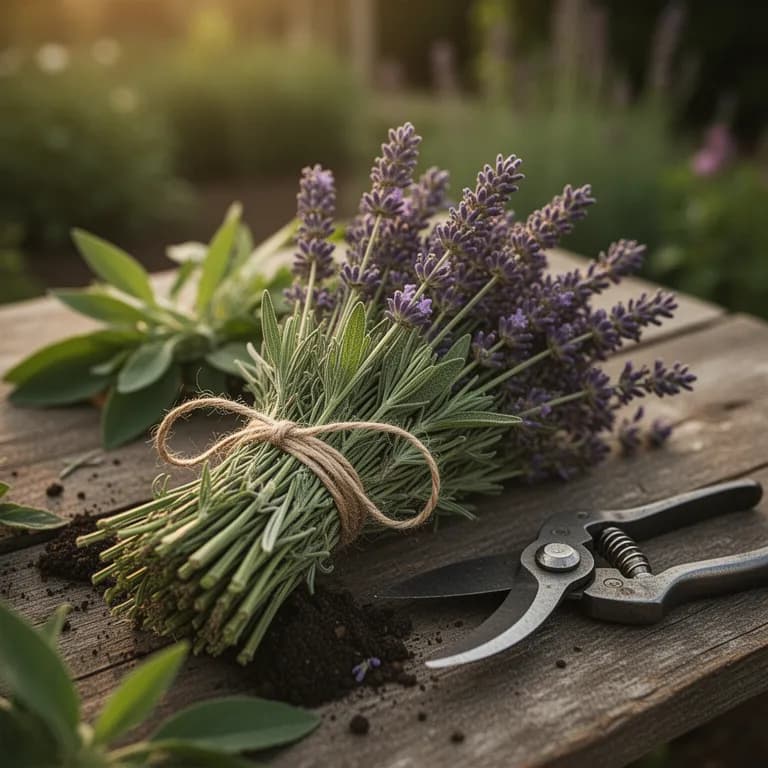
Harvest when about half the flowers on each spike have opened for maximum fragrance
Dried lavender retains its fragrance for 1-2 years when stored properly in airtight containers away from light. Strip dried buds from stems for use in sachets, potpourri, culinary applications, and body care products. Lavender essential oil can be extracted through steam distillation at home with specialized equipment. For craft use, harvest stems at peak bloom and dry whole for wreaths, bouquets, and wands. Dried lavender buds can also be infused into sugar, honey, salt, or vinegar for culinary preservation.
Plan your garden with ease
Love growing Lavender? Use our free garden planner to design your beds, track planting dates, and get personalized care reminders.
Nutritional Info
Per 100g serving
49
Calories
Health Benefits
- Contains linalool and linalyl acetate, compounds studied for their calming and anti-anxiety effects
- Rich in polyphenols and antioxidants including rosmarinic acid and luteolin
- Provides small amounts of calcium and iron when consumed as a tea or culinary ingredient
- Lavender tea has been traditionally used to support digestion and relieve bloating
- Low calorie culinary herb that adds complex floral flavor without added sugar or fat
- Essential oils contain over 100 active compounds with documented anti-inflammatory properties
💰 Why Grow Your Own?
A single lavender plant costs $4-8 at a nursery and can live 15-20 years with proper care, producing hundreds of stems annually. Dried culinary lavender retails for $8-15 per ounce, while a well-established plant yields 2-4 ounces of dried buds per season. Over its lifetime, one plant can save you $150-400 on dried lavender alone, plus it replaces costly sachets, essential oil purchases, and cut flowers. Propagating new plants from cuttings costs nothing, allowing you to expand your lavender hedge for free.
Quick Recipes
Simple recipes using fresh Lavender
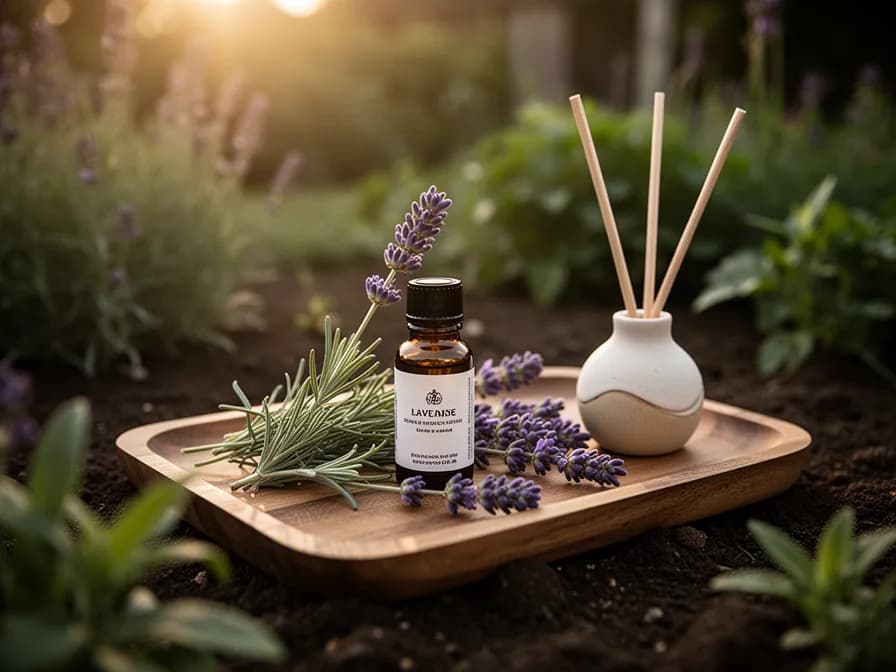
Lavender Lemonade
15 minutes + chillingA refreshing, lightly floral twist on classic lemonade. Lavender syrup infuses the drink with a subtle purple hue and a sophisticated herbal note that balances the tartness of fresh lemon juice. Perfect for summer entertaining or a relaxing afternoon in the garden.
Lavender Shortbread Cookies
30 minutes + 30 min chill + 15 min bakeButtery, crumbly shortbread infused with fragrant lavender buds creates an elegant treat that pairs beautifully with tea. The lavender adds a subtle floral complexity that elevates simple butter cookies into something truly special. Use culinary-grade English lavender for the best flavor.
Lavender and Honey Herbal Tea
10 minutesA soothing, aromatic tea that has been enjoyed for centuries as a calming bedtime ritual. The combination of lavender and raw honey creates a naturally sweet, floral infusion that supports relaxation and gentle digestion. Can be served hot or iced.
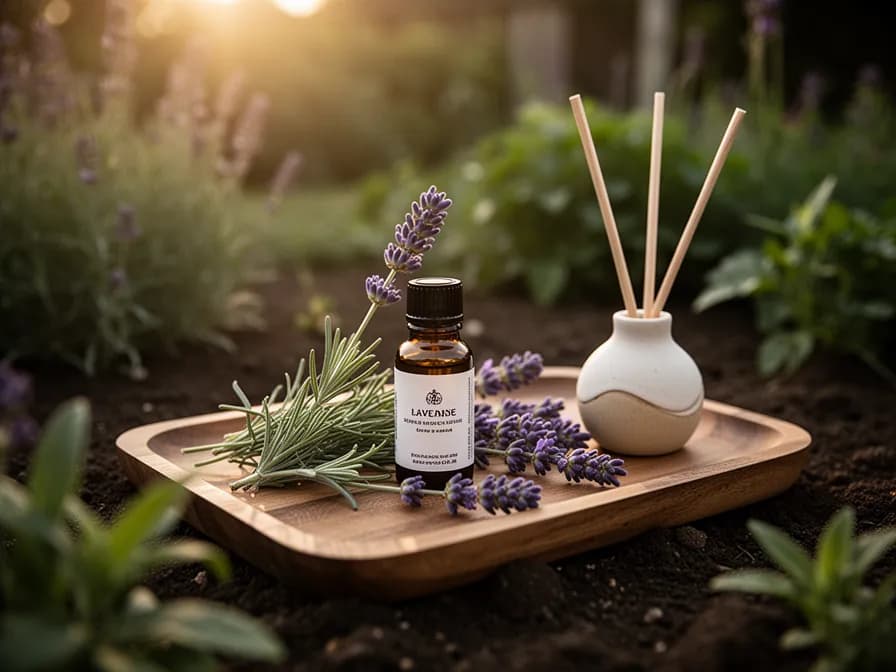
Culinary-grade lavender buds add a floral, slightly sweet flavor to recipes
Yield & Spacing Calculator
See how many Lavender plants fit in your garden bed based on the recommended 45cm spacing.
4
Lavender plants in a 4×4 ft bed
2 columns × 2 rows at 45cm spacing
Popular Varieties
Some of the most popular lavender varieties for home gardeners, each with unique characteristics.
Hidcote
A compact English lavender with deep violet-blue flowers and silvery foliage. Grows to 18 inches, excellent for borders, hedging, and culinary use.
Munstead
A classic English lavender with medium-blue flowers and a compact habit. One of the hardiest varieties, reliable even in zone 5. Excellent for dried arrangements.
Grosso
A lavandin hybrid (L. x intermedia) with exceptionally high essential oil content. Large flower spikes on vigorous plants reaching 3 feet. The commercial standard for oil production.
Provence
A lavandin hybrid with soft purple flowers and sweet fragrance ideal for sachets and body care. Vigorous, heat-tolerant plants with large flower spikes.
Phenomenal
An exceptionally hardy and disease-resistant lavandin that thrives in humid climates where other lavenders fail. Vigorous silver foliage with deep purple flowers.
English lavender buds add a floral, slightly sweet note to baked goods, teas, and savory dishes. Use sparingly, as lavender flavor can become soapy in excess. Lavender is a key ingredient in herbes de Provence. Infuse buds into sugar, honey, cream, or simple syrup for desserts. Lavender pairs beautifully with lemon, berries, chocolate, and stone fruits. It also complements roast lamb, grilled chicken, and goat cheese. Beyond culinary use, lavender is prized for aromatherapy, sachets, essential oil production, and natural skincare products.
When should I plant Lavender?
Plant Lavender in March, April, May. It takes approximately 90 days to reach maturity, with harvest typically in June, July, August.
What are good companion plants for Lavender?
Lavender grows well alongside Rosemary, Thyme, Sage, Rose. Companion planting can improve growth, flavor, and natural pest control.
What hardiness zones can Lavender grow in?
Lavender thrives in USDA hardiness zones 5 through 9. With greenhouse protection, it may be grown in zones 3 through 10.
How much sun does Lavender need?
Lavender requires Full Sun (6-8h+). This means at least 6-8 hours of direct sunlight daily.
How far apart should I space Lavender?
Space Lavender plants 45cm (18 inches) apart for optimal growth and air circulation.
What pests and diseases affect Lavender?
Common issues include Root Rot (Phytophthora), Shab (Phomopsis lavandulae), Spittlebugs, Whiteflies. Prevention through good garden practices like crop rotation, proper spacing, and companion planting is the best approach. See the detailed pests and diseases section above for symptoms, prevention, and treatment for each.
How do I store Lavender after harvest?
Dried lavender retains its fragrance for 1-2 years when stored properly in airtight containers away from light. Strip dried buds from stems for use in sachets, potpourri, culinary applications, and body care products. Lavender essential oil can be extracted through steam distillation at home with sp...
What are the best Lavender varieties to grow?
Popular varieties include Hidcote, Munstead, Grosso, Provence, Phenomenal. Each has unique characteristics suited to different growing conditions and culinary preferences. See the varieties section above for detailed descriptions.
What soil does Lavender need?
Lavender demands lean, sharply drained, alkaline soil with a pH of 6.5-8.0. Sandy, gravelly, or rocky soils are ideal. Never plant in rich, heavily composted, or clay soils. Add agricultural lime to acidic soils to raise pH. Lavender needs minimal to no fertilization; excessive nutrients produce lus...
Is lavender edible and safe to eat?
Yes, English lavender (Lavandula angustifolia) is edible and has been used in cooking for centuries. Use only culinary-grade lavender that has not been treated with pesticides. The buds and flowers are the parts most commonly used in recipes, from baked goods and beverages to savory dishes. Use lavender sparingly, as its flavor is intense and can become soapy or bitter if overused. Start with half the amount you think you need and adjust to taste.
Why is my lavender turning woody and not flowering well?
Lavender naturally becomes woody at the base over time, but neglecting annual pruning accelerates this process. Without regular trimming, the plant puts energy into extending old woody stems rather than producing fresh flowering growth. The solution is to prune consistently each year after flowering, cutting back about one-third of the current season's growth while staying in the green, leafy portion. Never cut into bare old wood, as it rarely produces new shoots. If a plant is severely overgrown, it may be better to replace it and maintain the new plant with proper pruning from the start.
How do I overwinter lavender in cold climates?
The key to overwintering lavender is drainage, not warmth. Most English lavender varieties survive temperatures down to -15°C if the soil drains freely. Plant in a raised bed or on a slope, use gravel mulch instead of organic mulch, and avoid watering in late autumn. In very cold zones, apply a loose layer of evergreen boughs over the plant after the ground freezes to provide wind protection. Container-grown lavender should be moved to an unheated garage or cold frame where temperatures stay between -5°C and 5°C.
What is the best way to dry lavender for sachets and cooking?
Harvest lavender stems in the morning after the dew has evaporated but before the midday heat, when essential oil content is highest. Cut stems when about half the flowers on each spike have opened. Bundle 20-30 stems together with a rubber band and hang upside down in a warm, dry, dark location with good air circulation for 2-4 weeks. Once fully dry, strip the buds from the stems by running your fingers down the stalk over a clean bowl. Store dried buds in airtight glass jars away from direct light. Properly dried lavender retains its fragrance for 1-2 years.
Can I grow lavender in containers?
Lavender grows very well in containers provided you use the right setup. Choose a pot at least 30 cm in diameter with large drainage holes. Use a fast-draining potting mix amended with perlite or coarse sand (roughly 70% potting mix to 30% drainage material). Terra cotta pots are ideal because they wick away excess moisture. Water only when the top 3-5 cm of soil is completely dry. Container lavender needs repotting every 2-3 years and may need winter protection in cold climates by moving to a sheltered, cool location.
Which lavender variety is best for cooking?
English lavender (Lavandula angustifolia) varieties are the best choice for culinary use because they have the sweetest, most floral flavor with the lowest camphor content. Top culinary varieties include 'Munstead,' 'Hidcote,' and 'Royal Velvet.' Avoid using French lavender (L. stoechas) or lavandin (L. x intermedia) for cooking, as they have a higher camphor content that produces a medicinal, soapy taste. Always verify that any lavender you cook with has been grown without pesticides or chemical treatments.
Ready to Grow Lavender?
Add Lavender to your garden plan and start designing your perfect layout.

Vladimir Kusnezow
Gardener and Software Developer
Zone 6b gardener. Growing vegetables and fruits in soil and hydroponics for 6 years. I built PlotMyGarden to plan my own gardens.
Jump to Section