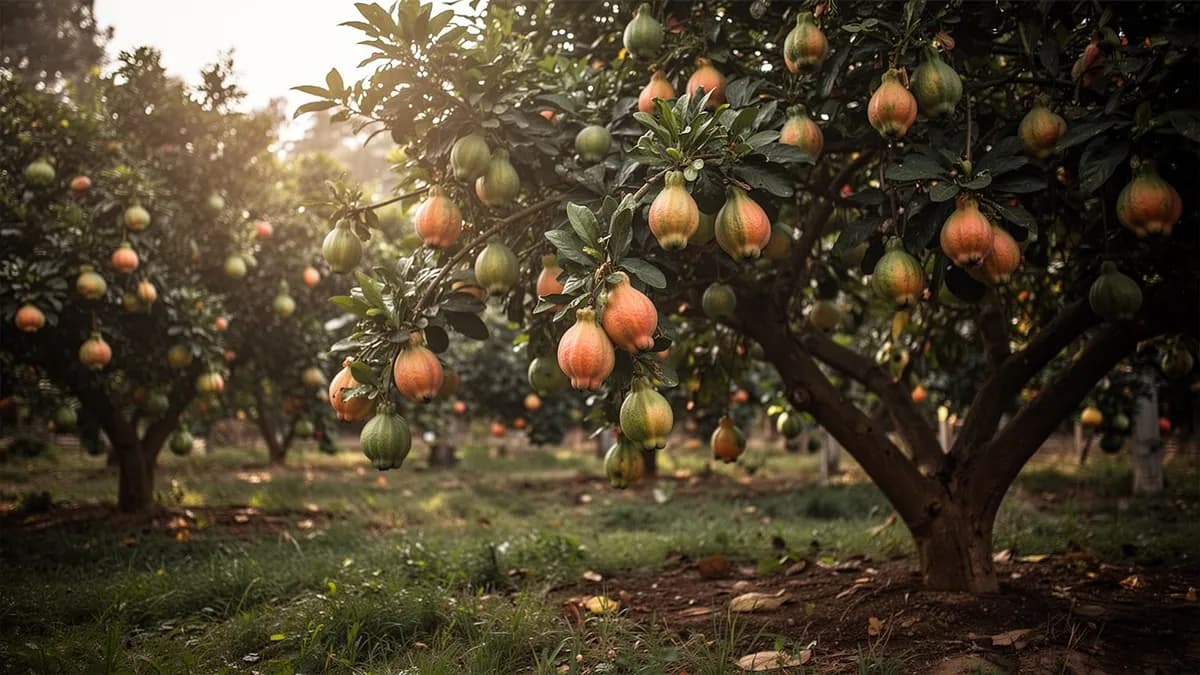
Guava Tree
Psidium guajava
At a Glance
It's planting season for Guava Tree! Start planning your garden now.
A fast-growing tropical tree that begins producing aromatic, vitamin-C-rich fruits within two years of planting. Guava trees are adaptable to various soil types but require frost-free conditions and regular watering during fruit development. Prune to maintain a manageable height and open canopy shape for easier harvesting. The fruits can be eaten fresh, made into paste, or used for juice and are best harvested when they yield slightly to gentle pressure.
Planting & Harvest Calendar
Growth Stages
From Seed to Harvest
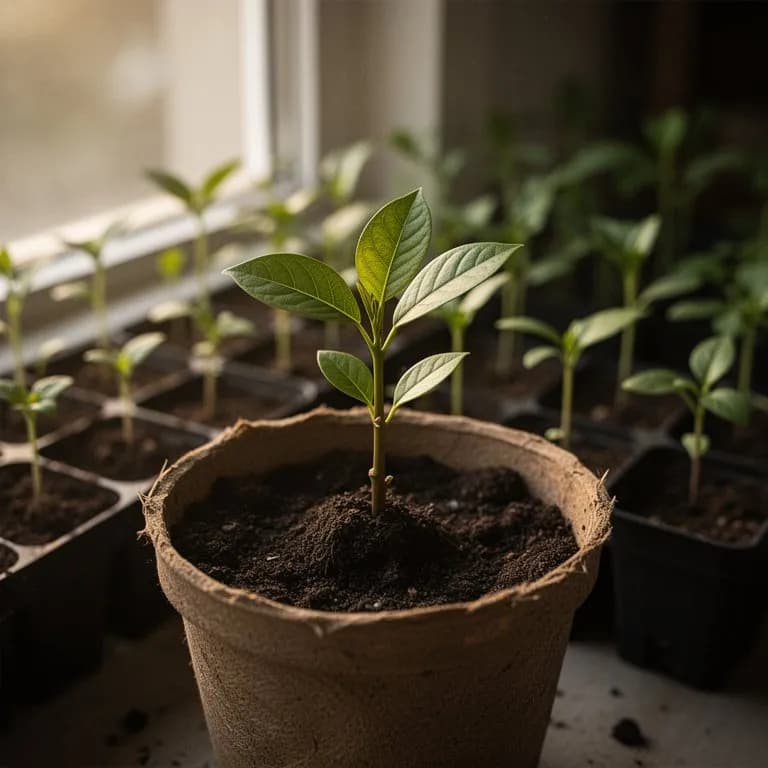
Germination
Days 0–28
Guava seeds germinate slowly, typically taking two to eight weeks depending on soil temperature and moisture. Fresh seeds have higher germination rates than dried ones. A consistent soil temperature of 20 to 25 degrees Celsius is ideal for sprouting.
💡 Care Tip
Soak seeds in warm water for 24 hours before planting to soften the hard seed coat and improve germination rates.
Monthly Care Calendar
What to do each month for your Guava Tree
May
You are hereFertilize with a high-potassium blend to encourage flowering. Thin dense interior branches to improve air circulation. Watch for anthracnose and treat with copper-based fungicide if spotted
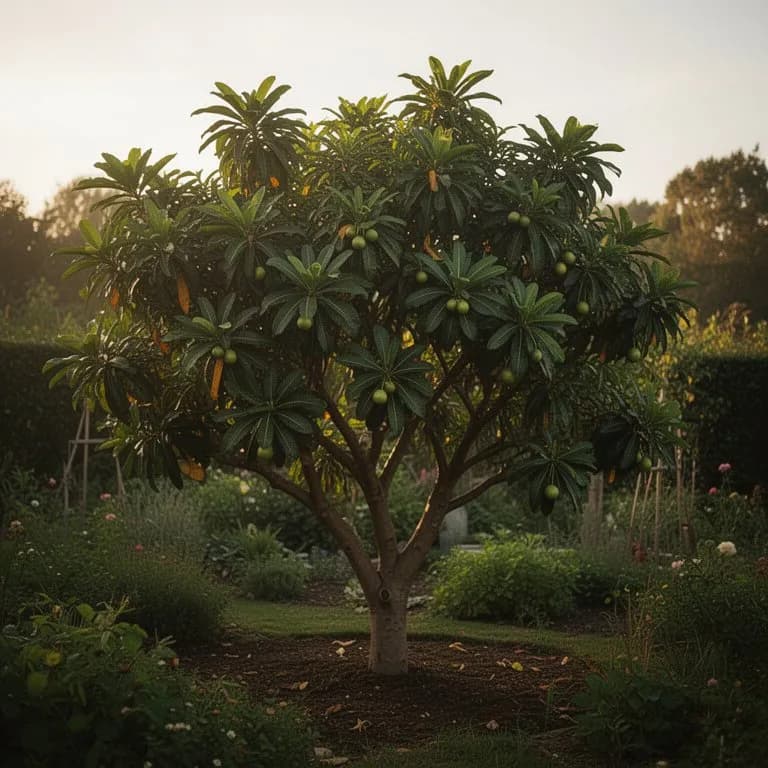
Regular pruning encourages lateral branching and improves fruit production in guava trees.
Did You Know?
Fascinating facts about Guava Tree
A single guava fruit contains roughly four times more vitamin C than an average orange, making it one of the richest natural sources of this essential nutrient.
Guava trees are fast-growing tropical to subtropical trees that thrive in USDA zones 9 through 12. They tolerate a wide range of soil types from sandy to clay, provided drainage is adequate, and prefer a pH of 5.0 to 7.0. Plant in full sun, spacing trees 10 to 15 feet apart. In frost-prone areas, plant near a south-facing wall for radiant heat protection, or grow in large containers that can be moved to shelter during cold snaps.
Water regularly during fruit development, providing 1 to 2 inches per week. Guava trees are moderately drought-tolerant once established but produce better fruit with consistent moisture. Apply a balanced fertilizer monthly during the growing season, increasing potassium during fruiting to improve fruit quality and sweetness. Young trees benefit from staking during the first year to develop straight trunks.
Prune guava trees to maintain a manageable height of 8 to 12 feet by heading back tall branches annually after the main harvest. Remove crossing and inward-growing branches to open the canopy for light penetration and air circulation. Guavas fruit on new growth, so regular pruning stimulates productive wood. Most tropical guava varieties are self-fertile, but cross-pollination from a second tree improves fruit set and size. Protect trees from frost, as temperatures below 28 degrees can cause severe damage or death.
The guava tree (Psidium guajava) is native to Central America, southern Mexico, and northern South America, where archaeological evidence suggests it has been cultivated for over 4,000 years. Pre-Columbian peoples throughout Mesoamerica and the Andes valued the fruit as a dietary staple long before European contact. Spanish and Portuguese explorers encountered guava during the 16th century and were instrumental in distributing the fruit across the globe. The Portuguese carried guava seeds to their trading posts in India and Southeast Asia during the 1500s, where the tree quickly naturalized in the tropical climate. Spanish galleons transported guava to the Philippines and other Pacific islands along established trade routes. By the 17th century, guava had become established throughout most of tropical Africa, carried there by both European colonists and Arab traders. The tree proved remarkably adaptable, thriving in a wide range of tropical and subtropical environments from sea level to elevations above 1,500 meters. Today, India is the world's largest producer of guava, followed by China, Thailand, Pakistan, and Mexico. Brazil, the fruit's ancestral homeland, also remains a significant producer. Over 150 cultivars have been developed worldwide, ranging from small-fruited wild varieties to large commercial cultivars weighing over 500 grams each. The fruit plays an important cultural role in many societies; in parts of India and Southeast Asia, guava is a symbol of prosperity and is included in religious offerings and festive celebrations. Modern breeding programs continue to develop improved varieties that offer enhanced disease resistance, longer shelf life, and higher nutritional content.
Guava trees can be grown from seed, which germinates in 2 to 8 weeks when planted fresh in moist potting mix at warm temperatures. However, seedlings are variable and take 3 to 4 years to fruit. For faster production and guaranteed variety, purchase grafted or air-layered nursery trees that fruit within 1 to 2 years. Guava cuttings root readily with rooting hormone and bottom heat. Air layering is the most reliable home propagation method, producing a fruiting-size plant within one growing season.
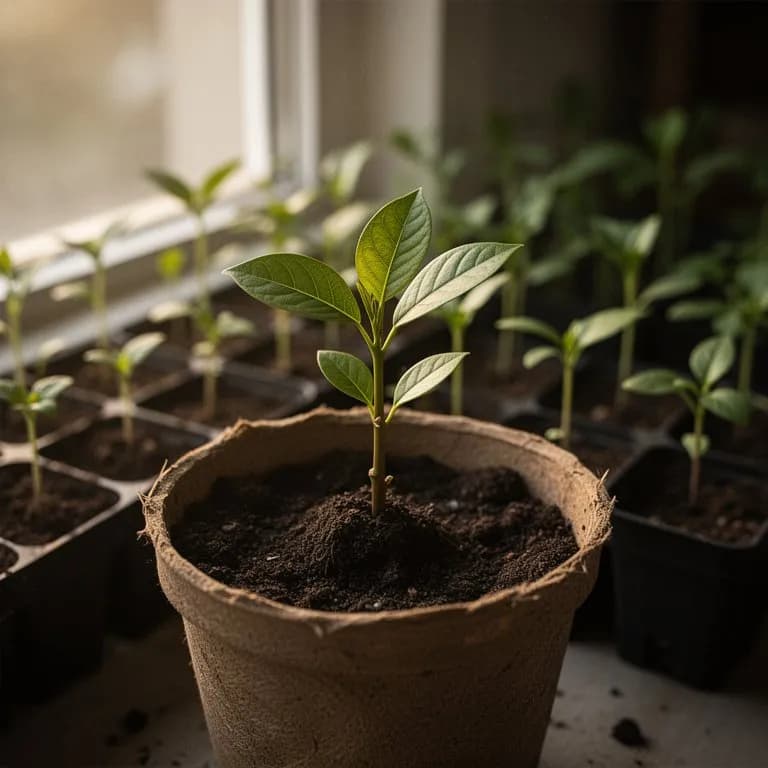
A healthy guava seedling ready for transplanting into well-drained soil.
Guava trees are remarkably adaptable to soil types, growing well in sandy, loamy, or clay soils with a pH of 5.0 to 7.0. They tolerate saline conditions better than most fruit trees. Apply a balanced fertilizer such as 6-6-6 or 8-3-9 monthly during the growing season, along with micronutrient supplements including iron, manganese, and zinc. Organic growers can use composted manure and fish emulsion. Excessive nitrogen produces lush growth at the expense of fruit production.
Check Your Zone
See if Guava Tree is suitable for your location.
15°C – 35°C
59°F – 95°F
Guava trees thrive in warm tropical and subtropical climates with temperatures between 15 and 35 degrees Celsius. They can tolerate brief exposure to temperatures as low as minus 2 degrees Celsius once mature, but sustained frost causes significant damage to foliage and branches. Young trees are particularly frost-sensitive and should be protected when temperatures drop below 5 degrees Celsius. Optimal fruit development occurs between 23 and 28 degrees Celsius with moderate humidity.
Common issues affecting Guava Tree and how to prevent and treat them organically.
Frost damage is the primary limitation for guava growers in subtropical areas, as temperatures below 28 degrees can kill young trees and severely damage mature ones. Fruit fly infestation is the most common pest issue in tropical regions and can render entire crops inedible. Poor fruit quality often results from inconsistent watering during fruit development. Guava wilt, a fungal disease that blocks water-conducting vessels, can kill trees rapidly and has no effective chemical treatment once established.
Interplant guava trees with nitrogen-fixing legumes like pigeon pea and cowpea to improve soil fertility in tropical garden settings. Sweet basil and lemongrass planted nearby help repel fruit flies and mosquitoes. Banana plants make excellent companions, providing windbreak protection and thriving in similar growing conditions. Avoid planting guavas near black walnut trees, which produce juglone that inhibits growth. Marigolds around the drip line deter nematodes and attract pollinators.
- 1Plant guava trees in full sun with at least six to eight hours of direct sunlight daily for optimal fruit production and flavor development.
- 2Use well-draining soil with a slightly acidic to neutral pH between 5.0 and 7.0, and amend heavy clay soils with organic matter and coarse sand to improve drainage.
- 3Water deeply two to three times per week during the growing season, allowing the top few centimeters of soil to dry between waterings to prevent root rot.
- 4Apply a balanced fertilizer such as 10-10-10 every two to three months during active growth, switching to a high-potassium formula when flowers begin to form.
- 5Prune annually after the main harvest to remove crossing branches, thin the canopy interior, and maintain a manageable height of two to three meters for easier harvesting.
- 6Protect young trees from wind damage by staking them securely for the first two years and planting near a wall or fence in exposed locations.
- 7In regions where temperatures drop below 5 degrees Celsius, grow guava in large containers that can be moved indoors or to a sheltered area during winter months.
- 8Manage common pests such as fruit flies by using baited traps, netting ripening fruit, and removing fallen fruit promptly to break the pest breeding cycle.
- 9Encourage pollination and larger fruit set by planting two or more guava trees within close proximity, as cross-pollination improves both yield and fruit quality.
- 10Mulch around the root zone with a 5 to 10 centimeter layer of organic material such as wood chips or straw, keeping mulch a few centimeters away from the trunk to prevent rot.
Harvest guavas when the skin changes from dark green to lighter green or yellow and the fruit yields slightly to gentle pressure. Ripe guavas emit a strong, sweet tropical fragrance. For shipping or storing, pick when fruit is still firm and allow it to ripen at room temperature over 2 to 5 days. Guavas bruise easily, so handle with care. In tropical climates, trees can produce fruit year-round with peaks in summer and early fall.
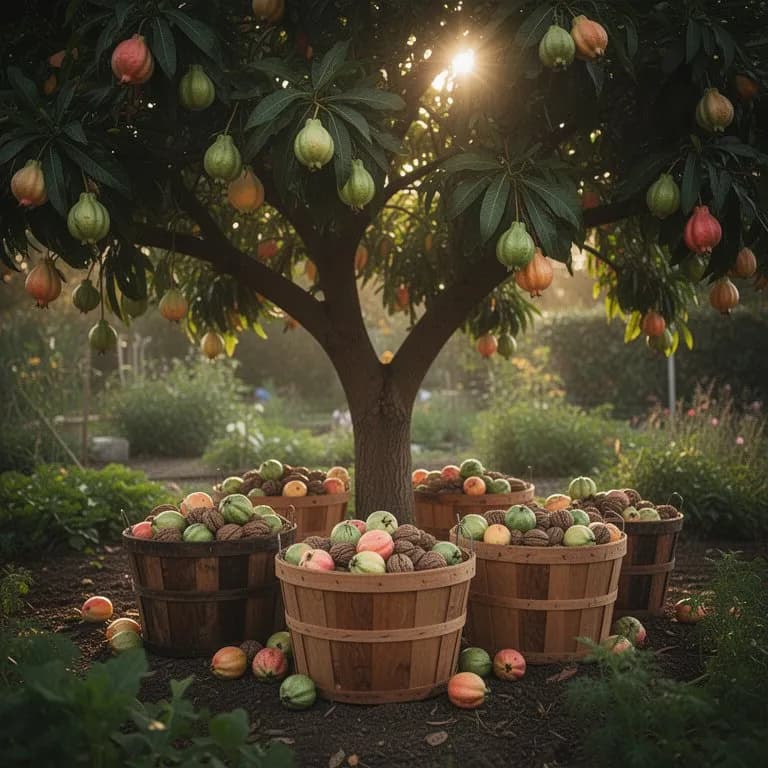
Mature guava fruits turning from green to yellow-green, signaling they are ready for harvest.
Ripe guavas keep at room temperature for 2 to 3 days and in the refrigerator for up to 2 weeks. The fruit bruises easily, so store in a single layer. Guava puree freezes exceptionally well for up to a year and is the base for countless recipes. Guava paste, known as goiabada in Brazil, is a traditional preserved form that pairs with cheese. Guavas also make excellent jam, jelly, and dried fruit leather, and the juice is widely enjoyed fresh or blended.
Plan your garden with ease
Love growing Guava Tree? Use our free garden planner to design your beds, track planting dates, and get personalized care reminders.
Nutritional Info
Per 100g serving
68
Calories
Health Benefits
- One of the highest natural sources of vitamin C among all common fruits
- Contains significant amounts of dietary fiber, supporting healthy digestion
- Rich in lycopene, particularly in pink-fleshed varieties, which acts as a powerful antioxidant
- Provides folate, manganese, and copper in meaningful amounts
- Low glycemic index fruit, making it suitable for blood sugar management
- Contains more potassium per serving than a banana of equal weight
💰 Why Grow Your Own?
A single established guava tree can produce 25 to 50 kilograms of fruit annually for 30 or more years. With fresh guavas typically priced at 4 to 8 dollars per kilogram at grocery stores, a productive tree can provide 100 to 400 dollars worth of fruit each year. Over the productive lifespan of the tree, this represents potential savings of several thousand dollars compared to purchasing store-bought fruit, while also providing superior freshness and flavor from home-grown produce.
Quick Recipes
Simple recipes using fresh Guava Tree
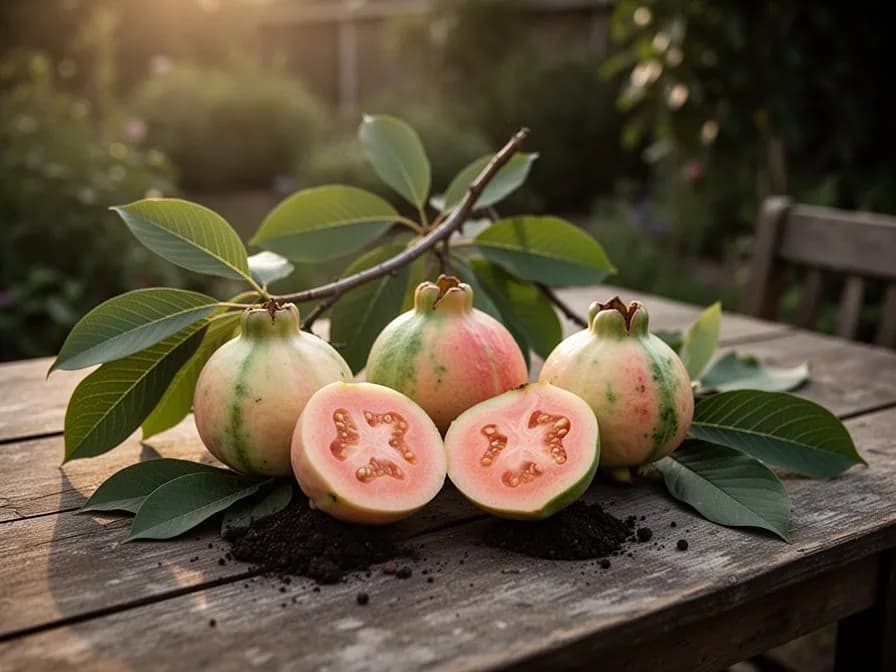
Tropical Guava Smoothie
5 minutesA creamy, refreshing smoothie that highlights the natural sweetness and aroma of ripe guava. This quick breakfast or snack option delivers a substantial dose of vitamin C and dietary fiber in every glass.
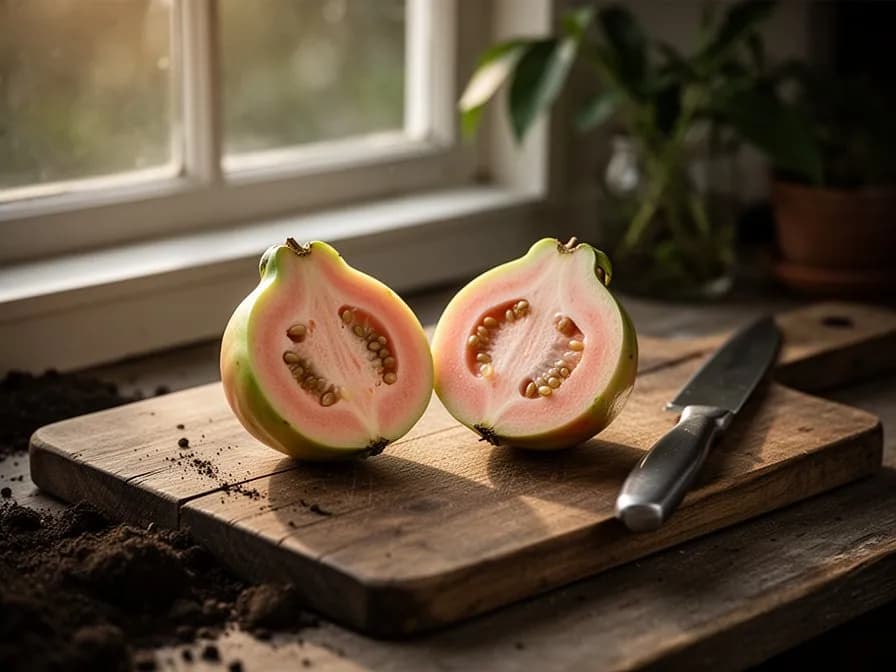
Guava Paste (Goiabada)
45 minutesA traditional Brazilian confection made by cooking guava pulp with sugar until it sets into a firm, sliceable paste. Goiabada is classically paired with fresh white cheese in the beloved dessert known as Romeo and Juliet.
Guava and Cream Cheese Empanadas
30 minutesFlaky pastry pockets filled with sweet guava paste and tangy cream cheese, a popular snack throughout Latin America and the Caribbean. These can be baked or fried for a delicious treat that balances sweetness with savory richness.
Yield & Spacing Calculator
See how many Guava Tree plants fit in your garden bed based on the recommended 500cm spacing.
0
Guava Tree plants in a 4×4 ft bed
0 columns × 0 rows at 500cm spacing
Popular Varieties
Some of the most popular guava tree varieties for home gardeners, each with unique characteristics.
Ruby Supreme
Large fruit with pink-red flesh and exceptional sweetness. Very productive in warm climates and one of the best varieties for home gardens.
White Indian
Crisp white flesh with a mild, sweet flavor and aromatic skin. Preferred for fresh eating in tropical regions due to its pleasant texture.
Strawberry Guava
A smaller-fruited species with deep red skin and strawberry-flavored flesh. More cold-tolerant than tropical guava, surviving into zone 8b with protection.
Tropical Pink
Heavy-bearing variety with sweet pink flesh and good disease resistance. An excellent all-purpose guava for eating fresh, juicing, and making preserves.
Guavas are extremely versatile tropical fruits, eaten fresh when ripe or used extensively in cooking. Guava paste with white cheese is a beloved dessert across Latin America. The fruit makes outstanding jam, jelly, and juice. Guava smoothies, ice cream, and sorbets showcase the fruit's tropical aroma. In Asian cuisines, green guava is eaten as a savory snack with salt and chili. Guavas are exceptionally rich in vitamin C.
When should I plant Guava Tree?
Plant Guava Tree in March, April, May. It takes approximately 730 days to reach maturity, with harvest typically in July, August, September, October, November.
What are good companion plants for Guava Tree?
Guava Tree grows well alongside Basil, Marigold. Companion planting can improve growth, flavor, and natural pest control.
What hardiness zones can Guava Tree grow in?
Guava Tree thrives in USDA hardiness zones 9 through 12. With greenhouse protection, it may be grown in zones 7 through 13.
How much sun does Guava Tree need?
Guava Tree requires Full Sun (6-8h+). This means at least 6-8 hours of direct sunlight daily.
How far apart should I space Guava Tree?
Space Guava Tree plants 500cm (197 inches) apart for optimal growth and air circulation.
What pests and diseases affect Guava Tree?
Common issues include Guava Fruit Fly, Anthracnose, Guava Moth. Prevention through good garden practices like crop rotation, proper spacing, and companion planting is the best approach. See the detailed pests and diseases section above for symptoms, prevention, and treatment for each.
How do I store Guava Tree after harvest?
Ripe guavas keep at room temperature for 2 to 3 days and in the refrigerator for up to 2 weeks. The fruit bruises easily, so store in a single layer. Guava puree freezes exceptionally well for up to a year and is the base for countless recipes. Guava paste, known as goiabada in Brazil, is a traditio...
What are the best Guava Tree varieties to grow?
Popular varieties include Ruby Supreme, White Indian, Strawberry Guava, Tropical Pink. Each has unique characteristics suited to different growing conditions and culinary preferences. See the varieties section above for detailed descriptions.
What soil does Guava Tree need?
Guava trees are remarkably adaptable to soil types, growing well in sandy, loamy, or clay soils with a pH of 5.0 to 7.0. They tolerate saline conditions better than most fruit trees. Apply a balanced fertilizer such as 6-6-6 or 8-3-9 monthly during the growing season, along with micronutrient supple...
How long does it take for a guava tree to produce fruit?
Guava trees grown from seed typically take three to four years to produce their first fruit, while grafted or air-layered trees can begin fruiting within one to two years after planting. The time to first fruit also depends on growing conditions, with trees in warm, sunny locations reaching productivity faster than those in cooler or shadier spots.
Can I grow a guava tree indoors or in a container?
Yes, guava trees adapt well to container growing, especially dwarf varieties. Use a pot at least 45 to 60 centimeters in diameter with good drainage holes and a high-quality potting mix. Place the container in the sunniest spot available, ideally receiving six or more hours of direct light. Container trees will produce smaller yields than in-ground trees but can still provide a rewarding harvest of 5 to 15 kilograms per year.
How do I know when guava fruits are ripe and ready to pick?
Ripe guavas undergo a color change from dark green to light green, yellow-green, or yellow depending on the variety. The fruit softens slightly when gently squeezed, similar to a ripe avocado, and develops a strong, sweet, floral aroma. Fruits that are picked slightly under-ripe will continue to ripen at room temperature over two to three days.
What are the most common pests and diseases affecting guava trees?
The most common pests include fruit flies, guava moth, whiteflies, scale insects, and mealybugs. Fungal diseases such as anthracnose, guava rust, and root rot can also affect trees, particularly in humid conditions with poor air circulation. Regular inspection, proper pruning for airflow, and prompt removal of infected plant material are the best preventive measures.
Do guava trees need a pollinator to produce fruit?
Guava trees are capable of self-pollination, meaning a single tree can produce fruit on its own. However, cross-pollination between two or more trees generally results in higher fruit set, larger fruits, and improved overall yield. Bees and other insects are the primary pollinators, so avoiding pesticide use during flowering helps ensure good pollination.
How cold-hardy are guava trees and can they survive frost?
Mature guava trees can tolerate brief exposure to temperatures as low as minus 2 degrees Celsius, but sustained freezing temperatures will damage or kill branches and foliage. Young trees are more vulnerable and should be protected when temperatures drop below 5 degrees Celsius. In frost-prone regions, growing guava in containers that can be moved to shelter, or wrapping trees with frost cloth during cold snaps, are effective protection strategies.
Ready to Grow Guava Tree?
Add Guava Tree to your garden plan and start designing your perfect layout.

Vladimir Kusnezow
Gardener and Software Developer
Zone 6b gardener. Growing vegetables and fruits in soil and hydroponics for 6 years. I built PlotMyGarden to plan my own gardens.
Jump to Section