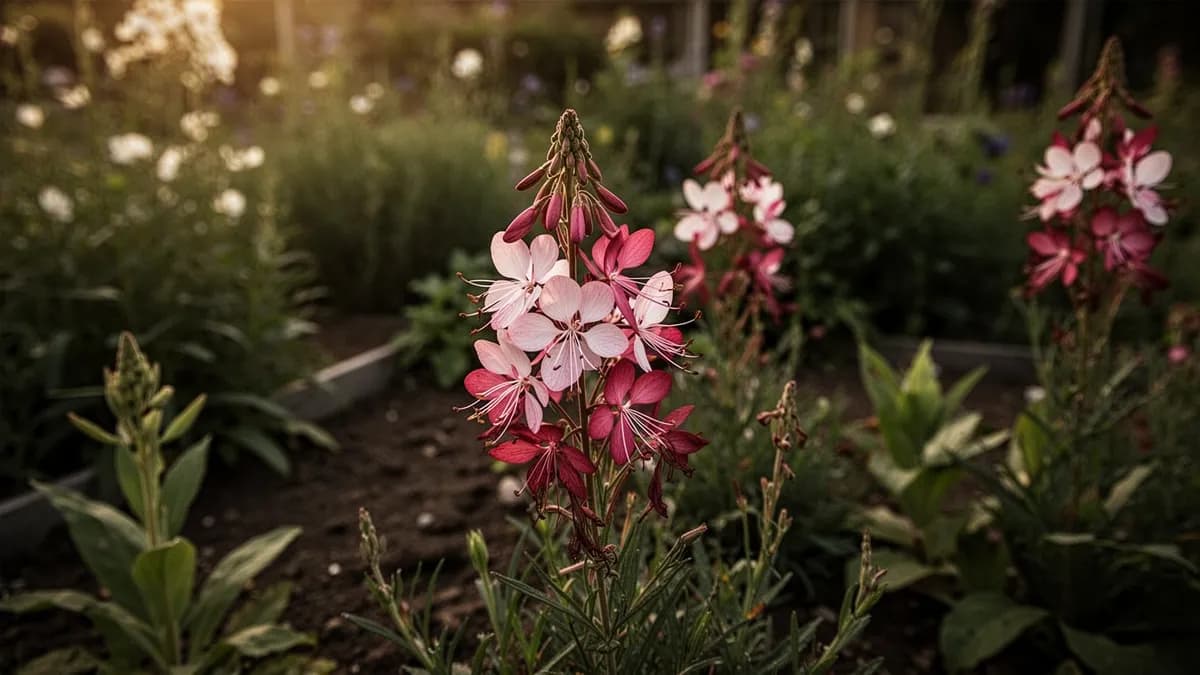
Gaura
Oenothera lindheimeri
At a Glance
It's planting season for Gaura! Start planning your garden now.
A graceful perennial with airy wands of butterfly-like white or pink flowers that sway in the slightest breeze all season long. Gaura is extremely heat and drought tolerant, thriving in full sun and well-drained soil with minimal care. It is short-lived but self-sows modestly, and newer compact cultivars stay tidy in borders.
Planting & Harvest Calendar
Growth Stages
From Seed to Harvest
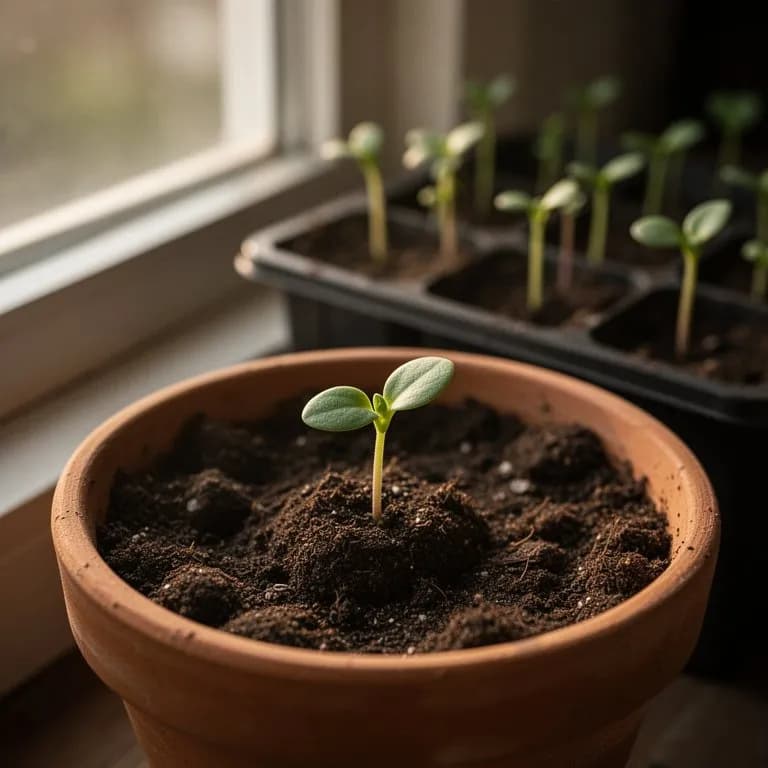
Seed Germination
Days 0–21
Gaura seeds require light for germination and should be surface-sown on moist, well-drained seed-starting mix. Germination is often erratic, taking anywhere from 10 to 21 days at temperatures of 18-24°C (65-75°F). Cold stratification for two to four weeks before sowing can improve germination rates significantly.
💡 Care Tip
Press seeds gently onto the soil surface without covering them, as gaura seeds need light to germinate. Keep the medium consistently moist with a fine mist and maintain temperatures around 21°C. Be patient, as germination can be sporadic even under ideal conditions.
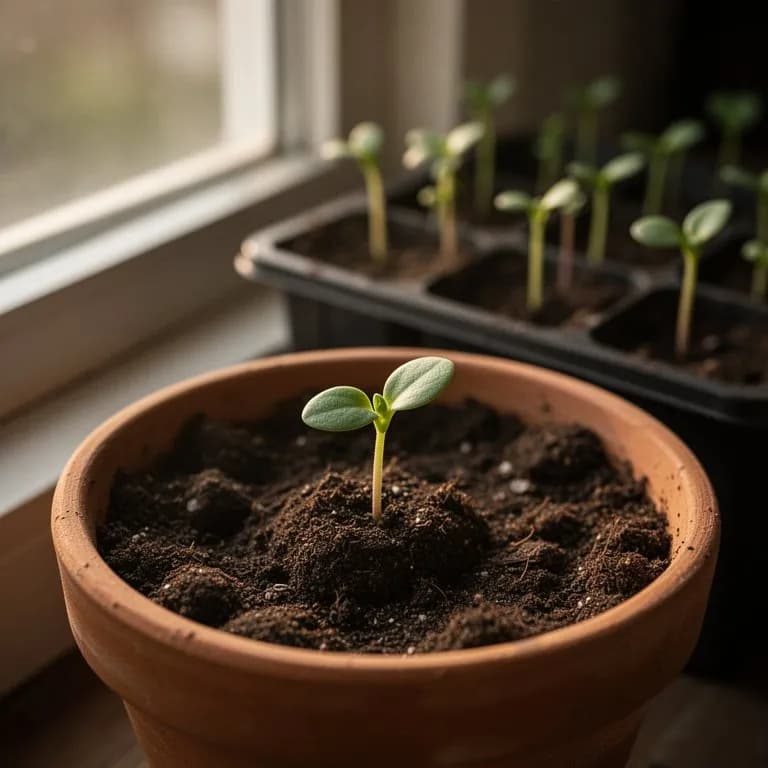
A gaura seedling developing its first rosette of narrow, spoon-shaped leaves in early spring
Monthly Care Calendar
What to do each month for your Gaura
May
You are hereMonitor new growth for aphids on tender shoot tips. Stake taller cultivars if planted in exposed or windy locations. Water deeply once a week if rainfall is insufficient, allowing soil to dry between waterings.
Did You Know?
Fascinating facts about Gaura
Gaura lindheimeri was reclassified by botanists and is now officially Oenothera lindheimeri, placing it in the evening primrose family (Onagraceae) alongside other Oenothera species.
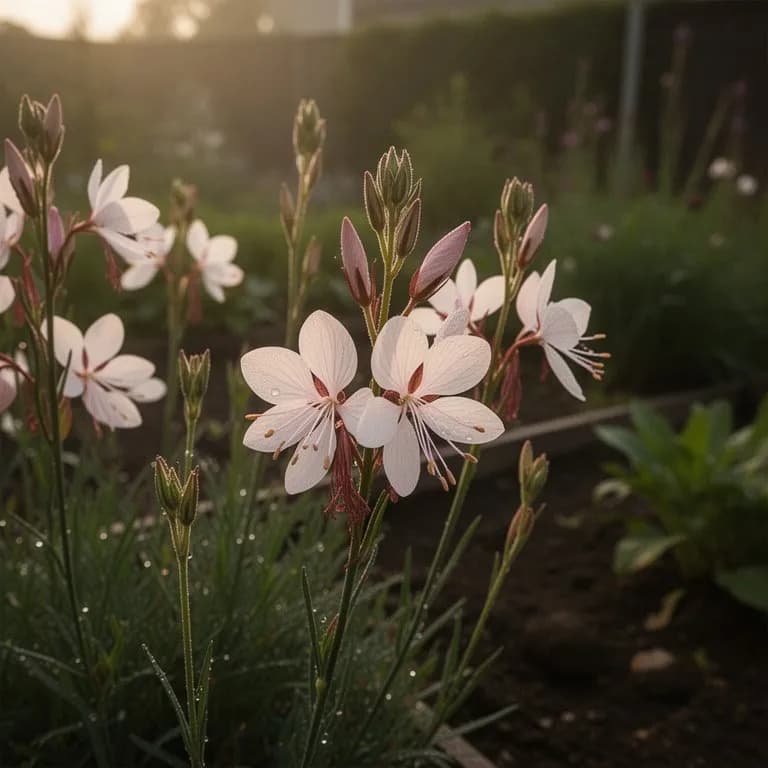
Individual gaura flowers feature four delicate petals that open white and gradually age to pink over several days
Gaura is a graceful prairie perennial that adds airiness and movement to sunny borders. Plant in spring, spacing 18 inches apart in full sun with well-drained soil. These plants produce airy wands of butterfly-like flowers that sway in the slightest breeze from late spring through hard frost.
Gaura is extremely heat and drought-tolerant once established—it thrives in conditions that stress most perennials. Avoid rich, moist soil, which produces floppy growth. Lean, well-drained conditions produce the most compact, floriferous plants.
Gaura is typically short-lived (3-5 years) but self-sows modestly to maintain the planting. Modern compact cultivars like 'Whirling Butterflies' and 'Siskiyou Pink' stay much tidier than the lanky species. No deadheading is needed—the flowers are self-cleaning, dropping spent blooms as new ones open.
Gaura lindheimeri, now reclassified as Oenothera lindheimeri, is a herbaceous perennial native to the prairies, open woodlands, and roadsides of south-central North America, primarily Texas and Louisiana. The species was first collected and described by the German-born botanist Ferdinand Jacob Lindheimer in the 1830s during his extensive botanical explorations of the Texas frontier, and the plant bears his name in recognition of his contributions to North American botany. Lindheimer, sometimes called the father of Texas botany, gathered thousands of plant specimens from the region which were later formally described by George Engelmann and Asa Gray.
In its native habitat, gaura grows in sandy or limestone-derived soils along creek banks, open prairies, and disturbed roadsides, often in association with native grasses and other wildflowers. The plant evolved to cope with the extreme heat, periodic drought, and poor soils characteristic of the Texas landscape, developing its deep taproot and efficient water-use strategies.
Gaura remained relatively obscure in horticulture until the 1990s, when renewed interest in drought-tolerant and low-maintenance perennials brought it to the attention of plant breeders. The cultivar 'Siskiyou Pink' was introduced in 1991 by the Siskiyou Rare Plant Nursery in Oregon and became the first widely popular garden selection, valued for its deeper pink flowers and compact habit. Since then, numerous cultivars have been developed including dwarf forms suitable for containers, deeper-colored selections, and varieties with improved cold hardiness. Today gaura is grown worldwide in temperate and Mediterranean climates as a staple of water-wise gardens, cottage-style borders, and naturalistic prairie plantings, prized for its graceful habit, extraordinarily long bloom season, and minimal care requirements.
Sow seeds in spring on the surface of gritty compost. Keep at 65-70°F (18-21°C). Germination takes 14-21 days. Plant out after hardening off. Named cultivars should be propagated by stem cuttings in spring or early summer, as seed-grown plants vary in color and habit.
Gaura thrives in lean, well-drained soil with a pH of 6.5-7.5. Rich, moist soil produces leggy, floppy growth. Sandy and gravelly soils are ideal. Avoid fertilizer—gaura genuinely performs better without it. In containers, use a well-draining mix and feed sparingly.
Check Your Zone
See if Gaura is suitable for your location.
-20°C – 40°C
-4°F – 104°F
Gaura is remarkably heat-tolerant and thrives in temperatures between 20-35°C (68-95°F) during the growing season. It is hardy to USDA zones 5-9, tolerating winter lows down to approximately -20°C (-4°F) provided the soil is well-drained, as wet winter conditions are far more damaging than cold alone. In summer, gaura handles sustained temperatures above 38°C (100°F) without stress, making it ideal for hot, dry climates. Growth slows below 10°C (50°F) and the plant enters dormancy after the first hard frost.
Common issues affecting Gaura and how to prevent and treat them organically.
Crown rot from wet winter soil kills more gaura than cold. Excellent drainage is essential. Plants in rich soil become lanky and flop over. Short lifespan (3-5 years) is inherent—plan for self-sowing replacements. Older varieties are much more leggy than modern compact cultivars.
Gaura adds graceful movement to borders when planted with Russian sage, salvia, achillea, and ornamental grasses. The airy habit provides beautiful contrast against dense, mounded plants like catmint and sedum. Excellent in prairie-style plantings with coneflowers and black-eyed Susans.
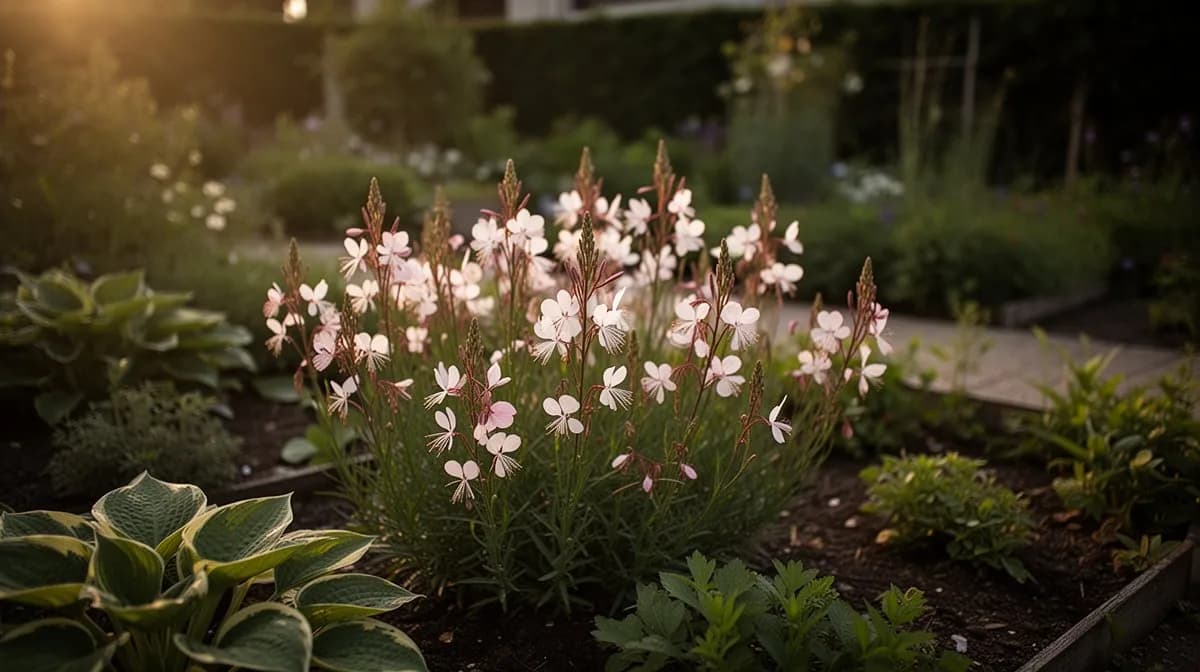
Gaura pairs beautifully with lavender and ornamental grasses in a drought-tolerant mixed border
- 1Plant gaura in full sun with at least six hours of direct sunlight daily. Insufficient light causes leggy, floppy growth and significantly reduced flowering.
- 2Excellent drainage is the single most critical requirement for gaura. Amend heavy clay soils with coarse sand, perlite, or gravel before planting, or grow gaura in raised beds where drainage can be controlled.
- 3Water deeply but infrequently during the establishment period. Once the taproot is developed after the first growing season, gaura is remarkably drought-tolerant and typically needs supplemental water only during extended dry spells.
- 4Avoid rich, heavily amended soils and excessive fertilization. Gaura produces its best, most compact growth and heaviest flowering in lean, well-drained soils. Overly fertile conditions cause rank, floppy growth.
- 5Cut the entire plant back by one-third to one-half in midsummer if it becomes leggy, flops open from the center, or pauses in flowering. This hard pruning stimulates vigorous new growth and a strong autumn rebloom.
- 6In USDA zones 5-6, apply a loose winter mulch of straw or shredded leaves over the crown after the ground freezes. Remove it gradually in early spring as temperatures warm. Wet, heavy mulch can cause crown rot.
- 7Deadhead spent flower spikes regularly by cutting back to a side branch or basal leaves. This prevents energy going to seed production and redirects it into producing new flowering stems.
- 8When starting gaura from seed indoors, cold stratify the seeds in a damp paper towel inside a sealed bag in the refrigerator for two to four weeks before sowing. This significantly improves the typically erratic germination rate.
- 9Space plants 45-60 cm apart to allow for their mature spread and to ensure adequate air circulation, which helps prevent powdery mildew in humid climates.
- 10Gaura's deep taproot makes it poorly suited to container culture in small pots. If growing in containers, use a deep pot of at least 30 cm depth with excellent drainage and a gritty, fast-draining potting mix.
Gaura stems can be cut for airy, informal arrangements that add graceful movement to bouquets. Cut when several flowers are open along the wand. They last 4-5 days in the vase and are beautiful filler flowers alongside roses, dahlias, and zinnias.
Gaura is a hardy perennial needing no storage. Cut back to the ground in late autumn after frost. In cold zones at the edge of hardiness, apply a light mulch for winter protection—but keep mulch off the crown to prevent rot. Self-sown seedlings provide natural replacement for aging plants.
Plan your garden with ease
Love growing Gaura? Use our free garden planner to design your beds, track planting dates, and get personalized care reminders.
Nutritional Info
Per 100g serving
0
Calories
Health Benefits
- Gaura is grown exclusively as an ornamental plant and is not cultivated for food or nutritional purposes
- The plant is not known to be toxic to humans, dogs, or cats, and is considered pet-safe in gardens
- Some members of the Onagraceae family (evening primrose relatives) have edible parts, but gaura itself is not traditionally consumed
- The primary value of gaura lies in its ecological contribution as a pollinator plant providing nectar to bees, butterflies, and moths
💰 Why Grow Your Own?
Gaura is one of the most cost-effective perennials for the garden. A single plant costing $4-8 at a nursery will bloom from late spring through autumn in its first year and return reliably for three to five years or more. It self-sows readily in favorable conditions, providing free new plants each year. Its extreme drought tolerance once established means significantly reduced water bills compared to thirstier ornamentals. Gaura requires no staking in most settings, no regular fertilizing, and no pest or disease treatments, eliminating ongoing input costs entirely.
Quick Recipes
Simple recipes using fresh Gaura
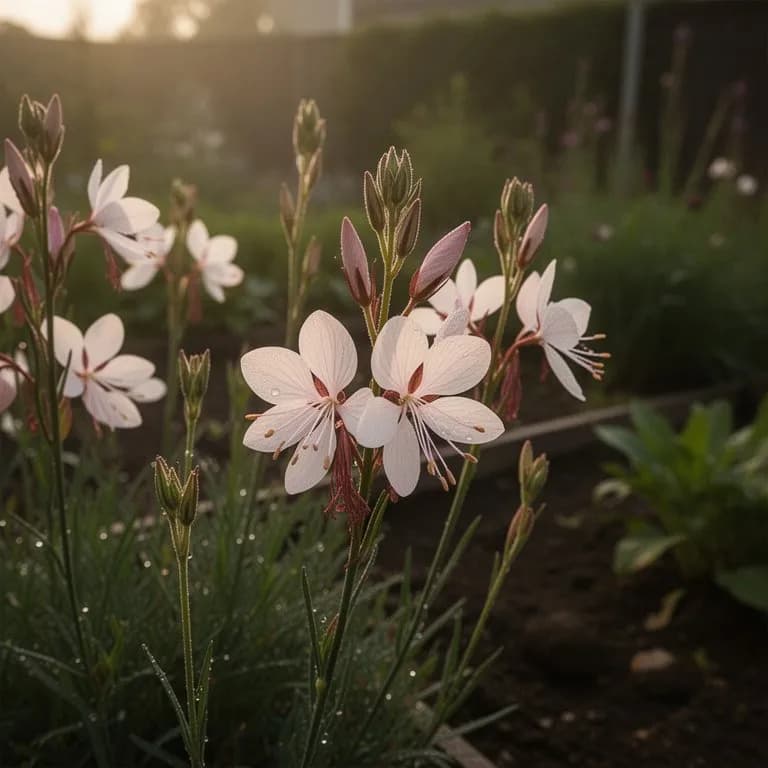
Gaura Dried Flower Arrangement
20 minutesHarvest long gaura stems when about half the flowers on each spike have opened. Hang bundles upside down in a warm, dark, well-ventilated space for two to three weeks. The dried stems retain their graceful arching shape and work beautifully in dried flower arrangements and wreaths, adding airy texture and movement.
Gaura Flower Pressing for Botanical Art
15 minutes active, 3-4 weeks pressingPress individual gaura flowers and small stem sections between sheets of absorbent paper inside a heavy book or flower press. The delicate four-petaled blooms press flat beautifully and retain their white-to-pink coloring. Use pressed flowers for botanical greeting cards, framed artwork, or resin jewelry.
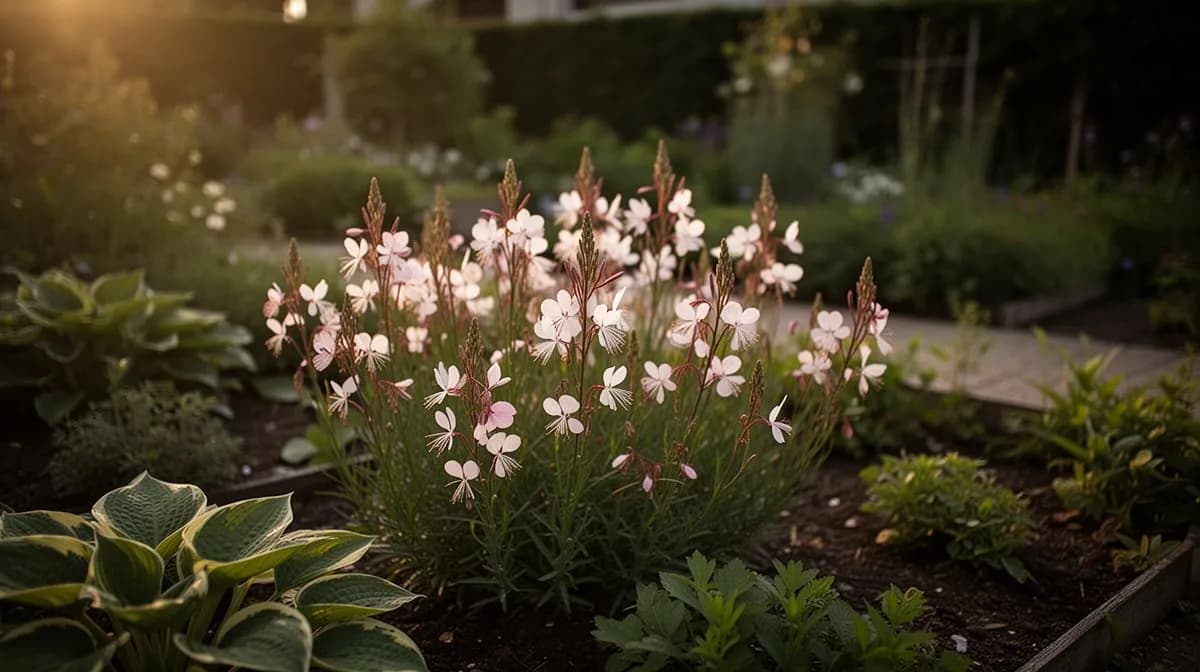
Gaura and Lavender Potpourri Sachets
30 minutesCombine dried gaura flowers with dried lavender, rose petals, and a few drops of essential oil to create fragrant sachets for drawers and closets. The airy gaura flowers add visual texture and volume to the potpourri mix while the lavender and essential oils provide the primary fragrance.
Yield & Spacing Calculator
See how many Gaura plants fit in your garden bed based on the recommended 45cm spacing.
4
Gaura plants in a 4×4 ft bed
2 columns × 2 rows at 45cm spacing
Popular Varieties
Some of the most popular gaura varieties for home gardeners, each with unique characteristics.
Gaura 'Whirling Butterflies'
White flowers blushed pink on 3-foot stems. The most popular and widely available gaura cultivar.
Gaura 'Siskiyou Pink'
Deep rose-pink flowers on maroon stems with bronze-tinged foliage. Rich color and compact habit.
Gaura 'Passionate Blush'
Dwarf at 12 inches with rosy-pink flowers. Ideal for containers and small-space gardens.
Gaura 'Sparkle White'
Pure white flowers on compact 18-inch plants. Free-flowering and heat-tolerant.
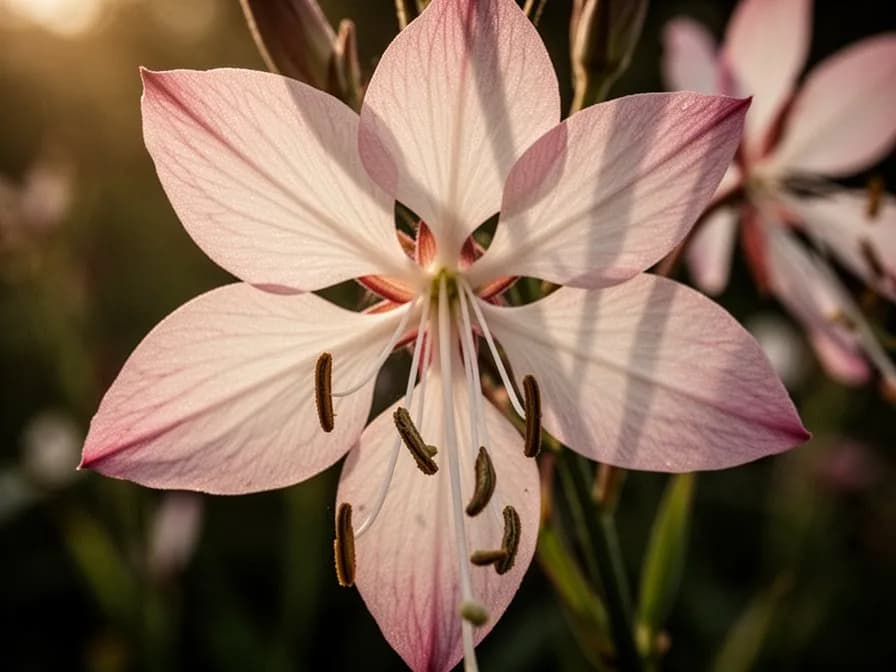
Popular gaura cultivars range from pure white 'Whirling Butterflies' to deep rose 'Siskiyou Pink' and compact 'Passionate Blush'
When should I plant Gaura?
Plant Gaura in March, April, May. It takes approximately 365 days to reach maturity, with harvest typically in May, June, July, August, September, October.
What are good companion plants for Gaura?
Gaura grows well alongside Russian Sage, Perennial Salvia, Yarrow. Companion planting can improve growth, flavor, and natural pest control.
What hardiness zones can Gaura grow in?
Gaura thrives in USDA hardiness zones 5 through 10. With greenhouse protection, it may be grown in zones 3 through 11.
How much sun does Gaura need?
Gaura requires Full Sun (6-8h+). This means at least 6-8 hours of direct sunlight daily.
How far apart should I space Gaura?
Space Gaura plants 45cm (18 inches) apart for optimal growth and air circulation.
What pests and diseases affect Gaura?
Common issues include Crown Rot, Aphids. Prevention through good garden practices like crop rotation, proper spacing, and companion planting is the best approach. See the detailed pests and diseases section above for symptoms, prevention, and treatment for each.
How do I store Gaura after harvest?
Gaura is a hardy perennial needing no storage. Cut back to the ground in late autumn after frost. In cold zones at the edge of hardiness, apply a light mulch for winter protection—but keep mulch off the crown to prevent rot. Self-sown seedlings provide natural replacement for aging plants.
What are the best Gaura varieties to grow?
Popular varieties include Gaura 'Whirling Butterflies', Gaura 'Siskiyou Pink', Gaura 'Passionate Blush', Gaura 'Sparkle White'. Each has unique characteristics suited to different growing conditions and culinary preferences. See the varieties section above for detailed descriptions.
What soil does Gaura need?
Gaura thrives in lean, well-drained soil with a pH of 6.5-7.5. Rich, moist soil produces leggy, floppy growth. Sandy and gravelly soils are ideal. Avoid fertilizer—gaura genuinely performs better without it. In containers, use a well-draining mix and feed sparingly.
Why does my gaura flop over and look messy by midsummer?
Flopping is usually caused by too much shade, overly rich soil, or excessive nitrogen fertilization, all of which promote soft, elongated stems. Plant gaura in full sun and lean soil. If flopping occurs, cut the plant back by one-third to one-half in midsummer. It will regrow compactly and bloom again within three to four weeks. Choosing compact cultivars like 'Passionate Blush' or 'Sparkle White' also helps in smaller garden spaces.
Is gaura a perennial or an annual, and how long does it live?
Gaura is a true herbaceous perennial in USDA hardiness zones 5 through 9, dying back to the ground in winter and regrowing from its taproot each spring. Individual plants typically live three to five years, though some may persist longer in ideal conditions. In zones colder than 5, gaura is often grown as an annual since it blooms heavily in its first year from seed. It also self-sows in many gardens, creating new replacement plants naturally.
How do I propagate gaura successfully?
Gaura can be propagated by seed, stem cuttings, or careful division. Seeds benefit from cold stratification before sowing and can take two to three weeks to germinate. Softwood stem cuttings taken in late spring or early summer root readily in a well-drained medium with bottom heat. Division is possible but challenging because of the deep taproot; it is best attempted in early spring just as new growth emerges, using a sharp spade to separate sections of the crown with attached roots.
Why did my gaura not survive the winter?
The most common cause of winter gaura loss is not cold itself but wet, poorly drained soil around the crown during dormancy. Gaura's thick taproot is highly susceptible to rot in soggy winter conditions. Ensure your planting site has excellent drainage, especially in winter. Other causes include planting too late in autumn for the taproot to establish before frost, or cutting stems back too early before the plant has fully entered dormancy. In zones 5-6, a loose winter mulch over the crown provides helpful insulation.
Does gaura attract pollinators, and is it deer resistant?
Yes on both counts. Gaura is an outstanding pollinator plant, attracting honeybees, native solitary bees, butterflies, and especially hawkmoths (sphinx moths), which are drawn to the lightly fragrant evening blooms. Its long bloom season from late spring through autumn provides a continuous nectar source when many other plants have finished flowering. Gaura is also deer resistant and rabbit resistant, likely due to the tough, wiry stems and foliage that are unappealing to browsing animals.
Can I grow gaura in a container on my patio or balcony?
Gaura can be grown in containers, but success requires attention to its deep taproot. Use a pot at least 30 cm deep and wide, with drainage holes, and fill it with a gritty, fast-draining mix such as equal parts potting soil, perlite, and coarse sand. Water when the top few centimeters of soil are dry, and avoid saucers that hold standing water. Container-grown gaura may be shorter-lived than garden-planted specimens, but compact cultivars like 'Passionate Blush', 'Karalee White', or 'Belleza' series perform well in pots.
Ready to Grow Gaura?
Add Gaura to your garden plan and start designing your perfect layout.

Vladimir Kusnezow
Gardener and Software Developer
Zone 6b gardener. Growing vegetables and fruits in soil and hydroponics for 6 years. I built PlotMyGarden to plan my own gardens.
Jump to Section