Salvia rusa
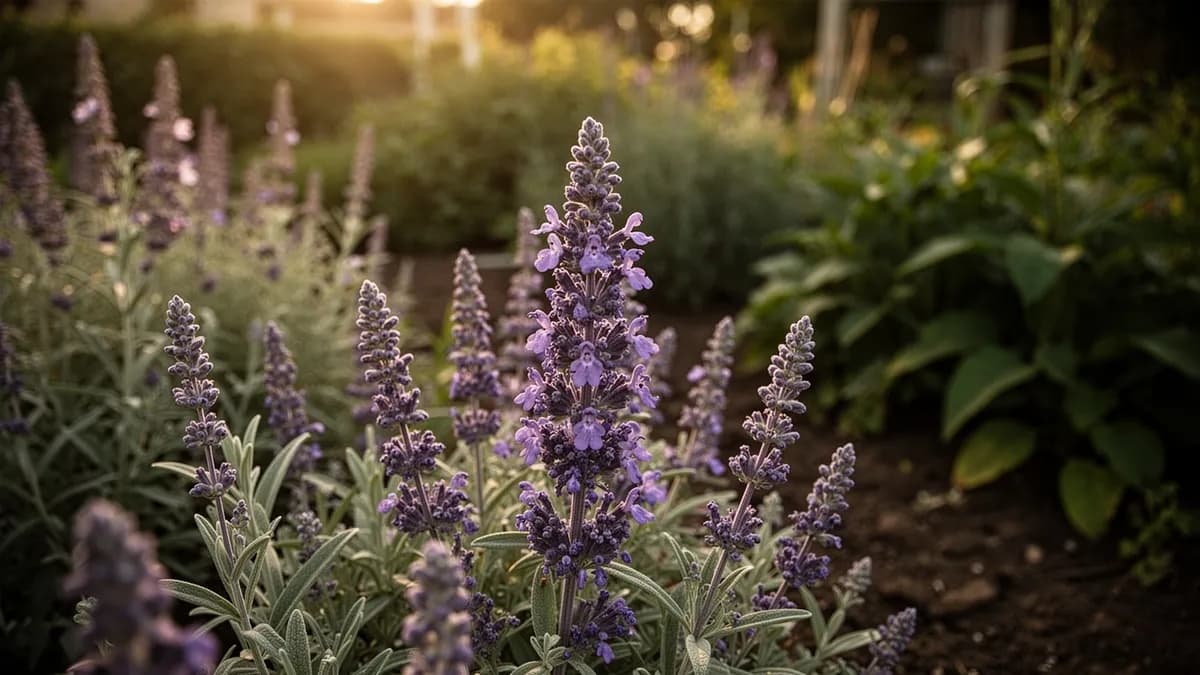
Una perenne alta y ligera, con follaje plateado y nubes de pequeñas flores azul lavanda que crean un efecto brumoso en el jardín.





En esta páginaResumen
Conoce Salvia rusa
Una perenne alta y ligera, con follaje plateado y nubes de pequeñas flores azul lavanda que crean un efecto brumoso en el jardín. La salvia rusa es extremadamente resistente a la sequía y al calor, y prospera en suelos pobres y secos donde muchas plantas sufren. Corte los tallos con fuerza en primavera para estimular un crecimiento vigoroso y erguido y evitar que la planta se desgarbe.
Cuándo plantar Salvia rusa
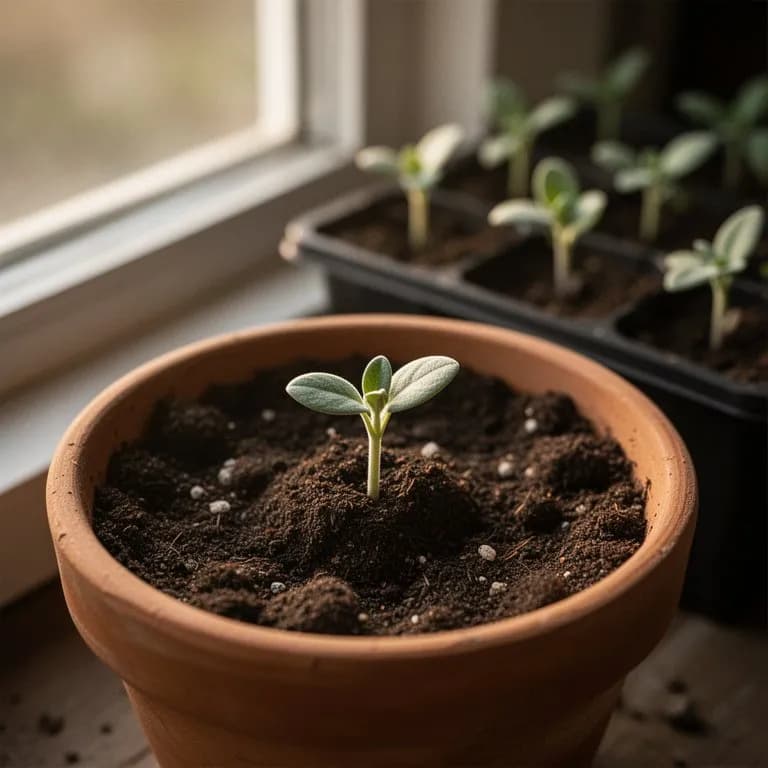
La salvia rusa se propaga con más fiabilidad por esquejes de madera blanda o semimadura que por semilla. Tome esquejes de 10-15 cm de brotes laterales no florales en verano, retire las hojas inferiores, moje el extremo cortado en hormona de enraizamiento e introdúzcalo en compost arenoso con calor de fondo. Los esquejes enraízan en 3-4 semanas. Es posible empezar desde semilla, pero es lento: siembre sobre la superficie de compost arenoso a 18-20 °C, ya que las semillas necesitan luz para germinar. La germinación es irregular y tarda de 2 a 6 semanas. Las plántulas crecen despacio y pueden tardar 2 años en alcanzar el tamaño de floración.
Tu año de Salvia rusa
Ajustado a Zona 7 · temporada típica · la helada se va hacia el 2 abr y vuelve hacia el 1 nov
Planta Salvia rusa Mar – Abr, Sep y cosecha Jul – Oct. Consulta los métodos de plantación y elige tu clima para adaptar los periodos.
Cómo cultivar Salvia rusa
La salvia rusa (ahora reclasificada como Salvia yangii) es un subarbusto que crea uno de los efectos más llamativos del jardín de finales de verano: una neblina de diminutas flores azul lavanda sobre tallos blanco plateados que parece centellear y resplandecer a la luz del sol. Con una altura y anchura de 90 a 150 cm, tiene una ligereza aérea que suaviza cualquier diseño de plantación. Originaria de las secas montañas de Asia Central, está perfectamente adaptada al calor, la sequía y los suelos pobres.
Plántela a pleno sol en un suelo pobre y bien drenado. Es una planta que, en realidad, sufre en condiciones de jardín ricas y húmedas: demasiada fertilidad y agua producen un crecimiento débil y lacio, propenso a abrirse. Un suelo pobre, pedregoso o arenoso y una ubicación cálida y soleada producen los ejemplares más compactos y floríferos. Sepárelas entre 60 y 90 cm para dejar espacio a su crecimiento etéreo en la madurez.
La salvia rusa es una perenne de base leñosa que requiere una poda concreta para obtener los mejores resultados. A comienzos de primavera, corte todos los tallos con fuerza hasta dejarlos a 15-20 cm del suelo, justo por encima del par de yemas más bajo que empiece a brotar. Así se estimula un crecimiento nuevo, vigoroso y erguido, y se evita que la base leñosa se alargue y se vuelva desgarbada. Los brotes nuevos aparecen tarde; no se alarme si la planta no muestra señales de vida hasta mediados de primavera. El follaje plateado aromático huele a salvia cuando se frota, y la planta es completamente resistente a ciervos y conejos.
8 plantas caben en un bancal de 120 × 240 cm
Cada Salvia rusa pide 60 cm de margen. El planificador guarda ese marco por ti — cada planta, cada bancal.
Los mejores vecinos de Salvia rusa
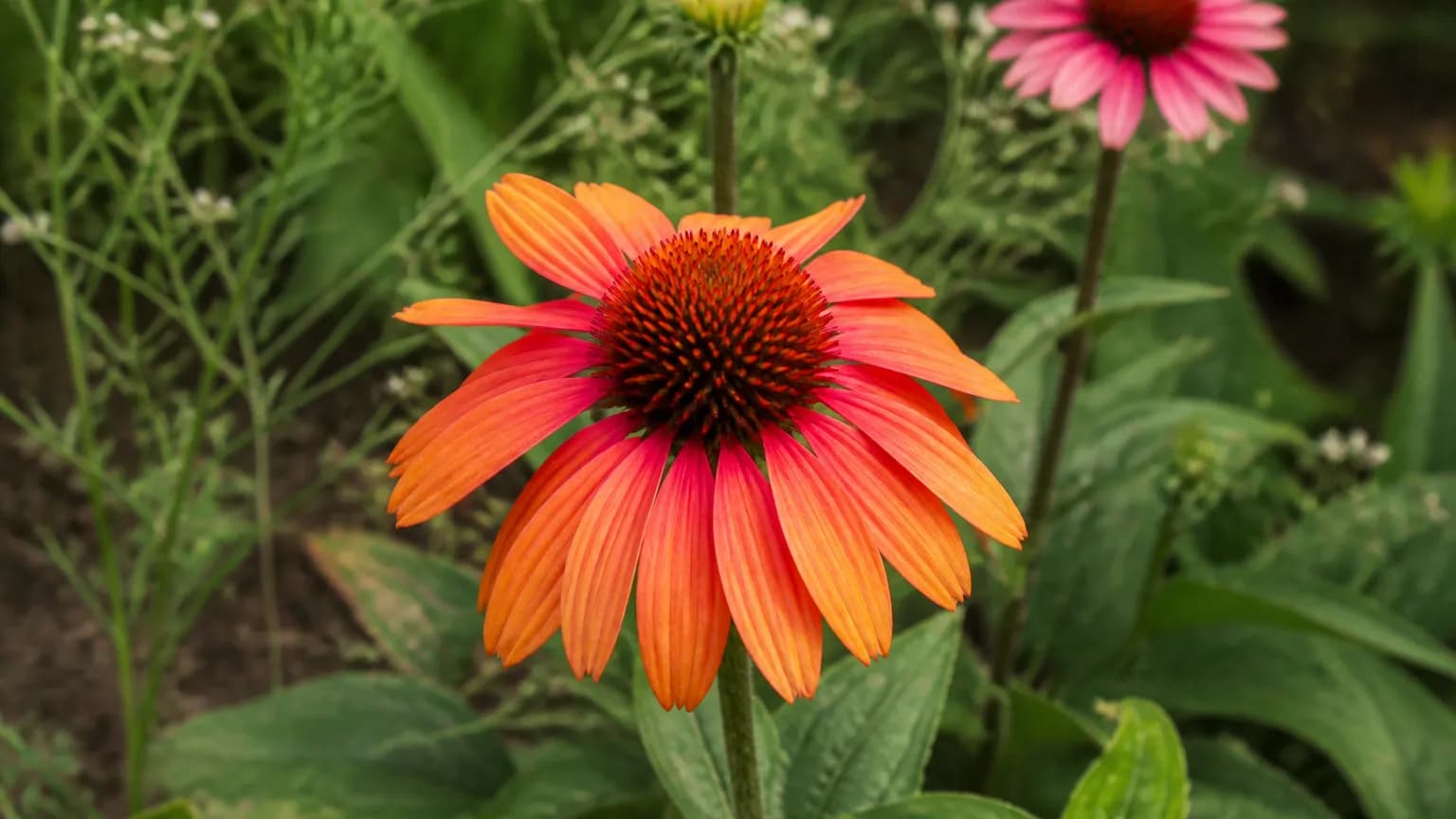
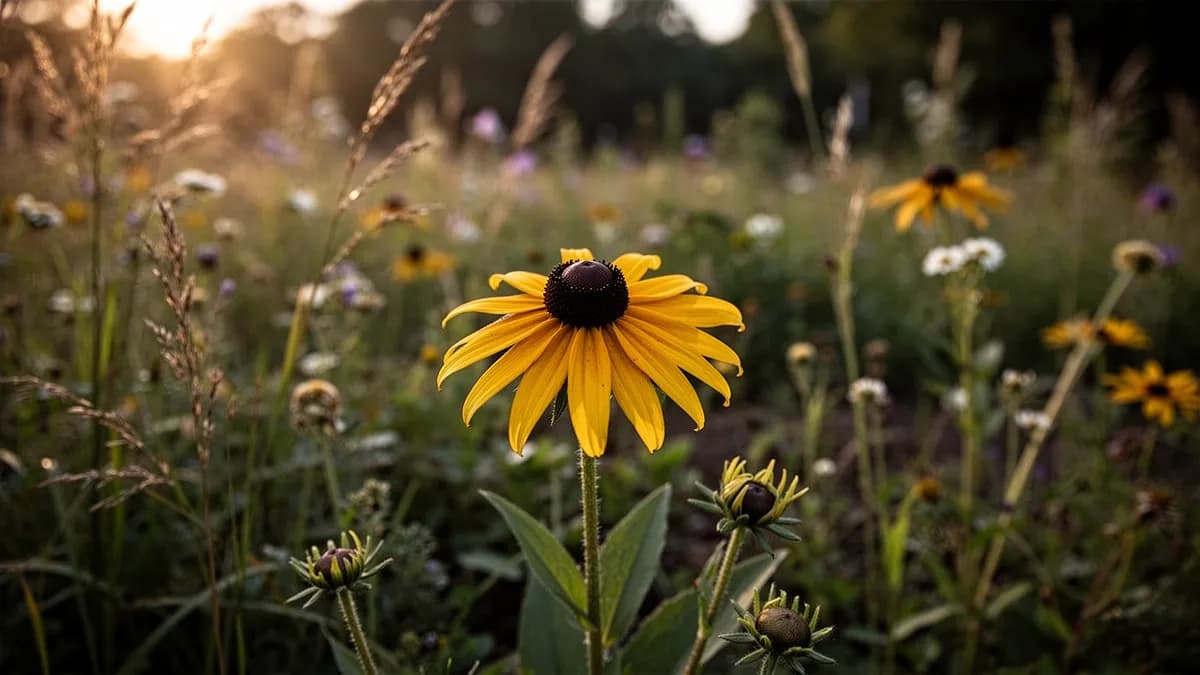
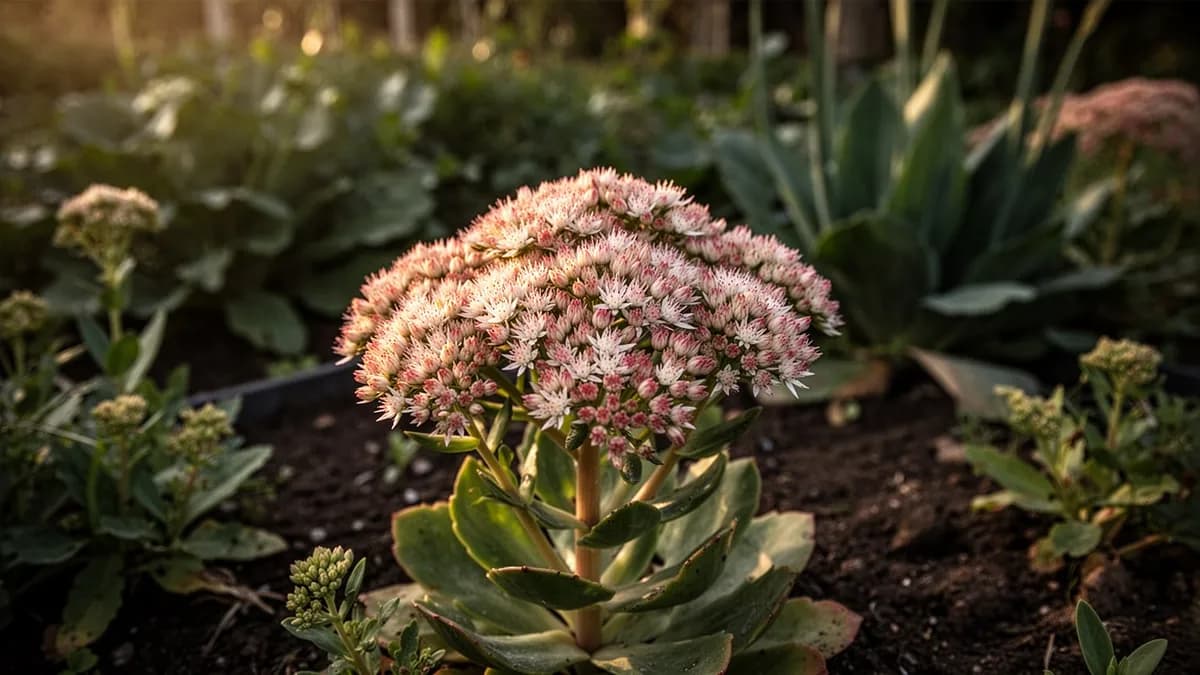
La salvia rusa crea combinaciones magníficas con otras perennes de finales de verano y otoño. Queda brillante junto a equináceas, rudbeckias, sedum, gramíneas ornamentales y ásteres en plantaciones naturalistas. El follaje plateado y las flores aéreas azules aportan un contrapunto refrescante a los naranjas, rojos y dorados cálidos del otoño. Úsela como telón de fondo para perennes de porte más bajo o como compañera espectacular de gramíneas ornamentales como Miscanthus y panicum. La salvia rusa también combina de maravilla con rosas y arbustos en flor.
Equinácea va a su lado.
Saber de huerto de siempre, cotejado con la tabla real de Salvia rusa — prueba cualquier planta que cultives.
Prueba Salvia rusa en un bancal, aquí mismo
Un bancal real del planificador con Salvia rusa ya plantado. Toca una planta compañera para colocarla y mira cómo responde la comprobación de vecinos: verde para buenos vecinos, rojo si hay conflicto.


Guías de cultivo relacionadas
Abónalo bien
La salvia rusa exige un suelo pobre y bien drenado, y rinde mejor en condiciones arenosas, pedregosas o gravosas con un pH de 6.5-8.0; tolera muy bien la alcalinidad. No enmiende el suelo con compost rico ni estiércol; el exceso de fertilidad provoca un crecimiento lacio y débil. Si la planta en una arcilla pesada, añada abundante grava o cree un bancal elevado con un suelo arenoso y muy drenante. No necesita ni conviene abonarla con regularidad. Las plantas en contenedor requieren una mezcla muy arenosa y drenante, con poca materia orgánica.
Temperatura ideal
Compatibilidad de zonas de rusticidad
De la semilla a la cosecha, etapa por etapa
Reposo y brotación primaveral
La salvia rusa es un subarbusto de base leñosa que se seca hasta la base en invierno. A comienzos o mediados de primavera, el nuevo crecimiento emerge de los tallos leñosos como pequeñas yemas verde plateadas. La planta parece muerta durante el reposo, pero el sistema radicular sigue vivo y vigoroso bajo tierra. Los brotes nuevos están cubiertos de finos pelos plateados que les dan un aspecto escarchado.
Crecimiento vegetativo
Los nuevos tallos vigorosos se alargan con rapidez y producen pares de hojas aromáticas, profundamente lobuladas y finamente recortadas, a lo largo de tallos cuadrados. El follaje está cubierto de diminutas glándulas de aceite que liberan un aroma similar al de la salvia al rozarlo. Las plantas pueden crecer entre 30 y 60 cm durante este periodo, estableciendo la estructura para la floración de la temporada. El follaje gris plateado contrasta de maravilla con las plantas verdes cercanas del jardín.
Formación de yemas
Las panículas florales ramificadas empiezan a formarse en las puntas de los tallos, apareciendo al principio como yemas apretadas con un matiz azul violeta. Toda la arquitectura de la planta se abre, y los tallos se arquean hacia fuera por el peso de las flores en desarrollo. Los tallos cuadrados se vuelven más leñosos en la base y siguen siendo herbáceos en las puntas. Las plantas suelen alcanzar entre 90 y 120 cm de altura en esta fase.
Floración máxima
La planta estalla en una nube de pequeñas flores tubulares azul lavanda dispuestas en verticilos a lo largo de panículas ramificadas. Cada flor individual mide unos 1 cm y presenta una corola de dos labios típica de la familia de la menta (Lamiaceae). El periodo de floración es excepcionalmente largo y a menudo dura desde mediados de julio hasta septiembre o incluso octubre. Los cálices son violeta púrpura, aportando color incluso cuando las flores individuales se marchitan.
Formación de semillas y transición otoñal
A medida que las flores se marchitan, se desarrollan pequeños aquenios dentro de los cálices persistentes. El follaje empieza a perder su brillo plateado y puede tomar tonos amarillos o pardos. Los tallos leñosos se endurecen aún más y adquieren un color blanco plateado pálido. La planta mantiene interés estructural hasta bien entrado el invierno, con sus tallos erguidos y pálidos y las cabezuelas que quedan, que sirven de alimento a aves pequeñas.
Reposo invernal
La planta entra en reposo completo y todo el crecimiento herbáceo se seca. La base leñosa y el sistema radicular permanecen vivos bajo la superficie del suelo, almacenando energía para el crecimiento de la siguiente temporada. En climas más suaves (zonas USDA 7-9), algunos tallos leñosos pueden conservar unas pocas hojas cerca de la base. Los esqueletos de tallos pálido plateados permanecen como elementos arquitectónicos durante toda la temporada de reposo.
Corte los tallos del año anterior hasta dejar entre 15 y 30 cm por encima del nivel del suelo a comienzos de la primavera, antes de que empiece el nuevo crecimiento. No corte por debajo de la madera vieja situada bajo las yemas más bajas visibles, ya que eso puede impedir la rebrotación. Evite podar en otoño, porque los tallos viejos ayudan a proteger la corona del frío invernal.
Cuidar Salvia rusa mes a mes
Qué hacer cada mes para tu Salvia rusa
Octubre
Mes actualLa floración va remitiendo. Deje todos los tallos en pie para que aporten interés invernal y protejan la corona. No pode ni recorte en otoño. Deje que las cabezuelas permanezcan para las aves y para dar estructura al jardín.
Ten claro qué hacer en tu huerto, cada mes
Un correo al empezar cada mes: qué sembrar, plantar y hacer ahora mismo — para tu Salvia rusa y todo lo que crece alrededor. Más un breve curso inicial para esquivar los errores clásicos.
- Qué hacer ahora mismo
- Ajustado a tu temporada
- Curso inicial incluido
Cosechar Salvia rusa
Los tallos de salvia rusa aportan un toque inusual y aireado a los arreglos florales frescos: córtelos cuando las espigas florales estén abiertas aproximadamente a la mitad y acondiciónelos en agua durante varias horas antes de colocarlos en un arreglo. Los tallos plateados y las flores lavanda combinan con flores más intensas como girasoles, equináceas y dalias. Para secarlos, corte los tallos en plena floración y cuélguelos boca abajo en una habitación cálida y oscura durante 2-3 semanas. Los tallos secos conservan su color plateado y resultan muy atractivos en arreglos y coronas secas.
se supone que plantas al comenzar el periodo — indica tu fecha real
Cosecha Salvia rusa a tiempo y la planta sigue produciendo.
Almacenamiento y conservación
Los tallos secos de salvia rusa conservan su aspecto plateado durante muchos meses y funcionan muy bien en arreglos y coronas secas. Seque los ramilletes colgados durante 2-3 semanas en un lugar cálido y oscuro. Los tallos y hojas aromáticos pueden incluirse en saquitos y potpourri. Para la propagación en el jardín, tome esquejes semimaduros a finales del verano a partir de brotes laterales e introdúzcalos en compost arenoso con calor de fondo. Los esquejes enraízan en 3-4 semanas y deben pasar el invierno en un lugar protegido antes de plantarlos en exterior la primavera siguiente.
Qué falla — y cómo solucionarlo
Podredumbre de la raíz
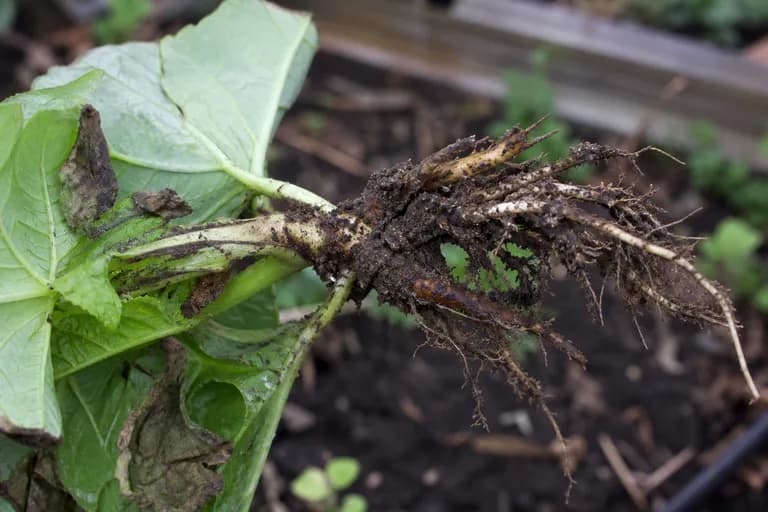
EnfermedadLos tallos se ablandan en la base, el follaje se marchita y la planta colapsa. Al examinar las raíces, estas aparecen marrones y blandas. Es más común en suelos húmedos y pesados.
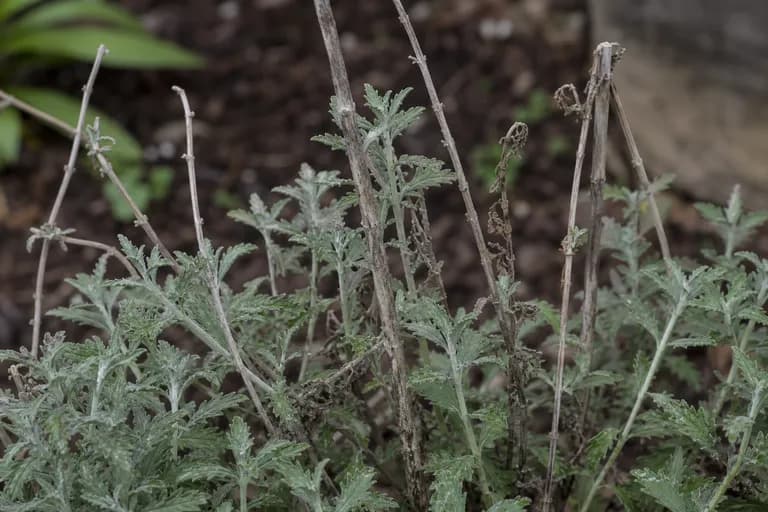
Secado de tallos
EnfermedadAlgunos tallos no brotan en primavera y permanecen marrones y quebradizos. Puede aparecer tras un frío invernal intenso o después de una poda demasiado severa al final de la temporada.
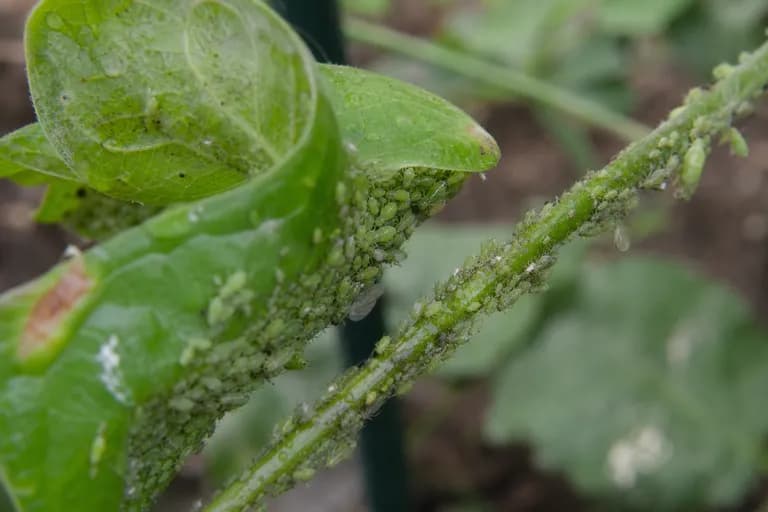
Pulgones
PlagaPequeños pulgones verdes o grises se agrupan ocasionalmente en las puntas del crecimiento nuevo en primavera. Rara vez son un problema grave en plantas adultas.
Solución de problemas comunes
El problema más habitual es un crecimiento lacio que se abre y deja ver los tallos leñosos desnudos. Casi siempre se debe a falta de sol, a un suelo demasiado rico o a no cortar con fuerza en primavera. Pode hasta 15-20 cm cada año a comienzos de primavera. La aparición tardía en primavera puede alarmar a los jardineros: la salvia rusa tarda en salir del reposo y quizá no muestre crecimiento hasta mayo. No dé por muerta la planta y la arranque antes de tiempo. En zonas frías de invierno (4-5), los tallos pueden secarse más de lo habitual; acolche la zona de raíces a finales de otoño para ofrecer protección adicional.
Consejos de cultivo
- Plante la salvia rusa en el rincón más pobre, seco y soleado de su jardín. Realmente rinde mejor en un suelo pobre y pedregoso que en bancales ricos y enmendados, donde tiende a producir un crecimiento débil y lacio.
- Asegure un drenaje absolutamente excelente en el lugar de plantación. La salvia rusa puede tolerar frío y calor extremos, pero se pudrirá y morirá en suelos encharcados, especialmente durante el reposo invernal. Los bancales elevados o los emplazamientos en pendiente funcionan muy bien.
- Pode los tallos con fuerza a comienzos de primavera, dejándolos a 15-30 cm por encima del nivel del suelo y cortando justo por encima de yemas nuevas visibles. Este recorte anual es esencial para mantener una planta compacta, vigorosa y con tallos florales fuertes.
- No abone nunca la salvia rusa. Un suelo rico en nitrógeno o con fertilizante añadido produce un crecimiento vegetativo exuberante a expensas de las flores y hace que los tallos se debiliten y se abran hacia fuera.
- Separe las plantas 60-90 cm para permitir su porte adulto y asegurar una buena circulación de aire, lo que ayuda a prevenir la rara aparición de problemas fúngicos en climas húmedos.
- Si su salvia rusa se vence a mediados del verano, lo más probable es que reciba demasiada agua, demasiada sombra o esté creciendo en un suelo demasiado rico. Muévala a un lugar más cálido, seco y pobre para obtener mejores resultados.
- Propague la salvia rusa a partir de esquejes de madera blanda tomados a finales de primavera o de esquejes semimaduros a mediados de verano. Sumerja el extremo cortado en hormona de enraizamiento e introdúzcalo en una mezcla de propagación arenosa y bien drenante. Las raíces suelen desarrollarse en 3-4 semanas.
- Combine la salvia rusa con otras compañeras tolerantes a la sequía, como gramíneas ornamentales (Miscanthus, Panicum), Echinacea, Sedum, Rudbeckia y Salvia nemorosa para lograr un diseño de jardín coherente y de bajo consumo de agua.
- En las zonas USDA 4-5, plante la salvia rusa en el lado sur u oeste de un muro o una valla para recibir calor radiante y protección frente al viento. Aplique alrededor de la corona un acolchado de 5-8 cm de grava o piedra triturada en lugar de acolchado orgánico para mantener seca la base.
- Deje los tallos secos en pie durante el invierno en lugar de cortarlos en otoño. El crecimiento viejo protege la corona del frío extremo, aporta estructura al jardín invernal y las cabezuelas ofrecen alimento a las aves pequeñas.
Cultiva tu mejor Salvia rusa — y todo lo que la rodea.
Empieza un plan gratis hoy. Diseña tus bancales, coloca tu Salvia rusa y deja que PlotMyGarden gestione el momento, el espaciado, las asociaciones y los recordatorios de la semilla a la cesta.
Elige tu Salvia rusa
Salvia yangii 'Blue Spire'
El cultivar más cultivado, con follaje plateado profundamente recortado y abundantes flores azul violeta intenso en tallos robustos de 120 cm.
Salvia yangii 'Little Spire'
Una variedad más compacta, de 60-75 cm, ideal para jardines pequeños y la parte delantera de los bordes, manteniendo la misma ligereza aérea.
Salvia yangii 'Lacey Blue'
Una selección compacta y resistente al tumbado, de 45-60 cm, con follaje encajeado, profundamente dividido, y abundantes flores azules. Excelente para contenedores.
Salvia yangii 'Silvery Blue'
Seleccionada por sus tallos y follaje especialmente plateados y blanquecinos, que contrastan de maravilla con las suaves flores azules.
La salvia rusa es una de las perennes ornamentales más rentables para el jardín doméstico. Una sola planta adquirida por aproximadamente 8-15 dólares puede vivir 10-20 años o más y extenderse hasta cubrir una superficie de 90-120 cm. Apenas necesita riego una vez establecida, lo que supone un ahorro considerable en agua frente a ornamentales más sedientas. La planta no requiere abono y los ciervos, conejos y la mayoría de las plagas de insectos la ignoran, eliminando la necesidad de repelentes o pesticidas. Se propaga con facilidad por esquejes de madera blanda o semimadura sin coste, lo que permite llenar grandes zonas de forma económica. Su larga temporada de floración (8-12 semanas) significa que se necesitan menos plantas para mantener un color continuo en el jardín durante todo el verano y comienzos del otoño.
Recetas rápidas
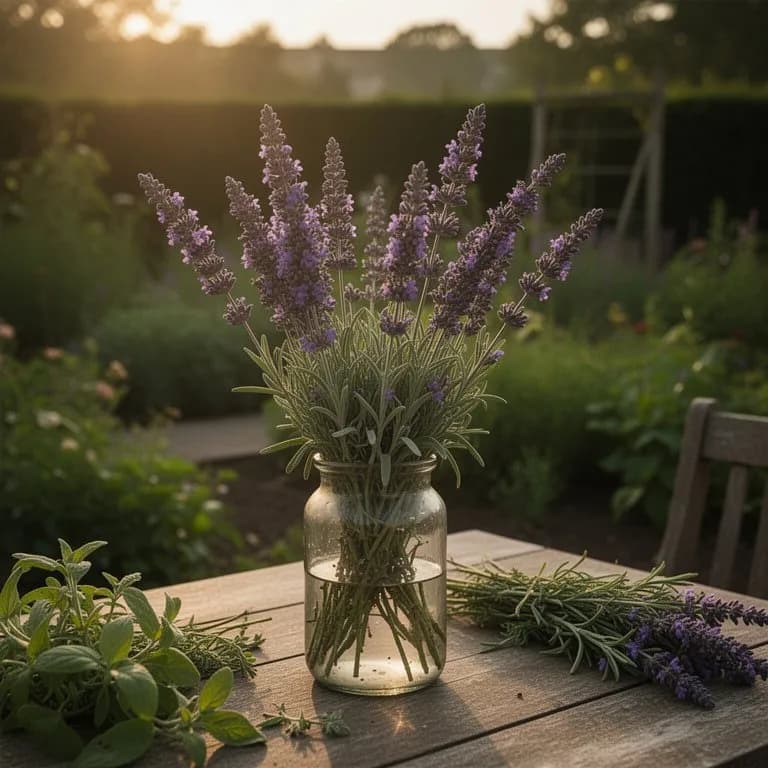
Saquitos aromáticos de salvia rusa
20 minutosRecoja y seque hojas y capullos florales de salvia rusa para crear saquitos fragantes para cajones, armarios y roperos. Los aceites aromáticos repelen de forma natural a las polillas y otras plagas textiles, al tiempo que aportan a las telas guardadas una agradable fragancia herbal.
5 ingredientes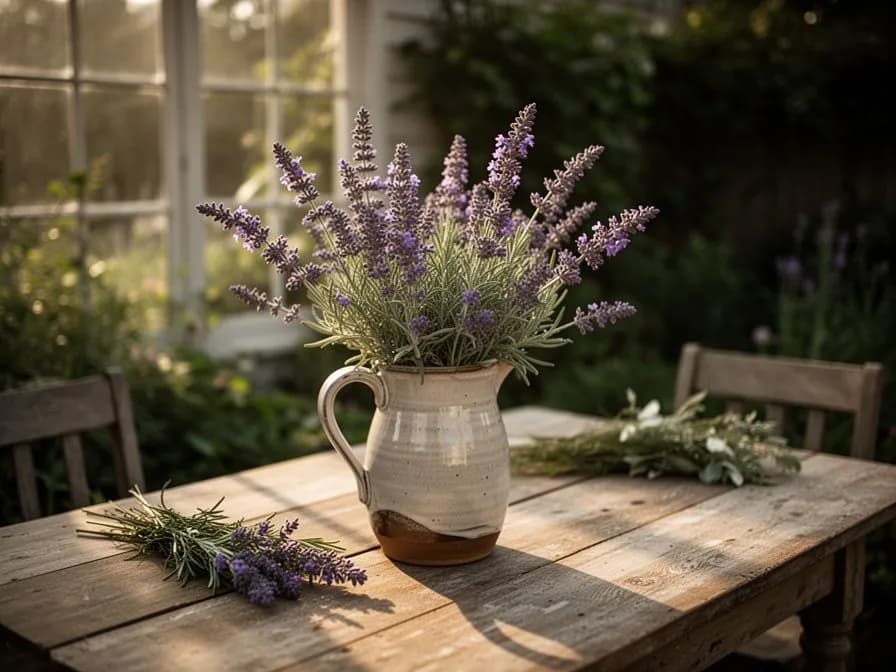
Té herbal de salvia rusa
10 minutosUn té herbal reconfortante elaborado con hojas secas de salvia rusa mezcladas con hierbas complementarias. Se usa en la medicina tradicional de Asia Central para aliviar molestias digestivas leves y favorecer la relajación. Úselo con moderación, ya que la salvia rusa tiene un sabor muy alcanforado.
5 ingredientesVinagre infusionado con salvia rusa para limpieza
15 minutos más 2 semanas de infusiónAproveche las propiedades antisépticas y aromáticas naturales de la salvia rusa infusionando vinagre blanco con tallos y hojas frescas. El vinagre herbal resultante es una solución limpiadora doméstica eficaz y agradablemente perfumada para usos múltiples.
5 ingredientesQué contiene
Beneficios para la salud
- Contiene ácido rosmarínico, un compuesto polifenólico natural estudiado por sus propiedades antioxidantes, que puede ayudar a neutralizar los radicales libres del organismo.
- La medicina herbal tradicional de Asia Central utiliza infusiones de hojas de salvia rusa como apoyo digestivo suave para aliviar la hinchazón, las náuseas y las molestias estomacales.
- Los aceites esenciales aromáticos, incluido el alcanfor y el cineol, se han usado en la medicina popular como inhalaciones para ayudar a aliviar la congestión nasal y bronquial.
- El follaje seco de salvia rusa actúa como repelente natural de insectos cuando se coloca en saquitos o se quema, ayudando a ahuyentar mosquitos, polillas y otras plagas domésticas.
- Cuidar la salvia rusa en el jardín promueve la actividad física y la reducción del estrés con muy poco esfuerzo, ya que la planta requiere muy poca agua, abono o mantenimiento una vez establecida.
- La larga exhibición de flores azul lavanda se ha asociado con efectos psicológicos calmantes en entornos de terapia hortícola, contribuyendo a reducir la ansiedad y mejorar el ánimo durante la floración.
De dónde viene Salvia rusa
La salvia rusa (Salvia yangii, antes Perovskia atriplicifolia) es originaria de las estepas áridas, laderas rocosas y pendientes pedregosas de Asia Central, desde Afganistán y Pakistán hasta Irán y el Himalaya occidental y el Tíbet. Crece de forma natural entre 1.500 y 3.000 metros de altitud en condiciones de sol intenso, suelos pobres y alcalinos, y precipitaciones limitadas.
La planta fue descrita científicamente por primera vez en 1848 por el botánico germano-ruso Alexander Bunge, quien dio al género el nombre de Perovskia en honor a Vasili Alexéyevich Perovski, general y gobernador del territorio de Oremburgo que impulsó expediciones botánicas por Asia Central. El epíteto atriplicifolia hace referencia a sus hojas, parecidas a las del género Atriplex (salicornia o armuelle).
En su área de origen, la salvia rusa tiene una larga historia de uso medicinal tradicional. Curanderos locales de Afganistán y Pakistán utilizaban infusiones de hojas y flores para tratar fiebres, dolores de cabeza, dolencias digestivas e infecciones respiratorias. El follaje aromático también se quemaba como fumigante y repelente de insectos en las viviendas.
La salvia rusa entró en la horticultura occidental a mediados del siglo XIX a través de colecciones botánicas, pero siguió siendo relativamente poco conocida hasta finales del siglo XX. Su ascenso en el jardín se aceleró después de ser elegida Planta Perenne del Año en 1995 por la Perennial Plant Association. Los obtentores desarrollaron cultivares mejorados como 'Blue Spire', 'Little Spire' y 'Lacey Blue', que ofrecían formas más compactas y un color floral más intenso. En 2017, la investigación filogenética molecular demostró que Perovskia está integrada dentro del género Salvia, lo que llevó a su reclasificación como Salvia yangii, en honor del botánico chino Yang Changji. Hoy en día, la salvia rusa se planta ampliamente en Norteamérica, Europa y Australia como ornamental resistente a la sequía y de bajo mantenimiento, valorada por su larga floración y su resiliencia en condiciones de cultivo difíciles.
Salvia rusa: ¿sabías que?
Datos fascinantes sobre Salvia rusa
La salvia rusa fue reclasificada de Perovskia atriplicifolia a Salvia yangii en 2017, después de que estudios filogenéticos moleculares revelaran que pertenece al género Salvia, lo que la convierte en una auténtica salvia y no en un género aparte.
Salvia rusa: preguntas frecuentes
¿Cuándo debo plantar Salvia rusa?
¿Cuáles son buenas plantas acompañantes para Salvia rusa?
¿En qué zonas de rusticidad puede crecer Salvia rusa?
¿Cuánto sol necesita Salvia rusa?
¿A qué distancia debo espaciar Salvia rusa?
¿Qué plagas y enfermedades afectan a Salvia rusa?
¿Cómo almaceno Salvia rusa después de la cosecha?
¿Cuáles son las mejores variedades de Salvia rusa para cultivar?
¿Qué suelo necesita Salvia rusa?
¿Por qué mi salvia rusa se cae y se abre por el centro?
¿La salvia rusa es realmente una salvia, y puedo cocinar con ella?
¿Cuándo debo podar la salvia rusa y cuánto debo cortar?
¿La salvia rusa se extiende con agresividad o se vuelve invasora?
¿Por qué murió mi salvia rusa durante el invierno si se la considera resistente al frío?
¿Cómo propago la salvia rusa por esquejes?
Acabas de leer la teoría. Ahora cultívala en piloto automático.
Todo lo que hace que Salvia rusa sea delicado — el momento, el espaciado, las asociaciones, la ventana de cosecha — es justo lo que PlotMyGarden resuelve por ti, para cada planta de tu huerto.
Un plan que conoce tu clima
Indica tu ubicación una vez. Recibe fechas de siembra, abonado y cosecha basadas en tu última helada real y el pronóstico en vivo — sin adivinar con un sobre genérico.
De la sección “Cuándo plantar”Planificador de bancales de arrastrar y soltar
Diseña bancales sobre una cuadrícula. Cada planta encaja con su espaciado correcto y ves toda la temporada antes de gastar un céntimo en semillas.
De la sección “Cultivo”Conflictos de asociación, detectados a tiempo
Más de 200 buenas y malas combinaciones comprobadas en vivo mientras plantas — para que un error que arruine la temporada nunca llegue a la tierra.
De la sección “Asociaciones”Recordatorios que sí vas a seguir
“Riega las judías.” “Recoge hoy antes de que se pase.” Oportunos, concretos y ligados a las plantas que de verdad cultivas.
De la sección “Cosecha”Escalonado, programado
¿Quieres cosechar seis semanas en vez de seis días? Reparte tus siembras automáticamente y te avisa cuando toca el siguiente lote.
De la sección “Cuándo plantar”Un registro que se vuelve más listo
Cada cosecha que registras le enseña tu huerto. El plan del año que viene parte de lo que de verdad funcionó en tu suelo, no en un manual.
De la sección “Resumen”Planta estos junto a Salvia rusa
Más Perennes
Diseños de jardín con Salvia rusa
Cultiva tu mejor Salvia rusa — y todo lo que la rodea.
Empieza un plan gratis hoy. Diseña tus bancales, coloca tu Salvia rusa y deja que PlotMyGarden gestione el momento, el espaciado, las asociaciones y los recordatorios de la semilla a la cesta.