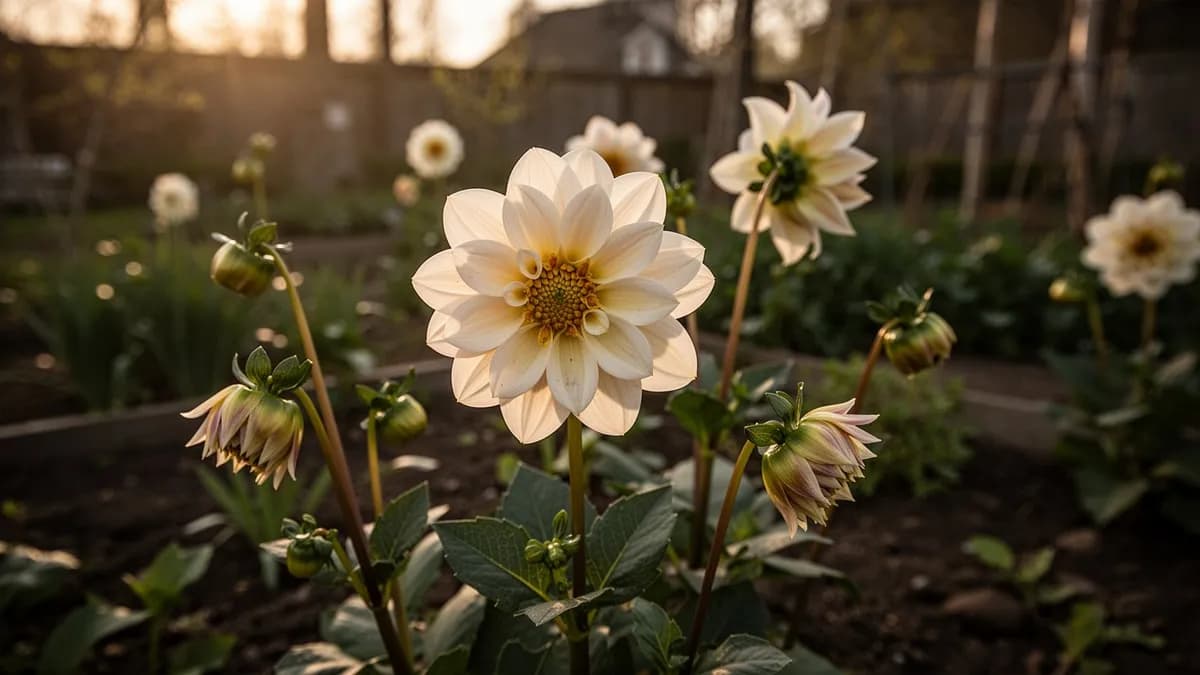
Dahlia
Dahlia pinnata
At a Glance
It's planting season for Dahlia! Start planning your garden now.
A tuberous perennial producing spectacular blooms from midsummer to frost, with tubers stored over winter in cold climates. Plant tubers after the last frost in rich, well-drained soil and stake tall dinner-plate varieties early to support their heavy flower heads. Pinch the central growing tip when plants reach about a foot tall to encourage branching and more abundant blooms. Dig tubers after the first frost blackens the foliage, divide clumps, and store in peat moss in a cool, frost-free location.
Planting & Harvest Calendar
Growth Stages
From Seed to Harvest
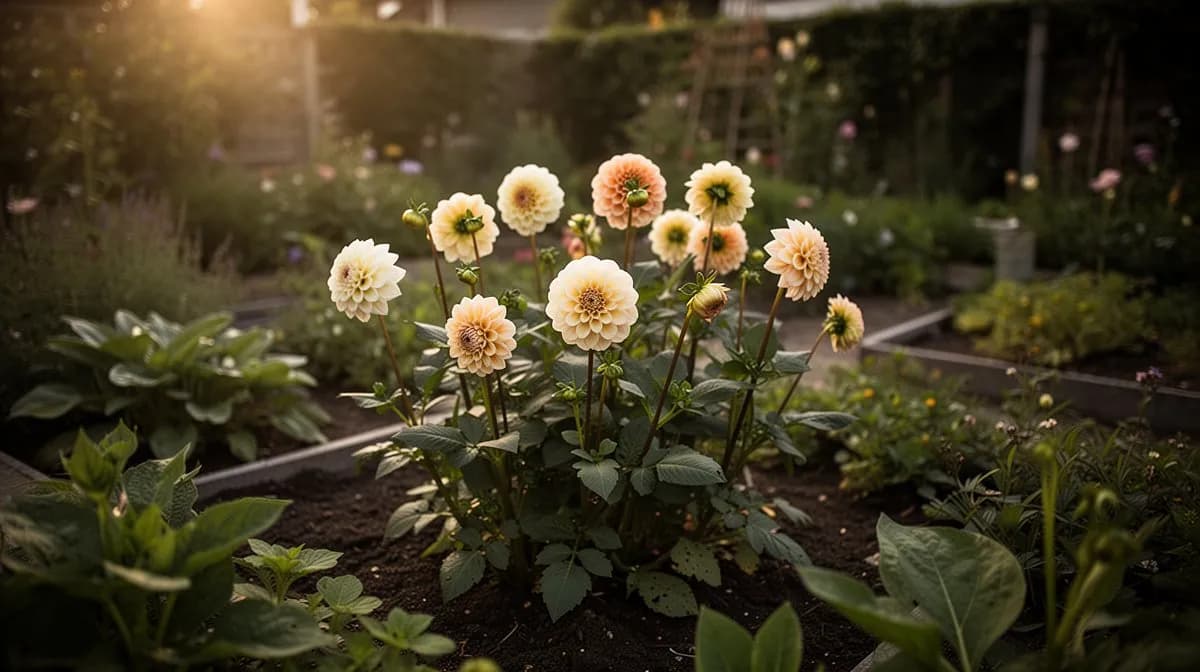
Tuber Planting
Days 0–14
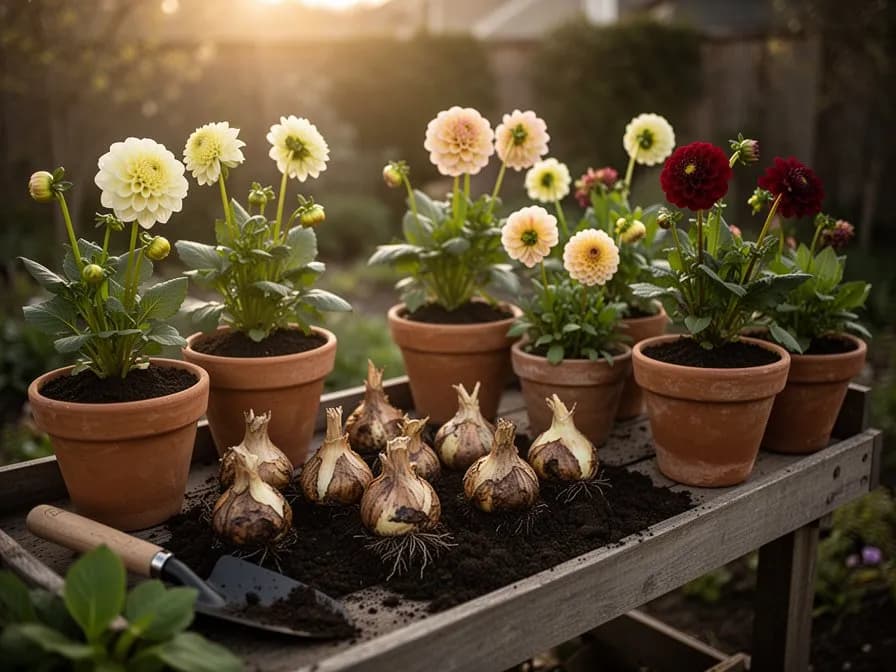
Dahlia tubers are planted outdoors after the last frost date when soil temperatures reach at least 15°C (60°F). Each tuber should have at least one visible eye (growth bud) near the stem attachment point. Tubers are placed horizontally in holes about 10-15 cm deep with the eye pointing upward.
💡 Care Tip
Do not water tubers at planting time. The tuber contains enough moisture to begin sprouting. Watering before shoots emerge can cause rot, especially in heavy or poorly drained soils. Place a stake at planting time to avoid damaging the tuber later.
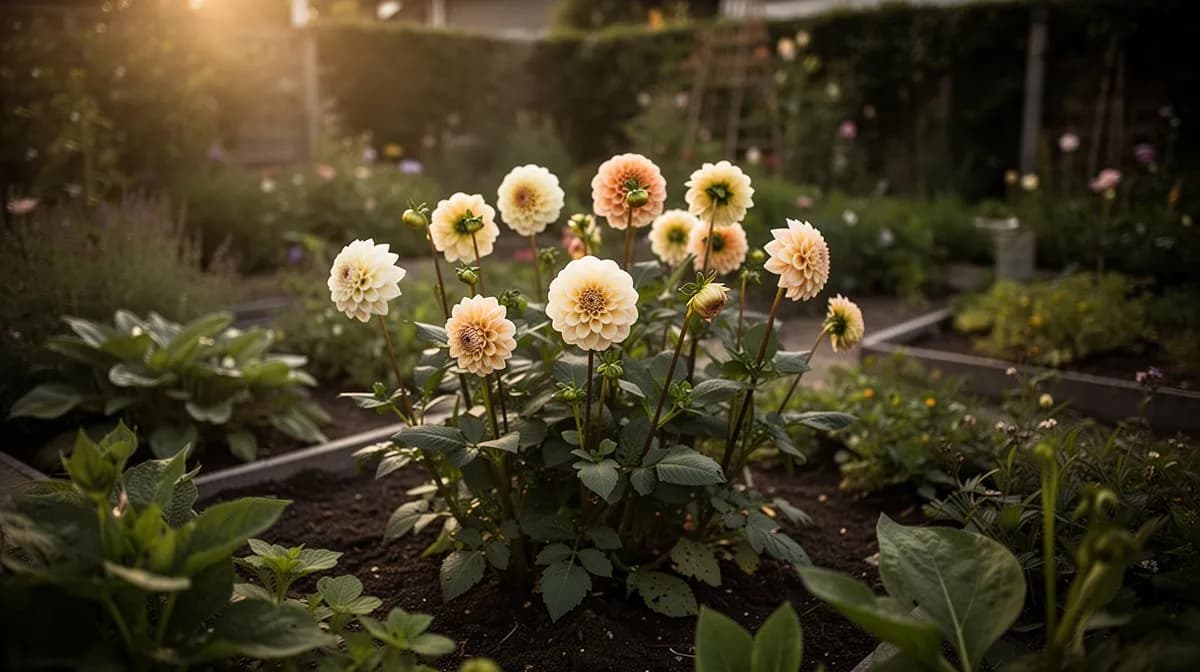
Planting dahlia tubers horizontally with the eye facing upward in well-drained, amended soil
Monthly Care Calendar
What to do each month for your Dahlia
May
You are herePlant tubers outdoors in most temperate climates once soil has warmed to 15°C. Space 45-60 cm apart for smaller varieties, 60-90 cm for dinnerplate types. Begin a regular watering schedule once shoots are visible above the soil.
Did You Know?
Fascinating facts about Dahlia
Dahlias are the national flower of Mexico, where they have been cultivated since at least the time of the Aztecs, who used the hollow stems as water pipes and the tubers as a food source.
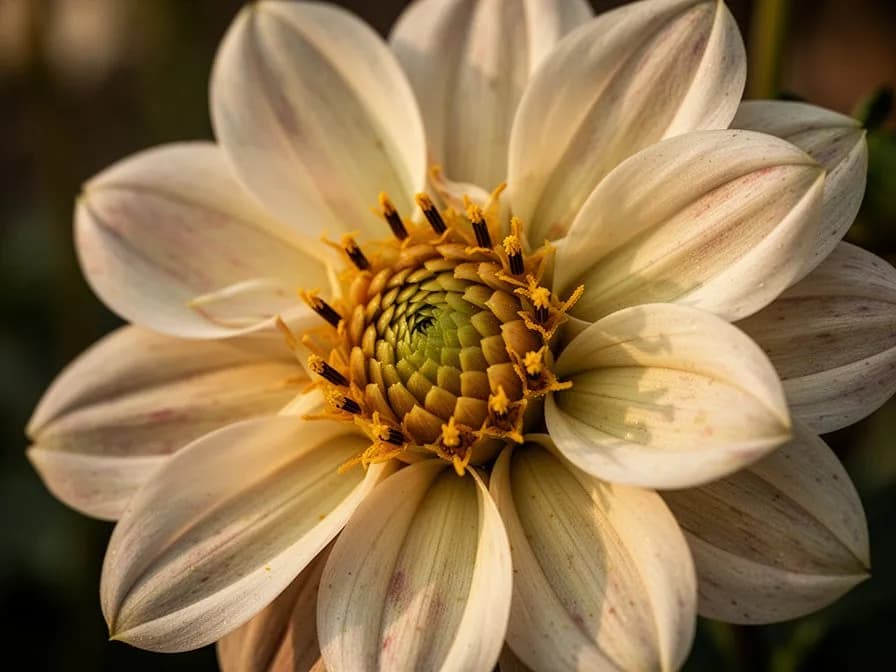
Proper winter storage of dahlia tubers in slightly damp peat moss ensures healthy plants the following season
Prepare a planting site in full sun with rich, well-drained soil amended with generous amounts of compost. Dahlia tubers should not be planted until the soil has warmed to at least 60 degrees Fahrenheit, typically two to four weeks after the last frost. Dig a hole six to eight inches deep, lay the tuber horizontally with the eye or growing point facing up, and cover with two to three inches of soil. Do not water until shoots emerge, as wet tubers are prone to rotting.
As plants grow, gradually fill in the remaining soil around the stems. Install stakes or support cages at planting time to avoid damaging tubers later. When the main stem has three to four sets of leaves, pinch out the center growing tip to encourage bushier growth and more flower stems. Remove the two smaller side buds that form below each terminal flower bud for larger, showier blooms.
Water deeply two to three times per week during active growth and flowering, and apply a layer of mulch to conserve moisture and keep roots cool. Feed every two to three weeks with a low-nitrogen, high-phosphorus fertilizer to promote flowering over foliage growth. After the first frost blackens the foliage, cut stems back to four inches, carefully dig tubers, and store in a cool, frost-free location for winter.
The dahlia (Dahlia spp.) is native to the mountainous regions of Mexico and Central America, where it grows in volcanic soils at elevations between 1,500 and 3,700 meters. The Aztecs cultivated dahlias for centuries before European contact, using the hollow stems as water conduits and the tubers as a food source called 'acocotli.' Wild dahlia species, of which there are approximately 42, typically bear single flowers in shades of lavender, red, and orange.
The first dahlia tubers arrived in Europe in 1789 when Vicente Cervantes, director of the Botanical Garden of Mexico City, sent seeds and tubers to Antonio Jose Cavanilles at the Royal Gardens of Madrid. Cavanilles named the genus Dahlia in honor of the Swedish botanist Anders Dahl, a student of Linnaeus. Initially cultivated as a potential vegetable crop, the tubers proved unpalatable to European tastes, but the striking flowers quickly captured the attention of ornamental gardeners.
By the early 1800s, dahlia mania had swept across Europe, with collectors paying extravagant sums for novel varieties. The first double-flowered forms appeared around 1806, and intensive hybridization throughout the 19th century produced an astonishing range of flower shapes, sizes, and colors. The pompon and cactus-flowered types emerged in the 1870s, and the enormous dinnerplate varieties became popular in the early 20th century. Today, dahlia societies exist worldwide, and competitive dahlia showing remains a beloved tradition in many countries, with the American Dahlia Society classifying blooms into fourteen distinct flower forms.
Dahlia tubers should be planted four to six inches deep with the eye pointing upward, spaced eighteen to twenty-four inches apart for standard varieties and up to three feet for dinner-plate types. In short-season climates, start tubers indoors in pots four to six weeks before the last frost to get a head start on the growing season. Set pots in a warm location and water sparingly until green shoots appear. Transplant outdoors after all frost danger has passed and soil is warm. Dahlias can also be grown from seed, started indoors eight to ten weeks before the last frost, though seed-grown plants are variable.
Dahlias demand rich, well-drained soil with a pH of 6.5 to 7.0. Heavy clay soils should be amended with compost and coarse sand to prevent tuber rot. Work a generous amount of aged compost into the planting bed before setting tubers. Use a fertilizer low in nitrogen and high in phosphorus and potassium, such as 5-10-10, applied every two to three weeks during the growing season. Too much nitrogen produces lush foliage with fewer, smaller flowers.
Check Your Zone
See if Dahlia is suitable for your location.
10°C – 30°C
50°F – 86°F
Dahlias thrive in moderate temperatures between 15-25°C (60-77°F) and perform best where nights are cool and days are warm. They tolerate heat up to 30°C but may slow blooming above that. Tubers and foliage are killed by frost; even a light frost of -1°C will blacken all above-ground growth. Growth slows significantly below 10°C, and tubers in the ground will rot if soil temperatures stay below 4°C for extended periods.
Common issues affecting Dahlia and how to prevent and treat them organically.
The most frequent issue is tuber rot caused by planting too early in cold, wet soil or overwatering before shoots emerge. Tall dinner-plate varieties topple without staking, so install supports at planting time. Dahlias may fail to bloom if overfertilized with nitrogen or if planted in too much shade. Spider mites can become problematic in hot, dry weather, causing stippled and bronzed foliage. In cold climates, improper winter storage leads to shriveled or rotten tubers.
Dahlias pair well with other late-summer bloomers like zinnias, sunflowers, and marigolds for a continuous display of warm colors. Low-growing companion plants such as alyssum and lobelia shade dahlia roots and conserve soil moisture. Planting garlic and chives nearby helps deter aphids, which can transmit dahlia mosaic virus. The large blooms attract beneficial pollinators that also serve neighboring vegetable crops.
Supporting tall dahlia stems with stakes prevents wind damage and keeps heavy blooms upright
- 1Plant dahlia tubers only after your last frost date when soil temperature reaches at least 15°C (60°F). Cold, wet soil causes tuber rot before shoots ever emerge.
- 2Place your stake or support structure at planting time, not after the plant has grown. Inserting a stake later risks spearing the tuber clump and damaging the root system.
- 3Do not water tubers at planting time. Wait until green shoots are visible above the soil, then begin watering gradually. Overwatering dormant tubers is the leading cause of failure.
- 4Pinch the central growing tip when plants reach about 30 cm tall and have three to four pairs of leaves. This encourages branching and can double the number of flowers produced.
- 5Feed with a low-nitrogen fertilizer such as 5-10-10 or 10-20-20. Excess nitrogen produces lush foliage at the expense of blooms. Switch to a higher-potassium feed once buds appear.
- 6For the biggest possible blooms on dinnerplate varieties, disbud by removing the two smaller side buds at each stem tip, directing all the energy into the central flower bud.
- 7Cut flowers in the early morning when stems are fully hydrated. Cut to a length just above a leaf node and immediately place stems in hot water (60°C) for one hour to seal the stems and extend vase life.
- 8After the first killing frost blackens the foliage, wait five to seven days before lifting tubers. This brief curing period in the ground toughens the tuber skin and improves winter storage success.
- 9Store lifted tubers in a cool, dark place at 4-7°C in slightly damp peat moss or vermiculite. Check monthly throughout winter and discard any showing signs of rot to protect the rest of the collection.
- 10Grow dahlias in full sun with at least six to eight hours of direct sunlight daily. In extremely hot climates with temperatures regularly above 35°C, provide light afternoon shade to prevent heat stress and flower fading.
Cut dahlia stems for arrangements in the early morning when flowers are about three-quarters open. Choose blooms where the outer petals are fully unfurled but the center is still tight. Cut stems long, placing them immediately into hot water (about 160 degrees Fahrenheit) for one hour to sear the stems and extend vase life. Deadhead spent flowers regularly by cutting back to a main branch to encourage continuous blooming until frost.
Dahlia tubers must be dug and stored in cold climates where soil freezes. After the first frost kills the foliage, cut stems back and carefully lift clumps with a garden fork. Rinse soil from tubers and let them dry for a day in a sheltered spot. Store in boxes of slightly damp peat moss, vermiculite, or wood shavings at 40 to 50 degrees Fahrenheit. Check monthly through winter and mist lightly if tubers appear shriveled. Fresh-cut dahlias last four to six days in a vase.
Plan your garden with ease
Love growing Dahlia? Use our free garden planner to design your beds, track planting dates, and get personalized care reminders.
Nutritional Info
Per 100g serving
75
Calories
Health Benefits
- Dahlia tubers contain inulin, a prebiotic dietary fiber that supports beneficial gut bacteria and may aid digestive health
- The tubers are a source of complex carbohydrates with a low glycemic index, making them suitable for blood sugar management
- Dahlia petals are edible and can be used as a colorful garnish in salads, containing small amounts of antioxidants and vitamin C
- The tubers provide modest amounts of B vitamins including thiamine and niacin, contributing to energy metabolism
- Dahlia tubers are naturally gluten-free and can serve as an alternative starchy vegetable for those with celiac disease or gluten sensitivity
💰 Why Grow Your Own?
A single dahlia tuber costing $5-15 will produce a clump of 5-15 new tubers each season that can be divided and replanted, effectively multiplying your investment for free. A mature plant produces 20-40 cut flowers per season valued at $3-8 each at farmers' markets, yielding $60-320 worth of flowers from one tuber. After the first year, your dahlia collection can grow entirely through division, eliminating the need to purchase new tubers.
Quick Recipes
Simple recipes using fresh Dahlia
Dahlia Petal Garden Salad
10 minutesA vibrant salad that uses fresh dahlia petals as both a colorful garnish and a mild-flavored edible ingredient. The petals add a slightly peppery, mildly sweet note that pairs beautifully with mixed greens and a light vinaigrette.
Roasted Dahlia Tuber Chips
35 minutesThinly sliced dahlia tubers roasted until crispy and golden, offering a unique alternative to traditional root vegetable chips. The tubers have a flavor reminiscent of a cross between a potato and a water chestnut with a slightly sweet, nutty finish.
Dahlia Petal Infused Honey
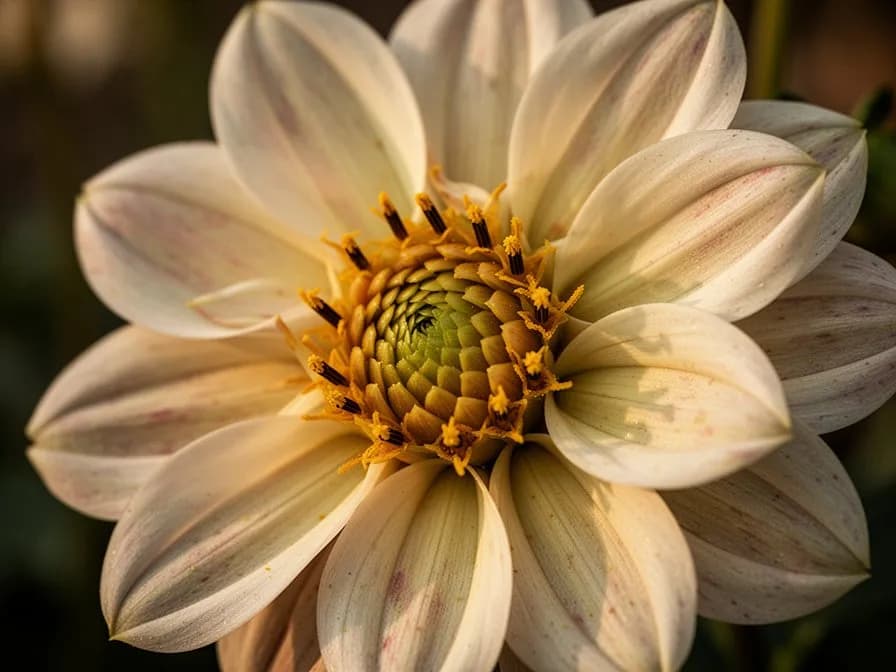
15 minutes plus 1 week infusionA fragrant floral honey infused with fresh dahlia petals that captures the subtle flavors of the garden. This versatile condiment is lovely drizzled over cheese, stirred into tea, or used as a glaze for baked goods.
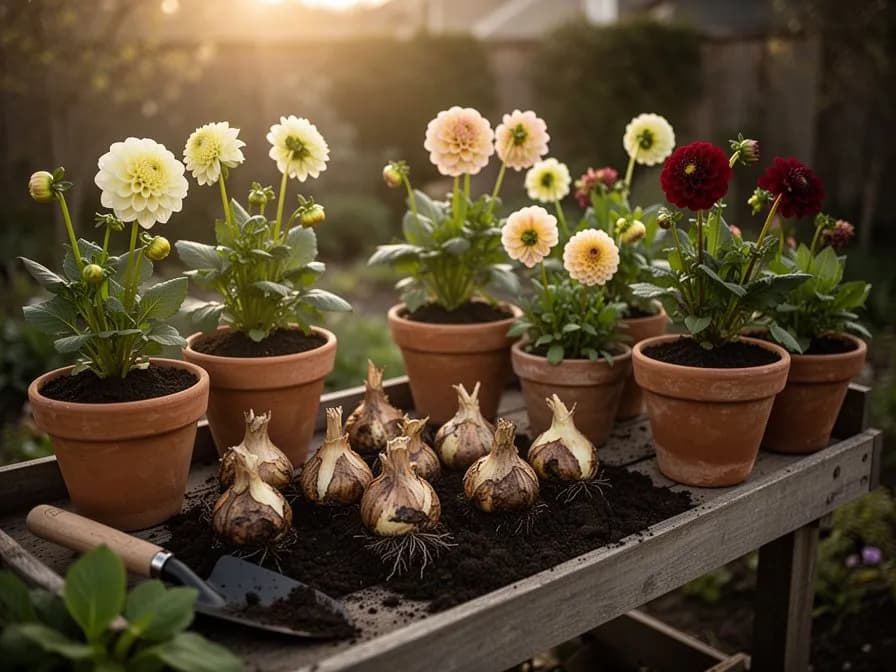
Freshly harvested dahlias arranged in a stunning bouquet displaying a range of colors and forms
Yield & Spacing Calculator
See how many Dahlia plants fit in your garden bed based on the recommended 60cm spacing.
4
Dahlia plants in a 4×4 ft bed
2 columns × 2 rows at 60cm spacing
Popular Varieties
Some of the most popular dahlia varieties for home gardeners, each with unique characteristics.
Cafe au Lait
A dinner-plate dahlia with creamy blush blooms up to ten inches across. Hugely popular for wedding flowers and high-end floral design.
Bishop of Llandaff
Dark bronze-red foliage with vivid scarlet semi-double flowers. Compact growth to three feet and outstanding garden presence.
Thomas Edison
Deep royal purple fully double blooms on strong stems, reaching four feet tall. A classic exhibition variety with excellent vase life.
Kelvin Floodlight
Bright yellow dinner-plate dahlia with massive blooms. One of the most reliable large-flowered varieties for garden and exhibition.
Honka
An unusual orchid-type dahlia with star-shaped single flowers in various colors. Lightweight blooms do not require staking and attract many pollinators.
Dahlia diversity on display: dinnerplate, pompon, cactus, and ball forms offer endless variety for the garden
When should I plant Dahlia?
Plant Dahlia in April, May. It takes approximately 90 days to reach maturity, with harvest typically in July, August, September, October.
What are good companion plants for Dahlia?
Dahlia grows well alongside Marigold, Zinnia, Sunflower. Companion planting can improve growth, flavor, and natural pest control.
What hardiness zones can Dahlia grow in?
Dahlia thrives in USDA hardiness zones 7 through 11. With greenhouse protection, it may be grown in zones 5 through 12.
How much sun does Dahlia need?
Dahlia requires Full Sun (6-8h+). This means at least 6-8 hours of direct sunlight daily.
How far apart should I space Dahlia?
Space Dahlia plants 60cm (24 inches) apart for optimal growth and air circulation.
What pests and diseases affect Dahlia?
Common issues include Slugs and Snails, Powdery Mildew, Dahlia Mosaic Virus, Earwigs. Prevention through good garden practices like crop rotation, proper spacing, and companion planting is the best approach. See the detailed pests and diseases section above for symptoms, prevention, and treatment for each.
How do I store Dahlia after harvest?
Dahlia tubers must be dug and stored in cold climates where soil freezes. After the first frost kills the foliage, cut stems back and carefully lift clumps with a garden fork. Rinse soil from tubers and let them dry for a day in a sheltered spot. Store in boxes of slightly damp peat moss, vermiculit...
What are the best Dahlia varieties to grow?
Popular varieties include Cafe au Lait, Bishop of Llandaff, Thomas Edison, Kelvin Floodlight, Honka. Each has unique characteristics suited to different growing conditions and culinary preferences. See the varieties section above for detailed descriptions.
What soil does Dahlia need?
Dahlias demand rich, well-drained soil with a pH of 6.5 to 7.0. Heavy clay soils should be amended with compost and coarse sand to prevent tuber rot. Work a generous amount of aged compost into the planting bed before setting tubers. Use a fertilizer low in nitrogen and high in phosphorus and potass...
Can dahlia tubers survive winter in the ground?
In USDA zones 8-11, dahlia tubers can overwinter in the ground if given a thick 10-15 cm layer of mulch for insulation. In zones 7 and colder, tubers must be dug up after the first killing frost and stored indoors in a cool, dark place at 4-7°C (40-45°F) in slightly damp peat moss or vermiculite. Even in mild climates, wet winter soils can cause tuber rot, so good drainage is essential for leaving them in the ground.
Why is my dahlia plant tall but not producing any flowers?
The most common cause is excess nitrogen fertilizer, which promotes leafy growth at the expense of blooms. Switch to a low-nitrogen, high-phosphorus fertilizer such as 5-10-10. Other causes include insufficient sunlight (dahlias need at least 6-8 hours of direct sun), overcrowding with other plants, or planting a variety that naturally blooms later in the season. Some dahlia varieties do not begin flowering until late summer, especially large dinnerplate types.
How do I divide dahlia tubers for propagation?
In spring, examine the tuber clump and identify individual tubers that each have at least one visible eye (growth bud) near the point where the tuber attaches to the old stem. Using a clean, sharp knife, cut individual tubers away from the central stem, ensuring each piece has an eye and a portion of the neck intact. Allow the cut surfaces to dry for 24 hours before planting. Discard any tubers that are soft, shriveled, or show signs of rot.
Are dahlia flowers and tubers safe to eat?
Yes, both dahlia petals and tubers are edible, though only if grown without chemical pesticides or fungicides. The petals have a mild flavor ranging from slightly peppery to faintly sweet depending on the variety, and work well as a salad garnish. The tubers taste similar to a cross between a potato and a water chestnut, with a slightly sweet, nutty flavor. They can be roasted, boiled, or eaten raw. However, some people may experience mild digestive sensitivity, so try a small amount first.
What pests and diseases are most problematic for dahlias?
The most common pests include aphids (especially on new growth and buds), earwigs (which hide inside blooms and chew petals), slugs and snails (devastating to young shoots), and spider mites (in hot, dry conditions). Major diseases include powdery mildew (gray-white coating on leaves), dahlia smut (dark spots on leaves), and various tuber rots caused by fungal or bacterial pathogens in wet soil. Good air circulation, proper spacing, and avoiding overhead watering help prevent most disease issues.
How long do cut dahlias last in a vase?
Cut dahlias typically last four to six days in a vase with proper conditioning. To maximize vase life, cut stems early in the morning when they are fully hydrated, choose blooms that are about three-quarters open, and immediately place the cut ends in hot water (about 60°C) for one hour before transferring to a clean vase with fresh cool water and flower preservative. Remove any foliage that would sit below the water line, change the water every two days, and keep the arrangement away from direct sunlight and fruit bowls, as the ethylene gas from ripening fruit shortens flower life.
Ready to Grow Dahlia?
Add Dahlia to your garden plan and start designing your perfect layout.

Vladimir Kusnezow
Gardener and Software Developer
Zone 6b gardener. Growing vegetables and fruits in soil and hydroponics for 6 years. I built PlotMyGarden to plan my own gardens.
Jump to Section