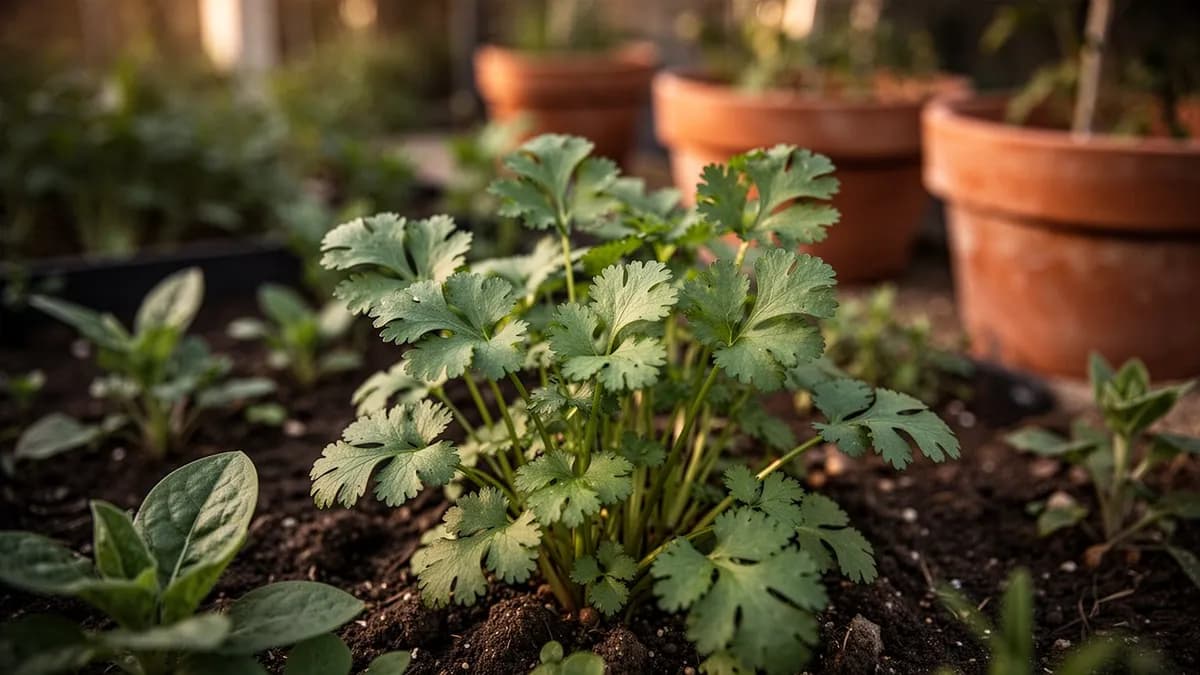
Slow-Bolt Cilantro
Coriandrum sativum 'Slow Bolt'
At a Glance
It's planting season for Slow-Bolt Cilantro! Start planning your garden now.
A cilantro cultivar specifically bred to resist bolting in warm weather, extending the leaf harvest by several weeks. Slow-bolt varieties produce more foliage before flowering, giving gardeners in hot climates a reliable cilantro supply. Still prefers cool conditions but tolerates heat much better than standard cilantro varieties.
Planting & Harvest Calendar
Growth Stages
From Seed to Harvest
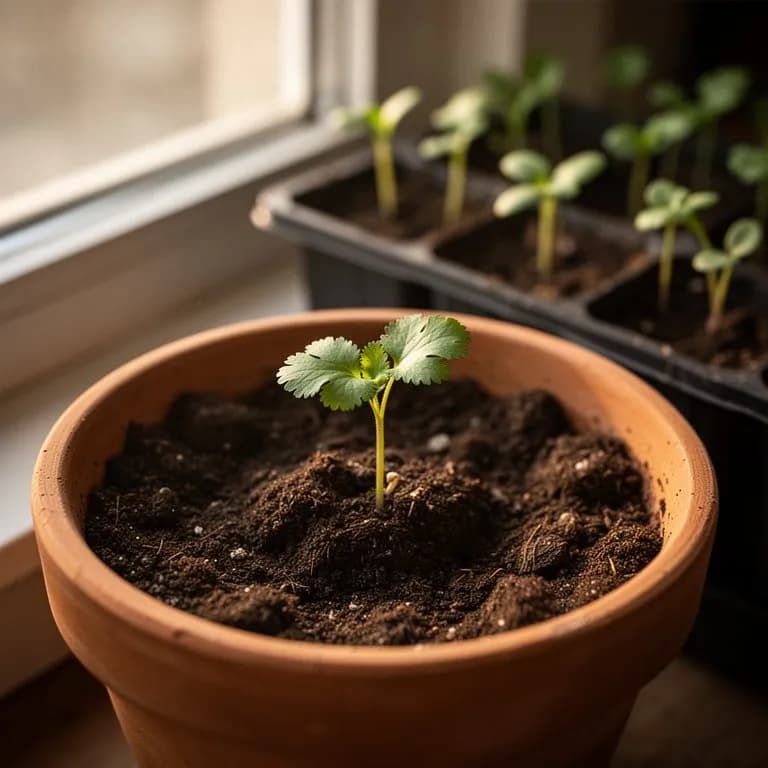
Seed Germination
Days 0–10
Cilantro seeds (technically fruits containing two seeds) are sown directly into moist, well-prepared soil at a depth of 1-1.5 cm. The round, ridged husks absorb water slowly, and germination takes 7-10 days in soil temperatures of 13-20°C (55-68°F). Gently crushing the seed husk before sowing can speed germination by a day or two.
💡 Care Tip
Soak seeds in water for 12-24 hours before sowing to soften the hard outer husk and improve germination rates. Some gardeners gently crush the round fruits to separate the two seeds inside. Keep the seedbed consistently moist but never waterlogged, and avoid letting the surface crust over.
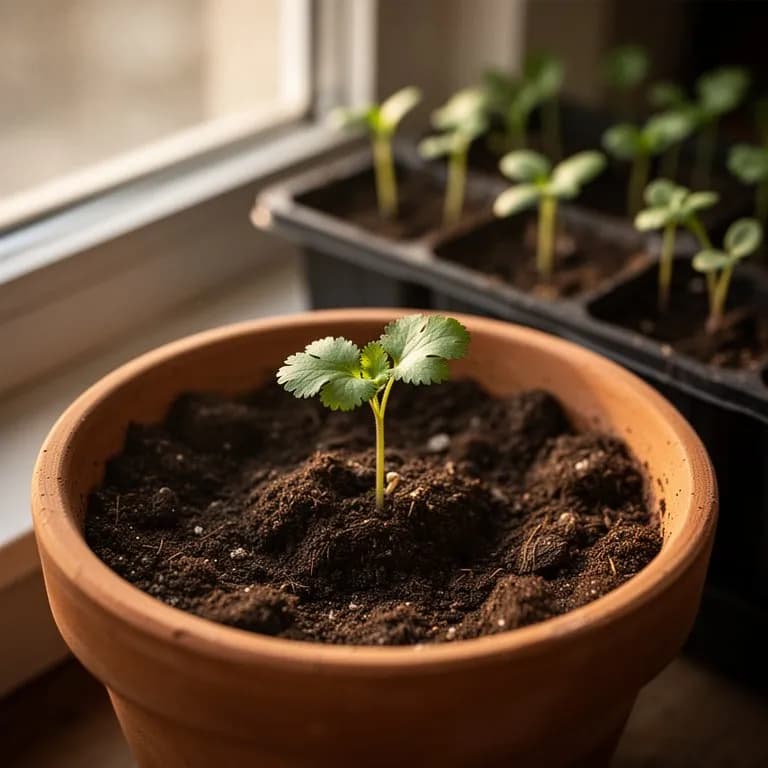
Cilantro seedlings emerge within 7-10 days, displaying paired cotyledon leaves before the first true leaves appear
Monthly Care Calendar
What to do each month for your Slow-Bolt Cilantro
May
You are hereIncrease harvest frequency as warmer weather approaches. Even slow-bolt varieties will begin transitioning in sustained heat. Provide afternoon shade with shade cloth or plant on the north side of taller crops. Make final pre-summer sowings using slow-bolt varieties exclusively.
Did You Know?
Fascinating facts about Slow-Bolt Cilantro
Cilantro and coriander come from the same plant — in most of the world, 'coriander' refers to both the leaves and seeds, but in North America, 'cilantro' specifically means the fresh leaves while 'coriander' refers only to the dried seeds. This naming split is unique to American English.
Slow-bolt cilantro varieties are bred to extend the leaf harvest window by resisting premature flowering in warm weather. Direct sow seeds outdoors 2-3 weeks before the last frost date, as cilantro germinates well in cool soil. Lightly crush the round seed hulls before planting to speed germination. Sow 1/4 inch deep and keep soil moist. Seeds germinate in 7-14 days at 55-65°F.
Plant in partial shade to keep roots cool, especially in warm climates. Space plants 4-6 inches apart in rows 12 inches apart, or broadcast thickly for a dense patch. Cilantro has a taproot and does not transplant well, so always direct sow where it will grow. Mulch around plants to keep roots cool and retain moisture.
Even slow-bolt varieties will eventually flower when temperatures consistently exceed 80°F. Succession sow every 2-3 weeks from early spring through fall to maintain a continuous supply. In hot climates, plant in early spring and again in late summer for fall harvest. Once plants bolt, allow some to set seed for coriander harvest or self-sowing.
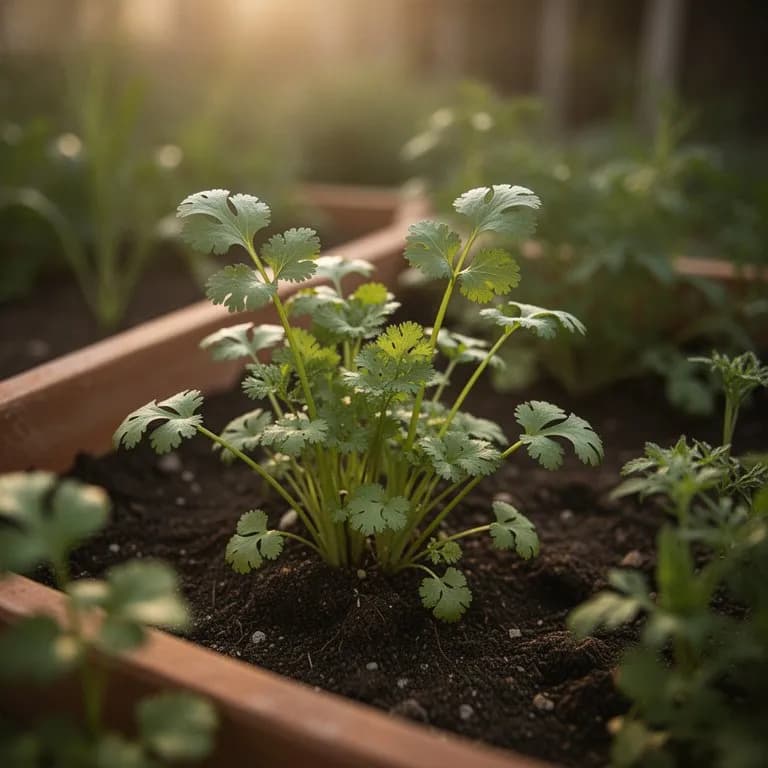
Slow-bolt varieties maintain their broad, flavorful lower leaves significantly longer than standard cilantro
Cilantro (Coriandrum sativum) is native to a broad region spanning southern Europe, northern Africa, and western Asia. Archaeological evidence places its earliest cultivation in the eastern Mediterranean and Near East, with coriander seeds discovered at Nahal Hemar Cave in Israel dating to approximately 6000 BC, making it one of the oldest spice plants in continuous human use. Ancient Egyptians cultivated coriander extensively, placing seeds in royal tombs and referencing the plant in the Ebers Papyrus, one of the oldest known medical texts.
From its Mediterranean origins, coriander spread along trade routes in every direction. It reached China by the 2nd century BC, brought by traders along the Silk Road, and was documented in early Chinese herbal medicine texts. The Romans carried it throughout their empire, using both leaves and seeds in cooking, medicine, and wine preservation. When Spanish and Portuguese explorers reached the Americas in the 15th and 16th centuries, they brought coriander with them, where it integrated seamlessly into the cuisines of Mexico, Central America, and South America — eventually becoming the indispensable herb we know as cilantro.
The development of slow-bolt cilantro represents a modern chapter in this ancient plant's story. Standard cilantro bolts rapidly when temperatures exceed 27°C (80°F) or day length increases, often going to seed within 3-4 weeks of reaching harvestable size. Beginning in the 1990s, plant breeders undertook systematic selection programs, identifying individual plants with naturally delayed flowering responses and crossing them over multiple generations. The resulting slow-bolt cultivars — including Santo, Slow Bolt, Calypso, and Leisure — extend the leafy harvest window by 2-3 weeks compared to traditional varieties, making cilantro cultivation far more practical for home gardeners and commercial growers in warm climates.
Direct sow slow-bolt cilantro seeds outdoors 2-3 weeks before the last frost date. Gently crush the round seed husks between your palms to split them, as each husk contains two seeds. Sow 1/4 inch deep, spacing seeds 1-2 inches apart in rows or broadcast in patches. Keep soil moist during the 7-14 day germination period. Thin seedlings to 4-6 inches apart. For fall harvest, sow again 6-8 weeks before the first expected frost. Indoor starting is possible but not ideal due to cilantro's sensitive taproot.
Slow-bolt cilantro grows best in fertile, well-drained soil with a pH of 6.2-6.8. Amend beds with 2-3 inches of compost before planting. Cilantro is a moderate feeder; apply a balanced liquid fertilizer every 3-4 weeks or side-dress with compost. Avoid heavy nitrogen, which can promote rapid growth and actually trigger earlier bolting. In containers, use quality potting mix and feed biweekly with half-strength fertilizer. Keep soil consistently moist but never waterlogged.
Check Your Zone
See if Slow-Bolt Cilantro is suitable for your location.
10°C – 25°C
50°F – 77°F
Cilantro slow-bolt performs best in the moderate temperature range of 10-25°C (50-77°F). Seeds germinate optimally at 13-20°C (55-68°F) soil temperature, though they can sprout in soil as cool as 7°C (45°F). Established plants tolerate light frosts down to about -2°C (28°F), making cilantro suitable for cool-season growing. Heat is the primary enemy — sustained temperatures above 30°C (86°F) trigger bolting even in slow-bolt varieties. Cool nights below 15°C (60°F) produce the most aromatic and flavorful foliage.
Common issues affecting Slow-Bolt Cilantro and how to prevent and treat them organically.
Even slow-bolt varieties will eventually bolt in sustained heat above 80°F. Maximize harvest by planting in partial shade, mulching heavily, and keeping soil consistently moist and cool. Cilantro has a taproot and cannot be transplanted successfully once established. Poor germination often results from old seed; cilantro seed viability drops significantly after one year. The transition from flat lower leaves to feathery upper leaves signals imminent bolting. Some people perceive cilantro as tasting like soap due to a genetic trait.
Cilantro is a valuable companion plant that attracts beneficial insects including parasitic wasps, hoverflies, and tachinid flies when allowed to flower. Plant near spinach and lettuce, as cilantro provides light shade and its flowers attract pollinators. Grow alongside peas and beans for mutual benefit. Avoid planting near fennel, which can cross-pollinate with cilantro and inhibit growth. Cilantro planted near tomatoes may help repel spider mites and aphids.
- 1Always choose slow-bolt varieties like Santo, Calypso, Leisure, or Slow Bolt for home gardens. Standard cilantro bolts within 3-4 weeks of reaching harvestable size in warm weather, while slow-bolt types give you an extra 2-3 weeks of productive leaf harvest.
- 2Sow cilantro seeds directly where they will grow rather than starting indoors and transplanting. Cilantro develops a long, delicate taproot that resents disturbance, and transplanted seedlings often bolt prematurely from the root stress. If you must start indoors, use deep biodegradable pots.
- 3Crush or soak the round seed husks before planting. Each cilantro 'seed' is actually a fruit containing two seeds inside a hard shell. Gently crushing the husk with the flat of a knife or soaking in water for 12-24 hours softens the coating and improves germination speed and uniformity.
- 4Succession sow every 2-3 weeks without exception. Cilantro has the shortest productive window of nearly any kitchen herb, and no amount of care will prevent eventual bolting. Having fresh sowings at different stages ensures an uninterrupted supply throughout the growing season.
- 5Harvest by cutting entire outer stems at the base rather than picking individual leaves. This cut-and-come-again approach encourages the plant to produce new growth from the center and extends the overall harvest period. Never remove more than one-third of the plant at once.
- 6Provide consistent moisture but ensure perfect drainage. Cilantro's taproot is susceptible to rot in waterlogged conditions, yet the plant wilts quickly in dry soil. Drip irrigation or soaker hoses deliver the ideal balance of steady moisture without wet foliage.
- 7Use shade cloth or interplant with taller crops to provide afternoon shade during warm months. Even slow-bolt varieties will flower rapidly if exposed to sustained temperatures above 30°C (86°F). Shade can reduce soil and air temperatures by several degrees and extend your harvest by weeks.
- 8Let a few plants bolt intentionally to attract beneficial insects and produce coriander seeds. Cilantro flowers are among the best insectary plants in the garden, drawing hoverflies, lacewings, parasitic wasps, and other predators that help control aphids and caterpillars on neighboring crops.
- 9Grow cilantro in deep containers (at least 25 cm) if garden space is limited. The taproot needs room to develop, and shallow pots cause stunted growth and premature bolting. Use a well-draining potting mix and place containers where they receive morning sun but afternoon shade.
- 10Save coriander seeds from your best-performing slow-bolt plants to gradually develop a strain adapted to your local conditions. Select seeds only from the last plants to bolt — over several generations, this simple selection process produces cilantro that is increasingly resistant to bolting in your specific climate.
Begin harvesting slow-bolt cilantro when plants have at least six true leaves, typically 3-4 weeks after germination. Cut outer leaves at the base, leaving the growing center intact for continued production. Harvest in the morning for best flavor. The slow-bolt trait gives you 2-3 additional weeks of leaf harvest compared to standard cilantro. Once flower stalks begin to emerge, harvest the entire plant as the leaves become more pungent and finely cut. Let some plants go to seed for coriander harvest.
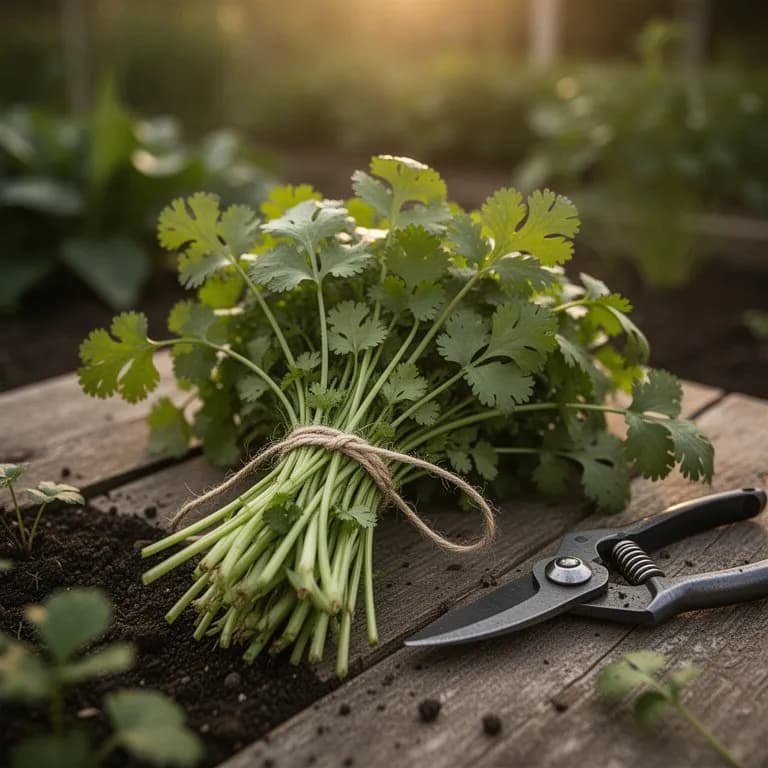
Harvest outer stems first, cutting just above the soil to encourage continued regrowth from the center
Fresh cilantro wilts quickly, so store with stems in a glass of water covered loosely with a plastic bag in the refrigerator for up to 2 weeks. Change the water every few days. For longer storage, freeze chopped cilantro in ice cube trays with water or olive oil. Cilantro does not dry well, as it loses most of its characteristic flavor. Blend fresh leaves into cilantro paste with oil, garlic, and lime juice, then freeze in small portions. Coriander seeds from bolted plants dry well and store for years.
Plan your garden with ease
Love growing Slow-Bolt Cilantro? Use our free garden planner to design your beds, track planting dates, and get personalized care reminders.
Nutritional Info
Per 100g serving
23
Calories
Health Benefits
- Cilantro is remarkably rich in vitamin A as beta-carotene, providing 135% of the daily value per 100g of fresh leaves — supporting vision, immune function, and healthy skin
- An excellent source of vitamin K (310 mcg per 100g, about 258% DV), which is essential for blood clotting and bone metabolism
- Contains a diverse array of antioxidant compounds including quercetin, kaempferol, and tocopherols that help neutralize free radicals in the body
- Provides meaningful amounts of vitamin C (30% DV per 100g), supporting collagen synthesis, immune defense, and enhanced absorption of plant-based iron
- Rich in essential minerals including manganese, iron, and magnesium, with cilantro delivering more manganese per gram than most other leafy herbs
- Contains unique aldehyde compounds (linalool and geranyl acetate) that give cilantro its distinctive aroma and have demonstrated antimicrobial properties in laboratory studies
💰 Why Grow Your Own?
Fresh cilantro at the grocery store typically costs $1.50-3.00 per small bunch (about 30-50g of usable leaves), and organic cilantro can run $3-5 per bunch. A packet of slow-bolt cilantro seeds costs $2-4 and contains enough seed for multiple succession sowings across an entire season, yielding 2-4 kg of fresh cilantro. Growing your own can save $80-200 per season depending on how frequently you use cilantro. The savings are compounded by the fact that homegrown cilantro stays fresh much longer than store-bought bunches, which often wilt within days of purchase.
Quick Recipes
Simple recipes using fresh Slow-Bolt Cilantro
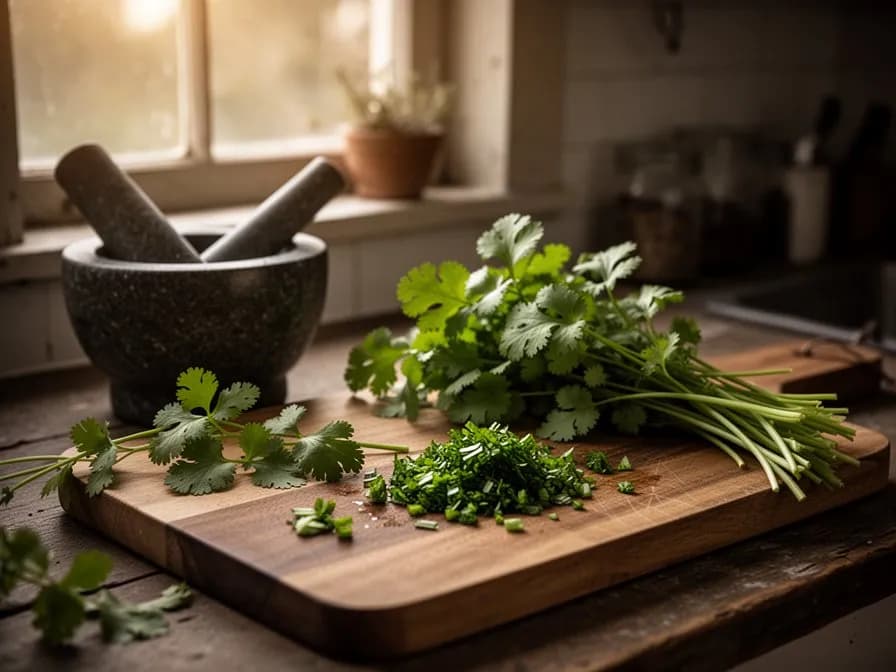
Classic Cilantro Lime Rice
20 minFluffy basmati rice tossed with generous handfuls of freshly chopped cilantro and a bright squeeze of lime juice. This side dish pairs perfectly with tacos, grilled meats, curries, or black beans and transforms plain rice into something vibrant and aromatic.
Fresh Cilantro Chutney (Dhaniya Chutney)
10 minA vibrant green Indian condiment that blends fresh cilantro with green chili, ginger, and a touch of lemon for a punchy, herbaceous sauce. Serve alongside samosas, kebabs, dosa, or drizzle over grilled vegetables for an instant flavor boost.
Cilantro Pesto with Pepitas
10 minA bold twist on classic basil pesto that swaps in cilantro and toasted pumpkin seeds for a uniquely nutty, herbaceous sauce. Toss with pasta, spread on sandwiches, or use as a marinade for grilled chicken or fish.
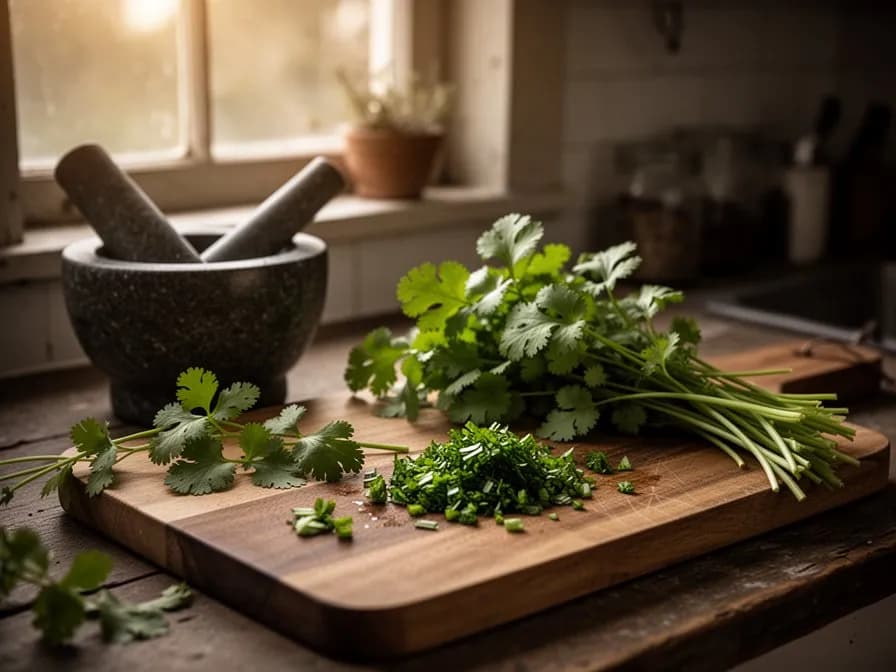
Freshly picked cilantro transforms a simple salsa verde into something extraordinary
Yield & Spacing Calculator
See how many Slow-Bolt Cilantro plants fit in your garden bed based on the recommended 15cm spacing.
64
Slow-Bolt Cilantro plants in a 4×4 ft bed
8 columns × 8 rows at 15cm spacing
Popular Varieties
Some of the most popular slow-bolt cilantro varieties for home gardeners, each with unique characteristics.
Calypso
One of the slowest-bolting cilantro varieties available, producing abundant foliage for weeks longer than standard types. Excellent for warm climates.
Slow Bolt (Santo)
The most widely available slow-bolt variety with good heat tolerance. Reliable performer in both spring and fall plantings.
Leisure
A European slow-bolt selection with large, glossy leaves and excellent flavor. Good resistance to tip burn in warm weather.
Delfino
A unique fern-leaved cilantro with lacy, delicate foliage. Extremely slow to bolt with an ornamental appearance in the garden.
Slow-bolt cilantro provides the same bright, citrusy flavor essential to Mexican salsas, guacamole, and tacos. Use generously in Thai curries, Vietnamese pho, and Indian chutneys. The leaves complement rice dishes, bean soups, and fresh spring rolls. Always add cilantro at the end of cooking or as a fresh garnish, as heat destroys its delicate volatile oils. The stems have concentrated flavor and can be minced into marinades and dressings.
When should I plant Slow-Bolt Cilantro?
Plant Slow-Bolt Cilantro in March, April, May, September, October. It takes approximately 50 days to reach maturity, with harvest typically in May, June, July, October, November.
What are good companion plants for Slow-Bolt Cilantro?
Slow-Bolt Cilantro grows well alongside Spinach, Peas, Lettuce. Companion planting can improve growth, flavor, and natural pest control.
What hardiness zones can Slow-Bolt Cilantro grow in?
Slow-Bolt Cilantro thrives in USDA hardiness zones 3 through 11. With greenhouse protection, it may be grown in zones 1 through 12.
How much sun does Slow-Bolt Cilantro need?
Slow-Bolt Cilantro requires Partial Sun (3-6h). This means 3-6 hours of sunlight, ideally morning sun with afternoon shade.
How far apart should I space Slow-Bolt Cilantro?
Space Slow-Bolt Cilantro plants 15cm (6 inches) apart for optimal growth and air circulation.
What pests and diseases affect Slow-Bolt Cilantro?
Common issues include Bacterial Leaf Spot, Aphids, Powdery Mildew, Whiteflies. Prevention through good garden practices like crop rotation, proper spacing, and companion planting is the best approach. See the detailed pests and diseases section above for symptoms, prevention, and treatment for each.
How do I store Slow-Bolt Cilantro after harvest?
Fresh cilantro wilts quickly, so store with stems in a glass of water covered loosely with a plastic bag in the refrigerator for up to 2 weeks. Change the water every few days. For longer storage, freeze chopped cilantro in ice cube trays with water or olive oil. Cilantro does not dry well, as it lo...
What are the best Slow-Bolt Cilantro varieties to grow?
Popular varieties include Calypso, Slow Bolt (Santo), Leisure, Delfino. Each has unique characteristics suited to different growing conditions and culinary preferences. See the varieties section above for detailed descriptions.
What soil does Slow-Bolt Cilantro need?
Slow-bolt cilantro grows best in fertile, well-drained soil with a pH of 6.2-6.8. Amend beds with 2-3 inches of compost before planting. Cilantro is a moderate feeder; apply a balanced liquid fertilizer every 3-4 weeks or side-dress with compost. Avoid heavy nitrogen, which can promote rapid growth ...
What makes slow-bolt cilantro different from regular cilantro?
Slow-bolt cilantro varieties have been selectively bred over many generations to delay the transition from leaf production to flowering. Standard cilantro bolts rapidly when temperatures exceed 27°C (80°F) or day length increases, often going to seed within 3-4 weeks of becoming harvestable. Slow-bolt cultivars like Santo, Calypso, and Leisure maintain their broad, flavorful leaves for an additional 2-3 weeks under the same conditions. The flavor and appearance of the leaves are identical — you simply get a significantly longer harvest window before the plant flowers.
Why does cilantro taste like soap to some people?
The soapy taste perception is linked to genetic variations in olfactory receptor genes, particularly the OR6A2 gene on chromosome 11. People with certain variants of this gene are highly sensitive to the aldehyde compounds (such as decanal and dodecanal) that are abundant in cilantro leaves — these same compounds are found in soaps and lotions, which is why the association exists. An estimated 4-14% of the population is affected, with variation across ethnic groups. Interestingly, crushing or cooking cilantro breaks down some of these aldehydes, which is why some soap-tasters can tolerate cilantro in cooked dishes but not fresh.
Can I grow cilantro indoors year-round?
Yes, cilantro can be grown indoors, though it requires attention to a few key factors. Provide at least 6-8 hours of direct sunlight or 12-14 hours under grow lights. Use a deep container (25 cm minimum) with excellent drainage to accommodate the taproot. Keep temperatures cool, ideally 15-22°C (60-72°F) — indoor cilantro bolts quickly in warm rooms. Succession sow a new pot every 3 weeks, as even slow-bolt varieties have a finite leaf-producing lifespan. Indoor cilantro tends to be leggier and less flavorful than outdoor-grown, but it provides a usable winter harvest when garden cilantro is unavailable.
Should I remove cilantro flowers or let them bloom?
It depends on your goals. If you want maximum leaf production, pinch out flower buds as soon as they appear — this can extend leaf harvest by a few extra days, though the plant will continue trying to bolt. However, there are excellent reasons to let some plants flower: cilantro blossoms are outstanding insectary flowers that attract beneficial predatory insects including hoverflies, parasitic wasps, and lacewings. After flowering, you can harvest coriander seeds for cooking or for replanting. A balanced approach is to harvest leaves from most plants while allowing one or two to complete their flowering cycle.
How do I store fresh cilantro to keep it from wilting?
The most effective method is to treat cilantro like a bouquet of flowers. Trim the stem ends, place the bunch upright in a jar with 2-3 cm of water, cover loosely with a plastic bag, and refrigerate. Change the water every 2-3 days and the cilantro will stay fresh for 2-3 weeks — far longer than the few days it lasts in a sealed plastic bag. Alternatively, you can freeze cilantro by chopping it finely, packing it into ice cube trays, covering with water or olive oil, and freezing. These cilantro cubes are perfect for dropping directly into soups, stews, and sauces.
Is it true that cilantro can remove heavy metals from the body?
This is a popular claim that has been significantly overstated. Some laboratory and animal studies have shown that cilantro compounds can bind to certain heavy metals in controlled settings, but there is currently no robust clinical evidence that eating cilantro effectively chelates or removes heavy metals from the human body. What is well-established is that cilantro is a nutritious herb rich in antioxidants, vitamins, and minerals that supports overall health as part of a balanced diet. Enjoy cilantro for its flavor and genuine nutritional benefits rather than as a detoxification remedy.
Ready to Grow Slow-Bolt Cilantro?
Add Slow-Bolt Cilantro to your garden plan and start designing your perfect layout.

Vladimir Kusnezow
Gardener and Software Developer
Zone 6b gardener. Growing vegetables and fruits in soil and hydroponics for 6 years. I built PlotMyGarden to plan my own gardens.
Jump to Section