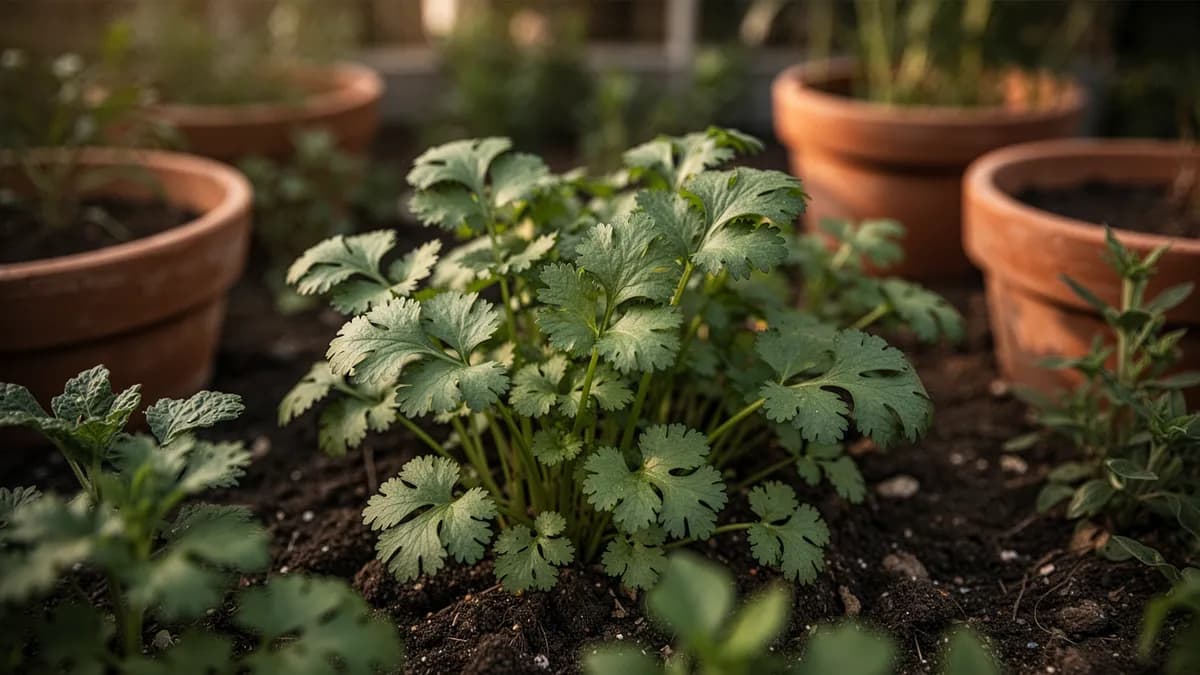
Cilantro
Coriandrum sativum
At a Glance
A fast-bolting annual producing flavorful leaves and seeds, best succession-sown every two to three weeks for continuous harvest. Cilantro prefers cool weather and will bolt rapidly in heat, so plant in partial shade during warmer months or choose slow-bolt cultivars. Once the plant flowers, allow it to set seed to harvest coriander, which has a warm, citrusy flavor used in many world cuisines. Both the fresh leaves and dried seeds are culinary essentials in Mexican, Indian, Thai, and Middle Eastern cooking.
Planting & Harvest Calendar
Growth Stages
From Seed to Harvest
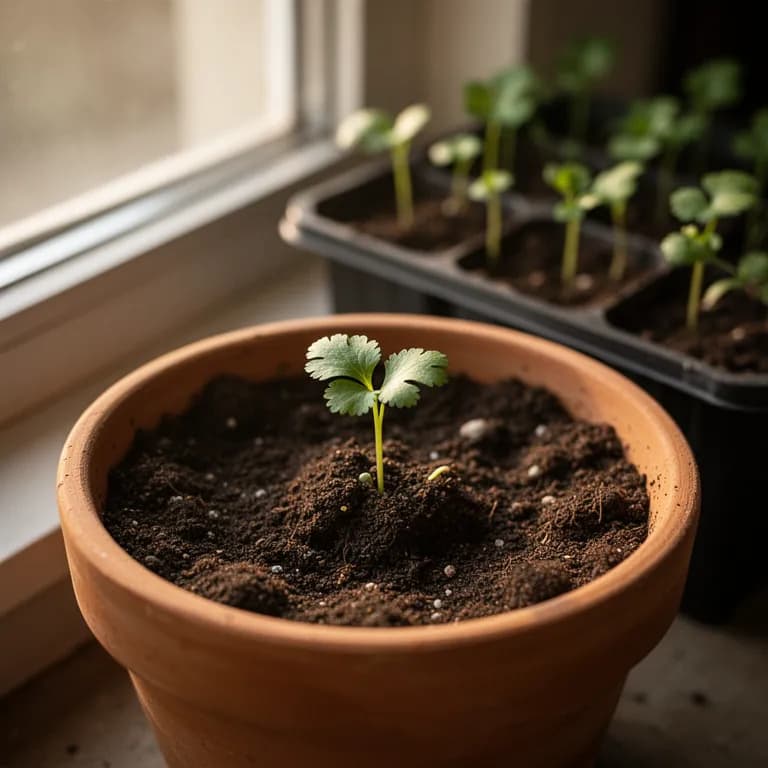
Seed Germination
Days 0–14
Cilantro seeds are actually fruits containing two seeds each. Gently crushing the husk before sowing improves germination rates. Seeds sprout best in cool soil between 55 and 68 degrees Fahrenheit.
💡 Care Tip
Soak seeds for 12 to 24 hours before planting and lightly crush the seed husks to speed up germination. Keep soil consistently moist but not waterlogged.
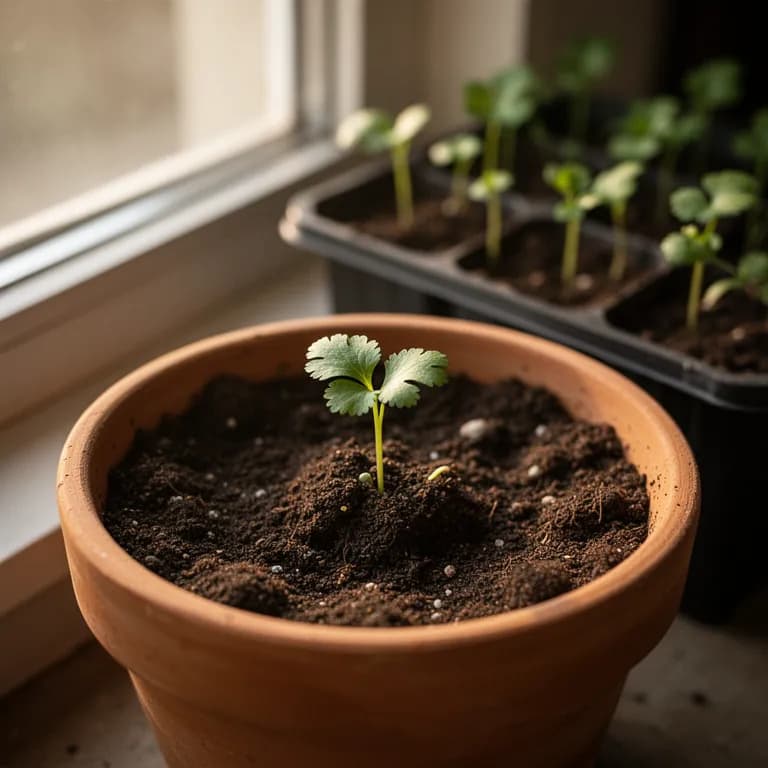
Cilantro seedlings appear within 7 to 14 days after sowing, producing their distinctive first true leaves.
Monthly Care Calendar
What to do each month for your Cilantro
May
You are hereProvide afternoon shade as temperatures rise. Increase watering frequency and apply mulch to keep roots cool. Continue succession sowing.
Did You Know?
Fascinating facts about Cilantro
Cilantro and coriander come from the same plant: the leaves are called cilantro while the dried seeds are called coriander, making it one of the few herbs where both parts are widely used under different names.
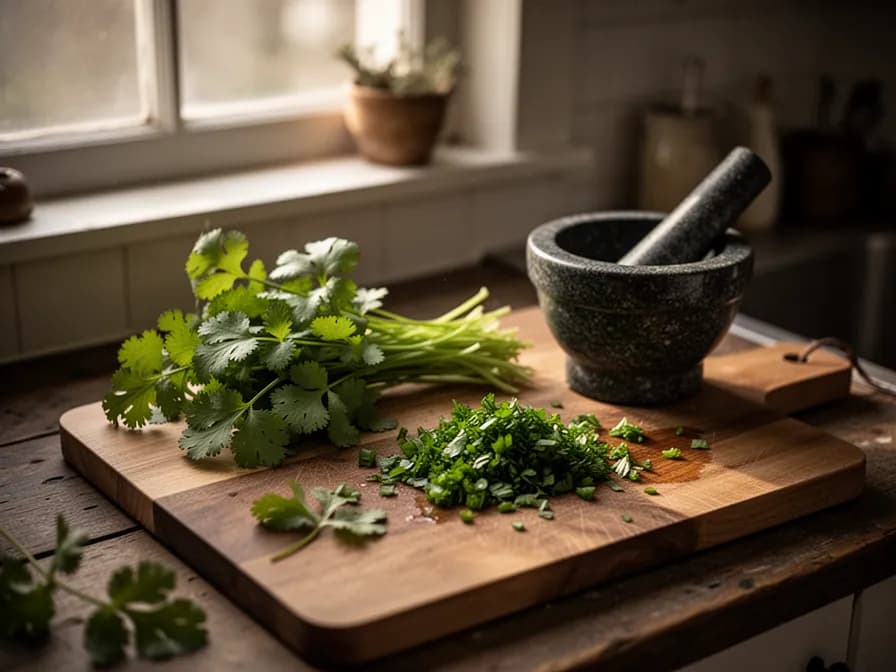
Allow flowers to mature into round coriander seeds for use as a warm, citrusy spice.
Sow cilantro seeds directly in the garden 2-3 weeks before the last spring frost, as it prefers cool weather and does not transplant well due to its taproot. Lightly crush the round seed husks before planting to improve germination, then sow 1/4 inch deep in rows 12 inches apart. Seeds germinate in 7-10 days. For a continuous harvest, succession-sow every 2-3 weeks from early spring through fall.
Choose a site with partial shade during warmer months, as cilantro bolts rapidly when temperatures exceed 80°F. Rich, well-drained soil with a pH of 6.2-6.8 and consistent moisture produces the best leaf growth. Thin seedlings to 4-6 inches apart once they develop their first true leaves.
Water evenly to keep soil consistently moist but not waterlogged. Apply a thin layer of mulch to keep roots cool and delay bolting. When plants inevitably bolt in warm weather, allow some to flower and set seed for coriander harvest. Self-sown seeds will produce volunteer plants in subsequent seasons. For summer harvests, choose slow-bolt varieties like Calypso or Santo and provide afternoon shade.
Cilantro (Coriandrum sativum) is one of the oldest cultivated herbs in human history, with origins tracing back to the eastern Mediterranean and western Asia. Archaeological evidence places its use as far back as 5000 BCE, with coriander seeds discovered in Neolithic cave sites in present-day Israel. The ancient Egyptians valued it highly, placing coriander seeds in the tomb of Pharaoh Ramses II as an offering for the afterlife, and it was mentioned in the Ebers Papyrus, one of the oldest known medical texts. The herb spread throughout the ancient world along trade routes, becoming a staple in Greek, Roman, Indian, and Chinese culinary and medicinal traditions. Roman soldiers carried coriander as they expanded the empire, using it to preserve meat and flavor bread. The Romans introduced it to Britain, where it became a common garden herb by the Middle Ages. Spanish conquistadors and Portuguese traders brought cilantro to the Americas in the fifteenth and sixteenth centuries, where it quickly became integral to the cuisines of Mexico, Central America, and South America. In traditional medicine across multiple cultures, cilantro was prescribed for digestive complaints, anxiety, insomnia, and as an appetite stimulant. Indian Ayurvedic practitioners used coriander seeds to treat fevers and urinary complaints, while traditional Chinese medicine employed it to address measles symptoms and promote digestion. Today cilantro is cultivated on every inhabited continent and remains one of the most widely used herbs in global cuisine, bridging culinary traditions from Mexican salsas to Indian chutneys to Thai curries.
Sow cilantro seeds directly outdoors 2-3 weeks before the last frost date. Gently crush the round seed husks to split them, which significantly improves germination rates. Plant seeds 1/4 inch deep, 1 inch apart, in rows 12 inches apart. Keep soil consistently moist during the 7-10 day germination period. Thin seedlings to 4-6 inches apart. Cilantro strongly resists transplanting due to its taproot; if starting indoors, use biodegradable pots that can be planted directly in the ground without disturbing roots.
Cilantro grows best in rich, well-drained soil with a pH of 6.2-6.8. Work in 2-3 inches of compost before planting to provide a nutrient-rich growing medium. Cilantro is a moderate feeder and benefits from a balanced liquid fertilizer applied every 3-4 weeks during active leaf growth. Avoid excessive nitrogen, which can make the flavor less pronounced. In containers, use a high-quality potting mix and feed regularly. Keep soil consistently moist but well-drained; soggy conditions promote root diseases.
Check Your Zone
See if Cilantro is suitable for your location.
10°C – 25°C
50°F – 77°F
Cilantro is a cool-season herb that thrives in temperatures between 10 and 25 degrees Celsius (50 to 77 degrees Fahrenheit). It bolts rapidly when daytime temperatures consistently exceed 27 degrees Celsius (80 degrees Fahrenheit). For best leaf production, aim for daytime temperatures around 18 to 22 degrees Celsius with cool nights. The plant can tolerate light frosts down to minus 2 degrees Celsius (28 degrees Fahrenheit), making it suitable for early spring and late fall growing.
Common issues affecting Cilantro and how to prevent and treat them organically.
Premature bolting is the most common frustration with cilantro, triggered by temperatures above 80°F and long day lengths. Combat this by planting in partial shade, using slow-bolt varieties, succession sowing, and mulching to keep roots cool. Yellowing lower leaves often indicate overwatering or nitrogen deficiency. Poor germination results from old seed or failure to crush the seed husk before planting. Cilantro's taproot makes transplanting difficult; always direct-sow or use peat pots that can be planted whole.
Cilantro attracts beneficial hoverflies and parasitic wasps when it bolts and flowers, making it an excellent insectary plant in the vegetable garden. Its small umbrella-shaped flowers provide nectar for pest-controlling insects. Plant near tomatoes, spinach, and lettuce where it can provide light shade and attract pollinators. Cilantro also reportedly repels aphids, spider mites, and potato beetles through its aromatic compounds. Avoid planting near fennel, which can cross-pollinate and affect seed quality.
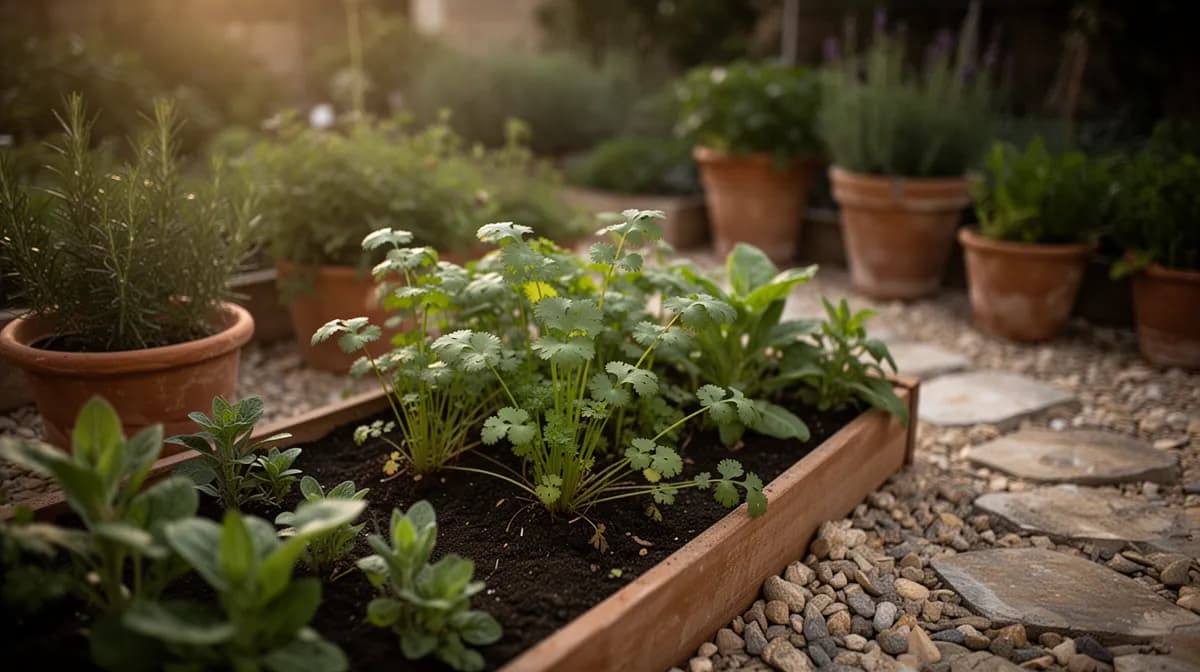
Cilantro makes an excellent companion plant, attracting beneficial insects that prey on garden pests.
- 1Sow cilantro seeds directly in the garden rather than transplanting, as cilantro develops a deep taproot that resents being disturbed and transplant shock often triggers premature bolting.
- 2Practice succession planting every 2 to 3 weeks from early spring through fall to ensure a continuous supply of fresh leaves throughout the growing season.
- 3Choose slow-bolt varieties such as Calypso, Santo, or Leisure for extended leaf harvests, especially in climates where warm weather arrives quickly in late spring.
- 4Crush or gently split the round seed husks before sowing to separate the two seeds inside and improve germination rates by up to 50 percent.
- 5Provide afternoon shade during warm months using shade cloth or by planting on the east side of taller crops like tomatoes or trellised beans to prevent heat-induced bolting.
- 6Water consistently and deeply rather than with frequent shallow watering, as cilantro has a long taproot that benefits from moisture reaching at least 6 to 8 inches into the soil.
- 7Harvest by cutting outer stems at the base of the plant rather than picking individual leaves, which encourages the center to keep producing new growth and extends the harvest period.
- 8Allow a few plants to bolt and set seed each season to attract beneficial insects like hoverflies and parasitic wasps, and to establish a self-sowing colony that returns year after year.
- 9Grow cilantro in containers at least 8 to 10 inches deep to accommodate its taproot, using a well-draining potting mix and placing pots where they receive morning sun and afternoon shade.
- 10Store freshly harvested cilantro by placing stems in a jar of water like a bouquet, covering loosely with a plastic bag, and refrigerating. This method keeps leaves fresh for up to two weeks.
Begin harvesting cilantro leaves once plants are 6 inches tall, about 3-4 weeks after sowing. Cut outer leaves first, leaving the inner growth to continue producing. Harvest whole stems by cutting at the base rather than picking individual leaves. For the freshest flavor, harvest in the morning. Once flower stalks appear, leaf flavor changes and becomes more pungent. Allow seed heads to dry on the plant, then cut and collect coriander seeds when they turn light brown and have a sweet, citrusy fragrance.
Fresh cilantro is best used immediately but can be stored for 1-2 weeks with stems in a jar of water in the refrigerator, loosely covered with a plastic bag. Change the water every few days. Cilantro does not dry well, as it loses most of its flavor. For best preservation, blend fresh leaves with a small amount of water or oil and freeze in ice cube trays. Whole cilantro leaves can also be frozen flat on a baking sheet and transferred to freezer bags. Coriander seeds store indefinitely in airtight jars in a cool, dark place.
Plan your garden with ease
Love growing Cilantro? Use our free garden planner to design your beds, track planting dates, and get personalized care reminders.
Nutritional Info
Per 100g serving
23
Calories
Health Benefits
- Exceptionally rich in vitamin A, providing 135 percent of the daily value per 100 grams of fresh leaves
- Good source of vitamin C, supporting immune function and collagen production
- Contains vitamin K at 310 micrograms per 100 grams, important for blood clotting and bone health
- Provides manganese, a trace mineral essential for metabolism and antioxidant defenses
- Low in calories at only 23 per 100 grams, making it a nutrient-dense addition to any meal
- Contains quercetin and other flavonoids with anti-inflammatory and antioxidant properties
💰 Why Grow Your Own?
A single packet of cilantro seeds costing around two to three dollars can produce dozens of harvests through succession planting, compared to buying fresh bunches at one to two dollars each at the grocery store. With succession sowing every two to three weeks, a small garden bed can yield fresh cilantro for six or more months, saving forty dollars or more over a growing season. Allowing some plants to go to seed provides free coriander spice and self-sown seedlings for the following year.
Quick Recipes
Simple recipes using fresh Cilantro
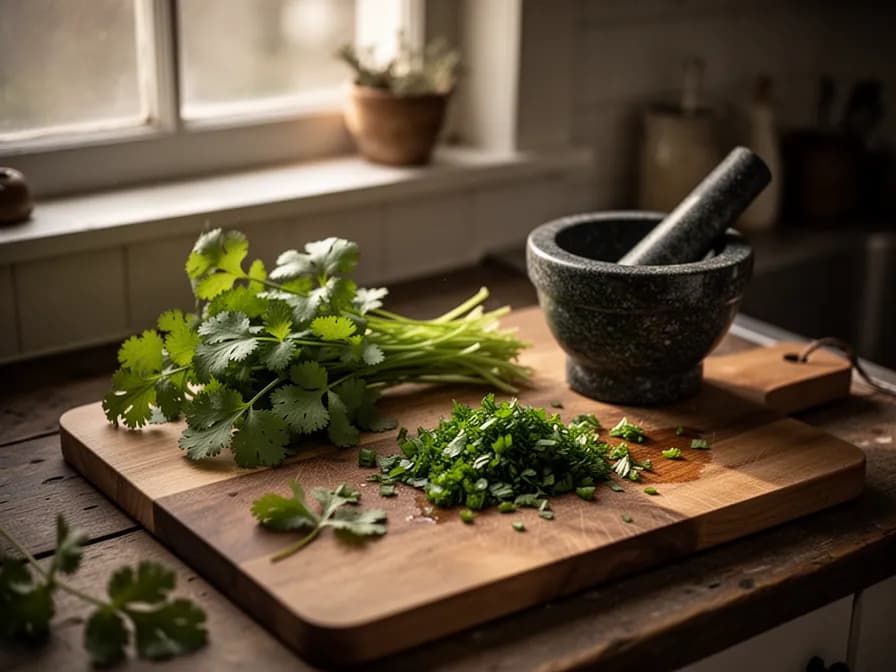
Classic Cilantro Lime Rice
5 minutes plus rice cooking timeFluffy white rice tossed with fresh cilantro and bright lime juice, perfect as a side dish for tacos, burritos, or grilled proteins. This recipe replicates the popular restaurant-style cilantro rice at home.
Fresh Cilantro Chimichurri
10 minutesA vibrant Argentinian-inspired herb sauce made with cilantro instead of the traditional parsley. Drizzle over grilled steak, roasted vegetables, or crusty bread for an explosion of herbaceous, garlicky flavor.
Cilantro Jalapeño Salsa Verde
15 minutesA bright and spicy green salsa bursting with fresh cilantro flavor. Ideal for dipping tortilla chips, spooning over tacos, or drizzling on grilled chicken. Adjust the jalapeño quantity to control the heat level.
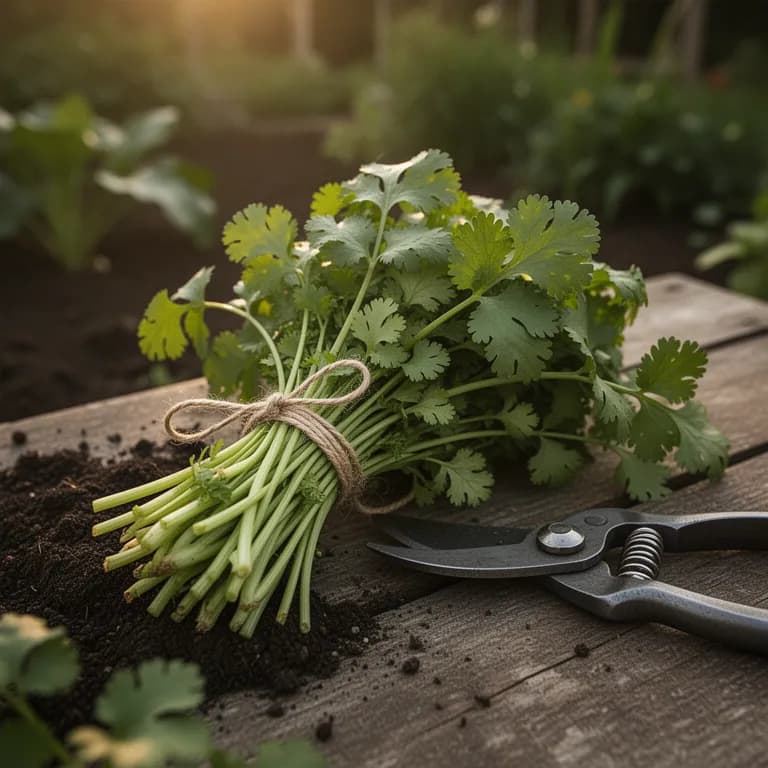
Harvest cilantro by cutting outer stems first, allowing the center to continue producing new growth.
Yield & Spacing Calculator
See how many Cilantro plants fit in your garden bed based on the recommended 15cm spacing.
64
Cilantro plants in a 4×4 ft bed
8 columns × 8 rows at 15cm spacing
Popular Varieties
Some of the most popular cilantro varieties for home gardeners, each with unique characteristics.
Calypso
One of the slowest-bolting cilantro varieties, producing abundant leaves for an extended harvest period. Ideal for warm-climate gardeners who struggle with premature bolting.
Santo
A slow-bolt variety with large, flavorful leaves. Excellent bolt resistance and vigorous upright growth make it a reliable producer in fluctuating temperatures.
Leisure
Developed specifically for leaf production with delayed bolting. Dark green leaves with classic cilantro flavor, compact bushy growth habit.
Delfino
A unique variety with finely cut, feathery foliage resembling dill. Attractive in containers and herb gardens with a mild, sweet cilantro flavor.
Cruiser
An extremely bolt-resistant variety bred for commercial production. Vigorous plants with dense foliage and strong classic cilantro flavor.
Cilantro leaves are essential in Mexican salsas, guacamole, and tacos. They are equally vital in Thai curries, Vietnamese pho, and Indian chutneys. The roots are prized in Thai cooking for curry pastes. Coriander seeds, with their warm citrus-nutmeg flavor, are used ground in spice blends, curries, and baking. Add fresh cilantro as a finishing garnish just before serving, as heat destroys its delicate flavor. Cilantro pairs perfectly with lime, chili, garlic, and avocado.
When should I plant Cilantro?
Plant Cilantro in March, April, September, October. It takes approximately 45 days to reach maturity, with harvest typically in May, June, October, November.
What are good companion plants for Cilantro?
Cilantro grows well alongside Spinach, Peas, Lettuce, Tomato. Companion planting can improve growth, flavor, and natural pest control.
What hardiness zones can Cilantro grow in?
Cilantro thrives in USDA hardiness zones 3 through 11. With greenhouse protection, it may be grown in zones 1 through 12.
How much sun does Cilantro need?
Cilantro requires Partial Sun (3-6h). This means 3-6 hours of sunlight, ideally morning sun with afternoon shade.
How far apart should I space Cilantro?
Space Cilantro plants 15cm (6 inches) apart for optimal growth and air circulation.
What pests and diseases affect Cilantro?
Common issues include Bacterial Leaf Spot, Powdery Mildew, Aphids, Whiteflies. Prevention through good garden practices like crop rotation, proper spacing, and companion planting is the best approach. See the detailed pests and diseases section above for symptoms, prevention, and treatment for each.
How do I store Cilantro after harvest?
Fresh cilantro is best used immediately but can be stored for 1-2 weeks with stems in a jar of water in the refrigerator, loosely covered with a plastic bag. Change the water every few days. Cilantro does not dry well, as it loses most of its flavor. For best preservation, blend fresh leaves with a ...
What are the best Cilantro varieties to grow?
Popular varieties include Calypso, Santo, Leisure, Delfino, Cruiser. Each has unique characteristics suited to different growing conditions and culinary preferences. See the varieties section above for detailed descriptions.
What soil does Cilantro need?
Cilantro grows best in rich, well-drained soil with a pH of 6.2-6.8. Work in 2-3 inches of compost before planting to provide a nutrient-rich growing medium. Cilantro is a moderate feeder and benefits from a balanced liquid fertilizer applied every 3-4 weeks during active leaf growth. Avoid excessiv...
Why does my cilantro keep bolting so quickly?
Cilantro bolts rapidly in response to heat, long daylight hours, and root stress. To slow bolting, grow during cool seasons (spring and fall), choose slow-bolt varieties like Calypso or Santo, provide afternoon shade when temperatures exceed 75 degrees Fahrenheit, keep the soil consistently moist, and avoid transplanting. Succession sow every 2 to 3 weeks so you always have young plants in the productive leaf stage.
Can I grow cilantro indoors year-round?
Yes, cilantro can be grown indoors with at least 6 hours of bright light from a south-facing window or a full-spectrum grow light. Use a deep pot of at least 8 inches to accommodate its taproot, and keep indoor temperatures around 60 to 68 degrees Fahrenheit for best results. Indoor cilantro tends to be leggier than outdoor plants, so harvest frequently to encourage compact growth and sow new seeds every 3 to 4 weeks.
Is cilantro the same as coriander?
Cilantro and coriander come from the same plant, Coriandrum sativum. In North American usage, cilantro refers to the fresh leaves and stems, while coriander refers to the dried seeds. In many other countries, the term coriander is used for both the leaves and seeds. The two have very different flavor profiles: cilantro leaves taste bright and citrusy, while coriander seeds have a warm, nutty, slightly sweet flavor.
Why does cilantro taste like soap to some people?
The soapy taste perception is linked to variations in the olfactory receptor gene OR6A2, which makes certain individuals highly sensitive to aldehyde compounds naturally present in cilantro leaves. Studies suggest that 4 to 14 percent of people of various ethnic backgrounds experience this. Crushing or bruising the leaves can break down some of these aldehydes, and some people find they can develop a tolerance over time through repeated exposure.
How do I harvest and use coriander seeds from my cilantro plants?
Allow cilantro plants to flower and develop seed heads. When the seeds turn from green to tan or light brown, cut the entire seed head and place it upside down in a paper bag. Let it dry for 1 to 2 weeks in a warm, well-ventilated area. The seeds will fall off naturally as they dry. Store whole seeds in an airtight container for up to 2 years. Toast seeds lightly in a dry pan before grinding to enhance their warm, citrusy flavor.
What are the best companion plants to grow alongside cilantro?
Cilantro pairs well with tomatoes, peppers, spinach, and legumes. Its flowers attract beneficial insects such as hoverflies, lacewings, and parasitic wasps that prey on aphids and other garden pests. Avoid planting cilantro near fennel, as the two can cross-pollinate and affect flavor. Cilantro also makes a good companion for brassicas like broccoli and cabbage, helping to repel certain pest insects with its strong aroma.
Ready to Grow Cilantro?
Add Cilantro to your garden plan and start designing your perfect layout.

Vladimir Kusnezow
Gardener and Software Developer
Zone 6b gardener. Growing vegetables and fruits in soil and hydroponics for 6 years. I built PlotMyGarden to plan my own gardens.
Jump to Section