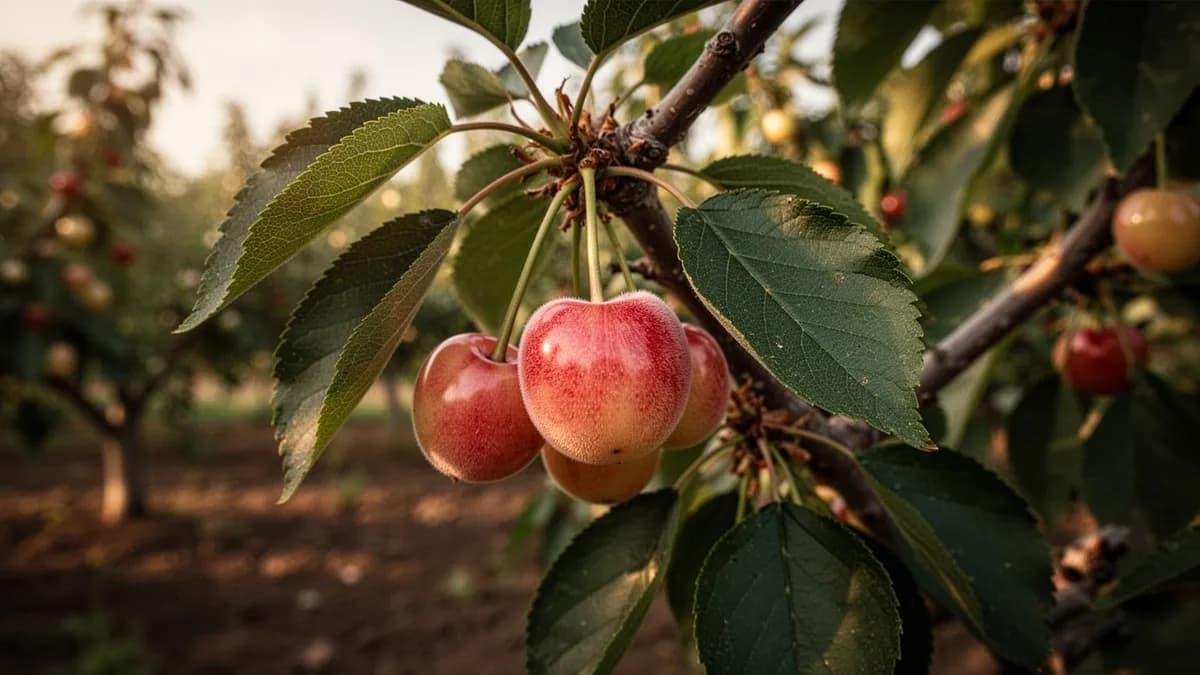
Sour Cherry
Prunus cerasus
At a Glance
A self-fertile cherry species producing tart fruits perfect for pies, preserves, and cooking. Sour cherries are smaller and hardier trees than sweet cherries, and their self-fertility means you only need one tree. The Montmorency variety is the industry standard for pies, while Morello types have darker juice and richer flavor.
Planting & Harvest Calendar
Growth Stages
From Seed to Harvest
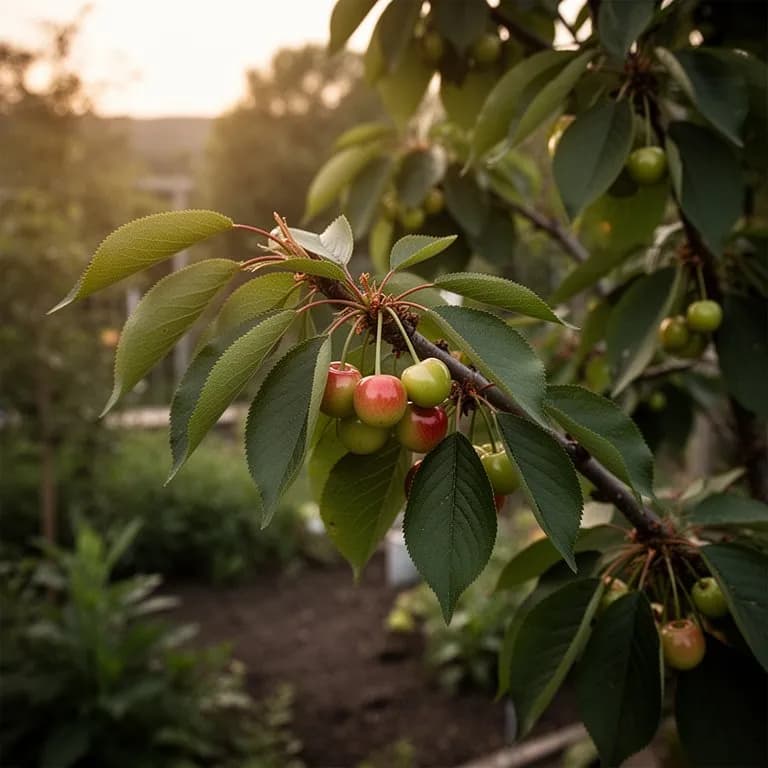
Winter Dormancy and Chill Accumulation
Days 0–60
Sour cherry trees enter full dormancy after leaf fall, with all above-ground growth suspended and root activity reduced to a slow maintenance level. During this period the tree accumulates the chill hours it requires — typically 700–1,100 hours below 7 °C, though requirements vary by variety — before it can break dormancy and flower successfully. Sour cherries are hardier than sweet cherries during dormancy, tolerating temperatures down to -25 °C without injury when fully cold-hardened. The wood and bark are visually quiet but the tree is undergoing important biochemical changes in preparation for spring.
💡 Care Tip
Apply a dormant oil spray on a dry, frost-free day above 4 °C to suffocate overwintering scale insects and mite eggs on the bark and in branch crevices. Inspect the bark for telltale amber gum exuding from cankers — the sign of bacterial canker (Pseudomonas syringae) — and prune out affected wood with clean cuts back to healthy tissue. Mulch the root zone generously with compost or bark chips to buffer the roots against hard freezes.
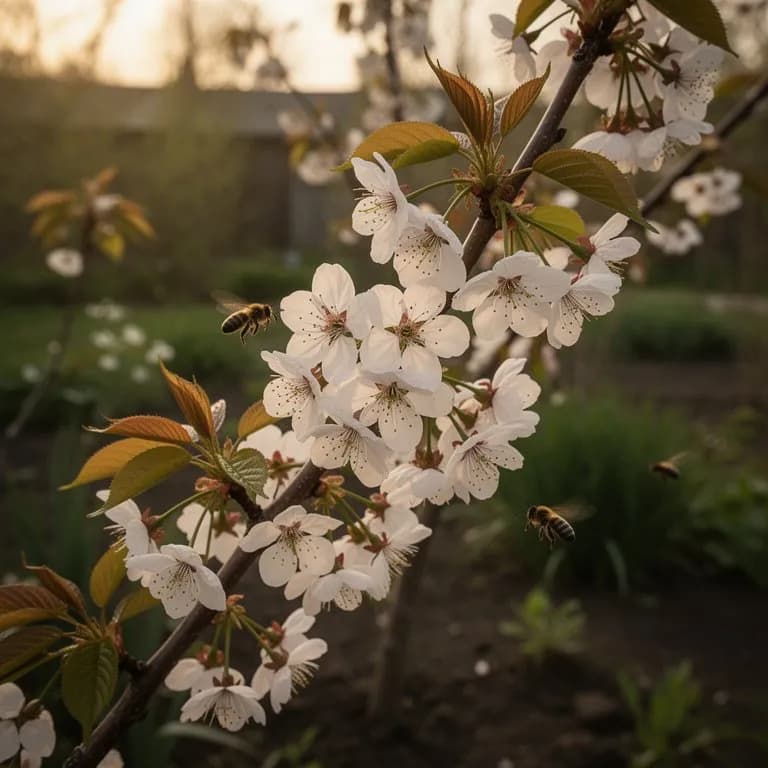
Sour cherry trees flower reliably each spring and are self-fertile — a single tree is all you need for a full crop
Monthly Care Calendar
What to do each month for your Sour Cherry
June
You are hereNo specific care tasks for this month.
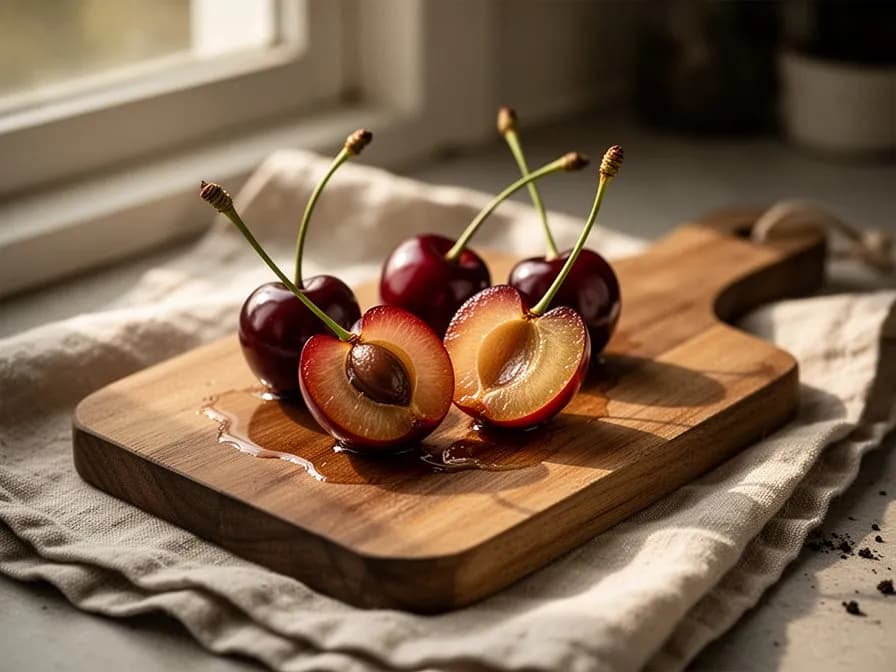
Birds will strip a sour cherry tree completely within hours of fruit colouring — fine mesh netting over the entire canopy is essential from the moment colour develops
Did You Know?
Fascinating facts about Sour Cherry
The Morello sour cherry has been cultivated in Europe for over 500 years and is mentioned in English garden records as far back as the 1500s. Its near-black, intensely flavoured fruit gave rise to the word "amarelle" (from the Latin amarus, meaning bitter) used to describe the pale-juiced acid cherry group.
Sour cherries are ideal for home gardeners, combining self-fertility, cold hardiness to zone 3, and compact size. Plant bare-root trees in late winter, spacing 12 to 15 feet apart. Trees reach 12 to 18 feet tall. Full sun is ideal but sour cherries tolerate partial shade better than most fruit trees.
Self-fertile, a single tree produces a full crop. Blooms later than sweet cherries, providing some frost protection. Train to an open center form and prune lightly after harvest in summer.
Fertilize lightly in spring. Water consistently during fruit development. Fruit ripens uniformly over one to two weeks in late June to July. Bird netting is recommended. Trees bear heavily beginning three to four years after planting.
Sour cherries tolerate part-shade and can be fan-trained on a north-facing wall — a practical solution for difficult spots where few other fruit trees will crop well
The sour cherry (Prunus cerasus) is distinct from its sweet-cherry relative (Prunus avium) in both its genetic origin and its cultural history. Current botanical and genomic evidence indicates that sour cherry is most likely a natural hybrid between sweet cherry (Prunus avium) and ground cherry (Prunus fruticosa), a small, cold-hardy species native to steppe environments stretching from central Europe into central Asia. This hybridisation event appears to have occurred multiple times and in multiple locations, explaining why sour cherry populations show considerable genetic diversity across their range. The earliest reliable archaeological evidence of sour cherry use comes from Bronze Age and Iron Age sites across the Black Sea region, Anatolia, and the Caucasus — the same broad zone in which sweet cherry was being domesticated.
Greek and Roman writers distinguished between sweet and sour cherry types, and both Dioscorides and Pliny the Elder recorded the medicinal uses of the more acidic forms, noting their value in alleviating fevers and digestive complaints. Roman cultivation of sour cherries spread with the empire into southern and central Europe, where the fruit found a particularly receptive home in the cooler, continental climates of the Danube basin, the Rhine valley, and the Carpathian region — areas where sweet cherries struggle to perform reliably but sour cherries thrive.
The medieval period was transformative for sour cherry cultivation. Monasteries across Central Europe — particularly in what is now Hungary, Poland, the Czech Republic, and Germany — maintained extensive cherry orchards and were the primary selectors and preservers of superior varieties. The cherries were used for medicinal preparations, for flavouring wine and spirits, and for preserving in honey and vinegar. The Hungarian Pándy variety and the German Schattenmorelle (known in Britain as Morello) both have roots traceable to monastic selection during this era.
Sour cherries arrived in Britain during the 16th century and rapidly became a fixture of the walled kitchen garden, prized for the practical reason that Morello could be trained against a north-facing wall and still fruit reliably — filling a niche no other fruit tree could occupy. English gardeners used the fruit for cherry brandy, conserves, and the now largely forgotten cherry wine.
French colonists brought sour cherry varieties to the Great Lakes region of North America in the 17th century, and the Montmorency variety — named for the valley near Paris where it was selected — became the dominant processing cherry in the USA. The sandy soils and moderating lake-effect climate of Michigan proved ideal, and the state now produces the vast majority of US commercial sour cherries. Today the global commercial production of tart cherries is dominated by Turkey, Russia, Ukraine, Poland, and the United States, with the fruit used primarily for juice concentrate, dried cherries, jam, and pharmaceutical anthocyanin extracts — a reflection of sour cherry's long-standing identity as a functional food rather than a fresh-eating crop.
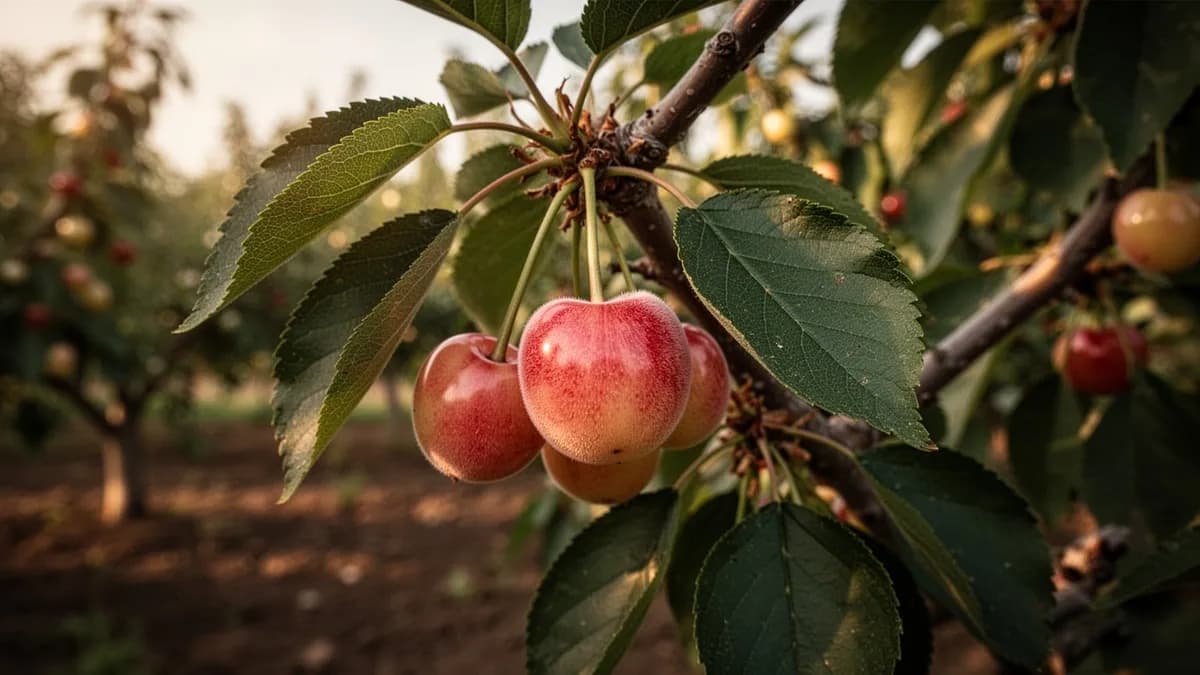
Ripe sour cherries ready for harvest in midsummer — their vibrant acidity makes them the premier choice for cooking, preserving, and health-focused use
Sour cherry pits require 120 to 150 days of cold stratification. Seedlings produce variable but often acceptable fruit. For named varieties, purchase grafted trees on Mahaleb or Mazzard rootstock. North Star is a genetic dwarf on any rootstock. Grafted trees bear in three to four years.
Sour cherries prefer well-drained loam with a pH of 6.0 to 7.0. More tolerant of heavier soils than sweet cherries. Apply balanced fertilizer lightly in spring. Not heavy feeders. Maintain organic mulch around the drip line.
Check Your Zone
See if Sour Cherry is suitable for your location.
-25°C – 32°C
-13°F – 90°F
Sour cherry trees are among the hardiest of all stone fruit, tolerating winter temperatures down to -25 °C when fully dormant and properly cold-hardened — significantly harder than sweet cherries. They require 700–1,100 chill hours below 7 °C during dormancy depending on variety, making them well suited to cold-temperate and continental climates. Optimal growing season temperatures for leaf and fruit development are 15–24 °C. Blossom is vulnerable to temperatures below -2 °C during the open flower period, and late spring frosts remain the most significant cause of crop failure. Sour cherries perform well in USDA Hardiness Zones 4–6 and are more tolerant of cool, wet summers than sweet cherries, though warm dry conditions during ripening still improve fruit quality and reduce disease pressure.
Common issues affecting Sour Cherry and how to prevent and treat them organically.
Cherry leaf spot is the most significant disease, causing progressive defoliation if untreated. Fruit is too tart for most to eat fresh. Short harvest window requires quick processing. Trees may develop root suckers on certain rootstocks.
Self-fertile, no pollinator needed. Underplant with garlic and chives to deter borers. White clover fixes nitrogen. Tansy and marigolds repel insects. Compact size allows interplanting with berry bushes. Avoid walnut trees.
- 1Embrace the sour cherry's versatility in difficult positions. Unlike virtually all other fruit trees, sour cherry — and Morello in particular — crops reliably against a north- or east-facing wall or fence, in the dappled shade of a larger tree, or in a partially shaded garden. This makes it one of the most practical fruiting plants for urban and suburban gardens where full-sun space is limited.
- 2Choose a self-fertile variety and enjoy the simplicity of needing just one tree. All common sour cherry varieties — Morello, Montmorency, Kelleris, Ujfehertoi Fürtös — are fully self-fertile. You will get a full crop from a single isolated tree with no second variety needed, unlike most sweet cherry cultivars. This alone makes sour cherry far more practical for small gardens and containers.
- 3Prune in late summer, not winter. Like sweet cherries, sour cherry trees should be pruned in July or August immediately after harvest, while weather is warm and wounds heal quickly. The major fungal diseases of cherries — silver leaf (Chondrostereum purpureum) and bacterial canker (Pseudomonas syringae) — enter predominantly through cold, wet pruning wounds. Sour cherries are somewhat more tolerant than sweet, but the habit of summer pruning dramatically reduces your disease risk over the life of the tree.
- 4Net the tree completely before fruit starts to colour. Sour cherries are no less attractive to birds than sweet varieties, and a tree can be stripped entirely within a single day of fruit starting to redden. Use fine-mesh netting (15–20 mm) over the entire canopy, secured at the base to prevent birds getting underneath. On fan-trained wall trees this is straightforward; for free-standing trees, a simple frame of canes or PVC poles supports the netting clear of the fruit.
- 5Train young trees as fans against a wall or fence to maximise productivity in small spaces and simplify netting and harvesting. Fan training takes 3–4 years to establish but produces a productive, manageable structure well suited to urban gardens. The wall provides radiant warmth that can advance ripening by 7–10 days, and the confined canopy is far easier to net, spray, and harvest from than a free-standing tree.
- 6Maintain consistent, even soil moisture through the fruit development and ripening period. The primary cause of sour cherry fruit splitting is the rapid uptake of water into the fruit skin following heavy rain or erratic irrigation after a dry period. Drip irrigation or soaker hoses at the root zone deliver water steadily without fluctuation. If relying on rainfall alone, a thick mulch of compost or bark chips around the root zone buffers moisture levels and slows drying out between rain events.
- 7Process or freeze harvested fruit immediately. Sour cherries are far more perishable than sweet varieties once picked — the thin skin and high acidity makes them deteriorate quickly at room temperature, and they begin to ferment within 24–48 hours if left unharvested. Pick into shallow containers to avoid crushing, refrigerate at once, and plan to process into jam, juice, or frozen fruit within 48–72 hours of harvest for best results.
- 8Consider growing Morello specifically for shaded positions and Montmorency for sunnier spots. Morello carries the darkest skin colour, the most intense flavour, and the best tolerance of shade and cooler conditions of all common sour cherries. Montmorency produces brighter red, slightly less acidic fruit that ripens earlier and performs best in more open, sunny positions. If you have space for both, planting one of each gives you a two-week staggered harvest and a broader flavour range for processing.
- 9Avoid excessive nitrogen fertilisation. Sour cherry trees require modest feeding — an excess of nitrogen encourages vigorous, sappy growth that is more susceptible to aphid attack, brown rot, and frost damage, and may delay the tree entering dormancy properly before cold weather arrives. An annual application of balanced fertiliser in late winter, plus a potassium-rich top-dressing after harvest, is generally sufficient for an established tree in reasonable soil.
- 10Apply a copper-based fungicide spray immediately after leaf fall in autumn to reduce overwintering populations of fungal spores on the wood. Bacterial canker and cherry leaf spot both overwinter on the bark and in fallen debris, and a post-harvest copper spray is one of the most cost-effective disease management steps in the sour cherry calendar. Combine this with thorough clearance of fallen leaves and fruit to minimise the pathogen load entering the following season.
Sour cherries ripen over one to two weeks in late June to July. Harvest when fully red and slightly soft. Can be shaken from the tree onto tarps since gentle bruising does not matter for cooking. Process quickly as sour cherries are highly perishable.
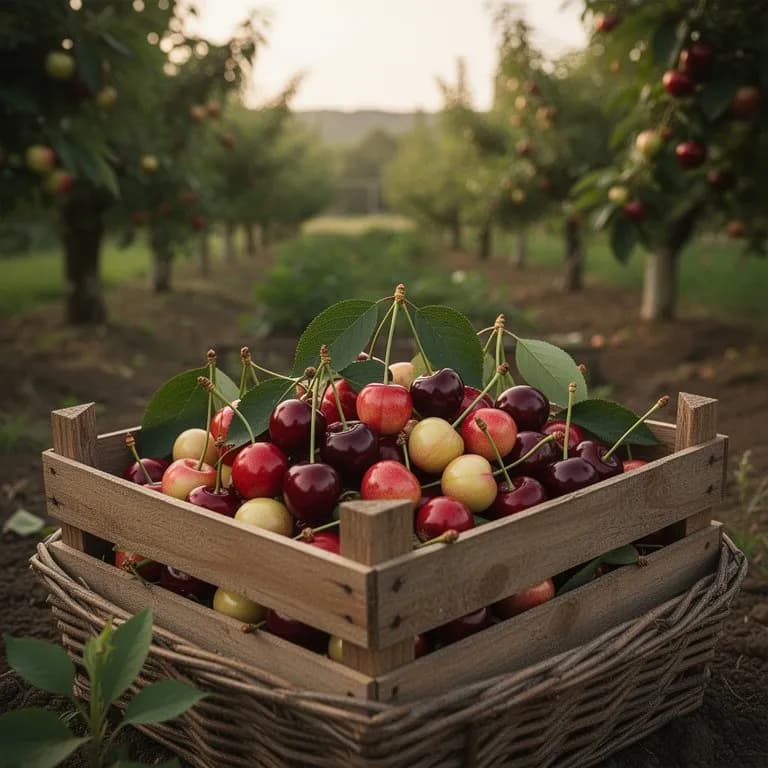
A single mature sour cherry tree can yield 10–20 kg of fruit per season — enough for dozens of jars of jam, litres of cherry juice, and months of frozen stock
Fresh sour cherries keep only one to two days. Process immediately. Freeze pitted cherries for year-round pie making. They make the finest cherry pies and preserves. Can in syrup for pie filling. Dried sour cherries have concentrated tart-sweet flavor. Cherry bounce and kirsch liqueur are traditional preserved beverages.
Plan your garden with ease
Love growing Sour Cherry? Use our free garden planner to design your beds, track planting dates, and get personalized care reminders.
Nutritional Info
Per 100g serving
50
Calories
Health Benefits
- Exceptionally rich in anthocyanins — particularly cyanidin-3-glucosylrutinoside and cyanidin-3-rutinoside — at concentrations two to three times higher than sweet cherries, making sour cherries one of the most potent dietary sources of these anti-inflammatory antioxidants
- Unusually high in Vitamin A for a small fruit at 1,283 IU per 100 g, derived primarily from beta-carotene and other carotenoids that support immune function, skin health, and eye health
- One of the richest natural food sources of melatonin — the hormone governing the sleep-wake cycle — with clinical trials showing that regular tart cherry juice consumption can increase sleep duration by up to 84 minutes per night in adults with insomnia
- Contains substantial levels of quercetin and kaempferol — flavonoid anti-inflammatories with documented activity in reducing serum uric acid levels, providing a well-evidenced dietary intervention for gout management
- Provides chlorogenic acid and other hydroxycinnamic acids at meaningful levels, contributing to the antioxidant and blood-sugar-moderating effects observed in epidemiological studies of regular cherry consumers
- Relatively low in calories at approximately 50 kcal per 100 g with a low glycaemic index, and the intense flavour of sour cherry concentrates means that therapeutic quantities can be obtained from small servings of juice concentrate or dried fruit
💰 Why Grow Your Own?
Fresh sour cherries are rarely sold in conventional supermarkets in most countries — when found, they command premium prices of £6–£10 per kilogram at specialist greengrocers or farmers' markets, and quality is almost always compromised by underripeness or storage time. A single mature sour cherry tree costing £20–£50 to purchase will yield 10–20 kg of fruit per season at full production, representing a market value of £60–£200 per harvest at retail specialist prices. Commercially produced tart cherry juice concentrate — the most widely purchased form — retails for £15–£30 per litre. From a 15 kg harvest processed into juice concentrate, a home grower can produce 2–4 litres of concentrate worth £30–£120 at retail. Over the 20–30 productive years of a well-tended sour cherry tree, cumulative savings in both fresh fruit and health supplement equivalents can comfortably exceed £2,000–£4,000, and home-grown fruit processed at peak ripeness retains substantially higher anthocyanin levels than commercially processed equivalents.
Quick Recipes
Simple recipes using fresh Sour Cherry
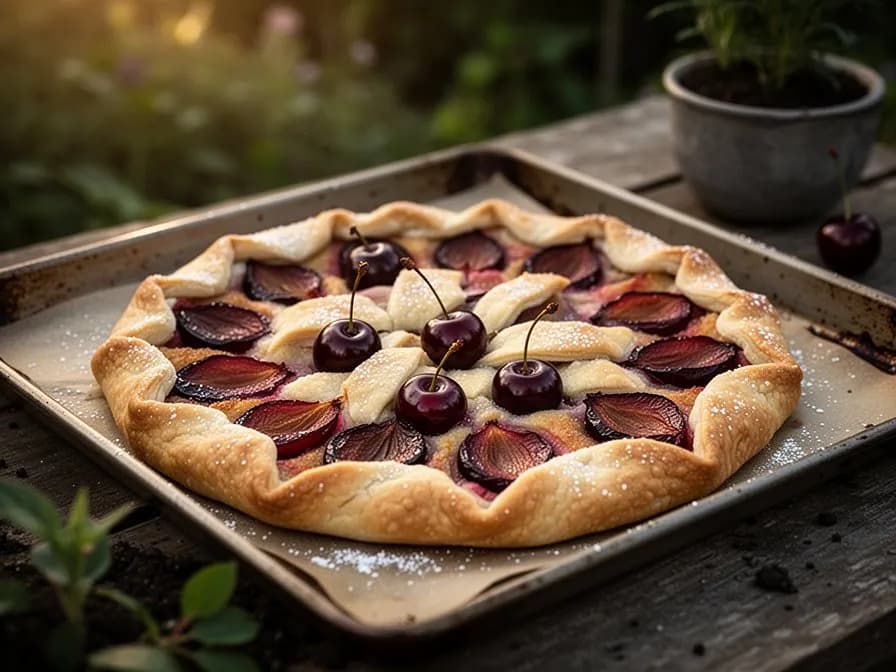
Classic Sour Cherry Jam
20 minutes prep + 25 minutes cookingA deeply flavoured, jewel-red jam that is one of the most rewarding uses for a home-grown sour cherry harvest. The natural acidity and modest pectin content of sour cherries produces a clean-setting jam with an intense, winey cherry flavour that no commercial product can match. Excellent on toast, stirred into yoghurt, spooned over cheesecake, or served alongside cold meats. This recipe produces approximately 5–6 standard jars from a medium tree harvest.
Tart Cherry Anti-Inflammatory Juice Concentrate
15 minutes prep + 30 minutes cookingA concentrated sour cherry juice designed for daily health use — two tablespoons diluted in water each morning and evening delivers a clinically relevant dose of the anthocyanins and melatonin precursors that have been extensively studied for inflammation, gout, and sleep quality. Stores in the fridge for 2 weeks or frozen for up to 6 months. Richly flavoured with almost no added sugar — the tartness is intentional and characteristic.
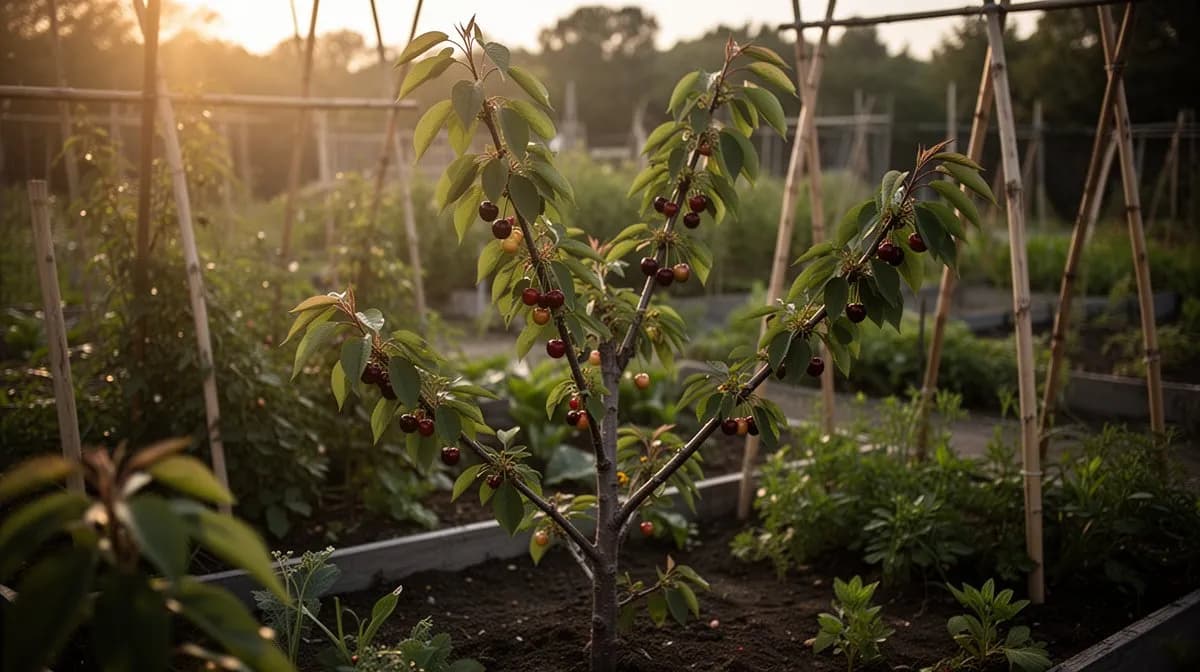
Sour Cherry and Dark Chocolate Brownies
20 minutes prep + 28 minutes bakingThe combination of tart, jammy cherries and intense dark chocolate is among the most complementary flavour pairings in baking. Whole pitted sour cherries pressed into a rich brownie batter before baking create pockets of fruit that burst with acidity against the dense, fudgy chocolate base. Use fresh cherries in summer or frozen and thawed out of season. Dust with icing sugar or serve warm with a generous spoonful of crème fraîche.
Sour cherry jam made from home-grown fruit is richer in flavour and colour than any commercial equivalent — the high natural pectin content gives a perfect set
Yield & Spacing Calculator
See how many Sour Cherry plants fit in your garden bed based on the recommended 300cm spacing.
0
Sour Cherry plants in a 4×4 ft bed
0 columns × 0 rows at 300cm spacing
Popular Varieties
Some of the most popular sour cherry varieties for home gardeners, each with unique characteristics.
Montmorency
Industry standard sour cherry with bright red skin and yellow flesh. The classic pie cherry. Self-fertile and widely adapted.
North Star
Genetic dwarf reaching only 8 to 10 feet. Perfect for small gardens. Self-fertile with heavy production.
Morello
Dark-fleshed sour cherry with very dark juice and rich flavor. Used for preserves, liqueur, and black forest cake.
Balaton
Hungarian Morello type with dark red flesh, slightly sweeter. Excellent disease resistance.
Morello is the most widely grown sour cherry variety — its near-black fruit is exceptionally rich in anthocyanins and perfect for jams, kirsch, and juicing
Sour cherries produce the quintessential American cherry pie. They make outstanding preserves, compotes, and sauces for pork and duck. Dried sour cherries add tart punch to salads, granola, and chocolate. Cherry juice is valued for anti-inflammatory properties. Essential for black forest cake and kirsch liqueur.
When should I plant Sour Cherry?
Plant Sour Cherry in March, April. It takes approximately 730 days to reach maturity, with harvest typically in June, July.
What are good companion plants for Sour Cherry?
Sour Cherry grows well alongside Garlic, Chives. Companion planting can improve growth, flavor, and natural pest control.
What hardiness zones can Sour Cherry grow in?
Sour Cherry thrives in USDA hardiness zones 3 through 8. With greenhouse protection, it may be grown in zones 1 through 9.
How much sun does Sour Cherry need?
Sour Cherry requires Full Sun (6-8h+). This means at least 6-8 hours of direct sunlight daily.
How far apart should I space Sour Cherry?
Space Sour Cherry plants 300cm (118 inches) apart for optimal growth and air circulation.
What pests and diseases affect Sour Cherry?
Common issues include Cherry Leaf Spot, Brown Rot, Black Cherry Aphid. Prevention through good garden practices like crop rotation, proper spacing, and companion planting is the best approach. See the detailed pests and diseases section above for symptoms, prevention, and treatment for each.
How do I store Sour Cherry after harvest?
Fresh sour cherries keep only one to two days. Process immediately. Freeze pitted cherries for year-round pie making. They make the finest cherry pies and preserves. Can in syrup for pie filling. Dried sour cherries have concentrated tart-sweet flavor. Cherry bounce and kirsch liqueur are traditiona...
What are the best Sour Cherry varieties to grow?
Popular varieties include Montmorency, North Star, Morello, Balaton. Each has unique characteristics suited to different growing conditions and culinary preferences. See the varieties section above for detailed descriptions.
What soil does Sour Cherry need?
Sour cherries prefer well-drained loam with a pH of 6.0 to 7.0. More tolerant of heavier soils than sweet cherries. Apply balanced fertilizer lightly in spring. Not heavy feeders. Maintain organic mulch around the drip line.
Do sour cherry trees need a pollination partner, or can I grow just one?
Sour cherry trees are almost entirely self-fertile — a single tree will set a full, productive crop from its own pollen without any second variety present. This is one of the most significant practical advantages of sour cherries over sweet cherries, the majority of which require cross-pollination from a compatible second variety. All of the commonly grown sour cherry varieties — including Morello, Montmorency, Kelleris, Ujfehertoi Fürtös, and Nabella — are reliably self-fertile. Bee activity still improves fruit set quantity and quality compared to wind-only pollination, so situating the tree where bees can access the blossom freely during flowering remains worthwhile. But the need for a second tree is genuinely absent, making sour cherry the ideal choice for gardeners with room for only one fruit tree.
Can I grow a sour cherry tree in a shaded or north-facing part of my garden?
Yes — and this is one of sour cherry's most important distinguishing qualities among fruit trees. The Morello sour cherry in particular will produce a full, reliable crop when fan-trained against a north-facing wall, in the light shade of a building or fence, or in gardens that receive only 3–4 hours of direct sun per day. This tolerance of shade reflects the species' partial ancestry in Prunus fruticosa, a ground cherry of open woodland and steppe habitats. Full sun produces the largest fruit with the deepest colour and highest sugar content, but sour cherries are uniquely forgiving when sun hours are limited. Sweet cherries require at least 6–8 hours of direct sun for reliable cropping and perform poorly in shade. If you have a difficult north-facing wall or a semi-shaded corner, Morello sour cherry is almost certainly the most productive fruiting plant you can grow there.
What is the best way to use sour cherries from the garden — can they be eaten fresh?
Sour cherries can be eaten fresh straight from the tree — they are not inedible raw, simply intensely tart. Most people find the acidity too strong for regular fresh eating in any quantity, though some people enjoy them fresh with sugar. The primary uses for home-grown sour cherries are: jam and preserves (the most popular — sour cherries make superb jam with a rich, complex flavour); fresh or frozen for baking in pies, crumbles, cakes, and tarts; juice and juice concentrate for drinking and health purposes; dried cherries for snacking and cooking; and fruit spirits and liqueurs such as kirsch, cherry brandy, and amaretto-style infusions. The freezer is your most important tool for managing a glut harvest — pit and freeze cherries in a single layer on trays, then bag for storage up to 12 months, giving you access to garden-grown sour cherries throughout the year for baking and juicing.
How do I know when sour cherries are ready to harvest?
The visual cue of full colour development is the primary harvest indicator — Montmorency should be fully bright red with a slight translucency; Morello should be deeply crimson to near-black with a glossy, taut skin. Unlike sweet cherries, ripeness is not gauged by sweetness — even perfectly ripe sour cherries are intensely tart and that tartness is desirable for processing purposes. The fruit should give slightly under gentle pressure and detach from the stem with minimal resistance. Taste test a few: the flavour of a ripe sour cherry has a full, complex, winey cherry character underneath the acidity rather than the thin, harsh taste of unripe fruit. Harvest time for Montmorency is typically late June to mid-July; Morello ripens 1–2 weeks later in mid to late July. Pick promptly once fully ripe — over-ripe fruit drops, ferments, and attracts wasps and brown rot.
My sour cherry tree has amber gum weeping from branches and bark — what is wrong?
Amber or reddish-brown gummy exudate weeping from branch bark, pruning cuts, or the trunk base is the classic symptom of bacterial canker (Pseudomonas syringae), one of the most common and serious diseases of cherry trees. It can also indicate physical damage or mechanical injury. Bacterial canker typically causes sunken, darkened lesions in the bark around the gum, and in severe cases causes entire branches to die back rapidly, particularly in spring. Action is required promptly: prune back affected branches to clean, healthy white wood at least 15 cm below any darkened staining visible in the cross-section. Sterilise your cutting tools between cuts with a 70% alcohol solution. Apply a copper-based wound sealant or grafting wax to large pruning wounds. Carry out this work in dry, warm conditions — late summer is ideal — and dispose of all cut material off-site. Avoid winter pruning, which greatly increases infection risk. Trees with severe systemic infection may not recover and may need to be removed to prevent spread to other stone fruit.
How do sour cherries differ from sweet cherries for growing at home, and which should I choose?
Sour cherries (Prunus cerasus) and sweet cherries (Prunus avium) differ in several important ways that affect which is the better choice for home growing. Sour cherries are self-fertile (one tree is sufficient); sweet cherries usually need a second compatible variety. Sour cherries tolerate partial shade; sweet cherries need full sun. Sour cherry trees are naturally smaller and more manageable; sweet cherries grow very large unless on specialised dwarfing rootstock. Sour cherries are considerably hardier and more reliable in cold, wet climates (zones 4–6); sweet cherries perform best in warm, dry summers (zones 5–7). Sour cherry fruit is too tart for most palates to eat fresh in quantity but is outstanding for cooking, jam, juice, and health use; sweet cherry fruit is ideally eaten fresh and at its best picked straight from the tree. For most home gardeners in cool or moderate climates with limited space, sour cherries are the more practical and productive choice. If you have warm summers, full sun, space for two trees, and want fruit to eat fresh, sweet cherries reward the extra effort involved.
Ready to Grow Sour Cherry?
Add Sour Cherry to your garden plan and start designing your perfect layout.

Vladimir Kusnezow
Gardener and Software Developer
Zone 6b gardener. Growing vegetables and fruits in soil and hydroponics for 6 years. I built PlotMyGarden to plan my own gardens.
Jump to Section