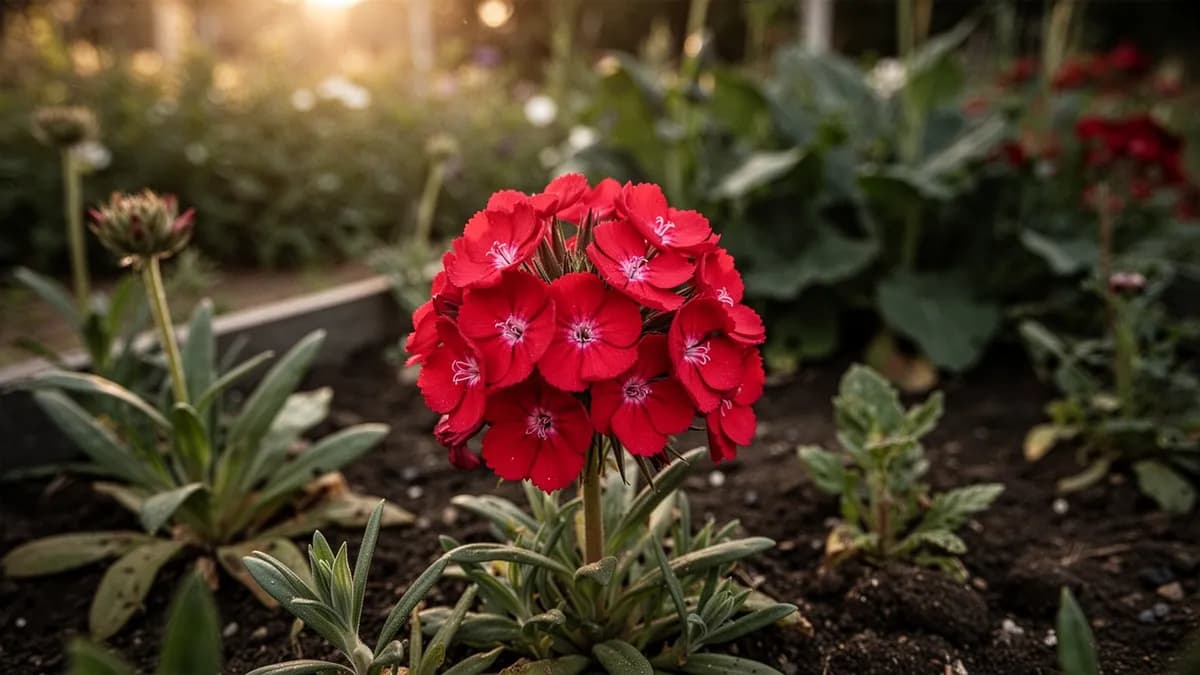
Red Valerian
Centranthus ruber
At a Glance
It's planting season for Red Valerian! Start planning your garden now.
A tough, drought-tolerant perennial producing dense clusters of small rosy-red, pink, or white flowers over a very long season. Red valerian self-sows freely and thrives in alkaline, rocky, and poor soils where it often colonizes old walls and stony banks. Cut back hard after the first flush to encourage a strong repeat bloom.
Planting & Harvest Calendar
Growth Stages
From Seed to Harvest
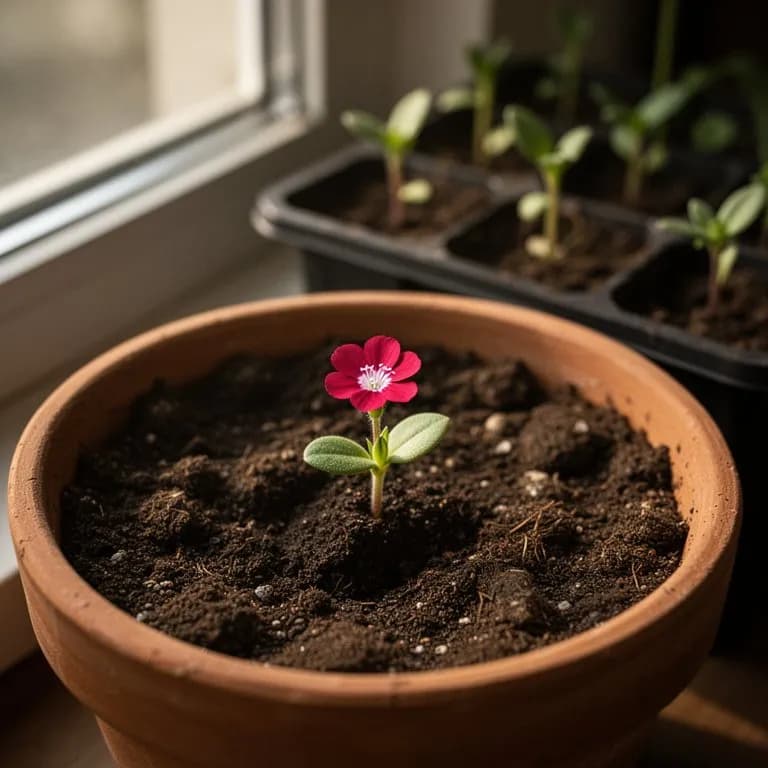
Seed Germination
Days 0–21
Seeds are surface-sown or lightly covered. Germination is irregular and can take two to three weeks at temperatures around 15 to 20 degrees Celsius. Seeds require light to germinate so they should not be buried deeply.
💡 Care Tip
Keep the seed tray moist but not waterlogged. Use a fine mist sprayer to avoid displacing the tiny seeds from the surface of the growing medium.
Monthly Care Calendar
What to do each month for your Red Valerian
May
You are hereMonitor new plantings for adequate establishment. Water sparingly only during prolonged dry spells as centranthus is drought tolerant once established. Watch for early aphid activity on soft new growth.
Did You Know?
Fascinating facts about Red Valerian
Centranthus ruber has been used as a salad green in Mediterranean countries for centuries. The young leaves have a mild, slightly bitter flavour and were historically eaten in Italy and France before modern salad greens became widely cultivated.
Red valerian is a vigorous, drought-tolerant perennial that thrives in poor, alkaline, rocky soil—it famously colonizes old stone walls, cliff faces, and railway embankments across southern Europe. Plant in spring, spacing 18 inches apart in full sun with well-drained soil.
Red valerian is undemanding once established. It flourishes in lean, dry conditions and actually performs poorly in rich, moist soil. The dense clusters of tiny flowers appear from late spring through autumn if deadheaded regularly. Cut the entire plant back by half after the first flush fades for a vigorous second round of blooms.
Be aware that red valerian self-sows prolifically—remove spent flower heads before seeds mature if you want to control its spread. In some regions, it can become mildly invasive, particularly in coastal and Mediterranean climates.
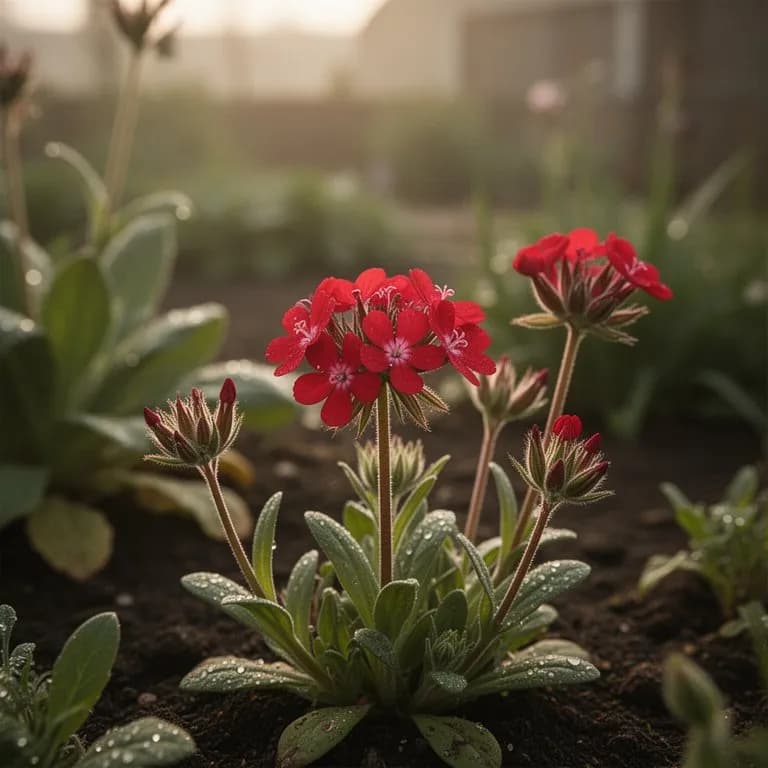
The dense cymes of tiny tubular flowers attract a wide range of pollinators
Centranthus ruber, commonly known as red valerian or Jupiter's beard, is native to the Mediterranean basin, where it grows wild across southern Europe, Turkey, and parts of North Africa. It is found in rocky limestone habitats, cliff faces, old walls, and dry stony banks from sea level up to around 1500 metres elevation. The plant has been cultivated in European gardens since at least the late 1500s, when it was introduced to Britain and northern Europe as an ornamental. The English herbalist John Gerard mentioned it in his Herball of 1597, noting its vigorous self-seeding habit. By the 1700s it had naturalised extensively across the British Isles and was a familiar sight on old walls, ruins, and railway cuttings. In the Mediterranean, the young leaves and tender shoots have been consumed as a potherb and salad ingredient for centuries. In parts of southern France and Italy, centranthus leaves were traditionally gathered in spring and eaten raw or lightly cooked. The roots were sometimes used in folk medicine as a mild sedative, though the plant lacks the valepotriates found in true valerian and its medicinal use was never widely adopted. Centranthus ruber has since been introduced to temperate regions worldwide including North America, Australia, and New Zealand, where it has naturalised in coastal and urban environments. Its tolerance of poor alkaline soils, drought, and neglect has made it a valuable plant for low-maintenance landscaping, xeriscaping, and wildlife gardens. Modern gardeners prize it for its exceptionally long flowering season, its attractiveness to butterflies and other pollinators, and its ability to soften hard landscape features like walls, steps, and gravel paths with its relaxed and naturalistic growth habit.
Sow seeds on the surface of gritty compost in spring. Germination takes 14-21 days at 60-65°F (15-18°C). Plant out in well-drained soil. Red valerian self-sows so freely that deliberate seed starting is rarely necessary once a mother plant is established.
Centranthus seedlings establish quickly in well-drained soil
Red valerian thrives in poor, well-drained, alkaline soil with a pH of 7.0-8.5. It performs best in lean, rocky conditions and actually declines in rich, amended garden soil. No fertilizer is needed—ever. Add lime to acidic soils. The plant is supremely adapted to dry, chalky, and stony situations.
Check Your Zone
See if Red Valerian is suitable for your location.
-12°C – 35°C
10°F – 95°F
Centranthus ruber is hardy to USDA zones 5 through 9 and tolerates a wide temperature range. It performs best between 15 and 28 degrees Celsius during the growing season. The woody rootstock can survive winter temperatures down to minus 12 Celsius in well-drained soil, though prolonged wet cold is more damaging than dry cold. In hot climates above 35 Celsius the plant may go semi-dormant and reduce flowering until cooler conditions return.
Common issues affecting Red Valerian and how to prevent and treat them organically.
Self-sowing is the main management issue—red valerian can spread aggressively via seed in favorable conditions. Remove spent flowers before seeds mature to control spreading. Plants in rich, moist soil become leggy and floppy, losing the compact habit seen on wild plants growing in stone walls and poor ground.
Red valerian is classic in Mediterranean-style gardens alongside lavender, rosemary, and cistus. It looks natural growing from cracks in walls and between paving stones. Pair with other drought-tolerant plants like achillea, sea holly, and ornamental grasses. The long flowering season provides nectar for butterflies and moths.
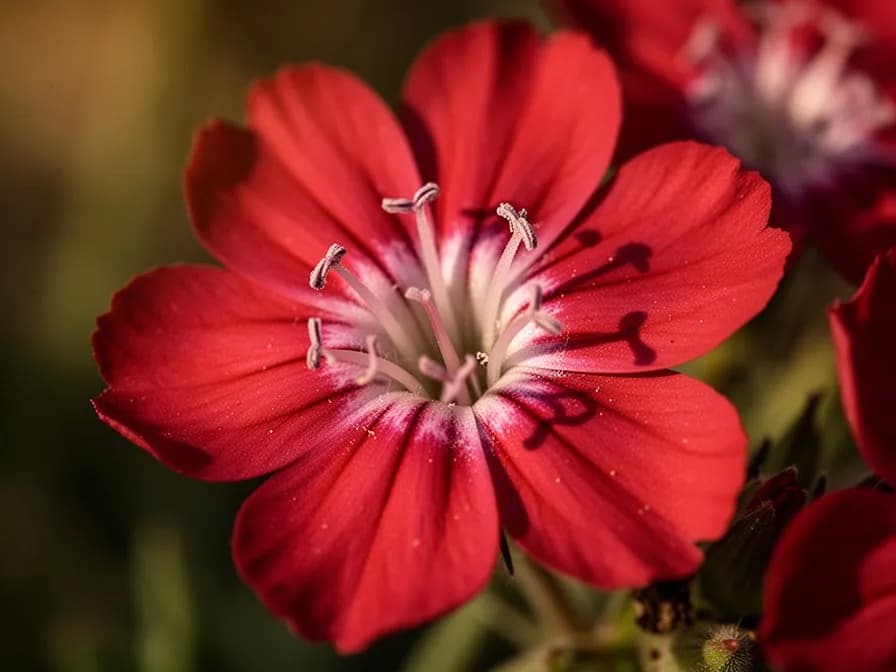
Centranthus is one of the top nectar plants for butterflies in temperate gardens
- 1Choose the poorest, most well-drained spot in your garden for centranthus. Rich fertile soil and heavy clay produce lush foliage but fewer flowers and a plant more prone to flopping over.
- 2Add crushed limestone or builders rubble to acidic soils before planting. Centranthus strongly prefers alkaline to neutral pH and performs poorly in acidic conditions below pH 6.0.
- 3Water newly planted centranthus regularly for the first six weeks to help the taproot establish, then stop watering entirely except during extreme prolonged drought lasting more than four weeks.
- 4Deadhead spent flower clusters by cutting stems back to the first set of leaves below the faded blooms. This encourages rapid regrowth and a fresh flush of flowers within three to four weeks.
- 5Prevent unwanted self-seeding by removing flower heads before the feathery seed pappus develops. Once the seeds become airborne they can colonise walls, paths, and neighbouring gardens.
- 6Propagate named colour forms by division or basal cuttings rather than seed, as seed-grown plants show considerable variation in flower colour from deep crimson to pale pink and white.
- 7Cut the entire plant back hard to 15 cm above ground level in midsummer if it becomes leggy or untidy. It will regenerate rapidly and produce a compact mound of fresh growth and flowers by early autumn.
- 8Plant centranthus at the base of south-facing or west-facing walls where reflected heat and excellent drainage create ideal Mediterranean-like microclimates for vigorous flowering.
- 9Combine centranthus with other drought-tolerant plants like lavender, rosemary, nepeta, and erigeron for a low-maintenance border that thrives on neglect and attracts abundant pollinators.
- 10Divide established clumps every three to four years in early spring by lifting the rootstock and cutting it into sections with a sharp knife. Replant divisions immediately at the same depth in prepared free-draining soil.
Cut flower clusters for informal arrangements when most florets are open. Red valerian makes charming additions to cottage-style bouquets alongside wildflowers and herbs. Flowers last 5-7 days in the vase. Regular cutting encourages continued bloom production.
Each seed develops a feathery pappus similar to dandelion for wind dispersal
Red valerian is fully hardy and needs no special storage. Cut plants back hard in late autumn or leave standing for winter interest. Self-sown seedlings provide natural replacement. Seed can be saved by allowing some flower heads to dry on the plant.
Plan your garden with ease
Love growing Red Valerian? Use our free garden planner to design your beds, track planting dates, and get personalized care reminders.
Nutritional Info
Per 100g serving
22
Calories
Health Benefits
- Low calorie edible green suitable for fresh salads and lightly cooked dishes
- Good source of vitamin C which supports immune function and iron absorption
- Contains vitamin A precursors including beta-carotene for eye and skin health
- Provides dietary potassium which helps regulate blood pressure and fluid balance
- Offers moderate dietary fibre supporting healthy digestion and gut motility
- Contains small amounts of calcium and iron typical of leafy Mediterranean greens
💰 Why Grow Your Own?
Centranthus ruber is one of the most cost-effective ornamental edibles you can grow. A single packet of seeds costing two to three dollars can produce dozens of plants that self-seed freely year after year. Once established, the plant requires virtually no watering, no fertiliser, and no pest control, making ongoing costs essentially zero. It thrives in poor soil and neglected corners where other plants struggle, transforming bare walls and gravel areas into productive and beautiful garden features at no additional expense.
Quick Recipes
Simple recipes using fresh Red Valerian
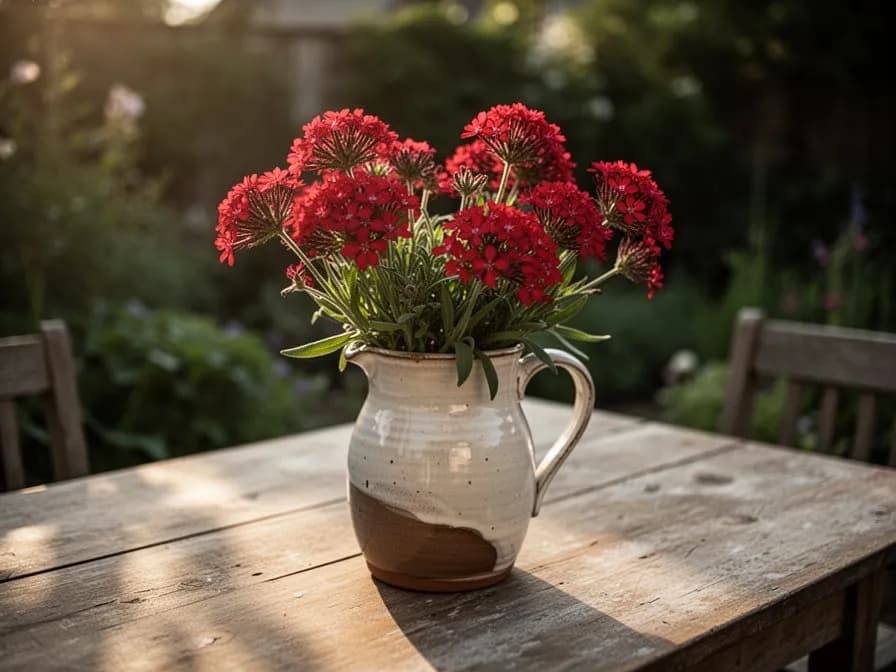
Mediterranean Red Valerian Salad
10 minutesA fresh spring salad featuring tender young centranthus leaves tossed with cherry tomatoes, shaved Parmesan, toasted pine nuts, and a simple lemon and olive oil dressing. The mild bitterness of the leaves complements the sweet tomatoes and nutty cheese.
Sauteed Centranthus Greens with Garlic
15 minutesYoung centranthus leaves and tender shoot tips are quickly sauteed with garlic and a pinch of chilli flakes in olive oil, then finished with a squeeze of lemon. This traditional Mediterranean preparation makes an excellent side dish or bruschetta topping.
Red Valerian Flower Infusion
5 minutes plus 10 minutes steepingA calming herbal tisane made from fresh or dried centranthus flowers steeped in hot water. The infusion has a delicate floral aroma with a faintly honeyed taste and is traditionally enjoyed in the evening as a mild relaxant.
Yield & Spacing Calculator
See how many Red Valerian plants fit in your garden bed based on the recommended 45cm spacing.
4
Red Valerian plants in a 4×4 ft bed
2 columns × 2 rows at 45cm spacing
Popular Varieties
Some of the most popular red valerian varieties for home gardeners, each with unique characteristics.
Centranthus ruber 'Coccineus'
Deep rosy-red flowers, the most intensely colored form and the most commonly grown.
Centranthus ruber 'Albus'
Pure white flowers that brighten shady walls and contrast beautifully with the red form.
Centranthus ruber 'Rosenrot'
Deep rose-pink flowers, intermediate between the red and white forms.
The alba variety produces pure white flowers and pairs beautifully with the red form
When should I plant Red Valerian?
Plant Red Valerian in March, April, May. It takes approximately 365 days to reach maturity, with harvest typically in May, June, July, August, September.
What are good companion plants for Red Valerian?
Red Valerian grows well alongside Yarrow, Perennial Salvia, Russian Sage. Companion planting can improve growth, flavor, and natural pest control.
What hardiness zones can Red Valerian grow in?
Red Valerian thrives in USDA hardiness zones 5 through 9. With greenhouse protection, it may be grown in zones 3 through 10.
How much sun does Red Valerian need?
Red Valerian requires Full Sun (6-8h+). This means at least 6-8 hours of direct sunlight daily.
How far apart should I space Red Valerian?
Space Red Valerian plants 45cm (18 inches) apart for optimal growth and air circulation.
What pests and diseases affect Red Valerian?
Common issues include Aphids, Root Rot. Prevention through good garden practices like crop rotation, proper spacing, and companion planting is the best approach. See the detailed pests and diseases section above for symptoms, prevention, and treatment for each.
How do I store Red Valerian after harvest?
Red valerian is fully hardy and needs no special storage. Cut plants back hard in late autumn or leave standing for winter interest. Self-sown seedlings provide natural replacement. Seed can be saved by allowing some flower heads to dry on the plant.
What are the best Red Valerian varieties to grow?
Popular varieties include Centranthus ruber 'Coccineus', Centranthus ruber 'Albus', Centranthus ruber 'Rosenrot'. Each has unique characteristics suited to different growing conditions and culinary preferences. See the varieties section above for detailed descriptions.
What soil does Red Valerian need?
Red valerian thrives in poor, well-drained, alkaline soil with a pH of 7.0-8.5. It performs best in lean, rocky conditions and actually declines in rich, amended garden soil. No fertilizer is needed—ever. Add lime to acidic soils. The plant is supremely adapted to dry, chalky, and stony situations.
Is Centranthus ruber the same as true valerian used in herbal supplements?
No, they are different plants. True valerian is Valeriana officinalis, which contains valepotriates and other active compounds used in sleep and anxiety supplements. Centranthus ruber belongs to a separate genus in the same family and lacks these specific medicinal compounds. Despite sharing the common name valerian, they should not be used interchangeably for medicinal purposes.
How do I stop centranthus from spreading too aggressively in my garden?
The key is consistent deadheading before seeds develop their feathery pappus. Cut spent flower clusters back to the nearest leaf node immediately after blooming finishes. If volunteer seedlings appear, remove them when small as the taproot becomes increasingly difficult to extract once established. Avoiding bare soil and gravel near the parent plant also reduces successful germination of any escaped seeds.
Can centranthus grow in shade or does it require full sun?
Centranthus performs best in full sun with at least six hours of direct sunlight daily. It can tolerate light partial shade, particularly afternoon shade in very hot climates, but flowering will be significantly reduced. In heavy shade the plant becomes leggy, produces very few flowers, and is more susceptible to powdery mildew due to poor air circulation around the foliage.
Are all parts of the centranthus plant edible and safe to eat?
The young leaves, tender shoot tips, and flowers are all edible and have been consumed as food in Mediterranean countries for centuries. The roots have been used in folk medicine but are not commonly eaten as food. Always harvest from plants that have not been treated with pesticides or herbicides, and as with any foraged or garden-grown edible, introduce it to your diet gradually to check for individual sensitivities.
Why is my centranthus producing lots of leaves but very few flowers?
The most common cause of poor flowering is soil that is too rich in nitrogen. Centranthus evolved in nutrient-poor rocky soils and responds to high fertility by producing excessive leafy growth at the expense of blooms. Stop fertilising, avoid mulching with rich compost, and ensure the plant receives full sun. Insufficient sunlight is the second most common cause of poor flowering in centranthus.
How long does centranthus live and when should I replace established plants?
Centranthus ruber is a short-lived perennial typically lasting three to five years before the woody base becomes unproductive. However, it self-seeds so freely that replacement plants appear naturally. To maintain vigorous stock, divide plants every three to four years or allow self-sown seedlings to establish as replacements. Take cuttings or collect seed from your best-performing plants to ensure continuity of desirable colour forms.
Ready to Grow Red Valerian?
Add Red Valerian to your garden plan and start designing your perfect layout.

Vladimir Kusnezow
Gardener and Software Developer
Zone 6b gardener. Growing vegetables and fruits in soil and hydroponics for 6 years. I built PlotMyGarden to plan my own gardens.
Jump to Section