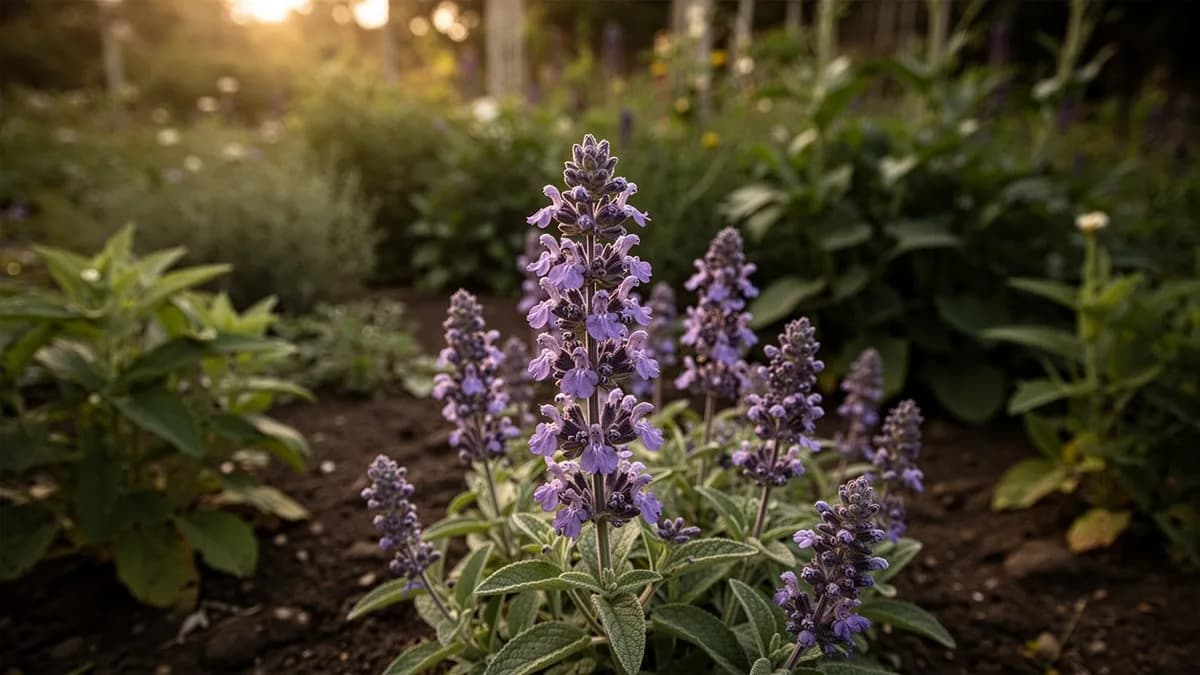
Catmint
Nepeta x faassenii
At a Glance
A long-blooming perennial with aromatic gray-green foliage and spikes of lavender-blue flowers that attract bees and butterflies. Catmint is drought-tolerant, deer-resistant, and requires minimal care beyond shearing back after the first bloom flush. It makes an excellent edging plant alongside roses and pathways.
Planting & Harvest Calendar
Growth Stages
From Seed to Harvest
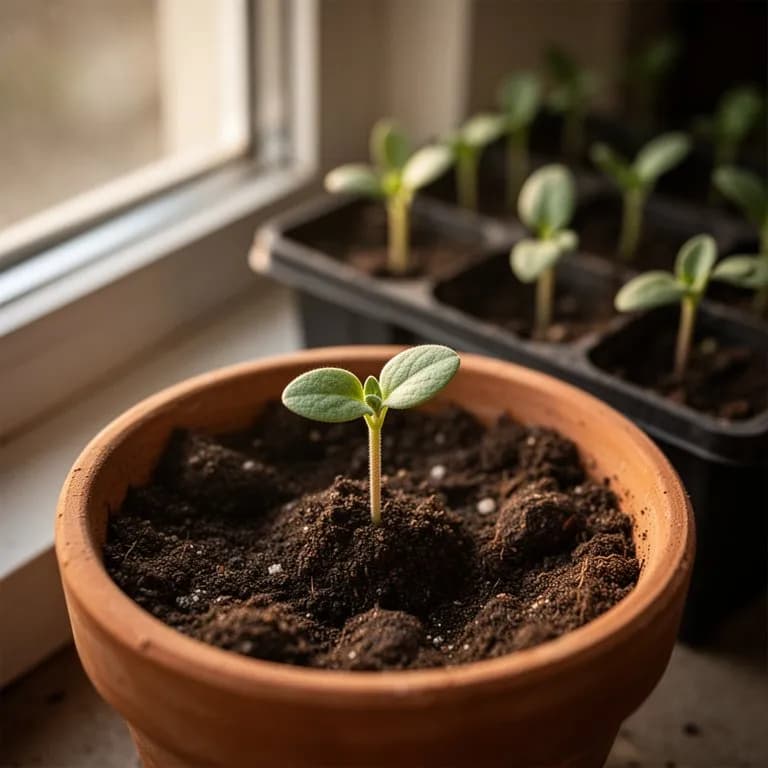
Seed Germination
Days 0–14
Catmint seeds are surface-sown or barely covered with fine soil. Germination occurs within 7 to 14 days when soil temperatures reach 15-21°C (60-70°F). Seeds require light to germinate and should not be buried deeply.
💡 Care Tip
Keep the seed tray evenly moist using a mist sprayer. Cover with a thin layer of vermiculite rather than soil to maintain moisture while allowing light penetration.
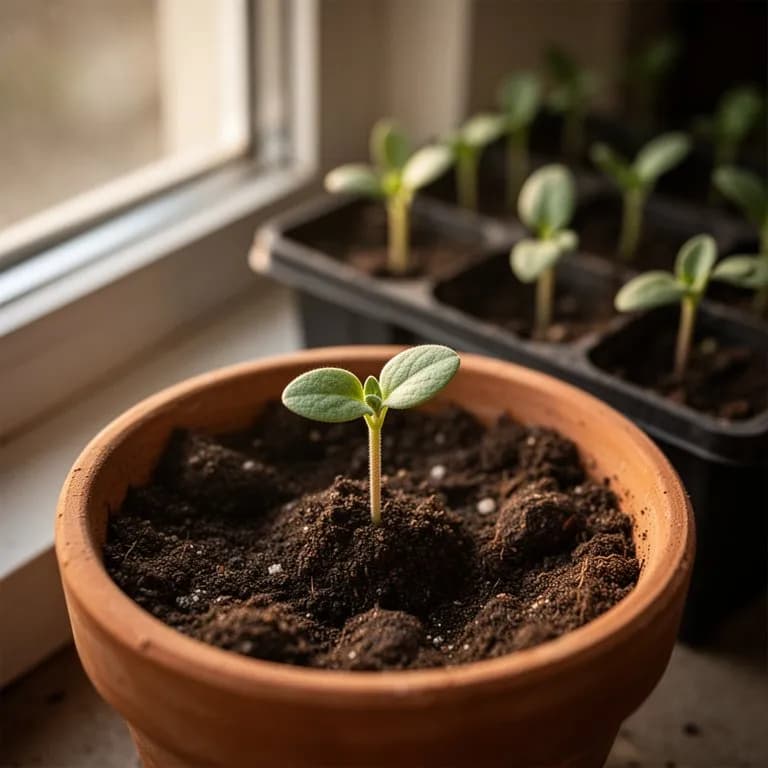
Catmint seedlings develop their characteristic square stems and aromatic gray-green foliage within the first few weeks of growth.
Monthly Care Calendar
What to do each month for your Catmint
May
You are herePinch back growing tips to promote branching and a fuller habit. Monitor for aphids on new growth, though catmint's aromatic oils usually deter most pests naturally. Water regularly until plants are well established.
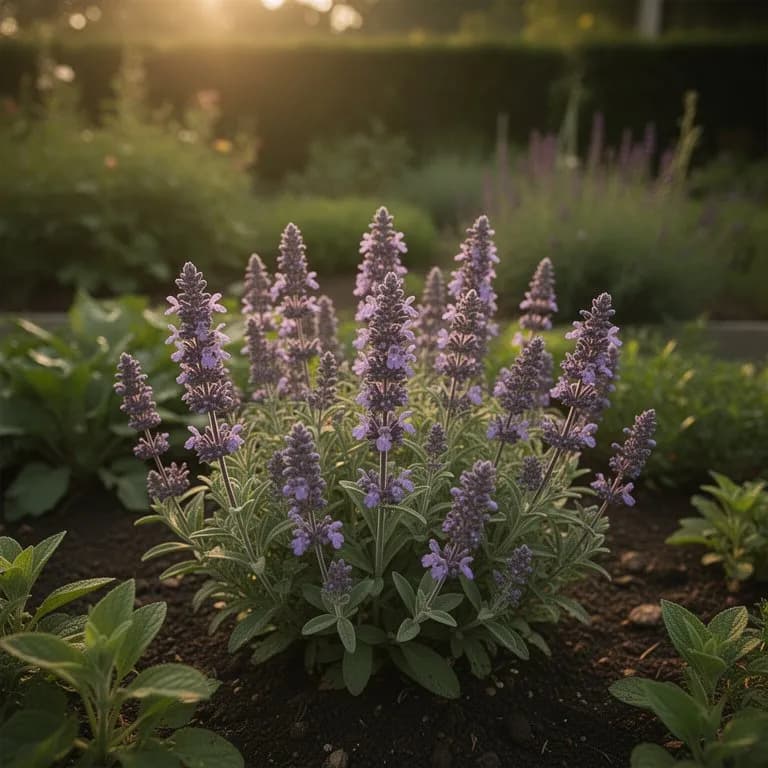
Left standing through winter, dried catmint seed heads add architectural interest and provide food for small birds.
Did You Know?
Fascinating facts about Catmint
Catmint (Nepeta) was named after the ancient Etruscan city of Nepete (now Nepi) in central Italy, where the plant was said to grow abundantly in the surrounding hillsides.
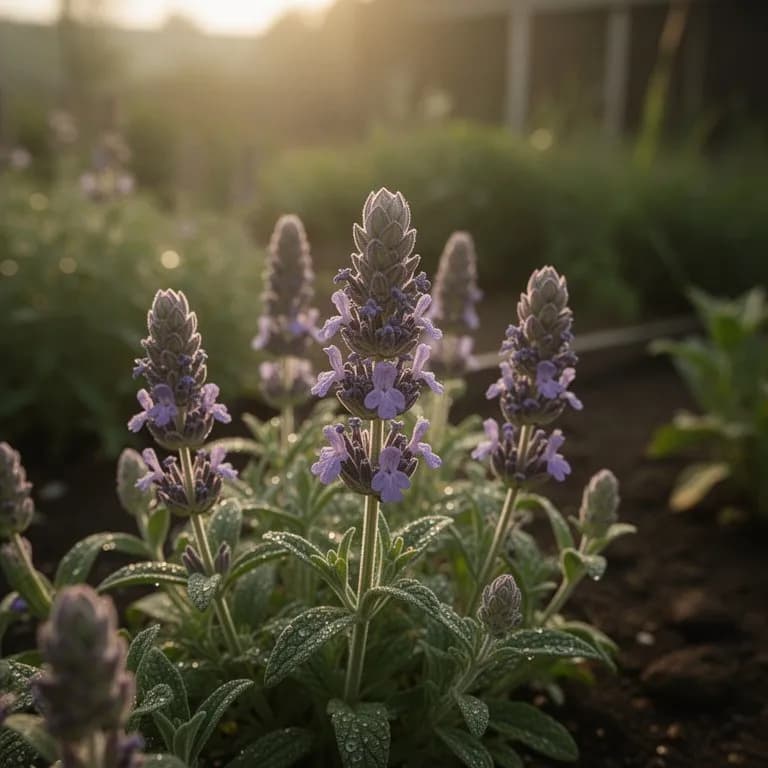
Catmint is a pollinator magnet, attracting bumblebees, honeybees, and butterflies throughout its long blooming season.
Catmint is one of the longest-blooming, most reliable perennials in the garden, producing wave after wave of soft lavender-blue flower spikes from late spring through early autumn. The aromatic silver-grey foliage forms a billowy, rounded mound 30-60cm tall and wide that is deer-proof, rabbit-resistant, and drought-tolerant—making it one of the most trouble-free garden plants available.
Plant in full sun in average to lean, well-drained soil. Like many Mediterranean-origin plants, catmint actually performs better in poor soil than rich—excessive fertility produces lank, floppy growth at the expense of flowers. Space plants 45cm apart for a dense, continuous planting, or use as a specimen at path edges and border fronts. Catmint establishes quickly and begins flowering in its first season.
The secret to continuous bloom is shearing. After the first flush of flowers fades in midsummer, cut the entire plant back by half to two-thirds with hedge shears. Within two weeks, fresh growth emerges and a second—sometimes third—flush of bloom follows, carrying the display well into autumn. This hard shearing also keeps the plant compact and prevents the center from opening up or flopping.
Catmint belongs to the genus Nepeta, a large group within the Lamiaceae (mint) family comprising roughly 250 species distributed primarily across Europe, Asia, and parts of Africa. The genus takes its name from Nepete, an ancient Etruscan city in central Italy where the plant was noted growing in abundance by early Roman naturalists. Wild catmint species have thrived in the dry, rocky landscapes of the Mediterranean basin and the temperate grasslands of Central Asia for millennia, evolving aromatic defenses that both repel herbivorous insects and attract beneficial pollinators.
Catmint entered the cultivated garden tradition during the medieval period, when European monks grew it in their physic gardens alongside other medicinal herbs. It was valued as a remedy for fevers, colds, and nervous conditions, and its dried leaves were commonly brewed into calming tisanes. By the 17th century, herbalists such as Nicholas Culpeper were recommending catmint preparations for a wide range of ailments, and the plant became a staple of cottage herb gardens throughout England and continental Europe.
The modern ornamental catmint owes much of its popularity to deliberate hybridization in the early 20th century. In the 1930s, the Dutch nurseryman J.H. Faassen crossed Nepeta racemosa with Nepeta nepetella to produce Nepeta x faassenii, a vigorous, sterile hybrid prized for its long-blooming lavender-blue flowers and compact, mounding habit. This hybrid gave rise to celebrated cultivars such as Walker's Low, which was named Perennial Plant of the Year in 2007 by the Perennial Plant Association, and Six Hills Giant, a taller selection originating from the Clarence Elliott nursery in England. Today, catmint is recognized worldwide as an indispensable landscape plant, valued for its drought tolerance, pollinator appeal, deer resistance, and season-long ornamental display in borders, mass plantings, and naturalized meadow gardens.
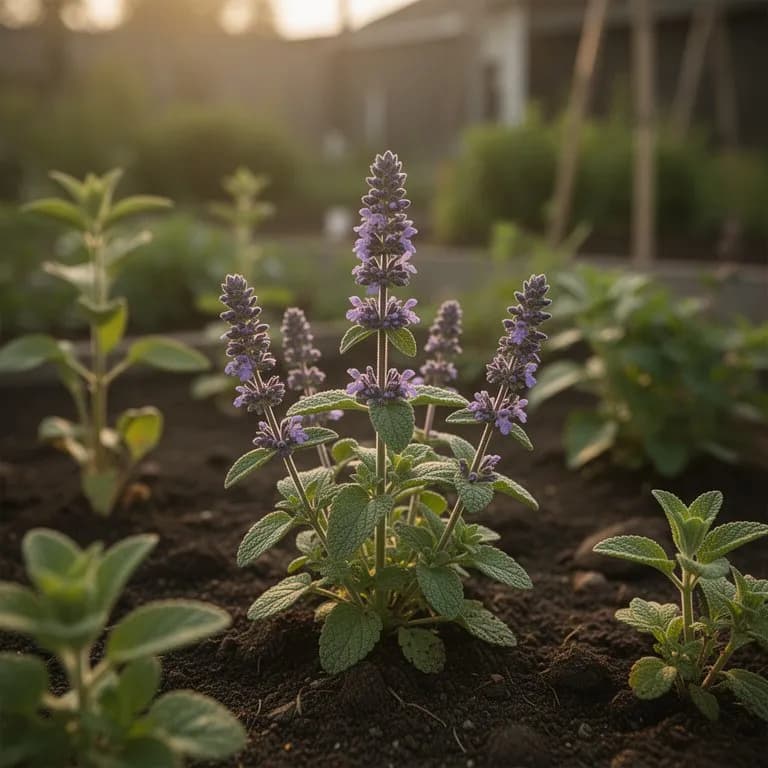
The soft, silvery-green leaves of Nepeta are covered in fine hairs that release a minty, herbal fragrance when brushed.
Catmint can be grown from seed or, more reliably, from division or cuttings. For seed starting, sow indoors 6-8 weeks before the last frost, pressing seeds lightly into the surface of moist compost without covering. Seeds need light for germination, which occurs in 7-14 days at 18-22°C. Named cultivars do not come true from seed and must be propagated vegetatively. Divide established clumps in spring or early autumn, or take softwood cuttings in late spring. Cuttings root easily in 2-3 weeks in a gritty, moist medium.
Catmint performs best in average to lean, well-drained soil with a pH of 6.0-7.5. It thrives in sandy, gravelly, or loamy soils and struggles only in heavy, wet clay. Do not over-enrich the soil—too much nitrogen produces floppy growth with fewer flowers. If planting in clay, add generous amounts of grit or gravel to improve drainage. Little to no fertilizer is needed; a light application of balanced slow-release fertilizer in spring is sufficient for poor soils. Container plants need a well-drained mix and light monthly feeding.
Check Your Zone
See if Catmint is suitable for your location.
-40°C – 35°C
-40°F – 95°F
Catmint is an exceptionally cold-hardy perennial, surviving winter temperatures as low as -40°C in USDA zones 3-9. It thrives during the growing season in moderate temperatures between 15-28°C (60-82°F) and tolerates summer heat up to 35°C well, especially in well-drained soil. Prolonged temperatures above 38°C may cause temporary wilting, though plants recover quickly with evening cooling.
Common issues affecting Catmint and how to prevent and treat them organically.
Flopping is the most common complaint, caused by rich soil, too much water, or insufficient sunlight. Grow lean and in full sun for the most compact growth. The midsummer hard shearing prevents floppy regrowth. Cats may roll in and crush young plants (the Nepeta genus includes catnip); protect new plantings with chicken wire until well established. In very humid climates, powdery mildew may disfigure late-season foliage; shearing keeps it in check. Catmint can self-seed prolifically—deadhead before seeds set if unwanted spreading is a concern.
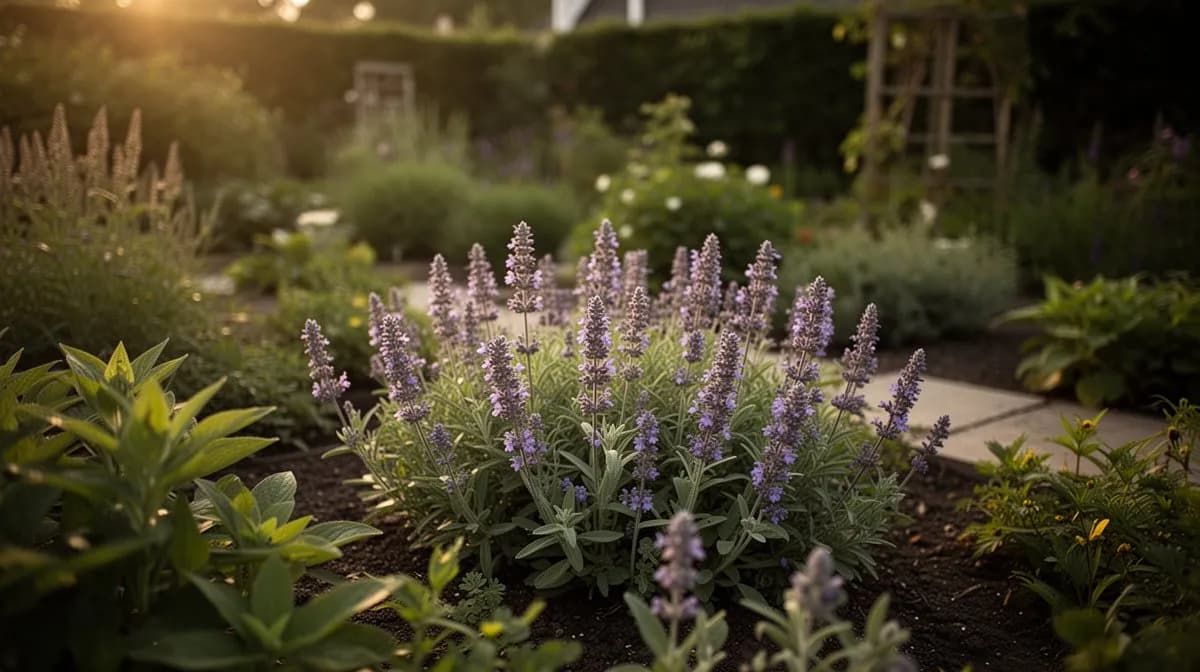
Catmint is the classic companion for roses, spilling at their feet and providing a continuous blue-lavender carpet that complements every rose color. It partners beautifully with lavender, salvia, coneflowers, and ornamental grasses in drought-tolerant borders. Use as edging along paths where brushing against the foliage releases its minty fragrance. The flowers attract abundant bees and beneficial insects that improve pollination across the garden.
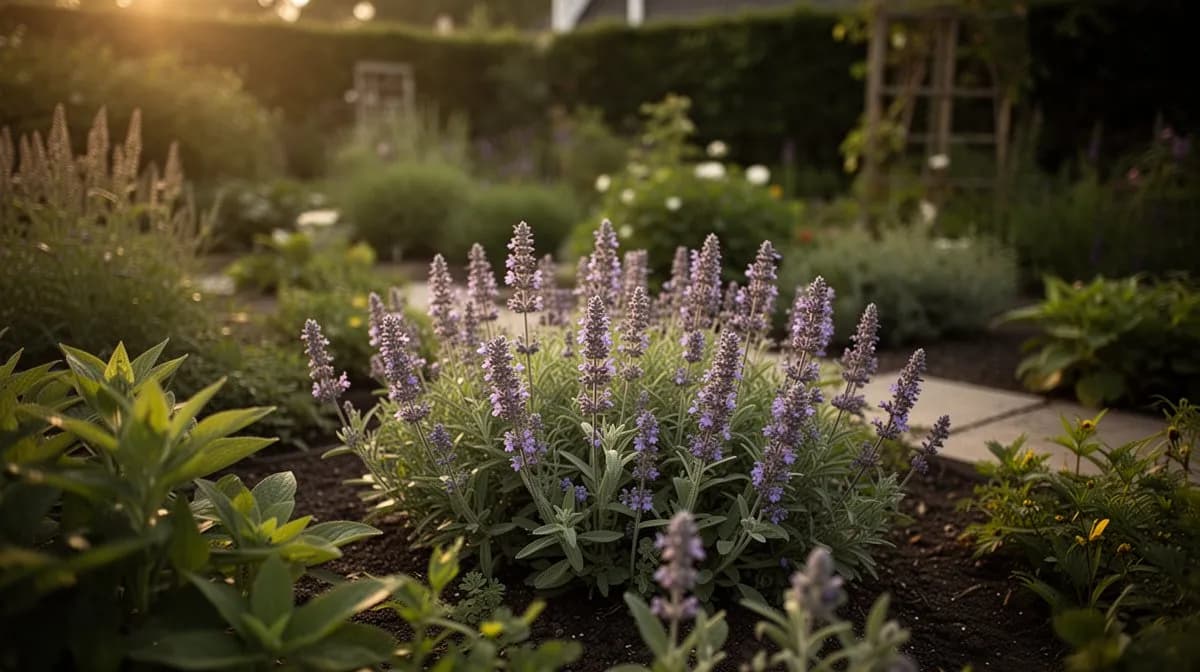
Nepeta makes an outstanding low-maintenance border plant, softening hard edges with its relaxed, mounding habit.
- 1Plant catmint in full sun for the densest flowering, though it tolerates light afternoon shade in hot southern climates without significant reduction in bloom quality.
- 2Ensure well-drained soil is the top priority, as catmint is far more likely to die from waterlogged winter roots than from cold temperatures. Amend heavy clay soils with coarse grit or perlite before planting.
- 3Space plants 45-60 cm apart to allow their natural mounding habit to develop fully and to ensure adequate air circulation that prevents foliar diseases.
- 4Shear the entire plant back by one-third after the first bloom flush fades in midsummer. This single action is the most important maintenance step and will reliably trigger a vigorous second wave of flowers within 2-3 weeks.
- 5Avoid rich, heavily fertilized soil, which causes catmint to produce lush but floppy growth with fewer flowers. Lean, average garden soil produces the most compact and floriferous plants.
- 6Propagate catmint by division in early spring or by taking semi-ripe stem cuttings in late summer. Root cuttings in a gritty, well-drained propagation mix and keep them moist but not waterlogged.
- 7Pair catmint with roses, lavender, salvia, and ornamental grasses for classic cottage garden combinations. The cool lavender-blue tones complement both warm and cool color palettes beautifully.
- 8Water newly planted catmint regularly for the first growing season to establish deep roots. Once established, catmint is remarkably drought-tolerant and typically needs supplemental water only during extended dry spells exceeding 3-4 weeks.
- 9Use catmint as a living mulch or ground cover on dry banks and slopes where its dense root system helps stabilize soil and its spreading habit suppresses weed growth naturally.
- 10Leave dried seed heads standing through winter rather than cutting back in autumn. This provides food for finches and other seed-eating birds and adds structural interest to the dormant garden landscape.
Cut catmint stems for fresh flower arrangements when the flower spikes are about half-open. The soft blue-lavender color combines beautifully with roses, daisies, and other cottage garden flowers. Stems last about 5-7 days in water. For drying, cut stems when flowers are at peak color and hang upside down in a warm, dark room for 1-2 weeks. The dried flowers retain a pleasant fragrance and a muted lavender color that works well in dried arrangements and potpourri.
Dried catmint stems maintain their aromatic fragrance for months and are excellent in potpourri and sachets. Hang-dry bundles for two weeks, then strip dried flowers and store in airtight containers. The dried leaves and flowers can be used to make a mild herbal tea similar to chamomile. For seed saving, allow some flower spikes to remain uncut after the final bloom flush; collect the tiny seeds when the calyces turn brown and dry.
Plan your garden with ease
Love growing Catmint? Use our free garden planner to design your beds, track planting dates, and get personalized care reminders.
Nutritional Info
Per 100g serving
15
Calories
Health Benefits
- Contains nepetalactone and other bioactive terpenes with mild sedative and antispasmodic properties
- Rich in rosmarinic acid, a natural antioxidant also found in rosemary and lemon balm
- Provides flavonoids including luteolin and apigenin that support anti-inflammatory responses
- Low-calorie herbal ingredient suitable for teas and culinary garnishes
- Contains trace amounts of thymol and carvacrol, compounds with mild antimicrobial activity
- Traditionally used as a digestive aid due to its carminative essential oil compounds
💰 Why Grow Your Own?
A single catmint plant costs approximately $5-8 at a nursery and can be easily divided every 3-4 years into 4-6 new plants, providing exceptional value. One established plant replaces the need for annual flower purchases in that garden space for a decade or more. Additionally, catmint's natural pest-repellent properties can reduce the need for chemical insecticides when planted near vegetable gardens, and its dried leaves provide a free supply of herbal tea throughout the growing season.
Quick Recipes
Simple recipes using fresh Catmint
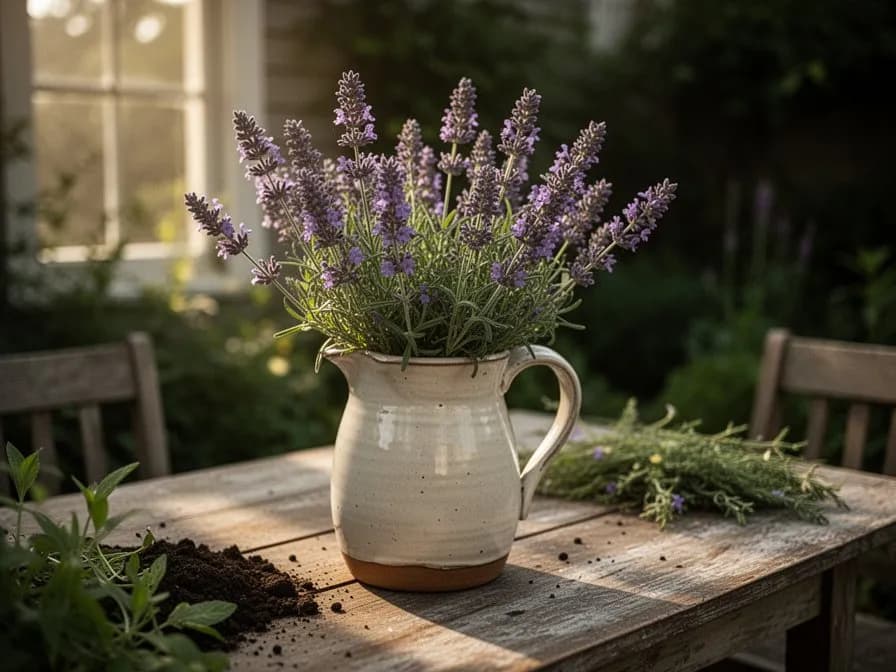
Calming Catmint Herbal Tea
10 minutesA gentle, soothing herbal infusion made from fresh or dried catmint leaves. This mildly minty tea has been enjoyed in European folk tradition for centuries as a calming evening beverage to promote relaxation and ease digestive discomfort.
Catmint and Lemon Infused Vinegar
15 minutes active, 2 weeks infusionA fragrant herb-infused vinegar that captures the aromatic minty-herbal essence of catmint. Use it in salad dressings, marinades, or as a finishing drizzle over grilled vegetables and fish for a unique botanical flavor note.
Catmint Flower Butter
15 minutes plus chillingA delicately flavored compound butter incorporating fresh catmint flowers and leaves. The subtle minty-herbal notes pair beautifully with warm crusty bread, steamed new potatoes, or grilled lamb chops for an elegant garden-to-table touch.
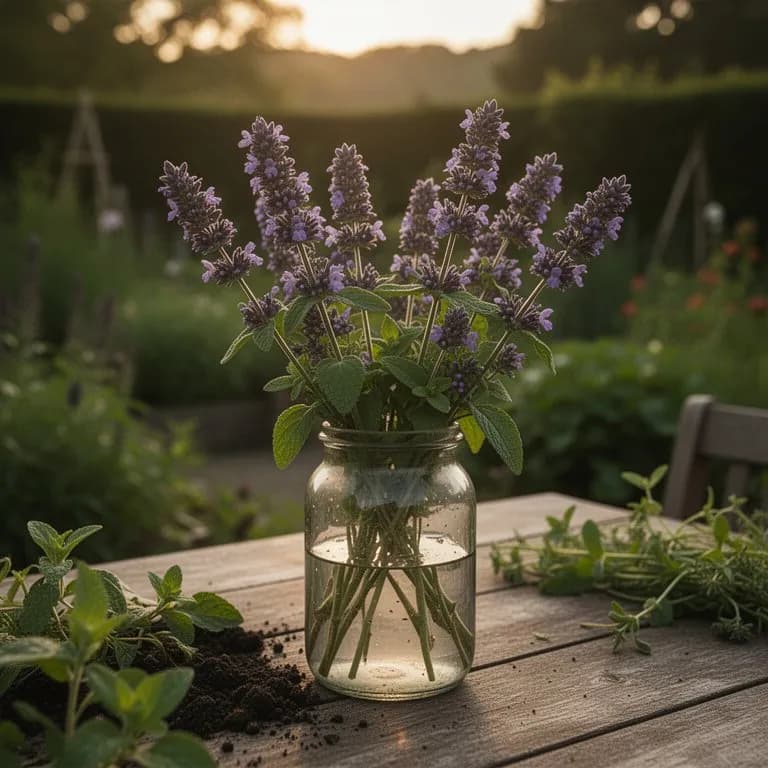
Harvested catmint stems can be dried and used to make soothing herbal teas or fragrant sachets.
Yield & Spacing Calculator
See how many Catmint plants fit in your garden bed based on the recommended 45cm spacing.
4
Catmint plants in a 4×4 ft bed
2 columns × 2 rows at 45cm spacing
Popular Varieties
Some of the most popular catmint varieties for home gardeners, each with unique characteristics.
Nepeta 'Walker's Low'
The most popular catmint, named Perennial Plant of the Year. Forms a 60cm mound of lavender-blue flowers that blooms for months with shearing.
Nepeta 'Six Hills Giant'
A larger variety reaching 90cm, ideal for big borders where it creates dramatic sweeps of lavender-blue flowers.
Nepeta racemosa 'Little Titch'
A compact dwarf variety at just 20-25cm, perfect for edging, rockeries, and container planting.
Nepeta 'Cat's Pajamas'
A compact, heat-tolerant variety with deep blue-violet flowers on sturdy 35cm plants that resist flopping.
When should I plant Catmint?
Plant Catmint in March, April, September. It takes approximately 365 days to reach maturity, with harvest typically in May, June, July, August, September.
What are good companion plants for Catmint?
Catmint grows well alongside Rose, Lavender, Perennial Salvia. Companion planting can improve growth, flavor, and natural pest control.
What hardiness zones can Catmint grow in?
Catmint thrives in USDA hardiness zones 3 through 8. With greenhouse protection, it may be grown in zones 1 through 9.
How much sun does Catmint need?
Catmint requires Full Sun (6-8h+). This means at least 6-8 hours of direct sunlight daily.
How far apart should I space Catmint?
Space Catmint plants 45cm (18 inches) apart for optimal growth and air circulation.
What pests and diseases affect Catmint?
Common issues include Powdery Mildew, Flea Beetles, Root Rot. Prevention through good garden practices like crop rotation, proper spacing, and companion planting is the best approach. See the detailed pests and diseases section above for symptoms, prevention, and treatment for each.
How do I store Catmint after harvest?
Dried catmint stems maintain their aromatic fragrance for months and are excellent in potpourri and sachets. Hang-dry bundles for two weeks, then strip dried flowers and store in airtight containers. The dried leaves and flowers can be used to make a mild herbal tea similar to chamomile. For seed sa...
What are the best Catmint varieties to grow?
Popular varieties include Nepeta 'Walker's Low', Nepeta 'Six Hills Giant', Nepeta racemosa 'Little Titch', Nepeta 'Cat's Pajamas'. Each has unique characteristics suited to different growing conditions and culinary preferences. See the varieties section above for detailed descriptions.
What soil does Catmint need?
Catmint performs best in average to lean, well-drained soil with a pH of 6.0-7.5. It thrives in sandy, gravelly, or loamy soils and struggles only in heavy, wet clay. Do not over-enrich the soil—too much nitrogen produces floppy growth with fewer flowers. If planting in clay, add generous amounts of...
What is the difference between catmint and catnip?
Catmint and catnip are both members of the Nepeta genus, but they serve different garden purposes. Catnip (Nepeta cataria) is the species famous for producing a euphoric response in cats due to high concentrations of nepetalactone. Ornamental catmint varieties, primarily Nepeta x faassenii and Nepeta racemosa, have been bred for garden beauty rather than feline stimulation. They produce showier, longer-lasting flower displays, have a more compact and tidy growth habit, and while they contain some nepetalactone, the effect on cats is typically much milder. For a beautiful garden border, ornamental catmint is the superior choice.
How do I prevent my catmint from becoming leggy and flopping over?
Leggy, floppy growth in catmint is almost always caused by one of three factors: too much shade, overly rich soil, or failure to cut back after the first bloom. Plant catmint in full sun and avoid heavy fertilization. The most effective technique is to shear the plant back by one-third immediately after the first flowering flush fades in midsummer. This promotes compact regrowth and a dense second bloom. For tall varieties in exposed sites, you can also use grow-through supports placed in early spring before growth begins.
Is catmint safe for cats and dogs?
Yes, catmint is non-toxic to both cats and dogs. Cats may roll in it, chew the leaves, or rub against the plants, but ingestion is harmless and the behavioral effects are temporary, typically lasting 10-15 minutes. Some cats show no interest at all, as sensitivity to nepetalactone is genetically determined and approximately 30-50% of cats lack the receptor. Dogs generally ignore catmint entirely. If cats are damaging your ornamental catmint plants by rolling on them, consider planting a sacrificial patch of true catnip (Nepeta cataria) nearby to redirect their attention.
When and how should I divide catmint plants?
Divide catmint in early spring just as new growth emerges from the crown, typically in March or April depending on your climate. Lift the entire clump with a garden fork, shake off excess soil, and use a sharp spade or knife to split it into sections, each with a healthy portion of roots and several emerging shoots. Replant divisions immediately at the same depth they were growing previously, spacing them 45-60 cm apart. Water thoroughly after planting. Most catmint clumps benefit from division every 3-4 years to maintain vigor and prevent the center of the plant from becoming woody and bare.
Can I grow catmint in containers?
Catmint grows well in containers provided a few key requirements are met. Use a pot at least 30-40 cm in diameter with excellent drainage holes, and fill it with a gritty, well-drained potting mix. Terracotta pots are ideal as they allow excess moisture to evaporate through the walls. Water container-grown catmint when the top 3-5 cm of soil feels dry, and avoid letting pots sit in saucers of water. Feed lightly with a half-strength balanced liquid fertilizer once monthly during the growing season. In cold climates, move containers to a sheltered spot or insulate them over winter to protect roots from freeze-thaw damage.
Does catmint attract or repel certain insects?
Catmint has a fascinating dual role with insects. Its flowers are highly attractive to beneficial pollinators including bumblebees, honeybees, hoverflies, and butterflies, making it an excellent choice for pollinator gardens. Simultaneously, the aromatic foliage contains nepetalactone and other terpenes that naturally repel many pest insects including mosquitoes, aphids, flea beetles, squash bugs, and cockroaches. Research has shown nepetalactone to be approximately ten times more effective than DEET at repelling mosquitoes. This combination of attracting beneficial insects while deterring pests makes catmint an exceptionally valuable companion plant in both ornamental and vegetable gardens.
Ready to Grow Catmint?
Add Catmint to your garden plan and start designing your perfect layout.

Vladimir Kusnezow
Gardener and Software Developer
Zone 6b gardener. Growing vegetables and fruits in soil and hydroponics for 6 years. I built PlotMyGarden to plan my own gardens.
Jump to Section