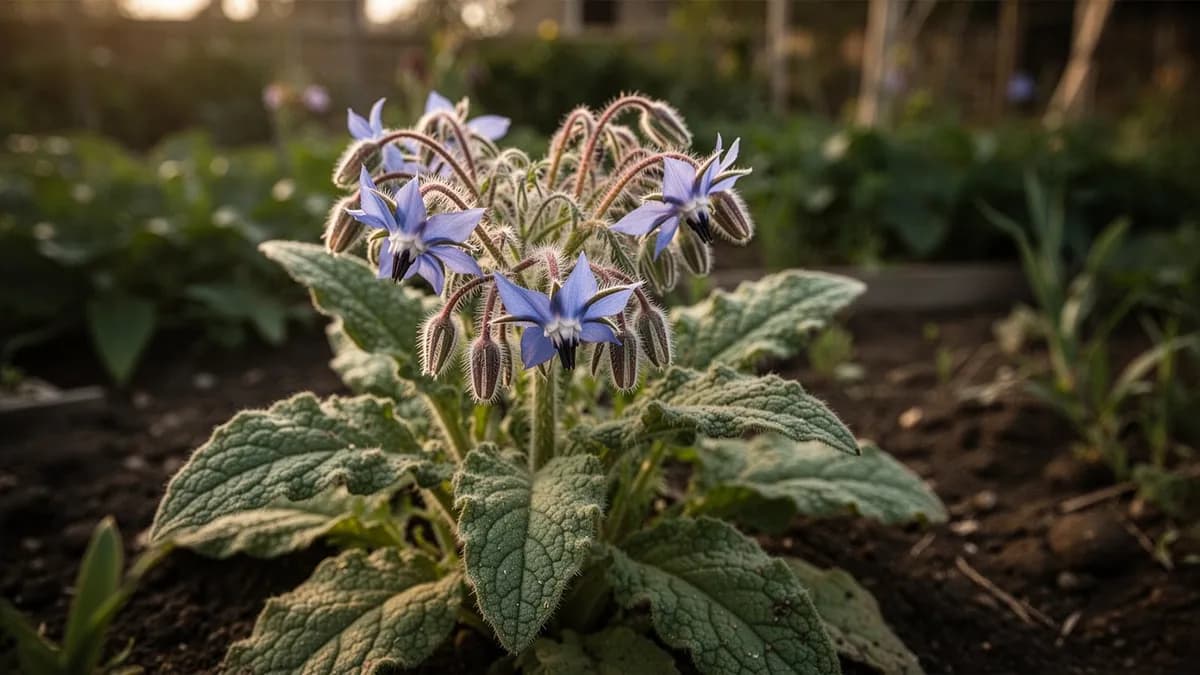
Borage
Borago officinalis
At a Glance
It's planting season for Borage! Start planning your garden now.
An annual herb with star-shaped blue flowers and cucumber-flavored leaves that is an exceptional pollinator attractor. Sow seeds directly in the garden as borage develops a deep taproot and does not transplant well once established. The edible flowers make a stunning garnish for salads, cocktails, and desserts, and can be frozen in ice cubes for summer drinks. Borage self-seeds prolifically, so a single planting often provides years of volunteer plants with minimal additional effort.
Planting & Harvest Calendar
Growth Stages
From Seed to Harvest
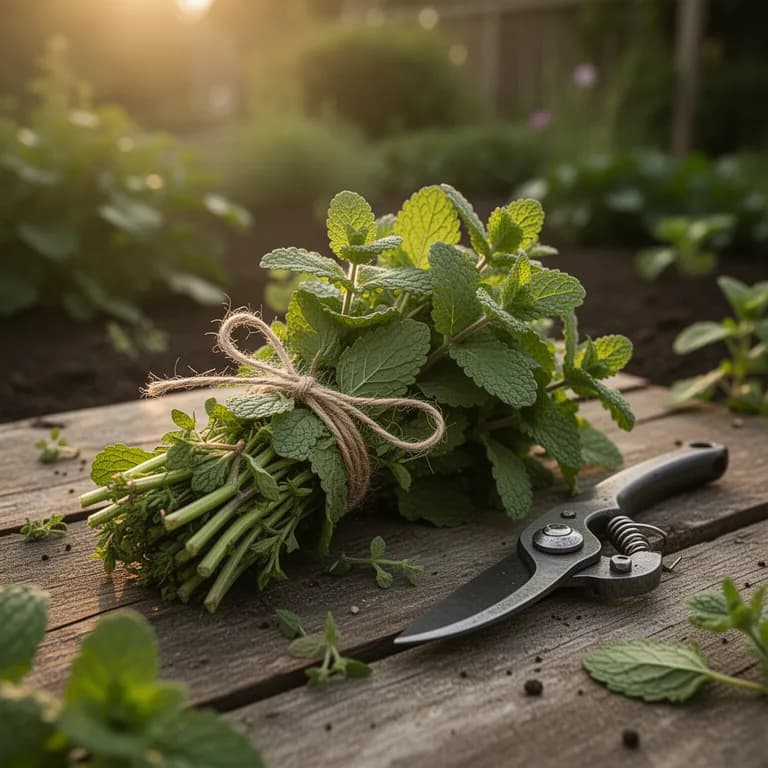
Seed Germination
Days 0–10
Borage seeds are large, dark, and ridged, making them easy to handle and direct-sow. They germinate reliably in 5-10 days when soil temperatures reach at least 10°C (50°F). The white radicle emerges first, followed by a pair of thick, rounded cotyledon leaves that push above the soil surface.
💡 Care Tip
Sow seeds 1-2 cm deep directly in the garden after the last frost. Borage has a delicate taproot and does not transplant well, so direct sowing is strongly preferred. Keep soil consistently moist but not waterlogged during germination.
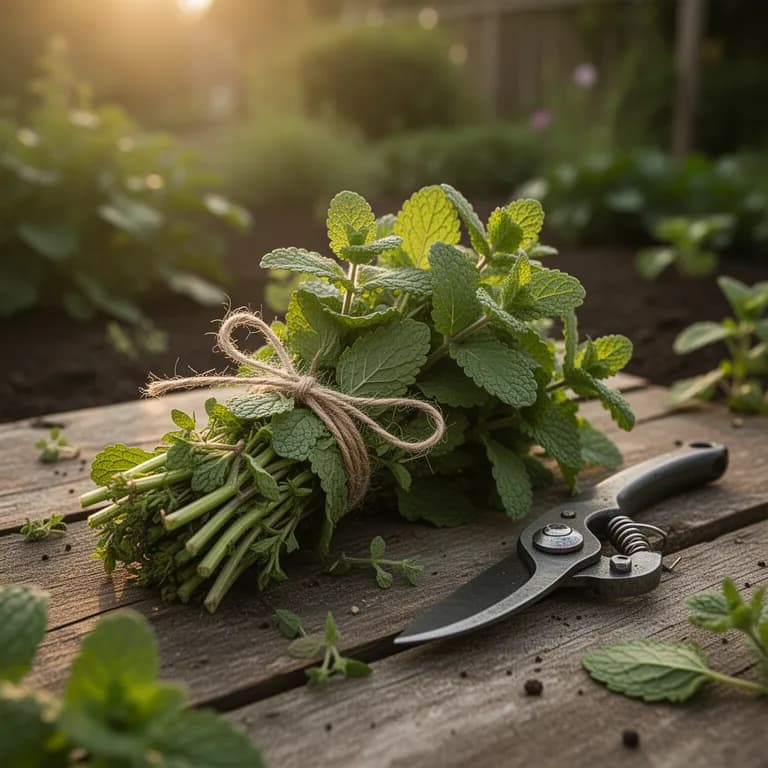
Borage seedlings emerge within 7-10 days of direct sowing and quickly develop their characteristic hairy leaves
Monthly Care Calendar
What to do each month for your Borage
May
You are hereSeedlings grow rapidly in warming soil. Apply organic mulch to retain moisture and suppress weeds. Borage needs little fertilization — a single application of balanced compost at planting is usually sufficient. Watch for slugs and snails, which may target young seedlings.
Did You Know?
Fascinating facts about Borage
Borage flowers are one of the few truly blue edible flowers in the plant kingdom. The vivid blue color comes from the pigment delphinidin, and the flowers actually change from pink to blue as they open — caused by a shift in cell pH from acidic to alkaline.
Sow borage seeds directly in the garden 2-3 weeks before the last frost date, as the plants develop a deep taproot and do not transplant well. Plant seeds half an inch deep and 12 inches apart in rows or broadcast in patches. Seeds germinate quickly in 5-10 days when soil temperatures reach 50°F or above. Thin seedlings to 18-24 inches apart, as mature plants can become quite large, reaching 2-3 feet tall and wide.
Borage is remarkably easy to grow and thrives in average, well-drained soil with full sun to light shade. It tolerates poor soil and mild drought once established but produces the lushest growth with moderate watering. Avoid rich, heavily fertilized soil, which causes weak, floppy stems that require staking. The bristly, hairy foliage is deer-resistant and rarely troubled by pests.
Borage is a prolific self-seeder, and a single planting will produce volunteer seedlings for years. To prevent unwanted spread, deadhead spent flowers before seeds drop. The plant is an annual that completes its life cycle in one season, but successive sowings every 3-4 weeks from spring through early summer extend the harvest of fresh leaves and flowers well into autumn.
Borage is one of the best bee plants in any garden — each flower refills with nectar every two minutes
Borage (Borago officinalis) is native to the western Mediterranean region, with its center of origin believed to be in the area spanning modern-day Syria, Turkey, and the eastern Mediterranean coast. From there, it spread westward across the Mediterranean basin with early traders and colonists, naturalizing readily in the warm, dry climates of Spain, Italy, southern France, and North Africa. Wild borage populations can still be found growing along roadsides, in rocky fields, and on disturbed ground throughout these regions.
The ancient Greeks and Romans were among the first to cultivate borage intentionally, valuing it for both culinary and medicinal purposes. Greek soldiers reportedly drank borage-infused wine before battle for courage, and Roman naturalists including Pliny the Elder and Dioscorides documented its use as a tonic for melancholy, fever, and inflammation. The herb's association with bravery and cheerfulness persisted for centuries — medieval herbalists prescribed borage tisanes to lift the spirits and calm the nerves, and Crusaders reportedly consumed borage before departing for the Holy Land.
During the Middle Ages, borage became a staple of European monastery gardens and apothecary plots, cultivated alongside other medicinal herbs. It was one of the essential plants in the medieval physic garden, used to treat everything from chest congestion to kidney ailments. By the Elizabethan era, borage had become a beloved culinary herb in England, where its flowers were floated in wine cups and claret at banquets and its leaves were added to salads and cooked as a vegetable.
Spanish colonists brought borage to the Americas in the 16th and 17th centuries, where it naturalized in parts of South and Central America. In the 20th century, the discovery of gamma-linolenic acid (GLA) in borage seed oil sparked commercial cultivation in Canada, the United Kingdom, and New Zealand, transforming borage from a cottage garden herb into an important oilseed crop. Today, borage is grown worldwide as a culinary herb, ornamental flower, companion plant, bee forage crop, and source of GLA-rich seed oil — a remarkably diverse legacy for a humble Mediterranean wildflower.
Sow borage seeds directly outdoors 2-3 weeks before the last expected frost, as the taproot makes transplanting difficult. Plant seeds half an inch deep in moist soil, spacing 12 inches apart. Seeds germinate rapidly in 5-10 days at soil temperatures above 50°F. For succession harvests, make additional sowings every 3-4 weeks through early summer. If starting indoors is necessary, use deep biodegradable pots to minimize root disturbance and transplant before seedlings become rootbound.
Borage thrives in average, well-drained garden soil and actually produces more flavorful leaves and abundant flowers in soil that is not too rich. A pH of 6.0-7.0 is ideal. Avoid heavy clay soils where the taproot may rot; amend clay with sand and compost for drainage. Little to no supplemental fertilization is needed. A light side-dressing of compost at planting is sufficient for the entire season. Over-fertilizing produces rank, leggy growth with fewer flowers and less concentrated flavor in the leaves.
Check Your Zone
See if Borage is suitable for your location.
12°C – 26°C
54°F – 79°F
Borage is a cool-season annual herb that thrives in moderate temperatures. Seeds germinate readily at soil temperatures of 10-20°C (50-68°F), and plants grow most vigorously between 12-26°C (54-79°F). Borage tolerates light frost down to about -3°C (27°F), especially when established, making it one of the more cold-hardy annual herbs. However, prolonged heat above 30°C (86°F) causes plants to bolt rapidly, reduces flower production, and makes leaves tough and bitter. In hot climates, borage performs best as a spring or autumn crop rather than a summer one.
Common issues affecting Borage and how to prevent and treat them organically.
The biggest challenge with borage is managing its enthusiastic self-seeding; deadhead flowers before seeds drop if you want to control spread. Mature plants can become top-heavy and flop over in windy conditions or after heavy rain. Provide a supportive companion plant nearby or install a low peony ring for support. The bristly hairs on leaves can irritate sensitive skin, so wear gloves when harvesting. In excessively rich soil, plants grow lush but produce fewer flowers and more susceptible to powdery mildew.
Borage is one of the best companion plants in the garden, attracting a wide array of pollinators and beneficial predatory insects with its abundant nectar-rich flowers. It is a legendary companion for tomatoes and strawberries, reportedly improving their flavor and vigor while deterring tomato hornworms. Plant near squash and cucumbers to boost pollination. Borage also accumulates minerals from deep soil through its taproot, making it a useful addition to compost when plants are pulled at season's end.
- 1Always direct-sow borage seeds rather than starting them indoors. Borage develops a deep, fragile taproot that resents disturbance — transplanted seedlings often fail to thrive or bolt prematurely. Sow seeds 1-2 cm deep directly where you want the plants to grow.
- 2Give borage plenty of space. Mature plants reach 60-90 cm tall and 45-60 cm wide, and overcrowded plants become floppy and prone to mildew. Space plants at least 30-45 cm apart, and consider placing them at the back or edges of beds where their size will not shade smaller herbs.
- 3Plant borage alongside tomatoes, strawberries, and squash for companion planting benefits. Borage attracts pollinators that improve fruit set, and its flowers draw beneficial insects like parasitic wasps that prey on common garden pests including tomato hornworms and aphids.
- 4Harvest young leaves when they are under 10 cm long for the best flavor and texture. Older leaves become tough, excessively hairy, and slightly bitter. The youngest leaves at the growing tips have the mildest cucumber flavor and the softest hairs.
- 5Pick borage flowers in the morning after dew has dried for the freshest blooms. Gently grasp the blue star and pull it backward to separate it from the hairy calyx. Use flowers immediately in salads and drinks, or freeze them in ice cube trays for later use.
- 6Allow some flowers to go to seed if you want borage to return next year. Borage self-sows generously, and volunteer seedlings are often more vigorous than intentionally planted ones. Simply thin unwanted volunteers in spring and transplant the rest at the seedling stage if needed.
- 7Stake or support tall borage plants in windy locations or rich soil where they tend to grow lanky. A simple ring of twine around a few bamboo stakes prevents the heavy, water-filled stems from flopping over after rain or during strong winds.
- 8Grow borage in containers using pots at least 30 cm deep to accommodate the taproot. Use well-draining potting mix and water regularly, as container-grown borage dries out faster than garden plants. Dwarf varieties are particularly well suited to container culture.
- 9Make successive sowings every 3-4 weeks from spring through midsummer to ensure a continuous supply of tender young leaves. Older plants become coarse and focus energy on flowering, so fresh plantings maintain the best leaf quality throughout the season.
- 10In hot summer climates, grow borage as a cool-season crop in spring and fall rather than midsummer. Plants bolt quickly and produce fewer flowers in sustained heat above 30°C. A fall sowing in zones 8-10 can provide fresh borage through winter.
Harvest young borage leaves when they are small and tender, before the bristly hairs become coarse. Pick individual flowers as they open for the freshest flavor and most vivid color. Use scissors to cut flower stems cleanly. Borage flowers are best used immediately after picking, as they wilt quickly. For leaf harvests, select the youngest leaves at the top of the plant; older leaves develop rough, hairy textures. Continuous flower picking encourages the plant to produce more blooms over a longer period.
Borage is best used fresh, as both leaves and flowers lose their delicate cucumber flavor when dried. Freeze individual flowers in ice cube trays filled with water to create decorative ice cubes for summer drinks. Fresh leaves can be blanched briefly and frozen for later use in soups and stews. Borage flowers can be candied by brushing with egg white, coating in fine sugar, and drying on parchment paper for an elegant dessert garnish. Borage seed oil, pressed from mature seeds, is rich in gamma-linolenic acid and can be stored in dark bottles in the refrigerator.
Plan your garden with ease
Love growing Borage? Use our free garden planner to design your beds, track planting dates, and get personalized care reminders.
Nutritional Info
Per 100g serving
21
Calories
Health Benefits
- Exceptionally rich in vitamin A with 4385 IU per 100g of raw leaves (88% DV), primarily as beta-carotene, supporting eye health, immune function, and healthy skin
- Good source of vitamin C at 35mg per 100g (39% DV), providing antioxidant protection and supporting collagen synthesis — best preserved by eating young leaves raw in salads
- Contains significant levels of gamma-linolenic acid (GLA), a rare omega-6 fatty acid found primarily in the seeds, which has anti-inflammatory properties and is used in supplement form for skin conditions
- Very low in calories at only 21 kcal per 100g, making borage leaves an excellent nutrient-dense addition to meals without adding significant calories
- Provides useful amounts of iron (3.3mg per 100g, 18% DV) and calcium (93mg per 100g, 9% DV), contributing to bone health and oxygen transport in the body
- Rich in potassium (470mg per 100g, 13% DV) which helps regulate fluid balance, muscle contractions, and nerve signals throughout the body
💰 Why Grow Your Own?
Fresh borage leaves and flowers are rarely available in supermarkets and command premium prices of $3-6 per small bunch at farmers' markets and specialty stores. Dried borage herb sells for $15-30 per pound online. A single $2-3 seed packet produces 5-10 vigorous plants that bloom continuously for 2-3 months, and the plant self-sows so enthusiastically that a one-time purchase provides borage for years to come at no additional cost. Borage seed oil supplements retail for $10-20 per bottle, making home-grown borage an exceptionally cost-effective source of this valuable herb.
Quick Recipes
Simple recipes using fresh Borage
Borage Flower Ice Cubes
10 min + freezingStunning edible flower ice cubes that transform any summer drink into an occasion. Fresh blue borage flowers are suspended in crystal-clear ice, releasing their mild cucumber flavor as they melt. Perfect for lemonade, gin and tonics, sparkling water, or cocktail parties.
Borage Leaf Fritters (Borraja Rebozada)
25 minA traditional Mediterranean recipe where large borage leaves are dipped in a light batter and fried until golden and crispy. The cooking process eliminates the prickly hairs, revealing the tender leaf with its delicate cucumber-like flavor inside a crispy shell.
Borage and Potato Soup
35 minA silky, warming soup from the Italian tradition where young borage leaves are simmered with potatoes and aromatics, then blended into a vibrant green puree. The borage contributes a fresh, cucumber-like note that pairs beautifully with the creamy potato base.
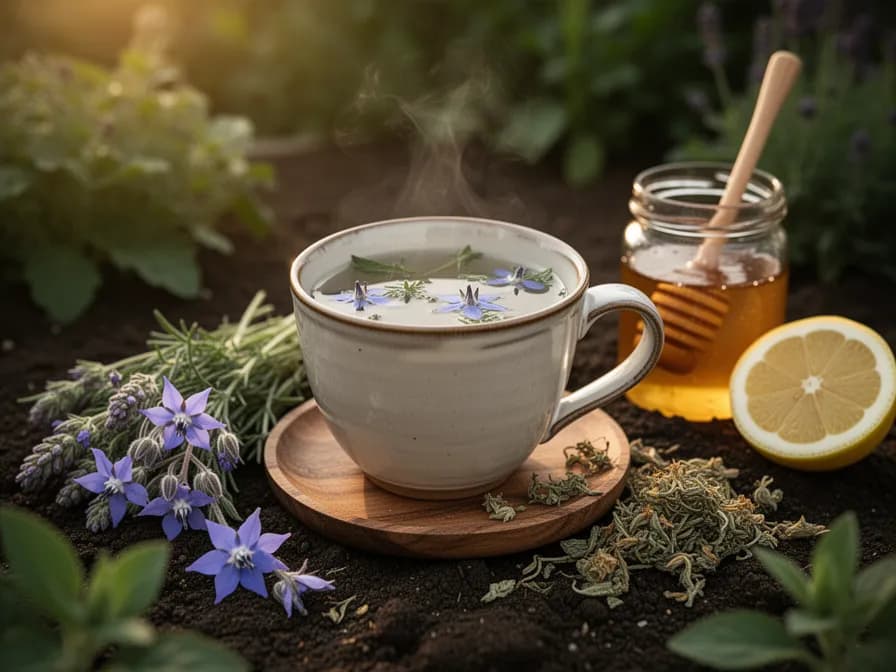
Edible borage flowers add a striking blue color and mild cucumber flavor to salads and drinks
Yield & Spacing Calculator
See how many Borage plants fit in your garden bed based on the recommended 30cm spacing.
16
Borage plants in a 4×4 ft bed
4 columns × 4 rows at 30cm spacing
Popular Varieties
Some of the most popular borage varieties for home gardeners, each with unique characteristics.
Common Borage
The standard species with vivid blue star-shaped flowers and cucumber-flavored leaves. The most widely grown variety for culinary and companion planting purposes.
Alba (White Borage)
A white-flowered variant of common borage with identical growth habits. Creates a lovely contrast when planted alongside the blue-flowered form.
Variegata
An ornamental form with cream-and-green variegated leaves and the same blue flowers. Less vigorous than the species but attractive in borders.
Borage flowers have a mild cucumber flavor and are used to garnish cocktails, lemonade, and salads. The edible blue flowers can be frozen in ice cubes, candied for dessert decoration, or scattered over cream cheese and canapés. Young leaves add a refreshing cucumber note to green salads and cold soups. Borage is traditionally used to flavor Pimm's Cup and other summer beverages.
When should I plant Borage?
Plant Borage in March, April, May. It takes approximately 50 days to reach maturity, with harvest typically in June, July, August.
What are good companion plants for Borage?
Borage grows well alongside Tomato, Strawberry, Zucchini. Companion planting can improve growth, flavor, and natural pest control.
What hardiness zones can Borage grow in?
Borage thrives in USDA hardiness zones 5 through 11. With greenhouse protection, it may be grown in zones 3 through 12.
How much sun does Borage need?
Borage requires Full Sun (6-8h+). This means at least 6-8 hours of direct sunlight daily.
How far apart should I space Borage?
Space Borage plants 30cm (12 inches) apart for optimal growth and air circulation.
What pests and diseases affect Borage?
Common issues include Aphids, Powdery Mildew, Japanese Beetles. Prevention through good garden practices like crop rotation, proper spacing, and companion planting is the best approach. See the detailed pests and diseases section above for symptoms, prevention, and treatment for each.
How do I store Borage after harvest?
Borage is best used fresh, as both leaves and flowers lose their delicate cucumber flavor when dried. Freeze individual flowers in ice cube trays filled with water to create decorative ice cubes for summer drinks. Fresh leaves can be blanched briefly and frozen for later use in soups and stews. Bora...
What are the best Borage varieties to grow?
Popular varieties include Common Borage, Alba (White Borage), Variegata. Each has unique characteristics suited to different growing conditions and culinary preferences. See the varieties section above for detailed descriptions.
What soil does Borage need?
Borage thrives in average, well-drained garden soil and actually produces more flavorful leaves and abundant flowers in soil that is not too rich. A pH of 6.0-7.0 is ideal. Avoid heavy clay soils where the taproot may rot; amend clay with sand and compost for drainage. Little to no supplemental fert...
Is borage safe to eat, and are the hairy leaves edible?
Yes, borage leaves, flowers, and stems are all edible and have been consumed for centuries in Mediterranean cuisine. The prickly hairs on the leaves and stems soften completely when cooked, blended, or finely chopped. Young leaves under 10 cm long have the softest hairs and mildest flavor. However, borage contains small amounts of pyrrolizidine alkaloids (PAs), so it should be consumed in moderate culinary quantities rather than in large medicinal doses over extended periods.
Why are my borage plants flopping over?
Borage plants are naturally top-heavy, with thick hollow stems that can reach 60-90 cm tall. Flopping is common after heavy rain, in rich soil that promotes leggy growth, or when plants are crowded. Provide support with stakes and twine, space plants 30-45 cm apart for stronger stems, avoid excess nitrogen fertilizer, and choose a sheltered spot if wind is an issue. Some gardeners embrace the sprawling habit and let borage drape over the edges of raised beds.
Will borage self-seed and take over my garden?
Borage self-sows prolifically and can spread enthusiastically if left unchecked. However, it is easy to manage — volunteer seedlings pull out effortlessly thanks to their single taproot, and they are simple to identify by their distinctive hairy cotyledons. Deadhead spent flowers before seeds mature to prevent self-sowing, or simply pull unwanted seedlings each spring. Many gardeners welcome borage volunteers as free plants that attract pollinators.
Can I grow borage indoors or in containers?
Borage can be grown in containers but does poorly indoors due to its need for full sun and good air circulation. For container growing, use a pot at least 30 cm deep and wide to accommodate the taproot, fill with well-draining potting mix, and place in the sunniest spot available. Dwarf borage varieties are best for containers. Water regularly as pots dry out faster than garden soil, but avoid waterlogging, which causes root rot.
What does borage taste like?
Both borage leaves and flowers have a mild, refreshing cucumber flavor with a slight grassy sweetness. Young leaves taste most distinctly of cucumber and are delicious raw in salads. Older leaves develop a stronger, slightly bitter mineral taste and are better cooked. The flowers have a delicate sweetness with light honey notes and are used primarily as an edible garnish in salads, desserts, and cold drinks.
How do I use borage as a companion plant?
Plant borage within 1-2 meters of tomatoes, strawberries, squash, and brassicas. It attracts pollinators that improve fruit set, draws beneficial predatory insects like parasitic wasps and lacewings, and is reputed to deter tomato hornworms and cabbage worms. Borage also accumulates potassium and calcium in its leaves, so chopped plants make an excellent mineral-rich mulch or compost addition when the growing season ends.
Ready to Grow Borage?
Add Borage to your garden plan and start designing your perfect layout.

Vladimir Kusnezow
Gardener and Software Developer
Zone 6b gardener. Growing vegetables and fruits in soil and hydroponics for 6 years. I built PlotMyGarden to plan my own gardens.
Jump to Section