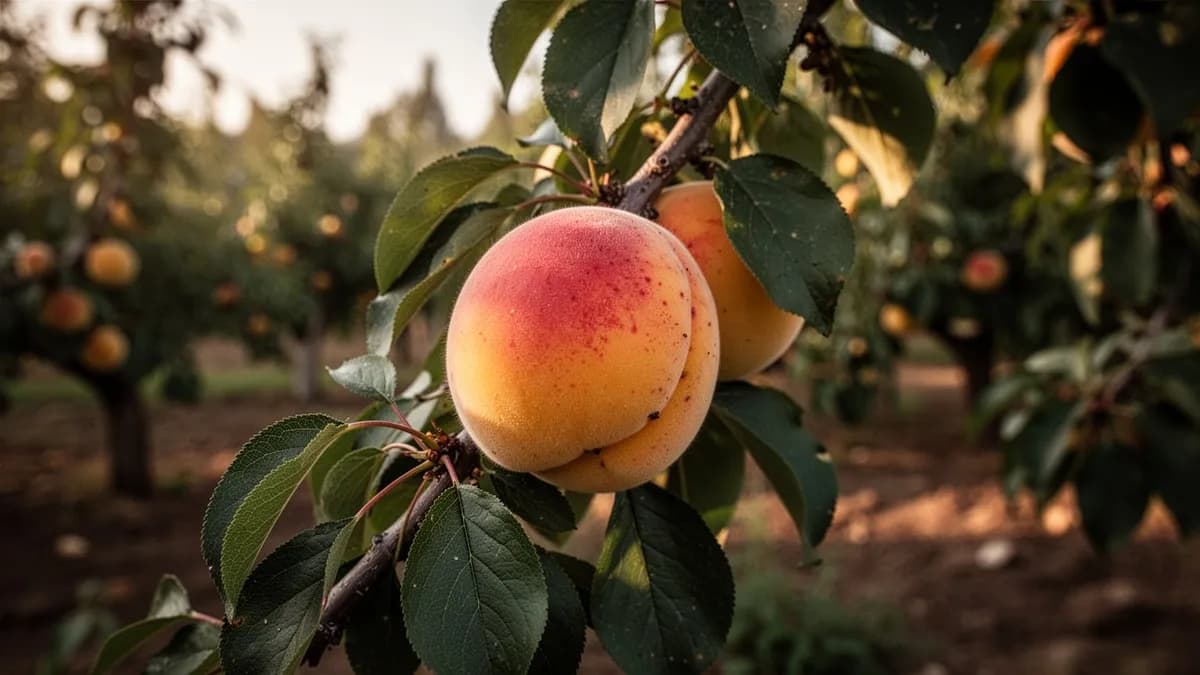
Apricot
Prunus armeniaca
At a Glance
A beautiful, early-blooming stone fruit tree producing golden, velvety fruits with a rich, sweet flavor. Apricots bloom very early and are highly susceptible to late frost damage, so choose a sheltered, south-facing location or grow as an espalier against a warm wall. Most varieties are self-fertile but set heavier crops with a pollinator present.
Planting & Harvest Calendar
Growth Stages
From Seed to Harvest
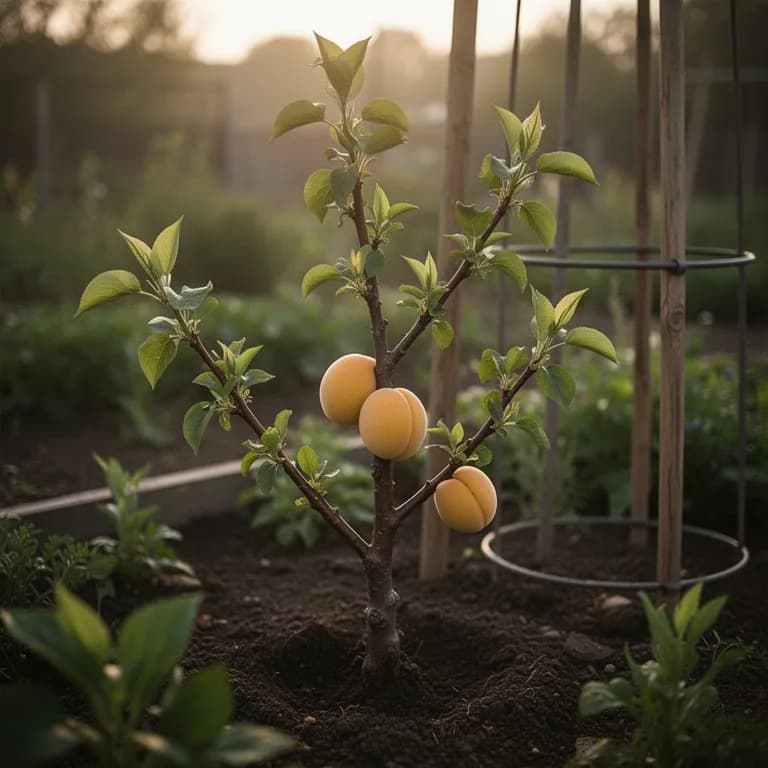
Dormancy and Planting
Days 0–60
Apricot trees are planted as bare-root whips or container-grown specimens during late winter while the tree is dormant. Unlike apples, apricots have a relatively low chill hour requirement of 300-900 hours below 7°C depending on variety, making them adaptable to a wider range of climates. This rest period allows the tree to establish initial root contact with the surrounding soil before the energy demands of spring growth begin.
💡 Care Tip
Plant in a warm, south- or west-facing position sheltered from late spring frosts, as apricot blossoms open exceptionally early and are highly vulnerable to frost damage. Prepare a well-draining site, since apricots are highly intolerant of waterlogged soil. Set the graft union 5 cm above the soil surface, water in well, and apply a 10 cm mulch ring.
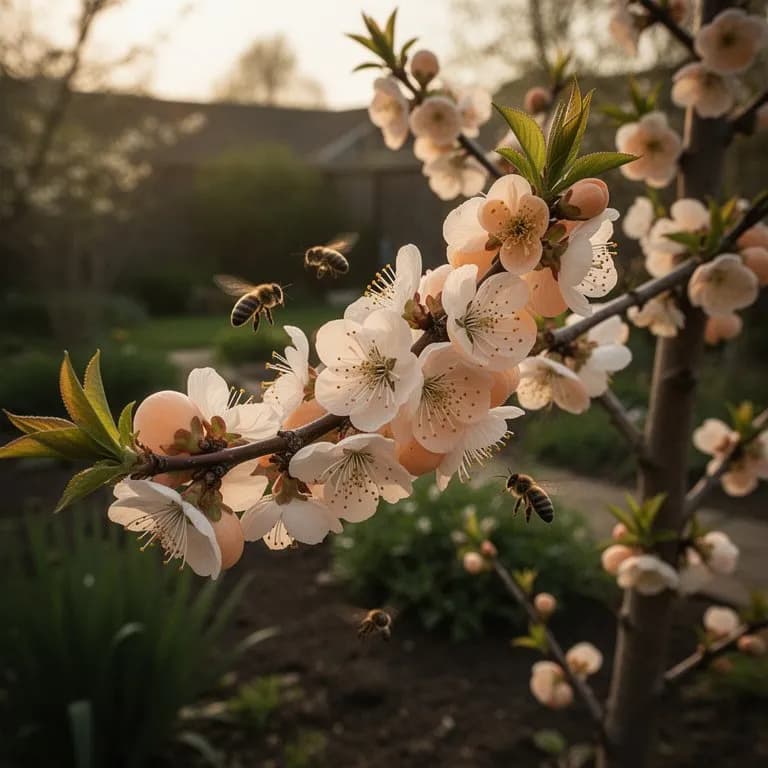
Apricot blossoms open earlier than almost any other fruit tree, painting bare branches pink in late winter
Monthly Care Calendar
What to do each month for your Apricot
May
You are hereComplete fruit thinning if not already done. Maintain consistent watering as fruit enters rapid sizing phase. Apply a mulch refresh to a 10 cm depth around the root zone to conserve soil moisture through summer. Check for signs of brown rot (Monilinia) on fruitlets after any wet periods and remove affected fruit immediately.
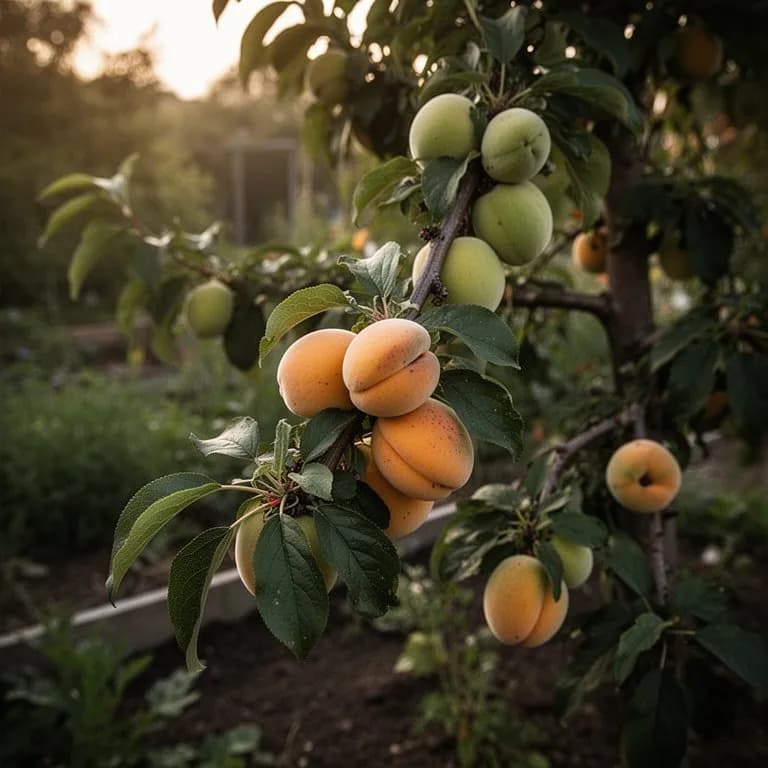
Summer pruning after harvest keeps the canopy open and reduces the risk of silver leaf disease
Did You Know?
Fascinating facts about Apricot
Apricots are one of the oldest cultivated fruits in human history, with archaeological evidence of apricot cultivation in China dating back over 4,000 years. The fruit was so deeply woven into Chinese culture that apricot groves were traditionally planted near Confucian schools and academies.
Apricots thrive in warm, dry climates with cold winters and are among the most rewarding stone fruits to grow when conditions are right. Plant bare-root trees in late winter, choosing a sheltered south-facing or west-facing site that avoids frost pockets. Space standard trees 20 to 25 feet apart, or train as an espalier against a warm wall where space is limited. Most varieties are self-fertile, but cross-pollination improves yields.
The critical challenge with apricots is their extremely early bloom period, often two to three weeks before peaches. Late frosts frequently destroy the entire crop. In frost-prone areas, delay bloom by mulching heavily around the base to keep the soil cool, or plant on a north-facing slope. Covering small trees with frost cloth on cold nights during bloom can save the crop.
Prune to an open vase shape to maximize sunlight penetration and air circulation. Summer pruning after harvest controls size and encourages fruiting wood. Thin fruit to four to six inches apart when marble-sized to improve size and prevent branch breakage. Water deeply but infrequently, and stop irrigation two weeks before harvest to concentrate flavor and prevent fruit splitting.
The apricot (Prunus armeniaca) carries a name suggesting Armenian origins, and for centuries naturalists and historians believed the fruit was first cultivated in that ancient region. Modern genetic and archaeological research has, however, decisively shifted the story eastward to the mountains of northwestern China and the surrounding Central Asian highlands, where wild apricot populations still grow in extraordinary diversity today. Chinese records documenting apricot cultivation date back more than 4,000 years, and the fruit features prominently in early Chinese literature, medicine, and symbolism. Confucius himself is said to have taught in an apricot grove, lending the tree an association with scholarship and wisdom that persisted through Chinese history. From China, apricots spread westward along the ancient trade corridors that would eventually become the Silk Road, reaching Persia, the Middle East, and the eastern Mediterranean over many centuries. The Persians became particularly accomplished apricot cultivators, developing numerous varieties and establishing the tree as a prized garden and orchard fruit. Alexander the Great's armies are often credited with introducing the apricot to Greece and western Europe in the fourth century BCE, though it was the Romans who truly established apricot cultivation across their empire. Roman agricultural writers including Pliny the Elder and Columella described the fruit and its cultivation techniques in detail, noting that it had spread from the eastern provinces to the Italian peninsula. Arab traders and scholars carried improved apricot varieties into North Africa and through the Moorish expansion into Spain and Portugal, from which the fruit spread northward into France and Britain during the medieval period. Spanish missionaries introduced apricots to the Americas in the eighteenth century, planting orchards at their California missions along what is now the El Camino Real. The warm, dry climate of California proved ideal, and the state became a major global producer of both fresh and dried apricots through the twentieth century, with the Santa Clara Valley once known as the Valley of Heart's Delight for its vast apricot orchards. Today apricots are cultivated on every inhabited continent, with Turkey, Iran, Uzbekistan, and Italy among the world's leading producers.
Apricot pits require 60 to 90 days of cold stratification and germinate readily. Seedling trees are variable but sometimes produce good fruit, making apricots one of the best stone fruits to grow from seed. For named varieties, purchase trees grafted on Manchurian apricot, peach, or plum rootstock. Grafted trees bear in two to four years. Seedlings take four to six years.
Apricots prefer well-drained, deep sandy loam with a pH of 6.0 to 7.5. They are more tolerant of alkaline soils than most stone fruits. Avoid heavy clay and wet sites where bacterial canker thrives. Apply a balanced fertilizer in early spring. Moderate feeders that suffer from excessive nitrogen which promotes soft, disease-prone growth. Maintain organic mulch but keep it away from the trunk.
Check Your Zone
See if Apricot is suitable for your location.
-1°C – 32°C
30°F – 90°F
Apricot trees are cold-hardy when fully dormant and can survive winter temperatures down to approximately -20°C depending on the variety. However, the flowers and early fruitlets are highly frost-sensitive, with open blossoms damaged at -1°C and killed at -3°C or below, making site selection and frost protection critical. Active growth and fruit development occur best between 18-28°C (64-82°F). Most varieties require 300-900 chill hours below 7°C to break dormancy uniformly, with low-chill varieties developed for mild-winter climates needing as few as 200 hours.
Common issues affecting Apricot and how to prevent and treat them organically.
Late frost damage to early blooms is the number one cause of crop failure in most regions. Irregular bearing with alternating heavy and light years is common. Gummosis and bacterial canker affect trees in wet climates. Fruit drops prematurely if the tree is under drought stress during pit hardening. Birds and squirrels target ripening fruit aggressively.
Most apricot varieties are self-fertile but benefit from a second variety for cross-pollination. Underplant with garlic, chives, and nasturtiums to deter aphids and borers. Comfrey as a dynamic accumulator brings deep nutrients to the surface. Avoid planting near tomatoes and peppers which share Verticillium wilt. Keep away from walnut trees due to juglone toxicity.
- 1Site your apricot tree against a warm south- or west-facing wall or fence if possible, as the radiated heat from the masonry advances the season, protects early blossoms from frost, and creates the warm, dry microclimate in which apricots truly thrive. Fan training against a wall also makes frost-protection fleece far easier to apply.
- 2Choose a low-chill variety if you garden in a mild-winter climate with fewer than 500 annual chill hours. Varieties such as 'Flavorcot', 'Tomcot', and 'Goldcot' are bred specifically for climates where winters are too warm for traditional varieties to break dormancy uniformly.
- 3Prune apricots in summer immediately after harvest, never in winter or wet weather. Apricots are uniquely susceptible to silver leaf disease (Chondrostereum purpureum) and bacterial canker (Pseudomonas syringae), both of which enter through pruning wounds far more readily in cool, wet conditions. Seal every pruning cut with a proprietary wound paint.
- 4Always thin the crop when fruitlets reach 2-3 cm in diameter, reducing clusters to a single fruit spaced 5-8 cm apart. Apricots are highly prone to biennial bearing if allowed to overcrop one year — the exhaustion of carrying too many fruit suppresses flowering bud formation for the following season, resulting in a complete or near-complete crop failure.
- 5Apply a copper fungicide spray at three key moments: after leaf fall in autumn, at bud swell in late winter, and immediately after harvest pruning. This targeted programme provides the most effective protection against the bacterial canker and brown rot diseases most likely to shorten the productive life of your tree.
- 6Hand-pollinate early-opening blossoms with a soft artist's brush by gently transferring pollen between flowers on warm, calm afternoons. Most apricot varieties are self-fertile but flower so early in the season — often in February or early March in temperate climates — that few pollinators are yet active. Hand pollination can dramatically improve fruit set during cold springs.
- 7Avoid planting apricots in frost hollows or low-lying areas where cold air pools on still, clear nights. Even a slight elevation or the protection of a nearby building can make the difference between a full crop and total frost-damaged blossom loss. The blossom is damaged at -1°C and killed at -3°C, making microclimate selection the single most important decision in apricot cultivation.
- 8Mulch generously to a depth of 10 cm out to the drip line of the tree, but always leave a 15 cm clear zone around the trunk. A wide, deep mulch ring conserves the soil moisture that apricots need during rapid fruit sizing while suppressing the competing weeds that dry out the root zone in summer.
- 9When growing in a container, choose the 'Dwarf Apricot' or 'Garden Apristar' varieties developed specifically for pot cultivation, and use a minimum 50-litre container. Container-grown apricots can be moved under cover during the blossom period to protect from frost — one of the great advantages of container growing in unpredictable climates.
- 10Collect and crack a handful of apricot stones after harvest. The inner kernels of sweet-tasting varieties (always taste a small piece first — bitter kernels indicate high amygdalin content) can be used to add a marzipan-like depth to jams and baked goods in very small quantities, just as the original classic apricot jam recipes have done for centuries.
Apricots ripen from late June through July depending on variety and climate. Harvest when fruit develops full golden-orange color with a slight give to gentle pressure. Fruit should separate easily from the spur with a gentle twist. Apricots do not ripen well off the tree, so allow them to reach full maturity. Pick every two to three days as fruit ripens unevenly across the tree.
Fresh apricots keep only three to five days refrigerated and bruise easily. Handle with care during harvest. Apricots are outstanding dried, either halved in a dehydrator or on screens in the sun. They make superb jam and preserves with a rich, concentrated flavor. Freeze halved and pitted on trays before bagging. Canned apricots in light syrup retain excellent quality for a year or more.
Plan your garden with ease
Love growing Apricot? Use our free garden planner to design your beds, track planting dates, and get personalized care reminders.
Nutritional Info
Per 100g serving
48
Calories
Health Benefits
- Exceptionally rich in beta-carotene, the precursor to vitamin A, with 100g of fresh apricots providing 64% of the daily recommended intake — one of the highest beta-carotene levels of any temperate fruit
- Contains lycopene, lutein, and zeaxanthin alongside beta-carotene, a combination of carotenoids strongly associated with protection of eye health and reduction of macular degeneration risk
- Provides a meaningful source of dietary potassium at 259 mg per 100g, supporting healthy blood pressure regulation and proper heart and muscle function
- Supplies catechins and chlorogenic acid, polyphenol antioxidants that help neutralize free radicals and have been studied for their role in reducing chronic inflammation
- Dried apricots are one of the richest plant-based sources of iron among common fruits, with 2.7 mg per 100g, making them a valuable addition to diets requiring increased non-heme iron intake
- Low in calories at 48 kcal per 100g with a moderate fiber content that promotes satiety and supports stable blood sugar levels, making apricots an ideal nutrient-dense snack
💰 Why Grow Your Own?
A mature apricot tree on a semi-dwarfing rootstock can produce 15-35 kg of fruit per season, equivalent to $75-$200 worth of fresh apricots at typical farmers' market prices of $5-$8 per kg. Organic fresh apricots are rarely available in supermarkets due to their fragility and short shelf life, making home-grown fruit the only practical way most gardeners can access truly tree-ripened apricots. When fruit is dried, the value multiplies further: 3-4 kg of fresh apricots produces roughly 1 kg of dried fruit, which retails for $15-$25 per kg. A single productive tree can therefore yield the equivalent of $150-$400 worth of dried apricots alone. Trees typically cost $20-$40 and reach meaningful production by year 3-4, providing decades of returns.
Quick Recipes
Simple recipes using fresh Apricot
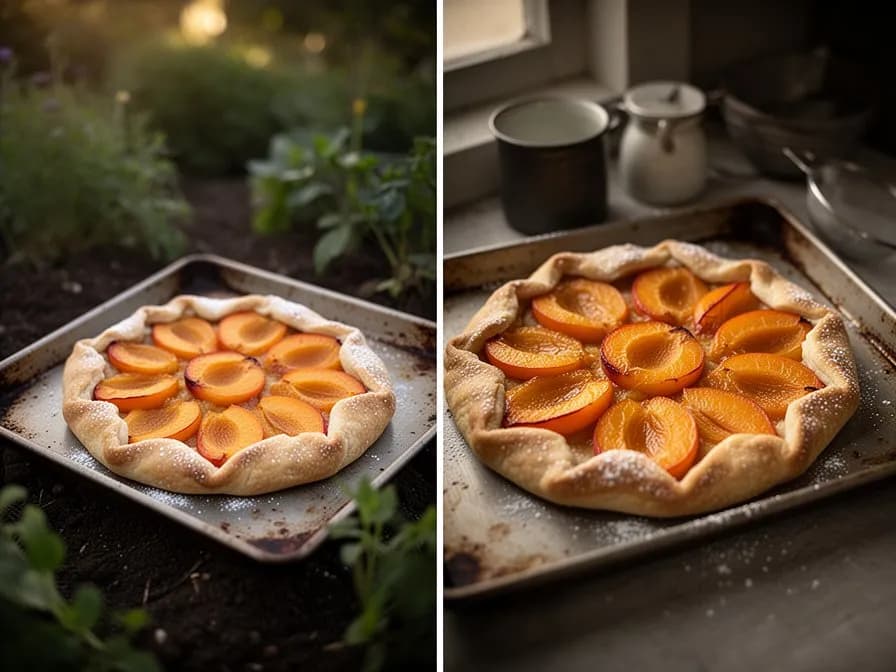
Fresh Apricot Jam
45 minutesA vibrant, intensely flavored jam that captures the essence of sun-ripened apricots at the peak of their short season. The natural high pectin content of slightly underripe apricots helps achieve a perfect set without requiring commercial pectin, and a small amount of lemon juice brightens the flavor and aids preservation. This straightforward recipe is one of the most satisfying ways to extend the apricot harvest through the year.
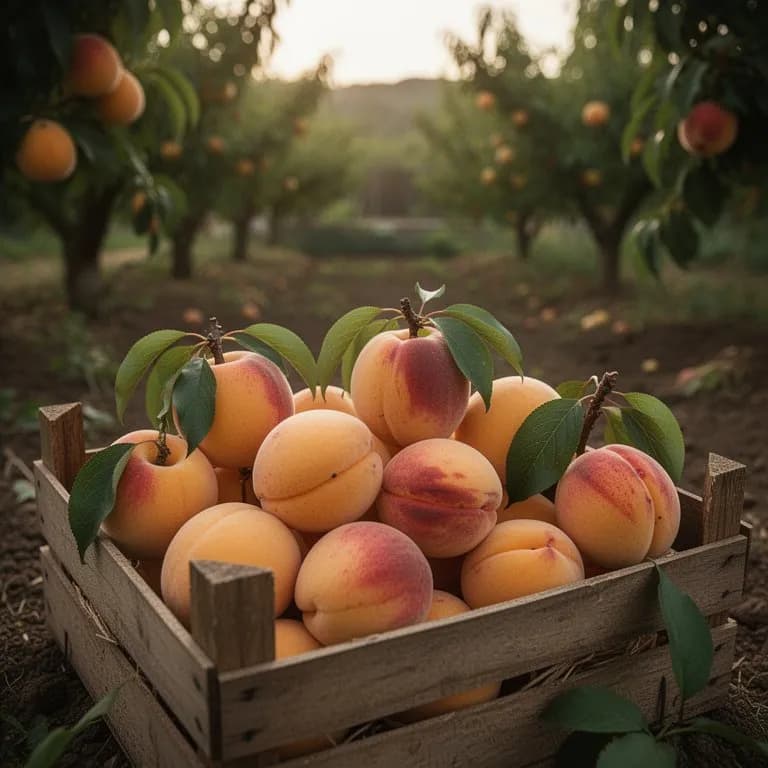
Roasted Apricot and Honey Galette
55 minutesA rustic free-form tart that transforms fresh or slightly overripe apricots into a caramelized, jammy filling encased in buttery pastry. Roasting concentrates the apricots' natural sugars and develops a complexity that raw fruit alone cannot achieve. A drizzle of honey and a scattering of flaked almonds complement the apricot's almond-family heritage beautifully in this forgiving recipe that requires no tart tin.
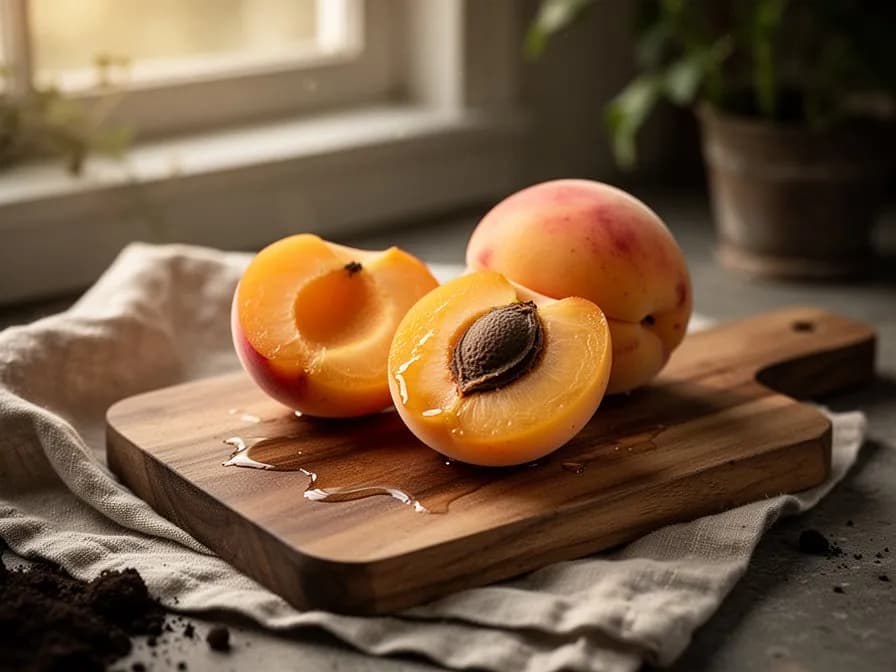
Sun-Dried Apricots (Oven Method)
20 minutes active (8-12 hours oven time)Drying apricots concentrates their sweetness and nutrients dramatically while preserving the harvest for months without refrigeration. This oven method replicates traditional sun-drying, producing deeply flavored, chewy apricots free from the sulfur dioxide preservatives used in commercial dried fruit. The result is darker in color than commercial varieties but far richer in flavor and antioxidant content.
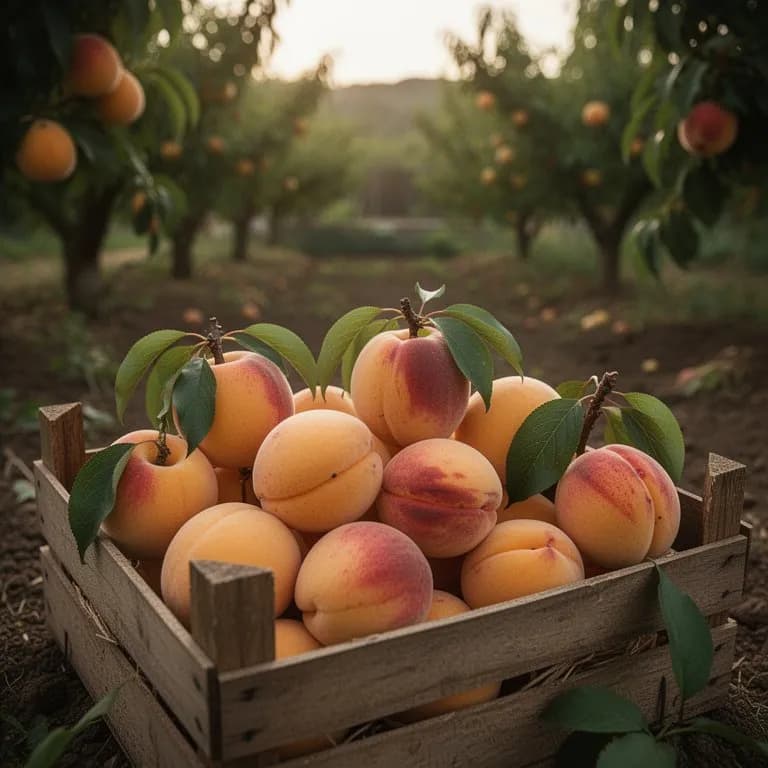
Ripe apricots harvested at peak flavor — soft to the touch, deeply fragrant, and ready to eat
Yield & Spacing Calculator
See how many Apricot plants fit in your garden bed based on the recommended 300cm spacing.
0
Apricot plants in a 4×4 ft bed
0 columns × 0 rows at 300cm spacing
Popular Varieties
Some of the most popular apricot varieties for home gardeners, each with unique characteristics.
Moorpark
Classic heirloom with large, richly flavored fruit. Considered the gold standard for apricot flavor but somewhat irregular in bearing.
Blenheim (Royal)
The premier drying and canning apricot of California. Sweet, aromatic fruit with deep orange flesh. Self-fertile.
Tilton
Heavy-bearing, late-blooming variety that escapes more frost damage. Large fruit excellent for canning and drying.
Goldcot
Cold-hardy variety developed for northern climates. Late blooming helps avoid frost. Reliable producer in zones 5 through 8.
Harcot
Canadian-bred variety with excellent cold hardiness and disease resistance. Bright orange fruit with good fresh eating quality.
Fresh apricots are sublime in tarts, galettes, and cobblers. They make world-class jam and preserves with an intense, concentrated sweetness. Dried apricots are a staple snack and baking ingredient. Apricot kernels flavor amaretti cookies and amaretto liqueur. The fruit pairs beautifully with lamb, pork, and Middle Eastern cuisine.
When should I plant Apricot?
Plant Apricot in March, April. It takes approximately 730 days to reach maturity, with harvest typically in June, July.
What are good companion plants for Apricot?
Apricot grows well alongside Garlic, Basil, Marigold. Companion planting can improve growth, flavor, and natural pest control.
What hardiness zones can Apricot grow in?
Apricot thrives in USDA hardiness zones 5 through 9. With greenhouse protection, it may be grown in zones 3 through 10.
How much sun does Apricot need?
Apricot requires Full Sun (6-8h+). This means at least 6-8 hours of direct sunlight daily.
How far apart should I space Apricot?
Space Apricot plants 300cm (118 inches) apart for optimal growth and air circulation.
What pests and diseases affect Apricot?
Common issues include Brown Rot, Bacterial Canker, Peach Twig Borer, Plum Curculio. Prevention through good garden practices like crop rotation, proper spacing, and companion planting is the best approach. See the detailed pests and diseases section above for symptoms, prevention, and treatment for each.
How do I store Apricot after harvest?
Fresh apricots keep only three to five days refrigerated and bruise easily. Handle with care during harvest. Apricots are outstanding dried, either halved in a dehydrator or on screens in the sun. They make superb jam and preserves with a rich, concentrated flavor. Freeze halved and pitted on trays ...
What are the best Apricot varieties to grow?
Popular varieties include Moorpark, Blenheim (Royal), Tilton, Goldcot, Harcot. Each has unique characteristics suited to different growing conditions and culinary preferences. See the varieties section above for detailed descriptions.
What soil does Apricot need?
Apricots prefer well-drained, deep sandy loam with a pH of 6.0 to 7.5. They are more tolerant of alkaline soils than most stone fruits. Avoid heavy clay and wet sites where bacterial canker thrives. Apply a balanced fertilizer in early spring. Moderate feeders that suffer from excessive nitrogen whi...
Why did my apricot tree blossom beautifully but produce almost no fruit?
The most common cause is frost damage to open blossoms or fruitlets. Apricots flower earlier than almost any other fruit tree, often when night frosts are still likely, and even a brief dip to -2°C can kill open flowers. Inspect spent blossoms after a frost event — if the central pistil has turned brown or black, frost has killed the flower. Other causes include insufficient pollinator activity during bloom (if the weather was cold, wet, or windy and bees were not flying), an isolated tree that despite being self-fertile benefited from no cross-pollination from a second variety nearby, or the tree exhausting its flowering energy in a heavy crop year the previous season (biennial bearing). Protect blossoms with fleece, hand-pollinate, and plant a companion variety to reduce the risk in future years.
When is the best time to prune an apricot tree, and why is it different from other fruit trees?
Apricots should be pruned in summer, ideally within four to six weeks of harvest, rather than in winter like most other fruit trees. This unconventional timing exists because apricots are highly susceptible to two serious fungal diseases — silver leaf (Chondrostereum purpureum) and bacterial canker (Pseudomonas syringae) — both of which infect through pruning wounds. These pathogens are far more active and their spores more abundant in cool, wet autumn and winter conditions. Summer pruning in dry weather, followed by immediate sealing of all cuts with wound paint, dramatically reduces the risk of these potentially fatal infections entering the tree.
My apricot tree has amber-colored gum oozing from the bark. What is it and what should I do?
Gummosis — the oozing of amber to reddish-brown gum from bark, branch crotches, or old pruning wounds — is a stress response that can be triggered by several causes in apricots. The most common culprits are bacterial canker (Pseudomonas syringae), physical damage, waterlogged soil, or environmental stress. Small amounts of gummosis around old wounds are not necessarily alarming, but significant gumming accompanied by sunken, discolored bark, dying branches, or a sour smell indicates active bacterial canker. Remove infected wood by cutting 15 cm below any visibly discolored tissue, sterilize your tools between cuts, seal all wounds immediately, and apply a copper-based fungicide spray to the affected area and surrounding bark. Improve drainage if waterlogging may be a contributing factor.
Can I grow an apricot tree in a cold climate or short growing season?
Yes, with the right variety choice and site selection. Modern cold-hardy varieties such as 'Goldcot', 'Hargrand', 'Harogem', and the Manchurian apricot species (Prunus mandshurica) or its hybrids can tolerate winter temperatures below -25°C when fully dormant. The challenge in cold climates is not winter cold itself but rather the early bloom — if your last frost date is late, select late-blooming varieties bred specifically for cold-climate production, such as those developed by breeding programs in Ontario, Minnesota, and Siberia. Growing against a north-facing wall (counterintuitively) in very cold climates can delay bloom by keeping the tree dormant longer, reducing frost damage. Container growing with the ability to move trees under cover during bloom is another effective cold-climate strategy.
How do I know when apricots are ripe enough to pick?
Apricots do not ripen significantly after being picked, so harvesting at the correct moment is crucial. Ripe apricots should yield to gentle thumb pressure applied at the shoulder of the fruit without feeling mushy. The ground color (the primary skin color underlying any blush) should have fully transitioned from pale green to golden yellow or deep orange depending on the variety. The fruit should detach from the spur with almost no resistance when gently cupped and lifted. Perhaps the most reliable indicator is fragrance — truly ripe apricots have an intensely sweet, floral, almost honeyed scent detectable from a short distance. If fruit must be pulled hard to pick, it is not yet ripe. Harvest over several sessions during the two-to-three-week ripening window, starting with the most sun-exposed, most fragrant, and most yielding fruit first.
What are the best varieties of apricot for a home garden?
The best variety depends heavily on your climate. For temperate climates with reliable late spring frosts, 'Flavorcot' (AGM) and 'Tomcot' (AGM) are outstanding for their late bloom that avoids most frosts and their superb flavor. 'Bergeron' is a French variety widely considered to have exceptional flavor for eating and jam-making. 'Goldcot' and 'Hargrand' are recommended for colder climates with short summers. For milder, Mediterranean-type climates with fewer chill hours, 'Blenheim' (also called 'Royal') is a California heritage variety with legendary flavor, while 'Moorpark' is a classic British garden apricot with rich, complex taste. Container growing suits dwarf varieties such as 'Garden Apristar' or 'Aprigold'. If you garden where late frosts are a persistent problem, self-fertile late-blooming varieties with some frost tolerance in the blossom are the most practical choice regardless of region.
Ready to Grow Apricot?
Add Apricot to your garden plan and start designing your perfect layout.

Vladimir Kusnezow
Gardener and Software Developer
Zone 6b gardener. Growing vegetables and fruits in soil and hydroponics for 6 years. I built PlotMyGarden to plan my own gardens.
Jump to Section