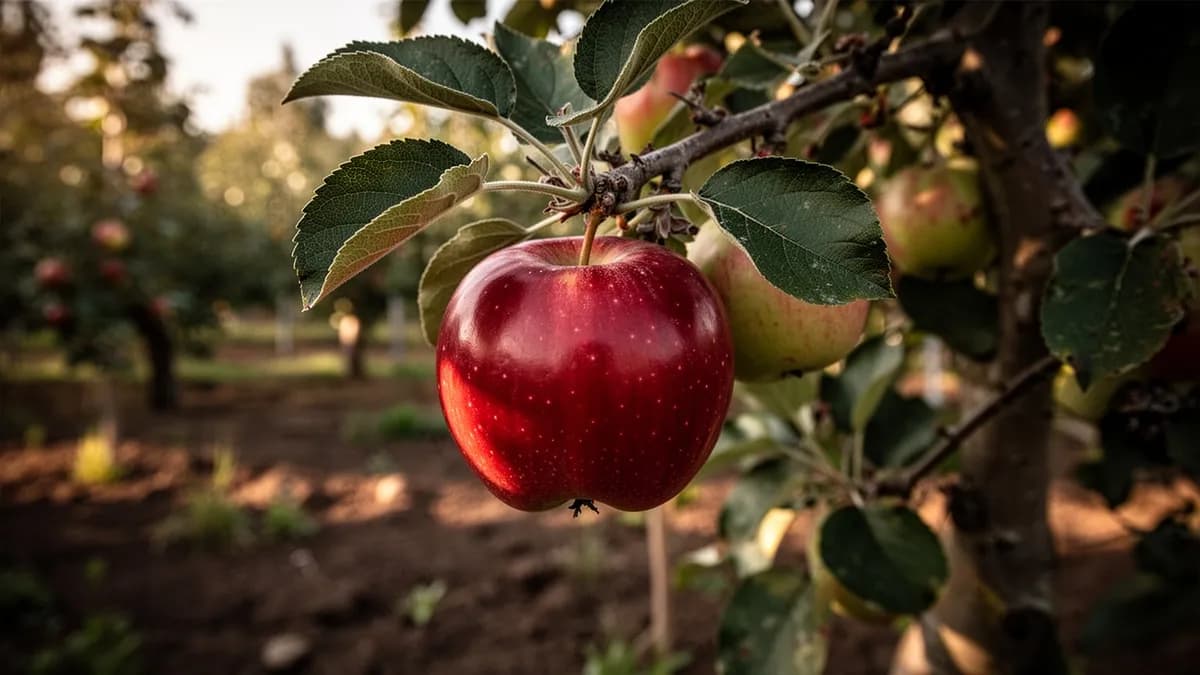
Red Delicious Apple
Malus domestica 'Red Delicious'
At a Glance
The iconic dark red apple with five prominent bumps at the base, once the world's most popular variety. Red Delicious is best for fresh eating with its mild, sweet flavor but becomes mealy when cooked. Choose newer strains that have better flavor and texture than the overly selected commercial types.
Planting & Harvest Calendar
Growth Stages
From Seed to Harvest
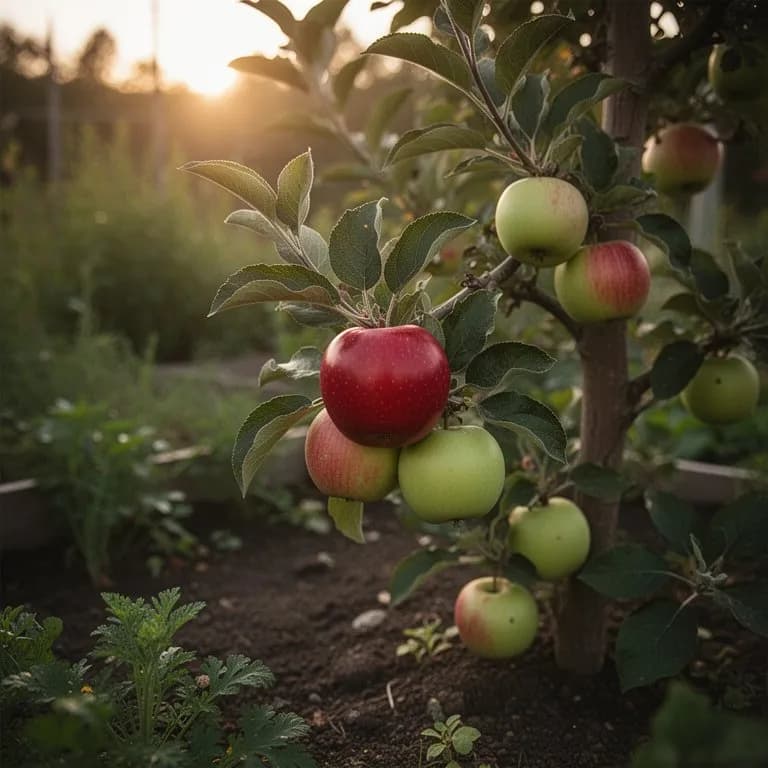
Dormancy
Days 0–60
During late autumn and winter the tree enters full dormancy, dropping its leaves and conserving energy. Buds set during the previous summer remain tightly closed. This chilling period is essential — Red Delicious requires 800–1,000 chill hours (below 7°C) to break dormancy properly and produce a full crop.
💡 Care Tip
Apply dormant oil spray during this stage to smother overwintering mites, scale insects, and aphid eggs before bud swell begins.
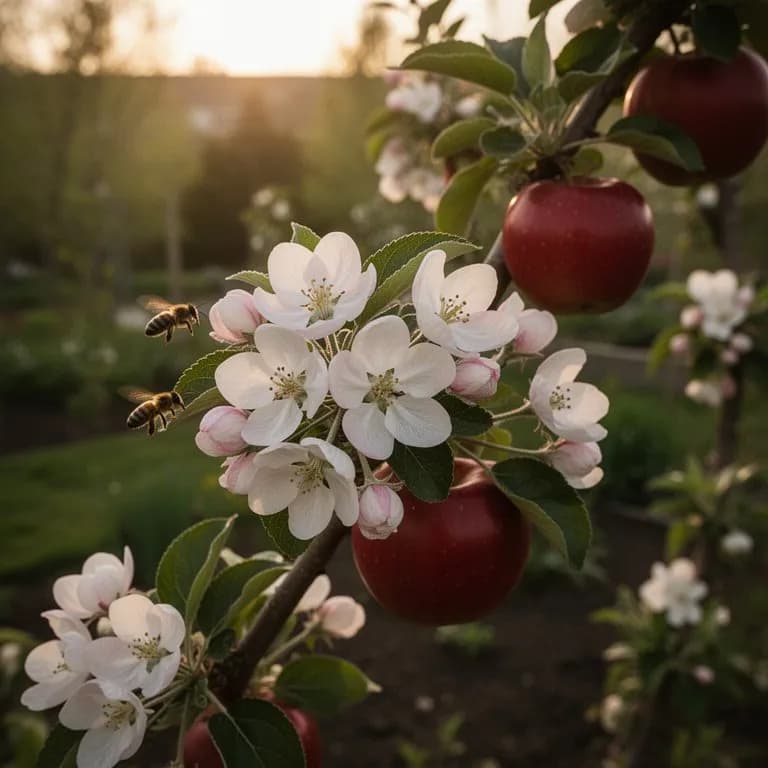
Delicate spring blossoms signal the beginning of the growing season
Monthly Care Calendar
What to do each month for your Red Delicious Apple
May
You are hereHand-thin fruitlets to one per cluster within 4 weeks of petal fall. Apply a balanced fertiliser if new growth appears pale or weak. Begin scab monitoring programmes.
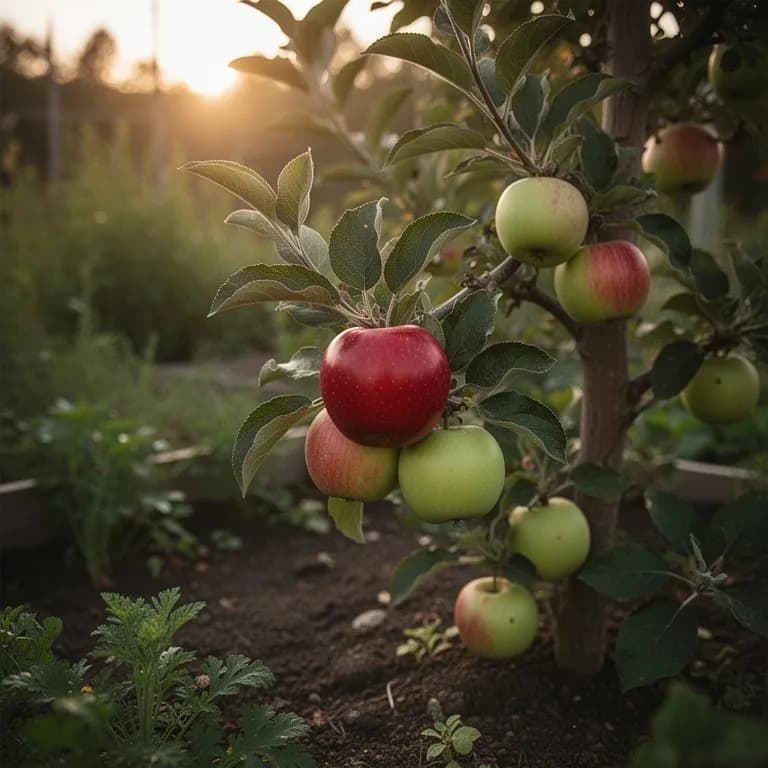
Annual dormant pruning shapes the tree and encourages productive fruiting spurs
Did You Know?
Fascinating facts about Red Delicious Apple
Red Delicious was discovered in 1872 as a chance seedling on the farm of Jesse Hiatt in Madison County, Iowa — he called it 'Hawkeye' before Stark Brothers nursery purchased the rights and renamed it.
Red Delicious apple trees are widely adapted and relatively easy to grow across a broad range of climates. Plant dormant trees in early spring in full sun with well-drained soil. The trees have a naturally upright growth habit and train well to a central leader system. Space standard trees 20 to 25 feet apart or dwarf rootstock trees 10 to 12 feet apart.
Red Delicious requires a pollination partner and is itself a good pollinator for other varieties. Effective partners include Golden Delicious, Gala, and Fuji. The trees bloom mid-season and set fruit readily. Thin fruitlets to one per cluster for best size and to prevent biennial bearing. Select newer strains for improved flavor, as original commercial selections were bred primarily for appearance at the expense of eating quality.
Prune annually to maintain an open canopy with good light penetration, which is essential for developing the deep red skin color. The upright habit may require spreading of scaffold branches to improve structure and light distribution. Water consistently during the growing season and apply balanced fertilizer in early spring. Avoid late nitrogen applications that delay fruit coloring.
The story of Red Delicious is one of the most captivating in American horticultural history, beginning with an accidental discovery in the rolling farmlands of Madison County, Iowa. In 1872, a farmer named Jesse Hiatt noticed an unusual seedling growing where he had cut down an unwanted tree. Rather than destroying it a second time, he let it grow, and by 1880 it bore its first fruit — a striped, elongated, deeply flavoured apple unlike anything he had tasted. He named it 'Hawkeye' and entered it into competitions, winning admirers wherever it appeared.
In 1893, Stark Brothers Nursery of Louisiana, Missouri — then one of the most influential nurseries in North America — tasted Hiatt's apple at a fruit show and allegedly exclaimed it was 'delicious'. They purchased the propagation rights from Hiatt and renamed the variety 'Delicious', later appending 'Red' to distinguish it from the Golden Delicious, which they also promoted. Through aggressive marketing and wide distribution across the United States, the variety became a commercial phenomenon.
From the mid-twentieth century onward, growers and nurseries selected sports — spontaneous mutations — that produced even deeper red colouring and a more elongated, conical shape. Each generation of sports was chosen for visual appeal and shelf life rather than flavour complexity, gradually shifting the commercial Red Delicious away from Jesse Hiatt's original sweet, aromatic apple toward the thick-skinned, mealy-fleshed fruit that became notorious by the 1990s.
Despite its commercial reputation, heritage strains and carefully managed home-grown Red Delicious trees remain capable of producing genuinely excellent eating apples when harvested at proper maturity and not subjected to long cold storage. The variety's fall from commercial favour has paradoxically led to renewed interest among heirloom apple enthusiasts and small-scale orchardists who grow it for its history and its authentic, mildly sweet flavour profile. Today it serves as a fascinating case study in how commercial pressures can transform a beloved variety, and how returning to traditional growing practices can restore its original character.
A fully mature Red Delicious apple tree at peak harvest
Red Delicious seeds can be collected and grown experimentally but will not reproduce the parent variety. Clean seeds from ripe fruit and stratify in moist peat at 35 to 40 degrees Fahrenheit for 60 to 90 days. Sow one-half inch deep in sterile seed-starting mix under bright light. Germination occurs in two to four weeks at 65 to 75 degrees. Red Delicious seedlings grow vigorously and can be used as rootstock or grafted to desired varieties after two years of growth.
Red Delicious grows well in most well-drained soils with a pH of 6.0 to 7.0. The trees have moderate fertility needs and benefit from a spring application of balanced 10-10-10 fertilizer. Avoid excess nitrogen, which delays color development and promotes the mealy texture that plagues this variety. Adequate potassium promotes red skin color. Calcium sprays during fruit development help prevent bitter pit.
Check Your Zone
See if Red Delicious Apple is suitable for your location.
-30°C – 35°C
-22°F – 95°F
Red Delicious is a cold-hardy variety that tolerates winter temperatures down to approximately -30°C when fully dormant, making it suitable for USDA Hardiness Zones 4–8. It requires 800–1,000 chill hours below 7°C annually to break dormancy and set a full crop. Summer temperatures above 35°C can stress fruit development and accelerate maturity unevenly, while cool nights below 13°C during the colour development phase are essential for triggering the deep red anthocyanin pigmentation the variety is prized for. Late spring frosts at or below -2°C during bloom are the greatest climate risk, capable of destroying an entire season's crop in a single night.
Common issues affecting Red Delicious Apple and how to prevent and treat them organically.
The most significant problem with Red Delicious is the mealy, bland texture of many commercial strains that were selected purely for visual appeal rather than eating quality. Newer strains have better flavor but the variety still softens quickly in storage. The upright growth habit requires training to develop a productive, well-shaped tree. Red Delicious is moderately susceptible to fire blight and requires consistent management in humid climates.
Plant chives, garlic, and marigolds around Red Delicious trees to deter common pests. The tree serves as a good pollination partner for many other apple varieties when planted in a diverse orchard. Comfrey at the base provides nutrient-rich mulch material when cut. Nasturtiums act as trap crops for aphids, drawing them away from the apple tree. Avoid planting near walnut trees due to juglone toxicity.
- 1Always plant at least one compatible pollinator variety within 50 metres — Fuji, Gala, Honeycrisp, or Granny Smith all pollinate Red Delicious effectively. Without cross-pollination, fruit set will be sparse or fail entirely.
- 2Choose a planting site with full sun (minimum 8 hours per day) and excellent air drainage. Cold air pooling in low spots dramatically increases frost damage risk at bloom time and promotes fungal disease.
- 3Prepare a planting hole at least twice the width of the root ball and amend heavy clay soils with compost to improve drainage — Red Delicious will not tolerate waterlogged roots.
- 4Apply a 10 cm deep mulch ring extending to the drip line every spring, keeping mulch at least 15 cm away from the trunk to prevent collar rot and rodent nesting against the bark.
- 5For home gardeners, semi-dwarf rootstocks such as M.7 or MM.106 offer the best balance of manageable tree size, earlier fruiting (3–5 years), and good productivity without requiring the intensive staking that fully dwarfing rootstocks demand.
- 6Maintain a central leader training system in early years by selecting one dominant upright shoot and suppressing competitors — this creates a strong scaffold that supports heavy fruit loads without limb breakage.
- 7Thin aggressively: leaving only one apple per spur and spacing fruit 15–20 cm apart is counterintuitive but produces apples that are dramatically larger, better coloured, and more flavourful than unthinned clusters.
- 8Avoid applying high-nitrogen fertilisers after midsummer — excessive late-season vegetative growth is prone to fire blight infection and reduces hardening of wood before winter.
- 9To maximise the deep red colour that Red Delicious is prized for, ensure trees experience cool nights (below 13°C) in the 4–6 weeks before harvest. In warm climates, reflective mulch mats placed under the tree canopy can help improve colour by redirecting light onto the shaded sides of fruit.
- 10Harvest at the correct stage rather than waiting for maximum colour — a fully red apple that has gone past its starch conversion window will be mealy regardless of storage conditions. Use the starch-iodine test on a sample fruit and aim for an index reading of 5–6 for best texture.
Red Delicious apples ripen in mid to late September. The fruit is ready when it has developed full, deep red color and the flesh has a sweet, mild flavor. Seeds should be dark brown. Pick with a gentle upward twist, as the fruit separates easily from the spur when ripe. Timing is important because Red Delicious becomes mealy quickly if left on the tree too long after peak ripeness. Harvest over two pickings as the outer canopy ripens first.
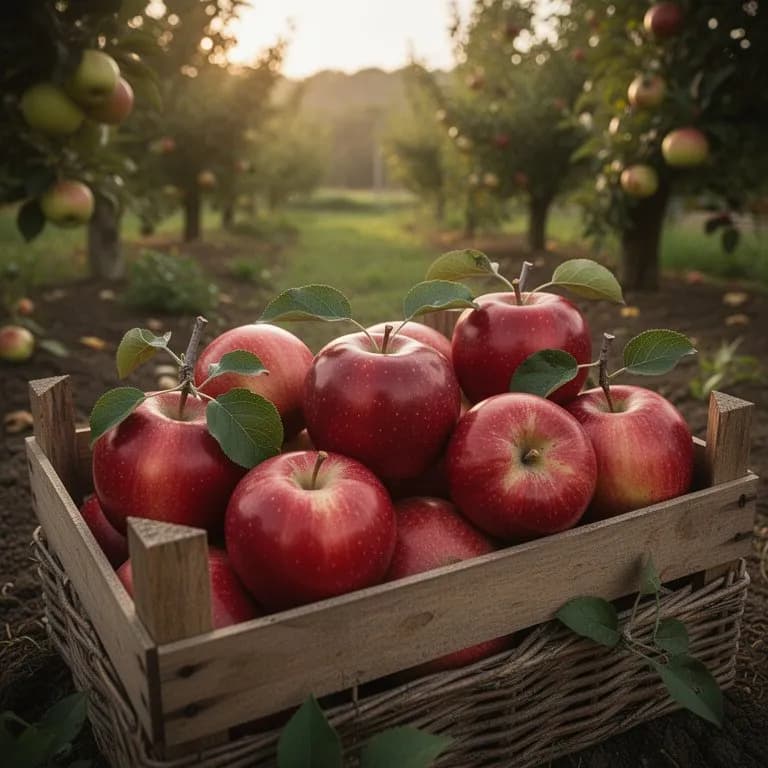
Harvest typically occurs in late September through October when fruit reaches full color
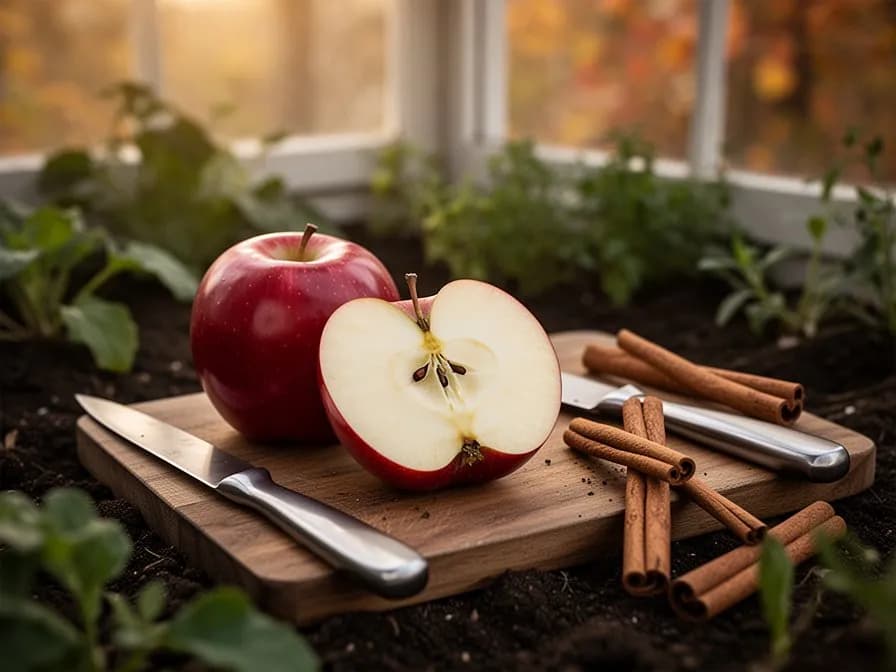
Store Red Delicious at 32 to 35 degrees Fahrenheit in high humidity for two to three months. The texture degrades faster in storage than firmer varieties, developing a mealy quality. For best results, consume within six to eight weeks of harvest. Red Delicious is not recommended for baking or cooking as the flesh disintegrates and lacks tartness. They can be juiced for sweet cider blends or dehydrated as apple chips, though flavor is mild.
Plan your garden with ease
Love growing Red Delicious Apple? Use our free garden planner to design your beds, track planting dates, and get personalized care reminders.
Nutritional Info
Per 100g serving
95
Calories
Health Benefits
- Rich in quercetin and catechins — antioxidant flavonoids concentrated primarily in the skin
- Contains procyanidins linked to cardiovascular health and reduced LDL oxidation
- Provides natural pectin, a soluble fibre that supports healthy gut microbiome diversity
- Low glycaemic index (GI ~36) makes it a suitable snack for blood sugar management
- Naturally fat-free, sodium-free, and cholesterol-free
- Malic acid content supports dental health by stimulating saliva production
💰 Why Grow Your Own?
A single semi-dwarf Red Delicious apple tree typically yields 100–200 lbs of fruit per season at maturity. At average retail prices of $2.00–$3.50 per pound for organically grown apples, a well-maintained home tree can represent $200–$700 worth of fresh fruit annually — far exceeding the initial purchase and installation cost within 3–4 productive seasons.
Quick Recipes
Simple recipes using fresh Red Delicious Apple
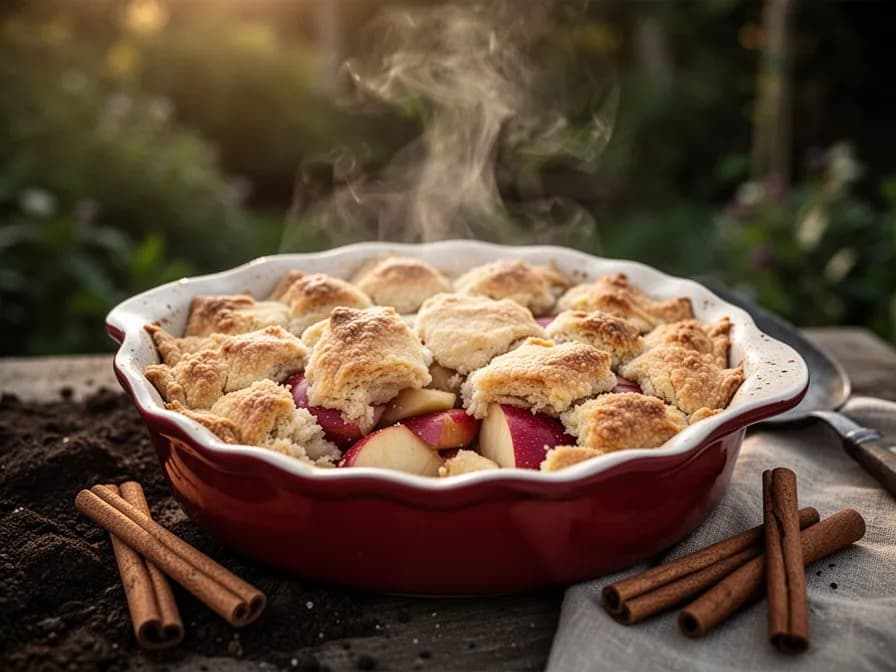
Classic Red Delicious & Walnut Salad
10 minutesA crisp, refreshing salad that lets the mild sweetness of Red Delicious shine alongside toasted walnuts, crumbled blue cheese, and a honey-Dijon vinaigrette. Ready in minutes and impressive enough for guests.
Spiced Apple Butter
20 minutes prep, 3 hours slow cookTransform a glut of home-grown Red Delicious apples into a deeply spiced, spreadable apple butter with cinnamon, cloves, and a hint of vanilla. Wonderful on toast, stirred into oatmeal, or served alongside sharp cheddar.
Baked Red Delicious with Oat Crumble
15 minutes prep, 30 minutes bakeA simple, comforting dessert that highlights the natural sweetness of Red Delicious apples. Hollow out the apples, fill with a brown sugar and oat mixture, bake until tender, and serve with a scoop of vanilla ice cream or a drizzle of cream.
Yield & Spacing Calculator
See how many Red Delicious Apple plants fit in your garden bed based on the recommended 300cm spacing.
0
Red Delicious Apple plants in a 4×4 ft bed
0 columns × 0 rows at 300cm spacing
Popular Varieties
Some of the most popular red delicious apple varieties for home gardeners, each with unique characteristics.
Red Chief
A spur-type sport with improved flavor and an earlier, more uniform red color than standard Red Delicious strains.
Starking
An early sport selection with deeper color and slightly improved texture, widely planted in mid-twentieth-century orchards.
Oregon Spur
A compact spur-bearing strain well-suited to high-density plantings with good color development.
Bisbee Spur
A spur-type strain with very early coloring and a more compact growth habit suitable for smaller orchards.
Red Delicious is primarily a fresh eating apple best consumed within weeks of harvest before the texture degrades. The sweet, mild flavor pairs well with peanut butter and caramel dips. While poor for cooking and baking, they contribute sweetness to fresh cider blends. The attractive deep red skin makes them appealing in fruit displays and gift baskets. Newer improved strains offer noticeably better flavor for fresh eating.
When should I plant Red Delicious Apple?
Plant Red Delicious Apple in March, April. It takes approximately 730 days to reach maturity, with harvest typically in September, October.
What are good companion plants for Red Delicious Apple?
Red Delicious Apple grows well alongside Chives, Garlic, Marigold. Companion planting can improve growth, flavor, and natural pest control.
What hardiness zones can Red Delicious Apple grow in?
Red Delicious Apple thrives in USDA hardiness zones 4 through 8. With greenhouse protection, it may be grown in zones 2 through 9.
How much sun does Red Delicious Apple need?
Red Delicious Apple requires Full Sun (6-8h+). This means at least 6-8 hours of direct sunlight daily.
How far apart should I space Red Delicious Apple?
Space Red Delicious Apple plants 300cm (118 inches) apart for optimal growth and air circulation.
What pests and diseases affect Red Delicious Apple?
Common issues include Fire Blight, Apple Scab, Codling Moth, San Jose Scale. Prevention through good garden practices like crop rotation, proper spacing, and companion planting is the best approach. See the detailed pests and diseases section above for symptoms, prevention, and treatment for each.
How do I store Red Delicious Apple after harvest?
Store Red Delicious at 32 to 35 degrees Fahrenheit in high humidity for two to three months. The texture degrades faster in storage than firmer varieties, developing a mealy quality. For best results, consume within six to eight weeks of harvest. Red Delicious is not recommended for baking or cookin...
What are the best Red Delicious Apple varieties to grow?
Popular varieties include Red Chief, Starking, Oregon Spur, Bisbee Spur. Each has unique characteristics suited to different growing conditions and culinary preferences. See the varieties section above for detailed descriptions.
What soil does Red Delicious Apple need?
Red Delicious grows well in most well-drained soils with a pH of 6.0 to 7.0. The trees have moderate fertility needs and benefit from a spring application of balanced 10-10-10 fertilizer. Avoid excess nitrogen, which delays color development and promotes the mealy texture that plagues this variety. ...
Why does my home-grown Red Delicious taste so much better than supermarket apples?
Commercial Red Delicious apples are typically harvested slightly early for maximum shelf life, then held in controlled-atmosphere cold storage for weeks or months before sale. This process, combined with decades of selection for appearance over flavour, produces the mealy texture and bland taste many people associate with the variety. Home-grown fruit harvested at true maturity and eaten within days of picking retains the mild, honeyed sweetness and crisp texture that made Red Delicious famous in the first place.
How many chill hours does Red Delicious actually need, and what happens if it does not get enough?
Red Delicious requires approximately 800–1,000 chill hours — cumulative hours with temperatures between 0°C and 7°C — between autumn and early spring. Insufficient chilling leads to erratic or delayed bud break, sparse and poorly timed flowering, reduced fruit set, and misshapen or low-quality fruit. Growers in mild-winter climates below USDA Zone 6 should consider lower-chill apple varieties instead.
Do I need two apple trees, or will one Red Delicious produce fruit on its own?
Red Delicious is not self-fertile and requires cross-pollination from a different compatible apple variety to set a good crop. A single tree will produce little to no fruit without a pollinator within effective bee foraging range (approximately 50 metres). Good pollinator companions include Fuji, Gala, Honeycrisp, Golden Delicious, or Granny Smith — all of which bloom at overlapping times. If space is limited, a multi-grafted tree with two compatible varieties on one rootstock solves the problem elegantly.
What is the best way to store Red Delicious apples from the home garden?
Red Delicious stores best at 0–1°C with high relative humidity (90–95%). A dedicated refrigerator set to its coldest setting, or a traditional cool cellar, works well for home quantities. Wrap individual apples in newspaper and store in a single layer to prevent one rotting apple from spoiling others. Under optimal conditions, home-grown Red Delicious can keep for 3–4 months. Avoid storing near ethylene-sensitive vegetables like carrots, as apples release ethylene gas that accelerates spoilage in adjacent produce.
How do I prevent bitter pit in my Red Delicious apples?
Bitter pit is a physiological disorder caused by calcium deficiency in developing fruit — it appears as small, sunken brown spots just beneath the skin. It is most common when irregular watering creates erratic calcium uptake, or when excessive nitrogen or potassium in the soil competitively blocks calcium absorption. Preventative measures include consistent irrigation throughout the season, avoiding high-nitrogen fertilisers after spring, applying foliar calcium chloride sprays (0.4% solution) every 2 weeks from petal fall through to 6 weeks before harvest, and thinning fruit to reduce competition for available nutrients.
When is the right time to prune a Red Delicious apple tree, and how much should I remove?
Prune during late dormancy — after the coldest weather has passed but before bud swell begins, typically late February to early March in most temperate climates. This timing minimises cold damage to cut surfaces and allows inspection for winter-killed wood. Remove dead, diseased, and crossing branches first, then open up the canopy to allow light penetration — aim for a structure where a bird could fly through the interior without obstruction. Never remove more than 20–25% of the total canopy in a single year, as excessive pruning stimulates vigorous, fire blight-susceptible water shoots.
Ready to Grow Red Delicious Apple?
Add Red Delicious Apple to your garden plan and start designing your perfect layout.

Vladimir Kusnezow
Gardener and Software Developer
Zone 6b gardener. Growing vegetables and fruits in soil and hydroponics for 6 years. I built PlotMyGarden to plan my own gardens.
Jump to Section