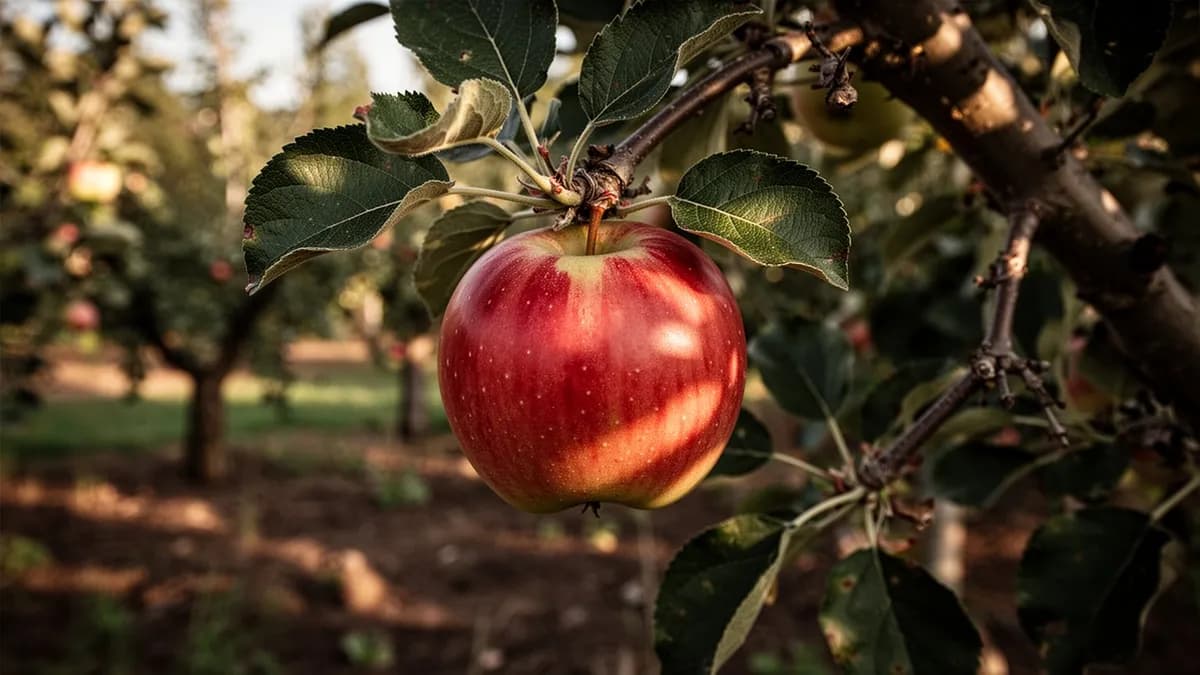
Honeycrisp Apple
Malus domestica 'Honeycrisp'
At a Glance
A modern apple sensation from the University of Minnesota breeding program, prized for its explosive crunch and balanced sweet-tart flavor. Honeycrisp trees can be challenging to grow, with susceptibility to bitter pit and a tendency toward biennial bearing. The large cells in the flesh create a uniquely juicy, snapping texture that has made it a premium variety.
Planting & Harvest Calendar
Growth Stages
From Seed to Harvest
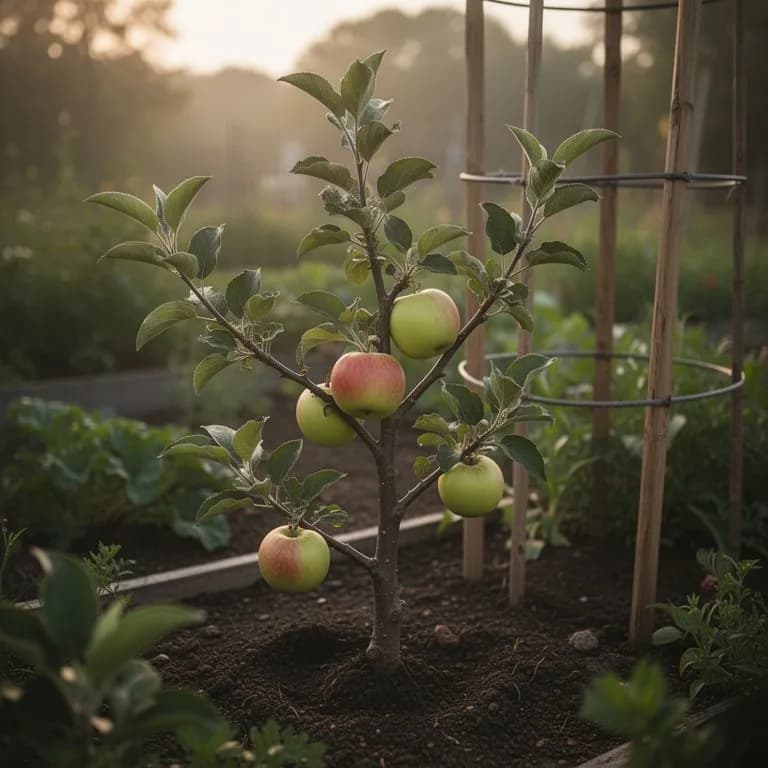
Dormancy and Planting
Days 0–60
Honeycrisp trees are planted during winter dormancy as bare-root whips or potted specimens. The tree stores all its energy in roots and woody tissue during this rest period, slowly accumulating chill hours below 7°C. Honeycrisp requires a moderate 800-1000 chill hours — enough to rule out the warmest climates but accessible to most temperate growing zones. Proper chill hour accumulation is essential for synchronized, vigorous bud break and a full fruit set in spring.
💡 Care Tip
Plant bare-root Honeycrisp trees in late winter while still dormant, ideally on a mild day when the ground is not frozen. Soak bare roots in water for two to four hours before planting. Set the graft union 5 cm above the soil line and spread roots naturally in a wide, shallow hole. Stake with a single post on the windward side and apply a 10 cm deep mulch ring extending to the drip line, keeping mulch 15 cm from the trunk.
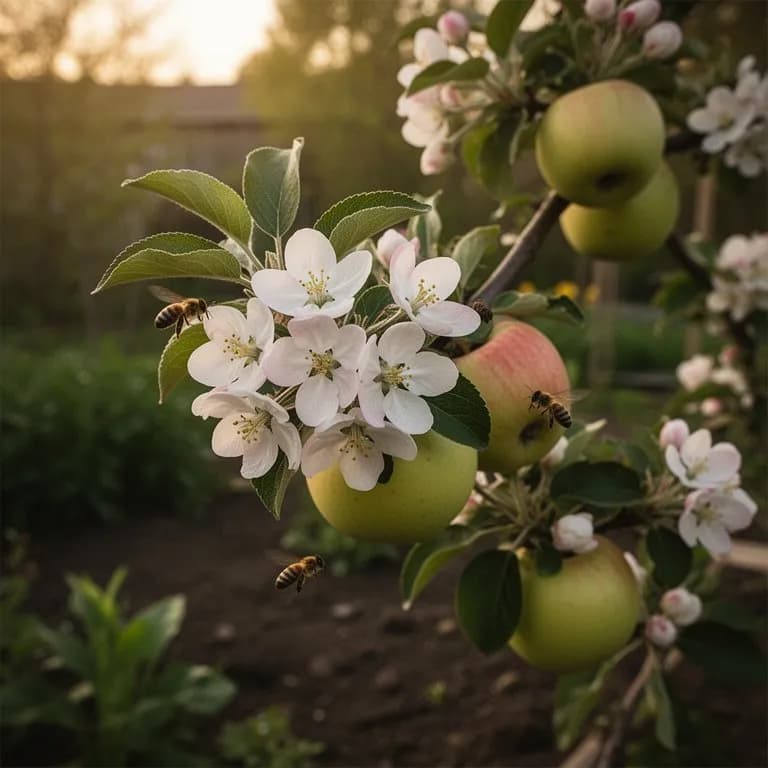
Spring blossoms on a Honeycrisp tree — a critical two-week window when pollinators must visit every flower for a good fruit set
Monthly Care Calendar
What to do each month for your Honeycrisp Apple
May
You are hereBegin fruit thinning as soon as fruitlets reach marble size, approximately 10-14 days after petal fall. Reduce every cluster to one fruit and space remaining fruitlets at 15-20 cm intervals — this is the most critical cultural practice for Honeycrisp quality. Establish a consistent weekly watering schedule if spring rainfall is inadequate. Apply the first of three seasonal foliar calcium sprays to reduce bitter pit risk. Monitor for powdery mildew on young shoots and treat with a sulfur-based fungicide at the first sign of infection.
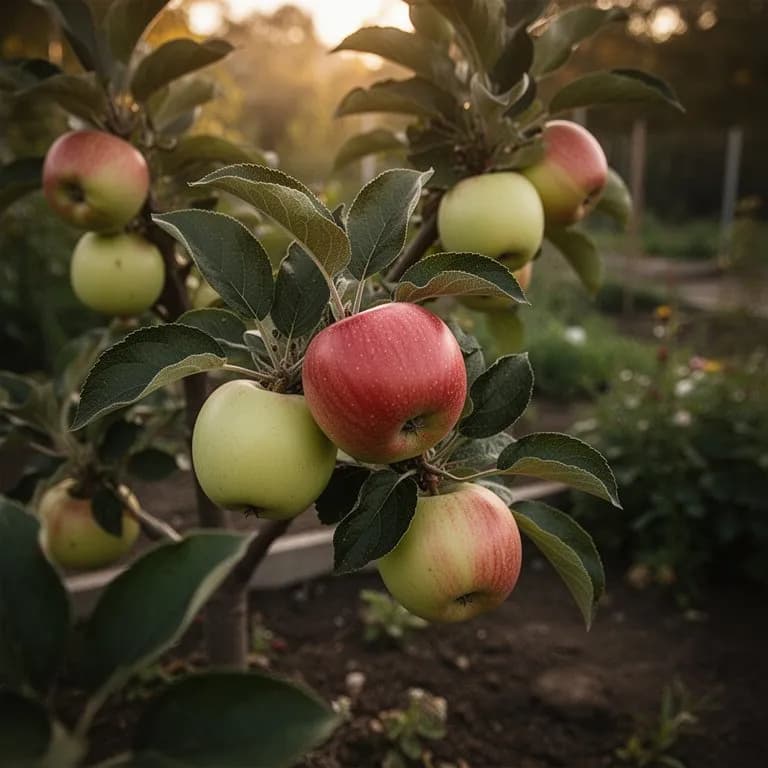
Annual dormant pruning maintains the open-center framework that keeps Honeycrisp branches strong enough to support its notoriously heavy crops
Did You Know?
Fascinating facts about Honeycrisp Apple
Honeycrisp was developed at the University of Minnesota Horticultural Research Center over more than two decades, first crossed in 1960 and not released to the public until 1991. It was nearly abandoned several times before researchers recognized its extraordinary eating quality.
Plant Honeycrisp apple trees in early spring in a location with full sun and excellent air drainage, as this variety is particularly susceptible to diseases that thrive in humid, stagnant conditions. The trees are hardy to zone 3 and actually perform best in cooler climates where they receive adequate winter chill hours. Space standard trees 20 to 25 feet apart or dwarf trees on M.26 or B.9 rootstock 8 to 10 feet apart.
Honeycrisp requires a pollination partner and is an excellent pollinator for other varieties due to its heavy, reliable bloom. Good partners include Gala, Fuji, and Golden Delicious. Train trees to a central leader system and be prepared for a somewhat unruly growth habit with wide-angled, lanky branches that may need support when laden with fruit.
Aggressive fruit thinning is the single most important management practice for Honeycrisp. Thin to one fruit per cluster within two weeks of petal fall, targeting a spacing of one fruit every six to eight inches along each branch. This reduces biennial bearing tendency and dramatically decreases the incidence of bitter pit by ensuring each remaining fruit receives adequate calcium from the tree. Apply four to six calcium chloride foliar sprays from petal fall through August.
Honeycrisp apple traces its origins to a deliberate breeding cross made in 1960 by researchers at the University of Minnesota Horticultural Research Center in St. Paul, Minnesota. The program was seeking a variety that could withstand the brutal winters of the Upper Midwest while delivering superior fresh-eating quality — a combination that had eluded apple breeders for generations. For many years the parentage was believed to be a cross between Macoun and Honeygold, two respectable but commercially limited varieties. However, DNA fingerprinting analysis published in 2004 upended this assumption, revealing that one parent is actually Keepsake, a late-season variety with excellent cold hardiness and storage quality, while the identity of the second parent remains genetically ambiguous. The seedling that would become Honeycrisp was selected from hundreds of candidates for its extraordinary crispness and exceptional flavor, but progress was slow. The variety sat in evaluation for decades, and at several points in the 1970s and 1980s the program came close to discarding it entirely due to its challenging growing characteristics and susceptibility to certain storage disorders. Fortunately, its uniquely explosive cellular structure and intensely sweet-tart flavor profile convinced researchers to persist, and Honeycrisp was finally granted a US plant patent in 1988 and officially released to nurseries and growers in 1991. Commercial adoption was initially cautious — growers were wary of its difficult management requirements and inconsistent yields. But consumer response was immediate and overwhelming. Shoppers encountering Honeycrisp for the first time at farmers markets and specialty grocers in the mid-1990s paid premium prices willingly and returned repeatedly, driving demand that quickly outpaced supply. By the mid-2000s, Honeycrisp had become one of the most economically valuable apple varieties in North America, and it has inspired an entirely new generation of breeding programs around the world seeking to replicate its textural magic in more manageable trees.
Honeycrisp is a patented variety and propagation is restricted without a license. Seeds will not produce true Honeycrisp trees but can be grown experimentally. Collect seeds from ripe fruit, clean thoroughly, and stratify for 60 to 90 days in moist peat at 35 to 40 degrees Fahrenheit. Plant seeds one-half inch deep in sterile mix and provide bright light. Germination takes two to four weeks. Resulting seedlings will produce unknown fruit types after six to ten years of growth.
Honeycrisp performs best in well-drained, slightly acidic to neutral soil with a pH of 6.0 to 6.8. The trees have a moderate nitrogen requirement and excessive fertilization promotes vegetative growth that competes with fruit for calcium, worsening bitter pit. Apply a light application of balanced fertilizer in early spring. Calcium is the critical nutrient for Honeycrisp; apply calcium chloride foliar sprays starting at petal fall and repeating every two weeks through summer.
Check Your Zone
See if Honeycrisp Apple is suitable for your location.
-35°C – 28°C
-31°F – 82°F
Honeycrisp is among the most cold-hardy commercially grown apple varieties, tolerating dormant winter temperatures down to -35°C when fully hardened, making it suitable for USDA hardiness zones 3-7. It requires 800-1000 chill hours below 7°C during winter to break dormancy properly in spring — enough to exclude it from the warmest climates but broadly accessible across most of temperate North America and northern Europe. Active growth and fruit development are optimal at 18-24°C. The cool nights of late summer and early autumn in northern growing regions are critical for developing Honeycrisp's signature red blush and sweet-tart flavor — warm climates that lack cool autumn temperatures produce fruit with inferior color, lower sugar content, and a less complex flavor profile.
Common issues affecting Honeycrisp Apple and how to prevent and treat them organically.
Bitter pit is the dominant challenge with Honeycrisp apples, causing dark sunken spots that worsen in storage. This disorder is related to calcium deficiency in the fruit and is exacerbated by light crop loads, vigorous growth, and large fruit size. Biennial bearing is common without diligent thinning. The trees have a lanky growth habit that requires training and support. Soft scald and soggy breakdown can ruin stored fruit if proper post-harvest conditioning protocols are not followed.
Surround Honeycrisp trees with dill, which is already listed as a companion, to attract beneficial parasitic wasps that control codling moth and aphids. Chives and garlic deter borers and aphids with their strong scent. Plant comfrey as a dynamic accumulator that draws calcium and potassium from deep soil layers, providing nutrient-rich mulch material when cut and laid around the tree. Nasturtiums attract aphids away from the apple tree as a trap crop.
- 1Select a pollinator variety carefully, as Honeycrisp's bloom timing is mid-season and it requires a different, compatible variety nearby. Excellent choices include Zestar (early-mid), McIntosh (mid), Haralson (mid-late), and Gala (mid). Avoid using another Honeycrisp as a pollinator, as they bloom simultaneously and are in the same incompatibility group.
- 2Honeycrisp is particularly prone to bitter pit, a calcium-related physiological disorder that causes sunken brown spots in the flesh near the skin. Prevent it by applying three foliar calcium sprays (calcium chloride at 0.4%) at 6, 9, and 12 weeks after petal fall, maintaining consistent irrigation, and thinning fruit aggressively to reduce competition for calcium.
- 3Thin fruit more aggressively than you think necessary — Honeycrisp's natural tendency to over-crop is its most significant management challenge. Reduce every cluster to one fruit and aim for one apple every 20 cm of branch length. Crop-load studies consistently show that under-thinning is the single greatest cause of small, poorly colored, bitter-pit-affected Honeycrisp fruit.
- 4Move harvested Honeycrisp to cold storage at 0-2°C within hours of picking. Honeycrisp is uniquely susceptible to soft scald, a chilling disorder that causes large brown patches on the skin and flesh during storage. Conditioning the fruit at 3-4°C for 7 days before moving to colder storage dramatically reduces soft scald incidence without significantly shortening overall storage life.
- 5Choose a site with excellent air drainage as well as good soil drainage. Honeycrisp is susceptible to late spring frost damage to blossoms and to humid conditions that promote fire blight and powdery mildew. A gentle slope that allows cold air to drain away on still, clear nights provides significantly better frost protection than a flat site or valley bottom.
- 6Prop branches heavily — Honeycrisp produces extremely dense, large fruit that frequently snaps scaffold branches without support. Install padded wooden or PVC pipe props beneath fruit-laden limbs in July, before the weight becomes critical. Some orchardists install permanent trellis wires above the tree to suspend branches upward rather than prop them from below.
- 7Monitor closely for fire blight, to which Honeycrisp shows moderate susceptibility. Scout weekly during and after bloom for the characteristic water-soaked blossoms and shepherd's-crook shoot tips. Prune out infections immediately, cutting 30 cm below the visible margin of infection with tools sterilized between each cut in a 10% bleach solution or 70% isopropyl alcohol.
- 8Avoid planting Honeycrisp in sites with a history of replant disease — the complex of soil pathogens and nematodes that suppress growth of new apple trees in previously planted ground. If replanting an old orchard site, fumigate or treat with biological soil amendments, or use a replant-disease-tolerant rootstock such as Geneva 41 or Geneva 935 rather than the more susceptible M9 or M26.
- 9Apply a reflective mulch beneath the tree canopy in late summer — silver-colored plastic mulch reflects light upward onto the shaded underside of developing fruit, improving red color development on the lower half of each apple. This is especially useful in higher-latitude or cloudier climates where light levels during the color development window may be limiting.
- 10Harvest in multiple picks over 7-10 days rather than all at once. Honeycrisp fruit on the south and west faces of the tree receives more sun and ripens several days earlier than shaded fruit on the north side. Picking in two to three passes captures each apple at peak ripeness and avoids the over-maturity that causes the mealy texture Honeycrisp develops when left on the tree too long.
Honeycrisp apples ripen in late September to early October in most regions. The fruit is ready when the background color shifts from green to creamy yellow and the red blush is well developed. A starch-iodine test showing 50 to 70 percent clear indicates optimal harvest maturity. Pick individual fruits as they ripen over two to three weeks rather than in a single harvest. Handle extremely gently, as the large cell structure that creates the signature crunch also makes the fruit prone to bruising.
Honeycrisp apples require special storage handling to prevent soft scald and soggy breakdown disorders. Condition freshly harvested fruit at 50 degrees Fahrenheit for one week before moving to long-term cold storage at 38 degrees rather than the standard 32 degrees. With proper conditioning, they store for three to four months. For home storage, keep in the refrigerator and use within two months. Honeycrisp can be frozen as sliced pieces for later baking use.
Plan your garden with ease
Love growing Honeycrisp Apple? Use our free garden planner to design your beds, track planting dates, and get personalized care reminders.
Nutritional Info
Per 100g serving
57
Calories
Health Benefits
- Honeycrisp's high juice content delivers exceptional hydration alongside natural electrolytes, making it one of the most satisfying and refreshing whole-fruit snacks available during autumn harvest season
- Rich in soluble pectin fiber concentrated in and just beneath the skin, which forms a viscous gel in the digestive tract that helps lower LDL cholesterol and slows glucose absorption to moderate blood sugar response
- Provides a meaningful dose of quercetin, a potent flavonoid antioxidant abundant in the red-pigmented skin that has been linked to reduced cardiovascular disease risk and improved immune function in observational studies
- Contains chlorogenic acid, a polyphenol that research suggests may help reduce the risk of type 2 diabetes by improving insulin sensitivity and reducing postprandial glucose spikes after carbohydrate-containing meals
- Delivers natural malic acid, the organic compound responsible for Honeycrisp's characteristic tartness, which plays a role in cellular energy production and has been studied for supporting exercise recovery and reducing muscle fatigue
- Low in calories at approximately 57 kcal per 100g with a low glycemic index around 38, making Honeycrisp an ideal satisfying snack for weight management that provides lasting satiety through fiber and water content without caloric excess
💰 Why Grow Your Own?
A mature Honeycrisp apple tree on semi-dwarf rootstock can produce 25-50 kg of fruit per year. At typical specialty grocery prices of $5-$8 per kg for organic or premium Honeycrisp, a single productive tree represents $125-$400 worth of fruit annually. While Honeycrisp trees cost $30-$60 at the nursery and require 3-5 years to begin significant production, they remain productive for 25-40 years, making the lifetime return on investment exceptional. Growing your own also eliminates the cold-chain compromises of commercial Honeycrisp — you can pick and eat the same day, experiencing a level of flavor, juice, and crunch that commercially stored fruit simply cannot match.
Quick Recipes
Simple recipes using fresh Honeycrisp Apple
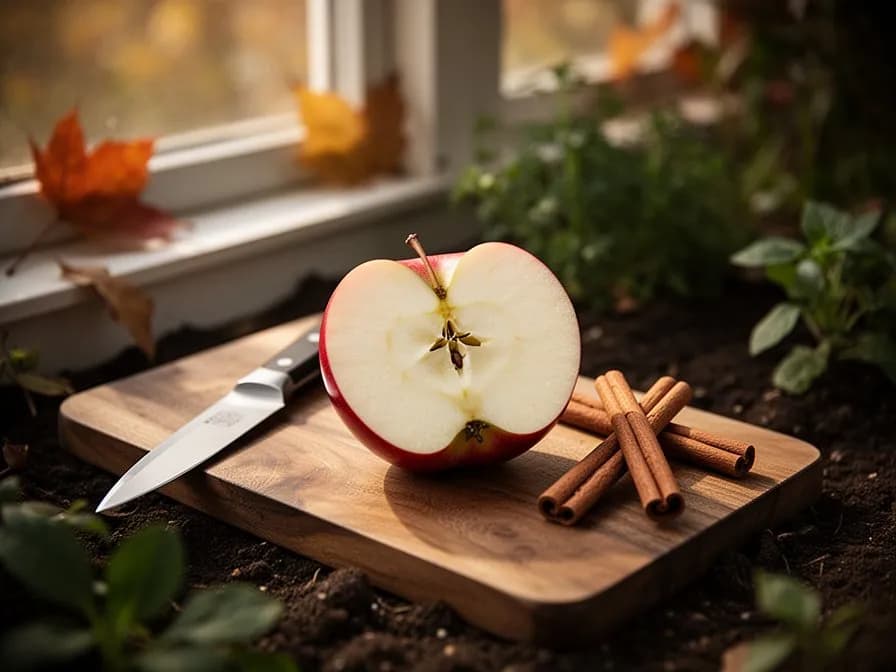
Honeycrisp Caramel Apple Slices
20 minutesA simple but showstopping dessert that lets Honeycrisp's legendary crunch and sweet-tart flavor take center stage. Thick slices are fanned on a board with warm salted caramel for dipping, topped with toasted pecans and a pinch of flaky sea salt. The apple's extraordinarily juicy cells provide a refreshing counterpoint to the rich caramel that no other variety can quite match.
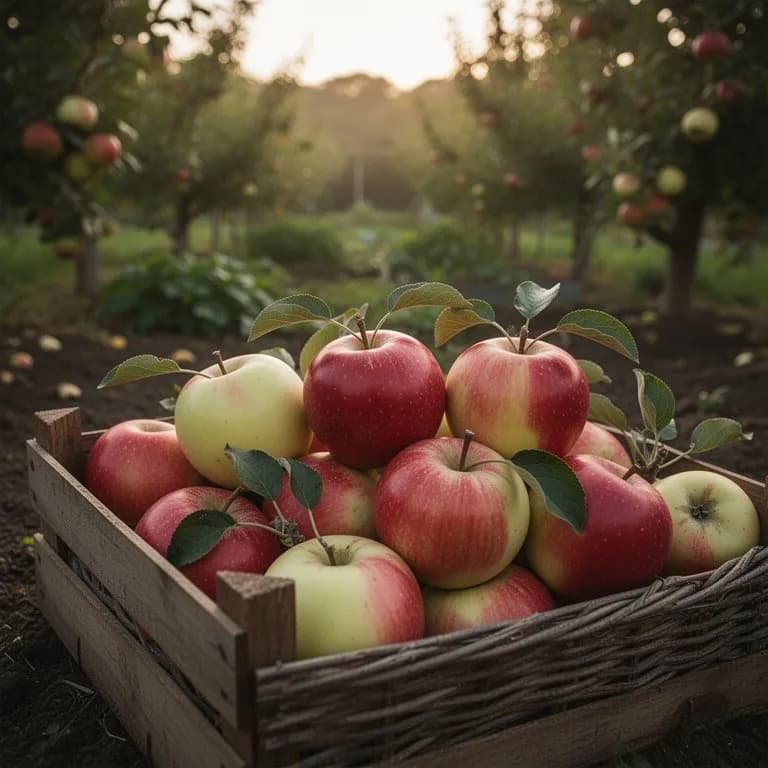
Honeycrisp Waldorf Salad
15 minutesA modern, lighter take on the classic Waldorf that showcases Honeycrisp's unique explosive crunch as the star ingredient. The apple holds its texture far longer than most varieties when dressed, making this salad suitable for making ahead — a practical advantage for entertaining. Toasted walnuts, crisp celery, and a honey-lemon yogurt dressing complement without overpowering the apple's natural complexity.
Honeycrisp and Sharp Cheddar Flatbread
25 minutesA savory-sweet flatbread that pairs Honeycrisp's fruity acidity with the sharpness of aged cheddar in a combination that has become a modern harvest-season favorite. Thin apple slices caramelize slightly in the oven, intensifying their flavor while retaining just enough texture to provide a satisfying bite against the melted cheese and crisp flatbread base.
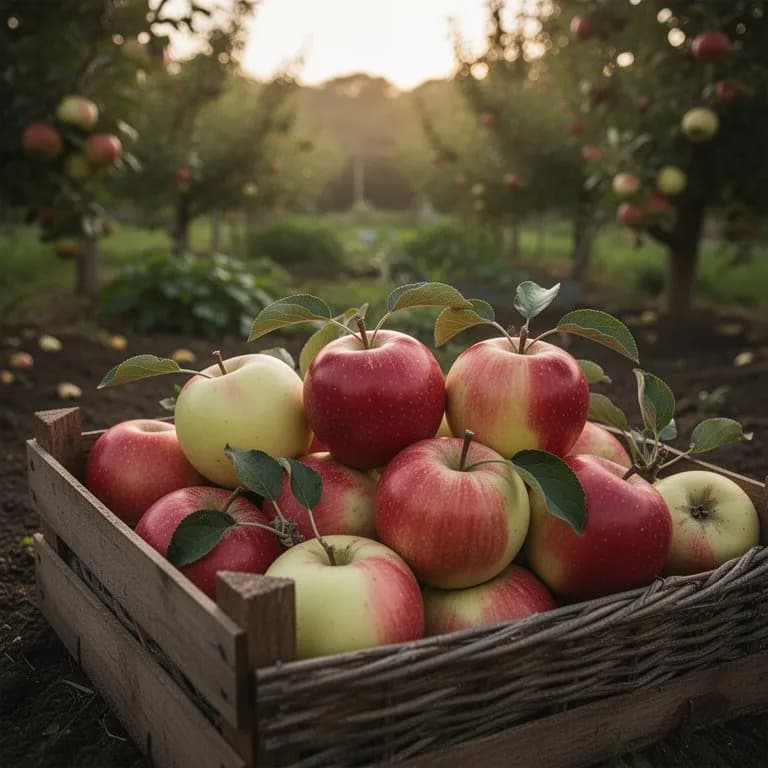
Harvesting Honeycrisp at peak ripeness — the fruit should detach with a gentle upward twist when the background skin turns pale yellow
Yield & Spacing Calculator
See how many Honeycrisp Apple plants fit in your garden bed based on the recommended 300cm spacing.
0
Honeycrisp Apple plants in a 4×4 ft bed
0 columns × 0 rows at 300cm spacing
Popular Varieties
Some of the most popular honeycrisp apple varieties for home gardeners, each with unique characteristics.
Premier Honeycrisp
A sport selection with improved red coloring that develops earlier and more uniformly than the standard type.
SweeTango (Minneiska)
A Honeycrisp offspring crossed with Zestar that ripens earlier with an even more intense sweet-tart flavor and spicy aroma.
Rave (MN55)
A Honeycrisp descendant from the same breeding program, ripening in August with similar texture but tropical flavor notes.
Pazazz
A Honeycrisp offspring with firm, crunchy flesh and a distinctive spicy-sweet flavor profile that stores better than the parent.
Evercrisp
A cross of Honeycrisp and Fuji combining Honeycrisp crunch with Fuji sweetness and significantly improved storage life.
Honeycrisp apples are primarily enjoyed fresh, where their explosive crunch and balanced flavor are showcased. They make excellent additions to salads, cheese plates, and lunchboxes. While their texture softens more than Granny Smith when baked, they work well in rustic pies and crisps where some breakdown is acceptable. Their juice is exceptional for fresh drinking and adds complexity to cider blends.
When should I plant Honeycrisp Apple?
Plant Honeycrisp Apple in March, April. It takes approximately 730 days to reach maturity, with harvest typically in September, October.
What are good companion plants for Honeycrisp Apple?
Honeycrisp Apple grows well alongside Chives, Garlic, Marigold, Dill. Companion planting can improve growth, flavor, and natural pest control.
What hardiness zones can Honeycrisp Apple grow in?
Honeycrisp Apple thrives in USDA hardiness zones 3 through 8. With greenhouse protection, it may be grown in zones 1 through 9.
How much sun does Honeycrisp Apple need?
Honeycrisp Apple requires Full Sun (6-8h+). This means at least 6-8 hours of direct sunlight daily.
How far apart should I space Honeycrisp Apple?
Space Honeycrisp Apple plants 300cm (118 inches) apart for optimal growth and air circulation.
What pests and diseases affect Honeycrisp Apple?
Common issues include Bitter Pit, Apple Scab, Codling Moth, Fire Blight. Prevention through good garden practices like crop rotation, proper spacing, and companion planting is the best approach. See the detailed pests and diseases section above for symptoms, prevention, and treatment for each.
How do I store Honeycrisp Apple after harvest?
Honeycrisp apples require special storage handling to prevent soft scald and soggy breakdown disorders. Condition freshly harvested fruit at 50 degrees Fahrenheit for one week before moving to long-term cold storage at 38 degrees rather than the standard 32 degrees. With proper conditioning, they st...
What are the best Honeycrisp Apple varieties to grow?
Popular varieties include Premier Honeycrisp, SweeTango (Minneiska), Rave (MN55), Pazazz, Evercrisp. Each has unique characteristics suited to different growing conditions and culinary preferences. See the varieties section above for detailed descriptions.
What soil does Honeycrisp Apple need?
Honeycrisp performs best in well-drained, slightly acidic to neutral soil with a pH of 6.0 to 6.8. The trees have a moderate nitrogen requirement and excessive fertilization promotes vegetative growth that competes with fruit for calcium, worsening bitter pit. Apply a light application of balanced f...
Why does my Honeycrisp apple have brown spots inside near the skin?
Those sunken brown spots are almost certainly bitter pit, a physiological disorder caused by calcium deficiency in the developing fruit. It is Honeycrisp's most common and frustrating quality problem, affecting fruit both before harvest and during storage. Bitter pit is not caused by any pest or pathogen — it results from competition for calcium during rapid fruit sizing, especially in over-cropped trees or those experiencing uneven soil moisture. Prevent it by thinning fruit aggressively, applying three foliar calcium chloride sprays during the growing season (at 6, 9, and 12 weeks after petal fall), maintaining consistent deep irrigation throughout summer, and avoiding excessive nitrogen fertilization which promotes rapid growth that dilutes calcium uptake.
Why is Honeycrisp so much more expensive than other apples at the store?
Honeycrisp commands premium prices for several compounding reasons. It is genuinely difficult to grow profitably — it requires more hand labor for thinning, propping, and careful harvesting than standard varieties, is more susceptible to disorders like bitter pit and soft scald that reduce packout percentages, and has a shorter commercial production window per tree due to biennial bearing tendencies. Post-harvest handling and storage requirements are also more demanding, requiring specialized conditioning protocols. Additionally, for many years after its release, demand significantly outpaced supply as growers were reluctant to invest in such a management-intensive variety. Today, despite expanded acreage, the combination of high production costs and consistently strong consumer demand keeps Honeycrisp prices elevated relative to commodity apple varieties.
Can I grow Honeycrisp in a warm climate like California or the Southeast?
Honeycrisp is not well-suited to warm climates because it requires 800-1000 chill hours below 7°C during winter dormancy, a requirement that most of California's valleys, the Deep South, and similar mild-winter regions cannot reliably provide. Without sufficient chill hours, trees break dormancy erratically, produce sparse flower clusters, and fruit poorly. Even in marginal chill-hour areas, the warm autumn temperatures of warmer climates prevent the cool nights necessary for developing Honeycrisp's signature red blush and high sugar content. Gardeners in warm climates should consider low-chill varieties such as Anna, Dorsett Golden, or Fuji (in somewhat cooler areas) rather than attempting Honeycrisp where it will consistently underperform.
How do I prevent my Honeycrisp from bearing fruit only every other year?
Biennial bearing — heavy production one year followed by little or no fruit the next — is one of Honeycrisp's most well-documented problems and is almost always triggered by insufficient fruit thinning. When a tree over-crops, it depletes its carbohydrate reserves and produces very few flower buds for the following spring, resulting in an off year. Prevention is straightforward in principle but demanding in practice: thin fruit aggressively every year, reducing each cluster to one fruitlet and spacing remaining fruit 15-20 cm apart regardless of how heavy the crop appears. If your tree has already entered a biennial pattern, remove 50-70% of the flower clusters in the heavy bloom year to force moderate production and allow flower bud formation for the following season. Consistent, aggressive thinning every year is the only reliable cure.
What rootstock should I choose for my Honeycrisp tree?
The best rootstock for Honeycrisp depends on your soil, site, and management goals. Geneva 935 (G.935) and Geneva 41 (G.41) are increasingly recommended by researchers because they combine dwarfing or semi-dwarfing size with significant resistance to replant disease and fire blight — important advantages given Honeycrisp's susceptibility to both. M9 produces very small, manageable trees ideal for high-density plantings and backyard gardens but requires staking throughout the tree's life and is highly susceptible to replant disease. M26 offers slightly more vigor than M9 with comparable tree size. MM106 and MM111 produce semi-dwarf to near-standard trees that are more drought-tolerant and self-supporting but take longer to begin bearing. Avoid planting Honeycrisp on its own roots or on highly vigorous rootstocks such as M111 alone, as the resulting trees are extremely large and slow to begin productive bearing.
How should I store Honeycrisp apples after harvest to keep them crisp for months?
Honeycrisp has specific storage requirements that differ from most other apple varieties. Harvest at peak maturity — not over-ripe — and handle every apple as if it were an egg, as even minor bruises rapidly deteriorate into soft, brown patches. Do not store Honeycrisp at temperatures below 0°C, as it is prone to a condition called soft scald that causes large, irregular brown patches on the skin and flesh. The recommended protocol is to hold freshly harvested Honeycrisp at 3-4°C for 7 days before moving it to longer-term cold storage at 0-2°C with 90-95% relative humidity. This conditioning step dramatically reduces soft scald incidence. Under these conditions, well-handled Honeycrisp can remain crisp and flavorful for 4-6 months. Store fruit in single layers so apples do not touch each other, and check weekly, removing any fruit showing signs of decay.
Ready to Grow Honeycrisp Apple?
Add Honeycrisp Apple to your garden plan and start designing your perfect layout.

Vladimir Kusnezow
Gardener and Software Developer
Zone 6b gardener. Growing vegetables and fruits in soil and hydroponics for 6 years. I built PlotMyGarden to plan my own gardens.
Jump to Section