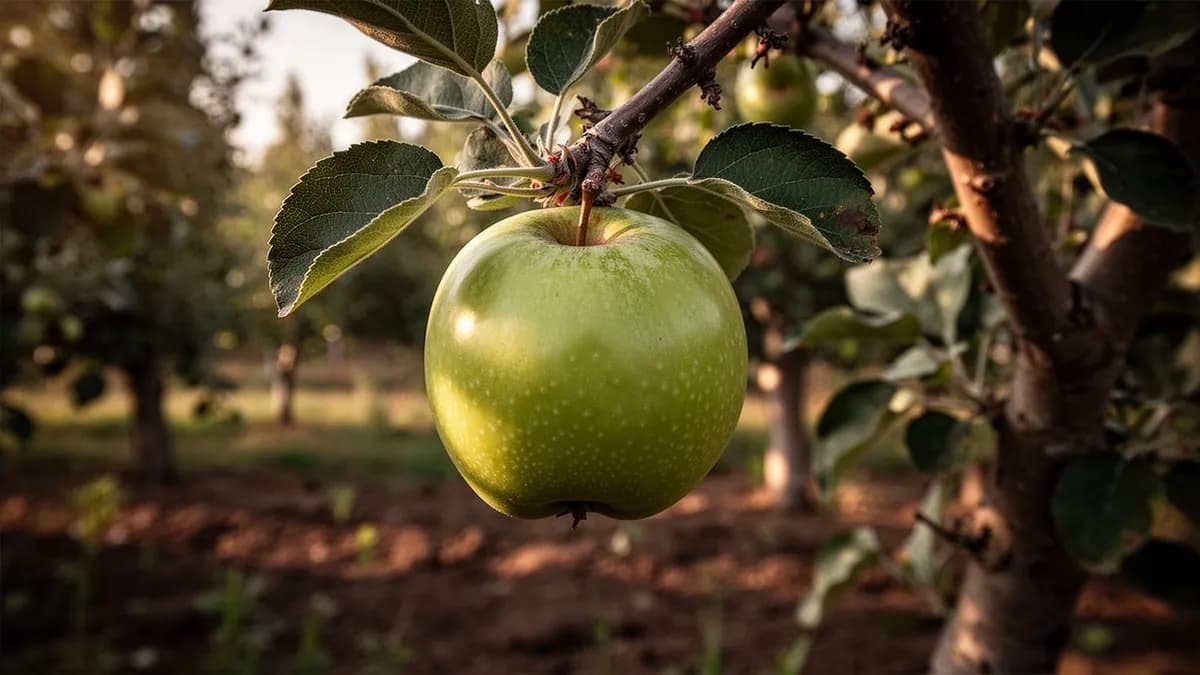
Granny Smith Apple
Malus domestica 'Granny Smith'
At a Glance
The classic green apple with a tart, crisp flavor that makes it the gold standard for pies and baking. Granny Smith apples require a very long growing season and are among the last varieties to ripen in autumn. They store extremely well and maintain their firm texture and tartness through months of cold storage.
Planting & Harvest Calendar
Growth Stages
From Seed to Harvest
Dormancy & Chilling
Days 0–90
Granny Smith requires 400–600 chilling hours (below 7°C / 45°F) to break dormancy properly. During this period the tree appears lifeless, but internal processes are resetting flower and leaf buds for the season ahead. Inadequate chilling leads to erratic budbreak and reduced fruit set.
💡 Care Tip
Apply a dormant oil spray on a dry day above 4°C to smother overwintering scale insects and mite eggs before buds swell.
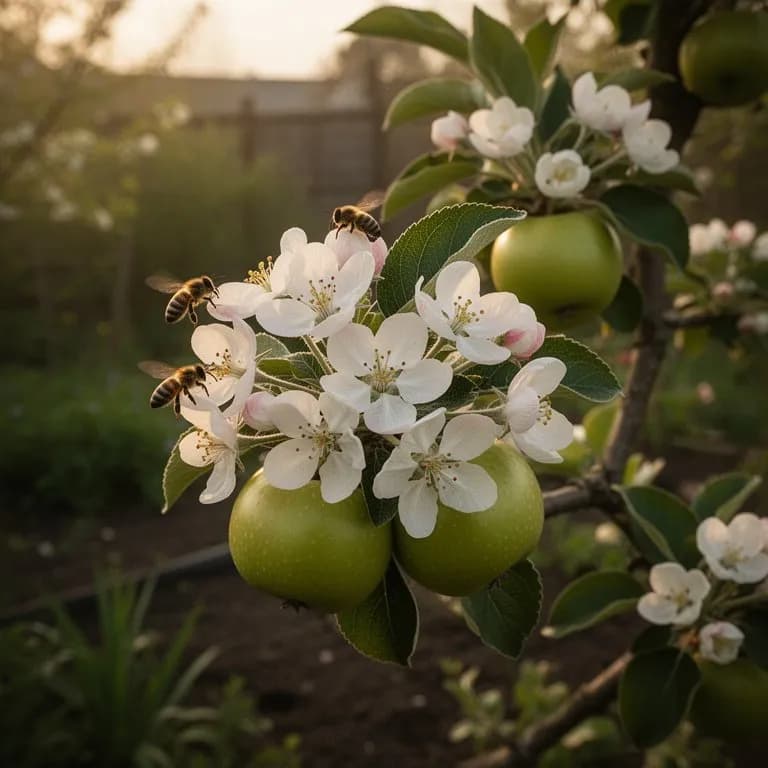
Delicate white blossoms of the Granny Smith apple tree opening in mid-spring, drawing in pollinators
Monthly Care Calendar
What to do each month for your Granny Smith Apple
May
You are hereThin fruitlets to one per cluster after June drop becomes evident. Apply first codling moth spray if trap catches exceed threshold. Hang pheromone traps for oriental fruit moth. Begin regular 2-week calcium foliar spray program.
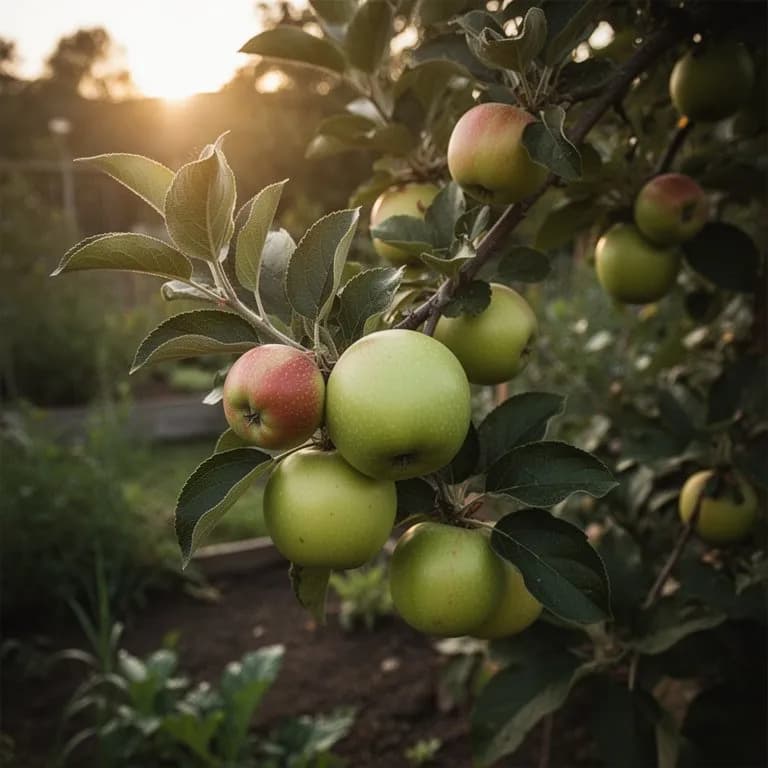
Annual winter pruning keeps the Granny Smith tree open, well-lit, and productive for decades
Did You Know?
Fascinating facts about Granny Smith Apple
Granny Smith is named after Maria Ann Smith, an Australian orchardist from Ryde, New South Wales, who first propagated the variety around 1868 from what is believed to be a chance seedling of a French crab apple.
Granny Smith apple trees need a warm climate with a long growing season of at least 180 days from bloom to harvest. Plant dormant trees in early spring in full sun with good air drainage to minimize late frost damage to blossoms. The trees are vigorous growers and benefit from training to a modified central leader or open vase system to manage their spreading habit.
This variety blooms mid-season and requires a compatible pollinator such as Fuji, Gala, or Golden Delicious within bee-flying distance. Granny Smith trees are moderately self-thinning but still benefit from hand thinning to one fruit per cluster for optimal size. The trees are naturally vigorous and may produce excessive vegetative growth if over-fertilized with nitrogen.
Prune annually during winter dormancy to maintain an open, well-lit canopy. Remove water sprouts and inward-growing branches to promote air circulation and reduce disease. In regions with intense summer sun, avoid over-thinning the canopy as the bright green fruit is susceptible to sunburn. Water deeply and consistently, providing one to two inches per week during the growing season.
The Granny Smith apple story begins in the colony of New South Wales, Australia, in the 1860s. Maria Ann Smith — affectionately known as Granny Smith — was born in Sussex, England, in 1799 and emigrated to Australia with her husband Thomas in 1839. They settled in Eastwood (then known as Ryde), a rural district outside Sydney, where they farmed and sold produce at the local market.
Around 1868, Maria discovered an unusual seedling growing beside a creek on her property. Local accounts suggest it sprouted from the remnants of French crab apples she had been testing for cooking. Whatever its exact parentage, the chance seedling produced fruit unlike anything grown in Australia at the time: firm, tart, bright green, and exceptionally long-keeping. Maria began propagating and selling the apples at Ryde markets, where they quickly attracted a following among cooks and housewives for their outstanding culinary qualities.
Maria Smith died in 1870, just as the variety was gaining attention. Local nurseryman Edward Gallard recognised the commercial potential and continued propagating the trees. By the 1890s the variety had been formally exhibited at the Castle Hill Agricultural and Horticultural Show, where it was named 'Granny Smith's Seedling' in posthumous honour of its discoverer.
For the first century of its existence, Granny Smith remained largely an Australasian variety, prized domestically but little known elsewhere. Its fortunes changed dramatically in the 1970s and 1980s, when advances in controlled-atmosphere cold storage allowed apples to be kept in prime condition for up to a year. Exporters discovered that Granny Smith — with its natural firmness and high acidity — travelled and stored better than virtually any other variety. Shipments from Australia, South Africa, Chile, and New Zealand began filling supermarket shelves in Europe and North America throughout the year.
Today Granny Smith is grown commercially in Australia, New Zealand, South Africa, Chile, Argentina, the United States (particularly Washington State and California), France, and Italy. It remains the world's most popular green apple and a benchmark variety against which other tart cultivars are measured. Home gardeners prize it for its reliable cropping, exceptional storage life, and unmatched baking performance — a living legacy to a chance find beside a creek in colonial New South Wales.
Granny Smith seeds do not produce true-to-type offspring and are used only for rootstock or experimental growing. The original Granny Smith tree was itself a chance seedling, so growing from seed can produce interesting results. Stratify seeds in moist sand at 33 to 40 degrees Fahrenheit for 60 to 90 days, then sow one-half inch deep in seed-starting mix. Keep soil consistently moist at 65 to 75 degrees and expect germination in two to four weeks. Seedlings require several years of growth before grafting or fruiting.
Granny Smith trees prefer well-drained, fertile loam with a pH of 6.0 to 7.0. They are vigorous growers that respond strongly to nitrogen, so apply fertilizer conservatively to avoid excessive vegetative growth at the expense of fruit production. A balanced 10-10-10 fertilizer in early spring is sufficient for most trees. Supplement with calcium sprays during fruit development and ensure adequate potassium levels to support the long maturation period.
Check Your Zone
See if Granny Smith Apple is suitable for your location.
-2°C – 35°C
28°F – 95°F
Granny Smith performs best in climates with warm to hot summers (ideally 25–32°C during fruit development) and cool winters that reliably deliver 400–600 chilling hours below 7°C. The long, warm growing season needed to ripen its fruit fully makes it better suited to zones 7–10 than colder northern gardens. Spring frosts below -2°C during or after blossom cause serious crop losses, so selecting a frost-sheltered site or being prepared to cover the tree is essential. In climates with insufficient summer heat (average below 18°C in July/August), fruit may never fully ripen and will remain excessively acidic with poor flavour.
Common issues affecting Granny Smith Apple and how to prevent and treat them organically.
Sunburn is a major issue for Granny Smith apples because the light green skin is especially vulnerable to solar damage during hot summers. Protective kaolin clay sprays or reflective ground covers can help mitigate this. In cooler climates, fruit may fail to reach full maturity, remaining overly tart and starchy. The variety is moderately susceptible to apple scab and benefits from a consistent fungicide program. Bitter pit can occur in years of light crop load with vigorous shoot growth.
Plant aromatic herbs like chives, garlic, and oregano beneath Granny Smith trees to confuse and deter pest insects with strong scents. Marigolds planted in the root zone attract hoverflies and parasitic wasps while repelling soil nematodes. Clover or vetch ground covers fix nitrogen and support beneficial insect populations. Avoid planting near walnut or butternut trees due to juglone sensitivity, and keep grass away from the trunk base where it competes for moisture and nutrients.
- 1Always plant Granny Smith with a compatible cross-pollinator within 15 metres — suitable partners include Fuji, Gala, Golden Delicious, Pink Lady, and Braeburn. Without pollination, fruit set will be negligible.
- 2Choose your rootstock carefully: MM.106 is the best all-round choice for home gardeners, offering moderate vigour, good anchorage, and a tree reaching 3.5–4.5 m. M9 suits very small spaces or espalier training but needs permanent staking and rich, irrigated soil.
- 3Granny Smith demands a long, warm growing season to develop full flavour — if your climate has cool summers (average below 18°C in July/August), consider a warmer-maturing substitute such as Fuji or Braeburn instead.
- 4Carry out the starch-iodine test before harvesting: cut an apple in half crosswise, dip it in iodine solution, and compare the blue-staining pattern to a reference chart. Granny Smith should show less than 30% blue staining at optimal harvest maturity.
- 5Store harvested Granny Smith in a cool, dark location at 0–2°C with 90–95% relative humidity. Under these conditions fruit routinely keeps in excellent condition for 4–6 months — far longer than most other varieties.
- 6Apply foliar calcium sprays (calcium chloride at 0.4%) every 3 weeks from fruitlet stage through to 6 weeks before harvest to prevent bitter pit — a common calcium-deficiency disorder in Granny Smith that causes brown corky spots in the flesh.
- 7Granny Smith is moderately susceptible to apple scab (Venturia inaequalis) and powdery mildew. Follow a preventive spray program from green-tip through petal fall, and choose resistant pollinators to reduce overall disease pressure in the orchard.
- 8In warm climates prone to sunburn (sustained temperatures above 38°C), apply a kaolin clay spray to the fruit surface in summer to reflect UV radiation and prevent russeting and sunscald on the exposed side of each apple.
- 9Mulch the root zone year-round with 8–10 cm of composted wood chip or straw, keeping mulch 10–15 cm clear of the trunk. This maintains soil moisture, moderates root temperature, suppresses weeds, and gradually improves soil organic matter — all of which directly benefit fruit size and quality.
- 10Granny Smith is prone to biennial bearing (heavy crop one year, little the next) if over-stressed or if thinning is neglected. Consistent annual fruit thinning to one fruit per spur and good post-harvest nutrition are the most effective tools to encourage annual reliable cropping.
Granny Smith apples are among the last to ripen, typically in late October to November. The fruit is ready when the skin develops a slightly yellowish undertone rather than pure deep green, and the seeds have turned fully brown. Test by tasting for the characteristic tart-sweet balance. Pick with care as the firm flesh resists bruising better than softer varieties. In cooler regions, fruit may not reach full maturity before frost, making this variety best suited to warmer growing zones.
Granny Smith is one of the best storing apple varieties, keeping for five to six months at 32 to 35 degrees Fahrenheit in refrigerated storage. The firm flesh and high acid content resist breakdown and maintain crispness throughout storage. They are excellent candidates for freezing as pie filling, making dried apple slices, and producing cider vinegar. Their tartness intensifies when dehydrated, creating pleasantly sour apple chips.
Plan your garden with ease
Love growing Granny Smith Apple? Use our free garden planner to design your beds, track planting dates, and get personalized care reminders.
Nutritional Info
Per 100g serving
52
Calories
Health Benefits
- Exceptionally high in malic acid — gives Granny Smith its signature tartness and contributes to digestive enzyme support
- Rich in quercetin and chlorogenic acid, two flavonoid antioxidants concentrated in and directly beneath the green skin
- One of the highest pectin contents of any apple variety — soluble fibre that feeds gut microbiota and supports cholesterol management
- Low glycaemic index (GI ~38) compared to sweeter apple varieties, making it a better choice for blood sugar management
- Contains trace amounts of boron, a mineral that supports bone density and cognitive function
- Virtually fat-free with only 0.17 g fat per 100 g, making it an ideal high-volume, low-calorie snack
💰 Why Grow Your Own?
A mature Granny Smith apple tree on a semi-dwarfing rootstock (MM.106) can yield 30–60 kg of fruit per year. At current supermarket prices of $4–6 per kg for organic Granny Smith apples, a single tree producing conservatively 40 kg per year represents $160–240 of fresh produce annually. Over a 20-year productive lifespan, that amounts to $3,200–$4,800 in grocery savings from a single tree costing $25–60 to purchase and plant. Unlike store-bought apples, home-grown fruit can be left to fully tree-ripen, resulting in superior flavour and higher nutrient density than commercially harvested fruit which is typically picked weeks early for transport and storage.
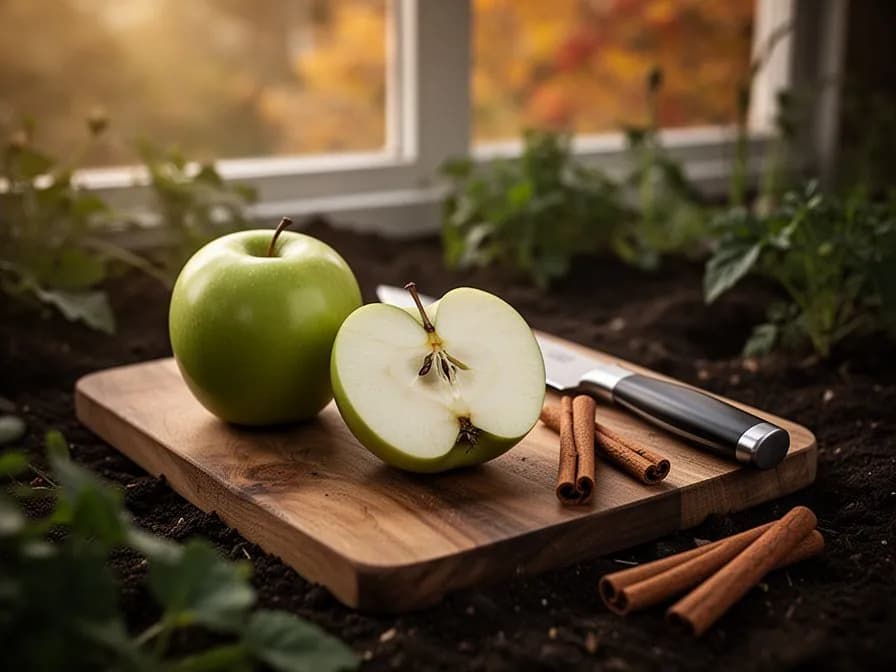
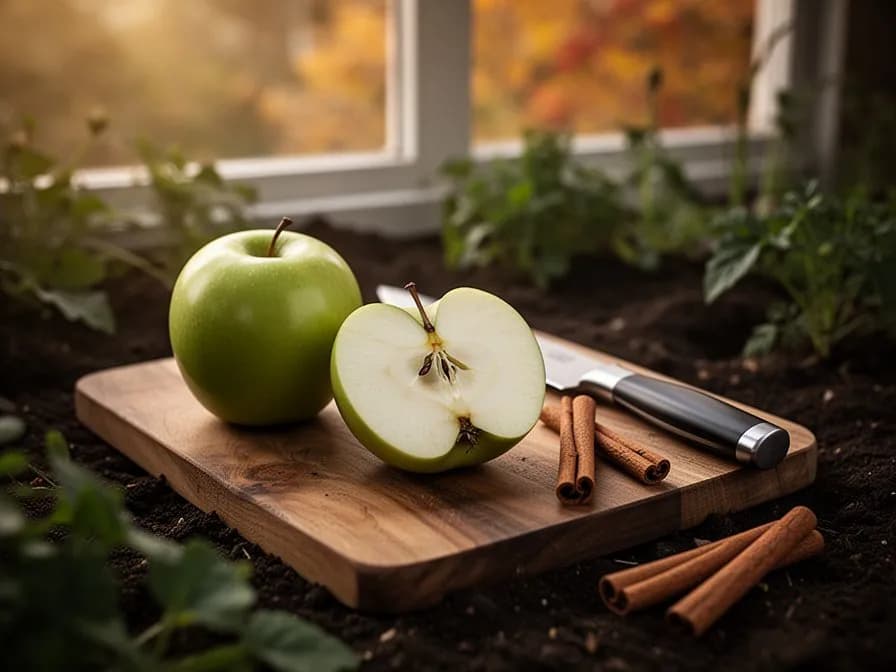
Cross-section of a Granny Smith apple revealing the snow-white, exceptionally firm flesh that stays crisp long after cutting
Quick Recipes
Simple recipes using fresh Granny Smith Apple
Classic Granny Smith Apple Pie
30 minutes prep, 55 minutes bakeGranny Smith is the gold-standard baking apple precisely because its flesh holds its shape and its tartness balances the sweetness of the filling beautifully. This classic double-crust pie is the definitive showcase for homegrown fruit.
Granny Smith, Walnut & Blue Cheese Salad
15 minutesThe sharp acidity of fresh Granny Smith cuts through rich blue cheese and toasted walnuts to create a salad with perfectly balanced flavour. No cooking required — the apple is the star and must be garden-fresh for best results.
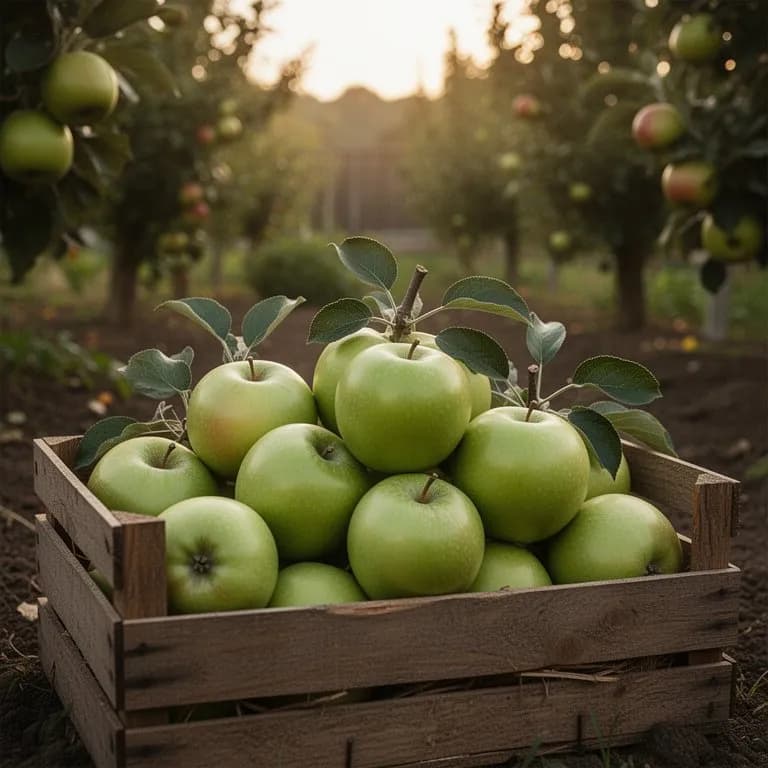
Spiced Granny Smith Apple Sauce
10 minutes prep, 25 minutes cookGranny Smith's high acidity means this sauce needs very little added lemon juice and results in a brighter, more complex flavour than sauce made with sweeter varieties. Excellent with roast pork, potato pancakes, or swirled into oatmeal.
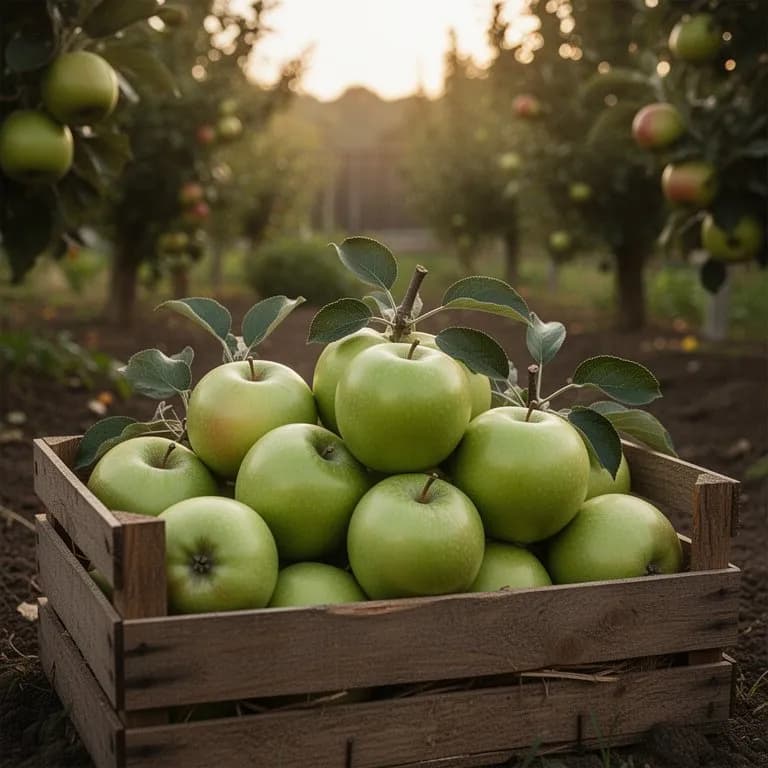
A generous harvest of Granny Smith apples collected into a traditional wooden bushel basket
Yield & Spacing Calculator
See how many Granny Smith Apple plants fit in your garden bed based on the recommended 300cm spacing.
0
Granny Smith Apple plants in a 4×4 ft bed
0 columns × 0 rows at 300cm spacing
Popular Varieties
Some of the most popular granny smith apple varieties for home gardeners, each with unique characteristics.
Granny Smith Spur Type
A compact spur-bearing selection ideal for smaller spaces and high-density plantings with the same tart flavor.
Cripps Green
A sister seedling to Pink Lady sharing Granny Smith parentage, with similar tartness but added sweetness.
Greensleeves
A Granny Smith hybrid cross producing slightly sweeter fruit that matures earlier in the season.
Granny Smith USPP
A redder blushed sport that develops a pink cheek in warm climates while retaining classic tartness.
Granny Smith apples are the premier baking apple, holding their shape and tartness beautifully in pies, tarts, and crisps. Their high acidity makes them excellent for applesauce that needs no added lemon juice. They work wonderfully in savory applications such as Waldorf salads, pork dishes, and chutneys. The tart juice adds brightness to fresh cider blends and makes outstanding apple cider vinegar.
When should I plant Granny Smith Apple?
Plant Granny Smith Apple in March, April. It takes approximately 730 days to reach maturity, with harvest typically in October, November.
What are good companion plants for Granny Smith Apple?
Granny Smith Apple grows well alongside Chives, Garlic, Marigold. Companion planting can improve growth, flavor, and natural pest control.
What hardiness zones can Granny Smith Apple grow in?
Granny Smith Apple thrives in USDA hardiness zones 5 through 9. With greenhouse protection, it may be grown in zones 3 through 10.
How much sun does Granny Smith Apple need?
Granny Smith Apple requires Full Sun (6-8h+). This means at least 6-8 hours of direct sunlight daily.
How far apart should I space Granny Smith Apple?
Space Granny Smith Apple plants 300cm (118 inches) apart for optimal growth and air circulation.
What pests and diseases affect Granny Smith Apple?
Common issues include Apple Scab, Codling Moth, Fire Blight, European Red Mite. Prevention through good garden practices like crop rotation, proper spacing, and companion planting is the best approach. See the detailed pests and diseases section above for symptoms, prevention, and treatment for each.
How do I store Granny Smith Apple after harvest?
Granny Smith is one of the best storing apple varieties, keeping for five to six months at 32 to 35 degrees Fahrenheit in refrigerated storage. The firm flesh and high acid content resist breakdown and maintain crispness throughout storage. They are excellent candidates for freezing as pie filling, ...
What are the best Granny Smith Apple varieties to grow?
Popular varieties include Granny Smith Spur Type, Cripps Green, Greensleeves, Granny Smith USPP. Each has unique characteristics suited to different growing conditions and culinary preferences. See the varieties section above for detailed descriptions.
What soil does Granny Smith Apple need?
Granny Smith trees prefer well-drained, fertile loam with a pH of 6.0 to 7.0. They are vigorous growers that respond strongly to nitrogen, so apply fertilizer conservatively to avoid excessive vegetative growth at the expense of fruit production. A balanced 10-10-10 fertilizer in early spring is suf...
Why are my Granny Smith apples still green even though they look big enough to pick?
Skin colour is a poor harvest indicator for Granny Smith — the fruit stays bright green even when fully ripe, unlike red varieties that change colour at maturity. Instead, test for ripeness using the starch-iodine method (less than 30% blue staining indicates harvest readiness), a pressure gauge (flesh firmness around 8–9 kg/cm²), or by checking whether the seeds inside have turned brown. A ripe fruit should also release from the spur with a gentle upward twist without forcing.
Do I really need to plant a second apple tree as a pollinator?
Yes, for Granny Smith this is non-negotiable. The variety is self-incompatible, meaning its pollen cannot fertilise its own flowers. Without a compatible pollinator variety in bloom at the same time, you will get very few if any apples. Good partners include Fuji, Gala, Golden Delicious, Braeburn, and Pink Lady. The pollinator must overlap in flowering time with Granny Smith (a mid-to-late season bloomer) and must be planted within 15 metres. If garden space is limited, consider a multi-graft tree with both Granny Smith and a pollinator on one rootstock.
My Granny Smith apples have brown, corky spots inside the flesh — what caused this?
This is bitter pit, a calcium-deficiency disorder that is particularly common in Granny Smith. It is triggered not necessarily by low calcium in the soil, but by irregular water supply that disrupts calcium transport into the fruit, and by excess nitrogen or potassium fertilisation that competes with calcium uptake. Prevent it by watering consistently and deeply, avoiding high-nitrogen feeds after fruit set, and applying calcium chloride foliar sprays (0.4% solution) every 3 weeks from the fruitlet stage through to 6 weeks before harvest.
Can I grow Granny Smith in a pot or a small garden?
Yes, with the right rootstock. Granny Smith on M9 or M26 dwarfing rootstock can be grown in a large container (minimum 100-litre volume) or trained as an espalier against a wall, reaching only 2–2.5 m tall. Container trees require daily watering in summer, feeding every 2 weeks with a balanced liquid fertiliser during the growing season, and repotting every 3–4 years. Yield will be lower than an open-ground tree (typically 5–15 kg per year) but the fruit quality can be excellent if nutrition and irrigation are managed well.
When is the best time to prune a Granny Smith apple tree?
The primary pruning window is during full dormancy, from leaf fall through to just before buds begin to swell in late winter — typically December through February in the Northern Hemisphere. Dormant pruning stimulates strong regrowth and is the time for structural work: removing dead, diseased, or crossing branches and establishing the tree's permanent framework. A lighter summer pruning in July or August — removing vigorous upright water shoots and pinching back sub-laterals — helps open the canopy to light and air without stimulating excessive regrowth. Never remove more than 20–25% of the canopy in any single year.
How long does it take before a Granny Smith tree produces fruit?
This depends primarily on the rootstock. Trees on dwarfing M9 rootstock are precocious and often produce a small first crop in their 2nd or 3rd year after planting, with full crops by year 5. Trees on semi-dwarfing MM.106 typically begin bearing in year 3–4 and reach full production by year 7–8. Standard trees on vigorous seedling rootstock may take 7–10 years to produce any meaningful crop. In all cases, removing flowers in the first 2 years encourages the tree to direct energy into root and branch development, resulting in earlier and heavier long-term yields.
Ready to Grow Granny Smith Apple?
Add Granny Smith Apple to your garden plan and start designing your perfect layout.

Vladimir Kusnezow
Gardener and Software Developer
Zone 6b gardener. Growing vegetables and fruits in soil and hydroponics for 6 years. I built PlotMyGarden to plan my own gardens.
Jump to Section