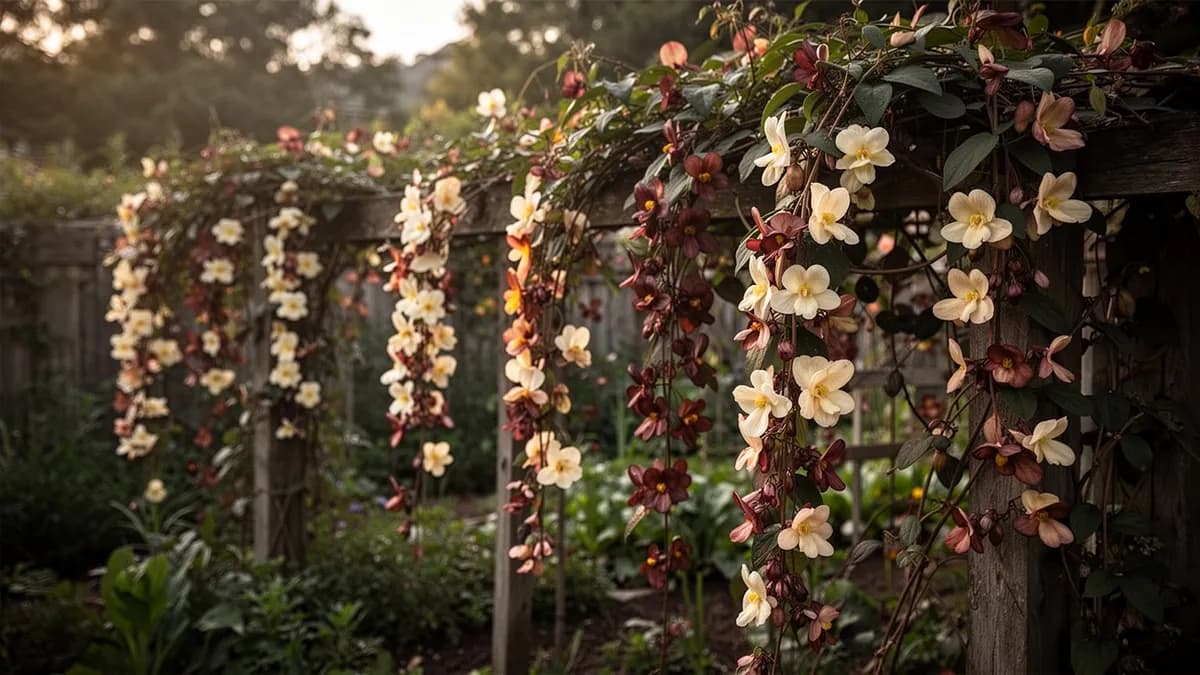
Chocolate Vine
Akebia quinata
At a Glance
A semi-evergreen twining vine with clusters of chocolate-scented, dusky purple flowers in spring above attractive five-lobed leaves. Chocolate vine can be vigorous to aggressive in mild climates and benefits from regular pruning to keep it in bounds. It produces unusual sausage-shaped fruit when cross-pollinated by a second plant.
Planting & Harvest Calendar
Growth Stages
From Seed to Harvest
Root Establishment
Days 0–45
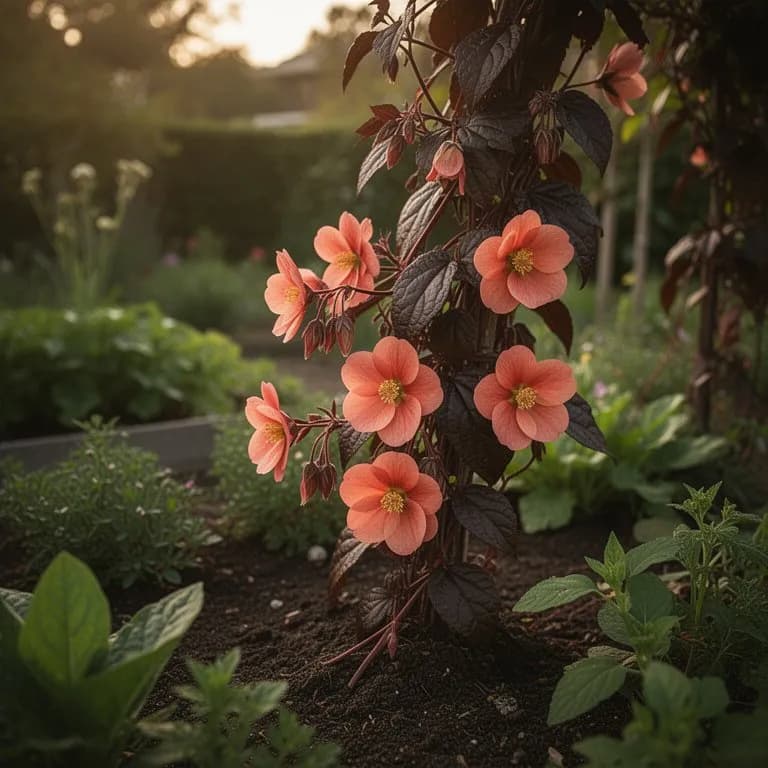
After planting, the chocolate vine channels its energy into developing a robust root network. Top growth is limited during this phase, and the vine may appear dormant. Semi-evergreen foliage from the previous season may persist in milder climates.
💡 Care Tip
Keep the soil consistently moist but never waterlogged. Avoid fertilizing for the first four to six weeks to prevent tender root burn and encourage the plant to explore surrounding soil naturally.
Monthly Care Calendar
What to do each month for your Chocolate Vine
June
You are hereNo specific care tasks for this month.
Did You Know?
Fascinating facts about Chocolate Vine
Despite its Western name 'chocolate vine', Akebia quinata fruit does not taste like chocolate — the name refers to the rich chocolate-brown colour and sweet vanilla-chocolate fragrance of the spring flowers.
Plant chocolate vine in spring or autumn in moist, well-drained soil in partial shade to full sun. Provide a sturdy arbor, pergola, or trellis as support, since this twining vine can reach thirty feet in favorable conditions. Akebia grows rapidly once established and can become invasive in mild climates, so plan for regular pruning to keep it within bounds.
Water consistently during the first year to establish a strong root system. Once mature, chocolate vine is moderately drought tolerant but flowers best with regular moisture. The distinctive clusters of chocolate-scented, dusky purple flowers appear in mid-spring, with larger female flowers at the base and smaller male flowers at the tips of each cluster.
Prune after flowering to control size and encourage a compact growth habit. Remove any wayward or excessive growth throughout the growing season. In mild climates where it retains its leaves, chocolate vine can become extremely aggressive, suckering from the base and self-layering where stems touch the ground. In cold climates it is deciduous and much easier to manage. A second plant of a different clone is needed for cross-pollination and the unusual sausage-shaped purple fruits.
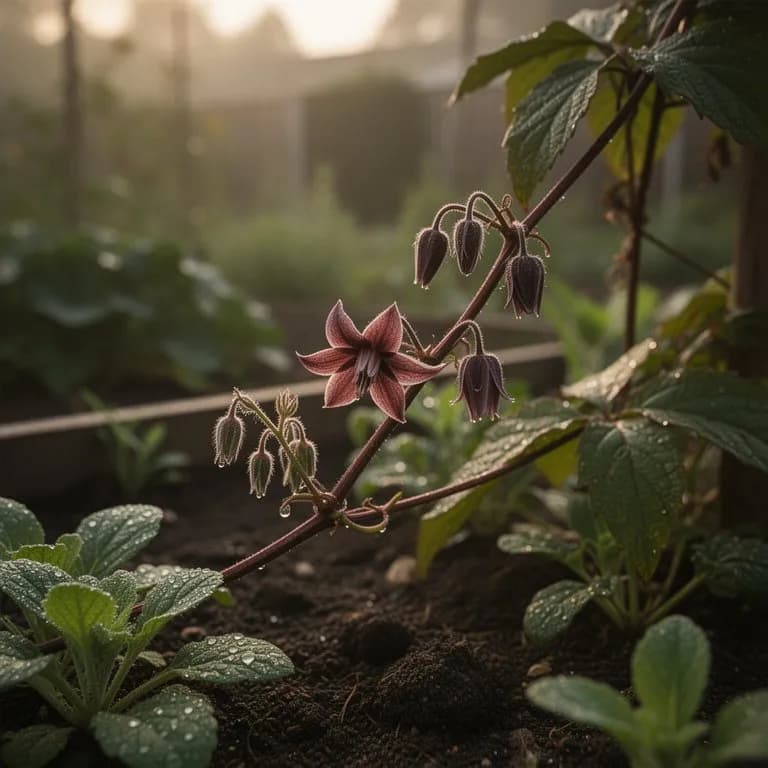
Pendulous racemes of female (larger, deep purple) and male (smaller, pale pink) flowers release a sweet chocolate-vanilla fragrance in mid-spring
Akebia quinata, commonly known as the chocolate vine or five-leaf akebia, is native to the temperate deciduous and mixed forests of Japan, China, and the Korean Peninsula, where it grows naturally as an understorey climber along woodland edges, riverbanks, and mountain slopes. The plant has been recognised and utilised across East Asia for well over a thousand years, occupying a unique intersection of ornamental beauty, culinary value, and traditional medicine.
In Japan, the fruit — called akebi — has been foraged from wild populations since antiquity and remains an anticipated seasonal treat in the mountainous regions of Tohoku, particularly Yamagata and Akita prefectures. The translucent, sweet pulp is eaten fresh as a raw delicacy, while the slightly bitter purple skin is repurposed in regional dishes: stuffed with miso-flavoured fillings and pan-fried, it represents one of the most distinctive preparations in Japanese mountain cuisine. Young spring shoots are also consumed as a seasonal vegetable, blanched and dressed with vinegared miso.
In traditional Chinese medicine, the woody stems of akebia — historically referred to as mu tong — were used for centuries as a diuretic, anti-inflammatory, and circulatory tonic. References to its medicinal applications appear in classical Chinese pharmacopoeias including the Shennong Ben Cao Jing. It is important to note that Akebia quinata belongs to the family Lardizabalaceae and does not contain the nephrotoxic aristolochic acids found in some unrelated species whose stems were occasionally substituted under the same trade name.
The chocolate vine reached European gardens in the 1840s, introduced by the Scottish plant hunter Robert Fortune during his botanical expeditions to China and Japan. It was first cultivated in Britain as an exotic ornamental, admired for its fragrant flowers, elegant palmate foliage, and vigorous climbing habit. Victorian horticulturalists promoted it in garden periodicals as a novel and useful climber, though its edible fruit remained largely a curiosity outside East Asia. Today, renewed interest in edible landscaping, permaculture design, and unusual fruit cultivation has brought akebia back into the spotlight among adventurous gardeners worldwide.
Chocolate vine ascending a sun-warmed stone wall, displaying its characteristic twining growth habit and dense foliage coverage
Akebia seeds germinate best after cold stratification. Clean seeds from the ripe fruit pulp and sow in moist potting mix in autumn, placing pots outdoors for winter cold exposure. Alternatively, cold-stratify in damp sand in the refrigerator for two to three months before spring sowing. Seeds typically germinate within four to eight weeks after stratification. Seedlings grow quickly and can be planted out after the first growing season. Semi-ripe cuttings taken in summer are a faster propagation method.
Chocolate vine thrives in average to fertile, well-drained soil with a pH of 5.5 to 7.0. It is adaptable to most soil types except extremely dry sand or waterlogged clay. Apply a balanced granular fertilizer in early spring. Avoid heavy nitrogen feeding which promotes excessive vegetative growth at the expense of flowering. Mulch around the base with organic material to conserve moisture and suppress weeds.
Check Your Zone
See if Chocolate Vine is suitable for your location.
-20°C – 35°C
-4°F – 95°F
Chocolate vine is exceptionally cold-hardy for a fruiting climber, tolerating winter minimums down to approximately -20°C once fully established, placing it comfortably within USDA hardiness zones 4 through 9. The vine thrives in temperate conditions with distinct seasons: warm springs above 12°C promote strong flowering and pollinator activity, while moderately warm summers (20-30°C) support steady fruit development. In regions where temperatures regularly exceed 35°C, planting against an east-facing wall or providing afternoon shade helps prevent leaf scorch. The plant is semi-evergreen in mild-winter climates and fully deciduous where winters are harsh, regrowing reliably from its established root system each spring.
Common issues affecting Chocolate Vine and how to prevent and treat them organically.
The primary concern with chocolate vine is its potentially invasive nature in mild climates, where it can spread by suckers, self-layering, and seed. Monitor growth carefully and remove any unwanted shoots promptly. The chocolate-scented flowers are charming but brief, and the vine's main ornamental value comes from its attractive five-lobed foliage. Without a second clone for cross-pollination, no fruits will form.
Chocolate vine can be trained alongside clematis for an extended season of bloom, with the akebia flowering first in spring and the clematis following in summer. Underplant with spring bulbs, hostas, and shade-tolerant groundcovers. The vine works well as a screening plant on fences and arbors, providing privacy with its dense foliage. Avoid combining with other aggressive climbers that would create an unmanageable tangle.
- 1Always plant at least two genetically distinct akebia varieties within 5 to 10 meters of one another — for example, pair Akebia quinata with Akebia trifoliata, or plant two different named cultivars — to ensure effective cross-pollination and consistent fruit production.
- 2Install a substantial, permanent support structure before planting. A mature chocolate vine can reach 10 to 12 meters in length and develop considerable weight; lightweight temporary trellises will buckle within two to three seasons under the mass of foliage.
- 3Position the vine where it receives at least 4 to 6 hours of direct sunlight daily for best flowering and fruiting. East-facing or south-facing walls and fences are ideal in the northern hemisphere, offering morning sun and some afternoon protection in very hot climates.
- 4During the first growing season, focus on establishing a deep and healthy root system by maintaining consistent soil moisture rather than pushing rapid top growth with heavy fertilization. Water deeply twice weekly during dry periods.
- 5Carry out formative pruning immediately after the spring flowering period ends. This is the safest timing because it allows you to shape the vine without removing the following year's flower buds, which form on wood produced during the current season.
- 6In cold climates (USDA zones 4 and 5), protect the root zone with a 10 to 15 cm layer of organic mulch — straw, wood chips, or leaf mould — before the first hard frost, especially during the vine's first two or three winters after planting.
- 7Hand-pollinate flowers during cold, wet, or windy spring weather when natural pollinators are inactive. Use a small soft-bristled paintbrush to collect pollen from the smaller male flowers and transfer it gently to the stigma of the larger female blooms.
- 8Monitor the vine for unwanted self-seeding, particularly in mild and humid climates where akebia can naturalise aggressively. Remove fallen fruits before seeds disperse, and pull out volunteer seedlings promptly if they appear beyond your intended growing area.
- 9For container growing, select a pot of at least 50 litres capacity with excellent drainage. Use a loam-based compost mixed with perlite, and plan on repotting or refreshing the top 10 cm of compost annually to maintain soil fertility and structure.
- 10Harvest the edible young spring shoots as a bonus crop before the vine leafs out fully — blanch them for 30 seconds in boiling water and serve dressed with a light vinegar-miso sauce for an authentic Japanese mountain vegetable dish.
The unusual sausage-shaped fruits, produced when two different clones cross-pollinate, ripen in autumn and split to reveal sweet, white pulp studded with black seeds. The pulp is edible with a mild, sweet flavor and can be eaten fresh or used in desserts. Harvest when the purple skin begins to soften and split. The fragrant spring flowers can be picked for small indoor arrangements where their chocolate scent can be appreciated. Stems with flowers last about five days in water.
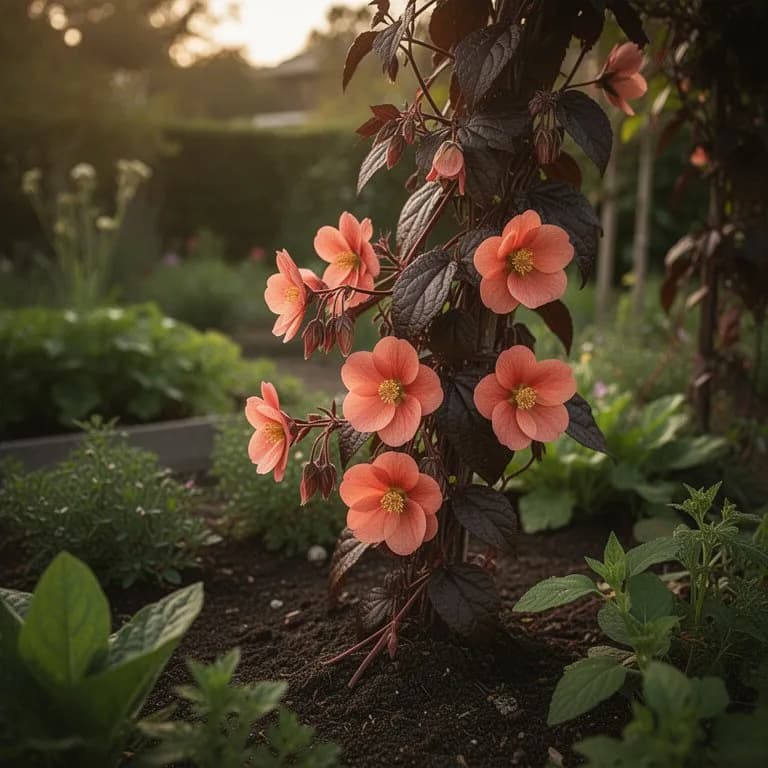
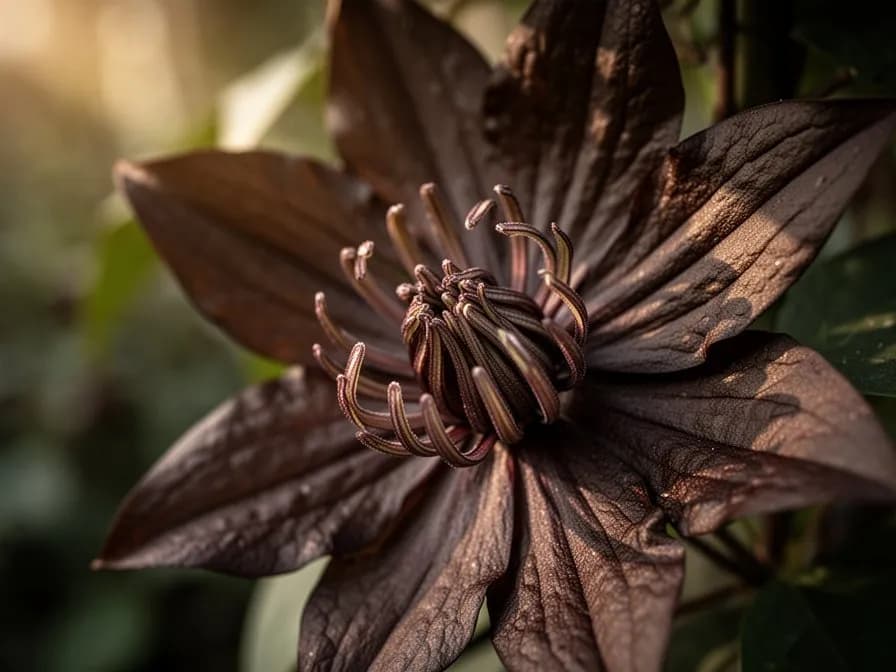
Sausage-shaped fruits develop a dusky purple blush as they approach ripeness in early to mid-autumn
Fresh akebia fruits should be eaten promptly as they do not store well. The pulp can be scooped out and frozen for later use in smoothies or desserts. For vine propagation, take semi-ripe cuttings in midsummer or hardwood cuttings in late autumn. Cuttings root readily in moist potting mix. Seeds can be cleaned from the pulp and sown immediately or cold-stratified for spring sowing.
Plan your garden with ease
Love growing Chocolate Vine? Use our free garden planner to design your beds, track planting dates, and get personalized care reminders.
Nutritional Info
Per 100g serving
57
Calories
Health Benefits
- A naturally low-calorie fruit with gentle sweetness and no need for added sugar
- Contains bioactive polyphenols and flavonoid compounds with demonstrated antioxidant capacity
- Provides dietary potassium that supports healthy blood pressure regulation and cardiovascular function
- The soft, gelatinous pulp is gentle on digestion and suitable for sensitive stomachs
- Seeds contain oleic and linoleic fatty acids, offering a nutritional profile comparable to certain nut oils
- Ethnobotanical records attribute mild diuretic and anti-inflammatory properties to the fruit and stem extracts used in traditional East Asian herbal preparations
💰 Why Grow Your Own?
A single well-established chocolate vine can yield 8 to 25 fruits per season at maturity, with each fruit weighing between 60g and 150g. Akebia fruits are virtually unobtainable in Western supermarkets, and in Japanese specialty markets they command prices of USD 3 to 8 per fruit due to their short season, fragile nature, and hand-harvesting requirements. Growing your own vine provides exclusive access to a genuinely rare gourmet fruit at essentially zero ongoing cost beyond water and occasional feeding. Additionally, a mature chocolate vine provides effective living coverage for pergolas, fences, and privacy screens — replacing the need for expensive structural screening solutions or multiple shrubs that would cost several hundred dollars to purchase and install. Akebia vines are long-lived perennials, routinely remaining productive and vigorous for 20 to 30 years or more with minimal maintenance, delivering compounding value year after year.
Quick Recipes
Simple recipes using fresh Chocolate Vine
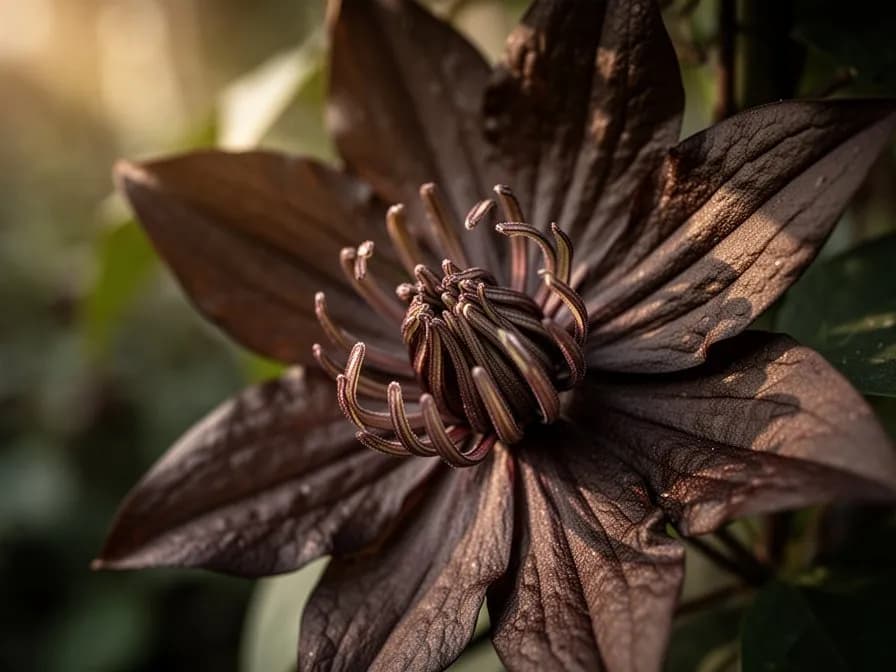
Traditional Akebi Miso Stir-Fry (Akebi no Nikumiso Itame)
25 minutesA classic dish from northern Japan where the naturally bitter akebia skins are halved, filled with a rich miso-pork mixture, and pan-fried until caramelised. The bitterness of the skin creates a sophisticated contrast with the umami-rich savoury filling.
Akebia Pulp and Lime Granita
15 minutes (plus 4 hours freezing)The perfumed, lychee-like sweetness of fresh akebia pulp makes a stunning frozen granita with minimal effort. Lime juice lifts the delicate tropical notes, and scraping the mixture with a fork produces light, crystalline ice flakes.
Akebia Fruit Compote with Yoghurt
10 minutesA simple breakfast or dessert preparation where fresh akebia pulp is gently warmed with a touch of honey and vanilla, then spooned over thick Greek yoghurt. The warmth releases the fruit's floral aromatics beautifully.
Yield & Spacing Calculator
See how many Chocolate Vine plants fit in your garden bed based on the recommended 250cm spacing.
0
Chocolate Vine plants in a 4×4 ft bed
0 columns × 0 rows at 250cm spacing
Popular Varieties
Some of the most popular chocolate vine varieties for home gardeners, each with unique characteristics.
Quinata
The standard five-leaf chocolate vine with chocolate-purple scented flowers, vigorous and widely available. Semi-evergreen in mild areas.
Silver Bells
A selection with white to pale lavender flowers that are more visible against the foliage than the darker species.
Variegata
A rare form with cream-splashed foliage that adds ornamental interest throughout the growing season beyond the brief flowering period.
The split-open fruits contain sweet, translucent white pulp with a subtle flavor reminiscent of tapioca or coconut. The pulp is eaten fresh, scooped from the rind with a spoon, and the numerous black seeds are typically spat out. In Japan, the fruit rind is sometimes stuffed with meat and deep-fried as a vegetable. The young shoots can be briefly blanched and eaten as a spring green.
When should I plant Chocolate Vine?
Plant Chocolate Vine in March, April, May. It takes approximately 730 days to reach maturity, with harvest typically in April, May.
What are good companion plants for Chocolate Vine?
Chocolate Vine grows well alongside Climbing Hydrangea. Companion planting can improve growth, flavor, and natural pest control.
What hardiness zones can Chocolate Vine grow in?
Chocolate Vine thrives in USDA hardiness zones 4 through 9. With greenhouse protection, it may be grown in zones 2 through 10.
How much sun does Chocolate Vine need?
Chocolate Vine requires Partial Sun (3-6h). This means 3-6 hours of sunlight, ideally morning sun with afternoon shade.
How far apart should I space Chocolate Vine?
Space Chocolate Vine plants 250cm (98 inches) apart for optimal growth and air circulation.
What pests and diseases affect Chocolate Vine?
Common issues include Scale Insects, Powdery Mildew. Prevention through good garden practices like crop rotation, proper spacing, and companion planting is the best approach. See the detailed pests and diseases section above for symptoms, prevention, and treatment for each.
How do I store Chocolate Vine after harvest?
Fresh akebia fruits should be eaten promptly as they do not store well. The pulp can be scooped out and frozen for later use in smoothies or desserts. For vine propagation, take semi-ripe cuttings in midsummer or hardwood cuttings in late autumn. Cuttings root readily in moist potting mix. Seeds can...
What are the best Chocolate Vine varieties to grow?
Popular varieties include Quinata, Silver Bells, Variegata. Each has unique characteristics suited to different growing conditions and culinary preferences. See the varieties section above for detailed descriptions.
What soil does Chocolate Vine need?
Chocolate vine thrives in average to fertile, well-drained soil with a pH of 5.5 to 7.0. It is adaptable to most soil types except extremely dry sand or waterlogged clay. Apply a balanced granular fertilizer in early spring. Avoid heavy nitrogen feeding which promotes excessive vegetative growth at ...
Do I need more than one akebia plant to produce fruit?
Yes, in almost all cases you need at least two genetically distinct akebia plants for reliable fruit set. Akebia quinata carries both male and female flowers on the same vine, but it is functionally self-incompatible — meaning pollen from the same plant or a genetically identical clone will not effectively fertilise its own flowers. Planting two different species (such as Akebia quinata alongside Akebia trifoliata) or two different named cultivars within 5 to 10 meters of each other ensures effective cross-pollination. A single vine may occasionally set a small amount of fruit if a neighbour also grows akebia nearby, but for consistent and abundant harvests, dedicated cross-pollination partners are essential.
Is chocolate vine invasive, and how can I keep it under control?
Akebia quinata is classified as invasive in some regions, particularly in the southeastern United States, where it can escape cultivation and smother native vegetation in disturbed woodland habitats. In cooler northern climates, it is generally manageable with regular annual pruning. Before planting, check your local invasive species lists and any planting restrictions that may apply. To minimise spread, harvest all ripe fruits before they drop and disperse seeds, remove any volunteer seedlings immediately, and prune the vine annually to prevent it from extending beyond its intended growing area. In areas where invasiveness is a concern, growing in a large container is a viable alternative that prevents root spread and self-seeding.
How can I tell when akebia fruit is ripe and ready to pick?
The most reliable indicator of ripeness is the appearance of a lengthwise split along the fruit's natural seam. As the fruit matures through September and October, its skin colour shifts from green to a dusky greyish-purple or brownish-purple. When ripe, the seam opens to reveal the translucent white pulp inside. Harvest promptly once this split appears, as birds, squirrels, and insects will quickly discover the exposed sweet flesh. Fruits that have coloured but not yet split can be brought indoors and left at room temperature for one to two days to finish ripening. Once harvested, consume the fruit within two to three days for the best flavour and texture.
What does akebia fruit taste like, and how is it eaten?
The edible portion of akebia fruit is the translucent, jelly-like white pulp that fills the interior. Its flavour is subtle, sweet, and gently perfumed — most commonly compared to a cross between lychee, ripe melon, and pear, with soft floral undertones. The texture is gelatinous and smooth, similar to passion fruit pulp or a very ripe fig interior. The small dark seeds embedded in the pulp are typically spat out. The purple outer skin is edible but distinctly bitter; in Japanese cuisine it is not discarded but is hollowed out, stuffed with a savoury miso and meat mixture, and pan-fried until golden — a celebrated autumn dish in northern Honshu. The pulp can be eaten fresh, sieved into sorbets and granitas, or spooned over yoghurt and desserts.
How cold-hardy is akebia, and can it survive harsh winters?
Akebia quinata is one of the hardiest fruiting vines available, rated to approximately -20°C (USDA zone 4) once fully established. Mature plants with well-developed root systems recover reliably each spring, even after exposure to severe winter cold. In milder climates (zones 7 and above), the vine is semi-evergreen and retains a portion of its foliage through winter. In colder zones it drops its leaves entirely but regrows vigorously from dormant buds on the woody framework. Young plants in their first and second winters are more vulnerable to root freeze damage, so applying a thick mulch layer and, in exposed sites, wrapping the lower stems with horticultural fleece is advisable until the vine is well established.
How quickly does chocolate vine grow, and how much space should I allow?
Chocolate vine is a vigorous grower once established, typically adding 1.5 to 3 meters of new growth per season in favourable conditions. A mature vine can reach 10 to 12 meters in total length and comfortably cover 20 to 30 square meters of fence, trellis, or pergola surface. First-year growth is usually modest as the plant prioritises root development, but from the second year onward, growth accelerates significantly. Allow a minimum planting width of 3 to 4 meters along a fence or wall, or a full pergola footprint if growing overhead. Annual pruning immediately after flowering is essential to keep the vine within its allocated space, maintain good air circulation, and encourage the productive short spurs that bear the following year's flowers and fruit.
Ready to Grow Chocolate Vine?
Add Chocolate Vine to your garden plan and start designing your perfect layout.

Vladimir Kusnezow
Gardener and Software Developer
Zone 6b gardener. Growing vegetables and fruits in soil and hydroponics for 6 years. I built PlotMyGarden to plan my own gardens.
Jump to Section