Immergrüne Magnolie
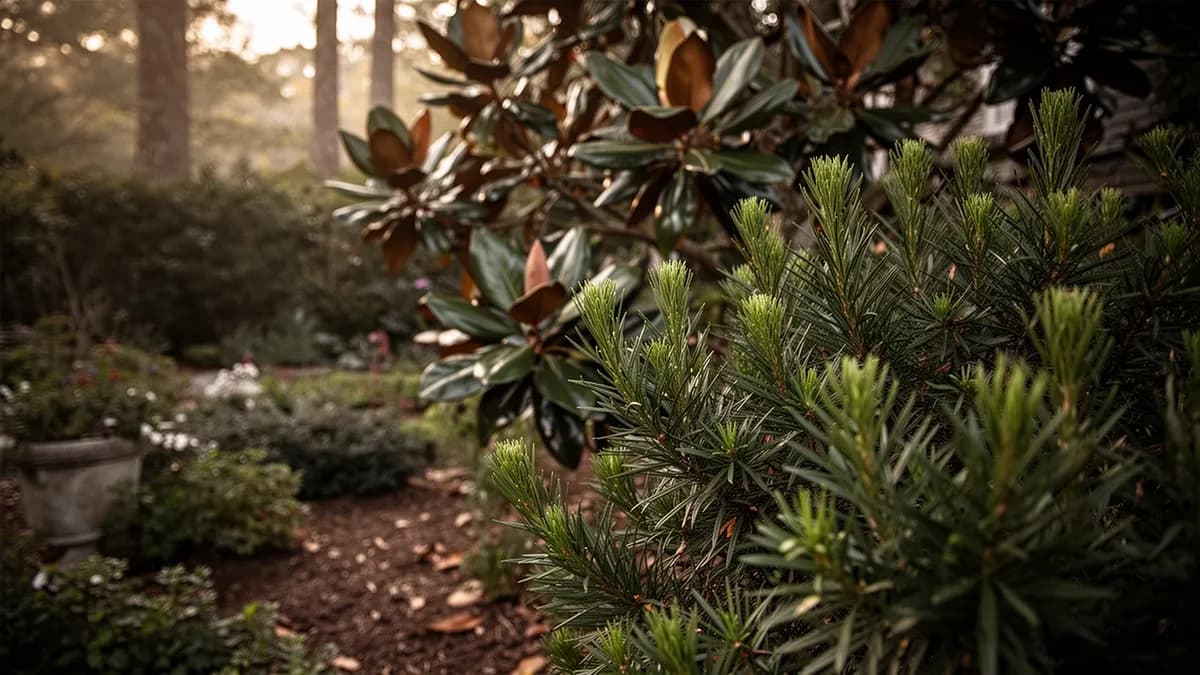
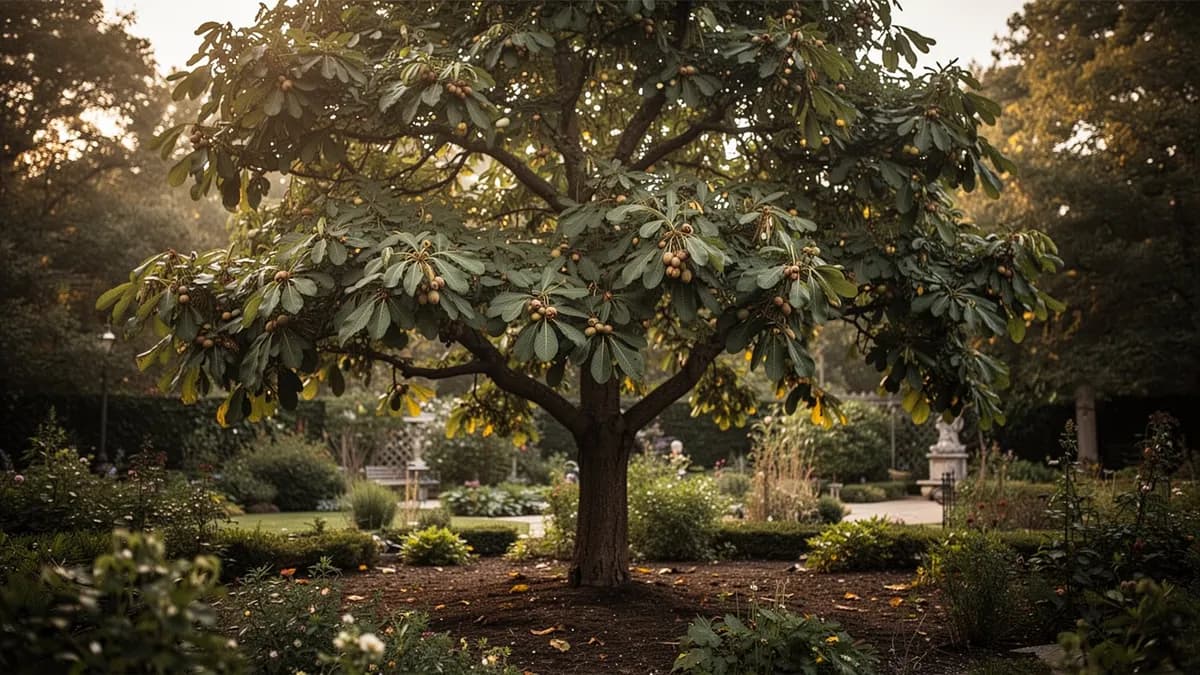
Ein majestätischer immergrüner Baum mit riesigen, cremig-weißen, intensiv duftenden Blüten vor einem Hintergrund aus großen, glänzenden, dunkelgrünen Blättern mit filziger brauner Unterseite.





Auf dieser SeiteÜberblick
Immergrüne Magnolie im Überblick
Ein majestätischer immergrüner Baum mit riesigen, cremig-weißen, intensiv duftenden Blüten vor einem Hintergrund aus großen, glänzenden, dunkelgrünen Blättern mit filziger brauner Unterseite. Immergrüne Magnolien sind ikonische Bäume des amerikanischen Südens, aber moderne kompakte Sorten wie Little Gem und Teddy Bear haben ihr Verbreitungsgebiet nach Norden und in kleinere Gärten erweitert. Sie haben dichte, flache Wurzelsysteme, die schweren Schatten erzeugen, unter dem wenig wächst. Die großen, ledrigen Blätter fallen ganzjährig und zersetzen sich langsam, daher ist mit fortlaufender Laubpflege zu rechnen.
Wann Immergrüne Magnolie pflanzen
Samen der Immergrünen Magnolie sind in leuchtend rote fleischige Hüllen innerhalb zapfenartiger Fruchtstände eingeschlossen, die im Herbst reifen. Sammeln Sie die Fruchtstände, wenn sie sich zu öffnen beginnen und Samen sichtbar sind. Entfernen Sie die rote Samenhülle, indem Sie sie mehrere Tage in Wasser einweichen und sauber reiben. Frische Samen benötigen 90 Tage Kaltschichtung in feuchtem Torf bei 2 bis 4 °C. Säen Sie stratifizierte Samen einen Zentimeter tief in eine feuchte, saure Aussaaterde im Frühjahr. Die Keimung erfolgt in 4 bis 8 Wochen bei 21 bis 24 °C. Sämlinge wachsen langsam und erreichen 15 bis 30 cm im ersten Jahr. Kultivieren Sie sie 2 bis 3 Jahre in Containern, bevor Sie sie auspflanzen. Sämlinge können 10 bis 15 Jahre bis zur ersten Blüte brauchen, weshalb benannte Sorten durch Veredelung oder halbreife Stecklinge vermehrt werden.
Dein Immergrüne Magnolie-Jahr
Abgestimmt auf Zone 7 · typische Saison · Frost geht um den 2. Apr. und kehrt um den 1. Nov. zurück
Immergrüne Magnolie Mär – Mai pflanzen, — ernten. Beachte die Pflanzmethoden unten und wähle dein Klima für passende Zeiträume.
So baust du Immergrüne Magnolie an
Die Immergrüne Magnolie ist ein majestätischer immergrüner Baum, der in seiner Heimat 18 bis 24 Meter Höhe und 12 Meter Breite erreichen kann, obwohl kompakte Sorten deutlich kleiner bleiben. Wählen Sie einen Standort mit voller Sonne bis leichtem Schatten und gut durchlässigem, leicht saurem Boden mit einem pH-Wert von 5,0 bis 6,5. Planen Sie großzügig Platz für die ausgewachsene Breite ein, da die dichte, tiefverzweigte Krone eines der ansprechendsten Merkmale des Baumes ist. Immergrüne Magnolien werden am besten als Container- oder ballierte Exemplare im Frühjahr verpflanzt.
Graben Sie das Pflanzloch 2- bis 3-mal breiter als den Wurzelballen und setzen Sie den Baum auf Bodenniveau oder leicht erhöht ein. Füllen Sie mit natürlichem Boden auf, der leicht mit Kompost angereichert wurde. Wässern Sie gründlich beim Pflanzen und wöchentlich während der ersten zwei Vegetationsperioden. Bringen Sie 7 bis 10 cm organischen Mulch in einem breiten Ring bis zur Tropfkante auf.
Immergrüne Magnolien benötigen nur minimalen Schnitt. Falls nötig, schneiden Sie nach der Blüte im Frühsommer, um die Form zu erhalten. Vermeiden Sie starken Rückschnitt, der die innere Rinde dem Sonnenbrand aussetzt. Die großen, ledrigen Blätter fallen das ganze Jahr über kontinuierlich und zersetzen sich langsam, planen Sie daher eine fortlaufende Laubpflege ein. Die duftenden weißen Blüten können 25 bis 30 cm Durchmesser erreichen und werden von zapfenartigen Fruchtständen mit leuchtend roten Samen gefolgt.
Für Immergrüne Magnolie ist ein Beet von 120 × 240 cm zu klein
Immergrüne Magnolie braucht 800 cm Platz pro Pflanze. Der Planer hält diesen Abstand für dich ein — jede Pflanze, jedes Beet.
Die besten Nachbarn für Immergrüne Magnolie
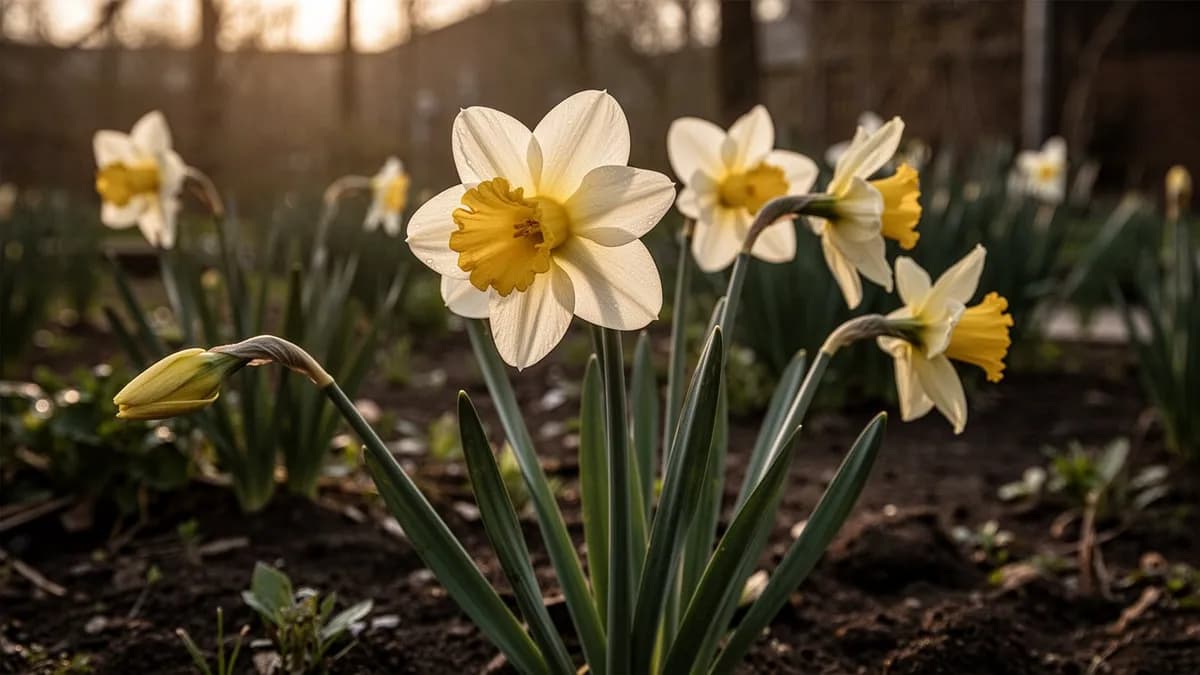
Die schwierigen Bedingungen unter ausgewachsenen Immergrünen Magnolien (dichter Schatten, flache Wurzeln, saure Laubstreu) begrenzen die Begleitpflanzenauswahl, aber einige robuste Pflanzen gedeihen dort. Liriope, Schlangenbart und Asiatischer Jasmin gehören zu den erfolgreichsten Bodendeckern. Farne einschließlich Herbstfarn und Stechpalmfarn vertragen den trockenen Schatten. Frühjahrsblüher wie Narzissen und Schneeglöckchen erscheinen, bevor sich die Krone verdichtet. Am Rand, wo mehr Licht den Boden erreicht, ergänzen Azaleen, Kamelien und Hortensien die Magnolie wunderschön.
Narzisse gehört daneben. Walnussbaum nicht.
Altes Gärtnerwissen, geprüft an der echten Nachbartabelle von Immergrüne Magnolie — teste jede Pflanze, die du anbaust.
Probiere Immergrüne Magnolie direkt hier im Beet
Ein echtes Planer-Beet, Immergrüne Magnolie steht schon drin. Tippe einen Begleiter an, platziere ihn und sieh, wie die Nachbarschaftsprüfung antwortet — grün für gute Nachbarn, rot bei Streit.


Passende Anbau-Ratgeber
Richtig düngen
Die Immergrüne Magnolie bevorzugt sauren, gut durchlässigen Boden mit einem pH-Wert von 5,0 bis 6,5 und hohem Humusgehalt. Sie verträgt Lehmboden, wenn die Drainage ausreichend ist, hat aber Schwierigkeiten unter chronisch staunassen Bedingungen. Mulchen Sie großzügig mit organischem Material bis zur Tropfkante, um Feuchtigkeit zu bewahren und die natürliche Laubstreu dieser Bäume nachzuahmen. Düngen Sie junge Bäume im zeitigen Frühjahr mit einem säuernden Dünger für säureliebende Pflanzen. Etablierte Bäume benötigen selten zusätzliche Düngung, wenn sie ordnungsgemäß gemulcht werden. Vermeiden Sie Störungen des flachen, fleischigen Wurzelsystems durch Bodenbearbeitung oder starken Fußverkehr.
Ideale Temperatur
Winterhärtezone-Kompatibilität
Von der Saat zur Ernte, Schritt für Schritt
Samenkeimung
Magnoliensamen benötigen eine Kaltschichtung von 60 bis 90 Tagen vor der Keimung. Nach der Stratifikation werden die Samen in ein feuchtes, gut durchlässiges Medium gesät und bei etwa 21 °C gehalten. Die Keimung ist langsam und unregelmäßig und dauert typischerweise 30 bis 60 Tage nach der Aussaat.
Sämlingsentwicklung
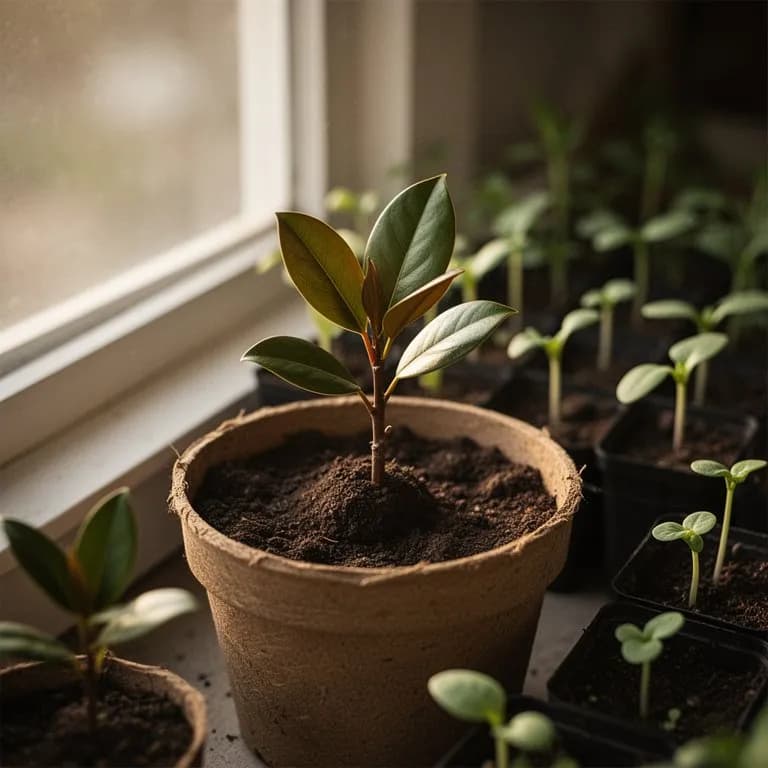
Sämlinge entwickeln ihre ersten echten Blätter, die bereits die charakteristische glänzende Oberfläche zeigen. Die Wurzelsysteme sind in diesem Stadium empfindlich und fleischig, was das Umpflanzen riskant macht. Das Wachstum ist langsam und erreicht typischerweise 15 bis 30 cm im ersten Jahr.
Jugendliches Wachstum
In den nächsten zwei bis vier Jahren entwickelt die junge Magnolie einen kräftigen Mitteltrieb und beginnt ihre Pyramidenform auszubilden. Das jährliche Wachstum beträgt durchschnittlich 30 bis 60 cm. Das Wurzelsystem breitet sich erheblich aus und etabliert die für die Art charakteristischen fleischigen, seilartigen Wurzeln.
Jungbaum-Entwicklung
Zwischen dem fünften und zehnten Jahr beschleunigt die Magnolie ihr Wachstum und legt 45 bis 60 cm pro Jahr zu. Die Krone füllt sich und die unteren Äste können bis zum Boden reichen. Einige frühblühende Sorten können bereits ab dem fünften Jahr ihre ersten Blüten hervorbringen, obwohl samengewonnene Bäume oft länger warten.
Erste Blüte
Samengewonnene Immergrüne Magnolien beginnen typischerweise zwischen dem 10. und 15. Lebensjahr zu blühen. Die großen, cremig-weißen duftenden Blüten erscheinen vom späten Frühjahr bis zum Sommer. Jede Blüte hält nur zwei bis drei Tage, aber der Baum produziert Blüten nacheinander über mehrere Wochen.
Ausgewachsenes Exemplar
Eine ausgewachsene Immergrüne Magnolie erreicht 18 bis 27 Meter Höhe mit einer Breite von 9 bis 15 Metern. Der Baum produziert jedes Jahr reichlich Blüten, gefolgt von dekorativen Sammelfrüchten mit leuchtend roten Samen. Ausgewachsene Bäume sind bemerkenswert windresistent und können weit über 100 Jahre alt werden.
Altbaum
Immergrüne Magnolien, die 50 Jahre und mehr erreichen, werden zu Altbäumen, die manchmal über 30 Meter Höhe überschreiten. Diese ehrwürdigen Bäume entwickeln massive Stämme von über einem Meter Durchmesser. Sie blühen weiterhin zuverlässig und bieten im gesamten Südosten der Vereinigten Staaten wichtigen Lebensraum für Vögel und Bestäuber.
Entfernen Sie die fleischige rote Samenhülle vor der Stratifikation und halten Sie das Medium gleichmäßig feucht, aber niemals staunass, um Fäulnis zu vermeiden.
Immergrüne Magnolie Monat für Monat pflegen
Was du jeden Monat für deine Immergrüne Magnolie tun solltest
Oktober
Aktueller MonatFühren Sie eine leichte Laubreinigung durch, obwohl die meisten Blätter das ganze Jahr über am Baum verbleiben. Gießen Sie vor dem Winter ein letztes Mal gründlich, wenn der Boden trocken ist, um dem Baum durch die Ruhephase zu helfen. Untersuchen Sie Stamm und Hauptäste auf Anzeichen von Krebs oder Fäulnis
Immer wissen, was jetzt im Garten zu tun ist
Eine E-Mail zum Monatsanfang: was du jetzt säen, pflanzen und anpacken solltest — für deine Immergrüne Magnolie und alles, was drumherum wächst. Dazu ein kurzer Startkurs, der dich vor den klassischen Fehlern bewahrt.
- Was jetzt zu tun ist
- Passend zu deiner Saison
- Startkurs inklusive
Immergrüne Magnolie ernten
Die Immergrüne Magnolie wird nicht für die Nahrungsernte angebaut, obwohl die Blüten essbar sind und manchmal zum Garnieren von Salaten oder zum Aromatisieren von Sirupen verwendet werden. Die großen, duftenden Blüten werden als Schnittblumen und für Blumenarrangements geschätzt. Schneiden Sie Blüten, wenn sie sich am frühen Morgen öffnen, und stellen Sie sie sofort in warmes Wasser. Einzelne Blüten sind kurzlebig und halten nur 2 bis 3 Tage nach dem Öffnen. Die zapfenartigen Fruchtstände im Herbst enthalten leuchtend rote Samen, die Vögel anlocken. Magnolienrinde und Blütenblätter werden seit Jahrhunderten in der traditionellen Medizin verwendet.
angenommen, du pflanzt zu Beginn des Zeitraums — trage dein tatsächliches Datum ein
Ernte Immergrüne Magnolie zügig, dann trägt die Pflanze weiter.
Lagerung & Konservierung
Frische Magnolienblüten sind äußerst empfindlich und können nicht länger als ein oder zwei Tage gelagert werden. Für beste Ergebnisse lassen Sie einzelne Blüten in flachen Schalen mit Wasser für Tischdekorationen schwimmen. Die glänzenden, ledrigen Blätter trocknen natürlich und sind beliebt in Kränzen, Girlanden und Trockenarrangements. Um die glänzende grüne Oberseite zu erhalten, pressen Sie einzelne Blätter 2 bis 3 Wochen zwischen schweren Büchern oder konservieren Sie sie mit Glycerin für geschmeidiges, langlebiges Blattwerk. Magnoliensamenkapsel können getrocknet und besprüht werden für Feiertagsdekorationen.
Was schiefgeht — und die Lösung
Magnolienschildlaus
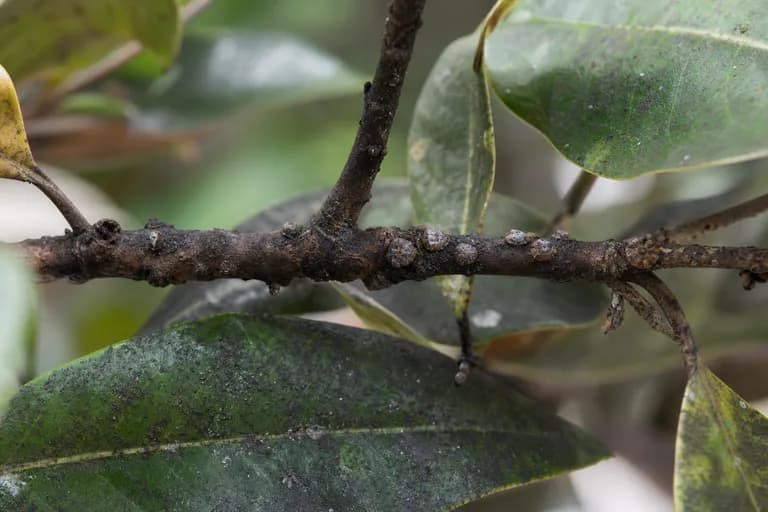
SchädlingGroße, auffällige, höckerige Schildläuse von bis zu einem Zentimeter Größe an den Zweigen. Starke Honigtauproduktion führt zu schwarzem Rußtau, der Blätter und Zweige darunter überzieht. Triebsterben bei starkem Befall.
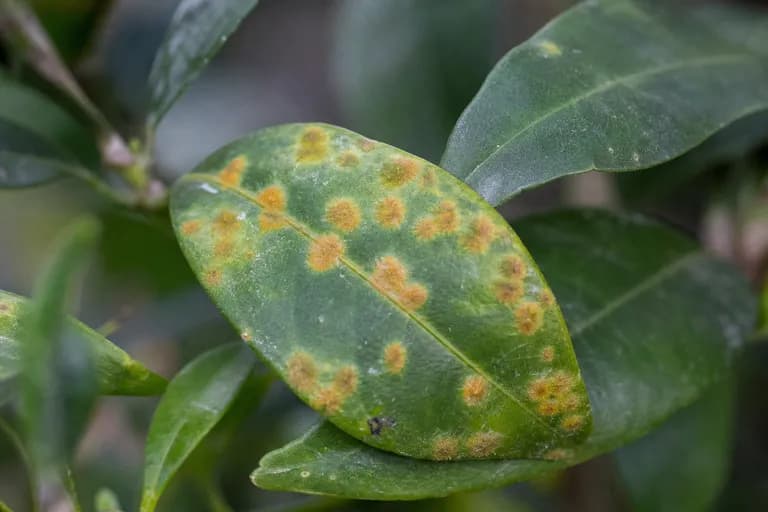
Algen-Blattflecken
KrankheitErhabene, samtige grüne bis orange-braune Flecken auf den Blattoberflächen, verursacht durch parasitäre Algen. Häufig in feuchtem Klima mit schlechter Luftzirkulation. Hauptsächlich kosmetisch.
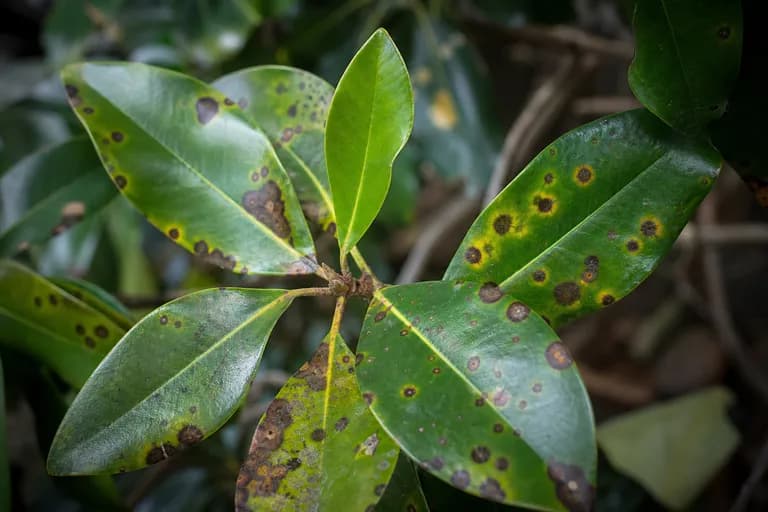
Blattfleckenkrankheiten
KrankheitVerschiedene Pilz-Blattflecken, die braune oder schwarze Flecken mit gelben Höfen verursachen. Schwere Infektionen führen zu vorzeitigem Blattfall. Am häufigsten bei nassem Frühjahrswetter.
Fehlerbehebung bei häufigen Problemen
Der kontinuierliche Laubfall ist die häufigste Beschwerde über Immergrüne Magnolien. Die großen, ledrigen Blätter zersetzen sich langsam und können unter dem Baum eine dicke Matte bilden, die Rasengras erstickt. Das dichte, flache Wurzelsystem macht es extrem schwierig, unter einer ausgewachsenen Magnolie etwas anzubauen. Große Oberflächenwurzeln können Gehwege und Einfahrten anheben, wenn sie zu nah gepflanzt werden. Rindenschäden durch Rasenmäher und Fadentrimmer schaffen Eintrittspforten für Fäulnis. Kälteeinbrüche in Grenzlagen können schwere Blattverbrennungen und Triebsterben verursachen. Magnolienschildläuse können in feuchten Regionen Zweige stark befallen.
Anbautipps
- Wählen Sie einen Pflanzstandort mit voller Sonne bis Halbschatten und Schutz vor rauen Winterwinden, besonders im nördlichen Verbreitungsgebiet. Süd- oder Südostlagen eignen sich in kühleren Klimazonen am besten.
- Pflanzen Sie in sauren bis neutralen Boden mit einem pH-Wert von 5,0 bis 6,5. Immergrüne Magnolien haben Schwierigkeiten in stark alkalischen Böden, die Chlorose und Nährstoffmängel verursachen können.
- Graben Sie das Pflanzloch zwei- bis dreimal breiter als den Wurzelballen, aber nicht tiefer. Ein zu tiefes Setzen ist eine der häufigsten Ursachen für Verpflanzungsversagen bei Magnolien.
- Gießen Sie in den ersten zwei bis drei Jahren nach der Pflanzung gründlich und regelmäßig. Magnolien haben fleischige Wurzeln, die zur Austrocknung neigen und Trockenheit nicht gut vertragen, bis sie vollständig etabliert sind.
- Bringen Sie 7 bis 10 cm organischen Mulch wie Kiefernrinde oder gehäckseltes Laub über der Wurzelzone auf und halten Sie ihn mindestens 15 cm vom Stamm entfernt, um Fäulnis zu vermeiden.
- Vermeiden Sie starken Rückschnitt. Magnolien können Wunden nicht so effektiv abschotten wie viele andere Bäume. Beschränken Sie den Schnitt auf das Entfernen toter, beschädigter oder kreuzender Äste im Spätwinter.
- Wählen Sie für kleinere Gärten kompakte Sorten wie 'Little Gem' oder 'Teddy Bear'. Diese erreichen nur 6 bis 9 Meter Höhe und beginnen in viel jüngerem Alter zu blühen als die Art.
- Versuchen Sie nicht, Rasen oder dichte Bodendecker unter einer ausgewachsenen Magnolie anzubauen. Der dichte Schatten und die dicke Laubstreu machen es nahezu unmöglich. Nutzen Sie stattdessen die natürliche Mulchschicht oder pflanzen Sie schattenverträgliche Farne.
- Wählen Sie in USDA-Zone 6b bis 7a winterharte Sorten wie 'Bracken's Brown Beauty' oder 'Edith Bogue', die nachweislich bei Temperaturen bis -18 °C überleben.
- Seien Sie geduldig mit Wachstum und Blüte. Samengewonnene Immergrüne Magnolien können 10 bis 15 Jahre bis zur ersten Blüte brauchen, während veredelte Sorten bereits zwei bis drei Jahre nach der Pflanzung blühen können.
Bau deine beste Immergrüne Magnolie an — und alles drumherum.
Starte heute kostenlos. Lege deine Beete an, setze deine Immergrüne Magnolie ein und lass PlotMyGarden Timing, Abstände, Begleiter und Erinnerungen von der Saat bis zum Erntekorb übernehmen.
Finde deine Immergrüne Magnolie
Little Gem
Die beliebteste kompakte Sorte, die 6 bis 8 Meter Höhe mit einer schmalen, säulenförmigen Form erreicht. Blüht in jüngerem Alter als die Art und blüht wiederholt vom späten Frühjahr bis zum Herbst. Ideal für kleinere Gärten.
Teddy Bear
Kompakte pyramidale Form bis 6 Meter mit dicht gepackten, schalenförmigen Blättern, die eine markante braune Filzunterseite zeigen. Sehr ordentlicher Wuchs mit weniger Laubfall als die Art.
DD Blanchard
Pyramidale Form mit außergewöhnlich dunklem, glänzendem Laub und satter zimtbrauner Blattunterseite. Wüchsiger Wachser, der 15 bis 18 Meter erreicht. Weithin als die attraktivste vollgroße Sorte angesehen.
Bracken's Brown Beauty
Winterharte Auslese, die mit Schutz bis Zone 5 gut gedeiht. Dichter, kompakter Wuchs bis 9 Meter mit kleineren Blättern und reicher Blütenproduktion. Hervorragende Frosthärte für eine Immergrüne Magnolie.
Kay Parris
Kompakte, aufrechte Form von 6 bis 9 Metern mit wellig gerandeten Blättern und üppiger Blüte ab einem frühen Alter. Hervorragende rostbraune Blattunterseiten. Gute Frosthärte.
Die Immergrüne Magnolie ist in erster Linie eine Investition als Zierbaum und nicht als Nahrungspflanze. Ein ausgewachsenes Exemplar kann den Wert einer Wohnimmobilie um geschätzte 10 bis 20 Prozent steigern, dank seiner ganzjährigen Schönheit und stattlichen Präsenz. Das Pflanzen einer jungen Magnolie aus einem Baumschul-Container (typischerweise 25 € bis 70 €) anstelle eines großen ballierten Exemplars (250 € bis 1.300 €) bietet erhebliche Einsparungen. Der Baum senkt auch die Kühlkosten durch dichten Sommerschatten, wobei Studien zeigen, dass strategisch platzierte Schattenbäume die Klimatisierungskosten um 15 bis 35 Prozent jährlich senken können.
Schnelle Rezepte
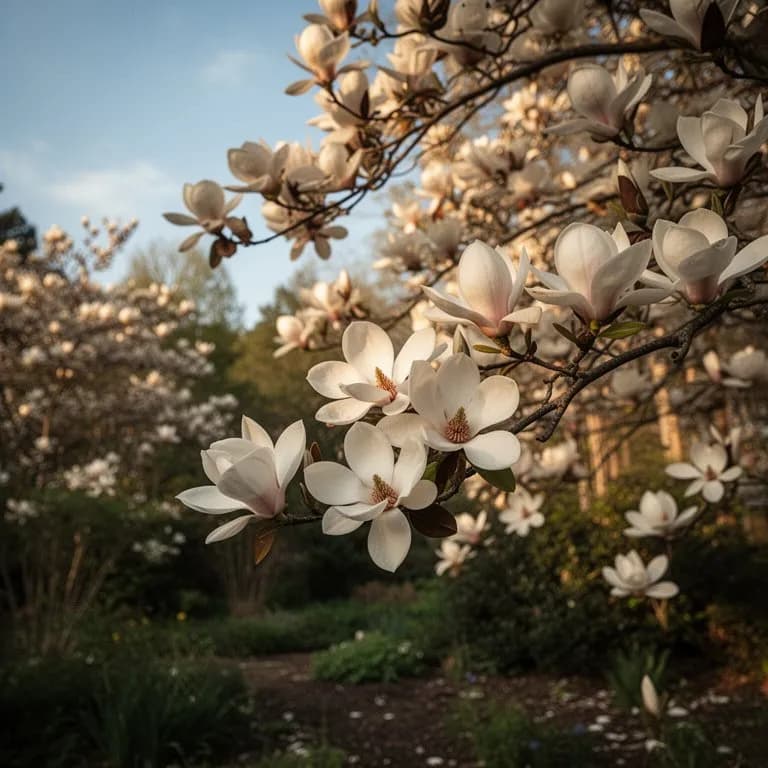
Magnolienblütensirup
30 Min. plus Ziehen über NachtEin duftender Blütensirup aus frischen Magnolienblütenblättern, perfekt zum Beträufeln von Pfannkuchen, für Cocktails oder zum Süßen von Eistee. Die Blütenblätter verleihen ein zartes zitrus-blumiges Aroma und eine blassgelbe Farbe.
4 ZutatenGetrockneter Magnolienblütentee
15 Min. plus TrocknungszeitEin beruhigender Kräutertee, aufgebrüht aus getrockneten Magnolienblütenblättern. Der Aufguss hat einen milden blumigen Geschmack mit subtiler ingwerähnlicher Wärme. Traditionell für Entspannung geschätzt, ist dieser Tee koffeinfrei und passt gut zu Honig.
4 Zutaten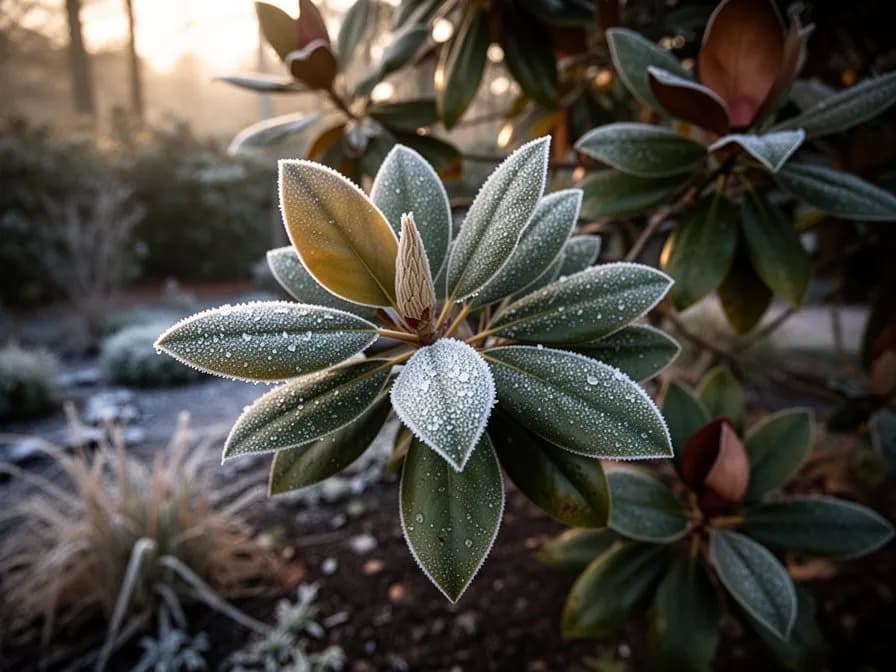
Magnolienblüten-Potpourri-Säckchen
20 Min. plus 2 Wochen TrocknungHandgemachte Potpourri-Säckchen aus getrockneten Magnolienblütenblättern, Samenkapseln und ergänzenden Pflanzenmaterialien. Obwohl nicht essbar, sind diese Säckchen hervorragende Geschenke und füllen Schränke und Schubladen mit einem anhaltenden natürlichen Duft.
5 ZutatenWas drinsteckt
Gesundheitsvorteile
- Magnolienrindenextrakt enthält Magnolol und Honokiol, zwei Verbindungen, die eingehend auf ihre Fähigkeit untersucht wurden, Angstzustände zu reduzieren und Entspannung ohne Sedierung zu fördern
- Forschungen haben gezeigt, dass Honokiol aus Magnolienrinde starke entzündungshemmende Eigenschaften besitzt, die mit einigen konventionellen Entzündungshemmern vergleichbar sind
- Magnolienrinde wird in der traditionellen chinesischen und japanischen Medizin seit über 2.000 Jahren zur Behandlung von Verdauungsbeschwerden, Atemwegserkrankungen und nervöser Anspannung eingesetzt
- Studien deuten darauf hin, dass Magnolienrindenverbindungen einen gesunden Cortisolspiegel unterstützen können, was möglicherweise bei der Bewältigung von stressbedingter Gewichtszunahme und Schlafstörungen hilft
- Die antimikrobiellen Eigenschaften von Magnolol wurden gegen mehrere Bakterienstämme nachgewiesen, darunter solche, die für Zahnbelag verantwortlich sind, was zu seiner Aufnahme in einige Mundpflegeprodukte geführt hat
- Der Aufenthalt in der Nähe blühender ausgewachsener Magnolienbäume bietet Aromatherapie-Vorteile, da die natürlichen Duftstoffe in vorläufigen Studien mit Stimmungsaufhellung und Stressabbau in Verbindung gebracht wurden
Woher Immergrüne Magnolie stammt
Magnolia grandiflora, allgemein bekannt als Immergrüne Magnolie oder Großblütige Magnolie, ist im Südosten der Vereinigten Staaten heimisch, wo sie natürlich von der Küste Virginias südwärts durch die Carolinas, Georgia und Florida und westwärts entlang der Golfküste bis Osttexas wächst. Sie gedeiht in den reichen, feuchten Flussniederungen und Laubmischwäldern der Küstenebene und der unteren Piedmont-Region.
Die Gattung Magnolia gehört zu den ältesten Abstammungslinien blühender Pflanzen. Fossilienfunde zeigen, dass magnolienähnliche Pflanzen während der späten Kreidezeit vor über 95 Millionen Jahren existierten und damit der Entwicklung der Bienen vorausgingen. Ihre großen, robusten Blüten entwickelten sich zur Bestäubung durch Käfer, die zu den frühesten Insektenbestäubern gehörten.
Europäische Botaniker begegneten der Immergrünen Magnolie erstmals im frühen 18. Jahrhundert. Französische Entdecker sandten Exemplare nach Europa, und der Baum wurde 1753 von Carl von Linné formal beschrieben und benannt. Der Gattungsname ehrt Pierre Magnol, einen wegweisenden französischen Botaniker, der an der Universität Montpellier ein frühes System der Pflanzenklassifikation entwickelte.
Die Immergrüne Magnolie wurde schnell zu einem beliebten Zierbaum im amerikanischen Süden, wo sie auf Plantagen, Landsitzen und öffentlichen Anlagen weit verbreitet gepflanzt wurde. Ihre Verbindung zur südstaatlichen Kultur ist tief verwurzelt, und sie wurde zur Staatsblume und zum Staatsbaum von Mississippi. Der Baum wurde auch von Präsident Andrew Jackson am Weißen Haus gepflanzt.
Heute wird Magnolia grandiflora weltweit in warmgemäßigten und subtropischen Klimazonen kultiviert. Über 100 Sorten wurden entwickelt, darunter kompakte Formen wie 'Little Gem' und winterharte Auslesen wie 'Bracken's Brown Beauty', die das Pflanzgebiet bis in die USDA-Zone 6b erweitern. Die Art bleibt einer der meistbewunderten Zierbäume der Welt.
Immergrüne Magnolie: Schon gewusst?
Faszinierende Fakten über Immergrüne Magnolie
Magnolia grandiflora gehört zu einer der ältesten Gattungen blühender Pflanzen der Erde, mit Fossilienfunden, die über 95 Millionen Jahre bis in die späte Kreidezeit zurückreichen – das bedeutet, Magnolien existierten bereits vor der Entwicklung der Bienen.
Immergrüne Magnolie: Fragen & Antworten
Wann sollte ich Immergrüne Magnolie pflanzen?
Was sind gute Begleitpflanzen für Immergrüne Magnolie?
In welchen Winterhärtezonen kann Immergrüne Magnolie wachsen?
Wie viel Sonne braucht Immergrüne Magnolie?
Welchen Abstand sollte ich zwischen Immergrüne Magnolie lassen?
Welche Schädlinge und Krankheiten befallen Immergrüne Magnolie?
Wie lagere ich Immergrüne Magnolie nach der Ernte?
Was sind die besten Immergrüne Magnolie-Sorten zum Anbauen?
Welchen Boden braucht Immergrüne Magnolie?
Wie schnell wächst eine Immergrüne Magnolie?
Warum wirft meine Magnolie im Frühjahr Blätter ab?
Kann ich eine Immergrüne Magnolie im Kübel ziehen?
Sind Magnolienbäume unordentlich?
Welche Schädlinge und Krankheiten befallen Immergrüne Magnolien?
Wann ist die beste Zeit, eine Immergrüne Magnolie zu pflanzen?
Du hast die Theorie gelesen. Jetzt baue sie auf Autopilot an.
Alles, was Immergrüne Magnolie knifflig macht — das Timing, die Abstände, die Begleiter, das Erntefenster — genau das übernimmt PlotMyGarden für dich, für jede Pflanze im Garten.
Ein Plan, der dein Wetter kennt
Standort einmal festlegen. Aussaat-, Dünge- und Erntedaten rund um deinen echten letzten Frosttermin und die Live-Vorhersage — kein Raten mehr nach Saattüte.
Aus dem Abschnitt „Pflanzzeit“Beetplaner per Drag & Drop
Beete auf einem Raster gestalten. Jede Pflanze rastet im richtigen Abstand ein, und du siehst die ganze Saison, bevor du einen Cent für Saatgut ausgibst.
Aus dem Abschnitt „Anbau“Begleiter-Konflikte früh erkannt
Über 200 gute und schlechte Kombinationen werden beim Pflanzen live geprüft — so landet ein saisonruinierender Fehler nie in der Erde.
Aus dem Abschnitt „Begleiter“Erinnerungen, nach denen du wirklich handelst
„Gieß die Bohnen.“ „Heute ernten, bevor's umschlägt.“ Pünktlich, konkret und auf deine echten Pflanzen bezogen.
Aus dem Abschnitt „Ernte“Staffel-Aussaat, geplant
Sechs Wochen ernten statt sechs Tage? Die App verteilt deine Aussaaten automatisch und erinnert dich, wenn der nächste Satz fällig ist.
Aus dem Abschnitt „Pflanzzeit“Ein Verlauf, der schlauer wird
Jede protokollierte Ernte bringt der App deinen Garten bei. Der Plan fürs nächste Jahr startet bei dem, was in deinem Boden wirklich funktioniert hat.
Aus dem Abschnitt „Überblick“Pflanze diese neben Immergrüne Magnolie
Weitere Immergrüne
Halte Immergrüne Magnolie von diesen fern
Bau deine beste Immergrüne Magnolie an — und alles drumherum.
Starte heute kostenlos. Lege deine Beete an, setze deine Immergrüne Magnolie ein und lass PlotMyGarden Timing, Abstände, Begleiter und Erinnerungen von der Saat bis zum Erntekorb übernehmen.