Feldsalat
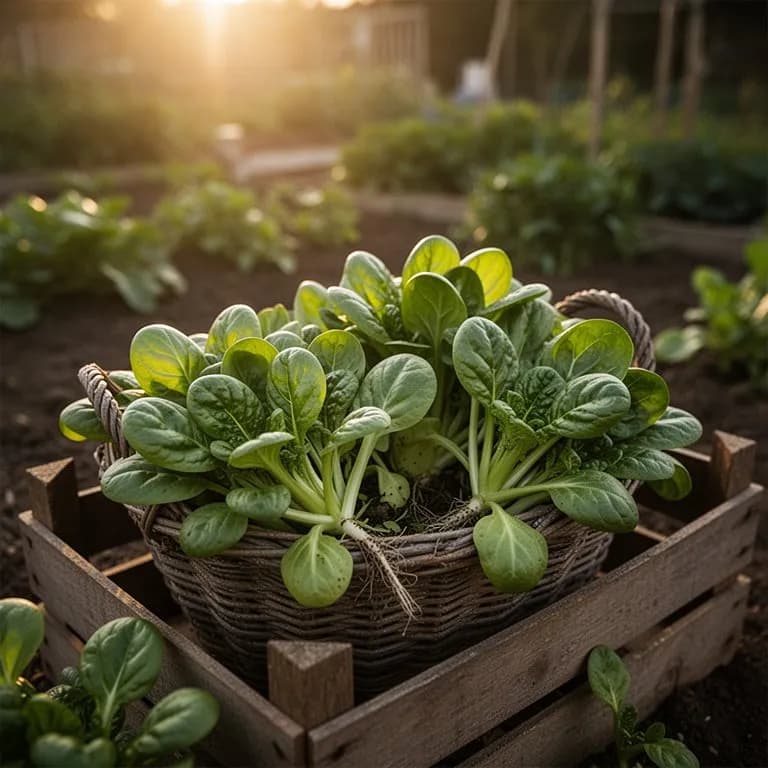
Ein winterharter europäischer Salatgrün, der kleine Rosetten aus runden, löffelförmigen Blättern mit süßem, nussigem Geschmack bildet.





Auf dieser SeiteÜberblick
Feldsalat im Überblick
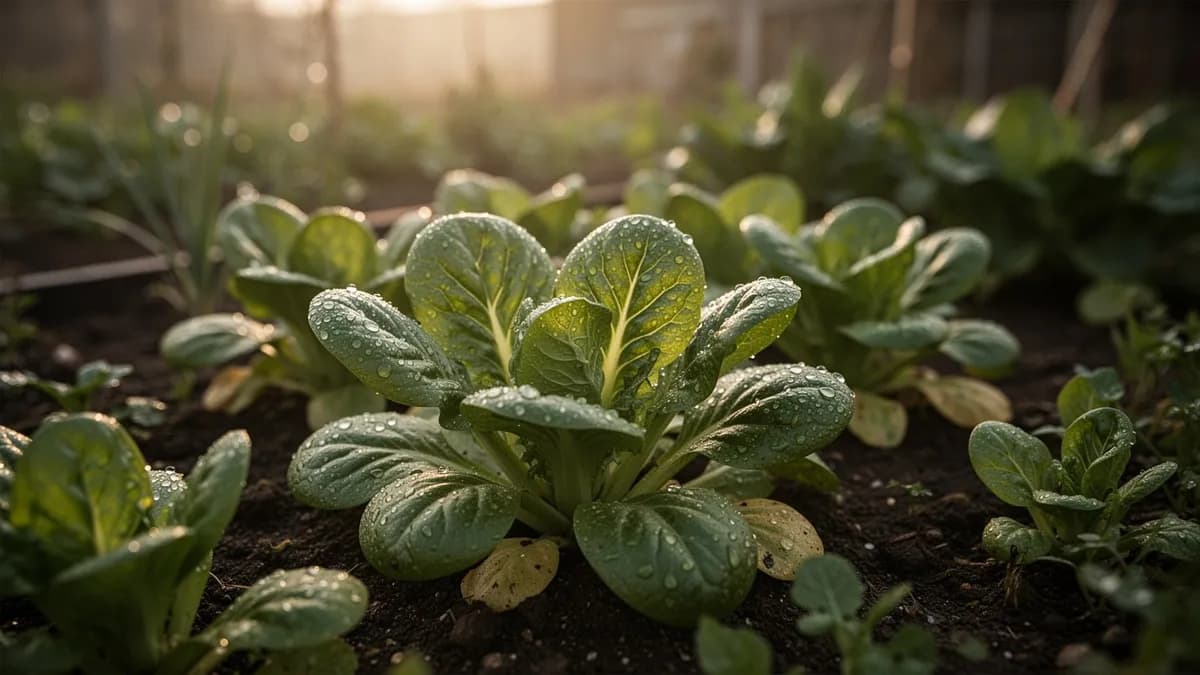
Ein winterharter europäischer Salatgrün, der kleine Rosetten aus runden, löffelförmigen Blättern mit süßem, nussigem Geschmack bildet. Einer der frostbeständigsten Blattsalate, der selbst in kalten Klimazonen mit minimalem Schutz den ganzen Winter über wächst. Der zarte, milde Geschmack passt wunderbar zu Rote Bete, Walnüssen und Vinaigrette in klassischen französischen Salaten. Im Herbst dicht aussäen für dichte Matten aus Babyleaves, die den ganzen Winter über geerntet werden können.
Wann Feldsalat pflanzen
Direktsaat wird dringend empfohlen, da sich Feldsalat aufgrund seines empfindlichen Wurzelsystems schlecht verpflanzen lässt. Säen Sie von Ende August bis Oktober, streuen Sie die Samen dünn über geharkte Erde und bedecken Sie sie mit 0,5 cm feinem Kompost oder Vermiculit. Drücken Sie leicht an, um guten Samen-Boden-Kontakt sicherzustellen. Halten Sie die Aussaat feucht bis zur Keimung, die bei kühlen Bedingungen sieben bis vierzehn Tage dauert. Samen keimen möglicherweise nicht, wenn der Boden wärmer als 20 Grad Celsius ist. Für den Anbau in Gefäßen säen Sie dicht in flache Schalen oder Töpfe mit Universalerde und vereinzeln Sie auf 5 cm Abstand, sobald die Sämlinge erscheinen.
Dein Feldsalat-Jahr
Abgestimmt auf Zone 7 · typische Saison · Frost geht um den 2. Apr. und kehrt um den 1. Nov. zurück
Feldsalat Sep – Nov pflanzen, Jan – Mär, Nov – Dez ernten. Beachte die Pflanzmethoden unten und wähle dein Klima für passende Zeiträume.
So baust du Feldsalat an
Feldsalat, auch als Rapunzel oder Nüsslisalat bekannt, gedeiht bei kühlen Bedingungen und ist eines der am einfachsten anzubauenden Wintergemüse. Säen Sie die Samen von Ende August bis Oktober direkt ins Beet, streuen Sie sie dünn über vorbereiteten Boden und bedecken Sie sie mit nur 0,5 cm feinem Kompost. Die Samen keimen am besten bei kühlen Temperaturen zwischen 10 und 15 Grad Celsius und können in warmem Boden in Keimruhe gehen. Halten Sie einen Reihenabstand von 15 cm ein oder verteilen Sie die Samen breitwürfig über ein Beet für dichte Babyleaf-Ernten.
Diese anspruchslose Pflanze wächst gut im Halbschatten und verträgt ärmere Böden besser als die meisten Blattsalate. Halten Sie den Boden während der Keimung gleichmäßig feucht, die sieben bis vierzehn Tage dauert. Einmal etabliert, benötigen die Pflanzen kaum Pflege außer gelegentlichem Gießen bei Trockenheit. In Regionen mit strengen Wintern bedecken Sie die Beete mit einer Schicht Gartenvlies oder einem niedrigen Folientunnel, um das Wachstum aufrechtzuerhalten und die Blätter vor Windschäden zu schützen.
Säen Sie alle zwei bis drei Wochen von Ende Sommer bis Frühherbst nach, um eine kontinuierliche Versorgung mit zarten Rosetten von November bis März sicherzustellen. Die Pflanzen schießen natürlicherweise, wenn die Tage im Frühling länger werden. Planen Sie daher, die Ernte bis Mitte Frühling abzuschließen. Feldsalat sät sich leicht selbst aus, wenn einige Pflanzen zur Blüte kommen, und liefert so freiwillige Sämlinge für den folgenden Herbst. Er kann auch in flachen Behältern und Balkonkästen für einen praktischen Wintersalat-Vorrat angebaut werden.
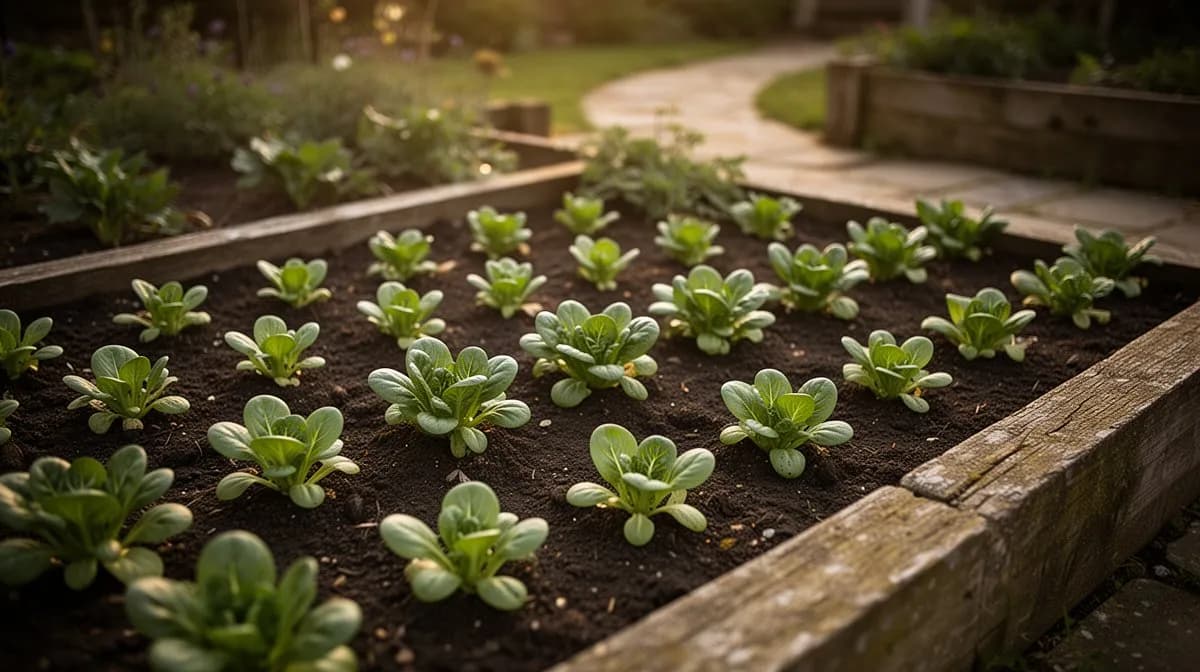
288 Pflanzen passen in ein Beet von 120 × 240 cm
Feldsalat braucht 10 cm Platz pro Pflanze. Der Planer hält diesen Abstand für dich ein — jede Pflanze, jedes Beet.
Die besten Nachbarn für Feldsalat
Feldsalat eignet sich hervorragend als Unterpflanzung unter höheren Kulturen wie Rosenkohl, Grünkohl und Lauch, wo er vom Halbschatten und Windschutz profitiert. Er wächst gut neben Karotten, Radieschen und anderem Wurzelgemüse ohne Konkurrenz. Vermeiden Sie die Pflanzung neben stark wuchernden Kräutern, die die niedrig wachsenden Rosetten ersticken könnten. Als Winterkultur füllt er Gartenflächen, die sonst brach liegen würden, hilft Unkraut zu unterdrücken und schützt die Bodenstruktur. Seine flachen Wurzeln konkurrieren nicht mit tieferwurzelnden Nachbarn um Wasser und Nährstoffe.
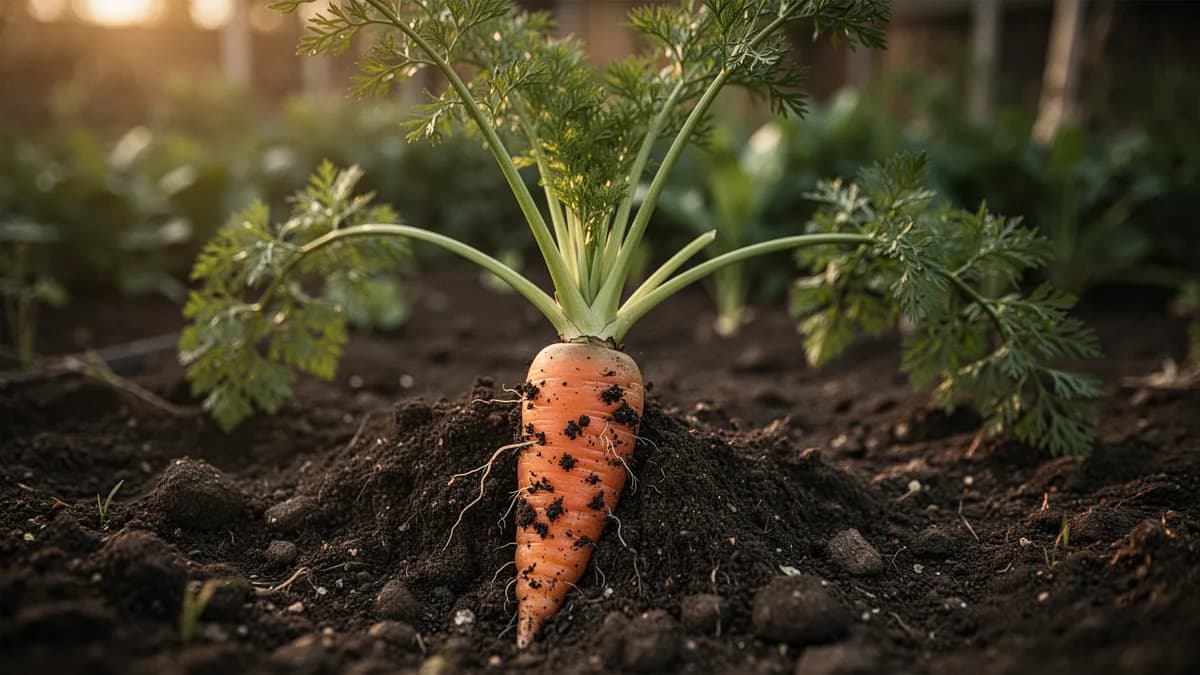
Karotte gehört daneben.
Altes Gärtnerwissen, geprüft an der echten Nachbartabelle von Feldsalat — teste jede Pflanze, die du anbaust.
Probiere Feldsalat direkt hier im Beet
Ein echtes Planer-Beet, Feldsalat steht schon drin. Tippe einen Begleiter an, platziere ihn und sieh, wie die Nachbarschaftsprüfung antwortet — grün für gute Nachbarn, rot bei Streit.


Passende Anbau-Ratgeber
Richtig düngen
Feldsalat ist bemerkenswert anspruchslos und wächst in fast jedem Gartenboden mit ausreichender Drainage. Er bevorzugt einen leicht alkalischen bis neutralen pH-Wert von 6,5 bis 7,5. Die Bodenvorbereitung ist minimal; harken Sie die Oberfläche einfach glatt und entfernen Sie grobe Steine. Nährstoffreicher Boden ist nicht notwendig und kann sogar zu schnelles Wachstum mit weniger Geschmack fördern. Eine leichte Gabe Universaldünger vor der Aussaat ist ausreichend. Vermeiden Sie starke Stickstoffdüngung, die üppige, aber fade Blätter hervorbringt, die anfällig für Krankheiten sind. Auf sehr armen Böden bietet eine dünne Schicht gut verrotteten Komposts, die vor der Aussaat eingearbeitet wird, ausreichend Nährstoffe.
Ideale Temperatur
Winterhärtezone-Kompatibilität
Von der Saat zur Ernte, Schritt für Schritt
Aussaat
Die Samen sind winzig und werden flach in kühlen Boden gesät, kaum bedeckt mit 3–5 mm feiner Erde oder Kompost. Die Keimung ist im Vergleich zu den meisten Blattsalaten langsam und dauert unter optimalen Bedingungen von 10–15 °C 7–14 Tage. Samen benötigen konstante Oberflächenfeuchtigkeit und keimen tatsächlich schlecht in warmem Boden über 20 °C, was dies von Anfang an zu einer echten Kältekultur macht.
Keimlingsentwicklung
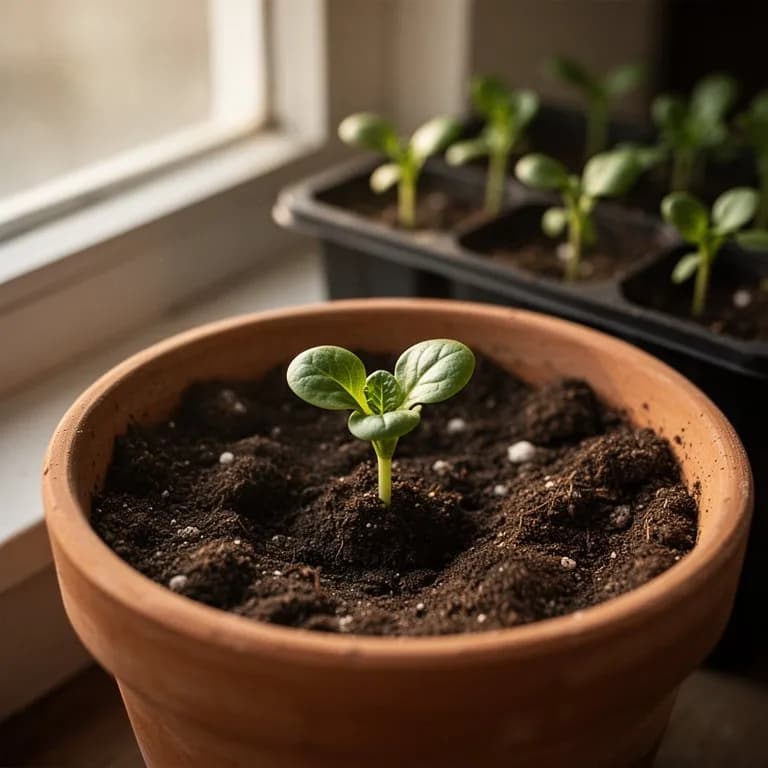
Winzige paarige Keimblätter erscheinen und die ersten echten Blätter entwickeln sich — schmal, länglich und hellgrün. Die Sämlinge sind in diesem Stadium klein und zart und wachsen sehr langsam. Das sich entwickelnde Wurzelsystem ist flach und faserig, was konstante Feuchtigkeit unerlässlich macht. Sämlinge werden in diesem Stadium leicht von Unkraut verdrängt.
Rosettenbildung
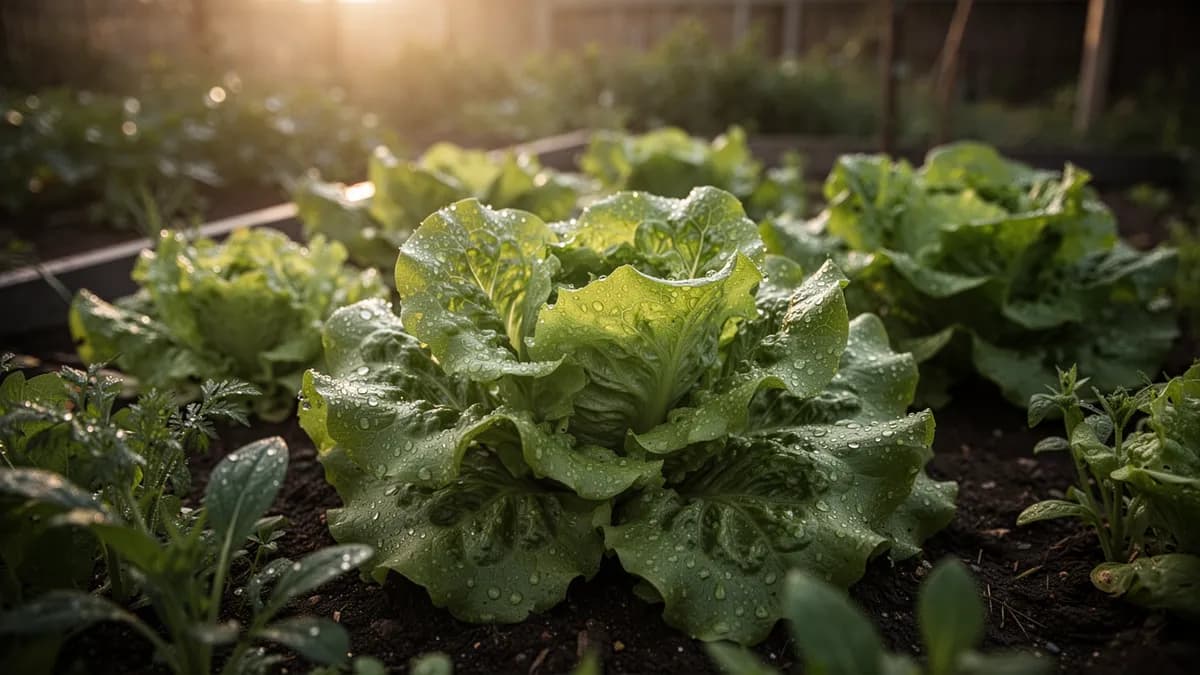
Die Pflanzen entwickeln ihre charakteristische kompakte Rosette aus 6–12 löffelförmigen, dunkelgrünen Blättern, die dicht am Boden wachsen. Jede Rosette erreicht einen Durchmesser von 8–12 cm. Die Blattstruktur wird glatt und leicht sukkulent. Das Wachstum beschleunigt sich bei kühlem Wetter und die Blätter entwickeln in dieser Phase ihren typischen milden, nussigen Geschmack.
Erntereife
Die Rosetten erreichen ihre volle Größe mit 10–20 Blättern pro Pflanze und bilden dichte, bodennahe Büschel. Die Blätter sind auf dem Höhepunkt ihres Geschmacks — mild, nussig und leicht süß mit einer samtigen Textur. Bei kühlem Wetter verharren die Pflanzen wochenlang in diesem Stadium ohne zu schießen, was ein verlängertes Erntefenster ermöglicht. Dies ist das ideale Stadium für die Schnitt-und-nachwachsen-Ernte oder die Ernte ganzer Rosetten.
Schossen und Samenbildung
Mit zunehmender Tageslänge und steigenden Temperaturen im Frühling treiben die Pflanzen dünne Blütenstängel mit winzigen hellblauen bis weißen Blüten. Die Blätter werden kleiner und leicht bitter, sobald das Schossen beginnt. Die Blüten locken kleine Bestäuber an und produzieren winzige Samen, die sich bereitwillig selbst aussäen und oft einen sich selbst erhaltenden Bestand im Garten etablieren.
Säen Sie die Samen dicht — etwa 1–2 cm Abstand in Reihen von 10–15 cm oder breitwürfig über ein vorbereitetes Beet verteilen und sanft andrücken. Halten Sie das Saatbeet konstant feucht mit feinem Sprühnebel oder Vliesabdeckung bis zur Keimung. Säen Sie nicht in der Sommerhitze, da die Keimraten über 20 °C dramatisch sinken.
Feldsalat Monat für Monat pflegen
Was du jeden Monat für deine Feldsalat tun solltest
Oktober
Aktueller MonatErste Herbsternten von Juli- und August-Aussaaten. Pflücken Sie ganze Rosetten oder ernten Sie äußere Blätter für fortlaufende Ernte. Bedecken Sie späte Aussaaten mit Hauben oder Vlies in Zonen 5–6, um die Wachstumsperiode zu verlängern und vor starkem Regen zu schützen, der Erde auf die bodennahen Rosetten spritzen kann.
Immer wissen, was jetzt im Garten zu tun ist
Eine E-Mail zum Monatsanfang: was du jetzt säen, pflanzen und anpacken solltest — für deine Feldsalat und alles, was drumherum wächst. Dazu ein kurzer Startkurs, der dich vor den klassischen Fehlern bewahrt.
- Was jetzt zu tun ist
- Passend zu deiner Saison
- Startkurs inklusive
Feldsalat ernten
Ernten Sie Feldsalat, wenn die Rosetten mindestens sechs bis acht Blätter haben, typischerweise 45 bis 60 Tage nach der Aussaat. Schneiden Sie ganze Rosetten auf Bodenhöhe mit einer Schere oder einem scharfen Messer ab, oder pflücken Sie einzelne äußere Blätter, damit das Zentrum weiter produzieren kann. Ernten Sie morgens, wenn die Blätter knackig und voller Feuchtigkeit sind. Bei kaltem Wetter wachsen die Blätter langsam, entwickeln aber durch die Kälte eine verbesserte Süße. Vermeiden Sie die Ernte, wenn die Blätter gefroren sind; warten Sie, bis sie natürlich auftauen. Regelmäßiges Schneiden fördert die Bildung neuer Rosetten aus Seitentrieben und verlängert die Ernteperiode.
angenommen, du pflanzt zu Beginn des Zeitraums — trage dein tatsächliches Datum ein
Ernte Feldsalat zügig, dann trägt die Pflanze weiter.
Lagerung & Konservierung
Feldsalat wird am besten frisch innerhalb von zwei bis drei Tagen nach der Ernte verzehrt, da die zarten Blätter schnell welken. Lagern Sie ungewaschene Rosetten in einem verschlossenen Behälter, der mit feuchtem Küchenpapier ausgelegt ist, im Gemüsefach des Kühlschranks. Waschen Sie die Blätter erst kurz vor dem Servieren vorsichtig, da sie leicht beschädigt werden. Dieses Grün lässt sich aufgrund seines hohen Wassergehalts und seiner zarten Textur nicht gut einfrieren, trocknen oder konservieren. Für maximale Frische ernten Sie während der Wintersaison nur so viel, wie Sie für jede Mahlzeit benötigen, direkt aus dem Garten oder Behälter.
Was schiefgeht — und die Lösung
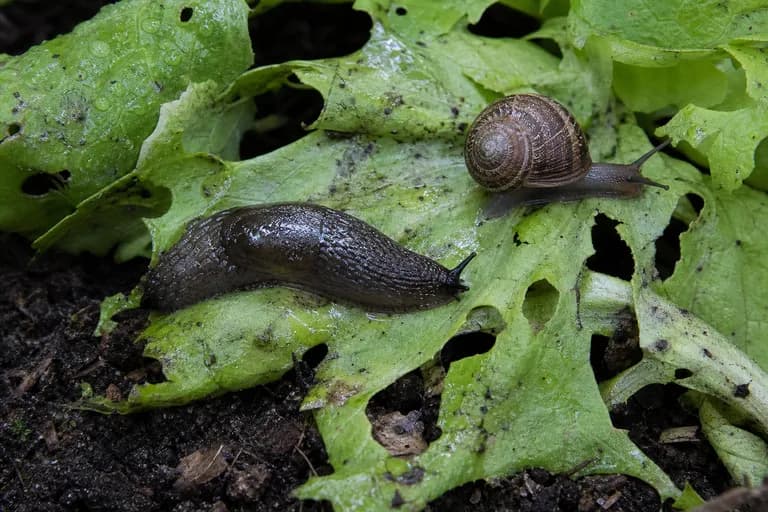
Schnecken und Nacktschnecken
SchädlingUnregelmäßige Löcher in den Blättern und sichtbare Schleimspuren auf dem Laub, besonders bei feuchtem Wetter.
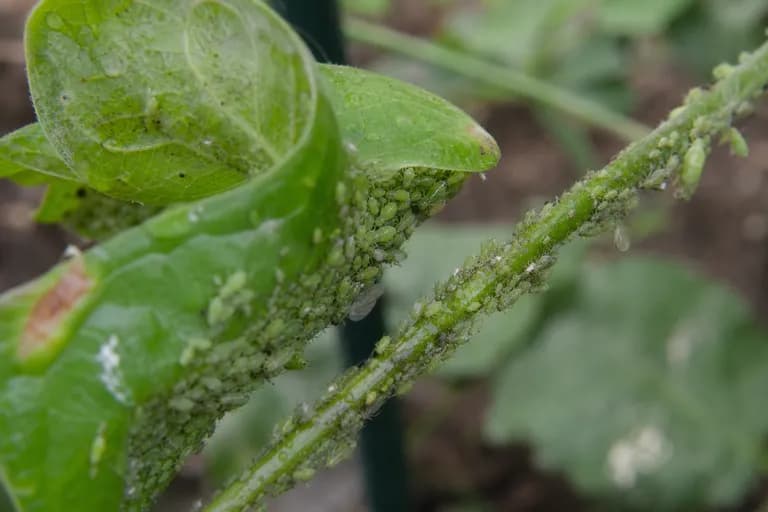
Blattläuse
SchädlingAnsammlungen kleiner grüner oder schwarzer Insekten auf den Blattunterseiten, die Blattkräuselung und klebrige Honigtau-Ablagerungen verursachen.
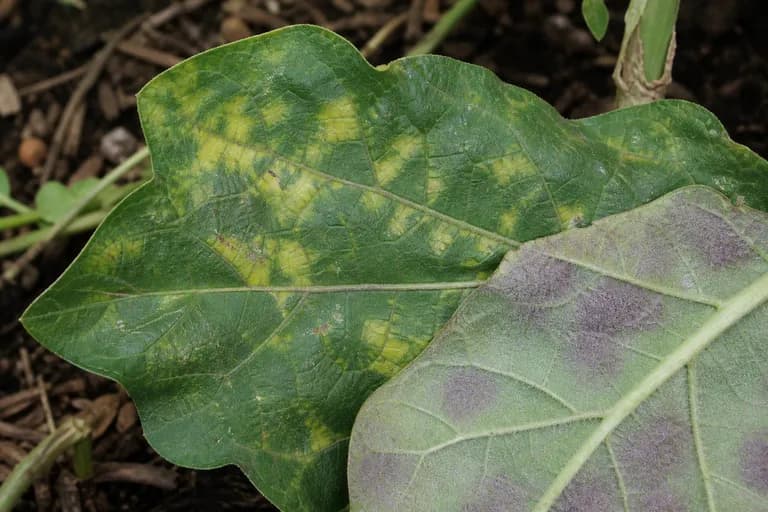
Falscher Mehltau
KrankheitGelbliche Flecken auf der Blattoberseite mit grauweißem, filzigem Belag auf der Unterseite. Blätter werden schlaff und unbrauchbar.
Fehlerbehebung bei häufigen Problemen
Schlechte Keimung ist die häufigste Beschwerde, meist verursacht durch zu frühe Aussaat bei zu warmen Bodentemperaturen. Warten Sie bis zum Spätsommer, wenn die Temperaturen unter 20 Grad Celsius fallen. Schossen im Frühling ist natürlich und lässt sich nicht verhindern, planen Sie daher, die Ernte bis April abzuschließen. Umfallkrankheit kann dichte Aussaaten bei nassen Bedingungen befallen; sorgen Sie für gute Drainage und vermeiden Sie Überwässerung. Vögel können Samen nach der Aussaat freischarren, bedecken Sie daher die Beete mit Netz, bis die Sämlinge angewachsen sind. Zu dichter Stand führt zu langgestreckten, schwachen Pflanzen — vereinzeln Sie Sämlinge daher auf 10 cm Abstand, wenn zu dicht gesät wurde.
Anbautipps
- Betrachten Sie Feldsalat als Winterkultur, nicht als Frühlingskultur. Die besten Ergebnisse erzielen Sie durch Aussaat im Spätsommer (Juli–September) für die Ernte von Oktober bis März. Frühlingsaussaaten schießen schnell bei wärmerem Wetter und produzieren minderwertige, bittere Blätter.
- Säen Sie dicht und vereinzeln Sie nicht. Anders als die meisten Gemüsearten gedeiht Feldsalat auch bei sehr engem Stand — 1–2 cm zwischen den Samen in alle Richtungen. Dichte Pflanzung schafft einen bodenbedeckenden Teppich, der Unkraut unterdrückt, Bodenfeuchtigkeit bewahrt und die meisten Rosetten pro Quadratmeter produziert.
- Kühlen Sie den Boden vor der Spätsommeraussaat ab. Wenn die Bodentemperaturen 20 °C überschreiten, wird die Keimung bestenfalls lückenhaft. Wässern Sie das Beet am Tag zuvor gründlich, säen Sie abends und verwenden Sie für die ersten 1–2 Wochen Schattiergewebe. Ein nordseitiges Beet oder eines, das von höheren Kulturen beschattet wird, eignet sich gut für Sommeraussaaten.
- Bedecken Sie die Samen kaum — 3–5 mm feine Erde oder gesiebter Kompost genügen. Tiefere Aussaat reduziert die Keimrate erheblich. Drücken Sie die Oberfläche nach der Aussaat sanft an, um guten Samen-Boden-Kontakt sicherzustellen, und besprühen Sie fein statt kräftig zu gießen, um ein Wegschwemmen der Samen zu vermeiden.
- Halten Sie das Saatbeet von der Aussaat bis zur guten Etablierung der Sämlinge konstant feucht. Die winzigen Samen und das flache Wurzelsystem erholen sich auch von kurzer Austrocknung nicht. Eine Abdeckung mit Vlies oder feinem Netz hilft, Feuchtigkeit zu bewahren und beschleunigt die Keimung.
- Ernten Sie ganze Rosetten, indem Sie auf Bodenhöhe mit einem scharfen Messer schneiden, für den saubersten Schnitt und die beste Präsentation. Lassen Sie 1–2 cm Stängelansatz stehen, und die Pflanze kann eine kleinere zweite Rosette nachtreiben. Alternativ pflücken Sie einzelne äußere Blätter für eine verlängerte fortlaufende Ernte.
- Lassen Sie jeden Frühling einige Pflanzen schießen und sich selbst aussäen. Feldsalat ist einer der zuverlässigsten Selbstaussäer im Garten, und ein Bestand, der zur Samenreife kommt, produziert jeden Herbst freiwillige Sämlinge über Jahre hinweg und schafft so eine mühelose, dauerhafte Wintersalat-Versorgung.
- Schützen Sie in den Zonen 4–5 mit Hauben oder Frühbeeten, nicht primär für Wärme, sondern um starken Regen und Schnee davon abzuhalten, Erde auf die bodennahen Rosetten zu spritzen, und um das Erntefenster in die kältesten Monate zu verlängern. In Zonen 6 und wärmer ist kein Schutz nötig.
Bau deine beste Feldsalat an — und alles drumherum.
Starte heute kostenlos. Lege deine Beete an, setze deine Feldsalat ein und lass PlotMyGarden Timing, Abstände, Begleiter und Erinnerungen von der Saat bis zum Erntekorb übernehmen.
Finde deine Feldsalat
Vit
Die am weitesten verbreitete Sorte mit dunkelgrünen, abgerundeten Blättern und ausgezeichneter Winterhärte. Schnellwüchsig und sehr ertragreich.
Jade
Kompakte Rosetten mit glänzend dunkelgrünen Blättern. Gute Krankheitsresistenz und gleichmäßiger Wuchs.
Trophy
Großblättrige Sorte mit kräftigem Wuchs und hervorragender Schossresistenz. Etwas milderer Geschmack als kleinblättrige Typen.
Medallion
Französische Traditionssorte mit kleinen, intensiv aromatischen Rosetten. Außergewöhnlich winterhart und langsam schießend im Frühling.
Feldsalat erzielt im Einzelhandel Premium-Preise — typischerweise 4–8 € pro 100-g-Packung in Supermärkten und Feinkostläden, was ihn pro Gramm zu einem der teuersten Blattsalate macht. Ein einzelnes Samentütchen für 2–3 € enthält genug Saatgut, um 3–5 Quadratmeter zu bepflanzen und 2–4 kg Grün im Handelswert von 80–320 € zu produzieren. Die Ersparnis ist noch dramatischer, weil Feldsalat seine Ernte in den Wintermonaten liefert, wenn andere frische Blattsalate über weite Strecken zu Premium-Preisen transportiert werden müssen. Einmal etabliert, kehren sich selbst aussäende Pflanzen Jahr für Jahr ohne Kosten zurück und liefern eine praktisch kostenlose Versorgung mit Wintersalat auf unbestimmte Zeit.
Schnelle Rezepte
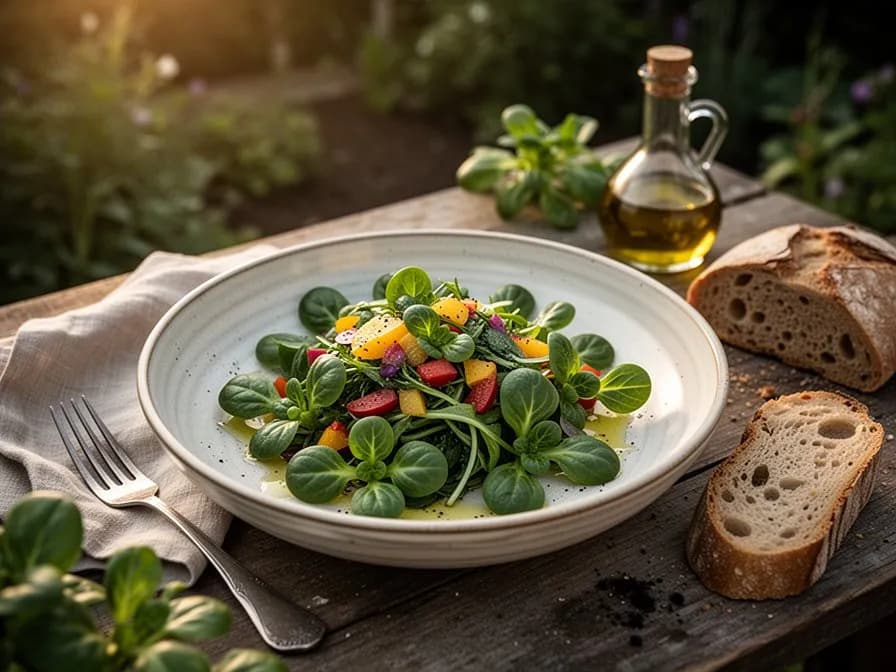
Klassischer französischer Feldsalat mit Rote Bete und Walnüssen
15 Min.Der typische französische Bistro-Salat — zarte Feldsalat-Rosetten gepaart mit süßer gerösteter Rote Bete, knackig gerösteten Walnüssen und würzigem zerbröckeltem Ziegenkäse, alles angemacht mit einer Dijon-Senf-Vinaigrette. Die nussige Milde des Feldsalats bietet die perfekte Leinwand für die kräftigen Aromen.
8 ZutatenWinter-Feldsalat-Bowl mit Granatapfel und Zitrus
10 Min.Ein frischer, belebender Wintersalat, der die besten Zutaten der Saison feiert. Feldsalat dient als zarte, nussige Basis für juwelengleiche Granatapfelkerne, filetierte Clementinen und gehobelten Fenchel, angemacht mit einer leichten Zitronen-Honig-Vinaigrette.
8 ZutatenWarmer Feldsalat mit Speck und pochiertem Ei
20 Min.Ein herzhafter Salat nach Lyoner Art, bei dem knusprige Speckwürfel und ihr warmes ausgelassenes Fett den Feldsalat sanft anwelken, gekrönt von einem perfekt pochierten Ei, dessen flüssiges Eigelb Teil des Dressings wird. Ein Schuss Sherry-Essig bringt alles in Balance.
8 ZutatenKulinarische Verwendung
Feldsalat ist ein klassischer Wintersalatgrün, der in der französischen und deutschen Küche sehr geschätzt wird. Sein milder, leicht nussiger Geschmack passt wunderbar zu Rote Bete, Walnüssen, Ziegenkäse und einer einfachen Vinaigrette. Servieren Sie ganze Rosetten als eleganten Beilagensalat oder mischen Sie ihn mit anderen Wintersalaten. Er welkt schnell nach dem Anmachen, geben Sie die Vinaigrette daher erst kurz vor dem Servieren dazu. Die zarten Blätter können auch Suppen und Hauptgerichte garnieren oder kurz in warme Getreidebowls eingearbeitet werden für einen Hauch frisches Grün.
Was drinsteckt
Gesundheitsvorteile
- Einer der beta-carotinreichsten und vitaminreichsten Blattsalate, der über 140 % des Tageswertes an Vitamin A pro 100 g liefert — unterstützt die Augengesundheit, Immunfunktion und Hautintegrität weit wirksamer als Eisbergsalat oder Romana.
- Ungewöhnlich reich an Omega-3-Fettsäuren (Alpha-Linolensäure) für ein Blattgemüse, mit etwa der dreifachen Menge im Vergleich zu normalem Kopfsalat — trägt zur Herz-Kreislauf-Gesundheit und entzündungshemmenden Prozessen bei.
- Hervorragende Vitamin-C-Quelle (42 % TW pro 100 g), besonders wertvoll in den Wintermonaten, wenn andere frische Quellen dieses essenziellen Nährstoffs im Garten rar und im Laden teuer sein können.
- Reich an bioverfügbarem Eisen (2,0 mg pro 100 g), gepaart mit hohem Vitamin-C-Gehalt, der die Aufnahme von Nicht-Häm-Eisen verbessert — eine ideale Kombination zur Vorbeugung von Eisenmangel, besonders bei pflanzenbasierter Ernährung.
- Sehr oxalatarm im Vergleich zu Spinat, was bedeutet, dass das Calcium, Eisen und andere Mineralstoffe im Feldsalat viel besser vom Körper aufgenommen werden — was ihn in Bezug auf die tatsächliche Mineralstoffaufnahme ernährungsphysiologisch dem Spinat überlegen macht.
- Enthält Valerianella-Verbindungen mit mild beruhigenden Eigenschaften, und sein Folsäuregehalt (145 mcg pro 100 g, etwa 36 % TW) unterstützt die Gesundheit des Nervensystems, die Stimmungsregulation und ist während der Schwangerschaft entscheidend zur Vorbeugung von Neuralrohrdefekten.
Woher Feldsalat stammt
Feldsalat (Valerianella locusta) ist in Europa, Westasien und Nordafrika heimisch, wo er wild in Wiesen, auf Äckern und in felsigem Gelände vom Mittelmeerraum bis nach Skandinavien wächst. Anders als die meisten modernen Salatkulturen wurde Feldsalat jahrtausendelang als Wildpflanze gesammelt, bevor ein systematischer Anbau begann. Archäologische Funde deuten darauf hin, dass er bereits von neolithischen Gemeinschaften in Mitteleuropa gegessen wurde, doch die ersten schriftlichen Aufzeichnungen über gezielten Anbau stammen aus dem 17. Jahrhundert in Frankreich und Deutschland.
Die Pflanze gewann ihre kulinarische Bedeutung gerade wegen ihrer Fähigkeit, bei kaltem Wetter zu gedeihen, wenn andere Blattsalate längst dem Frost erlegen waren. Im 18. und 19. Jahrhundert wurde Feldsalat zum Wintersalat-Grundnahrungsmittel in Frankreich, Deutschland, der Schweiz und Österreich. Die französische Küche erhob ihn unter dem Namen Mâche in den Rang der gehobenen Gastronomie, und er spielte eine herausragende Rolle in den klassischen Salaten Lyons und des Loire-Tals. Im deutschsprachigen Raum wurde er als Feldsalat oder Rapunzel angenommen — letzterer Name inspirierte direkt das Märchen der Brüder Grimm, in dem das unwiderstehliche Verlangen einer Schwangeren nach dem zarten Grün die gesamte Handlung in Gang setzt.
Die kommerzielle Produktion expandierte im 20. Jahrhundert erheblich, mit dem Zentrum in der Region Nantes in Frankreich, wo milde atlantische Winter und sandige Lehmböden ideale Wachstumsbedingungen schaffen. Moderne Gewächshausproduktion hat die Verfügbarkeit auf das ganze Jahr ausgedehnt, doch der geschmackvollste Feldsalat stammt nach wie vor aus Freiland-Herbst- und Winterpflanzungen, die nach Frosteinwirkung geerntet werden. Heute wird Feldsalat in ganz Westeuropa angebaut, mit wachsender Beliebtheit in Nordamerika, Japan und Australien unter Gärtnern und Köchen, die seinen einzigartigen nussigen Geschmack, seine außergewöhnliche Kältetoleranz und seinen Nährstoffreichtum schätzen. Er bleibt einer der wenigen kommerziell bedeutenden Blattsalate, der in einer Form existiert, die sich im Wesentlichen nicht von seinen wilden Vorfahren unterscheidet.
Feldsalat: Schon gewusst?
Faszinierende Fakten über Feldsalat
Feldsalat (Valerianella locusta) verdankt seinen englischen Namen 'Lamb's Lettuce' der Form seiner Blätter, die einer Lammzunge ähneln. Im Deutschen heißt er Feldsalat (Ackersalat), im Französischen Mâche und im Italienischen Valerianella — jede Kultur gibt ihm einen eigenen, gleichermaßen charmanten Namen.
Feldsalat: Fragen & Antworten
Wann sollte ich Feldsalat pflanzen?
Was sind gute Begleitpflanzen für Feldsalat?
In welchen Winterhärtezonen kann Feldsalat wachsen?
Wie viel Sonne braucht Feldsalat?
Welchen Abstand sollte ich zwischen Feldsalat lassen?
Welche Schädlinge und Krankheiten befallen Feldsalat?
Wie lagere ich Feldsalat nach der Ernte?
Was sind die besten Feldsalat-Sorten zum Anbauen?
Welchen Boden braucht Feldsalat?
Warum keimen meine Feldsalat-Samen nicht?
Kann ich Feldsalat drinnen oder in Gefäßen anbauen?
Warum ist mein Feldsalat so schnell geschossen?
Ist Feldsalat dasselbe wie Ackersalat und Mâche?
Wie winterhart ist Feldsalat wirklich?
Wie wasche ich Feldsalat richtig, ohne die zarten Blätter zu beschädigen?
Du hast die Theorie gelesen. Jetzt baue sie auf Autopilot an.
Alles, was Feldsalat knifflig macht — das Timing, die Abstände, die Begleiter, das Erntefenster — genau das übernimmt PlotMyGarden für dich, für jede Pflanze im Garten.
Ein Plan, der dein Wetter kennt
Standort einmal festlegen. Aussaat-, Dünge- und Erntedaten rund um deinen echten letzten Frosttermin und die Live-Vorhersage — kein Raten mehr nach Saattüte.
Aus dem Abschnitt „Pflanzzeit“Beetplaner per Drag & Drop
Beete auf einem Raster gestalten. Jede Pflanze rastet im richtigen Abstand ein, und du siehst die ganze Saison, bevor du einen Cent für Saatgut ausgibst.
Aus dem Abschnitt „Anbau“Begleiter-Konflikte früh erkannt
Über 200 gute und schlechte Kombinationen werden beim Pflanzen live geprüft — so landet ein saisonruinierender Fehler nie in der Erde.
Aus dem Abschnitt „Begleiter“Erinnerungen, nach denen du wirklich handelst
„Gieß die Bohnen.“ „Heute ernten, bevor's umschlägt.“ Pünktlich, konkret und auf deine echten Pflanzen bezogen.
Aus dem Abschnitt „Ernte“Staffel-Aussaat, geplant
Sechs Wochen ernten statt sechs Tage? Die App verteilt deine Aussaaten automatisch und erinnert dich, wenn der nächste Satz fällig ist.
Aus dem Abschnitt „Pflanzzeit“Ein Verlauf, der schlauer wird
Jede protokollierte Ernte bringt der App deinen Garten bei. Der Plan fürs nächste Jahr startet bei dem, was in deinem Boden wirklich funktioniert hat.
Aus dem Abschnitt „Überblick“Pflanze diese neben Feldsalat
Weitere Blattgemüse
Gartenpläne mit Feldsalat
Bau deine beste Feldsalat an — und alles drumherum.
Starte heute kostenlos. Lege deine Beete an, setze deine Feldsalat ein und lass PlotMyGarden Timing, Abstände, Begleiter und Erinnerungen von der Saat bis zum Erntekorb übernehmen.