Hollyhock
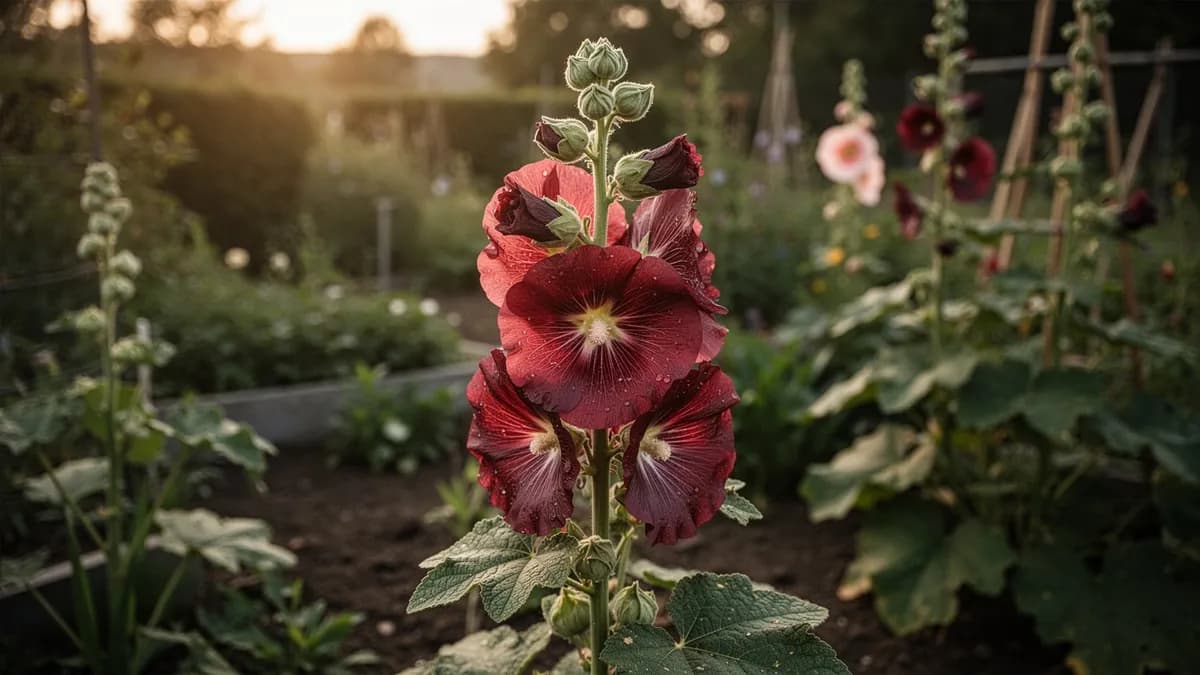
A quintessential cottage garden biennial or short-lived perennial with tall spikes of large, ruffled flowers up to eight feet.





On this pageOverview
Meet Hollyhock
A quintessential cottage garden biennial or short-lived perennial with tall spikes of large, ruffled flowers up to eight feet. Hollyhocks are susceptible to rust disease, so remove affected leaves promptly and plant where air circulates freely. They self-sow generously and look best planted against walls, fences, or at the back of deep borders.
When to plant Hollyhock
Sow hollyhock seeds indoors eight to ten weeks before the last frost or directly outdoors in late summer for flowering the following year. Plant seeds a quarter inch deep in moist seed-starting mix. Germination takes ten to fourteen days at sixty-five to seventy degrees Fahrenheit. Nick or soak seeds overnight in warm water to speed germination. Transplant seedlings to individual pots when they have two true leaves and harden off before planting out. First-year compact varieties like Majorette can bloom the same season from an early indoor start.
Your Hollyhock Year
Composed for Zone 7 · typical seasons · frost passes Apr 2, returns Nov 1
Plant Hollyhock Mar – Apr, Sep, pick Jun – Aug. Check the planting methods below and set your climate to personalize these windows.
How to grow Hollyhock
Hollyhocks perform best when planted against a south- or west-facing wall or fence that provides shelter from wind and radiated warmth. They need full sun and deeply prepared, fertile soil with good drainage. Dig a generous planting hole and incorporate compost along with a handful of slow-release fertilizer. Soil pH between 6.0 and 8.0 is acceptable, and hollyhocks are notably tolerant of alkaline conditions.
Stake plants individually when they reach about two feet, as mature spikes can exceed eight feet and are top-heavy when laden with flowers. Use sturdy bamboo canes or metal stakes and tie loosely at intervals as the plant grows. Water at the base to keep foliage dry and reduce the risk of rust disease, providing about one inch of water per week during the growing season.
Although technically short-lived perennials, hollyhocks are best treated as biennials in most gardens. Allow some seed pods to ripen and drop naturally to establish a self-perpetuating colony. Remove and destroy any rust-infected foliage immediately to slow the spread of this nearly universal hollyhock disease.
10 plants fit a 4 × 8 ft bed
Each Hollyhock wants 45 cm of elbow room. The planner keeps that spacing for you — every plant, every bed.
Hollyhock's best neighbours
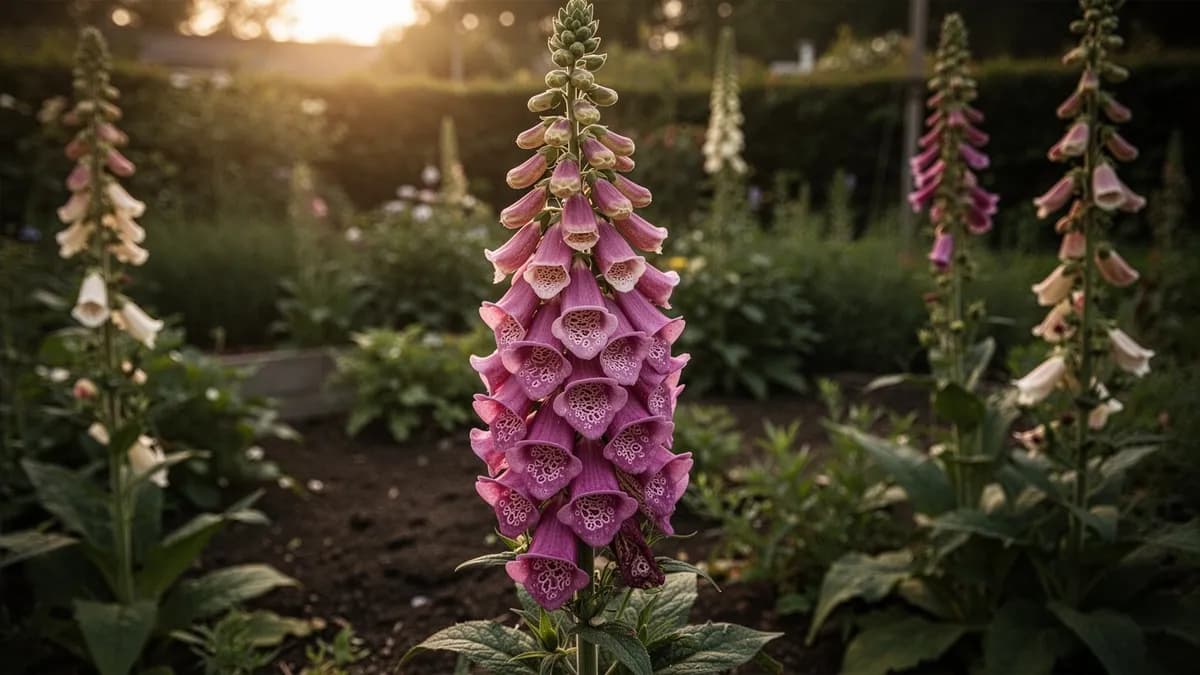
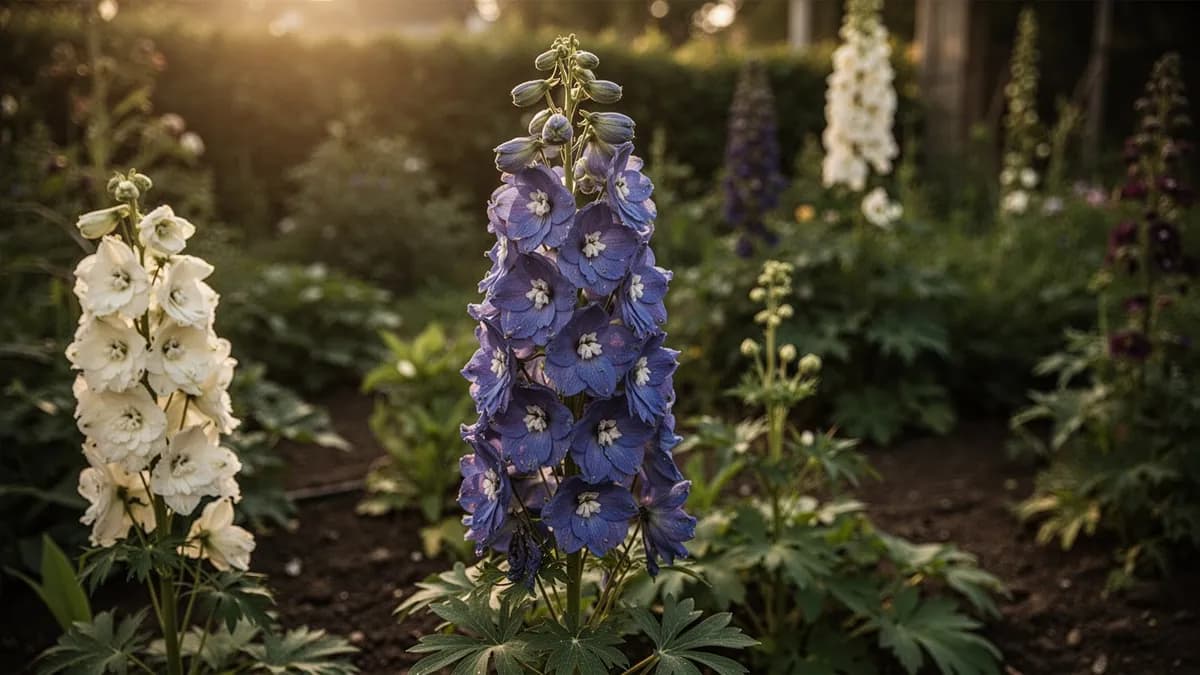
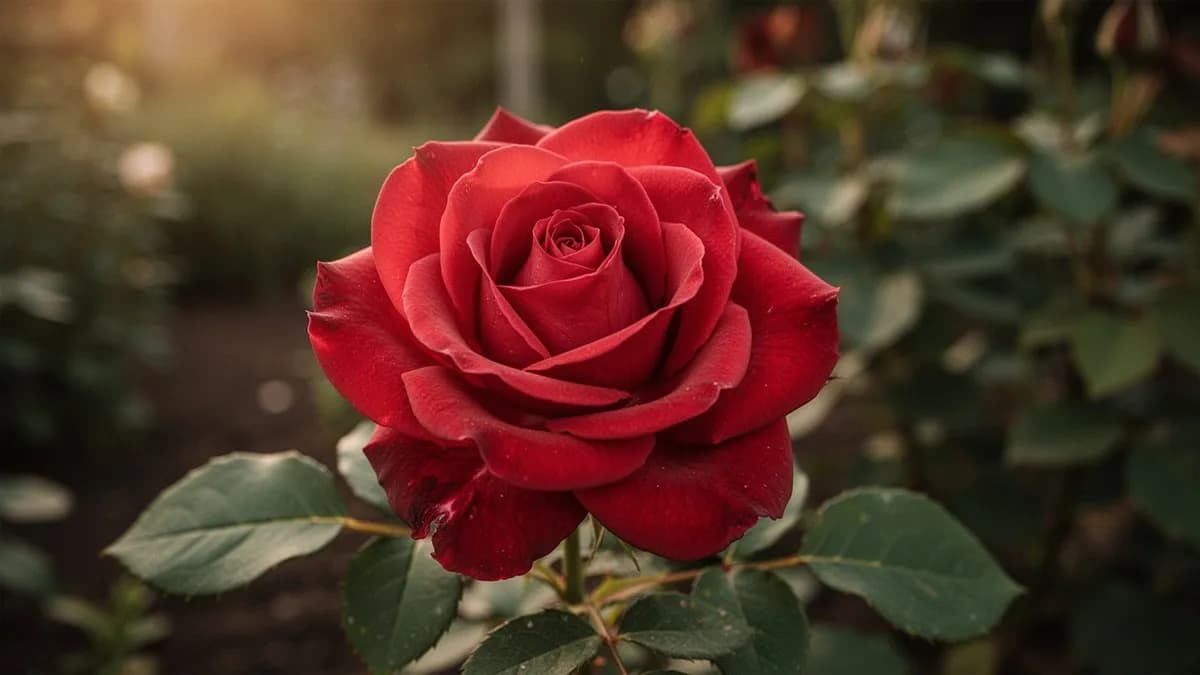
Hollyhocks belong at the back of deep borders or against walls and fences where their height creates a living backdrop. They pair naturally with delphiniums, foxgloves, and lupines for staggered vertical interest. Plant low-growing perennials like catmint, hardy geraniums, or dianthus at their feet to hide the often-bare lower stems. Roses and hollyhocks planted together evoke the classic English cottage garden.
Foxglove belongs beside it.
Old growers' knowledge, checked against Hollyhock's real companion table below — test any plant you're growing.
Try Hollyhock in a bed — right here
A real planner bed with Hollyhock already in it. Tap a companion to place it and watch the pairing checks answer — green for good neighbours, red for a clash.


Related growing guides
Feed it well
Hollyhocks thrive in deep, fertile, well-drained soil enriched with compost or well-rotted manure. They tolerate a wide pH range from 6.0 to 8.0 and are quite content in alkaline soils. Feed with a balanced granular fertilizer in early spring and again when flower buds begin to form. Side-dress with compost midsummer to sustain the prolonged bloom period. Avoid waterlogged conditions which promote root and crown rot and exacerbate rust disease.
Ideal Temperature
Hardiness Zone Compatibility
From seed to harvest, stage by stage
Seed Sowing
Hollyhock seeds are large, flat, and disc-shaped, making them easy to handle. Sow seeds about 6 mm deep in moist, well-drained soil. Seeds can be started indoors 6-8 weeks before the last frost or direct-sown outdoors after frost danger has passed. Germination is reliable and typically occurs within 10-14 days at soil temperatures of 15-21°C.
Seedling Development
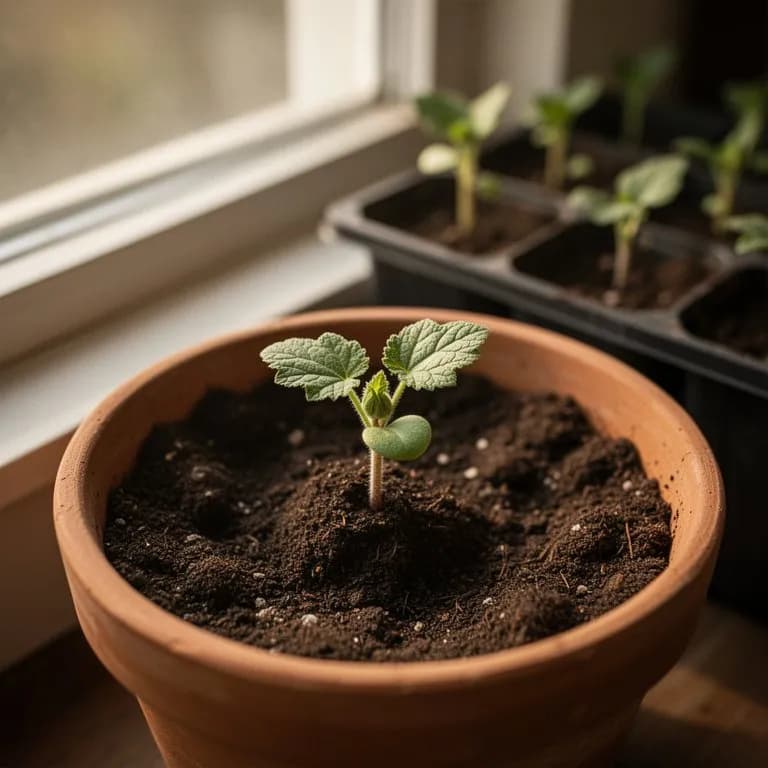
Seedlings emerge with rounded cotyledon leaves, quickly followed by true leaves that are distinctly lobed and rough-textured. During this phase the young plants establish their root systems and begin forming the characteristic large, maple-like foliage. Growth is moderate as the plants focus energy on root development rather than top growth.
Rosette Formation (First Year)
As biennial plants, hollyhocks spend their first year forming a low-growing rosette of large, rounded basal leaves. The rosette can reach 30-45 cm across and stays close to the ground. The plant is building a substantial taproot during this stage, storing energy for the following year's dramatic flower display. No flower stalks appear in the first year.
Stem Elongation and Bud Formation (Second Year)
In the second spring, the central flower stalk emerges rapidly from the overwintered rosette. The stalk grows vigorously, reaching heights of 1.5 to 2.5 meters over several weeks. Flower buds form along the upper portion of the spike in a tight, spiraling arrangement. Lower leaves become progressively smaller as the stalk elongates toward the sky.
Flowering
Flowers open sequentially from the bottom of the spike upward over a period of 4-6 weeks, providing an extended display from mid to late summer. Each individual bloom lasts about three days. The large, funnel-shaped flowers attract bees, butterflies, and hummingbirds. Color ranges include white, pink, red, yellow, apricot, purple, and the famous near-black variety Nigra.
Seed Setting and Ripening
After pollination, the distinctive round seed pods (called cheese wheels or mallow fruits) develop behind each spent flower. Each pod contains 15-25 flat, kidney-shaped seeds arranged in a ring. The pods dry and split open as they ripen, releasing seeds that scatter around the base of the parent plant. This natural self-sowing habit ensures hollyhock colonies persist for years.
Dormancy and Die-Back
After seed set, the main flowering stalk dies back as the plant completes its biennial life cycle. The spent stalks turn brown and woody. However, hollyhocks frequently behave as short-lived perennials, with side shoots emerging from the base that may overwinter and bloom again the following year. Self-sown seedlings nearby ensure continuity in the garden.
Nick or soak seeds in warm water for 12 hours before sowing to soften the seed coat and speed germination. Keep the soil consistently moist but not waterlogged during this critical stage.
Caring for Hollyhock month by month
What to do each month for your Hollyhock
October
You are hereApply 5-8 cm of mulch around first-year rosettes and any perennial basal growth to insulate roots through winter. Clean up and remove all fallen hollyhock foliage to reduce overwintering rust spores.
Know exactly what to do in your garden — every month
One email at the start of each month: what to sow, plant, and tackle right now — for your Hollyhock and everything growing around it. Plus a short starter course that helps you dodge the classic mistakes.
- What to do, right now
- Matched to your season
- Starter course included
Harvesting Hollyhock
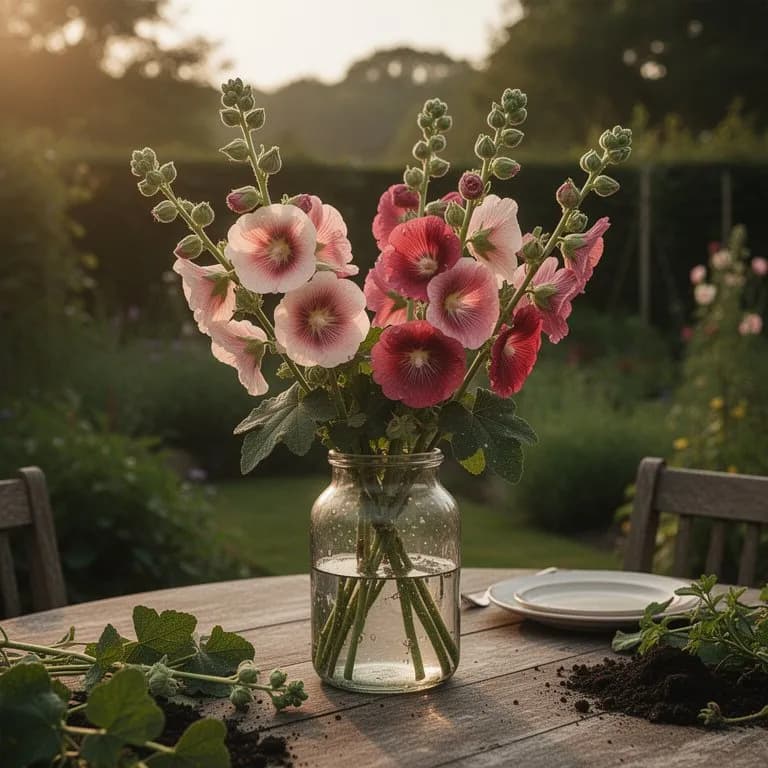
Hollyhock flowers can be cut individually for floating in bowls or the entire spike can be harvested when the lower third of flowers are open. Cut in early morning and place in warm water with floral preservative. Deadhead spent flowers to extend the bloom period and prevent excessive self-sowing, but allow a few pods to mature if you want volunteer seedlings. The single-flowered types produce the most abundant seed for future planting.
assuming you plant when the window opens — set your real date
Pick Hollyhock promptly and the plant keeps producing.
Storage & Preservation
Individual hollyhock flowers can be pressed between sheets of absorbent paper under heavy books for two to three weeks and used in crafts. The large, flat single flowers are especially suited to pressing. Seeds should be collected when the papery seed pods turn brown and begin to split. Store in paper envelopes in a cool, dry place where they remain viable for two to three years. Dried hollyhock stalks can be left standing for winter structural interest.
What goes wrong — and the fix
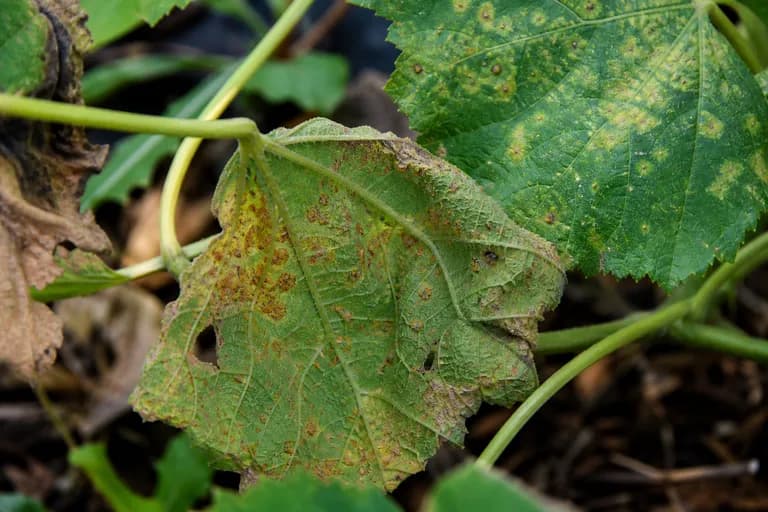
Hollyhock Rust
DiseaseOrange-brown pustules on the undersides of leaves with corresponding yellow spots on upper surfaces. Lower leaves are affected first and the disease progresses upward. Severe infections cause complete defoliation.
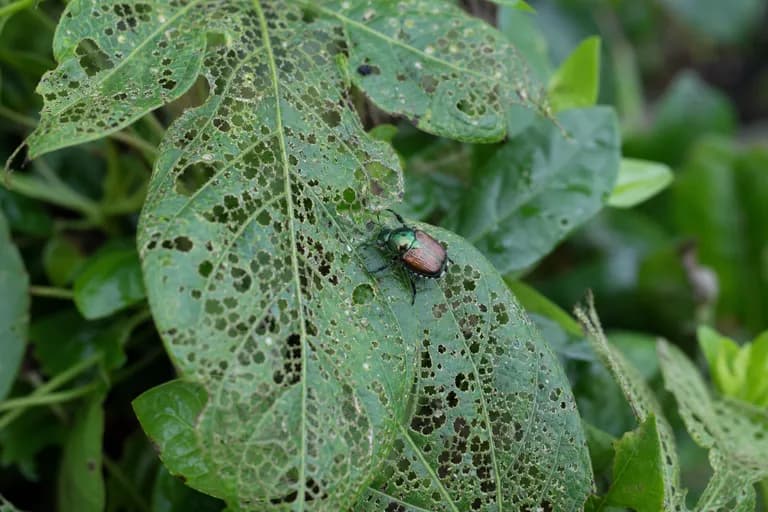
Japanese Beetles
PestSkeletonized leaves and ragged flower petals, with the metallic green-and-copper beetles clearly visible feeding during the day. Damage is worst in midsummer.
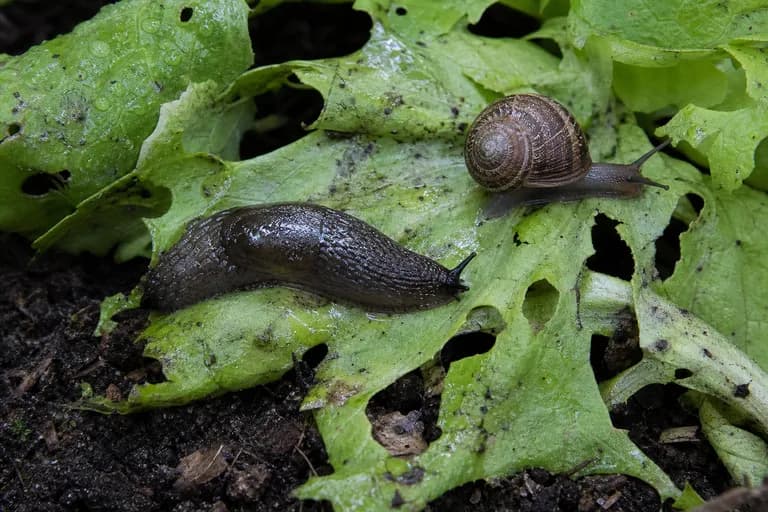
Slugs and Snails
PestLarge irregular holes in lower leaves and seedling rosettes, with slime trails visible in the morning. Young plants may be completely consumed overnight.
Troubleshooting Common Problems
Hollyhock rust is virtually inevitable and the single biggest challenge. Prevention through sanitation, spacing, and fungicide is more effective than cure. Wind damage to tall spikes is common in exposed locations, making sturdy staking essential. Spider mites may attack in hot, dry weather, causing stippled, dusty-looking foliage. The short-lived nature means plants should be treated as biennials with regular replacement through self-sowing or deliberate seeding.
Growing Tips
- Plant hollyhocks against a south-facing wall or fence to provide wind protection for the tall stalks and reflected warmth that promotes earlier flowering.
- Improve drainage in heavy clay soils by adding generous amounts of coarse grit or perlite at planting time, as hollyhock taproots are prone to rot in waterlogged conditions over winter.
- Sow seeds of annual hollyhock varieties such as Spring Celebrities or Majorette indoors in February to achieve first-year blooms, bypassing the typical biennial two-year cycle.
- Space plants 45-60 cm apart to allow adequate air circulation, which is the single most important cultural practice for reducing hollyhock rust infection.
- Remove lower leaves that show early signs of rust (orange-brown pustules on undersides) immediately and dispose of them in household waste, never in the compost pile.
- Apply a preventive fungicide spray containing myclobutanil or chlorothalonil starting in late spring before rust symptoms appear if the disease has been a recurring problem in your garden.
- Water at the base of plants using drip irrigation or a soaker hose rather than overhead sprinklers, as wet foliage dramatically increases the likelihood of rust and other fungal diseases.
- Stake tall varieties early in the season by placing a sturdy bamboo cane or metal plant support alongside each stalk when it reaches 60 cm, securing with soft garden twine in a figure-eight loop.
- Allow a few seed pods to ripen and scatter naturally at the end of the season to maintain a self-sustaining colony, but remove excess seedlings in spring to prevent overcrowding.
- Interplant hollyhocks with lower-growing companions like nepeta, lavender, or hardy geraniums to disguise the bare lower stems and rust-prone bottom foliage that often becomes unsightly by midsummer.
Grow your best Hollyhock yet — and everything around it.
Start a free plan today. Lay out your beds, drop in your Hollyhock, and let PlotMyGarden handle the timing, spacing, companions and reminders from seed to harvest basket.
Pick your Hollyhock
Chater's Double
Fully double peony-like flowers in a wide range of colors including scarlet, pink, yellow, purple, and white on six to eight foot stems, the classic double hollyhock.
Nigra
Dramatic near-black maroon single flowers that appear almost chocolate-colored, stunning against light walls. Grows to five feet and self-sows reliably.
Halo Series
Single flowers with a contrasting dark eye zone creating a halo effect, available in several color combinations on five to six foot stems.
Majorette
A compact double-flowered variety reaching only two to three feet, ideal for windy locations and smaller gardens, blooming in the first year from early sowings.
Hollyhocks are one of the most cost-effective ornamental plants for creating dramatic vertical displays. A single packet of seeds (typically containing 25-50 seeds) costs between $2-5 and can fill a large garden border. Once established, hollyhocks self-sow prolifically, providing free plants year after year without any additional seed purchases. A single mature plant can produce hundreds of seeds, which can be collected and shared with fellow gardeners. Compared to purchasing tall perennial plants from a nursery at $8-15 each, growing hollyhocks from seed saves significant money while delivering a spectacular cottage garden effect within two seasons.
Quick recipes
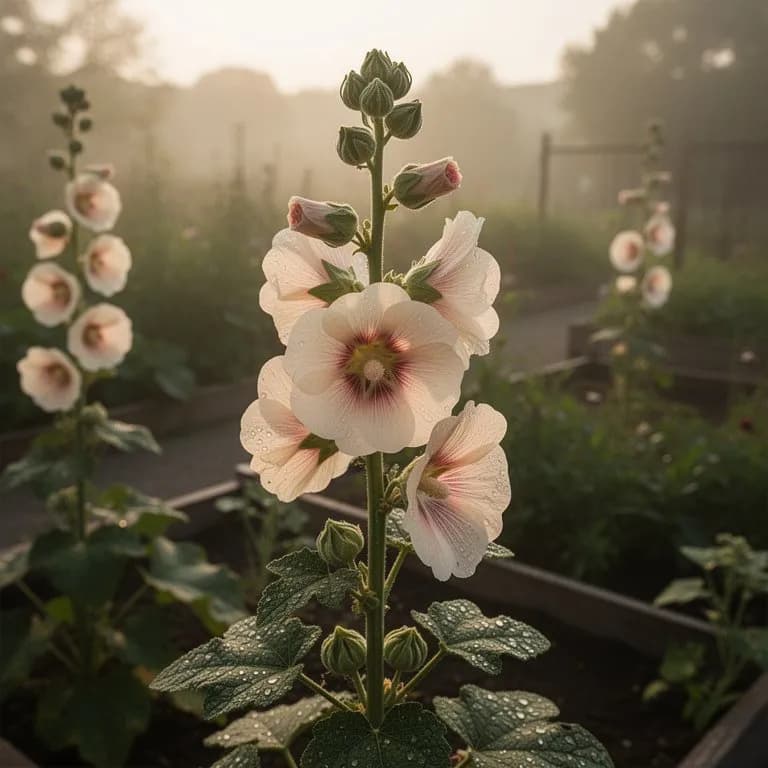
Hollyhock Petal Herbal Tea
10 minutesA gentle, mildly sweet herbal infusion made from dried hollyhock petals. The tea has a soft pink hue and a subtle floral flavor with soothing mucilaginous properties that calm sore throats and settle the stomach. Traditionally enjoyed in European folk medicine as a calming evening beverage.
4 ingredientsHollyhock Flower Fritters
20 minutesLightly battered and fried hollyhock blossoms make a unique and visually stunning appetizer or garden party snack. The petals become delicately crisp while retaining their color, and the mild, slightly sweet flavor pairs well with a dusting of powdered sugar or a savory dipping sauce.
6 ingredients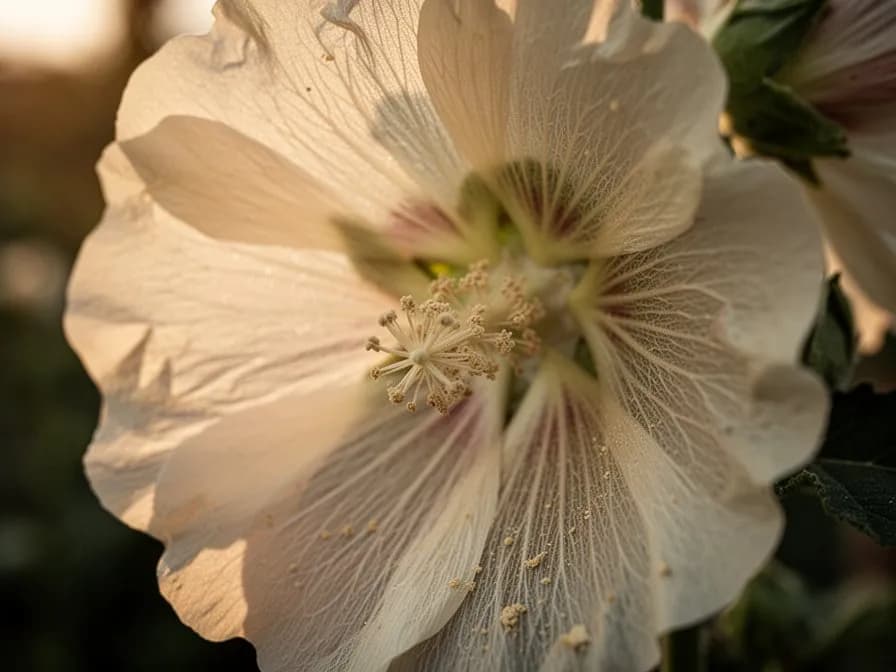
Hollyhock Petal Salad with Citrus Vinaigrette
15 minutesA vibrant garden salad that uses fresh hollyhock petals as both ingredient and garnish. The mild, slightly mucilaginous texture of the petals adds an interesting mouthfeel, while their brilliant colors transform a simple salad into a spectacular centerpiece for summer entertaining.
7 ingredientsWhat's inside
Health Benefits
- The mucilage in hollyhock roots and petals coats and soothes irritated mucous membranes, providing relief from sore throats, dry coughs, and mild gastric discomfort.
- Anthocyanin pigments in dark-flowered hollyhock varieties exhibit strong antioxidant activity, helping to neutralize free radicals and reduce oxidative stress in the body.
- Traditional herbal medicine has used hollyhock root preparations as a gentle anti-inflammatory for urinary tract irritation and mild bladder discomfort.
- Hollyhock petal infusions have been used in folk medicine as a mild expectorant to help loosen chest congestion during respiratory infections.
- The flowers contain flavonoids including quercetin and kaempferol, which have been studied for their potential anti-inflammatory and immune-supporting properties.
- Externally, poultices made from crushed hollyhock leaves have been traditionally applied to minor skin irritations, insect bites, and sunburn to reduce redness and promote healing.
Where Hollyhock comes from
Hollyhocks (Alcea rosea) are believed to have originated in southwestern China and Central Asia, where wild species still grow along rocky hillsides and disturbed ground. The plant's journey westward began along ancient trade routes, with early cultivation records found in both Chinese herbal medicine texts dating to the first century CE and in Mesopotamian gardens of similar antiquity. Arab traders and physicians valued hollyhock root and flowers for their mucilaginous properties, using them to soothe sore throats and digestive complaints much as marshmallow root was used in European herbal traditions. European Crusaders returning from the Middle East in the 12th and 13th centuries are widely credited with introducing hollyhocks to England and continental Europe, where the plants quickly became a defining feature of cottage gardens and monastery herb plots. By the Tudor period, hollyhocks were established throughout the British Isles, and herbalists such as John Gerard documented their medicinal applications in the late 1500s. The plant reached North America with early colonists in the 1600s and became a beloved fixture of dooryard gardens from New England to Virginia. Throughout the 18th and 19th centuries, plant breeders developed double-flowered forms and expanded the color palette to include deep blacks, bright yellows, and soft apricots alongside the classic pinks and reds. The arrival of hollyhock rust from Australia in the 1870s devastated plantings across Europe and America, temporarily reducing the flower's popularity, but renewed breeding efforts in the 20th century produced more resistant varieties. Today, hollyhocks remain a symbol of traditional cottage gardening and continue to self-sow along fences, walls, and alleyways in temperate climates worldwide.
Hollyhock: did you know?
Fascinating facts about Hollyhock
Hollyhocks have been cultivated for over 3,000 years, with archaeological evidence of their use in ancient Mesopotamia and Egypt for both ornamental and medicinal purposes.
Hollyhock questions, answered
When should I plant Hollyhock?
What are good companion plants for Hollyhock?
What hardiness zones can Hollyhock grow in?
How much sun does Hollyhock need?
How far apart should I space Hollyhock?
What pests and diseases affect Hollyhock?
How do I store Hollyhock after harvest?
What are the best Hollyhock varieties to grow?
What soil does Hollyhock need?
Why didn't my hollyhocks bloom in the first year?
How do I prevent hollyhock rust disease?
Will hollyhocks come back every year?
How tall do hollyhocks grow?
Are hollyhocks safe to eat?
When is the best time to plant hollyhock seeds?
You just read the theory. Now grow it on autopilot.
Everything that makes Hollyhock fiddly — the timing, the spacing, the companions, the harvest window — is exactly what PlotMyGarden handles for you, for every plant in your garden.
A plan that knows your weather
Set your location once. Get sow, feed and harvest dates built around your real last-frost date and live forecast — no more guessing from a generic seed packet.
From the “When to plant” sectionDrag-and-drop bed planner
Design beds on a grid. Every plant snaps to its proper spacing, and you can see your whole season laid out before you spend a cent on seed.
From the “Growing guide” sectionCompanion conflicts, caught early
200+ good-and-bad pairings checked live as you plant — so a season-wrecking mistake never makes it into the ground.
From the “Companions” sectionReminders you'll actually act on
“Water the beans.” “Pick today before it turns.” Timely, specific, and tied to the plants you're really growing.
From the “Harvest” sectionSuccession, scheduled
Want a harvest for six weeks, not six days? It spaces your sowings automatically and reminds you when each new block is due.
From the “When to plant” sectionA record that gets smarter
Every harvest you log teaches it your garden. Next year's plan starts from what actually worked in your soil, not a textbook's.
From the “Overview” sectionPlant these alongside Hollyhock
More Perennials
Garden plans featuring Hollyhock
Grow your best Hollyhock yet — and everything around it.
Start a free plan today. Lay out your beds, drop in your Hollyhock, and let PlotMyGarden handle the timing, spacing, companions and reminders from seed to harvest basket.