Uva Syrah
Una robusta uva tinta de vino procedente del norte del valle del Ródano, que produce vinos de color intenso con sabores especiados, ahumados y de fruta oscura.





En esta páginaResumen
Conoce Uva Syrah
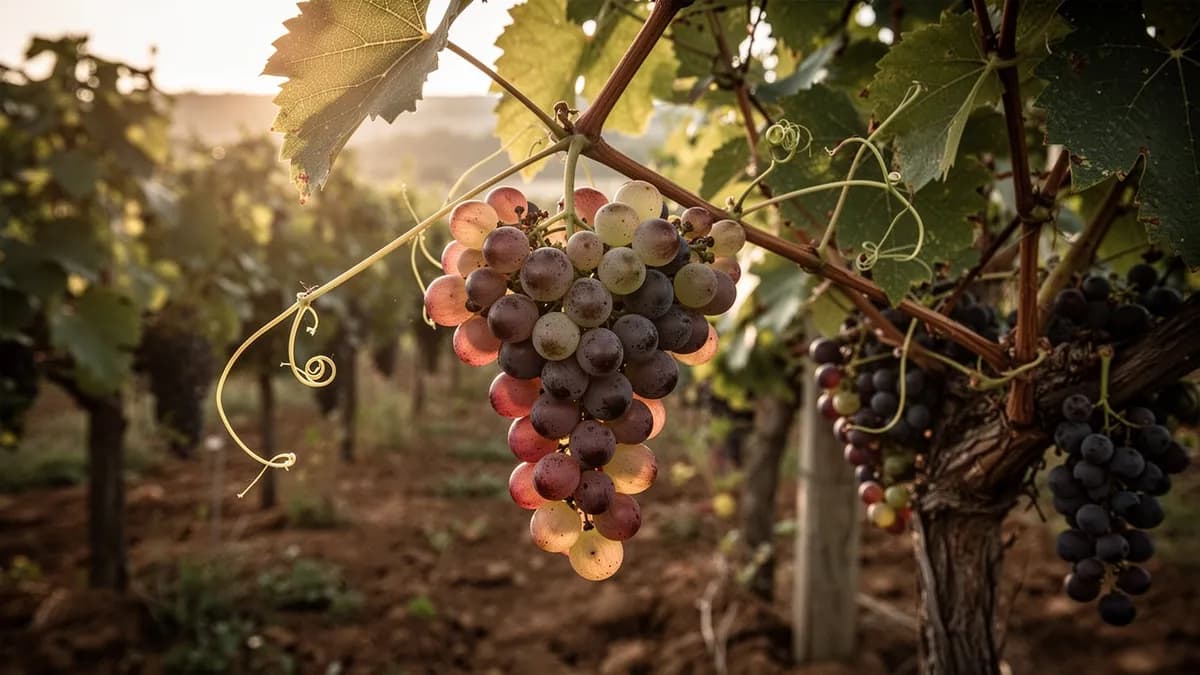
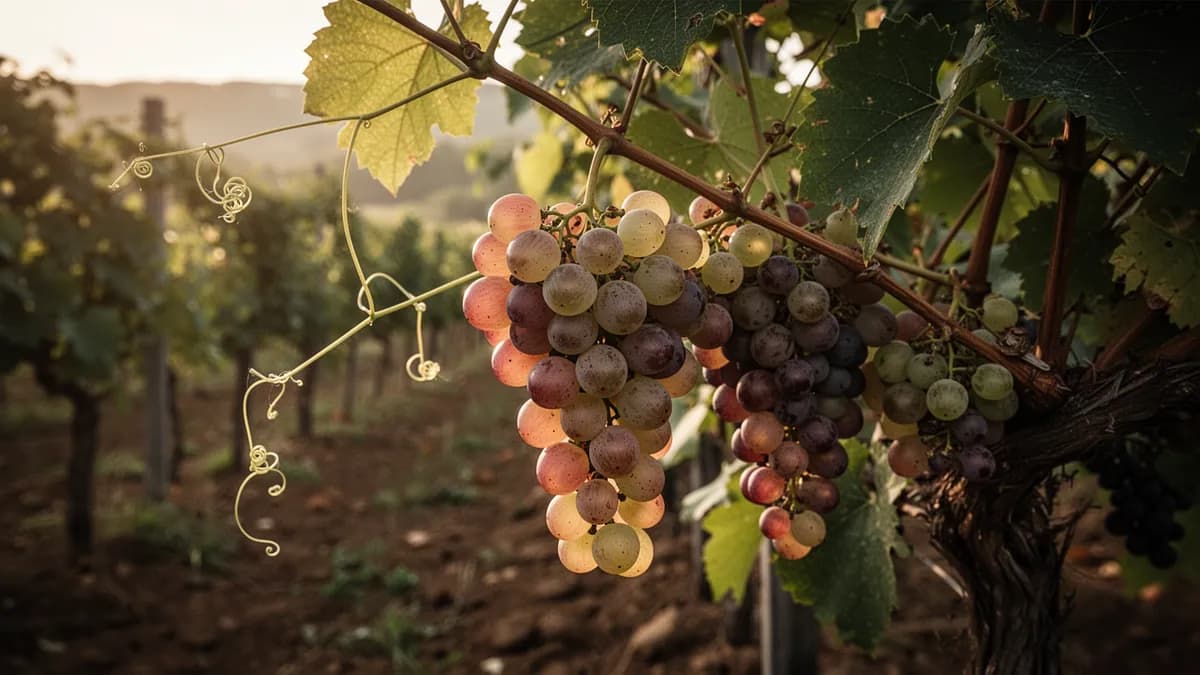
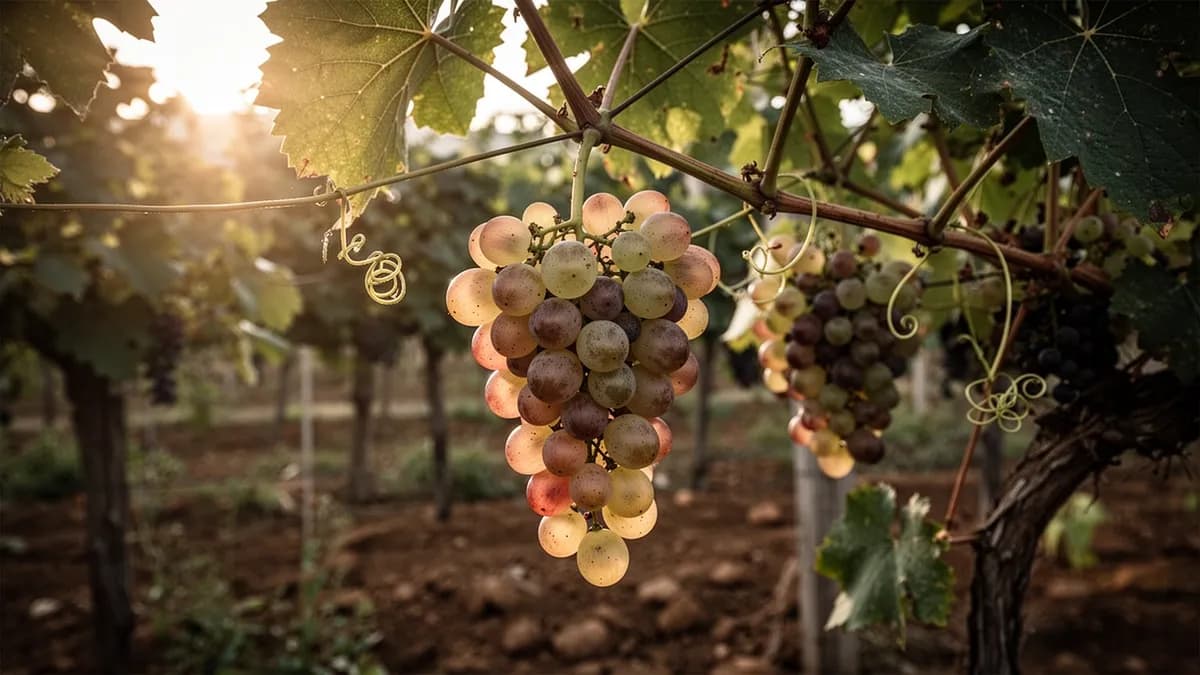
Una robusta uva tinta de vino procedente del norte del valle del Ródano, que produce vinos de color intenso con sabores especiados, ahumados y de fruta oscura. Las vides de Syrah son vigorosas y de porte erguido, y rinden mejor en climas cálidos con un estrés hídrico moderado. Las bayas de piel gruesa están muy pigmentadas y son ricas en taninos, lo que da vinos que envejecen excepcionalmente bien.
Cuándo plantar Uva Syrah
Syrah se propaga injertando esquejes leñosos en reposo sobre patrones resistentes a la filoxera. Tome esquejes de 25 a 30 cm con tres nudos de sarmientos bien maduros durante la poda invernal. El injerto de banco con máquinas omega es el método comercial estándar, con callado a 25 a 28 grados Celsius durante dos a tres semanas. La elección del patrón debe evitar 110R por su asociación con el declive de Syrah; 3309C, SO4 y Riparia Gloire son opciones más seguras. Las vides injertadas listas para campo están disponibles en viveros después de una temporada de crecimiento.
Tu año de Uva Syrah
Ajustado a Zona 7 · temporada típica · la helada se va hacia el 2 abr y vuelve hacia el 1 nov
Planta Uva Syrah Mar – Abr y cosecha Sep – Oct. Consulta los métodos de plantación y elige tu clima para adaptar los periodos.
Cómo cultivar Uva Syrah
Syrah prospera en climas cálidos con mucho sol y un estrés hídrico moderado, condiciones que concentran el color profundo y el carácter especiado y pimentado por el que esta uva es famosa. Elija un emplazamiento con exposición solar total y suelo bien drenado, idealmente en una ladera con orientación sur. Su porte erguido la hace muy adecuada para sistemas de espaldera con posicionamiento vertical de brotes. Plante vides injertadas en primavera, con una separación de 1.5 a 1.8 meter entre plantas dentro de la fila y de 2 a 2.5 meters entre filas.
Las vides son vigorosas y muestran un crecimiento fuertemente erguido, produciendo racimos largos y sueltos de bayas pequeñas de piel gruesa. Entrene en cordón bilateral y pode en invierno a pulgares de dos yemas, buscando de 16 a 24 yemas por vid. Syrah responde bien a un aclareo moderado de la carga, que concentra el color y los compuestos aromáticos de forma natural. Retire hojas de la zona del fruto de manera selectiva, ya que algo de sombra moteada en climas muy cálidos evita que las bayas desarrollen quemaduras solares y sabores cocidos.
Syrah es moderadamente susceptible al oídio y requiere un programa preventivo de pulverización en regiones húmedas. La variedad rinde de forma excepcional bajo riego deficitario regulado, donde el estrés hídrico controlado tras la véraison concentra los sabores sin deshidratar en exceso. En lugares más frescos, como el norte del Ródano, Syrah desarrolla sus notas características de pimienta negra y violetas florales, mientras que las regiones más cálidas tienden a producir expresiones más maduras y dominadas por la fruta, con matices de mora y chocolate.
Para Uva Syrah un bancal de 120 × 240 cm se queda corto
Cada Uva Syrah pide 180 cm de margen. El planificador guarda ese marco por ti — cada planta, cada bancal.
Los mejores vecinos de Uva Syrah
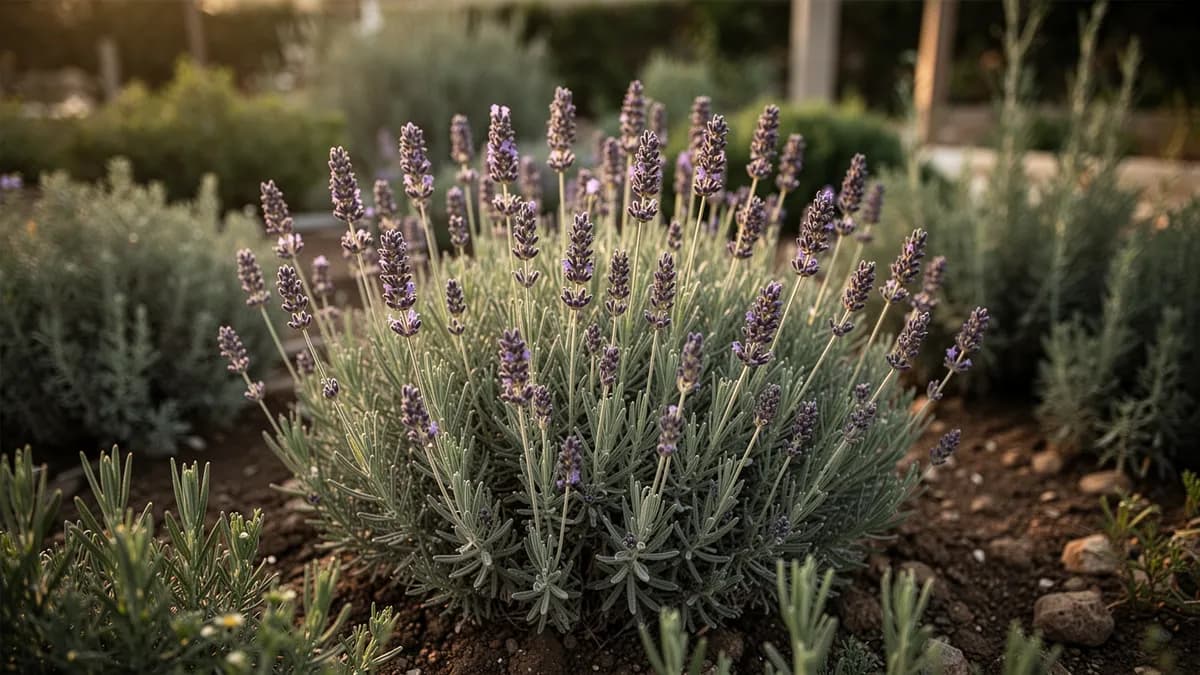
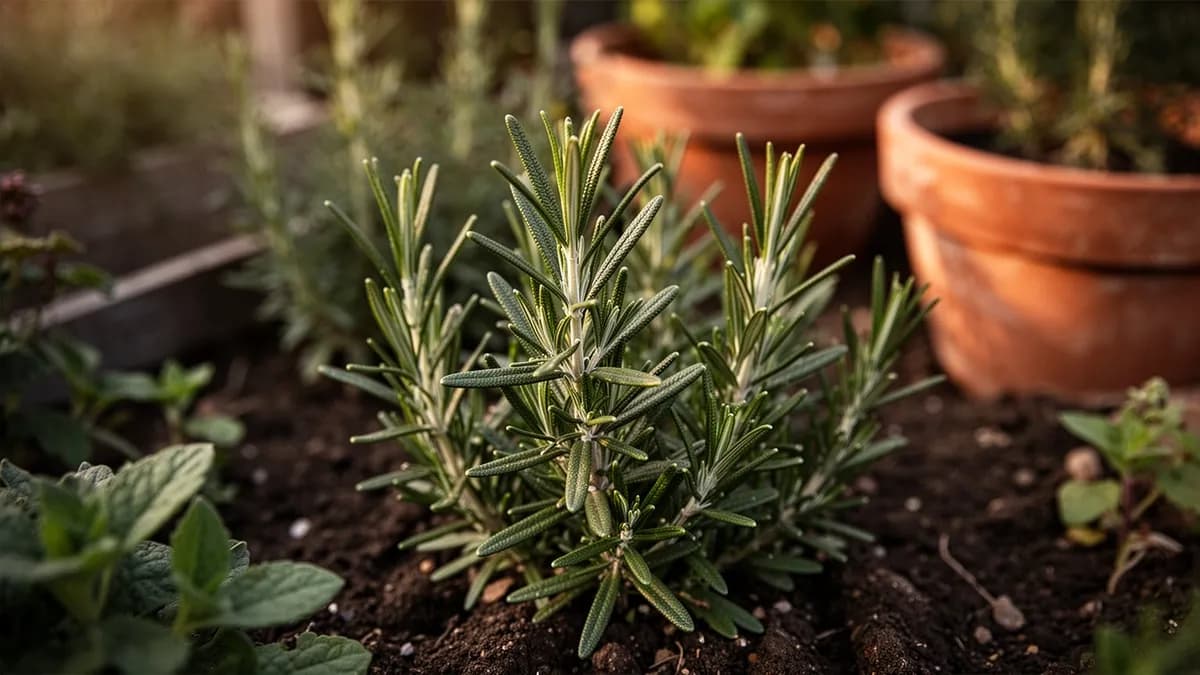
La lavanda y el romero son compañeras tradicionales en los viñedos del valle del Ródano, ya que prosperan en las mismas condiciones cálidas y bien drenadas, atraen polinizadores y sus aceites aromáticos pueden confundir a los insectos plaga. El tomillo y el orégano cultivados como cobertura entre filas suprimen las malas hierbas y ofrecen refugio a escarabajos terrestres beneficiosos. Los cultivos de cobertura de trébol subterráneo se resiembran solos cada año sin competir por el agua de verano. Evite plantaciones densas cerca de las filas de vid que restrinjan la circulación del aire que Syrah necesita para prevenir el oídio.
Lavanda va a su lado.
Saber de huerto de siempre, cotejado con la tabla real de Uva Syrah — prueba cualquier planta que cultives.
Prueba Uva Syrah en un bancal, aquí mismo
Un bancal real del planificador con Uva Syrah ya plantado. Toca una planta compañera para colocarla y mira cómo responde la comprobación de vecinos: verde para buenos vecinos, rojo si hay conflicto.


Guías de cultivo relacionadas
Abónalo bien
Syrah produce sus vinos más complejos en suelos de granito, esquisto o pedregosos bien drenados, que limitan el vigor y favorecen un desarrollo profundo de las raíces. La variedad se adapta a muchos tipos de suelo, pero rinde de forma constante mejor donde el drenaje es excelente y la fertilidad natural es moderada. Mantenga el pH del suelo entre 6.0 y 7.5. Aplique compost en otoño en cantidades moderadas y complemente con potasio y magnesio según sea necesario, en función del análisis del pecíolo. Evite el exceso de nitrógeno, que fomenta el crecimiento vegetativo a costa de la calidad de la fruta y aumenta la presión de enfermedades.
Temperatura ideal
Compatibilidad de zonas de rusticidad
De la semilla a la cosecha, etapa por etapa
Reposo y hinchazón de yemas
Las vides Syrah pasan el final del invierno en reposo total, y sus sarmientos leñosos almacenan los carbohidratos construidos durante la temporada anterior. Cuando la temperatura del suelo supera los 10°C (50°F), la savia empieza a subir y las yemas se hinchan y se ablandan de forma visible. Esta es la última ventana para la poda en reposo antes de que el crecimiento activo fije la arquitectura estacional de la vid. Syrah es una variedad moderadamente vigorosa que responde bien a una poda equilibrada, preparándose así para una fruta concentrada y sabrosa.
Brotación y alargamiento del brote
Los brotes verdes estallan desde las yemas hinchadas y se alargan con rapidez, a veces creciendo 2-3 cm por día en condiciones cálidas y soleadas. Los brotes jóvenes de Syrah suelen mostrar tonos rojizos o bronce atractivos antes de madurar a verde brillante. Pequeños racimos florales compuestos (inflorescencias) aparecen frente a las hojas a lo largo de cada brote, y las zarcillos se extienden para agarrarse a los alambres de la espaldera. Este es el periodo de mayor vulnerabilidad a las heladas, ya que temperaturas incluso uno o dos grados por debajo de 0°C pueden destruir toda la cosecha de la temporada.
Floración y cuajado
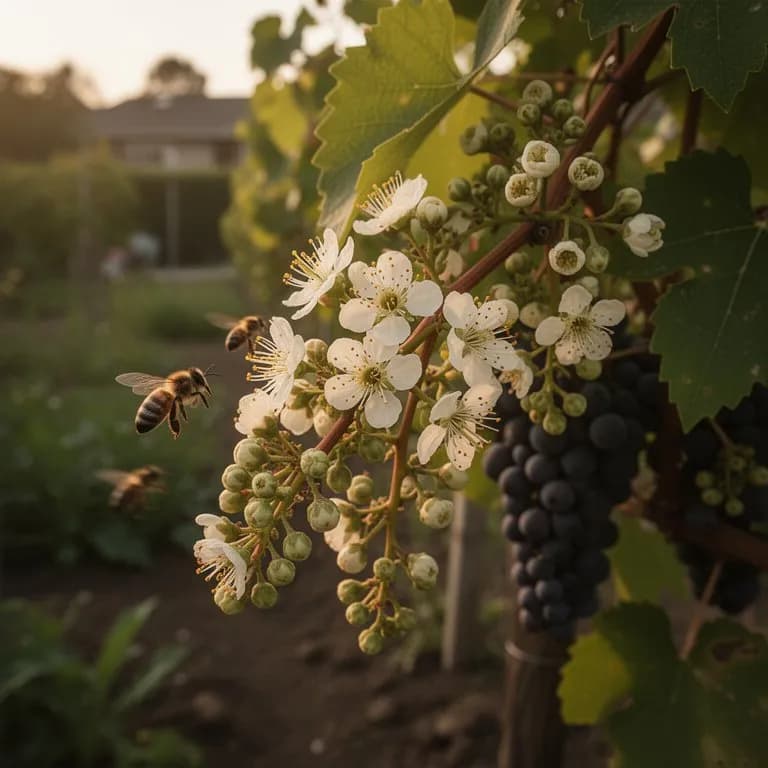
Racimos compactos de diminutas flores amarillento-verdosas se abren durante 7-14 días. Syrah es autofértil y poliniza de forma eficiente en condiciones cálidas, secas y con brisa suave. Las flores fecundadas se hinchan hasta convertirse en pequeñas bayas verdes duras, mientras que las flores no fecundadas caen, moldeando la densidad final del racimo. El mal tiempo —temperaturas frescas, lluvia o viento fuerte— durante la floración puede causar corrimiento o millerandage, reduciendo notablemente el rendimiento.
Desarrollo de la baya
Las bayas verdes crecen de forma constante mediante división celular y luego expansión celular, permaneciendo duras, verdes y muy ácidas durante esta etapa. Las semillas se desarrollan dentro de cada baya. La vid invierte una energía considerable en expandir su copa y madurar su estructura leñosa al mismo tiempo. Syrah se beneficia de un aclareo cuidadoso de brotes y eliminación de hojas durante este periodo para equilibrar el crecimiento vegetativo con el desarrollo del fruto y preparar las condiciones ideales para la importantísima véraison.
Véraison
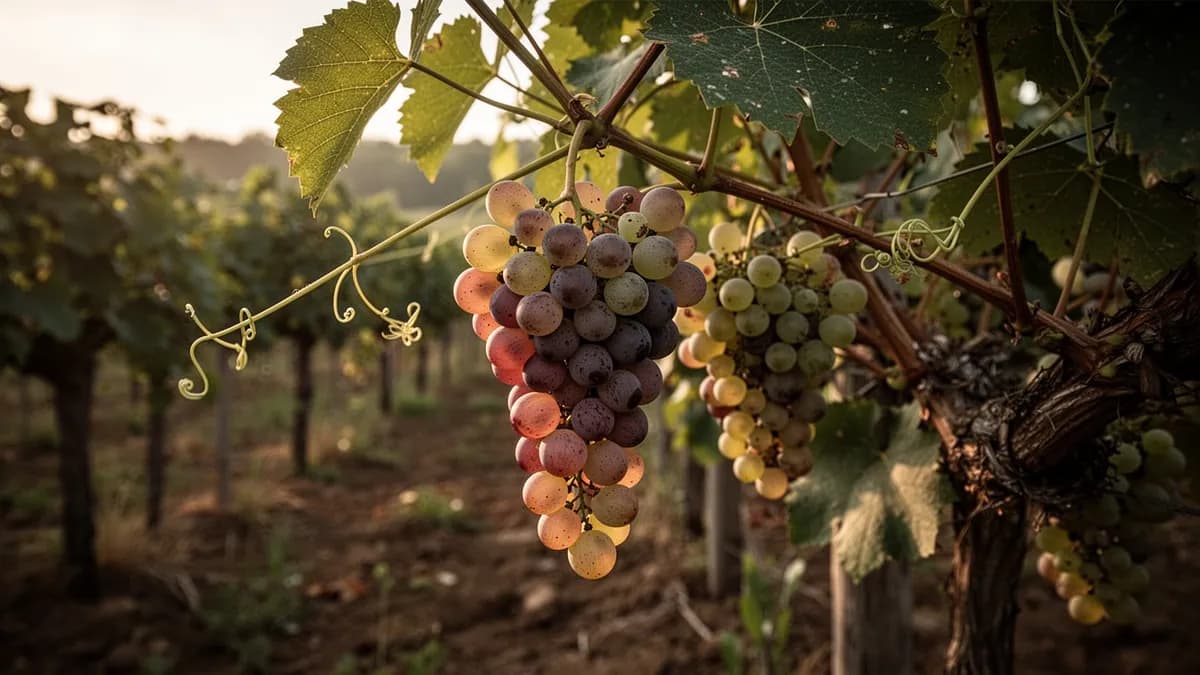
La véraison es uno de los momentos más dramáticos del calendario de la vid. Las bayas de Syrah pasan rápidamente de firmes, ácidas y verdes a suaves, aromáticas y de un azul negro profundo, a medida que los pigmentos antociánicos inundan las pieles y se acumulan los azúcares. Los compuestos aromáticos pimentados y especiados que definen Syrah, en particular la rotundona, empiezan a formarse en las pieles de la uva durante esta etapa. Las bayas se ablandan de forma perceptible al tacto y el raquis del racimo comienza a lignificarse y a volverse marrón.
Maduración y cosecha
Syrah es una variedad de maduración tardía que alcanza toda su complejidad cuando se deja colgar en la vid hasta octubre en climas templados. Los azúcares siguen aumentando, los ácidos se suavizan y las notas características de ciruela negra, mora, pimienta negra y violeta se profundizan a medida que la madurez fenólica alcanza la madurez azucarada. Las semillas pasan de blancas a completamente marrones y tienen un sabor menos astringente al masticarlas. Los taninos de la piel, que aportan la famosa estructura firme de Syrah, se suavizan e integran a medida que la baya alcanza su plena madurez fisiológica.
Senescencia de la copa tras la cosecha
Después de la cosecha, las vides Syrah siguen fotosintetizando durante el otoño para reponer las reservas de carbohidratos en las raíces y el tejido leñoso que alimentarán el crecimiento del año siguiente. Las hojas pasan gradualmente de verde a amarillo y naranja antes de caer cuando bajan las temperaturas. Los sarmientos se endurecen y maduran, aumentando su tolerancia al frío. Este periodo poscosecha es fisiológicamente crítico: retirar las hojas demasiado pronto o estresar la vid después de la cosecha puede reducir la fertilidad de las yemas de la siguiente temporada y la salud general de la vid.
Complete la poda en reposo antes de que las yemas muestren tejido verde. Syrah rinde mejor con poda a pulgar o a cordón con 40-60 yemas en una vid madura. Aplique en un día seco, por encima de 5°C (40°F), una pulverización preventiva de caldo sulfocálcico o aceite de invierno para reducir esporas de oídio y cochinillas invernantes. Inspeccione y apriete todos los alambres de la espaldera.
Cuidar Uva Syrah mes a mes
Qué hacer cada mes para tu Uva Syrah
Octubre
Mes actualCoseche los racimos de Syrah cuando las semillas estén completamente marrones, las pieles sepan complejas y sabrosas en lugar de amargas, y destaquen los sabores de ciruela negra, mora y pimienta. Coseche durante las horas frescas de la mañana. Procese la fruta enseguida en zumo fresco, gelatina o vino. Deje intacta la copa de la vid después de la cosecha para que siga fotosintetizando y almacenando carbohidratos.
Ten claro qué hacer en tu huerto, cada mes
Un correo al empezar cada mes: qué sembrar, plantar y hacer ahora mismo — para tu Uva Syrah y todo lo que crece alrededor. Más un breve curso inicial para esquivar los errores clásicos.
- Qué hacer ahora mismo
- Ajustado a tu temporada
- Curso inicial incluido
Cosechar Uva Syrah
Syrah madura a media o final de temporada, normalmente entre septiembre y octubre según el clima. La piel gruesa y la estructura suelta de los racimos la hacen relativamente tolerante en la cosecha en comparación con las variedades compactas. Vigile los niveles de Brix desde principios de septiembre, buscando 24 a 26 grados para vinos equilibrados. Evalúe la madurez de los taninos masticando las semillas, que deben ser marrones y tener un sabor a nuez sin amargor agresivo. El carácter pimentado es más pronunciado con niveles moderados de azúcar, mientras que la fruta demasiado madura desarrolla sabores más parecidos a la mermelada y menos complejos.
se supone que plantas al comenzar el periodo — indica tu fecha real
Cosecha Uva Syrah a tiempo y la planta sigue produciendo.
Almacenamiento y conservación
Las uvas Syrah deben despalillarse y estrujarse en las horas siguientes a la cosecha para elaborar vino. La piel gruesa soporta una maceración prolongada de dos a cuatro semanas, extrayendo el máximo color y tanino para vinos estructurados pensados para una larga guarda. La maceración en frío antes de la fermentación es habitual en la producción de Syrah premium. Los vinos se benefician mucho de la crianza en barrica de roble, desarrollando complejidad adicional durante 12 a 24 meses en barrica. Las uvas Syrah frescas dan una gelatina de uva de color intenso, y su alto contenido en taninos produce un excelente vinagre de vino tinto cuando se deja acetificar de forma natural.
Qué falla — y cómo solucionarlo
Declive de Syrah
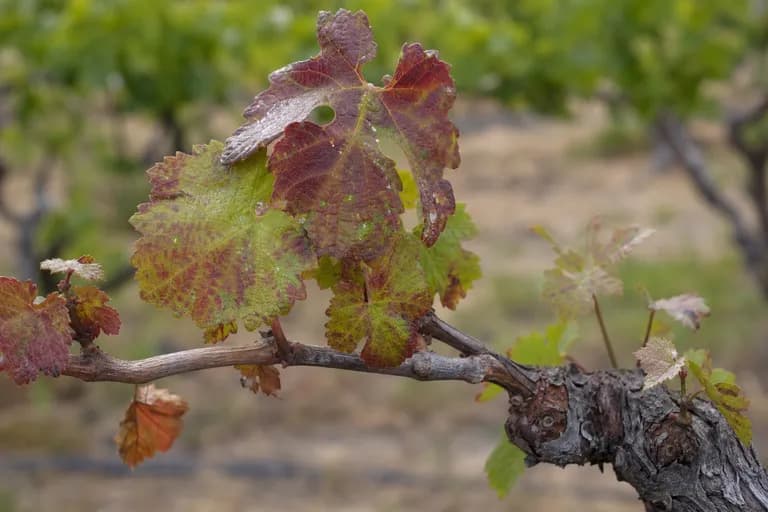
EnfermedadLas vides muestran menor vigor, las hojas adquieren coloración rojiza temprano en la temporada y los cordones pueden no brotar en primavera. Las uniones del injerto pueden hincharse de forma anormal.
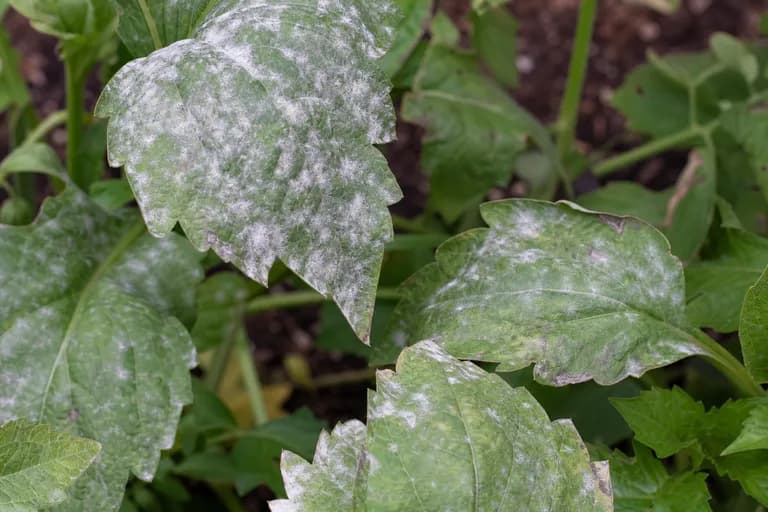
Oídio
EnfermedadCapa polvorienta blanca en hojas y tejido verde. Las bayas infectadas pueden agrietarse, exponiendo las semillas y favoreciendo infecciones secundarias por podredumbre.
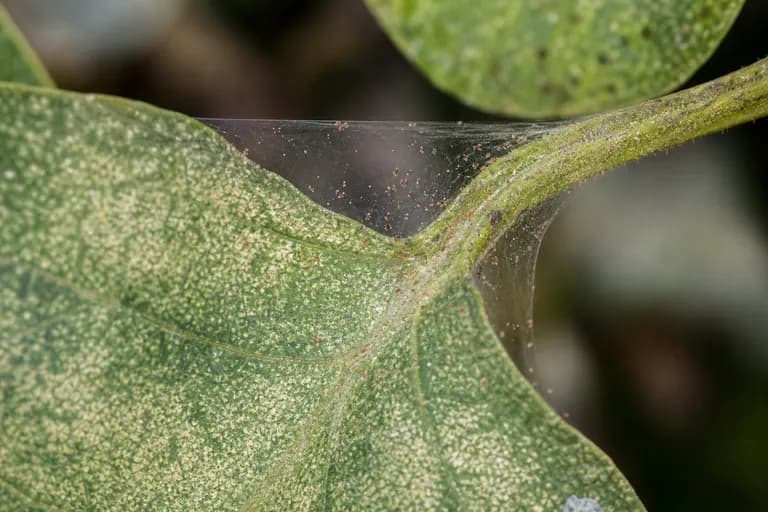
Ácaros araña
PlagaFinas punteaduras en las hojas, bronceado del follaje y finas telarañas visibles en el envés. Las infestaciones graves provocan caída de hojas y menor maduración del fruto.
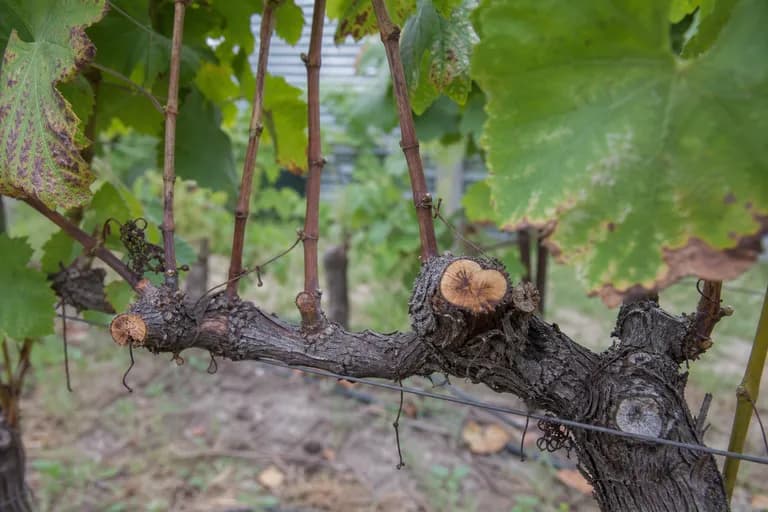
Enfermedades del tronco de la vid
EnfermedadMenor crecimiento de brotes, pulgares muertos y manchas de madera en forma de cuña visibles en las secciones transversales de los cordones. Secado progresivo durante varios años.
Solución de problemas comunes
El declive de Syrah es una afección grave y todavía poco comprendida que provoca la muerte de las vides en muchas regiones del mundo. Las vides afectadas muestran una debilidad progresiva durante varias temporadas antes de colapsar. Su crecimiento vigoroso y erguido puede llevar a copas excesivamente altas que requieren recortes regulares. En climas frescos, Syrah puede no madurar por completo, produciendo vinos delgados y con sabor verde. En climas muy cálidos, la sobremaduración ocurre rápidamente, y el paso de óptimo a demasiado maduro se produce en cuestión de días. El daño por viento en los brotes frágiles y erguidos puede ser considerable en emplazamientos expuestos sin cortavientos.
Consejos de cultivo
- Elija para Syrah un lugar de plantación con la mayor exposición solar posible, idealmente 8 o más horas de sol directo al día. Syrah es una variedad de maduración tardía que necesita la máxima acumulación de calor para alcanzar la plena madurez fenólica antes de que lleguen las lluvias otoñales o el frío, por lo que las laderas orientadas al sur o los muros que captan calor son ideales en climas frescos.
- Plante Syrah en un suelo bien drenado con un pH entre 6.0 y 7.0. Evite los suelos arcillosos pesados que retienen agua alrededor de las raíces, ya que Syrah es moderadamente susceptible a enfermedades radiculares en condiciones encharcadas. Las camas elevadas, las plantaciones en ladera o los suelos enmendados con grava gruesa mejoran mucho el drenaje.
- Syrah es especialmente susceptible al oídio, así que planifique un programa preventivo estructurado desde el inicio del crecimiento de los brotes hasta la véraison. Empiece con pulverizaciones a base de cobre en la brotación, pase a pulverizaciones de azufre durante la temporada de crecimiento y mantenga un calendario estricto de 10-14 días. Un manejo excelente de la copa, abierto, aireado y bien iluminado, es su mejor defensa orgánica.
- Entrene Syrah en una espaldera de posicionamiento vertical de brotes (VSP) con dos o tres pares de alambres de sujeción por encima de la zona de fructificación. Este sistema mantiene la copa erguida, bien ventilada y fácil de manejar para quitar hojas, pulverizar y cosechar. La poda a cordón con pulgares en vides establecidas simplifica considerablemente la labor anual de poda.
- Realice la eliminación de hojas alrededor de la zona del fruto temprano en la temporada, comenzando en el cuajado, retirando específicamente las hojas basales del lado de la mañana de la copa. Esto mejora de forma espectacular la circulación del aire y la penetración de la luz en la zona del fruto, reduciendo la presión del oídio y mejorando el desarrollo del color en las pieles oscuras de Syrah.
- Tenga paciencia con la curva de maduración de Syrah. A diferencia de variedades más tempranas, Syrah alcanza toda su complejidad aromática, pimienta negra, ciruela oscura, violeta y carne ahumada, solo cuando se le permite llegar a la plena madurez fenólica, que va detrás de la madurez azucarada por días o semanas. Pruebe semillas y pieles con regularidad en lugar de confiar únicamente en un refractómetro para decidir el momento de la cosecha.
- En climas con tardes de verano por encima de 38°C (100°F), proteja los racimos de Syrah de las quemaduras solares dejando hojas que den sombra por la tarde en el lado oeste de la copa, pero manteniendo abierta la parte que recibe sol por la mañana. Las bayas que se cocinan en la vid pierden finura aromática y desarrollan sabores muy dulces y pasificados.
- Propague nuevas vides Syrah a partir de esquejes leñosos recogidos durante la poda en reposo a finales del invierno. Corte sarmientos del grosor de un lápiz en secciones de 30 cm con dos o tres yemas cada una, átelos en serrín húmedo y guárdelos a 4°C (40°F) durante seis a ocho semanas antes de plantarlos en un lecho de vivero con dos yemas bajo la superficie del suelo.
- Aplique una fina capa de acolchado orgánico, como paja, virutas de madera o hollejo de uva, alrededor de la base de las vides Syrah establecidas, manteniéndolo a 15 cm del tronco. El acolchado modera la temperatura del suelo, retiene la humedad durante la temporada de crecimiento y suprime las malas hierbas competidoras sin favorecer el crecimiento vegetativo excesivo que pueden causar los fertilizantes altos en nitrógeno.
- Para los vinicultores caseros, coseche Syrah en dos pasadas con una semana de diferencia: recoja primero los racimos más maduros y expuestos, y deje después una semana adicional de hang time a los racimos más sombreados o menos avanzados. Esta técnica escalonada introduce complejidad en los vinos caseros y refleja la vendimia selectiva de las bodegas centradas en la calidad.
Cultiva tu mejor Uva Syrah — y todo lo que la rodea.
Empieza un plan gratis hoy. Diseña tus bancales, coloca tu Uva Syrah y deja que PlotMyGarden gestione el momento, el espaciado, las asociaciones y los recordatorios de la semilla a la cesta.
Elige tu Uva Syrah
Clone 174
Una selección del norte del Ródano que produce racimos pequeños con intenso carácter de pimienta y flor. De bajo rendimiento y muy valorada para vinos premium de clima fresco.
Clone 470
Una selección australiana también conocida como Hermitage, que produce cosechas mayores con carácter de fruta madura. Bien adaptada a la producción de Shiraz en climas cálidos.
Clone 877
Una selección ENTAV del Ródano que produce vinos con gran estructura y complejidad de fruta oscura. Buen equilibrio entre rendimiento y calidad.
Clone 747
Una selección de Côte Rôtie con un carácter especialmente aromático y taninos finos. Produce vinos elegantes y perfumados, adecuados para embotellados premium.
Una sola vid Syrah de raíz desnuda comprada por 15-25 $ puede producir 8-15 kg (18-33 lbs) de fruta al año una vez totalmente establecida en su cuarta o quinta temporada. A precios de tiendas especializadas o mercados de agricultores, las uvas Syrah frescas de calidad para vino suelen venderse por 4-8 $ por libra cuando están disponibles, lo que significa que una sola vid productiva de casa puede generar fruta por valor de 70-260 $ al año. Más allá del consumo en fresco, la Syrah cultivada en casa puede prensarse para obtener zumo fresco (5-8 $ por litro en venta minorista), convertirse en gelatina y conservas, o fermentarse para hacer vino casero a una fracción del coste del vino comercial. Las vides Syrah bien mantenidas son productivas durante 30-50 años, por lo que la rentabilidad de la inversión a lo largo de la vida de la vid es excepcional.
Recetas rápidas
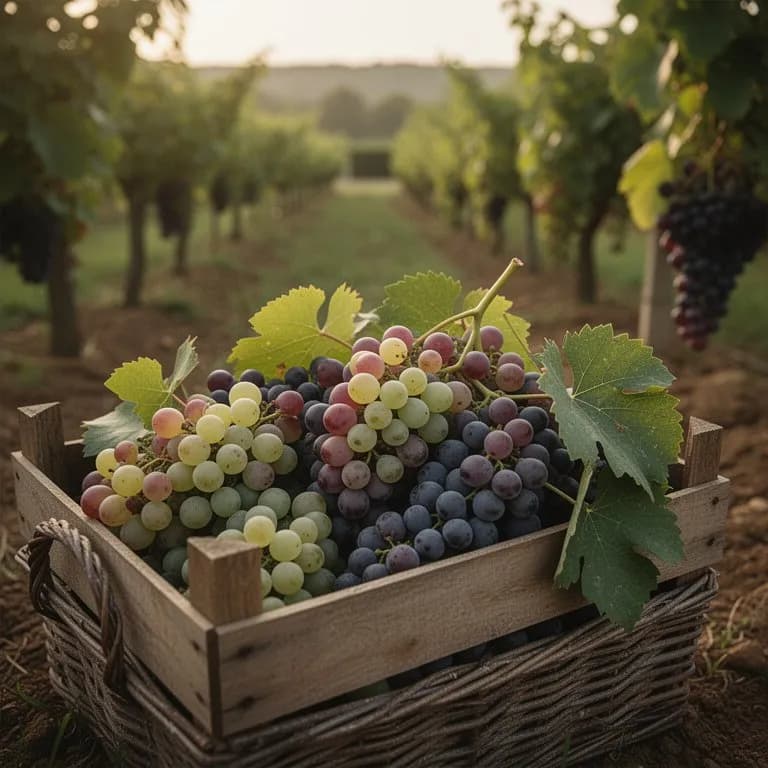
Focaccia de uva Syrah y romero
30 minutos más 2 horas de levadoUn impresionante pan plano agridulce y salado que hunde uvas Syrah enteras en una masa esponjosa de focaccia y espolvorea romero fresco y sal marina en escamas por encima. Las uvas estallan durante el horneado, liberando su jugo profundo y tipo mermelada en bolsillos de sabor extraordinario. Sírvalo caliente como aperitivo o junto con queso y embutidos.
9 ingredientes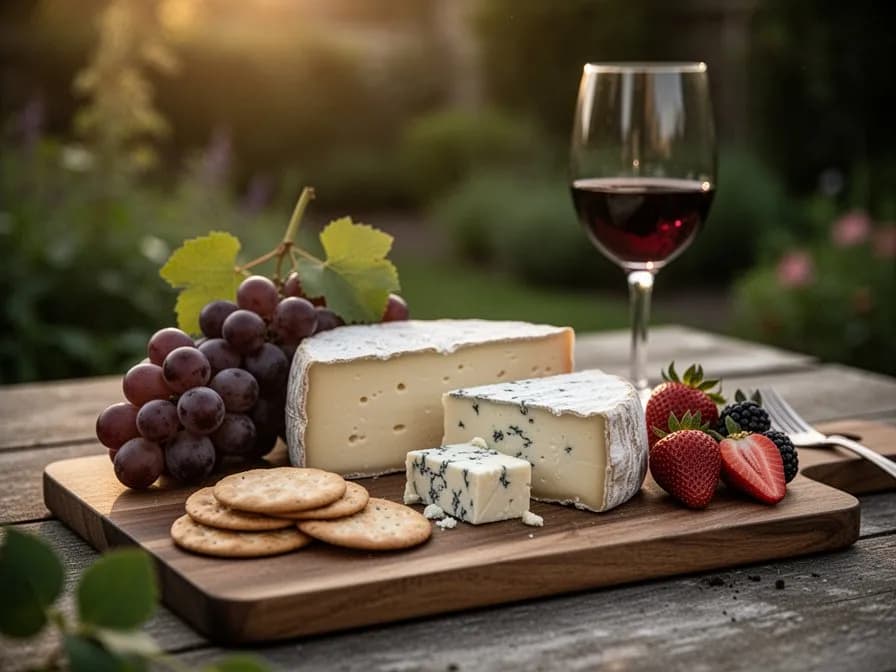
Gelatina especiada de uva Syrah
55 minutosUna gelatina casera de sabor intenso que usa uvas Syrah frescas como base, realzada con especias cálidas que complementan el carácter natural pimentado y de fruta oscura de la variedad. El resultado es una crema para untar de color muy profundo e intensamente sabrosa, perfecta sobre tostadas, con quesos fuertes o como glaseado para carnes asadas.
8 ingredientesShrub de uva Syrah para beber
15 minutos más 3 días de maceraciónUn shrub es un sirope concentrado de fruta y vinagre que da lugar a cócteles sin alcohol, aliños y glaseados extraordinarios. Esta versión utiliza el intenso sabor a fruta oscura de las uvas Syrah, equilibrado con vinagre de sidra de manzana y un toque de miel, produciendo un sirope ácido y complejo que transforma el agua con gas en una bebida sofisticada en segundos.
7 ingredientesUsos culinarios
Syrah produce vinos intensos y de color profundo con notas de pimienta negra, carne ahumada y bayas oscuras, que combinan de maravilla con cordero a la parrilla, guisos de ternera y platos mediterráneos contundentes. En Australia, donde la variedad se conoce como Shiraz, combina de maravilla con carnes asadas. Syrah, mezclada con Grenache y Mourvèdre, da lugar a los clásicos coupages GSM del sur del Ródano y de Australia. Su jugo de color intenso produce una gelatina de uva muy vistosa, y su alto contenido en taninos crea un vinagre de uva robusto.
Qué contiene
Beneficios para la salud
- Las pieles excepcionalmente gruesas de Syrah están entre las fuentes más ricas de resveratrol de cualquier variedad de uva, un polifenol estilbeno ampliamente estudiado por su potencial para apoyar la salud cardiovascular mejorando la flexibilidad arterial, reduciendo la oxidación del colesterol LDL y disminuyendo la agregación plaquetaria
- El color azul negro profundo de las uvas Syrah refleja una concentración extraordinariamente alta de antocianinas, pigmentos antioxidantes que en estudios de investigación se han asociado con menores marcadores de inflamación sistémica, mejor función cerebral y menor riesgo de enfermedades crónicas
- Contiene rotundona, el compuesto sesquiterpeno responsable del aroma a pimienta de Syrah, que investigaciones preliminares sugieren que podría tener propiedades analgésicas y antiinflamatorias leves, aunque la evidencia clínica en humanos sigue en fases tempranas
- El consumo regular de uvas tintas oscuras, incluida Syrah, se ha asociado en estudios observacionales con una mejor función endotelial y salud vascular, mediada en parte por vías de óxido nítrico que ayudan a mantener una presión arterial y una circulación saludables
- Aporta un espectro de flavonoides, entre ellos quercetina, miricetina y catequinas, que actúan de forma sinérgica para modular la respuesta inmune, apoyar vías inflamatorias saludables y proteger el ADN celular del daño oxidativo
- Los ácidos orgánicos naturales de las uvas Syrah, especialmente el ácido tartárico, actúan como prebióticos que alimentan selectivamente bacterias intestinales beneficiosas, contribuyendo a un microbioma intestinal más sano y posiblemente mejorando la digestión, la función inmune y el estado de ánimo a través del eje intestino-cerebro
De dónde viene Uva Syrah
Syrah, también conocida como Shiraz, es una de las grandes variedades nobles de uva tinta del mundo, con orígenes firmemente arraigados en el norte del valle del Ródano, en Francia. Durante siglos, la leyenda atribuyó la ascendencia de Syrah a la antigua Persia, concretamente a la ciudad de Shiraz en el actual Irán, o a la ciudad siciliana de Siracusa, sugiriendo que cruzados o comerciantes antiguos habrían llevado la uva a Francia desde el Mediterráneo oriental. Estas historias románticas persistieron durante generaciones en la literatura vinícola y en la imaginación popular. Sin embargo, la investigación de perfiles de ADN realizada por científicos de UC Davis en la década de 1990 y confirmada por estudios adicionales en 2009 resolvió definitivamente la cuestión: Syrah es un cruce natural de dos variedades totalmente francesas. Sus progenitores son Dureza, una variedad de pulpa roja en gran parte olvidada de la región de Ardèche, en el sur de Francia, y Mondeuse Blanche, una uva de bayas blancas que todavía se cultiva en la región alpina de Saboya. Este cruce probablemente ocurrió de manera natural en la naturaleza o en una plantación mixta de viñedo siglos atrás, y la vid resultante fue reconocida y seleccionada por su calidad excepcional. El norte del valle del Ródano, en particular las empinadas terrazas de granito de la colina de Hermitage y la apelación Côte-Rôtie cerca de Lyon, se convirtió en la patria espiritual de Syrah. Allí, en laderas precipitadas que captan el sol sobre el río Ródano, la variedad produce vinos legendarios de extraordinaria complejidad, capacidad de envejecimiento e intensidad. Los nombres Hermitage y Côte-Rôtie se hicieron sinónimo de los mejores Syrah del mundo mucho antes de que la variedad alcanzara fama internacional. Syrah llegó a Australia en 1832, cuando James Busby regresó de una expedición de recolección por Europa con esquejes de variedades francesas. Escribió el nombre de la variedad como 'Scyras', que más tarde se anglicanizó a 'Shiraz', el nombre que se convirtió en estándar en Australia y en gran parte del Nuevo Mundo. A finales del siglo XIX y comienzos del XX, Shiraz dominaba la viticultura australiana y se convirtió en la base de la identidad vinícola del valle de Barossa. El final del siglo XX vio una explosión global del interés por Syrah/Shiraz, impulsada en parte por el éxito comercial de los vinos Shiraz australianos de estilo contundente y en parte por una renovada apreciación de los Syrah estructurados y pimentados del valle del Ródano. Hoy, Syrah se planta en prácticamente todas las grandes regiones vitivinícolas del planeta y se considera ampliamente una de las variedades de uva tinta más versátiles y geográficamente adaptables, capaz de producir estilos que van desde vinos frescos y pimentados de clima fresco hasta expresiones ricas, voluptuosas y de cuerpo pleno en regiones cálidas.
Uva Syrah: ¿sabías que?
Datos fascinantes sobre Uva Syrah
El aroma especiado característico de Syrah procede de un compuesto natural llamado rotundona, un sesquiterpeno que el olfato humano puede detectar en concentraciones tan bajas como 16 partes por billón, lo que convierte a Syrah en una de las variedades de uva más distintivas aromáticamente del mundo.
Uva Syrah: preguntas frecuentes
¿Cuándo debo plantar Uva Syrah?
¿Cuáles son buenas plantas acompañantes para Uva Syrah?
¿En qué zonas de rusticidad puede crecer Uva Syrah?
¿Cuánto sol necesita Uva Syrah?
¿A qué distancia debo espaciar Uva Syrah?
¿Qué plagas y enfermedades afectan a Uva Syrah?
¿Cómo almaceno Uva Syrah después de la cosecha?
¿Cuáles son las mejores variedades de Uva Syrah para cultivar?
¿Qué suelo necesita Uva Syrah?
What is the difference between Syrah and Shiraz — are they really the same grape?
Is Syrah a good choice for home gardeners in cooler climates?
How do I know when my Syrah grapes are truly ripe and ready to harvest?
What companion plants grow well with Syrah grapevines?
Can I use Syrah grapes from my garden for home winemaking?
Why do my Syrah leaves show white powdery patches? What should I do?
Acabas de leer la teoría. Ahora cultívala en piloto automático.
Todo lo que hace que Uva Syrah sea delicado — el momento, el espaciado, las asociaciones, la ventana de cosecha — es justo lo que PlotMyGarden resuelve por ti, para cada planta de tu huerto.
Un plan que conoce tu clima
Indica tu ubicación una vez. Recibe fechas de siembra, abonado y cosecha basadas en tu última helada real y el pronóstico en vivo — sin adivinar con un sobre genérico.
De la sección “Cuándo plantar”Planificador de bancales de arrastrar y soltar
Diseña bancales sobre una cuadrícula. Cada planta encaja con su espaciado correcto y ves toda la temporada antes de gastar un céntimo en semillas.
De la sección “Cultivo”Conflictos de asociación, detectados a tiempo
Más de 200 buenas y malas combinaciones comprobadas en vivo mientras plantas — para que un error que arruine la temporada nunca llegue a la tierra.
De la sección “Asociaciones”Recordatorios que sí vas a seguir
“Riega las judías.” “Recoge hoy antes de que se pase.” Oportunos, concretos y ligados a las plantas que de verdad cultivas.
De la sección “Cosecha”Escalonado, programado
¿Quieres cosechar seis semanas en vez de seis días? Reparte tus siembras automáticamente y te avisa cuando toca el siguiente lote.
De la sección “Cuándo plantar”Un registro que se vuelve más listo
Cada cosecha que registras le enseña tu huerto. El plan del año que viene parte de lo que de verdad funcionó en tu suelo, no en un manual.
De la sección “Resumen”Planta estos junto a Uva Syrah
Más Frutas de vid
Cultiva tu mejor Uva Syrah — y todo lo que la rodea.
Empieza un plan gratis hoy. Diseña tus bancales, coloca tu Uva Syrah y deja que PlotMyGarden gestione el momento, el espaciado, las asociaciones y los recordatorios de la semilla a la cesta.