Globe Amaranth
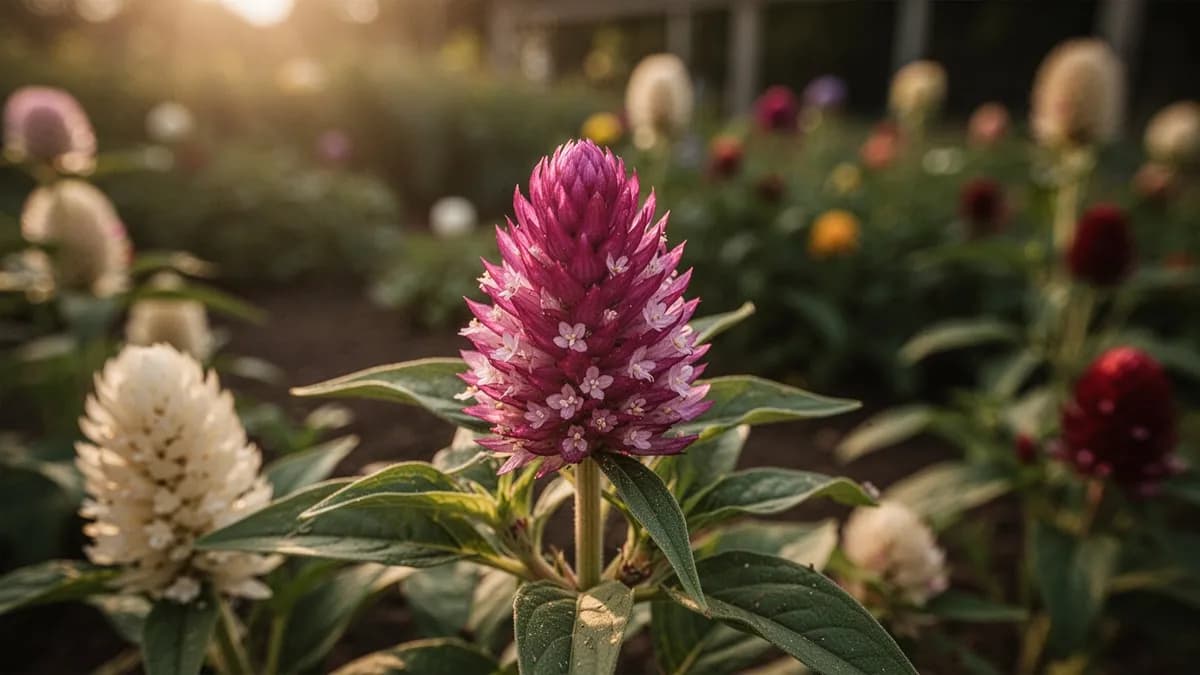
A tough, drought-tolerant annual bearing clover-like globes of papery bracts in magenta, purple, pink, and white that never seem to fade.





On this pageOverview
Meet Globe Amaranth
A tough, drought-tolerant annual bearing clover-like globes of papery bracts in magenta, purple, pink, and white that never seem to fade. Globe amaranth is one of the best everlasting flowers, drying perfectly for wreaths and arrangements. Plants bloom continuously in heat and humidity with virtually no pest or disease problems.
When to plant Globe Amaranth
Soak seeds in warm water for 24 hours before planting to soften the fuzzy seed coat and improve germination. Start indoors 6-8 weeks before the last frost, sowing 1/4 inch deep in moist seed-starting mix. Keep at 70-75°F (21-24°C). Germination is slow, taking 14-21 days—be patient and keep soil consistently moist. Transplant after last frost. Direct sowing is possible in warm climates but produces later blooms.
Your Globe Amaranth Year
Composed for Zone 7 · typical seasons · frost passes Apr 2, returns Nov 1
Plant Globe Amaranth Apr – May, pick Jun – Oct. Check the planting methods below and set your climate to personalize these windows.
How to grow Globe Amaranth
Globe amaranth is one of the toughest and most heat-tolerant annuals available, thriving in conditions that wilt most other flowers. Start seeds indoors 6-8 weeks before the last frost—soak seeds overnight in warm water to improve germination of the fuzzy seed coat. Sow 1/4 inch deep and keep at 70-75°F (21-24°C). Germination takes 14-21 days.
Transplant outdoors after the last frost, spacing 10-15 inches apart in full sun. Globe amaranth demands well-drained soil but otherwise tolerates poor, sandy, and rocky conditions. Once established, it is remarkably drought-tolerant and actually produces the most vibrant flower color under drier conditions.
The clover-like flower globes appear from midsummer through frost, and plants rarely need deadheading—the papery bracts retain their color even as the flowers age, providing months of consistent color. Globe amaranth is virtually pest-free and shrugs off heat, humidity, and drought that devastate less resilient annuals.
36 plants fit a 4 × 8 ft bed
Each Globe Amaranth wants 25 cm of elbow room. The planner keeps that spacing for you — every plant, every bed.
Globe Amaranth's best neighbours
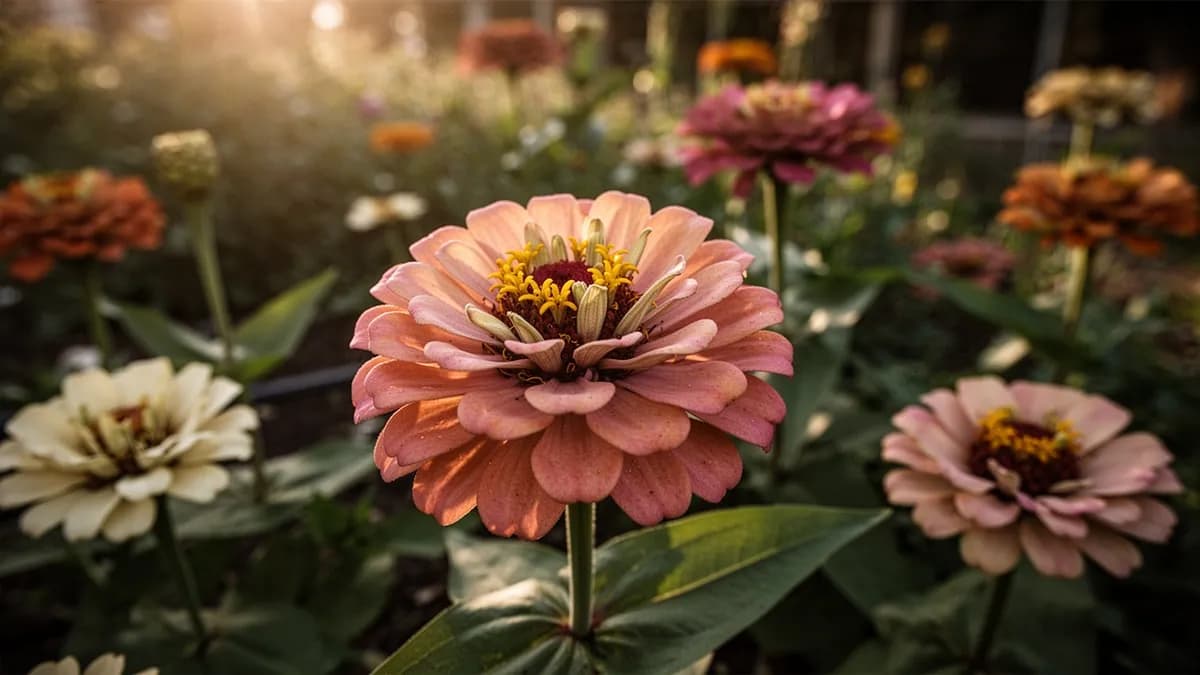
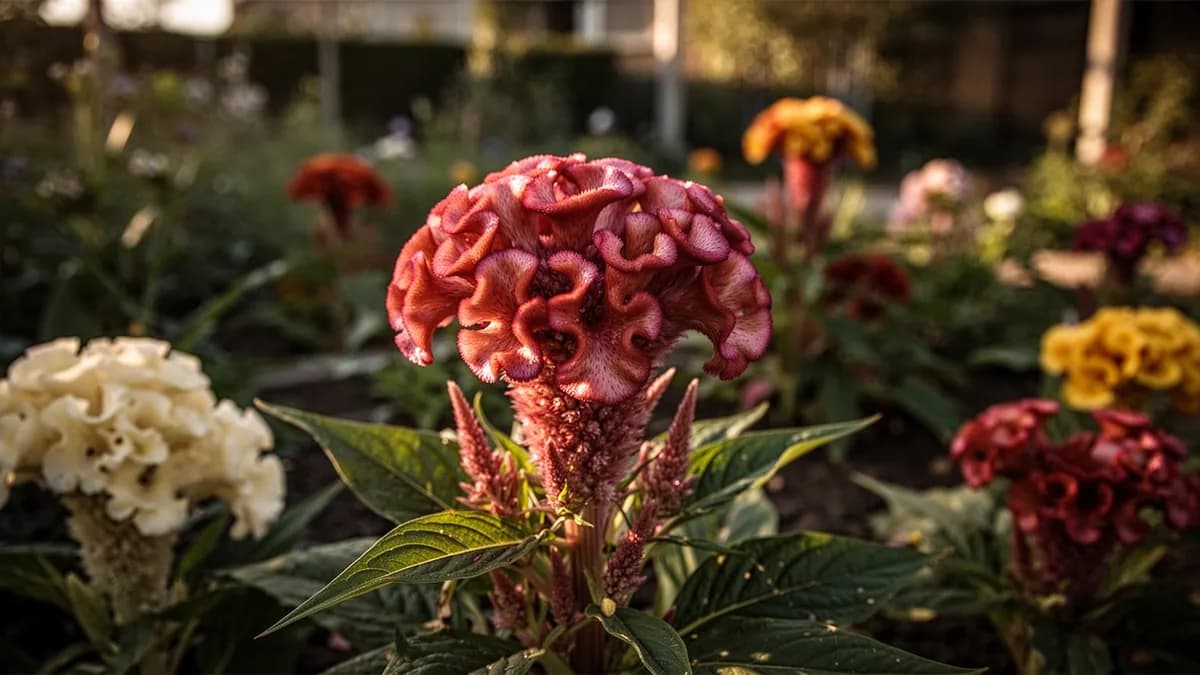
Globe amaranth combines beautifully with other heat-lovers like zinnias, celosia, lantana, and Mexican sunflower. The round flower shapes contrast nicely with spiky celosia and flat-topped yarrow. In mixed everlasting gardens, plant alongside strawflowers, statice, and nigella for a complete dried-flower cutting garden. Globe amaranth attracts butterflies and beneficial insects throughout summer.
Zinnia belongs beside it.
Old growers' knowledge, checked against Globe Amaranth's real companion table below — test any plant you're growing.
Try Globe Amaranth in a bed — right here
A real planner bed with Globe Amaranth already in it. Tap a companion to place it and watch the pairing checks answer — green for good neighbours, red for a clash.


Related growing guides
Feed it well
Globe amaranth performs best in well-drained, average to lean soil with a pH of 6.1-7.5. It thrives in conditions too poor and dry for most flowers. Avoid rich, heavily amended soil, which produces rank growth with fewer flowers. A single application of balanced granular fertilizer at planting is sufficient for the entire season. In containers, use a well-draining mix and fertilize lightly every 3-4 weeks.
Ideal Temperature
Hardiness Zone Compatibility
From seed to harvest, stage by stage
Seed Germination
Gomphrena seeds have a fuzzy outer coating that can inhibit germination. Soaking seeds in warm water for 24 hours before sowing significantly improves germination rates. Seeds should be pressed lightly into moist seed-starting mix and kept at 70-75°F (21-24°C). Germination is slow and irregular, typically taking 10 to 14 days.
Seedling Development
After emergence, seedlings develop their first true leaves and begin building a compact root system. Growth is slow at this stage. Seedlings should be thinned or transplanted into individual cells once they have two sets of true leaves.
Vegetative Growth
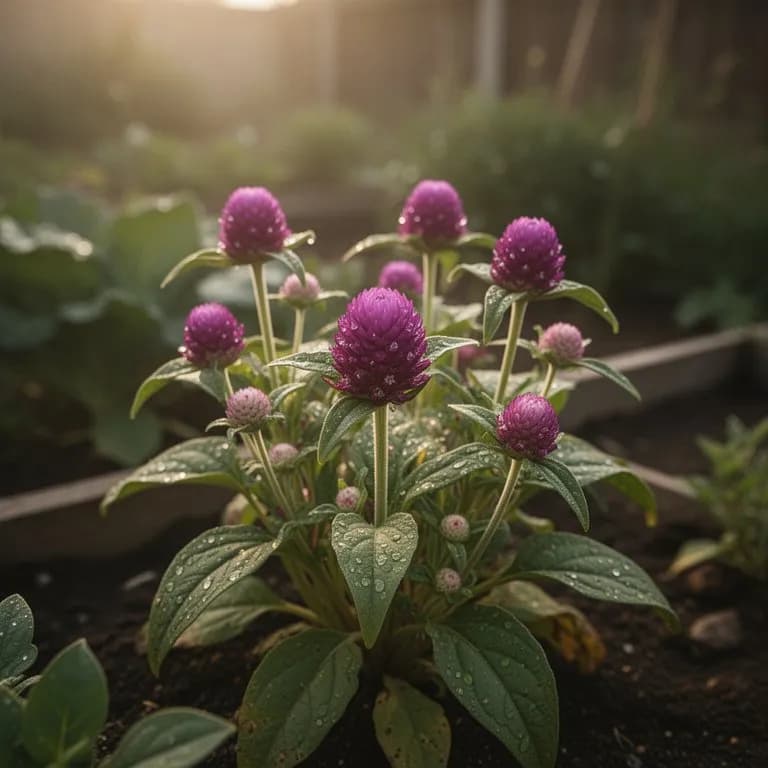
Plants develop a sturdy, branching structure with opposite leaves on thick stems. Gomphrena grows vigorously once established, reaching 12-24 inches tall depending on the variety. The branching habit creates a bushy, mounded form that fills garden space well.
Flowering
The iconic globe-shaped flower heads appear at the tips of stems, beginning as small rounded buds that expand into papery, clover-like blooms 1-2 inches across. Colors include magenta, purple, lavender, pink, white, red, and orange depending on the cultivar. The true flowers are tiny and tubular, nestled among colorful bracts.
Peak Production and Seed Set
Plants reach their maximum size and flower production during the hottest months of summer. As the season progresses, older flower heads begin to produce seeds within the papery bracts. Globe amaranth continues flowering until killed by frost, often producing hundreds of blooms per plant over the growing season.
Late Season and Seed Harvest
As temperatures cool in autumn, growth slows but flowering continues until the first hard frost. Plants remain attractive in the garden well into fall. Mature seed heads can be collected and stored in a cool, dry place for planting the following spring.
Keep the seed tray covered with a humidity dome or plastic wrap to maintain consistent moisture. Bottom heat from a seedling mat speeds germination considerably.
Caring for Globe Amaranth month by month
What to do each month for your Globe Amaranth
October
You are hereCollect mature seed heads and store seeds in labeled paper envelopes. Cut remaining flowering stems for drying before the first hard frost. Remove spent plants from the garden after frost kills them
Know exactly what to do in your garden — every month
One email at the start of each month: what to sow, plant, and tackle right now — for your Globe Amaranth and everything growing around it. Plus a short starter course that helps you dodge the classic mistakes.
- What to do, right now
- Matched to your season
- Starter course included
Harvesting Globe Amaranth
Globe amaranth is one of the finest everlasting flowers. For fresh arrangements, cut when globes are fully colored and at their peak size. For drying, cut slightly earlier when globes are firm and fully colored. Hang in small bunches upside down in a dark, warm, well-ventilated space for 1-2 weeks. The dried flowers retain their vivid color for years, making them perfect for wreaths, garlands, and dried arrangements.
assuming you plant when the window opens — set your real date
Pick Globe Amaranth promptly and the plant keeps producing.
Storage & Preservation
Dried globe amaranth flowers are incredibly long-lasting, maintaining their shape and color for several years when kept out of direct sunlight. Store dried stems in boxes layered with tissue paper in a dry location. For fresh arrangements, flowers last 7-10 days in water. Save seed by allowing some flowers to fully mature and dry on the plant—crumble the dried heads to extract small black seeds. Store seeds in a cool, dry place.
What goes wrong — and the fix
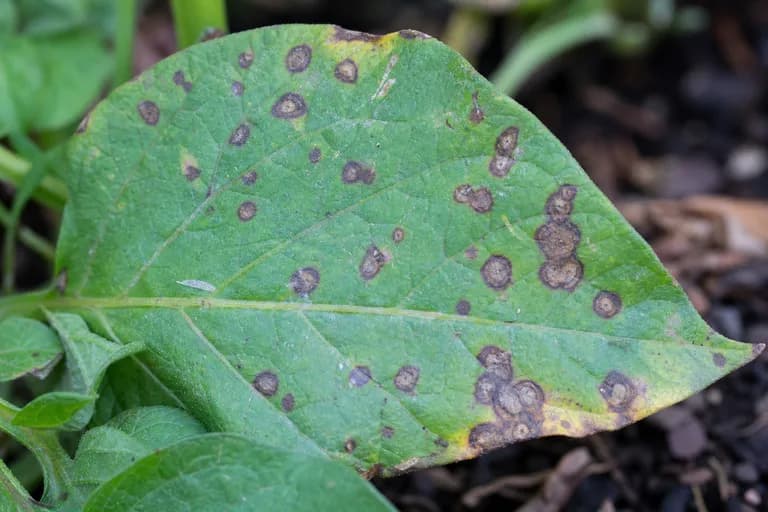
Leaf Spot
DiseaseBrown or tan circular spots on leaves, sometimes with concentric rings. Primarily cosmetic.
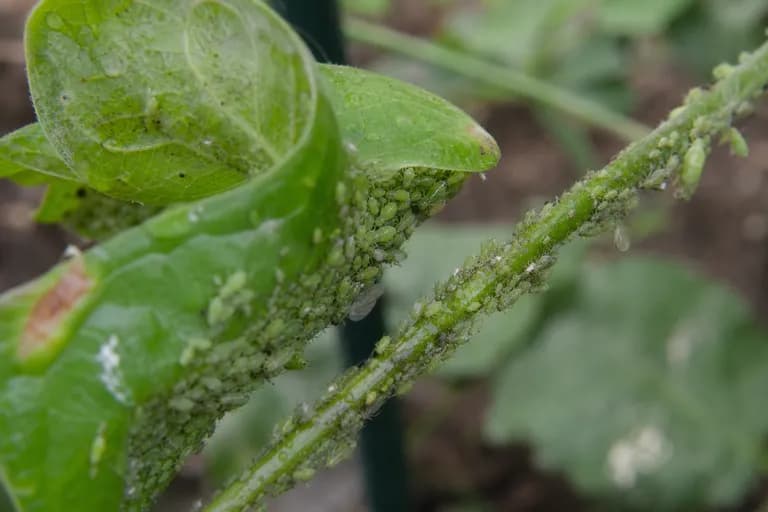
Aphids
PestSmall insects clustering on new growth and stem tips. Sticky honeydew on leaves.
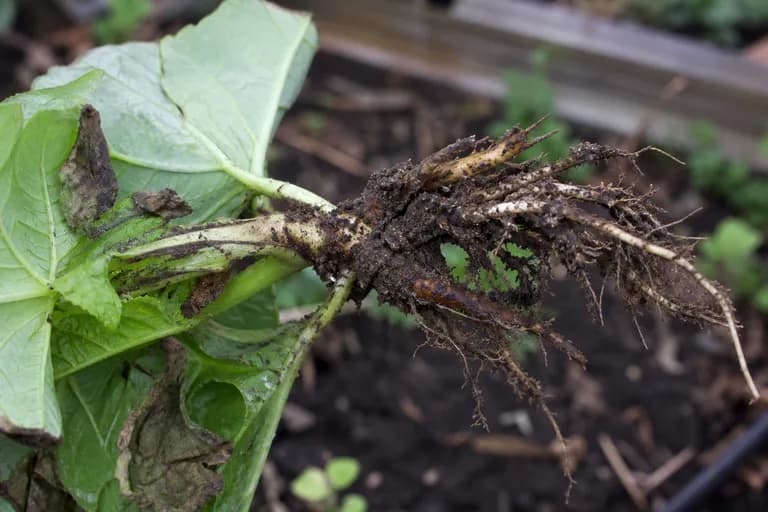
Root Rot
DiseasePlants wilt despite adequate moisture. Roots are dark and mushy when examined.
Troubleshooting Common Problems
Globe amaranth is remarkably trouble-free. The main issues are overwatering (which causes root rot) and over-fertilizing (which produces leggy growth). Seeds can be slow to germinate due to the fuzzy seed coat—soaking overnight and maintaining warm soil temperatures improves germination rates. In cool, wet summers, plants may be slow to start but will explode with blooms once heat arrives.
Growing Tips
- Soak gomphrena seeds in warm water for 24 hours before planting to soften the fuzzy seed coat and dramatically improve germination rates from around 50% to over 80%.
- Start seeds indoors 6-8 weeks before your last frost date, as gomphrena has a long growing season and needs a head start in climates with fewer than 120 frost-free days.
- Provide full sun with at least 6-8 hours of direct sunlight daily — gomphrena is a true sun worshipper and will produce fewer flowers in partial shade.
- Plant in well-drained soil and avoid overwatering. Globe amaranth is remarkably drought-tolerant once established and actually performs better with moderate water stress than with constantly moist soil.
- Pinch the main growing tip when seedlings reach 6 inches tall to promote branching. Each pinched stem will produce two or more side shoots, multiplying your flower harvest.
- Apply fertilizer sparingly — too much nitrogen produces lush foliage at the expense of flowers. A single application of balanced fertilizer at planting time is usually sufficient for the entire season.
- Harvest flowers for drying when the globe-shaped heads are fully colored and firm. Cut stems long and hang small bundles upside down in a dark, warm, well-ventilated space for 2-3 weeks.
- Pair gomphrena with other heat-loving annuals like zinnias, celosia, lantana, and salvia for a low-maintenance, pollinator-friendly garden bed that thrives in summer heat.
- Use compact varieties like 'Buddy Purple' or 'Gnome' in containers at least 8 inches deep, using a well-draining potting mix. Container-grown plants may need more frequent watering than garden plants.
- Save seeds by allowing a few flower heads to fully mature and dry on the plant. Crumble the dried heads to release the small dark seeds and store them in paper envelopes in a cool, dry place.
Grow your best Globe Amaranth yet — and everything around it.
Start a free plan today. Lay out your beds, drop in your Globe Amaranth, and let PlotMyGarden handle the timing, spacing, companions and reminders from seed to harvest basket.
Pick your Globe Amaranth
Gomphrena 'Fireworks'
Tall variety (4 feet) with hot-pink flower globes that burst like fireworks from arching stems. Spectacular in borders.
Gomphrena 'QIS' series
Professional cut flower series with long, sturdy stems and large globes in purple, rose, orange, red, and white.
Gomphrena 'Ping Pong' series
Compact 8-10 inch plants with oversized flower globes nearly as large as ping-pong balls. Ideal for containers.
Gomphrena 'Strawberry Fields'
Vivid strawberry-red globes on 24-inch stems. One of the most popular and recognizable gomphrena varieties.
A single packet of gomphrena seeds (approximately 50-100 seeds) costs $3-5 and can produce dozens of plants, each yielding 50-100 or more flowers over a single growing season. Dried gomphrena stems sell for $8-15 per bunch at florists and craft stores, so growing your own can save $50-100 or more per season in dried flower costs alone. The plants readily self-sow in warm climates, providing free plants in subsequent years, and saved seeds remain viable for 2-3 years when stored properly.
Quick recipes
Globe Amaranth Flower Tea
5 minutesA naturally vibrant pink-purple herbal tea with a mild, slightly sweet and grassy flavor. This caffeine-free infusion is a traditional beverage in Central America and Southeast Asia, enjoyed hot or iced. The striking color makes it a beautiful and healthful alternative to conventional teas.
5 ingredientsGomphrena Flower Syrup
20 minutesA gorgeous magenta-colored simple syrup infused with dried globe amaranth flowers. Use it to add color and subtle floral sweetness to cocktails, lemonade, sparkling water, or drizzled over vanilla ice cream and desserts. The syrup keeps for up to two weeks refrigerated.
5 ingredients
Edible Flower Garnish Salad
10 minutesA fresh garden salad decorated with gomphrena florets pulled from the flower heads. The tiny individual florets add pops of vivid color and a mild, slightly vegetal flavor. This is a showstopping presentation for summer entertaining and garden-to-table dining.
5 ingredientsWhat's inside
Health Benefits
- Globe amaranth flower tea has been used in traditional Central American and Caribbean folk medicine as a natural remedy for coughs, bronchitis, and upper respiratory congestion.
- The betacyanin pigments in gomphrena flowers exhibit antioxidant properties that may help neutralize free radicals and reduce oxidative stress in the body.
- Herbal infusions of globe amaranth are caffeine-free and naturally calming, making them a suitable bedtime tea for relaxation and gentle digestive support.
- In traditional Ayurvedic and folk medicine practices, gomphrena is considered to have mild anti-inflammatory properties and has been used to soothe irritated mucous membranes.
- Growing and tending gomphrena in the garden provides therapeutic benefits associated with horticultural therapy, including stress reduction, improved mood, and gentle physical exercise.
- The flowers attract a wide range of pollinators including butterflies and native bees, supporting local ecosystem health and biodiversity in home gardens and urban landscapes.
Where Globe Amaranth comes from
Globe amaranth (Gomphrena globosa) is native to the tropical regions of Central America, with its center of origin believed to be in present-day Guatemala, Panama, and southern Mexico. The plant thrived in the warm, humid lowlands of Mesoamerica long before European contact, where indigenous peoples valued it for both its ornamental beauty and its medicinal properties. Early Central American communities used gomphrena in traditional remedies for respiratory ailments, coughs, and bronchial conditions — a practice that persists in folk medicine throughout Latin America and the Caribbean to this day. When Spanish and Portuguese explorers arrived in the Americas during the 16th and 17th centuries, they recognized the remarkable staying power of gomphrena's colorful blooms and carried seeds back to Europe. By the early 1700s, globe amaranth had spread through colonial trade networks to gardens across Southern Europe, West Africa, India, and Southeast Asia, where it quickly naturalized in tropical and subtropical climates. In Victorian England, gomphrena became a favorite in the language of flowers, symbolizing unfading love and immortality because of the way its dried blooms retain their color for years. The plant gained enormous popularity in Southeast Asian cultures, particularly in Thailand, Indonesia, and the Philippines, where the flowers became integral to religious ceremonies, temple decorations, and festive garlands. In India, gomphrena is cultivated for use in traditional Ayurvedic preparations and is a common feature in household gardens and market flower stalls. Today, globe amaranth is grown worldwide as a bedding plant, cut flower, and dried flower crop. Modern breeding programs have expanded the color range beyond the traditional magenta to include white, pink, lavender, red, orange, and bicolor varieties, while dwarf cultivars have made gomphrena suitable for containers and compact garden spaces.
Globe Amaranth: did you know?
Fascinating facts about Globe Amaranth
Globe amaranth gets its botanical name Gomphrena from an ancient Greek word used by Pliny the Elder to describe a type of amaranth, and 'globosa' refers to the round shape of its flower heads.
Globe Amaranth questions, answered
When should I plant Globe Amaranth?
What are good companion plants for Globe Amaranth?
What hardiness zones can Globe Amaranth grow in?
How much sun does Globe Amaranth need?
How far apart should I space Globe Amaranth?
What pests and diseases affect Globe Amaranth?
How do I store Globe Amaranth after harvest?
What are the best Globe Amaranth varieties to grow?
What soil does Globe Amaranth need?
Is globe amaranth the same as regular amaranth?
Can you eat gomphrena flowers?
Why are my gomphrena seeds not germinating?
How do you dry gomphrena flowers so they keep their color?
Will gomphrena come back every year?
What are the best gomphrena varieties for cutting and drying?
You just read the theory. Now grow it on autopilot.
Everything that makes Globe Amaranth fiddly — the timing, the spacing, the companions, the harvest window — is exactly what PlotMyGarden handles for you, for every plant in your garden.
A plan that knows your weather
Set your location once. Get sow, feed and harvest dates built around your real last-frost date and live forecast — no more guessing from a generic seed packet.
From the “When to plant” sectionDrag-and-drop bed planner
Design beds on a grid. Every plant snaps to its proper spacing, and you can see your whole season laid out before you spend a cent on seed.
From the “Growing guide” sectionCompanion conflicts, caught early
200+ good-and-bad pairings checked live as you plant — so a season-wrecking mistake never makes it into the ground.
From the “Companions” sectionReminders you'll actually act on
“Water the beans.” “Pick today before it turns.” Timely, specific, and tied to the plants you're really growing.
From the “Harvest” sectionSuccession, scheduled
Want a harvest for six weeks, not six days? It spaces your sowings automatically and reminds you when each new block is due.
From the “When to plant” sectionA record that gets smarter
Every harvest you log teaches it your garden. Next year's plan starts from what actually worked in your soil, not a textbook's.
From the “Overview” sectionPlant these alongside Globe Amaranth
More Annuals
Garden plans featuring Globe Amaranth
Grow your best Globe Amaranth yet — and everything around it.
Start a free plan today. Lay out your beds, drop in your Globe Amaranth, and let PlotMyGarden handle the timing, spacing, companions and reminders from seed to harvest basket.