Fenogreco
Una leguminosa anual cuyos aromáticos frutos con aroma a sirope de arce y sus amargas hojas frescas se emplean ampliamente en la cocina india y etíope.





En esta páginaResumen
Conoce Fenogreco
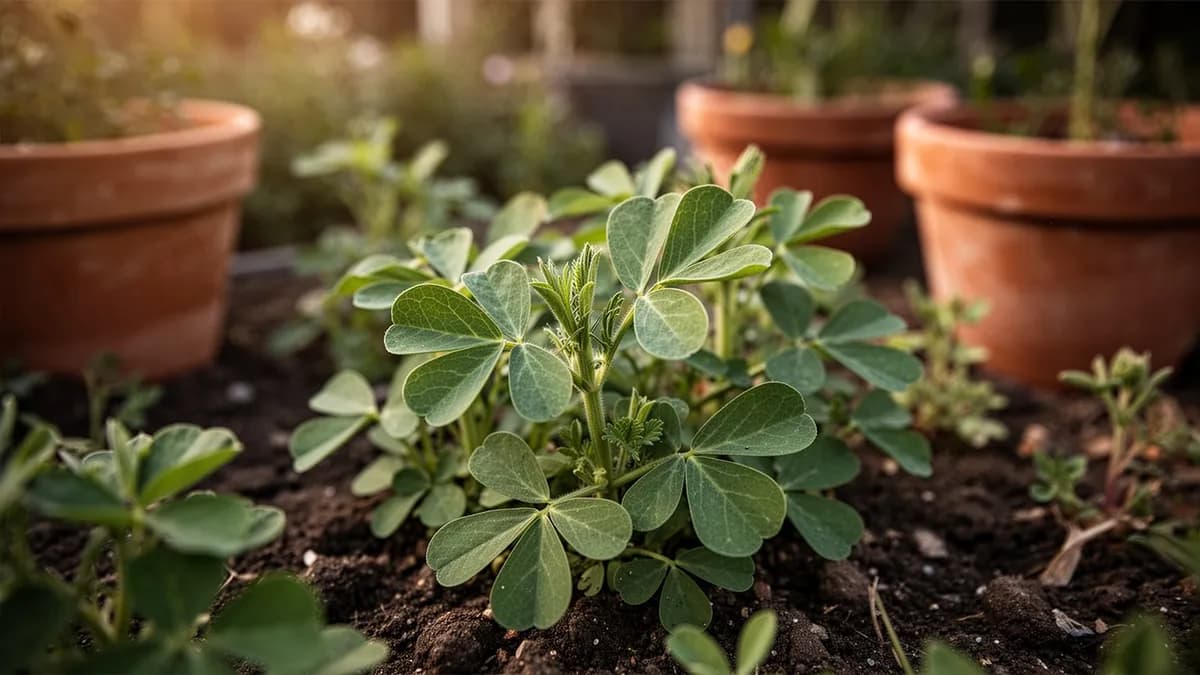
Una leguminosa anual cuyos aromáticos frutos con aroma a sirope de arce y sus amargas hojas frescas se emplean ampliamente en la cocina india y etíope. Las hojas frescas, denominadas methi, se cocinan como verdura o se incorporan a panes planos, mientras que las semillas aromaticen curris y mezclas de especias. El fenogreco también fija nitrógeno en el suelo, lo que lo convierte en un valioso cultivo de cobertura entre plantaciones.
Cuándo plantar Fenogreco
Siembre las semillas de fenogreco directamente en el exterior tras la última fecha de heladas, ya que las plantas no se trasplantan bien debido a su raíz pivotante. Remoje las semillas en agua tibia durante 8-12 horas antes de la siembra para acelerar la germinación. Siembre las semillas a 1 cm de profundidad y separadas entre sí 10-15 cm. Las semillas germinan rápidamente en 3-5 días a temperaturas del suelo de 15-24 °C. Para la producción de microverdes en interior, extienda las semillas densamente sobre un sustrato húmedo y coseche a los 7-10 días cuando los cotiledones estén completamente expandidos. Realice siembras escalonadas cada 3 semanas para un suministro continuo de hojas frescas durante toda la temporada de cultivo.
Tu año de Fenogreco
Ajustado a Zona 7 · temporada típica · la helada se va hacia el 2 abr y vuelve hacia el 1 nov
Planta Fenogreco Abr – May y cosecha Jul – Sep. Consulta los métodos de plantación y elige tu clima para adaptar los periodos.
Cómo cultivar Fenogreco
El fenogreco es una leguminosa anual de estación cálida de crecimiento rápido que prospera en pleno sol y temperaturas moderadamente altas. Siembre las semillas directamente en el exterior tras la última fecha de heladas, a un centímetro de profundidad y separadas entre sí 10-15 cm, en hileras espaciadas 30-45 cm. Las semillas germinan en 3-5 días cuando la temperatura del suelo está entre 15-24 °C. El fenogreco crece mejor con temperaturas de 10-30 °C y no tolera el calor extremo.
Como leguminosa fijadora de nitrógeno, el fenogreco no requiere una fertilización intensa. Las plantas desarrollan pequeñas hojas trifoliadas similares al trébol y alcanzan entre 45-60 cm de altura. Riegue regularmente durante el establecimiento, pero reduzca el riego una vez que las plantas estén bien enraizadas, ya que el fenogreco tolera moderadamente la sequía. Evite el encharcamiento, que puede provocar podredumbre radicular.
Para cosechar hojas frescas (methi), comience a recoger las hojas exteriores cuando las plantas alcancen 15-20 cm de altura. Para cosechar semillas, deje florecer las plantas: pequeñas flores blancas darán lugar a vainas estrechas y curvadas con 10-20 semillas cada una. Sujete las plantas con una ligera estaca cuando las pesadas vainas comiencen a inclinarlas.
128 plantas caben en un bancal de 120 × 240 cm
Cada Fenogreco pide 15 cm de margen. El planificador guarda ese marco por ti — cada planta, cada bancal.
Los mejores vecinos de Fenogreco
Como leguminosa fijadora de nitrógeno, el fenogreco enriquece el suelo para los cultivos vecinos y posteriores, lo que lo convierte en un excelente compañero y cultivo de cobertura. Plántelo junto a cultivos con alta demanda de nutrientes como tomates, pimientos y maíz para complementar el nitrógeno del suelo de forma natural. El aroma penetrante del fenogreco ayuda a ahuyentar ciertos plagas de las plantas cercanas. Cultívelo como intercultivo entre hileras de brasicas u hortalizas de raíz. Evite plantarlo junto a otras leguminosas como judías y guisantes, ya que compiten por las mismas rizobias del suelo. El fenogreco también es un magnífico abono verde cuando se incorpora al suelo antes de que produzca semillas.
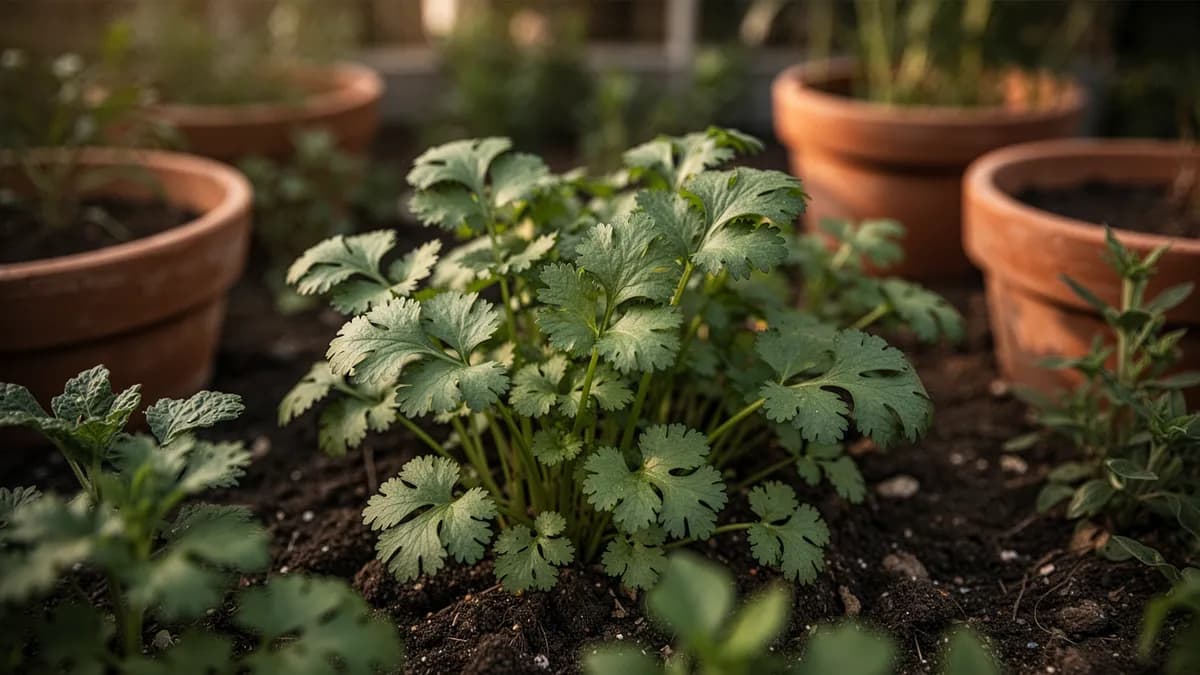
Cilantro va a su lado.
Saber de huerto de siempre, cotejado con la tabla real de Fenogreco — prueba cualquier planta que cultives.
Prueba Fenogreco en un bancal, aquí mismo
Un bancal real del planificador con Fenogreco ya plantado. Toca una planta compañera para colocarla y mira cómo responde la comprobación de vecinos: verde para buenos vecinos, rojo si hay conflicto.


Guías de cultivo relacionadas
Abónalo bien
El fenogreco prefiere suelos moderadamente fértiles y bien drenados con un pH de 6.0-7.0. Como leguminosa fijadora de nitrógeno, necesita una suplementación mínima de nitrógeno. Inocule las semillas con bacterias Rhizobium antes de la siembra para maximizar la fijación de nitrógeno. Aplique una ligera enmienda de compost equilibrado en el momento de la plantación. Abone con un fertilizante rico en fósforo cuando comiencen a formarse las flores para favorecer el desarrollo de vainas y semillas. Evite los aportes elevados de nitrógeno, que promueven un follaje excesivo a expensas de la producción de semillas. El fenogreco tolera suelos ligeramente alcalinos pero tiene dificultades en arcillas pesadas y encharcadas.
Temperatura ideal
Compatibilidad de zonas de rusticidad
De la semilla a la cosecha, etapa por etapa
Germinación de la semilla
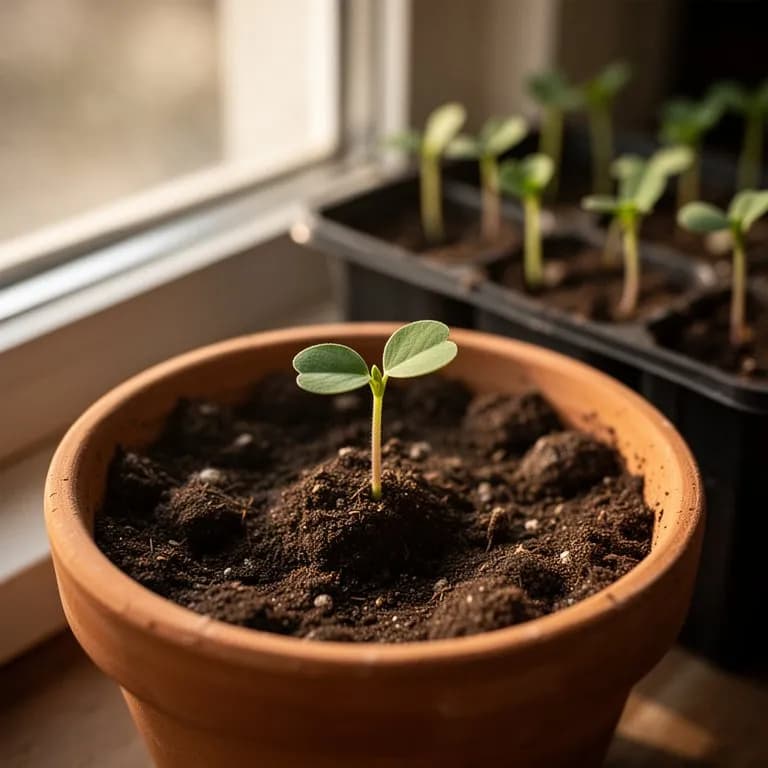
Las semillas de fenogreco germinan rápidamente cuando la temperatura del suelo supera los 15 °C, emergiendo habitualmente en 3-5 días tras la siembra. Las semillas absorben la humedad con rapidez, hinchándose casi al doble de su tamaño a las pocas horas del riego. Una pequeña radícula curvada se hunde hacia abajo mientras los cotiledones, redondeados y carnosos, se despliegan sobre la superficie del suelo. Remojar las semillas toda la noche en agua tibia puede adelantar la germinación un día adicional y mejorar la uniformidad de la emergencia en toda la era de siembra.
Plántula y desarrollo foliar
Tras la apertura de los cotiledones redondeados, las primeras hojas verdaderas emergen como pequeñas estructuras trifoliadas que recuerdan a tréboles en miniatura. Cada hoja consta de tres folíolos obovados con márgenes finamente dentados. El crecimiento se acelera rápidamente durante esta fase a medida que el sistema radicular se establece y el tallo comienza a ramificarse. Al final de esta etapa, las plantas alcanzan 10-15 cm de altura con múltiples nudos foliares y un porte compacto y frondoso. Esta es la fase ideal para cosechar microverdes o baby methi.
Crecimiento vegetativo y ramificación
Las plantas crecen vigorosamente, desarrollando un porte erecto y ramificado que alcanza entre 30 y 60 cm de altura. Los tallos se vuelven semileñosos en la base mientras se mantienen tiernos y verdes en la parte superior. Densos racimos de hojas trifoliadas llenan cada rama, creando una planta frondosa y atractiva. El sistema radicular desarrolla nódulos fijadores de nitrógeno en asociación con bacterias Rhizobium, enriqueciendo el suelo circundante. Este es el período de mayor producción para la cosecha de hojas frescas cuando se cultiva fenogreco principalmente como hierba culinaria.
Floración
Aparecen pequeñas flores en forma de guisante en las axilas de las hojas, generalmente de color blanco cremoso o amarillo pálido con un ligero tinte morado en la base. Cada flor mide 1-2 cm y es autopolinizante, aunque las abejas y otros insectos también las visitan. La floración avanza desde los nudos inferiores hacia arriba a lo largo de dos o tres semanas. La planta continúa produciendo hojas durante esta fase, aunque el sabor se vuelve más intensamente amargo a medida que la planta desvía su energía hacia la reproducción.
Desarrollo de vainas y maduración de semillas
Largas y estrechas vainas ligeramente curvadas se desarrollan a partir de cada flor polinizada, alcanzando entre 10 y 15 cm de longitud. En su interior, entre 10 y 20 pequeñas semillas angulares se desarrollan, inicialmente blandas y verdes antes de endurecerse y tornarse dorado-marrones al madurar. Toda la planta comienza a amarillear y secarse desde la base hacia arriba a medida que los nutrientes se movilizan hacia las semillas en maduración. Cuando las vainas se vuelven marrones y quebradizas y las semillas traquetean en su interior, el cultivo está listo para la cosecha.
Siembre las semillas a 1-2 cm de profundidad en suelo cálido y bien drenado. Riegue con suavidad pero abundantemente al sembrar y mantenga la superficie húmeda hasta que emerjan las plántulas. Remojar las semillas durante 8-12 horas en agua tibia mejora y acelera significativamente la germinación. Evite el encharcamiento, que provoca la pudrición de las semillas.
Cuidar Fenogreco mes a mes
Qué hacer cada mes para tu Fenogreco
Octubre
Mes actualEn climas suaves, el fenogreco sembrado en otoño proporciona hojas frescas hasta bien entrado el invierno. Proteja con manta térmica o cloches si hay riesgo de heladas: las plantas establecidas toleran períodos breves hasta -2 °C. En zonas más frías, retire las plantas agotadas y compóstelas. Comience a cultivar microverdes en interior para el uso invernal. Guarde las mejores semillas de la cosecha de este año para la siembra de la próxima temporada.
Ten claro qué hacer en tu huerto, cada mes
Un correo al empezar cada mes: qué sembrar, plantar y hacer ahora mismo — para tu Fenogreco y todo lo que crece alrededor. Más un breve curso inicial para esquivar los errores clásicos.
- Qué hacer ahora mismo
- Ajustado a tu temporada
- Curso inicial incluido
Cosechar Fenogreco
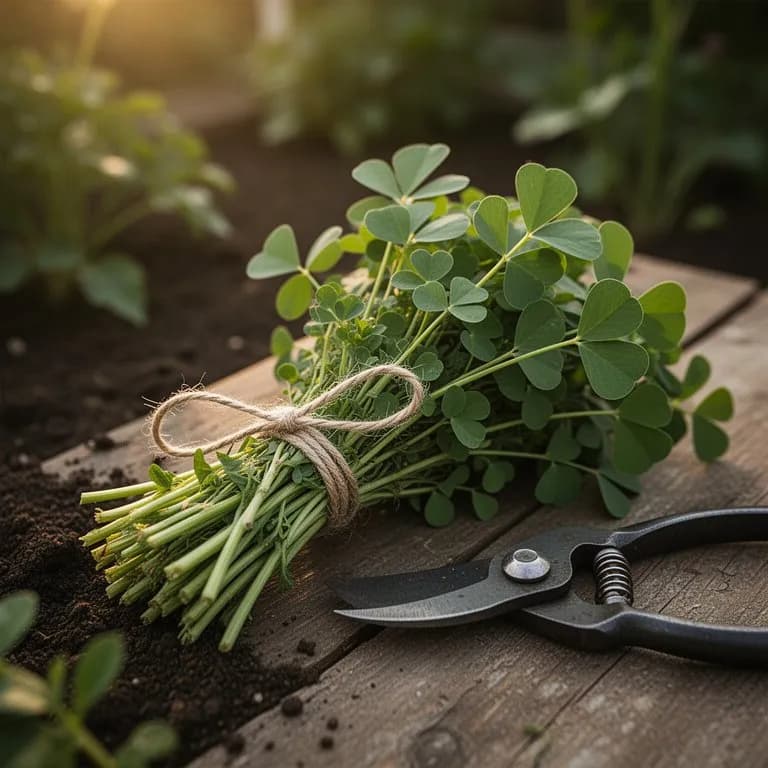
Para las hojas frescas de methi, comience la cosecha cuando las plantas alcancen 15-20 cm de altura, aproximadamente 3-4 semanas después de la siembra. Corte las hojas por la base dejando un tocón de 2-3 cm para la rebrote, lo que permite realizar 2-3 cosechas adicionales por plantación. Para las semillas, deje que las vainas maduren en la planta hasta que se vuelvan amarillo-marrón y comiencen a secarse, generalmente 3-4 meses después de la siembra. Corte las plantas enteras y cuélguelas boca abajo dentro de bolsas de papel para recoger las semillas a medida que las vainas se abran. Desgrane las vainas secas a mano y aventee la paja. Las semillas están listas cuando son duras y de color ámbar dorado.
se supone que plantas al comenzar el periodo — indica tu fecha real
Cosecha Fenogreco a tiempo y la planta sigue produciendo.
Almacenamiento y conservación
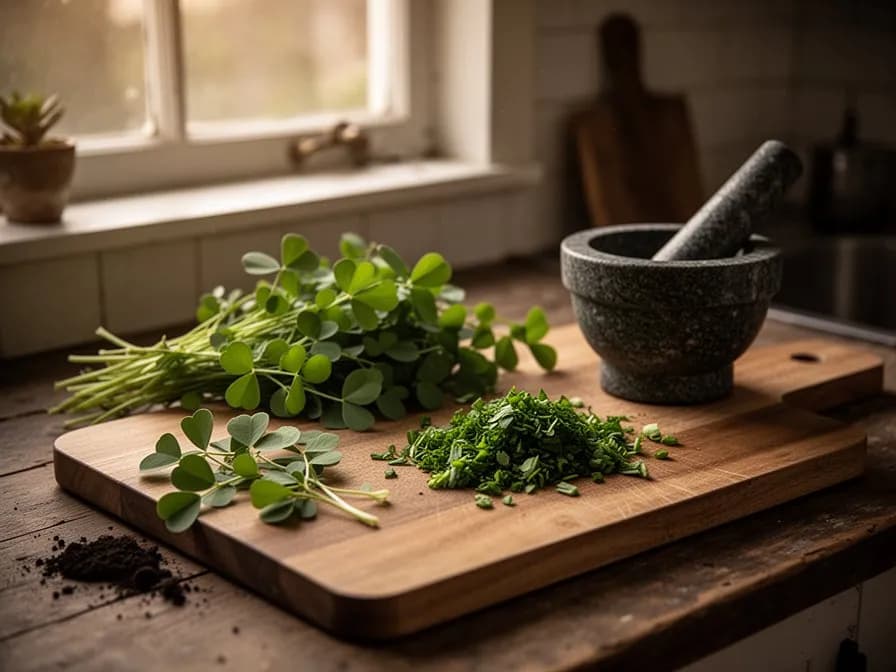
Las hojas frescas de methi se marchitan rápidamente; consérvelas sin lavar en un papel de cocina húmedo dentro de una bolsa de plástico en el frigorífico hasta 5 días. Para una conservación más prolongada, escalde las hojas brevemente y congélelas en recipientes herméticos. Las hojas secas de fenogreco (kasuri methi) mantienen un sabor excelente; séquelas al aire sobre rejillas en un lugar cálido y ventilado durante 3-5 días, luego desmenúcelas y guárdelas en tarros herméticos. Las semillas de fenogreco se conservan excepcionalmente bien durante 2-3 años en tarros de cristal cerrados herméticamente en una despensa fresca y oscura. Tueste las semillas ligeramente antes de molerlas para reducir el amargor y realzar su aroma similar al arce.
Qué falla — y cómo solucionarlo
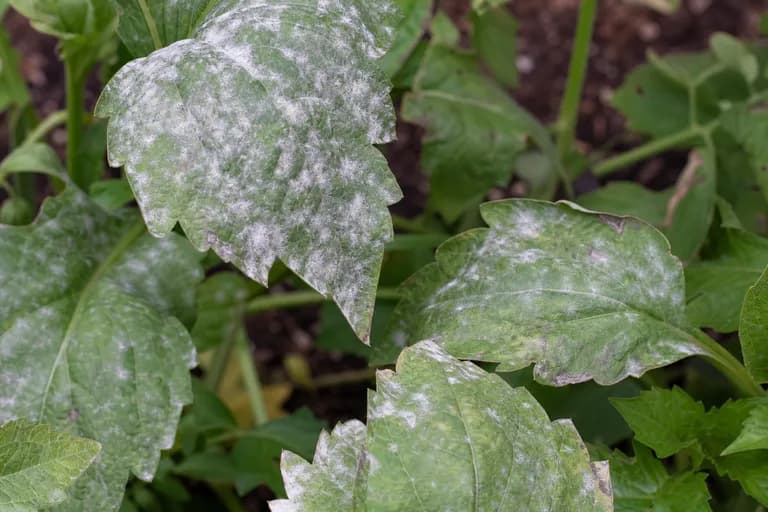
Oídio
EnfermedadCapa blanquecina y polvorienta sobre hojas y tallos, follaje amarillento, reducción del crecimiento y escaso desarrollo de las semillas.
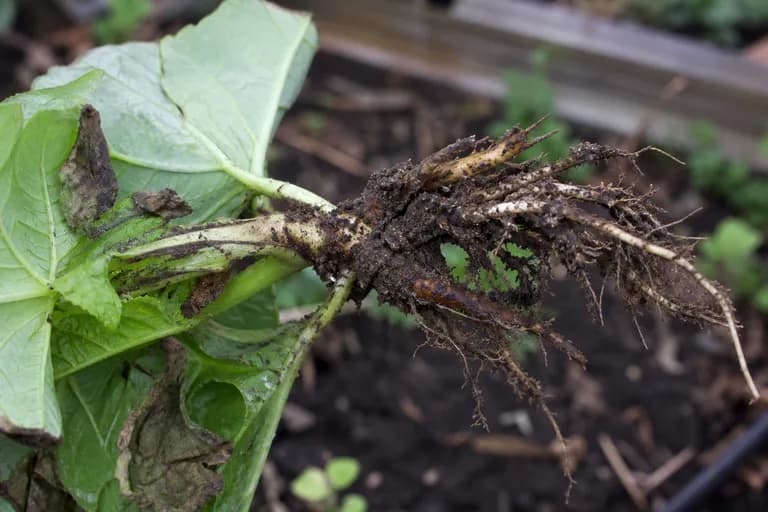
Podredumbre radicular
EnfermedadMarchitez a pesar de la humedad adecuada, hojas amarillas, raíces marrones y blandas, crecimiento atrofiado, colapso de la planta.
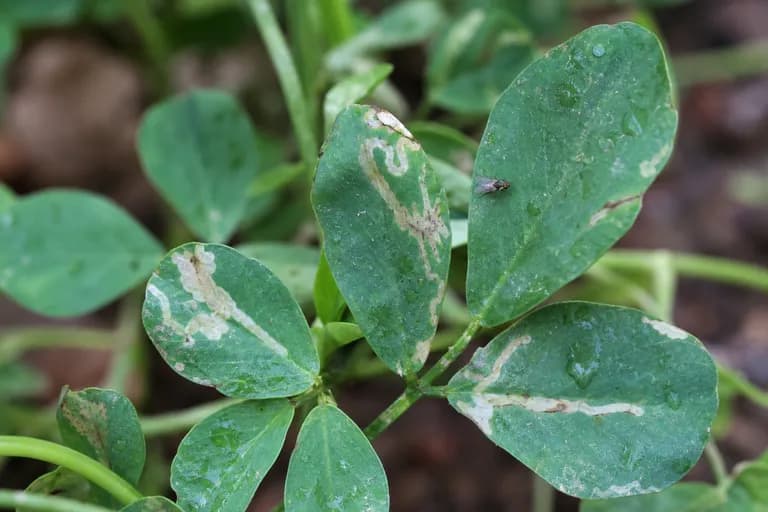
Moscas minadoras de hojas
PlagaGalerías blancas y sinuosas visibles dentro de las hojas, manchas apergaminadas, caída prematura de hojas que reduce la calidad de la cosecha de methi.
Solución de problemas comunes
El sabor amargo de las hojas frescas se intensifica con el calor y la madurez de la planta; coseche hojas jóvenes con frecuencia y cultive en los meses más frescos para obtener el sabor más suave. El espigado prematuro con el calor acorta la ventana de cosecha de hojas; realice siembras escalonadas cada 2-3 semanas para un suministro continuo de methi. La escasa cuajada de semillas en climas fríos o húmedos se debe a una polinización insuficiente; asegúrese de que las plantas reciben pleno sol y calor suficiente durante la floración. El amarillamiento de las hojas inferiores es normal a medida que la planta madura y redirige la energía hacia la producción de semillas, pero un amarillamiento persistente en plantas jóvenes puede indicar riego excesivo o deficiencia de nutrientes.
Consejos de cultivo
- Remoje las semillas de fenogreco en agua tibia durante 8-12 horas antes de sembrar para acelerar la germinación de 5 días a tan solo 2-3 días. Las semillas absorben el agua con rapidez y deben hincharse visiblemente: deseche las que floten ya que probablemente no son viables.
- Para un suministro continuo de hojas frescas, siembre pequeñas tandas cada 2-3 semanas desde mediados de primavera hasta finales de verano. Cada siembra produce hojas cosechables en 3-4 semanas, y la cosecha de corte y rebrote extiende cada plantación a través de dos o tres cortes.
- Siembre en alta densidad (a voleo a razón de 3-5 g por metro cuadrado) para la producción de hojas, pero aclare a 10-15 cm de separación si cultiva para semilla. Las siembras densas producen un crecimiento tierno y erecto ideal para la cosecha de hojas, mientras que las plantas espaciadas se ramifican libremente y producen más vainas.
- El fenogreco fija el nitrógeno atmosférico a través de nódulos radiculares y es un excelente abono verde o cultivo de cobertura. Cave las plantas en el suelo después de la última cosecha de hojas para liberar el nitrógeno almacenado para los cultivos siguientes: especialmente beneficioso antes de plantar especies con alta demanda de nutrientes como tomates o calabazas.
- Evite el exceso de riego y los suelos con mucha arcilla, que favorecen la podredumbre radicular y el ahogamiento de plántulas. El fenogreco prefiere suelos bien drenados y moderadamente fértiles, y tolera las condiciones secas mejor que el encharcamiento. Riegue profundamente pero con poca frecuencia una vez que las plantas estén establecidas.
- Cultive microverdes de fenogreco durante todo el año en un alféizar soleado extendiendo las semillas densamente en una bandeja poco profunda con compost húmedo o papel de cocina mojado. Coseche a los 5-7 días cuando aparezcan las primeras hojas verdaderas: los microverdes tienen un sabor fresco concentrado a fenogreco, ideal para decorar curris y ensaladas.
- Coseche las hojas frescas cortando toda la planta 2-3 cm por encima del nivel del suelo cuando alcance entre 10 y 15 cm de altura. La mayoría de las plantas rebrotarán desde la base para una o dos cosechas adicionales antes de que la calidad decline. Coseche temprano por la mañana, cuando las hojas están más turgentes y aromáticas.
- Para secar las hojas de fenogreco y elaborar kasuri methi casero, extienda las hojas lavadas en una sola capa sobre bandejas en un lugar cálido y aireado, lejos de la luz solar directa. Seque hasta que estén completamente crujientes (2-3 días), luego desmenúcelas y guárdelas en tarros herméticos. El kasuri methi casero es vastamente más aromático que los productos comerciales.
- El fenogreco prospera en pleno sol pero tolera la sombra parcial, especialmente en climas calurosos donde la sombra por la tarde previene el espigado prematuro. En regiones tropicales y subtropicales, cultive fenogreco como cultivo de estación fresca durante el otoño y el invierno para obtener la mejor calidad y sabor en las hojas.
- Coseche las semillas cuando las vainas estén marrones y quebradizas en la planta. Corte los tallos enteros y cuélguelos boca abajo en bolsas de papel para recoger las semillas a medida que se abran. Como alternativa, arranque las plantas enteras y desgrane pisando las vainas secas o golpeándolas dentro de una bolsa de tela. Guarde las semillas en recipientes herméticos en un lugar fresco y oscuro hasta tres años.
Cultiva tu mejor Fenogreco — y todo lo que la rodea.
Empieza un plan gratis hoy. Diseña tus bancales, coloca tu Fenogreco y deja que PlotMyGarden gestione el momento, el espaciado, las asociaciones y los recordatorios de la semilla a la cesta.
Elige tu Fenogreco
Fenogreco común
La variedad estándar cultivada en todo el mundo tanto para la producción de hojas como de semillas. Muy fiable y con buen sabor en todos sus usos, desde las hojas de methi hasta las especias para curri.
Kasuri methi
Un tipo de hoja pequeña cultivado específicamente para el secado, que produce hojas deshidratadas de sabor muy intenso utilizadas como hierba final en curris y panes indios.
Champa
Una variedad mejorada seleccionada por su mayor rendimiento en hoja y floración más tardía, lo que permite una cosecha prolongada de methi fresca. Popular entre los agricultores comerciales de la India.
Las hojas frescas de fenogreco (methi) se venden a 3-6 € por manojo pequeño en tiendas de alimentación india y raramente están disponibles en supermercados convencionales. Un pequeño bancal de 2 metros cuadrados sembrado con semillas de fenogreco por valor de 2 € produce el equivalente a 30-50 € en hojas frescas a lo largo de una temporada con múltiples cosechas de corte y rebrote. El kasuri methi seco se vende a 8-15 € por 100 g, y las hojas deshidratadas en casa a partir de plantas del jardín producen un producto mucho más aromático a prácticamente ningún coste. Las propias semillas de fenogreco cuestan entre 3 y 8 € por 500 g en tiendas de especias, y una pequeña parcela del jardín que rinde entre 200 y 500 g de semillas por temporada proporciona el suministro anual de esta especia esencial de forma gratuita, con el beneficio añadido del enriquecimiento del suelo mediante la fijación de nitrógeno.
Recetas rápidas
Methi paratha (pan plano de fenogreco)
30 minUn apreciado pan plano indio relleno de hojas frescas de fenogreco, especias cálidas y un toque de guindilla. Las ligeramente amargas hojas de methi se vuelven suaves y aromáticas al cocinarse en la masa, creando un pan fragante que combina a la perfección con yogur, encurtidos y curris.
8 ingredientesTé de semillas de fenogreco tostadas
10 minUn sencillo té reconfortante elaborado infusionando semillas de fenogreco ligeramente tostadas en agua caliente. El tostado transforma las semillas, liberando una rica dulzura similar al arce y una profundidad tostada. Esta bebida reconfortante se ha utilizado durante siglos en la medicina tradicional para favorecer la digestión y es naturalmente libre de cafeína.
5 ingredientesAloo methi (patata con hojas de fenogreco)
25 minUn clásico curri seco del norte de la India que combina patatas tiernas en dados con hojas frescas de fenogreco en una base de especias fragantes. El amargor terroso del methi fresco equilibra la dulzura almidonada de las patatas, creando un plato reconfortante que es un pilar de la cocina doméstica india cotidiana.
9 ingredientesUsos culinarios
Las hojas frescas de methi aportan un amargor terroso a los panes planos indios (methi paratha), los platos de patata y el dal. El kasuri methi seco se desmenúzala sobre pollo al curry con mantequilla, platos de paneer y korma como hierba final. Las semillas de fenogreco son imprescindibles en el panch phoron, el polvo de sambar y las mezclas de especias etíopes berbere. Tueste las semillas ligeramente antes de molerlas para reducir el amargor. Las semillas de fenogreco germinadas añaden textura crujiente y un suave sabor a arce en ensaladas y sándwiches.
Qué contiene
Beneficios para la salud
- Contiene fibra soluble galactomanano que, según estudios clínicos, ralentiza la absorción de carbohidratos y ayuda a moderar los picos de azúcar en sangre tras las comidas, lo que convierte las semillas de fenogreco en objeto de investigación activa en el manejo de la diabetes tipo 2 y el control glucémico.
- Utilizado tradicionalmente como galactagogo para favorecer la producción de leche materna en madres lactantes: varios ensayos controlados aleatorizados han demostrado aumentos significativos en el volumen de leche entre mujeres que consumían preparados de semillas de fenogreco.
- Rico en saponinas esteroidales como la diosgenina y la protodioscina, sobre las cuales las investigaciones sugieren que pueden ayudar a reducir los niveles de colesterol total y LDL inhibiendo la absorción de colesterol en el intestino y aumentando la excreción de ácidos biliares.
- Contiene potentes compuestos antiinflamatorios, entre ellos flavonoides, alcaloides y saponinas, que pueden ayudar a reducir los marcadores de inflamación sistémica, respaldando el uso tradicional de la planta en la medicina ayurvédica para tratar el dolor articular y las afecciones inflamatorias.
- Las semillas aportan niveles excepcionalmente altos de hierro de origen vegetal (33.5 mg por 100 g), favoreciendo la producción de glóbulos rojos y el transporte de oxígeno: una consideración dietética importante para vegetarianos y veganos que buscan fuentes no animales de hierro.
- Contiene el aminoácido exclusivo 4-hidroxiisoleucina, presente casi exclusivamente en las semillas de fenogreco, sobre el cual estudios de laboratorio muestran que puede estimular la secreción de insulina por las células beta del páncreas y mejorar la captación de glucosa en el tejido muscular esquelético.
De dónde viene Fenogreco
El fenogreco (Trigonella foenum-graecum) es originario de la región mediterránea oriental y Asia occidental, con sus ancestros silvestres creciendo en las praderas y matorrales semiáridos que se extienden desde la actual Turquía e Irán hasta el norte de la India. El nombre latino de la planta refleja su antiguo papel agrícola: 'foenum-graecum' se traduce como 'heno griego', ya que los romanos lo importaban de Grecia, donde se cultivaba ampliamente como forraje para el ganado y cultivo mejorador del suelo.
El fenogreco se encuentra entre las plantas cultivadas más antiguas que conoce la humanidad. Las evidencias arqueológicas de Tell Halula, en Siria, sitúan su domesticación hacia el año 4000 a. C., mientras que las semillas carbonizadas halladas en yacimientos de Irak sugieren un uso aún más temprano. Los antiguos egipcios valoraban mucho el fenogreco: se han recuperado semillas de tumbas como la de Tutankamón, y los textos en papiro describen su uso en preparados de embalsamamiento, remedios medicinales e incienso para los templos. El Papiro de Ebers, datado hacia el año 1550 a. C., prescribe preparados de fenogreco para quemaduras, fiebres y dolencias digestivas.
La planta se extendió hacia el este por las antiguas rutas comerciales hasta la India, donde se integró profundamente en las tradiciones culinarias y medicinales. En la medicina ayurvédica, el fenogreco (conocido como methi) ha sido prescrito durante más de 3000 años como tónico digestivo calorífico, galactagogo para madres lactantes y hierba fortalecedora general. La cocina india adoptó tanto las hojas frescas como las semillas secas como ingredientes esenciales, y hoy en día la India es el mayor productor mundial de fenogreco, cultivando más del 80 % del suministro global en los estados de Rajastán, Guyarat, Madhya Pradesh y Uttar Pradesh.
En Europa, el fenogreco fue cultivado ampliamente por griegos y romanos para pienso ganadero, abono verde y medicina. Carlomagno promovió su cultivo en todo su imperio en el año 812 d. C., y los jardines monásticos medievales lo mantenían tanto como hierba medicinal como cultivo de rotación para enriquecer el suelo. La planta llegó a China a través de la Ruta de la Seda, donde fue adoptada en la medicina tradicional como hu lu ba. Hoy en día, el fenogreco se cultiva comercialmente en toda la India, el norte de África, Etiopía, Argentina y el sur de Europa, valorado por su versatilidad culinaria, sus beneficios agrícolas como fijador de nitrógeno y su creciente importancia en las industrias farmacéutica y nutracéutica.
Fenogreco: ¿sabías que?
Datos fascinantes sobre Fenogreco
Las semillas de fenogreco contienen un compuesto natural llamado sotolona, responsable del distintivo aroma a sirope de arce de la especia: ese mismo compuesto se utiliza para fabricar aromatizante artificial de arce, y las personas que consumen grandes cantidades de fenogreco pueden notar que su sudor y orina adquieren un olor dulce similar al arce.
Fenogreco: preguntas frecuentes
¿Cuándo debo plantar Fenogreco?
¿Cuáles son buenas plantas acompañantes para Fenogreco?
¿En qué zonas de rusticidad puede crecer Fenogreco?
¿Cuánto sol necesita Fenogreco?
¿A qué distancia debo espaciar Fenogreco?
¿Qué plagas y enfermedades afectan a Fenogreco?
¿Cómo almaceno Fenogreco después de la cosecha?
¿Cuáles son las mejores variedades de Fenogreco para cultivar?
¿Qué suelo necesita Fenogreco?
¿Puedo cultivar fenogreco en macetas o contenedores?
¿Por qué las hojas de mi fenogreco tienen un sabor muy amargo?
¿El fenogreco es lo mismo que el methi?
¿Cuánto tiempo mantienen la viabilidad las semillas de fenogreco para la siembra?
¿Puede el fenogreco sobrevivir a las heladas y al frío?
¿El fenogreco mejora realmente la fertilidad del suelo?
Acabas de leer la teoría. Ahora cultívala en piloto automático.
Todo lo que hace que Fenogreco sea delicado — el momento, el espaciado, las asociaciones, la ventana de cosecha — es justo lo que PlotMyGarden resuelve por ti, para cada planta de tu huerto.
Un plan que conoce tu clima
Indica tu ubicación una vez. Recibe fechas de siembra, abonado y cosecha basadas en tu última helada real y el pronóstico en vivo — sin adivinar con un sobre genérico.
De la sección “Cuándo plantar”Planificador de bancales de arrastrar y soltar
Diseña bancales sobre una cuadrícula. Cada planta encaja con su espaciado correcto y ves toda la temporada antes de gastar un céntimo en semillas.
De la sección “Cultivo”Conflictos de asociación, detectados a tiempo
Más de 200 buenas y malas combinaciones comprobadas en vivo mientras plantas — para que un error que arruine la temporada nunca llegue a la tierra.
De la sección “Asociaciones”Recordatorios que sí vas a seguir
“Riega las judías.” “Recoge hoy antes de que se pase.” Oportunos, concretos y ligados a las plantas que de verdad cultivas.
De la sección “Cosecha”Escalonado, programado
¿Quieres cosechar seis semanas en vez de seis días? Reparte tus siembras automáticamente y te avisa cuando toca el siguiente lote.
De la sección “Cuándo plantar”Un registro que se vuelve más listo
Cada cosecha que registras le enseña tu huerto. El plan del año que viene parte de lo que de verdad funcionó en tu suelo, no en un manual.
De la sección “Resumen”Planta estos junto a Fenogreco
Más Hierbas culinarias
Diseños de jardín con Fenogreco
Cultiva tu mejor Fenogreco — y todo lo que la rodea.
Empieza un plan gratis hoy. Diseña tus bancales, coloca tu Fenogreco y deja que PlotMyGarden gestione el momento, el espaciado, las asociaciones y los recordatorios de la semilla a la cesta.