Dianthus anual
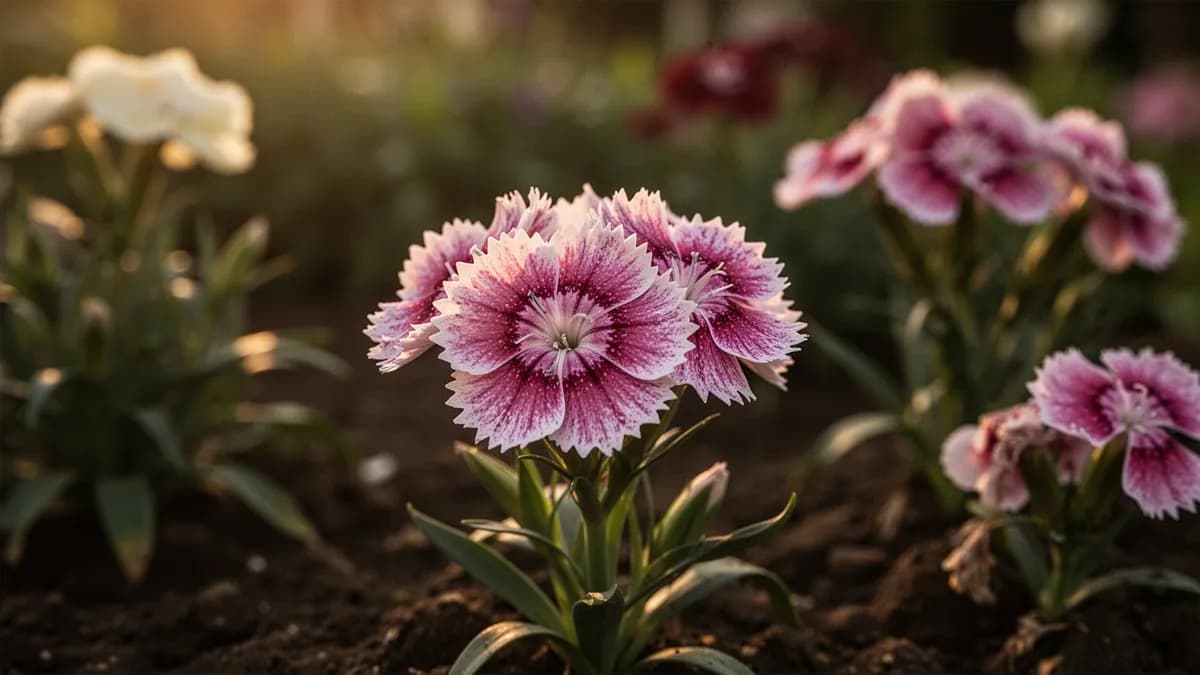
Una anual compacta con flores desflecadas y aroma especiado en tonos rosa, rojo y blanco, a menudo con zonas centrales contrastantes.





En esta páginaResumen
Conoce Dianthus anual
Una anual compacta con flores desflecadas y aroma especiado en tonos rosa, rojo y blanco, a menudo con zonas centrales contrastantes. El dianthus anual prospera con tiempo fresco y suelo ligeramente alcalino, y florece con abundancia en primavera y otoño. Quite las flores marchitas con regularidad y pode las plantas después de la primera floración para favorecer nuevas oleadas de flores.
Cuándo plantar Dianthus anual
Siembre semillas de dianthus en interior de ocho a diez semanas antes de la última helada. Siémbrelas sobre la superficie de una mezcla húmeda para semilleros y presione ligeramente sin cubrirlas, ya que necesitan luz para germinar. Mantenga la temperatura del suelo alrededor de 18 a 21 °C. Las semillas germinan en siete a catorce días. Trasplante las plántulas al exterior después de endurecerlas durante una semana, cuando las temperaturas nocturnas se mantengan por encima de 4 °C. La siembra directa a comienzos de la primavera o del otoño también funciona en climas suaves.
Tu año de Dianthus anual
Ajustado a Zona 7 · temporada típica · la helada se va hacia el 2 abr y vuelve hacia el 1 nov
Planta Dianthus anual Mar – Abr, Sep y cosecha Abr – Jun, Oct – Nov. Consulta los métodos de plantación y elige tu clima para adaptar los periodos.
Cómo cultivar Dianthus anual
El dianthus anual prospera a pleno sol y en un suelo bien drenado y ligeramente alcalino. Prepare los bancales incorporando compost y un puñado de cal si el suelo es ácido, apuntando a un pH de 6.5 a 7.5. Plante trasplantes o siembre directamente a comienzos de la primavera o del otoño, separando las plantas unos 20 a 25 cm. Las semillas necesitan luz para germinar, así que presiónelas sobre la superficie del suelo sin cubrirlas.
Riegue con regularidad hasta que las plantas estén establecidas y después reduzca a riegos moderados, dejando que la capa superior del suelo se seque entre sesiones. El dianthus es sensible al exceso de riego y al suelo encharcado, lo que provoca pudrición de raíces. Aplique una capa de 5 cm de mantillo alrededor de las plantas para retener la humedad y regular la temperatura del suelo, manteniendo el mantillo alejado de los tallos.
Quite las flores marchitas de forma constante para fomentar una floración continua durante toda la temporada. Cuando la primera oleada de flores se agote, recorte las plantas en un tercio para estimular una nueva ronda de crecimiento y flores. Abone cada cuatro a seis semanas con un fertilizante equilibrado de liberación lenta. En regiones con inviernos suaves, el dianthus anual puede sobrevivir y volver a florecer la primavera siguiente.
72 plantas caben en un bancal de 120 × 240 cm
Cada Dianthus anual pide 20 cm de margen. El planificador guarda ese marco por ti — cada planta, cada bancal.
Los mejores vecinos de Dianthus anual
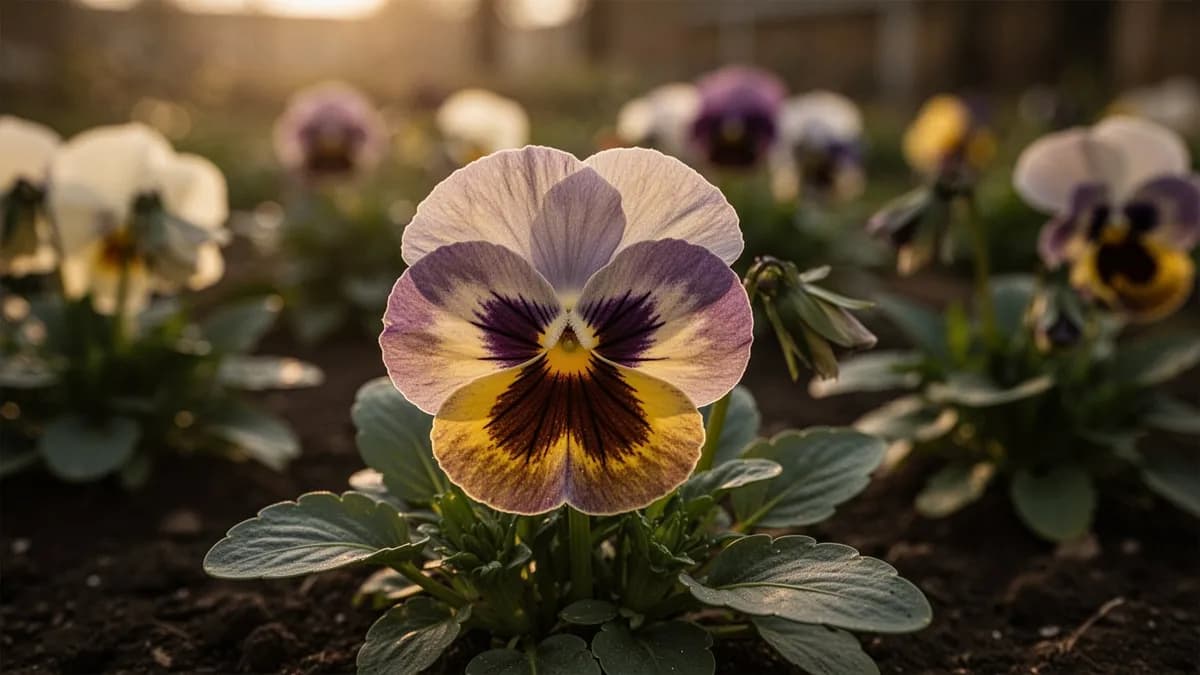
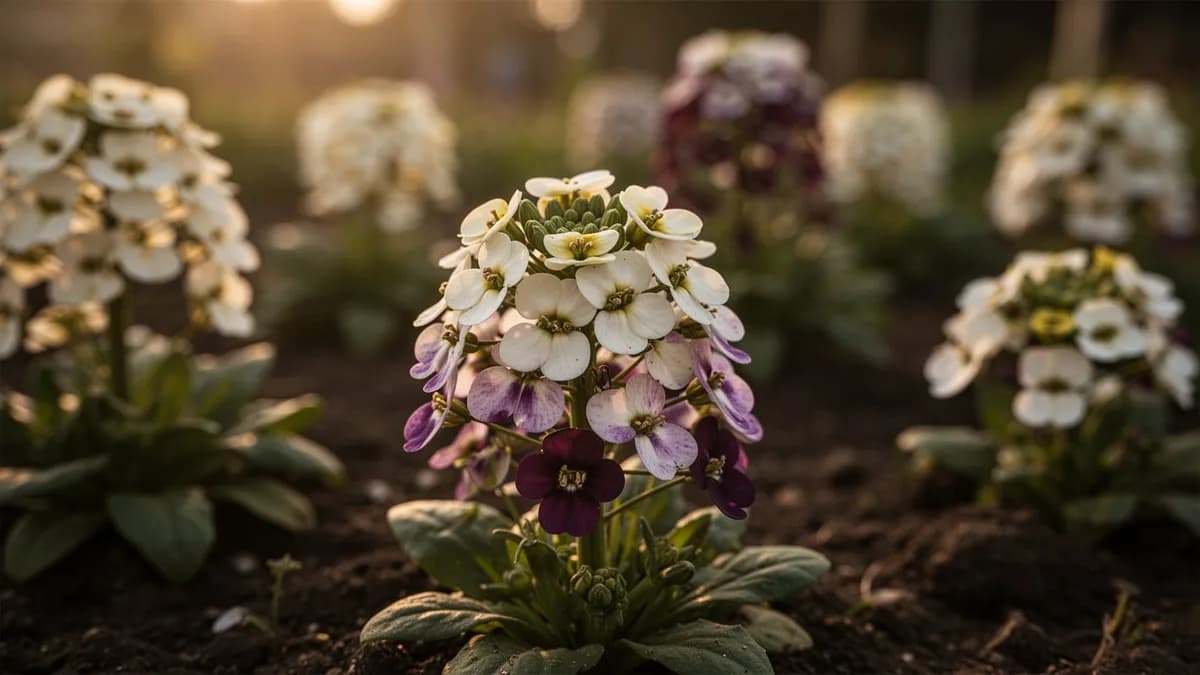
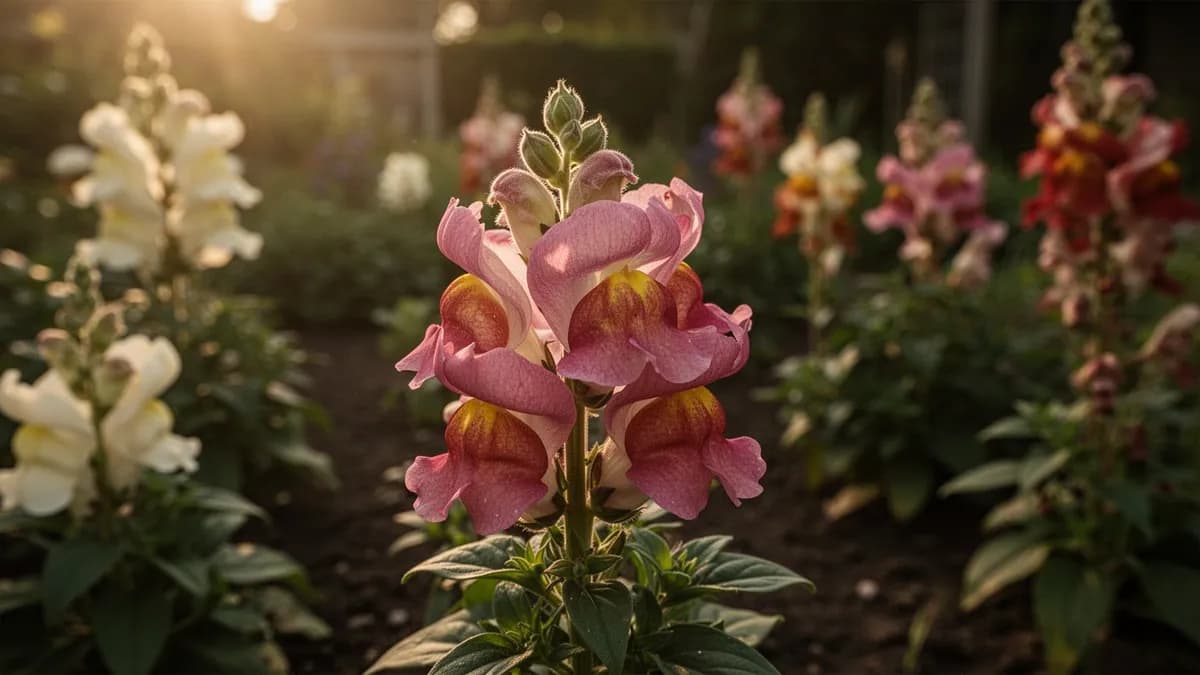
El dianthus anual combina de maravilla con otras flores de estación fresca como pensamientos, alyssum y bocas de dragón en borduras de primavera y otoño. Su tamaño compacto lo convierte en una excelente planta de borde delante de compañeras más altas como la espuela de caballero y la alhelí. El dianthus atrae polinizadores beneficiosos, incluidas mariposas, mientras que su fragancia especiada puede ayudar a disuadir ciervos y conejos de las plantaciones cercanas.
Pensamiento va a su lado.
Saber de huerto de siempre, cotejado con la tabla real de Dianthus anual — prueba cualquier planta que cultives.
Prueba Dianthus anual en un bancal, aquí mismo
Un bancal real del planificador con Dianthus anual ya plantado. Toca una planta compañera para colocarla y mira cómo responde la comprobación de vecinos: verde para buenos vecinos, rojo si hay conflicto.


Guías de cultivo relacionadas
Abónalo bien
El dianthus anual prefiere un suelo bien drenado y ligeramente alcalino con un pH entre 6.5 y 7.5. Mejore los suelos arcillosos pesados con arena y compost para optimizar el drenaje. Incorpore un fertilizante equilibrado de liberación lenta al plantar. Abone las plantas en contenedor cada dos o tres semanas con un fertilizante líquido diluido. Evite los fertilizantes ricos en nitrógeno, que producen mucho follaje a costa de las flores. Una capa ligera de cal cada primavera beneficia a las plantas en regiones con suelo ácido.
Temperatura ideal
Compatibilidad de zonas de rusticidad
De la semilla a la cosecha, etapa por etapa
Germinación de la semilla
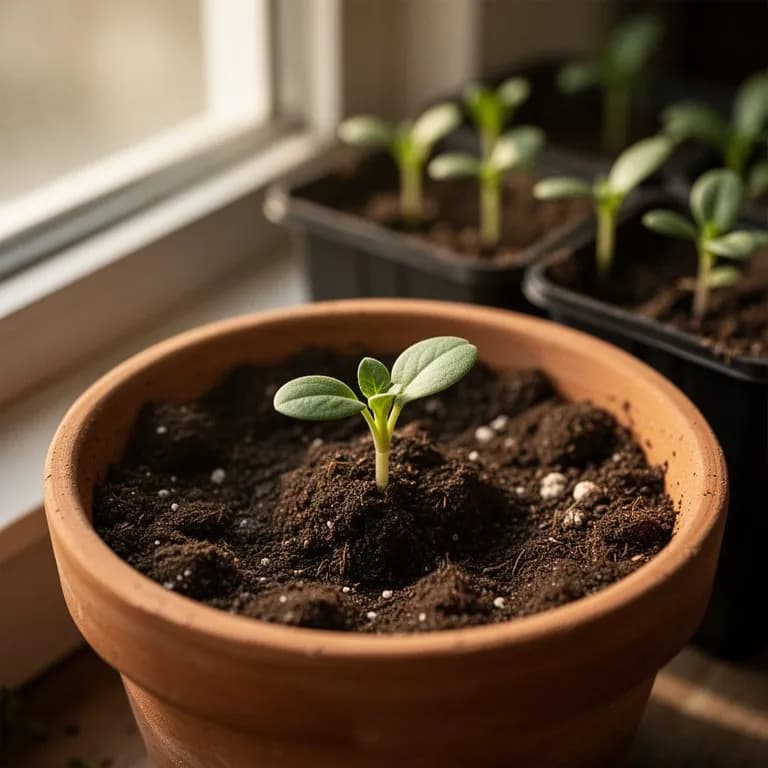
Las semillas de dianthus se siembran en superficie o se cubren ligeramente con vermiculita fina. Necesitan luz para germinar y una humedad constante con temperaturas del suelo entre 15 y 21 °C. La germinación suele producirse en siete a diez días en condiciones óptimas.
Desarrollo de plántulas
Las plántulas desarrollan sus primeras hojas verdaderas, estrechas y parecidas a la hierba. Las plantas jóvenes forman una roseta compacta y empiezan a establecer un sistema radicular poco profundo pero fibroso. El crecimiento es constante pero lento durante esta fase.
Crecimiento vegetativo
La planta entra en una fase de crecimiento rápido, produciendo varios tallos ramificados con follaje azul verdoso en forma de lanza. Se desarrolla un sistema radicular fuerte y la planta alcanza aproximadamente la mitad de su altura madura. Esta es la ventana ideal para trasplantar al exterior después de la última helada.
Formación de capullos
Los capullos florales emergen en las puntas de los tallos ramificados. Al principio son verdes y están cerrados, y poco a poco se hinchan y muestran color a medida que maduran. La planta puede ralentizar su crecimiento vegetativo mientras dirige energía a la reproducción.
Plena floración
La planta produce abundantes flores fragantes y desflecadas en tonos rosa, rojo, blanco, lavanda y combinaciones bicolor. Cada flor dura de cinco a siete días, y la planta sigue generando nuevas flores durante varias semanas. Este es el periodo ornamental y de cosecha más importante.
Cuajado de semillas y declive
Si se dejan flores en la planta, desarrollan cápsulas de semillas con pequeñas semillas negras. La producción de flores disminuye a medida que la planta canaliza recursos hacia la maduración de las semillas. El follaje puede empezar a amarillear y el vigor general disminuye cuando las temperaturas suben por encima de 30 °C.
Rocíe la bandeja de semillero a diario para mantener una humedad uniforme sin encharcarla. Una cúpula de humedad ayuda a conservar una humedad constante durante esta fase crítica.
Cuidar Dianthus anual mes a mes
Qué hacer cada mes para tu Dianthus anual
Octubre
Mes actualRetire las plantas agotadas de los macizos anuales después de la primera helada fuerte. Composte el material vegetal sano y deseche el follaje enfermo. Tome nota de las variedades que mejor funcionaron para la próxima temporada.
Ten claro qué hacer en tu huerto, cada mes
Un correo al empezar cada mes: qué sembrar, plantar y hacer ahora mismo — para tu Dianthus anual y todo lo que crece alrededor. Más un breve curso inicial para esquivar los errores clásicos.
- Qué hacer ahora mismo
- Ajustado a tu temporada
- Curso inicial incluido
Cosechar Dianthus anual
Corte los tallos de dianthus para ramos cuando las flores estén abiertas aproximadamente a la mitad, eligiendo tallos con varios capullos para una exposición más duradera. Corte a primera hora de la mañana y coloque inmediatamente en agua fresca. Quite las flores marchitas en el jardín cortando justo por encima de un nudo foliar para estimular la refloración. Para guardar semilla, deje que unas pocas flores permanezcan en la planta hasta que las cápsulas se sequen y se vuelvan marrones; después recoja y guarde en un lugar fresco y seco.
se supone que plantas al comenzar el periodo — indica tu fecha real
Cosecha Dianthus anual a tiempo y la planta sigue produciendo.
Almacenamiento y conservación
Las flores recién cortadas de dianthus duran de siete a diez días en un jarrón con agua limpia y conservante floral. Recorte los tallos y cambie el agua cada dos o tres días. Las flores de dianthus pueden secarse al aire colgando pequeños ramilletes boca abajo en un lugar oscuro y bien ventilado durante dos semanas. Las flores secas conservan su fragancia especiada y quedan muy bien en potpourri. También puede prensar flores individuales entre libros pesados para usarlas en manualidades y tarjetas.
Qué falla — y cómo solucionarlo
Pulgones
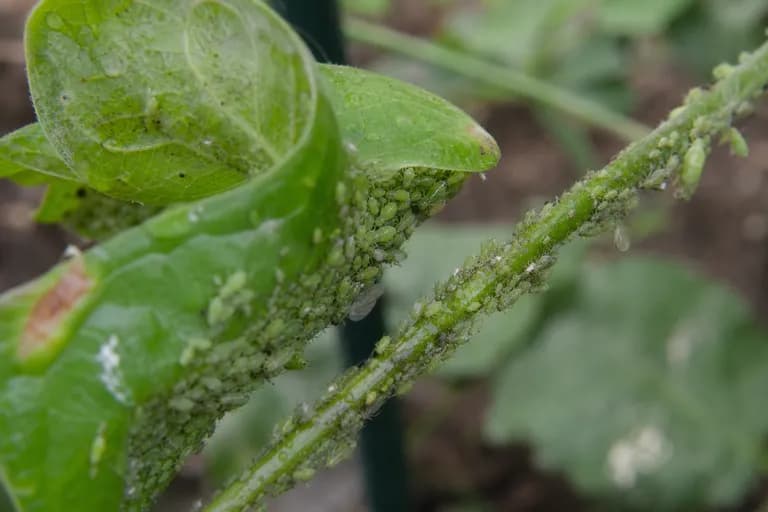
PlagaGrupos de pequeños insectos verdes o rosados en tallos y capullos, melaza pegajosa y crecimiento nuevo deformado.
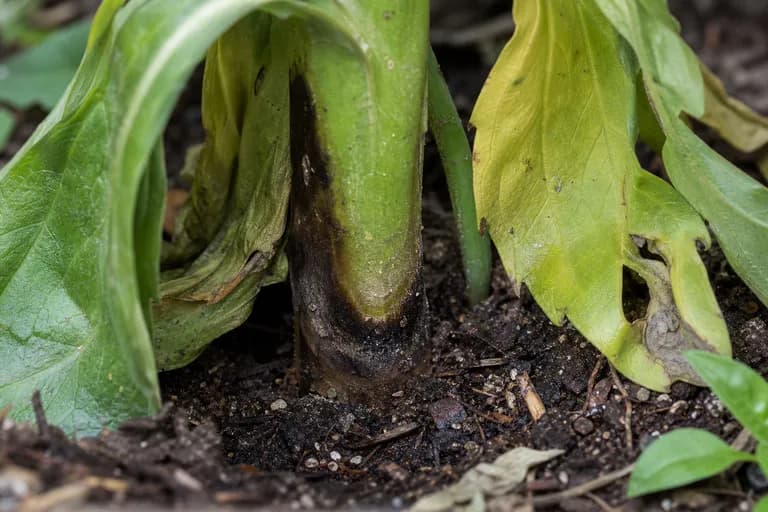
Pudrición de la corona
EnfermedadLas plantas se marchitan de repente a pesar de tener suficiente humedad. La base de los tallos se vuelve marrón y pastosa, a menudo con hilos fúngicos blancos visibles.
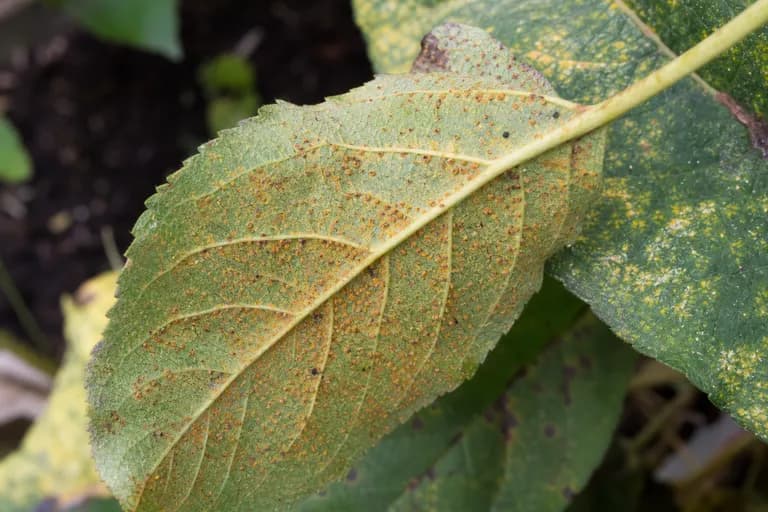
Roya
EnfermedadPústulas marrón anaranjadas en el envés de las hojas, follaje amarillento y caída prematura de hojas.
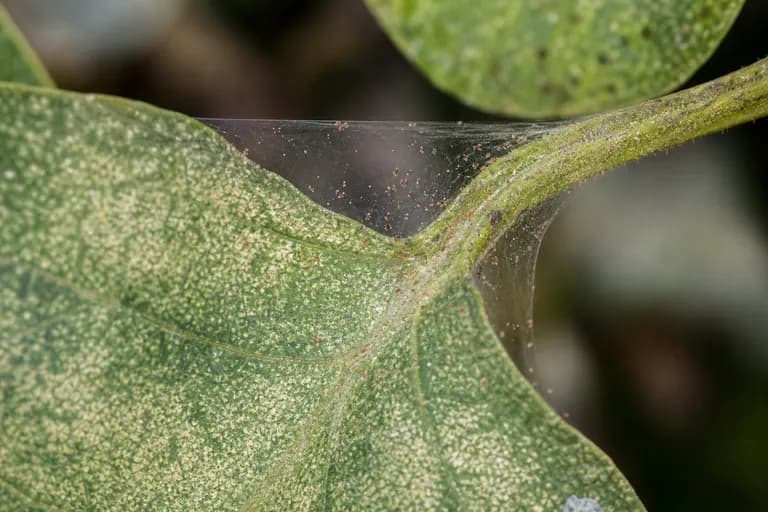
Araña roja
PlagaPunteado fino en las hojas, pequeñas telarañas entre tallos y hojas que se vuelven bronceadas o amarillas con calor y sequedad.
Solución de problemas comunes
El problema más común es la pudrición de tallos y raíces causada por exceso de riego o mal drenaje, especialmente en suelos arcillosos pesados. El dianthus plantado demasiado profundo o con mantillo pegado a la corona es especialmente vulnerable. El crecimiento largo y escaso se debe a poca luz solar o a hacinamiento. En veranos calurosos y húmedos, las plantas pueden dejar de florecer hasta que vuelva el tiempo fresco. Proporcionar sombra por la tarde en las regiones más calurosas ayuda a prolongar la temporada de floración durante el verano.
Consejos de cultivo
- Siembre semillas en interior seis a ocho semanas antes de la última helada para conseguir las primeras flores, o siémbrelas directamente al exterior una vez que la temperatura del suelo alcance los 15 °C.
- Asegure un drenaje excelente enmendando los suelos arcillosos pesados con arena gruesa o perlita. El dianthus es muy susceptible a la pudrición de raíces en condiciones encharcadas.
- Mantenga un pH ligeramente alcalino entre 6.5 y 7.5 para obtener mejores resultados. Añada cal de jardín si su suelo muestra un valor inferior a 6.5.
- Pellizque las puntas de crecimiento de las plantas jóvenes cuando alcancen 10 cm de altura para fomentar la ramificación y un porte más tupido y compacto.
- Quite las flores marchitas cada tres o cuatro días cortando el tallo justo por encima del nudo foliar más cercano. Esta es la forma más eficaz de prolongar el periodo de floración.
- Riegue en la base de la planta en lugar de hacerlo por encima para evitar que enfermedades fúngicas como la botritis y el oídio se desarrollen en el follaje.
- Aplique un fertilizante granular equilibrado de liberación lenta al plantar y compleméntelo con un fertilizante líquido cada dos semanas durante el pico de floración.
- Proporcione sombra por la tarde en regiones donde las temperaturas veraniegas superan con regularidad los 30 °C. El dianthus prefiere noches frescas y dejará de florecer con calor extremo.
- Separe las plantas entre 15 y 20 cm para permitir una circulación de aire adecuada, lo que reduce de forma notable el riesgo de infecciones fúngicas en climas húmedos.
- Cuando recoja pétalos para uso culinario, retire siempre la base blanca de cada pétalo antes de comerlo, ya que esta parte tiene un sabor amargo.
Cultiva tu mejor Dianthus anual — y todo lo que la rodea.
Empieza un plan gratis hoy. Diseña tus bancales, coloca tu Dianthus anual y deja que PlotMyGarden gestione el momento, el espaciado, las asociaciones y los recordatorios de la semilla a la cesta.
Elige tu Dianthus anual
Telstar Mix
Una variedad compacta y tolerante al calor que alcanza de 15 a 20 cm, con una amplia gama de colores, incluidos patrones sólidos y bicolores en rojo, rosa y blanco.
Ideal Select Mix
Serie de floración temprana con flores grandes en plantas compactas, excelente para macizos de primavera y macetas.
Diamond Mix
Presenta pétalos con patrones únicos, ojos contrastantes y bordes desflecados en plantas robustas de unos 20 cm.
Floral Lace Series
Pétalos delicados y muy desflecados en pasteles suaves y patrones picotee, aportando una textura encaje a las borduras del jardín.
Un solo sobre de semillas de dianthus anual cuesta aproximadamente entre 2 y 4 dólares y contiene de 50 a 100 semillas. Cada planta produce docenas de flores comestibles durante una temporada de cuatro meses, proporcionando un suministro constante de adornos decorativos que en tiendas especializadas costarían entre 3 y 5 dólares por envase pequeño. Cultivar su propio dianthus para uso culinario y ornamental puede ahorrar entre 50 y 80 dólares por temporada en comparación con comprar flores cortadas y flores comestibles en floristerías y mercados gourmet.
Recetas rápidas
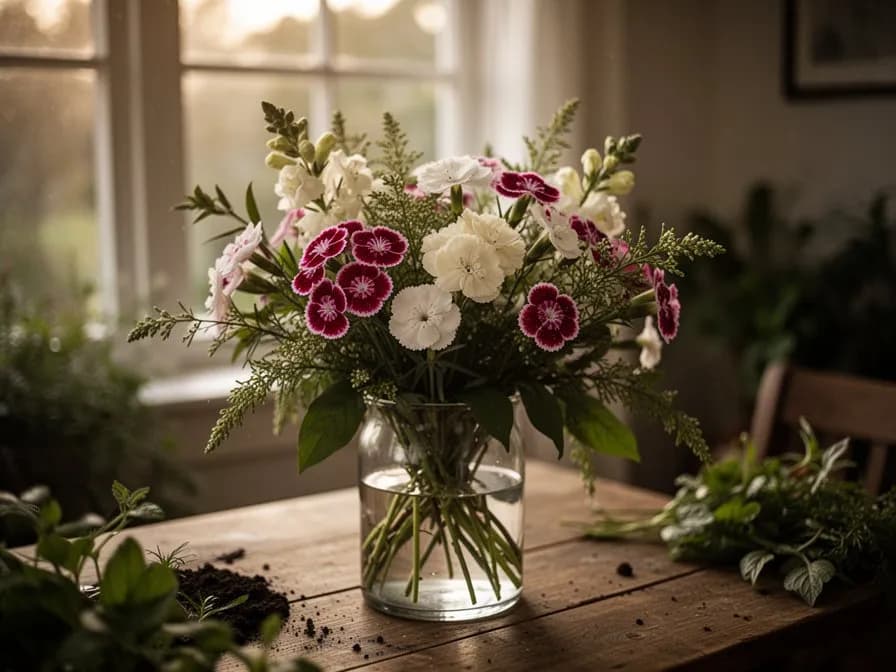
Ensalada de jardín con pétalos de dianthus
10 minutosUna ensalada ligera de primavera con hojas mixtas coronadas con pétalos frescos de dianthus para una guarnición colorida y ligeramente especiada. El sabor parecido al clavo de los pétalos combina maravillosamente con una simple vinagreta de limón.
8 ingredientesAzúcar infusionado con pétalos de dianthus
5 minutos activos, 2 semanas de infusiónAzúcar floral fragante infusionado con pétalos secos de dianthus, perfecto para escarchar copas de cóctel, espolvorear sobre repostería o mezclar en el té. Los pétalos aportan al azúcar un aroma sutil a clavo y canela.
3 ingredientesPétalos de dianthus cristalizados
30 minutos activos, 24 horas de secadoDelicados pétalos de dianthus recubiertos de azúcar que hacen decoraciones comestibles espectaculares para tartas, magdalenas y pasteles. Estos pétalos conservados mantienen bien su color durante varias semanas cuando se almacenan correctamente.
5 ingredientesUsos culinarios
Los pétalos de dianthus son comestibles y tienen un sabor suave, dulce y parecido al clavo. Retire la base blanca y amarga de cada pétalo antes de usarlo. Los pétalos frescos aportan una guarnición colorida a ensaladas, postres, tartas y cócteles. Pueden confitarse con clara de huevo y azúcar para crear decoraciones elegantes. Infunda los pétalos en azúcar, vinagre o almíbar sencillo para darles un toque floral. Use solo flores cultivadas de forma orgánica y que no hayan recibido pesticidas.
Qué contiene
Beneficios para la salud
- Los pétalos de dianthus contienen antocianinas y flavonoides que actúan como antioxidantes, ayudando a neutralizar los radicales libres del cuerpo cuando se consumen como parte de una dieta variada.
- En la medicina tradicional china, Dianthus chinensis se ha usado durante siglos para apoyar la salud del tracto urinario y promover una función renal saludable.
- Los compuestos suaves parecidos al clavo en los pétalos de dianthus, incluido el eugenol, tienen propiedades antiinflamatorias suaves que pueden ayudar a calmar pequeñas molestias digestivas.
- Cultivar y cuidar dianthus ofrece beneficios documentados para la salud mental, ya que los estudios sobre terapia hortícola muestran que el cultivo de flores reduce los niveles de cortisol y mejora el estado de ánimo.
- La agradable fragancia especiada y dulce de las flores de dianthus se ha asociado con la reducción del estrés en prácticas de aromaterapia, proporcionando una estimulación sensorial calmante en el jardín.
- Añadir pétalos comestibles de dianthus a las comidas anima a consumir más ensaladas frescas y alimentos integrales, apoyando de forma indirecta la ingesta nutricional general y hábitos alimentarios saludables.
De dónde viene Dianthus anual
Dianthus chinensis, conocido comúnmente como dianthus anual, clavel chino o pink arcoíris, es originario de las regiones templadas del norte de China, Mongolia, Corea y el sureste de Rusia. La especie se ha cultivado en jardines chinos durante más de dos mil años, lo que la convierte en una de las plantas ornamentales en cultivo continuo más antiguas. Textos chinos antiguos mencionan su uso tanto como planta ornamental de jardín como componente de la medicina herbal tradicional, donde se conocía como 'qu mai' y se valoraba por sus supuestas propiedades diuréticas y antiinflamatorias.
La planta fue introducida en Europa a comienzos del siglo XVIII, donde pronto ganó popularidad entre jardineros y mejoradores. Los obtentores europeos empezaron a cruzar Dianthus chinensis con otras especies del género para producir nuevas formas de color y hábitos de crecimiento. En el siglo XIX ya había docenas de cultivares disponibles, y la planta se había convertido en un elemento básico de los jardines de cabaña y de los parques públicos de Gran Bretaña, Francia y Alemania.
El género Dianthus pertenece a la familia Caryophyllaceae y contiene más de trescientas especies, incluidas los claveles y los sweet williams. Dianthus chinensis se distingue de sus parientes perennes por su hábito compacto anual o bianual y por su tolerancia a temperaturas estivales más cálidas. Los programas modernos de mejora han producido cultivares con mayor tolerancia al calor, una gama de colores más amplia, incluidas combinaciones bicolor y patrones picotee, y periodos de floración más prolongados. Las series Telstar, Ideal y Diamond están entre los grupos de cultivares modernos más populares, seleccionados por su porte uniforme y su floración abundante en macizos y contenedores. Hoy, el dianthus anual se cultiva comercialmente en todo el mundo y sigue siendo una de las plantas de macizo más populares en climas templados y subtropicales.
Dianthus anual: ¿sabías que?
Datos fascinantes sobre Dianthus anual
El nombre del género Dianthus procede de las palabras griegas 'dios', que significa divino, y 'anthos', que significa flor, traducido como 'flor de los dioses', un nombre dado por el botánico griego antiguo Teofrasto.
Dianthus anual: preguntas frecuentes
¿Cuándo debo plantar Dianthus anual?
¿Cuáles son buenas plantas acompañantes para Dianthus anual?
¿En qué zonas de rusticidad puede crecer Dianthus anual?
¿Cuánto sol necesita Dianthus anual?
¿A qué distancia debo espaciar Dianthus anual?
¿Qué plagas y enfermedades afectan a Dianthus anual?
¿Cómo almaceno Dianthus anual después de la cosecha?
¿Cuáles son las mejores variedades de Dianthus anual para cultivar?
¿Qué suelo necesita Dianthus anual?
¿Son seguras para comer las flores del dianthus anual?
¿Por qué mi dianthus dejó de florecer a mitad del verano?
¿Puedo cultivar dianthus anual en macetas?
¿Cómo guardo semillas de mi dianthus anual?
¿El dianthus anual es lo mismo que un clavel?
¿Cuáles son las mejores plantas compañeras para el dianthus anual?
Acabas de leer la teoría. Ahora cultívala en piloto automático.
Todo lo que hace que Dianthus anual sea delicado — el momento, el espaciado, las asociaciones, la ventana de cosecha — es justo lo que PlotMyGarden resuelve por ti, para cada planta de tu huerto.
Un plan que conoce tu clima
Indica tu ubicación una vez. Recibe fechas de siembra, abonado y cosecha basadas en tu última helada real y el pronóstico en vivo — sin adivinar con un sobre genérico.
De la sección “Cuándo plantar”Planificador de bancales de arrastrar y soltar
Diseña bancales sobre una cuadrícula. Cada planta encaja con su espaciado correcto y ves toda la temporada antes de gastar un céntimo en semillas.
De la sección “Cultivo”Conflictos de asociación, detectados a tiempo
Más de 200 buenas y malas combinaciones comprobadas en vivo mientras plantas — para que un error que arruine la temporada nunca llegue a la tierra.
De la sección “Asociaciones”Recordatorios que sí vas a seguir
“Riega las judías.” “Recoge hoy antes de que se pase.” Oportunos, concretos y ligados a las plantas que de verdad cultivas.
De la sección “Cosecha”Escalonado, programado
¿Quieres cosechar seis semanas en vez de seis días? Reparte tus siembras automáticamente y te avisa cuando toca el siguiente lote.
De la sección “Cuándo plantar”Un registro que se vuelve más listo
Cada cosecha que registras le enseña tu huerto. El plan del año que viene parte de lo que de verdad funcionó en tu suelo, no en un manual.
De la sección “Resumen”Planta estos junto a Dianthus anual
Más Anuales
Cultiva tu mejor Dianthus anual — y todo lo que la rodea.
Empieza un plan gratis hoy. Diseña tus bancales, coloca tu Dianthus anual y deja que PlotMyGarden gestione el momento, el espaciado, las asociaciones y los recordatorios de la semilla a la cesta.