Chinesischer Sellerie
Eine dünnstängelige, intensiv aromatische Sellerie-Sorte, die in der chinesischen und südostasiatischen Küche häufig für Pfannengerichte und Suppen verwendet wird.





Auf dieser SeiteÜberblick
Chinesischer Sellerie im Überblick
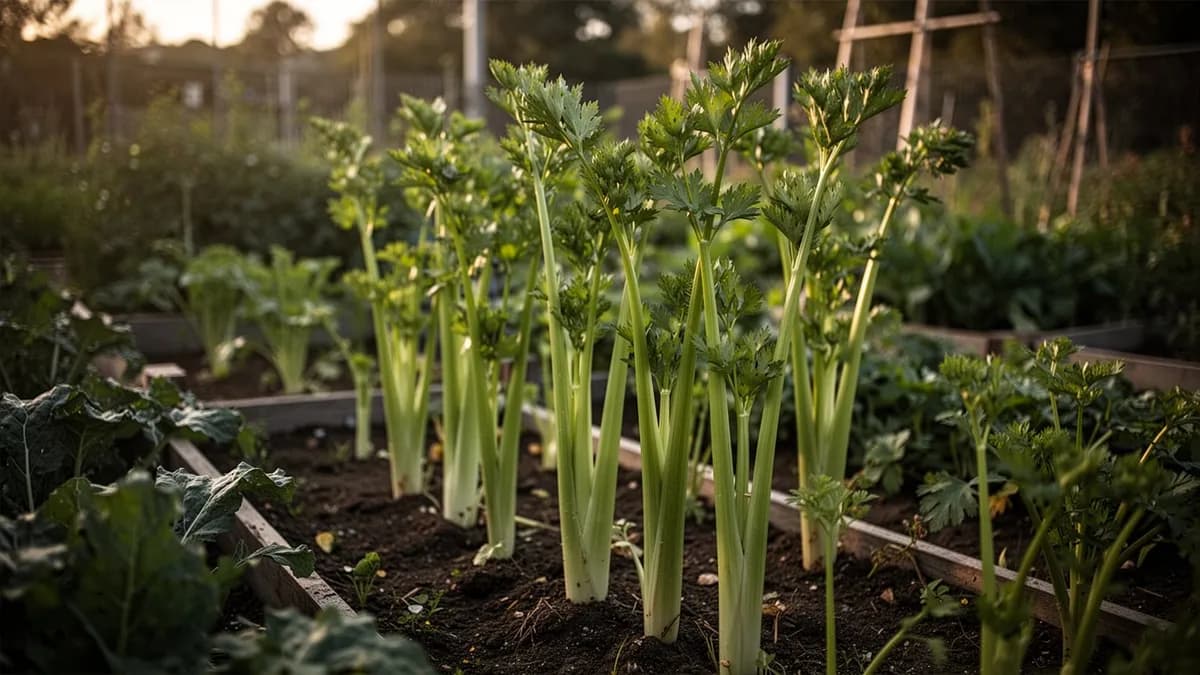
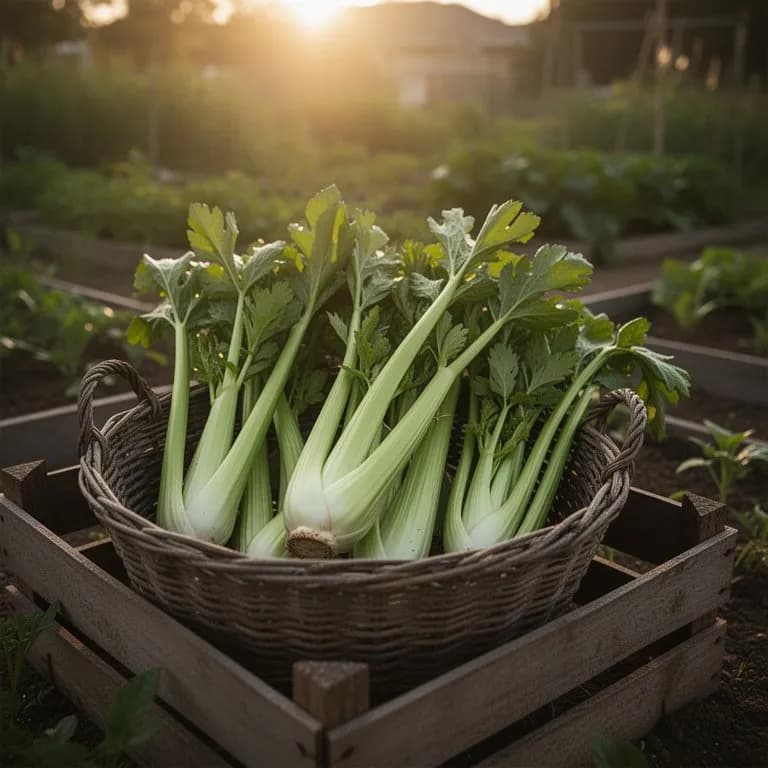
Eine dünnstängelige, intensiv aromatische Sellerie-Sorte, die in der chinesischen und südostasiatischen Küche häufig für Pfannengerichte und Suppen verwendet wird. Die Stängel sind wesentlich schmaler und hohl im Vergleich zu westlichem Sellerie, mit einem kräftigeren, stechenderem Selleriearoma. Die Pflanzen sind einfacher zu kultivieren als westlicher Sellerie, vertragen ein breiteres Spektrum an Bedingungen und reifen schneller. Sowohl Stängel als auch aromatische Blätter werden als frisches Gewürzkraut zum Garnieren von Congee, Nudelsuppen und Pfannengerichten verwendet.
Wann Chinesischer Sellerie pflanzen
Chinesische Sellerie-Samen acht bis zehn Wochen vor dem Auspflanzen ins Freie drinnen aussäen. Samen auf der Oberfläche feiner, feuchter Anzuchterde aussäen und leicht andrücken. Samen nicht bedecken, da sie Licht zur Keimung benötigen. Die Oberfläche regelmäßig besprühen, um gleichmäßige Feuchtigkeit zu gewährleisten. Die Keimung ist langsam und dauert vierzehn bis einundzwanzig Tage bei 18–24 Grad Celsius. Vierzehn bis sechzehn Stunden täglich helles Licht oder Pflanzenlampen bereitstellen. Sämlinge auf 3–5 cm Abstand ausdünnen, wenn sie zwei echte Blätter haben. Vor dem Auspflanzen ins Freie nach dem letzten Frost schrittweise abhärten. Direktsaat im Freien ist in warmen Klimazonen möglich; Samen auf vorbereiteter, feuchter Erde im Halbschatten verteilen.
Dein Chinesischer Sellerie-Jahr
Abgestimmt auf Zone 7 · typische Saison · Frost geht um den 2. Apr. und kehrt um den 1. Nov. zurück
Chinesischer Sellerie Mär – Apr, Aug – Sep pflanzen, Mai – Jun, Okt – Nov ernten. Beachte die Pflanzmethoden unten und wähle dein Klima für passende Zeiträume.
So baust du Chinesischer Sellerie an
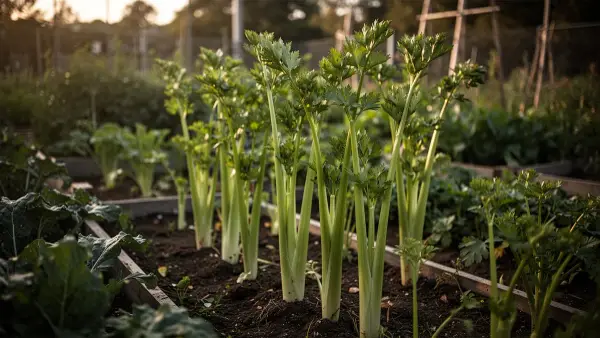
Chinesischer Sellerie ist deutlich einfacher zu kultivieren als sein westliches Gegenstück und verträgt Hitze, Halbschatten sowie weniger ideale Bodenbedingungen. Samen acht bis zehn Wochen vor dem Auspflanzen drinnen aussäen, dabei auf der Oberfläche feuchter Anzuchterde auflegen, da die winzigen Samen Licht zur Keimung benötigen. Leicht andrücken, aber nicht bedecken. Die Keimung ist langsam und dauert vierzehn bis einundzwanzig Tage bei 18–24 Grad Celsius. Die Oberfläche mit einer Sprühflasche gleichmäßig feucht halten.
Sämlinge nach dem letzten Frost ins Freie umpflanzen, wenn sie vier bis sechs echte Blätter haben, mit einem Abstand von 15–20 cm in Reihen mit 25 cm Abstand. Chinesischer Sellerie verträgt Halbschatten und profitiert in heißen Klimazonen tatsächlich von etwas Nachmittagsschatten, da volle Sonne zum Schossen führen kann. Den Boden gleichmäßig feucht halten, da Sellerie aller Sorten regelmäßige Bewässerung benötigt. Pflanzen mulchen, um Feuchtigkeit zu erhalten und die Wurzeln kühl zu halten. Ein ausgewogener flüssiger Dünger, alle zwei Wochen ausgebracht, fördert die kontinuierliche Blattproduktion.
Für eine kontinuierliche Ernte die Schnitt-und-Nachwuchs-Methode anwenden: äußere Stängel an der Basis abschneiden und dabei den zentralen Wachstumspunkt intakt lassen. Die Pflanzen wachsen von einer einzigen Pflanzung mehrmals nach. Alle vier Wochen von Frühjahr bis Spätsommer nacheinander aussäen, um eine ununterbrochene Versorgung zu gewährleisten. In milden Klimazonen kann chinesischer Sellerie ganzjährig angebaut werden. Pflanzen schossen bei heißem Wetter schnell, daher Herbstaussaaten für die beste Winterernte in warmen Regionen vornehmen.
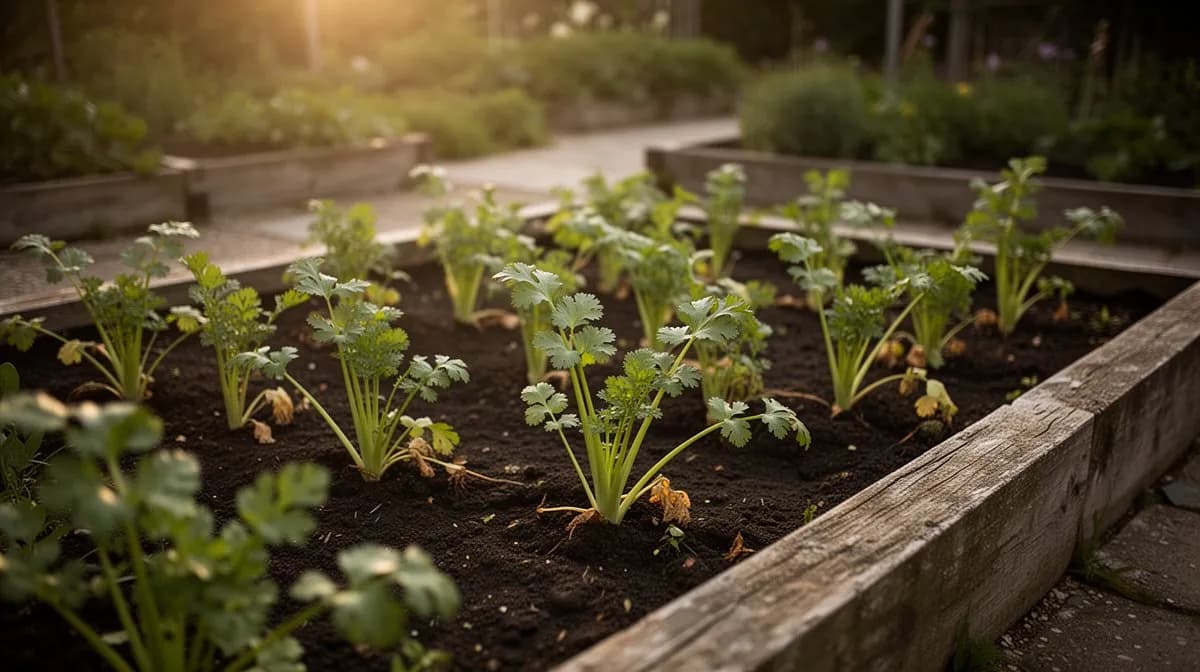
72 Pflanzen passen in ein Beet von 120 × 240 cm
Chinesischer Sellerie braucht 20 cm Platz pro Pflanze. Der Planer hält diesen Abstand für dich ein — jede Pflanze, jedes Beet.
Die besten Nachbarn für Chinesischer Sellerie
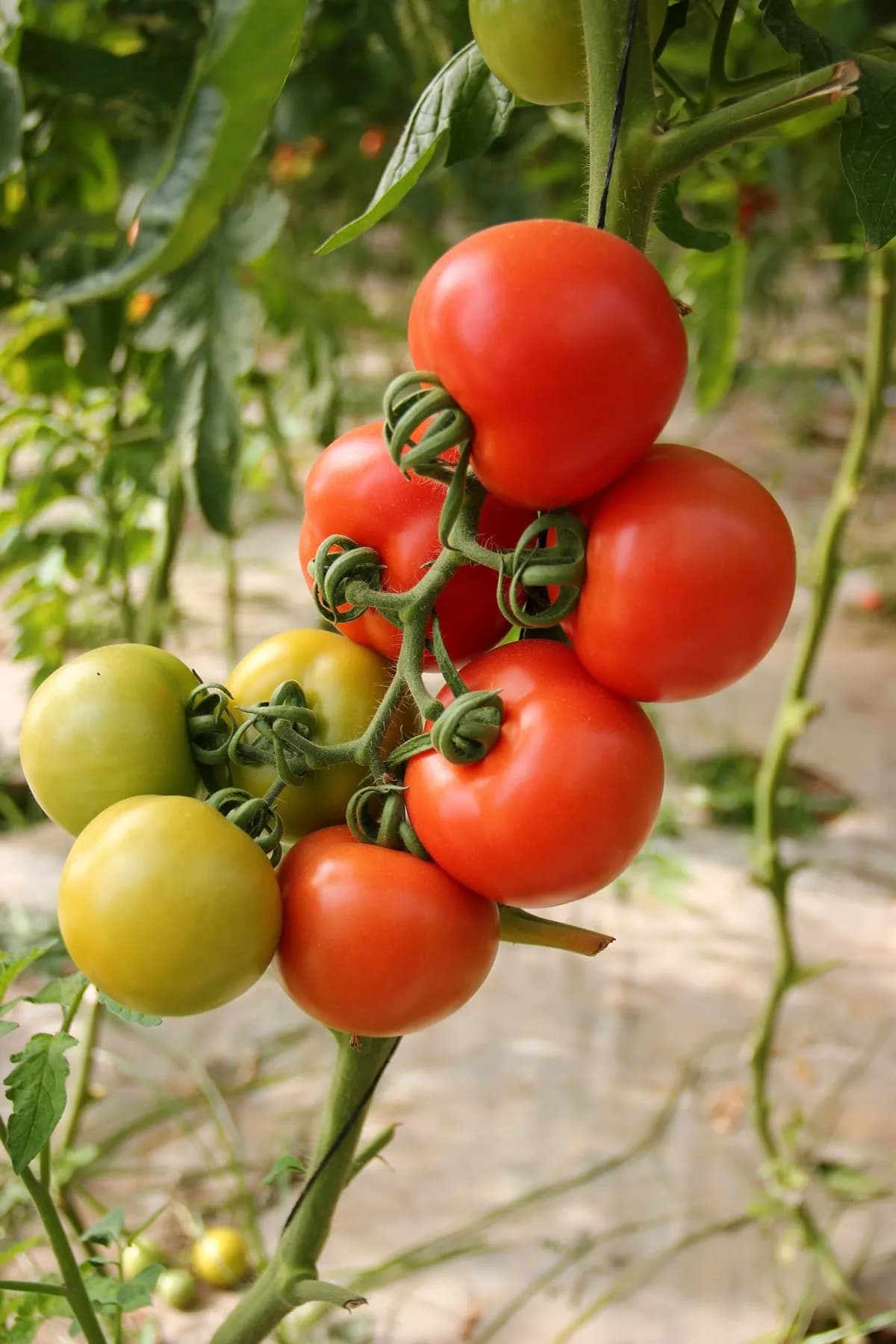
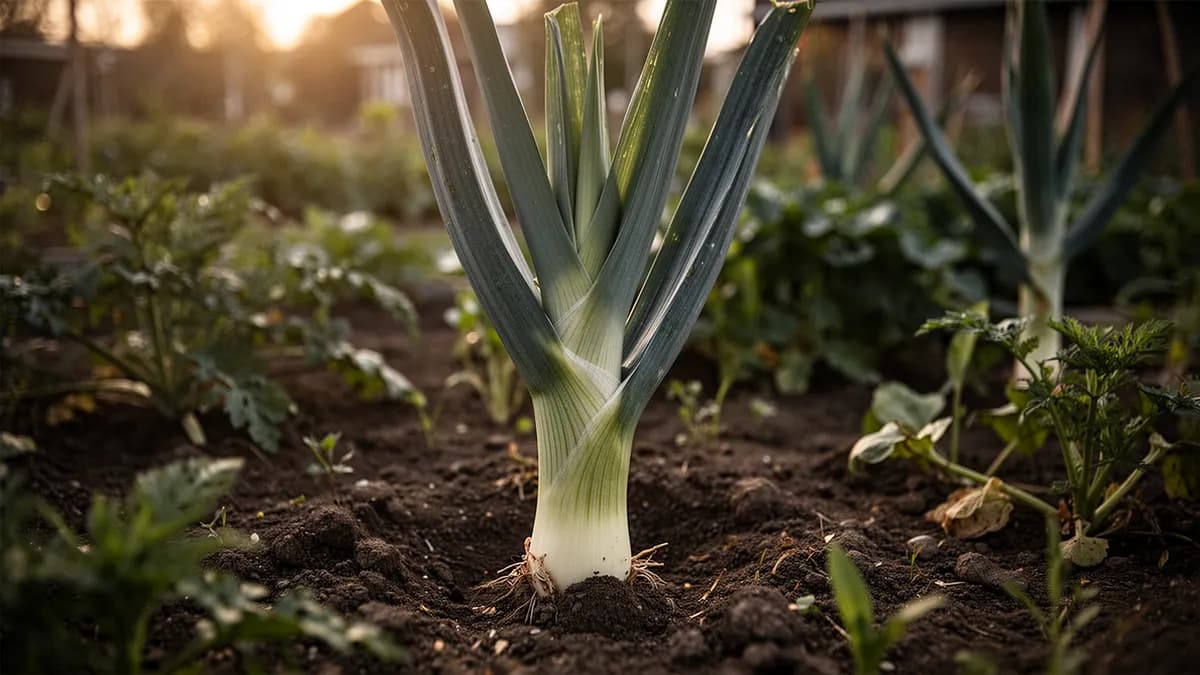
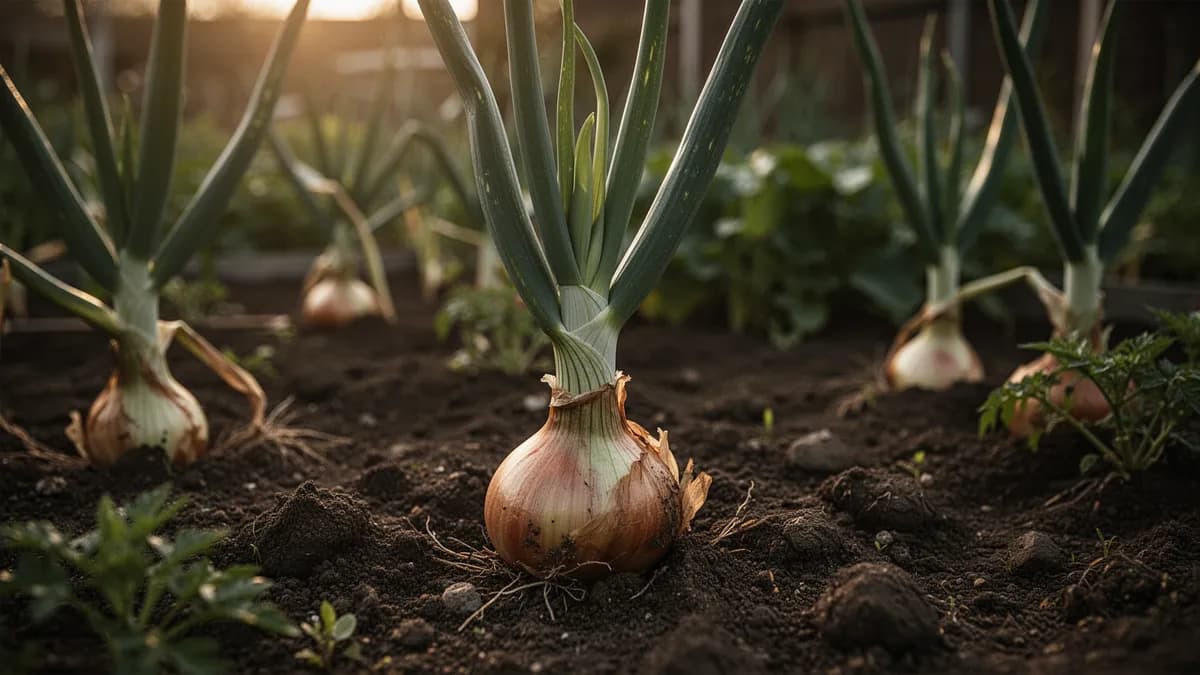
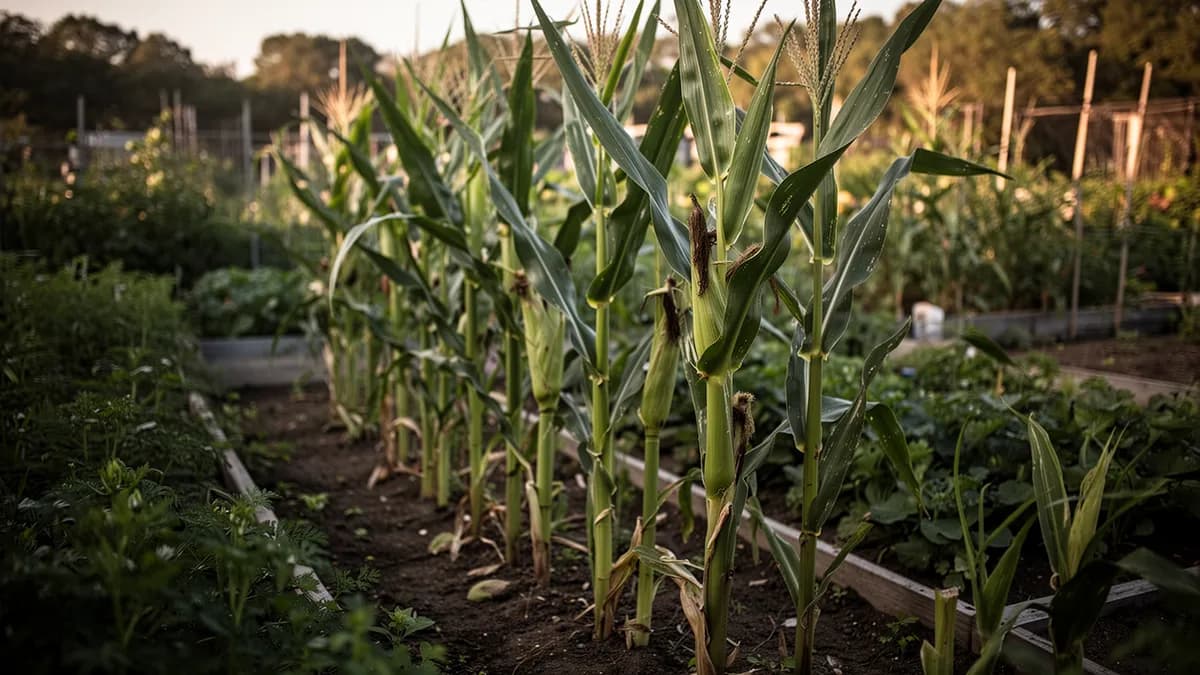
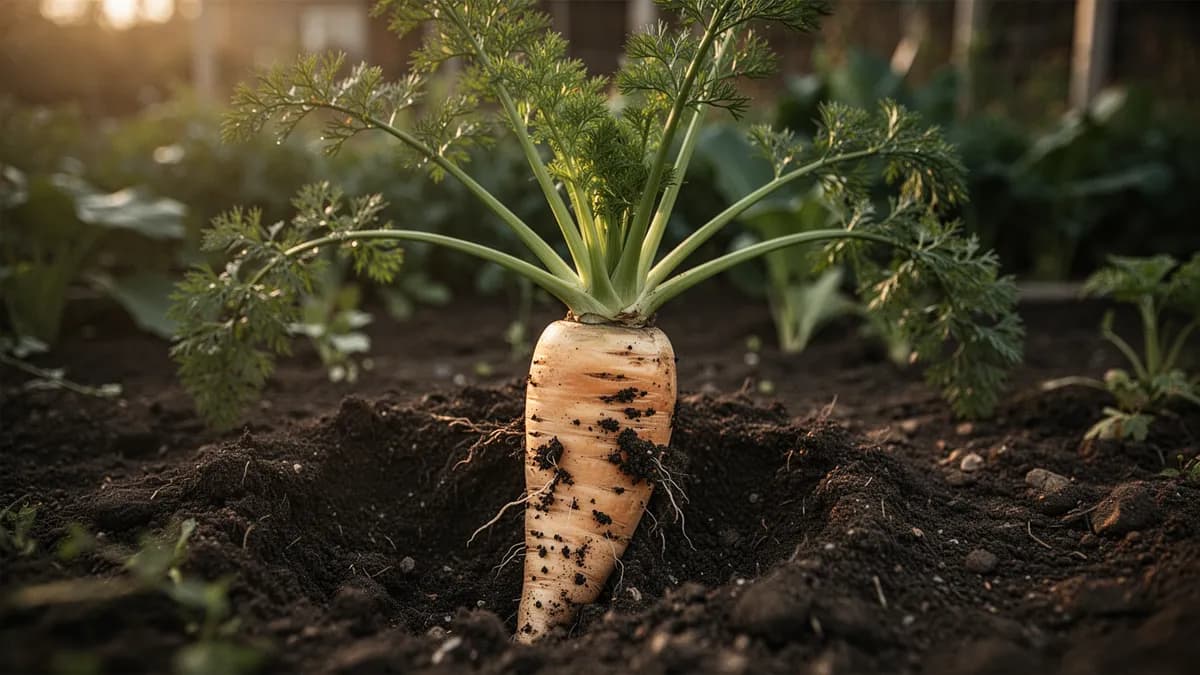
Chinesischer Sellerie harmoniert gut mit Tomaten, die möglicherweise vom starken Sellerieduft profitieren, der bestimmte Schädlinge abschreckt. Zusammen mit Porree und Zwiebeln in einer gegenseitigen Unterstützungsanordnung pflanzen, bei der der Duft jeder Pflanze dabei hilft, Schädlinge zu verwirren, die die andere befallen. Buschbohnen sind gute Begleitpflanzen, die Stickstoff in der Nähe binden, ohne den Sellerie zu beschatten. Kohlgewächse wie Kohl und Blumenkohl wachsen gut neben Sellerie in kühljährigen Gartenbeeten. Vermeiden Sie das Pflanzen in der Nähe von Pastinaken, da diese für die gleichen Schädlinge und Krankheiten anfällig sind. Kräuter wie Dill und Koriander ziehen Nützlinge an, die dabei helfen, Sellerieschädlinge zu bekämpfen. Die kompakte Wuchsform macht chinesischen Sellerie ideal für den Mischanbau.
Tomate gehört daneben. Pastinake nicht.
Altes Gärtnerwissen, geprüft an der echten Nachbartabelle von Chinesischer Sellerie — teste jede Pflanze, die du anbaust.
Probiere Chinesischer Sellerie direkt hier im Beet
Ein echtes Planer-Beet, Chinesischer Sellerie steht schon drin. Tippe einen Begleiter an, platziere ihn und sieh, wie die Nachbarschaftsprüfung antwortet — grün für gute Nachbarn, rot bei Streit.


Passende Anbau-Ratgeber
Richtig düngen
Chinesischer Sellerie gedeiht am besten in fruchtbarem, feuchtigkeitsspeicherndem Boden mit einem pH-Wert von 6,0 bis 7,0. Vor dem Pflanzen großzügige Mengen gut verrotteten Komposts einarbeiten, um sowohl die Fruchtbarkeit als auch die Wasserspeicherkapazität zu verbessern. Im Gegensatz zu westlichem Sellerie verträgt chinesischer Sellerie eine breitere Palette von Bodentypen, einschließlich schwererer Lehmböden, sofern diese nicht vernässt sind. Während des aktiven Wachstums alle zwei Wochen ausgewogenen Flüssigdünger ausbringen. Fischdünger und Algenextrakt sind ausgezeichnete Bio-Optionen, die die kontinuierliche Ernährung liefern, die Sellerie benötigt. Pflanzen mulchen, um kühle, feuchte Wurzelbedingungen aufrechtzuerhalten. Boden nicht austrocknen lassen, da Wasserstress vorzeitiges Schossen auslöst.
Ideale Temperatur
Winterhärtezone-Kompatibilität
Von der Saat zur Ernte, Schritt für Schritt
Anzucht
Chinesische Sellerie-Samen sind extrem klein – zu den winzigsten aller Gemüsearten – und keimen langsam über 14–21 Tage. Samen benötigen Licht zur Keimung und sollten auf der Oberfläche ausgesät oder kaum mit einer feinen Schicht Vermiculit bedeckt werden. Gleichmäßige Feuchtigkeit und Temperaturen von 15–21 °C (60–70 °F) sind unerlässlich. Die Keimung ist unregelmäßig und kann frustrierend langsam sein.
Sämlingsentwicklung
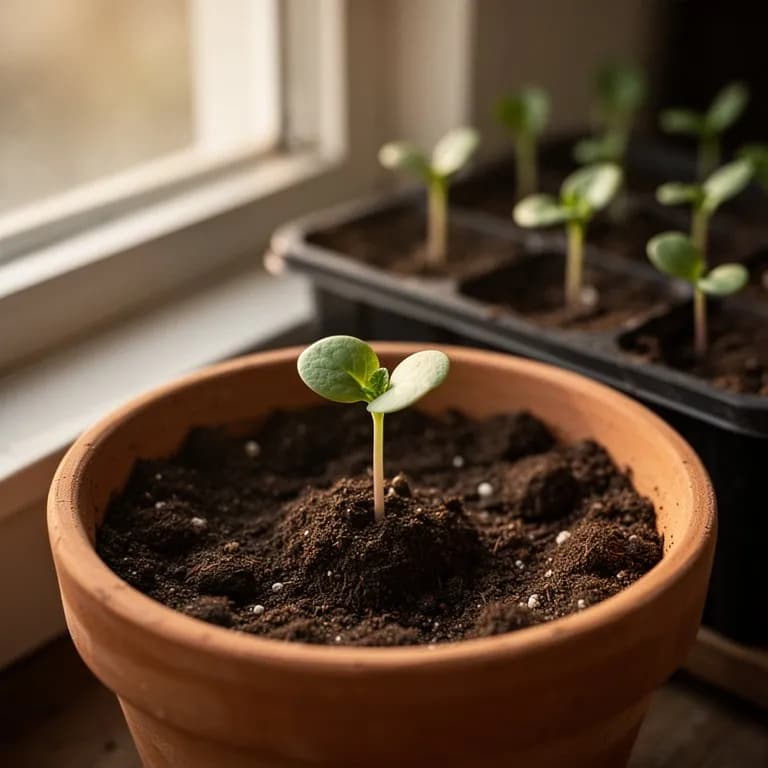
Sämlinge sind äußerst zart mit fadenförmig dünnen Stielen und winzigen ersten echten Blättern, die glattblättriger Petersilie ähneln. Das Wachstum ist in dieser Phase langsam und Sämlinge sind anfällig für Umfallkrankheit, Trockenheit und Temperaturextreme. Das Wurzelsystem ist flach und faserig.
Vegetatives Wachstum
Pflanzen entwickeln mehrere schlanke, hohle Stiele aus dem Herzstück und bilden tief gezähnte, aromatische Blätter. Das Wachstum beschleunigt sich in dieser Phase, während das Wurzelsystem reift. Chinesischer Sellerie bildet eine lockere Rosette statt des festen Kopfes des westlichen Selleries, wobei die Stiele charakteristisch dünn bleiben – typischerweise 5–8 mm im Durchmesser.
Erntephase
Pflanzen erreichen 30–45 cm Höhe mit zahlreichen erntebereiten Stielen für die Schnitt-und-Nachwuchs-Ernte. Äußere Stiele können an der Basis abgeschnitten werden, während das innere Herzstück weiterhin neues Wachstum produziert. Eine einzelne Pflanze kann bei ordnungsgemäßer Pflege über 6–10 Wochen mehrmals geerntet werden.
Verlängerte Produktion
Bei regelmäßiger Ernte und Düngung tritt chinesischer Sellerie in eine anhaltende Produktionsphase ein. Neue Stiele wachsen kontinuierlich aus dem Herzstück nach. Das Aroma intensiviert sich mit zunehmendem Pflanzenwachstum und bei kühlerem Wetter. Pflanzen schossen schließlich, wenn die Tageslänge zunimmt oder die Temperaturen dauerhaft 27 °C (80 °F) überschreiten, und treiben einen Blütenschaft mit kleinen weißen Doldenblüten.
Samen auf der Oberfläche vorgefeichteter Anzuchterde aussäen und leicht andrücken – nicht eingraben. Schalen mit klarer Folie abdecken, um die Luftfeuchtigkeit zu halten, und unter Leuchtstofflampen stellen. Täglich besprühen, um die Oberfläche feucht zu halten, ohne die winzigen Samen zu stören.
Chinesischer Sellerie Monat für Monat pflegen
Was du jeden Monat für deine Chinesischer Sellerie tun solltest
Oktober
Aktueller MonatHaupternte aus Herbstpflanzungen. Geschmack ist bei kühlem Wetter am besten. In den Zonen 7–8 Pflanzen mit Vlies oder Kaltrahmen schützen, um die Saison zu verlängern. Blätter ernten und trocknen für den Einsatz als Sellerie-Gewürzkraut im Winter.
Immer wissen, was jetzt im Garten zu tun ist
Eine E-Mail zum Monatsanfang: was du jetzt säen, pflanzen und anpacken solltest — für deine Chinesischer Sellerie und alles, was drumherum wächst. Dazu ein kurzer Startkurs, der dich vor den klassischen Fehlern bewahrt.
- Was jetzt zu tun ist
- Passend zu deiner Saison
- Startkurs inklusive
Chinesischer Sellerie ernten
Mit der Ernte des chinesischen Selleries beginnen, wenn die Pflanzen 25–30 cm hoch sind, etwa 60 Tage nach dem Auspflanzen. Äußere Stängel mit einer Schere oder einem scharfen Messer an der Basis abschneiden und dabei den zentralen Wachstumspunkt und die inneren Stängel für weitere Produktion stehen lassen. Diese Schnitt-und-Nachwuchs-Methode ermöglicht mehrere Ernten von jeder Pflanze über mehrere Monate. Sowohl die dünnen Stängel als auch die aromatischen Blätter werden in der Küche verwendet. Für eine Bündelernte die gesamte Pflanze 2–3 cm über der Bodenlinie abschneiden und Nachwuchs abwarten. Regelmäßig ernten, um das Schossen zu verhindern und zartes Wachstum zu erhalten. Die Morgenernte liefert die knackigsten und aromatischsten Stängel.
angenommen, du pflanzt zu Beginn des Zeitraums — trage dein tatsächliches Datum ein
Ernte Chinesischer Sellerie zügig, dann trägt die Pflanze weiter.
Lagerung & Konservierung
Frischer chinesischer Sellerie hält sich im Kühlschrank bis zu zwei Wochen, wenn er in feuchte Küchentücher eingewickelt in einer Plastiktüte aufbewahrt wird. Bündel aufrecht in einem Glas Wasser auf der Arbeitsfläche für kurzfristige Lagerung stellen und das Wasser täglich wechseln. Zum Einfrieren Stängel und Blätter hacken und in Eiswürfelformen mit Wasser oder Olivenöl einfrieren. Das intensive Aroma macht chinesischen Sellerie ausgezeichnet zum Trocknen; bei niedrigen Temperaturen trocknen und für ein kräftiges Sellerie-Gewürz zerbröseln, das handelsübliches Selleriesalz bei weitem übertrifft. Mit Ingwer und Knoblauch zu Kräuterpasten verarbeiten, die tiefkühlfertige Pfannengericht-Basis ergeben. Im Gegensatz zu westlichem Sellerie frieren die dünnen Stängel ganz nicht gut ein.
Was schiefgeht — und die Lösung
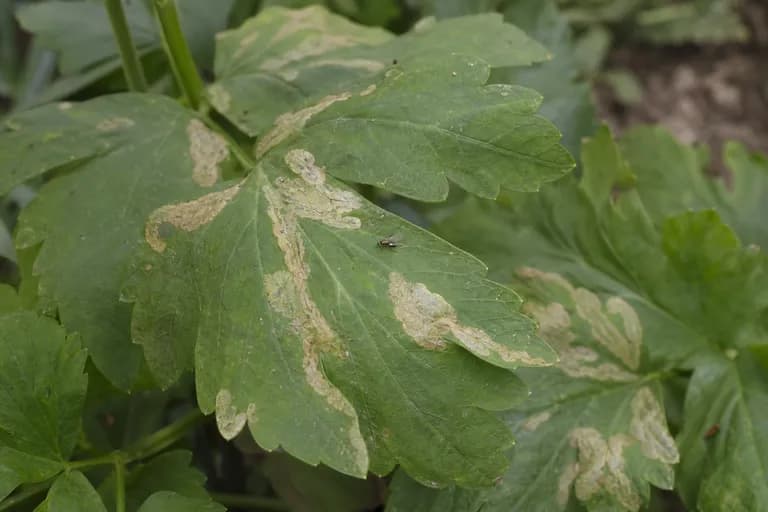
Sellerie-Minierfliege
SchädlingBraune, fleckige Minen in den Blättern, wo die Larven zwischen der oberen und unteren Blattfläche fressen. Stark befallene Blätter trocknen aus und sterben ab.
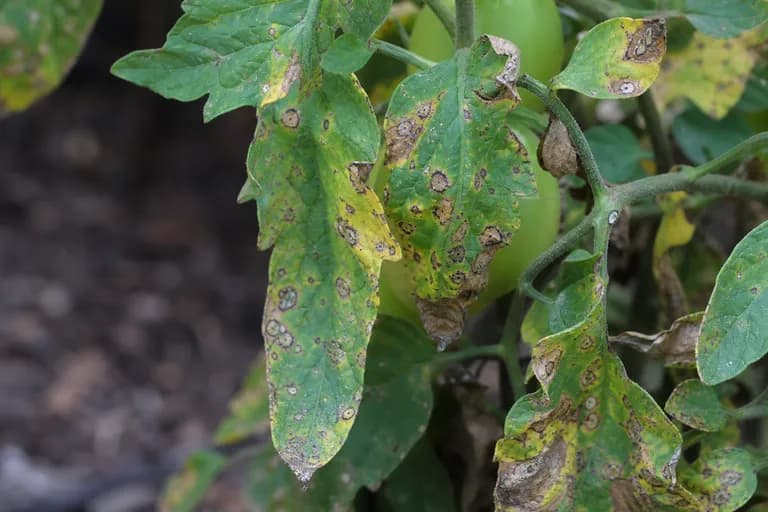
Septoria-Blattfleckenkrankheit
KrankheitKleine braune Flecken mit dunklen Rändern auf Blättern und Stängeln, oft mit winzigen schwarzen Fruchtkörpern, die bei Vergrößerung in der Mitte jedes Flecks sichtbar sind.
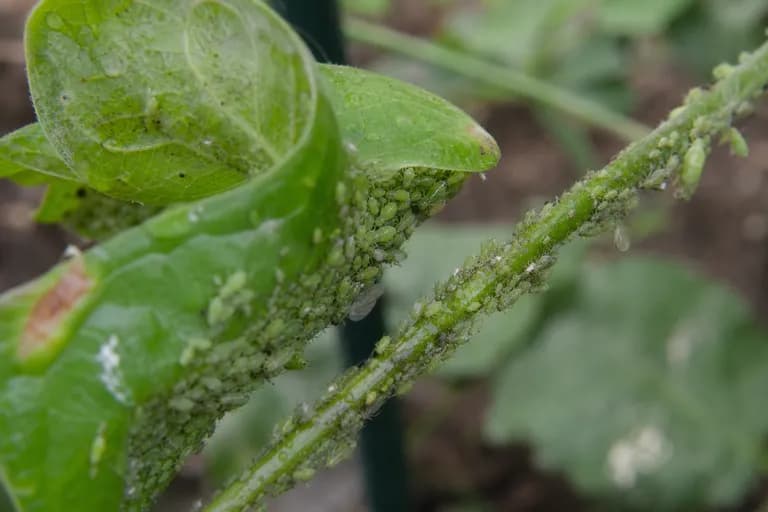
Blattläuse
SchädlingAnsammlungen kleiner grüner oder schwarzer Insekten an Triebspitzen und Blattunterseiten. Verursachen gerollte Blätter, Wachstumshemmung und klebrige Honigtauablagerungen, die Rußtau anziehen.
Fehlerbehebung bei häufigen Problemen
Schossen ist das häufigste Problem, ausgelöst durch heiße Witterung, Trockenstress oder Verpflanzungsschock. Schossfeste Sorten wählen und gleichmäßige Feuchtigkeit aufrechterhalten. Zähe, faserige Stängel entstehen, wenn Pflanzen unter Wasserstress stehen oder überreif sind. Regelmäßig ernten für das zarteste Wachstum. Langsame Keimung frustriert viele Züchter; Geduld bewahren und Saatschalen bis zu drei Wochen lang gleichmäßig feucht halten. Etiolierte Sämlinge entstehen durch unzureichendes Licht. Hohlkern in Stängeln deutet auf Bormangel hin, der mit einer leichten Anwendung von in Wasser gelöstem Borax behoben werden kann. Bitterer Geschmack entwickelt sich bei heißem Wetter; im Sommer im Halbschatten anbauen.
Anbautipps
- Samen drinnen starten und Geduld bewahren – chinesische Sellerie-Samen gehören zu den langsamsten Keimern im Gemüsegarten und brauchen oft 14–21 Tage. Auf feuchter Erde oberflächig aussäen und unter Folie in hellem indirektem Licht halten. Samen nicht eingraben, da sie sonst nicht keimen.
- Den Boden niemals austrocknen lassen. Chinesischer Sellerie hat sich aus Feuchtpflanzen entwickelt und ist extrem trockenheitsempfindlich. Selbst kurze Trockenphasen lösen Schossen, bitteren Geschmack und zähe, faserige Stiele aus. Stark mulchen und gleichmäßig wässern.
- Chinesischen Sellerie in heißen Sommern im Halbschatten anbauen. Anders als die meisten Gemüse gedeiht er in warmen Klimazonen tatsächlich besser mit 4–6 Stunden direkter Sonne statt voller Sonne, die vorzeitiges Schossen und bittere Blätter verursacht.
- Zuerst äußere Stiele ernten und das innere Herzstück zum Regenerieren stehen lassen. Diese Schnitt-und-Nachwuchs-Technik kann den Gesamtertrag im Vergleich zur Einmalernte der gesamten Pflanze verdreifachen. Immer mit einem scharfen Messer an der Basis abschneiden statt zu ziehen.
- Großzügig mit stickstoffreichem Dünger während der gesamten Wachstumssaison düngen. Chinesischer Sellerie ist ein Starkzehrer, der auf regelmäßige Düngung dramatisch reagiert – untergedüngte Pflanzen produzieren dünne, faserige Stiele mit schlechtem Geschmack.
- Alle 3–4 Wochen ab dem frühen Frühling nachsäen für eine ununterbrochene Versorgung. Eine einzelne Pflanzung wird letztendlich schossen oder sich erschöpfen, daher gewährleisten überlappende Pflanzungen, dass immer frischer chinesischer Sellerie verfügbar ist.
- Chinesischer Sellerie ist eine ausgezeichnete Kübelpflanze. In Töpfen mit mindestens 20 cm Tiefe mit reichhaltiger Pflanzerde anbauen, an einem Ort mit Morgensonne und Nachmittagsschatten. Kübelhaltung erleichtert auch das Versetzen der Pflanzen in Schutz während Hitzewellen.
- Samen von den besten Pflanzen sparen – eine oder zwei vollständig schossen lassen und ihre winzigen schirmförmigen Blütenständen ausbilden lassen. Die Samen sind nicht nur für zukünftige Aussaaten verwendbar, sondern auch ein köstliches Sellerie-Gewürz zum Kochen.
Bau deine beste Chinesischer Sellerie an — und alles drumherum.
Starte heute kostenlos. Lege deine Beete an, setze deine Chinesischer Sellerie ein und lass PlotMyGarden Timing, Abstände, Begleiter und Erinnerungen von der Saat bis zum Erntekorb übernehmen.
Finde deine Chinesischer Sellerie
Nan Ling
Eine klassische chinesische Sellerie-Sorte mit schlanken, intensiv aromatischen Stängeln und reichlichem Blattwerk. Schossfest und an warme Wachstumsbedingungen angepasst.
Thailändischer Sellerie
Eine südostasiatische Auswahl mit sehr dünnen, hohlen Stängeln und kräftigem Sellerieduft. Unverzichtbar in thailändischen Suppen und Pfannengerichten.
Kintsai
Der japanische Name für chinesische Sellerie-Sorten, die in Ostasien angebaut werden, mit feinen Stielen und Blättern, die als Garnitur und Gewürzkraut verwendet werden.
Par-Cel
Ein Schnittsellerie ähnlich dem chinesischen Sellerie, aber mit europäischen Ursprüngen. Dünne Stängel und intensiv aromatische flache Blätter werden wie ein Gewürzkraut verwendet.
Eine Packung chinesische Sellerie-Samen (2–4 €) enthält 500–1.000 Samen – genug, um den Jahresbedarf anzubauen. Frischer chinesischer Sellerie kostet 2–4 € pro Bund auf asiatischen Märkten und 4–6 € in westlichen Spezialgeschäften, mit begrenzter Verfügbarkeit außerhalb großer Städte. Der eigene Anbau gewährleistet eine ständige Versorgung mit dieser unverzichtbaren Zutat der asiatischen Küche und erspart Fahrten zu Spezialgeschäften. Zehn Pflanzen in einem kleinen Beet können pro Saison leicht 30–50 € einsparen.
Schnelle Rezepte
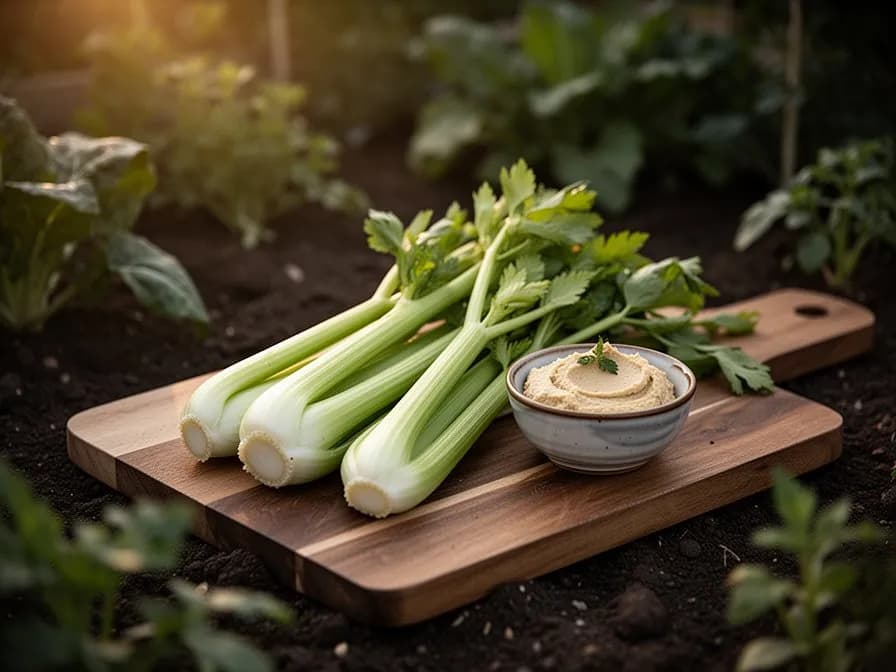
Chinesischer Sellerie mit getrocknetem Tofu im Wok
15 Min.Ein klassisches chinesisches Haushaltsrezept, das den kräftigen pfeffrigen Biss des chinesischen Selleries mit würzigem gepresstem Tofu kombiniert. Schnelles Wok-Kochen bewahrt den charakteristischen Biss und das intensive Aroma des Selleries – ein klassisches Wochentags-Beilage in Ostchina.
8 ZutatenKlare Schweinerippchen-Suppe mit chinesischem Sellerie
45 Min.Eine leichte, stärkende chinesische Suppe, bei der Schweinerippchen zu einer zarten Brühe gesimmert und mit einer großzügigen Handvoll chinesischem Sellerie für frischen, kräuterhaften Duft abgeschlossen werden. Der Sellerie wird in den letzten Minuten zugegeben, um seinen Biss und Geschmack zu bewahren.
7 ZutatenChinesischer Sellerie- und Erdnuss-Salat
10 Min.Ein erfrischendes kaltes Gericht, das in der Sichuan- und nordchinesischen Küche verbreitet ist – blanchierter chinesischer Sellerie mit gerösteten Erdnüssen in einem duftenden Sesam-Essig-Dressing angemacht. Als Vorspeise oder Beilage gekühlt serviert, zeigt es die aromatische Intensität des Selleries.
8 ZutatenKulinarische Verwendung
Chinesischer Sellerie wird in der asiatischen Küche sowohl als Gemüse als auch als aromatisches Gewürzkraut verwendet. Stängel und Blätter für Pfannengerichte mit Tofu, Schweinefleisch oder Meeresfrüchten hacken und in den letzten Minuten des Garens zugeben. In Scheiben geschnittene Stängel und ganze Blätter auf Congee, Nudelsuppen und Hot Pot geben. Fein gehackt als Füllung für Teigtaschen und Wonton zusammen mit Schweinefleisch und Ingwer verwenden. Für einen nährstoffreichen Sellerie-Kick in grüne Smoothies mixen. Blätter als Garnitur für jedes Gericht verwenden, bei dem frischer Selleriegeschmack erwünscht ist. Das intensive Aroma bedeutet, dass eine kleine Menge beim Kochen erhebliche Wirkung entfaltet.
Was drinsteckt
Gesundheitsvorteile
- Enthält 3-n-Butylphthalid (3nB), eine Verbindung, die in Studien gezeigt hat, dass sie die glatte Muskulatur der Blutgefäße entspannen und möglicherweise den Blutdruck senken kann – die wissenschaftliche Grundlage für die jahrhundertealte Verwendung von Sellerie in der traditionellen chinesischen Medizin bei Bluthochdruck.
- Außergewöhnlich reich an Vitamin A als Beta-Carotin, das fast 90 % des Tageswerts pro 100 g liefert – unerlässlich für die Aufrechterhaltung gesunder Sehkraft, Hautintegrität und robuster Immunreaktion.
- Reich an Apigenin, einem Flavonoid mit nachgewiesenen entzündungshemmenden Eigenschaften, das chronische Entzündungen reduzieren kann und in vorläufigen Krebsforschungsstudien vielversprechende Ergebnisse gezeigt hat.
- Sehr geringe Kaloriendichte (16 Kalorien pro 100 g) mit bedeutsamem Ballaststoffgehalt, was chinesischen Sellerie zu einem ausgezeichneten Lebensmittel für das Gewichtsmanagement und die Blutzuckerregulierung macht.
- Enthält Luteolin, ein antioxidatives Flavonoid, das die Gehirngesundheit unterstützen kann, indem es Neuroinflammation reduziert – frühe Forschungen deuten auf potenzielle neuroprotektive Wirkungen hin.
- Liefert natürliche Nahrungsnitrate, die der Körper in Stickstoffmonoxid umwandelt und damit die kardiovaskuläre Gesundheit unterstützt, indem es einen gesunden Blutfluss und vaskuläre Flexibilität fördert.
Woher Chinesischer Sellerie stammt
Chinesischer Sellerie (Apium graveolens var. secalinum) stammt vom wilden Sellerie ab, einer Sumpfpflanze, die ursprünglich im Mittelmeerraum und in Teilen Westasiens beheimatet ist. Obwohl er zur selben Art wie westlicher Sellerie (Apium graveolens var. dulce) gehört, nahm chinesischer Sellerie einen völlig anderen Domestizierungsweg, der die intensiven aromatischen Eigenschaften der Pflanze bewahrte, anstatt für dicke, milde Stiele zu selektieren. Archäologische und schriftliche Belege legen nahe, dass Sellerie in China bereits um mindestens 1000 v. Chr. kultiviert wurde, möglicherweise früher, mit Verweisen in alten chinesischen landwirtschaftlichen Texten, die seine Verwendung sowohl als Nahrung als auch als Medizin beschreiben.
Jahrtausendelang wurde chinesischer Sellerie in erster Linie als Heilkraut geschätzt, bevor er zu einem kulinarischen Grundnahrungsmittel wurde. Texte der traditionellen chinesischen Medizin aus der Han-Dynastie (206 v. Chr. bis 220 n. Chr.) empfehlen Sellerie-Zubereitungen zur Reduzierung von Körperhitze, zur Beruhigung der Leber und zur Senkung des Blutdrucks – Anwendungen, die in der chinesischen Kräuterpraxis bis heute fortbestehen. Die dünnen, hohlen Stiele und die kräftig aromatischen Blätter der Pflanze wurden gerade wegen ihres starken Geschmacks geschätzt, im krassen Gegensatz zu europäischen Züchtungsprogrammen, die Jahrhunderte damit verbrachten, für mildere, dickere Stiele zu selektieren.
Heute ist chinesischer Sellerie eines der am weitesten verbreiteten und konsumierten Blattgemüse in Ost- und Südostasien. Er ist in der chinesischen, thailändischen, vietnamesischen und malaysischen Küche unverzichtbar und erscheint in Pfannengerichten, Suppen, Salaten, Teigtaschen und als Abschlussgarnitur. China bleibt mit weitem Abstand der größte Produzent und baut den überwiegenden Teil der weltweiten Selleriernte an. Die Pflanze erfreut sich wachsendem Interesse von westlichen Gärtnern und Köchen, die ihr konzentriertes Aroma, die im Vergleich zu westlichem Sellerie einfachere Kultivierung und die Vielseitigkeit als Gemüse und Gewürzkraut schätzen.
Chinesischer Sellerie: Schon gewusst?
Faszinierende Fakten über Chinesischer Sellerie
Chinesischer Sellerie (Apium graveolens var. secalinum) steht dem wilden Sellerie wesentlich näher als die dickstängelige westliche Sorte – er bewahrt das intensive, fast pfeffrige Aroma, das selektive Züchtung über Jahrhunderte der europäischen Kultivierung aus dem Supermarkt-Sellerie entfernt hat.
Chinesischer Sellerie: Fragen & Antworten
Wann sollte ich Chinesischer Sellerie pflanzen?
Was sind gute Begleitpflanzen für Chinesischer Sellerie?
In welchen Winterhärtezonen kann Chinesischer Sellerie wachsen?
Wie viel Sonne braucht Chinesischer Sellerie?
Welchen Abstand sollte ich zwischen Chinesischer Sellerie lassen?
Welche Schädlinge und Krankheiten befallen Chinesischer Sellerie?
Wie lagere ich Chinesischer Sellerie nach der Ernte?
Was sind die besten Chinesischer Sellerie-Sorten zum Anbauen?
Welchen Boden braucht Chinesischer Sellerie?
Was ist der Unterschied zwischen chinesischem Sellerie und normalem Sellerie?
Warum schosst mein chinesischer Sellerie immer wieder?
Kann ich chinesischen Sellerie als Ersatz für westlichen Sellerie in Rezepten verwenden?
Wie lagere ich chinesischen Sellerie, um ihn frisch zu halten?
Ist chinesischer Sellerie im Vergleich zu westlichem Sellerie einfach anzubauen?
Kann ich chinesischen Sellerie drinnen anbauen?
Du hast die Theorie gelesen. Jetzt baue sie auf Autopilot an.
Alles, was Chinesischer Sellerie knifflig macht — das Timing, die Abstände, die Begleiter, das Erntefenster — genau das übernimmt PlotMyGarden für dich, für jede Pflanze im Garten.
Ein Plan, der dein Wetter kennt
Standort einmal festlegen. Aussaat-, Dünge- und Erntedaten rund um deinen echten letzten Frosttermin und die Live-Vorhersage — kein Raten mehr nach Saattüte.
Aus dem Abschnitt „Pflanzzeit“Beetplaner per Drag & Drop
Beete auf einem Raster gestalten. Jede Pflanze rastet im richtigen Abstand ein, und du siehst die ganze Saison, bevor du einen Cent für Saatgut ausgibst.
Aus dem Abschnitt „Anbau“Begleiter-Konflikte früh erkannt
Über 200 gute und schlechte Kombinationen werden beim Pflanzen live geprüft — so landet ein saisonruinierender Fehler nie in der Erde.
Aus dem Abschnitt „Begleiter“Erinnerungen, nach denen du wirklich handelst
„Gieß die Bohnen.“ „Heute ernten, bevor's umschlägt.“ Pünktlich, konkret und auf deine echten Pflanzen bezogen.
Aus dem Abschnitt „Ernte“Staffel-Aussaat, geplant
Sechs Wochen ernten statt sechs Tage? Die App verteilt deine Aussaaten automatisch und erinnert dich, wenn der nächste Satz fällig ist.
Aus dem Abschnitt „Pflanzzeit“Ein Verlauf, der schlauer wird
Jede protokollierte Ernte bringt der App deinen Garten bei. Der Plan fürs nächste Jahr startet bei dem, was in deinem Boden wirklich funktioniert hat.
Aus dem Abschnitt „Überblick“Pflanze diese neben Chinesischer Sellerie
Weitere Stängel & Stiele
Halte Chinesischer Sellerie von diesen fern
Bau deine beste Chinesischer Sellerie an — und alles drumherum.
Starte heute kostenlos. Lege deine Beete an, setze deine Chinesischer Sellerie ein und lass PlotMyGarden Timing, Abstände, Begleiter und Erinnerungen von der Saat bis zum Erntekorb übernehmen.