Cereza Bing
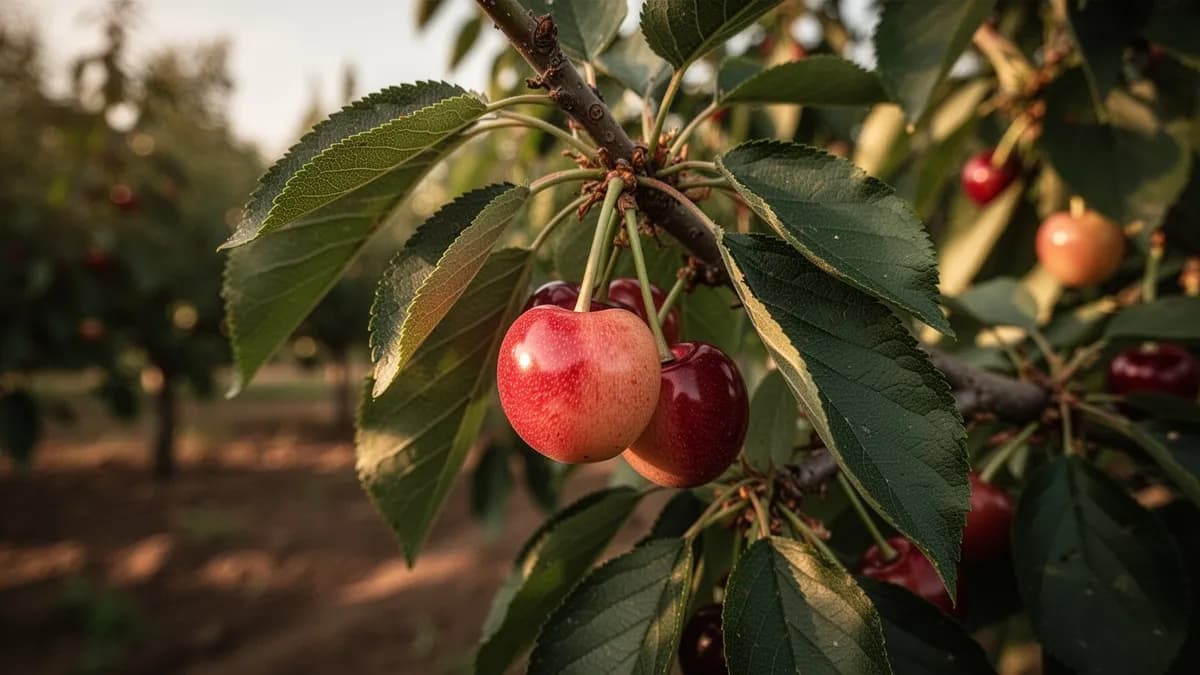
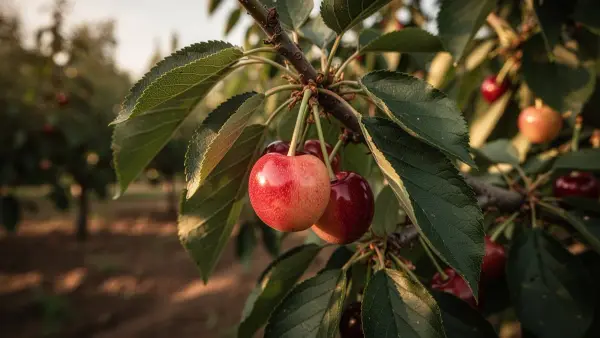
La clásica variedad de cereza dulce de color rojo oscuro, que produce frutos grandes, firmes y de sabor intenso, considerados el estándar para el consumo en fresco.





En esta páginaResumen
Conoce Cereza Bing
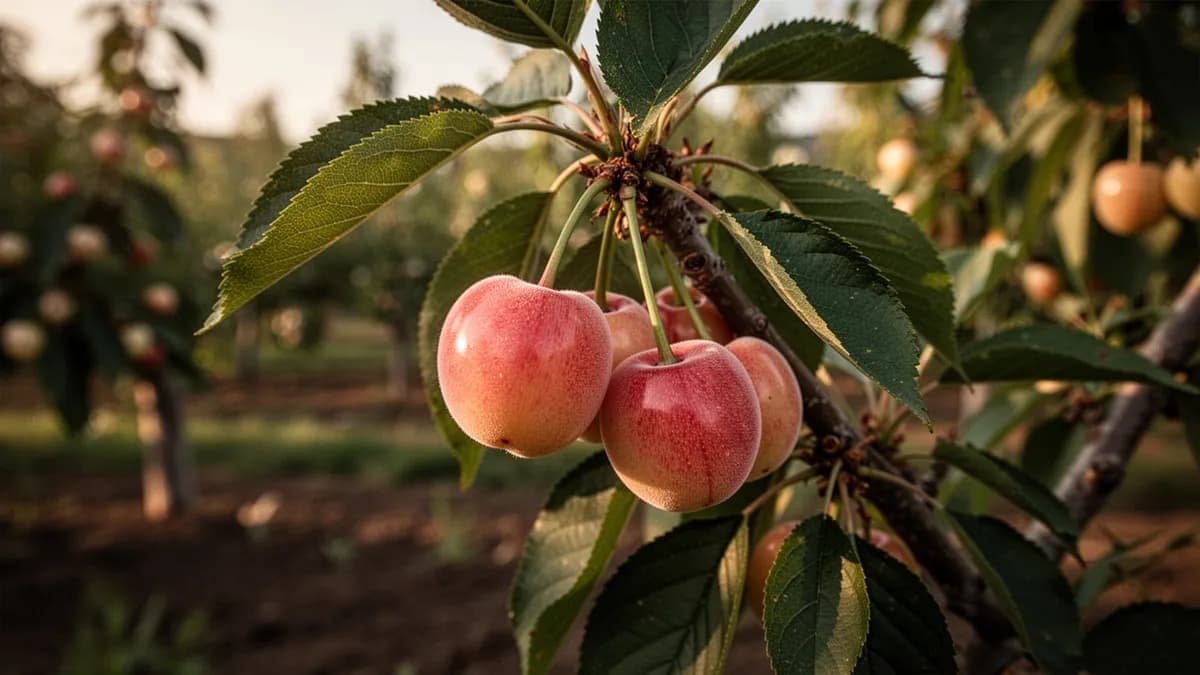
La clásica variedad de cereza dulce de color rojo oscuro, que produce frutos grandes, firmes y de sabor intenso, considerados el estándar para el consumo en fresco. Las cerezas Bing necesitan cerca una variedad polinizadora compatible, como Rainier o Lapins, para cuajar fruto. Los árboles requieren 700-800 horas de frío y suelo bien drenado, y se benefician de cubiertas contra la lluvia durante la maduración para evitar que se agrieten.
Cuándo plantar Cereza Bing
Las cerezas Bing se propagan por injerto sobre portainjertos, no por semilla, ya que las plántulas no conservan las características de la variedad. Si cultiva a partir del hueso para obtener portainjertos, recoja los huesos de frutos maduros, límpielos bien y estratifíquelos en arena húmeda a 0-4 °C durante 90-120 días. Siembre las semillas estratificadas a una profundidad de 2.5 cm en primavera. Las plántulas emergen en 2-3 semanas y deben cultivarse durante un año antes de injertar. Para el injerto de púas de Bing se prefieren portainjertos Gisela 5 o Mazzard.
Tu año de Cereza Bing
Ajustado a Zona 7 · temporada típica · la helada se va hacia el 2 abr y vuelve hacia el 1 nov
Planta Cereza Bing Feb – Mar y cosecha Jun – Jul. Consulta los métodos de plantación y elige tu clima para adaptar los periodos.
Cómo cultivar Cereza Bing
Los cerezos Bing prosperan en un suelo franco profundo y bien drenado, con un pH de 6.0-7.0. Plante árboles a raíz desnuda a finales del invierno, cuando estén en reposo, dejando entre 6 y 7.5 metros para árboles de porte estándar o entre 3 y 3.5 metros sobre portainjertos de escaso vigor como Gisela 5. Como Bing es autoincompatible, debe plantar una variedad polinizadora compatible, como Rainier, Lapins o Van, dentro de 15 metros para lograr una polinización cruzada adecuada.
Riegue a fondo una vez por semana durante la temporada de crecimiento, reduciendo la frecuencia a medida que los frutos se acercan a la madurez para minimizar el agrietamiento. Las cerezas Bing necesitan 700-800 horas de frío por debajo de 7 °C para romper correctamente la dormancia. Forme los árboles jóvenes en un sistema de vaso abierto o de eje central modificado, haciendo las podas estructurales a finales del invierno. Evite la poda fuerte en verano, ya que puede favorecer el cancro bacteriano.
Abone a comienzos de la primavera con un fertilizante equilibrado antes de la brotación. Proteja la fruta en maduración de las aves con mallas y considere cubiertas contra la lluvia o techados de plástico para evitar el agrietamiento causado por la lluvia. Vigile la podredumbre parda durante las primaveras húmedas y aplique fungicidas preventivos en la floración y en la caída de pétalos.
Para Cereza Bing un bancal de 120 × 240 cm se queda corto
Cada Cereza Bing pide 500 cm de margen. El planificador guarda ese marco por ti — cada planta, cada bancal.
Los mejores vecinos de Cereza Bing
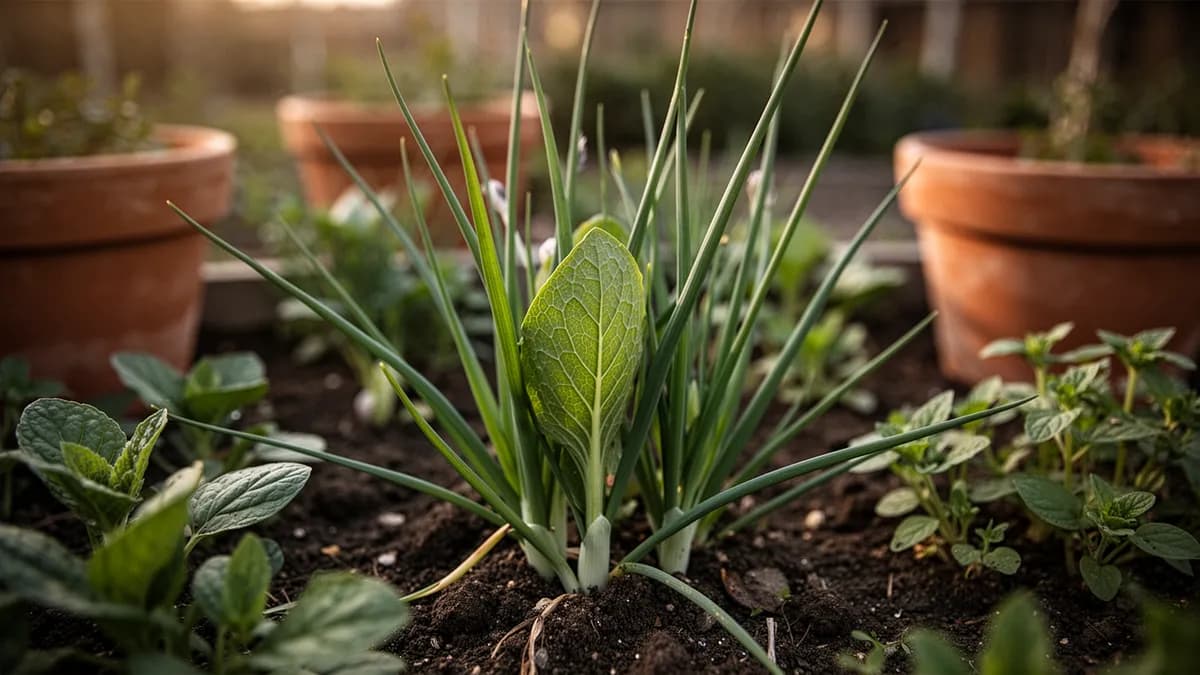
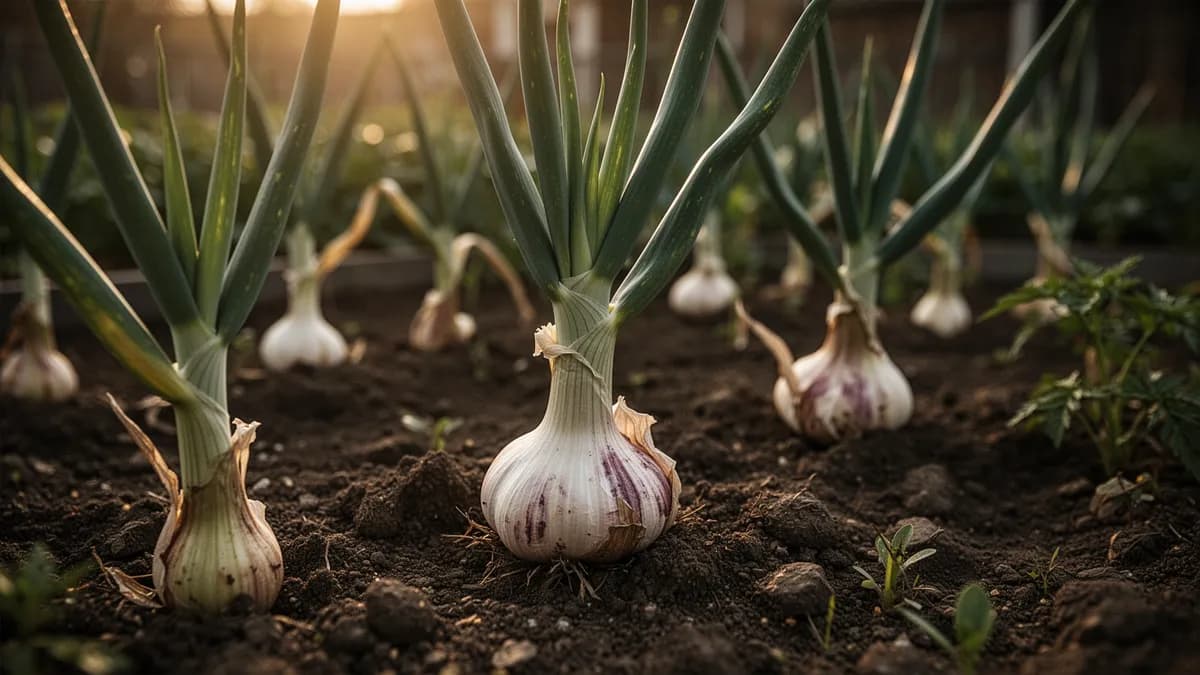
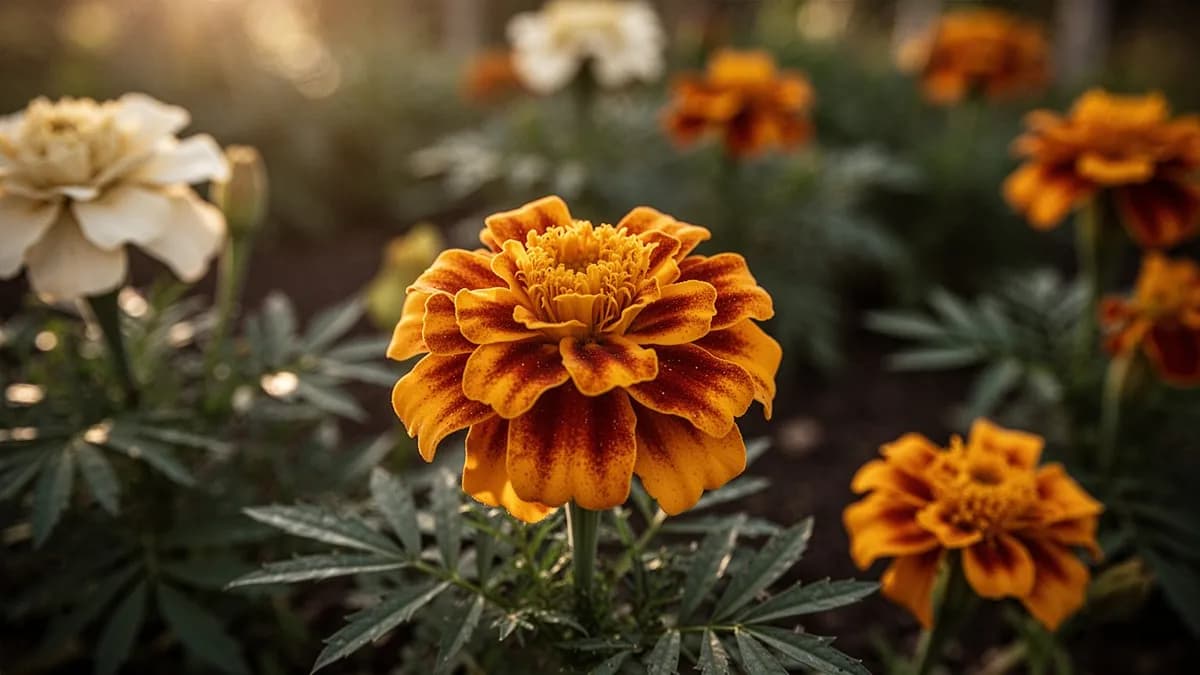
Plante cebollino, ajo o aliáceas cerca para ahuyentar pulgones y barrenadores con su fuerte aroma. Las caléndulas atraen insectos beneficiosos y repelen nematodos. La consuelda plantada en la línea de goteo actúa como acumulador dinámico de nutrientes y cultivo para acolchado. Evite plantar cerca de nogales por la toxicidad de la juglona. Las capuchinas pueden servir como cultivo trampa para pulgones, alejándolos del follaje del cerezo.
Cebollino va a su lado. Nogal no.
Saber de huerto de siempre, cotejado con la tabla real de Cereza Bing — prueba cualquier planta que cultives.
Prueba Cereza Bing en un bancal, aquí mismo
Un bancal real del planificador con Cereza Bing ya plantado. Toca una planta compañera para colocarla y mira cómo responde la comprobación de vecinos: verde para buenos vecinos, rojo si hay conflicto.


Guías de cultivo relacionadas
Abónalo bien
Las cerezas Bing necesitan un suelo bien drenado y no toleran las condiciones encharcadas, que provocan podredumbre radicular. El suelo ideal es un franco arenoso profundo, con pH de 6.0-7.0. Aplique a comienzos de la primavera un fertilizante equilibrado 10-10-10 a razón de una libra por pulgada de diámetro del tronco. Añada calcio para favorecer frutos firmes y reducir el agrietamiento. Acolche con 3-4 pulgadas de virutas de madera, manteniéndolas alejadas del tronco para conservar la humedad y suprimir las malas hierbas.
Temperatura ideal
Compatibilidad de zonas de rusticidad
De la semilla a la cosecha, etapa por etapa
Reposo invernal y acumulación de horas de frío
El cerezo Bing permanece completamente sin hojas y en reposo durante el invierno, con todo el crecimiento visible suspendido. Bajo la superficie, las raíces siguen ligeramente activas y extraen humedad del suelo. De forma crítica, el árbol va acumulando las horas de frío que necesita: Bing requiere aproximadamente 700-800 horas por debajo de 7 °C antes de romper la dormancia y florecer con fiabilidad. Sin frío suficiente, los Bing producen una floración irregular, mal sincronizada o escasa, y el cuajado se resiente de forma importante. Esta fase explica por qué Bing rinde mejor en regiones con inviernos fríos y definidos, no en climas marítimos suaves.
Brotación y floración
A medida que las temperaturas suben a mediados de la primavera, las yemas de Bing se hinchan rápidamente y estallan en racimos de flores blancas de cinco pétalos antes de que las hojas emerjan por completo. La floración suele durar 10-14 días y es de una belleza impresionante. Esta ventana es absolutamente crítica: Bing no es autofértil y necesita polen de una variedad polinizadora compatible, como Lapins, Black Tartarian, Rainier o Van, que florezca al mismo tiempo y esté dentro de 15-30 metros. Sin polinización cruzada, las flores caerán sin cuajar fruto. Las heladas tardías durante esta fase pueden arruinar la cosecha de una temporada en una sola noche.
Cuajado y desarrollo del fruto joven
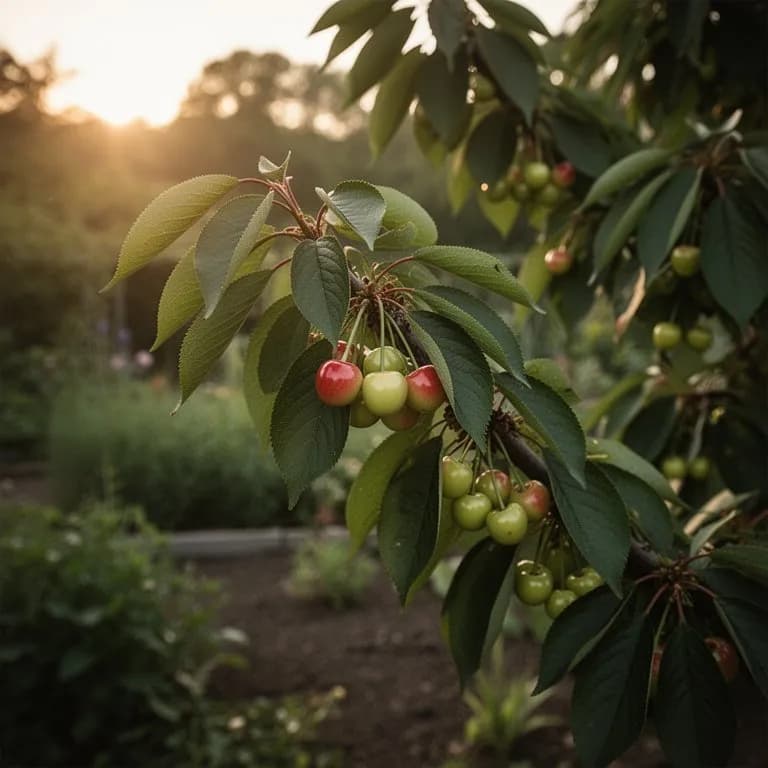
Tras una polinización exitosa, los pétalos caen y pequeños frutitos verdes comienzan a desarrollarse en la base de cada flor fecundada. Al mismo tiempo, el árbol emite toda su copa de hojas, que alimentará el desarrollo del fruto mediante la fotosíntesis durante el resto de la temporada. Los frutitos no polinizados caen de forma natural, lo cual es normal. Los que permanecen crecen de manera constante, aunque lenta, y siguen duros y verdes. La demanda de agua y nutrientes del árbol aumenta rápidamente en esta fase, mientras equilibra el crecimiento vegetativo con el desarrollo del fruto.
Expansión rápida del fruto y desarrollo del color
Las cerezas Bing entran en una fase de crecimiento rápido y visible a medida que sus células se expanden con rapidez. El fruto pasa del tamaño de un guisante a casi su tamaño final en unas semanas y comienza a cambiar de duro y verde a amarillo verdoso, y luego al primer rubor rojo. En las dos o tres semanas finales antes de la cosecha, la acumulación de azúcares se acelera de forma notable y se desarrolla el característico color caoba oscuro, casi negro, de Bing. Durante toda esta fase el árbol tiene una demanda máxima de agua y nutrientes. La humedad irregular en este momento es la principal causa del agrietamiento que da a Bing su conocida sensibilidad a la rotura.
Cosecha
Las cerezas Bing maduran en la parte media o tardía de la temporada, normalmente desde finales de junio hasta mediados de julio, según el clima y la altitud. El fruto maduro es de color muy oscuro, de burdeos a casi negro, firme pero con un ligero cedimiento al presionarlo suavemente, brillante y fragante. Como todas las cerezas, Bing no sigue madurando tras la cosecha, así que el momento es clave: si se recolecta demasiado pronto, el azúcar y el sabor están poco desarrollados; si se deja demasiado, el fruto se ablanda y se agrieta con rapidez. La cosecha se prolonga durante 1-2 semanas, ya que los frutos alcanzan el punto óptimo ligeramente en momentos distintos.
Recuperación poscosecha e iniciación de yemas florales
Una vez finalizada la cosecha, el Bing redirige su energía fotosintética desde la producción de frutos hacia la reconstrucción de reservas de carbohidratos en el tejido leñoso y las raíces, y, de forma crítica, hacia la iniciación de las yemas florales que producirán la cosecha del año siguiente. Esta es la fase en la que debe realizarse la poda de verano: las heridas cicatrizan rápidamente en condiciones cálidas y secas, minimizando la entrada de cancro y de patógenos de la hoja plateada. Las hojas permanecen plenamente activas y productivas hasta finales del verano.
Caída de hojas y pre-dormancia
A medida que el otoño acorta los días y las noches se enfrían, el Bing retira nutrientes de sus hojas hacia el tejido de reserva, y el follaje se vuelve amarillo, naranja y rojizo antes de caer. El árbol entra gradualmente en el estado de reposo que necesita para reiniciarse y dar otra temporada productiva. Las hormonas de crecimiento disminuyen y la actividad metabólica cae a niveles de mantenimiento hasta que el calor de la primavera siguiente desencadene de nuevo la brotación.
Aplique un aceite de invierno en un día seco y sin viento, cuando la temperatura esté por encima de 4 °C, para asfixiar las cochinillas y los huevos de ácaros que pasan el invierno sobre la corteza y las bifurcaciones. Inspeccione con cuidado el tronco y las ramas principales en busca de las lesiones hundidas y exudantes de goma del cancro bacteriano: retire la madera afectada con herramientas afiladas y esterilizadas y pinte las heridas grandes. Renueve la capa de acolchado alrededor de la zona radicular para aislar las raíces de las heladas fuertes.
Cuidar Cereza Bing mes a mes
Qué hacer cada mes para tu Cereza Bing
Octubre
Mes actualInspeccione el árbol en busca de pulgón negro del cerezo y fumagina. Mantenga un riego constante hasta que llegue el clima otoñal más fresco. Retire cualquier fruto dañado o momificado que pueda albergar enfermedad. Reponga el acolchado alrededor de la zona radicular antes de que lleguen las noches frías.
Ten claro qué hacer en tu huerto, cada mes
Un correo al empezar cada mes: qué sembrar, plantar y hacer ahora mismo — para tu Cereza Bing y todo lo que crece alrededor. Más un breve curso inicial para esquivar los errores clásicos.
- Qué hacer ahora mismo
- Ajustado a tu temporada
- Curso inicial incluido
Cosechar Cereza Bing
Las cerezas Bing maduran a finales de junio o principios de julio y adquieren un color rojo caoba intenso cuando están plenamente maduras. Coseche con los pedúnculos intactos para prolongar la vida útil y evitar la entrada de hongos por las heridas. Pruebe su dulzura, ya que el color por sí solo puede engañar. Recoja en las horas frescas de la mañana y refrigere de inmediato. Un árbol adulto de porte estándar puede producir 25-45 kg de fruta al año. Trátelas con cuidado para no magullar la piel delicada.
se supone que plantas al comenzar el periodo — indica tu fecha real
Cosecha Cereza Bing a tiempo y la planta sigue produciendo.
Almacenamiento y conservación
Las cerezas Bing frescas se conservan 7-10 días refrigeradas a 0-1 °C con alta humedad. No las lave hasta que vaya a comerlas. Para congelarlas, quite los huesos y extiéndalas en una bandeja para congelarlas individualmente antes de pasarlas a bolsas de congelación, donde se mantienen durante 12 meses. Las cerezas Bing son excelentes para conservas en almíbar ligero, mermeladas y secado. También dan un excelente vino de cereza y licor de cereza.
Qué falla — y cómo solucionarlo
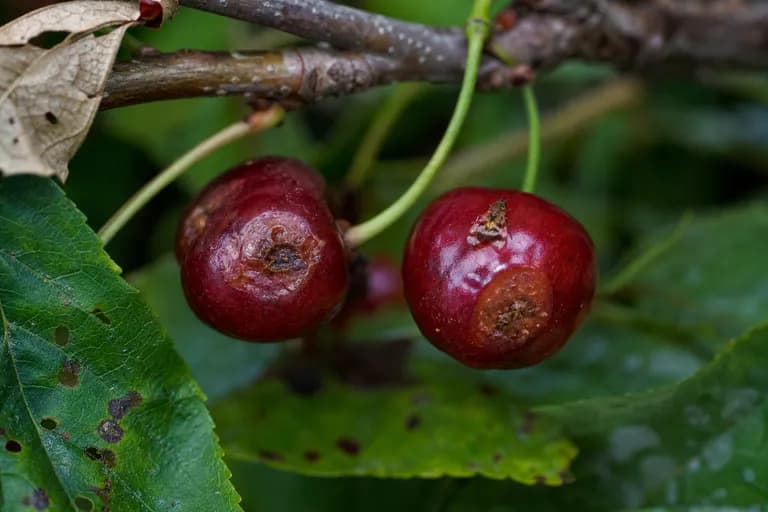
Mosca de la cereza
PlagaPequeñas larvas dentro del fruto, cerca del hueso, que causan caída prematura y zonas blandas y descoloridas en la pulpa.
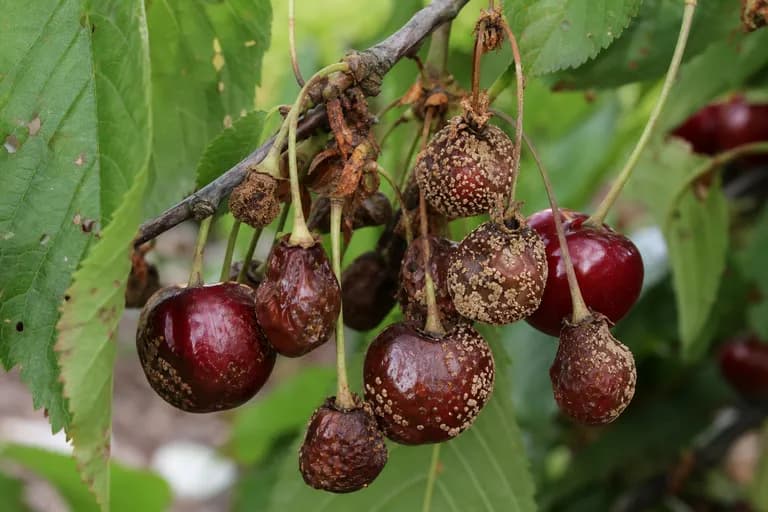
Podredumbre parda
EnfermedadMoho velloso marrón o canela en frutos que maduran y tizón floral que hace que los racimos se marchiten y se tornen marrones.
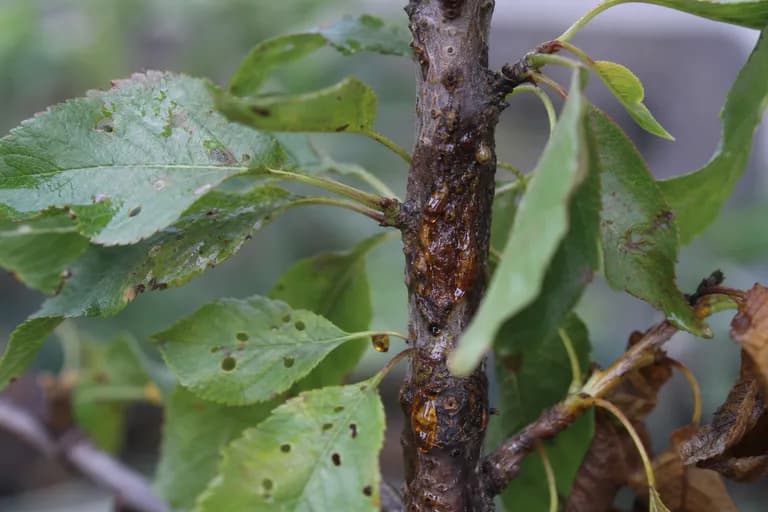
Cancro bacteriano
EnfermedadLesiones hundidas y gomosas en ramas y tronco, muerte regresiva de las ramas y exudado ámbar por la corteza.
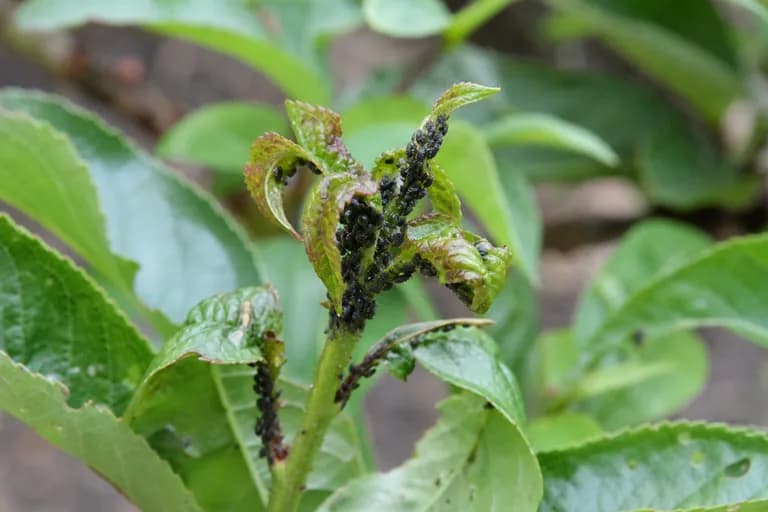
Pulgón negro del cerezo
PlagaHojas rizadas y deformadas en las puntas de los brotes, con melaza brillante y fumagina sobre el follaje inferior.
Solución de problemas comunes
El agrietamiento del fruto por la lluvia durante la maduración es el problema más común de las cerezas Bing. Los daños de aves pueden arrasar una cosecha sin protección en cuestión de días. Los frutos dobles o las yemas que no producen fruto a menudo indican horas de frío insuficientes o mala polinización. El cancro bacteriano suele empeorar en climas frescos y húmedos y en árboles jóvenes. El riego excesivo cerca de la cosecha aumenta el agrietamiento, mientras que el estrés por sequía produce frutos pequeños y amargos.
Consejos de cultivo
- Nunca plante un cerezo Bing sin una variedad polinizadora compatible que florezca al mismo tiempo dentro de 15-30 metros: Bing es autoincompatible y, aunque florece abundantemente, apenas produce fruto si se cultiva solo. Los polinizadores fiables incluyen Lapins, Black Tartarian, Rainier, Van y Sweetheart. Confirme la compatibilidad antes de comprar, ya que no todas las variedades de cerezo son donantes de polen mutuamente compatibles.
- Elija un portainjerto semienano como Gisela 5 o Gisela 6 para mantener el Bing a una altura manejable de 3-5 metros. No es solo una cuestión de comodidad: un árbol más pequeño es muchísimo más fácil de proteger con malla contra las aves (la mayor amenaza para una cosecha de Bing), de podar correctamente y de cosechar de forma segura y completa. Los Bing sobre portainjerto estándar pueden llegar a 8-12 metros, haciendo que una malla eficaz sea prácticamente imposible.
- Elija el emplazamiento con mucho cuidado. Bing necesita pleno sol, al menos 6-8 horas de luz directa al día, un excelente drenaje del suelo y resguardo frente a vientos dominantes fuertes durante la floración. No tolera los encharcamientos, que causan podredumbre de la copa y un rápido declive. Una suave ladera orientada al sur en el hemisferio norte proporciona drenaje del aire frío lejos de la flor durante las heladas primaverales y maximiza la acumulación de calor para la maduración del fruto.
- Empiece a poner malla antipájaros al menos dos semanas antes de que espere el cambio de color del fruto, no cuando vea el primer color. Para cuando el fruto muestre algo de rojo, las aves de su zona ya habrán localizado el árbol. Use malla de 15-20 mm de malla fina, extendida y asegurada con firmeza en la base de la copa. Una estructura permanente tipo jaula para fruta alrededor de un árbol enano es la solución más práctica a largo plazo y se amortiza en una o dos cosechas protegidas.
- Evite el agrietamiento del fruto, la principal debilidad de calidad de Bing, manteniendo una humedad del suelo absolutamente constante durante toda la temporada de crecimiento mediante riego por goteo o mangueras de exudación en la zona radicular. El desencadenante del agrietamiento es la rápida absorción de agua tras un periodo seco, que hace que la pulpa se expanda más rápido de lo que la piel puede soportar. Evite el riego por encima una vez que el fruto se esté desarrollando y no deje que el suelo se seque demasiado entre riegos. Los bancales elevados o en montículo en zonas de suelo arcilloso pesado ayudan a prevenir el encharcamiento que también desencadena el agrietamiento.
- Pode siempre el Bing a finales del verano, inmediatamente después de la cosecha, en julio o principios de agosto, en lugar de en otoño o invierno. Bing es muy susceptible a la enfermedad de la hoja plateada (Chondrostereum purpureum) y al cancro bacteriano (Pseudomonas syringae), ambos de los cuales entran por heridas de poda en condiciones frescas y húmedas de otoño e invierno. Las heridas de verano, en clima cálido y seco, cicatrizan rápidamente y son mucho menos propensas a la infección. Use herramientas afiladas y esterilizadas y haga cortes limpios hasta una yema o una unión de rama, sin dejar muñones.
- Forme los cerezos Bing jóvenes hacia un vaso abierto o un eje central modificado durante los primeros tres o cuatro años. Bing produce un crecimiento vigoroso y vertical y, sin una formación estructural temprana, desarrolla una copa congestionada y poco iluminada, más propensa a enfermedades, difícil de podar y mucho menos productiva que un armazón abierto y bien espaciado. Haga todas las podas de formación en verano, retirando de forma limpia las ramas que crecen hacia dentro y las que se cruzan para construir un esqueleto de cuatro a seis ramas principales bien distribuidas.
- Abone los Bing a finales del invierno o muy al principio de la primavera, antes de la brotación, con un fertilizante equilibrado, y aplique a finales del verano, después de la cosecha, un abonado rico en potasio (sulfato de potasa) alrededor de la línea de goteo para favorecer la formación de yemas florales y la rusticidad invernal. Bing es una variedad muy productiva y agota los nutrientes del suelo más que otras menos cargadas. Evite las aportaciones altas de nitrógeno después de mediados del verano, que producen un crecimiento blando y jugoso, susceptible a enfermedades y a daños por las heladas otoñales. Un acolchado anual de compost bien descompuesto aporta tanto nutrientes como retención de humedad.
- Coseche las cerezas Bing a primera hora de la mañana, cuando la temperatura de la fruta es más baja: esto prolonga de forma significativa la vida útil poscosecha en comparación con la fruta recolectada con el calor de la tarde. Recoja siempre con los pedúnculos intactos, haciendo rodar suavemente el fruto desde el espolón en lugar de tirar del tallo hacia fuera. Dañar los espolones reduce la cosecha del año siguiente. Refrigere de inmediato: las cerezas Bing a temperatura ambiente se deterioran en 24-48 horas, pero duran 5-7 días en refrigeración.
- Si ha tenido un mal cuajado a pesar de tener un polinizador compatible cerca, compruebe si los dos árboles florecen realmente al mismo tiempo: incluso unos pocos días de solapamiento entre variedades bastan para una buena polinización, pero si en su microclima concreto una variedad florece bastante antes que la otra, las abejas quizá no las conecten de manera fiable. Considere colocar ramas cortadas de la variedad polinizadora en cubos de agua cerca del Bing durante la floración, o polinizar a mano con un pincel suave en las mañanas secas y cálidas cuando ambas variedades tengan flores abiertas.
Cultiva tu mejor Cereza Bing — y todo lo que la rodea.
Empieza un plan gratis hoy. Diseña tus bancales, coloca tu Cereza Bing y deja que PlotMyGarden gestione el momento, el espaciado, las asociaciones y los recordatorios de la semilla a la cesta.
Elige tu Cereza Bing
Bing (estándar)
La selección original de 1875, con frutos grandes, de color rojo oscuro, pulpa firme y el clásico sabor a cereza dulce.
Selma Bing
Una mutación de Bing con maduración algo más temprana y mejor tamaño de fruto, manteniendo el mismo color intenso.
Chelan
Una cereza tipo Bing de maduración temprana que alcanza la cosecha 10-14 días antes que Bing, con color oscuro y firmeza similares.
Skeena
Una cereza oscura autofértil similar a Bing en apariencia y sabor, útil cuando no hay polinizador disponible.
Las cerezas Bing premium alcanzan algunos de los precios más altos de cualquier fruta fresca en el comercio minorista: normalmente 8-14 € por kg en temporada alta de importación en España. Un cerezo Bing semienano sobre portainjerto Gisela 5, que cuesta entre 40 y 80 € adquirir, puede producir 15-25 kg de fruta por temporada en plena madurez, lo que equivale a 120-350 € por cosecha. A lo largo de los 20-30 años productivos de un Bing bien mantenido, el valor acumulado de la fruta puede superar fácilmente los 3.000-8.000 €, frente a una inversión inicial inferior a 100 € incluyendo compra y establecimiento. Más importante aún, las cerezas Bing cultivadas en casa y cosechadas en su punto óptimo ofrecen un sabor, una dulzura y una densidad nutritiva que las cerezas Bing comerciales, casi siempre recolectadas verdes para resistir el transporte, simplemente no pueden igualar.
Recetas rápidas
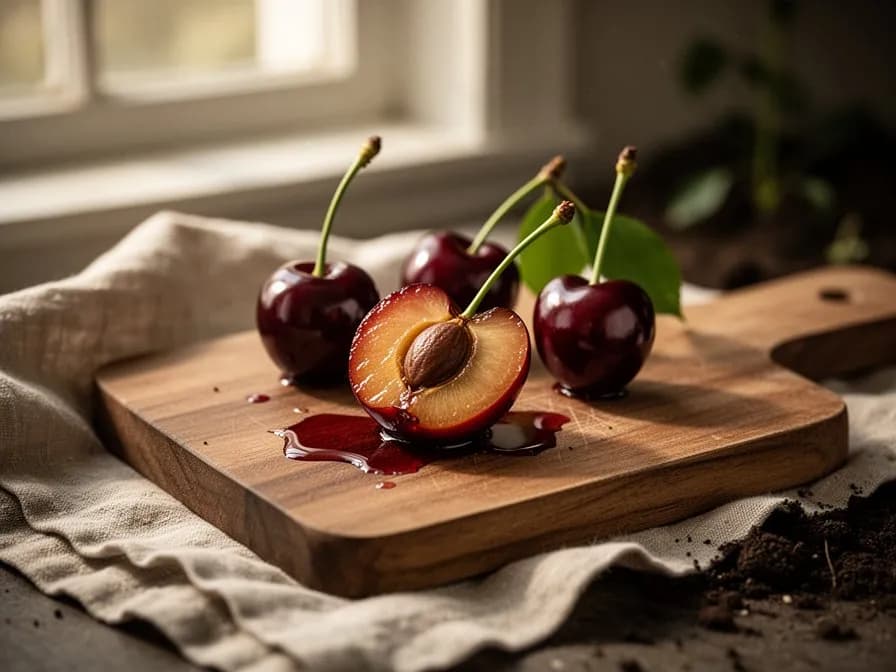
Bing Cherry Clafoutis
15 minutes prep + 40 minutes bakingA classic baked French custard from the Limousin region, poured over a layer of whole pitted Bing cherries in a buttered gratin dish and baked until puffed, golden at the edges, and softly set in the centre. Bing's firm flesh and deep sweetness make it arguably the best sweet cherry variety for this dish — the fruit holds its shape perfectly and the richness of the custard batter balances Bing's intensity beautifully. Dust generously with icing sugar and serve warm, straight from the dish.
10 ingredientesBing Cherry and Dark Chocolate Compote
20 minutesA rich stovetop compote of halved Bing cherries cooked briefly in a vanilla and Kirsch syrup, finished with finely chopped dark chocolate that melts into the warm fruit to create a deeply flavoured, glossy sauce. Serve warm over vanilla ice cream, thick mascarpone, or grilled pound cake. The combination of Bing's natural sweetness with bitter chocolate is a classic flavour pairing that works beautifully with this variety's depth. Keeps refrigerated for up to five days.
7 ingredientesFresh Bing Cherry Salsa
15 minutesA vivid, fresh salsa that showcases peak-season Bing cherries at their best — no cooking required. The natural sweetness and acidity of ripe Bing cherries pairs exceptionally well with the heat of jalapeño, the brightness of lime, and the herbaceous freshness of coriander. Serve alongside grilled duck breast, pulled pork tacos, or pan-seared salmon for a sophisticated summer condiment that takes minutes to make and disappears quickly. Best eaten within a few hours of making.
8 ingredientesUsos culinarios
Las cerezas Bing son el estándar de oro para comer frescas, con su equilibrio perfecto entre dulzura y acidez. Destacan en tarta de cerezas, clafoutis y tarta Selva Negra. Úselas para confituras de cereza, compotas y salsas para pato o cerdo. Dan un helado y un sorbete excepcionales, y son tradicionales en la elaboración de cerezas marrasquino.
Qué contiene
Beneficios para la salud
- Bing cherries contain among the highest concentrations of anthocyanins of any commonly grown sweet cherry variety, providing potent antioxidant protection that has been shown in clinical studies to reduce markers of systemic inflammation, potentially lowering long-term risk of cardiovascular disease and certain cancers
- Regular Bing cherry consumption has been associated in multiple peer-reviewed studies with meaningful reductions in serum uric acid levels and a clinically significant decrease in the frequency of gout flare-ups — one of the most well-evidenced dietary interventions for hyperuricaemia
- Bing cherries are one of very few food sources of naturally occurring melatonin, and cherry-derived extracts have been shown in randomised trials to improve both sleep duration and quality, with some studies reporting increases of up to 84 minutes of sleep per night from twice-daily tart cherry juice consumption
- The anti-inflammatory polyphenols in Bing cherries — particularly quercetin and cyanidin glycosides — have demonstrated the ability to reduce exercise-induced muscle damage and accelerate strength recovery in sports nutrition research, making them a popular evidence-backed recovery food for athletes
- Bing cherries have a low glycaemic index of approximately 22, producing a slow and moderate rise in blood glucose compared to most other fruits, and their dietary fibre content further moderates digestion speed — making them a suitable choice for people managing type 2 diabetes or monitoring carbohydrate intake
- The rich polyphenol profile of Bing cherries — including chlorogenic acid, procyanidins, and hydroxycinnamic acid derivatives — supports cardiovascular health by improving endothelial function, reducing LDL oxidation, and contributing to healthy blood pressure maintenance through their potassium content and vasodilatory flavonoid activity
De dónde viene Cereza Bing
The Bing cherry is a distinctly American fruit variety with a specific and well-documented origin: it was developed by Seth Lewelling, a Quaker nurseryman and abolitionist who operated an orchard in Milwaukie, Oregon in the mid-19th century. Lewelling came from a family with deep roots in American horticulture — his brother Henderson Lewelling had famously transported young fruit trees across the Oregon Trail by wagon in 1847, establishing some of the first commercial orchards in the Pacific Northwest. Seth, working at the family orchard, was a dedicated pomologist who recognised the exceptional growing conditions of the Willamette Valley and worked systematically to identify and propagate superior fruiting seedlings.
In 1875, Lewelling selected an outstanding open-pollinated seedling from his orchard — almost certainly descended from an Early Purple Guigne or Republican variety — that produced fruit of exceptional size, firmness, sugar content, and depth of colour. He named the variety Bing in honour of Ah Bing, his Chinese-American foreman who had worked at the Lewelling orchard for over two decades and was an indispensable part of its operation. This naming was an unusual and generous act of recognition for its time, and Ah Bing remained at the orchard until he returned to China in 1889, reportedly never able to re-enter the United States due to the Chinese Exclusion Act of 1882.
The Bing variety spread rapidly through the Pacific Northwest as commercial orchardists recognised its superior eating quality and productivity. Washington State, with its combination of cold winters providing the 700–800 chill hours Bing requires, dry summers that minimise disease pressure and fruit splitting, and the fertile volcanic soils of the Yakima and Chelan valleys, proved even better suited to Bing than Oregon. By the early 20th century, Washington had become the dominant Bing-producing region, a position it still holds today — producing over 60% of all US sweet cherries.
Bing's ascent to commercial dominance came at the cost of many earlier and more diverse cherry varieties, as the industry consolidated around varieties that could be grown at scale, handled mechanically, and shipped long distances. The irony is that Bing's success transformed it into a fruit often experienced in a shadow of its potential quality — harvested underripe for durability, packed tightly, and sold days or weeks after picking. Home growers who can harvest Bing at genuine peak ripeness and eat it within hours of picking experience a fruit that arguably justifies its century of dominance entirely on flavour merits alone.
Cereza Bing: ¿sabías que?
Datos fascinantes sobre Cereza Bing
Las cerezas Bing contienen una de las concentraciones más altas de antocianinas entre las cerezas dulces de cultivo habitual, lo que proporciona una potente protección antioxidante que en estudios clínicos se ha asociado con una reducción de marcadores de inflamación sistémica y, potencialmente, con un menor riesgo a largo plazo de enfermedades cardiovasculares y ciertos tipos de cáncer.
Cereza Bing: preguntas frecuentes
¿Cuándo debo plantar Cereza Bing?
¿Cuáles son buenas plantas acompañantes para Cereza Bing?
¿En qué zonas de rusticidad puede crecer Cereza Bing?
¿Cuánto sol necesita Cereza Bing?
¿A qué distancia debo espaciar Cereza Bing?
¿Qué plagas y enfermedades afectan a Cereza Bing?
¿Cómo almaceno Cereza Bing después de la cosecha?
¿Cuáles son las mejores variedades de Cereza Bing para cultivar?
¿Qué suelo necesita Cereza Bing?
¿Por qué mi cerezo Bing florece de manera preciosa cada año pero produce casi ninguna fruta?
Mis cerezas Bing se agrietan justo antes de la cosecha casi todos los años. ¿Puedo hacer algo?
¿Cuándo exactamente debo podar mi cerezo Bing y cuánto puedo quitarle?
¿Qué portainjerto debo elegir para un cerezo Bing en un jardín doméstico?
¿Cómo conservo las cerezas Bing después de la cosecha y puedo congelarlas?
¿Es Bing la mejor variedad de cereza dulce o debería considerar plantar otra cosa?
Acabas de leer la teoría. Ahora cultívala en piloto automático.
Todo lo que hace que Cereza Bing sea delicado — el momento, el espaciado, las asociaciones, la ventana de cosecha — es justo lo que PlotMyGarden resuelve por ti, para cada planta de tu huerto.
Un plan que conoce tu clima
Indica tu ubicación una vez. Recibe fechas de siembra, abonado y cosecha basadas en tu última helada real y el pronóstico en vivo — sin adivinar con un sobre genérico.
De la sección “Cuándo plantar”Planificador de bancales de arrastrar y soltar
Diseña bancales sobre una cuadrícula. Cada planta encaja con su espaciado correcto y ves toda la temporada antes de gastar un céntimo en semillas.
De la sección “Cultivo”Conflictos de asociación, detectados a tiempo
Más de 200 buenas y malas combinaciones comprobadas en vivo mientras plantas — para que un error que arruine la temporada nunca llegue a la tierra.
De la sección “Asociaciones”Recordatorios que sí vas a seguir
“Riega las judías.” “Recoge hoy antes de que se pase.” Oportunos, concretos y ligados a las plantas que de verdad cultivas.
De la sección “Cosecha”Escalonado, programado
¿Quieres cosechar seis semanas en vez de seis días? Reparte tus siembras automáticamente y te avisa cuando toca el siguiente lote.
De la sección “Cuándo plantar”Un registro que se vuelve más listo
Cada cosecha que registras le enseña tu huerto. El plan del año que viene parte de lo que de verdad funcionó en tu suelo, no en un manual.
De la sección “Resumen”Planta estos junto a Cereza Bing
Más Frutas de hueso
Mantén Cereza Bing lejos de estos
Cultiva tu mejor Cereza Bing — y todo lo que la rodea.
Empieza un plan gratis hoy. Diseña tus bancales, coloca tu Cereza Bing y deja que PlotMyGarden gestione el momento, el espaciado, las asociaciones y los recordatorios de la semilla a la cesta.