Melón Amargo (Cundeamor)
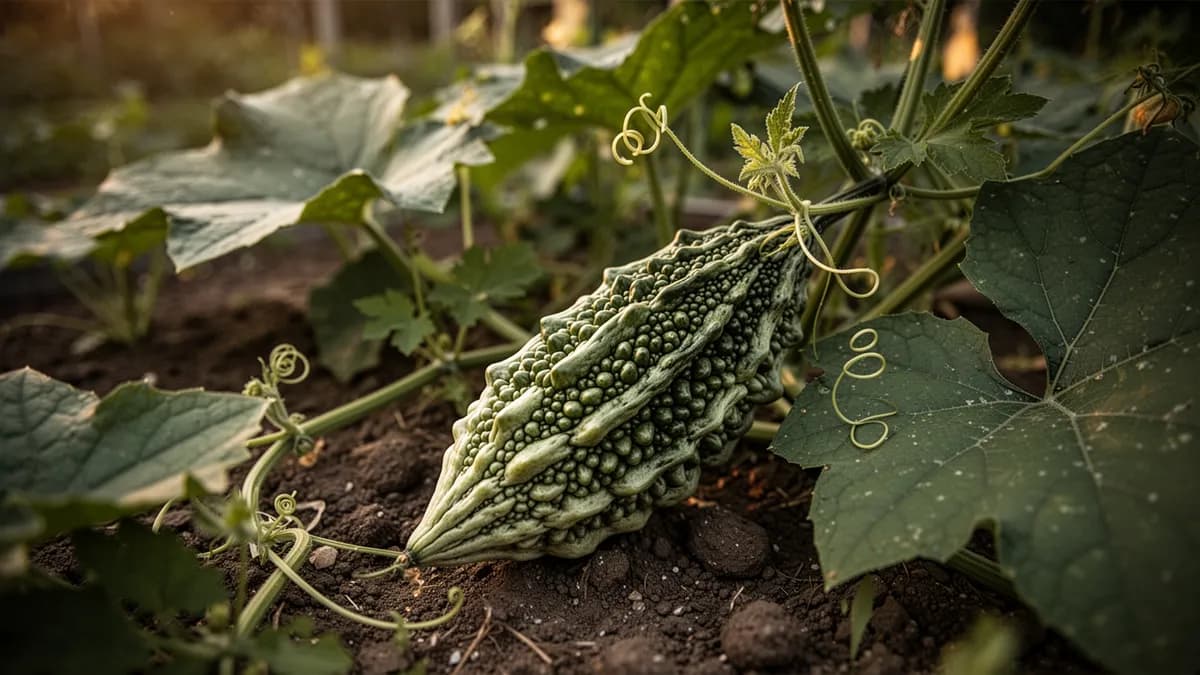
El melón amargo (Momordica charantia) es una cucurbitácea tropical trepadora que produce frutos verrugosos y alargados de intenso sabor amargo, muy apreciados en las cocinas asiática, india y caribeña.





En esta páginaResumen
Conoce Melón Amargo (Cundeamor)
El melón amargo (Momordica charantia) es una cucurbitácea tropical trepadora que produce frutos verrugosos y alargados de intenso sabor amargo, muy apreciados en las cocinas asiática, india y caribeña. Originario del sur de Asia, es valorado tanto por su uso culinario como por sus propiedades medicinales tradicionales, particularmente su capacidad para regular los niveles de azúcar en sangre.
Cuándo plantar Melón Amargo (Cundeamor)
Remoje las semillas 24 horas y escarifique ligeramente la cubierta. Siembre a 1-2 cm de profundidad a 25-30 °C. Germinación en 7-14 días. Trasplante con cuidado ya que no tolera la perturbación de raíces. Plante junto a enrejados inmediatamente.
Tu año de Melón Amargo (Cundeamor)
Ajustado a Zona 7 · temporada típica · la helada se va hacia el 2 abr y vuelve hacia el 1 nov
Planta Melón Amargo (Cundeamor) May – Jun y cosecha Jul – Oct. Consulta los métodos de plantación y elige tu clima para adaptar los periodos.
Cómo cultivar Melón Amargo (Cundeamor)
Siembre en interiores 4-6 semanas antes de la última helada, remojando las semillas 24 horas y escarificando ligeramente la cubierta con lima para acelerar la germinación. Plante a 1-2 cm de profundidad a 25-30 °C para germinación en 7-14 días.
Trasplante cuando las noches superen 18 °C, espaciando 45-60 cm junto a un enrejado fuerte de al menos 2 metros de alto. Las enredaderas son vigorosas y necesitan soporte para producir frutos rectos y sanos. Riegue regularmente con 3-4 cm semanales.
Fertilice cada 2-3 semanas con abono equilibrado durante el crecimiento vegetativo y cambie a potasio durante la fructificación. Las plantas son muy productivas en climas cálidos y húmedos, produciendo frutos continuamente durante meses. Coseche frecuentemente para estimular producción.
8 plantas caben en un bancal de 120 × 240 cm
Cada Melón Amargo (Cundeamor) pide 60 cm de margen. El planificador guarda ese marco por ti — cada planta, cada bancal.
Los mejores vecinos de Melón Amargo (Cundeamor)
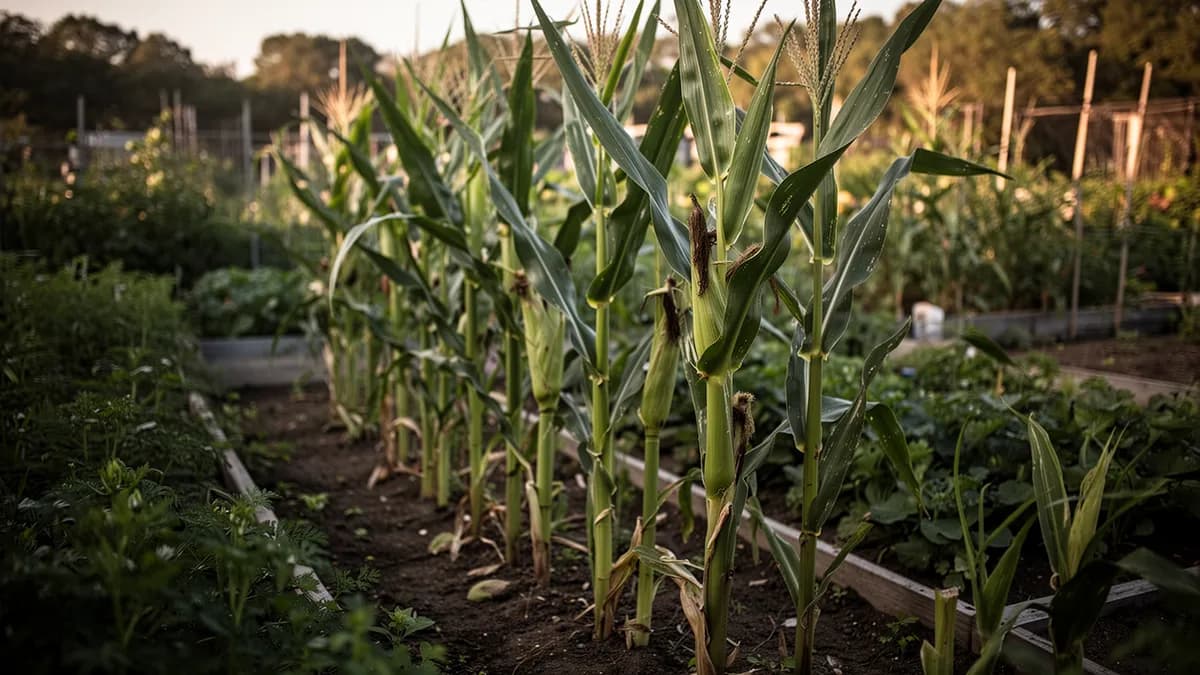
Crece bien junto a maíz que puede servir como soporte parcial, y junto a frijoles que fijan nitrógeno. Las caléndulas repelen moscas de la fruta. Evite plantar junto a otras cucurbitáceas para reducir enfermedades compartidas.
Maíz va a su lado.
Saber de huerto de siempre, cotejado con la tabla real de Melón Amargo (Cundeamor) — prueba cualquier planta que cultives.
Prueba Melón Amargo (Cundeamor) en un bancal, aquí mismo
Un bancal real del planificador con Melón Amargo (Cundeamor) ya plantado. Toca una planta compañera para colocarla y mira cómo responde la comprobación de vecinos: verde para buenos vecinos, rojo si hay conflicto.


Guías de cultivo relacionadas
Abónalo bien
Suelos ricos y bien drenados con pH 6,0-7,0. Enmiende con compost abundante. Fertilice regularmente con abono equilibrado. Las plantas son voraces y necesitan nutrición constante para producir durante toda la temporada.
Temperatura ideal
Compatibilidad de zonas de rusticidad
De la semilla a la cosecha, etapa por etapa
Siembra
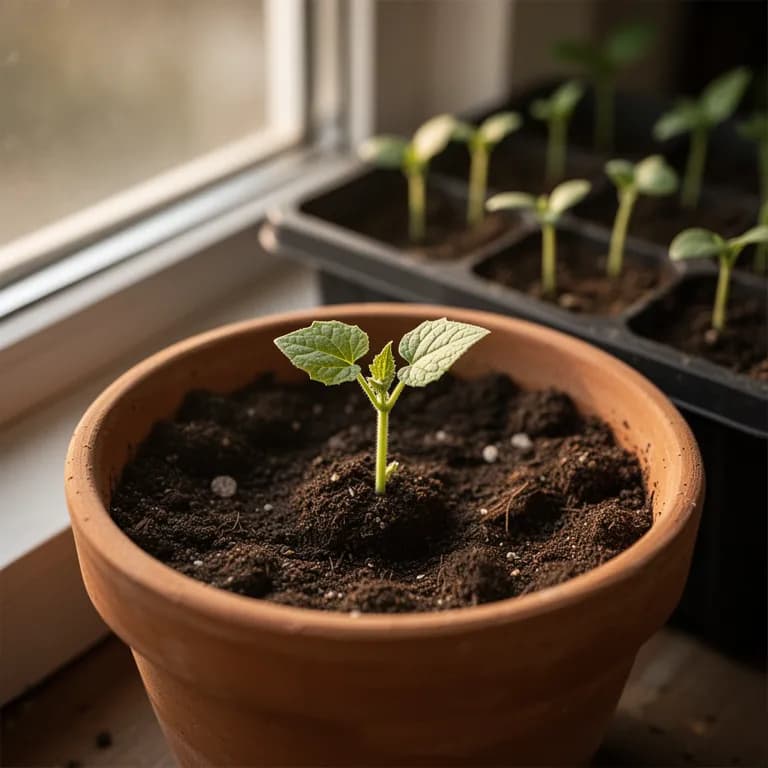
Las semillas germinan después de escarificar o remojar la cubierta dura. Primero emerge la radícula, seguida por los cotiledones en forma de corazón. La germinación requiere suelo cálido y tarda 7-14 días, a veces más con semillas sin tratar.
Crecimiento de la plántula
Las hojas verdaderas desarrollan la forma palmeada y profundamente lobulada característica. Empiezan a aparecer zarcillos a medida que la planta muestra su hábito trepador. El crecimiento es lento hasta que las temperaturas superan de forma constante los 24 °C.
Crecimiento de la enredadera
La enredadera entra en un crecimiento rápido, trepando agresivamente con zarcillos ramificados que se agarran a cualquier soporte disponible. Se desarrollan ramas laterales y el follaje se cierra con rapidez.
Floración
Aparecen pequeñas flores amarillas brillantes en las axilas de las hojas. Las flores masculinas aparecen primero y superan claramente en número a las femeninas. Las flores femeninas se reconocen por el pequeño fruto visible en la base de la flor. La polinización por abejas o a mano es necesaria para el cuajado.
Desarrollo del fruto
Las flores femeninas polinizadas se desarrollan en frutos alargados y verrugosos que crecen rápidamente con el calor. Los frutos pueden alcanzar un tamaño cosechable de 10-20 cm en 10-14 días después de la polinización. La textura acanalada o rugosa característica se vuelve más marcada a medida que crecen.
Cosecha principal
La enredadera entra en una producción sostenida, floreciendo y fructificando de forma continua durante 6-10 semanas. Una planta bien cuidada puede producir 10-20 frutos en la temporada. La producción disminuye cuando las temperaturas bajan de 21 °C en otoño.
Marca la cubierta de la semilla con una lima o remójala en agua tibia durante 24 horas antes de sembrar — las semillas sin tratar pueden tardar 3-4 semanas o no germinar. Usa una manta térmica para mantener un calor constante.
Cuidar Melón Amargo (Cundeamor) mes a mes
Qué hacer cada mes para tu Melón Amargo (Cundeamor)
Octubre
Mes actualFinal harvests in most zones. Collect dried seeds from fully ripe orange fruits for next year. Remove spent vines and trellis material. Compost healthy plant debris.
Ten claro qué hacer en tu huerto, cada mes
Un correo al empezar cada mes: qué sembrar, plantar y hacer ahora mismo — para tu Melón Amargo (Cundeamor) y todo lo que crece alrededor. Más un breve curso inicial para esquivar los errores clásicos.
- Qué hacer ahora mismo
- Ajustado a tu temporada
- Curso inicial incluido
Cosechar Melón Amargo (Cundeamor)
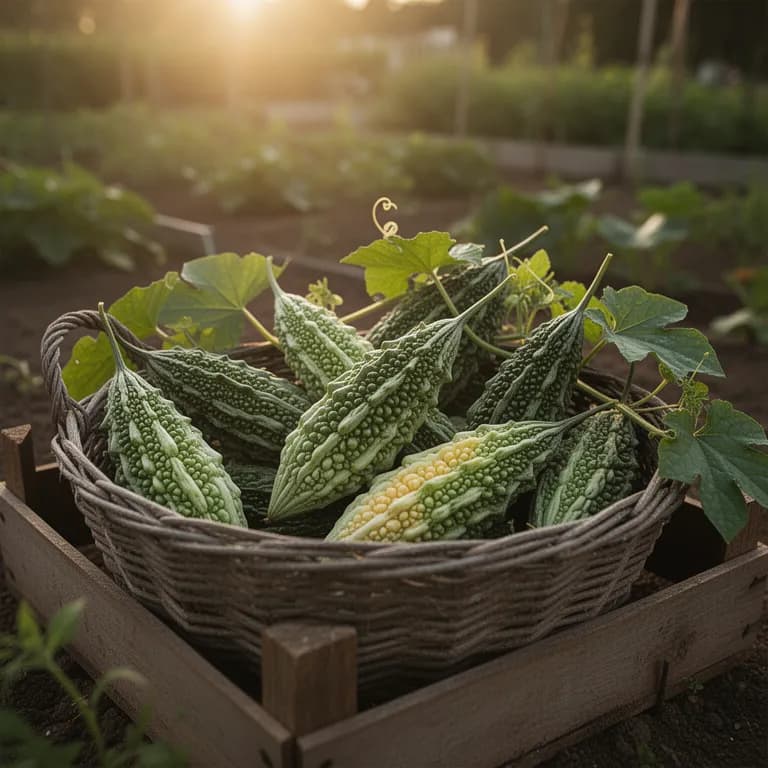
Coseche cuando los frutos estén aún verdes y firmes, con las protuberancias bien definidas, unos 55-70 días tras la siembra. No espere a que amarilleen, ya que se abren y exponen las semillas rojas, y el amargor se intensifica excesivamente. Corte con tijeras dejando 2 cm de pedúnculo.
se supone que plantas al comenzar el periodo — indica tu fecha real
Cosecha cuando los frutos midan 10-20 cm, sigan verdes y estén firmes; los tipos chinos de verde pálido y los indios de verde más oscuro.
Almacenamiento y conservación
Frescos en refrigerador 3-5 días en bolsa perforada. Para conservación, corte en rodajas, escalde y congele. También se pueden secar al sol para uso medicinal, encurtir en salmuera, o preparar chips deshidratados.
Qué falla — y cómo solucionarlo
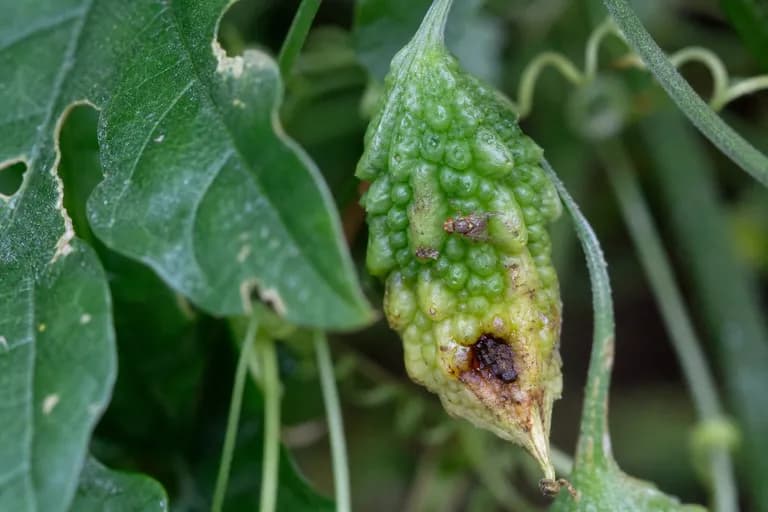
Mosca de la fruta (Bactrocera cucurbitae)
PlagaPunciones en frutos donde la hembra deposita huevos, larvas que pudren el interior del fruto.
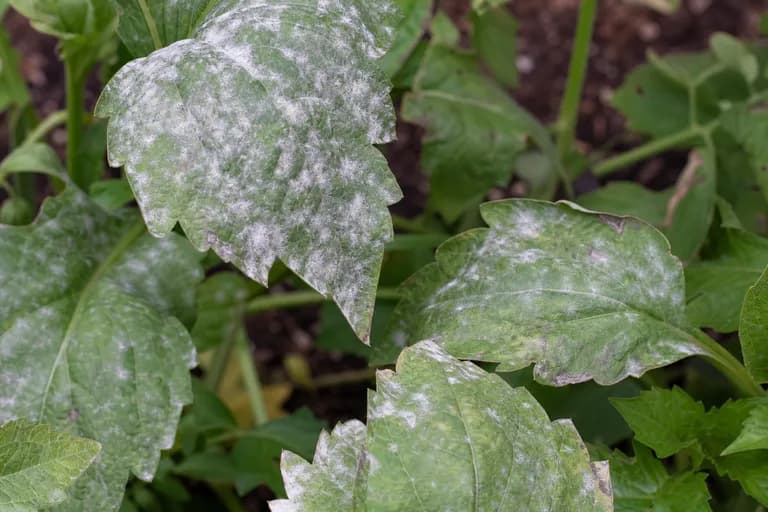
Oídio (Podosphaera xanthii)
EnfermedadPolvo blanco harinoso en hojas que progresa a necrosis y defoliación.
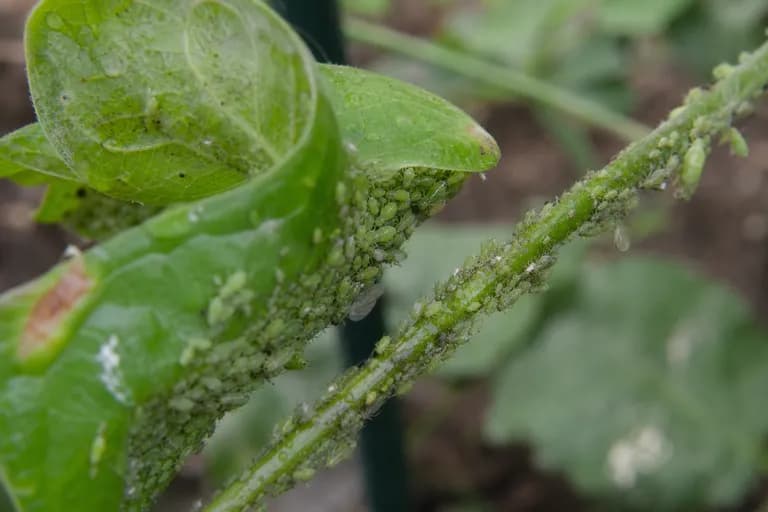
Pulgón del melón (Aphis gossypii)
PlagaColonias en brotes y envés de hojas, enrollamiento foliar y melaza.
Solución de problemas comunes
El amargor excesivo es el mayor desafío para nuevos consumidores; cosechar joven y preparar correctamente (salando o blanqueando) lo reduce. Las plantas necesitan calor tropical y no producen con temperaturas nocturnas inferiores a 18 °C. La polinización puede ser insuficiente sin insectos adecuados.
Consejos de cultivo
- Scarification is essential for germination. Bitter melon seeds have an extremely hard coat — soak in warm water for 24 hours or carefully nick the seed coat with a file opposite the hilum. Without treatment, germination rates drop below 30%.
- Install your trellis before planting, not after. Bitter melon vines grow explosively in hot weather and will sprawl along the ground if no vertical support is available, leading to misshapen fruits and increased disease pressure.
- Hand-pollinate for dramatically better yields. Female flowers open early in the morning and close by midday. Use a small paintbrush or cotton swab to transfer pollen from male to female flowers between 7-9 AM for the best fruit set.
- Harvest at the right maturity for your intended use. For cooking, pick when the fruit is firm, uniformly green, and the bumps are well-defined. Once any yellow coloring appears, bitterness increases sharply and texture becomes spongy.
- Reduce bitterness before cooking by slicing, salting liberally, and letting the slices sit for 15-30 minutes. Rinse and squeeze out the released liquid. This draws out the most intensely bitter compounds while preserving the flavor and nutritional benefits.
- Grow bitter melon in the hottest, most sheltered microclimate in your garden. South-facing walls, concrete patios, and dark-colored trellis surfaces all radiate extra heat that these tropical vines crave.
- Prune lateral branches selectively to maintain good air circulation and direct the vine's energy toward fruiting. Remove any branches that grow below 30 cm from the ground to reduce splash-borne soil disease.
- In cooler climates (zones 7-8), start seeds 6-8 weeks early indoors and use black plastic mulch and row covers to create a warm microclimate. Every degree of extra soil warmth translates directly to faster growth and earlier fruiting.
Cultiva tu mejor Melón Amargo (Cundeamor) — y todo lo que la rodea.
Empieza un plan gratis hoy. Diseña tus bancales, coloca tu Melón Amargo (Cundeamor) y deja que PlotMyGarden gestione el momento, el espaciado, las asociaciones y los recordatorios de la semilla a la cesta.
Elige tu Melón Amargo (Cundeamor)
Chinese (Verde largo)
Frutos largos de 20-30 cm con protuberancias suaves y amargor moderado. La variedad más común en mercados asiáticos. Madura en 60 días.
Indian (Verde oscuro)
Frutos más cortos de 10-15 cm con protuberancias pronunciadas y amargor intenso. Popular en cocina india. Madura en 55 días.
White (Blanco)
Variedad con frutos blancos y amargor más suave. Textura más tierna. Popular en Filipinas y Okinawa. Madura en 60 días.
Mini Green
Variedad compacta con frutos pequeños de 8-10 cm, perfectos para una porción. Ideal para contenedores. Madura en 55 días.
Fresh bitter melon sells for $3-6 per pound at Asian grocery stores and $5-10 per pound at specialty markets — and it is often unavailable at conventional supermarkets entirely. A single vine grown from a $2-4 seed packet can produce 10-20 fruits (3-7 lbs), representing $15-50 in fresh produce savings. Growing 3-4 vines provides enough bitter melon for weekly cooking throughout the summer, a savings of $60-150 per season. The value increases further if you prepare bitter melon tea (sold at $8-15 per box) or pickled bitter melon ($6-10 per jar) from your harvest.
Recetas rápidas
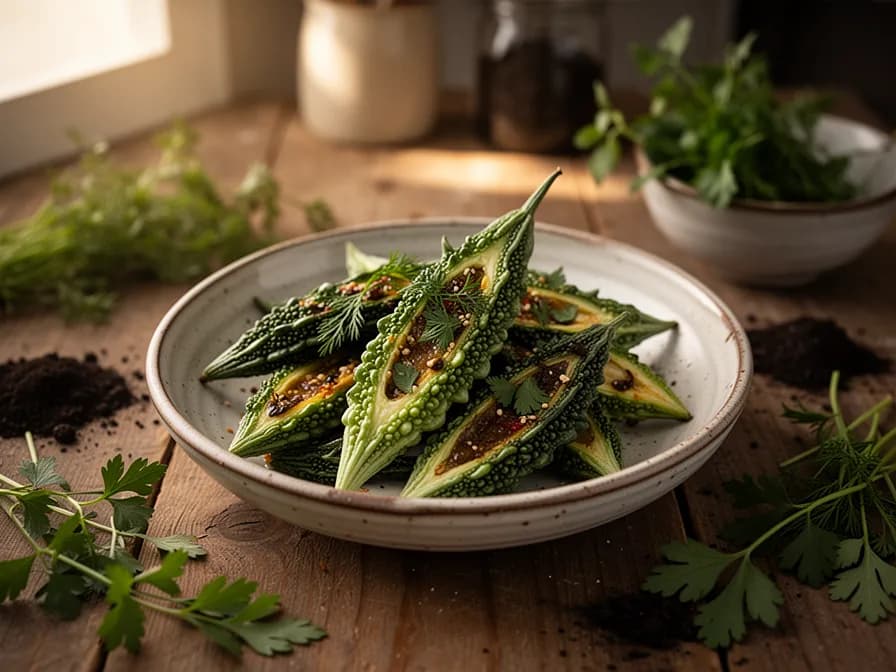
Bitter Melon Stir-Fry with Black Beans
25 minThe classic Cantonese preparation where fermented black beans and garlic temper the bitterness beautifully. Slicing thinly and salting first draws out excess bitter compounds for a more balanced flavor.
8 ingredientesStuffed Bitter Melon (Bharwa Karela)
45 minA beloved Indian preparation where hollowed bitter melon is filled with a spiced onion and peanut mixture, then pan-fried until tender and caramelized. The stuffing mellows the bitterness.
8 ingredientesBitter Melon and Egg Scramble (Ginisang Ampalaya)
15 minA quick Filipino comfort dish where bitter melon is sauteed with tomatoes and scrambled eggs. The eggs and tomatoes coat the slices and soften the bitter edge, making this a great gateway recipe.
8 ingredientesUsos culinarios
El melón amargo se prepara salteado con cerdo o camarones en la cocina china, relleno de carne en la cocina filipina, o en curry con coco en la cocina india. Para reducir el amargor, corte, retire semillas, sale durante 30 minutos y enjuague. Se consume en sopas, guisos y como ingrediente de jugos medicinales.
Qué contiene
Beneficios para la salud
- Contains charantin and polypeptide-p — plant-based insulin analogues that have been shown in clinical studies to lower blood glucose levels, making bitter melon one of the most studied natural approaches to blood sugar management.
- Exceptionally high in vitamin C at 93% of the daily value per 100g, supporting immune function, collagen synthesis, and iron absorption from plant-based foods.
- Rich in antioxidants including catechin, gallic acid, and chlorogenic acid that help neutralize free radicals and reduce oxidative stress linked to chronic disease.
- Contains lectins that have demonstrated anti-cancer properties in laboratory studies, particularly against breast, colon, and prostate cancer cell lines — though human clinical evidence is still developing.
- High fiber content (2.8g per 100g) combined with very low calories (17 per 100g) supports digestive regularity, satiety, and healthy weight management.
- Provides folate, zinc, and iron — nutrients often lacking in plant-based diets — along with anti-inflammatory compounds that may help reduce markers of systemic inflammation.
De dónde viene Melón Amargo (Cundeamor)
Bitter melon (Momordica charantia) is believed to have originated in eastern Africa, with wild populations still found in parts of Kenya, Tanzania, and Ethiopia. From Africa, the plant spread to the Indian subcontinent thousands of years ago, where it became deeply integrated into Ayurvedic medicine and regional cuisines under the name karela. Ancient Sanskrit texts from around 200 BCE reference bitter melon as a treatment for digestive disorders and blood impurities.
From India, bitter melon traveled along maritime and overland trade routes to China and Southeast Asia, reaching these regions by approximately the 14th century. In China, it became known as ku gua (bitter gourd) and was valued in Traditional Chinese Medicine for clearing heat and detoxifying the body. The plant adapted remarkably well to the tropical and subtropical climates of the Philippines, Vietnam, Thailand, and Indonesia, where it became a staple vegetable with its own distinct culinary traditions in each country.
European colonial traders encountered bitter melon in India and Southeast Asia during the 16th century, and Portuguese and Spanish merchants introduced it to Africa, the Caribbean, and South America, completing a full circle back to its continent of origin. In the Caribbean, bitter melon (called cerasee) became an important medicinal tea plant. Today, bitter melon is cultivated commercially across tropical Asia, with India, China, and the Philippines being the largest producers. It has gained worldwide scientific attention for its potential anti-diabetic properties, with over 100 clinical studies published on its blood-sugar-lowering compounds, making it one of the most intensively researched medicinal food plants in modern pharmacology.
Melón Amargo (Cundeamor): ¿sabías que?
Datos fascinantes sobre Melón Amargo (Cundeamor)
Bitter melon is one of the most bitter edible fruits in the world — the compound momordicin gives it a bitterness rating roughly 1,000 times more intense than the bitter threshold detectable by human taste buds.
Melón Amargo (Cundeamor): preguntas frecuentes
¿Cuándo debo plantar Melón Amargo (Cundeamor)?
¿Cuáles son buenas plantas acompañantes para Melón Amargo (Cundeamor)?
¿En qué zonas de rusticidad puede crecer Melón Amargo (Cundeamor)?
¿Cuánto sol necesita Melón Amargo (Cundeamor)?
¿A qué distancia debo espaciar Melón Amargo (Cundeamor)?
¿Qué plagas y enfermedades afectan a Melón Amargo (Cundeamor)?
¿Cómo almaceno Melón Amargo (Cundeamor) después de la cosecha?
¿Cuáles son las mejores variedades de Melón Amargo (Cundeamor) para cultivar?
¿Qué suelo necesita Melón Amargo (Cundeamor)?
Why is my bitter melon vine flowering but not producing fruit?
How do I reduce the intense bitterness of bitter melon?
Can I grow bitter melon in a container?
Is bitter melon safe to eat in large quantities?
When is my bitter melon overripe and no longer good for cooking?
Acabas de leer la teoría. Ahora cultívala en piloto automático.
Todo lo que hace que Melón Amargo (Cundeamor) sea delicado — el momento, el espaciado, las asociaciones, la ventana de cosecha — es justo lo que PlotMyGarden resuelve por ti, para cada planta de tu huerto.
Un plan que conoce tu clima
Indica tu ubicación una vez. Recibe fechas de siembra, abonado y cosecha basadas en tu última helada real y el pronóstico en vivo — sin adivinar con un sobre genérico.
De la sección “Cuándo plantar”Planificador de bancales de arrastrar y soltar
Diseña bancales sobre una cuadrícula. Cada planta encaja con su espaciado correcto y ves toda la temporada antes de gastar un céntimo en semillas.
De la sección “Cultivo”Conflictos de asociación, detectados a tiempo
Más de 200 buenas y malas combinaciones comprobadas en vivo mientras plantas — para que un error que arruine la temporada nunca llegue a la tierra.
De la sección “Asociaciones”Recordatorios que sí vas a seguir
“Riega las judías.” “Recoge hoy antes de que se pase.” Oportunos, concretos y ligados a las plantas que de verdad cultivas.
De la sección “Cosecha”Escalonado, programado
¿Quieres cosechar seis semanas en vez de seis días? Reparte tus siembras automáticamente y te avisa cuando toca el siguiente lote.
De la sección “Cuándo plantar”Un registro que se vuelve más listo
Cada cosecha que registras le enseña tu huerto. El plan del año que viene parte de lo que de verdad funcionó en tu suelo, no en un manual.
De la sección “Resumen”Planta estos junto a Melón Amargo (Cundeamor)
Más Cucurbitáceas
Cultiva tu mejor Melón Amargo (Cundeamor) — y todo lo que la rodea.
Empieza un plan gratis hoy. Diseña tus bancales, coloca tu Melón Amargo (Cundeamor) y deja que PlotMyGarden gestione el momento, el espaciado, las asociaciones y los recordatorios de la semilla a la cesta.