Chirivía Corona Hueca
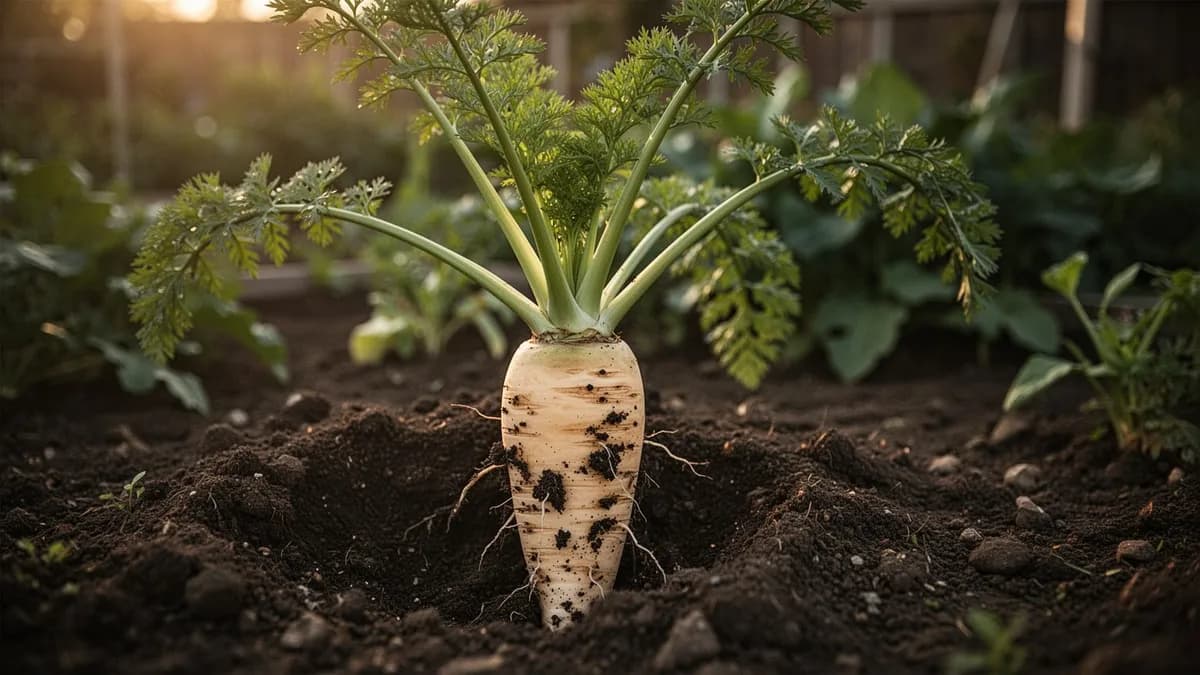
La chirivía Corona Hueca (Pastinaca sativa 'Hollow Crown') es la variedad más clásica y extendida de chirivía, una raíz comestible blanco-cremosa de la familia de las umbelíferas originaria de Eurasia.





En esta páginaResumen
Conoce Chirivía Corona Hueca
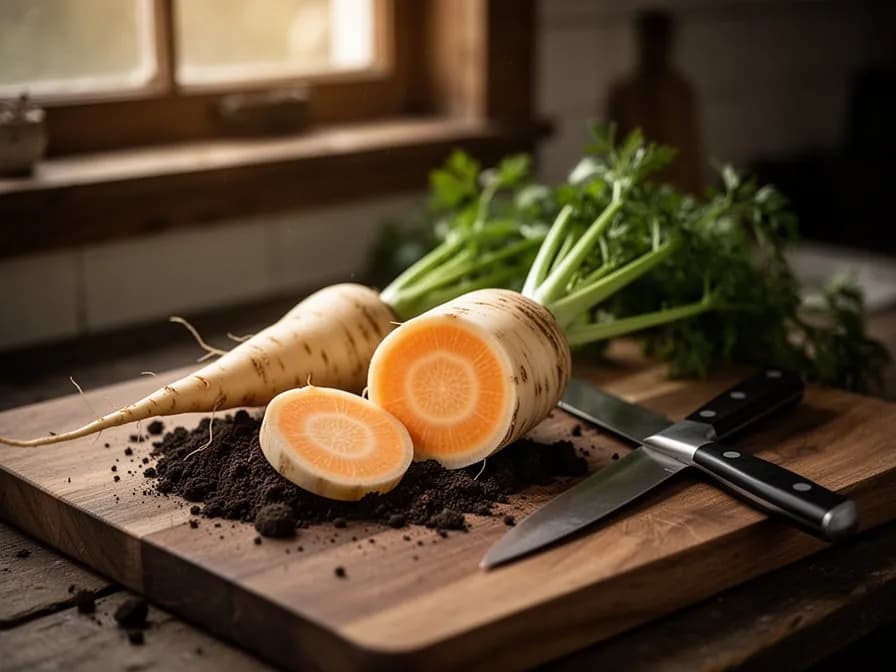
La chirivía Corona Hueca (Pastinaca sativa 'Hollow Crown') es la variedad más clásica y extendida de chirivía, una raíz comestible blanco-cremosa de la familia de las umbelíferas originaria de Eurasia. Se distingue por su raíz larga y cónica de 25-35 cm con una depresión característica en la corona donde se inserta el follaje, y un sabor dulce y anisado que se intensifica notablemente después de las primeras heladas. Fue una de las hortalizas de raíz más importantes en Europa antes de la llegada de la patata del Nuevo Mundo.
Cuándo plantar Chirivía Corona Hueca
Siembra directa en primavera.
Tu año de Chirivía Corona Hueca
Ajustado a Zona 7 · temporada típica · la helada se va hacia el 2 abr y vuelve hacia el 1 nov
Planta Chirivía Corona Hueca Mar – May y cosecha Ene, Oct – Dic. Consulta los métodos de plantación y elige tu clima para adaptar los periodos.
Cómo cultivar Chirivía Corona Hueca
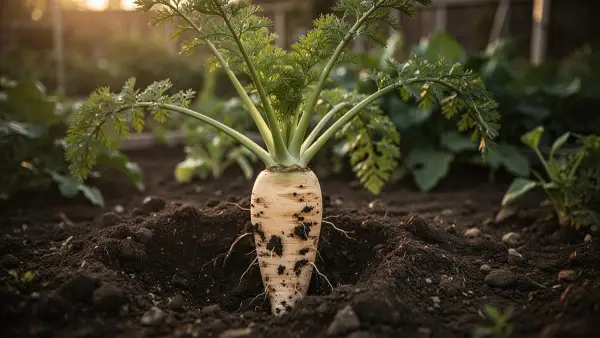
La chirivía Corona Hueca requiere una temporada de crecimiento larga de 100-130 días y se siembra directamente en el terreno a principios de primavera, tan pronto como se pueda trabajar la tierra. Preparar un lecho de siembra profundo (al menos 40 cm) y libre de piedras y terrones, ya que cualquier obstáculo en el suelo provoca raíces bifurcadas y deformes. Sembrar las semillas frescas a 1-2 cm de profundidad en surcos separados 30-40 cm, con una densidad generosa ya que la tasa de germinación suele ser baja.
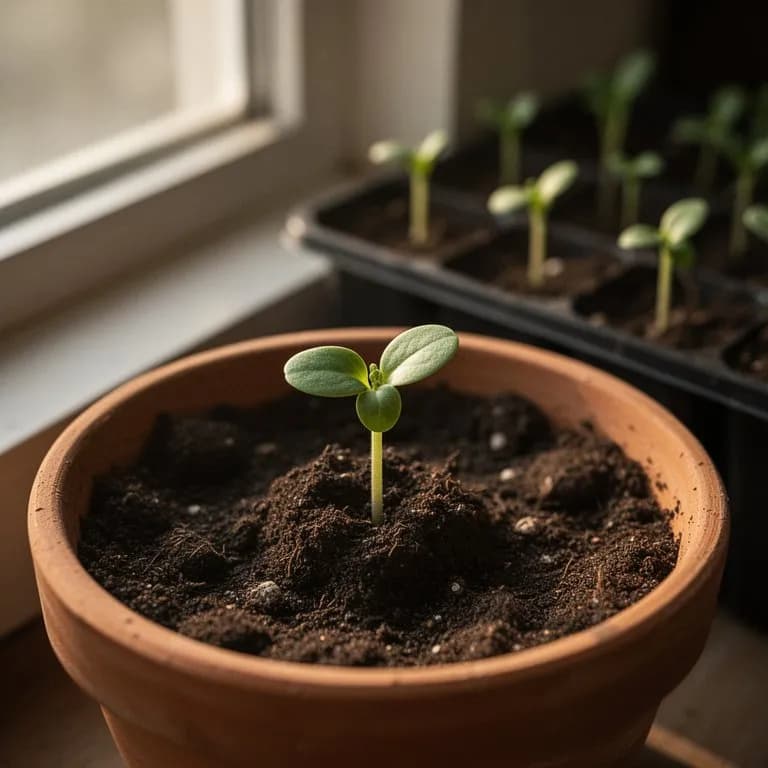
La germinación es notoriamente lenta y errática, tardando entre 14 y 28 días a temperaturas de 10-15 °C. Mantener el suelo constantemente húmedo durante este período crítico, cubriendo los surcos con malla o tela húmeda si es necesario. Cuando las plántulas tengan 5-8 cm de altura, aclarar dejando 10-15 cm entre plantas para permitir el desarrollo adecuado de las raíces.
Regar regularmente durante el verano para evitar el agrietamiento de las raíces que provoca el riego irregular. El sabor de la chirivía mejora dramáticamente después de las primeras heladas otoñales, que convierten los almidones de la raíz en azúcares, produciendo un sabor excepcionalmente dulce y complejo. Las raíces pueden dejarse en el suelo durante todo el invierno bajo una capa de acolchado protector, cosechándolas según se necesiten.
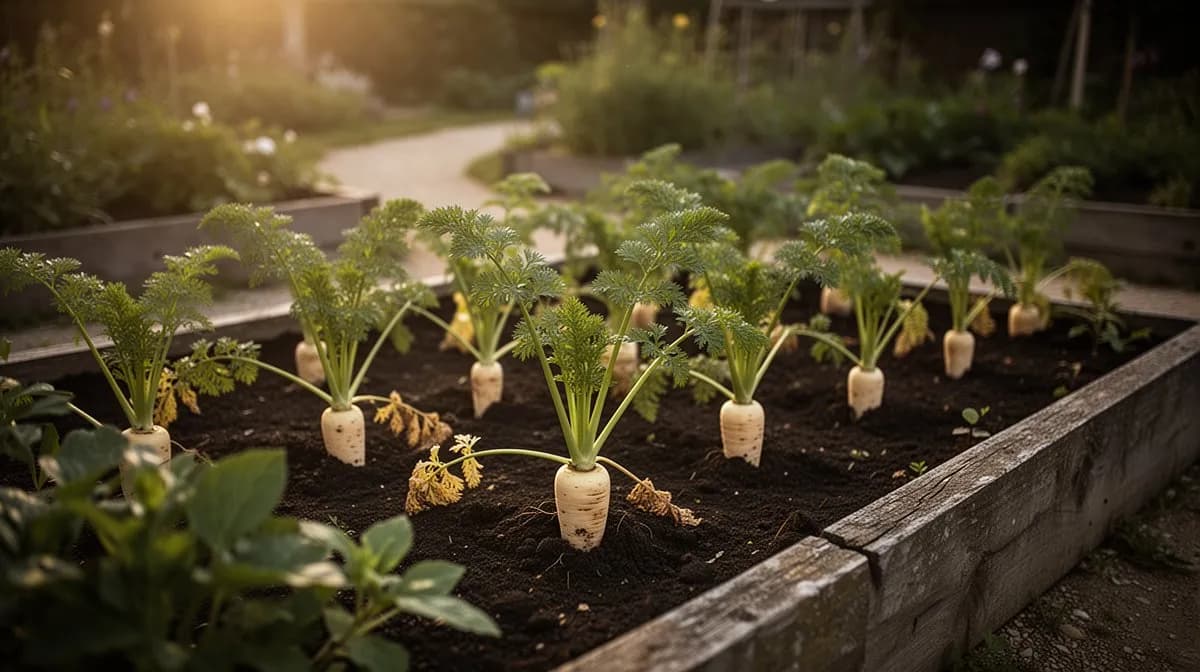
288 plantas caben en un bancal de 120 × 240 cm
Cada Chirivía Corona Hueca pide 10 cm de margen. El planificador guarda ese marco por ti — cada planta, cada bancal.
Los mejores vecinos de Chirivía Corona Hueca
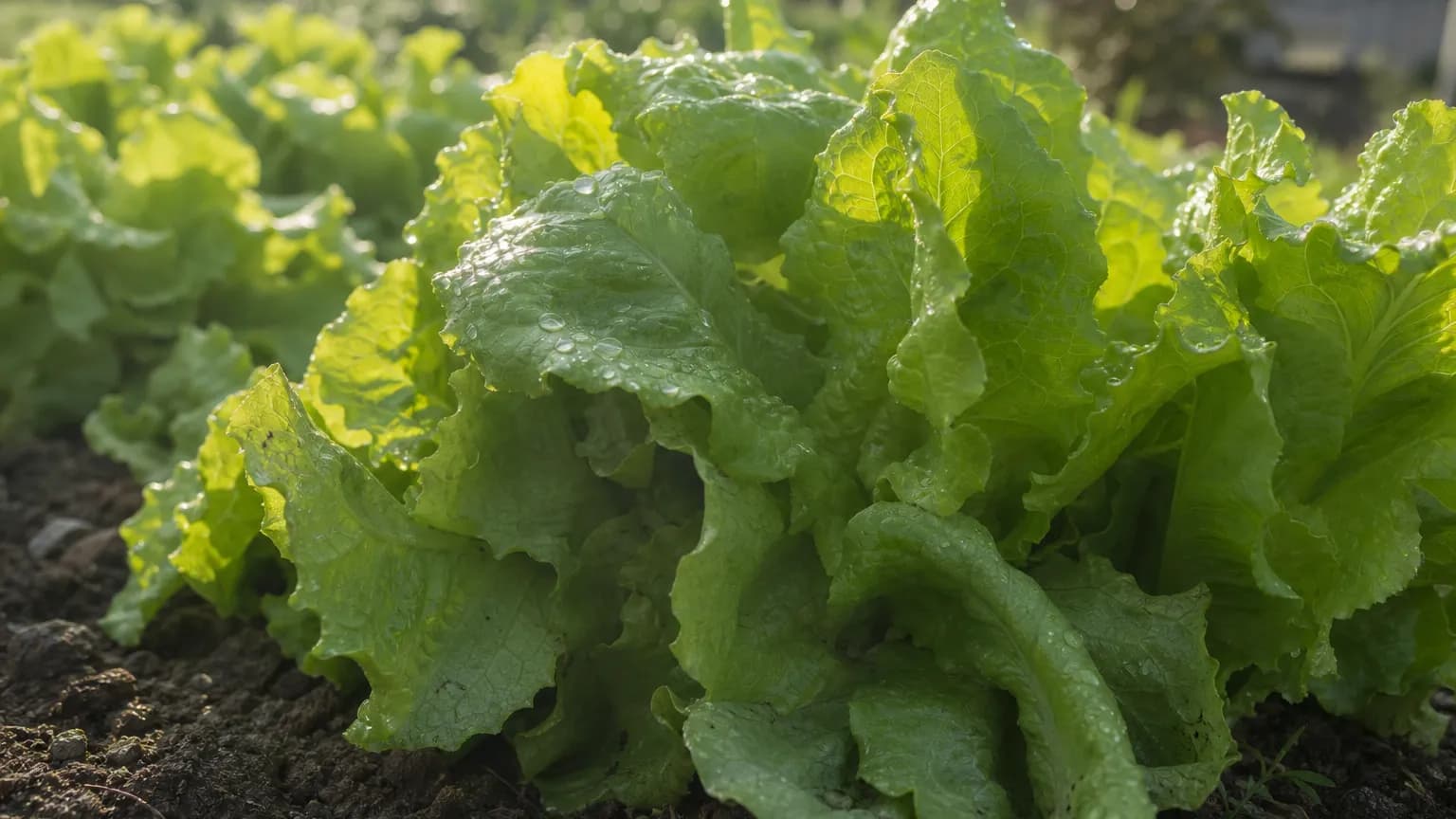
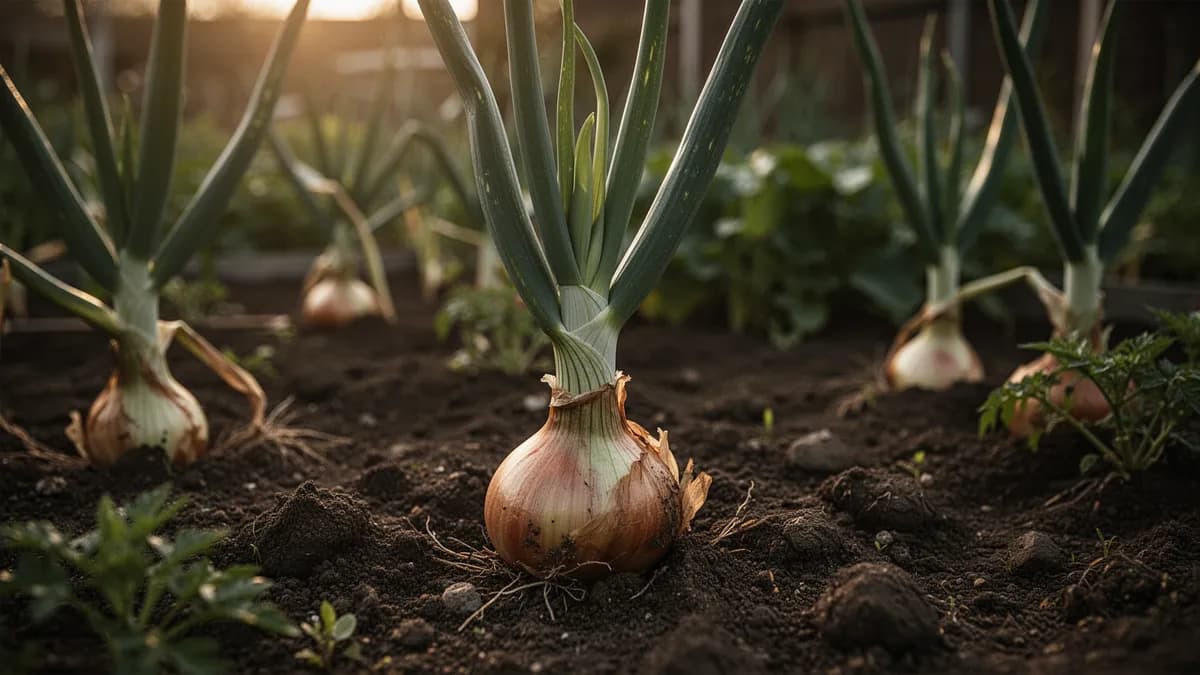
Cebollas, lechuga.
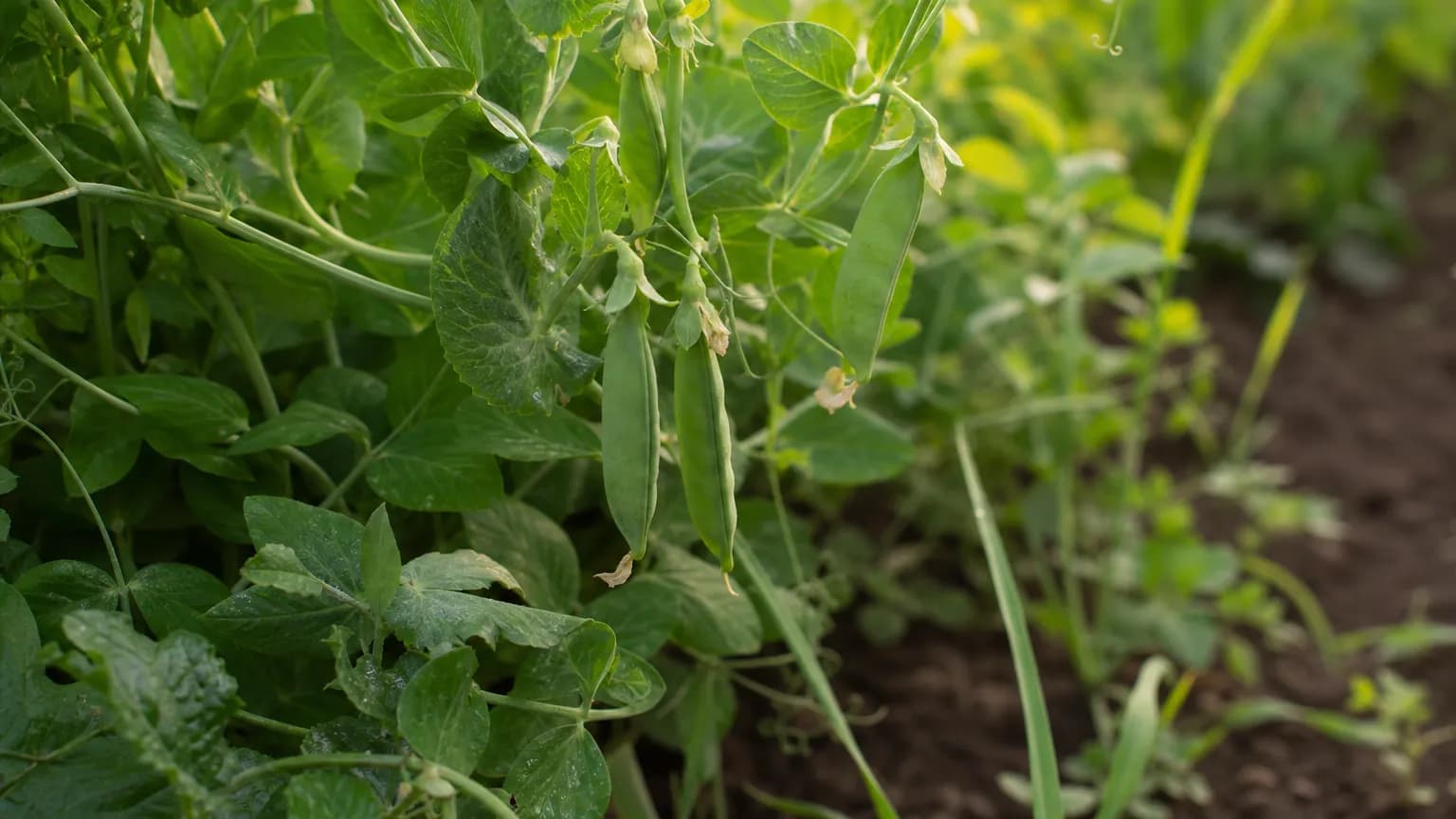
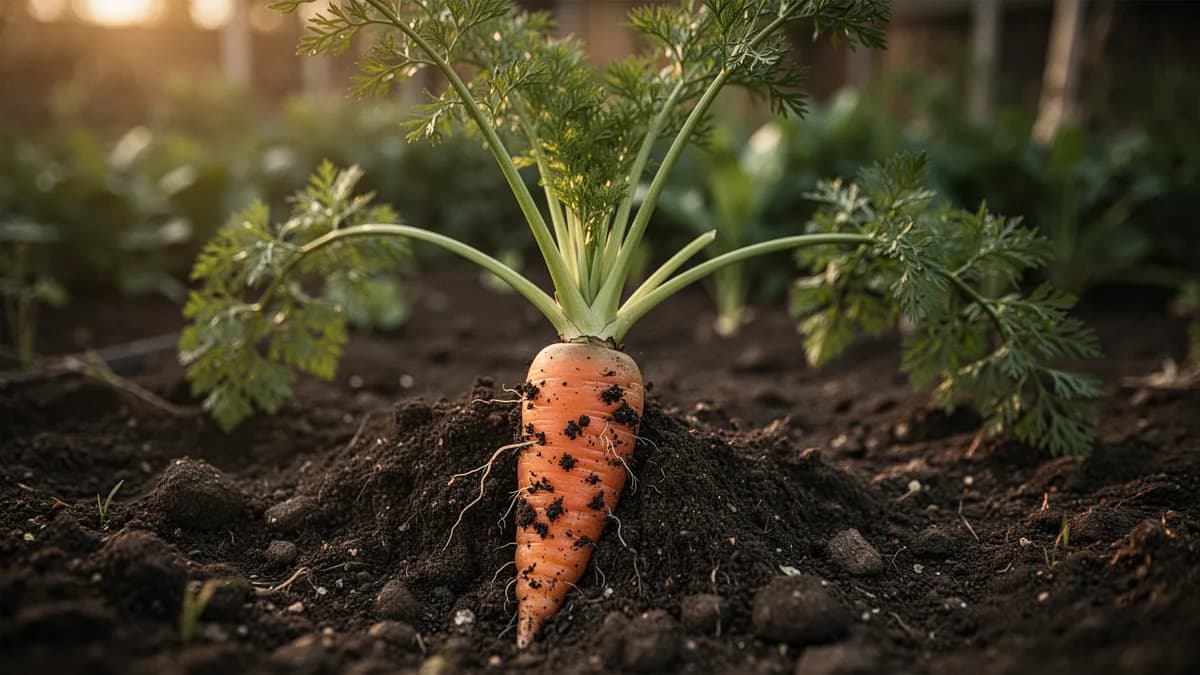
Guisantes va a su lado. Zanahoria no.
Saber de huerto de siempre, cotejado con la tabla real de Chirivía Corona Hueca — prueba cualquier planta que cultives.
Prueba Chirivía Corona Hueca en un bancal, aquí mismo
Un bancal real del planificador con Chirivía Corona Hueca ya plantado. Toca una planta compañera para colocarla y mira cómo responde la comprobación de vecinos: verde para buenos vecinos, rojo si hay conflicto.


Guías de cultivo relacionadas
Abónalo bien
La chirivía Corona Hueca necesita un suelo profundo (mínimo 40 cm), suelto, libre de piedras y bien drenado, con un pH entre 6,0 y 7,0. Evitar absolutamente el estiércol fresco, que provoca bifurcación de las raíces; incorporar compost bien descompuesto la temporada anterior o al menos 6 meses antes de la siembra. Un aporte moderado de fósforo y potasio favorece el desarrollo radicular, mientras que el exceso de nitrógeno promueve el crecimiento foliar a costa de las raíces.
Temperatura ideal
Compatibilidad de zonas de rusticidad
De la semilla a la cosecha, etapa por etapa
Germinación
Las semillas de chirivía germinan lentamente y de forma irregular, lo que convierte esta etapa en la más difícil de manejar. La semilla fresca es esencial y las plántulas se confunden fácilmente con malezas.
Establecimiento de plántulas
Aparecen las primeras hojas verdaderas y la raíz pivotante comienza a desarrollarse profundamente bajo el suelo. El crecimiento es lento y las plántulas son vulnerables a las malezas.
Crecimiento vegetativo
El follaje crece con fuerza durante el verano mientras la raíz pivotante avanza hacia abajo y se engrosa hasta adquirir su forma de cuña. En esta fase la planta almacena energía en la raíz.
Maduración de la raíz
La raíz alcanza su tamaño completo y ya es técnicamente cosechable, aunque todavía no ha desarrollado toda su dulzura. El frío mejora mucho el sabor.
Endulzado por heladas y cosecha
Las heladas intensas convierten los almidones en azúcares y dan a la chirivía su sabor dulce y a nuez. En muchos climas, el jardín actúa como almacenamiento en frío.
Espigado de primavera (segundo año)
Si se deja en el suelo hasta el segundo año, la planta produce un tallo floral alto. Cuando comienza el espigado, la raíz se vuelve leñosa e incomestible.
Usa solo semillas de la temporada actual. Siembra densamente para compensar la germinación irregular y evita que la superficie se seque.
Cuidar Chirivía Corona Hueca mes a mes
Qué hacer cada mes para tu Chirivía Corona Hueca
Octubre
Mes actualFirst frosts begin the essential starch-to-sugar conversion in the roots. After two or three hard frosts, begin your first harvest — dig carefully with a garden fork inserted well away from the roots to avoid slicing them. Apply 15-20 cm of straw mulch over remaining roots.
Ten claro qué hacer en tu huerto, cada mes
Un correo al empezar cada mes: qué sembrar, plantar y hacer ahora mismo — para tu Chirivía Corona Hueca y todo lo que crece alrededor. Más un breve curso inicial para esquivar los errores clásicos.
- Qué hacer ahora mismo
- Ajustado a tu temporada
- Curso inicial incluido
Cosechar Chirivía Corona Hueca
Las chirivías Corona Hueca alcanzan su madurez entre 100 y 130 días después de la siembra, pero su sabor mejora significativamente si se dejan en el suelo hasta después de las primeras heladas otoñales. Aflojar la tierra con una horquilla de jardín antes de extraer las raíces, tirando suavemente del follaje para evitar romperlas. Las raíces pueden dejarse en el terreno durante todo el invierno, protegidas con una capa gruesa de paja o hojas secas, y cosecharse según se necesiten hasta que el suelo se congele profundamente o la planta inicie su segundo año de crecimiento en primavera.
se supone que plantas al comenzar el periodo — indica tu fecha real
Cosecha cuando las raíces tengan un tamaño utilizable, aunque el sabor mejora después de las heladas.
Almacenamiento y conservación
Las chirivías cosechadas se conservan excelentemente en el refrigerador envueltas en papel húmedo durante 2-4 semanas, o en arena húmeda en un sótano fresco (0-4 °C) durante 4-6 meses. También se pueden pelar, cortar en cubos o bastones, escaldar durante 3 minutos y congelar en bolsas herméticas hasta 10 meses. Para deshidratación, cortar en rodajas finas y secar en deshidratador a 55 °C durante 8-12 horas, conservándose hasta un año en recipientes herméticos.
Qué falla — y cómo solucionarlo
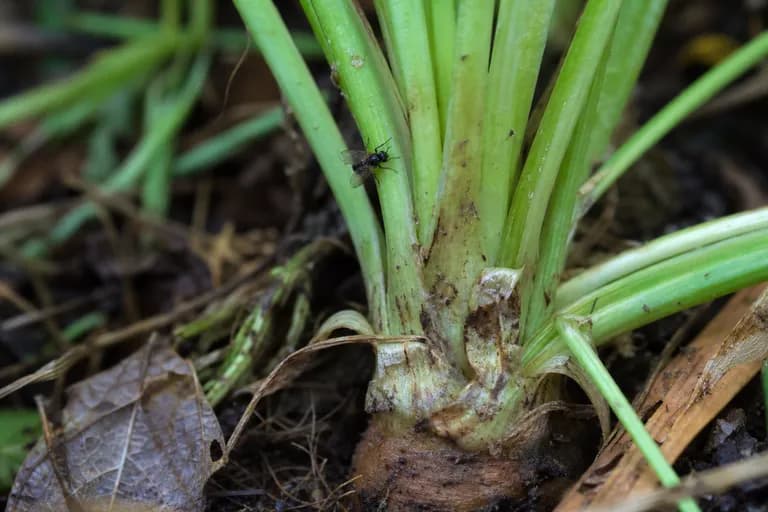
Cancro de la chirivía (Itersonilia pastinacae)
EnfermedadLesiones hundidas de color marrón-rojizo en la corona y los hombros de la raíz que se extienden progresivamente, provocando pudrición seca del tejido y deterioro durante el almacenamiento.
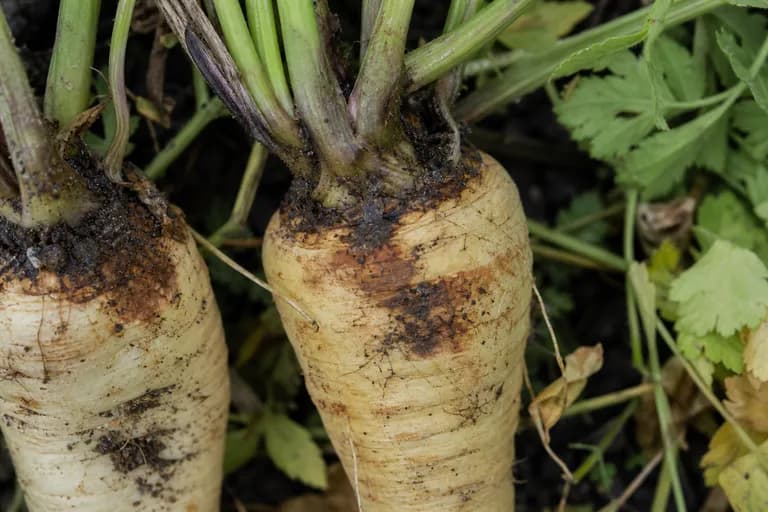
Mosca de la zanahoria (Psila rosae)
PlagaGalerías superficiales de color marrón-rojizo en la superficie de la raíz causadas por las larvas blanquecinas, que provocan depreciación comercial y facilitan la entrada de enfermedades secundarias.
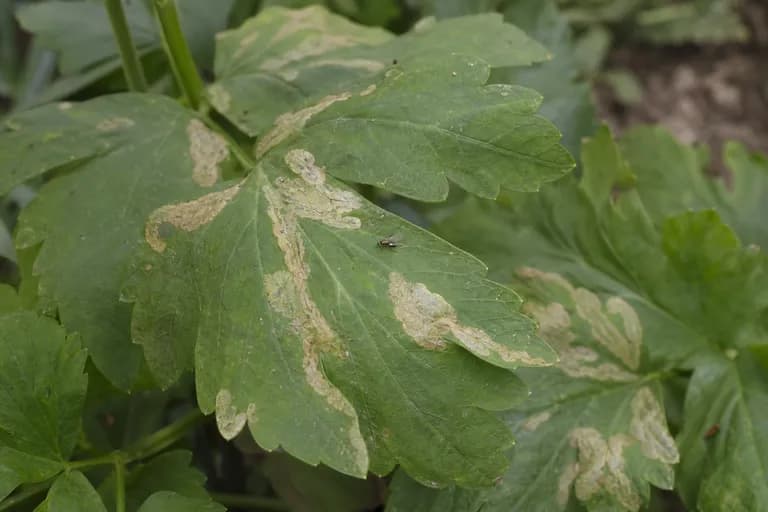
Oídio de las umbelíferas (Erysiphe heraclei)
EnfermedadRecubrimiento blanco polvoriento en el haz de las hojas que reduce la capacidad fotosintética, debilita la planta y disminuye el tamaño y calidad de las raíces si la infección es severa.
Solución de problemas comunes
La germinación lenta y errática es el desafío más frustrante del cultivo de chirivía, con tasas que rara vez superan el 50-60 % incluso con semilla fresca; usar siempre semilla del año anterior como máximo, ya que pierde viabilidad rápidamente. Las raíces se bifurcan y deforman en suelos pedregosos, compactados o recién estercolados, perdiendo su forma cónica característica. El contacto con la savia de la planta bajo la luz solar puede causar fitofotodermatitis (quemaduras en la piel), por lo que es recomendable usar guantes y mangas largas al manipular el follaje.
Consejos de cultivo
- Always use fresh seed purchased the same season you plan to sow — this cannot be overstated. Parsnip seed viability drops below 50% after just one year of storage, and two-year-old seed is virtually useless. If you have leftover seed from last year, discard it and buy new.
- Prepare the soil deeply before sowing, working it to a depth of 30-45 cm and removing every stone, clod, and piece of debris. Parsnip roots fork, split, and become misshapen when they encounter any obstruction. Raised beds filled with sifted compost-rich soil produce the straightest roots.
- Be patient during germination — 14-28 days is completely normal and does not indicate failure. Keep the soil surface consistently moist during this entire period. Covering the row with a damp burlap cloth, wooden board, or floating row cover prevents surface crusting and drying that kills emerging seedlings.
- Sow radish seeds in the same row as a companion marker crop. Radishes germinate in 3-5 days, marking the row so you can weed around the slow-emerging parsnips. The radishes will be harvested long before the parsnips need the space.
- Do not transplant parsnips — the long taproot is easily damaged or kinked during transplanting, producing forked and stunted roots. Always direct sow in the final growing position. This is one of the few vegetables where direct sowing is truly non-negotiable.
- Wear gloves and long sleeves when working with parsnip foliage in sunny conditions. The leaves and stems contain furanocoumarins that cause painful blistering burns (phytophotodermatitis) when they contact skin that is then exposed to sunlight. The reaction can be severe and leave discoloration lasting months.
- Leave roots in the ground after the first hard frosts rather than harvesting immediately. The cold triggers enzymatic conversion of starch to sugar, dramatically improving flavor. Parsnips dug before frost are starchy and bland compared to frost-sweetened roots — this transformation is the entire point of growing parsnips.
- Mulch heavily with 15-20 cm of straw before the ground freezes solid to keep soil accessible for winter harvesting. Without mulch protection, frozen ground makes it impossible to dig roots until spring thaw, defeating the purpose of this excellent in-ground storage crop.
Cultiva tu mejor Chirivía Corona Hueca — y todo lo que la rodea.
Empieza un plan gratis hoy. Diseña tus bancales, coloca tu Chirivía Corona Hueca y deja que PlotMyGarden gestione el momento, el espaciado, las asociaciones y los recordatorios de la semilla a la cesta.
Elige tu Chirivía Corona Hueca
Hollow Crown Improved
La selección mejorada del cultivar clásico con raíces más largas (30-35 cm), lisas y uniformes, sabor excepcionalmente dulce después de heladas, madura en 110-120 días y es la variedad más ampliamente disponible.
Gladiator F1
Híbrido moderno de alto rendimiento con excelente resistencia al cancro, raíces blancas lisas y uniformes de 25-30 cm, sabor dulce y textura fina, madura en 100-110 días.
Tender and True
Variedad británica tradicional apreciada por su resistencia al cancro y su corazón pequeño y tierno, raíces largas y cónicas con excelente sabor, madura en 120-130 días.
Albion F1
Híbrido de piel blanca muy lisa con mínima tendencia a bifurcarse, buena resistencia al cancro y sabor dulce equilibrado, ideal para cosecha de otoño-invierno, madura en 105-115 días.
Fresh parsnips sell for $3-6 per pound at grocery stores and farmers markets, with prices peaking in winter when demand is highest. A single 3-meter garden row produces 2.5-4 kg of roots from a seed packet costing $2-4, replacing $15-50 worth of store-bought parsnips. Because parsnips store exceptionally well in the ground through winter with no energy or infrastructure costs, the garden effectively serves as a free root cellar. Unlike most vegetables that require immediate harvesting and preservation, parsnips can be dug fresh from November through March, providing months of free produce with zero post-harvest effort.
Recetas rápidas
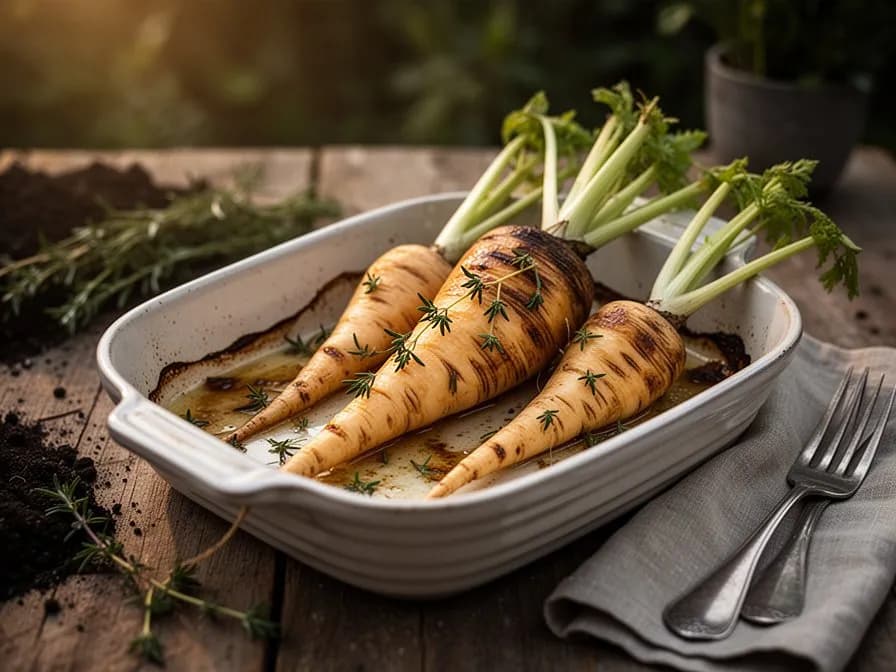
Honey-Roasted Parsnip Wedges
10 min prep + 35 min roastThe simplest and most popular way to enjoy Hollow Crown parsnips — chunky wedges roasted at high heat until the natural sugars caramelize into golden, crispy edges with a fluffy sweet interior. A drizzle of honey and fresh thyme elevates this humble root into something extraordinary.
6 ingredientesCreamy Parsnip and Apple Soup
15 min prep + 30 min cookA velvety winter soup that pairs the sweet nuttiness of frost-kissed parsnips with tart apple and warming spices. The natural creaminess of pureed parsnips means very little added cream is needed — the root does all the work to create a silky, luxurious texture.
10 ingredientesParsnip and Potato Mash with Brown Butter
10 min prep + 25 min cookA luxurious twist on classic mashed potato — swapping half the potatoes for parsnips adds a sweet, nutty complexity that transforms this side dish. Finished with brown butter and a grating of nutmeg, this is comfort food at its finest and a perfect match for roast meats and winter stews.
6 ingredientesUsos culinarios
Sopas, asados, puré.
Qué contiene
Beneficios para la salud
- Outstanding source of dietary fiber at 4.9g per 100g, providing both soluble and insoluble fiber that supports digestive regularity, feeds beneficial gut microbiota, and helps maintain healthy cholesterol levels — a single large parsnip provides over 25% of the daily recommended fiber intake.
- Rich in folate (vitamin B9) essential for DNA synthesis, red blood cell formation, and neural tube development during pregnancy — parsnips provide 17% of the daily value per 100g, making them an important vegetable for women of childbearing age.
- Contains significant potassium at 375mg per 100g, supporting cardiovascular health by helping regulate blood pressure, counterbalancing dietary sodium, and maintaining proper heart rhythm and muscle function.
- Provides manganese (0.56mg per 100g, 24% DV), a trace mineral critical for bone health, wound healing, metabolism of carbohydrates and amino acids, and activation of the antioxidant enzyme superoxide dismutase.
- Contains polyacetylenes including falcarinol and falcarindiol, naturally occurring bioactive compounds that have demonstrated anti-inflammatory and cytotoxic effects against certain cancer cell lines in laboratory research — these compounds are concentrated in the outer layer of the root.
- Good source of vitamin C (17mg per 100g) and vitamin K (22.5mcg per 100g), supporting immune function, collagen synthesis, blood clotting, and bone metabolism — the combination of high fiber and moderate calorie density also makes parsnips supportive of healthy weight management.
De dónde viene Chirivía Corona Hueca
The parsnip (Pastinaca sativa) is native to Eurasia, with its wild ancestor growing across a broad range from the Atlantic coast of Europe through the Caucasus and into Central Asia. The Romans cultivated parsnips extensively, though early historical references are complicated by the fact that Roman writers often used the same word — pastinaca — for both parsnips and carrots, making it difficult to distinguish which root they were describing. The Roman emperor Tiberius reportedly had parsnips imported from the Rhine frontier of Germania, where the colder climate produced sweeter roots.
Throughout the medieval period, the parsnip was arguably the most important root vegetable in northern Europe. Before the introduction of the potato from the Americas in the late 16th century and the refinement of sugar from cane and beet, parsnips filled both roles — they were the everyday starchy staple and one of the few sources of sweetness available to common people. Medieval cooks used parsnip in everything from soups and pottages to sweet fritters, pies, and even wine. The root was so central to the diet that it featured prominently in monastery gardens and manorial kitchen plots across England, France, and the Low Countries.
The Hollow Crown variety emerged in England in the early 19th century, with written records placing its cultivation at least as far back as the 1820s. It was developed through selective breeding for a smooth, tapered root with a distinctive hollow or indented crown where the leaves emerge. The variety quickly became the standard market parsnip in Victorian England due to its reliable shape, sweet flavor, and excellent storage qualities. English settlers brought Hollow Crown to North America, where it became equally popular in colonial and early American gardens. Despite the rise of the potato and the decline of parsnip's culinary prominence, Hollow Crown has endured as the benchmark parsnip variety for over two centuries, remaining the most widely grown cultivar in both home gardens and commercial production across the English-speaking world.
Chirivía Corona Hueca: ¿sabías que?
Datos fascinantes sobre Chirivía Corona Hueca
Before the potato arrived in Europe from the Americas in the late 1500s, the parsnip was the primary starchy root vegetable across the continent — it held the same culinary role that potatoes occupy today, serving as the everyday carbohydrate in soups, stews, and roasts for centuries.
Chirivía Corona Hueca: preguntas frecuentes
¿Cuándo debo plantar Chirivía Corona Hueca?
¿Cuáles son buenas plantas acompañantes para Chirivía Corona Hueca?
¿En qué zonas de rusticidad puede crecer Chirivía Corona Hueca?
¿Cuánto sol necesita Chirivía Corona Hueca?
¿A qué distancia debo espaciar Chirivía Corona Hueca?
¿Qué plagas y enfermedades afectan a Chirivía Corona Hueca?
¿Cómo almaceno Chirivía Corona Hueca después de la cosecha?
¿Cuáles son las mejores variedades de Chirivía Corona Hueca para cultivar?
¿Qué suelo necesita Chirivía Corona Hueca?
Why didn't my parsnip seeds germinate?
Why are my parsnips forked and misshapen instead of smooth and straight?
Are parsnips safe to eat if the tops have turned brown and died back?
Can I get a skin rash from parsnip plants?
How long can I leave parsnips in the ground before harvesting?
Why do my parsnips taste bland and starchy instead of sweet?
Acabas de leer la teoría. Ahora cultívala en piloto automático.
Todo lo que hace que Chirivía Corona Hueca sea delicado — el momento, el espaciado, las asociaciones, la ventana de cosecha — es justo lo que PlotMyGarden resuelve por ti, para cada planta de tu huerto.
Un plan que conoce tu clima
Indica tu ubicación una vez. Recibe fechas de siembra, abonado y cosecha basadas en tu última helada real y el pronóstico en vivo — sin adivinar con un sobre genérico.
De la sección “Cuándo plantar”Planificador de bancales de arrastrar y soltar
Diseña bancales sobre una cuadrícula. Cada planta encaja con su espaciado correcto y ves toda la temporada antes de gastar un céntimo en semillas.
De la sección “Cultivo”Conflictos de asociación, detectados a tiempo
Más de 200 buenas y malas combinaciones comprobadas en vivo mientras plantas — para que un error que arruine la temporada nunca llegue a la tierra.
De la sección “Asociaciones”Recordatorios que sí vas a seguir
“Riega las judías.” “Recoge hoy antes de que se pase.” Oportunos, concretos y ligados a las plantas que de verdad cultivas.
De la sección “Cosecha”Escalonado, programado
¿Quieres cosechar seis semanas en vez de seis días? Reparte tus siembras automáticamente y te avisa cuando toca el siguiente lote.
De la sección “Cuándo plantar”Un registro que se vuelve más listo
Cada cosecha que registras le enseña tu huerto. El plan del año que viene parte de lo que de verdad funcionó en tu suelo, no en un manual.
De la sección “Resumen”Planta estos junto a Chirivía Corona Hueca
Más Hortalizas de raíz
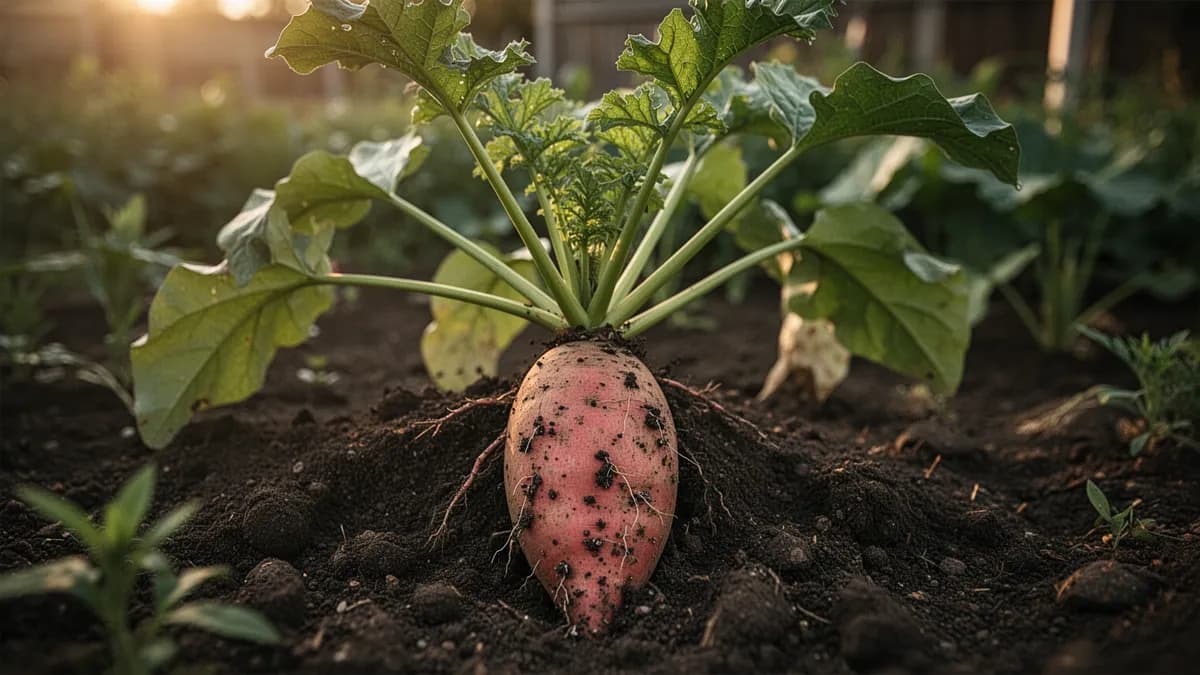
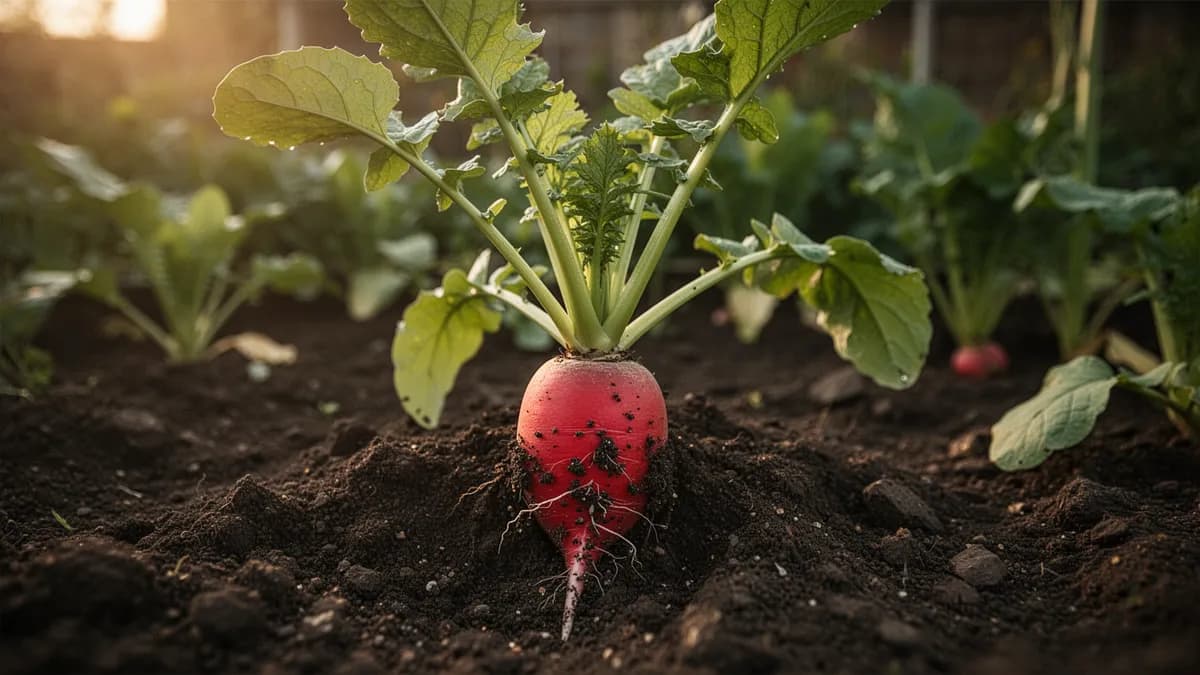
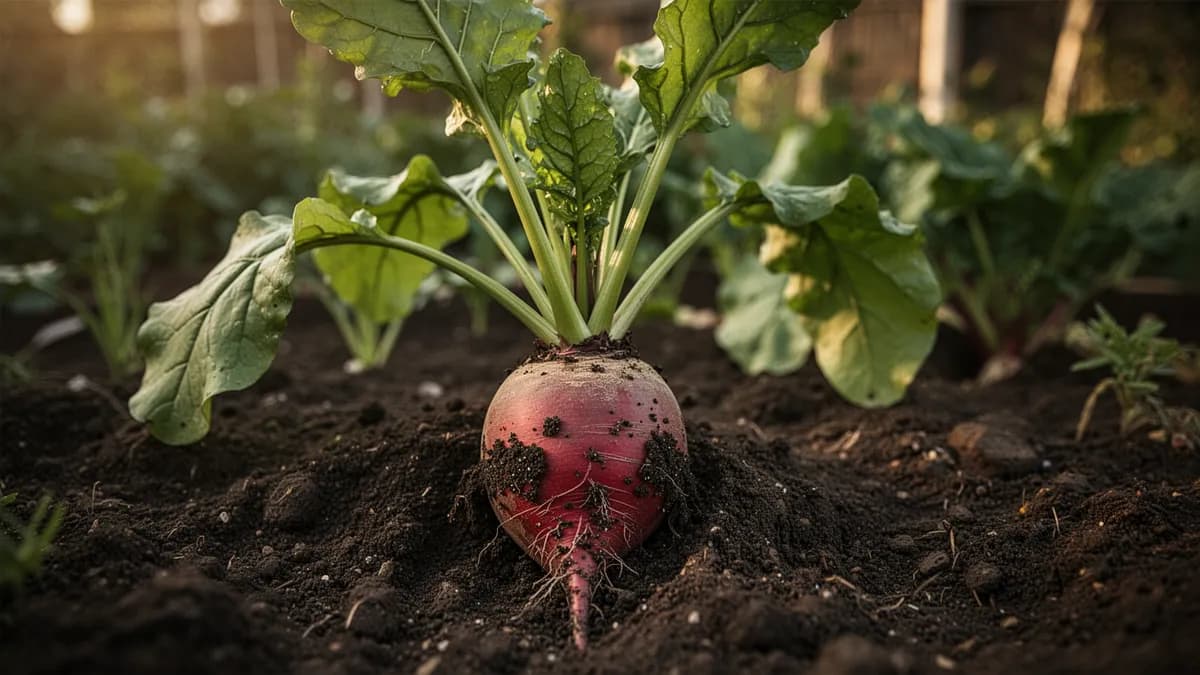
Mantén Chirivía Corona Hueca lejos de estos
Cultiva tu mejor Chirivía Corona Hueca — y todo lo que la rodea.
Empieza un plan gratis hoy. Diseña tus bancales, coloca tu Chirivía Corona Hueca y deja que PlotMyGarden gestione el momento, el espaciado, las asociaciones y los recordatorios de la semilla a la cesta.