Rábano
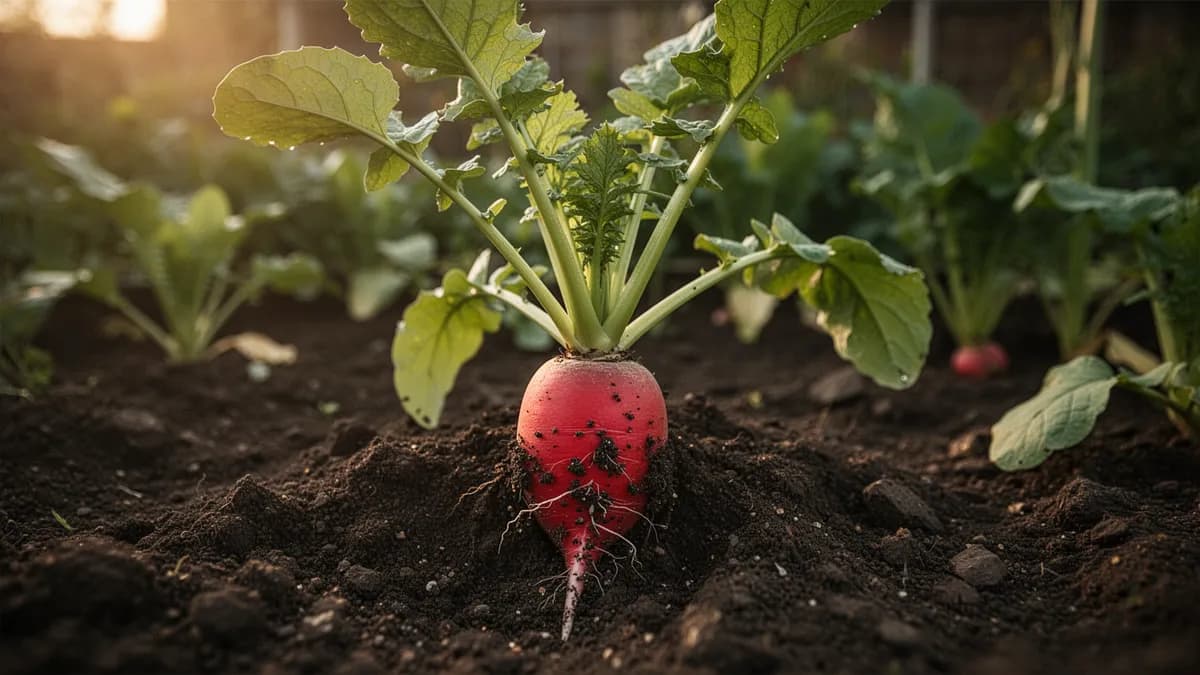
Una verdura de raíz de rápido crecimiento con raíces crujientes y picantes.





En esta páginaResumen
Conoce Rábano
Una verdura de raíz de rápido crecimiento con raíces crujientes y picantes. Los rábanos son ideales para principiantes.
Cuándo plantar Rábano
Siembre cada 3 semanas para cosecha continua.
Tu año de Rábano
Ajustado a Zona 7 · temporada típica · la helada se va hacia el 2 abr y vuelve hacia el 1 nov
Planta Rábano Mar – May, Ago – Sep y cosecha Abr – Jun, Sep – Oct. Consulta los métodos de plantación y elige tu clima para adaptar los periodos.
Cómo cultivar Rábano
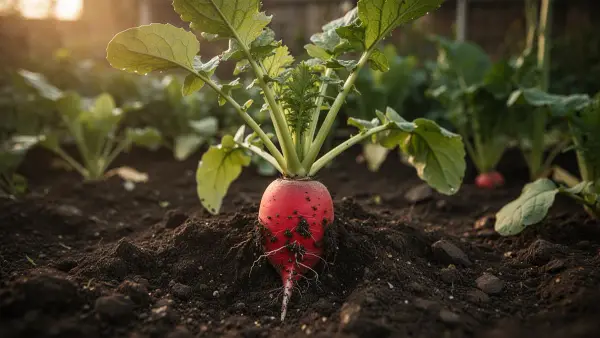
Los rábanos prefieren clima fresco y pueden sembrarse a principios de primavera. Siembre semillas 1 cm de profundidad, 2,5 cm aparte.
Riegue regularmente para raíces tiernas y dulces. En sequía, los rábanos se vuelven leñosos y picantes.
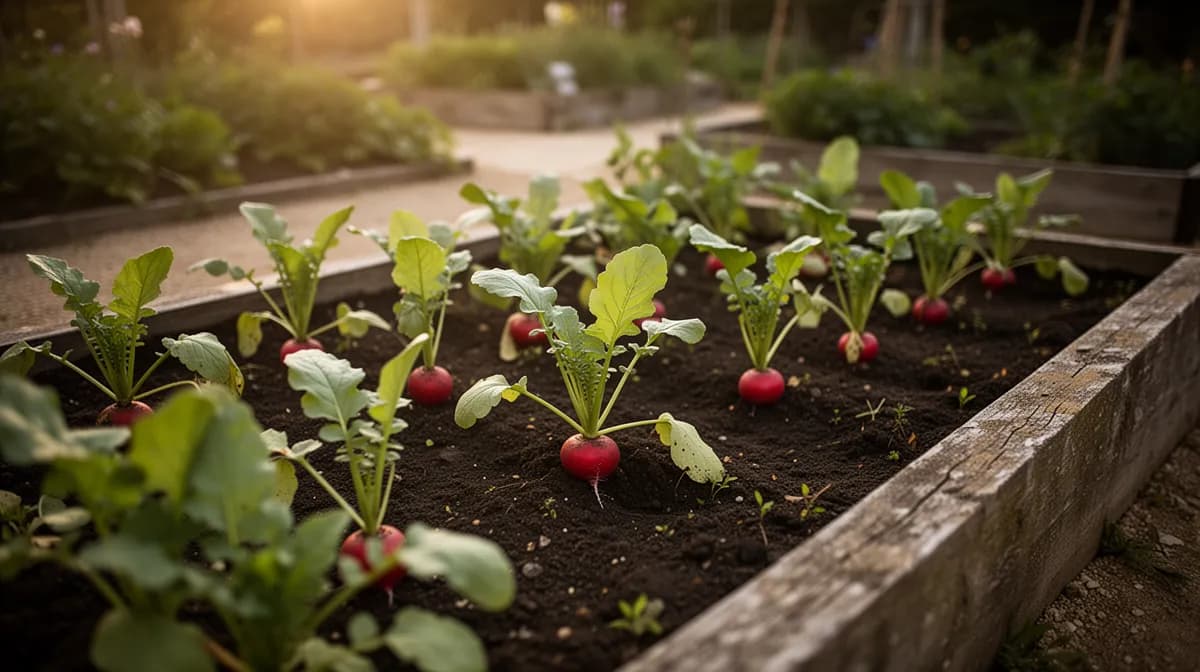
1152 plantas caben en un bancal de 120 × 240 cm
Cada Rábano pide 5 cm de margen. El planificador guarda ese marco por ti — cada planta, cada bancal.
Los mejores vecinos de Rábano
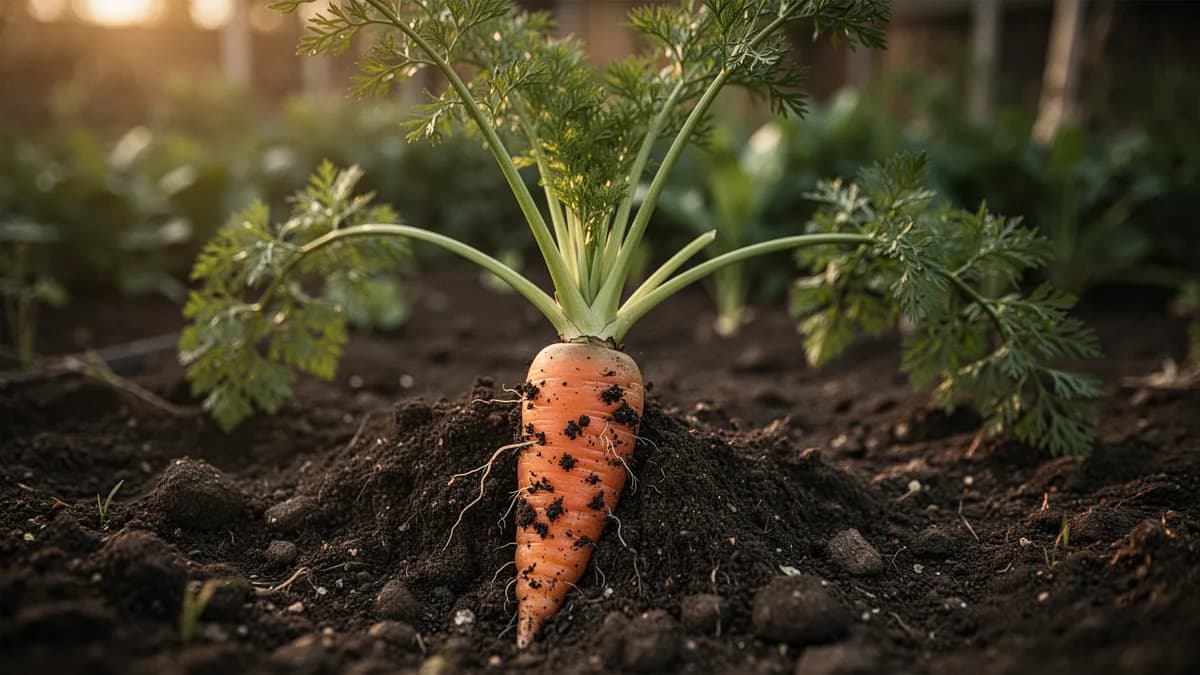
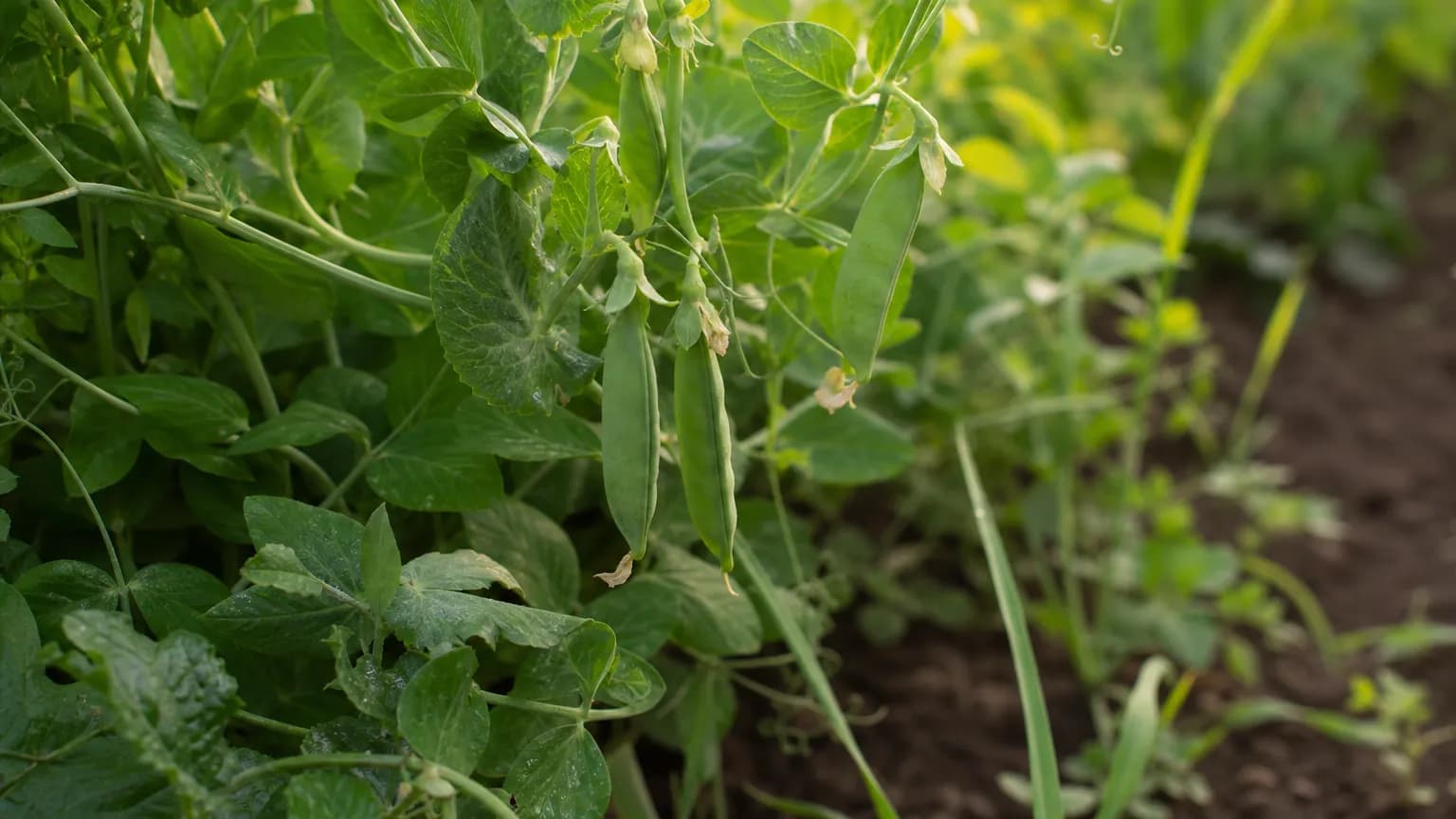
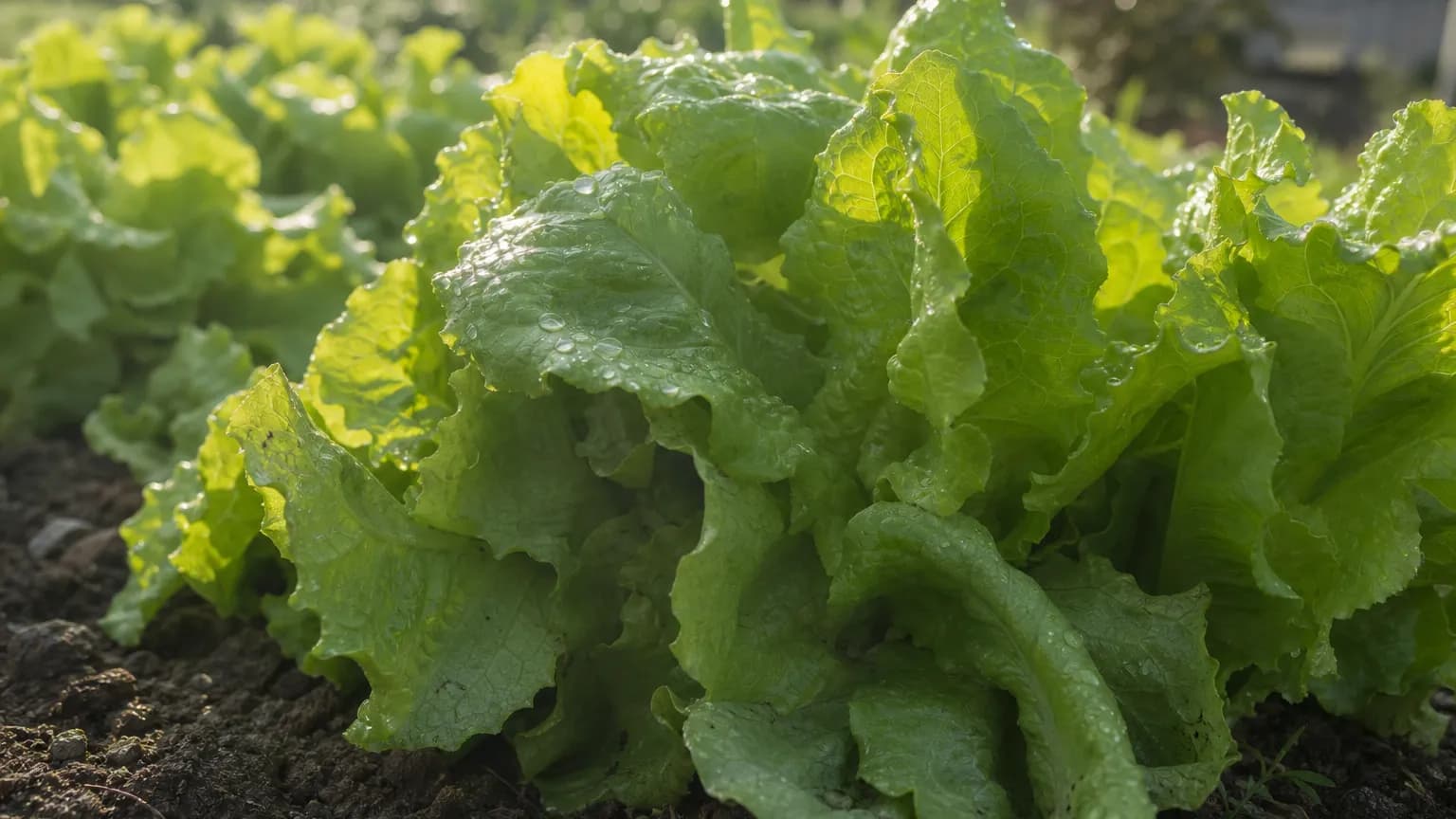
Zanahorias y lechuga son buenos compañeros.
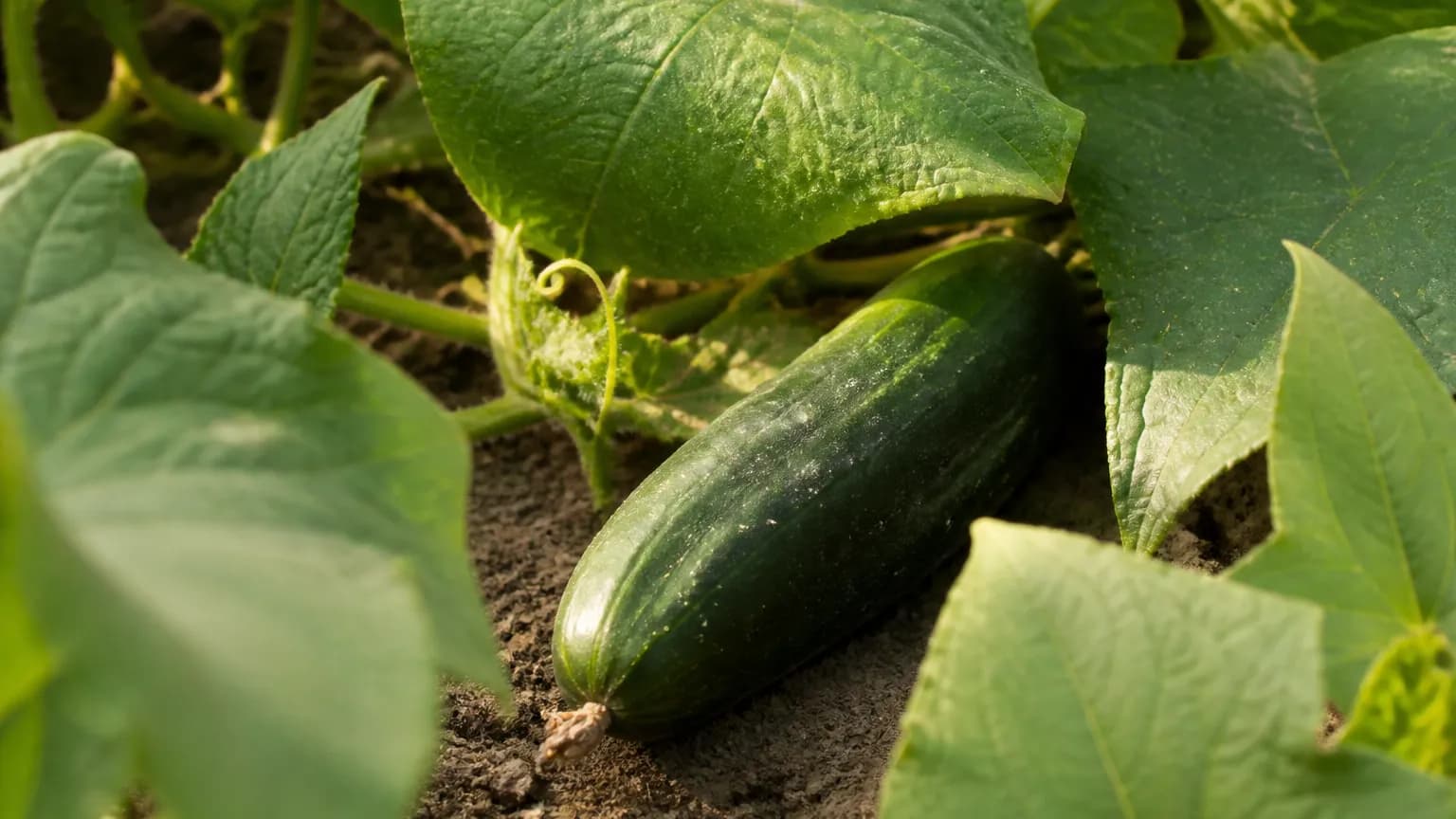
Zanahoria va a su lado. Uva no.
Saber de huerto de siempre, cotejado con la tabla real de Rábano — prueba cualquier planta que cultives.
Prueba Rábano en un bancal, aquí mismo
Un bancal real del planificador con Rábano ya plantado. Toca una planta compañera para colocarla y mira cómo responde la comprobación de vecinos: verde para buenos vecinos, rojo si hay conflicto.


Guías de cultivo relacionadas
Abónalo bien
Suelo suelto con pH 6,0-7,0. No demasiado nitrógeno.
Temperatura ideal
Compatibilidad de zonas de rusticidad
De la semilla a la cosecha, etapa por etapa
Germinación
Las semillas de rábano son de las más rápidas en germinar entre las hortalizas. Una radícula blanca (punta de raíz) empuja hacia abajo en 24-48 horas tras la siembra en suelo cálido, seguida por la emergencia de dos hojas cotiledonares redondas por encima de la superficie. Incluso en suelo tan fresco como 4°C, la germinación ocurre en 7-10 días.
Plántula y aclareo
Aparece el primer par de hojas verdaderas, claramente diferentes de los cotiledones lisos — las hojas verdaderas del rábano tienen una textura áspera y son ligeramente lobuladas. Esta es la etapa crítica del aclareo. Las plántulas crecen rápido y empiezan a competir por espacio y nutrientes.
Desarrollo foliar
La planta desarrolla una roseta de 4-6 hojas y la raíz principal comienza a engrosarse visiblemente. La energía de la fotosíntesis se dirige cada vez más hacia la expansión de la raíz. La forma característica del rábano empieza a formarse bajo tierra.
Engrosamiento de la raíz
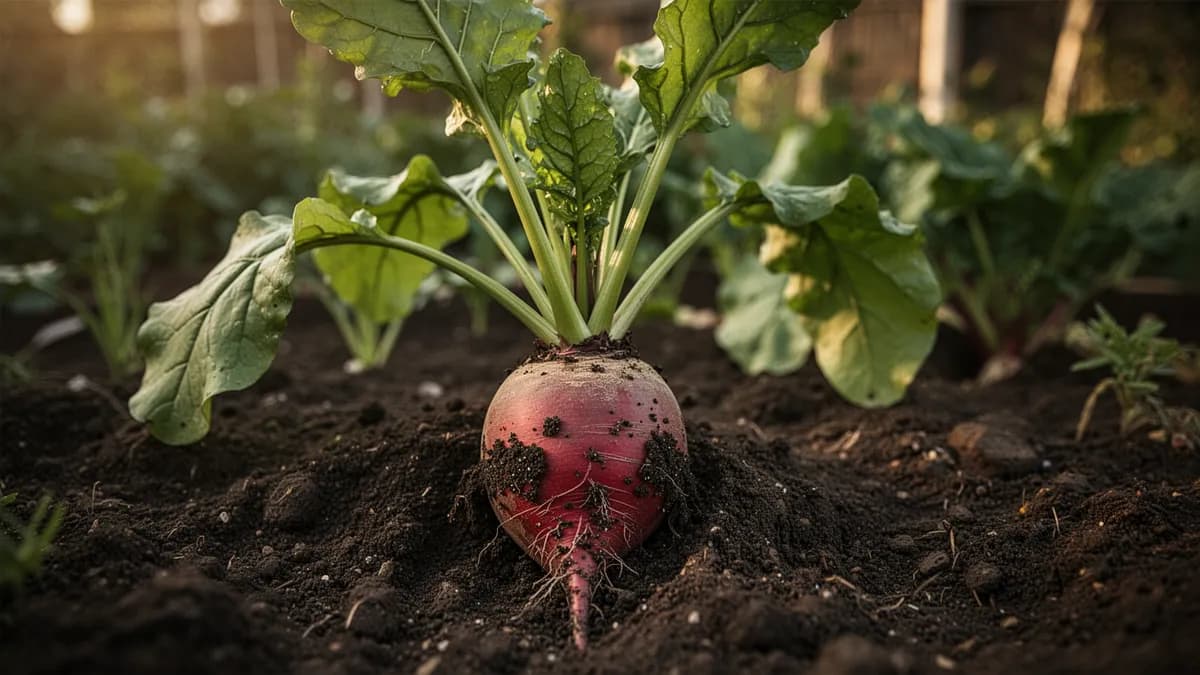
La raíz se expande rápidamente y empuja sus hombros por encima de la superficie del suelo. El color de la raíz se desarrolla según la variedad — rojo, rosa, blanco, morado o bicolor. El interior se llena de una carne blanca, crujiente y jugosa. Este es el período de crecimiento más rápido.
Madurez
Los rábanos de primavera alcanzan el tamaño de cosecha a los 2-3 cm de diámetro. Las raíces están en su punto máximo de crujido y sabor — ligeramente picantes con un crujido satisfactorio. Dejarlos pasados de este punto provoca un deterioro rápido de la calidad, ya que las raíces se vuelven esponjosas e intensamente picantes.
Espigado (si no se cosechan)
Si se dejan en el suelo pasada la madurez, los rábanos emiten un tallo floral alto con pequeñas flores blancas o rosas. La raíz se vuelve leñosa y hueca. Sin embargo, las vainas de semillas resultantes son comestibles y tienen un sabor suave y agradable a rábano.
Mantén el suelo uniformemente húmedo pero no encharcado. No dejes que la superficie forme costra, ya que a las plántulas emergentes les cuesta atravesar un suelo compactado. Una ligera cobertura de vermiculita sobre las semillas ayuda a conservar la humedad.

Cuidar Rábano mes a mes
Qué hacer cada mes para tu Rábano
Octubre
Mes actualHarvest fall-sown spring radishes and winter storage radishes. Daikon and Black Spanish can tolerate light frost and actually improve in flavor. Store winter types in damp sand in a cool root cellar for months of use.
Ten claro qué hacer en tu huerto, cada mes
Un correo al empezar cada mes: qué sembrar, plantar y hacer ahora mismo — para tu Rábano y todo lo que crece alrededor. Más un breve curso inicial para esquivar los errores clásicos.
- Qué hacer ahora mismo
- Ajustado a tu temporada
- Curso inicial incluido
Cosechar Rábano
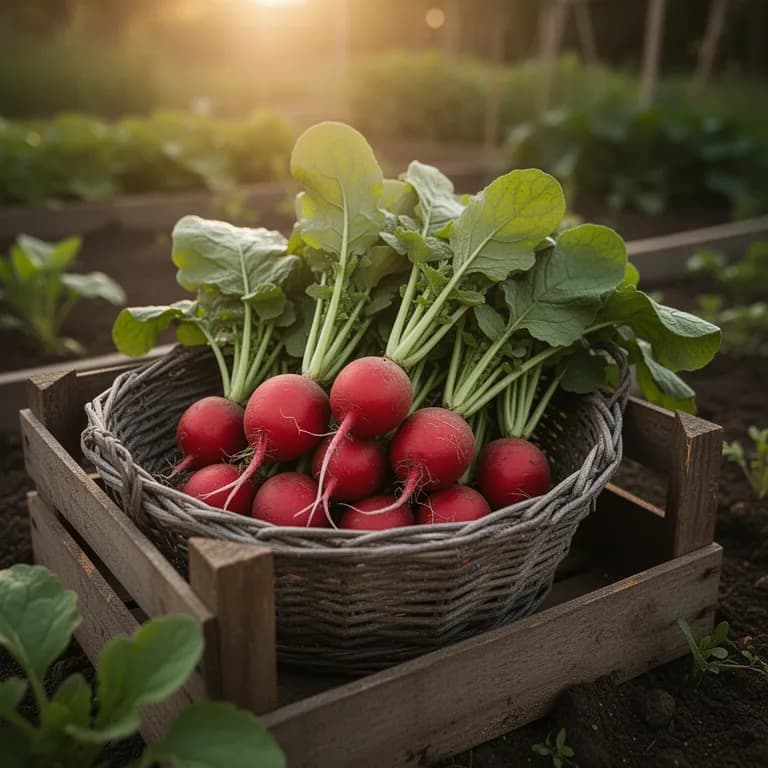
Coseche rábanos cuando las raíces tienen 2-3 cm de diámetro. No deje demasiado tiempo en el suelo.
se supone que plantas al comenzar el periodo — indica tu fecha real
Raíces de 2-3 cm de diámetro; ventana de 2-3 días antes de ponerse esponjosas.
Almacenamiento y conservación
Duran 1-2 semanas en refrigerador. Remueva hojas antes de almacenar.
Qué falla — y cómo solucionarlo
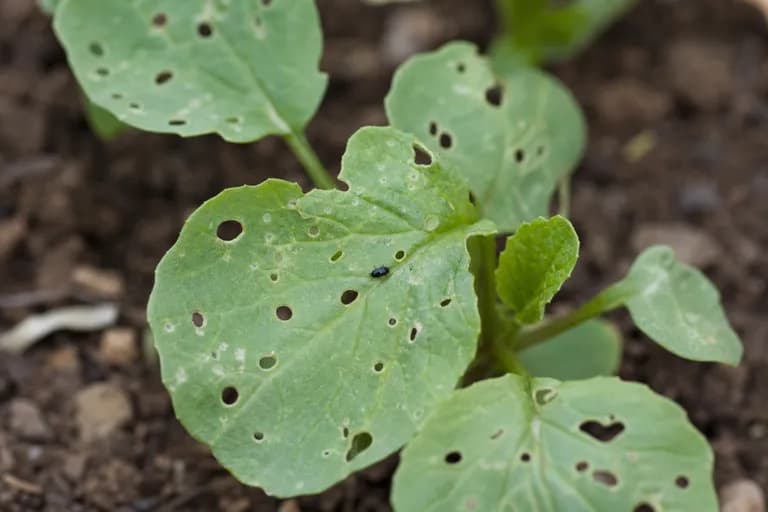
Mosca de la col
PlagaLarvas en raíces.
Solución de problemas comunes
Raíces leñosas por crecimiento prolongado o sequía.
Consejos de cultivo
- Sow radishes every 10-14 days for a continuous harvest — a single sowing gives you only a 1-2 week harvest window before roots become overripe. Succession planting is the key to a steady supply.
- Thin to 5 cm apart without fail. This is the number one mistake with radishes. Crowded plants produce beautiful foliage but no usable roots. Thin when the first true leaves appear and eat the thinnings.
- Keep soil consistently moist with light, frequent watering. Radishes grown with irregular moisture develop cracked, woody, or pithy roots with a harsh, bitter flavor.
- Grow radishes only in cool seasons — spring and fall. Summer heat causes bolting, pithy roots, and intensely pungent flavor. Stop sowing when temperatures regularly exceed 24°C (75°F).
- Remove rocks and deeply loosen soil before planting. Any obstruction causes forked, misshapen roots. For long varieties like daikon, loosen soil to 30-40 cm deep.
- Use floating row covers from the day you sow to protect against flea beetles, the most common radish pest. The covers also moderate temperature and retain moisture.
- Harvest spring radishes the moment they reach 2-3 cm in diameter. Check daily once shoulders push above the soil. They go from perfect to overripe in just days during warm spells.
- Interplant radishes with slow-germinating crops like carrots and parsnips. Radishes mark the rows, break up soil crusts, and are harvested before the main crop needs the space.
Cultiva tu mejor Rábano — y todo lo que la rodea.
Empieza un plan gratis hoy. Diseña tus bancales, coloca tu Rábano y deja que PlotMyGarden gestione el momento, el espaciado, las asociaciones y los recordatorios de la semilla a la cesta.
Elige tu Rábano
Cherry Belle
Variedad roja clásica, de rápido crecimiento. 25 días.
French Breakfast
Variedad alargada roja-blanca con sabor suave. 25 días.
A packet of radish seeds costing $2-3 contains 200-500 seeds — enough for an entire season of succession plantings. At organic grocery prices of $3-5 per bunch, even a modest planting easily yields $20-40 worth of radishes per season. Winter storage varieties like daikon, which sell for $3-6 each at farmers markets, represent even greater value. The speed of radish growing (seed to harvest in 3-4 weeks) makes them the highest return-on-investment crop for new gardeners.
Recetas rápidas
French Radis au Beurre
5 minThe simplest and most elegant way to enjoy fresh radishes. Crisp, just-pulled radishes served with high-quality salted butter and flaky sea salt. A beloved French bistro classic that lets the radish's peppery crunch shine against the cool creaminess of butter.
4 ingredientesQuick-Pickled Radishes
15 min + 1 hr restingBright, tangy, and beautifully pink, these quick-pickled radishes transform a simple root into an addictive condiment. Perfect on tacos, banh mi, grain bowls, or alongside grilled meats. They keep for weeks in the refrigerator and get better each day.
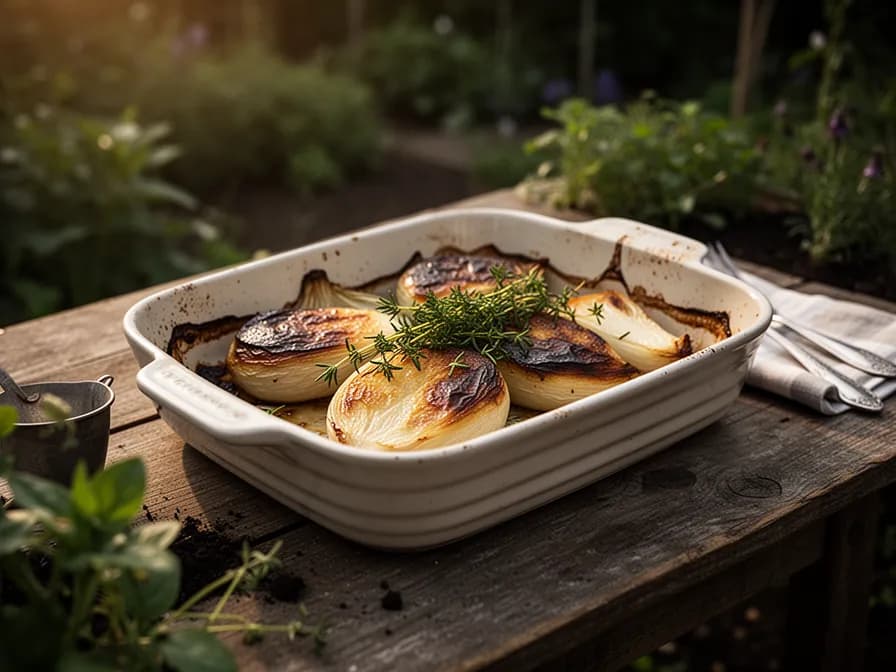
6 ingredientesRoasted Radishes with Herbs
30 minRoasting transforms radishes from sharp and peppery to mellow, sweet, and tender — similar to baby turnips. A revelation for anyone who thinks they do not like radishes. The caramelized edges add a savory depth that is impossible to resist.
7 ingredientesUsos culinarios
Crudo en ensaladas, en pan o como botana.
Qué contiene
Beneficios para la salud
- Rich in Vitamin C — 100g of radishes provides 16% of daily needs, supporting immune function, collagen synthesis, and enhanced iron absorption from plant foods.
- Contains glucosinolates, sulfur compounds that break down into isothiocyanates during chewing — these have been studied for potential anti-cancer properties, particularly in reducing risk of colorectal and stomach cancers.
- Natural digestive aid — radishes stimulate bile production and support liver function. Traditional Ayurvedic and Chinese medicine have used radishes for digestive complaints for centuries.
- Very low calorie (16 per 100g) with high water content (95%), making radishes an excellent high-volume, low-energy snack that supports weight management and hydration.
- Good source of folate (vitamin B9), which is critical for DNA synthesis, cell division, and is especially important during pregnancy to prevent neural tube defects.
- Anthocyanins in red and purple radish varieties provide additional antioxidant protection, helping to reduce inflammation and support cardiovascular health.
De dónde viene Rábano
The radish is one of humanity's oldest cultivated plants, with origins traced to Southeast Asia and the eastern Mediterranean region. Wild forms of Raphanus sativus still grow in these areas today. Ancient Egyptians cultivated radishes extensively — records from the construction of the Great Pyramids at Giza (around 2560 BCE) mention radishes, onions, and garlic as foods provided to the laborers. The Greek historian Herodotus noted that an inscription on the Great Pyramid recorded expenditures for these three crops.
From Egypt, radish cultivation spread throughout the ancient Mediterranean world. Greeks and Romans grew multiple varieties and valued radishes both as food and medicine — Pliny the Elder described several types in his Natural History, including long, round, and wild forms. The Romans introduced radishes to northern Europe, where they became a garden staple. In Asia, radishes evolved independently into the large, mild daikon types that became central to Chinese, Japanese, and Korean cuisines, with Chinese agricultural texts mentioning radish cultivation as early as 700 BCE.
The modern diversity of radishes reflects centuries of selective breeding across different cultures. European growers favored small, quick-maturing spring types — the familiar red globe radishes that mature in three to four weeks. Asian growers developed the enormous daikon and Sakurajima varieties that can weigh several kilograms. The Watermelon radish, with its green exterior and brilliant magenta interior, was developed in China. Today, radishes are grown on every inhabited continent and remain one of the most beginner-friendly and rewarding vegetables for home gardeners, valued for their speed, simplicity, and the nearly instant gratification they provide.
Rábano: ¿sabías que?
Datos fascinantes sobre Rábano
Radishes are one of the first crops ever cultivated by humans — they were grown in ancient Egypt before the pyramids were built, and are depicted in tomb paintings dating back over 4,000 years.
Rábano: preguntas frecuentes
¿Cuándo debo plantar Rábano?
¿Cuáles son buenas plantas acompañantes para Rábano?
¿En qué zonas de rusticidad puede crecer Rábano?
¿Cuánto sol necesita Rábano?
¿A qué distancia debo espaciar Rábano?
¿Qué plagas y enfermedades afectan a Rábano?
¿Cómo almaceno Rábano después de la cosecha?
¿Cuáles son las mejores variedades de Rábano para cultivar?
¿Qué suelo necesita Rábano?
Why are my radishes all leaves and no root?
Why are my radishes woody, pithy, or hollow inside?
Can I grow radishes in containers?
Why are my radishes extremely spicy and bitter?
When should I plant radishes for a fall harvest?
Are radish leaves edible?
Acabas de leer la teoría. Ahora cultívala en piloto automático.
Todo lo que hace que Rábano sea delicado — el momento, el espaciado, las asociaciones, la ventana de cosecha — es justo lo que PlotMyGarden resuelve por ti, para cada planta de tu huerto.
Un plan que conoce tu clima
Indica tu ubicación una vez. Recibe fechas de siembra, abonado y cosecha basadas en tu última helada real y el pronóstico en vivo — sin adivinar con un sobre genérico.
De la sección “Cuándo plantar”Planificador de bancales de arrastrar y soltar
Diseña bancales sobre una cuadrícula. Cada planta encaja con su espaciado correcto y ves toda la temporada antes de gastar un céntimo en semillas.
De la sección “Cultivo”Conflictos de asociación, detectados a tiempo
Más de 200 buenas y malas combinaciones comprobadas en vivo mientras plantas — para que un error que arruine la temporada nunca llegue a la tierra.
De la sección “Asociaciones”Recordatorios que sí vas a seguir
“Riega las judías.” “Recoge hoy antes de que se pase.” Oportunos, concretos y ligados a las plantas que de verdad cultivas.
De la sección “Cosecha”Escalonado, programado
¿Quieres cosechar seis semanas en vez de seis días? Reparte tus siembras automáticamente y te avisa cuando toca el siguiente lote.
De la sección “Cuándo plantar”Un registro que se vuelve más listo
Cada cosecha que registras le enseña tu huerto. El plan del año que viene parte de lo que de verdad funcionó en tu suelo, no en un manual.
De la sección “Resumen”Planta estos junto a Rábano
Más Hortalizas de raíz
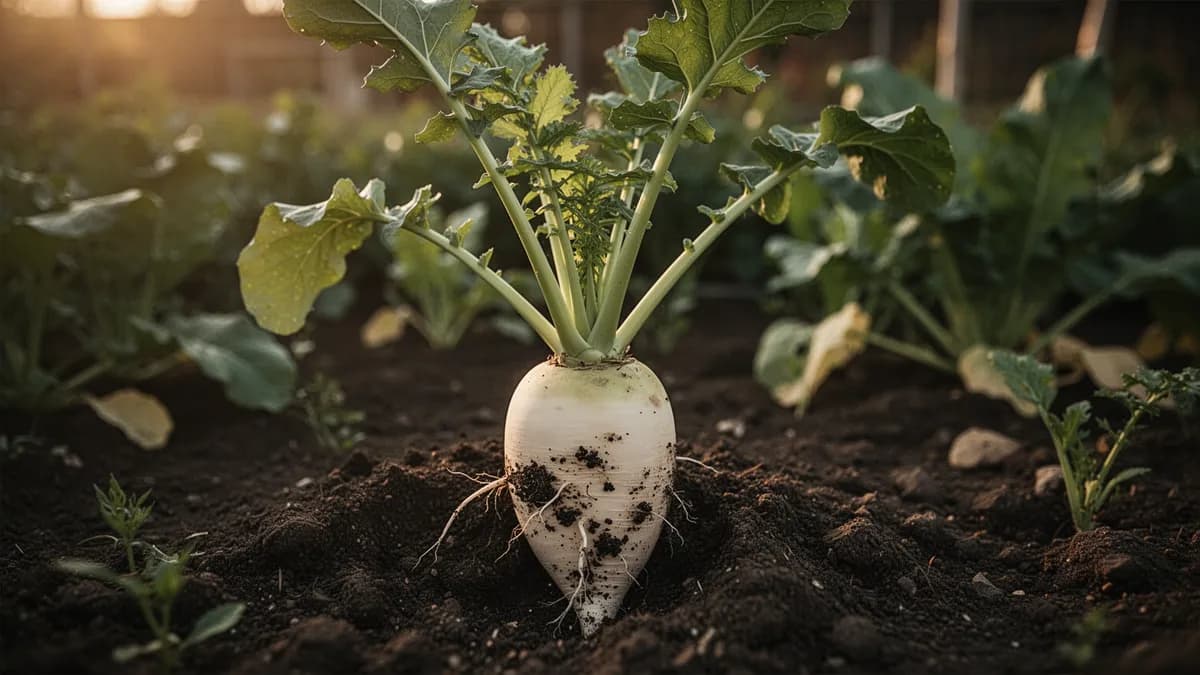
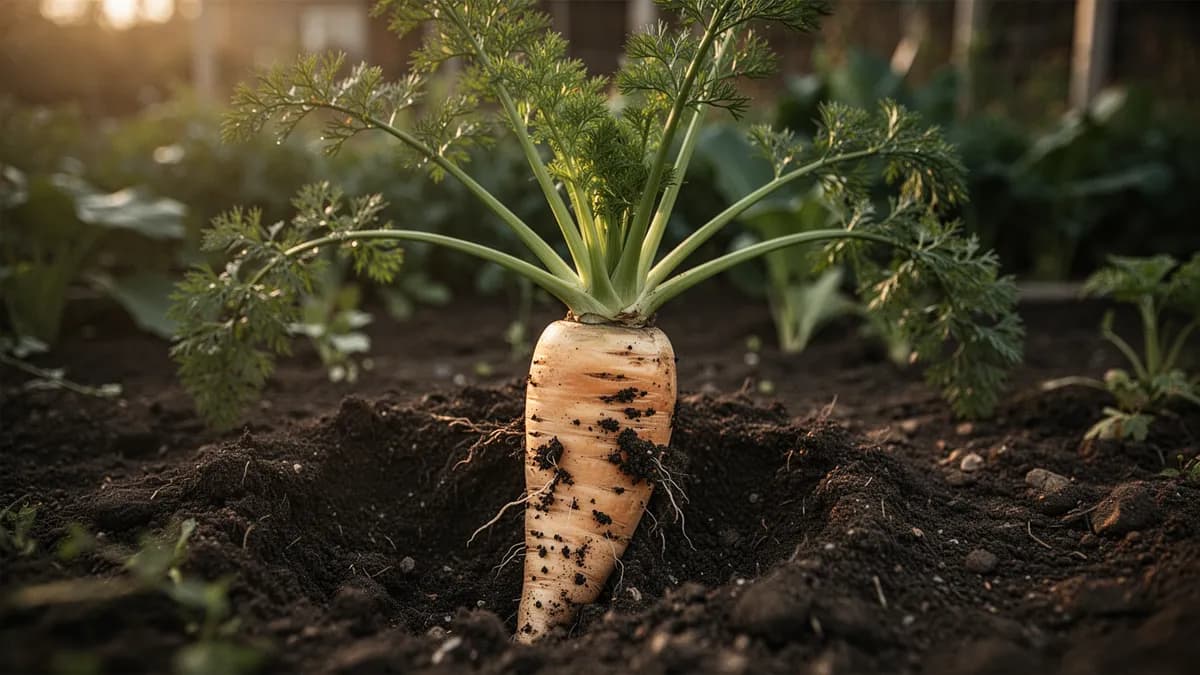
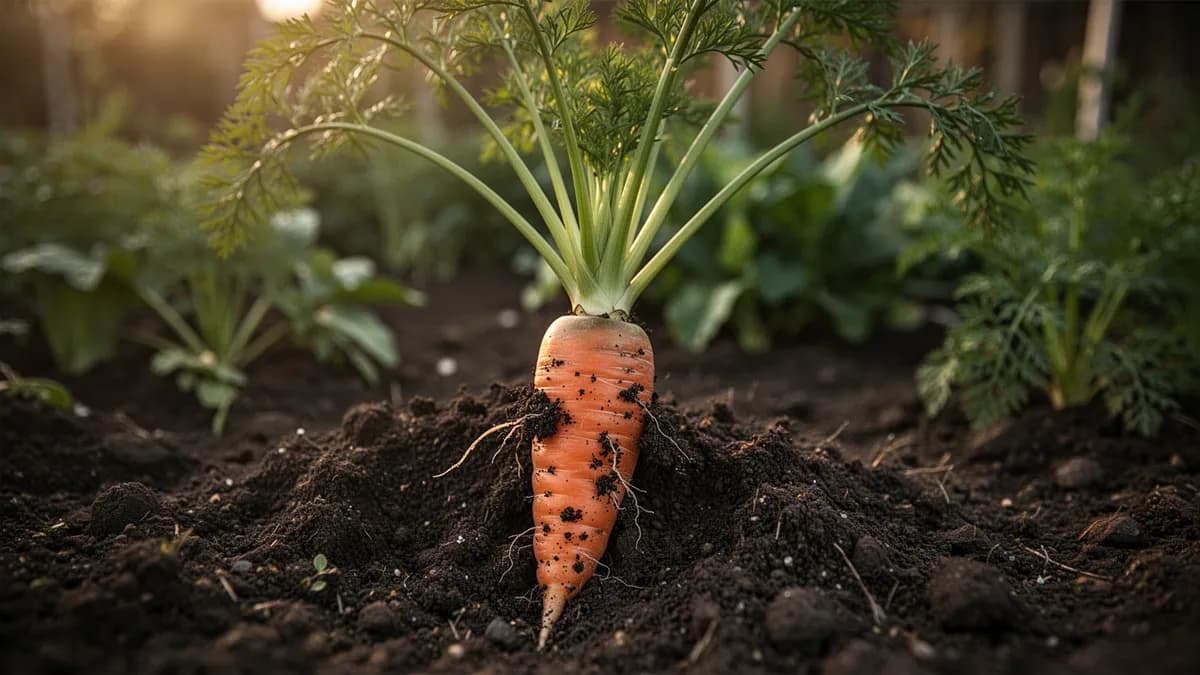
Mantén Rábano lejos de estos
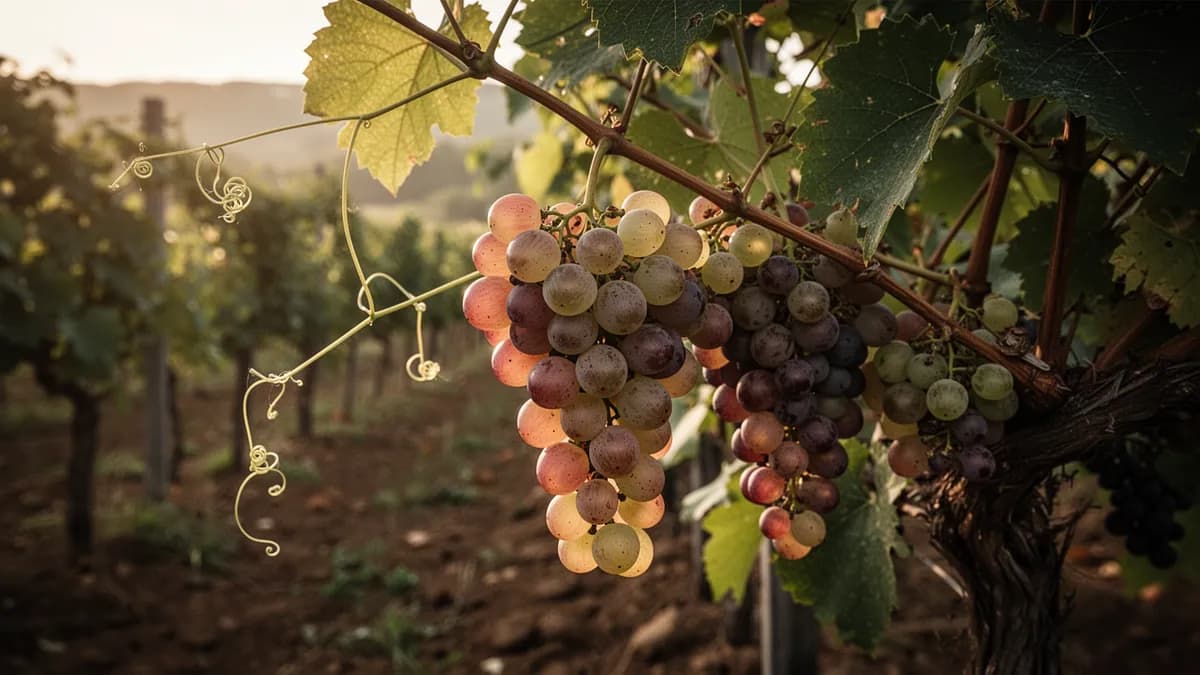
Diseños de jardín con Rábano
Cultiva tu mejor Rábano — y todo lo que la rodea.
Empieza un plan gratis hoy. Diseña tus bancales, coloca tu Rábano y deja que PlotMyGarden gestione el momento, el espaciado, las asociaciones y los recordatorios de la semilla a la cesta.