Zanahoria Cosmic Purple
La zanahoria Cosmic Purple (Daucus carota) es una variedad espectacular con piel morada oscura y un corazón anaranjado que se revela al cortarla, creando un contraste visual deslumbrante.






En esta páginaResumen
Conoce Zanahoria Cosmic Purple
La zanahoria Cosmic Purple (Daucus carota) es una variedad espectacular con piel morada oscura y un corazón anaranjado que se revela al cortarla, creando un contraste visual deslumbrante. Su color proviene de antocianinas, potentes antioxidantes, y su sabor es dulce y especiado con matices terrosos más complejos que los de las zanahorias naranjas convencionales.
Cuándo plantar Zanahoria Cosmic Purple
Siembre directamente a 0,5-1 cm de profundidad. No trasplanta. Las semillas son diminutas; mezcle con arena. Mantenga el suelo húmedo durante las 2-3 semanas de germinación. Cubra con manta térmica para mantener humedad.
Tu año de Zanahoria Cosmic Purple
Ajustado a Zona 7 · temporada típica · la helada se va hacia el 2 abr y vuelve hacia el 1 nov
Planta Zanahoria Cosmic Purple Mar – Abr, Jul – Ago y cosecha Jun – Jul, Oct – Nov. Consulta los métodos de plantación y elige tu clima para adaptar los periodos.

Cómo cultivar Zanahoria Cosmic Purple
Siembre directamente en el suelo 2-3 semanas antes de la última helada, a 0,5-1 cm de profundidad en surcos separados 20-30 cm. Las semillas son diminutas; mezcle con arena para distribución uniforme. Germinación lenta en 14-21 días.
Aclare a 5-8 cm cuando las plántulas tengan 5 cm. Mantenga el suelo uniformemente húmedo durante la germinación y el crecimiento. Aplique acolchado ligero para mantener humedad y cubra las coronas expuestas con tierra para evitar que se pongan verdes.
Fertilice con abono bajo en nitrógeno y rico en fósforo y potasio para promover raíces en lugar de follaje. El exceso de nitrógeno produce raíces bifurcadas y peludas. Las zanahorias moradas son ligeramente más lentas que las naranjas, necesitando 70-80 días hasta la madurez.

450 plantas caben en un bancal de 120 × 240 cm
Cada Zanahoria Cosmic Purple pide 8 cm de margen. El planificador guarda ese marco por ti — cada planta, cada bancal.
Los mejores vecinos de Zanahoria Cosmic Purple
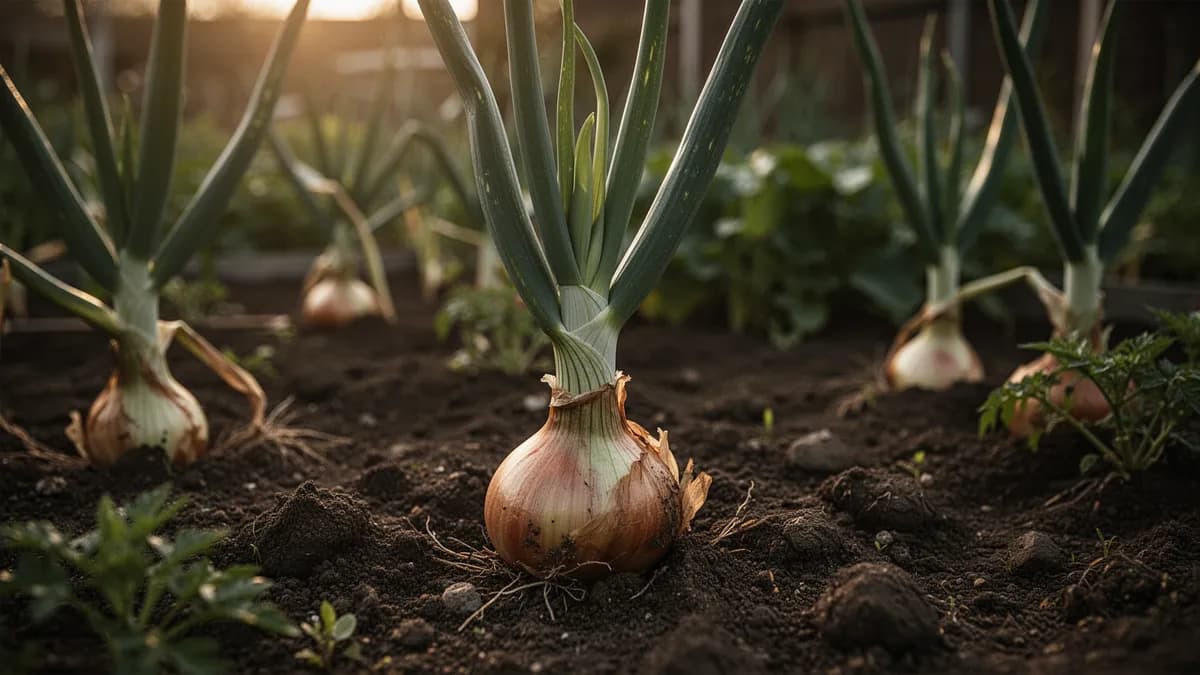
Plante junto a cebollas y puerros cuyo aroma repele la mosca de la zanahoria. Los rábanos sembrados entre las filas marcan la hilera y se cosechan antes. Los guisantes fijan nitrógeno beneficioso. Evite plantar junto a eneldo maduro.
Guisantes va a su lado. Eneldo no.
Saber de huerto de siempre, cotejado con la tabla real de Zanahoria Cosmic Purple — prueba cualquier planta que cultives.
Prueba Zanahoria Cosmic Purple en un bancal, aquí mismo
Un bancal real del planificador con Zanahoria Cosmic Purple ya plantado. Toca una planta compañera para colocarla y mira cómo responde la comprobación de vecinos: verde para buenos vecinos, rojo si hay conflicto.


Guías de cultivo relacionadas



Abónalo bien
Suelos sueltos, profundos, sin piedras y bien drenados con pH 6,0-7,0. Las piedras y suelos compactos causan raíces bifurcadas. Fertilice con fósforo y potasio; evite nitrógeno fresco y estiércol sin compostar.
Temperatura ideal
Compatibilidad de zonas de rusticidad
De la semilla a la cosecha, etapa por etapa
Germinación de la semilla
Las diminutas semillas de zanahoria germinan lenta y desigualmente en 14-21 días. La primera señal de vida es un cotiledón fino, parecido a una brizna de hierba, que emerge a la superficie del suelo. Las semillas de Cosmic Purple necesitan humedad constante durante este período; incluso un breve secado de la capa superior del suelo puede matar a las plántulas emergentes. Las temperaturas del suelo de 10-25 °C son adecuadas, con un óptimo de unos 18 °C.
Establecimiento de la plántula
Se desarrollan las primeras hojas verdaderas y la plántula construye su sistema radicular inicial. En esta etapa, la raíz principal joven es blanca y del grosor de un lápiz, sin coloración púrpura visible todavía. Las plántulas crecen despacio y pueden ser fácilmente superadas por las malas hierbas, por lo que el deshierbe manual cuidadoso es esencial durante esta fase vulnerable.
Desarrollo de la raíz
La raíz principal comienza a engrosarse notablemente y la pigmentación púrpura característica empieza a desarrollarse desde la piel hacia el interior. Las hojas plumosas crecen con vigor hasta 20-30 cm, alimentando la rápida expansión de la raíz bajo tierra. La raíz primero se alarga y luego se engrosa gradualmente durante las semanas siguientes.
Intensificación del color
Los pigmentos de antocianina púrpura se intensifican de forma espectacular a medida que las raíces alcanzan 15-18 cm de longitud y 2-3 cm de diámetro. El centro naranja se define claramente en el corte transversal. Las temperaturas más frescas durante esta fase intensifican la coloración púrpura; las zanahorias que maduran con calor pueden ser más claras. Los hombros pueden sobresalir por encima de la línea del suelo.
Maduración y cosecha
Las raíces alcanzan su tamaño completo con 18-22 cm de largo y 3-4 cm en la corona. La piel púrpura es ahora de un violeta oscuro intenso, casi negra a plena luz, y el centro naranja está en su punto máximo de dulzor. El sabor es más rico cuando se cosecha en esta etapa; dejar las zanahorias demasiado tiempo después de la madurez hace que el centro se vuelva leñoso y el sabor se torne amargo.
Cosecha y almacenamiento prolongados
En climas frescos, las zanahorias Cosmic Purple pueden permanecer en el suelo mucho más allá de la madurez, usando el jardín como un refrigerador natural. Una capa gruesa de paja protege las raíces de las heladas fuertes y extiende la ventana de cosecha hasta comienzos del invierno. El sabor suele mejorar con la exposición al frío, ya que la planta convierte almidón en azúcares para protegerse de las heladas.
Mantén la superficie del suelo constantemente húmeda cubriéndola con una capa fina de vermiculita o arpillera hasta que ocurra la germinación. Riega con suavidad y una niebla fina para no desplazar las semillas diminutas. Mezclar las semillas con semillas de rábano ayuda a marcar la línea y a romper la costra del suelo.

Cuidar Zanahoria Cosmic Purple mes a mes
Qué hacer cada mes para tu Zanahoria Cosmic Purple
Octubre
Mes actualHarvest fall carrots as they reach full size, or leave in the ground for continued sweetening as temperatures drop. Light frosts improve flavor by converting starches to sugars. Apply 15 cm of straw mulch over remaining carrots to extend the harvest window.
Ten claro qué hacer en tu huerto, cada mes
Un correo al empezar cada mes: qué sembrar, plantar y hacer ahora mismo — para tu Zanahoria Cosmic Purple y todo lo que crece alrededor. Más un breve curso inicial para esquivar los errores clásicos.
- Qué hacer ahora mismo
- Ajustado a tu temporada
- Curso inicial incluido
Cosechar Zanahoria Cosmic Purple
Coseche cuando las raíces midan 18-22 cm de largo y la corona tenga 3-4 cm de diámetro, unos 70-80 días tras la siembra. Las zanahorias moradas son más frágiles que las naranjas; cave con cuidado usando una horquilla. El color morado es más intenso en clima fresco.

se supone que plantas al comenzar el periodo — indica tu fecha real
Cosecha a los 65-75 días, cuando las raíces midan 7-8 pulgadas de largo y los hombros tengan aproximadamente 1 pulgada de diámetro.
Almacenamiento y conservación
Corte las hojas dejando 1 cm. Las raíces sin lavar se conservan en refrigerador 3-4 semanas o en arena húmeda en bodega fría durante meses. Tenga en cuenta que el pigmento morado puede teñir otros alimentos al cocinar. Congele escaldadas o enlatadas.
Qué falla — y cómo solucionarlo
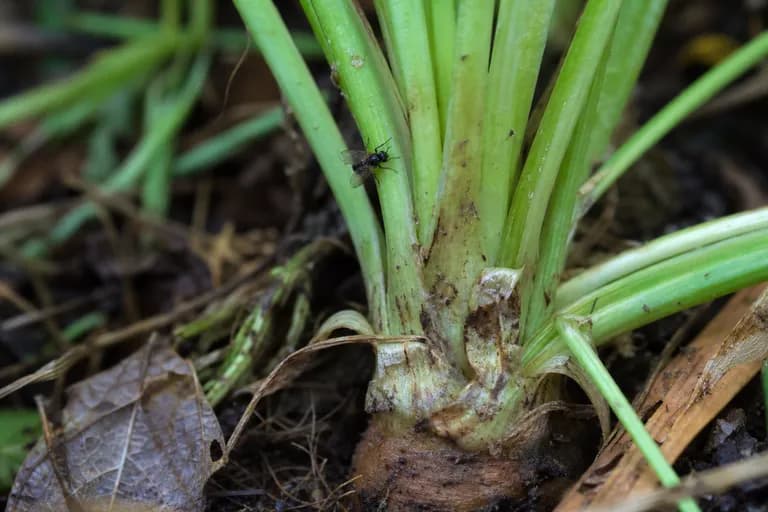
Mosca de la zanahoria (Psila rosae)
PlagaGalerías marrones en la superficie de la raíz, pudrición secundaria.
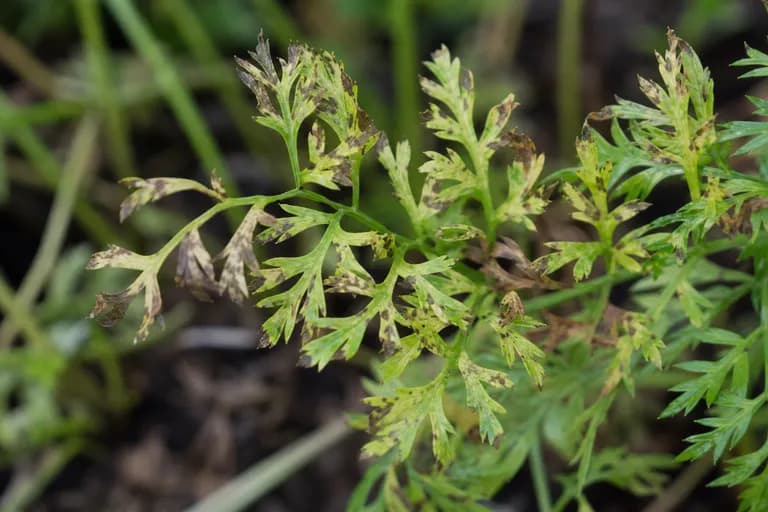
Tizón de la hoja (Alternaria dauci)
EnfermedadManchas marrones en hojas que progresan a necrosis y defoliación.

Nematodos (Meloidogyne spp.)
PlagaRaíces deformadas con agallas, bifurcaciones y crecimiento raquítico.
Solución de problemas comunes
Las raíces se bifurcan en suelos pedregosos o compactos. El pigmento morado se decolora parcialmente al hervir; ase o cocine al vapor para preservar el color. La germinación es lenta e irregular. La mosca de la zanahoria es devastadora sin protección.
Consejos de cultivo
- Soil preparation is everything for straight, well-formed carrots. Work the soil to a depth of at least 30 cm, removing every stone, clod, and root fragment. Carrots fork and deform when their taproot hits any obstruction. Raised beds filled with loose, sandy compost mix produce the best-shaped roots.
- Do not add fresh manure or high-nitrogen compost to carrot beds — excess nitrogen causes hairy, forked roots with excessive side branching and lush tops at the expense of root quality. Use well-aged compost worked in the previous season instead.
- Sow seeds shallowly (6mm deep) and keep the soil surface consistently moist for the full 14-21 day germination period. A board or strip of burlap laid over the row retains moisture and can be removed once sprouts appear — this single trick dramatically improves germination rates.
- Thin ruthlessly and early. Carrots absolutely cannot size up properly when crowded. Thin to 3-5 cm apart when seedlings have 2-3 true leaves, using scissors to snip at soil level rather than pulling, which disturbs neighboring roots.
- For the deepest purple color, time your planting so that roots mature during cool weather — either early spring for a midsummer harvest or midsummer sowing for a fall harvest. The anthocyanin pigments intensify significantly when night temperatures drop below 15°C (60°F).
- Water deeply and consistently at 2.5 cm per week. The single most common cause of cracked, split, and bitter carrots is irregular watering — alternating between drought stress and heavy soaking causes roots to expand unevenly and split open.
- Protect against carrot rust fly, the most destructive carrot pest, by covering beds with fine insect mesh (Enviromesh or similar) immediately after sowing. The adult fly lays eggs at the base of carrot foliage, and the larvae tunnel into roots, ruining the crop.
- Harvest spring carrots promptly when mature, but allow fall carrots to experience a few light frosts before pulling. Frost triggers the plant to convert root starches into sugars as an antifreeze mechanism, noticeably improving sweetness and flavor complexity.
Cultiva tu mejor Zanahoria Cosmic Purple — y todo lo que la rodea.
Empieza un plan gratis hoy. Diseña tus bancales, coloca tu Zanahoria Cosmic Purple y deja que PlotMyGarden gestione el momento, el espaciado, las asociaciones y los recordatorios de la semilla a la cesta.
Elige tu Zanahoria Cosmic Purple
Cosmic Purple
La variedad original con piel morada intensa y corazón naranja. Sabor dulce y especiado. 70-75 días.
Purple Haze F1
Híbrido uniformemente morado por fuera y naranja por dentro. Forma cónica perfecta. Más dulce. 70 días.
Deep Purple F1
Morado intenso que penetra más profundo hacia el centro. Muy alta en antocianinas. 75 días.
Gniff
Variedad suiza heritage completamente morada incluido el corazón. Sabor intenso y terroso. 80 días.
A packet of Cosmic Purple carrot seeds costs $3-5 and contains 500-1,000 seeds — enough to plant 10-15 meters of row and produce 200-400 carrots over a season. Purple and specialty carrots sell for $4-7 per bunch (5-6 carrots) at farmers markets and $5-8 per pound at specialty grocers, compared to $1-2 per pound for ordinary orange carrots. Growing your own Cosmic Purple can save $60-120 per season compared to buying specialty purple carrots, while providing a steady supply that is rarely available fresh in stores. The seeds are open-pollinated, meaning you can save seed from second-year plants for free future crops.
Recetas rápidas

Roasted Cosmic Purple Carrots with Honey and Thyme
35 minHalved lengthwise and roasted at high heat until caramelized and tender — the purple exterior deepens to a gorgeous near-black while the orange core turns golden. A drizzle of honey and fresh thyme elevates this simple preparation into an elegant side dish.
7 ingredientesPurple Carrot Ribbon Salad with Citrus Vinaigrette
15 minA raw preparation that showcases the dramatic purple-and-orange interior. Thin ribbons shaved with a vegetable peeler are tossed with a bright citrus dressing, toasted seeds, and fresh herbs for a stunning no-cook salad that is as beautiful as it is nutritious.
7 ingredientesCosmic Purple Carrot Soup with Ginger
40 minA silky pureed soup with a striking deep violet color that turns heads at the table. Fresh ginger and a touch of coconut milk balance the earthy sweetness of the purple carrots, creating a warming bowl that is packed with antioxidants.
8 ingredientesUsos culinarios
La Cosmic Purple es espectacular cruda en bastones donde muestra su contraste morado-naranja. Asada al horno se carameliza bellamente. Añade color dramático a ensaladas, platos de crudités y bowls. El pigmento morado tiñe el agua de cocción; cocine al vapor o ase para preservar el color.
Qué contiene
Beneficios para la salud
- Rich in anthocyanins — powerful antioxidants concentrated in the purple flesh that have been shown in studies to reduce inflammation, support cardiovascular health, and protect against oxidative DNA damage linked to cancer and aging.
- Provides a dual antioxidant benefit that orange carrots cannot match: anthocyanins from the purple exterior combined with beta-carotene from the orange core, offering broader protection against oxidative stress than either pigment alone.
- Outstanding source of vitamin A as beta-carotene, essential for maintaining healthy vision, particularly night vision, and supporting the integrity of mucous membranes that form the body's first line of immune defense.
- The dietary fiber in carrots (2.8g per 100g) acts as a prebiotic, feeding beneficial Bifidobacterium and Lactobacillus species in the gut — a healthy microbiome is linked to improved immunity, mood regulation, and reduced inflammation.
- Contains falcarinol, a natural polyacetylene compound found in carrots that has demonstrated anti-cancer properties in laboratory studies, particularly against colon cancer cell lines.
- Low calorie density (41 kcal per 100g) combined with high water content (88%) and satisfying crunch makes Cosmic Purple carrots an ideal snack for weight management — they provide volume and satiety without excessive calories.
De dónde viene Zanahoria Cosmic Purple
The story of the Cosmic Purple carrot begins with the wild carrot (Daucus carota), a plant native to Central Asia and the Mediterranean with thin, white, bitter roots bearing no resemblance to the plump sweet vegetables we know today. The earliest cultivated carrots, developed in Afghanistan and Persia around the 10th century, were purple and yellow — colored by anthocyanin and xanthophyll pigments respectively. These original purple carrots spread westward along trade routes through the Arab world, reaching Moorish Spain by the 12th century and the rest of Europe soon after.
For centuries, purple and yellow were the dominant carrot colors across Europe and Asia. The orange carrot did not appear until the 16th or 17th century, most likely developed by Dutch growers through selective breeding of yellow carrot varieties that carried a mutation for high beta-carotene content. Orange carrots rapidly displaced their purple ancestors because they did not stain cooking water, had a sweeter flavor, and — according to popular legend — honored the Dutch Royal House of Orange, though this patriotic origin story is likely apocryphal.
Cosmic Purple is a modern open-pollinated variety developed through the carrot breeding program at the University of Wisconsin-Madison, led by Dr. Philipp Simon, one of the world's foremost carrot geneticists. The variety was created by crossing anthocyanin-rich purple carrot germplasm collected from Turkey, Afghanistan, and other regions where ancient purple types persisted with high-quality modern orange breeding lines. The result is a carrot with the dramatic purple exterior of its ancient ancestors and the sweet, crisp orange core of modern varieties — a living bridge between the carrot's 1,000-year-old purple past and its present-day orange dominance. Released to home gardeners in the early 2000s, Cosmic Purple quickly became one of the most popular specialty carrot varieties, prized for its visual drama, genuine sweetness, and the nutritional bonus of anthocyanin antioxidants that ordinary orange carrots lack.
Zanahoria Cosmic Purple: ¿sabías que?
Datos fascinantes sobre Zanahoria Cosmic Purple
Purple was actually the original color of cultivated carrots. The earliest domesticated carrots grown in Afghanistan and Persia around the 10th century were purple and yellow — the familiar orange carrot was not developed until the 16th or 17th century in the Netherlands.
Zanahoria Cosmic Purple: preguntas frecuentes
¿Cuándo debo plantar Zanahoria Cosmic Purple?
¿Cuáles son buenas plantas acompañantes para Zanahoria Cosmic Purple?
¿En qué zonas de rusticidad puede crecer Zanahoria Cosmic Purple?
¿Cuánto sol necesita Zanahoria Cosmic Purple?
¿A qué distancia debo espaciar Zanahoria Cosmic Purple?
¿Qué plagas y enfermedades afectan a Zanahoria Cosmic Purple?
¿Cómo almaceno Zanahoria Cosmic Purple después de la cosecha?
¿Cuáles son las mejores variedades de Zanahoria Cosmic Purple para cultivar?
¿Qué suelo necesita Zanahoria Cosmic Purple?
Why are my Cosmic Purple carrots not very purple?
Is the orange center of Cosmic Purple normal or a sign of a problem?
Will cooking Cosmic Purple carrots turn my food purple?
Can I save seeds from Cosmic Purple carrots?
Why are my carrots forked and misshapen instead of straight?
How long can I store harvested Cosmic Purple carrots?
Acabas de leer la teoría. Ahora cultívala en piloto automático.
Todo lo que hace que Zanahoria Cosmic Purple sea delicado — el momento, el espaciado, las asociaciones, la ventana de cosecha — es justo lo que PlotMyGarden resuelve por ti, para cada planta de tu huerto.
Un plan que conoce tu clima
Indica tu ubicación una vez. Recibe fechas de siembra, abonado y cosecha basadas en tu última helada real y el pronóstico en vivo — sin adivinar con un sobre genérico.
De la sección “Cuándo plantar”Planificador de bancales de arrastrar y soltar
Diseña bancales sobre una cuadrícula. Cada planta encaja con su espaciado correcto y ves toda la temporada antes de gastar un céntimo en semillas.
De la sección “Cultivo”Conflictos de asociación, detectados a tiempo
Más de 200 buenas y malas combinaciones comprobadas en vivo mientras plantas — para que un error que arruine la temporada nunca llegue a la tierra.
De la sección “Asociaciones”Recordatorios que sí vas a seguir
“Riega las judías.” “Recoge hoy antes de que se pase.” Oportunos, concretos y ligados a las plantas que de verdad cultivas.
De la sección “Cosecha”Escalonado, programado
¿Quieres cosechar seis semanas en vez de seis días? Reparte tus siembras automáticamente y te avisa cuando toca el siguiente lote.
De la sección “Cuándo plantar”Un registro que se vuelve más listo
Cada cosecha que registras le enseña tu huerto. El plan del año que viene parte de lo que de verdad funcionó en tu suelo, no en un manual.
De la sección “Resumen”Planta estos junto a Zanahoria Cosmic Purple
Más Hortalizas de raíz

Mantén Zanahoria Cosmic Purple lejos de estos

Diseños de jardín con Zanahoria Cosmic Purple
Cultiva tu mejor Zanahoria Cosmic Purple — y todo lo que la rodea.
Empieza un plan gratis hoy. Diseña tus bancales, coloca tu Zanahoria Cosmic Purple y deja que PlotMyGarden gestione el momento, el espaciado, las asociaciones y los recordatorios de la semilla a la cesta.