Remolacha Detroit
La remolacha Detroit Dark Red (Beta vulgaris) es la variedad de remolacha más popular y cultivada del mundo, desarrollada en Detroit, Michigan a principios del siglo XX.





En esta páginaResumen
Conoce Remolacha Detroit
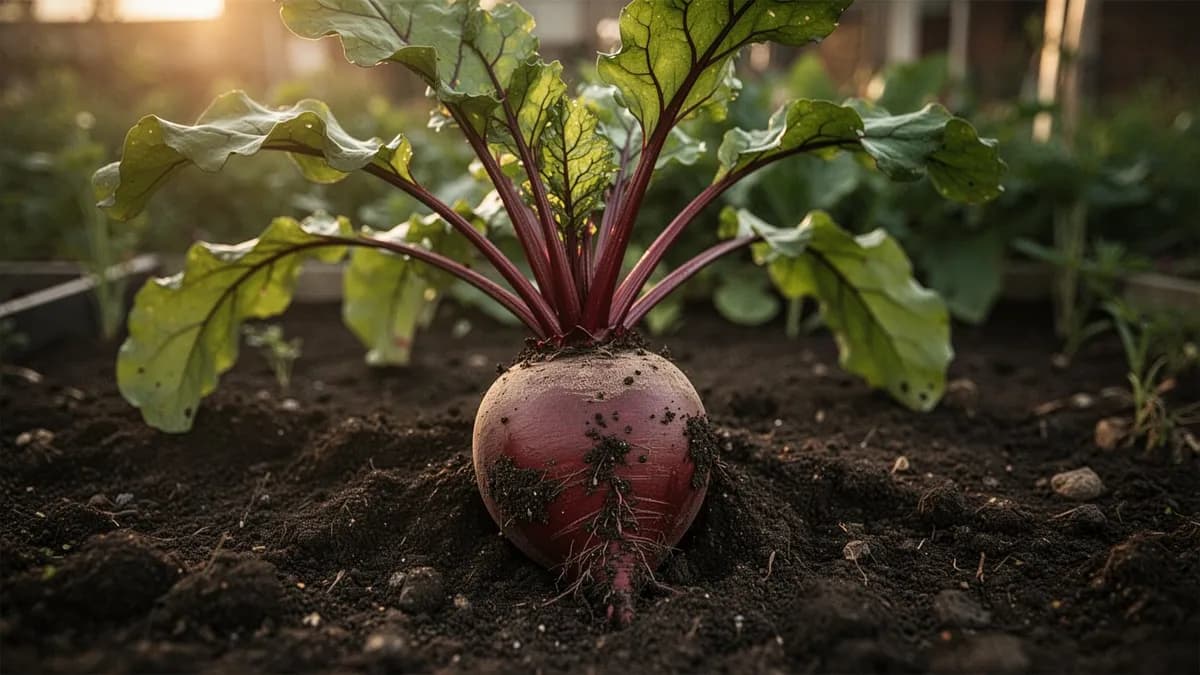
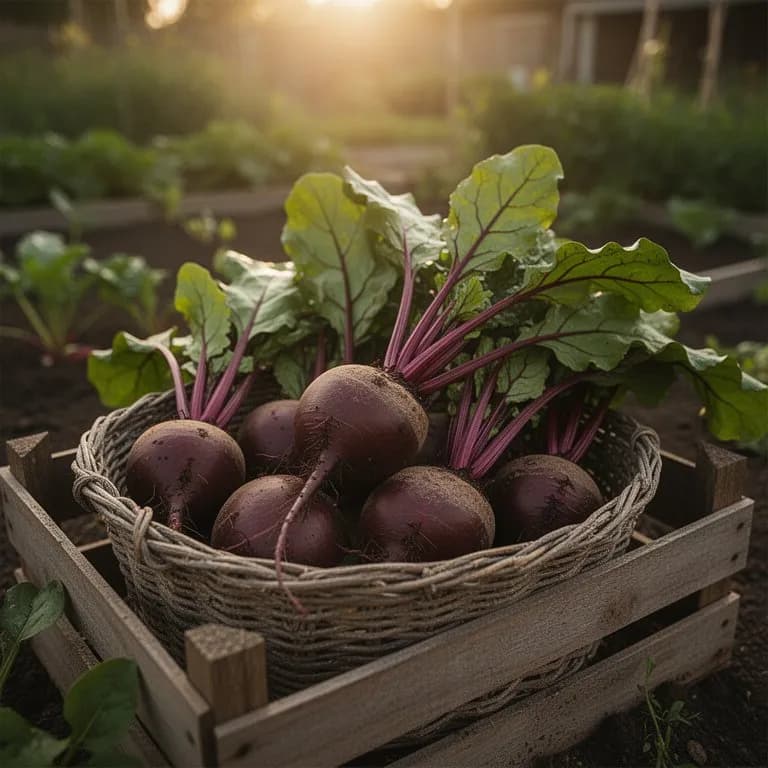
La remolacha Detroit Dark Red (Beta vulgaris) es la variedad de remolacha más popular y cultivada del mundo, desarrollada en Detroit, Michigan a principios del siglo XX. Produce raíces perfectamente redondas de color rojo oscuro uniforme sin anillos blancos, con un sabor dulce, terroso y suave que la ha convertido en el estándar dorado de las remolachas de mesa.
Cuándo plantar Remolacha Detroit
Siembre directamente en el suelo a 1-2 cm de profundidad. Remoje los glomérulos 12-24 horas antes para acelerar germinación. Germinación en 7-14 días a 10-25 °C. Aclare a 8-10 cm cuando las plántulas tengan 5 cm, usando los brotes eliminados como microgreens.
Tu año de Remolacha Detroit
Ajustado a Zona 7 · temporada típica · la helada se va hacia el 2 abr y vuelve hacia el 1 nov
Planta Remolacha Detroit Mar – Abr, Ago – Sep y cosecha Jun – Jul, Oct – Nov. Consulta los métodos de plantación y elige tu clima para adaptar los periodos.
Cómo cultivar Remolacha Detroit
Siembre directamente en el suelo 2-4 semanas antes de la última helada en primavera, o en verano para cosecha de otoño. Las 'semillas' son en realidad glomérulos que contienen 2-4 semillas cada uno, así que aclare a 8-10 cm cuando las plántulas tengan 5 cm. Siembre a 1-2 cm de profundidad en filas de 30 cm.
Riegue de forma regular y uniforme, proporcionando 2,5 cm semanales. El riego irregular causa anillos blancos y raíces leñosas. Aplique acolchado ligero para mantener la humedad constante. Las remolachas toleran heladas ligeras y mejoran su dulzor con el frío.
Fertilice moderadamente con abono bajo en nitrógeno y rico en fósforo y potasio para promover el desarrollo de la raíz. El exceso de nitrógeno produce hojas enormes con raíces pequeñas. Las hojas jóvenes son comestibles y deliciosas, así que aproveche el aclareo como cosecha de baby greens.
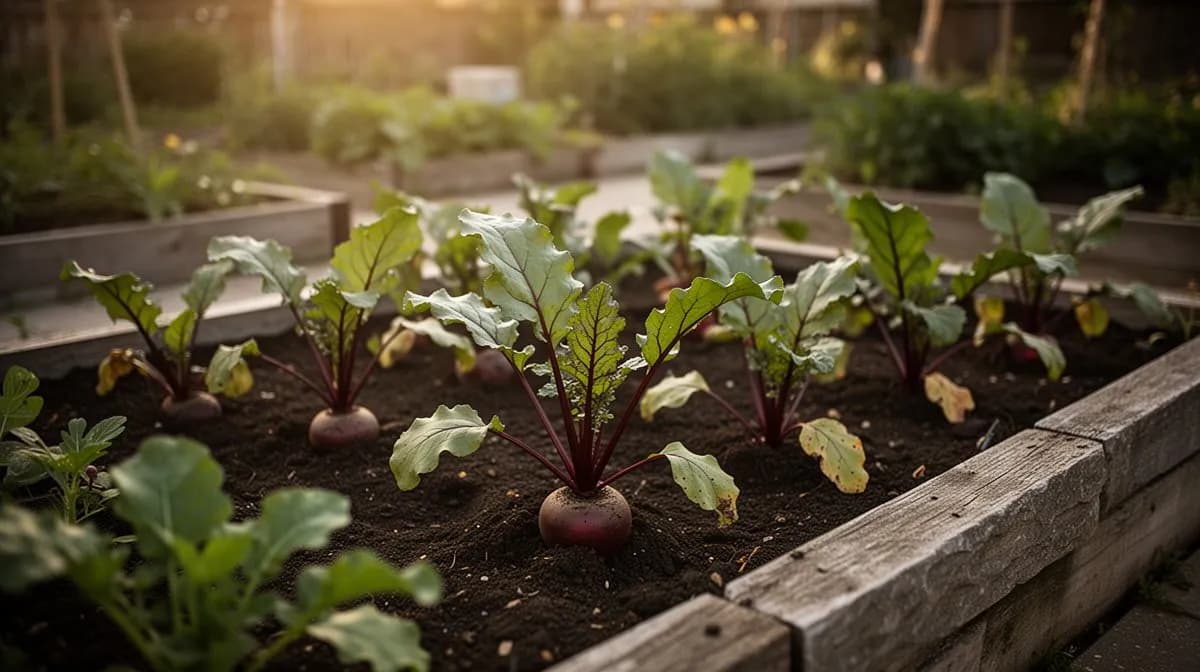
288 plantas caben en un bancal de 120 × 240 cm
Cada Remolacha Detroit pide 10 cm de margen. El planificador guarda ese marco por ti — cada planta, cada bancal.
Los mejores vecinos de Remolacha Detroit
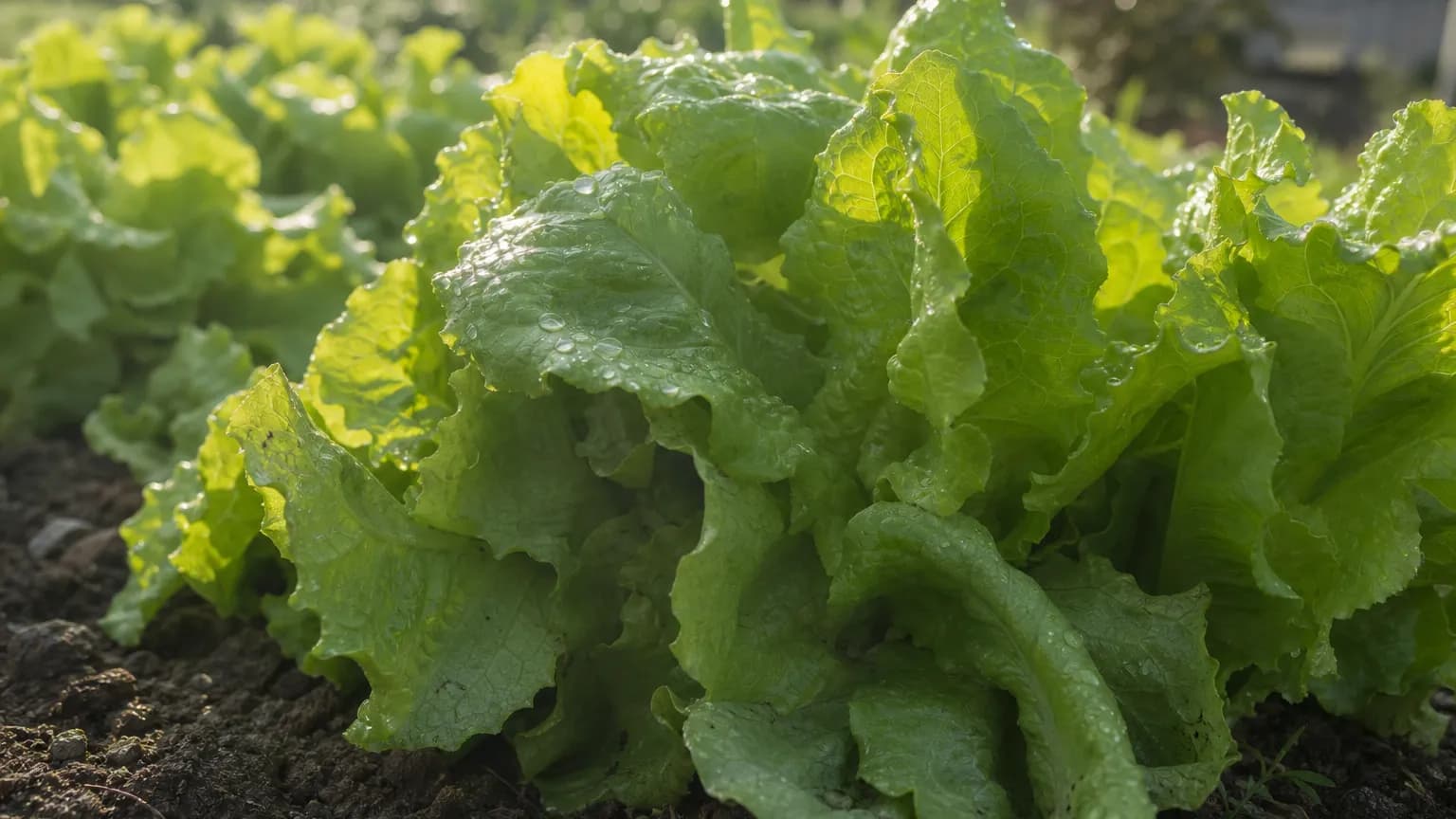
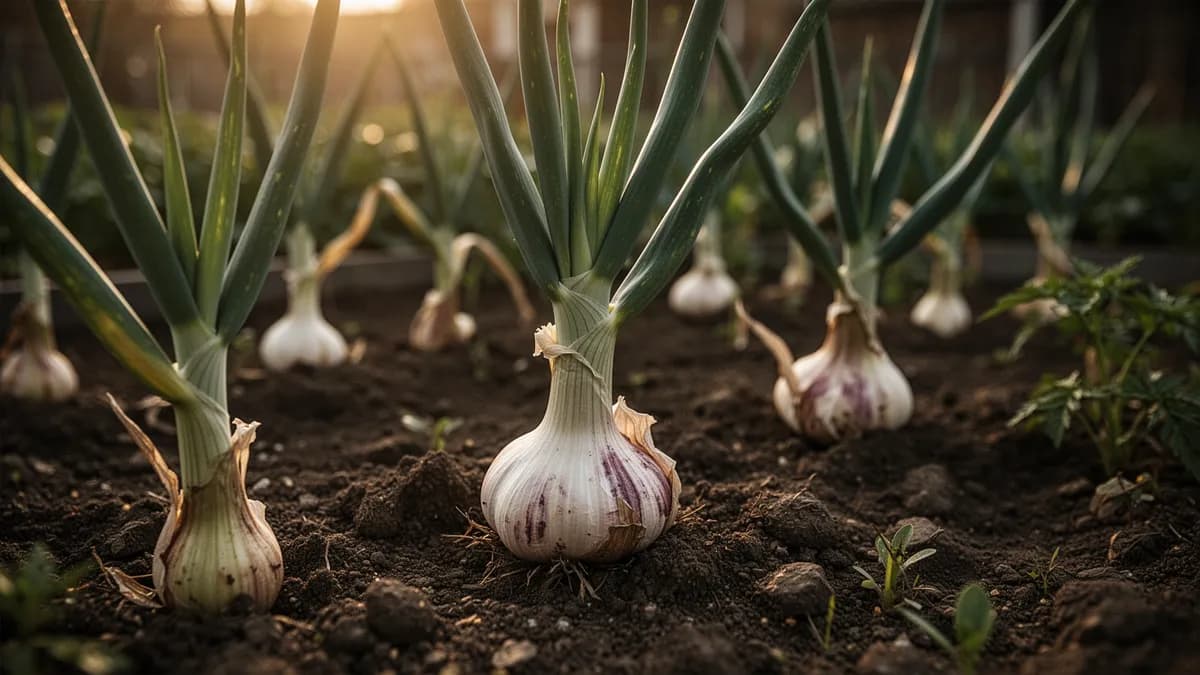
Crece bien junto a cebollas, lechuga y repollo. Las judías arbustivas y los guisantes fijan nitrógeno beneficioso. Evite plantar junto a espinaca con la que compite, y junto a judías de enrame que pueden sombrear las remolachas.
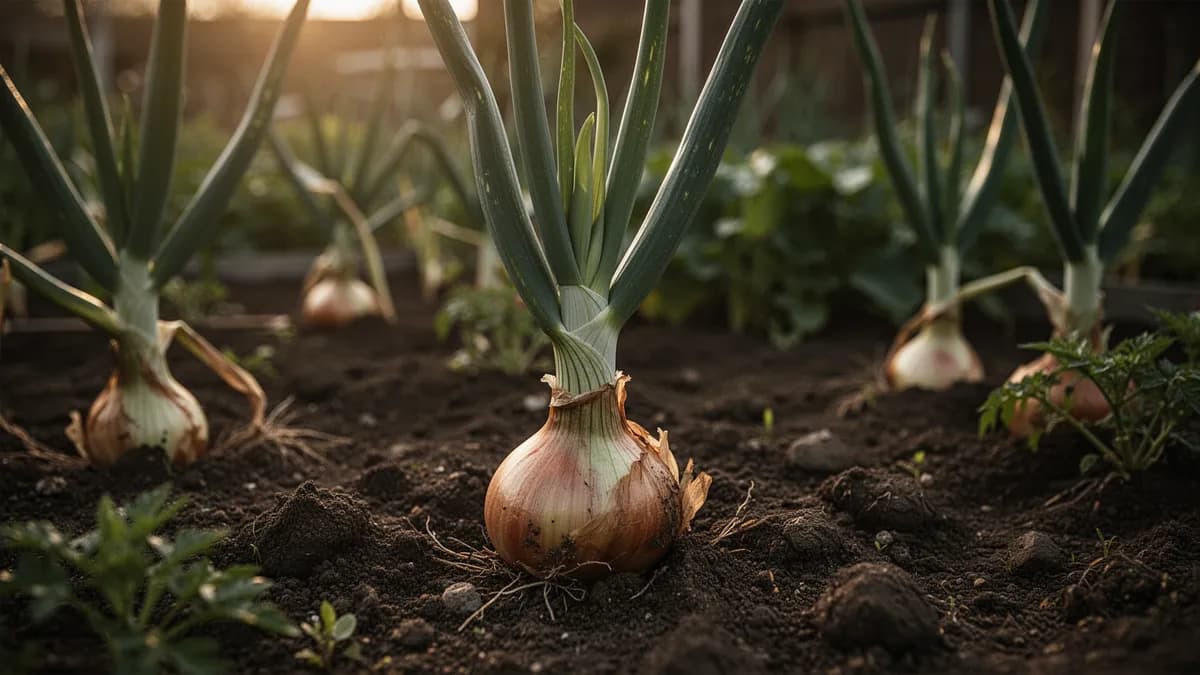
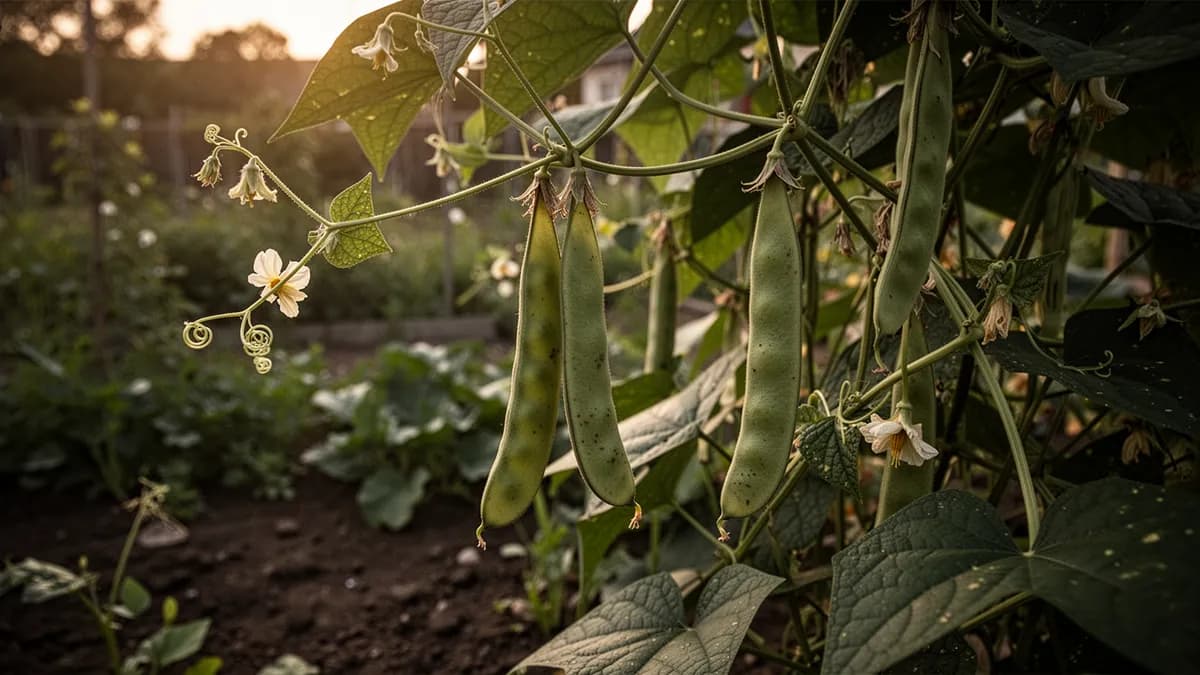
Cebolla va a su lado. Judía Escarlata (Judía de España) no.
Saber de huerto de siempre, cotejado con la tabla real de Remolacha Detroit — prueba cualquier planta que cultives.
Prueba Remolacha Detroit en un bancal, aquí mismo
Un bancal real del planificador con Remolacha Detroit ya plantado. Toca una planta compañera para colocarla y mira cómo responde la comprobación de vecinos: verde para buenos vecinos, rojo si hay conflicto.


Guías de cultivo relacionadas
Abónalo bien
Suelos sueltos, profundos y bien drenados con pH 6,0-7,5. Las remolachas necesitan boro para evitar corazón negro; aplique bórax si el suelo es deficiente. Fertilice con abono bajo en nitrógeno y rico en fósforo y potasio. Evite piedras que deforman las raíces.
Temperatura ideal
Compatibilidad de zonas de rusticidad
De la semilla a la cosecha, etapa por etapa
Germinación
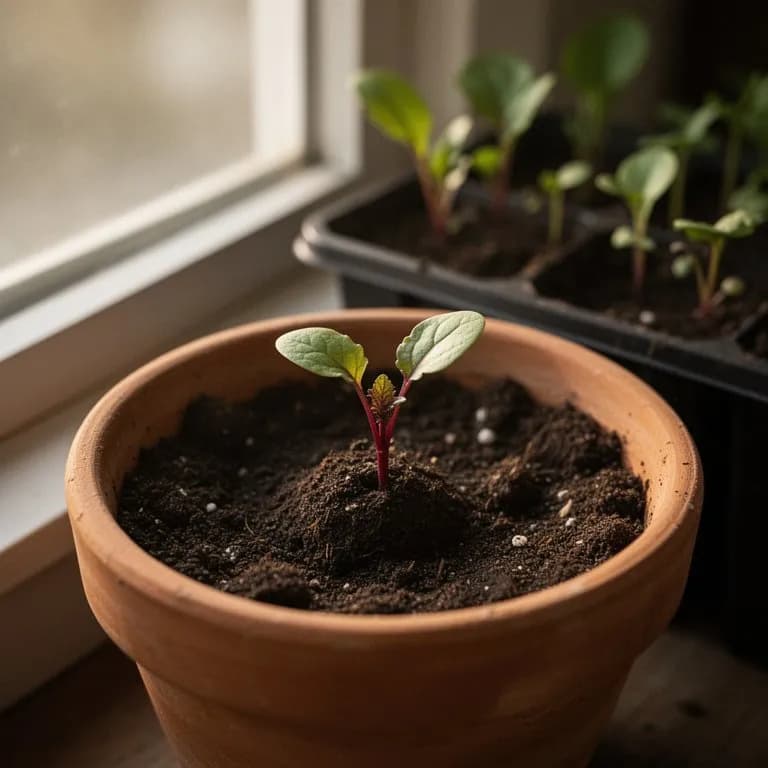
Las semillas de remolacha son racimos de frutos secos que pueden contener varias semillas verdaderas, por lo que de cada punto de siembra pueden salir varias plántulas. Primero aparecen los cotiledones.
Plántula y aclareo
De cada grupo de semillas emergen varias plántulas, por lo que los grupos apretados deben aclararse. Comienzan a desarrollarse las primeras hojas verdaderas.
Desarrollo del follaje
La roseta de hojas se expande rápidamente y la raíz principal comienza a engrosarse bajo tierra. El follaje ayuda a sombrear el suelo y suprimir las malas hierbas.
Ventana de cosecha
Las raíces alcanzan el tamaño ideal y la pulpa es uniformemente roja intensa con pocos anillos de color. Las raíces más grandes se vuelven más fibrosas y leñosas.
Después de la cosecha
Después de la cosecha, la remolacha termina su ciclo como cultivo de temporada. Conserva semillas solo si las plantas se dejaron madurar y producir semilla.
Remoja los grupos de semillas en agua tibia durante 2-4 horas antes de plantar para ablandar la cubierta externa y acelerar la germinación. Siembra a 1-2 cm de profundidad y mantén el suelo uniformemente húmedo.
Cuidar Remolacha Detroit mes a mes
Qué hacer cada mes para tu Remolacha Detroit
Octubre
Mes actualHarvest fall beets as they reach desired size. For storage beets, leave in the ground until just before a hard freeze — light frosts actually increase sugar content. Harvest, trim tops to 2-3 cm, and store unwashed in damp sand or peat at 0-4°C (32-39°F).
Ten claro qué hacer en tu huerto, cada mes
Un correo al empezar cada mes: qué sembrar, plantar y hacer ahora mismo — para tu Remolacha Detroit y todo lo que crece alrededor. Más un breve curso inicial para esquivar los errores clásicos.
- Qué hacer ahora mismo
- Ajustado a tu temporada
- Curso inicial incluido
Cosechar Remolacha Detroit
Coseche las remolachas Detroit cuando las raíces midan 5-7 cm de diámetro, unos 55-70 días después de la siembra. Tire suavemente de las hojas o cave con una horquilla. Las remolachas más grandes pueden volverse leñosas. Las hojas baby del aclareo son una cosecha bonus excelente.
se supone que plantas al comenzar el periodo — indica tu fecha real
Cosecha cuando las raíces tengan 5-8 cm de diámetro, normalmente 55-70 días después de la siembra.
Almacenamiento y conservación
Corte las hojas dejando 2-3 cm de tallo para evitar el sangrado. Las remolachas sin lavar se conservan en refrigerador 2-3 semanas, o en arena húmeda en bodega fría durante 3-5 meses. Para conservación prolongada, cocine, pele y congele en cubos, o encúrtalas en vinagre.
Qué falla — y cómo solucionarlo
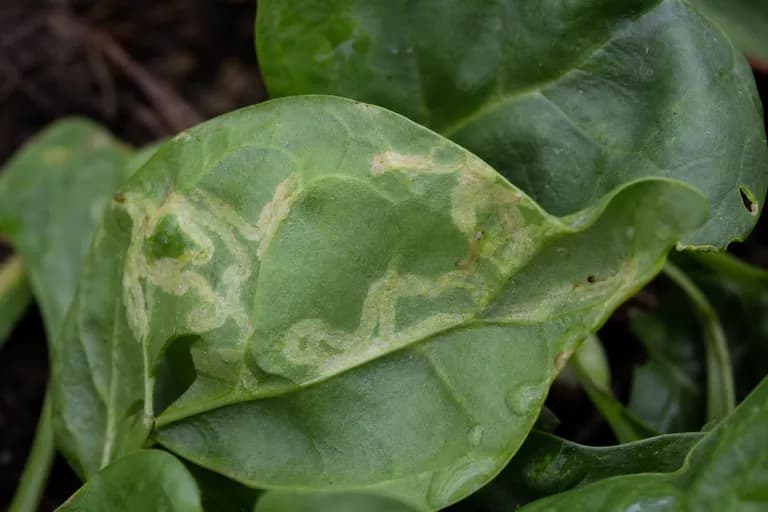
Minador de la remolacha (Pegomya betae)
PlagaGalerías y ampollas en las hojas donde las larvas se alimentan entre las capas del tejido foliar.
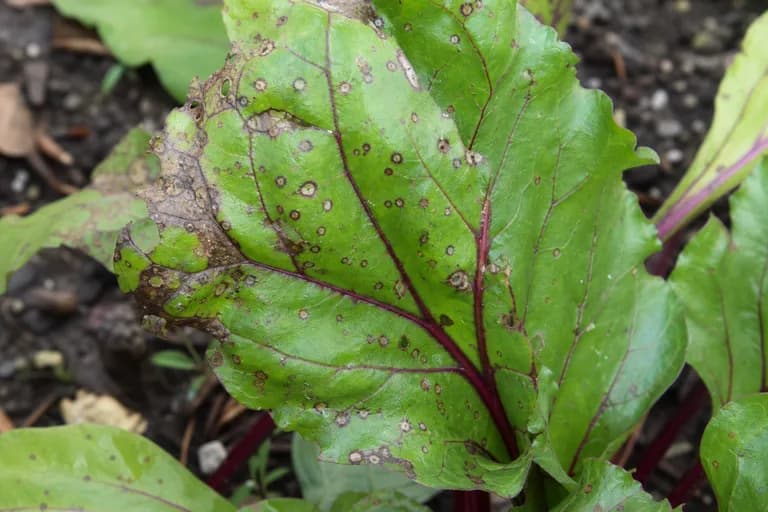
Cercosporiosis (Cercospora beticola)
EnfermedadManchas circulares pequeñas con centro gris y borde marrón rojizo en las hojas.
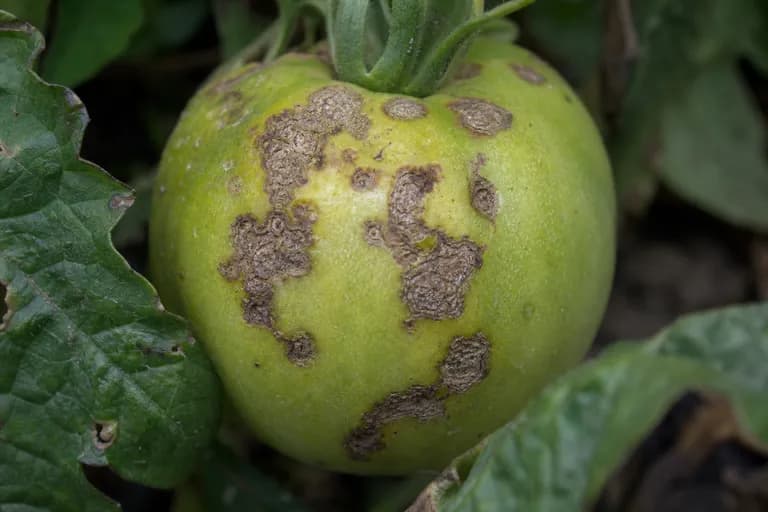
Pulguilla (Chaetocnema concinna)
PlagaAgujeros diminutos en hojas jóvenes que debilitan las plántulas.
Solución de problemas comunes
Los anillos blancos internos aparecen con riego irregular o fluctuaciones de temperatura. Las raíces se vuelven leñosas y fibrosas si se dejan crecer demasiado. La deficiencia de boro causa corazón negro y raíces huecas. El espigado ocurre con exposición prolongada a temperaturas inferiores a 10 °C.
Consejos de cultivo
- Sow seeds directly in the garden rather than starting indoors and transplanting. Beets develop a sensitive taproot that resents disturbance, and transplanted beets often produce misshapen, forked roots. Direct sowing is faster, easier, and produces better-shaped roots.
- Thin seedlings without guilt and without delay. Because each beet seed cluster contains multiple seeds, thinning is unavoidable. Snip extras at soil level at the 5 cm stage — crowded beets produce only leaves and tiny, worthless roots. Use the thinnings in salads.
- Maintain absolutely even soil moisture throughout the growing period. The single most common cause of tough, woody beets with light internal rings is inconsistent watering. Mulch with straw or shredded leaves and water to deliver 2.5 cm per week if rain is insufficient.
- Avoid high-nitrogen fertilizers and fresh manure, which promote lush, oversized foliage at the expense of root development. Beets perform best in soil amended with well-aged compost and a balanced or slightly phosphorus-heavy fertilizer.
- Succession plant every 2-3 weeks from early spring through late summer for continuous harvest rather than sowing one large crop. A 2-meter row sown every 3 weeks provides a steady supply of perfectly sized beets all season long.
- Harvest at 5-8 cm (2-3 inches) in diameter for the sweetest, most tender roots. Larger beets become increasingly fibrous and woody at the core. Check root size by brushing soil away from the shoulder — if the visible portion looks golf-ball sized, it is ready.
- Grow beets in the cool seasons for superior flavor. Spring and autumn beets grown in temperatures between 10-20°C (50-68°F) are noticeably sweeter than those that mature in midsummer heat. Light frost exposure actually triggers sugar accumulation in the roots.
- Do not discard the greens — beet tops are nutritionally superior to the roots, containing significantly more iron, calcium, and vitamin A. Harvest outer leaves throughout the growing season for sauteing, and use the entire crown of greens when you pull the root.
Cultiva tu mejor Remolacha Detroit — y todo lo que la rodea.
Empieza un plan gratis hoy. Diseña tus bancales, coloca tu Remolacha Detroit y deja que PlotMyGarden gestione el momento, el espaciado, las asociaciones y los recordatorios de la semilla a la cesta.
Elige tu Remolacha Detroit
Detroit Dark Red
La variedad clásica estándar con raíces perfectamente redondas de rojo oscuro uniforme sin anillos. Sabor dulce. Madura en 55-60 días.
Detroit Supreme
Selección mejorada con raíces más uniformes y mayor resistencia a enfermedades. Color rojo intenso. Madura en 55 días.
Kestrel F1
Híbrido moderno tipo Detroit con raíces muy lisas y uniformes. Excelente para baby beets también. Madura en 50 días.
Red Ace F1
Híbrido vigoroso con excelente tolerancia al calor y color rojo profundo sin anillos. Muy adaptable. Madura en 53 días.
A packet of Detroit Dark Red beet seeds costs $2-4 and contains 200-400 seeds — enough for several succession plantings. Fresh beets sell for $3-5 per bunch (3-4 roots) at grocery stores and $4-7 at farmers markets. A single 3-meter row can produce $15-30 worth of roots, and the bonus harvest of nutritious beet greens (sold separately for $3-5 per bunch) effectively doubles the value. Pickled beets ($5-8 per jar) and beet juice ($6-10 per bottle) made from your harvest add even more savings. Growing 3-4 rows across multiple sowings can easily save $100-150 per season.
Recetas rápidas
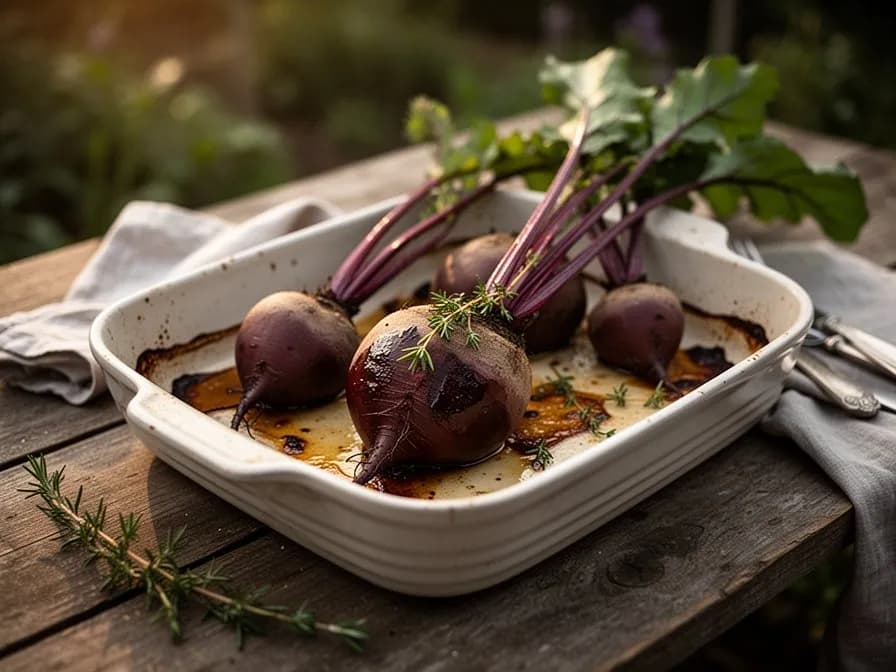
Classic Roasted Beets with Goat Cheese and Walnuts
50 minThe gold standard of beet preparation — roasting concentrates the natural sugars and transforms the earthy roots into tender, caramelized jewels. Paired with creamy goat cheese and toasted walnuts, this dish converts even self-proclaimed beet skeptics.
8 ingredientesQuick Refrigerator Pickled Beets
30 minTangy, sweet, and brilliantly colored pickled beets that are ready in 24 hours and keep for weeks in the refrigerator. This no-canning method preserves the harvest without specialized equipment and makes a stunning addition to salads, charcuterie boards, and sandwiches.
10 ingredientesBeet and Red Lentil Soup
40 minA vibrant, silky-smooth soup that showcases beet's natural sweetness balanced with warming spices. Red lentils add protein and body while melting into a velvety puree. Stunning color and deeply satisfying flavor make this a cold-weather staple.
10 ingredientesUsos culinarios
La Detroit es versátil: se asa al horno en cuartos con aceite y hierbas, se hierve y se sirve en ensalada con queso de cabra y nueces, se encurte en vinagre para conservas, o se ralla cruda en ensaladas. Las hojas jóvenes se comen en ensalada y las maduras se saltean como acelgas.
Qué contiene
Beneficios para la salud
- Dietary nitrates in beets are converted to nitric oxide in the body, which relaxes blood vessels and lowers blood pressure — multiple clinical studies show that drinking 250ml of beet juice daily can reduce systolic blood pressure by 4-10 mmHg within hours.
- Betalain pigments unique to beets are potent antioxidants and anti-inflammatory compounds that have been shown to reduce markers of oxidative stress and may help protect against chronic inflammatory conditions.
- Rich in folate (27% DV per 100g), essential for DNA synthesis, red blood cell formation, and critical during pregnancy for preventing neural tube defects — beets are one of the best whole-food folate sources available.
- The betaine in beets supports liver function by helping process fats and preventing fatty liver disease, while also reducing homocysteine levels in the blood — an independent risk factor for cardiovascular disease.
- Athletic performance benefits are well-documented — the nitrates in beet juice improve oxygen efficiency during exercise, and studies show endurance athletes can extend time to exhaustion by 15-25% with regular beet juice consumption.
- The combination of fiber, water content, and low calorie density (43 calories per 100g) makes beets excellent for weight management, while their natural sugars provide a satisfying sweetness that can reduce cravings for processed sweets.
De dónde viene Remolacha Detroit
The beet (Beta vulgaris) descends from the wild sea beet (Beta vulgaris subsp. maritima), a scraggly coastal plant native to the shores of the Mediterranean, the Atlantic coast of Europe, and parts of western Asia. Ancient civilizations in Mesopotamia, Egypt, Greece, and Rome initially cultivated the plant solely for its leaves — what we now call chard and beet greens are essentially the same species selected in different directions. The ancient Greeks offered beets to Apollo at his temple at Delphi, and Hippocrates recommended beet leaves for binding wounds.
The swollen root we associate with modern beets did not emerge as a distinct crop until the late Roman period and was not widely cultivated until the 1500s in Germany and Italy. Early root beets were long and turnip-shaped with pale flesh. The round, deeply pigmented globe beet was developed through selective breeding in Northern Europe between the 16th and 19th centuries. Detroit Dark Red, introduced by D.M. Ferry & Company of Detroit, Michigan around 1892, represented a breakthrough in uniformity, color depth, and sweetness. Its perfectly round shape, uniform deep crimson flesh with minimal lighter ring zoning, and exceptional canning quality made it the definitive American beet.
For over 130 years, Detroit Dark Red has maintained its position as the most widely grown beet variety in North America. It earned an All-America Selections award and remains the standard against which all other red beets are judged. Its influence extends beyond the garden — Detroit Dark Red genetics form the foundation of many modern beet cultivars. Today, beets are grown commercially across temperate regions worldwide, with the largest producers being Russia, France, the United States, and Germany. The global resurgence of interest in beets since the 2000s has been driven by research into their remarkable nitrate content and cardiovascular health benefits, transforming beets from humble root cellar staple to celebrated superfood.
Remolacha Detroit: ¿sabías que?
Datos fascinantes sobre Remolacha Detroit
Detroit Dark Red was developed in Detroit, Michigan around 1892 and has remained the single most popular beet variety in North America for over 130 years — an extraordinary record of dominance that few vegetable cultivars in any species can match.
Remolacha Detroit: preguntas frecuentes
¿Cuándo debo plantar Remolacha Detroit?
¿Cuáles son buenas plantas acompañantes para Remolacha Detroit?
¿En qué zonas de rusticidad puede crecer Remolacha Detroit?
¿Cuánto sol necesita Remolacha Detroit?
¿A qué distancia debo espaciar Remolacha Detroit?
¿Qué plagas y enfermedades afectan a Remolacha Detroit?
¿Cómo almaceno Remolacha Detroit después de la cosecha?
¿Cuáles son las mejores variedades de Remolacha Detroit para cultivar?
¿Qué suelo necesita Remolacha Detroit?
Why do my beets grow big leafy tops but tiny roots?
Why are my beets tough and woody with pale rings inside?
Can I eat beet greens, and are they nutritious?
How do I store beets to last through winter?
Why do multiple seedlings come up from each spot I planted?
When is the best time to plant beets in my area?
Acabas de leer la teoría. Ahora cultívala en piloto automático.
Todo lo que hace que Remolacha Detroit sea delicado — el momento, el espaciado, las asociaciones, la ventana de cosecha — es justo lo que PlotMyGarden resuelve por ti, para cada planta de tu huerto.
Un plan que conoce tu clima
Indica tu ubicación una vez. Recibe fechas de siembra, abonado y cosecha basadas en tu última helada real y el pronóstico en vivo — sin adivinar con un sobre genérico.
De la sección “Cuándo plantar”Planificador de bancales de arrastrar y soltar
Diseña bancales sobre una cuadrícula. Cada planta encaja con su espaciado correcto y ves toda la temporada antes de gastar un céntimo en semillas.
De la sección “Cultivo”Conflictos de asociación, detectados a tiempo
Más de 200 buenas y malas combinaciones comprobadas en vivo mientras plantas — para que un error que arruine la temporada nunca llegue a la tierra.
De la sección “Asociaciones”Recordatorios que sí vas a seguir
“Riega las judías.” “Recoge hoy antes de que se pase.” Oportunos, concretos y ligados a las plantas que de verdad cultivas.
De la sección “Cosecha”Escalonado, programado
¿Quieres cosechar seis semanas en vez de seis días? Reparte tus siembras automáticamente y te avisa cuando toca el siguiente lote.
De la sección “Cuándo plantar”Un registro que se vuelve más listo
Cada cosecha que registras le enseña tu huerto. El plan del año que viene parte de lo que de verdad funcionó en tu suelo, no en un manual.
De la sección “Resumen”Planta estos junto a Remolacha Detroit
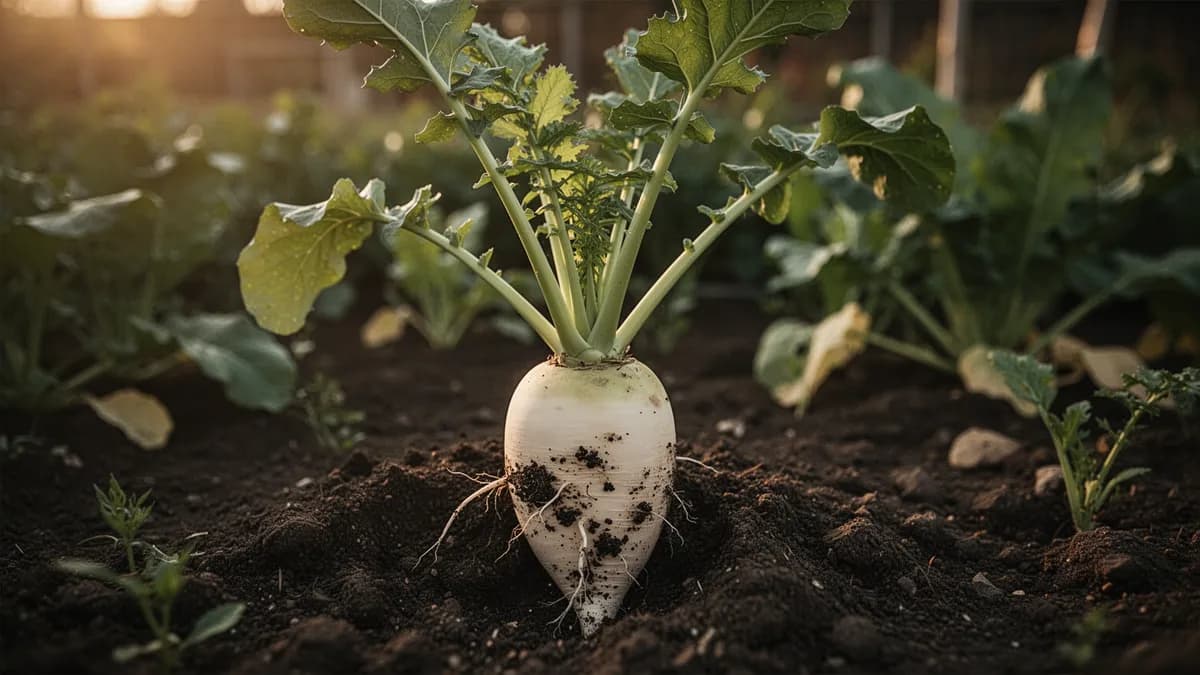
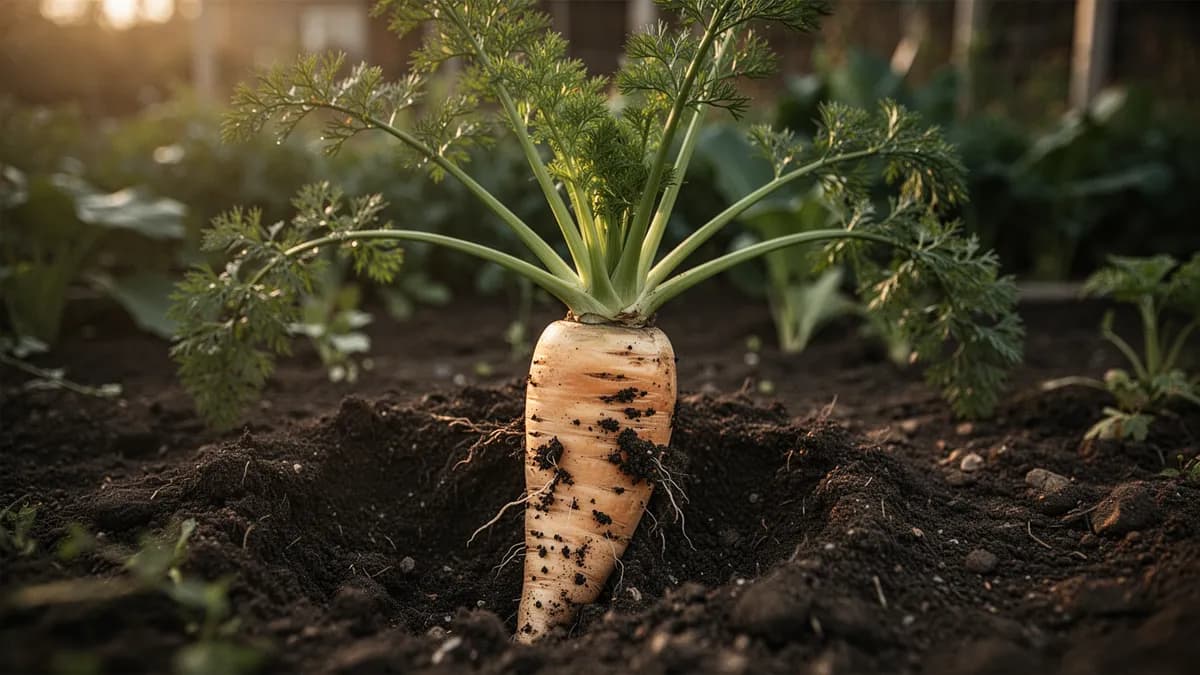
Más Hortalizas de raíz
Mantén Remolacha Detroit lejos de estos
Cultiva tu mejor Remolacha Detroit — y todo lo que la rodea.
Empieza un plan gratis hoy. Diseña tus bancales, coloca tu Remolacha Detroit y deja que PlotMyGarden gestione el momento, el espaciado, las asociaciones y los recordatorios de la semilla a la cesta.