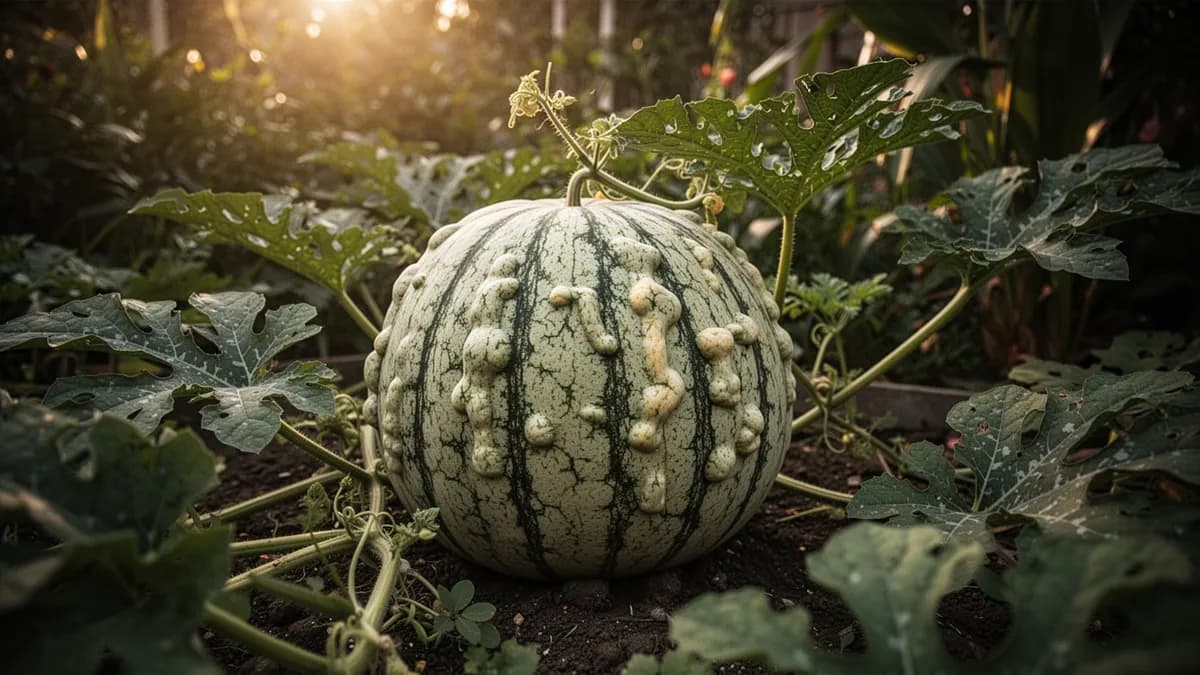
Watermelon
Citrullus lanatus
At a Glance
It's planting season for Watermelon! Start planning your garden now.
A sprawling vine requiring hot conditions and ample space to produce large, juicy fruits throughout the summer. Start seeds indoors in warm climates or direct sow after soil temperatures reach 70 degrees Fahrenheit for reliable germination. Reduce watering as fruits approach maturity to concentrate sugars and improve flavor intensity. Test ripeness by checking that the tendril nearest the fruit has dried, the bottom spot has turned creamy yellow, and the rind sounds hollow when tapped.
Planting & Harvest Calendar
Growth Stages
From Seed to Harvest
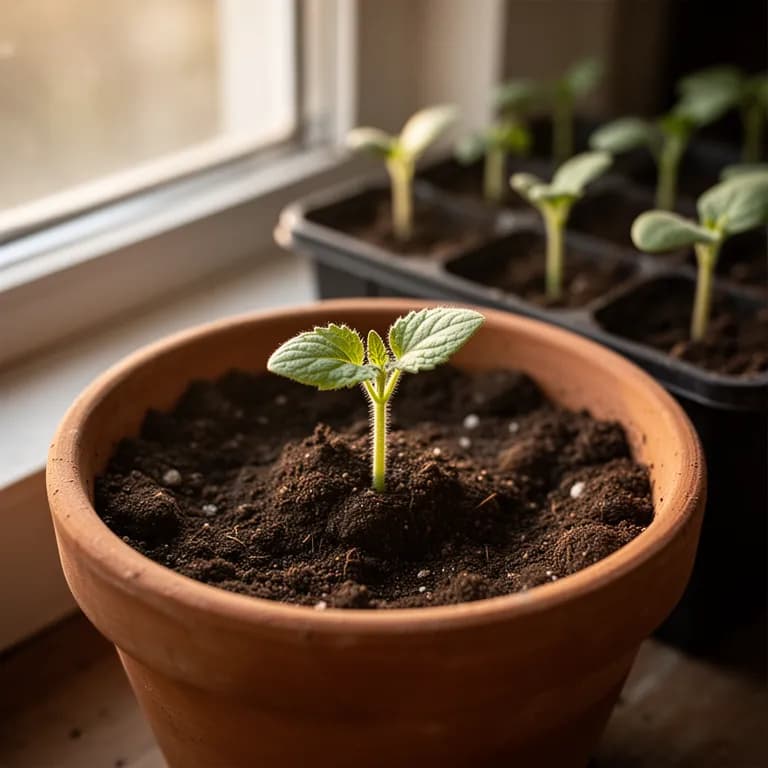
Seed Germination
Days 0–10
Watermelon seeds require warm soil temperatures of at least 21°C (70°F) to germinate reliably, with optimal germination occurring between 27-32°C (80-90°F). Seeds are planted 2-3 cm deep and produce thick, sturdy cotyledons that push through the soil. In cooler climates, starting seeds indoors in biodegradable pots avoids root disturbance during transplanting.
💡 Care Tip
Soak seeds in warm water for 4-6 hours before planting to soften the seed coat and speed germination. Use a heat mat to maintain consistent soil warmth. Keep soil evenly moist but never waterlogged, as seeds will rot in cold, wet conditions.
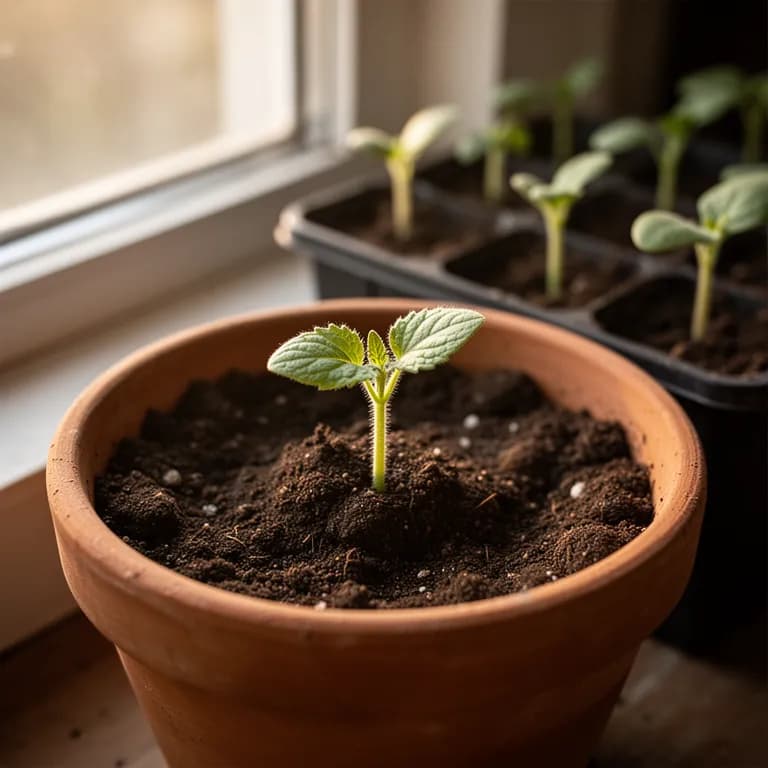
Young watermelon seedling developing its first true leaf with characteristic lobed shape
Monthly Care Calendar
What to do each month for your Watermelon
May
You are hereTransplant seedlings outdoors once soil temperatures reach 21°C (70°F) and nighttime temperatures stay above 15°C. Direct sow seeds in warm-climate gardens. Install drip irrigation and apply straw mulch around plants. Protect young transplants with row covers if late cold snaps threaten.
Did You Know?
Fascinating facts about Watermelon
Watermelon is approximately 92% water by weight, making it one of the most hydrating foods available and a traditional remedy for heat exhaustion in many tropical cultures around the world.
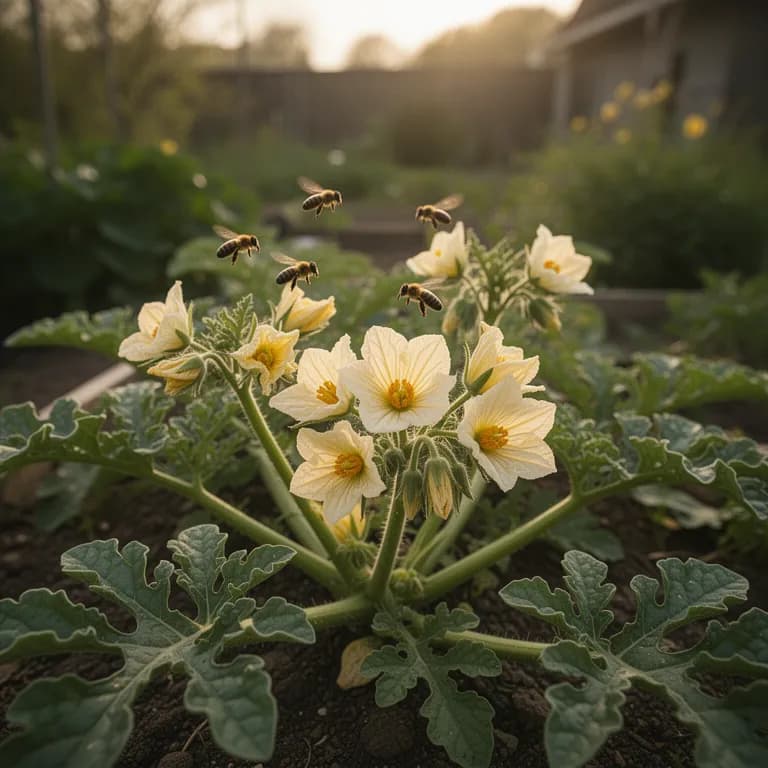
A female watermelon blossom with the small fruit visible at its base awaiting pollination
Prepare planting hills or mounds of rich, well-drained soil amended with generous amounts of aged compost or well-rotted manure. Watermelons are heavy feeders that demand warm soil and a long growing season of 80 to 100 frost-free days. In cooler regions, start seeds indoors three to four weeks before the last frost in biodegradable pots to avoid disturbing roots during transplanting.
Plant seeds or transplants in hills spaced six to eight feet apart, with two to three plants per hill. Lay black plastic mulch before planting to warm the soil and suppress weeds, or use row covers to create a warmer microclimate in the early weeks. Remove row covers once flowers appear to allow pollinator access, as watermelons depend on bee pollination for fruit set.
Water deeply and consistently during vine growth and fruit development, providing one to two inches per week. Reduce watering significantly as fruits approach full size and ripeness to concentrate sugars. Side-dress with a phosphorus-rich fertilizer when vines begin to run, and again when fruit is golf-ball-sized. Place developing fruits on cardboard or straw to prevent ground rot and provide even ripening on the underside.
Watermelon (Citrullus lanatus) traces its origins to the Kalahari Desert region of southern Africa, where wild ancestors still grow today. These wild predecessors bore small, hard, bitter fruit that served primarily as a portable water source for indigenous peoples and wildlife traversing the arid landscape. Archaeological evidence from Libya dates watermelon seeds to approximately 5,000 years ago, while Egyptian tomb paintings from nearly 4,000 years ago depict oblong watermelons being offered at feasts. The ancient Egyptians were among the first to cultivate watermelon systematically, selecting for larger size, sweeter flesh, and red coloration over generations. From Egypt, watermelon cultivation spread along Mediterranean trade routes to Greece and Rome, where it was mentioned by Pliny the Elder in his Natural History. Arab traders carried watermelon seeds eastward to India and China by the 10th century, and China has since become the world's largest producer by a wide margin. The Moorish invasion of the Iberian Peninsula introduced watermelon to Europe in the 13th century, and Spanish colonists subsequently brought seeds to the Americas in the 16th century. Enslaved Africans also brought watermelon knowledge and seeds to the New World, contributing significantly to its cultivation throughout the southern United States. Over the centuries, selective breeding transformed the small, pale, thick-rinded ancestral fruit into the large, thin-rinded, brilliantly red-fleshed melons we enjoy today. Modern breeding has produced seedless triploid varieties, personal-sized icebox types, and cultivars with yellow, orange, and even white flesh. Today, watermelon is grown commercially on every inhabited continent and remains one of the world's most popular summer fruits, with global production exceeding 100 million tonnes annually.
Start watermelon seeds indoors three to four weeks before the last expected frost date. Plant seeds one inch deep in biodegradable peat pots filled with warm seed-starting mix, as watermelon seedlings resent root disturbance during transplanting. Maintain soil temperature of 80 to 85 degrees Fahrenheit for optimal germination, which takes four to ten days. Harden off seedlings gradually over one week before transplanting to the garden when soil temperature reaches 70 degrees and nighttime temperatures remain above 60 degrees.
Watermelons thrive in sandy loam soil with a pH of 6.0 to 6.8, rich in organic matter and warmed to at least 70 degrees Fahrenheit before planting. Amend with generous amounts of compost and aged manure before planting. Apply a balanced fertilizer at planting, then switch to a low-nitrogen, high-phosphorus and potassium formula when vines begin to flower. Over-fertilizing with nitrogen produces lush vines but poor fruit set and bland flavor.
Check Your Zone
See if Watermelon is suitable for your location.
21°C – 35°C
70°F – 95°F
Watermelon is a heat-loving crop that thrives in warm to hot conditions between 21-35°C (70-95°F). Growth stalls below 18°C (65°F), and plants will be severely damaged or killed by any frost. Optimal fruit development and sugar accumulation occur when daytime temperatures reach 27-32°C (80-90°F) with warm nights above 18°C. Soil temperature must be at least 21°C (70°F) for seed germination and transplant establishment.
Common issues affecting Watermelon and how to prevent and treat them organically.
Blossom end rot appears as a dark, sunken spot on the bottom of the fruit and is caused by inconsistent watering and calcium deficiency. Poor fruit set results from inadequate pollination, often due to cold or rainy weather deterring bees. Hollow heart creates cracks inside the fruit and is linked to temperature fluctuations during pollination. Bland-tasting melons often result from overwatering during the final ripening stage or harvesting before full maturity.
Corn planted near watermelon provides light wind protection and its tall stalks can serve as a living trellis marker for the sprawling vines. Sunflowers attract pollinators essential for fruit set and provide afternoon shade in extremely hot climates. Radishes planted as a trap crop can lure flea beetles away from watermelon seedlings. Avoid planting near potatoes, which compete for nutrients and may share soil diseases with cucurbits.
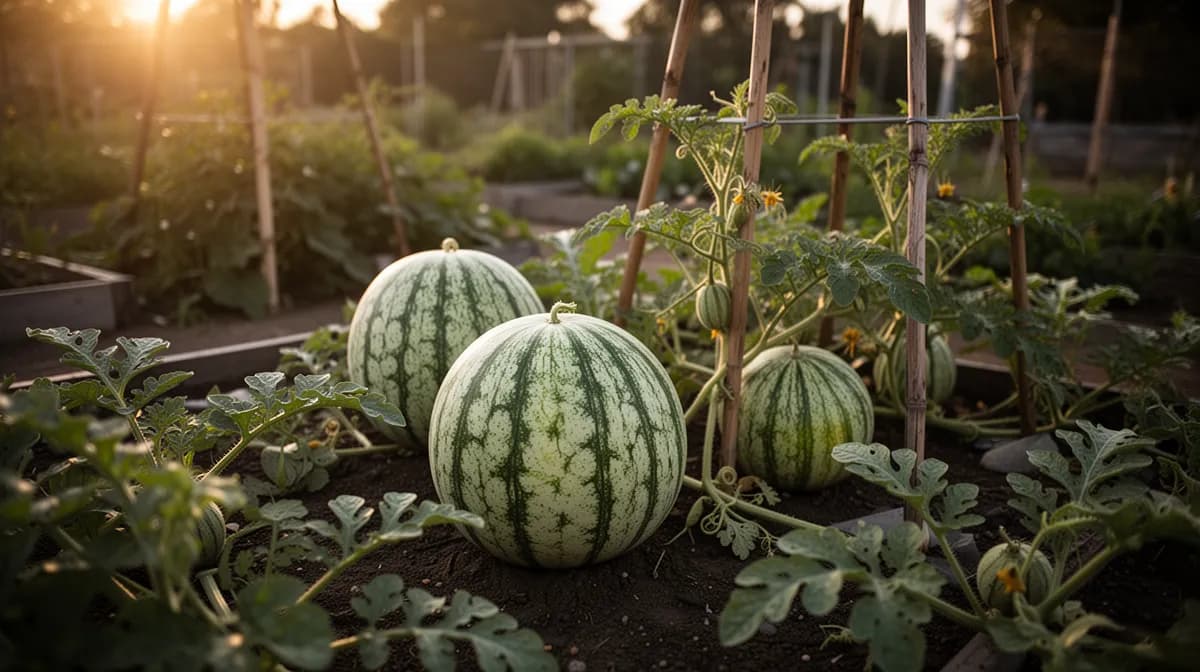
Watermelon planted with companion crops like marigolds to deter pests and maximize garden space
- 1Start seeds indoors in biodegradable peat or coir pots 3-4 weeks before transplanting to avoid disturbing the sensitive taproot. Watermelon seedlings do not tolerate root disturbance well, and bare-root transplanting often sets plants back significantly.
- 2Build raised planting mounds or hills 30 cm high and 60 cm wide to improve soil drainage and warmth. Amend each hill with a shovelful of well-rotted compost and a handful of balanced organic fertilizer before planting two to three seeds per mound.
- 3Use black plastic mulch or landscape fabric over the planting area to raise soil temperature by 3-5°C, suppress weeds, and conserve moisture. Cut planting holes in the plastic and install drip irrigation beneath it for maximum efficiency.
- 4Space plants 90-120 cm apart within rows and allow 1.8-2.5 meters between rows to accommodate the extensive vine spread. Crowded watermelon plants compete for nutrients and light, producing smaller and fewer fruit.
- 5Water deeply and consistently, providing 5-8 cm of water per week through drip irrigation at the base of the plant. Avoid overhead watering which promotes foliar diseases. Reduce watering frequency one week before harvest to concentrate sugars.
- 6Hand-pollinate in the early morning if bee activity is insufficient. Transfer pollen from freshly opened male flowers to female flowers using a small paintbrush or by removing a male flower and touching its anthers directly to the female flower stigma.
- 7Limit each vine to 2-3 developing fruit by removing additional small melons as they set. This concentrates the plant's energy into fewer, larger, sweeter fruit rather than many undersized melons that never fully ripen.
- 8Place a piece of straw, cardboard, or a melon cradle beneath each developing fruit to prevent the ground-contact side from developing rot or becoming a target for soil-dwelling insects. Rotate fruit occasionally for even ripening.
- 9Monitor for common pests including cucumber beetles, squash bugs, and aphids. Use floating row covers over young plants until flowering begins, then remove to allow pollinator access. Apply neem oil or insecticidal soap for persistent infestations.
- 10Practice crop rotation by avoiding planting watermelon or other cucurbits in the same location for at least three years. This reduces the buildup of soilborne diseases including fusarium wilt and gummy stem blight that persist in the soil.
Determining watermelon ripeness requires checking multiple indicators simultaneously. The tendril nearest the fruit should be completely brown and dried. The ground spot where the melon rests on the soil should have changed from white to creamy yellow. Thumping the melon should produce a deep, hollow sound rather than a high-pitched ping. The rind surface transitions from glossy to dull when ripe. Cut the stem with a sharp knife rather than twisting or pulling to avoid vine damage.
Store whole uncut watermelons at room temperature for up to two weeks. Once cut, wrap tightly and refrigerate for up to five days. Watermelon can be cubed and frozen for smoothies and frozen treats, though the texture changes upon thawing. The rind can be pickled as a traditional Southern preserve. Watermelon juice is refreshing on its own or can be reduced into a syrup. Dehydrated watermelon chips make a unique concentrated snack.
Plan your garden with ease
Love growing Watermelon? Use our free garden planner to design your beds, track planting dates, and get personalized care reminders.
Nutritional Info
Per 100g serving
30
Calories
Health Benefits
- One of the richest natural sources of lycopene, providing up to 6.9 mg per 100g, exceeding raw tomatoes and supporting cardiovascular and prostate health
- Contains citrulline, an amino acid concentrated in the rind that the body converts to arginine, supporting healthy blood flow and exercise recovery
- Excellent source of hydration with 92% water content and natural electrolytes including potassium and magnesium, ideal for post-exercise rehydration
- Provides vitamin C (8.1 mg per 100g) which supports immune function, collagen synthesis, and iron absorption from plant-based foods
- Low in calories (30 kcal per 100g) with natural sugars that provide quick energy without excessive caloric intake, making it a guilt-free summer snack
- Contains beta-carotene and vitamin A (569 IU per 100g) which support eye health, skin integrity, and immune system function
💰 Why Grow Your Own?
A single watermelon plant can produce 2-4 large melons weighing 5-10 kg each, representing $20-50 worth of supermarket watermelon from a single $2-3 seed packet or $4-6 transplant. Growing your own also guarantees vine-ripened flavor far superior to commercially harvested fruit, which is often picked before peak ripeness for shipping durability. Over a summer season, a small patch of 3-4 watermelon plants can easily provide $80-150 worth of fresh fruit for family consumption and sharing with neighbors.
Quick Recipes
Simple recipes using fresh Watermelon
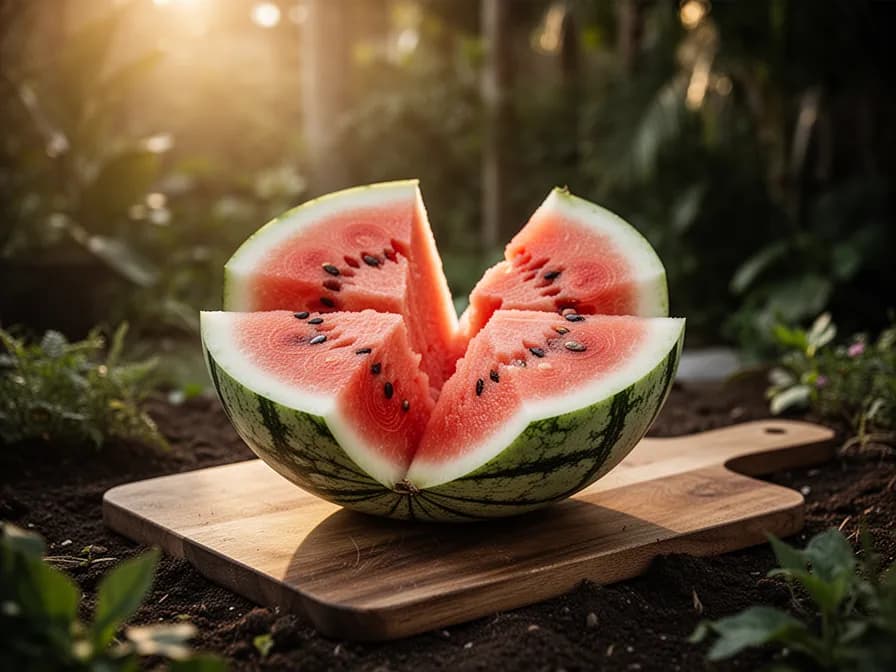
Watermelon Feta Salad with Mint
10 minutesA refreshing summer salad that balances the natural sweetness of ripe watermelon with salty crumbled feta, fresh mint, and a light lime dressing. This crowd-pleasing dish is perfect for barbecues, picnics, and hot summer days when you want something cool and satisfying.
Watermelon Agua Fresca
5 minutesA traditional Mexican refreshment made by blending fresh watermelon with lime juice and a touch of sweetener, then straining for a perfectly smooth, thirst-quenching drink. Serve over ice for the ultimate summer beverage that showcases the pure flavor of homegrown watermelon.
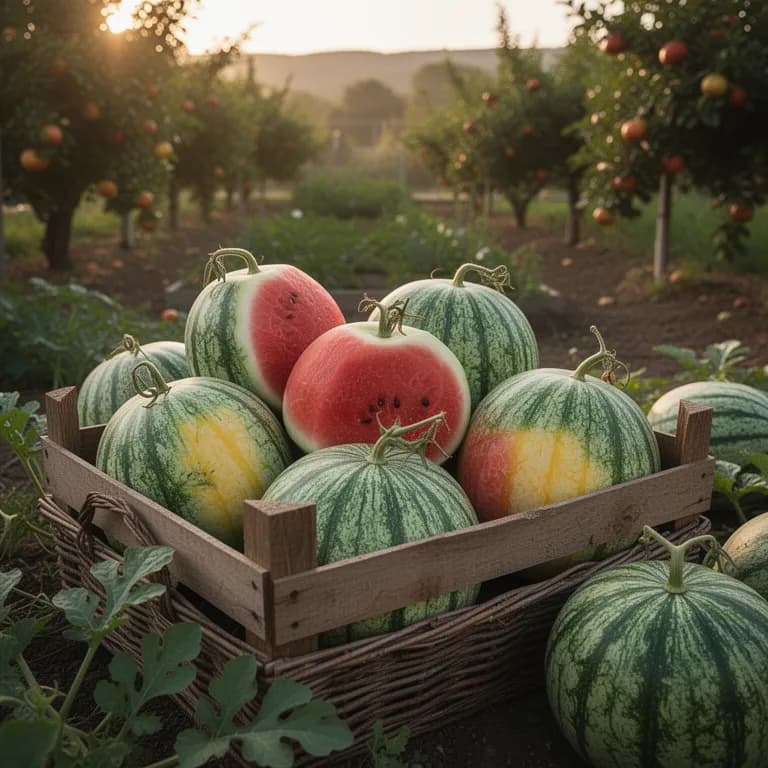
Grilled Watermelon Steaks
15 minutesGrilling transforms watermelon by caramelizing its natural sugars and concentrating its flavor into a smoky, savory-sweet side dish. Thick watermelon slices are brushed with olive oil, seasoned, and grilled until charred, then topped with a balsamic reduction and fresh herbs for an unexpected and impressive summer dish.
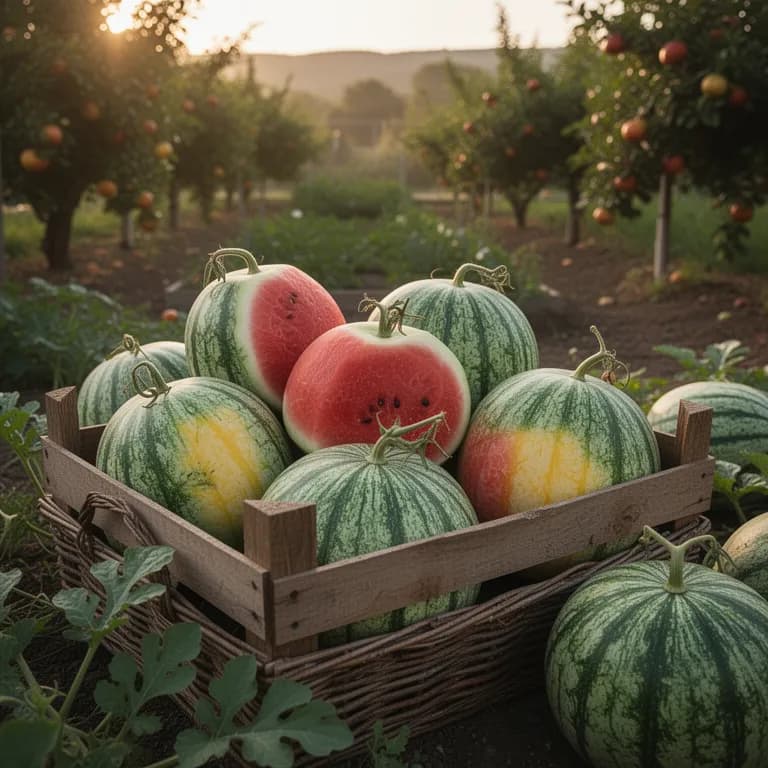
Testing watermelon ripeness by looking for a creamy yellow ground spot and dried curly tendril
Yield & Spacing Calculator
See how many Watermelon plants fit in your garden bed based on the recommended 180cm spacing.
0
Watermelon plants in a 4×4 ft bed
0 columns × 0 rows at 180cm spacing
Popular Varieties
Some of the most popular watermelon varieties for home gardeners, each with unique characteristics.
Crimson Sweet
A classic oval watermelon with dark and light green striping and sweet, deep red flesh, widely adapted and disease-resistant.
Sugar Baby
A compact icebox type perfect for small gardens, producing round six-to-ten-pound melons with dark green rind and sweet red flesh.
Moon and Stars
An heirloom variety with distinctive yellow dots on the dark green rind, producing large melons with exceptionally sweet pink flesh.
Yellow Doll
An early-maturing icebox variety with bright yellow flesh and a sweet, honey-like flavor, perfect for cooler climates.
Charleston Gray
A large oblong variety with tough, light green rind ideal for shipping, producing firm bright red flesh resistant to fusarium wilt.
Popular watermelon varieties ranging from large Crimson Sweet to compact Sugar Baby for small gardens
Watermelon is best enjoyed fresh, chilled, and sliced on hot summer days. It pairs surprisingly well with feta cheese, mint, basil, and lime. Watermelon agua fresca and granita are refreshing beverages and desserts. The fruit is rich in lycopene, vitamin C, and citrulline. Grilled watermelon steaks make an unexpected savory dish, and the rind can be pickled or stir-fried in Asian cuisines.
When should I plant Watermelon?
Plant Watermelon in May, June. It takes approximately 85 days to reach maturity, with harvest typically in August, September.
What are good companion plants for Watermelon?
Watermelon grows well alongside Corn, Sunflower, Radish. Companion planting can improve growth, flavor, and natural pest control.
What hardiness zones can Watermelon grow in?
Watermelon thrives in USDA hardiness zones 9 through 12. With greenhouse protection, it may be grown in zones 7 through 13.
How much sun does Watermelon need?
Watermelon requires Full Sun (6-8h+). This means at least 6-8 hours of direct sunlight daily.
How far apart should I space Watermelon?
Space Watermelon plants 180cm (71 inches) apart for optimal growth and air circulation.
What pests and diseases affect Watermelon?
Common issues include Fusarium Wilt, Cucumber Beetles, Anthracnose, Aphids. Prevention through good garden practices like crop rotation, proper spacing, and companion planting is the best approach. See the detailed pests and diseases section above for symptoms, prevention, and treatment for each.
How do I store Watermelon after harvest?
Store whole uncut watermelons at room temperature for up to two weeks. Once cut, wrap tightly and refrigerate for up to five days. Watermelon can be cubed and frozen for smoothies and frozen treats, though the texture changes upon thawing. The rind can be pickled as a traditional Southern preserve. ...
What are the best Watermelon varieties to grow?
Popular varieties include Crimson Sweet, Sugar Baby, Moon and Stars, Yellow Doll, Charleston Gray. Each has unique characteristics suited to different growing conditions and culinary preferences. See the varieties section above for detailed descriptions.
What soil does Watermelon need?
Watermelons thrive in sandy loam soil with a pH of 6.0 to 6.8, rich in organic matter and warmed to at least 70 degrees Fahrenheit before planting. Amend with generous amounts of compost and aged manure before planting. Apply a balanced fertilizer at planting, then switch to a low-nitrogen, high-pho...
How do I know when a watermelon is ripe and ready to pick?
Look for three key ripeness indicators simultaneously: First, check the ground spot where the melon rests on the soil. It should change from white to a creamy butter-yellow color. Second, examine the tendril closest to the fruit stem. When it dries out and turns completely brown, the melon is nearing peak ripeness. Third, tap the watermelon with your knuckles. A ripe melon produces a deep, hollow sound rather than a metallic or high-pitched tone. The rind should also appear dull rather than shiny and resist scratching with a fingernail.
Why are my watermelon plants producing flowers but no fruit?
Watermelon plants produce male flowers first, often 7-10 days before female flowers appear. Male flowers appear on thin straight stems, while female flowers have a small oval swelling at their base. If both flower types are present but fruit is not setting, the issue is likely poor pollination due to insufficient bee activity. Try hand-pollinating in the early morning by transferring pollen from male to female flowers. Extreme heat above 35°C (95°F) can also cause blossom drop and poor pollination.
Can I grow watermelon in containers or small spaces?
Yes, compact icebox varieties like Sugar Baby, Bush Sugar Baby, and Mini Love are well-suited to container growing. Use a container at least 60 cm (24 inches) in diameter and 45 cm deep with excellent drainage. Fill with a rich potting mix amended with compost, and ensure the container receives at least 8 hours of direct sunlight daily. Container watermelons need more frequent watering than garden plants and benefit from weekly liquid fertilizer applications. You can also train small-fruited varieties vertically on a sturdy trellis with slings to support developing fruit.
Why do my watermelons crack or split before they are ripe?
Cracking is almost always caused by inconsistent watering, particularly when heavy rain or deep watering follows a dry spell. The flesh inside expands faster than the rind can stretch, causing splits. Prevent cracking by maintaining consistent moisture through drip irrigation and mulching. Avoid overwatering as fruit approaches maturity, and gradually reduce watering about one week before expected harvest. Some varieties are more crack-resistant than others, so consider choosing thick-rind cultivars if cracking is a persistent problem in your garden.
What is hollow heart in watermelon and how do I prevent it?
Hollow heart is a condition where gaps or cracks form inside the flesh, creating hollow cavities. It is caused by poor pollination combined with fluctuating growing conditions, particularly inconsistent temperatures and watering during fruit development. To prevent it, ensure thorough pollination by maintaining pollinator-friendly flowers nearby, water consistently throughout the growing season, and avoid temperature extremes by using mulch and row covers. The fruit is still safe to eat when hollow heart occurs, though the texture may be slightly altered around the gaps.
How should I store watermelon after harvesting?
Whole, uncut watermelons store best at 10-15°C (50-60°F) with high humidity and can last 2-3 weeks under these conditions. Do not refrigerate whole watermelons below 7°C (45°F) as this causes chilling injury, resulting in pitting, off-flavors, and accelerated decay. Once cut, wrap pieces tightly in plastic wrap or store in an airtight container and refrigerate at 2-4°C (36-40°F). Cut watermelon should be consumed within 3-5 days for the best flavor and texture. Allow chilled watermelon to come to room temperature for 15-20 minutes before serving for the fullest flavor.
Ready to Grow Watermelon?
Add Watermelon to your garden plan and start designing your perfect layout.

Vladimir Kusnezow
Gardener and Software Developer
Zone 6b gardener. Growing vegetables and fruits in soil and hydroponics for 6 years. I built PlotMyGarden to plan my own gardens.
Jump to Section