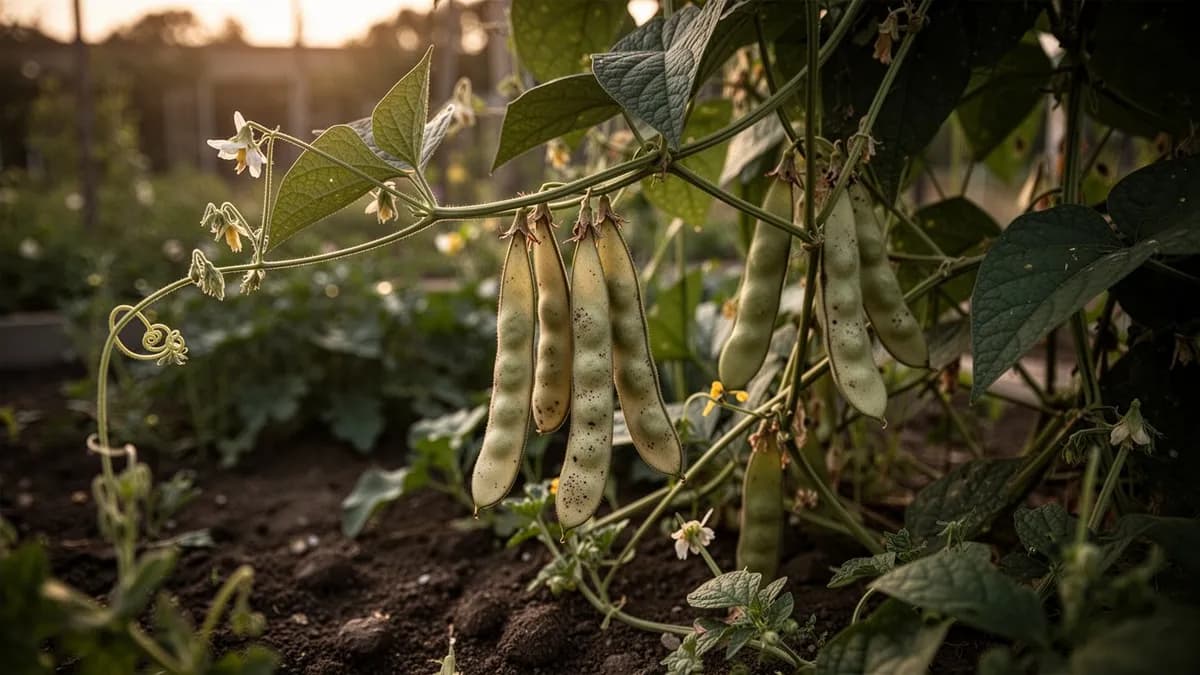
Tepary Bean
Phaseolus acutifolius
At a Glance
It's planting season for Tepary Bean! Start planning your garden now.
An ancient desert bean cultivated by Native peoples of the American Southwest for thousands of years, thriving on minimal water. Plants are remarkably drought-adapted, producing a crop with as little as three inches of rainfall during the growing season. Small beans come in white, brown, and speckled varieties with a rich, sweet flavor and very high protein content. One of the most climate-resilient crops available for arid and semi-arid gardens.
Planting & Harvest Calendar
Growth Stages
From Seed to Harvest
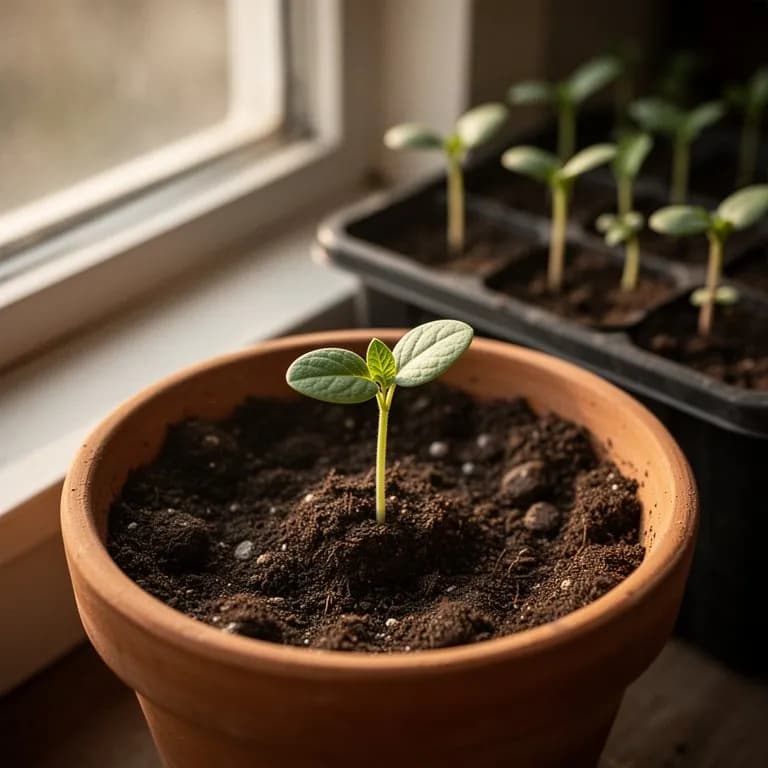
Seed Germination
Days 0–10
Seeds germinate rapidly in warm soil, sending down a deep taproot before the first leaves emerge. Unlike common beans, tepary bean seeds are small and require only shallow planting at 2-3 cm depth. Germination occurs in 4-10 days when soil temperatures are above 21°C (70°F).
💡 Care Tip
Plant seeds directly outdoors after all frost danger has passed and soil is warm. Do not soak tepary bean seeds before planting — they are adapted to dry conditions and waterlogged seeds are prone to rot. Space seeds 10-15 cm apart in rows 45-60 cm apart.
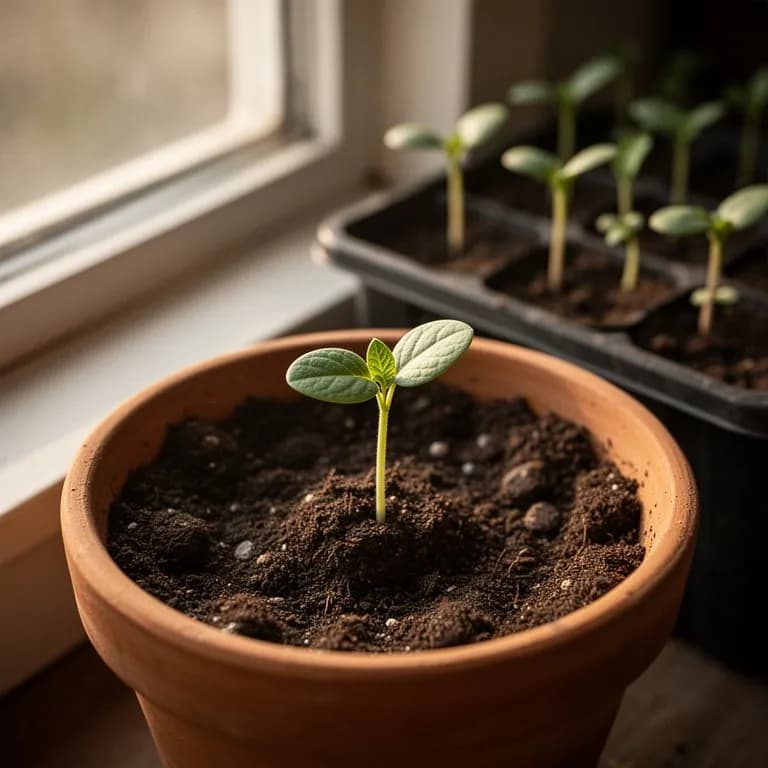
Tepary bean seedlings establish quickly in warm soil and develop deep roots within the first two weeks
Monthly Care Calendar
What to do each month for your Tepary Bean
May
You are herePrimary planting month for zones 8-9. Direct-sow after all frost danger has passed. Water once at planting to settle seeds, then withhold water until seedlings emerge. In desert zones, early-planted tepary beans should be in vigorous vegetative growth.
Did You Know?
Fascinating facts about Tepary Bean
Tepary beans (Phaseolus acutifolius) are one of the most drought-tolerant food crops on Earth — they can produce a full harvest with as little as 10-15 cm (4-6 inches) of rainfall over their entire growing season, a feat no other cultivated bean can match.
Tepary beans are the ultimate drought-adapted legume, cultivated in the desert Southwest for over 4,000 years. Direct sow one inch deep and four inches apart after the last frost when soil reaches 65 degrees. Space rows 18 inches apart. Plants grow as compact bushes or semi-vining types. Seeds germinate in five to eight days.
The key to success is replicating desert conditions. They need full sun, heat, and well-drained soil. Once established, provide minimal to no supplemental water. Overwatering actually reduces yields and promotes disease. These beans produce best with hot days, warm nights, and dry conditions. As nitrogen fixers, they need no fertilizer.
Tepary beans mature quickly in about 60 days, making them one of the fastest dry beans. Pods dry rapidly in arid climates. In more humid areas, harvest when pods are dry and finish drying under cover. The small beans come in white, brown, tan, and speckled varieties with a distinctive sweet, rich flavor and higher protein content than common beans.
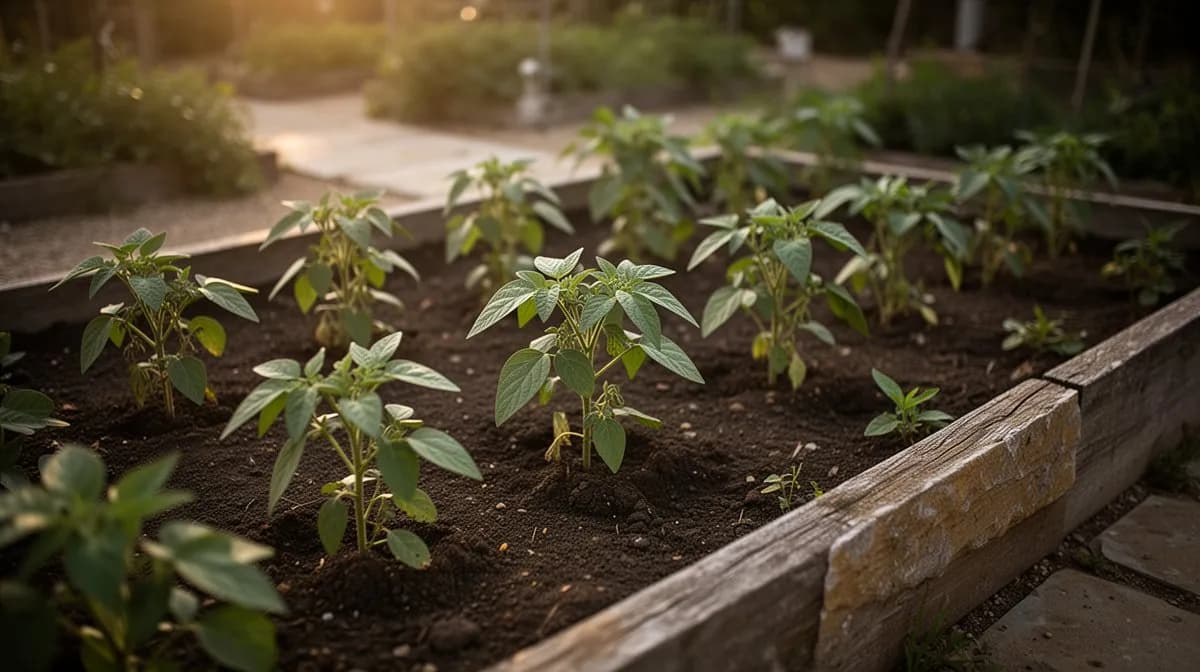
Tepary beans thrive in conditions that would kill most other legumes — extreme heat, poor soil, and minimal water
The tepary bean (Phaseolus acutifolius) is native to the arid borderlands of northwestern Mexico and the southwestern United States, with its center of domestication believed to be the Sonoran Desert region spanning modern-day Arizona, Sonora, and Sinaloa. Wild tepary beans still grow in desert washes and canyon bottoms throughout this region, scrambling across rocky ground and producing tiny pods after summer monsoon rains. Archaeological evidence from dry caves in the Tehuacan Valley of Mexico and from sites across the American Southwest dates tepary bean cultivation to at least 3000 BCE, making it one of the earliest domesticated crops in North America.
For millennia, tepary beans were a cornerstone of Indigenous agriculture in the desert Southwest. The Tohono O'odham (Papago), Akimel O'odham (Pima), Hopi, and other Native peoples developed sophisticated floodwater farming systems — called ak-chin farming — that captured seasonal monsoon runoff to irrigate tepary bean fields in otherwise bone-dry landscapes. These farmers selected for varieties suited to specific microclimates, producing white, brown, black, and speckled types with subtle flavor differences. Tepary beans were traditionally planted with the first summer monsoon rains in July and harvested in September, requiring no additional irrigation beyond what the storms provided.
The arrival of European colonizers and the eventual damming of desert rivers in the 19th and 20th centuries disrupted traditional farming systems and led to the replacement of tepary beans with higher-yielding common beans grown under irrigation. By the mid-20th century, tepary bean cultivation had declined dramatically, surviving primarily in small traditional plots maintained by Indigenous communities. However, beginning in the 1980s, organizations like Native Seeds/SEARCH in Tucson, Arizona began systematic efforts to preserve tepary bean diversity and return these seeds to Indigenous farmers. Today, tepary beans are recognized internationally as a climate-resilient crop with enormous potential for food security in arid regions. Research programs in Australia, East Africa, and the Middle East are trialing tepary beans as a protein crop for regions too hot and dry for conventional legumes, while in the United States, Indigenous food sovereignty movements and Southwestern chefs are driving a culinary renaissance that is bringing this ancient desert bean back to the table.
Direct sow tepary beans after the last frost when soil reaches 65 degrees. Plant one inch deep and four inches apart. Seeds germinate in five to eight days. Do not start indoors. Do not pre-soak seeds as tepary beans are adapted to dry germination. In humid climates, avoid watering after sowing unless soil is completely dry. Save seed from the best plants to maintain adapted genetics.
Tepary beans thrive in sandy, well-drained, even poor soils with a pH of 6.5 to 8.0. Adapted to alkaline desert soils, they perform poorly in rich, moist conditions. No fertilizer is needed. As efficient nitrogen fixers, they improve soil for following crops. Avoid heavy clay or waterlogged soils which cause root rot.
Check Your Zone
See if Tepary Bean is suitable for your location.
27°C – 40°C
81°F – 104°F
Tepary beans are among the most heat-tolerant food crops in existence. They thrive at temperatures of 27-40°C (80-104°F) that would devastate common beans. Growth stalls below 18°C (65°F) and plants are killed by any frost. Unlike most crops, tepary beans actually increase pod production as temperatures rise above 35°C (95°F), making them ideally suited to the hottest summer conditions. They tolerate extreme diurnal temperature swings typical of desert environments, from 40°C+ days to cool nights.
Common issues affecting Tepary Bean and how to prevent and treat them organically.
The biggest mistake is treating tepary beans like regular garden beans with frequent watering and rich soil. They are desert plants that perform best with minimal intervention. Overwatering causes root rot and poor yields. In humid climates, fungal diseases can be problematic. Seed availability is limited but improving through seed preservation organizations.
Tepary beans are traditionally grown with corn and squash in desert Three Sisters plantings. They fix nitrogen for companion crops while tolerating hot, dry conditions. In arid gardens, plant alongside other drought-adapted crops like moth beans and amaranth. Their compact growth makes them good border plants in dry-farmed systems.
- 1Embrace poor soil. Tepary beans evolved in nutrient-poor desert sand and gravel. Rich garden soil with high nitrogen causes excessive leafy growth and drastically reduces pod production. The worst soil in your garden is the best spot for tepary beans.
- 2Water less, not more. The single biggest mistake gardeners make with tepary beans is overwatering. These plants produce best with deep, infrequent watering — or no supplemental water at all if you receive summer rainfall. Aim for 2.5 cm of water every 10-14 days at most.
- 3Plant in the hottest part of your garden. Tepary beans need maximum heat and full sun for at least 8-10 hours daily. South-facing slopes, raised beds, and heat-reflecting walls or fences all boost performance. Do not shade these plants.
- 4Direct-sow only — never transplant. Tepary beans develop a deep taproot system from day one and do not tolerate root disturbance. Plant seeds directly in their final location after soil has warmed to at least 21°C (70°F).
- 5Do not fertilize with nitrogen. As a legume, tepary beans fix their own nitrogen through root nodule bacteria. Adding nitrogen fertilizer suppresses nodulation and wastes money. A small amount of phosphorus (bone meal) at planting is the only amendment worth considering.
- 6Time your planting for maximum heat. Tepary beans flower and set pods best when daytime temperatures consistently exceed 32°C (90°F). In most zones, this means planting in late spring so that flowering coincides with the hottest weeks of summer.
- 7Harvest the entire crop at once. Unlike snap beans, tepary beans are a dry bean harvested in a single pass when all pods have dried on the vine. Pull or cut entire plants, hang to finish drying, then thresh and winnow. Do not pick individual pods as they dry.
- 8Save your own seed every year. Tepary beans are self-pollinating with very low cross-pollination rates, so varieties remain true to type without isolation. Select the largest, healthiest-looking beans from your harvest and store in a cool, dry place for next season.
Tepary beans mature in about 60 days and dry quickly on the plant. Harvest when pods are completely brown, dry, and papery. In dry climates, thresh directly from standing plants. In humid areas, cut plants and dry under cover. Shell by beating pods in a bag. Winnow to separate beans from chaff. The entire crop often matures at once for a single, efficient harvest.
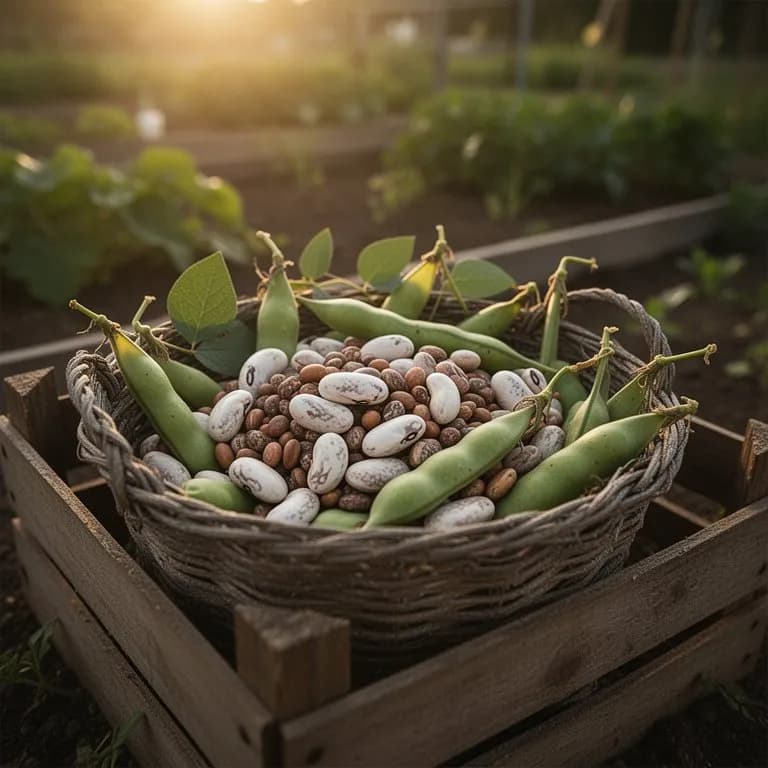
Pods are harvested once fully dry and brittle on the vine, then threshed to release the small beans
Dried tepary beans store for three or more years in airtight containers. Freeze for 48 hours after harvest to eliminate weevil eggs. The high protein content makes them especially nutritious for long-term food storage. Cooked tepary beans freeze well. Their dense texture holds up beautifully in soups and stews after freezing.
Plan your garden with ease
Love growing Tepary Bean? Use our free garden planner to design your beds, track planting dates, and get personalized care reminders.
Nutritional Info
Per 100g serving
340
Calories
Health Benefits
- Exceptionally high in protein at 23-25g per 100g of dried beans — significantly higher than common beans and approaching the protein density of soybeans
- Outstanding source of dietary fiber with 22g per 100g, providing 88% of the daily value and supporting gut health, blood sugar regulation, and cholesterol management
- Rich in iron at 7.5mg per 100g (42% DV), making tepary beans one of the best plant-based iron sources for vegetarians and vegans
- Excellent source of folate (B9) with approximately 500mcg per 100g (125% DV), critical for cell division and neural development during pregnancy
- Low glycemic index compared to common beans — tepary beans cause a slower, more gradual rise in blood sugar, making them particularly beneficial for people managing diabetes
- High in calcium, magnesium, and zinc — minerals often lacking in plant-based diets — along with significant amounts of phosphorus for bone health
💰 Why Grow Your Own?
Tepary beans are a specialty heritage crop that costs $8-15 per pound when available from specialty retailers and Indigenous food cooperatives. A single seed packet ($4-6) can produce 2-4 kg of dried beans worth $35-130 at retail prices, with virtually zero input costs — no fertilizer, minimal water, and no pest treatments needed. The real value extends beyond dollars: tepary beans grow in conditions where common beans fail entirely, providing food from land and conditions that would otherwise be unproductive. Save seed each year and your cost drops to zero.

Tepary beans come in white, brown, speckled, and black varieties — all significantly smaller than common beans
Quick Recipes
Simple recipes using fresh Tepary Bean
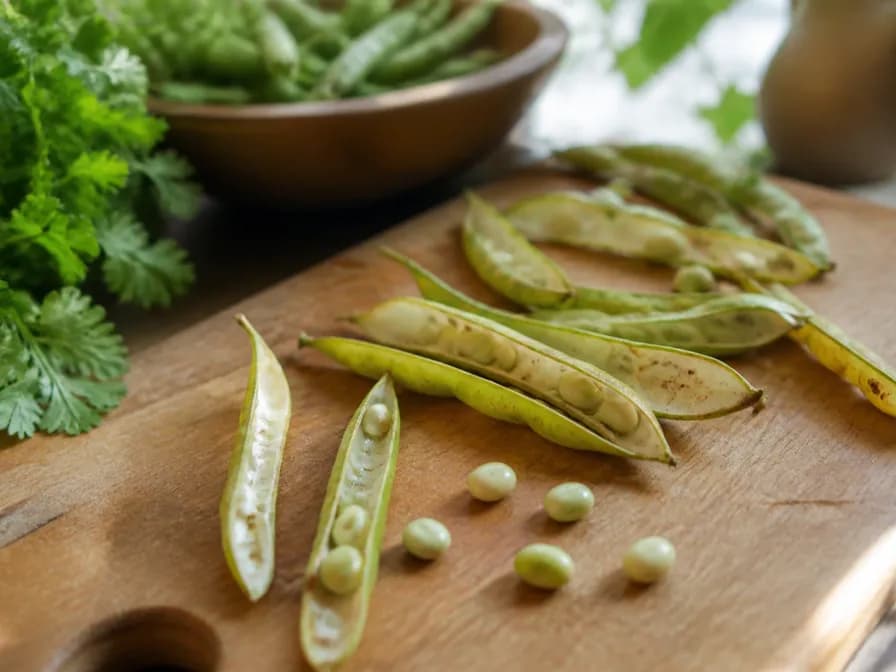
Southwestern Tepary Bean Stew
50 min (plus overnight soak)A hearty desert-inspired stew that showcases the rich, nutty flavor of tepary beans with roasted chiles, cumin, and fresh cilantro. This is the traditional way tepary beans have been enjoyed in the Sonoran Desert for thousands of years.
Tepary Bean Hummus
15 min (plus bean cooking time)A Southwestern twist on classic hummus using the naturally creamy, sweet flavor of white tepary beans. The dense texture of tepary beans produces an exceptionally smooth and rich dip without needing as much tahini or oil.
Tepary Bean and Roasted Squash Bowl
40 minA nourishing grain bowl that pairs earthy tepary beans with sweet roasted squash, peppery arugula, and a bright lime-cilantro dressing. A complete plant-based meal rich in protein, fiber, and complex carbohydrates.
Cooked tepary beans have a rich, slightly sweet and nutty flavor with a dense creamy texture
Yield & Spacing Calculator
See how many Tepary Bean plants fit in your garden bed based on the recommended 15cm spacing.
64
Tepary Bean plants in a 4×4 ft bed
8 columns × 8 rows at 15cm spacing
Popular Varieties
Some of the most popular tepary bean varieties for home gardeners, each with unique characteristics.
White Tepary
Traditional white-seeded variety with sweet, rich flavor. The most widely grown type.
Brown Tepary
Dark brown seeds with slightly earthier flavor. Traditional Southwest variety with excellent drought tolerance.
Blue Speckled
Speckled blue-gray seeds with complex, sweet flavor. Heirloom preserved by Native American seed keepers.
Tepary beans have a uniquely sweet, rich flavor. Simmer slowly with chile, onion, and cumin for traditional Southwestern dishes. The dense, creamy texture makes excellent refried beans. Add to soups, stews, and chili where they hold their shape. Cook with traditional desert flavors like mesquite and cholla buds. Their high protein content makes them exceptionally nutritious.
When should I plant Tepary Bean?
Plant Tepary Bean in May, June, July. It takes approximately 60 days to reach maturity, with harvest typically in August, September, October.
What are good companion plants for Tepary Bean?
Tepary Bean grows well alongside Corn. Companion planting can improve growth, flavor, and natural pest control.
What hardiness zones can Tepary Bean grow in?
Tepary Bean thrives in USDA hardiness zones 6 through 12. With greenhouse protection, it may be grown in zones 4 through 13.
How much sun does Tepary Bean need?
Tepary Bean requires Full Sun (6-8h+). This means at least 6-8 hours of direct sunlight daily.
How far apart should I space Tepary Bean?
Space Tepary Bean plants 15cm (6 inches) apart for optimal growth and air circulation.
What pests and diseases affect Tepary Bean?
Common issues include Bean Weevil, Common Bean Mosaic, Root Rot. Prevention through good garden practices like crop rotation, proper spacing, and companion planting is the best approach. See the detailed pests and diseases section above for symptoms, prevention, and treatment for each.
How do I store Tepary Bean after harvest?
Dried tepary beans store for three or more years in airtight containers. Freeze for 48 hours after harvest to eliminate weevil eggs. The high protein content makes them especially nutritious for long-term food storage. Cooked tepary beans freeze well. Their dense texture holds up beautifully in soup...
What are the best Tepary Bean varieties to grow?
Popular varieties include White Tepary, Brown Tepary, Blue Speckled. Each has unique characteristics suited to different growing conditions and culinary preferences. See the varieties section above for detailed descriptions.
What soil does Tepary Bean need?
Tepary beans thrive in sandy, well-drained, even poor soils with a pH of 6.5 to 8.0. Adapted to alkaline desert soils, they perform poorly in rich, moist conditions. No fertilizer is needed. As efficient nitrogen fixers, they improve soil for following crops. Avoid heavy clay or waterlogged soils wh...
Where can I buy tepary bean seeds?
Tepary bean seeds are available from specialty heritage and Indigenous seed organizations. Native Seeds/SEARCH (nativeseeds.org) in Tucson, Arizona is the premier source, offering multiple varieties of white, brown, black, and speckled tepary beans. Other sources include Seed Savers Exchange, Baker Creek Heirloom Seeds, and some regional seed libraries in the Southwest. Order early — tepary bean seeds often sell out by spring as interest in drought-tolerant crops grows.
Do tepary beans need to be soaked before cooking?
Yes, tepary beans benefit from an overnight soak (8-12 hours) before cooking, which reduces cooking time from 2-3 hours to about 45-60 minutes. Unlike common beans, tepary beans are very dense and hard, so a longer soak and slightly longer cooking time are normal. A pressure cooker is excellent for tepary beans — cook soaked beans at high pressure for 20-25 minutes. Do not add salt or acid until beans are fully tender, as both can prevent softening.
Can I grow tepary beans in a humid climate?
Tepary beans can be grown outside their native desert range, but humidity is their biggest challenge. In humid climates, choose a site with excellent air circulation and the fastest-draining soil you have. Avoid overhead watering entirely — use drip irrigation at the base if supplemental water is needed. Time your planting so that pod maturation and drying coincide with the driest period in your area. Fungal diseases are the main risk in humid conditions, so wide spacing (20 cm between plants) and good airflow are essential.
What do tepary beans taste like compared to common beans?
Tepary beans have a distinctive rich, nutty, slightly sweet flavor that is markedly different from common beans like pinto or black beans. White tepary beans are milder and creamier, while brown and speckled varieties have a deeper, earthier flavor. The texture is denser and smoother than most common beans. Many people describe tepary beans as having a more complex, concentrated bean flavor — likely because the smaller size means a higher ratio of flavorful seed coat to starchy interior.
How much water do tepary beans really need?
Remarkably little. In their native Sonoran Desert, tepary beans complete their entire life cycle on 10-15 cm (4-6 inches) of monsoon rainfall — roughly one-fifth the water required by common beans. In a garden setting, water deeply once at planting, then provide no more than 2.5 cm of water every 10-14 days. During pod drying, withhold water entirely. Overwatering is far more damaging than underwatering for tepary beans — excess moisture promotes root rot, reduces nitrogen fixation, and actually lowers yield.
Are tepary beans good for improving soil?
Yes, tepary beans are excellent soil builders. Like all legumes, they fix atmospheric nitrogen through symbiotic bacteria in their root nodules, enriching the soil for subsequent crops. Tepary beans are especially valuable because they partner with heat-adapted Bradyrhizobium bacteria that function in hot, dry soils where the Rhizobium strains used by common beans cannot survive. After harvest, chop and turn the plants into the soil as green manure. A tepary bean crop can add 40-80 kg of nitrogen per hectare to depleted soils.
Ready to Grow Tepary Bean?
Add Tepary Bean to your garden plan and start designing your perfect layout.

Vladimir Kusnezow
Gardener and Software Developer
Zone 6b gardener. Growing vegetables and fruits in soil and hydroponics for 6 years. I built PlotMyGarden to plan my own gardens.
Jump to Section